



A slumped upper back rarely starts in the upper back. It usually starts in the ribs, the shoulders, the hips, and the long hours you spend folded toward a screen. That’s why Pilates back exercises work so well for posture: they don’t just “strengthen your back.” They ask your whole trunk to stack itself better, one small piece at a time.
That’s the part people miss. Posture is not a frozen pose you hold with a heroic amount of effort. Good posture is more like a moving agreement between your spine, your shoulder blades, your pelvis, and the muscles that keep all of that from collapsing when you get tired.
And no, you do not need a dramatic backbend to fix a rounded shape. In fact, the smartest Pilates work is usually the quiet stuff — the movements that look small but wake up the muscles that sit under the mess. You feel them in the deep back body, between the shoulder blades, under the rib cage, and along the sides of the spine.
These 20 Pilates back exercises for better posture are built around that idea: length first, then strength, then control. Start with the first one. It’s simple, but it does more for a stiff back than people expect.
1. Cat-Cow Spine Mobilizer for Pilates Back Exercises
Cat-cow looks almost too basic to matter. It matters.
On hands and knees, the spine moves through gentle flexion and extension, and that alone can wake up a back that has been locked into one shape for hours. The magic is not in how far you go. It’s in the way you move segment by segment, so the ribs, shoulders, and pelvis stop acting like strangers.
Why It Helps Posture
When you inhale into the cow shape, your chest broadens and your collarbones widen. When you exhale into the cat shape, your ribs knit in and your abdominal wall pulls back slightly, which is exactly the kind of control slumped posture usually lacks.
Keep the motion smooth. No dumping into the low back. No yanking the neck up. The head follows the curve of the spine, not the other way around.
Best cue: move like your spine is a chain of small beads, not one stiff rod.
- Hands under shoulders, knees under hips
- Inhale to lengthen the tailbone and lift the breastbone
- Exhale to round the back and gently press the floor away
- Stop before the shoulders creep toward the ears
A slow set of 6 to 8 rounds is enough to make a difference. More is not better here. Clean is better.
2. Swan Prep for a Taller Upper Back
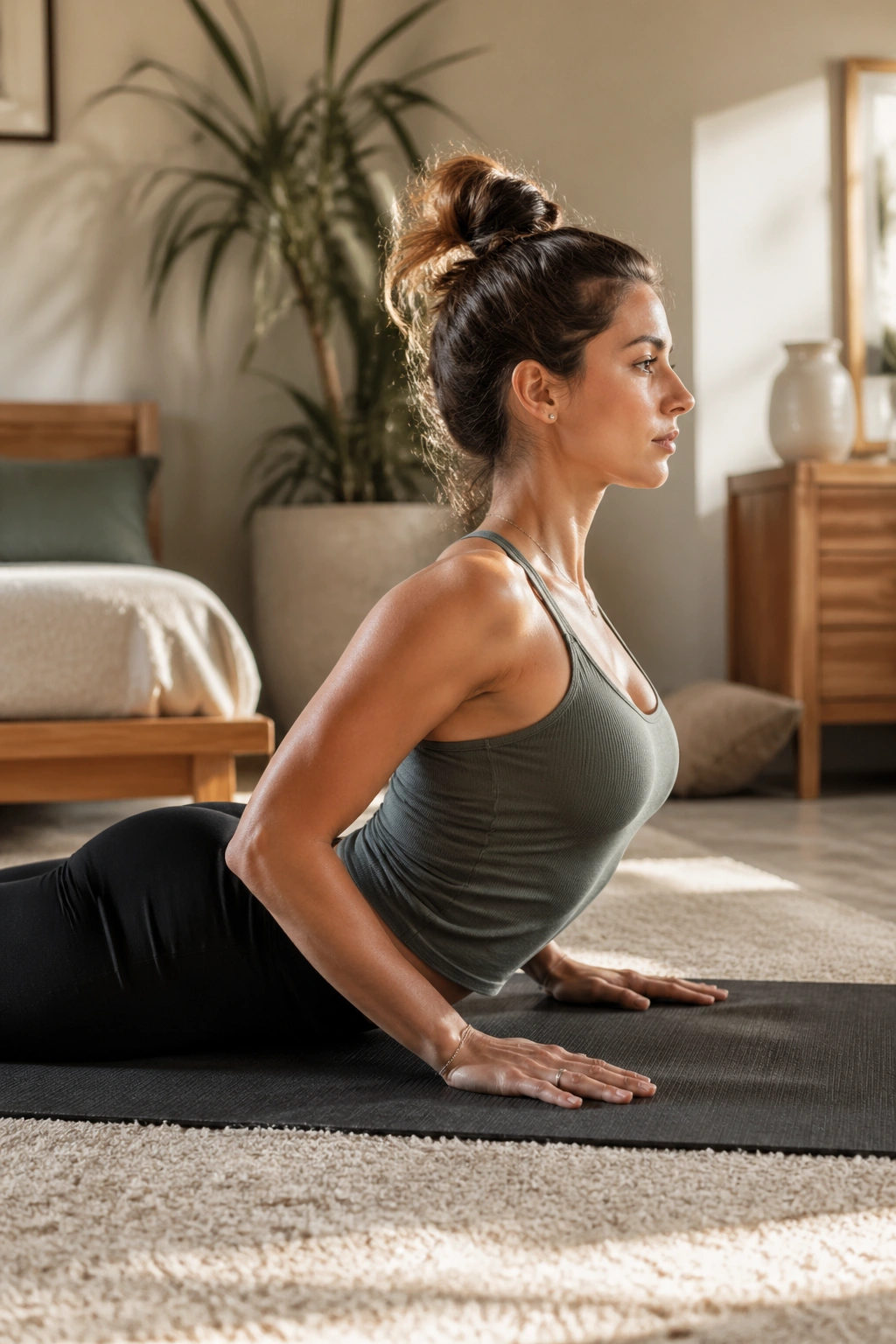
Why does a tiny back extension matter so much? Because most posture problems come from too much flexion, not too much strength.
Swan prep teaches the chest to open without cranking the lower back. Lie face down, hands under the shoulders or lightly by the sides, and lift the sternum just a few inches. The legs stay long and grounded. The feeling should be like the upper spine is peeling up while the pelvis stays heavy.
If you only lift from the low back, the move turns into compression. That’s the trap. The real work happens higher, between the shoulder blades and under the armpits, where the body tends to go slack after too much sitting.
A small lift is enough. Seriously.
Try 3 to 5 controlled reps, pausing at the top for one breath each time. If your neck feels jammed, keep your forehead on the mat and make the lift smaller. You are training length, not showing off.
3. Swimming for Back-Line Endurance
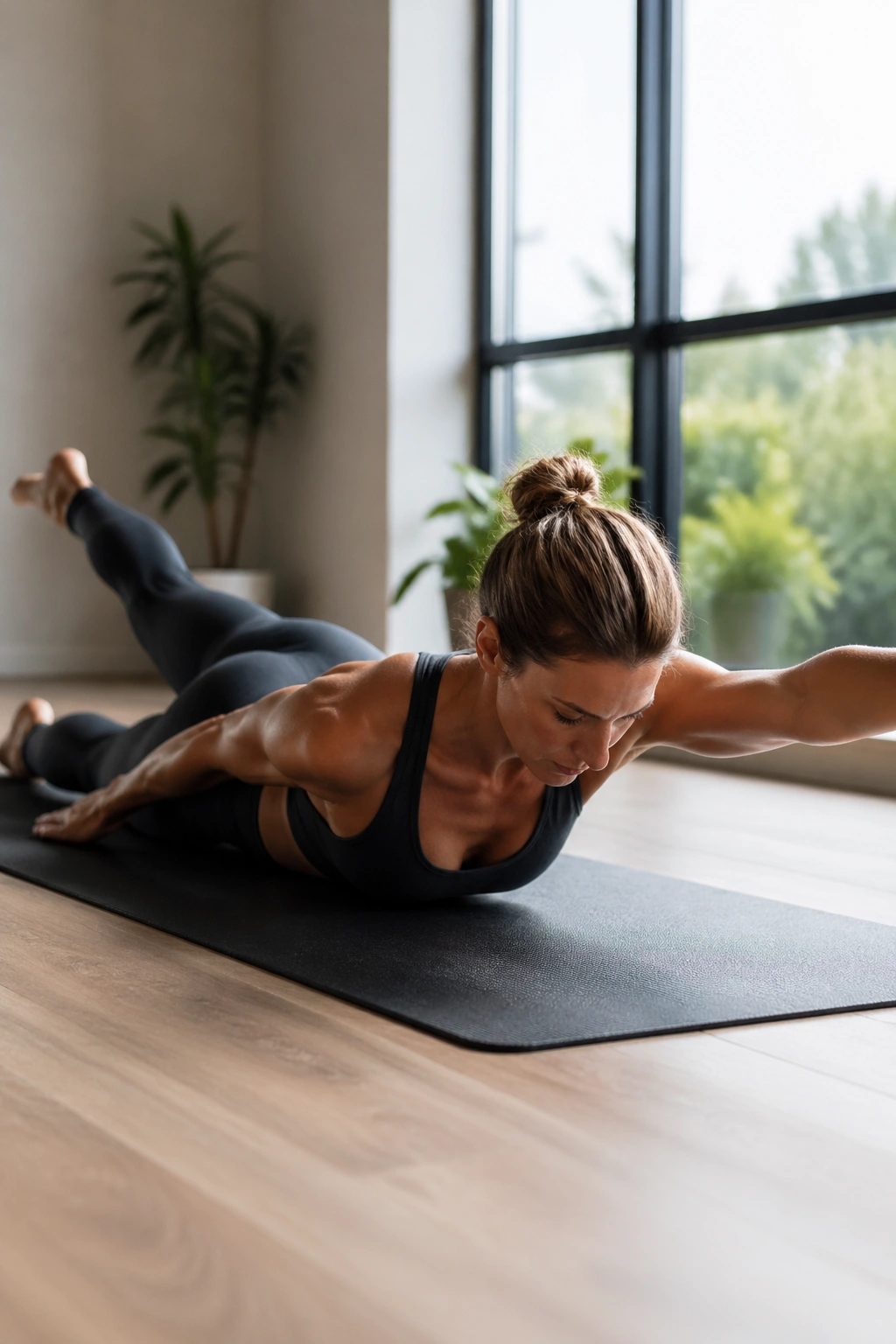
Your back should feel long, not pinched.
Swimming is one of those Pilates back exercises that looks airy and graceful, but the real job is endurance. You lie on your stomach, lift the opposite arm and leg, and alternate in a quick, steady rhythm. The spine stays quiet while the back body works hard.
What to Feel
- The lower belly lightly lifting away from the mat
- The glutes turning on without clenching
- The shoulder blades sliding down, not pinching together
- The neck staying in line with the spine
Keep the kicks small. If the legs are flying high, the low back usually takes over. That is not the goal. A low, fast flutter with a long neck usually does more for posture than a big, wobbly lift.
I like this one for people whose posture collapses late in the day. It builds the kind of endurance you need when your body is tired and your shape starts to melt. Do 20 to 30 seconds, rest, then repeat once or twice. That’s enough to make the back body wake up.
4. Shoulder Bridge for Pelvic and Spinal Control
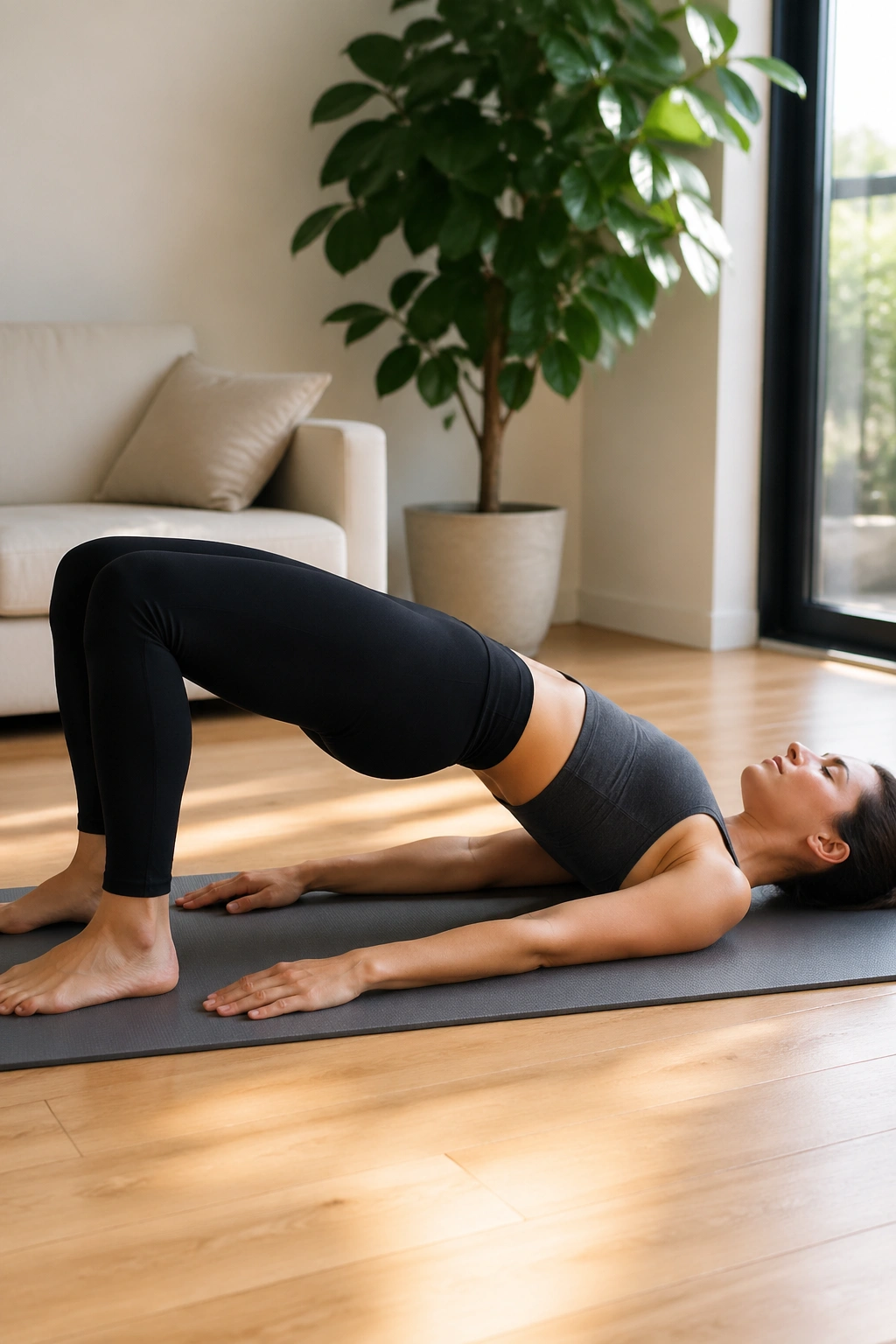
A bridge is not a glute squeeze contest.
Done well, shoulder bridge teaches your pelvis to lift and lower without rib flare, without neck tension, and without the hamstrings taking over like they own the place. Start on your back, knees bent, feet hip-width apart. Roll the pelvis up one piece at a time until you form a straight line from shoulders to knees, then roll down with the same patience.
The posture payoff is bigger than most people expect. A better bridge gives you more awareness of how your ribs stack over your hips. That matters when you stand, walk, or sit. If your spine never learns to organize itself in a bridge, it usually won’t organize itself much better in daily life.
Watch for: if your hamstrings cramp, bring the feet a little closer to your hips.
Breathe into the ribs at the top, and do not fling the hips up. Three to six slow repetitions is plenty. The shape should look smooth, almost boring. That is a compliment.
5. Single Leg Kick for a Stronger Back Body
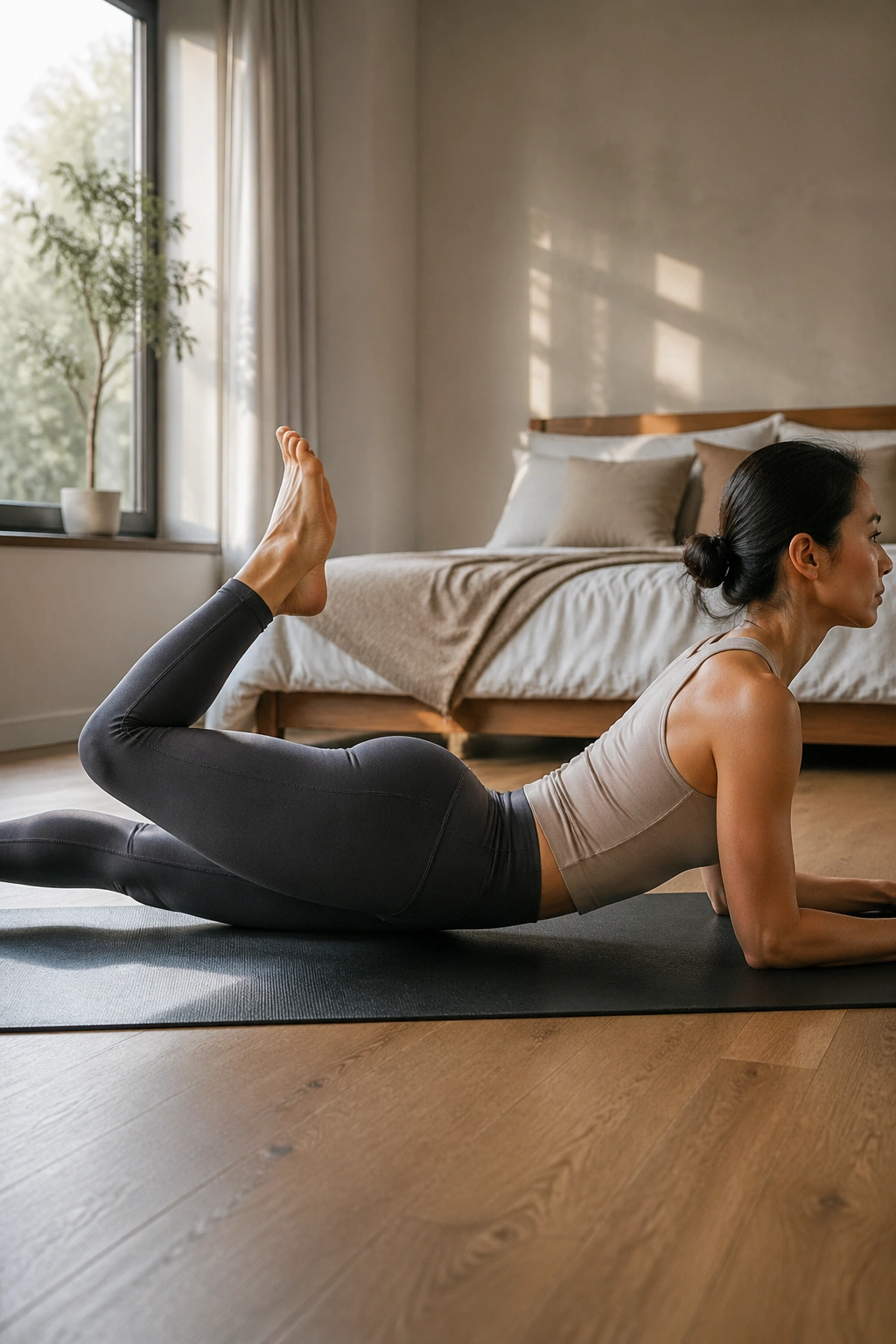
If your lower back always takes over, single leg kick can feel like a reset.
You lie face down on your forearms, chest open, and kick one heel toward the seat twice before switching legs. The point is not speed. It is the odd little combination of front-body support and back-body effort that teaches the torso to stay lifted while the legs move.
This one is sneaky. The glutes and hamstrings work, but the real win is in the length across the chest and the steadiness through the belly. People who round their shoulders often discover that they can hold the chest open only when the lower body helps. That is exactly what this exercise trains.
How to Keep It Clean
- Elbows under shoulders
- Collarbones broad
- Pubic bone heavy on the mat
- Kicks small and rhythmic
If the neck gets cranky, rest the forehead on stacked hands for a few reps. The shape should feel stable, not dramatic.
6. Double Leg Kick for Upper-Back Strength
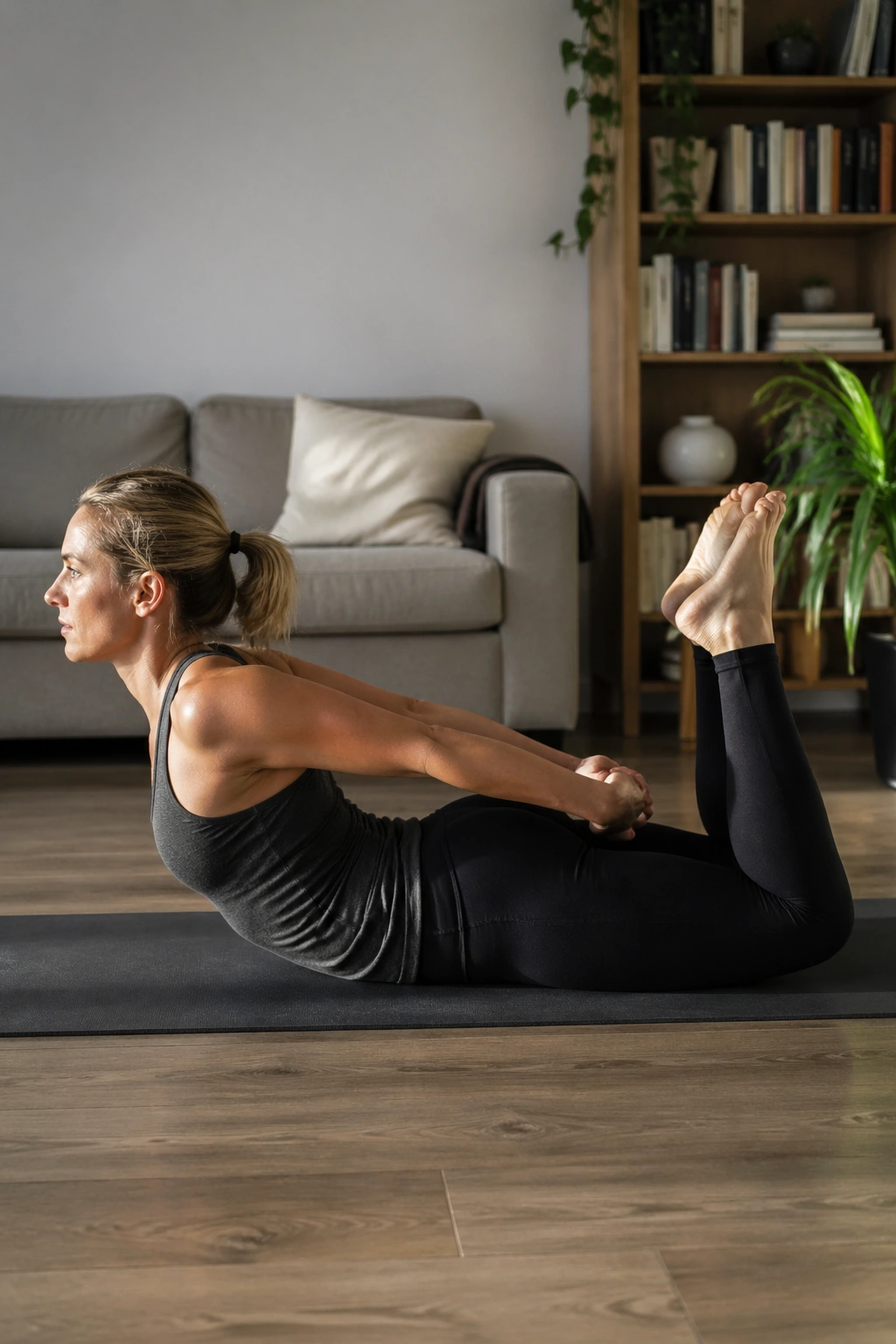
This one looks fancy, but it is mostly about patience.
Lie on your stomach, turn your head to one side, and bring both hands behind the lower back. Bend the knees and kick the heels toward the seat three times, then lengthen the legs and lift the chest. The movement asks the upper back to extend while the front of the body stays organized.
What I like here is the contrast. The chest opens, then the body settles back down. That rhythm trains control, not just range. And control is what keeps posture from collapsing the minute you get tired.
Do not yank the feet too high behind you. Do not shrug the shoulders. The chest lifts because the spine lengthens, not because the neck does a heroic job.
A set of 3 to 4 rounds is enough. If you feel jammed in the low back, make the chest lift smaller and focus on the kick pattern. The back of the body will still get the message.
7. Dart for Quick Posture Reset
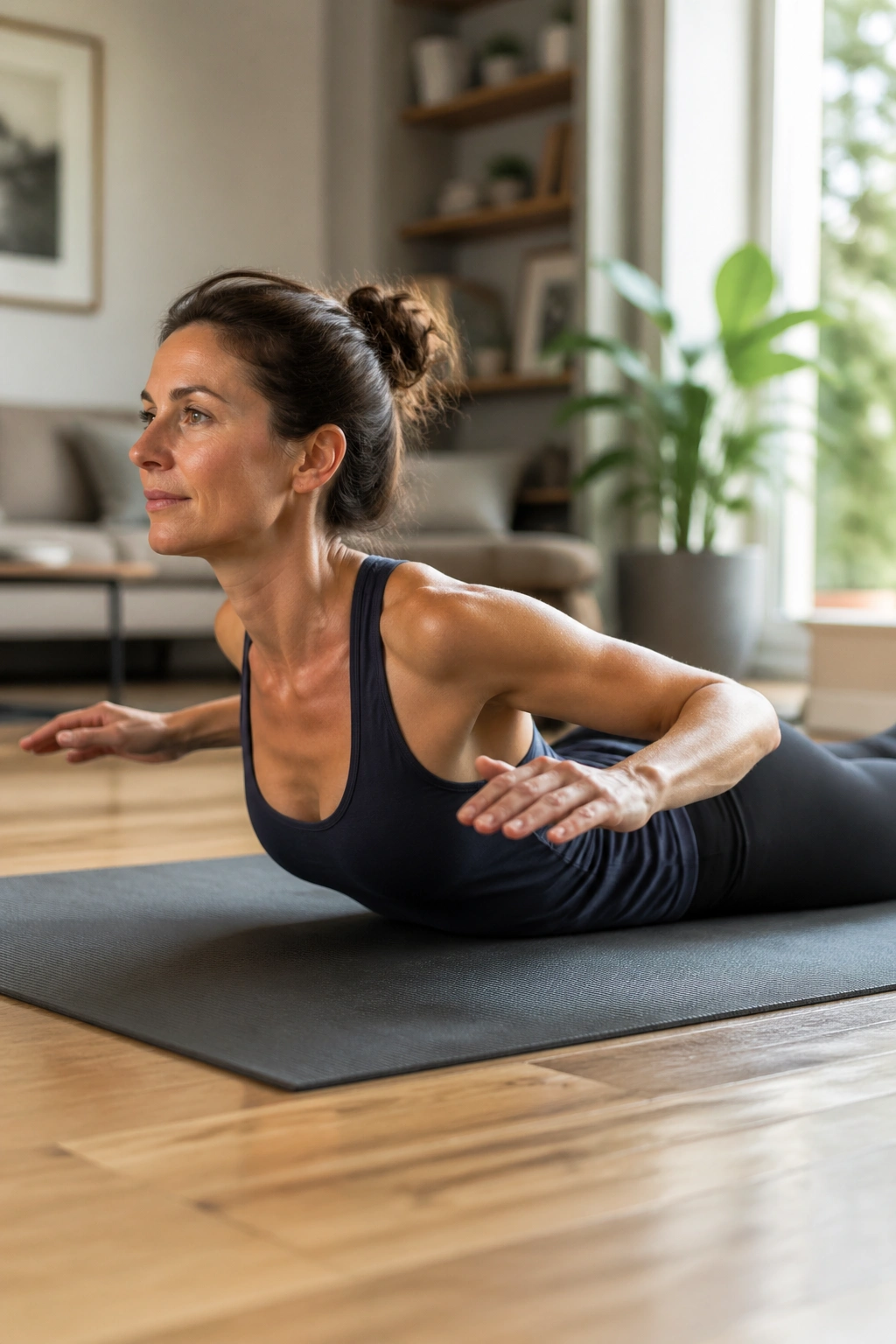
Need a back move you can do in under a minute? Dart is your friend.
Lie on your stomach with the arms by the sides, palms down, and lightly lift the chest and hands off the floor. The lift is tiny. That is the whole point. You are asking the upper back to work without turning the lumbar spine into a hinge.
The body should feel long, from the crown of the head to the toes. If the chin juts forward, the neck is doing too much. If the ribs slam into the mat, the lift has gone too far. The sweet spot is small and clean.
It’s a good move for people who spend a lot of time hunched over tasks because it reminds the nervous system what upright feels like. Not stiff. Upright.
What to Watch For
- Keep the back of the neck long
- Reach the fingertips toward the feet
- Lift only until the chest floats a little
- Lower with control instead of dropping
Three slow reps can wake up a sleepy back better than a long, sloppy set.
8. Breaststroke Prep for Length Through the Chest
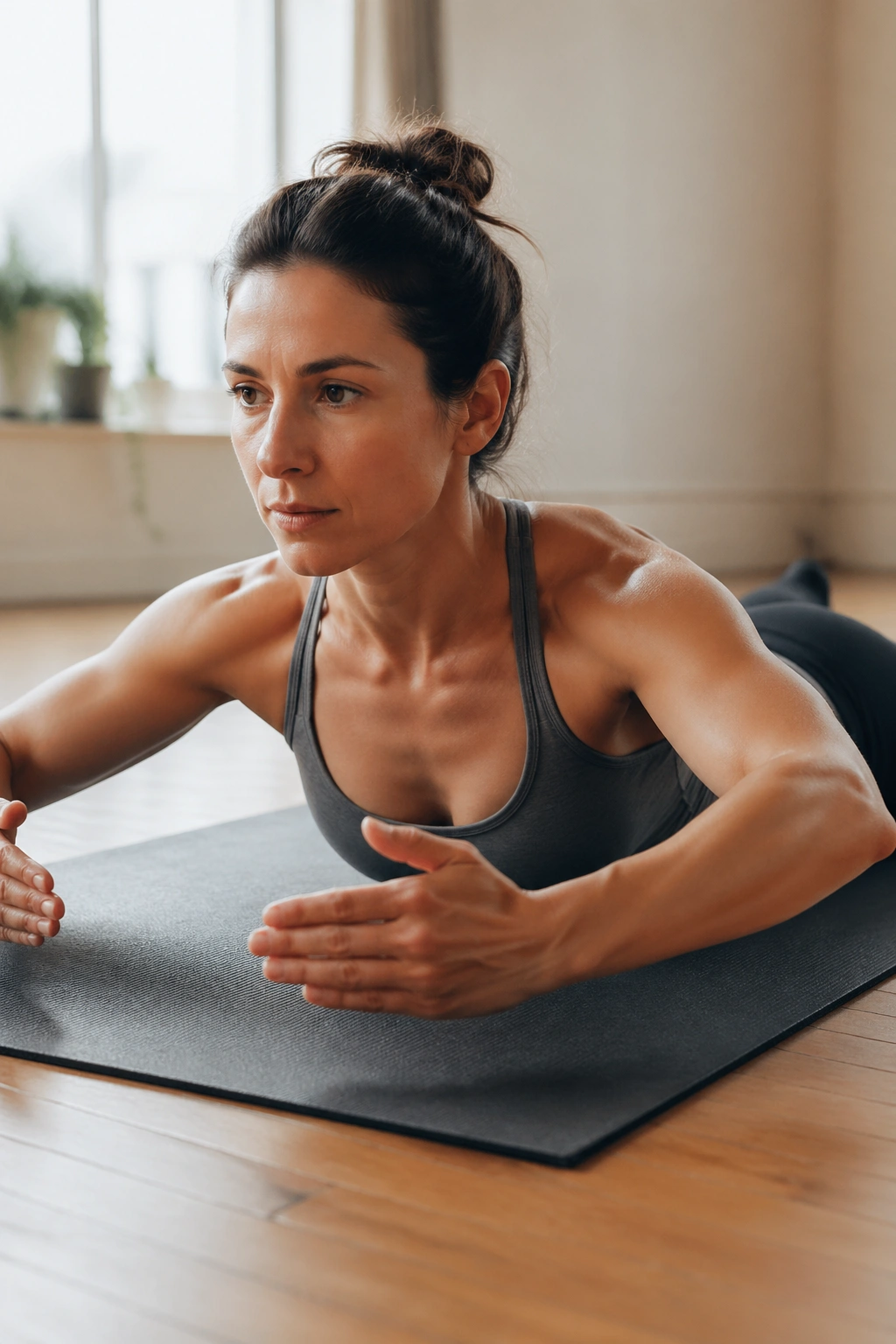
Picture the top of your shirt lifting first.
That is the feeling I want in breaststroke prep. You lie face down, arms bent and reaching forward or slightly out to the sides, then lift the chest with the sternum leading. The legs stay active and long, which keeps the low back from stealing the movement.
This is one of the better Pilates back exercises for posture because it teaches the upper spine to extend while the shoulder blades stay wide. People with rounded shoulders often live in a compressed front body. Breaststroke prep reverses that shape without forcing it.
Common Form Checks
- Keep the back of the neck long
- Let the shoulders slide away from the ears
- Lift from the upper ribs, not the chin
- Lower slowly so the spine keeps control
If you feel it mostly in the low back, come up less. If you feel it in the neck, soften the gaze and lengthen the back of the head. The lift should feel broad, not jammed.
9. Prone T Raise for Shoulder Blade Awareness
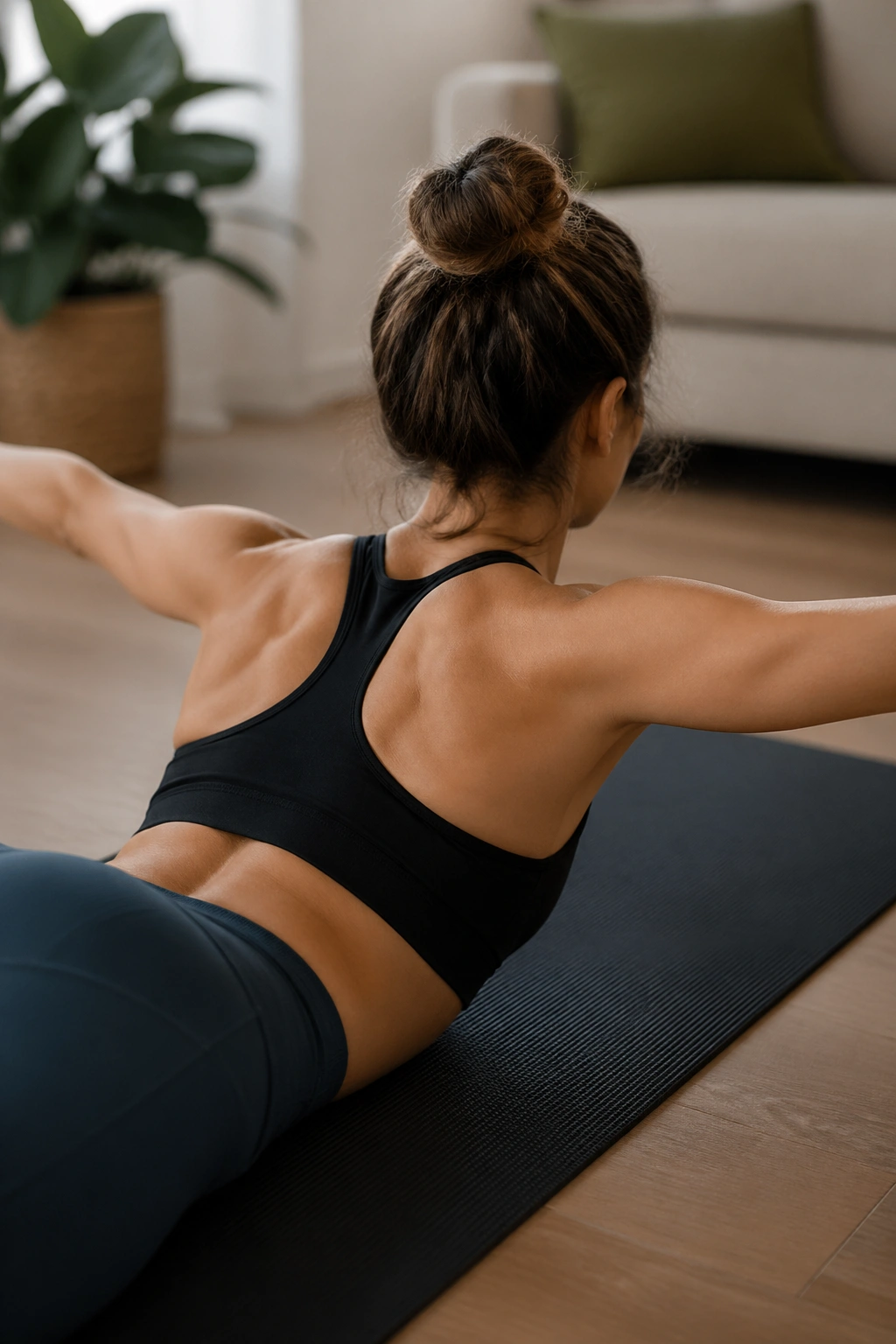
The floor tells the truth.
Lie face down with the arms stretched out to the sides in a T shape, thumbs up or palms facing down. Lift the arms just an inch or two, then lower them with care. It is a small movement, but it shows you exactly how well your shoulder blades are moving.
A lot of posture work fails because the shoulders get stuck up by the ears. This exercise helps reverse that by teaching the mid-back to hold the arms in space without shrugging. The sensation should be one of width across the upper back, not strain in the neck.
If you want a cleaner version, place a folded towel under the forehead so the neck stays long. The chest should stay heavy enough that the ribs do not pop off the mat.
A little burn across the back of the shoulders is normal. Sharp pinching is not. Keep the range tiny and the control steady. It is one of those moves that gets better, not flashier, with repetition.
10. Prone W Pull for Mid-Back Strength
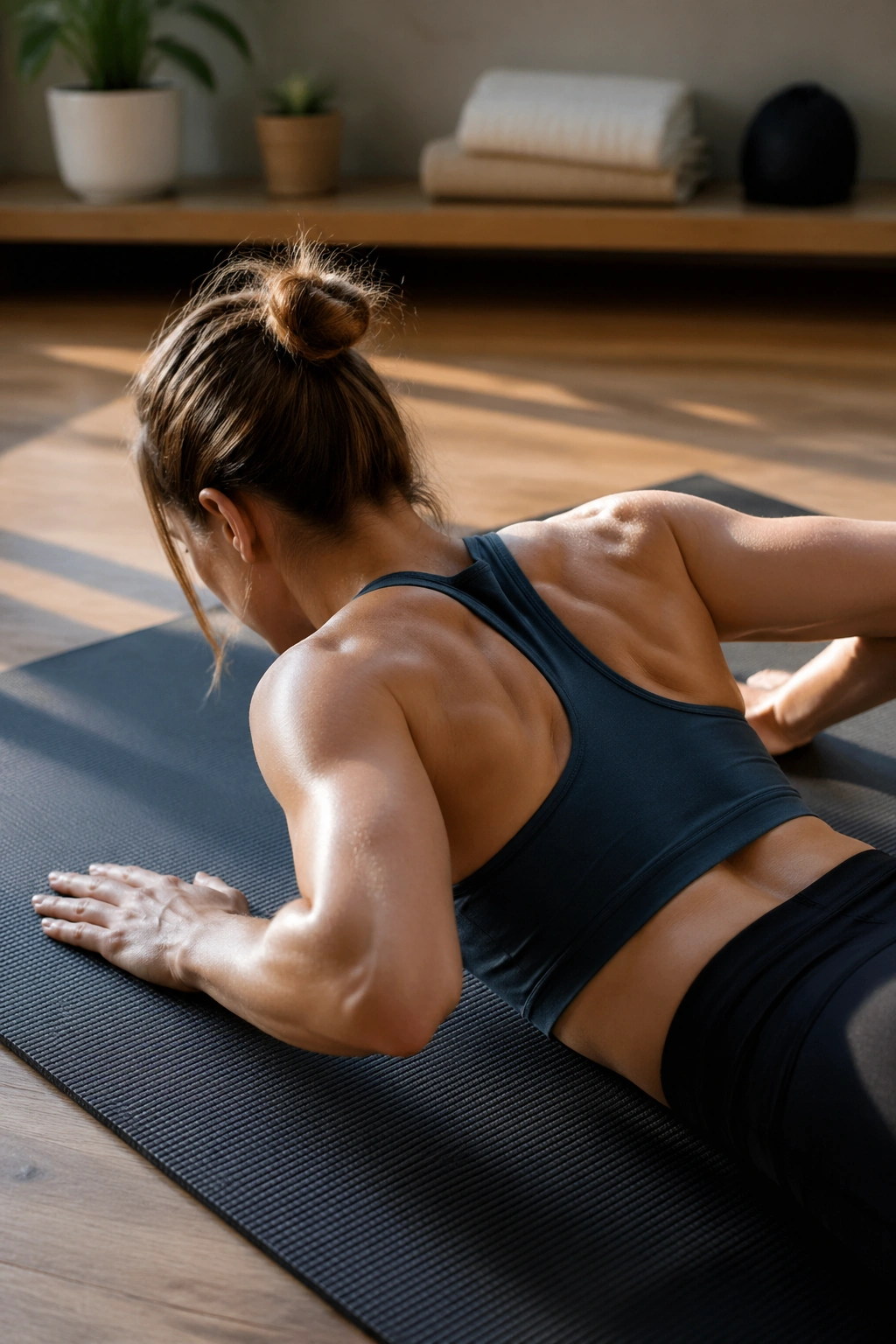
A lot of people shrug their way through posture work. The W shape fixes that.
Bend the elbows so the upper arms form a wide W, with the hands near the floor and the chest relaxed. Then lightly lift the hands and forearms, drawing the shoulder blades down and back without squeezing them so hard that the neck tightens. It looks simple. It is not lazy.
This move is great for the lower traps and the back of the shoulders, the parts that help keep your chest open when you sit or stand. It also teaches external rotation in the shoulders, which matters more than most people think if your upper body lives in a rounded position.
Keep the elbows wide enough that the neck can stay soft. If the ribs thrust forward, lower the lift. The aim is support, not a fake “proud chest” pose.
I like this one after a long day at a desk. It hits the exact area that tends to switch off first.
11. Bird Dog Reach for Balance and Spinal Control
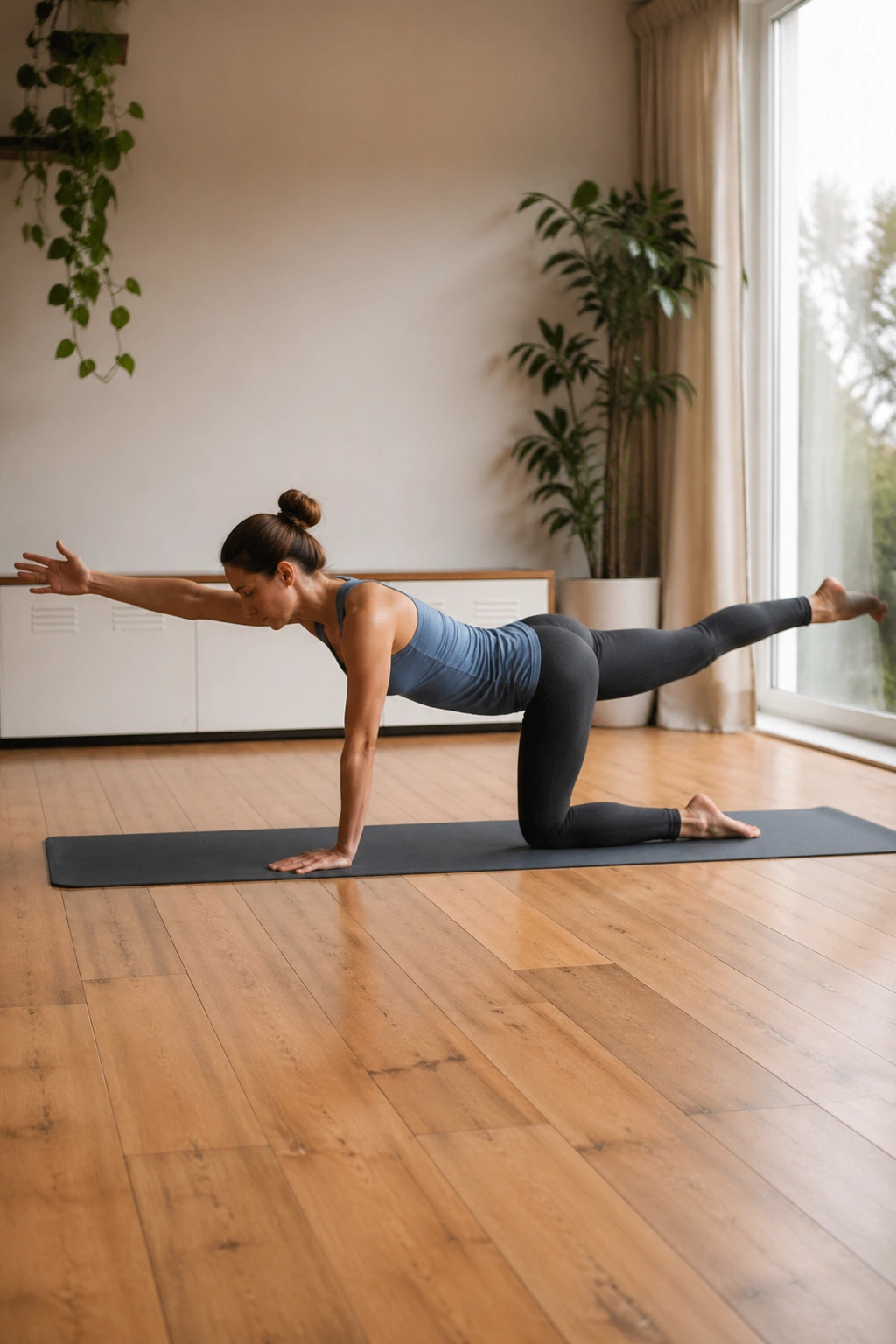
Reach opposite arm and leg, and the room suddenly tells you if you are twisting.
Bird dog starts on hands and knees. Extend one arm forward and the opposite leg back, keeping the hips level and the spine quiet. The goal is not height. The goal is stability. When it works, the whole trunk feels like one long line.
Why It Belongs in a Posture Routine
- It trains the deep abdominal support that keeps the spine centered
- It strengthens the glutes without cranking the low back
- It teaches the shoulder and hip to work across the body
- It exposes side-to-side differences fast
Try a slow reach, hold for one breath, and switch. If the pelvis swings open, shorten the reach. If the neck cranes, keep the gaze down between the hands. The form should look calm, but the work underneath is real.
This is a good choice when you want posture training that feels functional instead of theatrical. You can use it as a warm-up or a stand-alone strength drill.
12. Leg Pull Back for the Whole Back Line
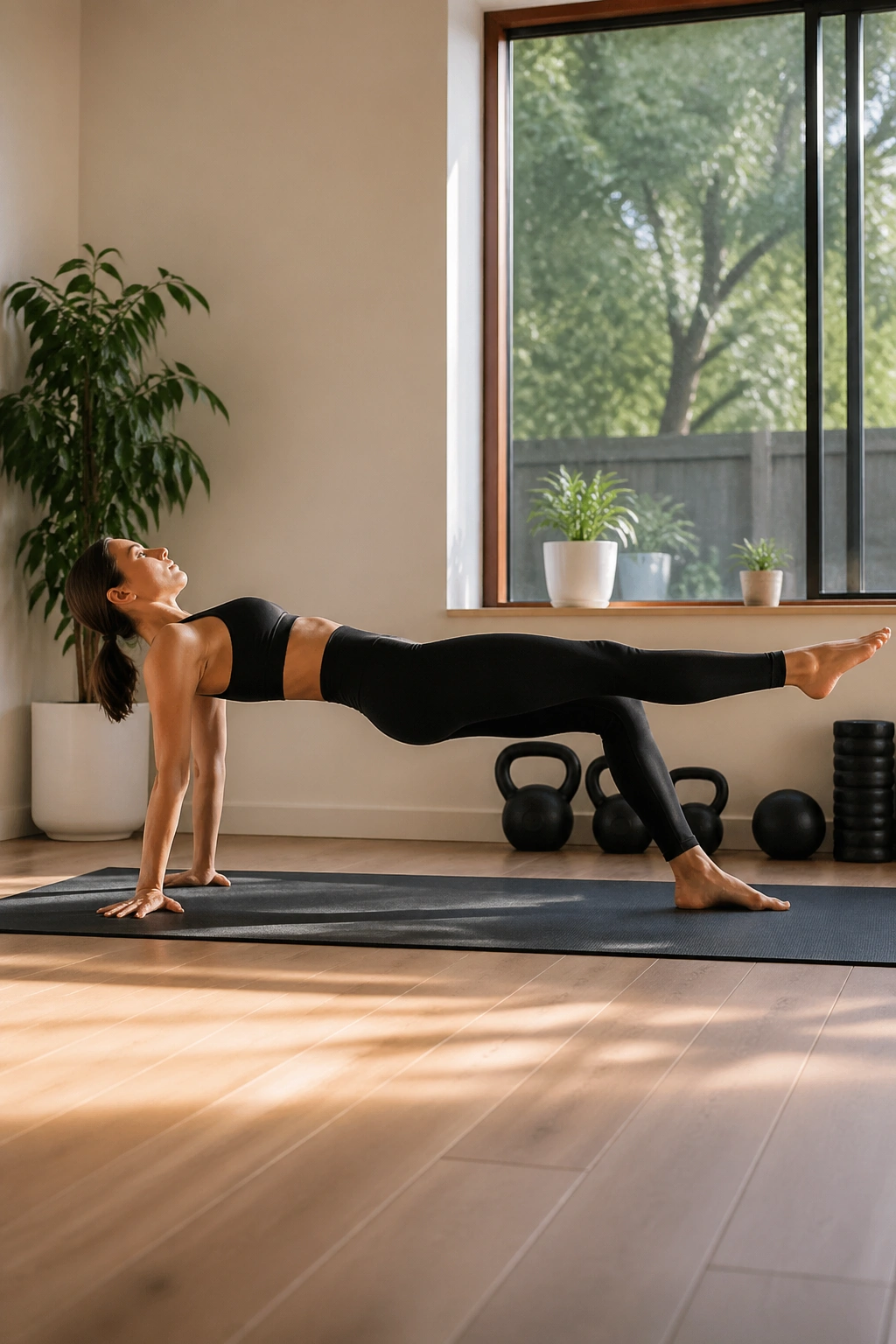
Plank can teach posture, but leg pull back does it with less ego.
Sit with the hands behind you, fingers turned slightly out if your wrists allow it, then lift the hips so the body forms a long line. From there, you can hold the shape or lift one leg at a time if you are ready for more challenge. The chest stays open, the ribs stay contained, and the back body has to work hard to keep everything from sagging.
The best part is the shoulder work. You get weight-bearing stability through the arms and upper back, which carries over to the way you stand with your chest open instead of collapsed forward.
If the wrists complain, do a tabletop version with hands on the floor behind you and keep the hips lower. If the hamstrings cramp, bend the knees a little.
Do not let the head drop back. That turns the move into a neck exercise, and nobody needs that.
13. Chest Expansion with a Band for Upright Standing
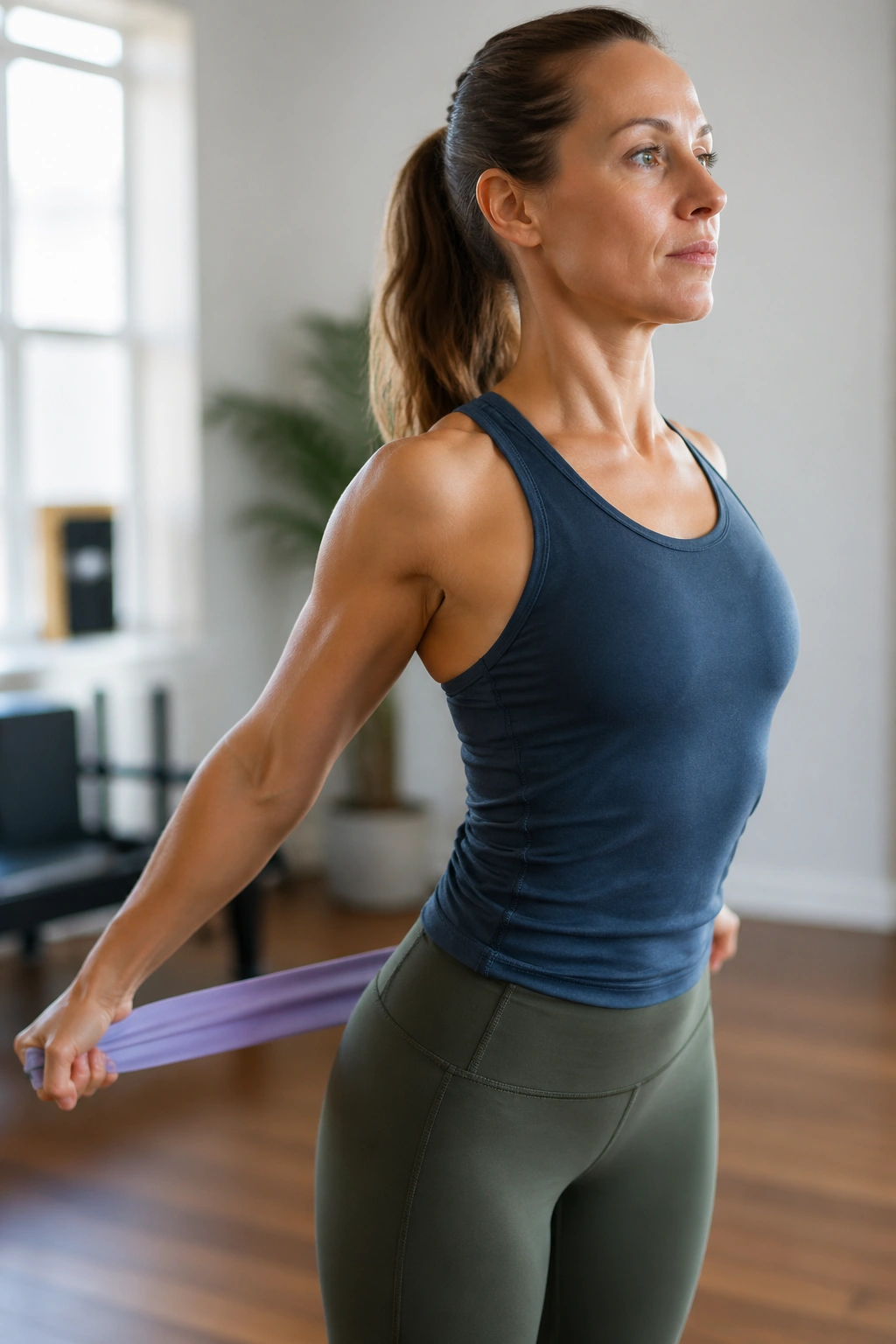
Can a simple band help posture? Yes, if you use it correctly.
Stand tall with a light resistance band held in both hands behind the hips. Pull the arms slightly back, open the collarbones, and feel the shoulder blades slide down the back. Then return slowly, keeping the ribs from flaring. That little pull teaches the back body to organize itself while you’re upright, which is where posture actually matters.
Why the Band Helps
- It gives your back feedback right away
- It makes the shoulder blades work against resistance
- It teaches you not to thrust the ribs forward
- It reinforces a tall neck and open chest
Keep the movement small. A giant pull usually becomes a rib flare and a shrug. Not useful. A clean, restrained pull with the neck long is the one that changes how you carry yourself later in the day.
I like this move because it feels close to real life. You’re standing, breathing, and holding yourself in space. That is posture, not just exercise.
14. Wall Angels for Daily Shoulder Alignment
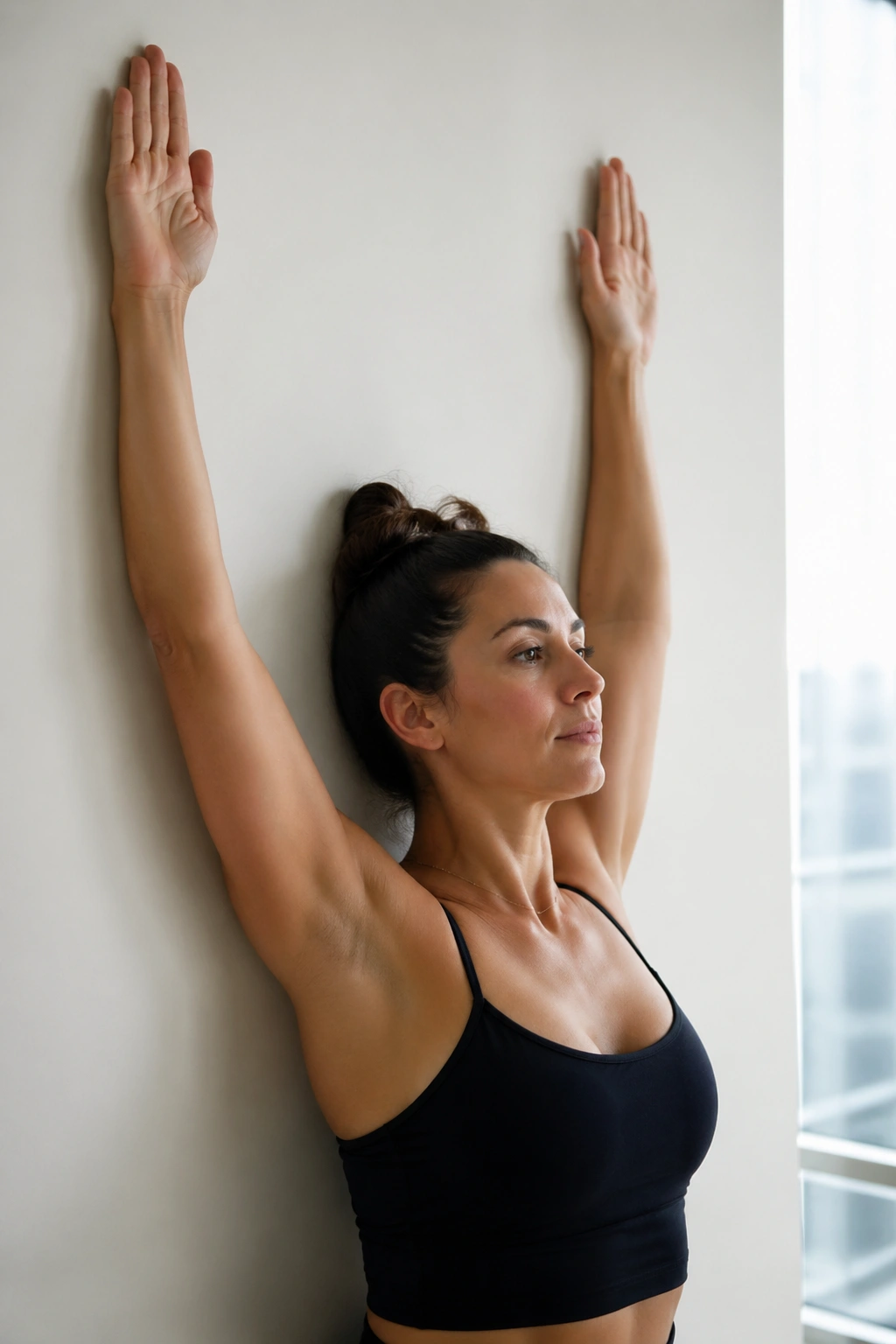
Most people can tell when wall angels are helping because the floor stops feeling like the only place their shoulders belong.
Stand with your back against a wall, feet a few inches forward, and let the lower ribs settle. Slide the arms up and down in a smooth path, keeping as much contact with the wall as your body allows. If the wrists cannot touch, fine. Don’t force it. The point is to teach the upper back and shoulders to move without the chest puffing out.
This is one of the best posture drills for people who sit a lot because it gives immediate feedback. If your ribs pop, you know. If your chin juts, you know. If the low back arches off the wall, you know.
A few slow reps can be enough.
The trick is to stay honest. You want the ribs to behave, the neck to stay long, and the shoulder blades to slide rather than clamp. That is the whole job.
15. Standing Roll Down for Length Through the Spine
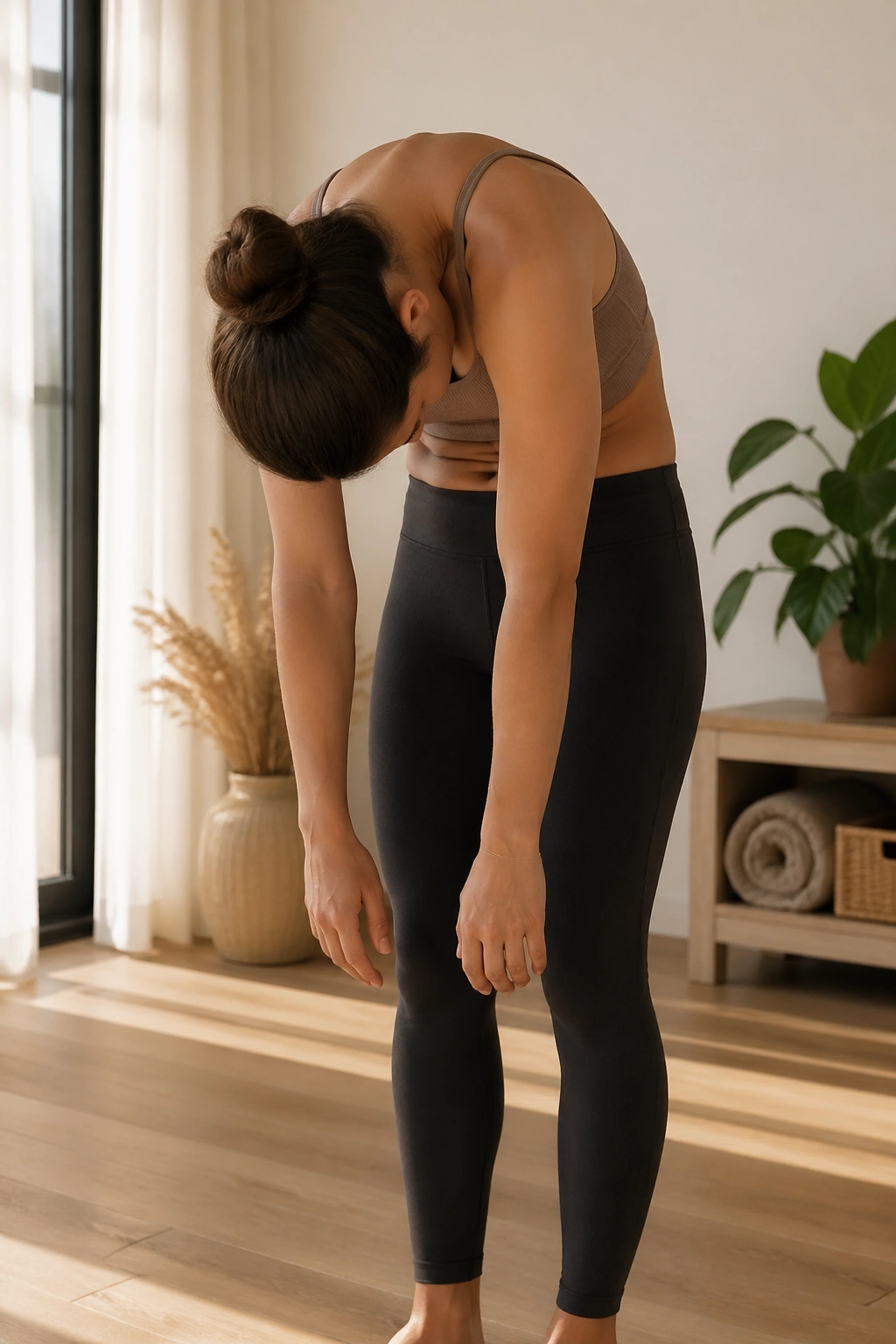
The back of your body should feel like it’s being gently poured toward the floor.
Standing roll down starts with a chin nod, then a slow peel through the spine as the arms hang heavy and the knees soften. At the bottom, pause for a breath or two. Roll back up one vertebra at a time. The movement is calming, but it also teaches the spine to articulate instead of locking in one flat line.
What It Does Well
- Releases the back of the neck
- Stretches the hamstrings without a yank
- Helps the ribs stack over the pelvis
- Reminds you what length feels like
If your hamstrings are tight, bend the knees more. If the low back grabs, make the roll smaller. There is no prize for touching the floor. The useful part is the control on the way down and the control on the way back up.
This is a good one to do between longer strength exercises because it resets the shape of the spine fast.
16. Spine Stretch Forward for Controlled Flexion
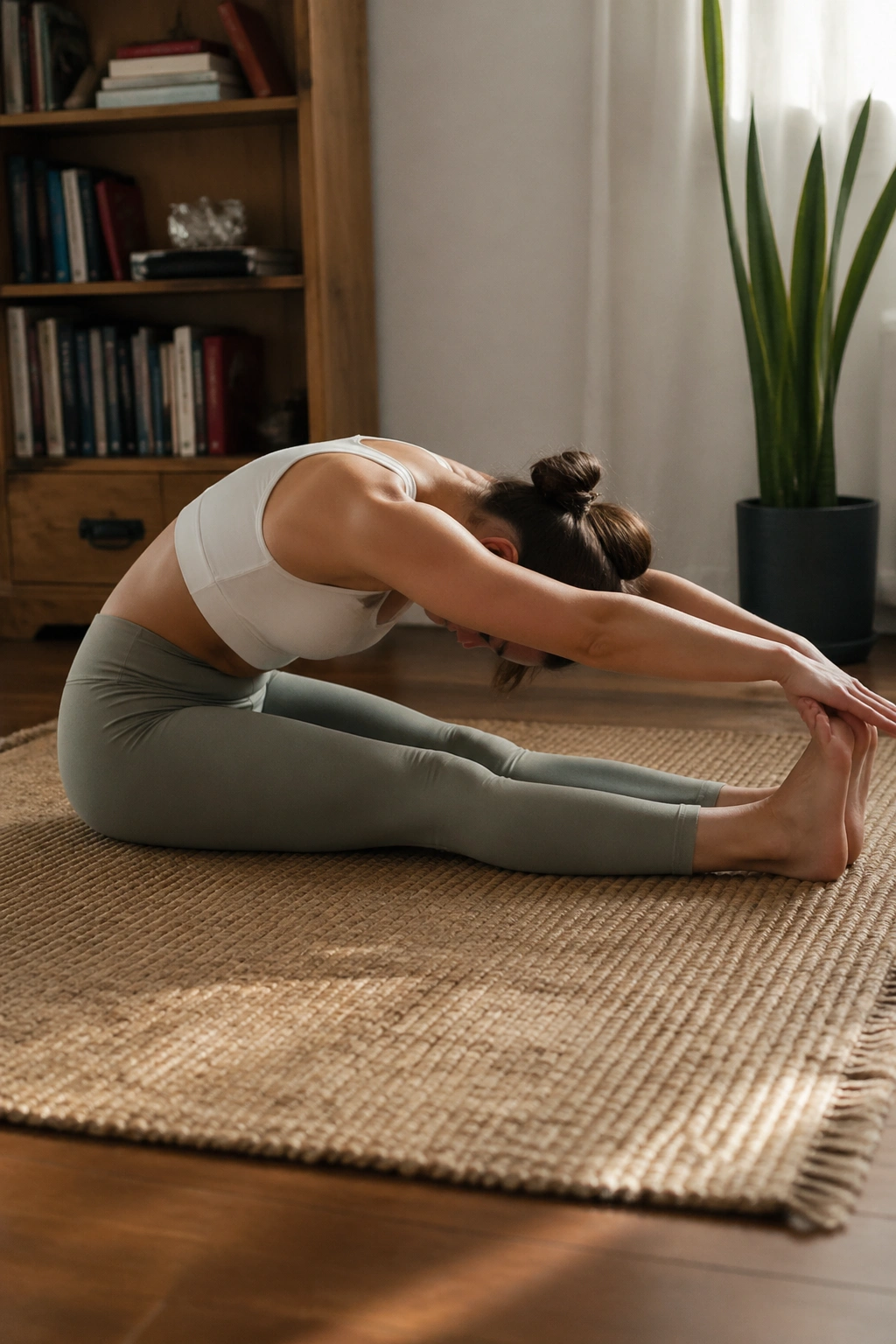
This is not about folding in half. It’s about making the spine lengthen in pieces.
Sit tall with the legs out in front, feet flexed, and the seat grounded. On the exhale, nod the chin and reach the crown of the head forward, then let the trunk follow as if each vertebra is sliding away from the next. The forward shape should feel long, not collapsed. The shoulders stay easy.
How to Keep It Clean
- Sit on a folded towel if the pelvis tips backward
- Keep the ribs from jutting forward at the start
- Reach the fingertips past the toes without forcing the neck
- Return by stacking the spine from the tailbone up
People often rush this one, which ruins the effect. Slow is better. You want to feel the back of the body lengthen while the front of the belly stays lightly engaged.
It’s a posture exercise because it teaches the spine to move from a centered seat instead of a slumped one. That’s subtle, but it matters.
17. Mermaid Side Bend for the Side Body
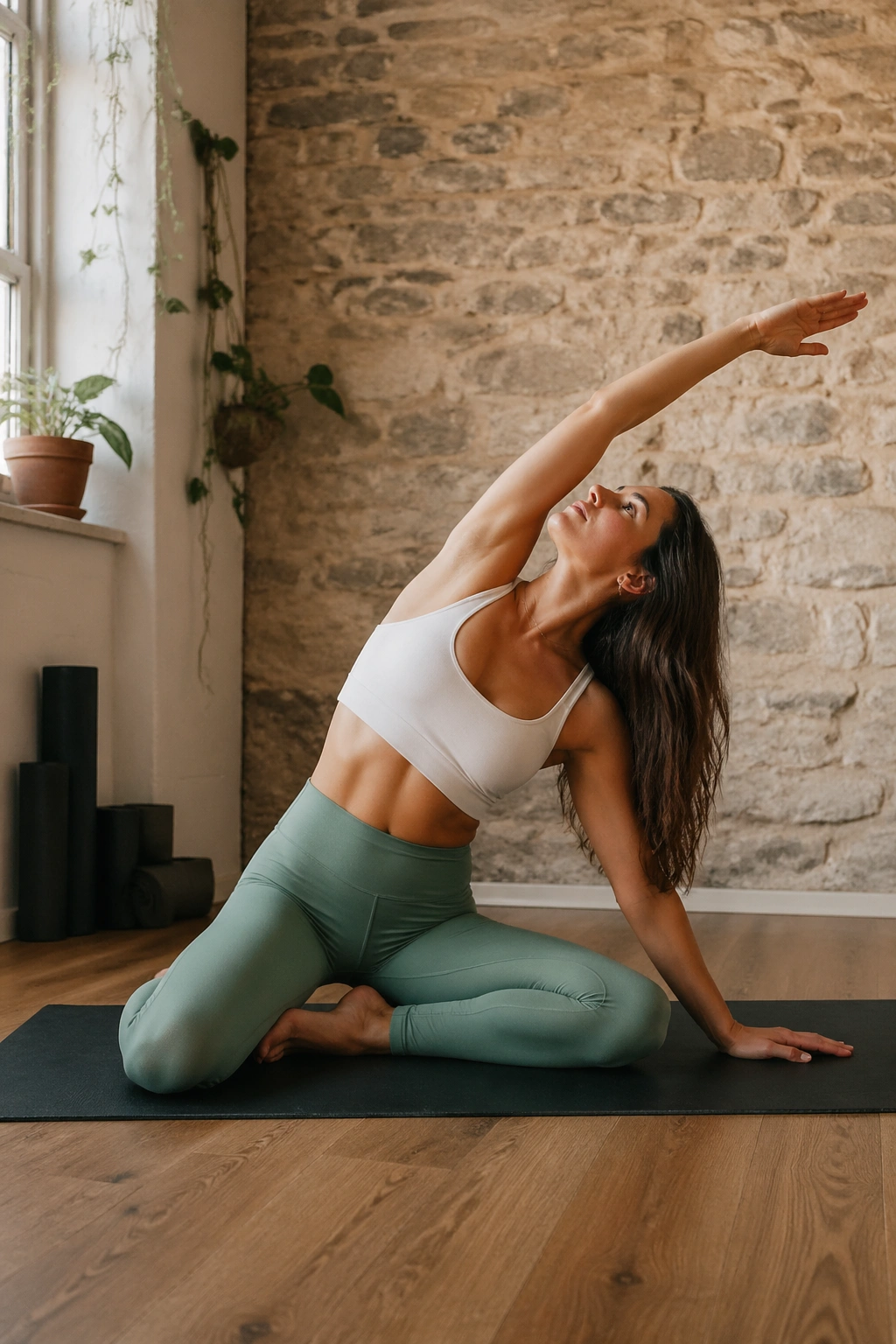
Why keep talking about side bends in a back routine? Because a stiff side body makes the back work too hard.
Mermaid opens the ribs, the waist, and the muscles between the ribs that often get ignored. Sit in a side-sit position, one hand grounded, and arc the free arm overhead into a long side bend. The stretch should travel from the outer hip to the fingertips. If it feels jammed, the range is too big.
I like this movement for people who lean into one hip at a desk or always carry a bag on the same side. The side body shortens fast when you do that. Mermaid gives it room again, which helps the spine stack more evenly afterward.
Keep the opposite shoulder heavy. That keeps the bend from turning into a shrug.
A few slow breaths on each side usually do more than a quick bounce ever could. Let the ribs open on the inhale, and soften the waist on the exhale.
18. Saw for Rotation and Spinal Ease
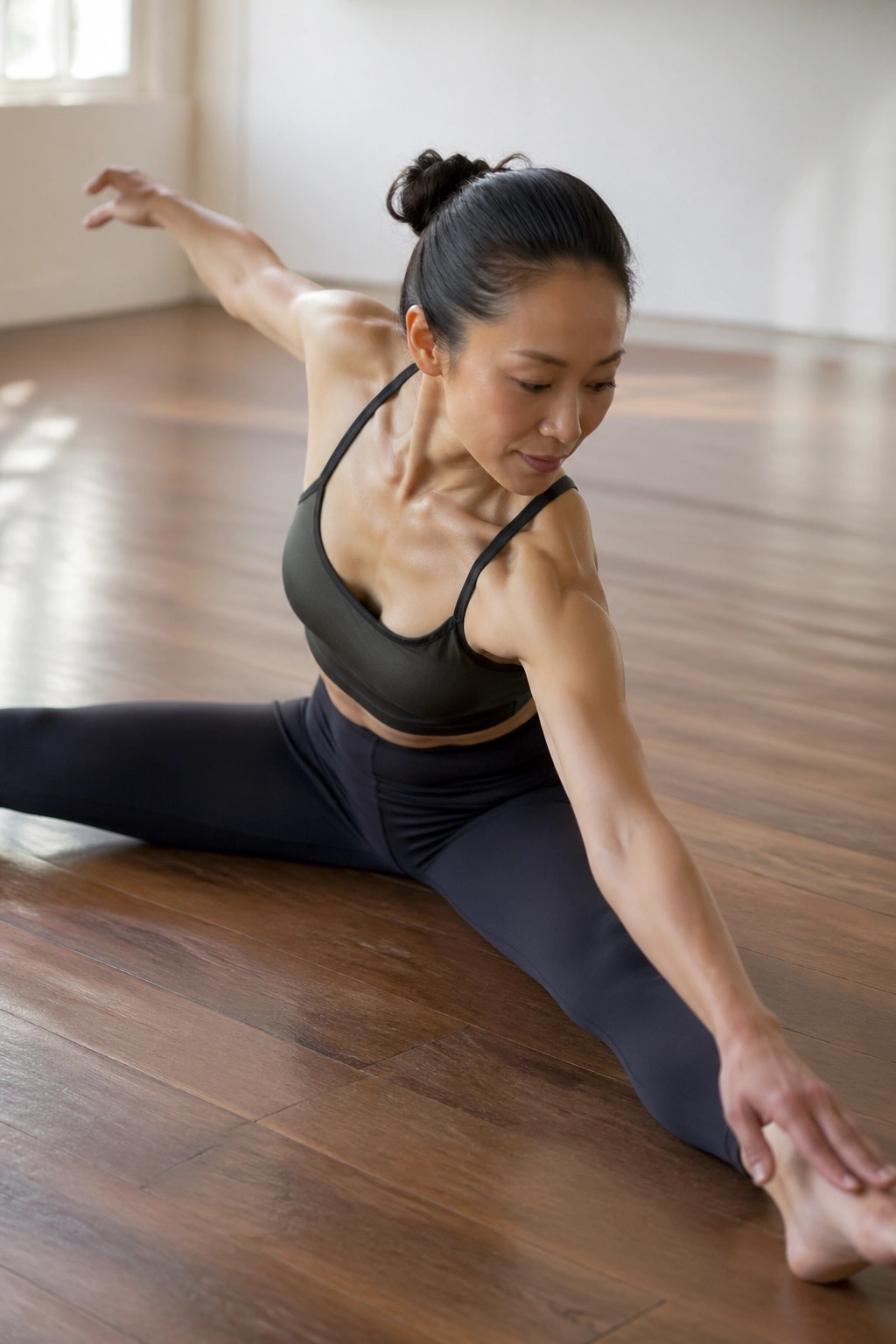
Rotation matters more than most people think.
Saw starts seated with the legs open wide and the arms stretched out. Twist the trunk, then reach the opposite hand toward the outside of the opposite foot, as if you were sawing something in the direction of the little toe. The move is about length plus rotation, not about collapsing down to the floor.
The posture benefit is real. A spine that rotates well usually stands more comfortably too, because it is not fighting to stay rigid all day. Saw helps the upper back move while the pelvis stays anchored.
Do not force the turn through the knees or the low back. Let the ribs initiate the twist. Keep the shoulders relaxed, and return to center before the next side.
This one can feel a little clumsy at first. That is normal. The body often has to remember how to rotate without cheating.
19. Roll Up for Articulated Core and Back Control
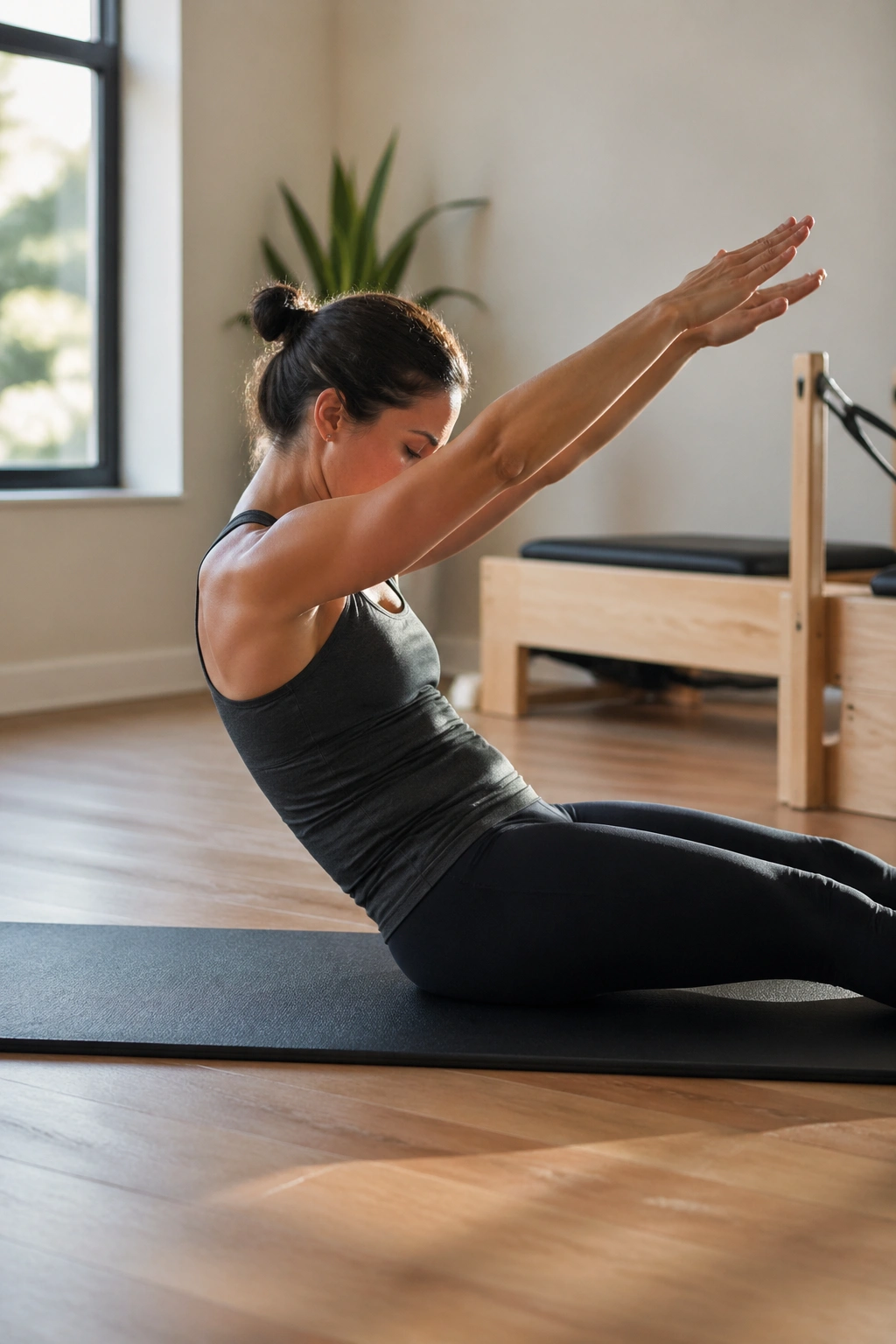
Roll up is a conversation between the abdominals and the spine.
Lie down with the arms overhead, then peel the body upward one piece at a time until you reach a tall seated position. Reverse the path on the way down. If the move is too hard with straight legs, bend the knees a little or keep the hands behind the thighs for support. The quality matters more than the shape.
If Your Back Tugs
- Bend the knees to reduce strain
- Keep the legs anchored so the hips do not pop up
- Exhale as you come forward
- Stop before the lower back starts to grip
This is a posture exercise because it teaches the body to control spinal flexion instead of dropping into it. That helps if your usual sitting shape is a collapsed curve. You learn to rise from the floor with length, then lower yourself with the same kind of care.
I find roll up especially useful for people who feel “stuck” in their midsection. It restores sequencing. That sounds dry. It feels good.
20. Wall Posture Reset Flow to Finish Your Pilates Back Exercises
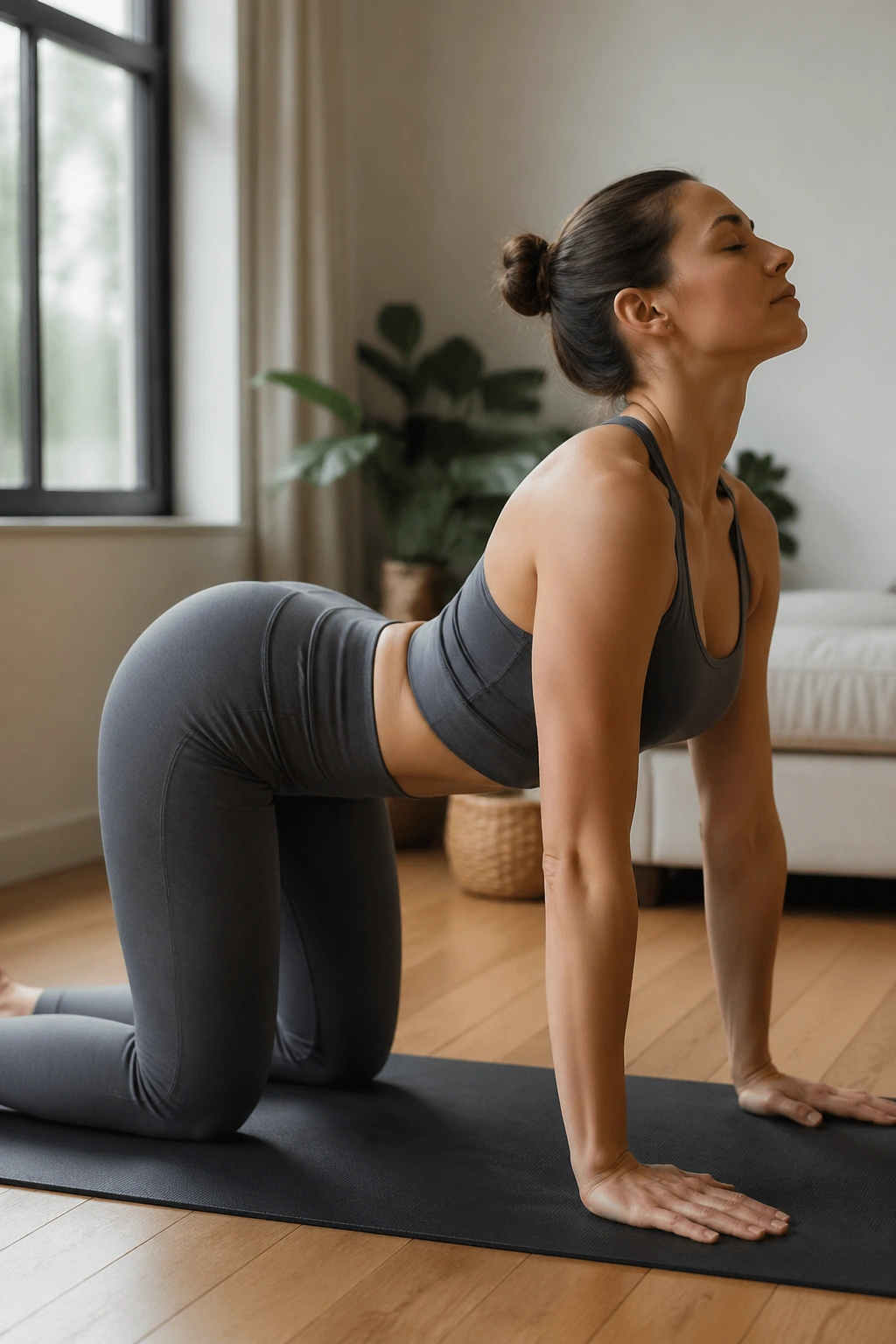
Stand with your heels a few inches from the wall, pelvis heavy, ribs settled, and the back of the head close enough to feel the surface without jamming into it. Then do a small posture reset: chin nod, arm slide, shoulder blade glide, and a slow reach overhead if the ribs stay quiet. This is the kind of thing that turns exercise into a habit you can actually keep.
A good posture reset is not about locking yourself into a perfect shape. It is about remembering where your spine wants to stack when it is not being bullied by gravity and screens. If you step away from the wall and lose the feeling in three seconds, that still counts. Repetition is what makes it stick.
I like this as the final piece because it connects the floor work to everyday standing. Cat-cow, swan prep, swimming, bridge, bird dog — all of that pays off here, where you simply stand and breathe a little better.
Pick four or five of these Pilates back exercises, do them two or three times a week, and keep the reps clean. That’s enough to change how your back feels by the end of the day, which is usually what people wanted all along.
