



A light resistance band can light up your arms faster than a heavy dumbbell if you keep the tempo slow enough to make your shoulders behave. That’s the whole trick behind Pilates band workouts for toned arms: constant tension, clean form, and no cheating with momentum.
And yes, “toned” is one of those words people throw around too loosely. What you’re really after is a mix of muscle shape, better posture, and enough resistance work to make the upper arm look firmer from every angle. Triceps matter here. So do shoulders, rear delts, and the upper back — because arms do not live in a vacuum, no matter how many curl videos pretend otherwise.
A band is sneaky in the best way. The first inch feels easy. The last inch gets ugly. That’s exactly why it works so well for Pilates-style arm work: the muscles stay awake through the whole range, and the small stabilizers have to help instead of loafing around.
Start with the move that teaches your ribs, elbows, and shoulders to cooperate. After that, the rest of the list gets more interesting — and a little more burny.
1. Pilates Band Biceps Curl in Pilates Stance
Stand on a long resistance band with your feet hip-width apart, then hold the ends with your palms facing forward. The setup looks simple. It isn’t. If your ribs flare and your shoulders creep up, the band will turn into a neck exercise, which is not what we want.
Why this version feels different
The Pilates piece is in the posture: tall spine, soft knees, pelvis stacked, and elbows pinned near the waist. That position keeps the curl honest. You’re not swinging your torso or leaning back to fake extra range.
Move for 10 to 12 slow reps, then hold the top for 5 seconds on the last rep. Lower for a count of three. That long lowering phase is where the arm work gets serious.
- Band choice: light to medium tension for clean form
- Tempo: 2 seconds up, 3 seconds down
- Cue: keep your wrists straight, not bent back
- Mistake to avoid: letting the elbows drift forward
Tip: If your forearms start screaming before your biceps do, the band is probably too thick or your grip is too tight.
2. Overhead Triceps Extension with a Long Band
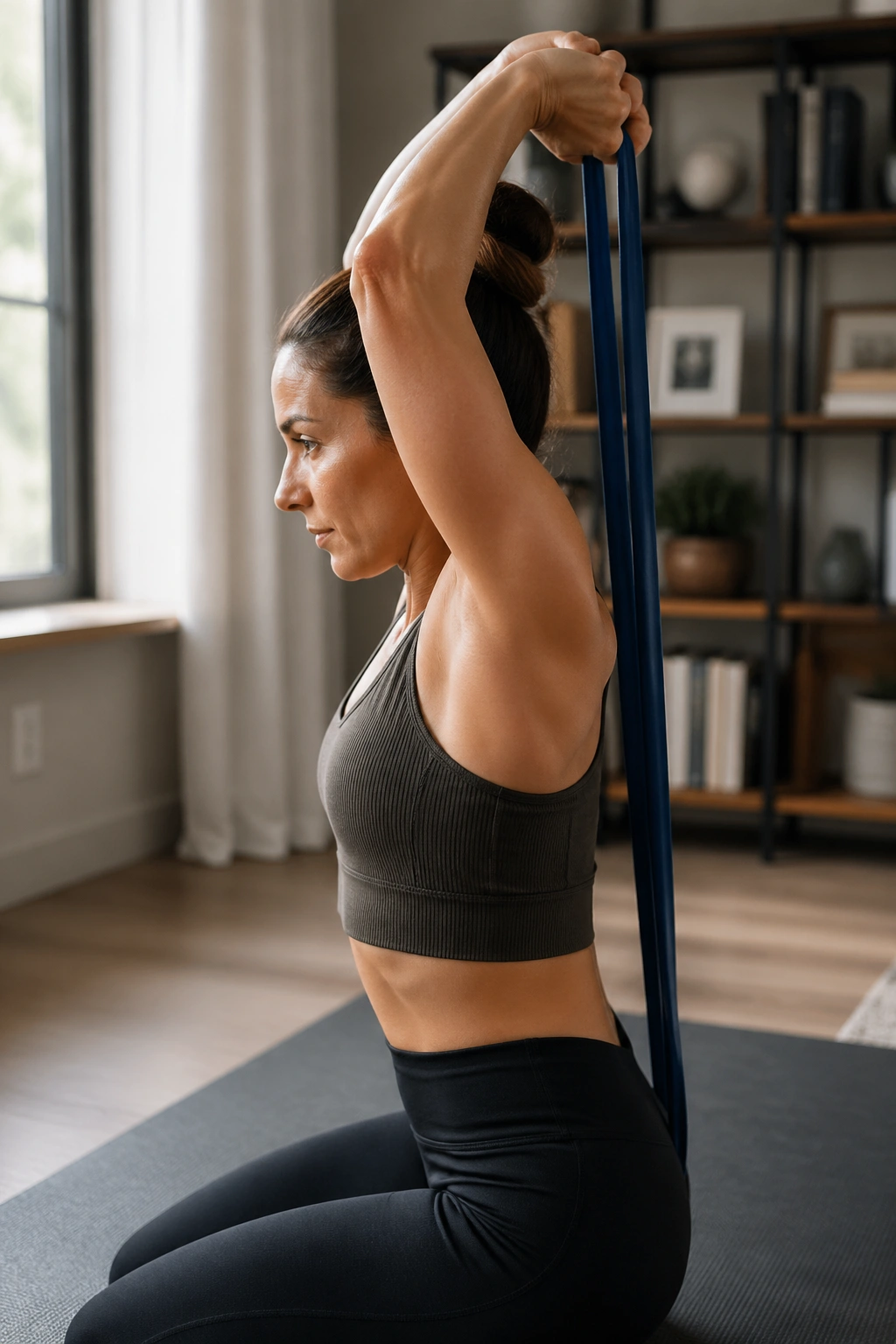
Why does a light overhead triceps extension burn so fast? Because the triceps are doing a job they hate: holding your upper arms still while the forearms move. That little overhead reach also asks your rib cage to stay quiet, and that adds another layer of effort.
Step on the band with one foot, bring the ends overhead, and keep your elbows close to your ears without letting them flare wide. Then bend and straighten the elbows with control. The first few reps may feel almost polite. Rep eight usually tells the truth.
The key is not to arch your back just to make the band shorter. Keep the tailbone heavy, lower ribs knitted in, and neck long. If you can see your shoulder blades climbing toward your ears in a mirror, stop and reset.
Do 8 to 10 reps, rest for 20 seconds, then do another set. Light bands work better here than heavy ones, because the goal is clean elbow extension, not a wrestling match.
3. Pull-Apart Pulse Ladder
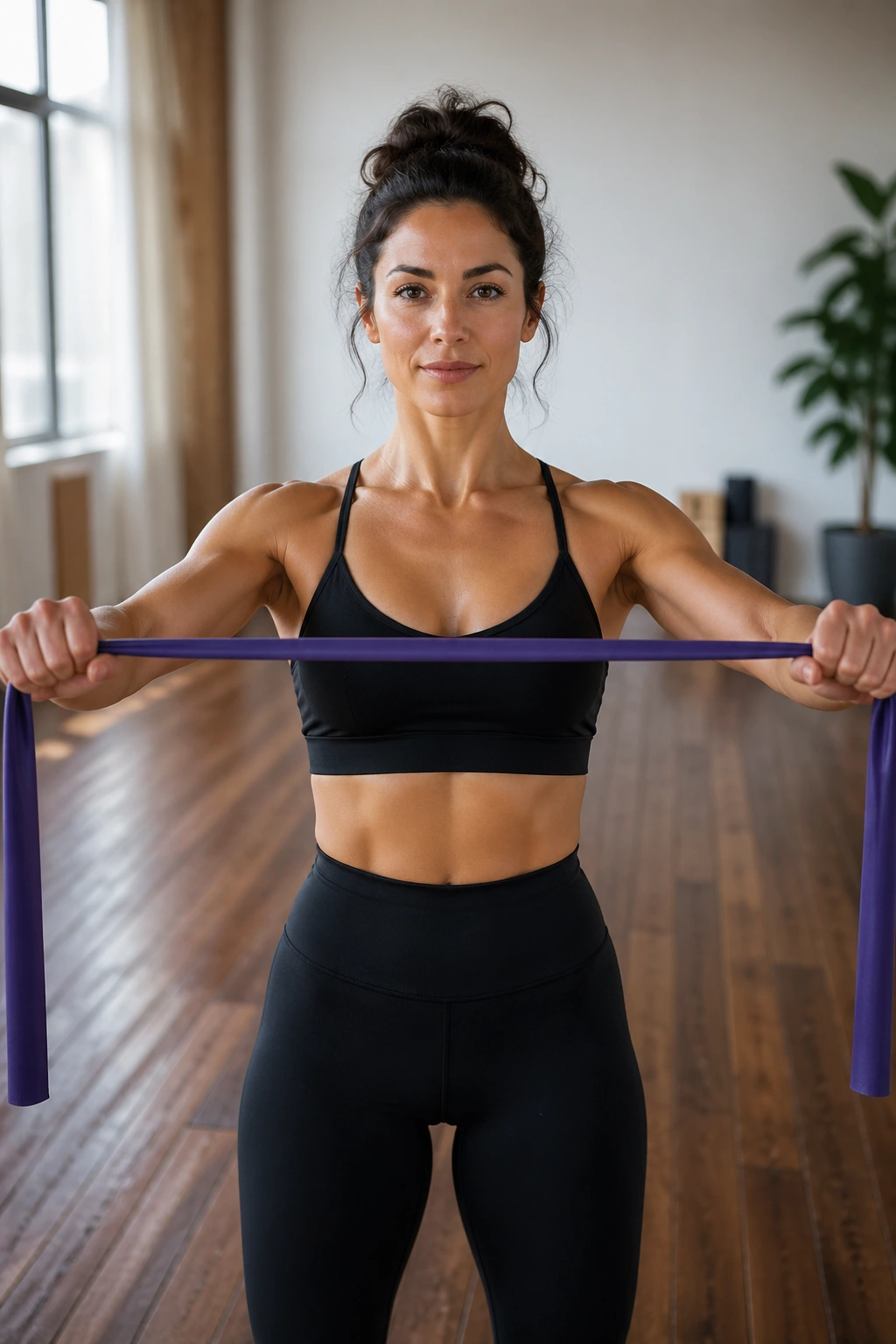
This one looks like a shoulder drill. It behaves like a posture drill. And somewhere between the two, your triceps and rear delts start working hard enough to change the feel of your upper arms.
Hold a long band at chest height with both arms straight but not locked. Pull it apart until the band touches your chest line, then add tiny pulses in that open position. Those pulses matter more than people think. They keep the muscles under tension while the shoulders try to sneak upward.
How to run the ladder
Do 12 full pull-aparts, then 8 tiny pulses, then hold the band open for 10 seconds. Rest and repeat twice. If the band is snapping out of your hands, you’re gripping too hard.
- Keep your hands level with the sternum
- Stop when the band touches your chest line
- Squeeze shoulder blades back and down
- Avoid shrugging on the open phase
A good pull-apart should feel like your upper back is waking up first, then your arms join the party a half-second later. That delay is a good sign.
4. Bent-Over Reverse Fly
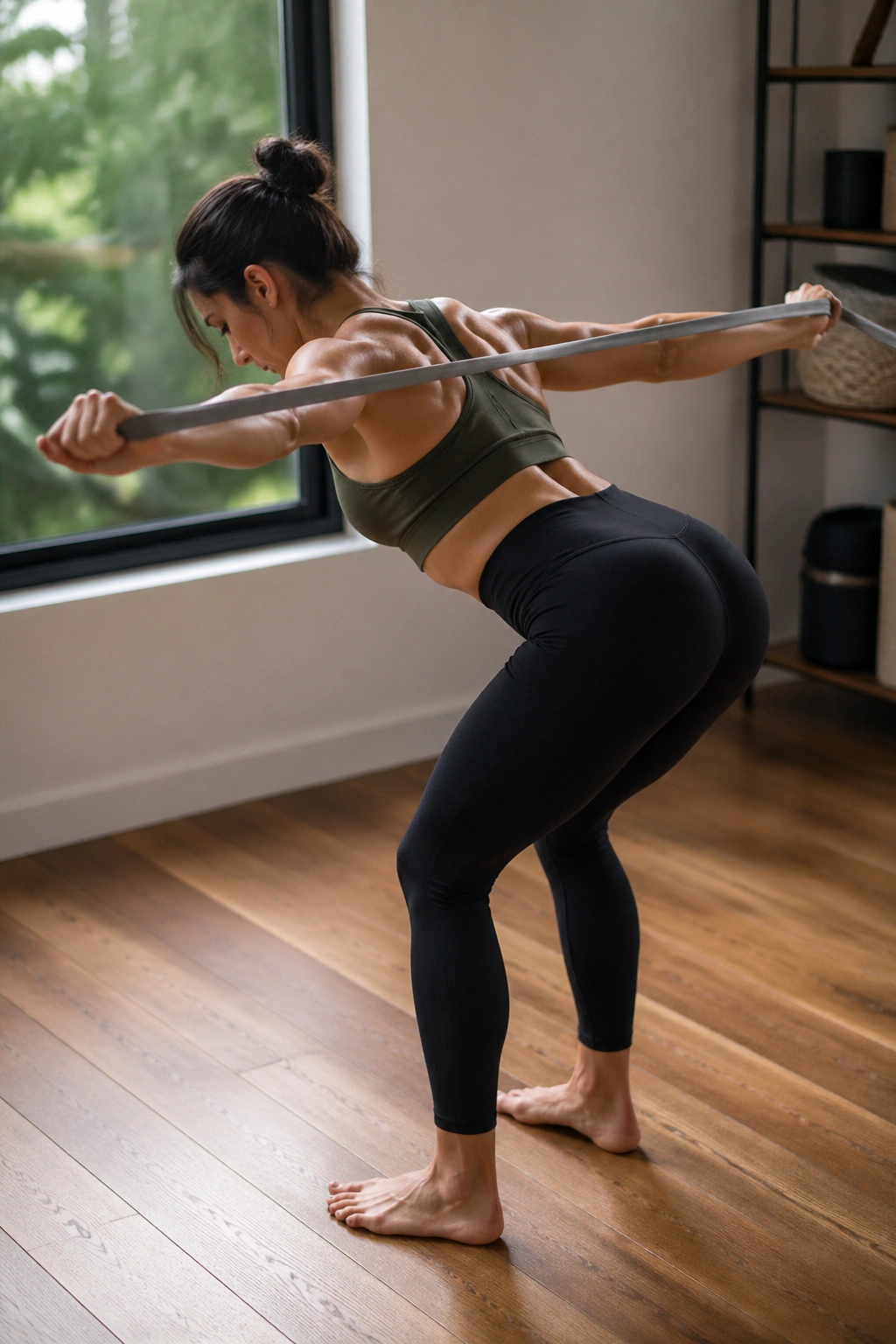
If your shoulders creep up by rep five, the band is too heavy or your hinge is too shallow. That’s the part nobody likes to admit. A reverse fly only looks graceful until the rear delts and upper back get involved.
Hinge at the hips with a soft bend in the knees, chest angled forward, and neck in line with the spine. Hold the band with arms hanging down, then lift the arms out wide until they line up with your shoulders. No jerking. No swinging. The movement should feel like opening heavy curtains, not tossing laundry.
What to watch for
- Thumbs can point slightly up to keep the shoulder in a safer position
- Stop at shoulder height, not above it
- Keep the movement small if the band pulls you forward
- Use 8 to 12 reps with a slow return
The reverse fly gives arms a cleaner outline because it hits the muscles that support posture. That matters more than people expect. Good arm shape often starts in the back.
5. Pilates Band Chest Press with Rib Control
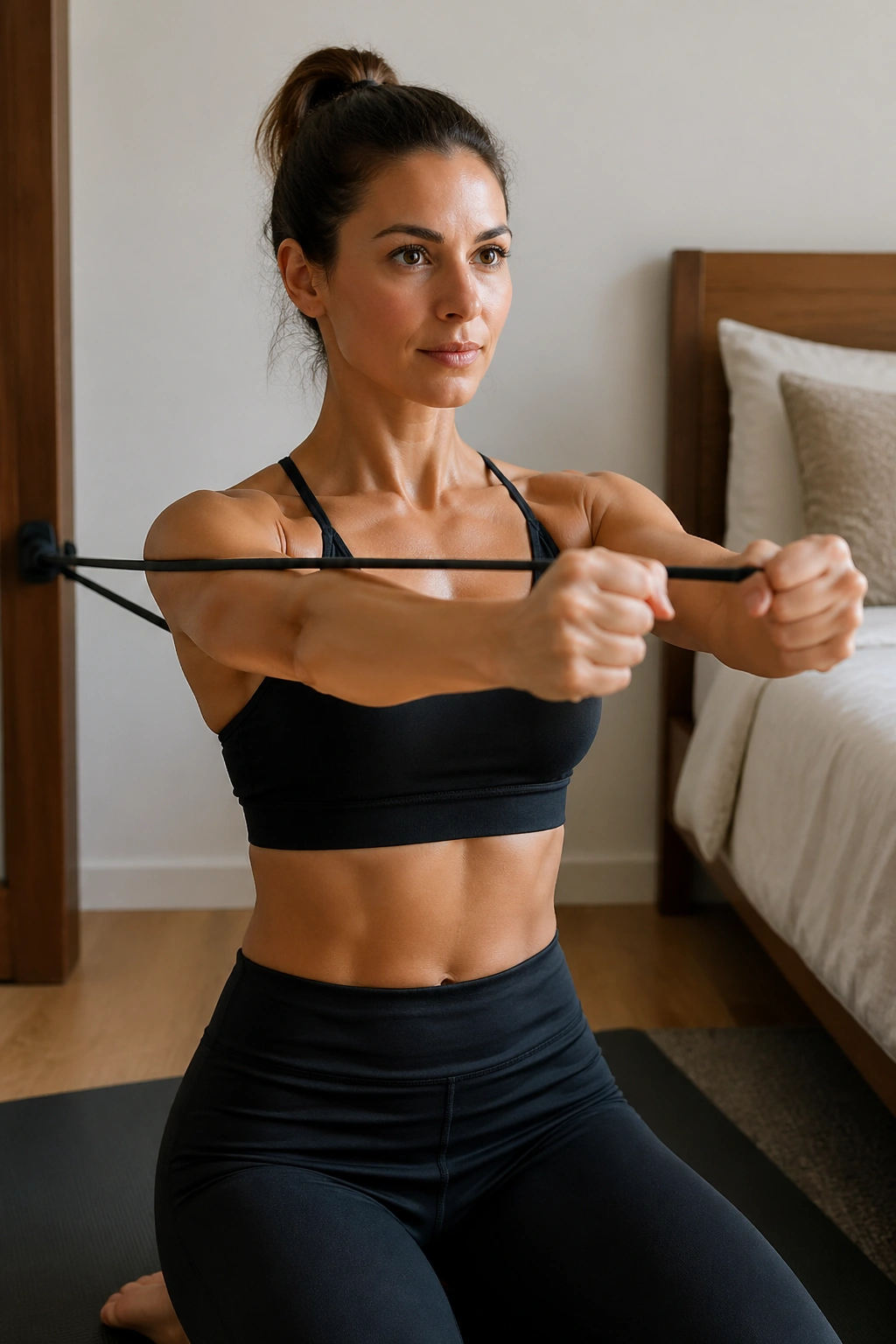
A chest press sounds like a chest move, and it is, but your arms do most of the visible work. That’s why it belongs in a toned-arms routine. The triceps lock out the press, the shoulders stabilize, and your core has to stop the ribs from popping open like a trapdoor.
Anchor the band behind you at chest height or loop it around a sturdy support. Step one foot forward, bend the elbows, then press both hands straight out until the arms are nearly long. Pause for one breath. Return slowly.
Unlike dumbbells, a band makes the hardest part of the press happen at full extension. That means the triceps keep talking at the very end, when many other moves get lazy. I like this one for people who want arm work without hammering the joints.
Do 10 reps, rest, then do 2 more sets. If your lower back arches, shorten the range and slow down. The press should feel firm, not sloppy.
6. Triceps Kickback with a Long Hinge
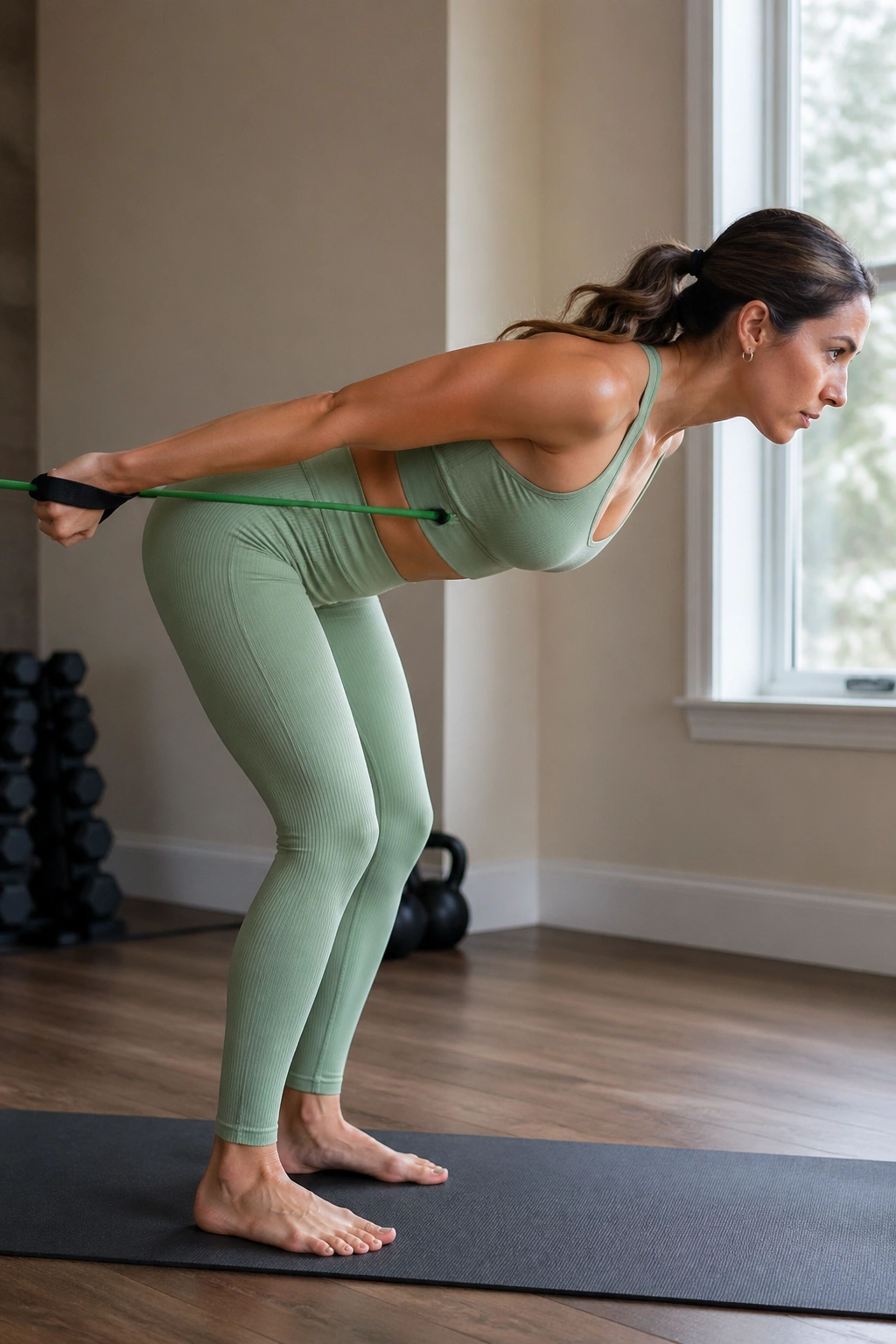
Why does this burn so hard when the movement is tiny? Because the triceps are working in a fixed position, and there’s nowhere to hide. The hinge makes it feel even more intense, since your glutes and hamstrings are helping hold the torso steady while the arms finish the job.
Hinge forward with a flat back, elbows high beside your ribs, and forearms hanging toward the floor. Extend the arms straight back until they line up with the torso. Then pause for a beat. That pause is the money.
A lot of people swing the upper arm here. Don’t. The upper arm should stay nearly frozen, like it got parked in place. The forearm moves. That’s it. If you need to rock the torso, the band is too heavy.
Simple setup cues
- Hinge until your torso is close to parallel with the floor
- Keep elbows tucked
- Extend to a straight arm without locking hard
- Use 12 controlled reps, then switch sides if needed
This move is small, but it can leave the back of the arm buzzing for hours. Not glamorous. Very effective.
7. Seated Row with a Tall Spine
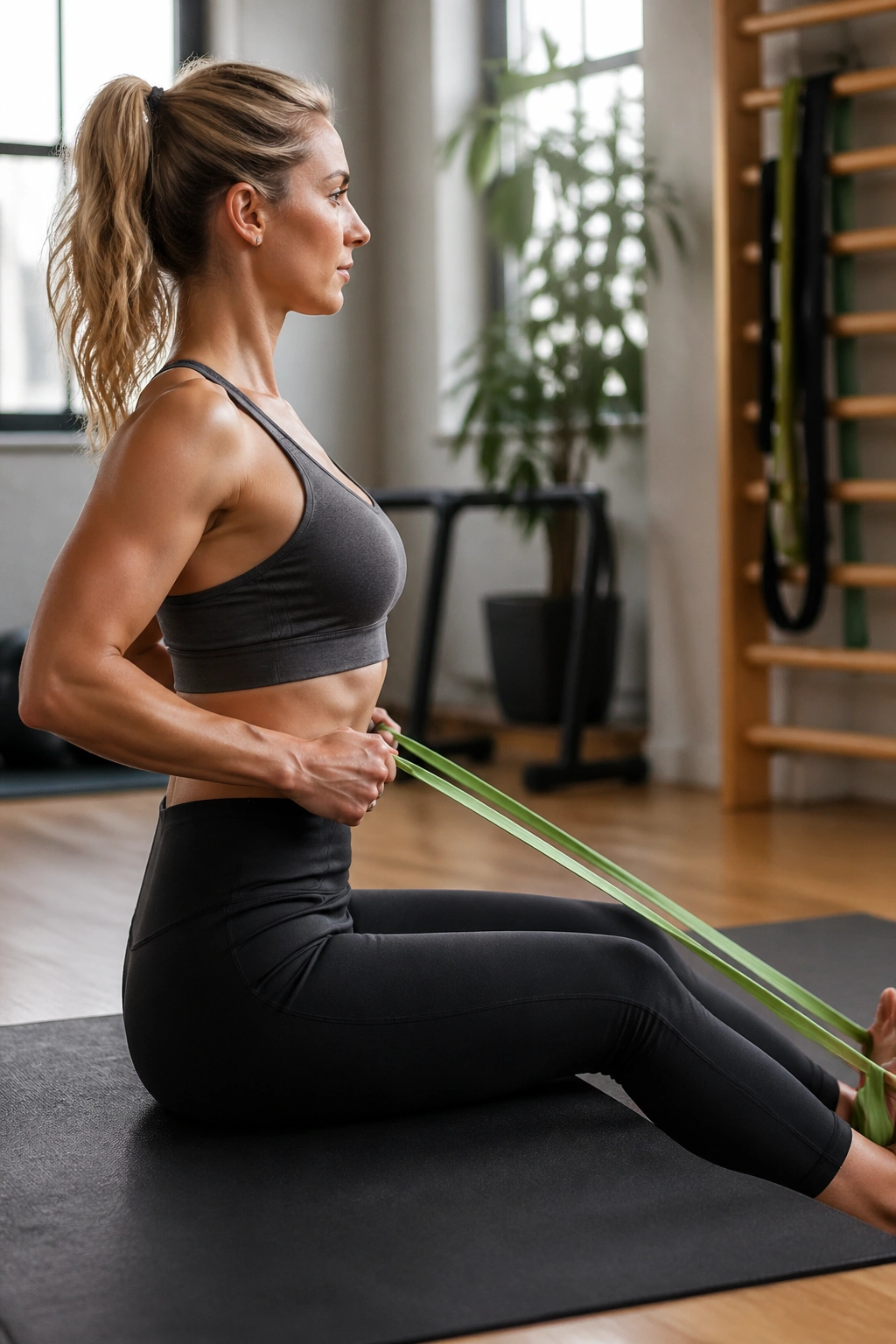
A seated row is one of those exercises people think belongs to the back only. That’s too narrow. When your shoulder blades know how to move well, your arms look better in motion and at rest. That’s the part worth paying attention to.
Sit tall with the band looped around your feet or anchored in front of you. Hold the ends with straight wrists, then pull the elbows back until the hands reach your waist. Pause and squeeze the shoulder blades together, but not so hard that you turn into a statue. Then release slowly.
Less shrugging. More control.
The row works best when the first part comes from the back and the last part finishes in the arms. If you yank with your hands from the start, the whole thing gets noisy and inefficient. A clean row feels smooth and narrow, almost tidy.
Do 12 reps with a 2-second squeeze at the back. It’s boring for about ten seconds, then it starts to matter.
8. Side-Lying External Rotation
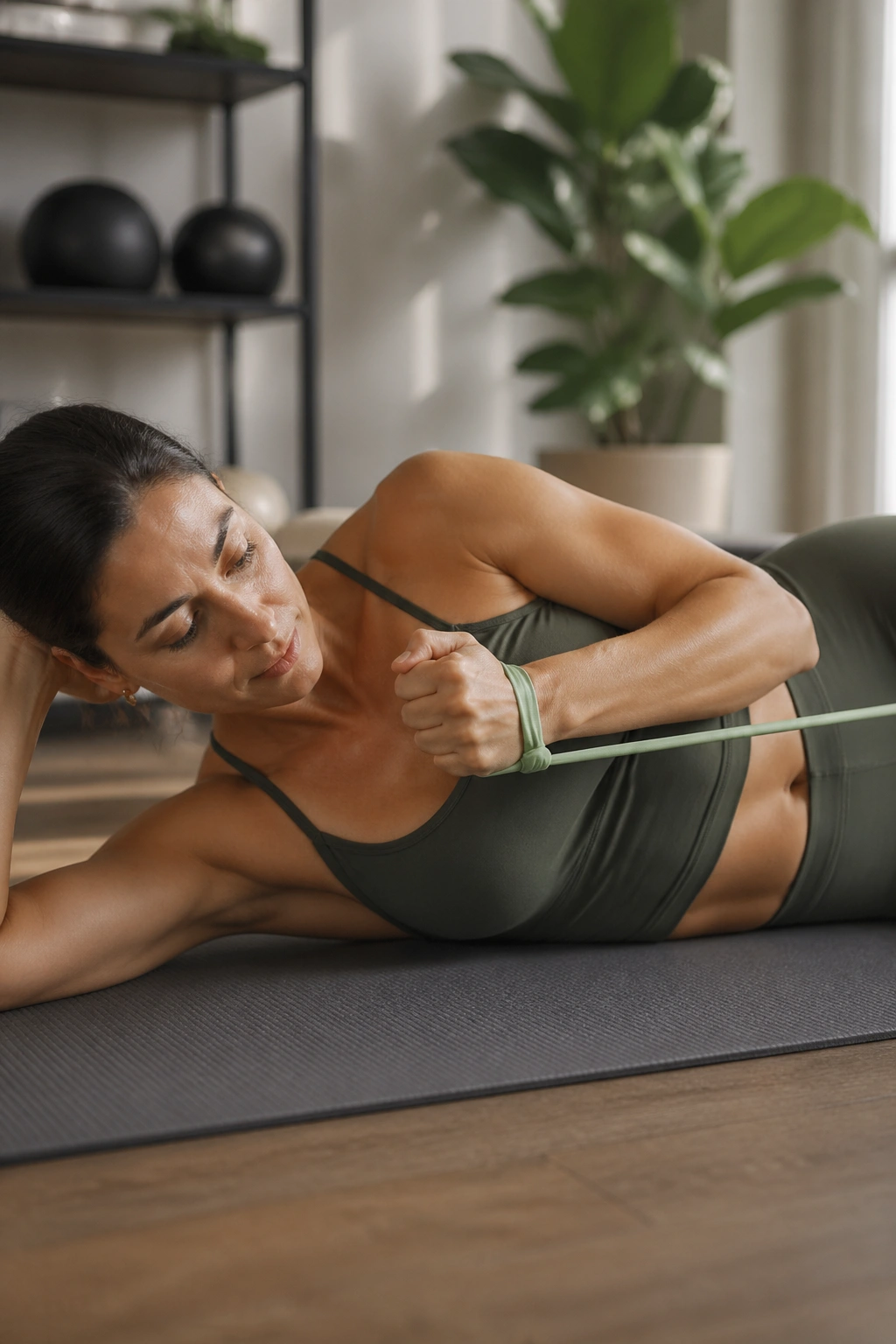
This one doesn’t look like an arm toner at first glance. It’s more of a shoulder support move, which sounds less exciting until you realize sturdy shoulders make every other arm drill easier and safer.
Lie on your side with the elbow tucked into your waist and the forearm bent in front of you. Use a very light band and rotate the forearm upward without letting the elbow drift away from the body. The motion is tiny. Good. Tiny is the point.
Why it earns a spot
External rotation strengthens the small muscles that keep the shoulder joint centered. That means better control on presses, rows, and overhead work. It also tends to reduce the sloppy feeling that shows up when people fatigue and start compensating with the neck.
- Use a light band or very light loop
- Keep the elbow glued to the side
- Rotate slowly for 10 to 15 reps
- Stop before the shoulder rolls forward
If you only want a burn, you may skip this one. If you want arm work that actually holds up, don’t.
9. Boxing Jabs with Band Resistance
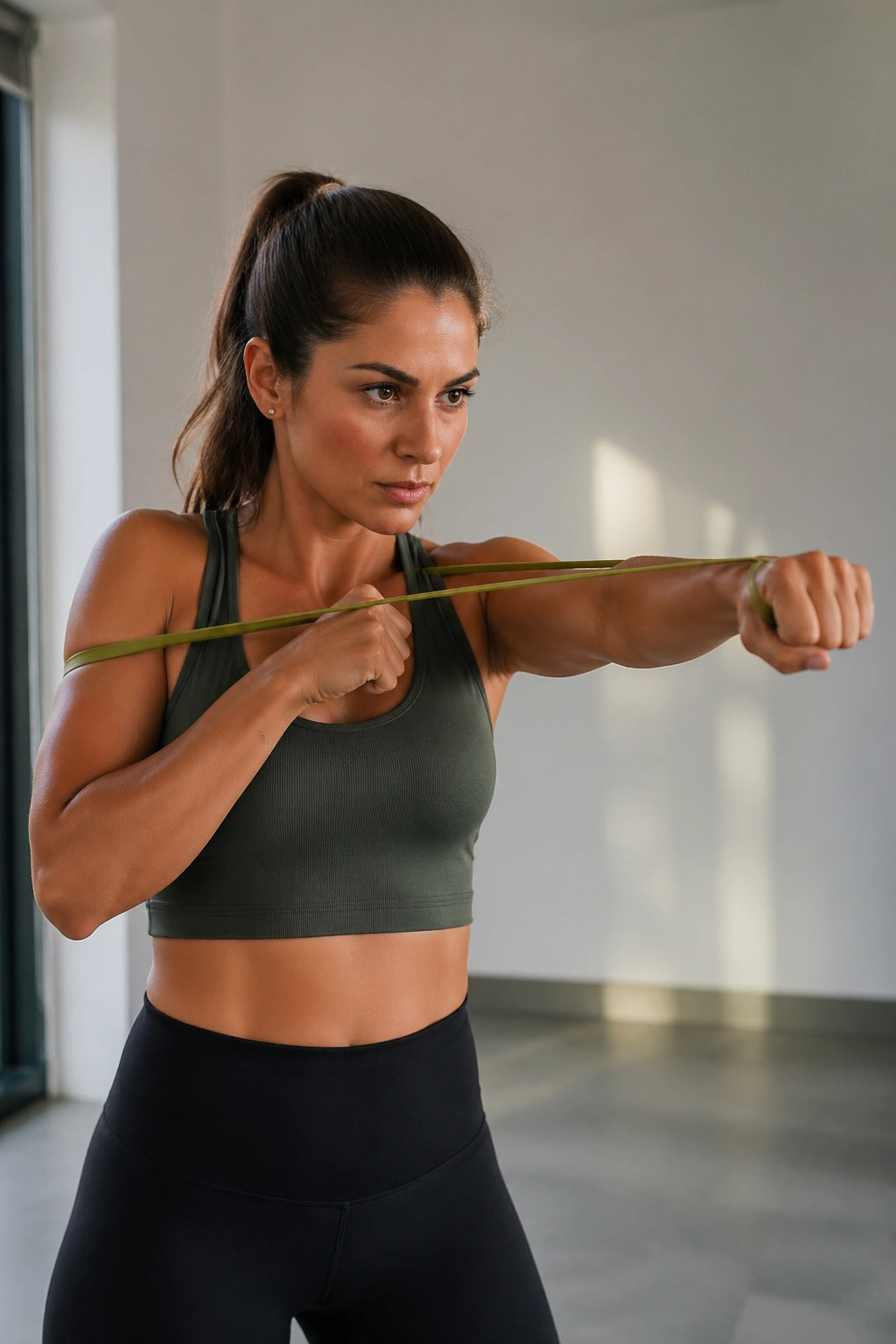
A band around the back turns shadowboxing into a sneaky upper-body burner. The punches look sharp, but every jab has to fight the band on the way out and on the way back. That makes the triceps, shoulders, and core work together in a way that feels a lot like Pilates wearing boxing gloves.
Stand with the band looped across your upper back and hold one end in each hand. Punch forward one arm at a time, keeping the opposite hand near the cheek. Don’t overreach. The elbow should stay soft, not locked like a pole.
The real work comes from rhythm. Jab, return, jab, return. If you move too fast, the band loses its bite and your posture gets sloppy. Slow it down and the arms start to feel heavy in a good way.
Try 30 seconds on, 15 seconds off, then repeat for 3 rounds. It’s one of the few upper-body drills that can feel athletic and controlled at the same time.
10. Lateral Raise with Soft Elbows
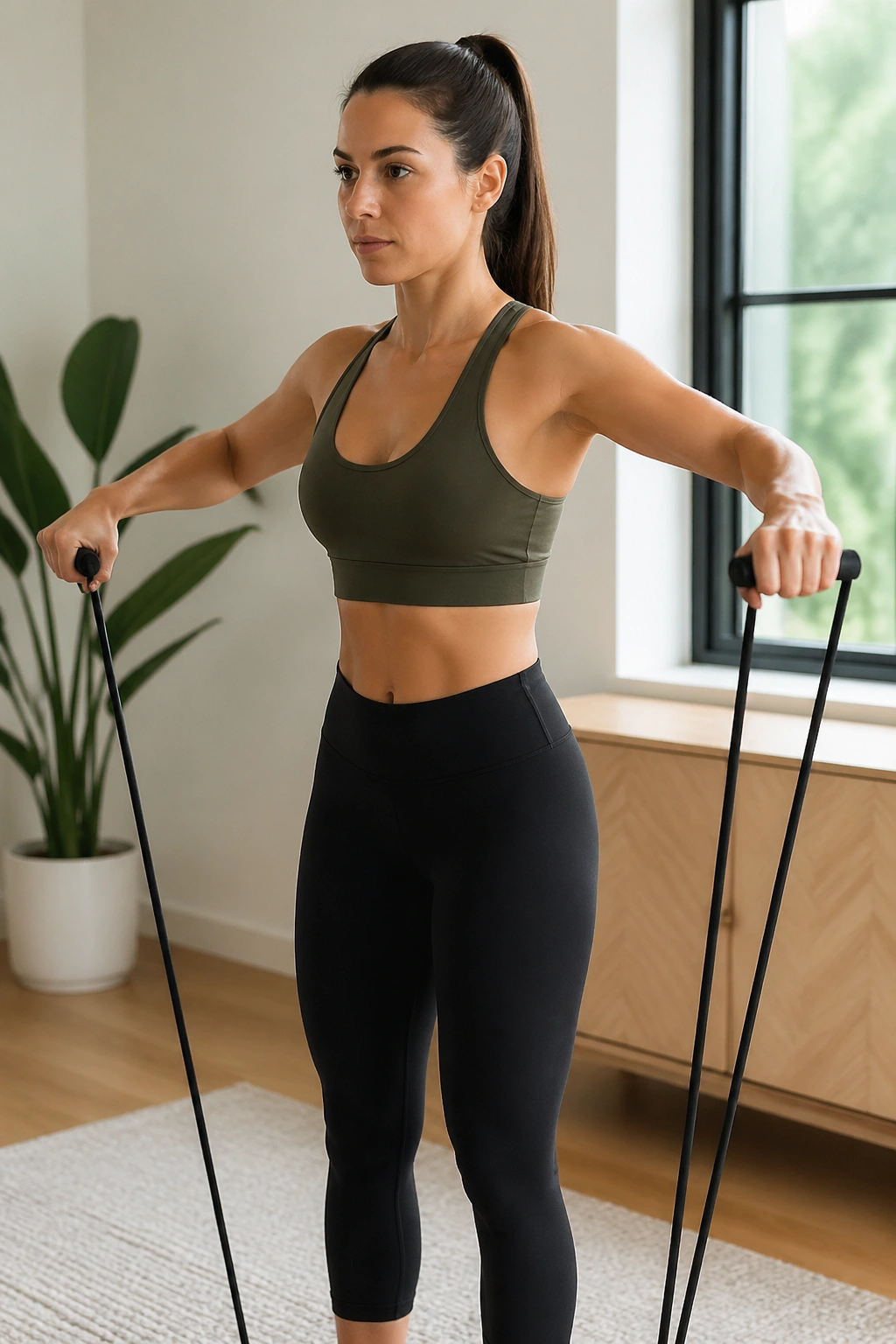
The lateral raise is famous for shoulder work, but it also shapes the upper arm by strengthening the side delts and the supporting muscles around them. That matters if you want arms that look firmer from the side, not just stronger in a curl.
Stand on the band and hold the ends at your thighs. With a slight bend in the elbows, lift the arms out to the sides until they reach shoulder height. Lower with a long, slow return. If your traps take over, your neck will tell on you immediately.
A small forward lean can help some people feel the delts better. Not much. A few degrees is enough. What you do not want is a sway or a shrug. That turns the move into a bad habit with a band attached.
- Lift to shoulder height only
- Keep wrists neutral
- Use 8 to 12 reps
- Lower for 3 seconds
The clean version burns. The messy version just wastes time.
11. Front Raise and Slow Lower
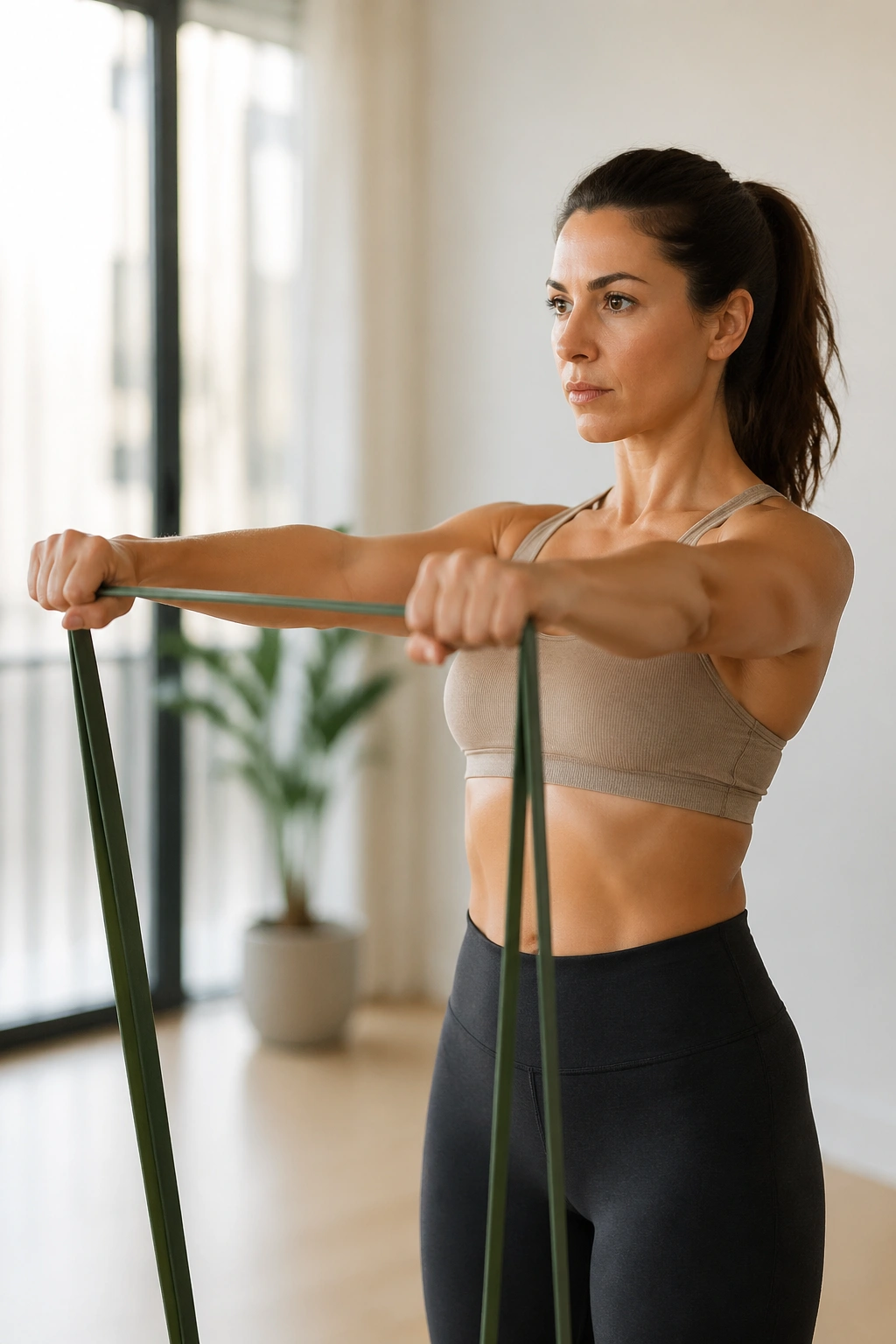
A front raise is easy to cheat. That is why the lowering phase matters so much. Raise the arms to shoulder height, hold for one count, then lower them over three or four counts. The descent is where the shoulders and front of the arms start doing honest work.
Stand tall on the band with palms facing down or in toward each other. Lift one arm or both arms in front of you, stopping at shoulder level. No higher. Higher usually means the shoulders have started chasing the movement.
If you want more arm tone and less neck tension, keep the ribs down and the chin slightly tucked. That one detail changes everything. It stops the body from making the lift easier by leaning back.
I like this move as a finisher after rows or presses because the front delts are already warm. Do 10 reps, then hold the top position for 5 seconds on the last rep. That hold is obnoxious. Good.
12. Standing Diagonal Chop
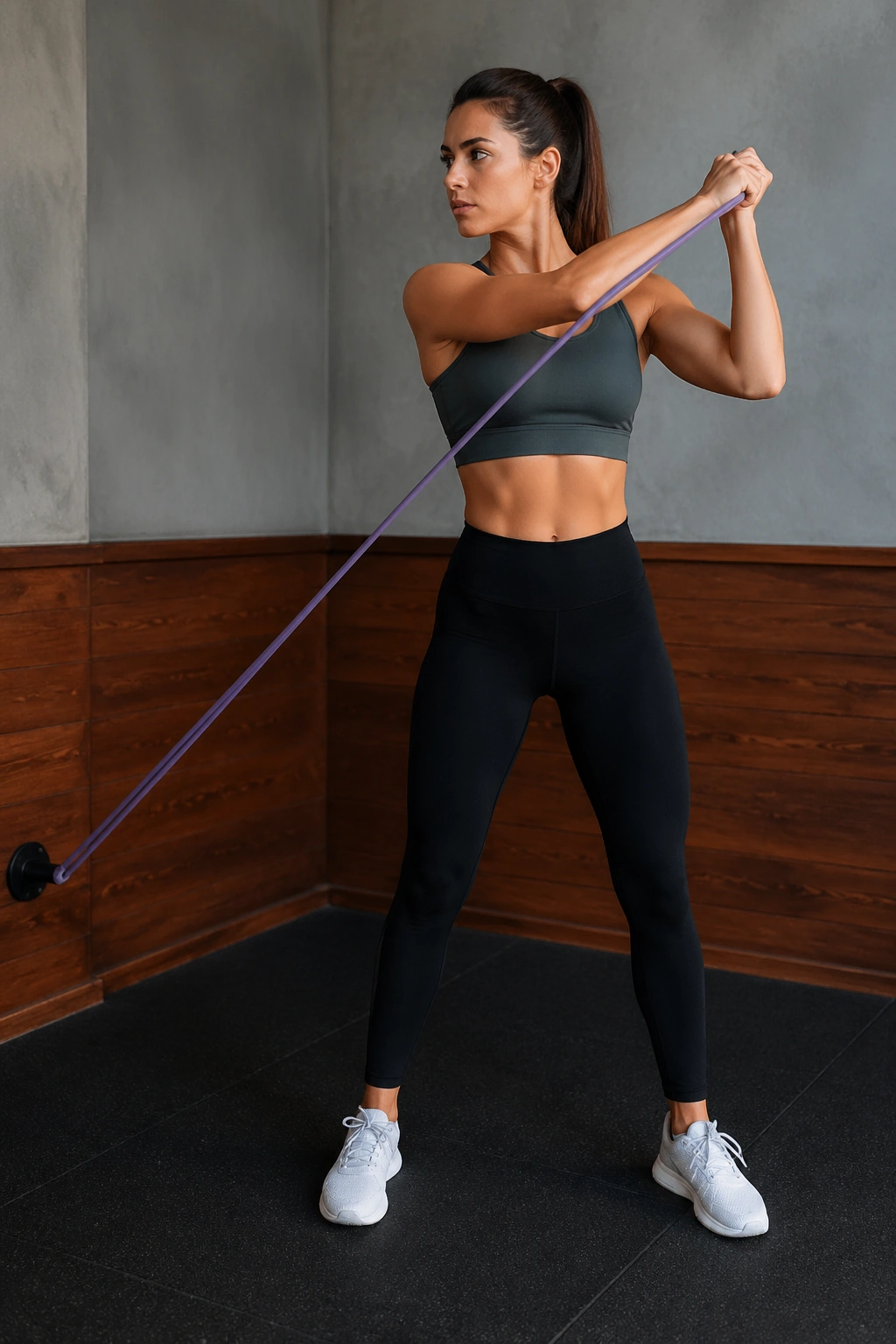
A diagonal chop is one of the best ways to sneak core work into an arm session without pretending it’s just a core exercise. The band load travels across the body, which wakes up the shoulders, triceps, and the muscles that keep the torso from twisting wildly.
Anchor the band low or stand on one end. Start with the hands near one hip, then lift and pull diagonally across the body toward the opposite shoulder. Return under control. The movement should feel like drawing a clean line, not heaving something heavy.
How to feel the right muscles
- Keep the pelvis facing forward
- Rotate through the ribs, not the lower back
- Lead with the hands, then let the torso follow a little
- Use 8 reps per side
This one is sneaky. The arms work hard, but the core keeps them honest. If the body sways a lot, the band is too much or the stance is too loose.
13. 90-Degree Curl Hold
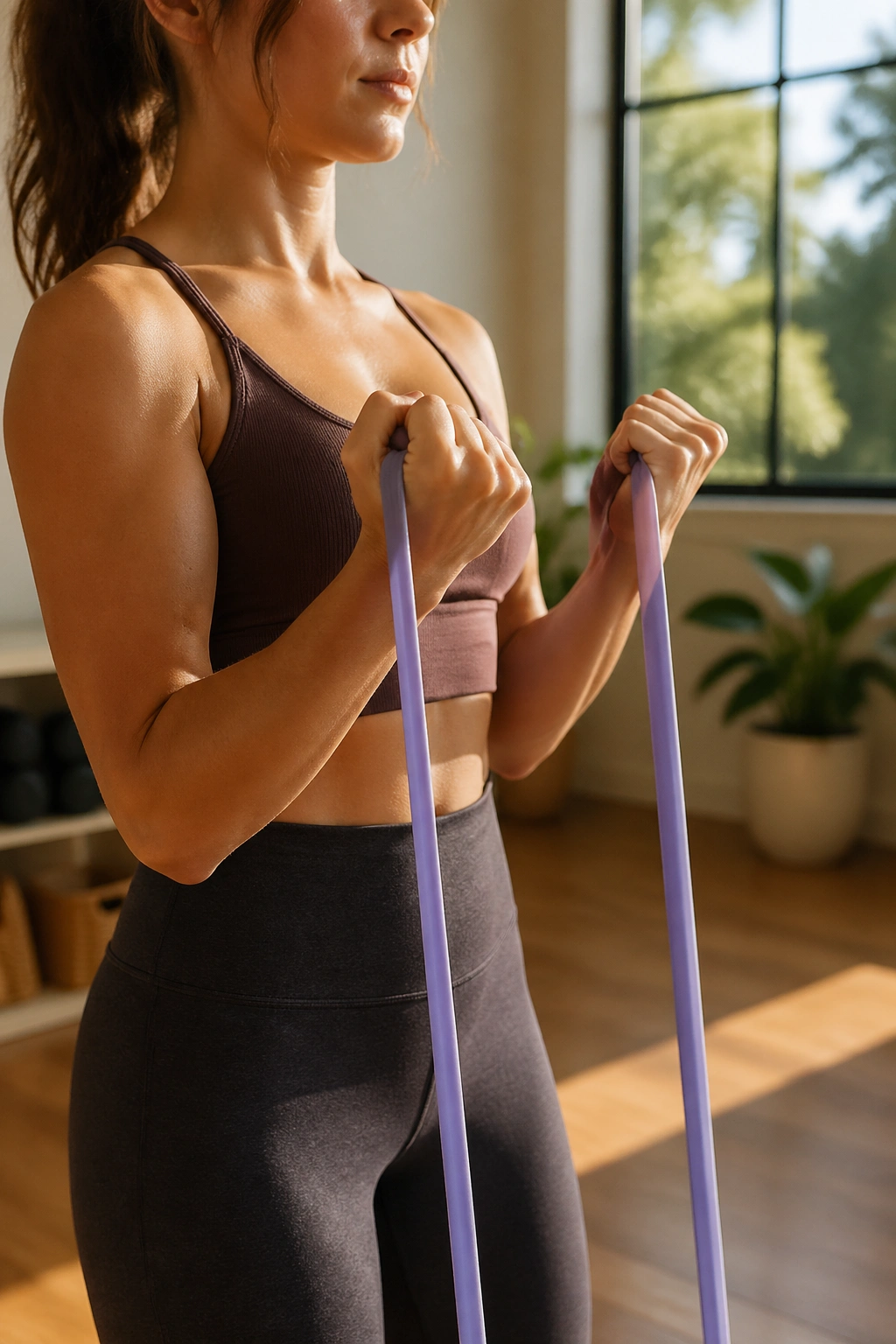
Why is an isometric hold so brutal? Because the muscles do not get the relief of movement. They just sit there, under load, and complain. That makes this a very good choice when you want arm endurance, not just a quick pump.
Curl the band until your elbows are bent at about 90 degrees and freeze there. Keep the wrists straight and the shoulders down. Hold for 20 to 30 seconds, then add 5 tiny pulses at the end before lowering. Those pulses should be small enough that nobody in the room can call them “real reps.”
A hold like this teaches the biceps to stay engaged while the shoulders stay quiet. That combination matters in Pilates, where control matters more than speed. It also exposes bad posture fast. If your spine starts leaning back, the hold is too long or the band is too heavy.
Use this move between bigger exercises. It’s a good reset and a good punishment. Both.
14. Curl-to-Press Flow
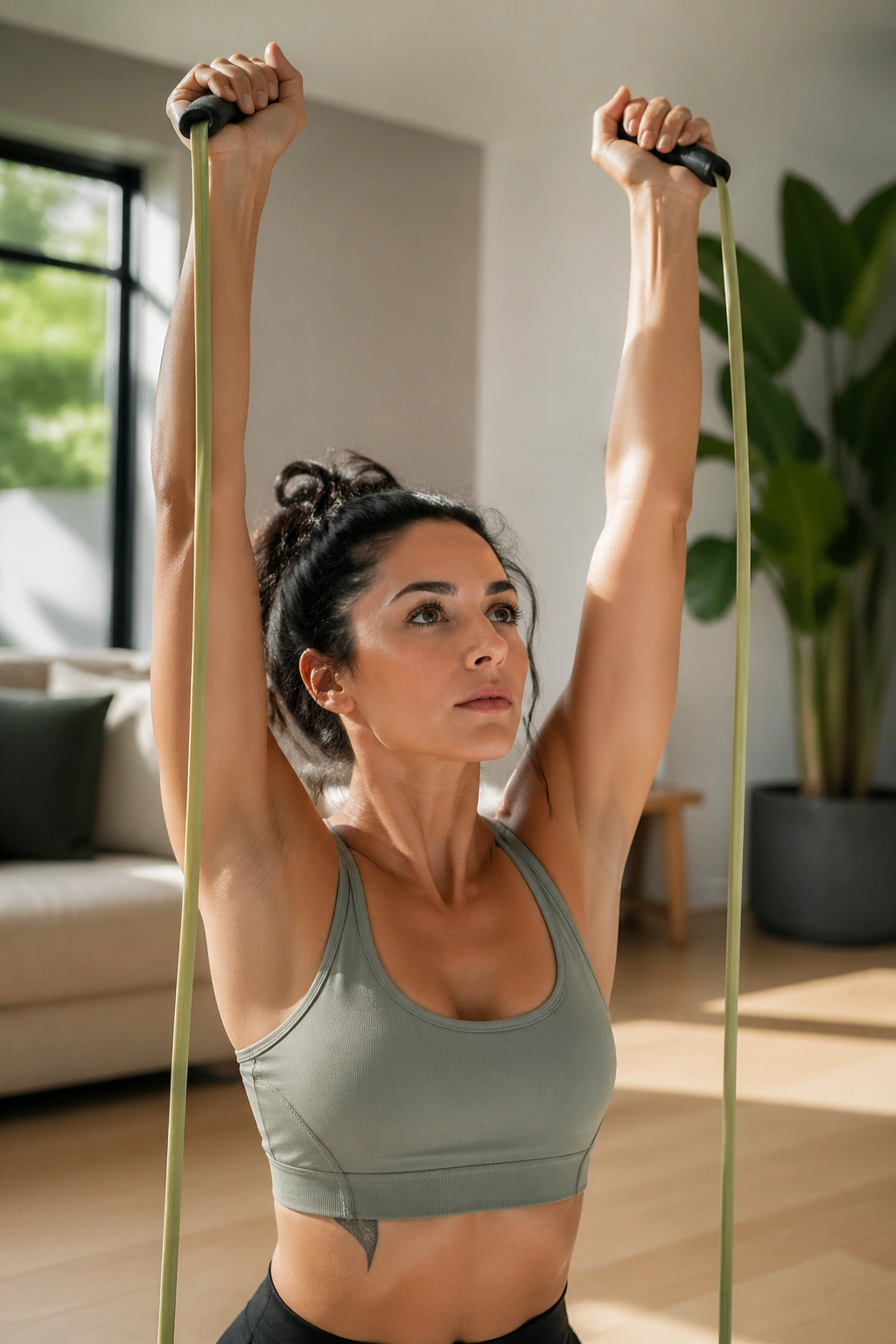
A curl-to-press flow gives you a little more coordination work than a single-joint drill, which is why it fits so well in a Pilates-style arm circuit. You curl first, then rotate the wrists and press overhead in one smooth path. The arms do a lot, but the body has to stay collected.
This is best with a light band. Heavy resistance makes the transition clumsy. You want the shift from biceps to shoulders to feel seamless, almost quiet. Curl up, turn the hands so the palms face in, then press overhead with the ribs staying down.
Compared with isolated curls, this move asks for more control and more breath timing. It also gives you a bigger range to work through, which can feel satisfying when your arms are already tired.
Best for: people who like flowing movements and want one drill that hits biceps, shoulders, and triceps without changing equipment. Use 6 to 8 reps only. That’s enough.
15. Row-and-Reach Combo
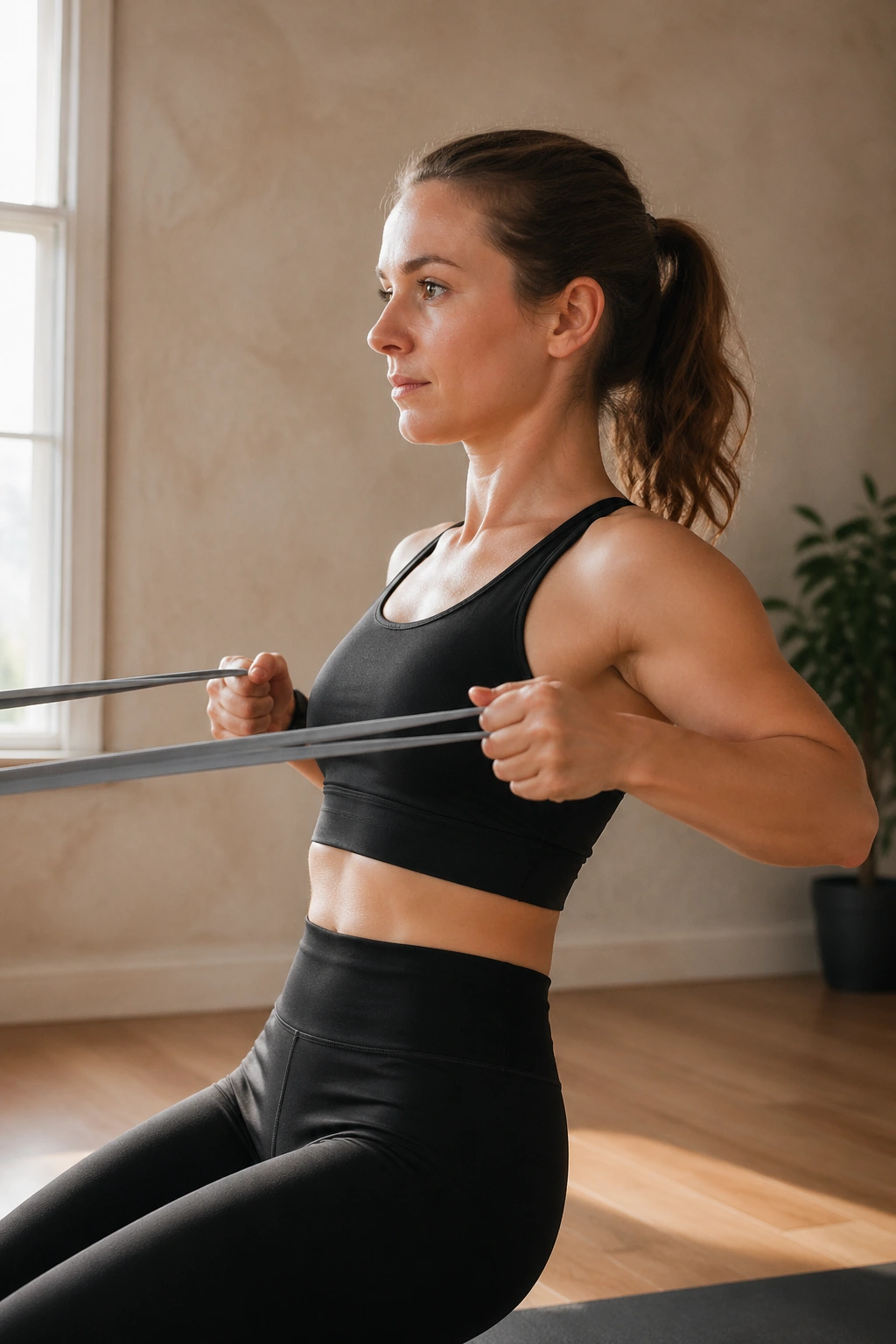
A row-and-reach combo looks simple until the reach part exposes every little shortcut in your posture. Pull the band into a row, squeeze the shoulder blades, then extend the arms forward again without letting the shoulders collapse.
The reach is the whole point. It teaches the arms to lengthen under control after contraction, which is useful in Pilates and frankly useful in life. A lot of people can pull well and release badly. This fixes that.
What the reach should feel like
You should feel the shoulder blades glide rather than snap open. The band should stay alive in your hands, but not so tight that the neck hardens. If the torso jerks forward on the extension, shorten the range and lighten the band.
A clean row-and-reach flow:
- Rows the elbows back to the waist
- Holds for 1 second
- Reaches forward slowly for 3 seconds
- Repeats for 10 reps
This is one of those exercises that looks polite from a distance and feels unfair up close.
16. Around-the-World Arm Sweep
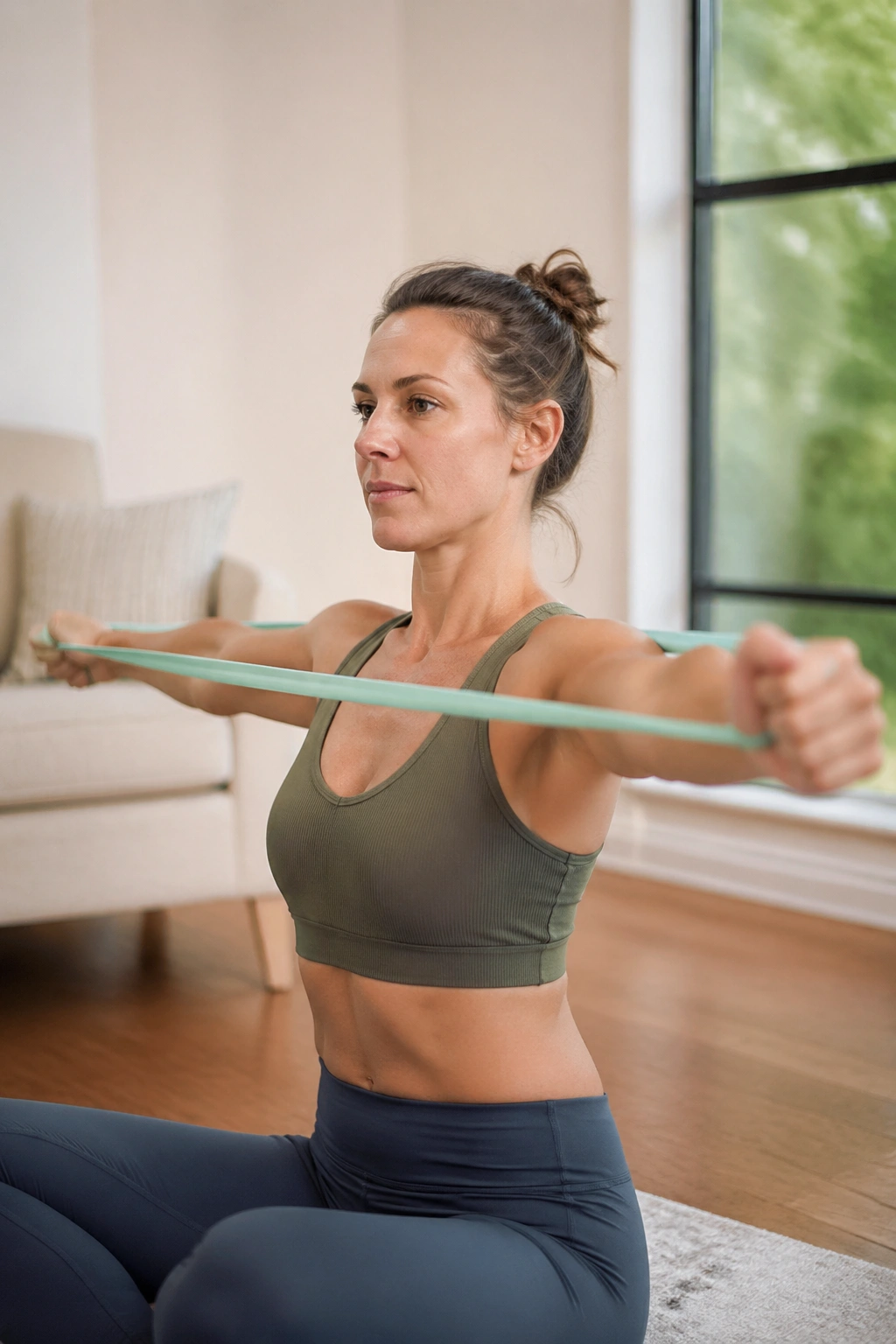
A light band around the hands turns an arm sweep into a slow, burning circle that hits the shoulders from odd angles. Odd angles are useful. They force the stabilizers to work instead of letting the big muscles hog everything.
Hold a very light band in front of your thighs, then lift the arms out and around in a wide circle until they return to the front. Keep the elbows soft and the motion smooth. Think of painting a giant, controlled arc in the air.
The sensation is different from a straight raise. The shoulders never get a break, and the arms have to manage tension through the entire circle. If the movement gets sloppy near the top, make the circle smaller. There’s no prize for dramatic range.
A nice way to use this one is 5 slow circles forward and 5 backward. It’s a fine warm-up and a nasty finisher. That range of uses makes it worth keeping around.
17. Pilates Band Triceps Pressdown at the Door
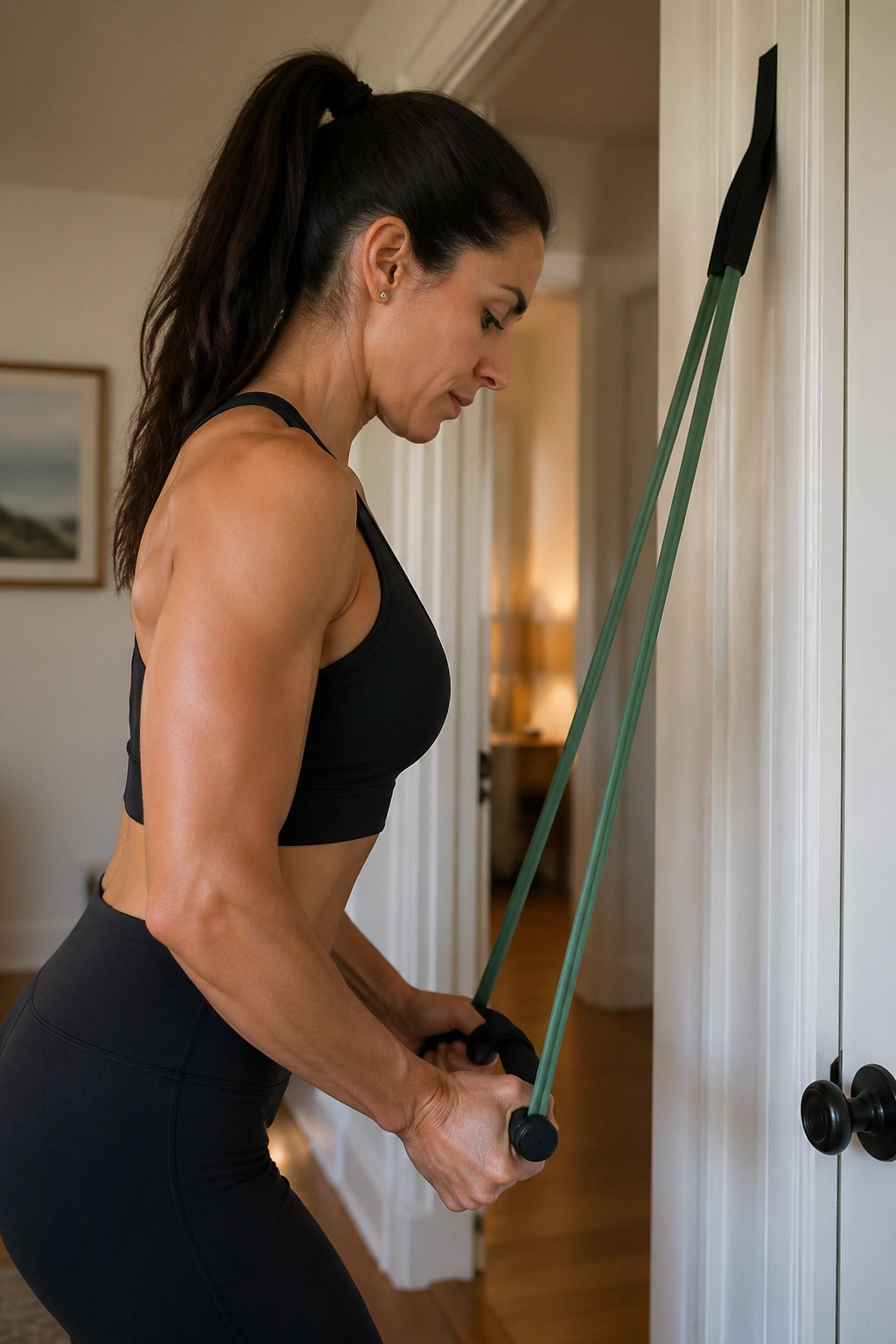
The pressdown is one of the cleanest triceps drills in the whole bunch, provided the anchor is solid. Loop the band over a door anchor or sturdy high point, hold the ends with elbows bent, then press the hands straight down until the arms are long.
Do not lean your chest into it like you’re trying to win a tug-of-war. Keep the torso stacked and the shoulders down. The elbows should stay close to your ribs. That path keeps the triceps in charge instead of letting the upper body throw a party.
Setup notes
- Anchor high and test the band before you start
- Keep the wrists straight on the press
- Pause at the bottom for 1 second
- Use 12 reps with a slow return
The best pressdowns feel crisp at the start and hard at the end. If the shoulders start doing the work, step closer to the anchor and shorten the range. That little adjustment usually fixes the problem.
18. Y Raise for Shoulder Shape
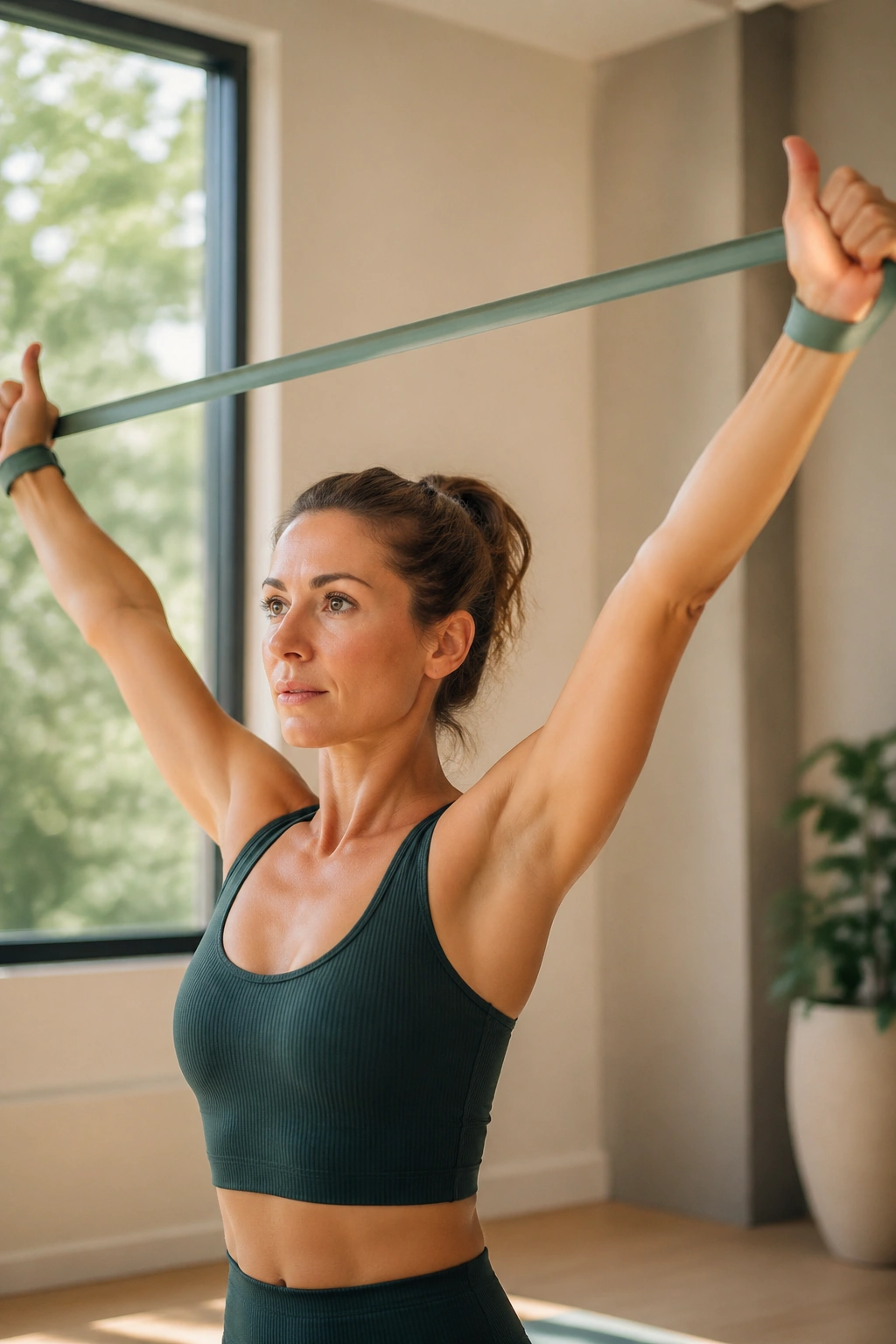
A Y raise is one of those understated moves that earns its place through consistency, not drama. It strengthens the lower traps and side of the shoulders, which helps the arms look lifted instead of dragged down by poor posture.
Stand on a light band and raise the arms into a wide Y shape, slightly in front of the body rather than directly out to the sides. Keep the thumbs angled up. The movement is small, and that’s a good thing. If you swing the band, you’ve missed the point.
The Y raise works best when you keep the shoulder blades moving down the back as the arms lift. That creates a long, open line through the neck and upper arm. It also makes overhead work feel cleaner later in the session.
- Use a light band only
- Lift to a comfortable Y, not a forced one
- Hold the top for 2 seconds
- Complete 8 to 10 reps
It’s quiet work. Quiet work adds up.
19. Single-Arm Press and Anti-Rotation
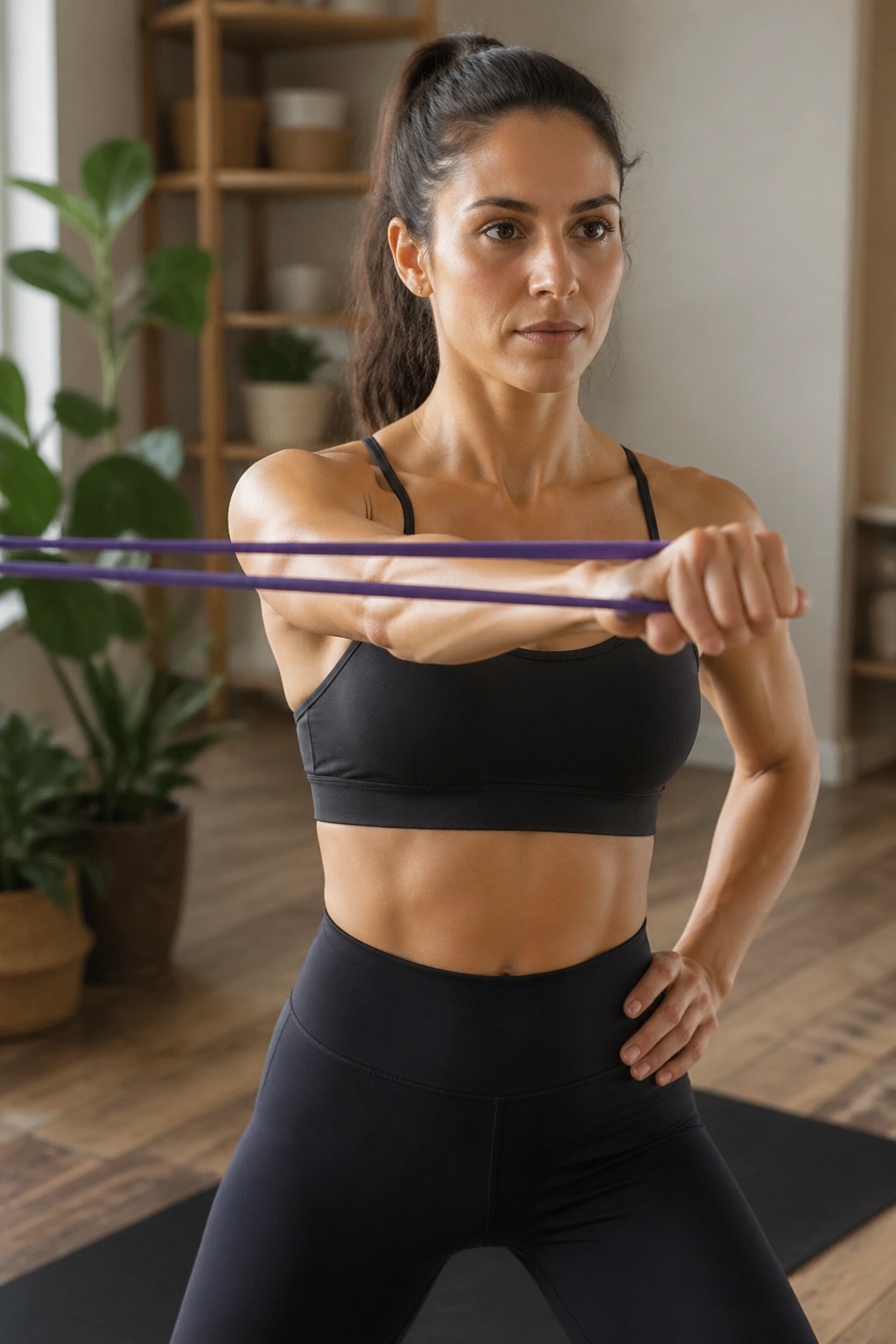
What happens when one arm presses and the rest of you has to stay still? The core gets dragged into the conversation. That’s the beauty of this move. It trains the arm and the trunk at the same time, which is very Pilates, whether the exercise looks flashy or not.
Anchor the band at chest height and hold one handle in one hand. Press straight forward while keeping your shoulders level and your torso square to the front. Don’t let the band yank you open. Don’t lean into the press. Just press, pause, and return with control.
The anti-rotation part is what gives this exercise extra value. Your obliques, deep abdominals, and shoulder stabilizers all help keep you from twisting. That makes the arm work feel more connected to the rest of the body, which is exactly the kind of connection a Pilates routine should build.
Use 8 reps per side. Slow enough to feel every inch. Fast enough to stay awake.
20. Pilates Band Arm Finisher Circuit
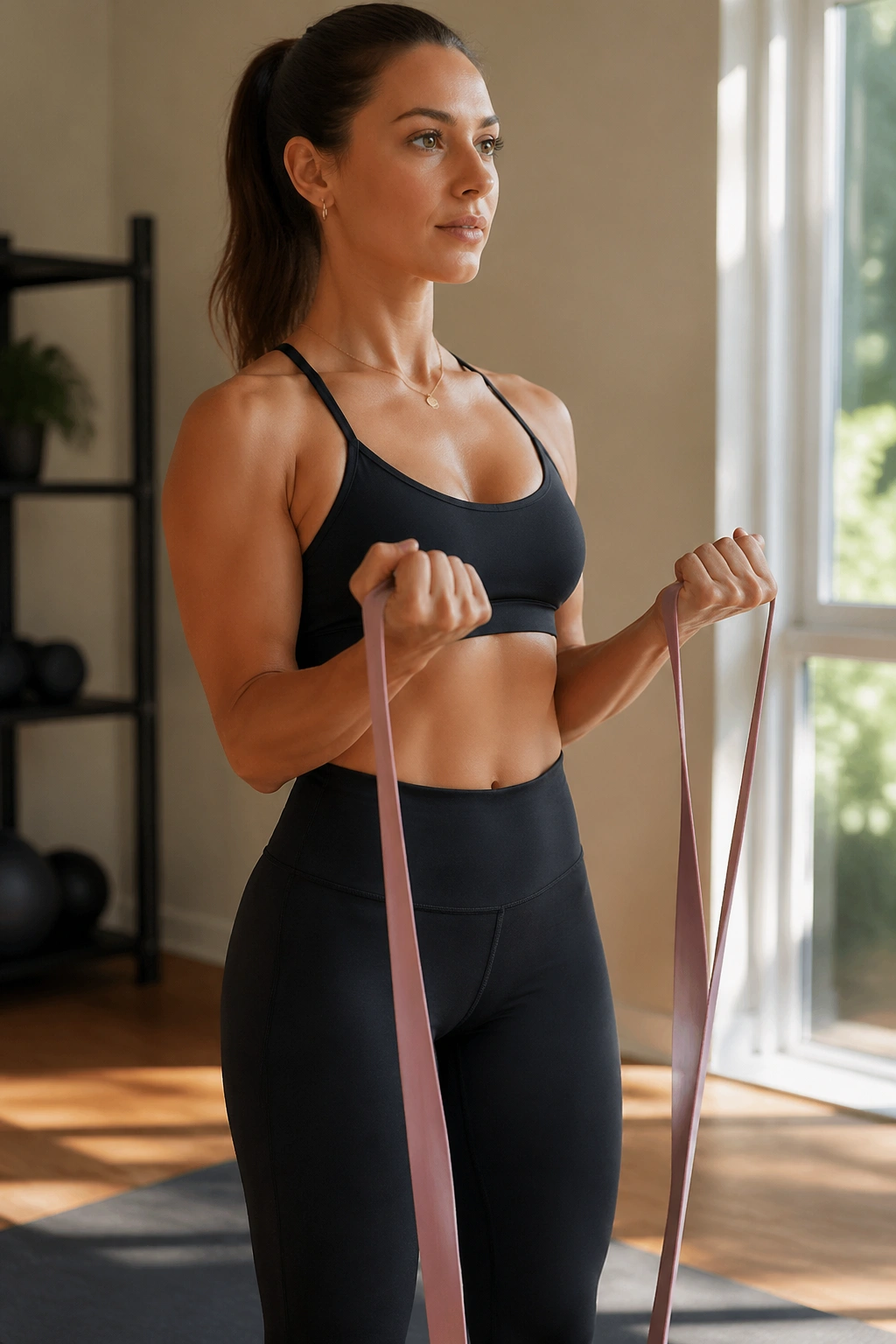
This is the one to save for the end. It strings together the best parts of the list without wasting time, and it leaves the arms buzzing in that satisfying, slightly annoyed way.
Do one round of each move with a light band:
- 8 biceps curls
- 8 triceps pressdowns
- 8 pull-aparts
- 8 lateral raises
- 8 overhead triceps extensions
Rest for 30 seconds, then repeat for 2 to 3 rounds. Keep the tempo slow enough that the last two reps of each move feel earned. If form starts to wobble, stop the round early and call it a win anyway. Sloppy reps teach sloppy habits.
The finisher is where the whole arm session comes together. Curls handle the front of the upper arm. Pressdowns and extensions hit the back. Pull-aparts, raises, and rows keep the shoulders and upper back from slumping into the work. That mix is what gives the arms a more defined look over time — not endless random burn, but a few smart patterns repeated with control.
And that’s the real takeaway: bands work best when the motion stays small, the posture stays tall, and the last rep still looks clean. Keep those three things in place, and even a short Pilates band session can do a lot of useful work.
