



A toned midsection usually comes from a lot less drama than people expect. Not endless crunches. Not punishing ab circuits that leave your neck sore and your lower back angry. The Pilates exercises that make the biggest difference tend to look almost too calm at first, and then you try them for 20 seconds and realize your entire center is working hard to keep you from wobbling.
That’s the part most people miss. Pilates does not chase burn for the sake of burn. It asks for control, breath, and precision, which is exactly why it’s so good for the deep core muscles that shape how your waist feels and how you hold yourself all day. Rectus abdominis gets attention, sure, but the real work often comes from the obliques, transverse abdominis, pelvic floor, and the muscles that keep your ribs from flaring like a kicked-open accordion.
And no, these moves won’t magically strip belly fat from one spot. That’s not how bodies work. What they can do is build a firmer, more responsive midsection, improve posture, and make your core feel organized instead of flimsy. That alone changes how your clothes fit and how you stand in a line, carry groceries, or sit at a desk for hours.
The best way to use this list is to move slowly, breathe on purpose, and stop chasing speed. The first few exercises are famous for a reason, but the quieter ones matter too. Start with the Hundred and keep going down the line.
1. The Hundred
The Hundred is the Pilates core wake-up call, and it earns the reputation. It looks simple: arms pumping, legs hovering, breath steady. Then your low ribs start wanting to pop, your neck starts complaining if you’re lazy about setup, and suddenly you understand why this move has stayed popular for so long.
Why It Works
The magic is in the hold. You keep the torso curled slightly forward while the arms pulse and the breath runs in a steady rhythm, which teaches your midsection to stay engaged under pressure. That’s a useful skill, not just a fancy one.
If you want a toned midsection, this kind of endurance work matters. A core that can hold shape for 10 breaths, then 20, then 50, is a core that shows up when you stand tall or brace for a heavy bag of groceries. Tiny shaking is normal. Wild flaring through the ribs is not.
How to Do It
Lie on your back with knees bent in tabletop, or keep your feet down if your neck is sensitive. Curl your head and shoulders up, reach your arms long by your sides, and pump them up and down about 6 inches while you breathe in for 5 counts and out for 5 counts.
Keep these cues in mind:
- Press your lower back gently into the mat.
- Keep the neck long, not strained.
- Breathe into the sides and back of your ribs.
- Stop if your shoulders creep up toward your ears.
Best tip: if your low back arches, lower your legs less. Smaller leverage. Better work.
2. Roll-Up
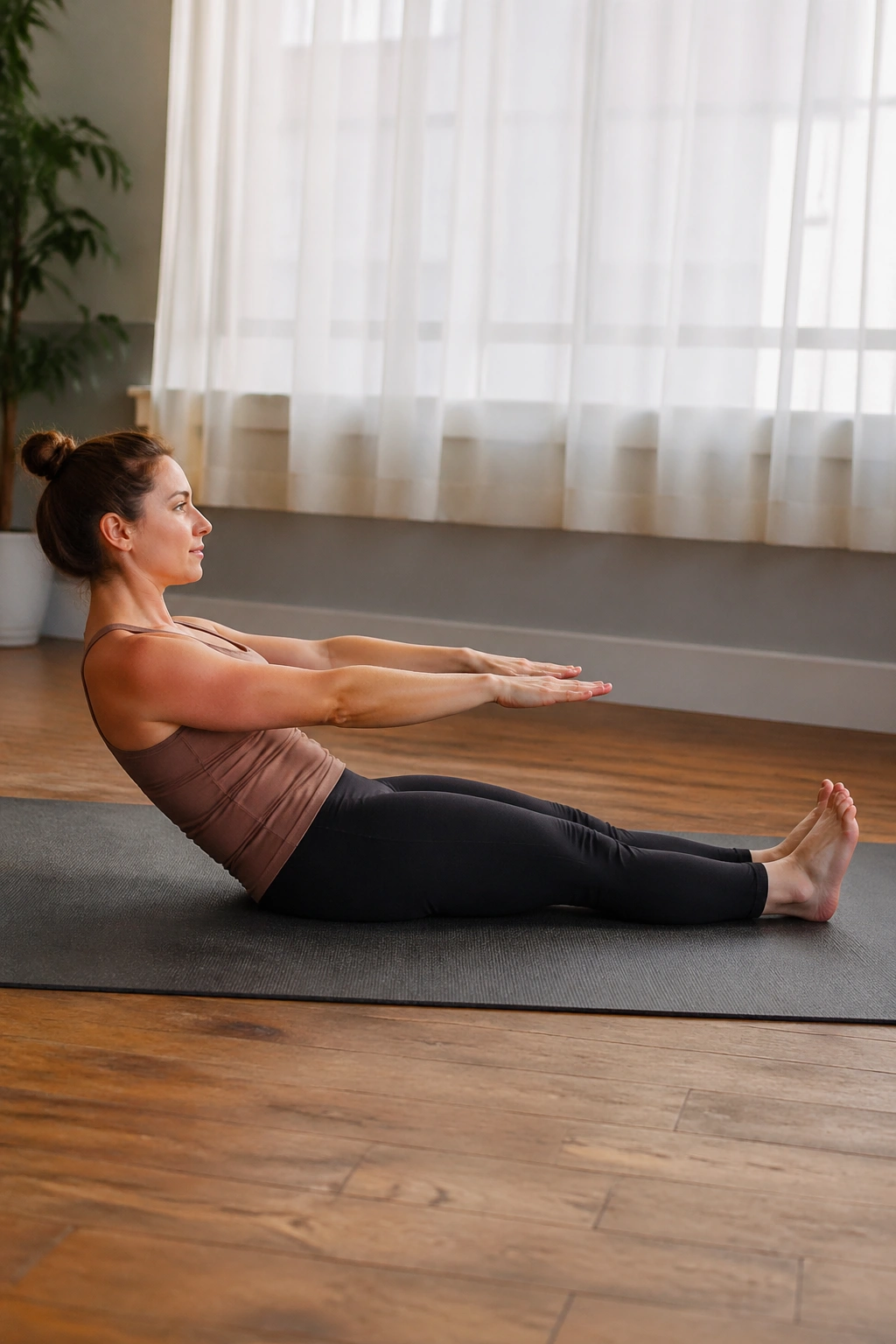
The roll-up is one of those moves that looks graceful when someone else does it and mildly impossible when you do it cold. That’s normal. It asks your abs to create the movement instead of letting momentum do the job, which is a very Pilates thing and also the reason it works so well.
Unlike a standard crunch, the roll-up challenges spinal articulation. You peel the spine off the mat one vertebra at a time, then lower back down with the same control. That slow lowering phase is where the real work lives, and it lights up the front of the trunk in a way people usually notice after a few rounds.
If you have tight hamstrings, bend your knees a little or place a soft bend throughout the move. Seriously. Fighting tight legs often turns the roll-up into a tug-of-war you’ll lose. The goal is a smooth curve through the spine, not a contest.
3. Single-Leg Stretch
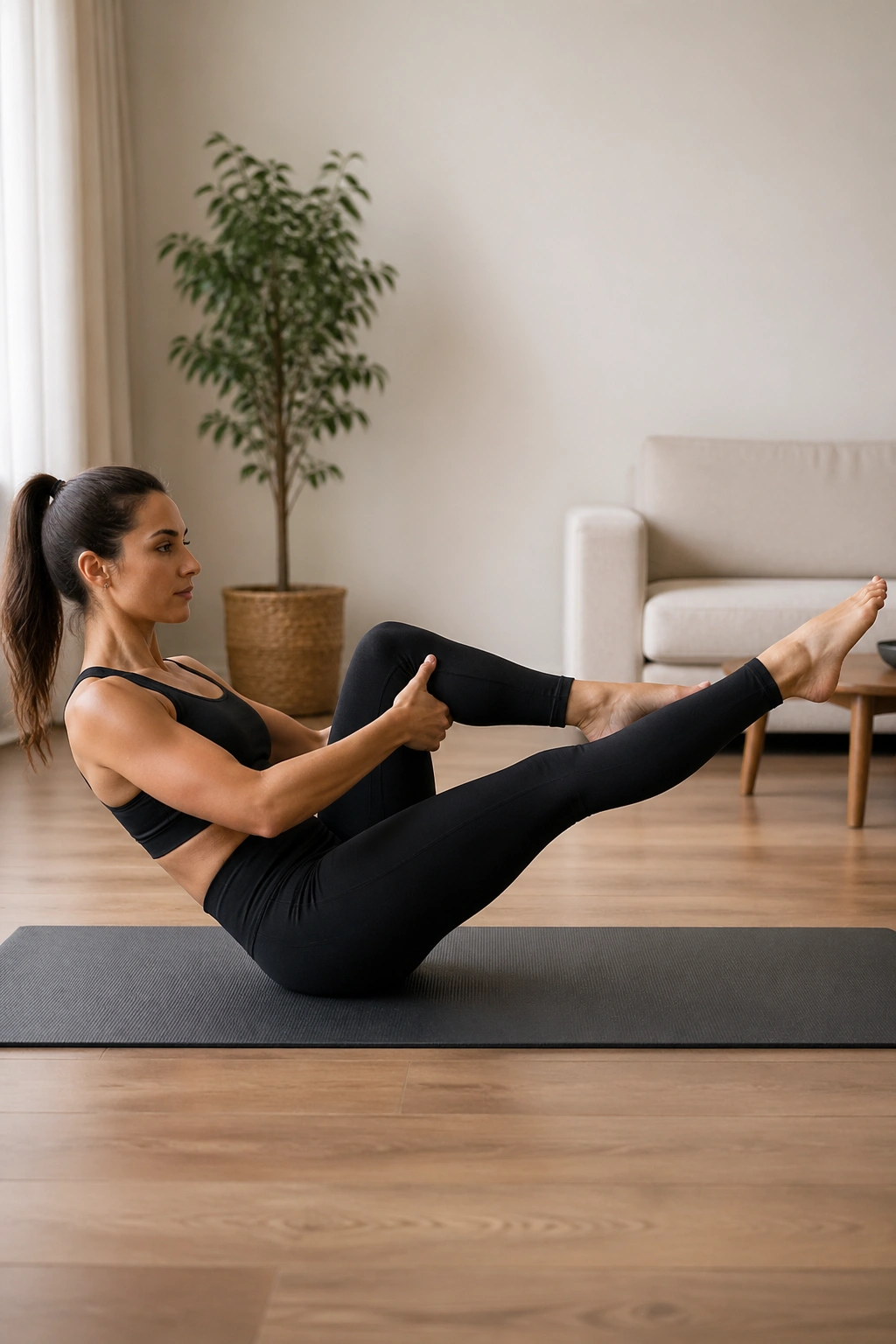
One leg extends, the other folds in. That’s the whole thing, and it’s still brutal if you do it honestly. The single-leg stretch is a classic for a reason: it teaches the core to stay quiet while the legs move, which is exactly the kind of control a toned midsection needs.
What Makes It Different
A lot of ab work keeps the legs still and asks the torso to do everything. This move flips that pattern. The legs switch positions while your center resists twisting, arching, or collapsing. That resistance is gold for oblique strength and midline stability.
If you rush, the exercise turns into flailing. If you keep the pelvis steady and the ribs knit down, it becomes one of the best low-tech core drills around.
What to Watch For
- Keep the chin slightly tucked, not jammed into the chest.
- Extend the leg only as far as you can control.
- Pull the bent knee in with the hands, but do not yank it.
- Exhale on the switch if you need more support.
A tiny pause between sides helps. I like that pause. It tells you whether your core is doing the job or just borrowing help from momentum.
4. Double-Leg Stretch
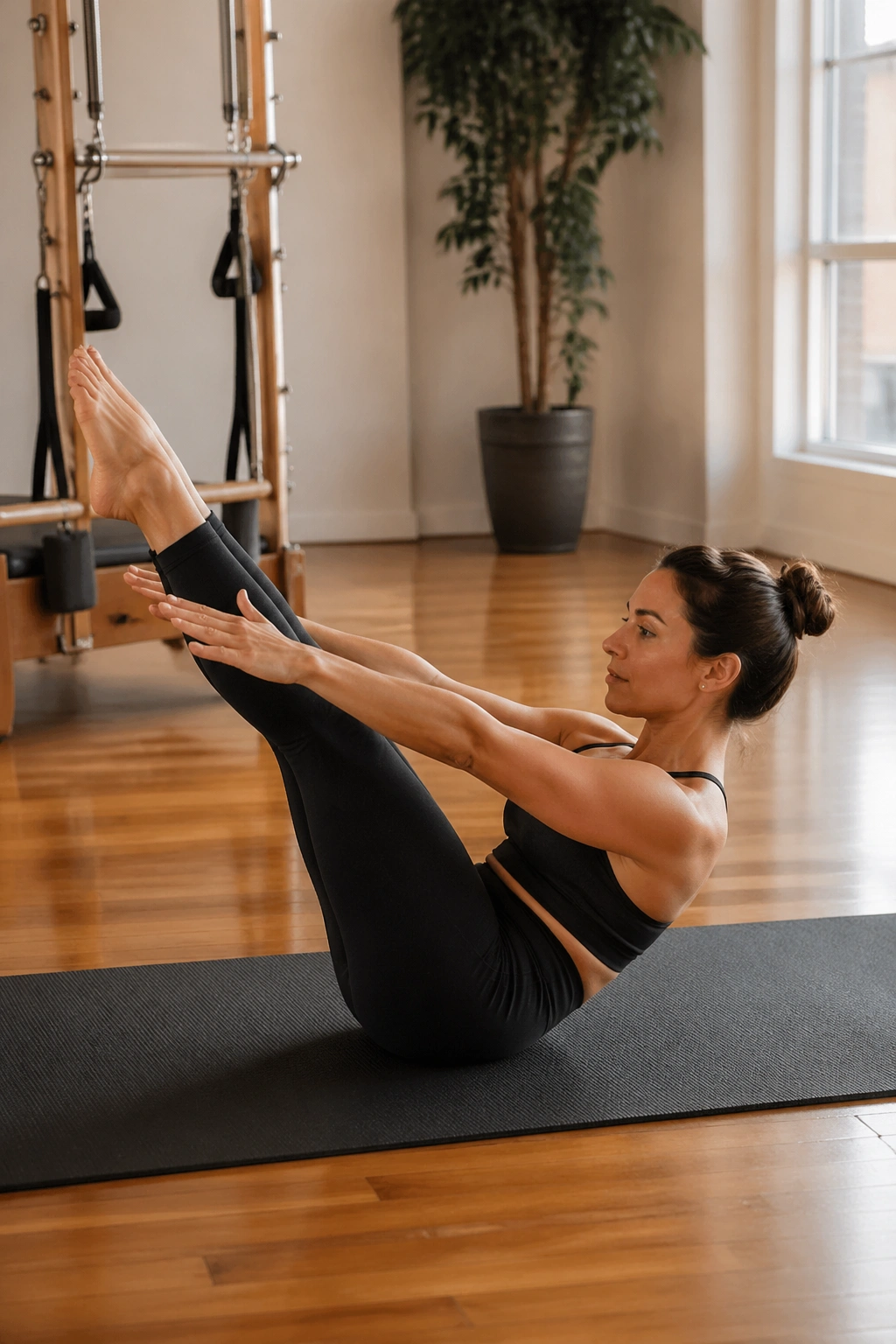
Why does this one burn so fast? Because it asks for length and stability at the same time, and that combination is sneaky. You curl the upper body, pull the knees in, then send both arms and legs away from the center before gathering everything back in again. The core has to stay organized the whole time.
That long reach is what makes the move so effective for a toned midsection. When the limbs extend, the abdominals have to resist the pull of gravity and keep the trunk from arching. You’re not just moving pieces around; you’re teaching the middle of the body to hold shape while the edges stretch away.
If your back complains, reduce the range right away. Keep the legs higher, lower the arms less, or stay with bent knees. The prettier version is not the better version if your lower back is doing the job of your abs.
How to Keep It Low in the Back
- Keep the ribs heavy.
- Move slowly through the reach.
- Exhale as the limbs extend.
- Stop before the low back starts to lift.
5. Criss-Cross
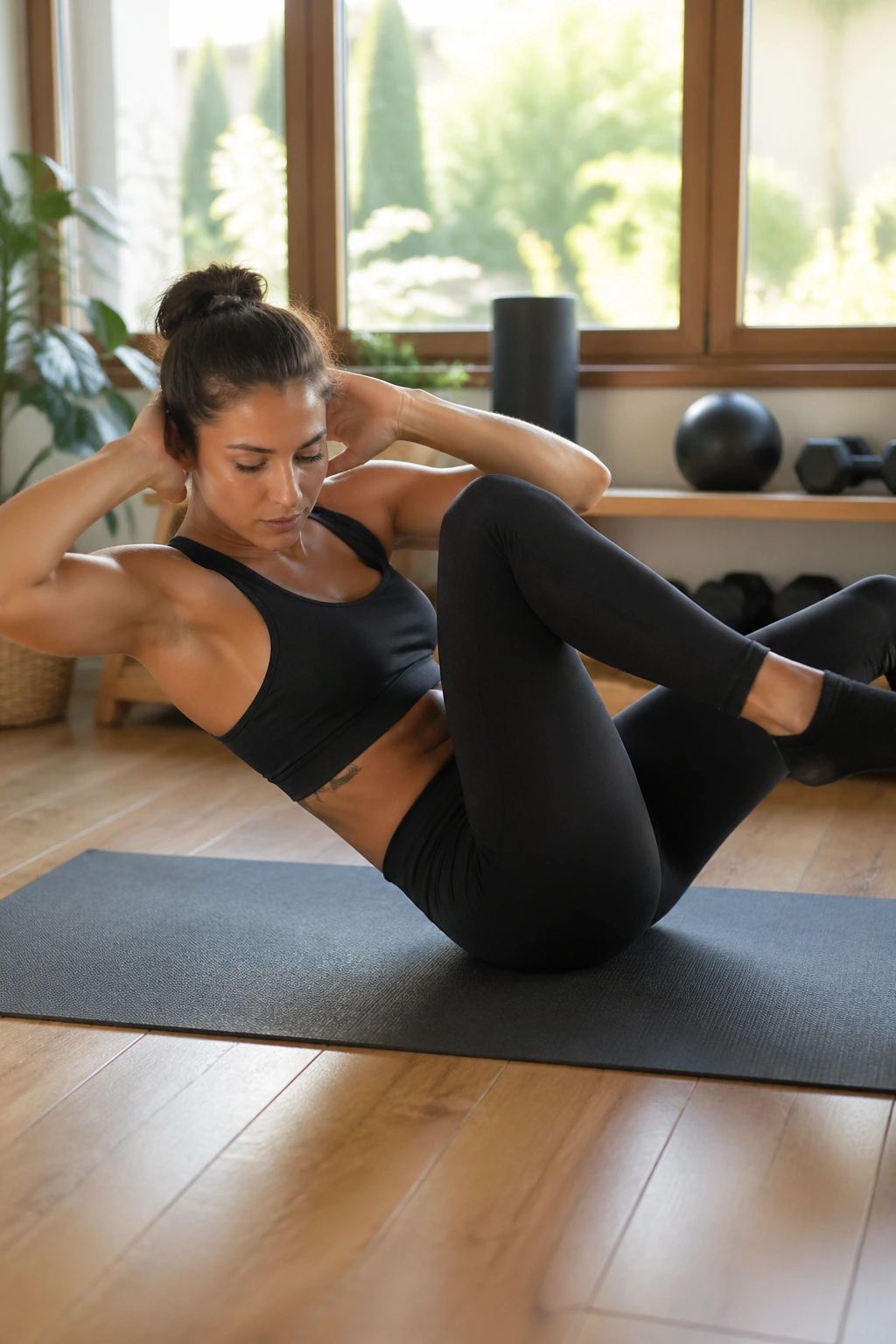
This is the move people think of when they picture ab work with a Pilates twist. Literally. One elbow moves toward the opposite knee while the other leg lengthens away, and the trunk has to rotate without yanking through the neck. That rotation is the whole point.
The criss-cross does two things at once. It hits the obliques and trains you not to dump tension into the shoulders. If you’ve ever felt regular bicycle-style ab work mostly in your hip flexors, this is the cleaner, meaner cousin. The torso starts the action; the legs just follow.
A useful image: imagine your ribs staying zipped together while the waist rotates around them. That cue keeps the move from turning into a frantic elbow chase. Slow is better. Also, less range is fine. Touching elbow to knee is not the prize here.
6. Spine Stretch Forward
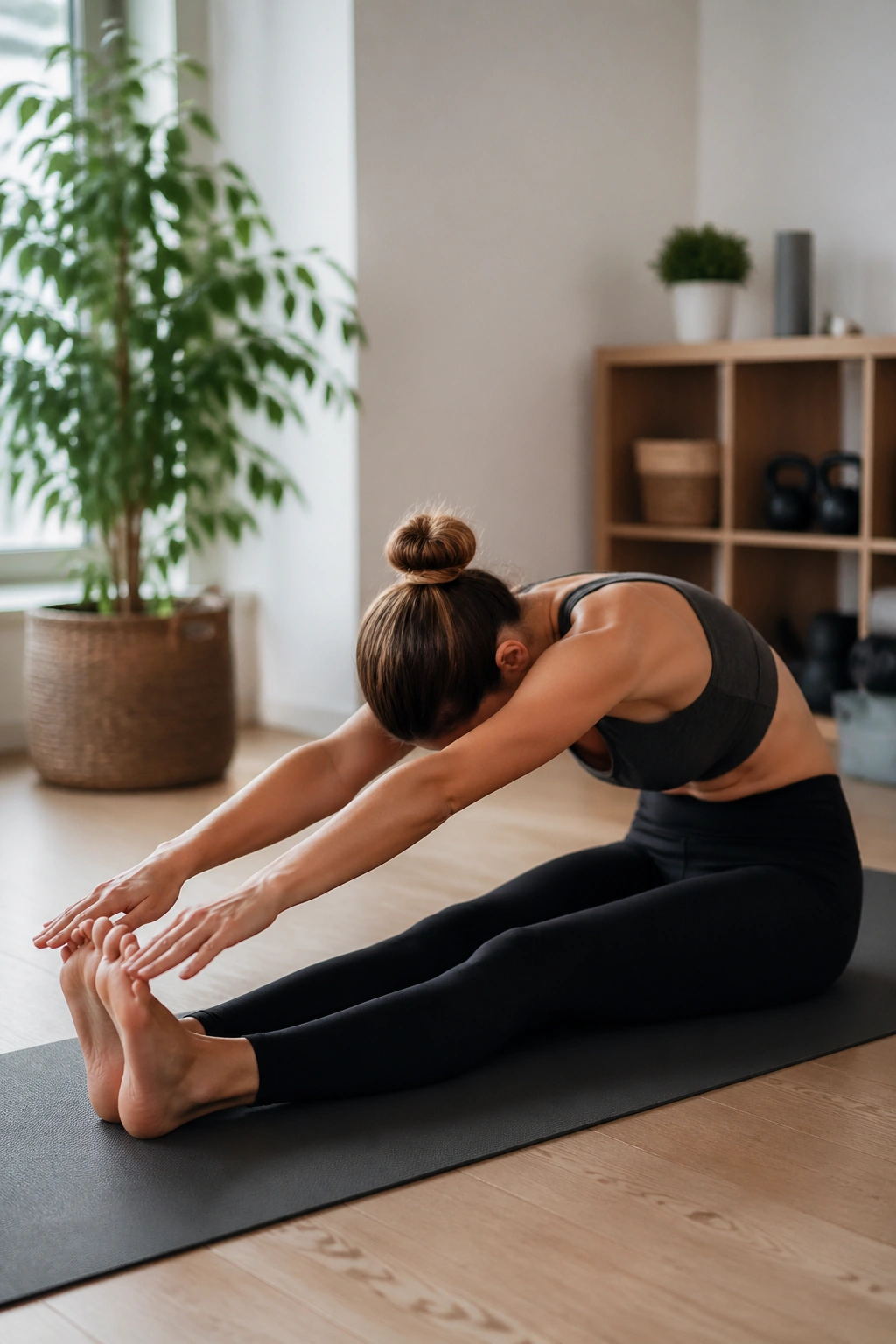
Here’s the move that saves a lot of people from making core training into a neck-and-hip-flexor circus. Spine Stretch Forward is gentle on the joints, but it still asks the abdominals to pull back and control the curve of the spine. It feels like a clean exhale with resistance.
Sit tall with your legs extended and your feet flexed. Reach the arms forward, then fold through the spine one segment at a time, as if the rib cage is sliding between the hip bones. The reach is forward, yes, but the real job is the deep scoop of the belly and the controlled return to upright.
This one is good for people who sit a lot. Tight backs often feel better when they’re asked to lengthen before they’re asked to crunch. A toned midsection is not only about visible definition; it’s also about a torso that can hold itself with less effort. That’s what this move teaches.
7. Saw
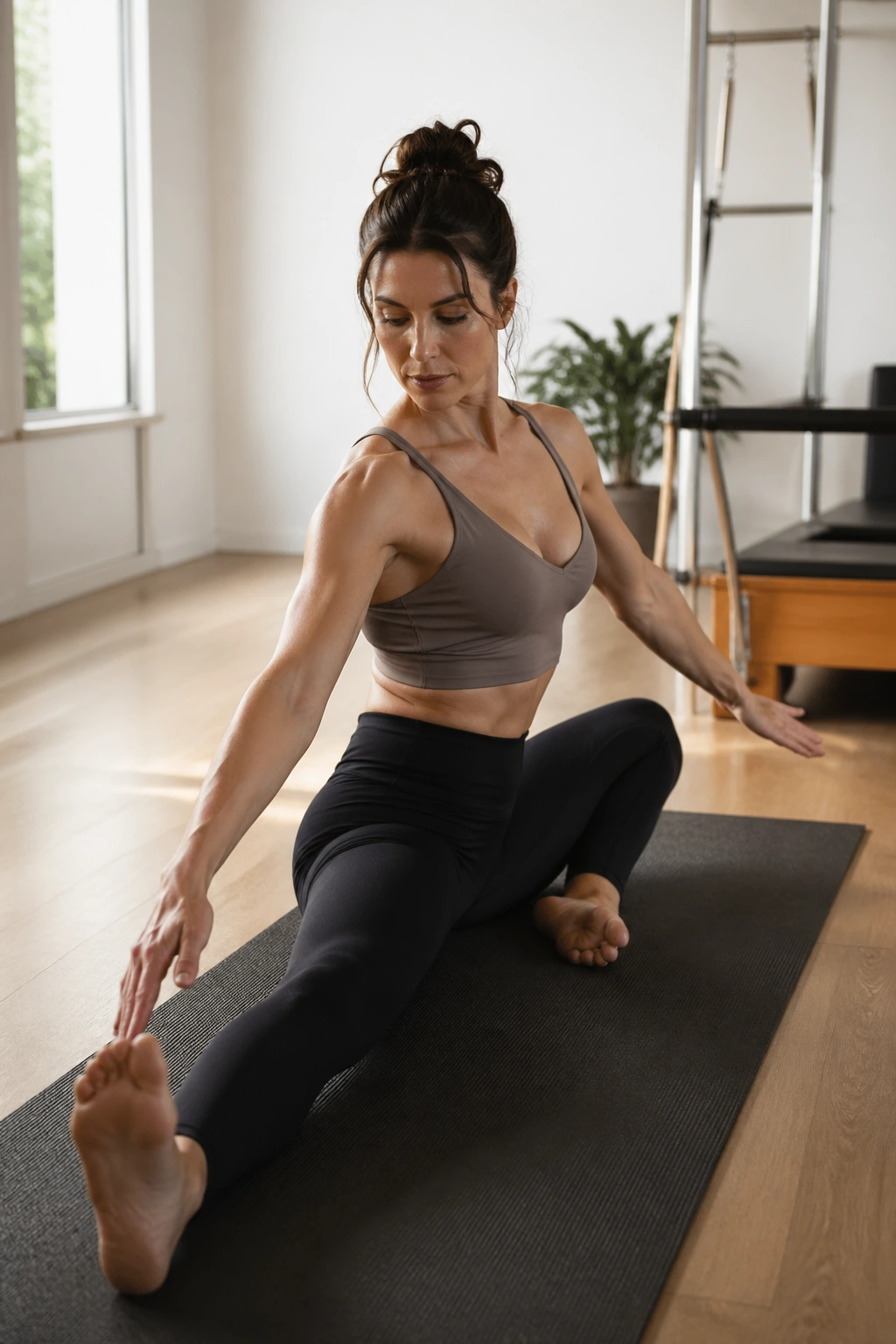
The Saw looks a little odd until you feel it. Then it makes perfect sense. You sit tall, rotate the torso, reach one hand toward the little toe on the opposite side, and keep the rest of the body anchored while the waist does the turning. It’s a twist with control, not a fling.
Unlike a lot of seated twists, the Saw adds a forward reach after the rotation, which wakes up the obliques and the muscles along the side body. That combination can be humbling. The rear hip wants to lift. The pelvis wants to cheat. Don’t let it. Keep both sit bones heavy and think of reaching past the foot, not collapsing onto it.
Best used when you want:
- More waist mobility
- Oblique work without speed
- Better trunk control with rotation
- A stretch through the hamstrings and back
The name sounds odd. The movement is excellent.
8. Rolling Like a Ball
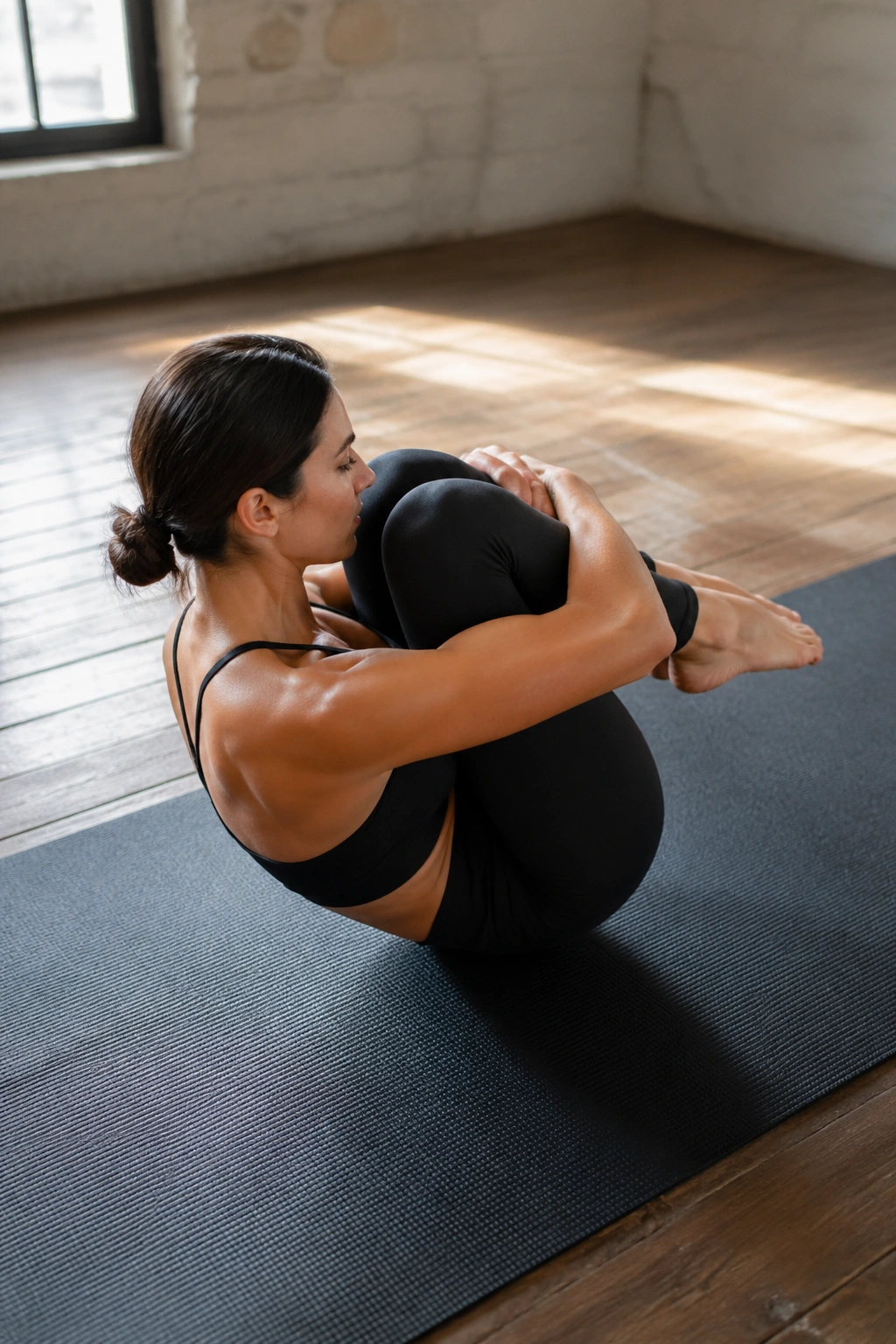
This one is part massage, part core test, part reminder that control matters more than force. You balance in a tight tuck, roll back onto the shoulder blades, then return to balance without letting your feet hit the mat. It feels playful until it doesn’t.
The deep core has to stay on the whole time to keep the roll smooth and centered. If you’re collapsing through the chest or using momentum to come back up, the exercise turns sloppy fast. A clean rolling like a ball should feel rounded, compact, and almost bouncy, but never out of control.
What You Should Feel
- A smooth curve through the spine
- Work in the lower abs
- Gentle massage through the back
- Balance through the sit bones
If the neck feels cranky, keep the chin tucked and stay on a smaller range. A ball that rolls well is a small ball. I know that sounds obvious, but people love making it bigger than it needs to be.
9. Single Straight Leg Stretch
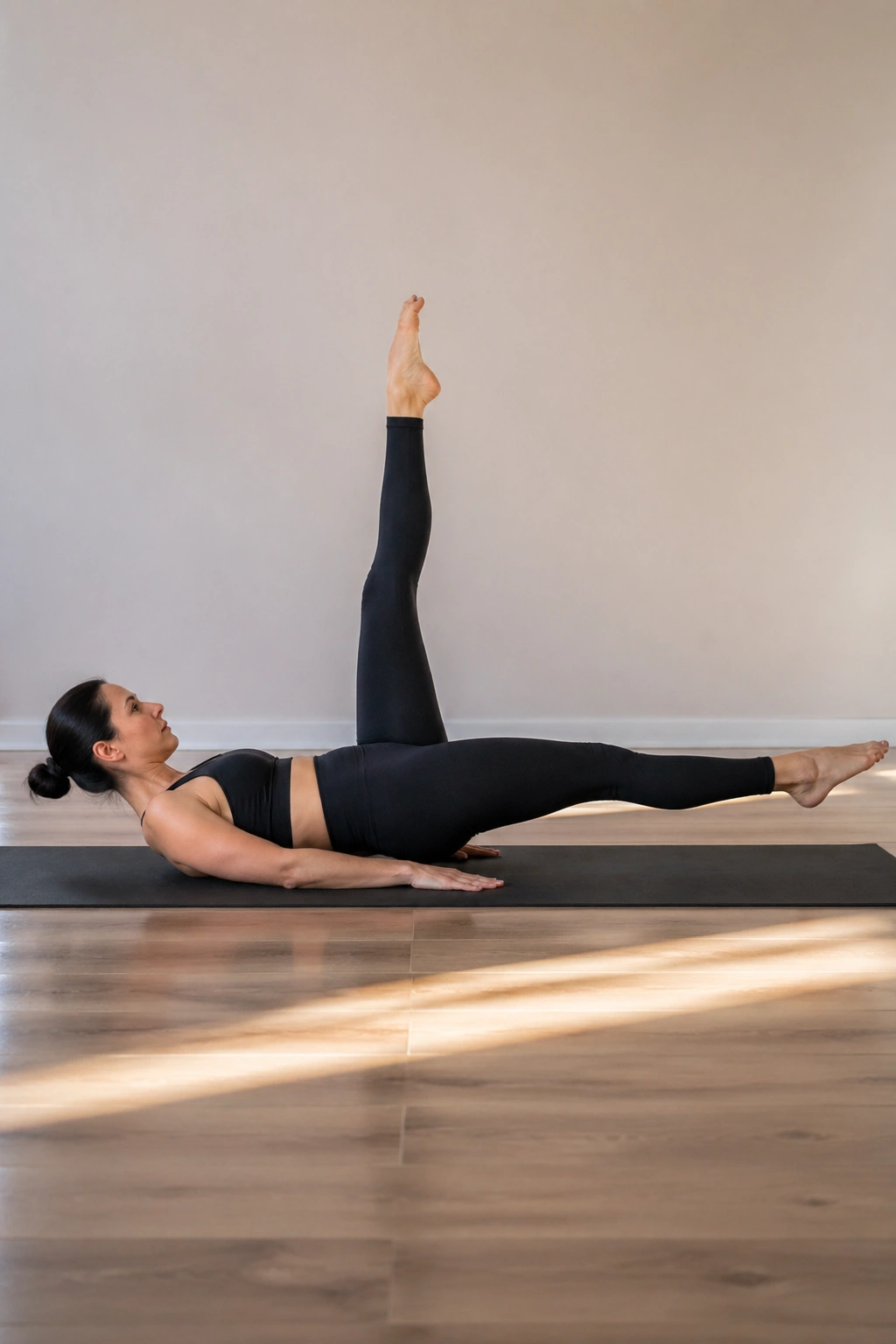
This is one of the best places to learn the difference between flexing your hip and bracing your core. One leg reaches straight up while the other hovers low, and you switch with a small pulse that asks your abs to stay steady while the legs do the moving.
The straight leg version is harder than bent-knee work because the lever is longer. That’s the whole game. Your lower abs have to resist the pull of the moving leg, and your pelvis has to stay calm while everything else changes. If you’re chasing a stronger-looking center, this kind of training builds the kind of control that shows up in daily life too.
Keep the movement crisp, not frantic. If the low leg drops too far, the low back starts arching and the abs check out. A smaller range is more useful than a dramatic one. Always.
10. Double Straight Leg Lower Lift
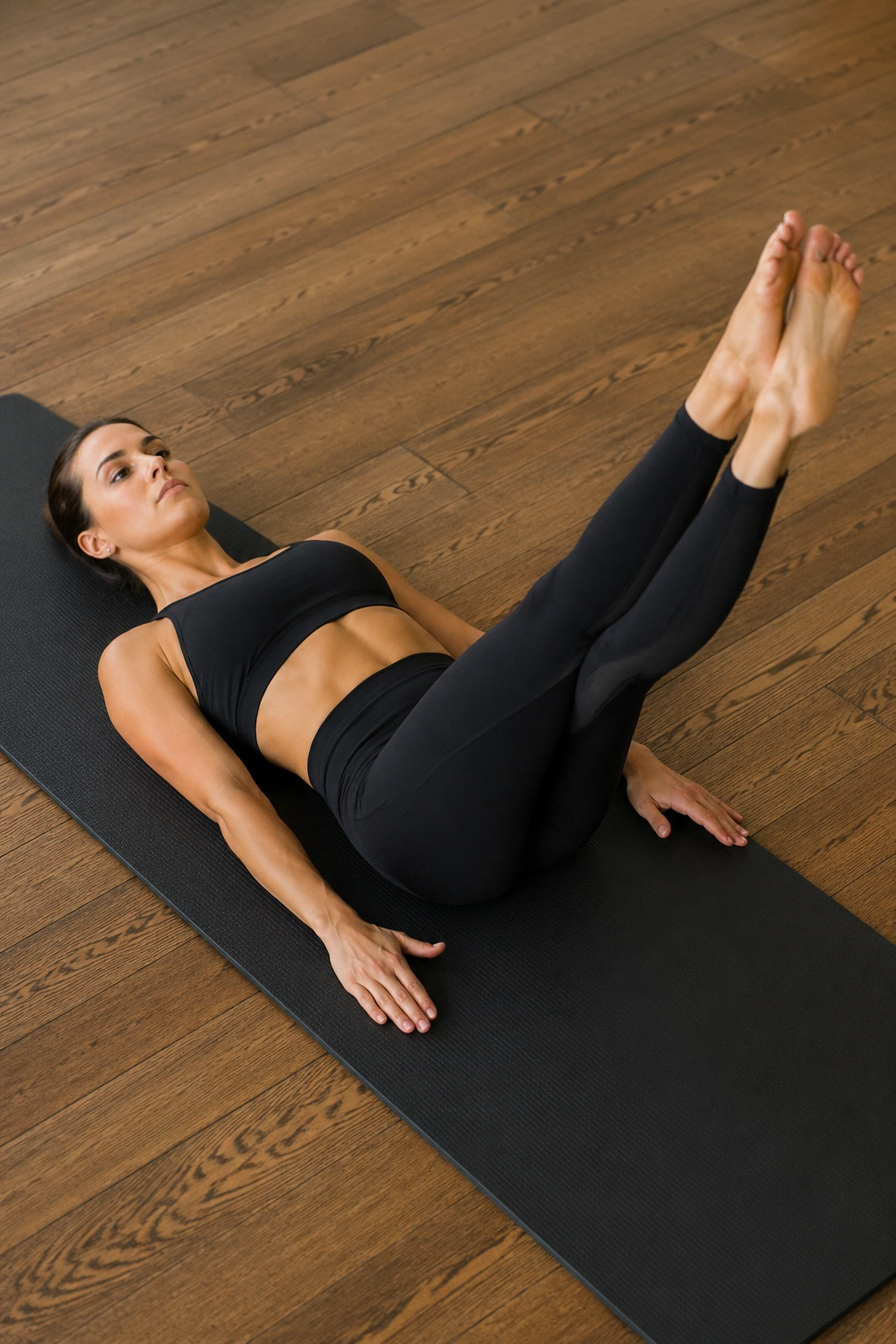
Can you lower both legs without your spine popping off the mat? That’s the test. The double straight leg lower lift is one of the more serious Pilates exercises for the midsection because it challenges anti-extension, which is the fancy way of saying your abs have to stop your back from arching.
How to Do It
Lie on your back with both legs reaching up. Curl the head and shoulders if that feels manageable, then lower both legs together for a short range while keeping the low back heavy. Lift them back up before your hips start to tilt.
The lower the legs go, the harder the work becomes. That sounds like a brag, but it’s also where people go wrong. Bigger is not better here. If you lower past the point where your lower back starts to lift, you’ve lost the exercise and handed it to the hip flexors.
Keep the Back Quiet
- Start with a tiny range.
- Exhale as the legs lower.
- Keep the ribs tucked.
- Bend the knees if needed.
11. Scissors
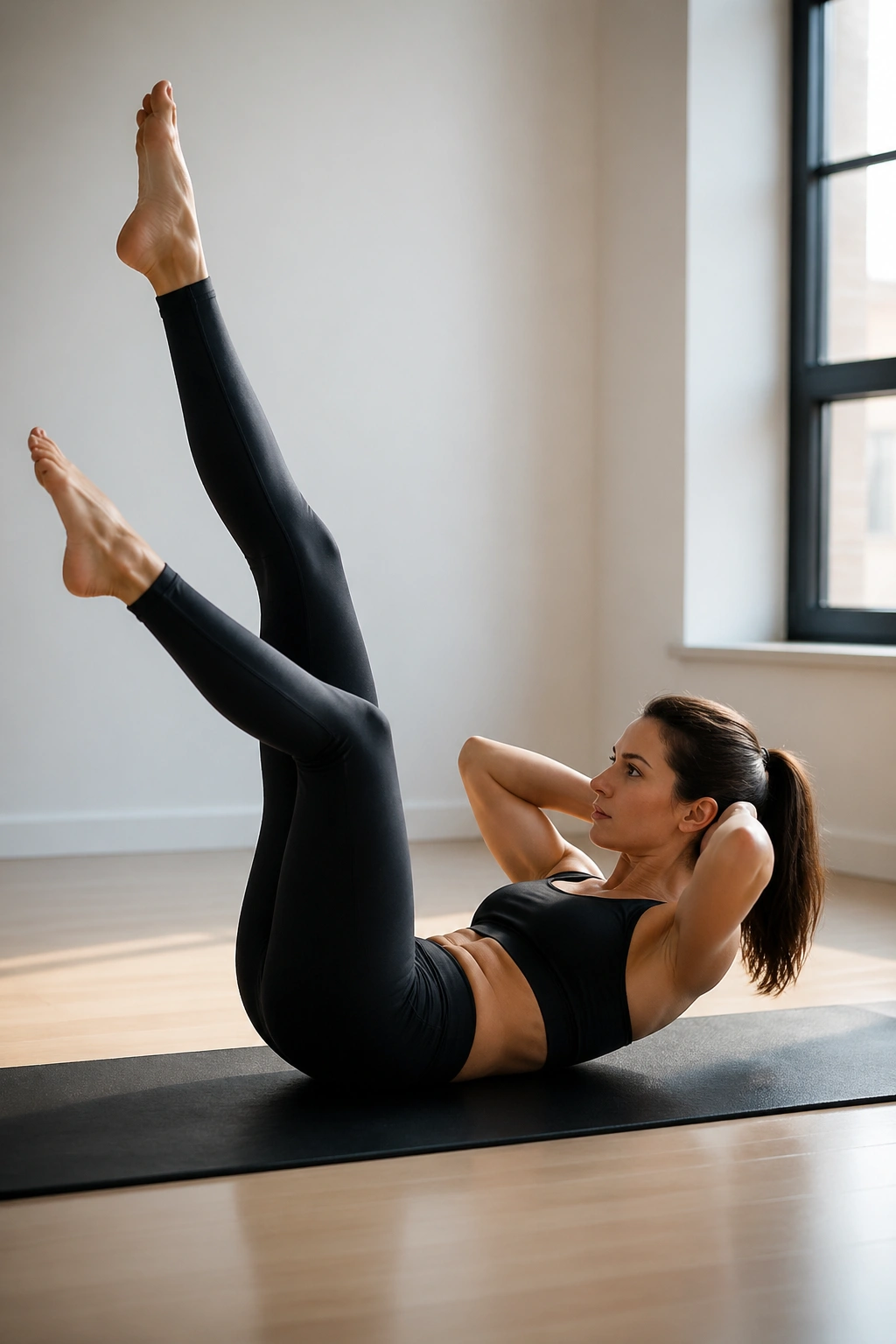
Scissors is elegant, but not easy. One leg reaches toward you while the other extends upward, and the legs switch in a controlled rhythm as the torso stays curled. It works the deep front line of the core while asking the hamstrings to stay long, which is a nice little package of discomfort.
The point isn’t to yank the leg toward your face. A lot of people do that and call it stretching. Nope. The real goal is to keep the pelvis steady as the legs alternate. That stillness is what makes the waist work. If your shoulders start to grip, lower the head and reduce the lift a touch.
This move also teaches patience. You can’t fake your way through scissors for long. The body tells the truth fast.
12. Bicycle
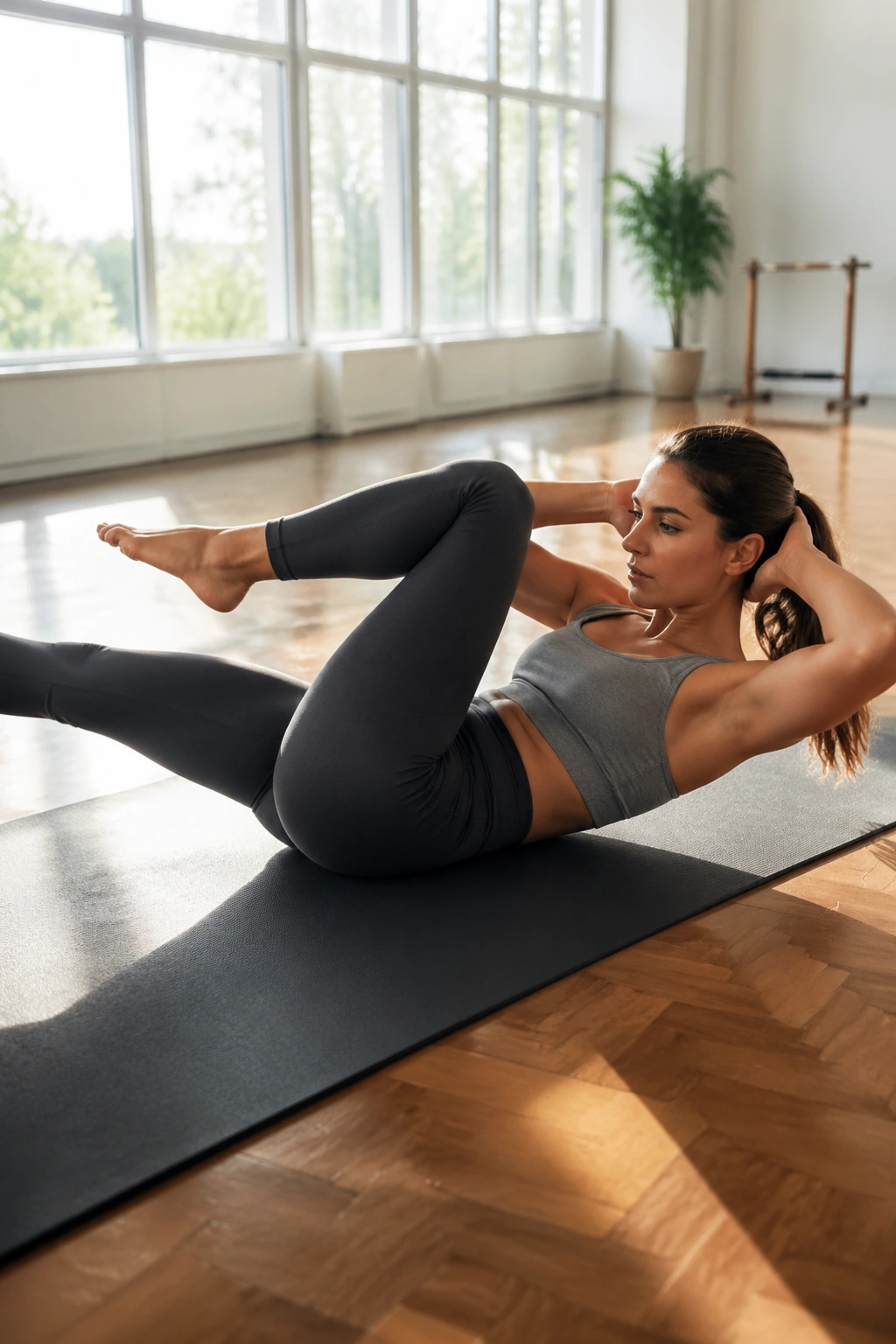
Bicycle is the longer, more demanding cousin of the criss-cross. The movement pattern adds a circular action through the legs while the trunk keeps rotating, which means the obliques have to stay active through a bigger range. That makes it a strong option for a toned midsection, especially if you want work that feels athletic rather than purely static.
The trick is not to turn it into a leg show. The torso leads. The legs follow. If the elbows are flinging and the head is pulling forward, the neck becomes the star of the exercise, and nobody asked for that. Keep the movement controlled enough that you could pause in the middle of it without falling apart.
I also like bicycle as a finisher because it exposes sloppy form quickly. You either stay centered or you don’t. There’s not much middle ground.
Three small reminders:
- Keep the lower ribs down.
- Move through the waist, not the shoulders.
- Use a smooth pace instead of speed.
13. Teaser Prep
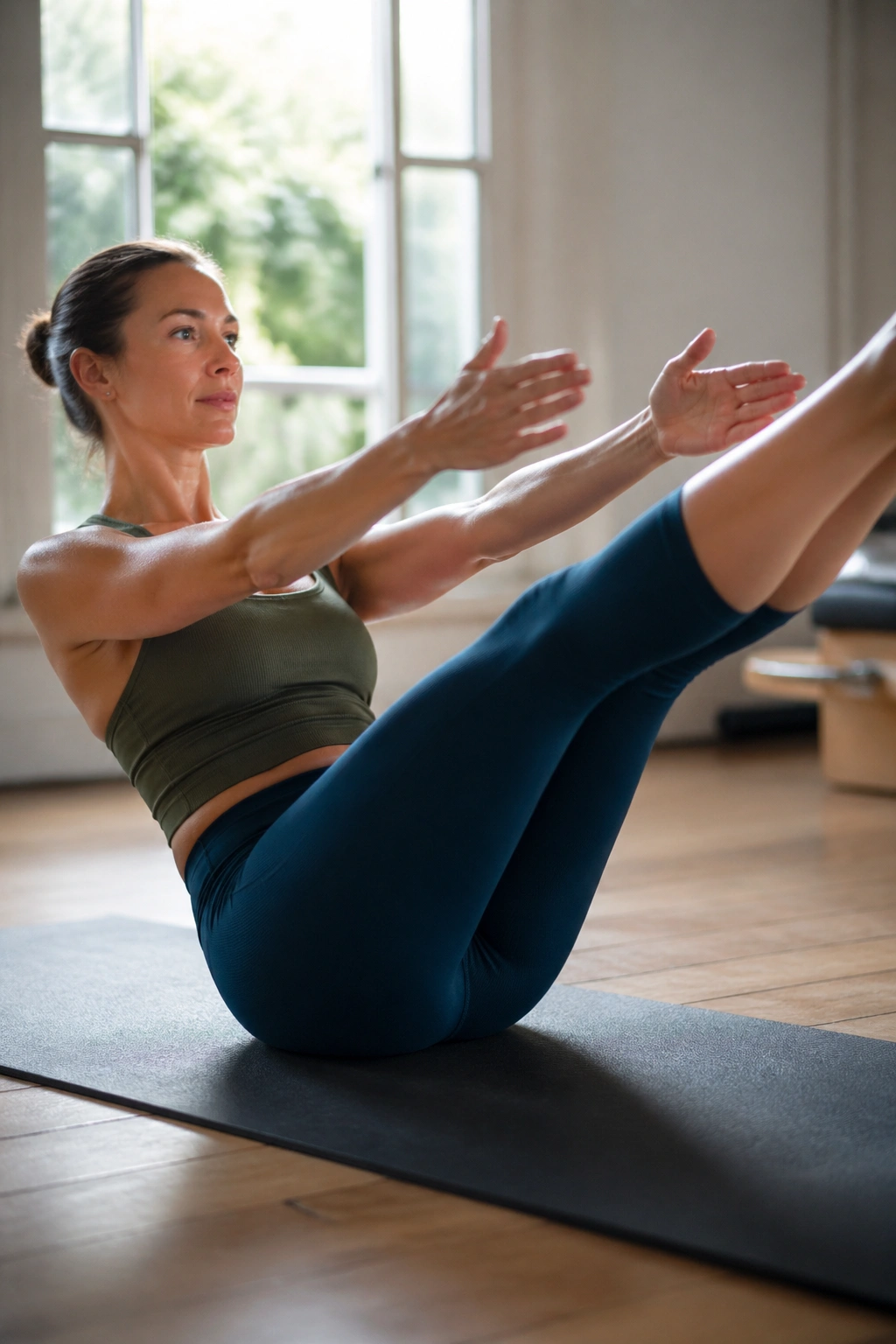
The teaser gets a lot of attention, but teaser prep is the part people actually need first. It asks you to balance on the sit bones, lift the legs or keep them bent, and hold the torso in a V-like shape with control. That sounds simple. It is not.
Teaser prep is excellent for the front of the core because it demands both compression and length. You’re lifting against gravity while keeping the spine organized, and that combination makes the deep abs work harder than a fast crunch ever will. If you want a more defined midsection, this is one of those moves that pays rent.
Why It Feels Harder Than It Looks
The body wants to fall back. The hip flexors want to help. The shoulders want to creep up and help even more. None of those things are the point. Keep the chest broad, the ribs knitted, and the movement small enough that you can own it.
A clean teaser prep should look calm from the outside. Inside, it’s a war.
14. Side Plank Hip Dips
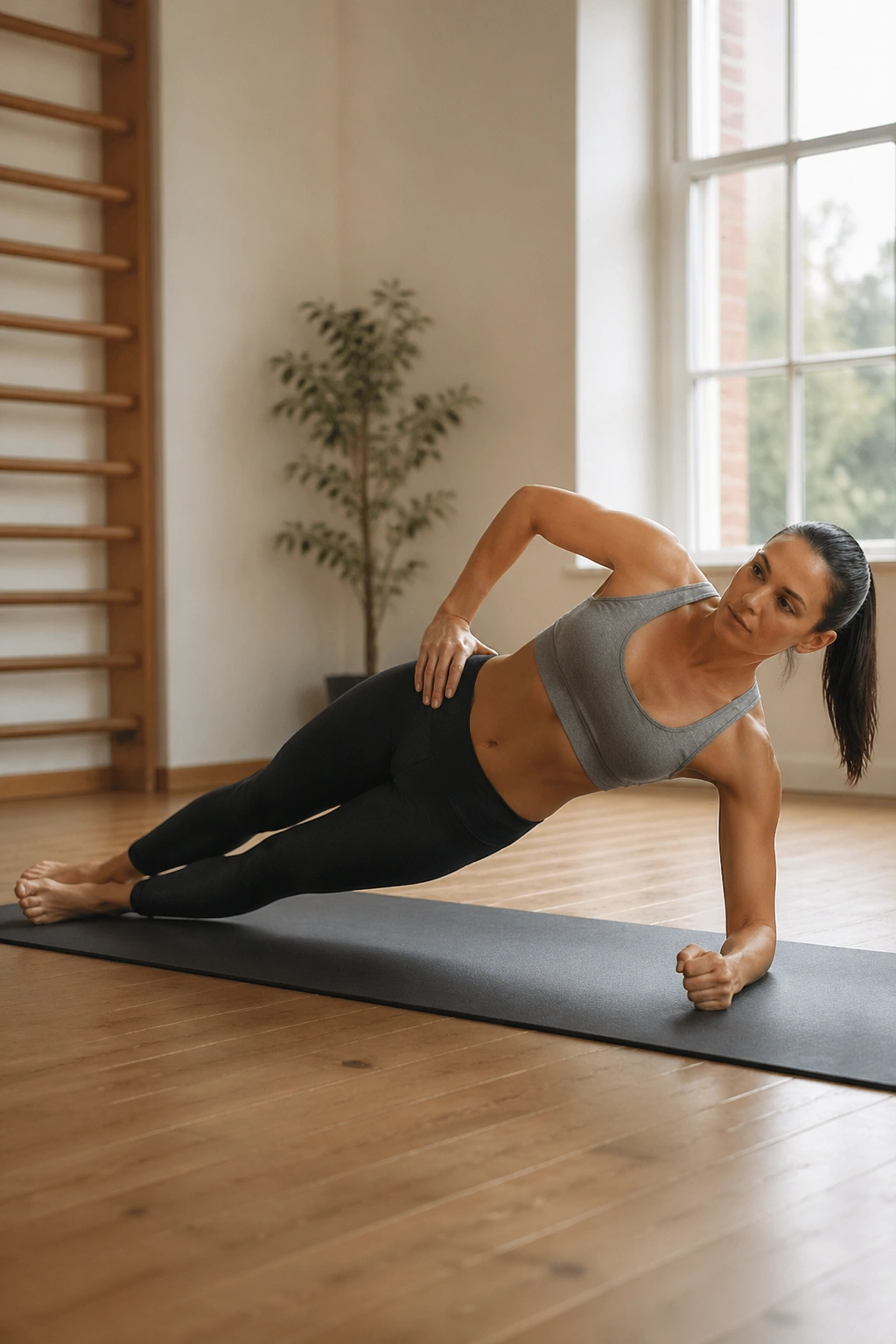
This one earns its keep fast. Side plank hip dips ask your obliques to support the body against gravity while the hips lower and lift in a short, controlled range. If you want a toned midsection that shows from the side as well as the front, do not skip lateral work.
Unlike straight-ahead ab moves, side plank variations train the waistline from an angle. That matters. Your trunk is three-dimensional, not a flat panel. The side body helps create that lifted, held-together look people often describe as “tight,” even when they don’t know why it’s happening.
If a full side plank feels shaky, drop the bottom knee. There is no trophy for suffering through a version that collapses at the shoulder. Keep the elbow under the shoulder, press the floor away, and move the hips only a few inches. Small range. Stronger work.
Watch for these mistakes:
- Letting the shoulder sink
- Rolling the chest forward
- Hips dropping too low
- Rushing through reps
15. Side-Lying Oblique Reach
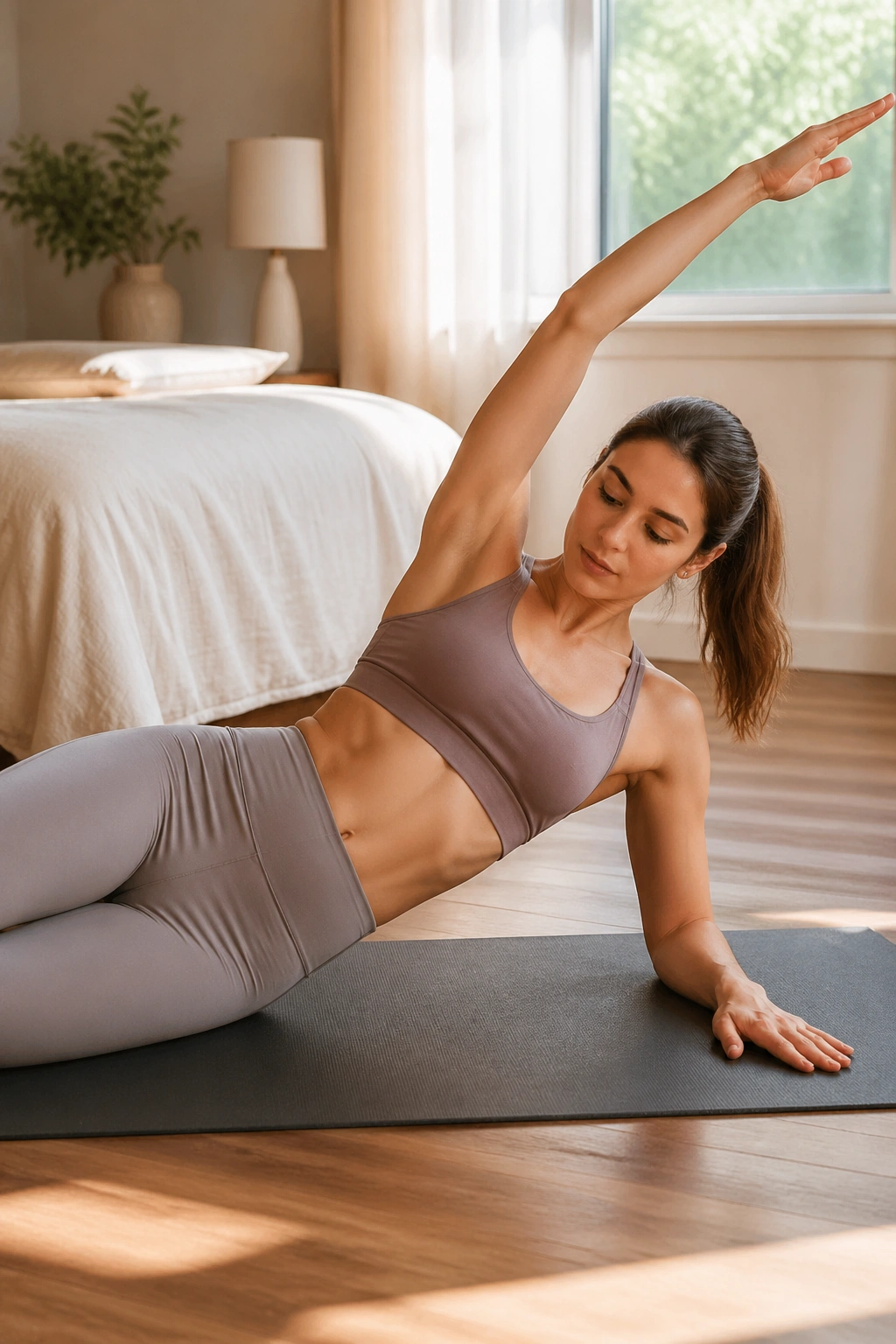
Not every core exercise has to happen on your back. Side-lying oblique reach is a smart one for days when you want to work the waist without loading the neck or wrists. Lie on one side, stack the legs, and reach the top arm overhead as the ribs close toward the hip.
What makes this move useful is the side bend through the trunk. You’re shortening one side of the body while lengthening the other, which gives the obliques and the deeper lateral stabilizers a clean job to do. It’s also a nice correction for people who live in front of screens and spend too much time collapsed through one side.
Keep the motion deliberate. Think of your ribs sliding toward your hip, not your shoulder collapsing into your ear. The movement is small, but the work is real.
How to Get the Most From It
- Exhale as you reach.
- Keep the lower waist active.
- Avoid rolling onto your back.
- Use a cushion under the head if needed.
16. Mermaid Side Bend
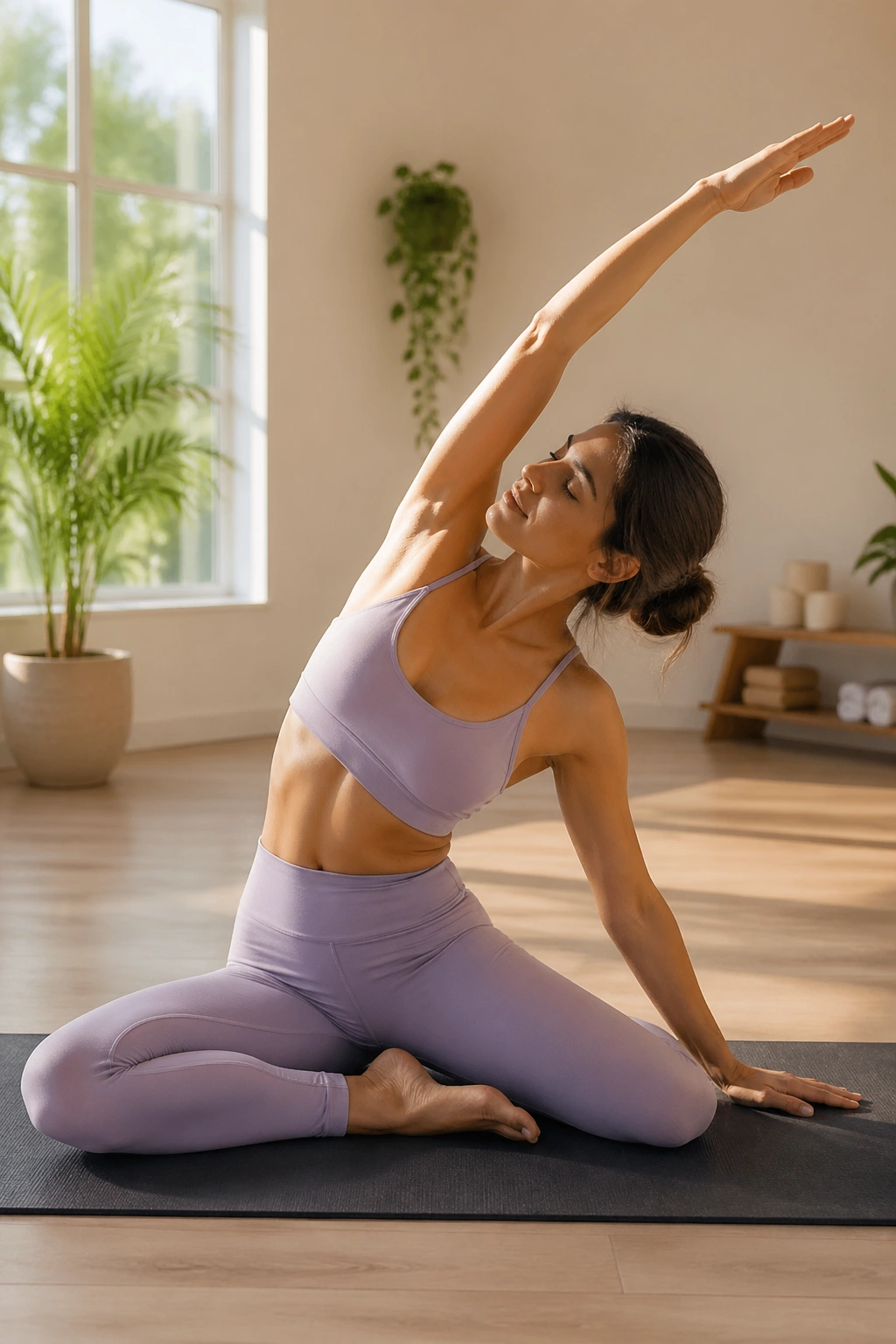
Mermaid is one of my favorite Pilates exercises because it looks soft but sneaks in more work than people expect. You sit to one side, fold and side-bend over the supporting arm, then open back up with a long reach overhead. The body gets a stretch, but the midsection still has to stay awake to control the return.
This move is especially nice if your waist feels stiff from all the flexion-heavy work in the rest of the list. A toned midsection is not just about squeezing harder. It also benefits from length, mobility, and the ability to keep the ribs from flaring when the arms go overhead.
The side bend should feel smooth through the ribs and waist, not jammed in the lower back. If your shoulder starts to creep up, widen the reach a little. That usually fixes more than people think it will. Small adjustment. Big difference.
17. Forearm Plank Knee Tucks
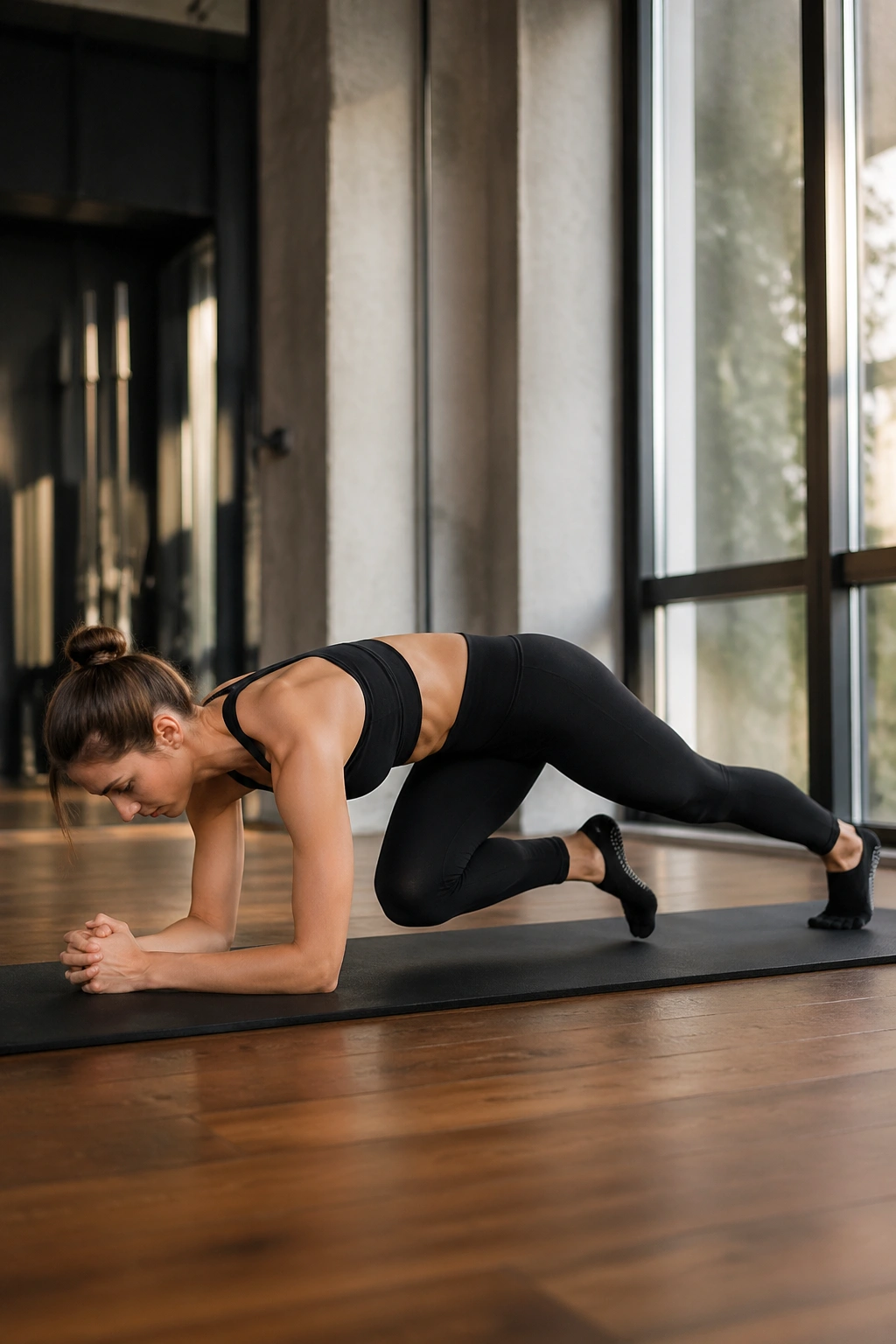
Planks are not glamorous. They are also useful, which is annoying in the best possible way. The forearm plank knee tuck adds motion to the hold, asking the core to resist sagging while one knee draws forward and returns with control. That blend of stability and movement is exactly what a lot of Pilates core training is about.
The setup matters more than people think. Elbows under shoulders, neck long, heels reaching back, glutes lightly active. From there, bring one knee in without letting the hips swing side to side. If the pelvis starts rocking like a boat, shorten the range and slow down.
You’ll feel this one in the front of the core, the obliques, and often the shoulders too. That’s fine. What you do not want is a low back sag or a hold-your-breath panic. Keep breathing. Keep the ribs from flaring. And if you need to, set the knees down between rounds. Smart is better than stubborn.
18. Toe Taps
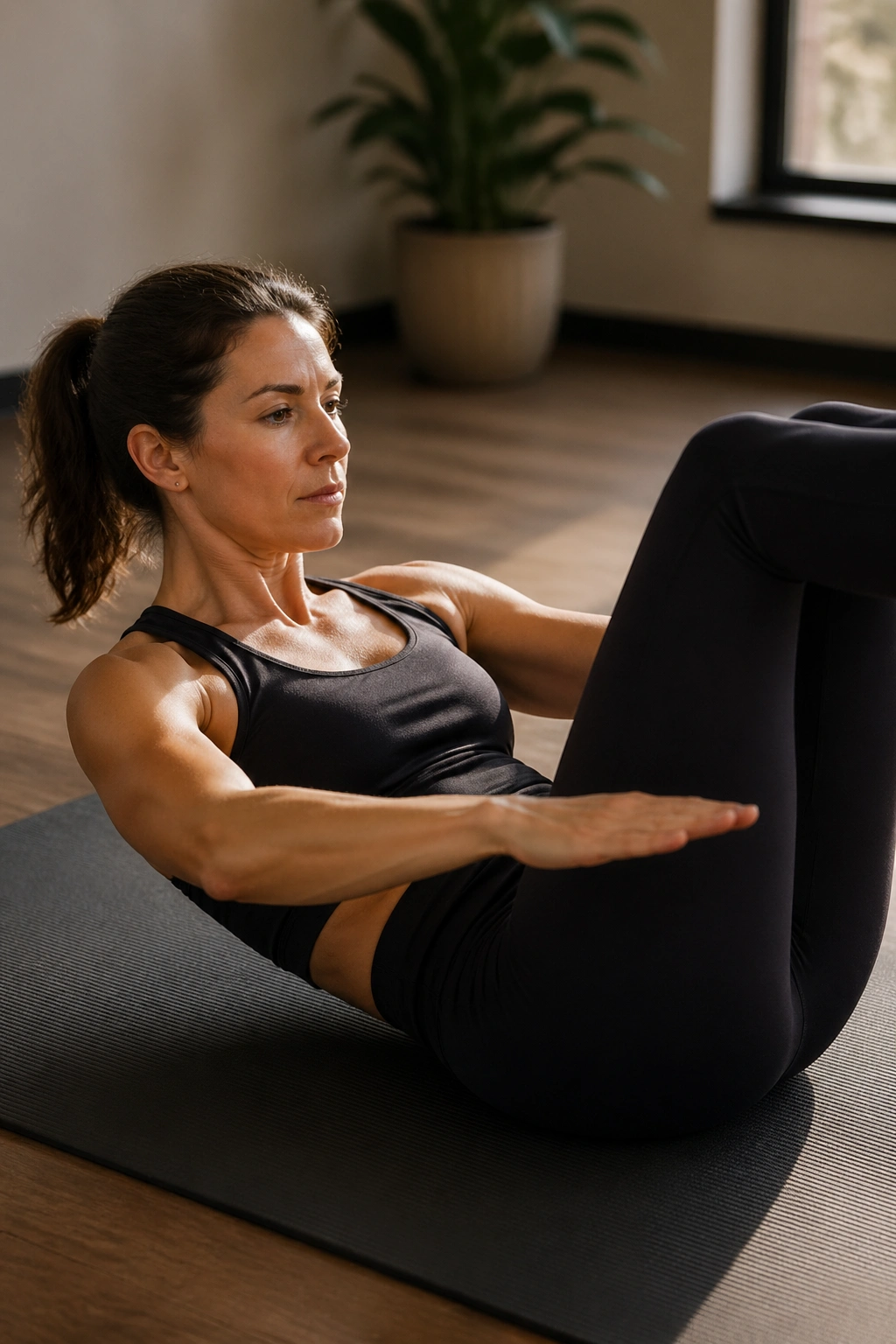
Toe taps are quiet, and that’s why I like them as a finish. They don’t look dramatic. They don’t try to. You hold tabletop, lower one toe toward the mat, bring it back, then switch sides while the trunk stays still. It’s a small exercise with a big honesty problem: if your abs aren’t engaged, the low back tells on you.
This is one of the cleanest Pilates exercises for reinforcing deep core control because the legs move while the pelvis stays as calm as possible. That ability to resist movement is a huge part of a toned midsection. You are teaching the body to stay organized under small, repeated stress. That carries over to everything from walking stairs to lifting a child to sitting upright at a desk without collapsing.
Start with a tiny range. Tap the floor lightly or stop just above it if your back needs more support. If your low back arches, raise the legs higher and cut the range in half. That single adjustment usually saves the whole exercise.
Breathe out on the lower, breathe in on the lift, and keep the movement clean. After a few rounds, your center should feel warm, steady, and a little bit tired in the best possible way.
