



Mat Pilates and weight loss make an awkward pair on paper.
One looks calm enough to do in socks; the other sounds like sweat, treadmills, and a long argument with your own willpower. Then you actually do a smart floor session and realize the joke’s on you — your abs are shaking, your legs are burning, and your breathing has moved from “easy” to “who thought this was a good idea?” in about four minutes.
The useful part is this: mat Pilates works well for weight loss when the sessions are steady, the rest periods are short, and the moves force your muscles to keep tension instead of relaxing between reps. A common activity baseline is about 150 minutes of moderate movement a week, and mat Pilates fits neatly into that kind of routine because it’s low-impact, easy to repeat, and hard to talk yourself out of on a busy day.
No single move burns off body fat from one spot. Anyone promising that is selling fantasy with better lighting.
What mat work can do is help you move more often, build lean muscle endurance, and make the floor feel a lot less friendly in the best possible way. Start with the first workout and pay attention to the pacing — that’s where the real shift happens.
1. The Hundred Pulse Flow for Mat Pilates Weight Loss
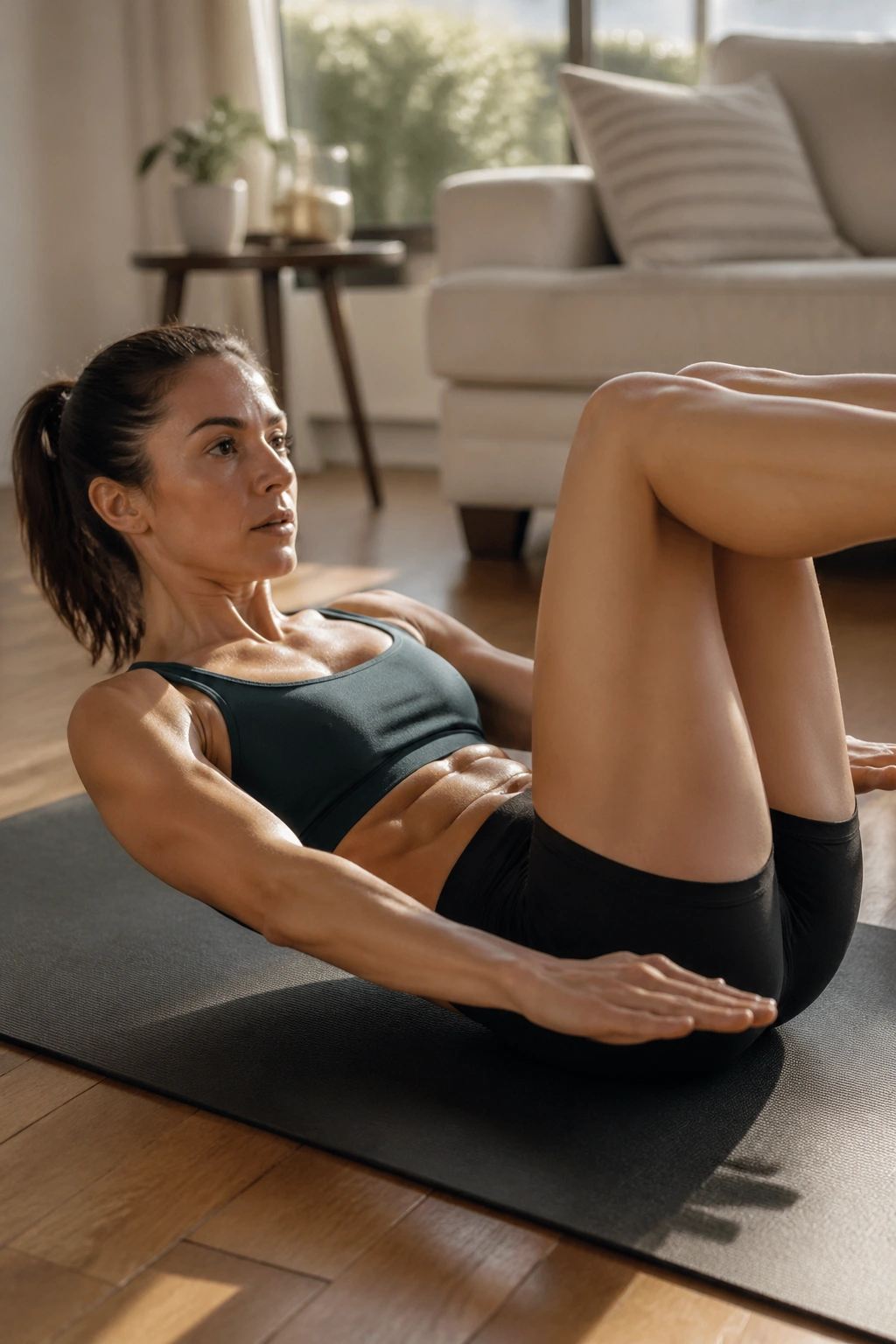
The Hundred looks harmless until your breath starts to get loud. That’s when it starts working.
This is one of those mat Pilates workouts for weight loss that earns its keep fast because it asks for core tension, shoulder stability, and a steady rhythm all at once. Do it as a warm-up, or use it between stronger floor moves to keep your heart rate from drifting down.
How to run it
- Lie on your back with knees in tabletop, or extend your legs to a low diagonal if your lower back stays flat.
- Lift head and shoulders 1 to 2 inches off the mat.
- Pump your arms in small, fast beats for 5 counts in and 5 counts out.
- Do 10 rounds for the full 100, or 5 rounds if you’re easing in.
Keep the ribs heavy. If your lower back starts arching, bring the knees closer or bend them a little more. The whole move gets better when the neck stays long and the chest doesn’t pop forward.
A clean hundred feels like a controlled burn, not a floppy crunch. Your abs should be doing the work while your thighs stay quiet.
2. Roll-Up and Tuck Ladder
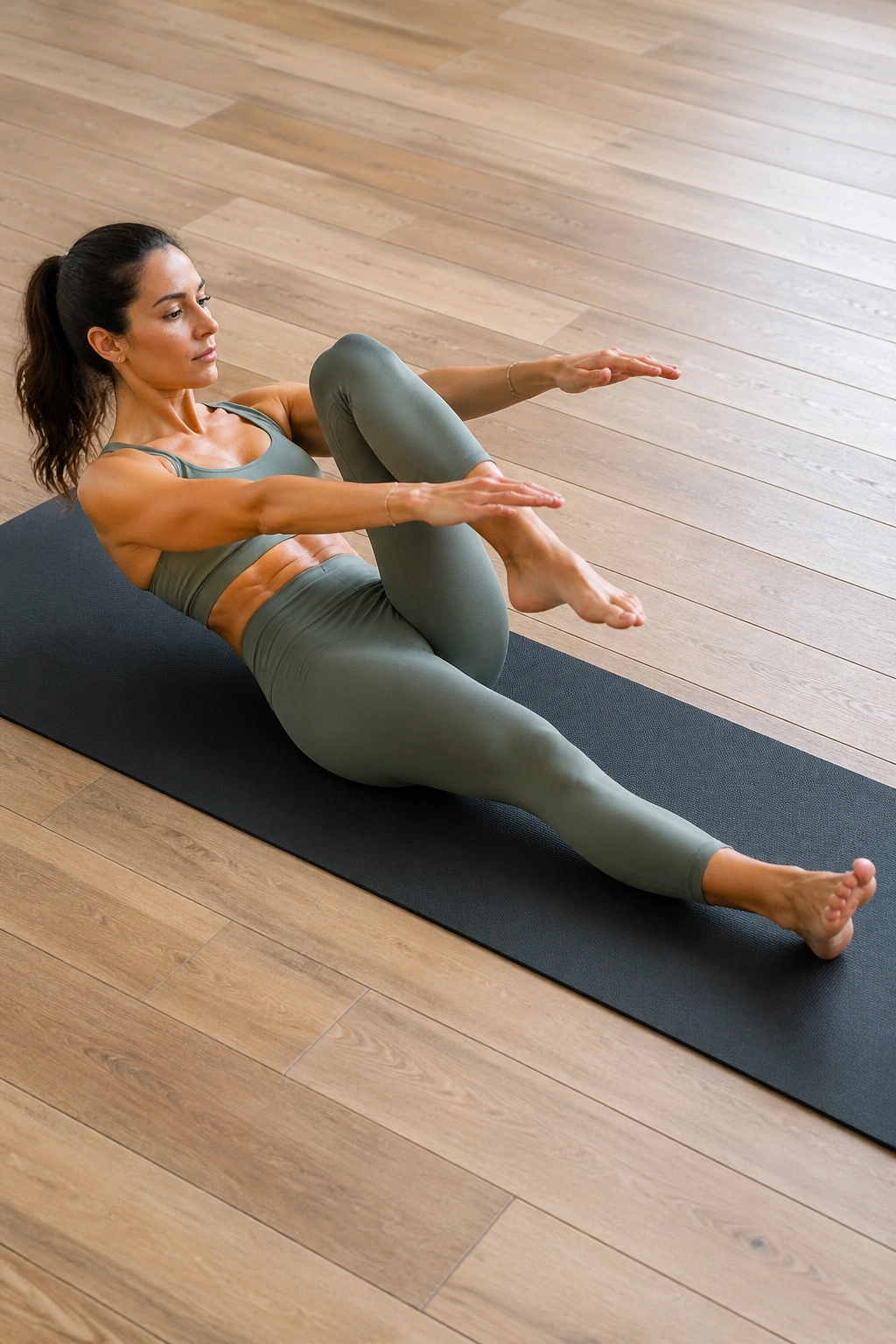
Roll-ups punish sloppy pacing. That’s why they’re useful.
A slow roll-up teaches your spine to move segment by segment, which is harder than it sounds and far better than rushing through a bunch of half-reps. Add a small knee tuck at the top, and the movement turns into a sharp little core challenge that keeps the lower abs awake instead of coasting.
Start with 6 controlled roll-ups. On the last two, pause at the top for one breath, tuck one knee toward your chest, switch sides, then lower with the same deliberate control. If your hamstrings scream, bend the knees on the way down. No prize is handed out for stiff legs and a strained back.
The best cue is simple: go down slower than you want to. That eccentric lowering phase is where a lot of the work lives, and it’s the part people rush because it looks easy. It isn’t.
3. Single-Leg Stretch Intervals
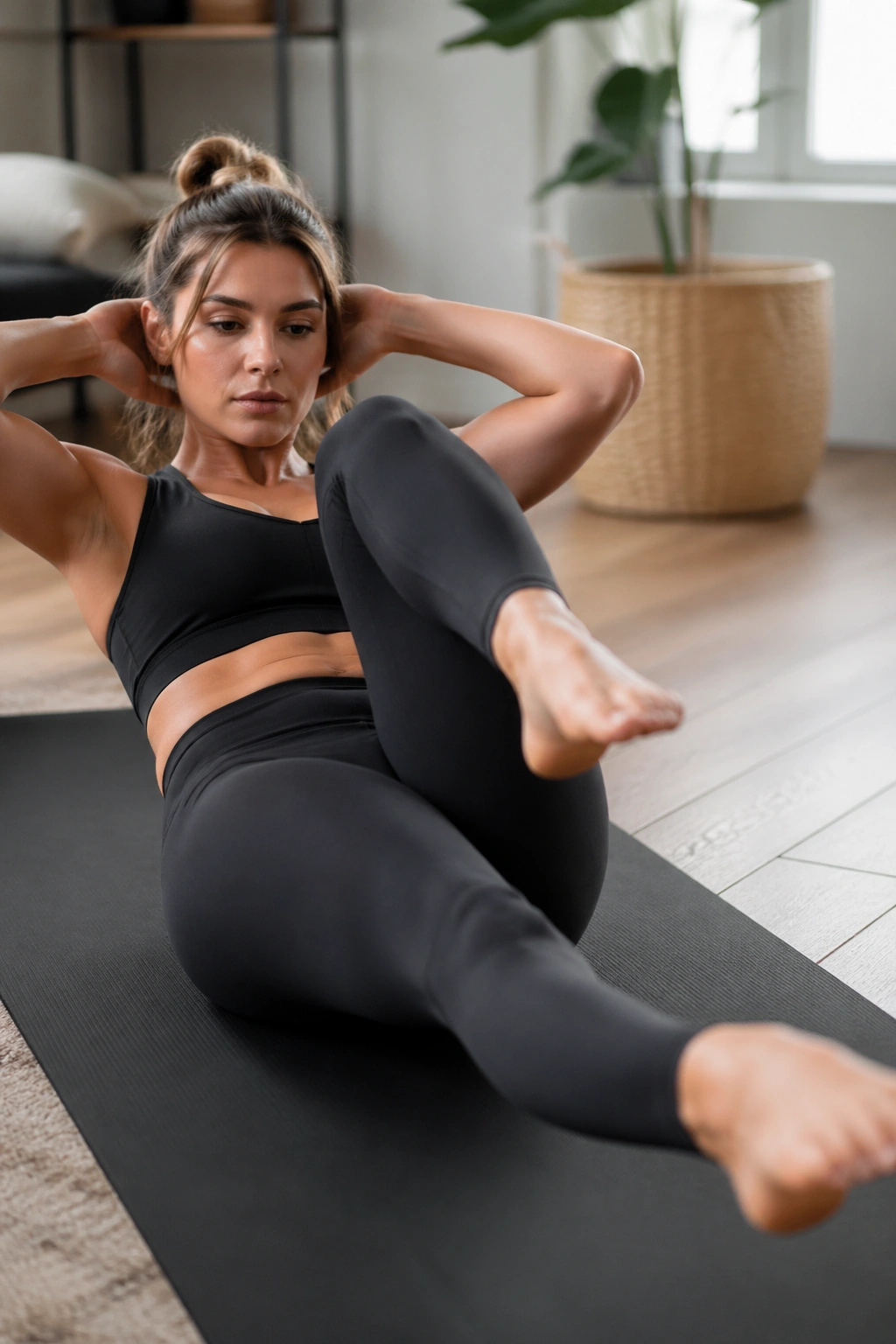
Why does such a small move feel so rude?
Because the single-leg stretch never lets your torso take a break. One leg reaches long while the other folds in, and your core has to keep the whole thing from turning into a wobble. That constant switching is one reason it belongs in a weight-loss-focused Pilates circuit — it keeps the body busy without any dead time.
How to use it
Do 30 to 40 seconds per side, then rest 15 seconds and repeat for 2 or 3 rounds. Keep your elbows wide and your chin slightly tucked so the neck doesn’t take over. If the low back lifts, make the reaching leg higher and keep the movement smaller.
The real trick is the exhale. Blow the air out as the legs switch, and you’ll feel the stomach flatten and tighten instead of pushing outward. Small detail. Big difference.
4. Crisscross to Side Plank Reach
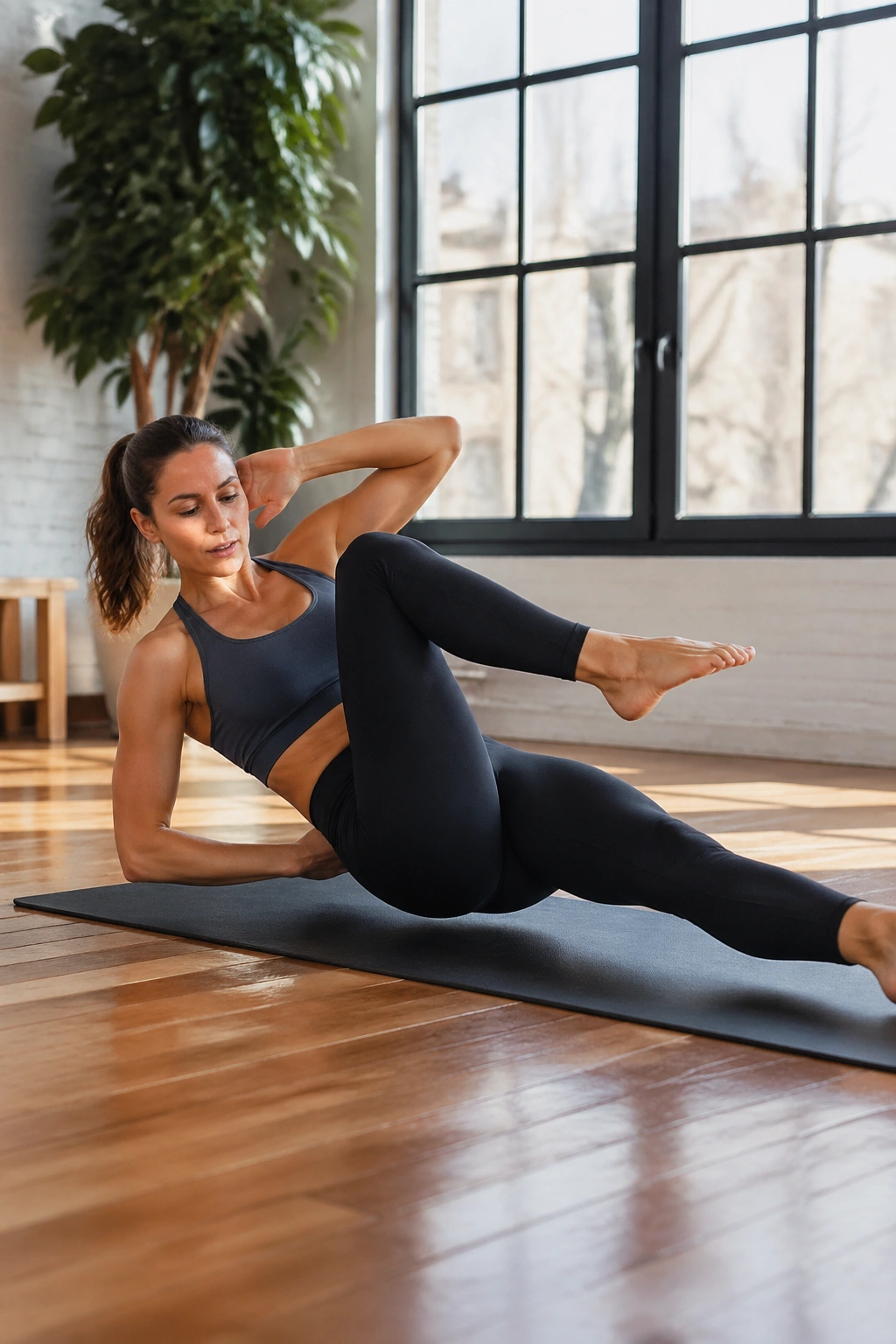
By the third twist, your waist knows it’s not being treated gently.
This combo is mean in a good way. Crisscross hits the obliques with rotation, then the side plank reach asks those same muscles to stabilize your body weight while the shoulder does its share. That mix is exactly why it fits so well in a mat Pilates routine meant to support weight loss.
Form checkpoints
- Keep the shoulder blades off the mat during the twist.
- Rotate from the ribs, not just the elbow.
- In the side plank, stack the feet if you can, or drop the bottom knee for a friendlier version.
- Reach the top arm forward, then overhead, then back to the mat.
Do 6 to 8 crisscross reps per side, then hold the side plank for 15 to 20 seconds. Repeat both sides.
The move feels cleaner when you stop trying to crank through the range. A smaller twist with better control beats a bigger, sloppy one every time.
5. Glute Bridge Ladder
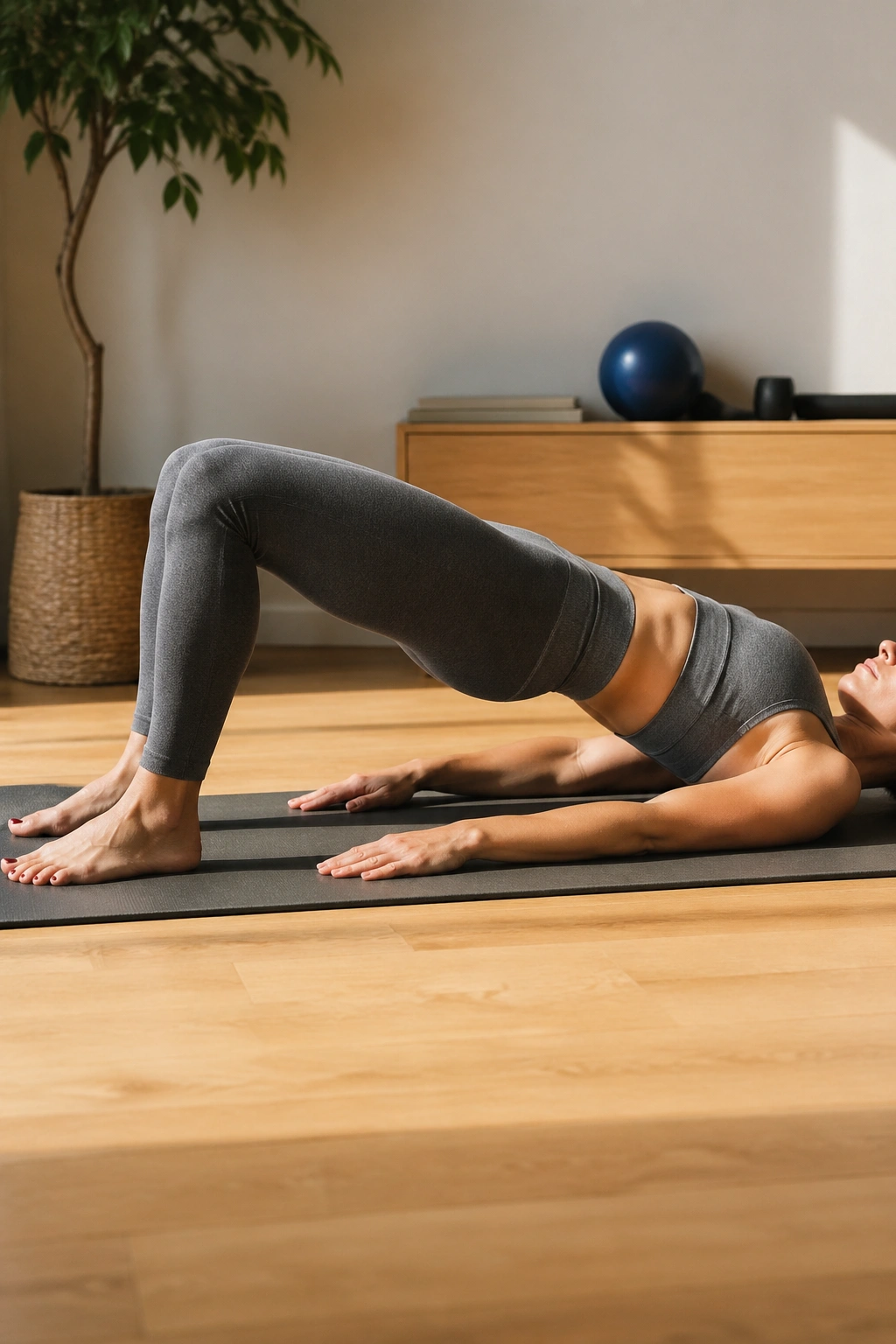
Glute bridges are the sneaky backbone of a good floor routine.
People like to talk about abs and ignore the biggest muscles in the body. That’s a mistake. Bridges light up the glutes, hamstrings, and lower back in a way that can make a mat session feel a lot more serious, especially when you keep the reps moving and the top position honest.
Do 10 bridge lifts, then 10 tiny pulses at the top, then 8 slow single-leg marches on each side. If that’s too much, cut the marches and keep the pulses. Your hips should rise and lower without rocking side to side. If one side drops faster, slow down and fix it before you chase the next rep.
A bridge that looks easy usually isn’t doing much. A bridge with a slight tremble and a firm squeeze at the top is the one worth keeping.
6. Side-Lying Leg Burner
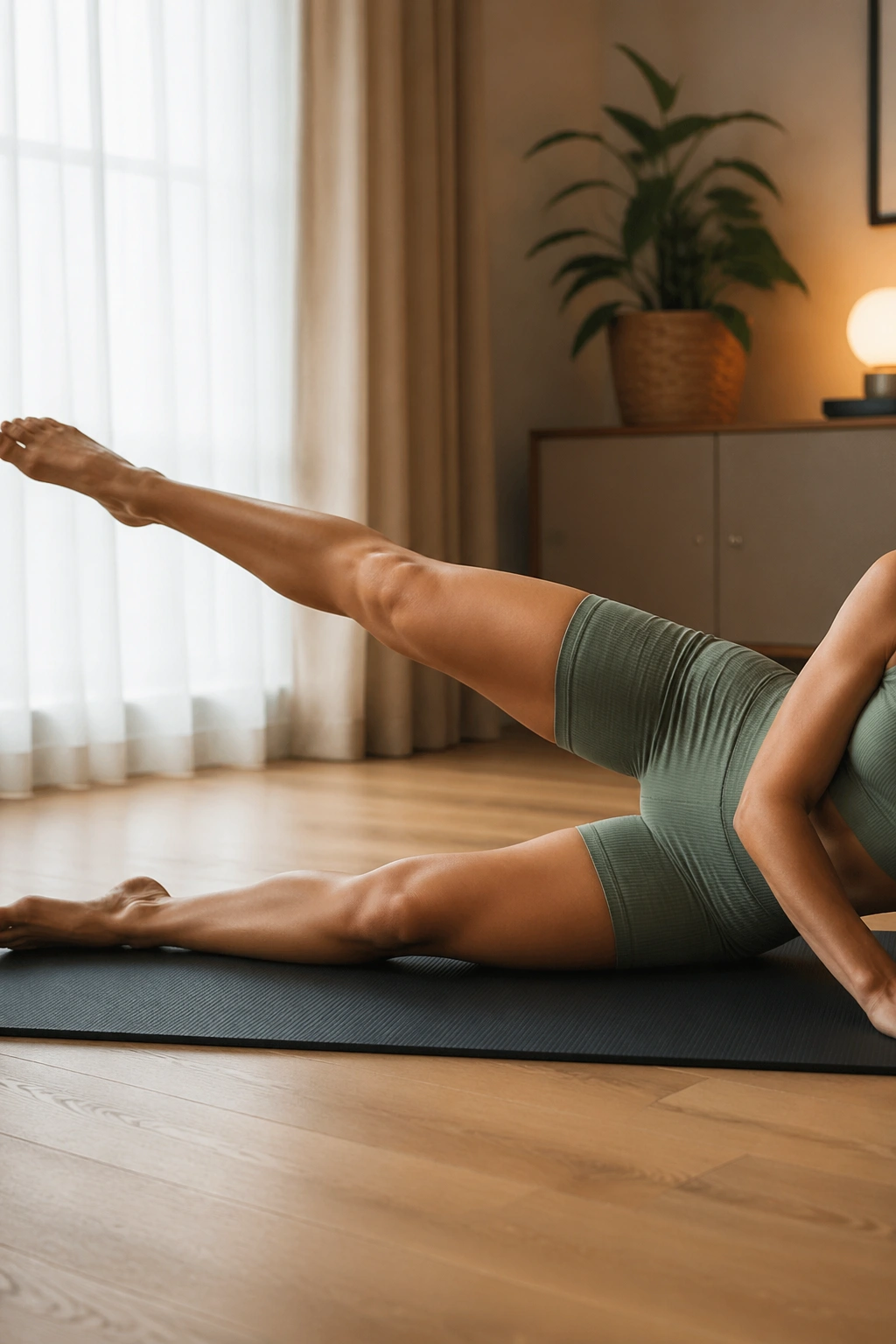
Side-lying work looks soft. It isn’t.
The outer hips and glute medius go to work here, and they tend to complain in a very honest way. That matters for weight loss because the move adds lower-body volume without pounding your joints, which makes it easier to stack on top of walking or a longer Pilates flow.
Keep the hips stacked, toes slightly turned down, and the waist lifted away from the mat. Then do 12 straight leg lifts, 12 small circles each direction, and 12 tiny pulses. Swap sides. If your torso rolls backward, stop and reset. That’s the mistake everyone makes when the burn starts.
Optional mini band? Fine. Not required. A clean bodyweight set is already plenty if you stay strict and avoid yanking the leg up with momentum.
7. Forearm Plank Knee Drives
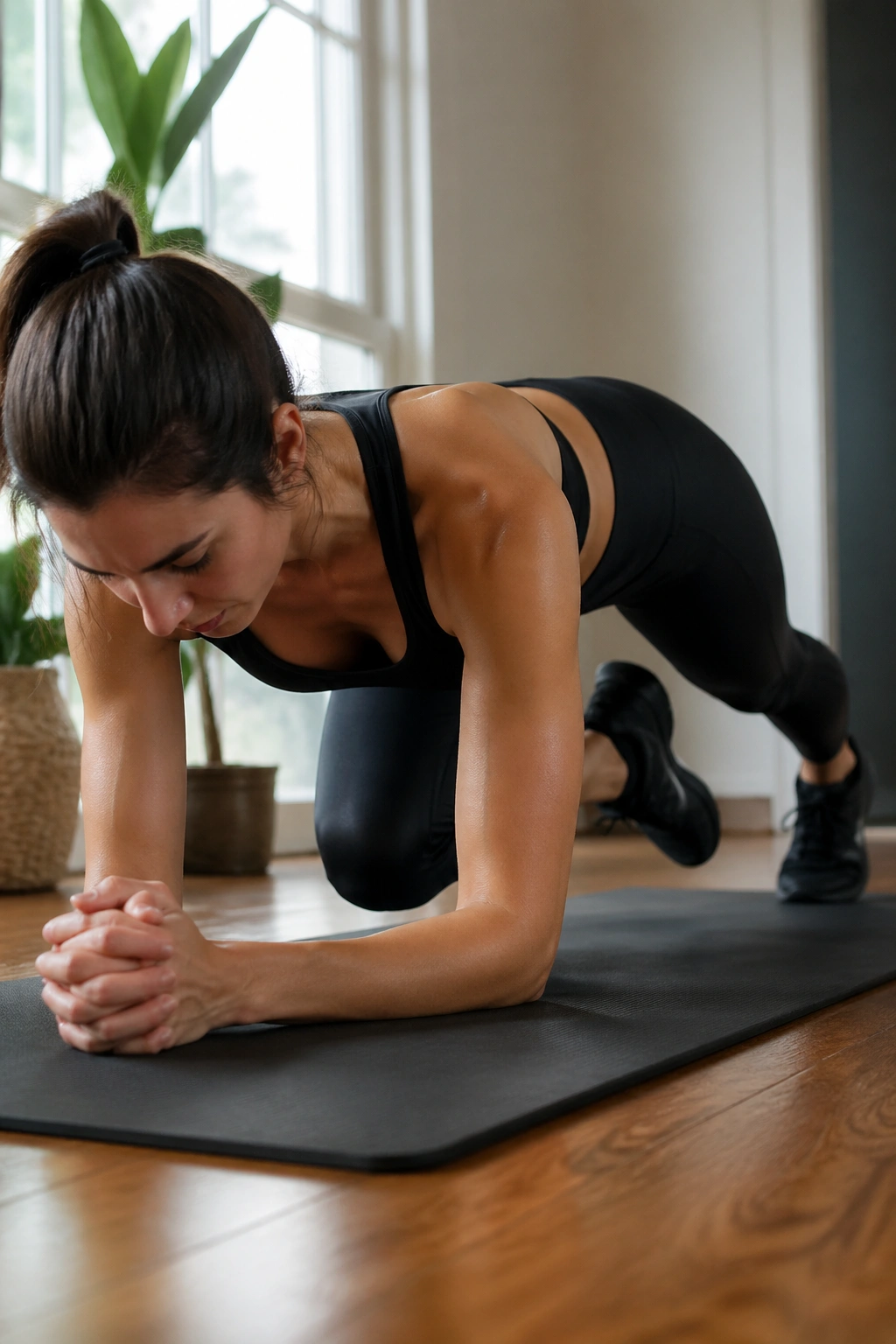
Planks get boring fast unless you give them a job.
Knee drives keep a forearm plank from turning into a static hold where the mind wanders and the hips sag. Here, the core has to keep the pelvis level while the legs drive in one at a time. It’s a simple setup, but the effect is serious when the work interval stays long enough.
How to keep it useful
- Hold a forearm plank for 20 seconds.
- Drive one knee toward the same-side elbow, then switch.
- Keep the hips low and the shoulder blades broad.
- Do 8 to 12 total drives, then rest 20 seconds.
If wrists are a problem, this version is kinder than a high plank. If your lower back feels pinchy, raise the hips a little and shorten the knee drive. The goal is control, not a dramatic range.
This one belongs in any Pilates workout for weight loss because it raises the effort without adding impact. That’s a rare and useful combo.
8. Swimming on the Mat
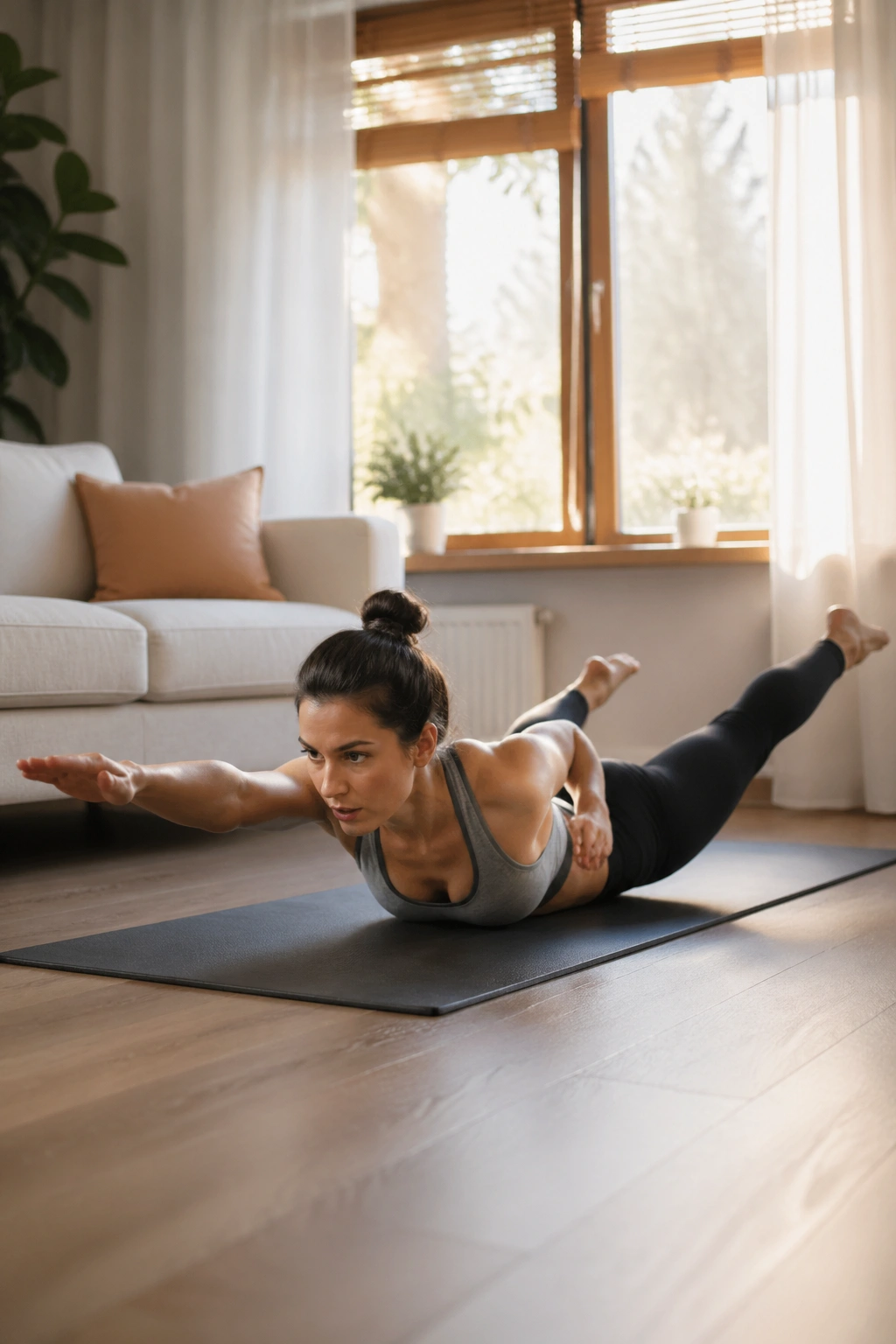
The first few seconds feel almost dreamy. Then your back wakes up.
Swimming is one of the best pure mat Pilates moves for the posterior chain — glutes, hamstrings, upper back, and spinal extensors all have to pull together while your limbs stay long and active. It also gives you that slightly elevated heart rate that makes a floor session feel less like stretching and more like actual training.
Lie face down, reach arms forward, and lift opposite arm and leg off the mat in quick alternating pulses. Do 20 to 30 seconds, rest for 15, then repeat. Keep the gaze down so the neck doesn’t crank. If your lower back pinches, reduce the height and think about lengthening instead of lifting higher.
The move should feel long and springy, not thrashy. There’s a fine line there, and staying on the right side of it keeps the exercise useful instead of messy.
9. Teaser Prep Series
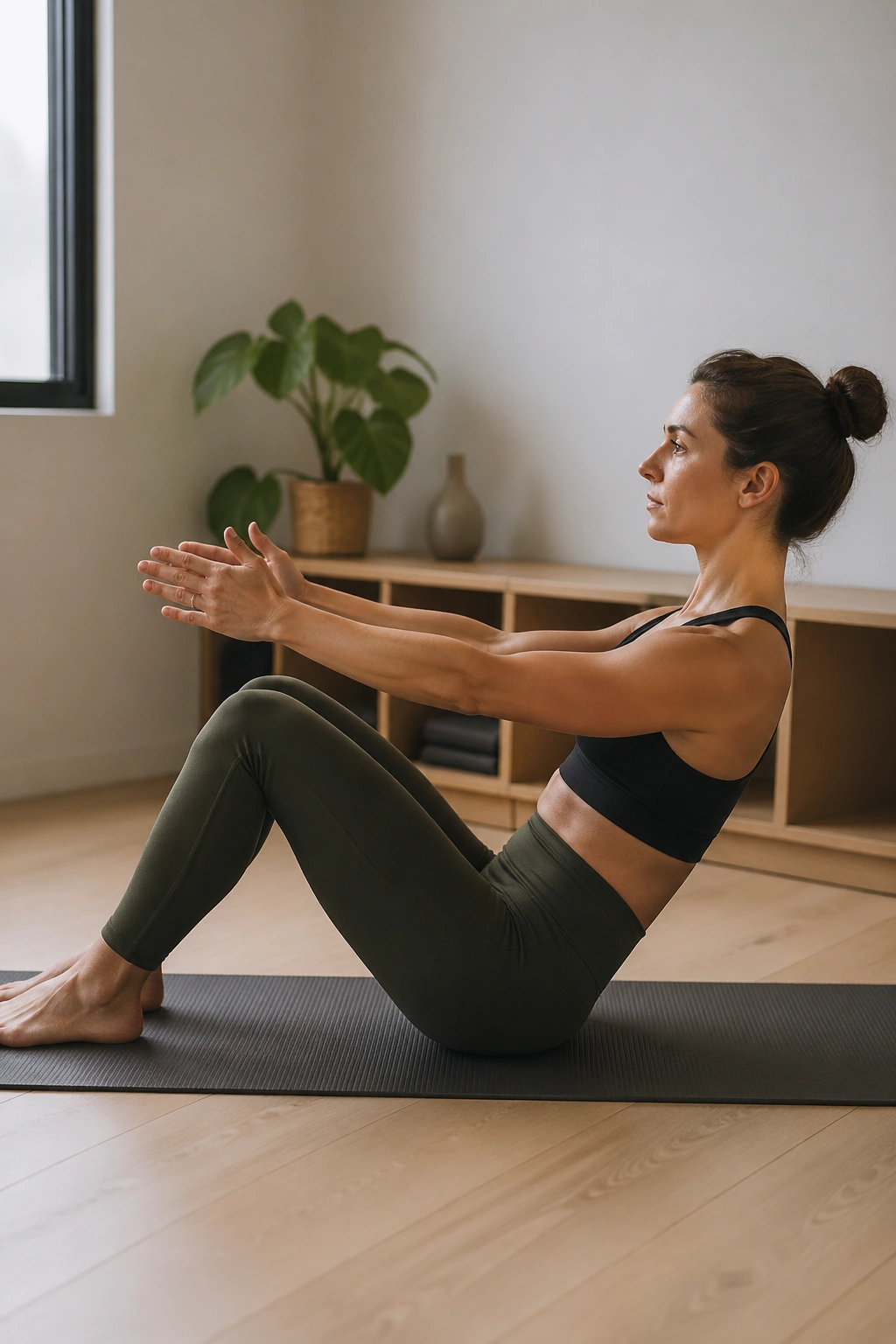
Teaser prep is where Pilates gets a little smug. Fair enough.
It’s hard, but it’s the kind of hard that teaches your body to organize itself. A clean teaser prep trains deep abs, hip flexors, balance, and the patience to move slowly when your instinct says to fling yourself upward and hope for the best. That sort of control matters in a mat Pilates routine aimed at weight loss because the exercise is dense. Not flashy. Dense.
Start seated, knees bent, hands on the mat near your thighs. Roll back until your tailbone is just off balance, then bring the arms forward and hold for 2 breaths. Come back up without jerking. Do 5 to 6 reps.
If your neck gets tired, keep the head down for the first round. If the lower back rounds too fast, stay higher. There’s no shame in the prep version; it’s often the version that gives you the most honest work.
10. Kneeling Oblique Reach
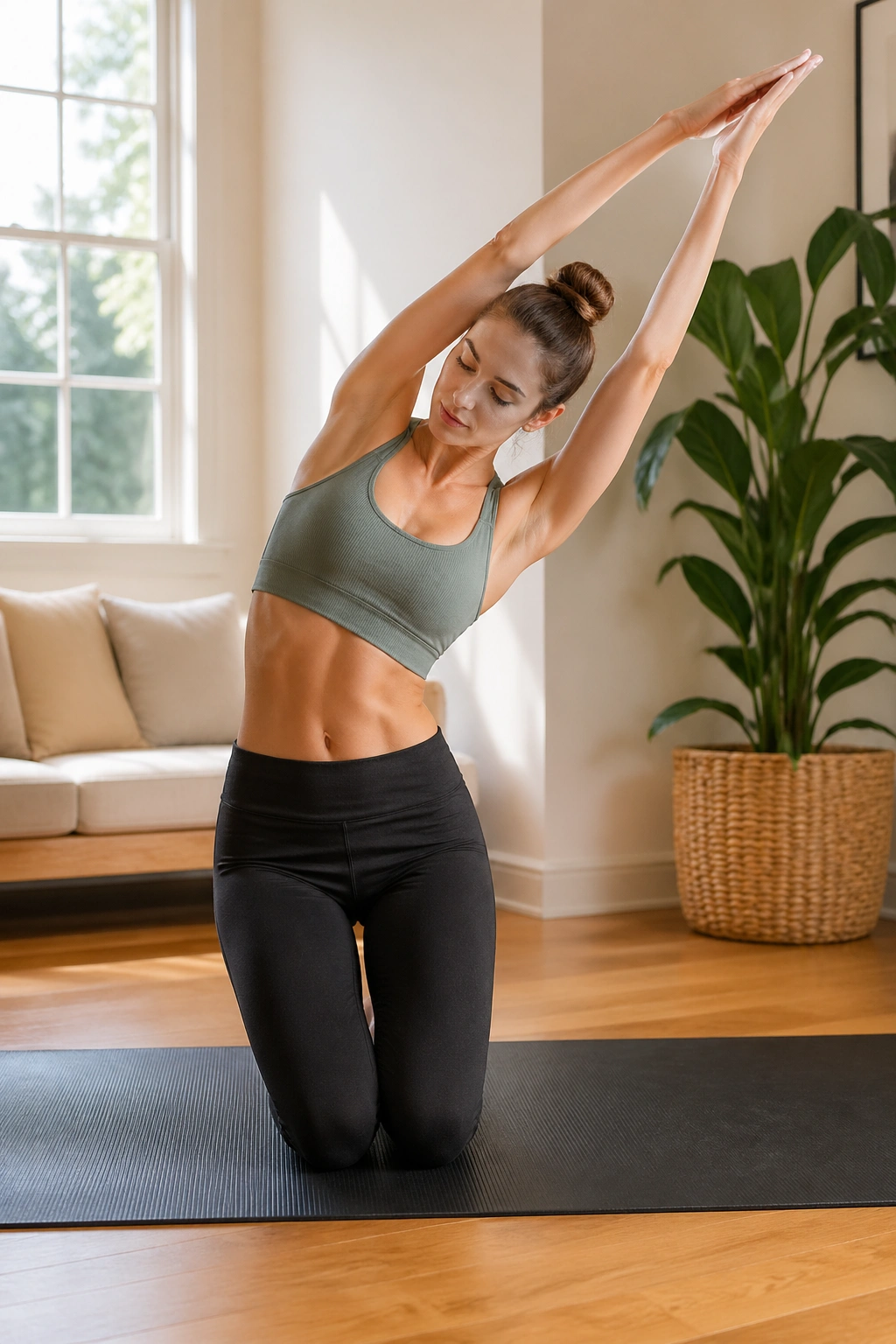
Want a waist move that doesn’t trash your wrists? Use kneeling work.
Tall kneeling puts you upright, which changes the whole feel of the exercise. Instead of fighting the floor, you’re controlling side bends and rotations from a stacked position that makes the obliques work without hiding behind shoulder fatigue. It’s especially handy if you want more variety in your mat Pilates workouts for weight loss.
How to get the most from it
- Kneel with hips over knees and ribs stacked over pelvis.
- Reach both arms overhead.
- Lean to one side for 8 reps, then rotate slightly toward that side for another 8.
- Switch sides and keep the pace slow enough that you can stay tall.
The biggest mistake is collapsing through the waist. Keep one long line from hip to fingertips, even when you bend. That’s the difference between a tidy side-body burn and a sloppy half-stretch.
A move like this won’t leave you gasping. It will, however, make your waist and upper body feel awake in a way that carries into the rest of the session.
11. Reverse Tabletop Kick-Throughs
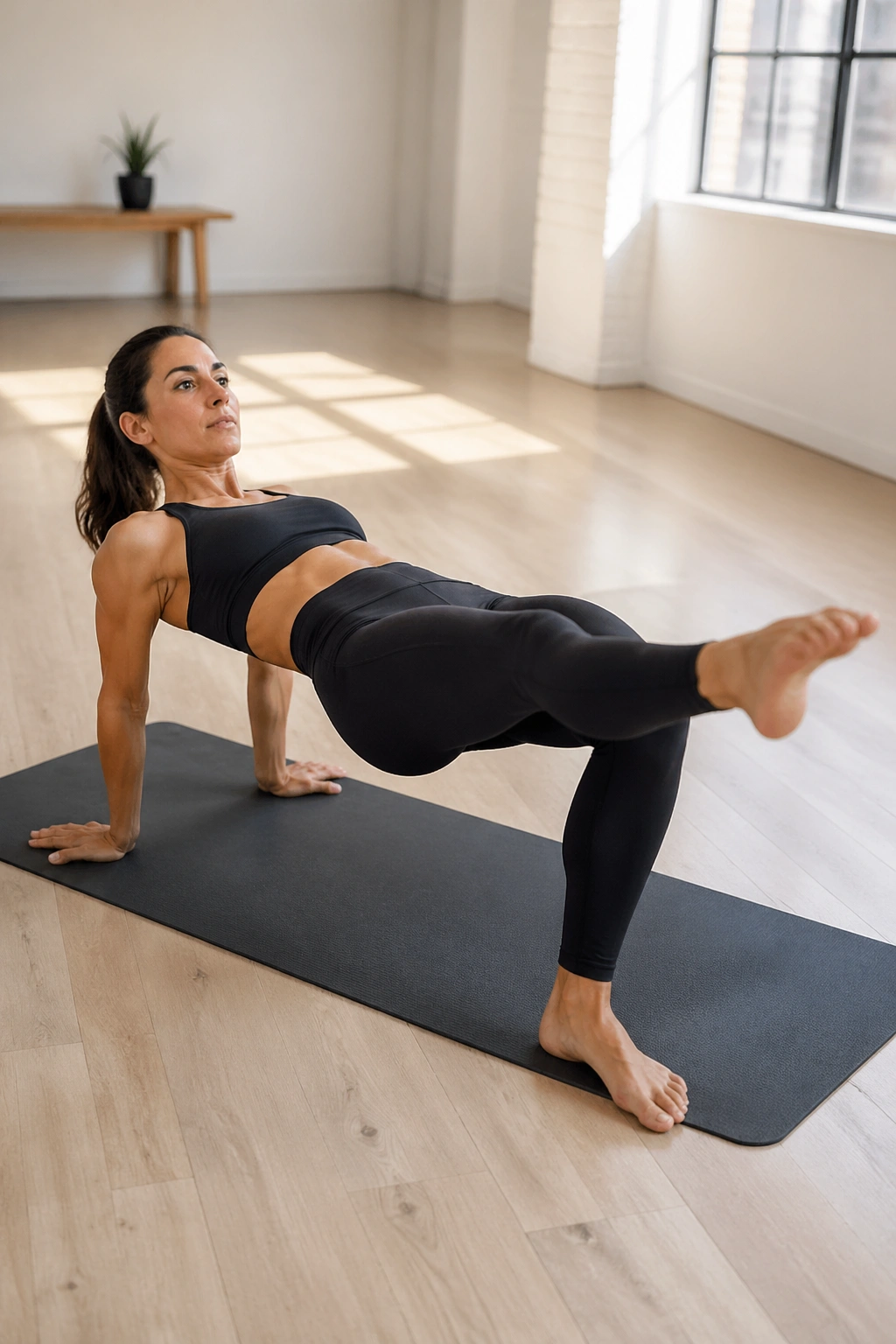
Reverse tabletop is a little weird, which is part of the charm.
You’re facing upward, hands behind you, hips lifted, and then one leg kicks through while the body stays as quiet as possible. That creates a mix of shoulder load, triceps work, glute squeeze, and core control that feels more athletic than most people expect from mat Pilates.
Hold reverse tabletop for 10 to 15 seconds first if you’re new to it. Then add 4 to 6 kick-throughs on each side. Keep the chest open and the shoulders away from the ears. If the wrists complain, turn the fingers slightly outward and shorten the hold.
This one is not the easiest exercise on the list. That’s fine. A good workout for weight loss should include a few moves that make you work for the privilege of moving on.
12. Clamshell to Donkey Kick Combo
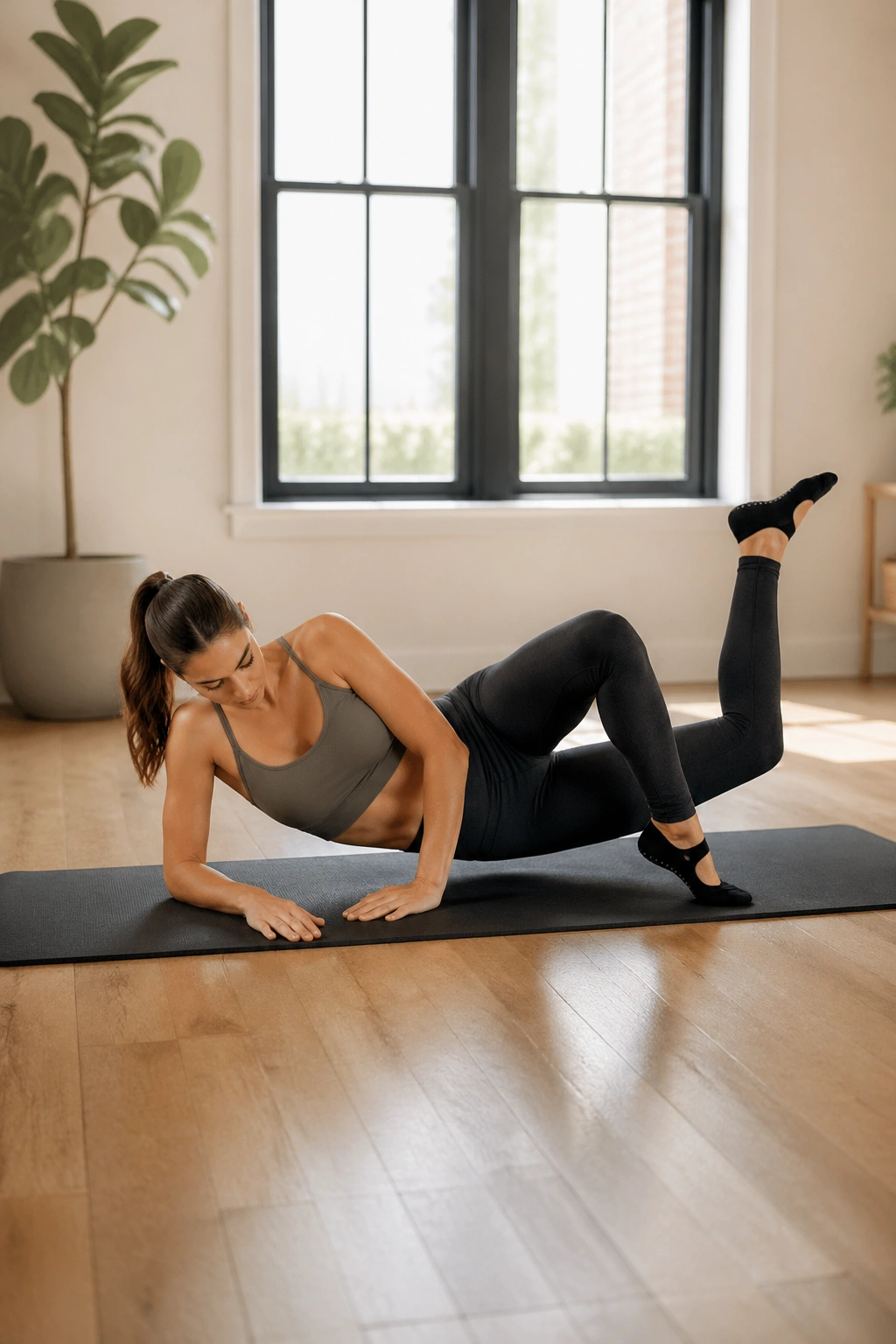
No drama. Just glutes.
This combo is plain, and that’s why it works. The clamshell targets the outer hip, then the donkey kick asks the glute max to finish the job. Together, they make a clean lower-body pairing that is easy to scale up with slower tempo, more reps, or a light mini band.
Lie on your side for the clamshell, knees bent, heels together. Open the top knee 12 times with the pelvis still. Then roll to hands and knees and do 12 donkey kicks per side, keeping the back flat and the foot flexed. If the low back sways, make the kick smaller. Bigger is not better here.
This is a good section to push through with steady breathing. It’s not flashy, but it adds up, and a lot of smart Pilates training lives in exactly that kind of repeated, stubborn work.
13. Mat Mountain Climbers
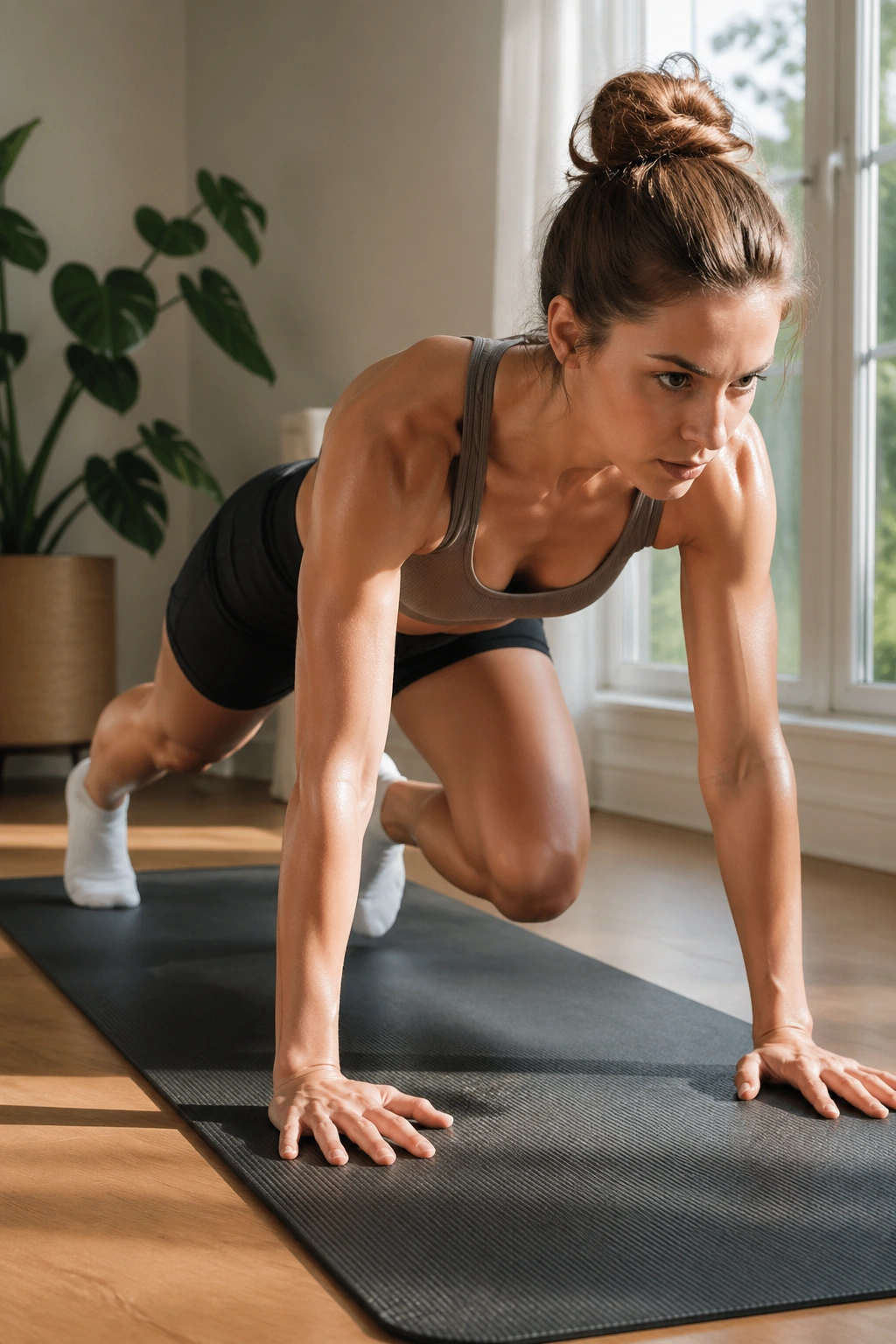
A mat can still feel like a cardio floor if you move fast enough.
Mountain climbers are one of the few bodyweight moves that can raise your heart rate while still asking for core discipline. In a Pilates setting, the key is control — no bouncing, no frantic hopping, no shoulders creeping to your ears like they’re trying to hide. Keep the tempo brisk and the body quiet.
How to keep pace without losing form
- Start in a strong high plank or forearm plank.
- Drive one knee toward the chest, then switch.
- Keep the feet light and the hips low.
- Work for 20 to 30 seconds, rest 15, repeat 4 times.
If the wrists don’t like it, move to forearms. If the wrists still grumble, do the same pattern with hands on a couch or bench. That’s not cheating. That’s smart joint management.
A move like this gives the session a pulse. Without one or two faster bursts, mat Pilates can drift into “pleasant but mild.” That’s not what we’re after here.
14. Mermaid Flow with Pulses
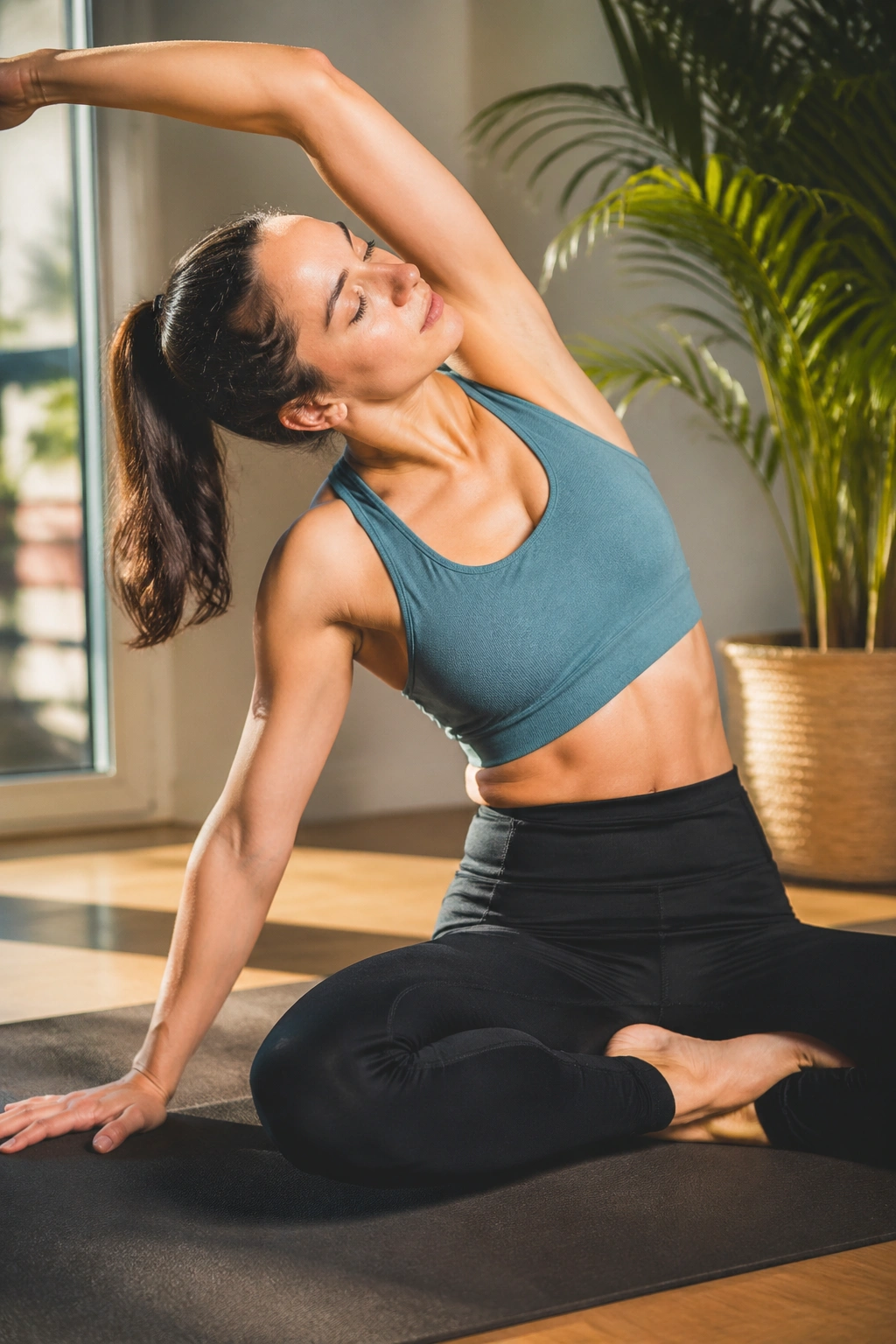
Mermaid is the recovery move that still works.
Seated side bending opens the ribs, eases the low back, and stretches the side body after all the planks and bridges start stacking up. Add a few little pulses at the bottom, and suddenly the stretch has a job to do. The body stays moving, which keeps the session from getting too sleepy.
Sit with both shins folded to one side if that’s comfortable, or sit cross-legged. Reach one arm overhead, bend to the opposite side, then pulse down 5 to 8 times. Come back up slowly. Repeat on the other side. Keep both sit bones rooted so you don’t tip forward.
The move won’t burn like mountain climbers. It’s the kind of shape work that makes the more intense sets feel possible, and that matters more than people give it credit for.
15. Bridge March and Hamstring Walkout
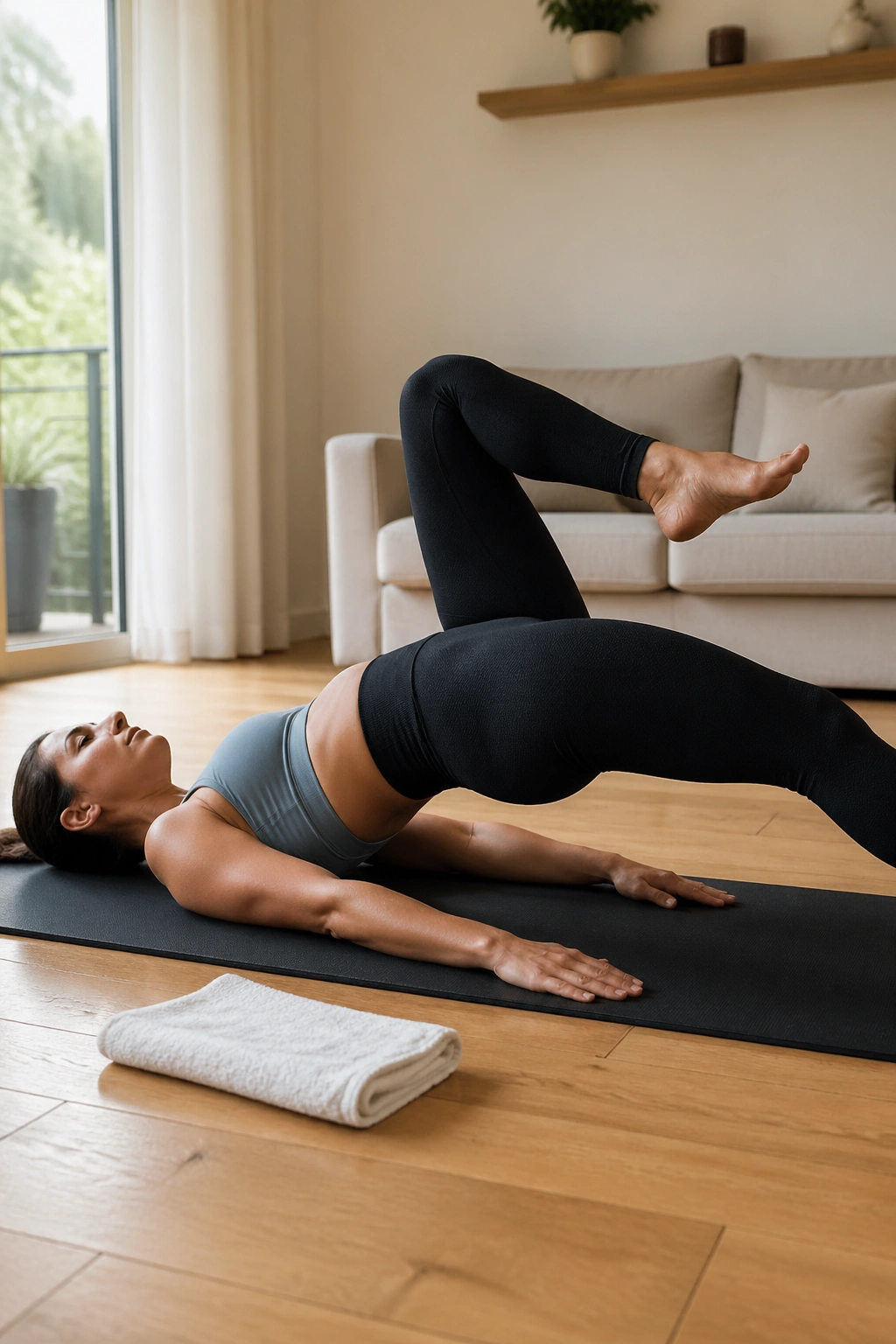
This one has a sneaky little sting to it.
Bridge marches already challenge the hips. Add the walkout, and the hamstrings step in hard. That combination keeps the back side of the body active for longer periods, which is useful when you want a Pilates workout that supports weight loss without turning into a joint-pounding mess.
Lift into a bridge, then march one knee up at a time for 8 to 10 total reps. Lower the hips slightly, walk the heels out 4 small steps, then walk them back in 4 steps. Repeat 2 or 3 rounds. Keep the pelvis level. If cramping starts in the hamstrings, shorten the range and reset.
The walkout is the part people rush. Don’t. Slow feet make the whole pattern cleaner, and a cleaner pattern lets the glutes do their share instead of handing the job to the lower back.
16. Corkscrew and Hip Lift
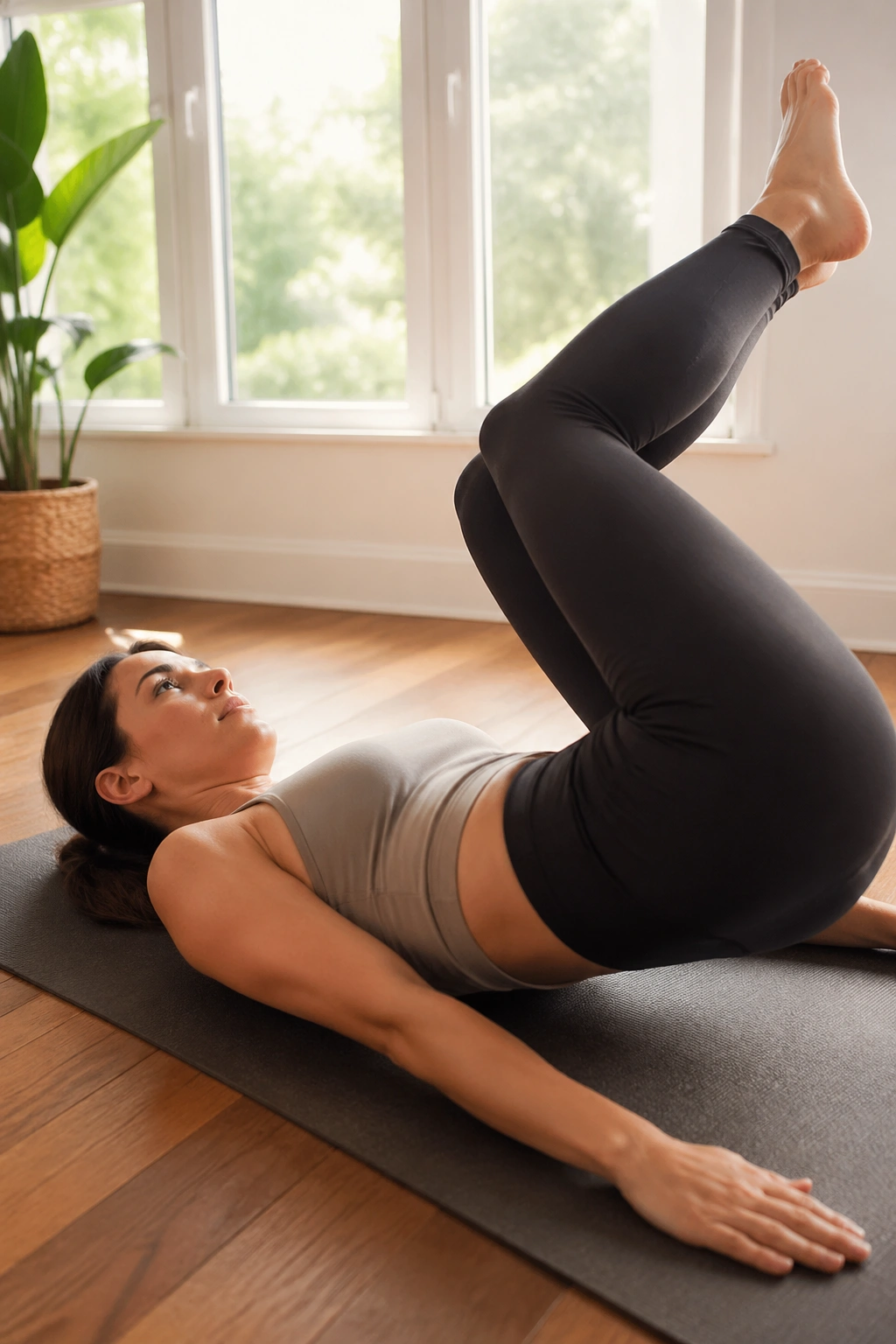
Corkscrew feels elegant until it doesn’t.
The circles look smooth when the core is doing the work. They look like a mess when the hips swing and the shoulders clamp down. Pairing the corkscrew with a small hip lift turns the exercise into a deep abdominal challenge that also asks the pelvis to stay disciplined under movement.
Common mistake to avoid
- Don’t let the ribs pop.
- Don’t throw the legs around.
- Keep the motion controlled and small, especially if your back is sensitive.
Do 4 to 6 slow corkscrew circles each direction, then add 8 hip lifts with the legs reaching up toward the ceiling. If the lower back starts to feel pinchy, cut the circle size in half and stay there. That’s still useful work.
This is one of those moves that looks modest from outside the room and feels much bigger from inside it. That’s a good sign.
17. Beast Hover Knee Taps
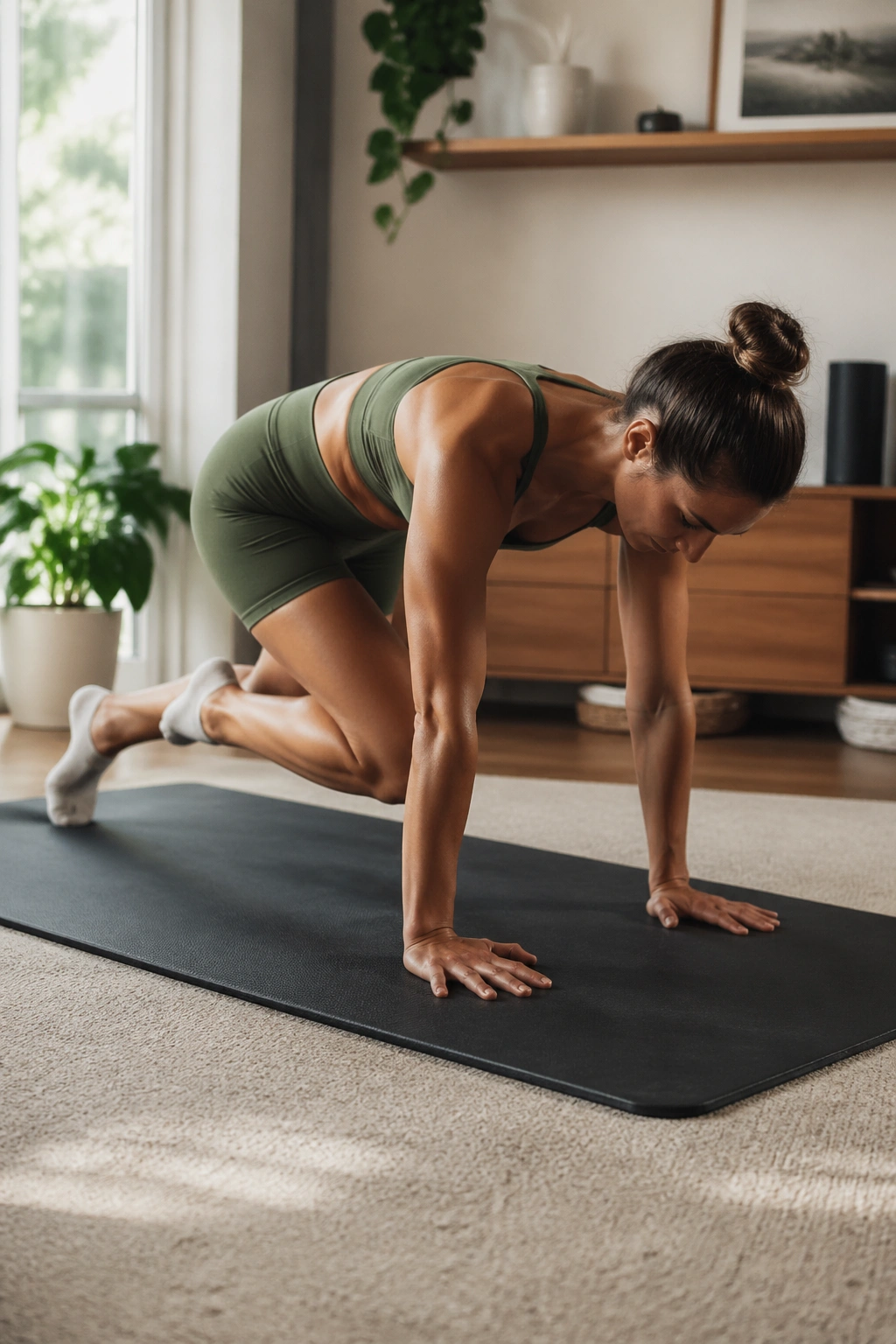
The beast hover is a strange little beast. Fitting name.
You start on hands and knees, then lift the knees an inch or two off the mat and hold that hover while tapping one knee softly toward the floor and back. The core has to keep the trunk from twisting, and the shoulders have to carry weight without collapsing. It’s a lovely nuisance.
Keep the hover to 10 or 15 seconds at first, then add 6 to 8 knee taps. Rest, then repeat. If the wrists protest, shift some of the load forward into the fingertips and press the floor away. If the shoulders shrug, pause and reset before the next set.
This move is a nice bridge between Pilates and conditioning. Not too cute. Not too brutal. Just enough to make the session feel like it’s moving somewhere.
18. Side Plank Thread-the-Needle
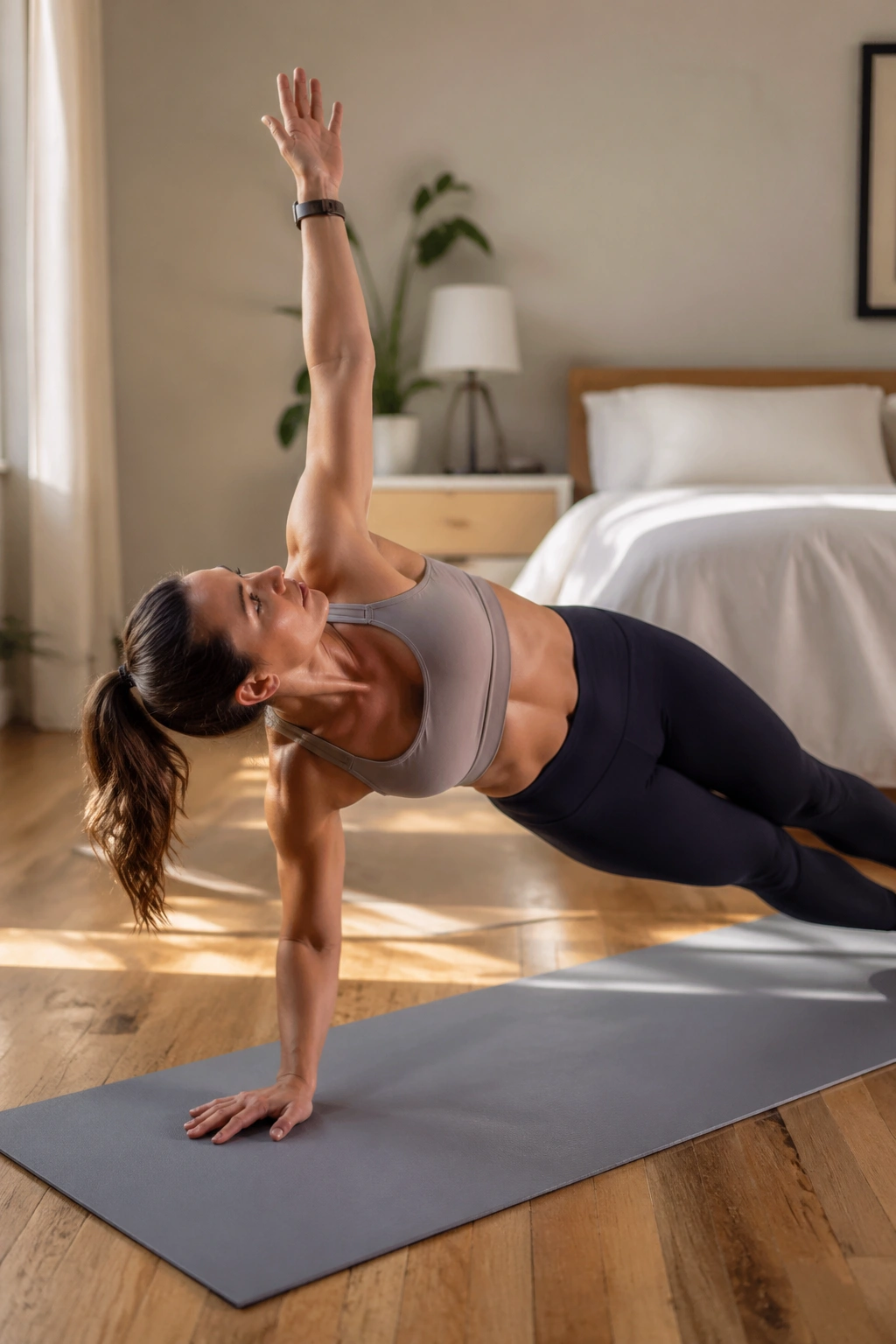
Thread-the-needle is the kind of oblique move that makes your torso feel three inches tighter the next day.
Start in a side plank, then thread the top arm under your body and rotate the chest down. Reach it back open again. That rotation asks the waist to stabilize, the shoulder to work, and the hips to stay lifted instead of sagging into the mat like they’ve given up on life.
Do 6 slow reps per side, then hold the top position for 10 to 15 seconds. If full side plank is too much, drop the bottom knee and keep the same pattern. If your neck feels strained, keep your gaze fixed on the mat and move the arm with less speed.
The move belongs in a weight-loss-focused Pilates day because it blends strength and flow. You are not standing still, and you are not bouncing around. That middle ground is where a lot of smart floor work lives.
19. Full-Body Ladder Circuit for Weight Loss
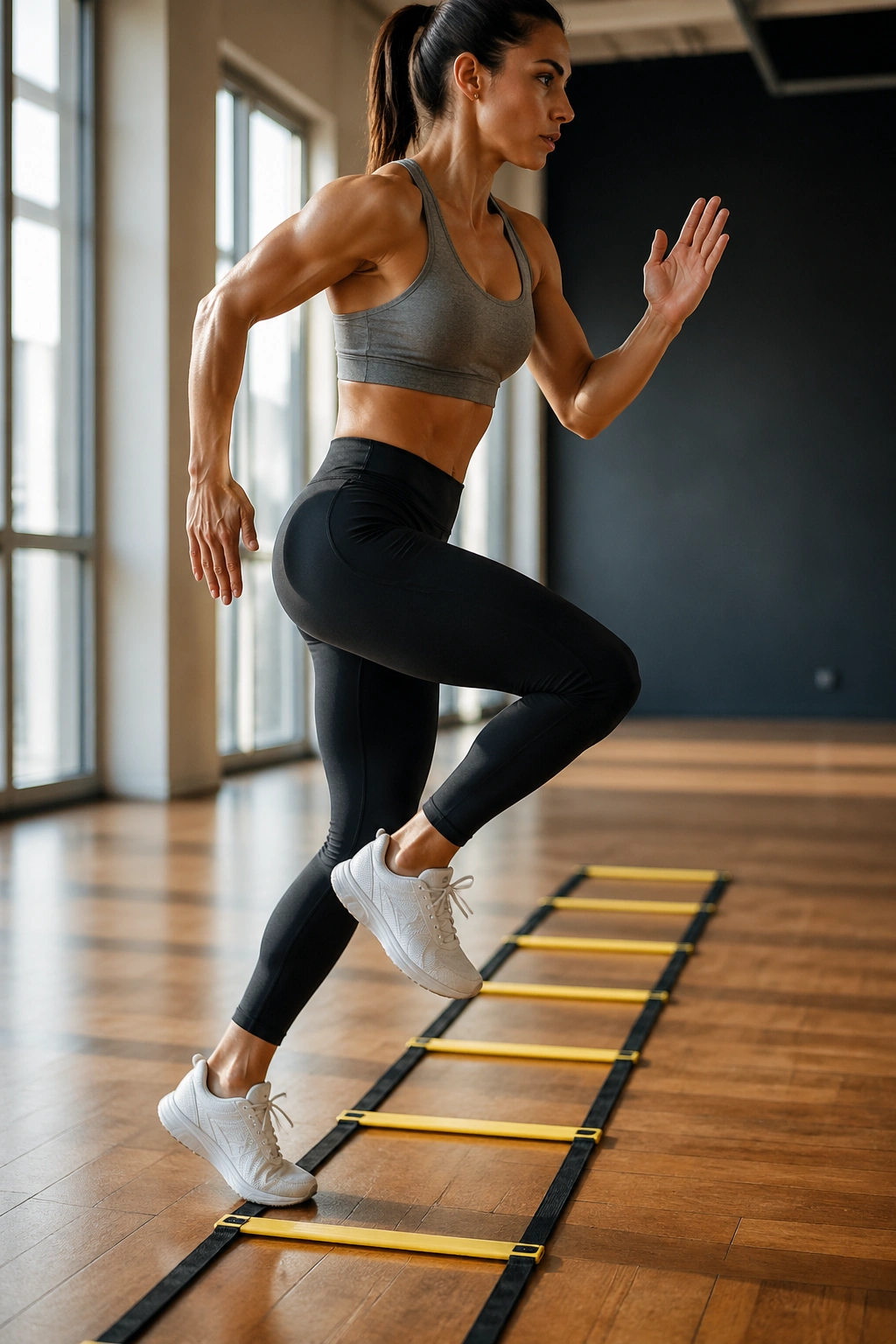
This is where mat Pilates starts to feel like a real training session.
A ladder circuit keeps the body busy because there’s no long pause between exercises, and that steady pace matters more than people think. Pick 5 moves: The Hundred, bridge pulses, forearm plank knee drives, side-lying leg lifts, and swimming. Do each for 20 seconds, then move straight to the next. Rest 45 seconds after the full round, then repeat 3 times.
How to set the ladder
- Round 1: 20 seconds each move
- Round 2: 25 seconds each move
- Round 3: 30 seconds each move
Keep the transitions short. The real work is in the accumulation. A couple of clean rounds will feel manageable; the third one is where your breathing starts to tell the truth.
The ladder is useful because it blends the whole room — core, glutes, shoulders, back — without making the session feel random. It’s the kind of structure that turns “I did some Pilates” into “I actually trained.”
20. The Repeatable 20-Minute Mat Pilates Finisher
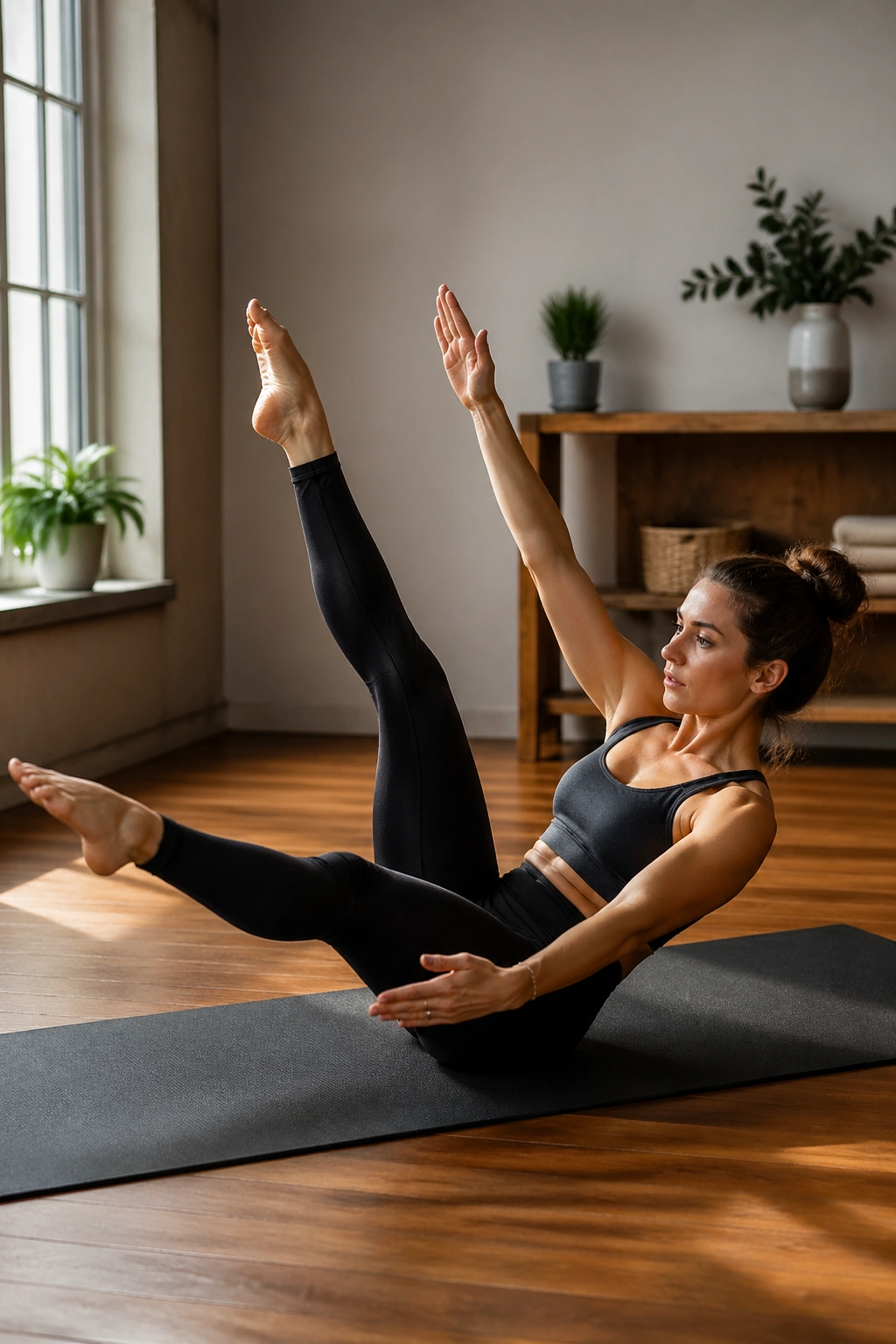
If you want one session you can come back to over and over, build it like this.
Start with 4 minutes of the Hundred, single-leg stretches, and roll-up prep, moving for 40 seconds and resting for 20. Then spend 4 minutes on bridges and hamstring walkouts. Follow with 4 minutes of plank knee drives, mountain climbers, and beast hovers. Finish with 4 minutes of side-lying legs and thread-the-needle side planks, then close with 4 minutes of swimming and mermaid flow so your body doesn’t feel like it got hit with a hammer.
That structure matters because it gives you a strong push without turning the workout into chaos. You get the steady tension that mat Pilates is known for, plus enough pace to make the session feel like work. Add a brisk walk later in the day and you’ve got a very workable week.
No special equipment. No gimmicks. Just a floor, a timer, and the willingness to keep moving when the muscles start asking for a pause. That’s the real trick with mat Pilates workouts for weight loss — the moves are simple, but the honesty is not.
