



You do not need dumbbells to make your shoulders work hard. In Pilates, the burn often shows up a few reps after you thought nothing was happening, which is exactly why Pilates arm exercises without weights can feel so sneaky.
The trick is control, not load. Keep the ribs quiet, the neck long, and the shoulder blades sliding instead of pinching together; once the ribs pop or the chin pokes forward, the work leaks out of the arms and into places you did not mean to train.
That is the charm of bodyweight upper-body work. You can do it on a mat, beside a wall, or standing in a narrow slice of floor space, and the best versions still feel precise rather than frantic. Start small, breathe out on the effort, and the arms will complain in a way that feels oddly civilized.
1. Arm Circles With Long Reach
Arm circles look harmless. Then your shoulders start negotiating.
Begin standing tall with your feet about hip-width apart, palms facing forward, and the crown of your head reaching up. Sweep your arms forward in small circles, no bigger than a dinner plate at first, and keep your ribs from flaring when your hands rise. Eight to ten circles in each direction is enough to wake everything up without turning it into a sloppy windmill.
Tiny movement. Big work.
What makes this one feel like Pilates instead of a gym warm-up is the tempo. Slow the circle down until you can feel the shoulder joint glide, not jerk, and stop the range the moment your neck starts to creep up toward your ears. If you want more heat, make the circles smaller instead of larger. That sounds backwards, but it isn’t.
If your arms start drifting behind your body, reset. A clean circle with a quiet torso beats a bigger one every time.
2. Hug-A-Tree Pulses
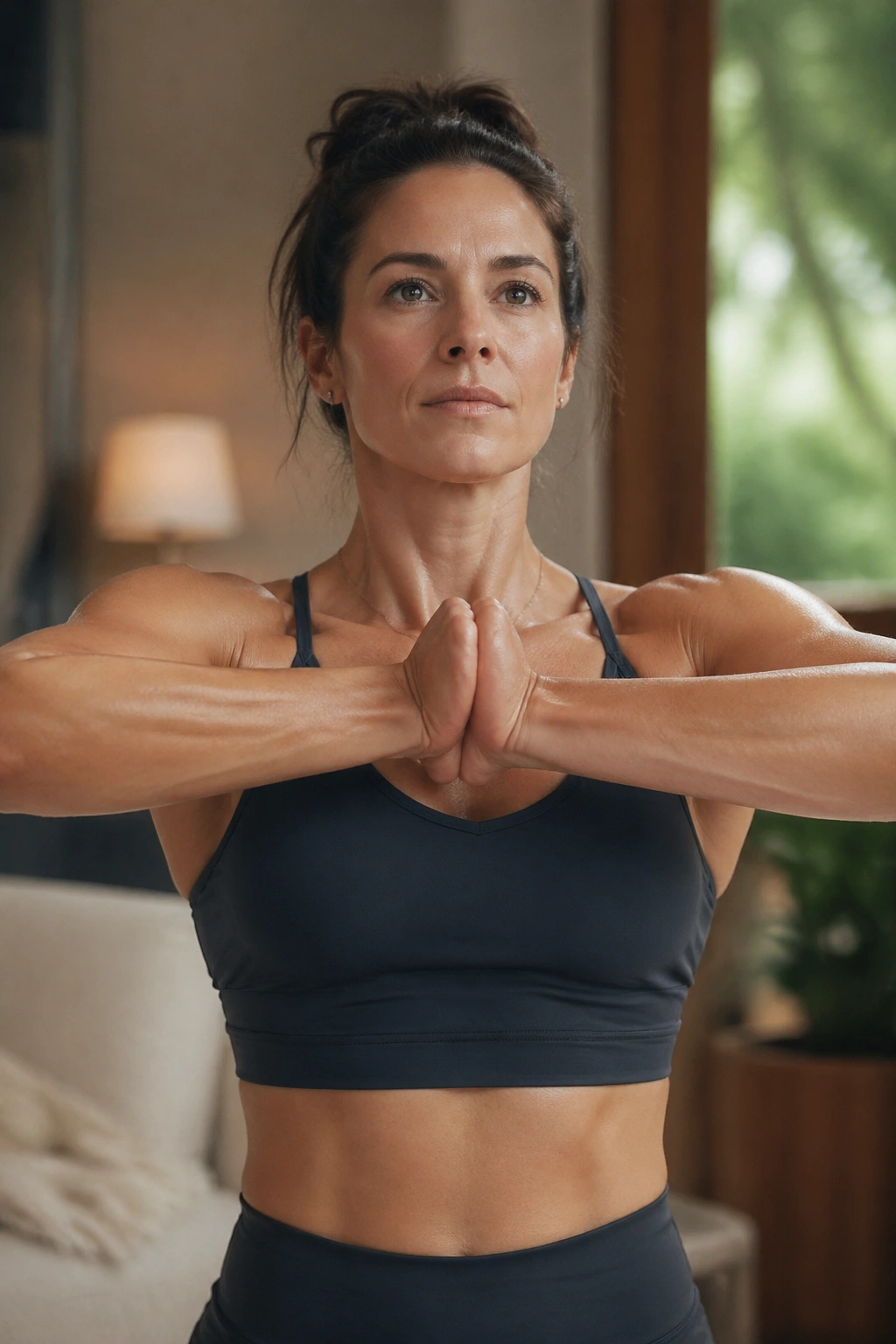
Why does a move this small light up the front of your shoulders? Because the arms are working against each other the whole time.
Stand or sit tall with your elbows lifted a little below shoulder height, rounded forward as if you’re holding a big beach ball. Press the forearms toward each other until the fingertips nearly meet, then open them back out by just 2 or 3 inches. Keep the chest broad and the shoulders relaxed down, which is harder than it sounds once fatigue kicks in.
What to Feel
- The front of the shoulders should wake up first.
- The elbows stay rounded, not dropped.
- The rib cage stays stacked over the pelvis.
- The neck should feel long, not jammed.
A set of 12 to 15 pulses works well, and you can repeat it twice if the movement stays clean. If your lower back arches, the range is too big. If your wrists bend back hard, soften the hands and think of the forearms moving as one unit.
This one is sneaky in the best way.
3. Goalpost Presses
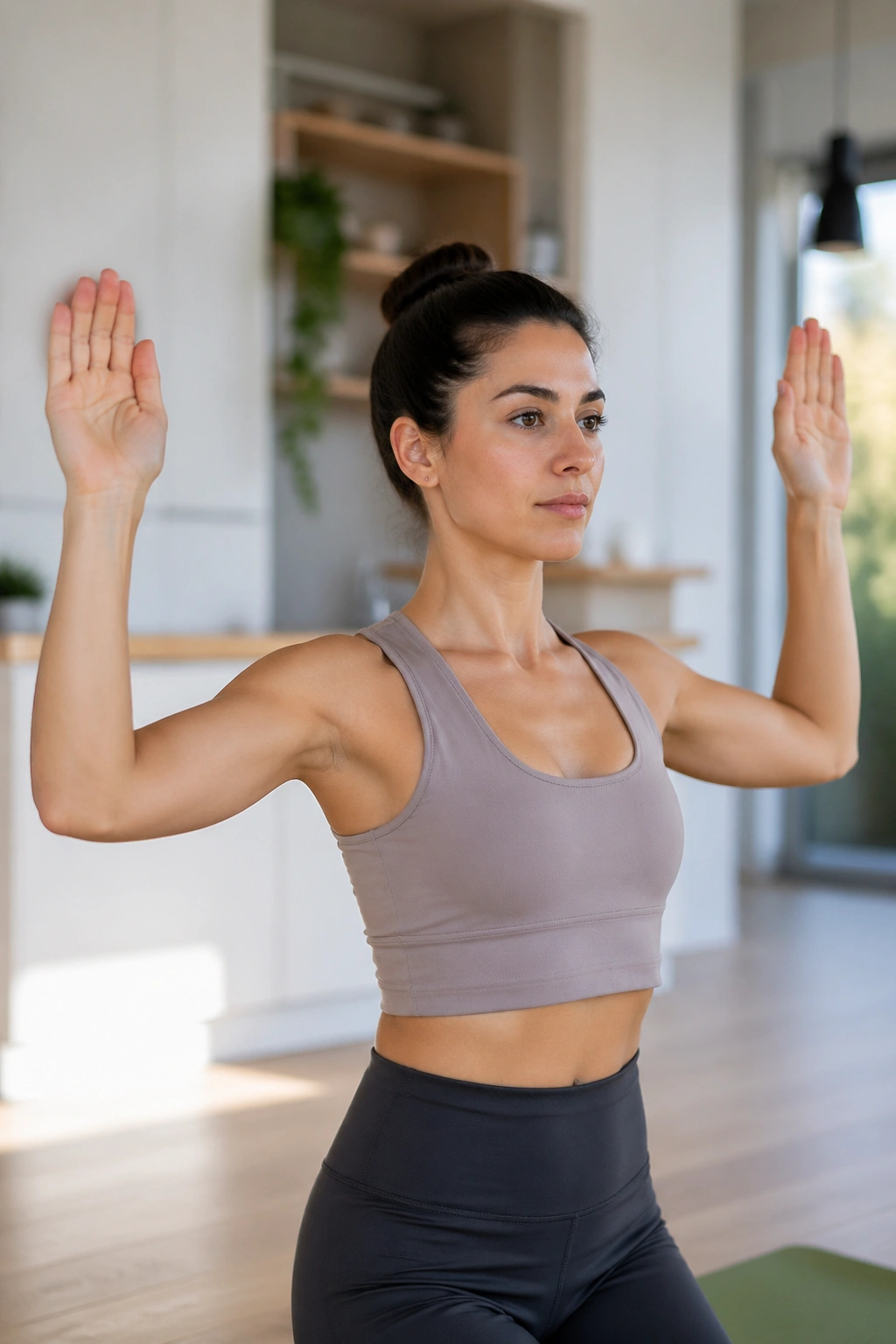
Goalpost arms are one of the cleanest ways to train posture without a single piece of equipment. They also show you, fast, whether you cheat with your ribs.
Bring the upper arms out to the side so the elbows sit around shoulder height, bent at 90 degrees. The forearms point straight up, like you’re making a cactus shape. From there, press the arms a little higher without shrugging, then lower back to the starting position with control. Six to ten slow reps is a solid start.
Keep These Details Tight
- Elbows stay wide, not drifting forward.
- Forearms remain vertical.
- The neck stays soft.
- The lower ribs do not pop.
The motion is tiny. That’s the point. A bigger press usually just turns into a shoulder shrug with better marketing. Keep the range compact and the exhale smooth on the lift, and you’ll feel the backs of the arms and the upper shoulders come online together.
If you want to make it harder, pause for one full breath at the top.
4. Serving Tray Lifts
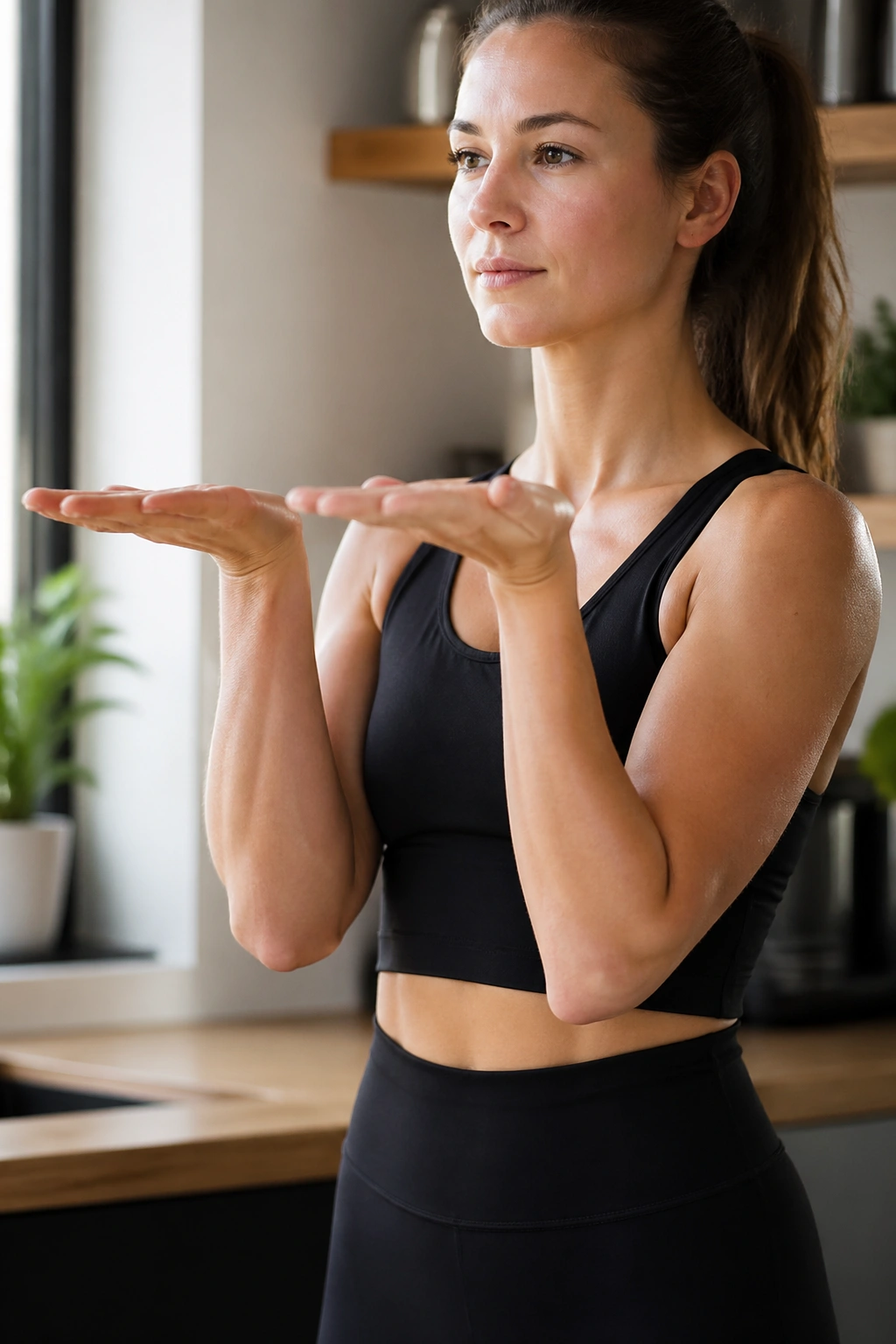
Picture carrying two full glasses on a tray. That hand position is the whole game.
Hold your arms in front of you with the elbows bent and the palms facing up, as though you’re balancing something level across your forearms. Lift the tray a few inches, lower it with a slow count of three, and keep the wrists quiet. The movement should feel smooth, almost boring, until the front delts start humming and your upper back realizes it has to help.
The best cue here is simple: keep the tray level. If one wrist drops or one shoulder hikes up first, the work gets messy. A mirrored lift—both sides moving together—keeps the exercise honest and protects the neck from doing too much of the job.
Try 8 to 12 reps, then pause. If the arms feel like they could keep going forever, you’re moving too fast or lifting too high. The sweet spot is a range that stays controlled but starts to sting around rep six.
Small lift. Steady breath. No fancy stuff.
5. Tricep Kickbacks Without Weights
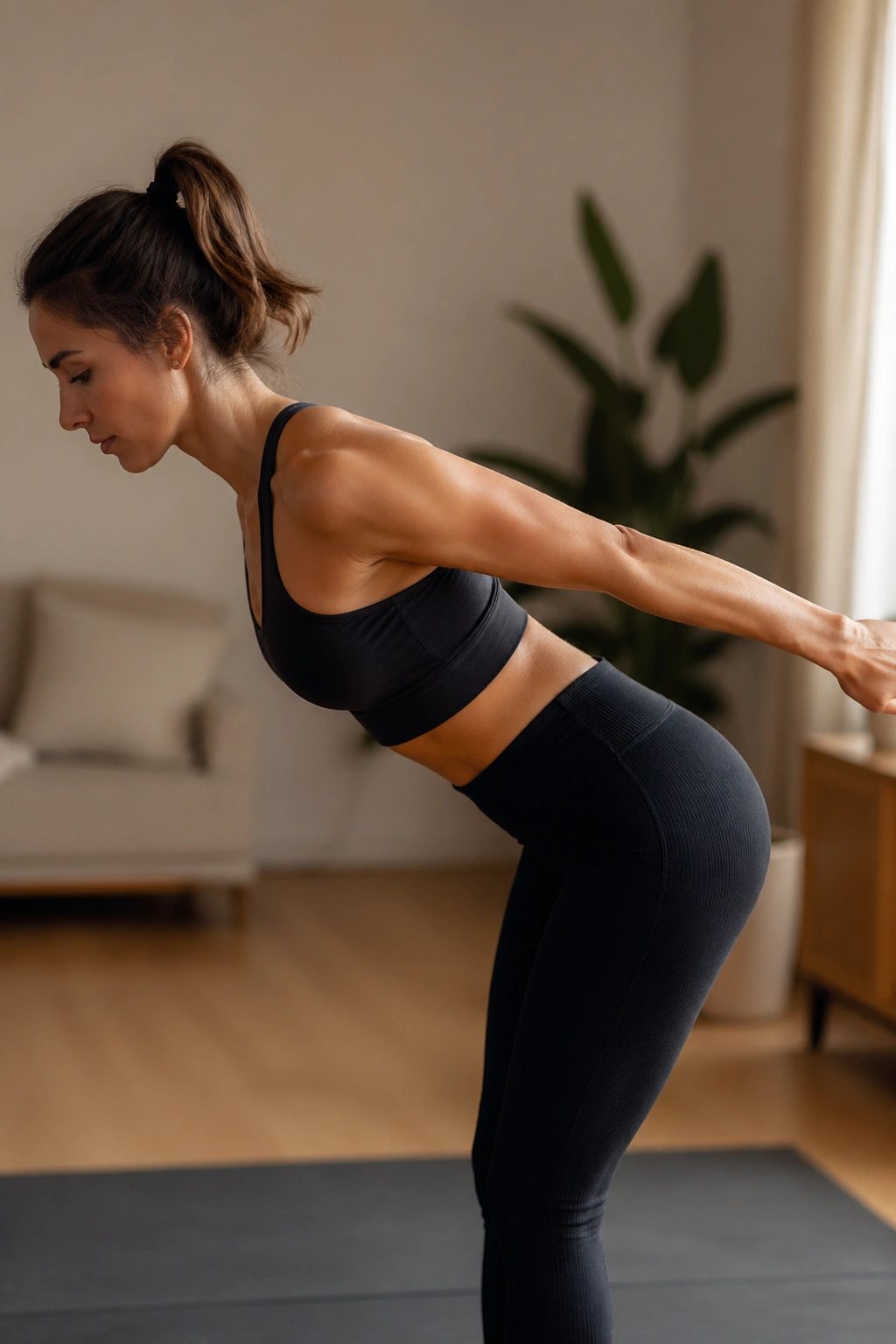
No weight needed, and that’s not a cop-out. Triceps can work hard in a long, slow lever position even when you’re just moving your own arms.
Hinge slightly forward from the hips, or stay upright if your lower back prefers that. Bend the elbows so the upper arms stay close to your ribs, then lengthen the forearms back until the elbows are straight but not locked. Bring them back in with control. Ten to twelve reps is plenty if the tempo is slow enough to matter.
How to Make Them Count
- Keep the elbows glued near the waistline.
- Move only from the elbow joint.
- Press long through the fingertips.
- Stop before the shoulders roll forward.
A lot of people cheat this one by swinging the whole arm. Don’t. That turns the exercise into a weird little momentum dance, and the triceps never get the memo. Instead, think of the back of the upper arm reaching long behind you while the shoulder blades stay wide.
If you want more challenge, hold the straight-arm position for three seconds each rep. That burns fast.
6. Overhead Reach and Lower
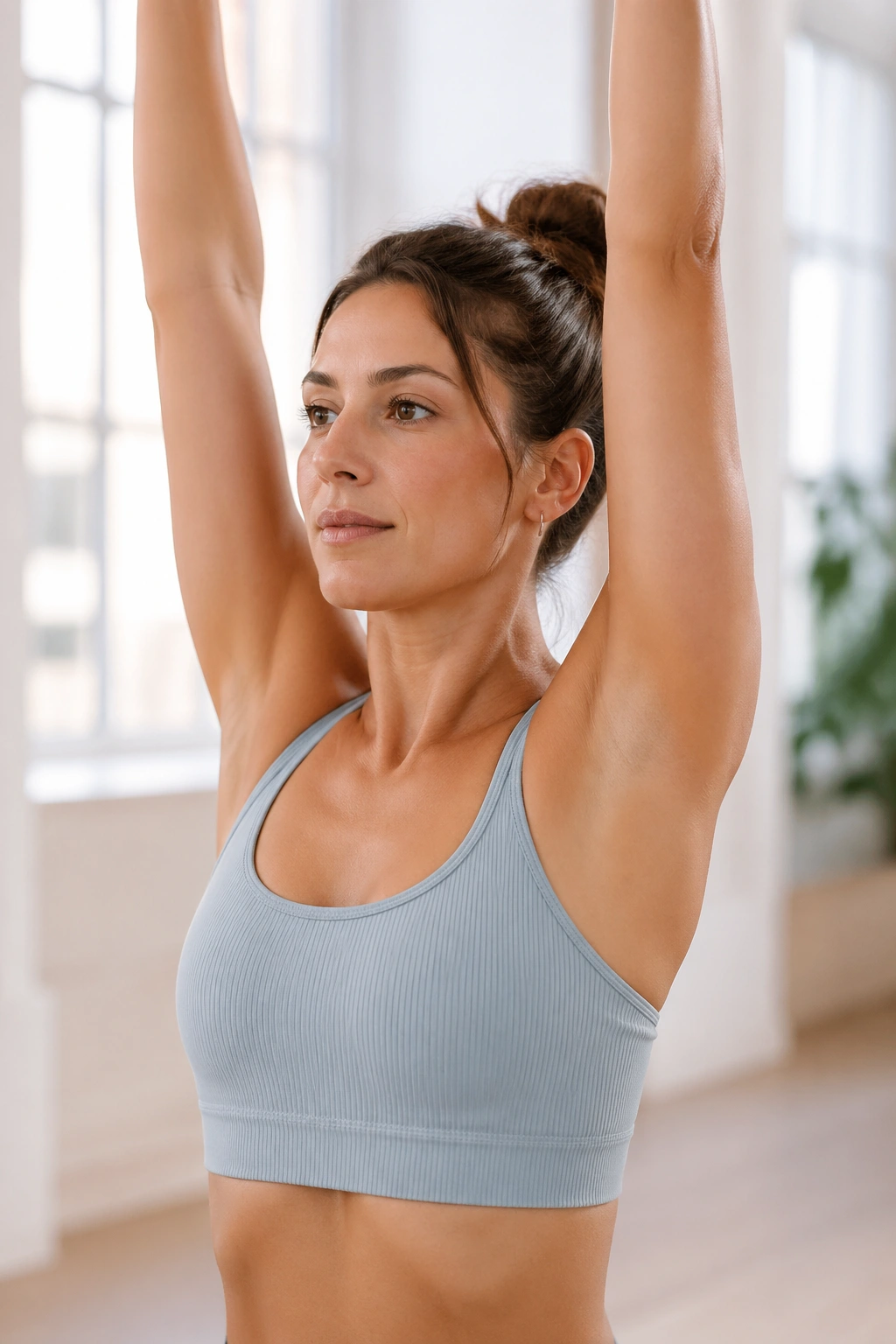
Reaching overhead sounds easy until the ribs start to flare and the shoulders climb. Then it becomes a posture exercise in disguise.
Stand with the arms long by your sides. Sweep them forward and up until they frame your ears, but only as far as you can go without arching the lower back. Pause for one breath, then lower the arms through the same path. Six to eight slow reps can reveal a lot about how your shoulders actually move.
The useful part here is not the lift itself. It’s the control on the way down. Lowering slowly makes the lats and upper back share the work, which is one reason this feels cleaner than a fast overhead swing. If your hands can’t get close to the ears without tension in the neck, reduce the range and keep the motion smaller.
One more thing: exhale as the arms rise. That little breath cue helps keep the ribs from popping forward. It matters more than people think.
7. Cactus Arm Holds
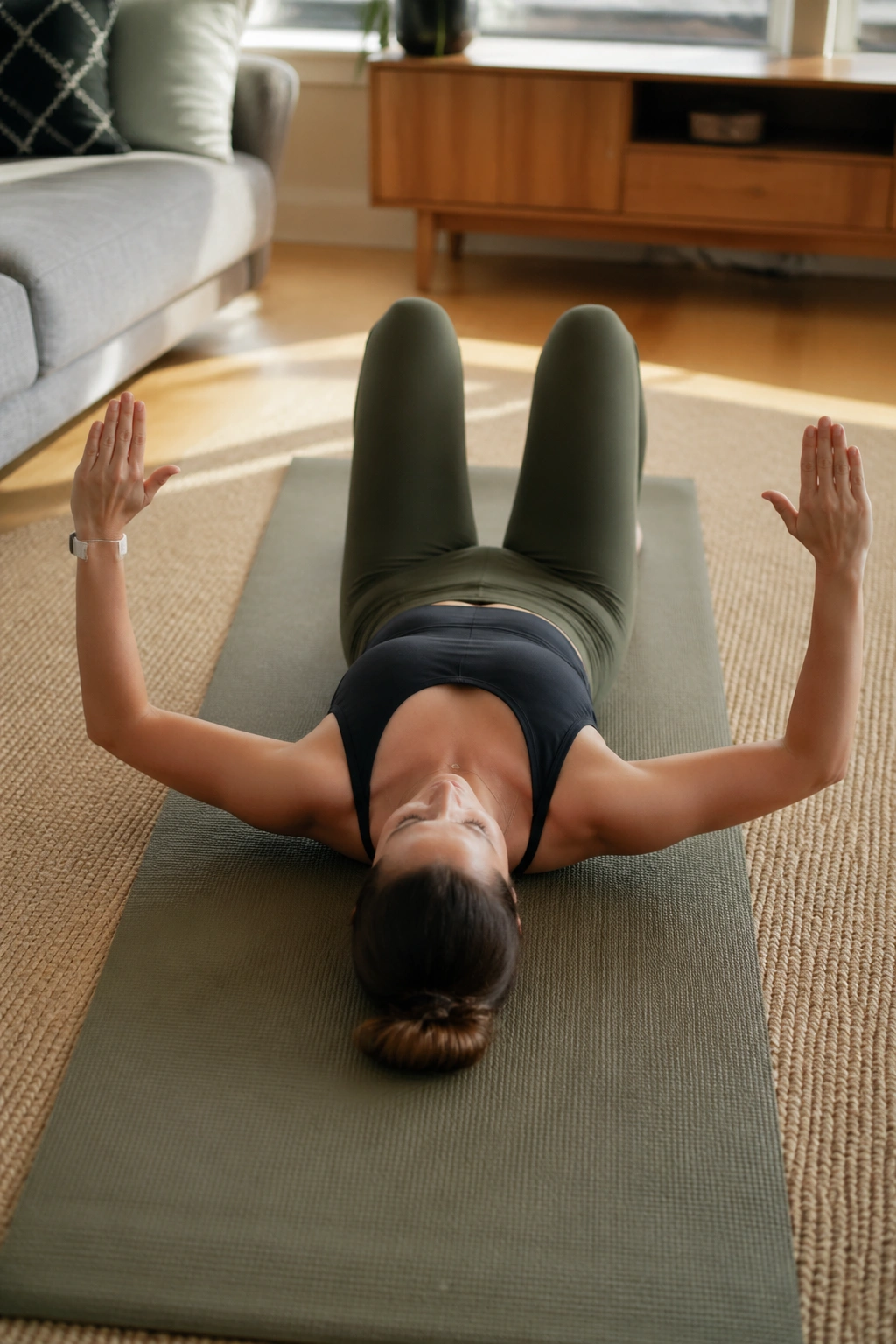
Cactus arms look simple, but they ask a lot from the upper back.
Lie on your back with your knees bent, or stand with your spine tall if you want a less floor-based version. Bend the elbows to 90 degrees and open the arms wide so they make that cactus shape again. Hold the position for 15 to 20 seconds, breathe steadily, and keep the shoulder blades heavy instead of squeezed together.
The hold matters more than the shape. If you let the wrists drift behind the elbows or the rib cage dome upward, the work shifts away from the shoulders and into compensation. A clean cactus hold usually feels like the upper back broadens while the front of the chest stays open.
Short holds work best here. Try three rounds instead of one long grind. That keeps the form tidy and gives you time to notice whether one side is tighter than the other—which, honestly, is usually the case.
If your shoulders feel pinchy, bring the elbows a little lower. That helps more than forcing the shape.
8. Prone T Raises
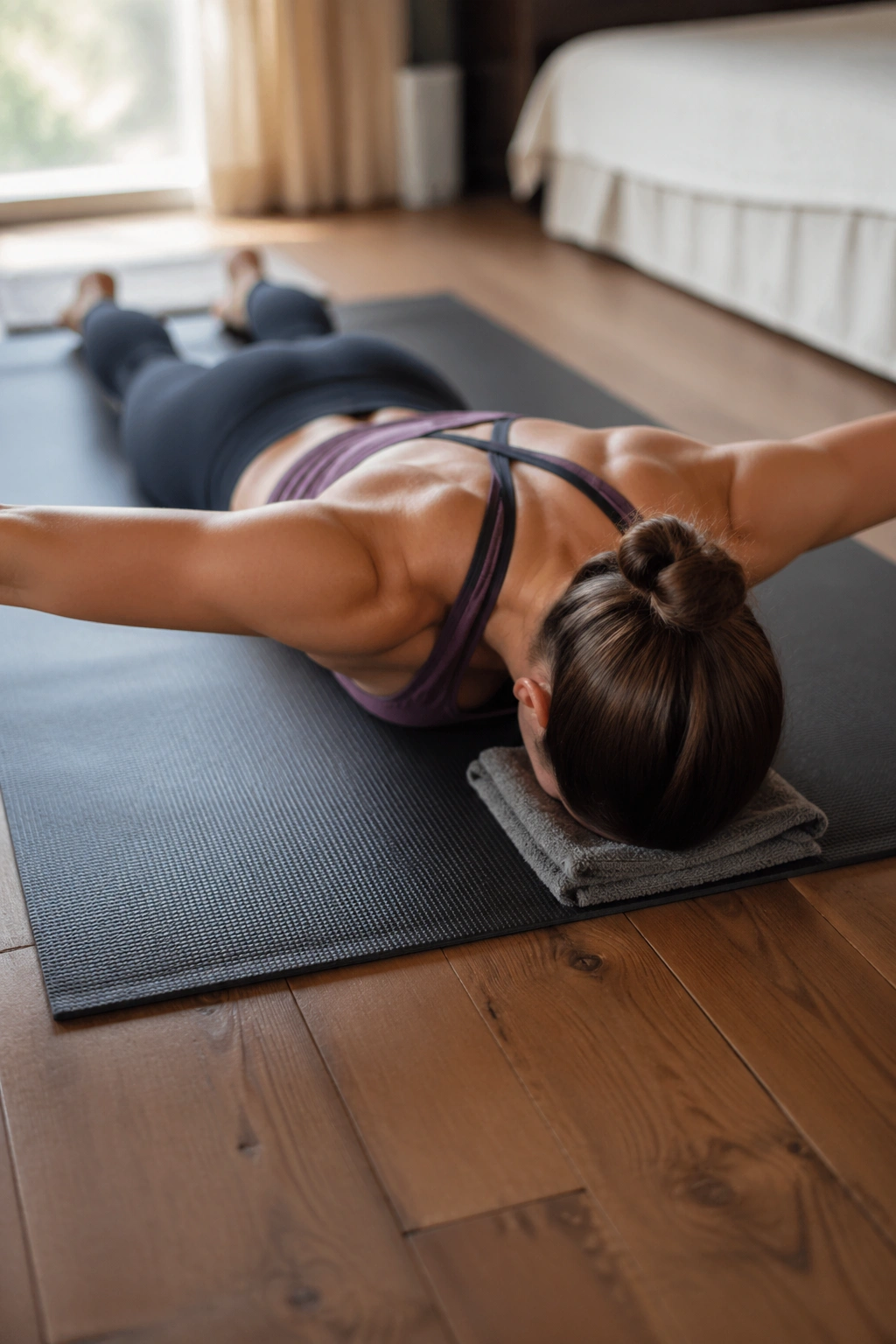
Face-down arm work is where a lot of people discover how much their upper back has been loafing around.
Lie on your stomach with the forehead on a folded towel and the arms stretched out to the sides, palms down. Lift the arms a few inches so they form a wide T, pause for one beat, then lower with control. Start with 6 to 8 reps. The goal is not height; the goal is clean shoulder blade movement without neck strain.
What Makes It Work
A tiny lift is enough. If the ribs press hard into the floor or the chin juts forward, you’ve gone too far. Keep the back of the neck long and think of the arms floating away from the mat rather than yanking upward. That cue keeps the work in the rear shoulders and the muscles between the shoulder blades.
This is one of those exercises that looks almost too gentle to matter. It does matter. A lot.
If you want a harder version, hold the top position for two slow breaths before lowering. The hold exposes every wobble.
9. Reverse Snow Angels
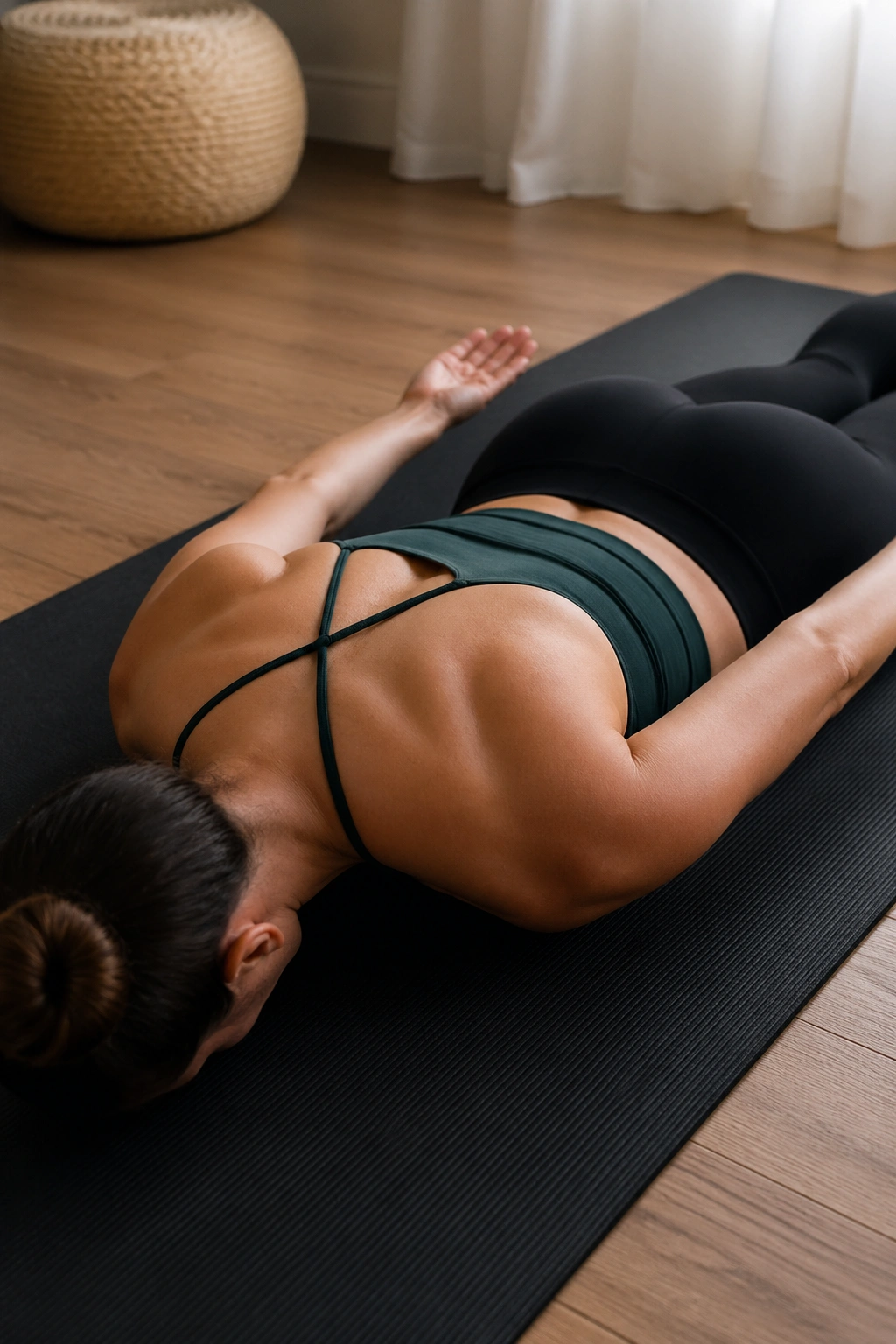
Reverse snow angels are messy when they’re rushed and beautiful when they’re controlled.
Lie face down with your arms by your sides, palms facing the thighs. Sweep the arms out wide in a low arc, then bring them overhead before reversing the path back down. The hands should skim close to the floor or mat the whole time, and the chest should stay grounded. Four to six slow rounds is plenty to start.
The mistake people make is going too high too soon. Then the low back arches, the shoulders shrug, and the movement turns into a backbend with a marketing problem. Keep the lift low and smooth. If the range feels too big, shorten it by half and keep the sweep clean.
A nice cue here is to imagine melting the shoulder blades down your back as the arms travel overhead. That keeps the neck from doing the heavy lifting, which it loves to steal.
This move pairs well with prone T raises because one works the side of the upper back and the other works the sweep.
10. Swan Prep Reach-Backs
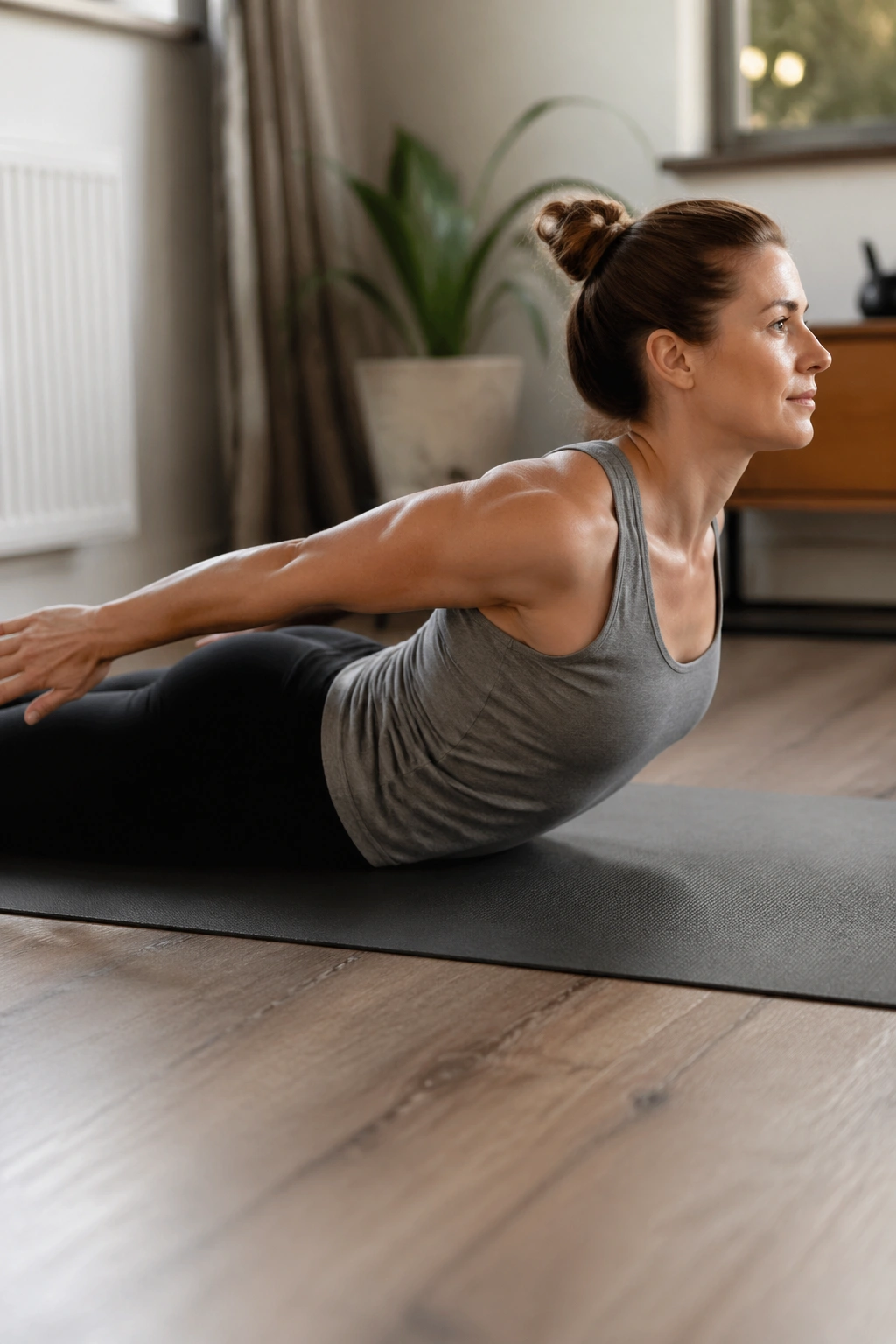
Swan prep is famous for the spine, but the arms do a lot of quiet work if you let them.
Lie on your stomach with the hands under the shoulders. Lift the chest only a few inches, then reach the arms back alongside the body as if you’re trying to brush your fingertips toward your heels. Return the hands under the shoulders and lower the chest with control. Five to eight reps is enough for most people.
How to Keep It Pilates, Not Push-Up
- Lift the chest from the upper back, not the lower ribs.
- Keep the elbows soft.
- Reach long behind you without squeezing the glutes hard.
- Lower slowly, one vertebra at a time.
The reach-back is the part that wakes up the triceps and rear shoulders. It also exposes whether you’re collapsing through the middle. If the neck tightens, stop lifting the chest so high. A smaller swan is usually a better swan anyway.
This one feels lovely when done well. There’s a long line from the fingertips to the toes, and the arms get pulled into the posture instead of flailing around it.
11. Pilates Punches
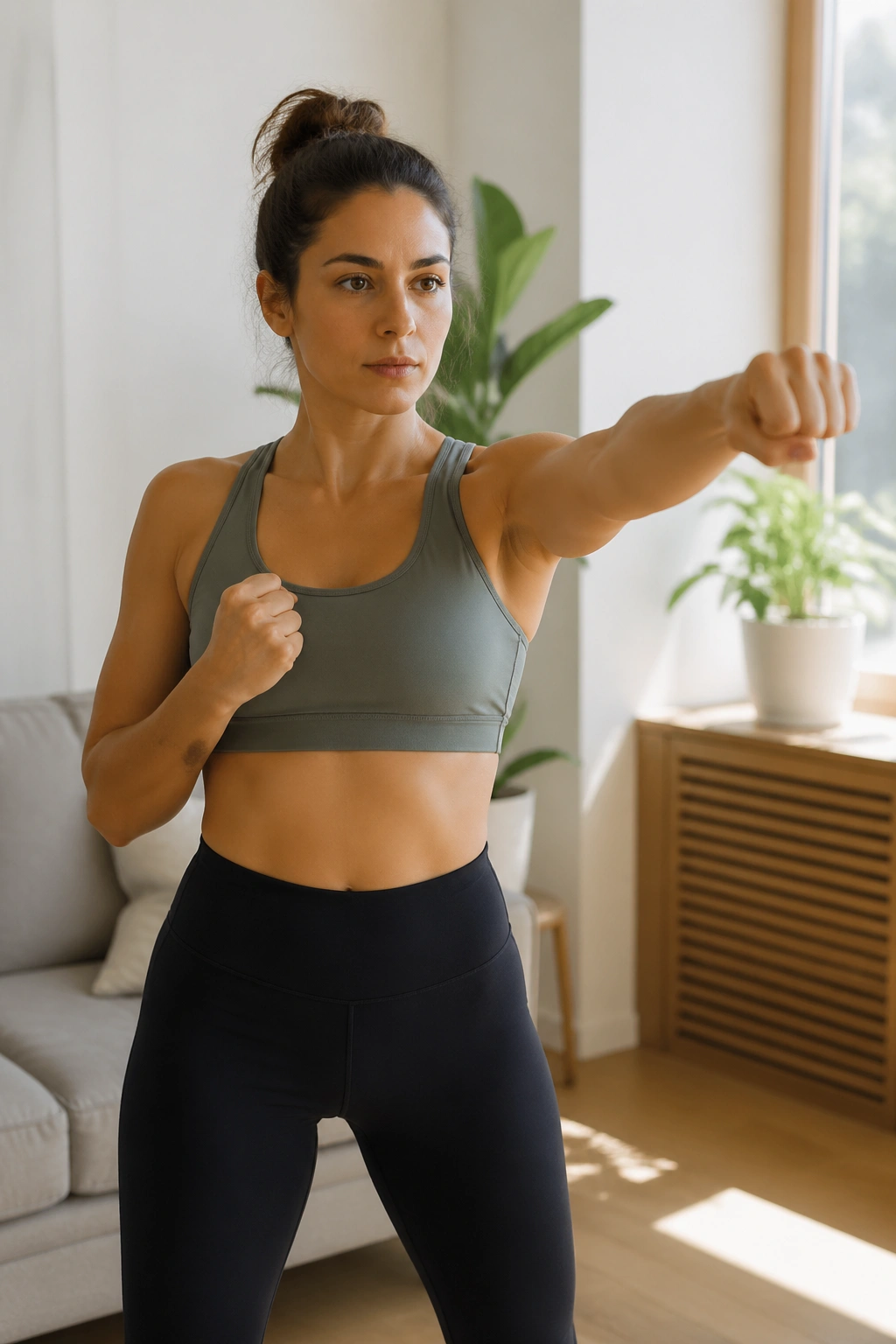
Why do boxing-style punches belong in a Pilates routine? Because they reveal every bit of torso wobble.
Stand with soft knees and a long spine. Extend one arm forward in a controlled punch, then retract it slowly, alternating sides or crossing the body if you want a little more core demand. The shoulders stay down, the ribs stay stacked, and the exhale happens on the punch. Do 20 to 30 total punches in a measured rhythm.
The point is not speed. Fast punching usually turns into shoulder slinging, which is sloppy and hard on the neck. Slow punches make the serratus, deltoids, and deep abdominals work together. That combination is very Pilates, even if the motion looks a little unusual in the mirror.
A good cue: the fist should travel straight out from the shoulder line, then return along the same path. No twisting, no leaning, no bouncing. Clean lines.
If you want more challenge, lower into a mini squat. The arms will feel the same job, but the trunk has to organize itself harder.
12. Wall Angels
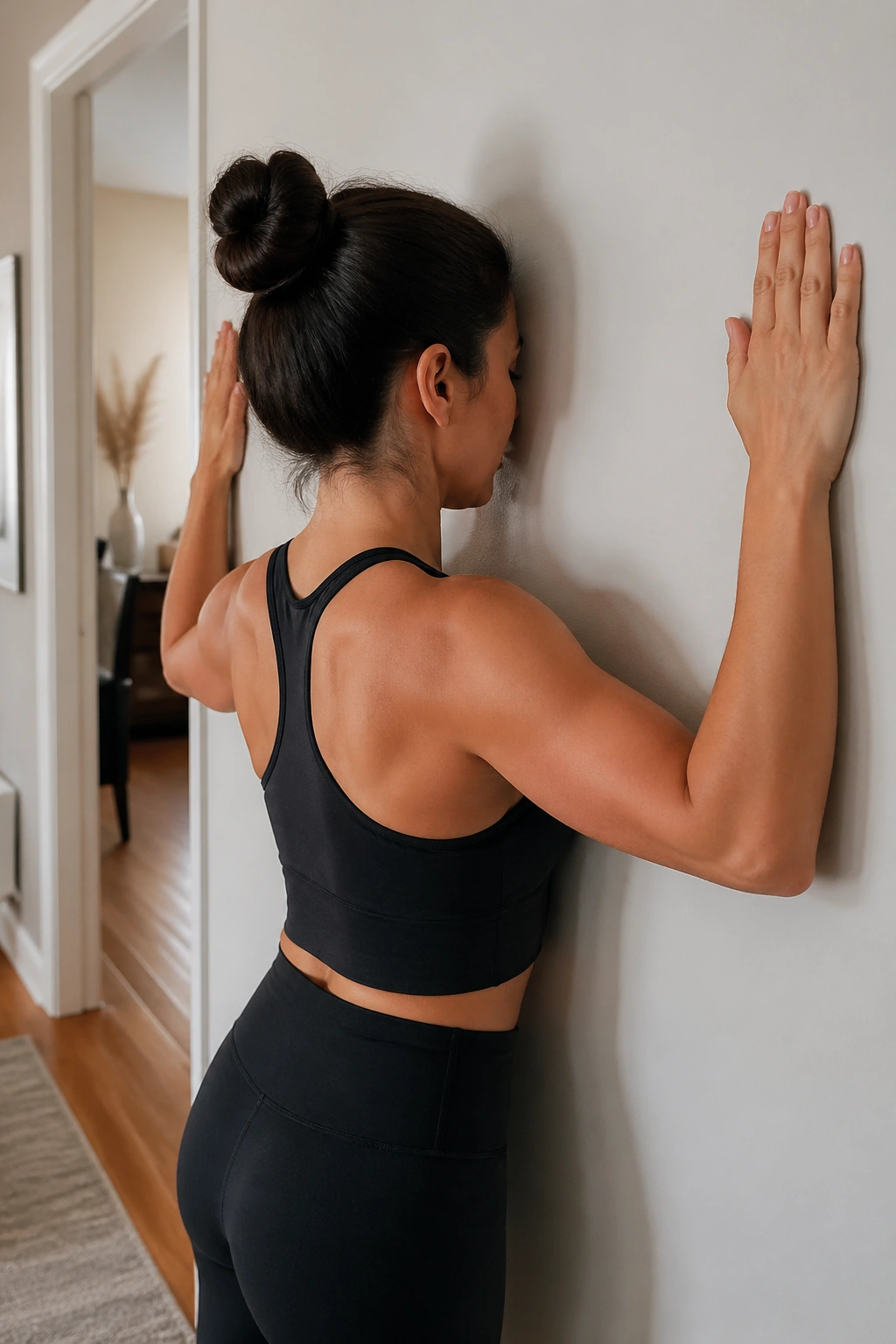
Wall angels are brutally honest. They show you where your posture leaks.
Stand with your back against a wall, feet a few inches forward, and the lower ribs softly tucked. Place the arms in a goalpost position against the wall if you can, or as close as you can get without pain. Slide the arms upward, then back down, keeping as much contact as your shoulders allow. Six to ten slow reps is enough.
The wall makes cheating harder. That’s the gift. If the ribs flare or the lower back arches, the wall tells on you immediately. If your wrists can’t stay flat, don’t force them. Move in a smaller range and keep the shoulder blades sliding rather than pinching.
This exercise is one of the best ways to spot left-right differences. One arm often glides cleaner than the other. That’s normal. Work with the tighter side gently, not aggressively.
No rush here. Wall angels reward patience and punish ego.
13. Quadruped Arm Lifts
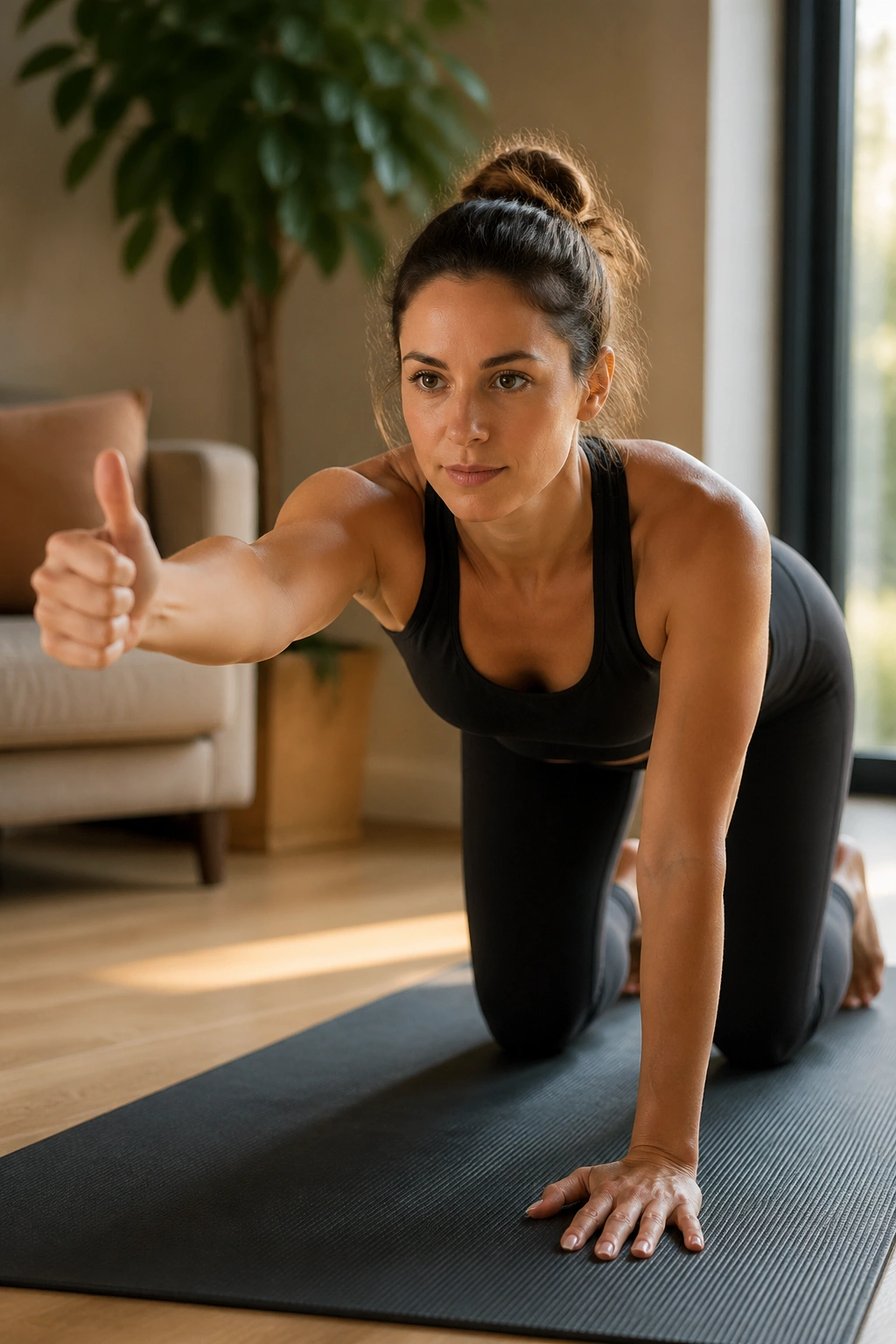
Get on hands and knees and the whole upper body starts confessing things.
Set the hands under the shoulders and the knees under the hips. Reach one arm straight forward, thumb up, and hold for three to five seconds before lowering. Alternate sides for 6 to 8 reps each. The pelvis should stay level, and the supporting shoulder should not sink into the floor.
Why This One Feels Harder Than It Looks
The lifted arm is working, sure, but the standing arm is doing a lot of quiet stabilizing. That support work is what makes the exercise useful. If the torso sways, widen the knees a little and shorten the reach. A long reach with a steady spine beats a dramatic reach that wobbles all over the mat.
Try exhaling as the arm lifts. That helps keep the ribs from dropping toward the floor. If the wrist is tender, make a fist or come down to forearms for a gentler version.
This one is excellent for building clean shoulder control without needing any equipment at all.
14. Plank Shoulder Taps
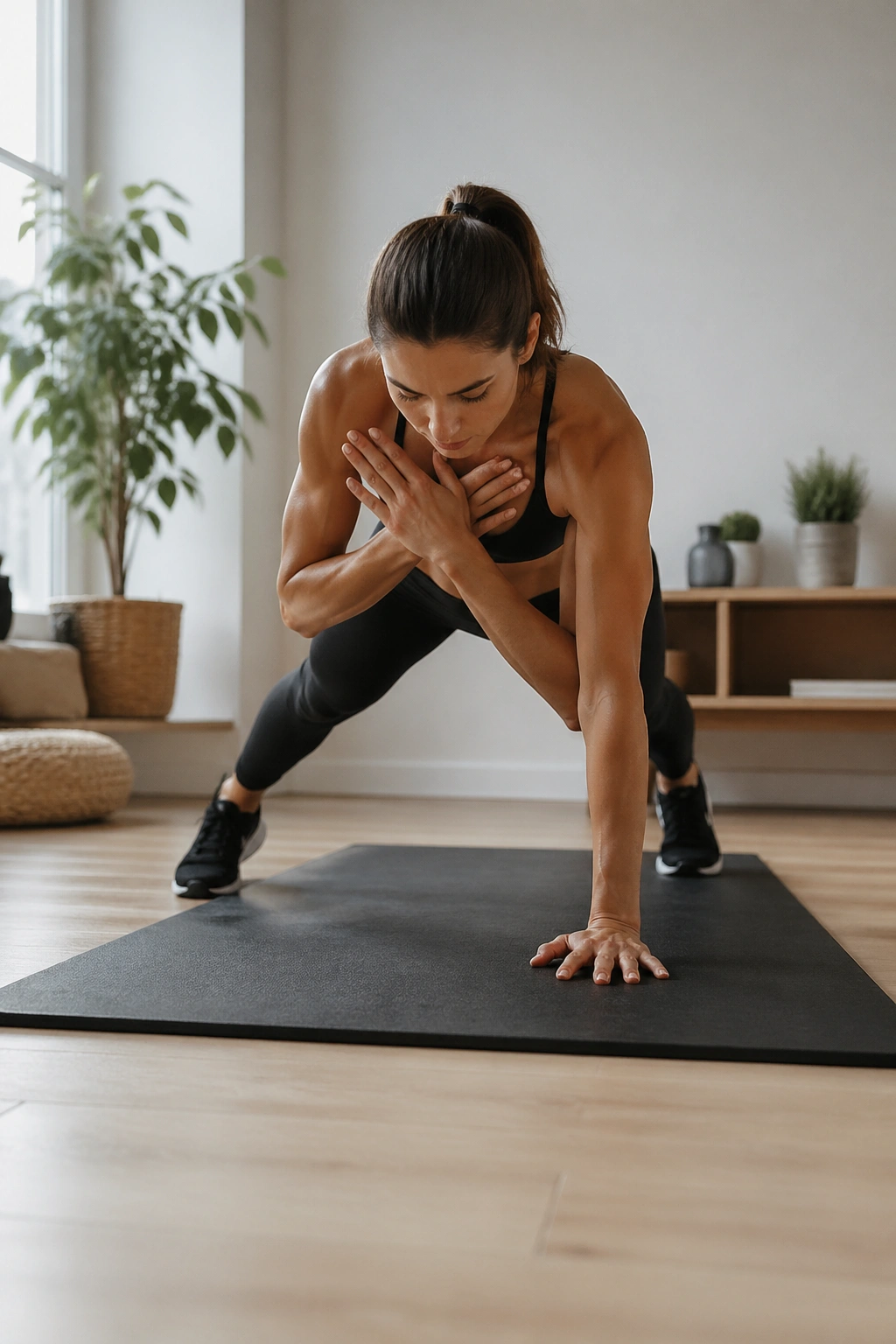
Shoulder taps are where many otherwise decent planks fall apart. Fast.
Set up in a high plank with the feet wider than hip-width. Tap the left shoulder with the right hand, return it to the floor, then switch sides. Keep the hips as still as possible and move with a slow count. Eight to twelve taps per side is a good place to begin.
A narrow stance makes the exercise look harder than it is. A wider stance makes the work honest. Start wide. You can always bring the feet closer later if the torso stays quiet. The real goal is not speed; it’s avoiding the side-to-side swing that makes the core and shoulders chase the movement instead of control it.
Watch These Three Things
- Hands press firmly through the whole palm.
- The neck stays long.
- The hips do not sway wildly.
If your wrists complain, do the taps from an incline with your hands on a bench or wall. The mechanics stay the same, and the shoulders still get plenty of work.
15. Forearm Plank Weight Shifts
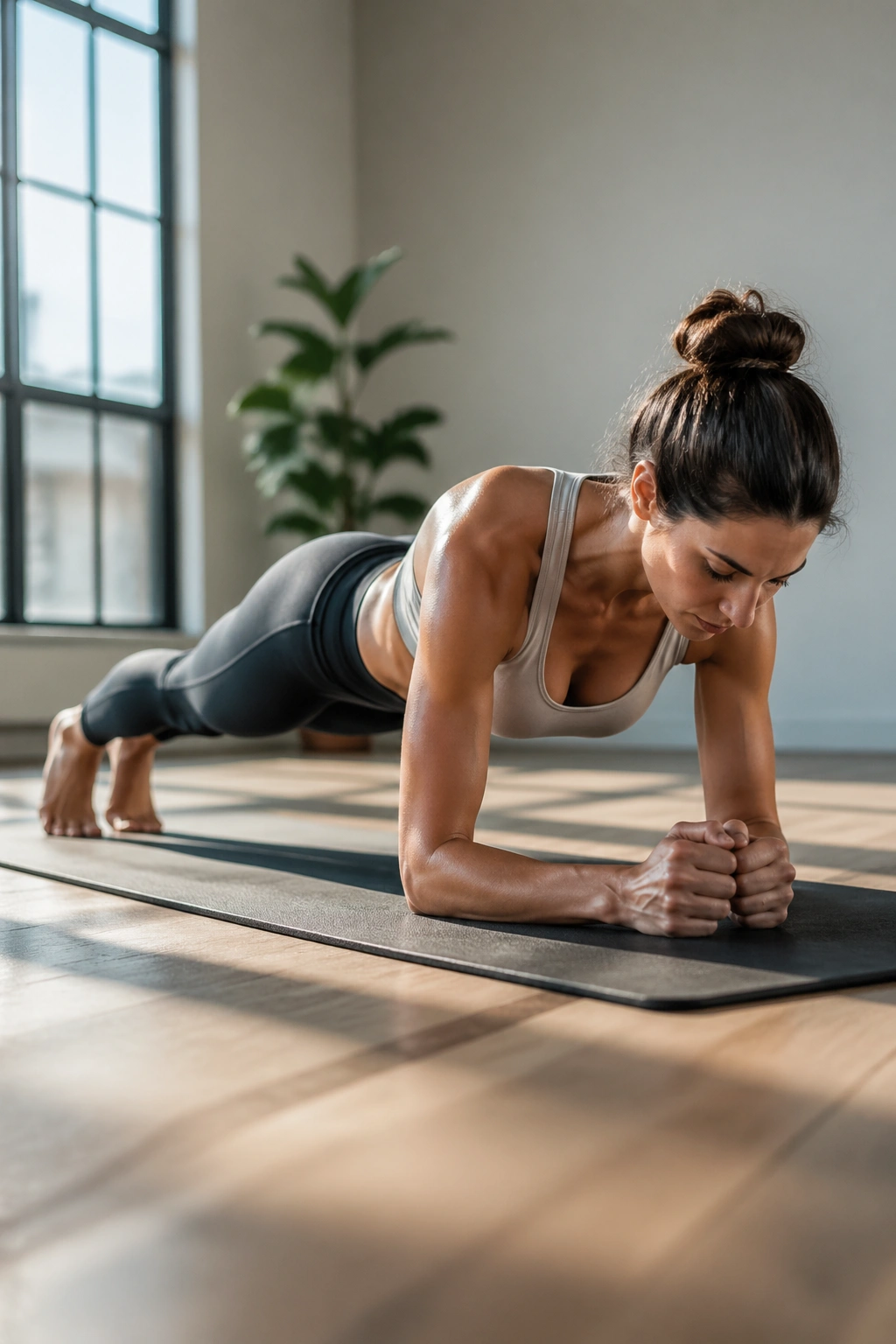
A plank that barely moves can still feel like a lot. This is one of those times.
Come into a forearm plank with the elbows under the shoulders and the legs long behind you. Shift the body a few inches forward so the shoulders move past the elbows, then draw back to the starting point. Keep the movement small and deliberate, almost like you’re rocking a heavy table. Five to eight slow shifts is enough.
The shoulders and triceps have to brace hard here, but the core keeps the body from sagging. If the lower back dips, shorten the range immediately. If the neck tightens, look slightly ahead of the hands rather than tucking the chin too much.
How to Get the Most From It
Use the exhale on the forward shift. That usually helps the ribs stay quiet. Keep the forearms parallel, not creeping inward. Pause for one beat at the farthest point before returning.
This is one of my favorite bodyweight upper-body drills for people who want arm work that feels clean rather than chaotic. It’s small, but it bites.
16. Side-Lying Arm Circles
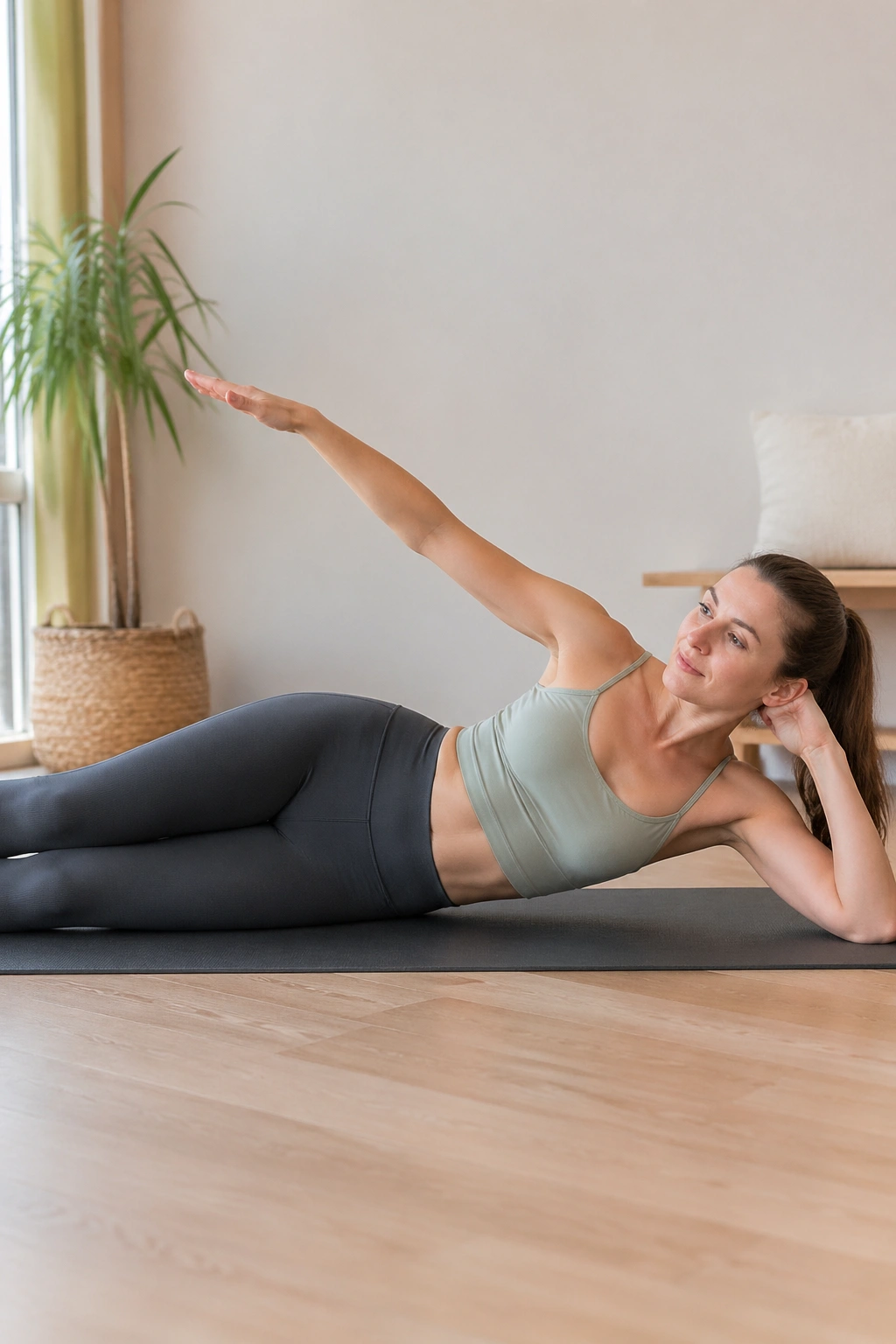
Side-lying work changes the whole feel of arm training. Suddenly the torso has to stop helping so much.
Lie on one side with the legs stacked and the bottom arm folded under the head or stretched long. Lift the top arm to shoulder height and make slow circles in the air, forward for six reps and backward for six. Keep the ribs stacked and the waist long on the floor. The circle should stay smooth enough that the shoulder does not jolt at the top.
This position reveals side-to-side differences fast. One side often feels loose and easy, while the other side feels like the arm is moving through thick water. That’s useful information. Work the tight side without forcing the range wider than it wants to go.
Don’t let the top shoulder roll toward the ear. That’s the trap. If it creeps up, shrink the circle and slow the breath. A smaller, cleaner motion will do more than a bigger one that scrapes the neck.
Swap sides and keep the same pace. Lazy form never hides long here.
17. Seated Mermaid Arm Sweeps
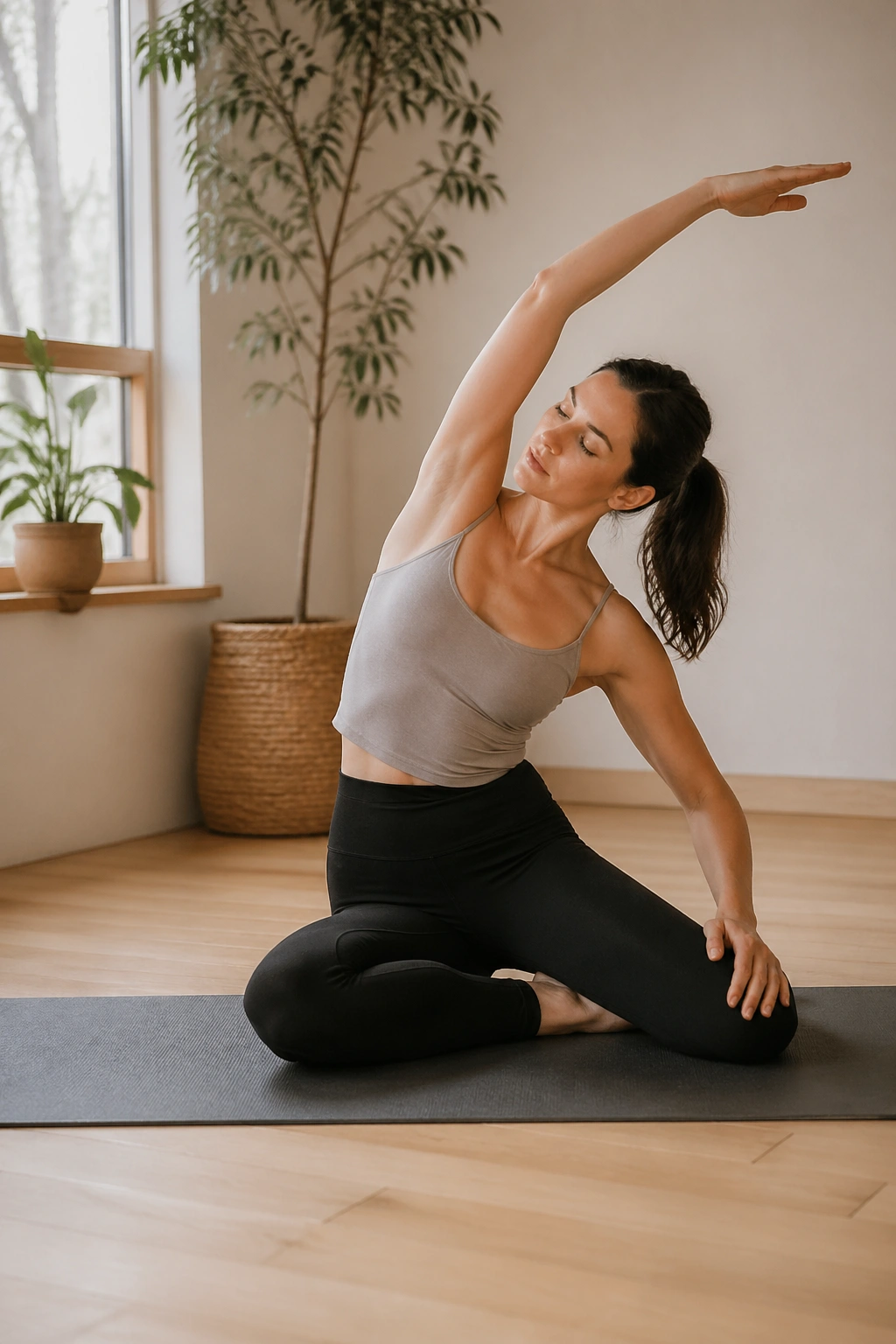
Mermaid work is nice because it gives the arms something to do while the spine moves side to side.
Sit with the legs folded to one side or in a comfortable cross-legged position. Sweep one arm overhead and the other along the floor or thigh, then arc back to center with control. Add a small pulse at the deepest point if the shoulders feel stable. Four to six repetitions per side is enough to make the upper body wake up.
The arms should feel like they’re helping the side bend lengthen, not yanking the body over. That means the lower shoulder stays away from the ear and the top arm reaches long without collapsing the chest. Breathe into the side ribs on the way up. It gives the whole shape more space.
A lot of people overdo this one and turn it into a deep stretch. Keep some muscle in it. The arms are still working, and the torso is still organizing itself around them.
If sitting tall is tough, place a folded towel under the hips. Better alignment first. Fancy range later.
18. Eagle Arms Pulses
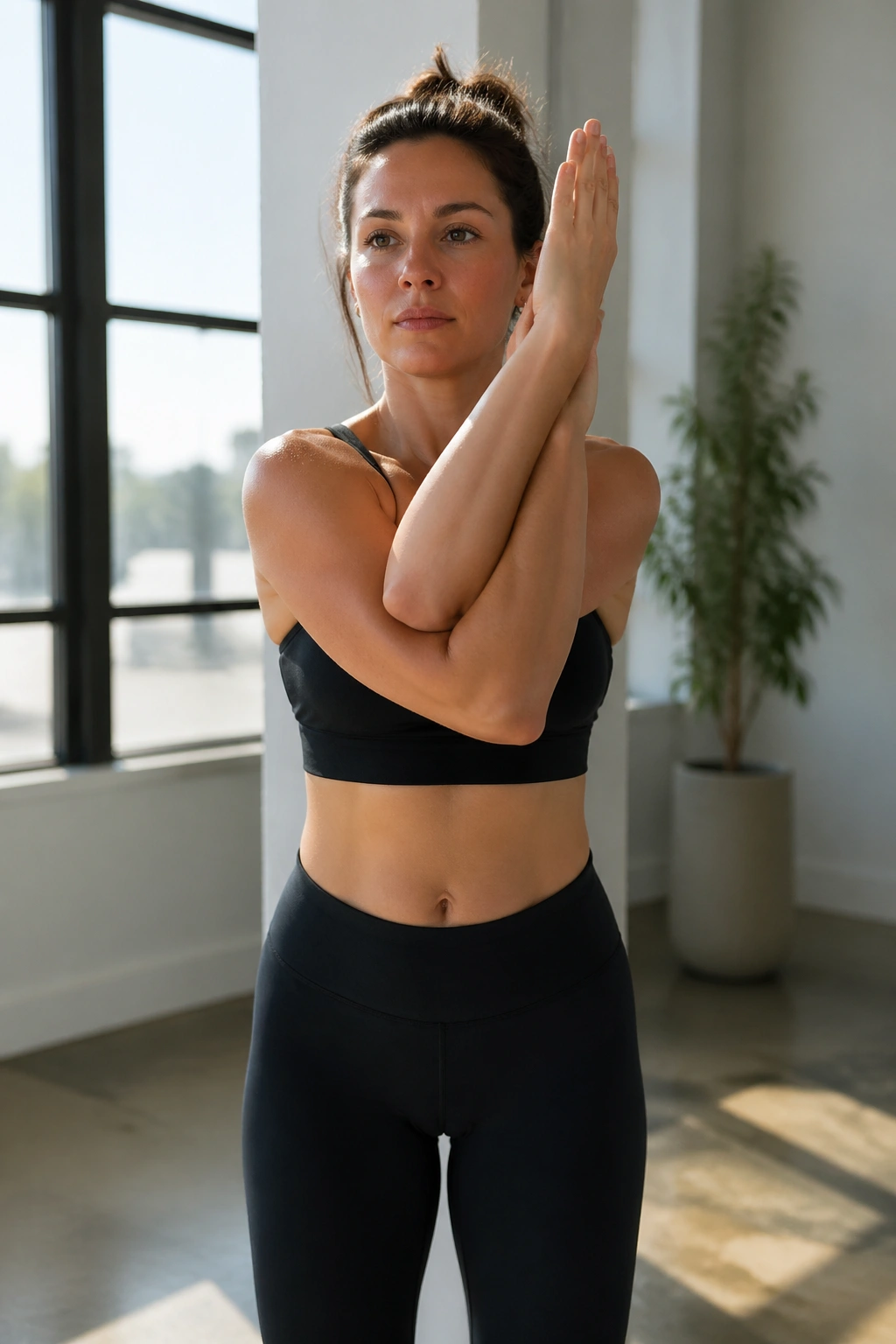
Eagle arms look strange in the mirror and feel excellent when the shoulders need a reset.
Cross one elbow under the other, then bend the forearms so the backs of the hands or palms come toward each other. Lift the elbows slightly, then pulse them upward and release with control. Do 6 to 10 pulses, then switch the cross. The upper back usually lights up fast, especially if you keep the ribs from flaring.
Why This Works So Well
The crossing pattern puts the shoulder blades in a position that asks for real control. The arms have to move while the upper back stays broad, which is a useful skill in almost every Pilates arm sequence. If the neck tightens, lower the elbows a bit and soften the hands. That usually helps more than forcing the wrap tighter.
A good version feels like the backs of the shoulders gently open while the upper spine stays tall. A bad version feels like a knot in the neck. You’ll know the difference fast.
Stay patient with the pulses. Small is enough. Bigger is rarely better here.
19. Self-Resisted Biceps Curls

You can train the biceps without a single dumbbell if you’re willing to work a little slower.
Hold one forearm in front of you and place the opposite hand lightly on top of it. Curl the working arm upward while the other hand offers just enough resistance to slow the movement down. Lower back to start over three to four seconds. Six to eight reps per side is a solid dose.
The useful thing about self-resistance is honesty. If you press too hard, the movement stalls. If you press too softly, the arm barely works. Aim for a steady middle ground where the curl feels smooth but demanding. That’s the sweet spot.
Setup Notes
- Keep the elbow close to the ribs.
- Do not yank the shoulder forward.
- Use a slow lowering phase.
- Switch hands and repeat on the other side.
This move is a little awkward the first time. That’s normal. After two or three reps, the pattern settles in and the biceps get the message.
20. Prayer Press to Overhead Reach
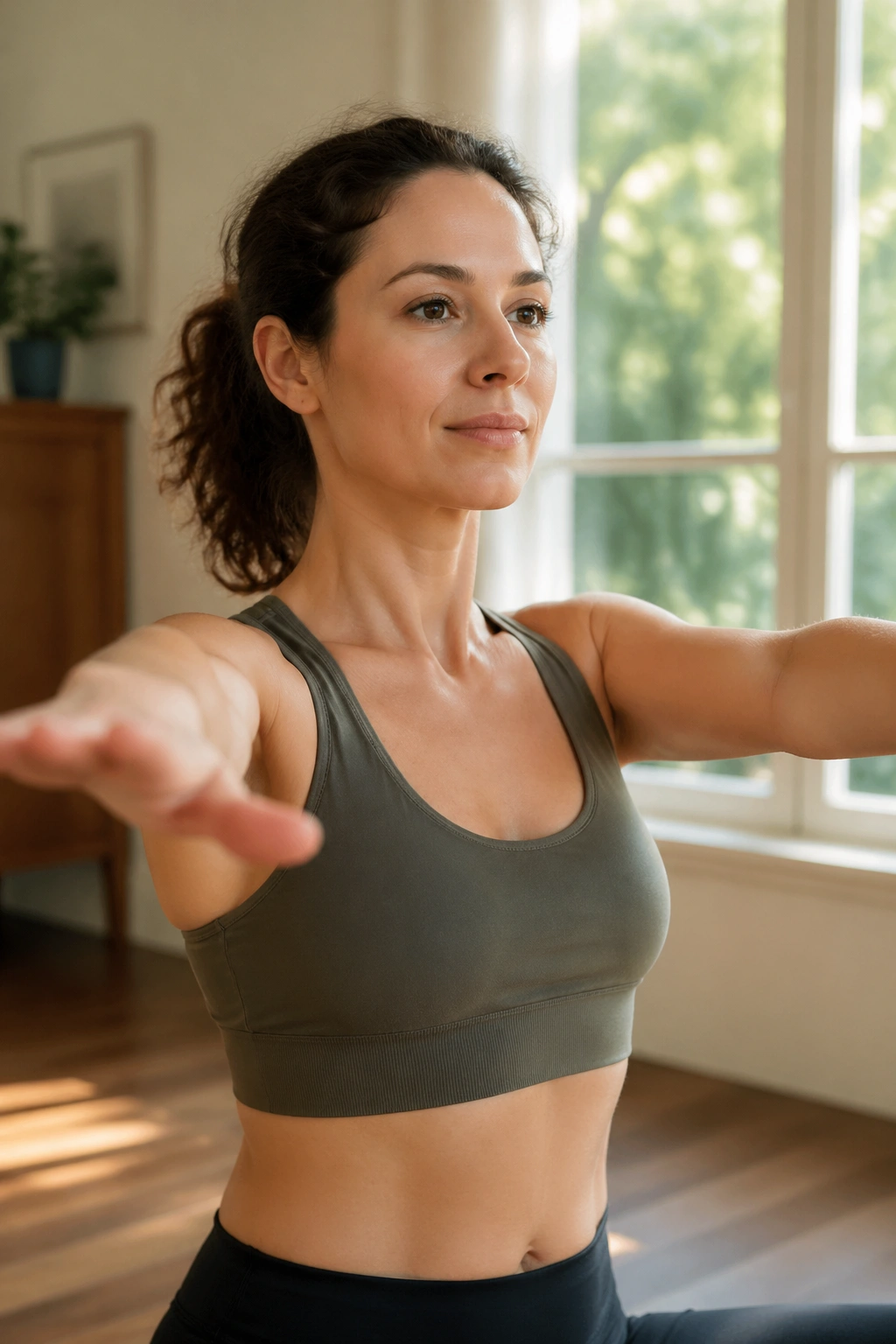
Finish with something quiet and clean. It suits the whole method.
Press the palms together at chest height, elbows out to the sides, then press the hands upward until the arms lengthen overhead. Pause for one breath, lower back to the chest, and keep the shoulders down as the hands rise. Six slow reps is enough if the movement stays crisp.
The isometric press in the palms turns this into more than a simple reach. The chest, triceps, and shoulders all have to stay organized while the spine resists the urge to arch. If the lower back starts taking over, stop higher and keep the range shorter. That’s not a downgrade. It’s smart training.
The best version feels smooth, not strained. You should be able to breathe through the whole set without gritting your teeth or losing your posture. If your hands drift apart, re-press them gently and start again.
This one works well as a finisher because it leaves the upper body feeling long instead of crushed.
A good way to use all 20 is to pick five, move through them slowly, and repeat the circuit once. The shoulders will know they’ve worked, but the neck should still feel free. That balance is the whole point.
