



Pilates jumpboard exercises for cardio look tame until the springs start moving. Then your breath gets choppy, your calves wake up, and the reformer stops feeling like a machine for gentle work.
That shift surprises people every time. A jumpboard gives you the cushioned recoil of the springs, but it also asks for cleaner landings than a lot of mat-based cardio does. If you land sloppy, the carriage tells on you. Fast.
The sweet spot is a jump that feels springy, controlled, and quiet all at once. Too light, and the carriage flies around like it has its own plans. Too heavy, and the whole thing turns into a slow leg press with jumping shoes on.
These 12 patterns move from basic double-leg work to sharper interval-style drills, so you can build heat without turning the session into chaos. Start small, keep the feet honest, and give the rebound some respect. That part matters more than people think.
1. Parallel Jumpboard Jumps
Parallel jumps are where most people figure out whether their feet are actually working together or just hanging around for decoration. The stance is simple: feet hip-width, toes pointing forward, knees tracking over the second and third toes, and the carriage moving with a soft, even rhythm.
Why This One Works
The straight-ahead position gives you the cleanest read on form. You can feel whether the ankles are collapsing inward, whether the knees are snapping straight too hard, and whether the landing is happening through the whole foot or just the toes.
It also builds the kind of low-impact cardio that still leaves you warm. Not gasping. Warm. There’s a difference. The body learns to absorb force through the feet, calves, and deep core without the harsh thud you get from box jumps or pavement sprints.
Setup Cues
- Lie with the pelvis neutral and the ribs settled, not flared.
- Place both feet on the board at hip width with the balls of the feet grounded.
- Press out on the exhale, then return with control as the knees soften.
- Keep the landings quiet enough that you could almost hear the springs breathing.
One small fix changes everything: if your knees lock on the push-off, shorten the jump by an inch or two and keep the bend in the legs.
2. Pilates V Jumpboard Jumps
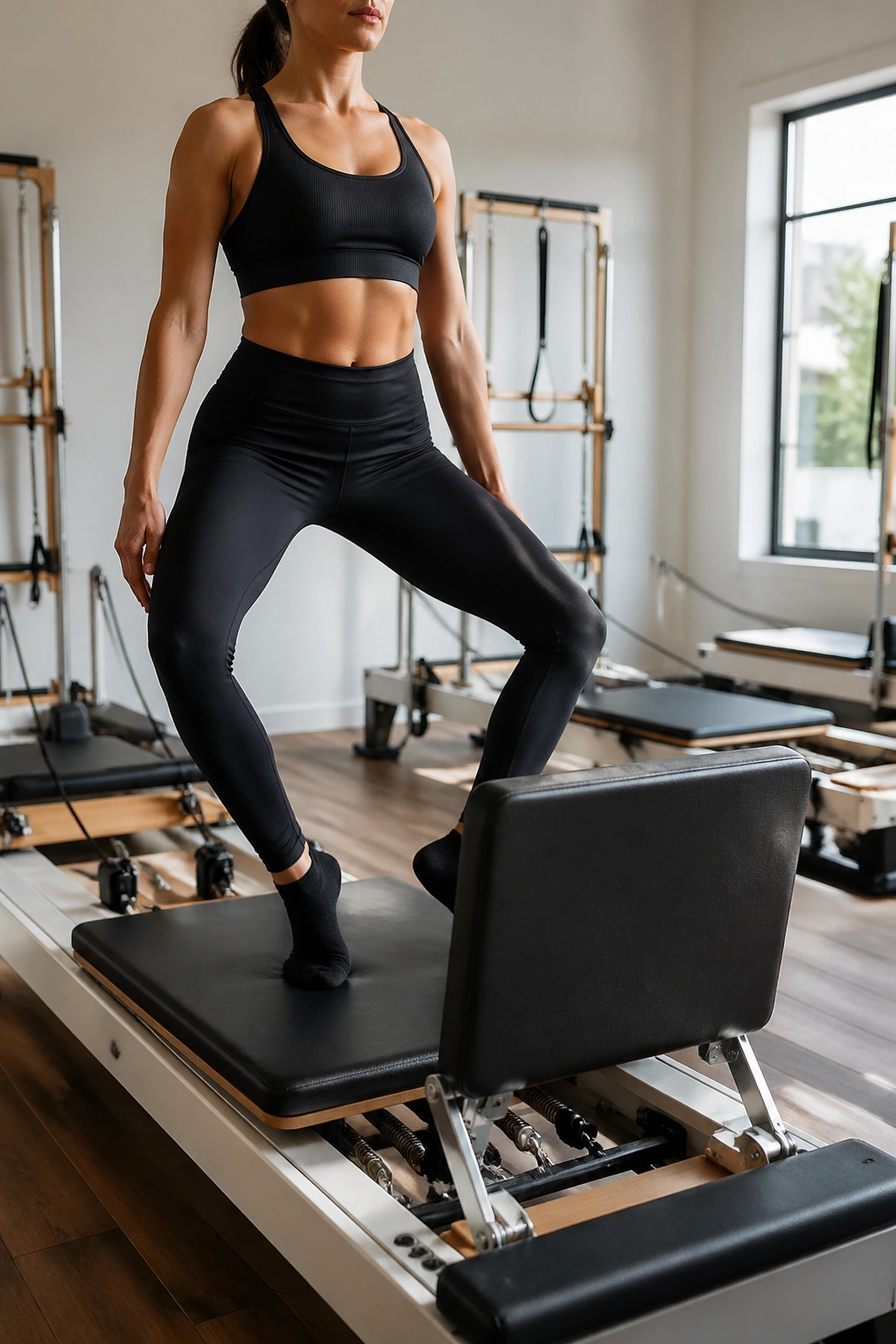
Pilates V jumps look tiny, but they wake up the inner thighs and the lower legs faster than most people expect. That slight turnout changes the line of force, so the work shifts away from the quads doing all the talking and toward the adductors, glutes, and ankle stabilizers.
The mistake people make is forcing turnout from the feet. Don’t. Let the hips do the rotation and keep the toes only slightly turned out, like a small first-position shape rather than a ballet audition. If the arches collapse, you’ve gone too far.
The best version feels crisp, not pinchy. You should feel the inner legs help control the return, and the knees should stay soft instead of crashing inward at the end of each landing. That tiny shape makes a bigger difference than it looks like it should.
I like this one early in a jumpboard block because it wakes up the legs without a huge range of motion. It’s also a nice reminder that cardio doesn’t have to mean bigger and bigger jumps. Sometimes it means better placement and less waste.
3. Wide Second-Position Jumps
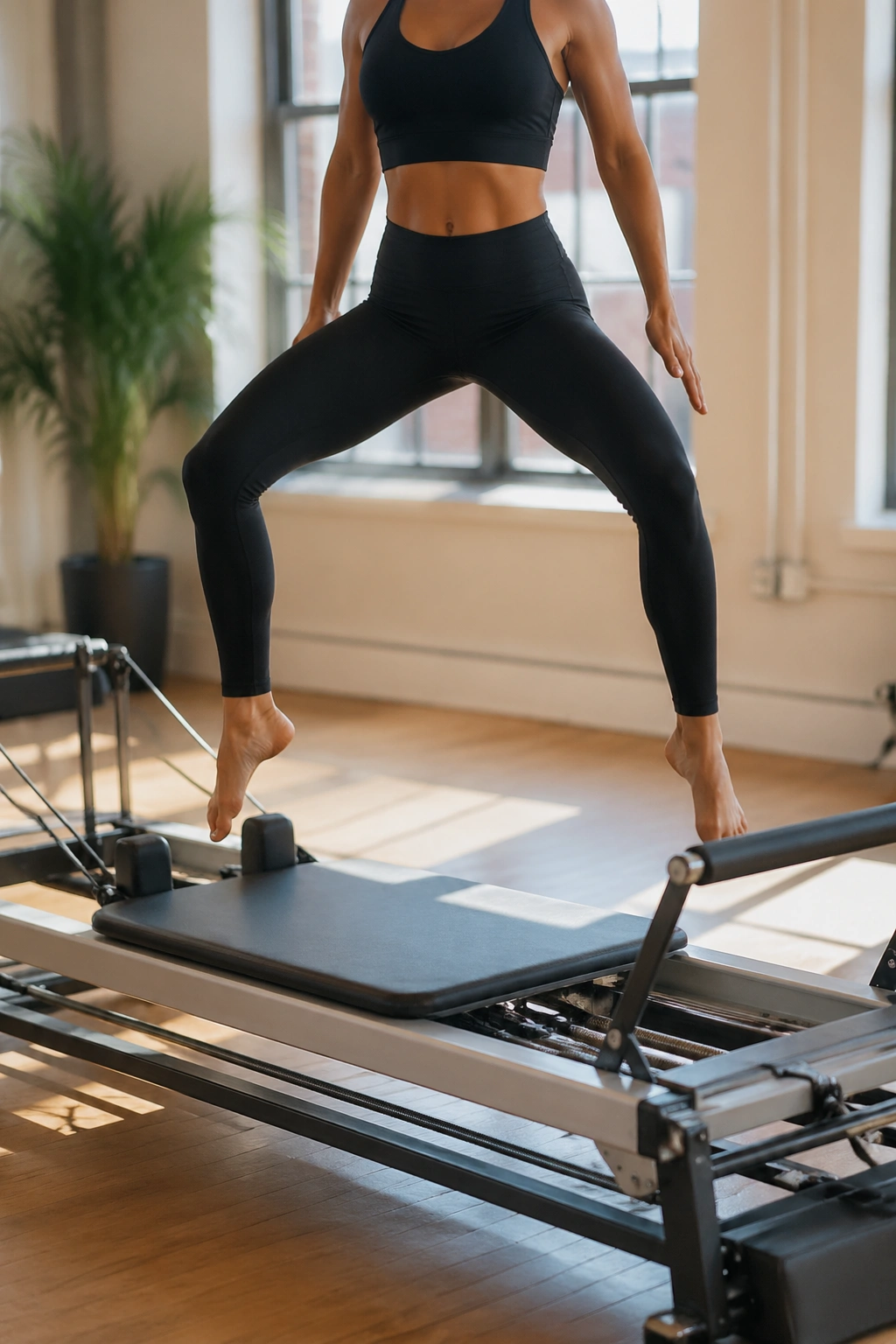
Why do wide second-position jumps get sweaty so fast? Because they ask the outer hips and inner thighs to negotiate with each other on every single landing, and that coordination is work. Real work. The legs open, the carriage travels, and the pelvis has to stay quiet while everything else moves.
What to Watch For
A wide stance can look strong while quietly breaking down at the hips. Keep an eye on these details:
- Knees stay in line with the toes instead of drifting inward.
- The pelvis doesn’t rock side to side when the carriage returns.
- The feet land with the same pressure on both sides, not heavy on one edge.
- The jump stays wide only as far as the body can control it.
This pattern is gold if you want a lower-body cardio feel with a bit more lateral stability work baked in. It also tends to expose weak hips fast, which is annoying in the moment and useful later. You can always tell when one side is stealing the work.
Short bursts suit this exercise better than long, sloppy sets. Twenty seconds can be enough to light up the thighs, especially if the return is slow and the landings stay controlled.
4. Frog Jumps
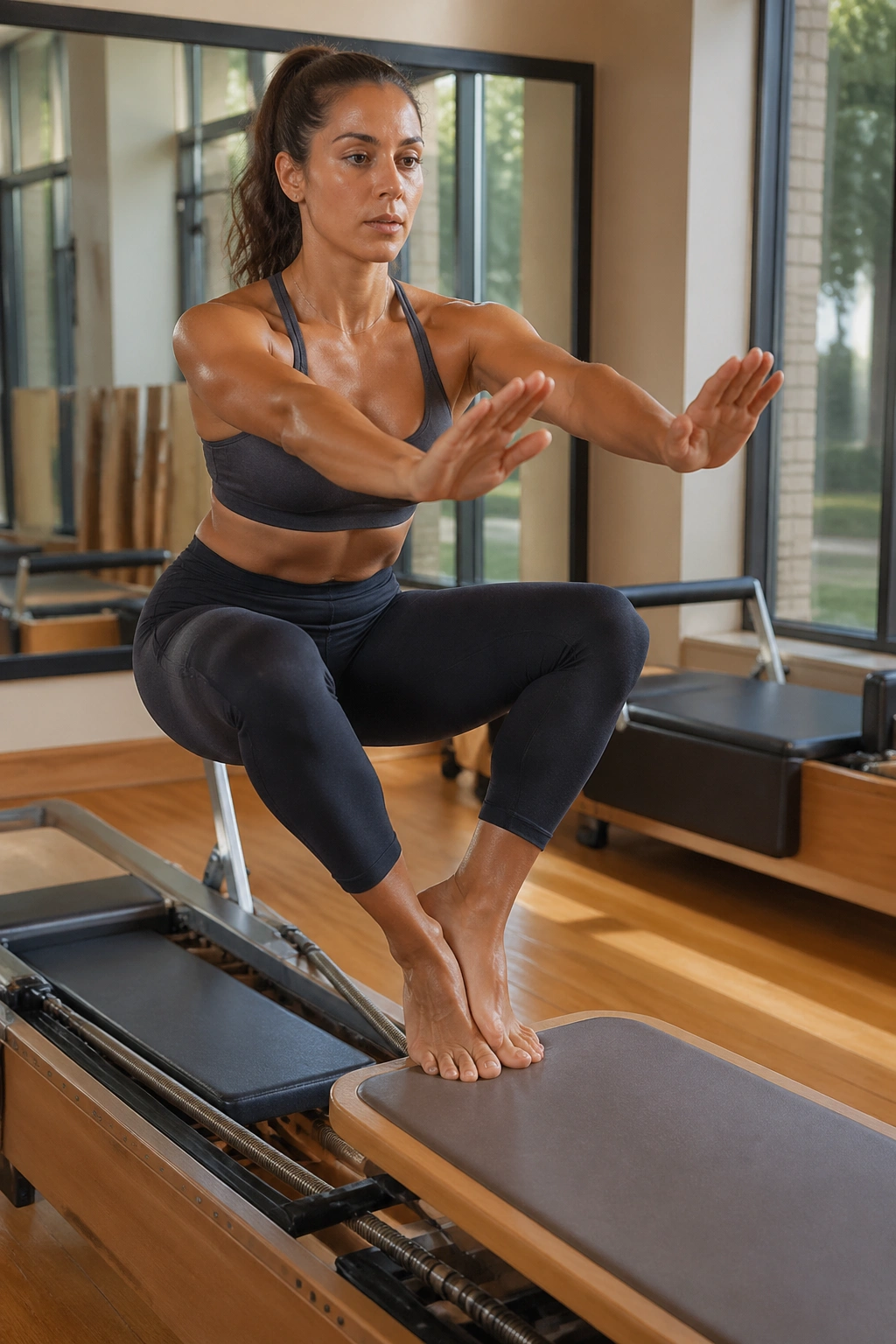
The first time someone tries frog jumps, the carriage can feel like it’s trying to outrun the body. That’s the point, though. This one asks you to jump from a bent-knee, heels-together shape and open out in a smooth arc before coming back to that same compact position.
Spring and Shape
A lot of people go wrong by making the jump too big. Frog jumps should feel rounded and elastic, not dramatic. Keep the knees tracking open in a comfortable line, and let the heels stay close enough together that you can control the return instead of dropping into it.
The move hits the inner thighs, glutes, and calves at the same time, which is one reason it climbs the heart rate so quickly. It’s a small shape with a surprisingly noisy payoff. There’s also a nice rhythm to it when the springs are set well — enough resistance to give you feedback, not so much that every rep feels like a battle.
If your lower back starts arching, reduce the range immediately. Frog jumps should feel like the abs are organizing the movement from the center, not like the spine is hunting for help. That little correction saves a lot of frustration.
5. Single-Leg Alternating Switches
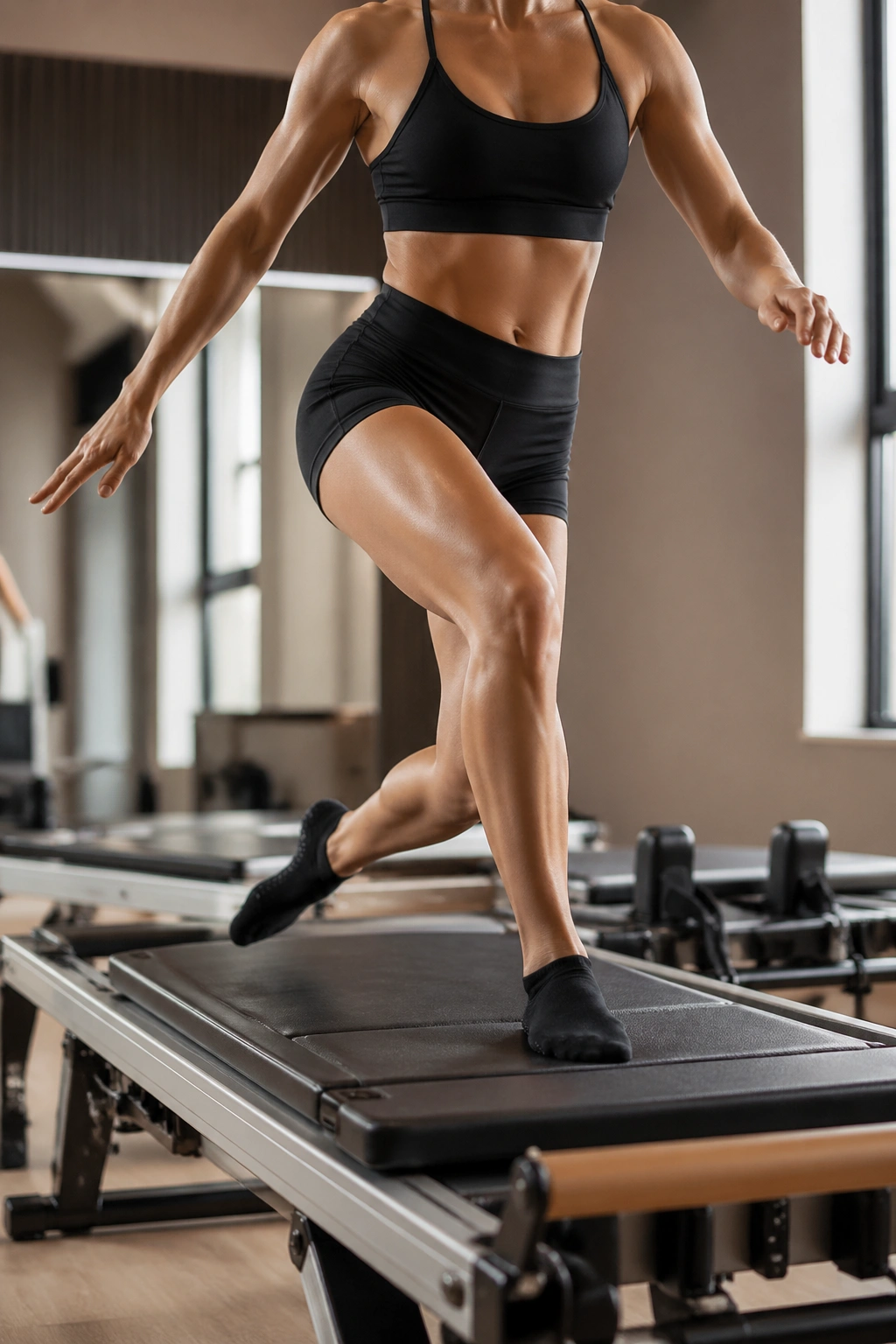
Single-leg alternating switches are the section of a jumpboard session where the room gets quiet for a second. Not because the exercise is easy. Because everyone starts concentrating. One leg lands while the other prepares to leave, and the pelvis has to stay square the whole time.
That split-second coordination changes the feel of the cardio completely. Your heart rate rises, sure, but so does the demand on the smaller stabilizers around the hip and ankle. The stronger side usually wants to take over. It always does. The trick is keeping the weak side from hiding.
I like this pattern after a few bilateral sets because the body is already warm and the joints are ready to handle the asymmetry. Go too early and you’ll probably twist, shrug, or chase the carriage instead of controlling it. Go at a moderate pace and the movement starts to feel clean, almost crisp.
A good cue: imagine the hips are headlights aimed straight up. If one light starts swinging sideways, you’ve lost the line. Shorten the jump, reset, and try again. Small corrections matter more here than a bigger effort.
6. Running Jumps on the Jumpboard
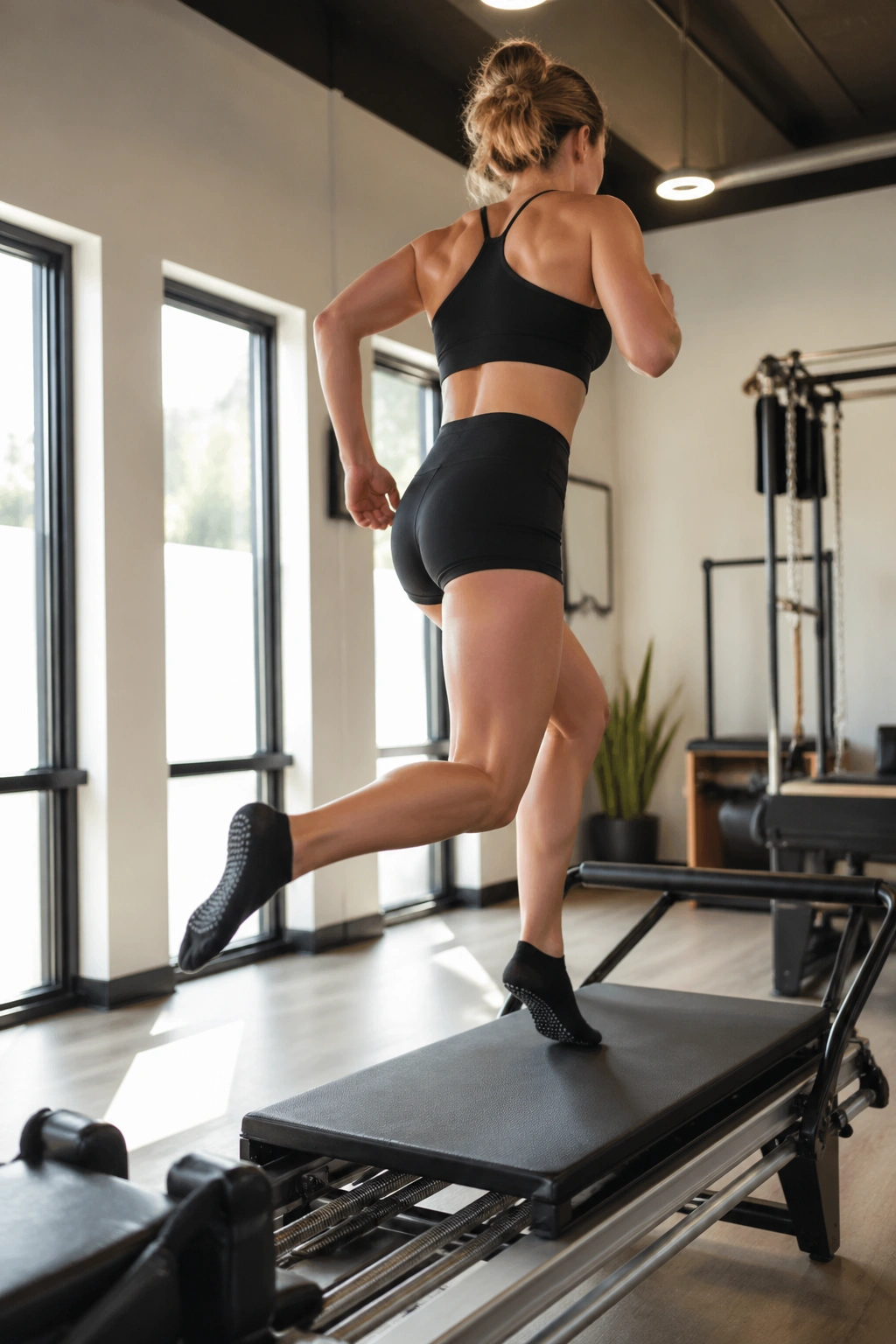
Unlike the symmetrical double-leg jumps, running jumps keep one foot leaving while the other is finding the board. That simple change makes the pattern feel more like a sprint drill and less like a bounce, which is exactly why it works so well for cardio.
You’re not trying to kick the carriage around. You’re trying to create cadence. The feet alternate with a quick, tidy switch, and the ankles have to stay awake the whole time. If the feet get lazy, the movement gets clunky fast.
This is one of the better choices when you want a higher heart-rate block without huge amplitude. The small, fast steps make the legs burn in a different way than wide jumps do. More rhythm. Less hang time.
Who It Suits
- People who want a running feel without ground impact.
- Anyone who gets bored with straight double-leg jumps.
- Reformer users who can keep a steady pelvis under faster foot changes.
A quick note: if your calves are already tight from walking a lot or standing all day, start with short intervals. This one can sneak up on you.
7. Jumpboard Jumping Jacks
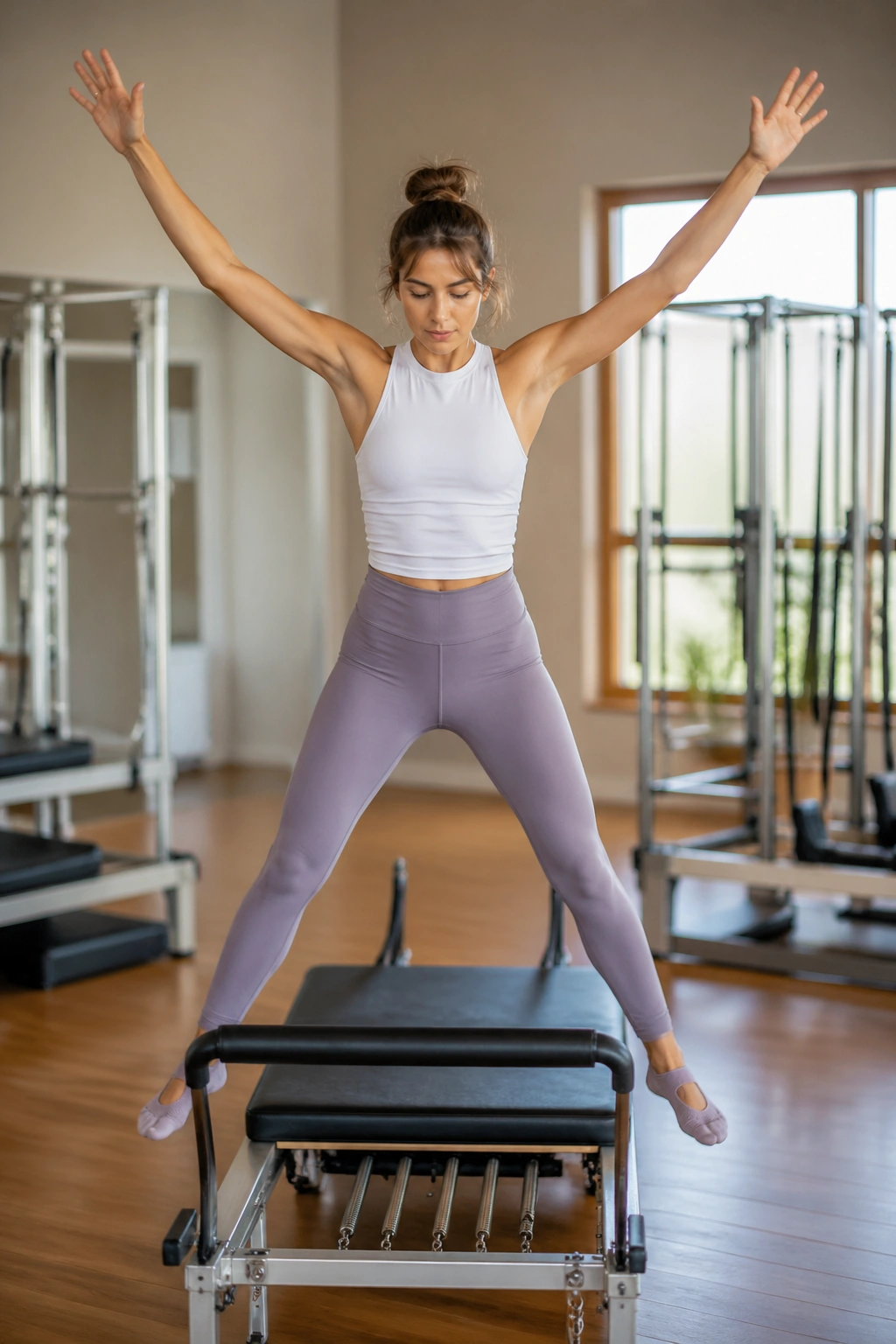
Jumpboard jumping jacks are the ones people underestimate most. They look familiar, which makes them seem friendly. Then the carriage starts moving laterally, the legs have to open and close with control, and the whole thing turns into a coordination test.
Carriage Control Matters
The biggest mistake is throwing the legs wide and hoping the springs will sort it out. They won’t. Keep the opening smooth, the return sharp but not slammed, and the feet landing in a clean position each time. The board should feel like a target, not a trampoline.
The upper body stays calm here. Shoulders down, neck long, ribs quiet. If the torso starts tossing around, the legs have drifted too far from the center line. That’s usually a sign the pace is ahead of the control.
These make sense in short bursts because they’re rhythm-heavy and the adductors get tired before you realize it. Thirty seconds can be plenty. Sometimes less. The point is to keep the pattern tidy enough that the jumps stay useful instead of chaotic.
8. Scissor Switches
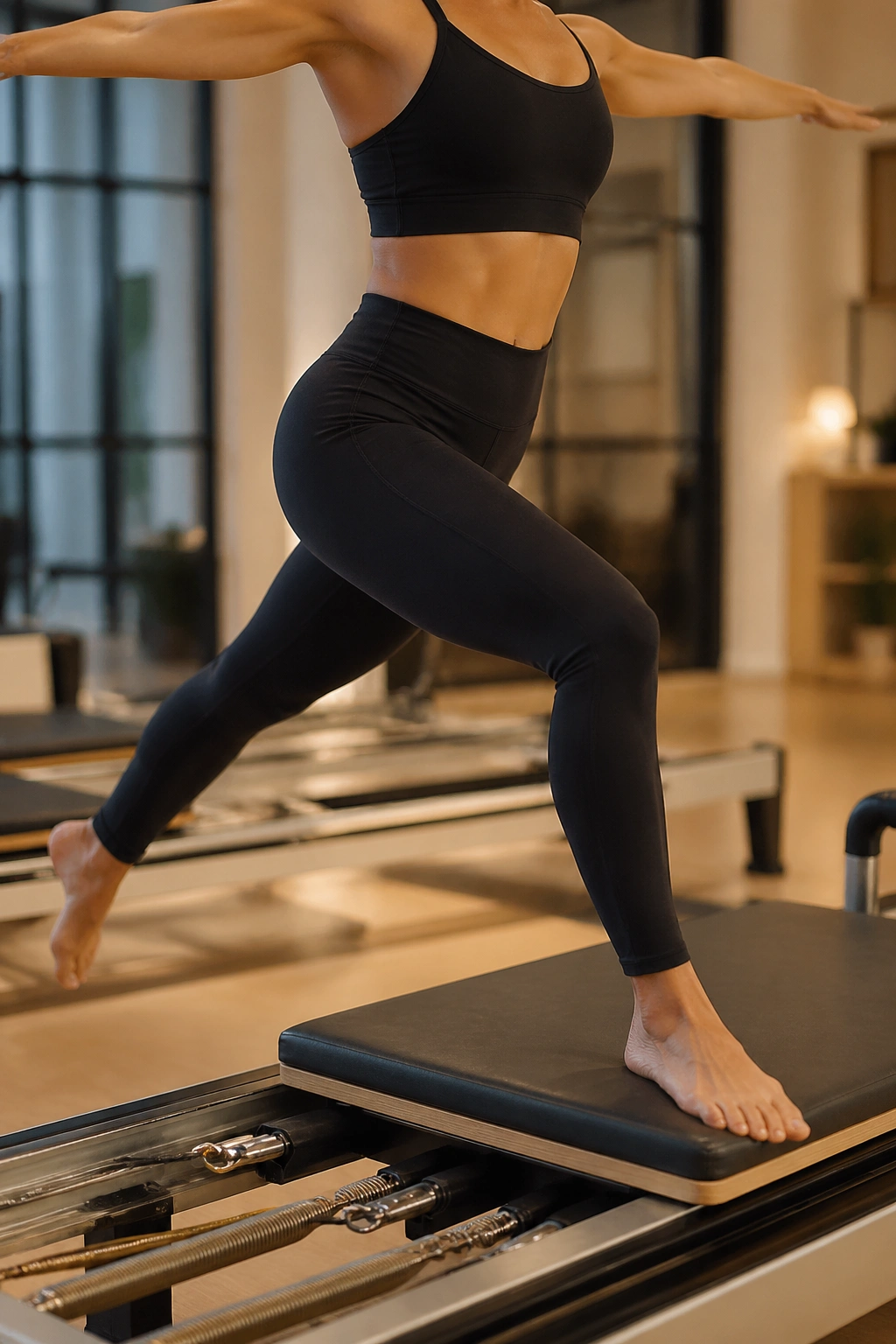
A scissor switch sounds graceful on paper. In practice, it asks your hips, hamstrings, and deep abs to agree on a shape while the legs trade places in the air. No easy task.
The move is a little longer than a running jump and a little more open than a straight switch. One leg reaches forward, the other lengthens away, then they trade places with a controlled snap. If the range gets too big, the pelvis starts tilting and the low back does the complaining.
What makes this one useful is the stretch-and-contract pattern. The back of the leg lengthens, then shortens, then lengthens again. That elastic cycle can spike the heart rate fast, especially if the pace stays snappy and the carriage doesn’t slam home on every return.
- Keep the standing leg long enough to support the pelvis.
- Let the reaching leg stay active through the heel and toes.
- Switch from the center, not by swinging the feet wildly.
- Stop the set if the low back starts arching off the mat.
A clean scissor feels athletic. A sloppy one just feels long.
9. Calf-Burner Pulses
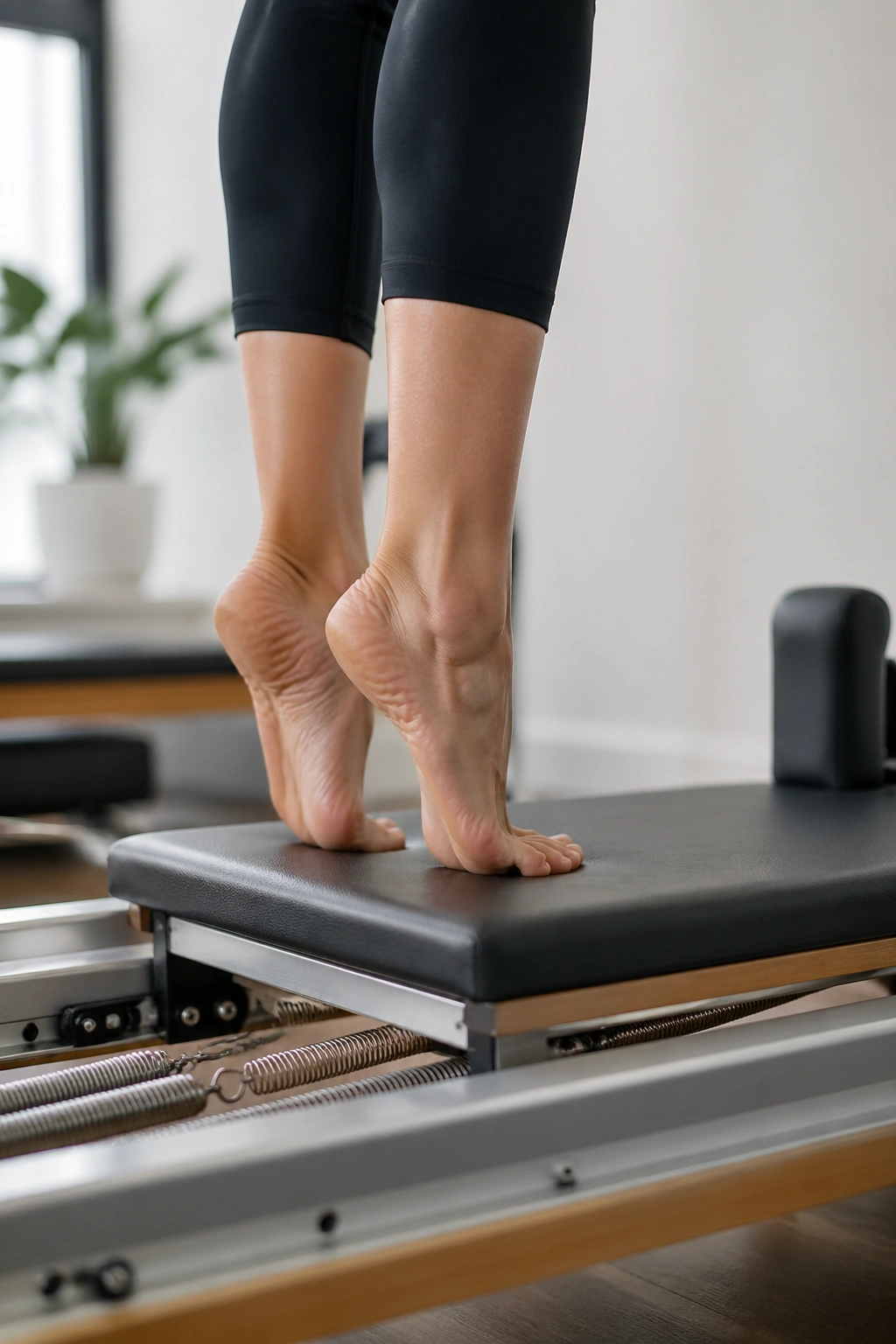
Calf-burner pulses are the sneaky burn of the bunch. They don’t look dramatic, which is exactly why people stay on them longer than they should. The body stays in a smaller jump shape, then starts pulsing the carriage with tiny, fast pushes that keep the lower legs under constant tension.
The heart rate climbs because there’s very little recovery between reps. The muscles never get to fully relax. That’s the whole trick. You’re working in a narrow range, but the tension stays live, and that little bit of rebound can feel harsher than a bigger jump if the tempo gets quick.
I like these as a bridge between stronger jump patterns and the final cardio push. They’re also useful when you want to keep moving but your form starts getting messy on bigger shapes. Smaller can be smarter. Sometimes it’s the only reason the session holds together.
Use them with a soft bend in the knees and a steady breath. If the ankles start slapping or the feet feel jammed, back off the pace. A pulse should feel elastic. Not frantic.
10. Side-to-Side Skater Jumps
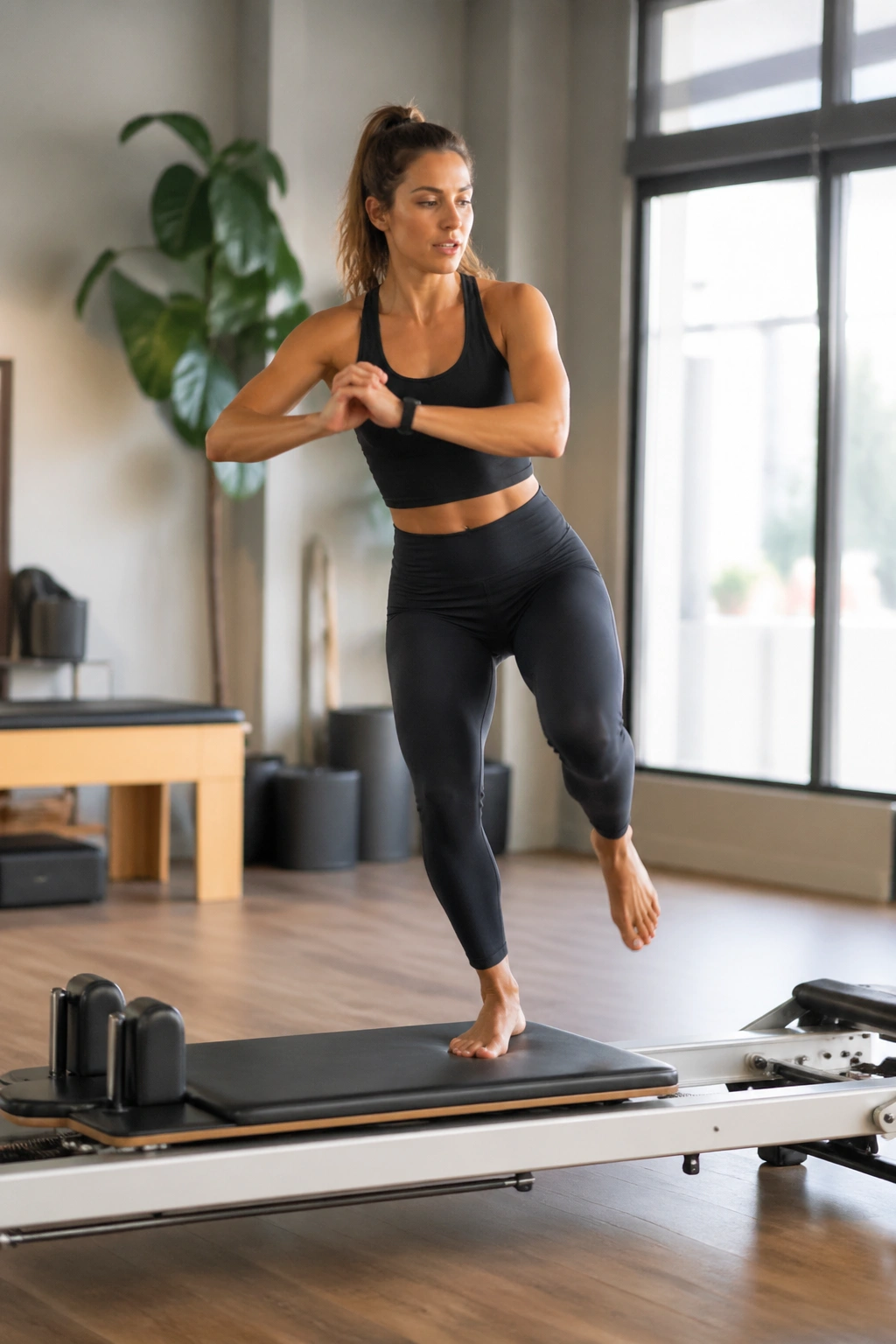
Can a lateral jump raise the heart rate as fast as straight-ahead work? Absolutely. The side-to-side skater pattern forces the hips to stabilize in a plane that many people ignore, and that alone can make the exercise feel harder than it looks.
The movement is basically a controlled lateral hop with one leg landing slightly offset from the other. Think of the body sliding across an invisible line on the board, not throwing the legs out into space. The pelvis stays square, the ribs stay calm, and the outer hips do a lot of the quiet work.
How to Use It
- Start with a short side-to-side travel, only a few inches.
- Keep the landing foot stable before increasing speed.
- Use a light-to-moderate pace first so the hips learn the pattern.
- Add faster switches only after the carriage return feels silent.
This one suits people who get bored quickly or want a more athletic feel without losing the Pilates setup. It’s also the place where a lot of sloppy knee tracking shows up, so don’t rush it. The side-to-side pattern is honest. It tells on you.
11. Tempo Ladder Jumps
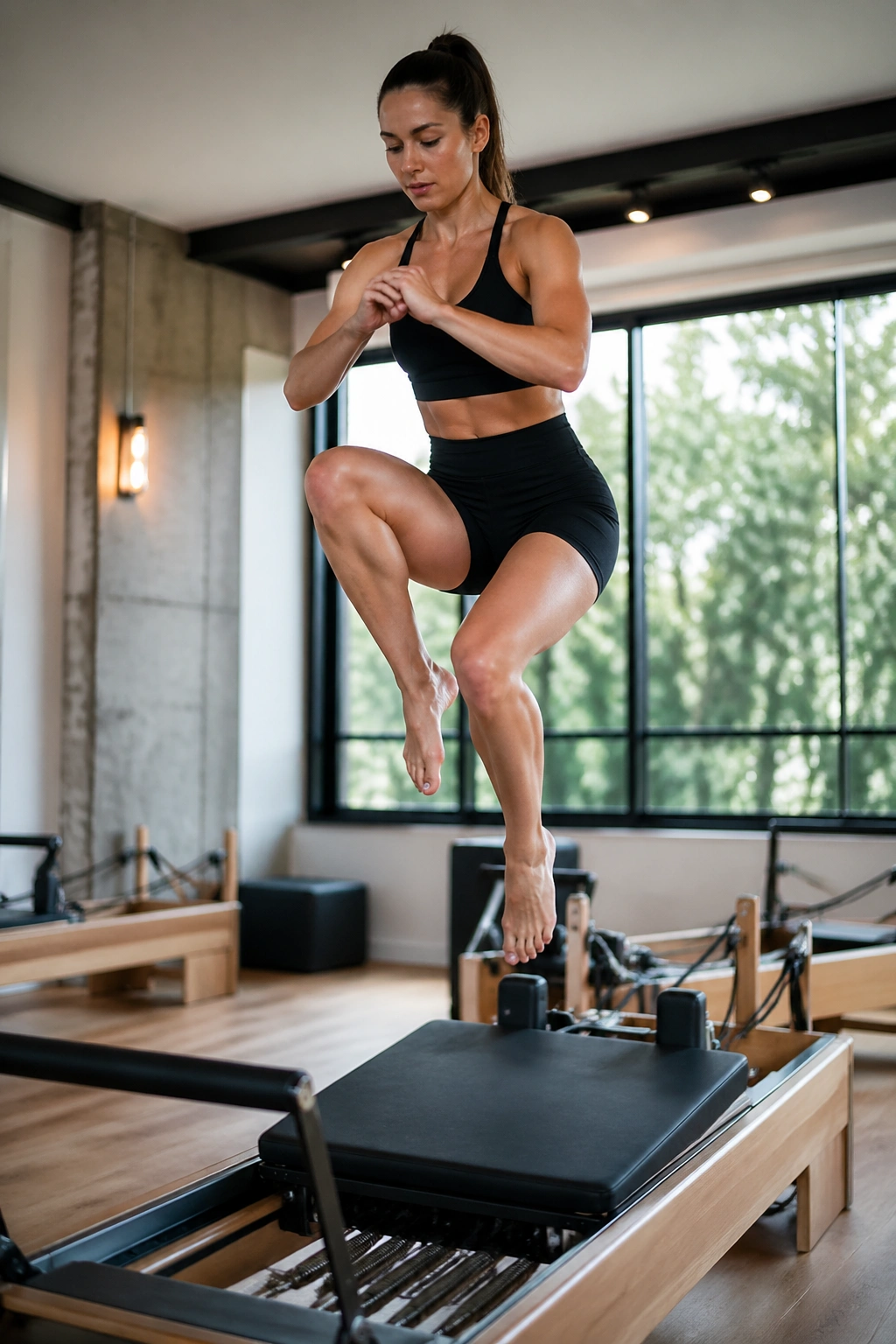
If you like intervals, tempo ladders feel like a staircase for the legs. You start with a steady rhythm, then climb to a faster pace, then back down again before the fatigue gets ugly. That change in speed keeps the session from flattening out.
A simple ladder might look like this: 20 seconds of parallel jumps, 20 seconds of Pilates V jumps, 20 seconds of running jumps, then 20 seconds of recovery. Repeat the block with one twist — maybe the second round uses wide second-position jumps instead of V. The body stays alert because the pattern changes before it gets lazy.
What Makes It Useful
- The heart rate rises without needing endless reps.
- The legs learn to shift gears instead of locking into one speed.
- The mind stays engaged, which matters more than people admit.
The trick is not to let the middle of the ladder turn sloppy. If the pace gets too fast for the springs or the carriage starts banging, the drill loses its purpose. Keep the jumps honest and the rest intervals short enough to stay warm, long enough to breathe.
12. Mixed Cardio Flow
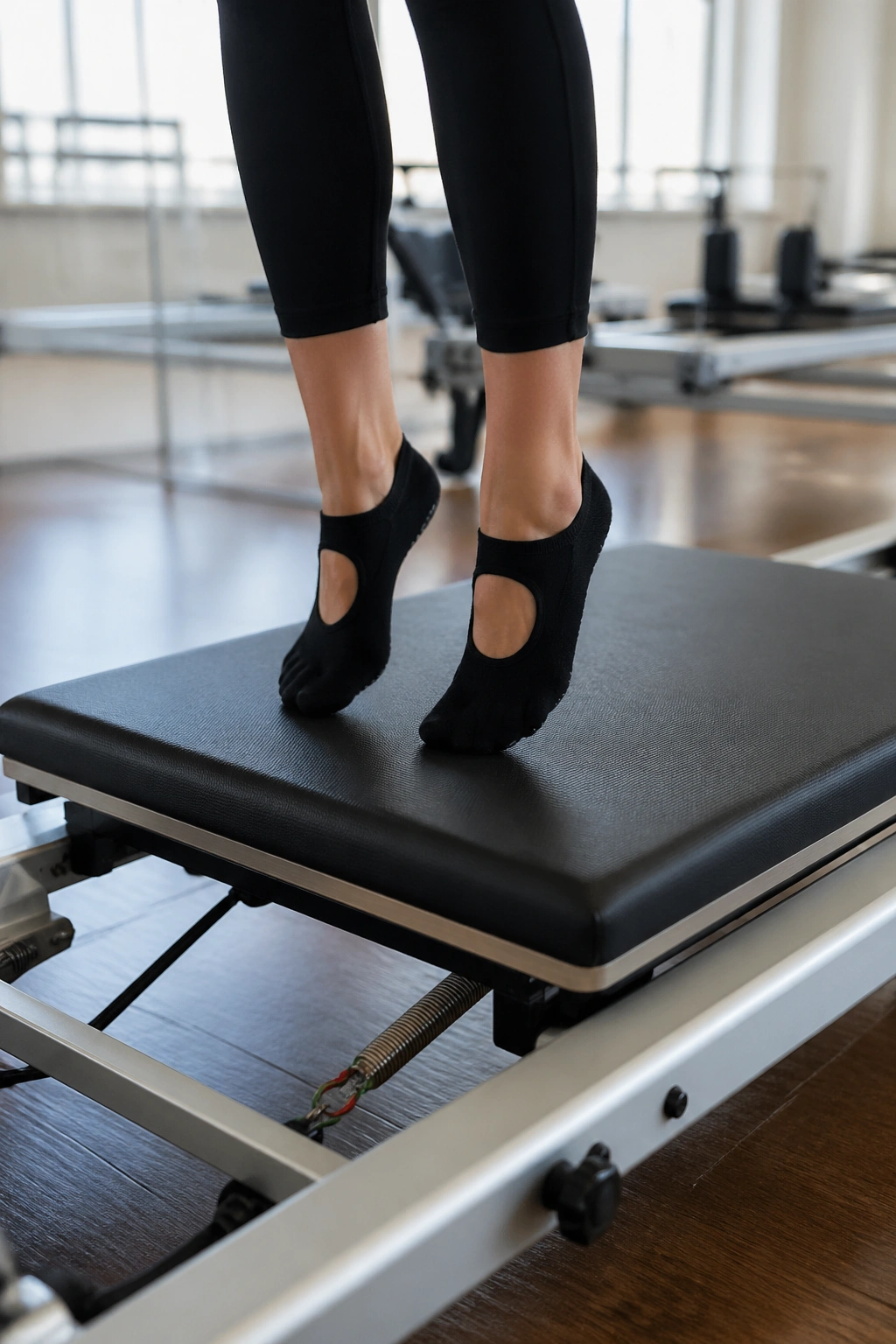
A mixed jumpboard flow is where the individual exercises stop feeling like separate tricks and start working like a session. Parallel jumps, V jumps, a few running intervals, then a quick lateral pattern — the body learns to switch gears without losing the rhythm, and that’s where the best cardio work usually happens.
I like this final block because it exposes the difference between stamina and speed. Speed is easy to fake for a few seconds. Stamina shows up when you have to move from one shape to the next and keep the pelvis steady the whole time. That’s the hard part. That’s also the useful part.
A tidy flow might run like this: 30 seconds parallel jumps, 20 seconds frog jumps, 20 seconds running jumps, 20 seconds rest, then repeat once or twice. If the form starts slipping, stop the circuit there. Chasing extra reps with ugly landings is a bad trade.
The best jumpboard cardio sessions end while the body still feels organized. A little breathless is fine. A little shaky in the ankles is fine too. Sloppy is not. If the carriage starts winning the conversation, the set has gone on long enough.
