



A good cardio session doesn’t need a treadmill, a road, or a single mile of running.
If your knees hate pounding, your upstairs neighbor hates noise, or you want to sweat in a room that barely fits a yoga mat, no running cardio workouts at home solve a real problem. The hard part is not getting your heart rate up. The hard part is finding moves that stay useful after the first burst and do not leave you staring at the ceiling halfway through.
The best home cardio drills mix rhythm, impact, and enough variety to keep your brain from checking out. A jump rope, a boxing round, a stair climb, or a fast-feet drill can all push you into that breathless zone where short phrases are fine and full sentences start falling apart. That is the sweet spot if you want conditioning, calorie burn, or just a body that feels awake again.
So the lineup below leans hard on moves that work in a hallway, beside a couch, or on a patch of floor you can clear in 30 seconds. Some are low impact. Some are loud and sweaty. A few will light up your shoulders or core along with your lungs, which is a nice bonus when time is short and the gym is not happening.
1. Jump Rope Intervals for No Running Cardio at Home
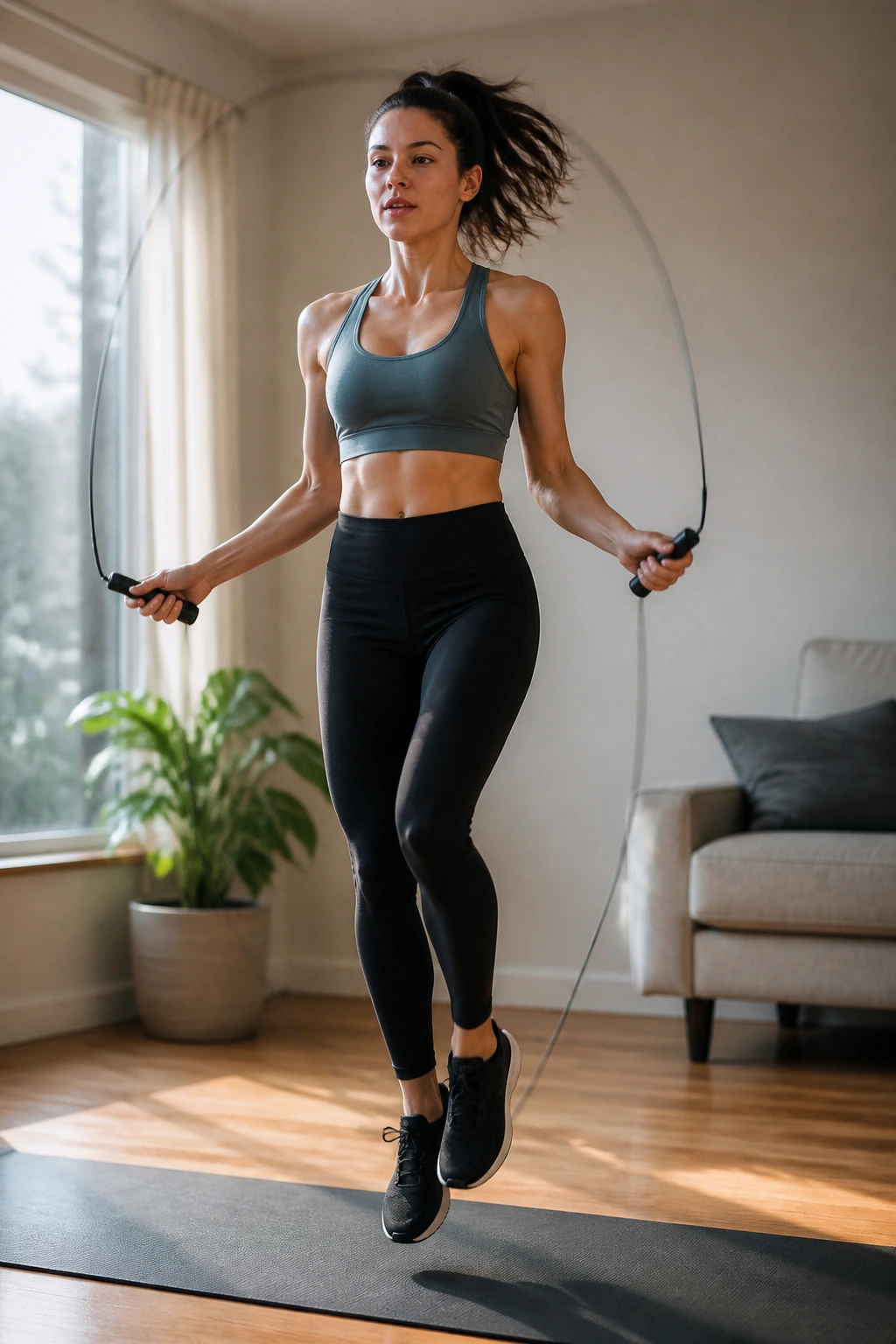
The rope hits the floor, your calves wake up fast, and five minutes can feel longer than it should. That is the appeal.
Jump rope is one of the cleanest no running cardio workouts at home because it gives you speed, bounce, and coordination in a tiny footprint. If you have ceiling clearance and a floor that can handle a little impact, it is hard to beat for heart rate. If you do not have space for a full rope, a shadow rope version works too — same arm motion, same rhythm, less chance of snagging a lampshade.
A clean way to pace it
Start with 20 seconds on, 40 seconds off if you are new to it. Once your timing feels steadier, shift to 30 seconds on, 30 seconds off for 10 to 15 rounds. Keep your elbows close to your ribs and turn the rope from the wrists, not the shoulders.
- Best for: short, hard bursts
- Floor note: a thin mat softens noise and impact
- Easy version: alternate-foot hops instead of two-foot jumps
Pro tip: If you trip every few seconds, slow down. Most people do better when they jump lower and keep the rope speed modest rather than trying to look fast.
2. Shadow Boxing Rounds
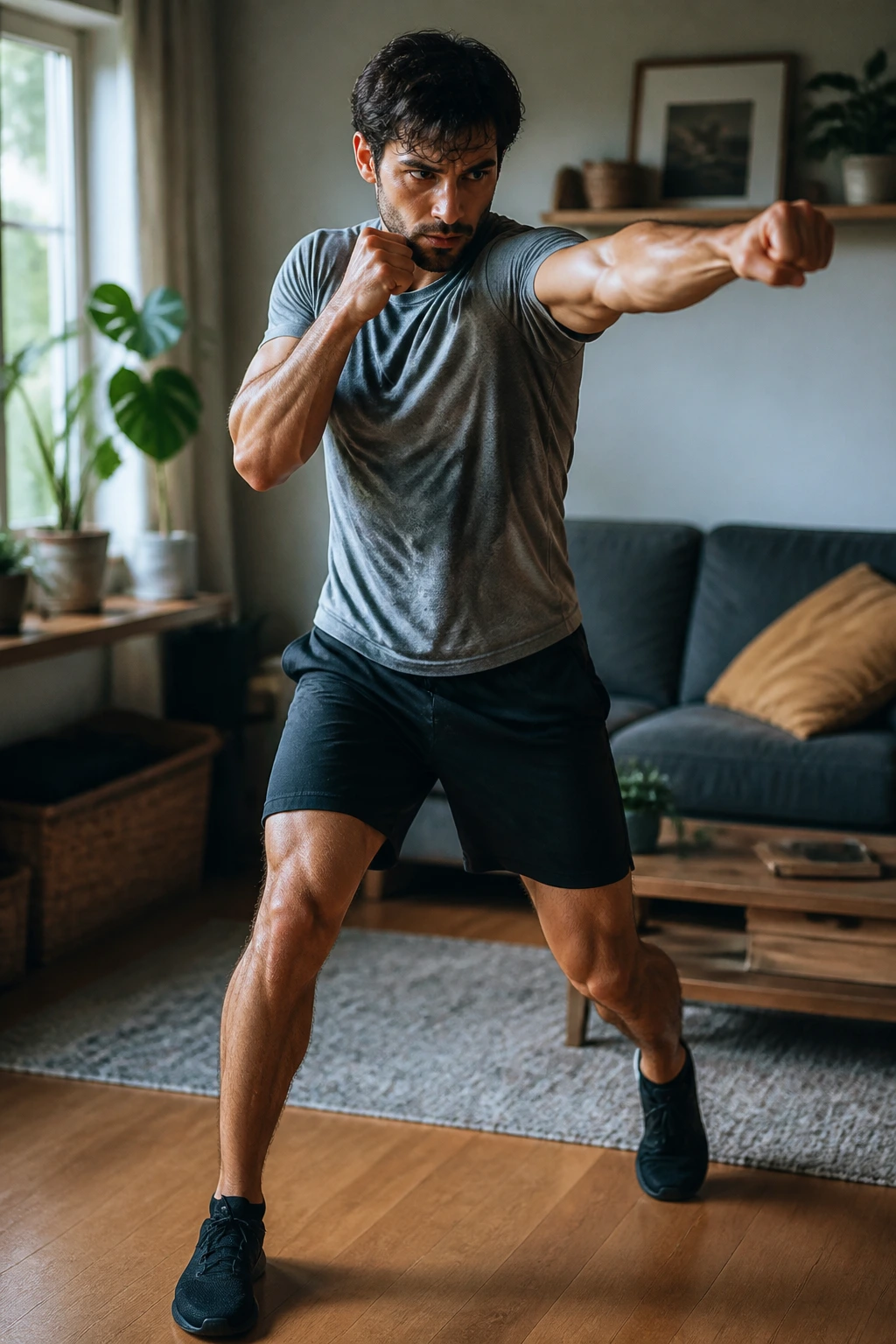
Shadow boxing is the kind of cardio that looks easy until your shoulders start talking back. Then it gets honest.
This works because you are not only punching — you are staying light on your feet, rotating through the torso, and keeping your guard up. That combo drives your heart rate up fast without needing a single step of running. A round of straight punches, hooks, and slips can feel smooth for the first minute and then suddenly rude.
Why it gets hard so fast
The upper body burns sooner than people expect. Punches use small muscles around the shoulders and arms, but the real cost comes from holding posture, twisting the hips, and keeping your core braced while you move.
Try 2-minute rounds with 30 to 45 seconds of rest. Mix jab-cross, jab-cross-hook, and a few defensive slips. Don’t punch from your shoulders alone. Rotate through the waist and let the back foot pivot a little on crosses and hooks.
What to keep in mind
Keep your chin tucked. Keep your hands up. And exhale on every punch — that little burst of air keeps you from tensing up like a board.
If you want a tougher session, throw in 10 seconds of fast punches at the end of each round. That last sprint is ugly in a good way.
3. Mountain Climbers
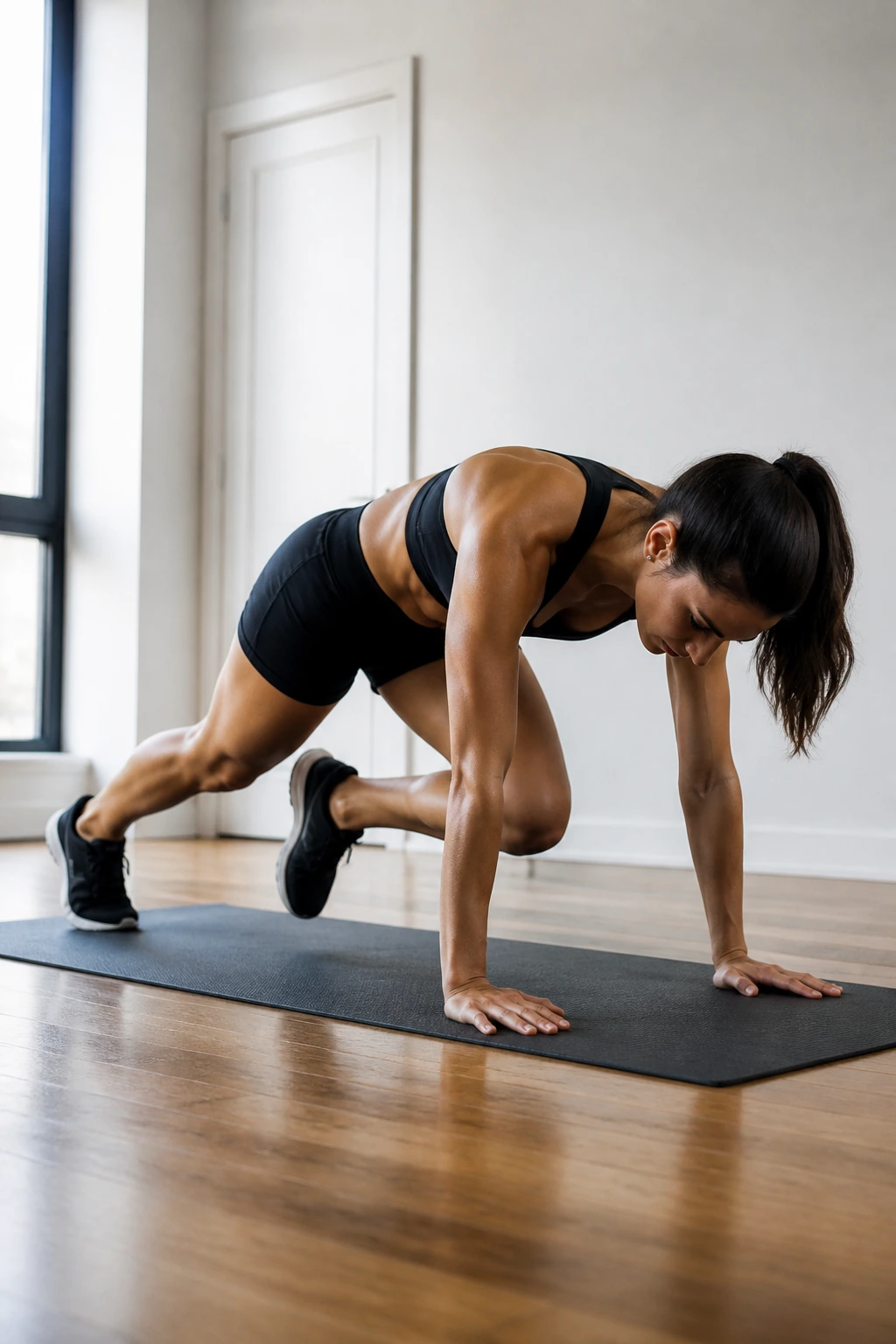
Why do mountain climbers feel so brutal? Because they combine shoulder work, core work, and fast leg drive in one place.
They are one of the most useful bodyweight cardio drills when you need something compact and loud enough to raise your pulse without leaving the room. Done fast, they light up the chest and hips. Done slow, they still make you breathe harder than you expect. That range is the reason people keep coming back to them.
How to make them feel better on your body
Hands under shoulders. Back flat. Knees drive in one at a time without bouncing the hips too high.
- Wrist relief: place hands on dumbbells or a low bench
- Low-impact option: step each foot in and out instead of hopping
- Pace cue: your shoulders should stay steady, not wobble side to side
A solid starting dose is 20 seconds hard, 20 seconds rest, repeat 8 to 10 times. If your form falls apart, slow the tempo before your lower back starts arching.
One warning: do not chase speed if your hips are shooting up. The move turns sloppy fast, and sloppy mountain climbers are mostly wasted effort.
4. Low-Impact Jumping Jacks
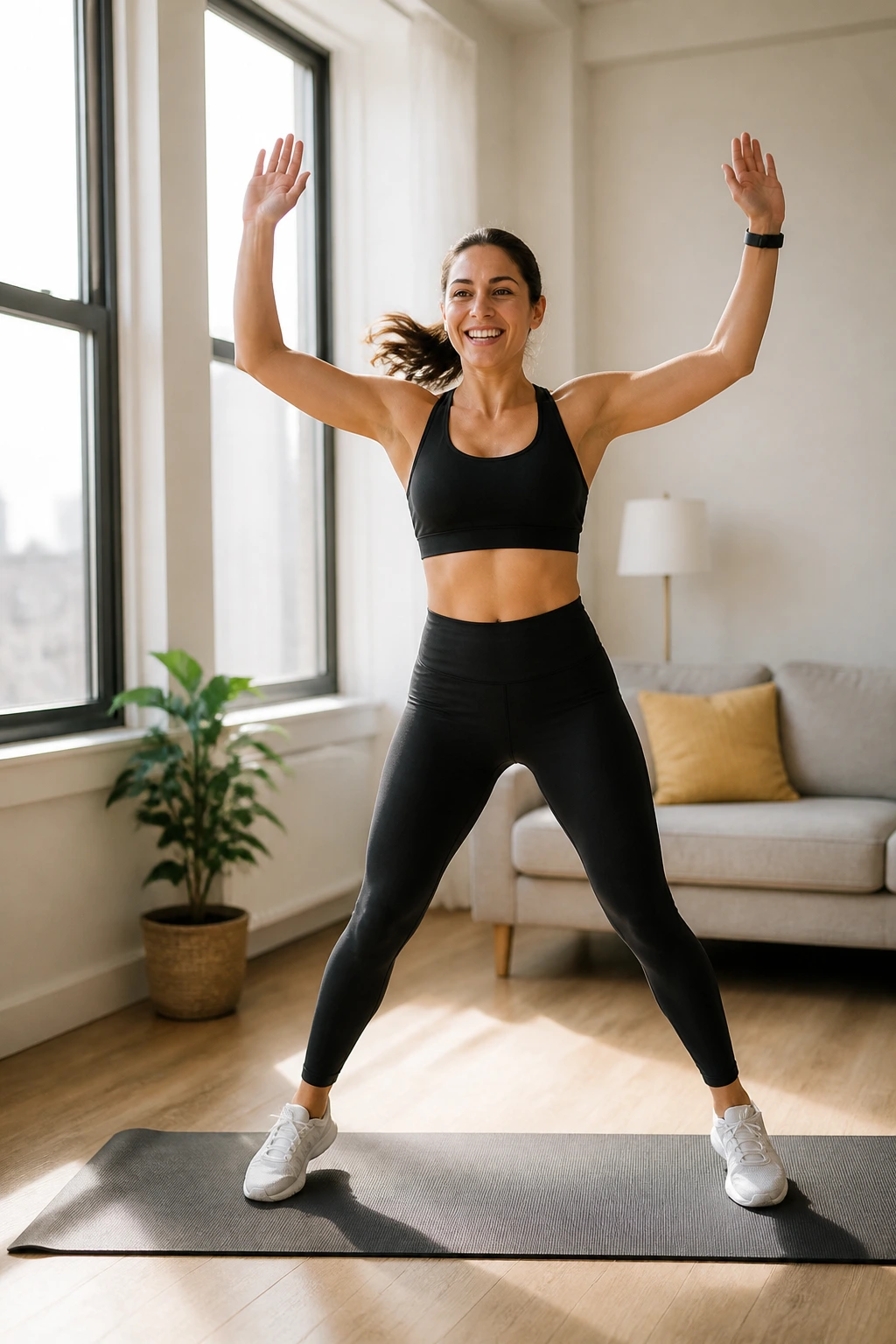
If you need quiet cardio in a small apartment, this is one of the first moves worth stealing.
Low-impact jumping jacks keep the classic arm swing and side step, but they skip the big jump. That small change saves your knees, drops the noise, and makes the move easier to repeat for longer rounds. It is a nice choice when you want to warm up hard without irritating your joints before the workout even starts.
A good version is simple: step one foot out, lift the arms, step back in, and switch sides. Keep the landing soft and let your feet touch down lightly, almost like you are trying not to wake anyone. The exercise should feel springy, not stompy.
Try 45 seconds on, 15 seconds off for 8 rounds. Or use it as active recovery between harder drills. It pairs well with boxing, squats, and fast feet because it keeps the body moving without frying your legs.
Quiet matters.
That is the whole trick here. If a movement makes you feel guilty on hardwood floors, it will not last long in a real routine.
5. Stair Climbs and Step-Ups
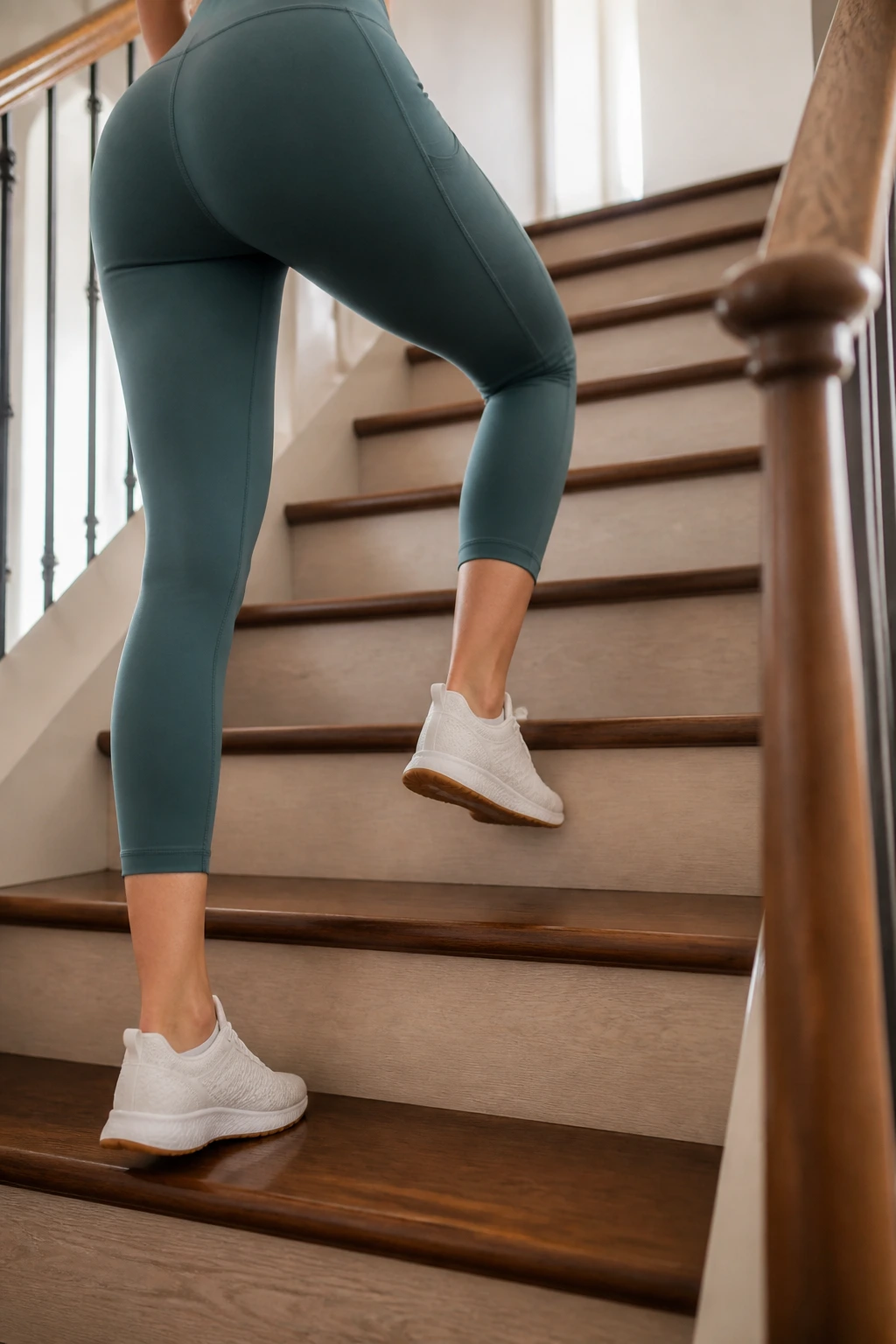
Stairs are not boring when you use them like intervals.
A flight of stairs gives you a built-in incline, which means more work for the glutes and calves without needing a machine. You can climb fast for a short burst, walk down, and repeat. Or you can do step-ups on the bottom stair if you want less impact and tighter control. Either way, you get a cardio hit that feels more structured than random pacing around the house.
Safer pacing
Use a sturdy rail if you have one. Keep your torso tall and land the whole foot on each step, not just the toes. If your knees get cranky, shorten the stride and slow the descent.
- Fast option: climb hard for 30 seconds, recover on the way down
- Steady option: alternate 2 minutes climbing with 1 minute easy walking
- Step-up option: lead with one leg for 10 reps, then switch
The descent matters more than people think. If you rush down the stairs carelessly, your knees pay for it. Use that part as controlled recovery rather than a race.
This one works especially well when you want a workout that feels practical. Stairs are already there. Might as well make them earn their keep.
6. Dance Cardio Rounds
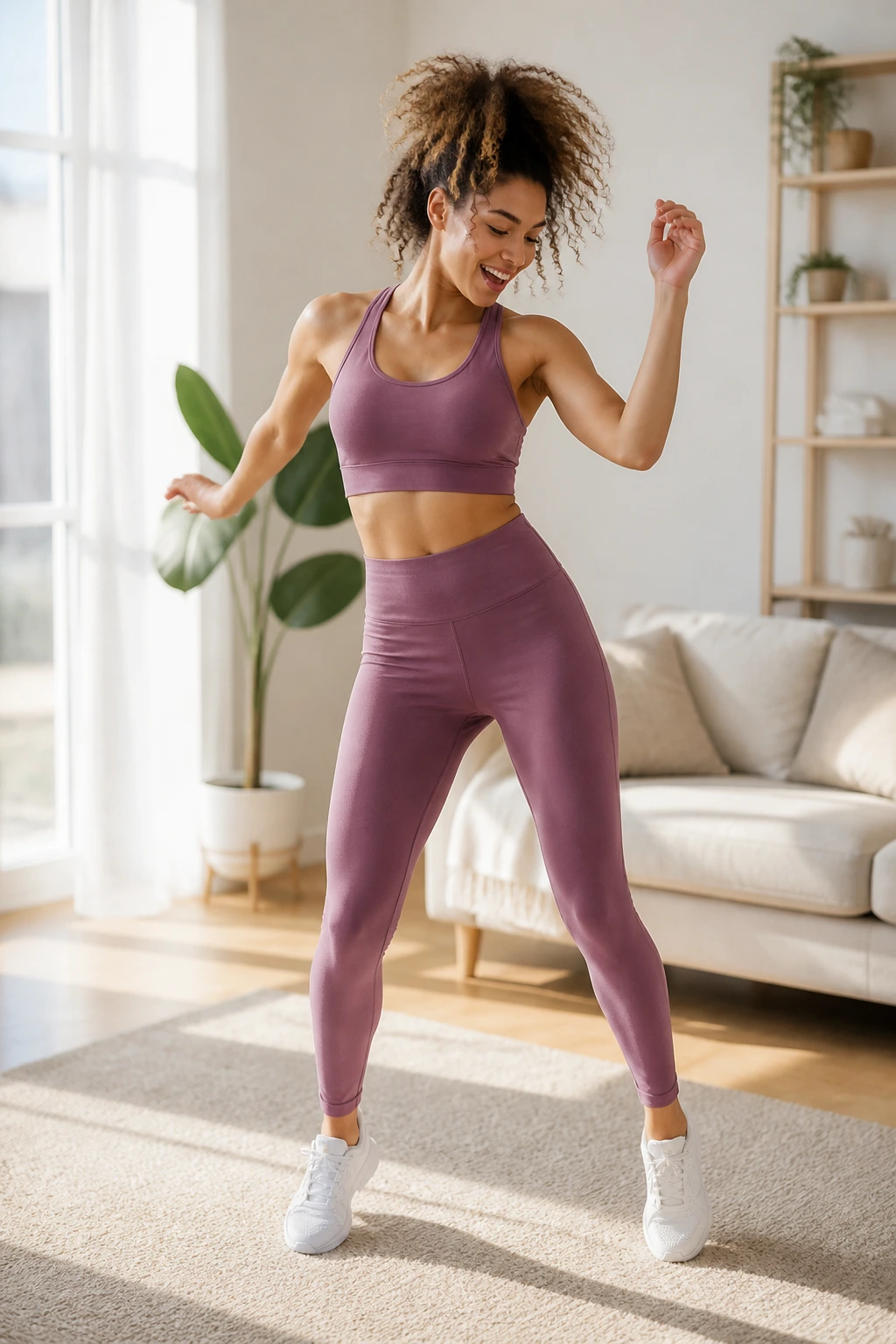
Put on one song and stop trying to look polished.
Dance cardio works because it sneaks effort into rhythm. You are stepping, turning, reaching, and bouncing without thinking about counting reps every second. That makes it easier to keep going longer than you would with a drill that feels like punishment from the first minute. It is also one of the best no running cardio workouts at home if you get bored fast.
You do not need choreography. Pick four moves and rotate them for the length of a song: side steps, knee lifts, grapevines, and reach-ups are enough. If the beat is strong, your body does half the work for you. If the song is fast, your heart rate climbs without any drama.
A nice format is 3 songs total: one to warm up, one to push, one to finish. Keep the first song comfortable. The second one should make breathing heavier. The third can be messy. Nobody is grading your footwork.
Dance cardio is one of those sessions that looks lighter than it feels. That is a good sign.
7. Squat Thrusts
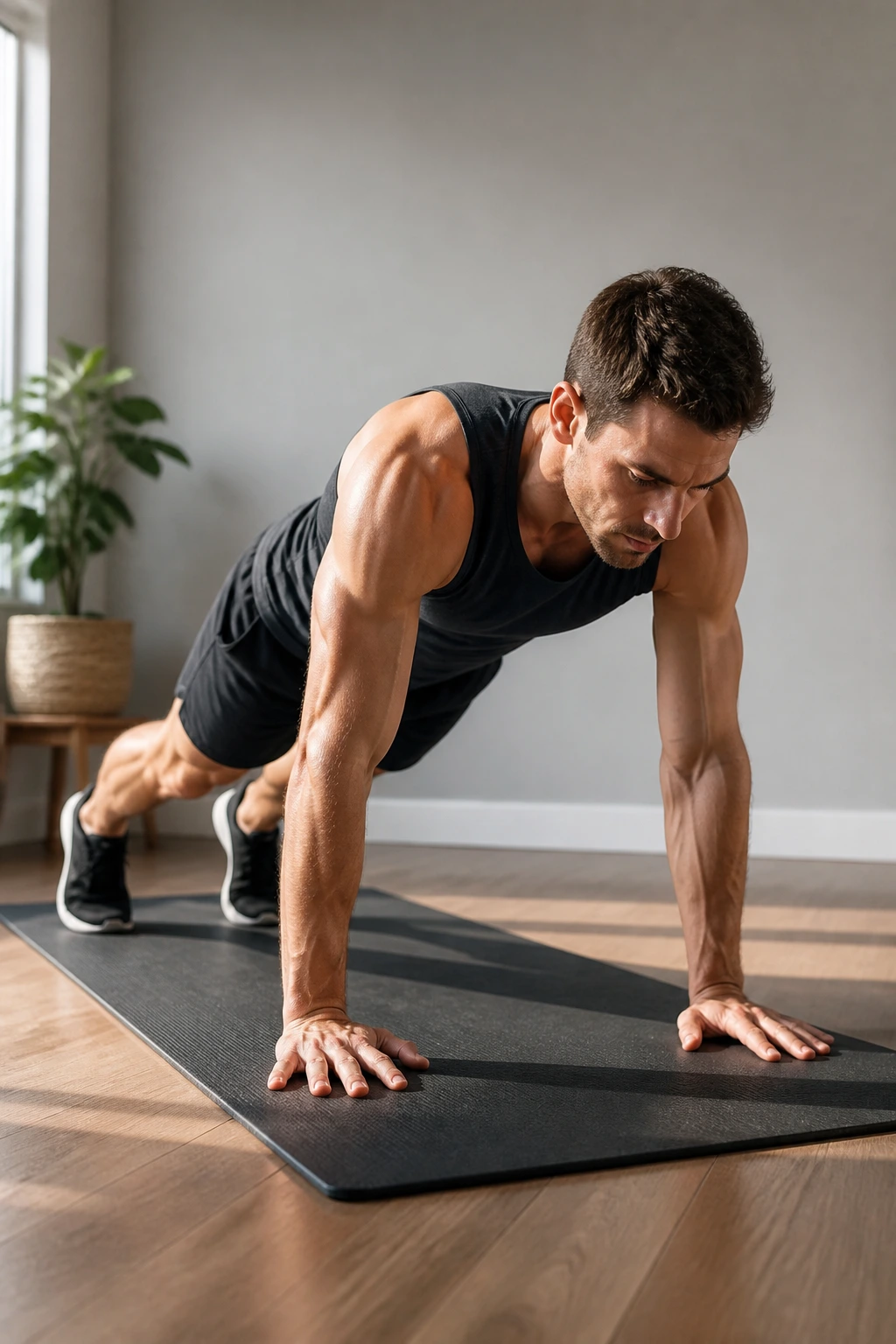
You do not need full burpees to get burpee-style effort.
Squat thrusts strip out the jump and the push-up, which makes them easier to learn and easier to repeat when your goal is cardio, not a technical test. From standing, you fold down, place your hands on the floor, step or jump your feet back to a plank, then step or jump them forward and stand up again. It sounds simple. It is not easy.
Burpee without the drama
A clean squat thrust should look smooth, not frantic. Keep your core tight when the feet shoot back, and do not let your lower back sag in the plank. If your hamstrings are tight, step the feet back one at a time instead of hopping.
Try 10 to 15 reps per set or 30-second intervals if you want a more cardio-style feel. The move works well in a circuit because it spikes your breathing fast and pairs well with something lighter right after.
If full burpees annoy your wrists or knees, this is the smarter version. Same sweat. Less chaos.
8. Skater Steps
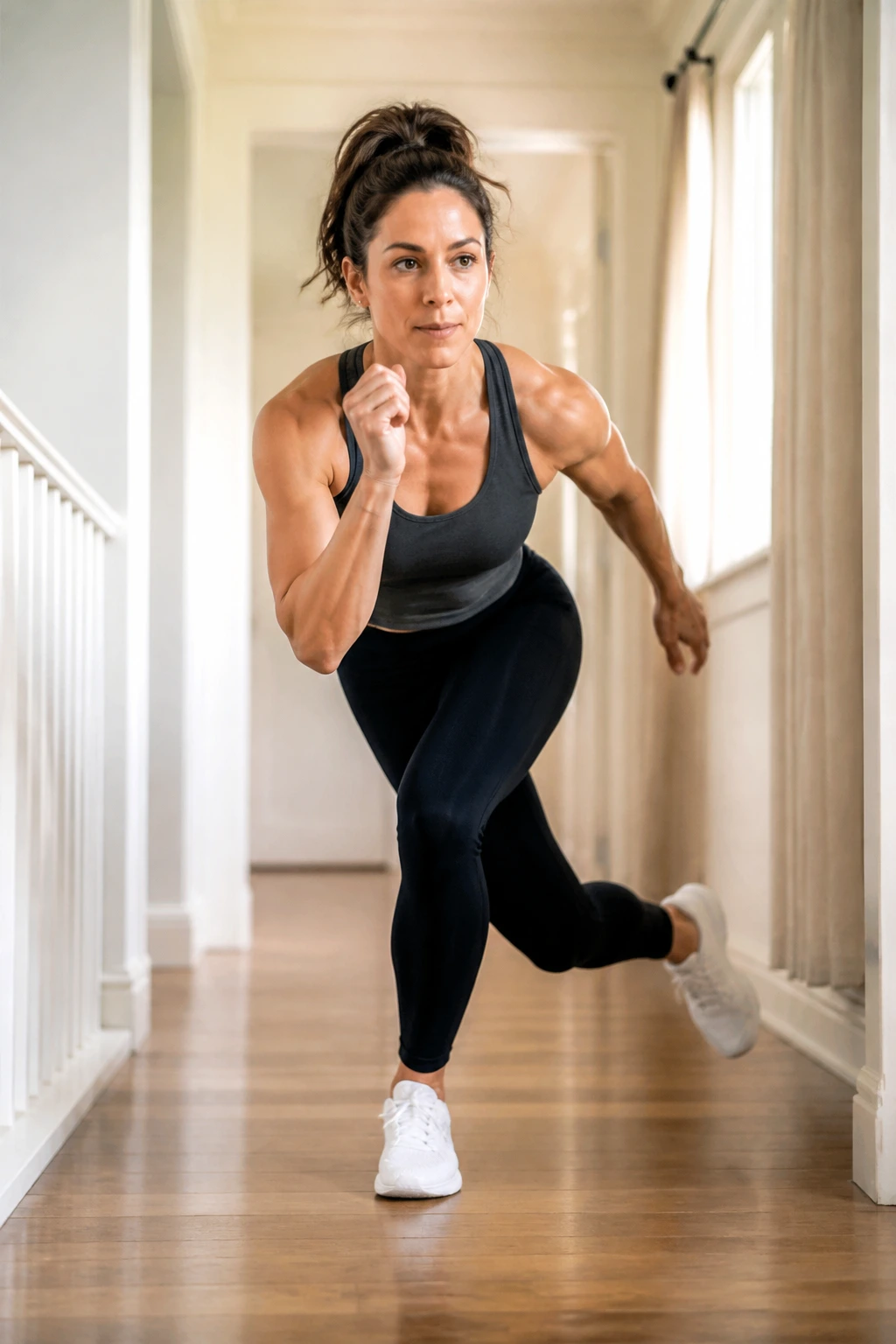
If you want side-to-side work without pounding, skater steps land in a sweet spot.
They mimic the motion of speed skaters, which means each step shifts your weight laterally and asks your hips to stabilize. That side-to-side load wakes up muscles that running often leaves out. It also keeps the workout from feeling like a straight-line grind, which matters more than people admit.
Start by stepping or hopping to the right, then crossing the left leg behind. Swing the arms naturally and lean the torso slightly forward, like you are going somewhere fast on purpose. The landing should be soft. A one-second hold on each side makes the move tougher and cleaner.
What to watch for
- Keep the chest open instead of collapsing forward
- Land on the outside leg with a bent knee
- Move the arms like a speed skater, not like you are waving at someone
Use 30 seconds of skater steps, 15 seconds rest for 8 to 12 rounds. Or mix them between squat patterns if you want a full-body circuit.
The best part is the lateral work. Side movement makes your legs feel busy in a way straight up-and-down moves do not.
9. High-Knee Marches and Drives
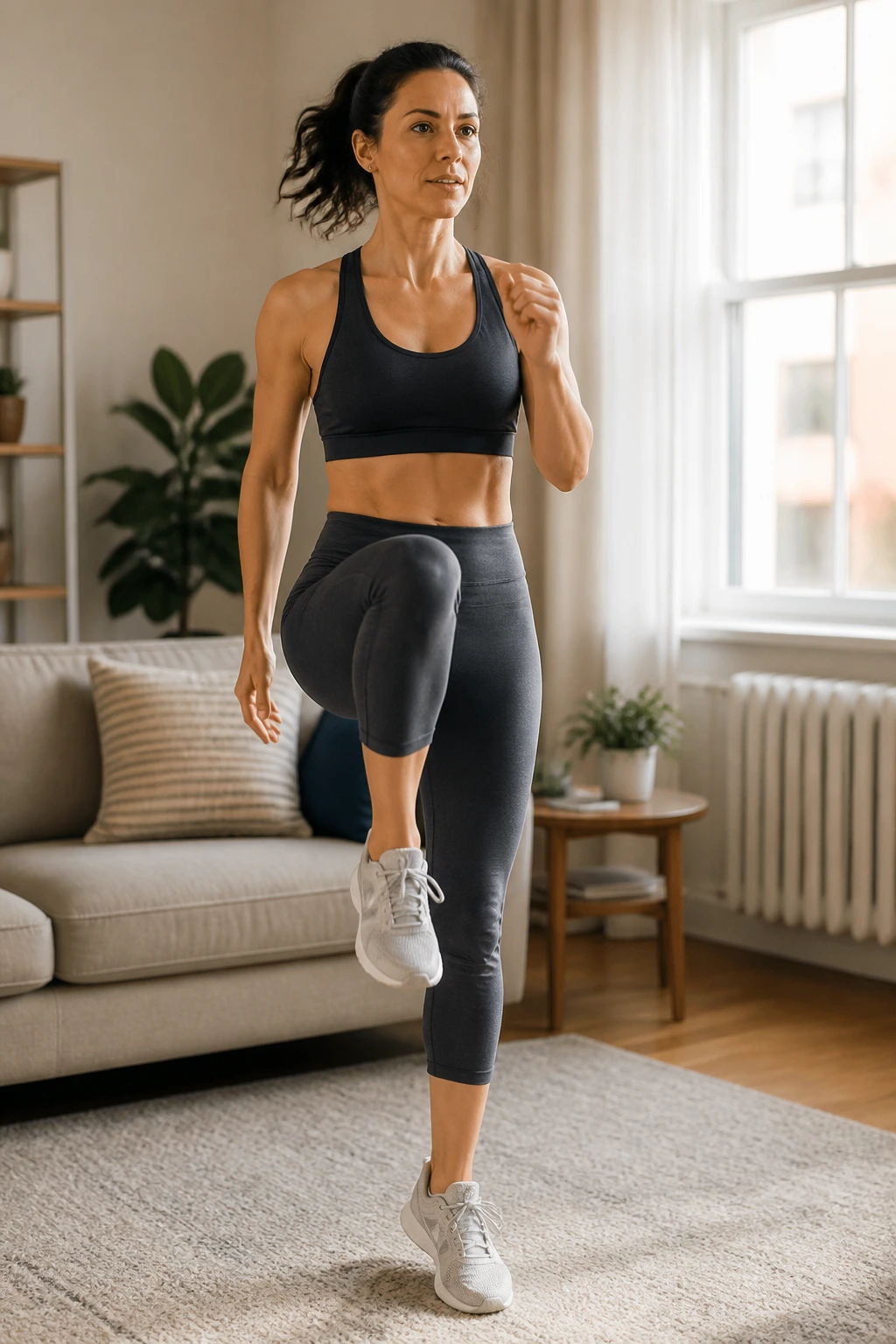
Your hip flexors start talking within 30 seconds.
High-knee marches are the easier cousin of high knees, and that matters when you want cardio without turning the session into a sprint. Lift one knee high, drive the opposite arm, switch sides, and keep the torso tall. The motion is simple, but when you pick up the pace, the breathing gets serious fast.
When marching beats sprinting
Marching is better when you want to stay quiet, keep control, or protect your joints. You still get the rhythm and leg turnover, but without the pounding that comes from fast hops. That makes it a useful move for warm-ups, recovery rounds, or low-impact cardio blocks.
Try a count of 1-2-3-4 while marching in place for 60 seconds, then speed up for another 20 seconds. If you want more effort, bring the knees to hip height and add a strong arm drive. If your balance wobbles, slow the tempo before the form gets sloppy.
It looks mild. It isn’t.
And that is the charm. A roomful of people can underestimate this move and still be breathing hard in under two minutes.
10. Chair Step-Ups
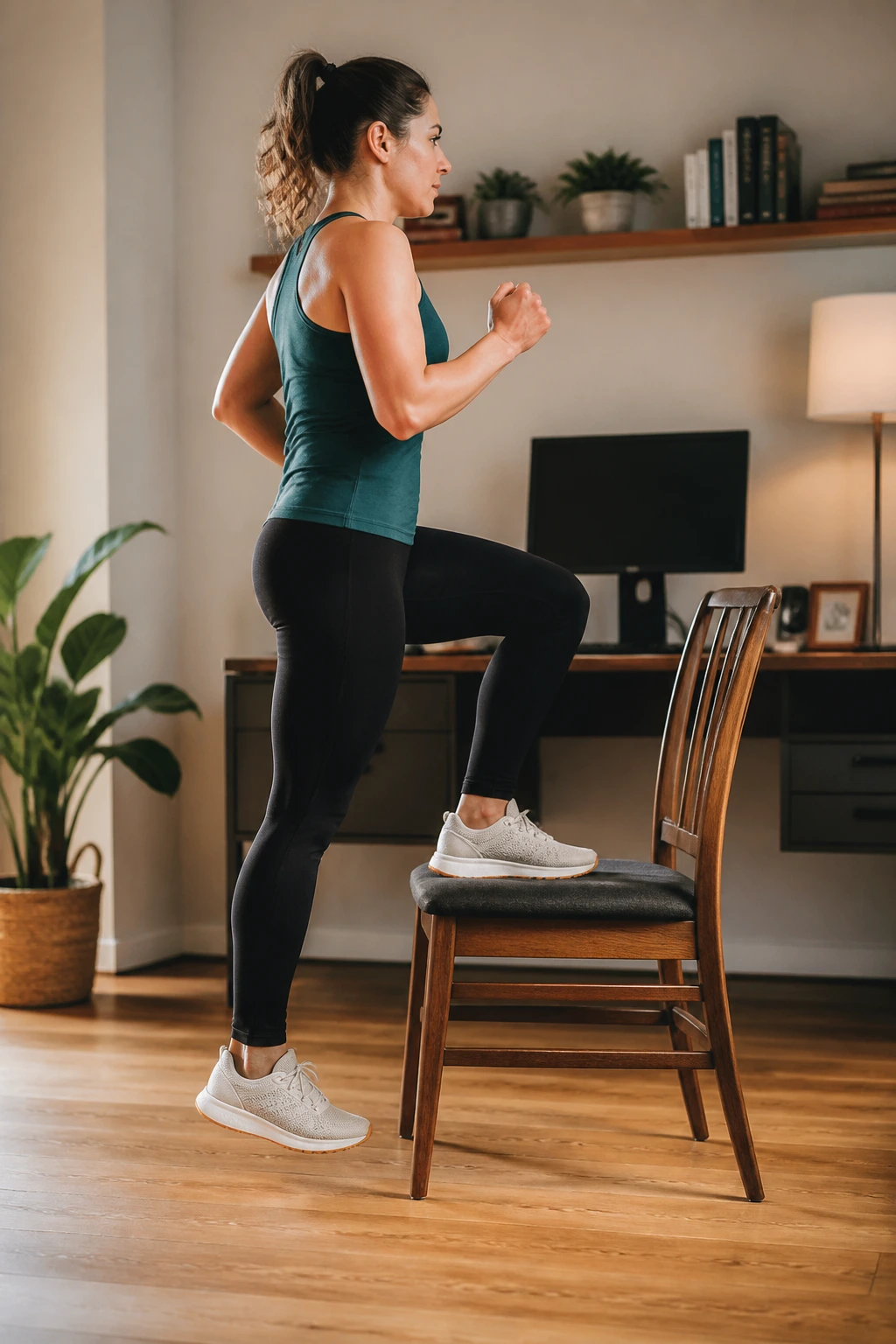
Got one sturdy chair or step? Good. You have a cardio station.
Chair step-ups turn a single piece of furniture into a heart-rate driver, which is part of why they work so well at home. One leg at a time, you press through the heel, stand tall, and step back down with control. The pattern hits the legs hard enough to matter, and when you increase the pace, the lungs come along for the ride.
Use something stable. A chair that wobbles is a bad idea. A bench, bottom stair, or thick aerobic step is better than a dining chair that shifts when you lean on it.
- Lead with the same leg for 10 to 15 reps if you want more glute work
- Alternate legs if you want a more cardio-focused set
- Drive the opposite knee up at the top for a bigger effort
The move gets much harder when you do not rush the lowering phase. Slow down on the way down, then push up with intent.
Simple. Effective. Slightly underrated.
11. Fast Feet
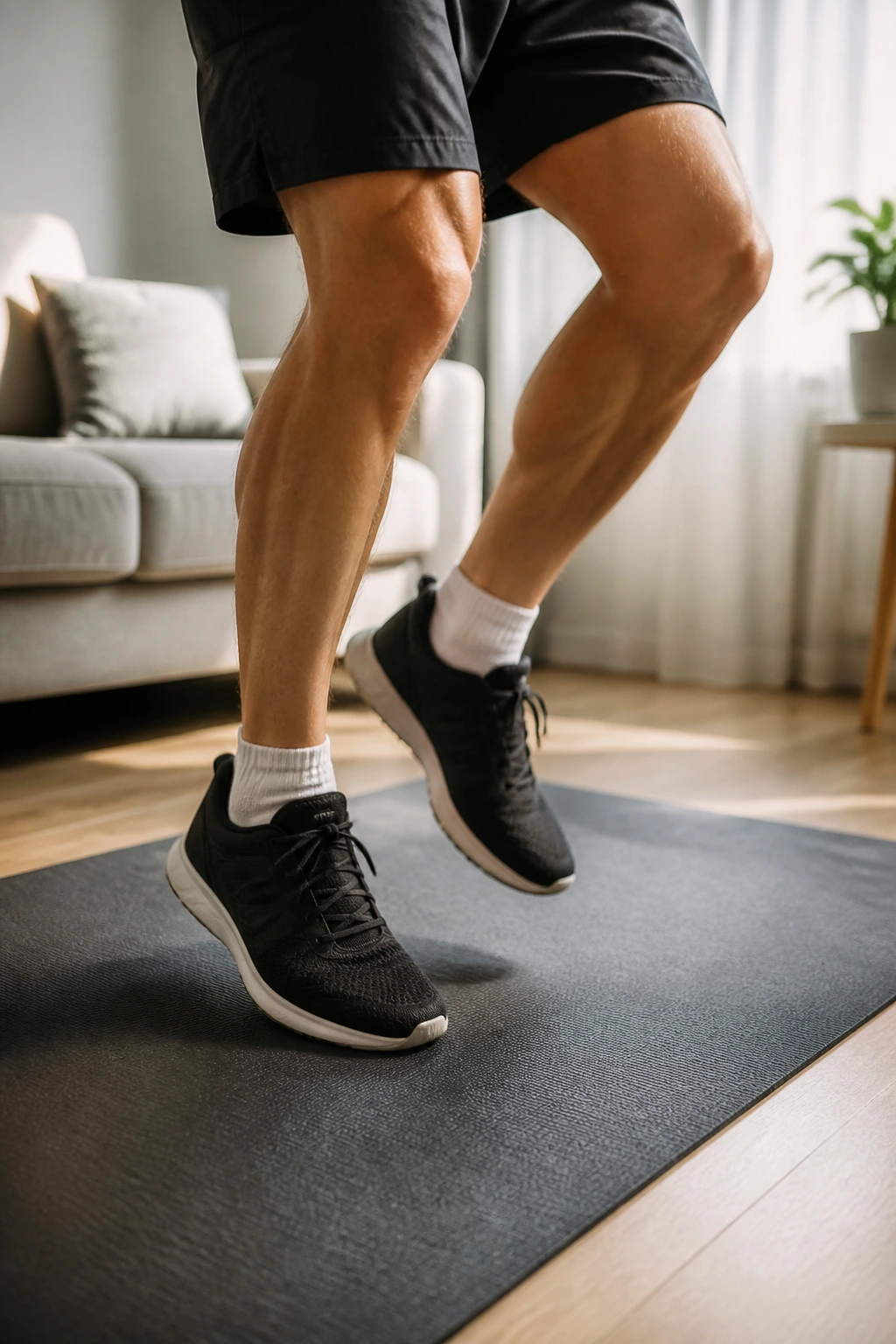
Fast feet is the simplest hard cardio drill in the book.
You stand in a small athletic stance, knees bent, and tap your feet as quickly as you can without bouncing into a full run. It sounds tiny. It feels huge. The drill turns into a lung burner because you keep tension in the legs while forcing the feet to move quickly under your center of mass.
Keep your hips low and your chest lifted. Arms should pump lightly at your sides. If you lean too far forward, the movement turns awkward and your lower back starts doing extra work. If your steps get too wide, you lose the point.
Try 15 seconds fast, 15 seconds easy for a minute, then repeat 6 to 10 times. That short work period keeps your speed high. Longer intervals often turn into sloppy shuffling.
One sentence is enough here: Speed comes from short steps, not bigger ones.
This is a good choice when you need a cardio burst between strength sets or when space is so tight that almost nothing else fits.
12. Bear Crawls for No Running Cardio at Home
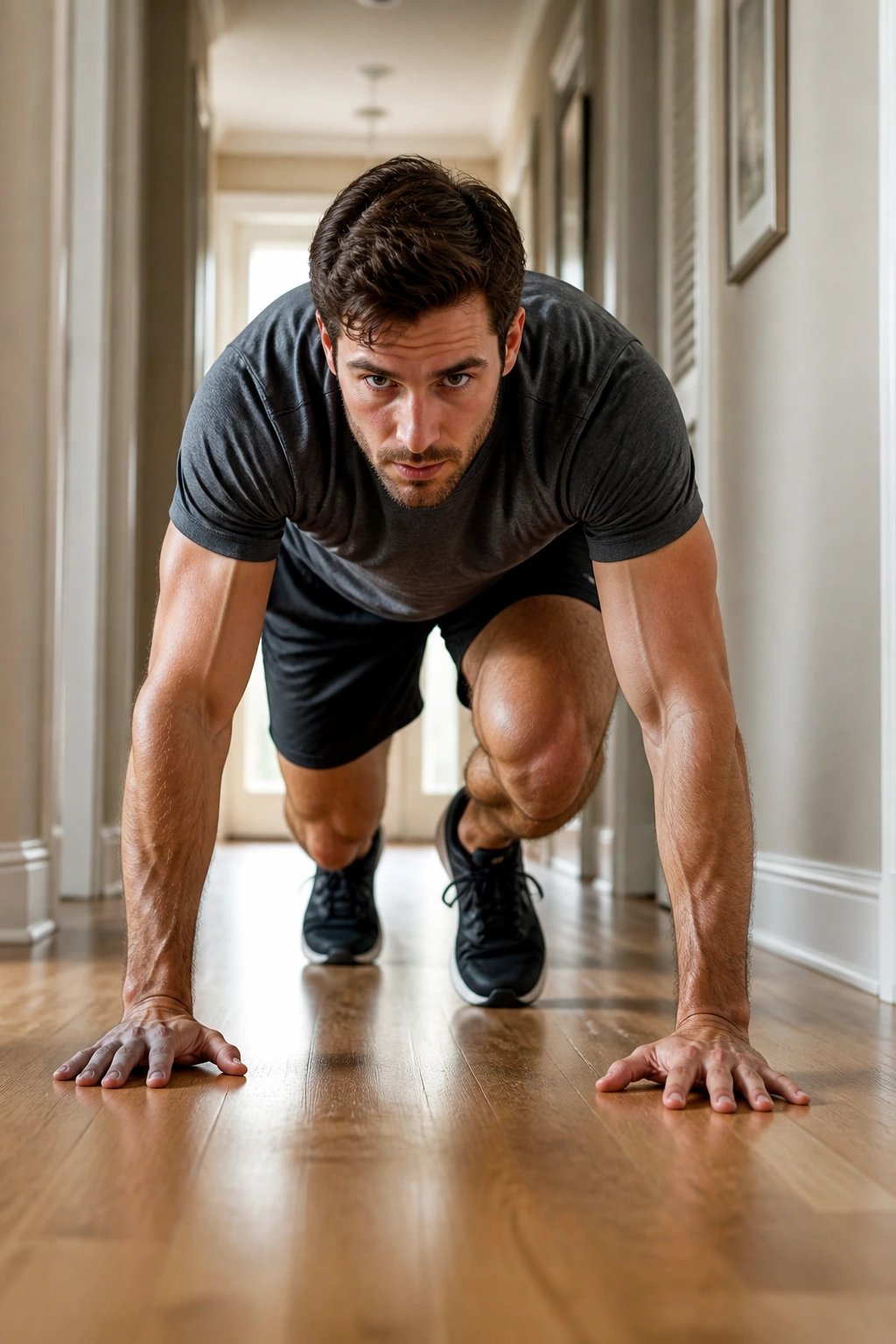
Five meters is not much until you are crawling it.
Bear crawls hit the shoulders, core, hips, and lungs at the same time, which makes them one of the sneakiest no running cardio workouts at home. You stay on hands and feet with knees hovering just above the floor, then move opposite hand and foot together. It is awkward at first. That awkwardness is part of why it works.
Why crawling spikes the heart rate
Your body has to stabilize every inch of the movement. Unlike a standing drill, bear crawls force the shoulder blades, abs, and hips to work together while you travel forward or backward. That creates a fatigue pattern that feels more like athletic effort than random sweat.
Keep the knees low, the back flat, and the steps short. If you slide too far at once, the hips swing and the movement turns into a mess. A 10-foot lane down a hallway is enough.
- Forward crawl: 20 to 30 seconds
- Backward crawl: 10 to 15 seconds if you have room
- Modify: crawl in place if the floor space is tight
Do not rush the setup. A controlled bear crawl is hard enough. A sloppy one just looks tiring.
13. Kickboxing Combos

This is where home cardio gets fun.
Kickboxing combos give you structure without making you count dozens of identical reps. You can throw jabs, crosses, hooks, knees, and front kicks in short rounds, then recover for 30 seconds and go again. The rhythm keeps the effort high, and the variety keeps your brain from wandering off.
A simple round
Try this pattern for 2 minutes:
- jab, cross
- jab, cross, hook
- knee drive, knee drive
- front kick, step back, cross
Repeat it with speed, then repeat it again with more control. The point is not to hit hard. The point is to keep moving with purpose while your heart rate climbs.
Keep the shoulders relaxed between combinations. If your arms tense up from the first minute, your speed falls apart fast. A loose upper body gives you more rounds before fatigue sets in.
Kickboxing is one of my favorite home cardio options because it feels rhythmic instead of punishing. That matters more than people think when consistency is the real goal.
14. Plank Shoulder Taps
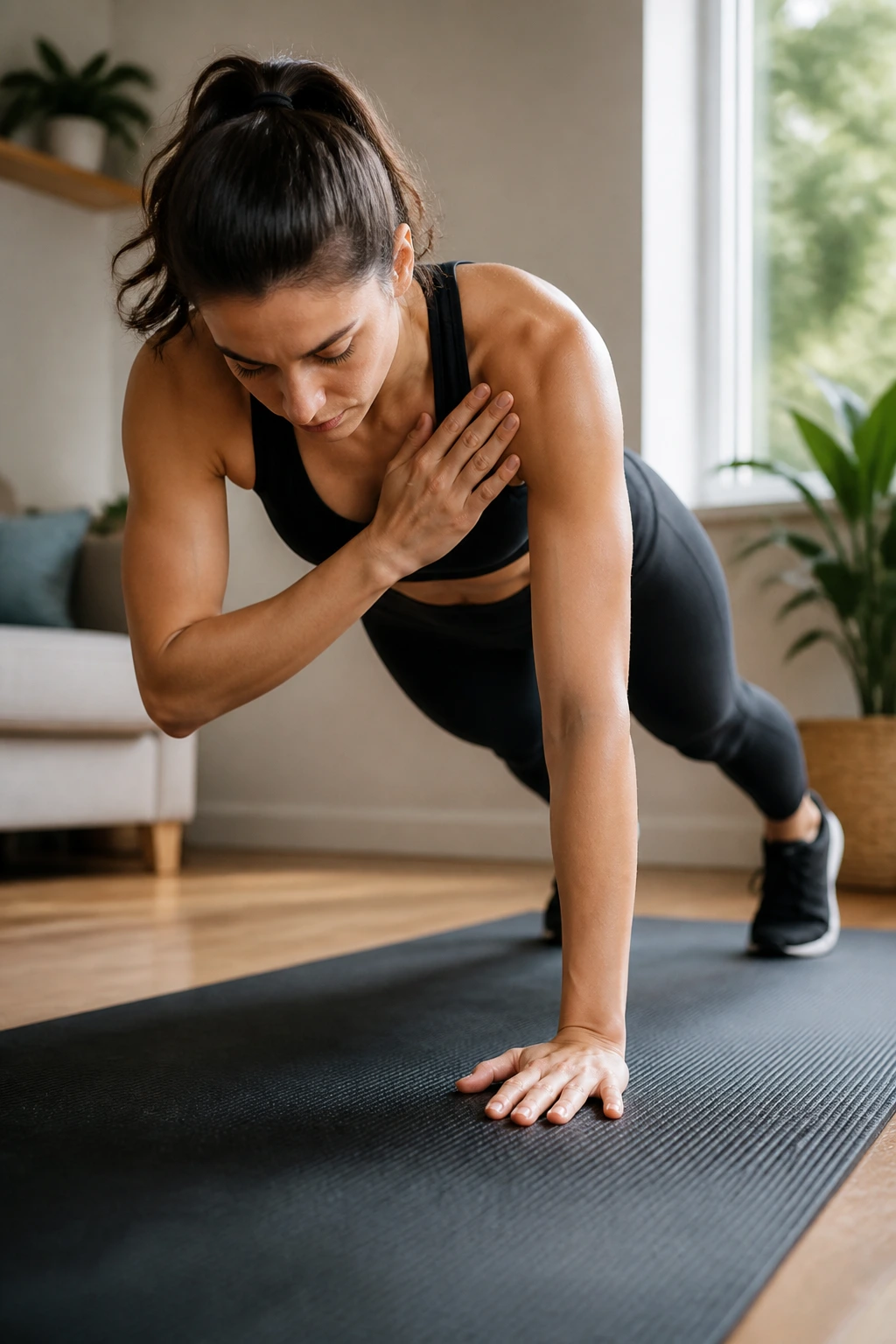
Cardio hides inside core work when you keep your feet moving.
Plank shoulder taps are not the flashiest move in the world, but they do a lot at once: core control, shoulder stability, and a steady rise in breathing when you pick up the tempo. Start in a high plank with feet set wider than shoulder width. Tap one shoulder, then the other, while trying not to rock your hips all over the floor.
The wider your feet, the easier the drill gets. The narrower the feet, the harder it becomes. That is a useful knob to turn when your energy changes halfway through the workout.
How to keep it clean
- Press the floor away with both hands
- Spread the feet a little wider than normal
- Tap slowly if your hips sway
- Use a bench or couch for an incline version
A good target is 20 taps per side for 3 to 5 rounds, or 30 seconds on if you want more of a cardio feel. The move starts feeling spicy when your torso wants to twist and you refuse to let it.
One warning: if your wrists are cranky, move to a bench or even a wall. Cardio is not supposed to start an argument with your joints.
15. Mini-Band Cardio Circuit
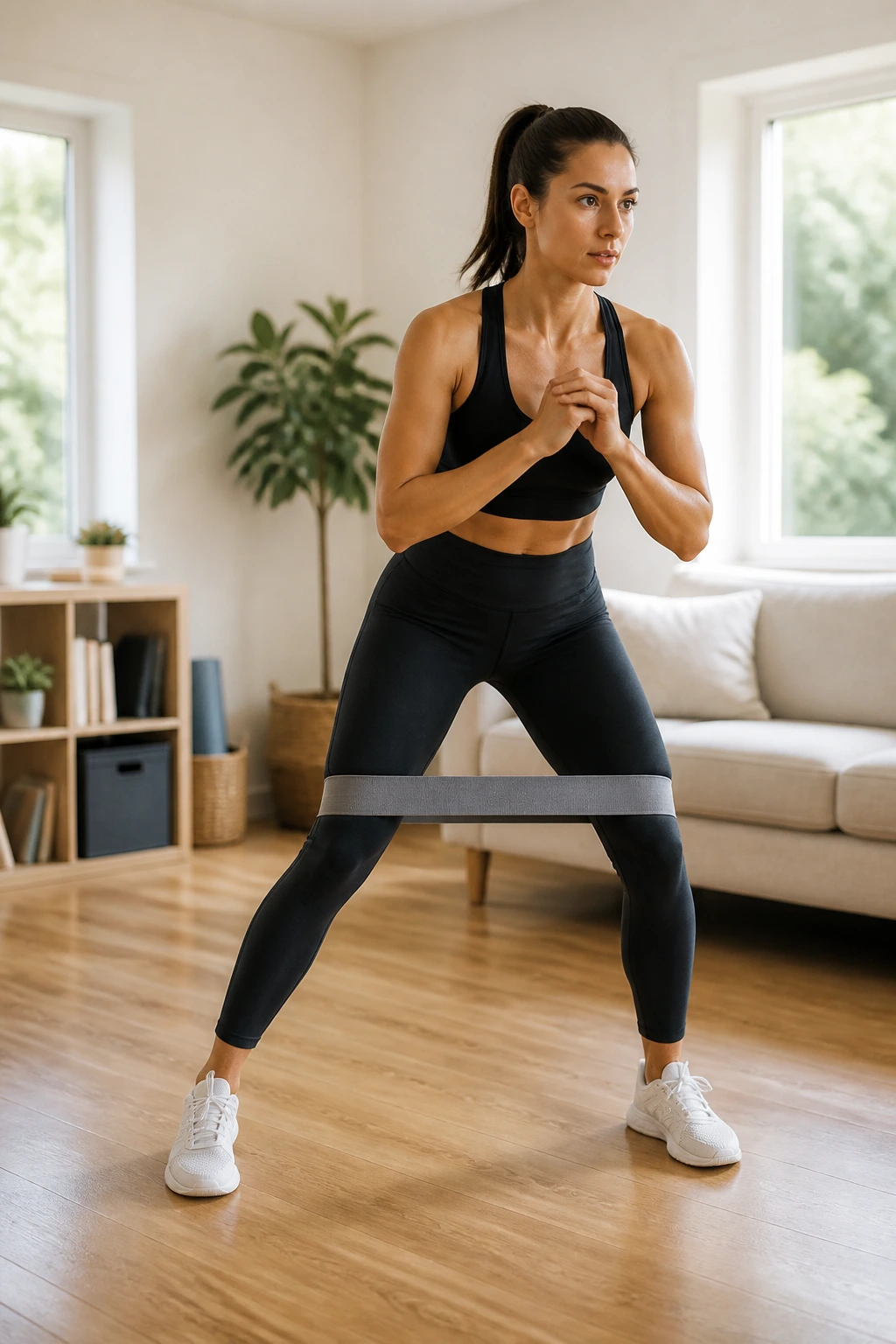
Want your glutes on board too?
A mini-band circuit turns lower-body strength into breathing work. Put a loop band above the knees or around the ankles, then move through lateral steps, squat pulses, and marching drives. The band adds constant tension, which means your legs never quite get to coast. That steady pressure makes the cardio build gradually, which some people prefer over jump-heavy drills.
A four-move loop
- 20 seconds lateral band walk right and left
- 20 seconds squat pulse with band tension
- 20 seconds alternating knee drives
- 20 seconds marching high-knee steps
Rest 30 to 40 seconds and repeat 4 to 6 times.
Keep the knees pressed slightly out against the band. If the band rolls, it is too loose or the movement is too jerky. Slow the steps and stay low enough to feel the outer hips working.
This one is good when you want a workout that feels lower impact but still leaves you warm, flushed, and a little annoyed in the legs. That is a fair trade.
16. Frogger Squats
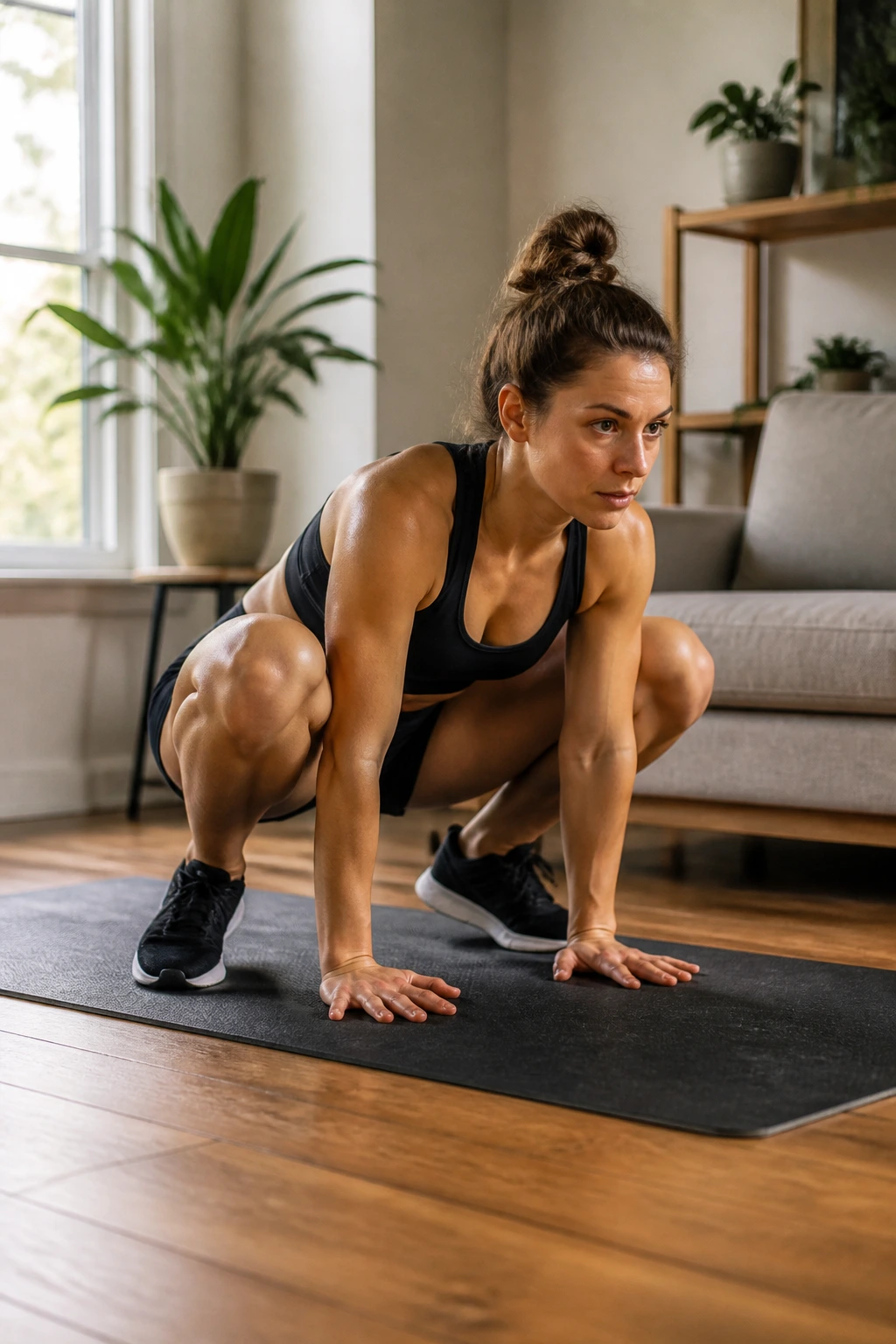
This one starts low and messy.
Frogger squats, sometimes called frog jumps or squat-to-stand hops, ask you to drop into a deep squat, place your hands on the floor, and hop or step your feet outward and inward before standing again. The move is ugly in a very useful way. It gets your heart rate up, opens the hips, and makes the lower body work through a bigger range than a basic squat.
If jumping feels rough, step the feet in and out instead. You still get the pattern without the extra impact. Keep your heels down when you land and avoid folding the spine into a rounded shape just to go deeper.
The best rhythm is steady and repeatable. Ten clean reps are better than fifteen frantic ones. Breathe out as you stand, and keep the chest lifted enough to see where your feet are landing.
This drill works well in a circuit because it breaks up the monotony of upright moves. It feels different. That is half the win.
17. Towel Sliders on Smooth Floors
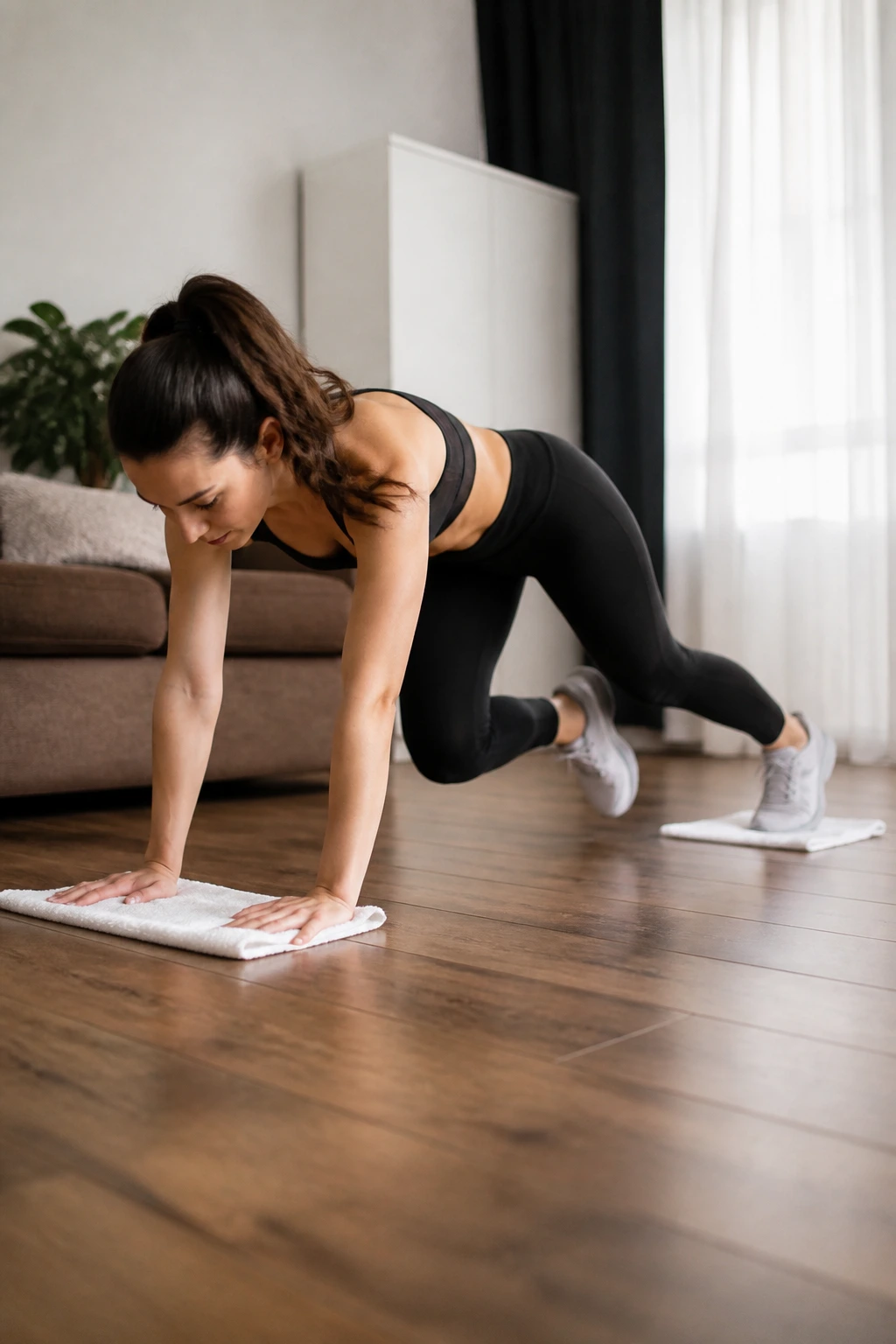
A towel can turn a floor into cardio equipment.
On hardwood, tile, or another smooth surface, towel sliders make your legs and core work harder because each movement creates friction. You can do slider lunges, hamstring curls, or mountain climber variations with your feet on towels or socks. The motion stays low to the ground, which makes it useful when you want intensity without jumping.
What to use and what to skip
Use a stable floor and a towel that slides without bunching. Skip rough carpet. That just creates a fight you do not need.
- Slider lunge: one foot glides back, then returns
- Hamstring curl: hips lifted, heels slide in and out
- Mountain climber slide: feet glide forward and back from plank
The trick is to keep control on the return phase. If the movement snaps back too fast, your hips shoot around and your core stops doing the work. Slow tempo gives you more time under tension and usually more sweat.
This is a clever option for small spaces because it brings in travel without needing much room. No running. No jumping. Still hard.
18. Rebounder Bounces
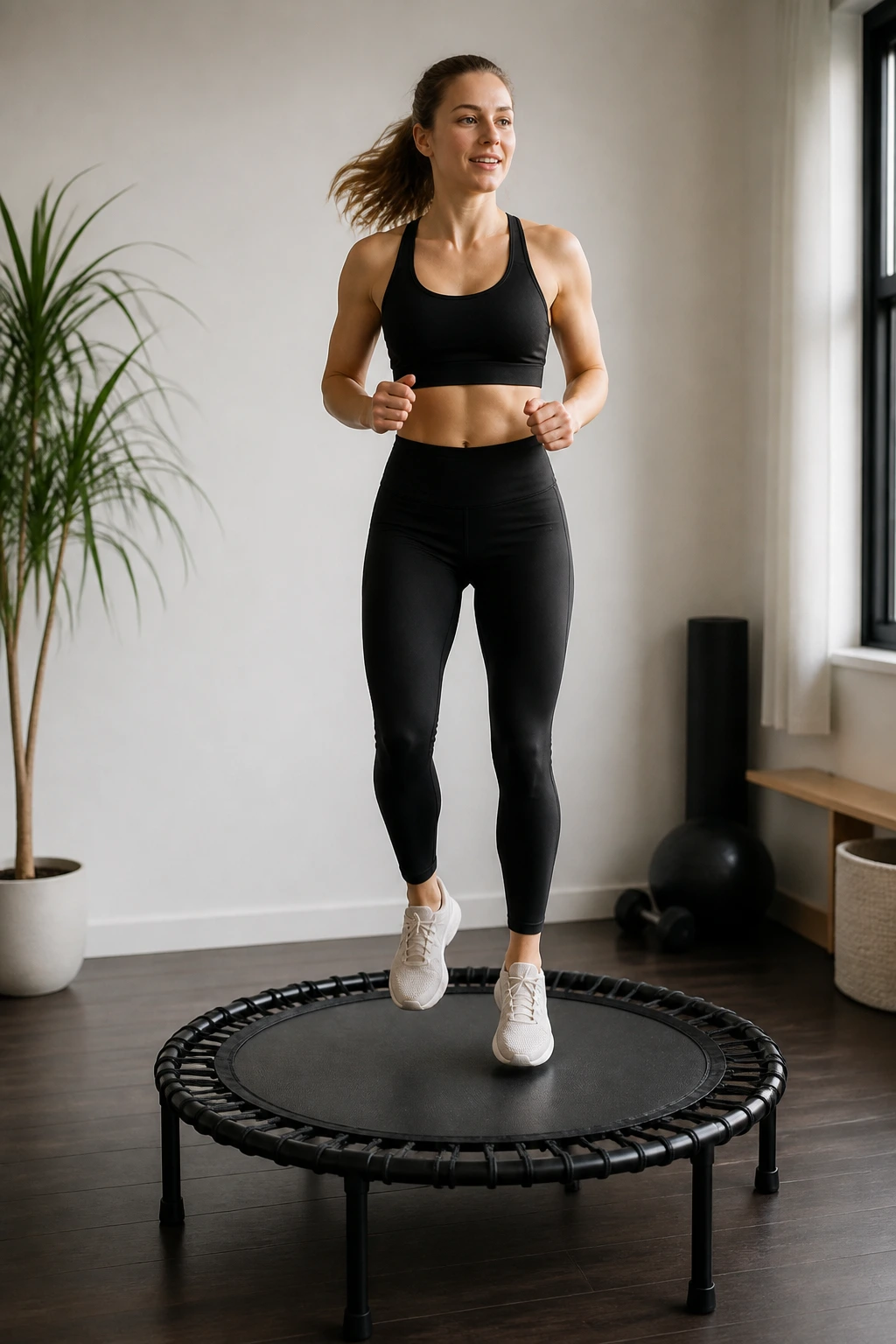
If you own a mini-trampoline, use it.
Rebounder bounces give you a low-impact cardio option that feels kinder to the joints than floor jumping while still asking the heart to work. You can bounce in place, march, jog lightly, or add arm patterns for a fuller session. The surface absorbs some of the landing, which changes the feel right away. Your ankles, calves, and core still have to stabilize, but the impact is softer.
Why rebounders feel different
The bounce is springy, not harsh. That matters when you want a longer session and do not want your knees to complain halfway through. The extra give also makes it easier to stay moving without the mental drag that comes from repeated floor impact.
A simple session is 1 minute easy bounce, 1 minute faster bounce, repeat 8 to 12 times. Keep your feet under you and avoid big high jumps unless the frame is built for that kind of use.
If you get motion-sick from too much vertical movement, keep the bounce small and the eyes fixed ahead. Tiny adjustments go a long way here.
It is equipment-dependent, sure. But if you already have one, it is a very nice piece of equipment.
19. Tabata Bodyweight Circuit
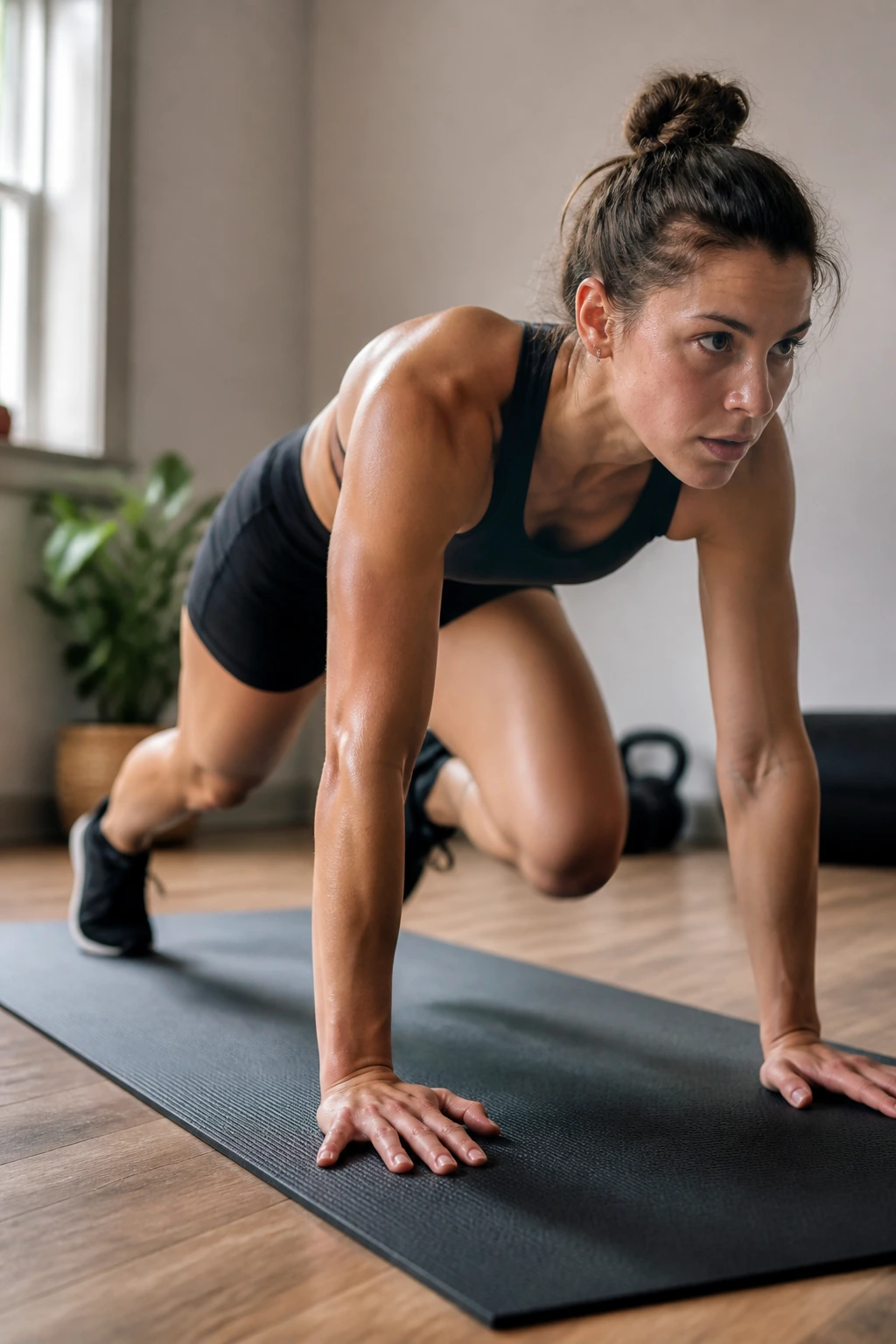
Four minutes can be enough when the work is dense.
Tabata is a simple interval format: 20 seconds hard, 10 seconds rest, repeated 8 times. The format works well for no running cardio workouts at home because you can plug in almost any fast bodyweight move and turn it into a sharp, focused session. Squat thrusts, mountain climbers, fast feet, and shadow boxing all fit well here.
A clean Tabata mix
Try two rounds of this:
- Round 1: mountain climbers
- Round 2: shadow boxing
- Round 3: squat thrusts
- Round 4: skater steps
Then repeat the same four moves once more.
Keep the effort high, but not so wild that the form falls apart by round three. People love the format and then accidentally sprint themselves into garbage mechanics. That is not the goal. The goal is controlled, hard breathing and repeatable intensity.
Tabata works best when you treat each 20-second burst like a serious sprint and each 10-second rest like a real reset. Blink and it is over.
20. The 16-Minute No-Running Cardio Finisher for Home
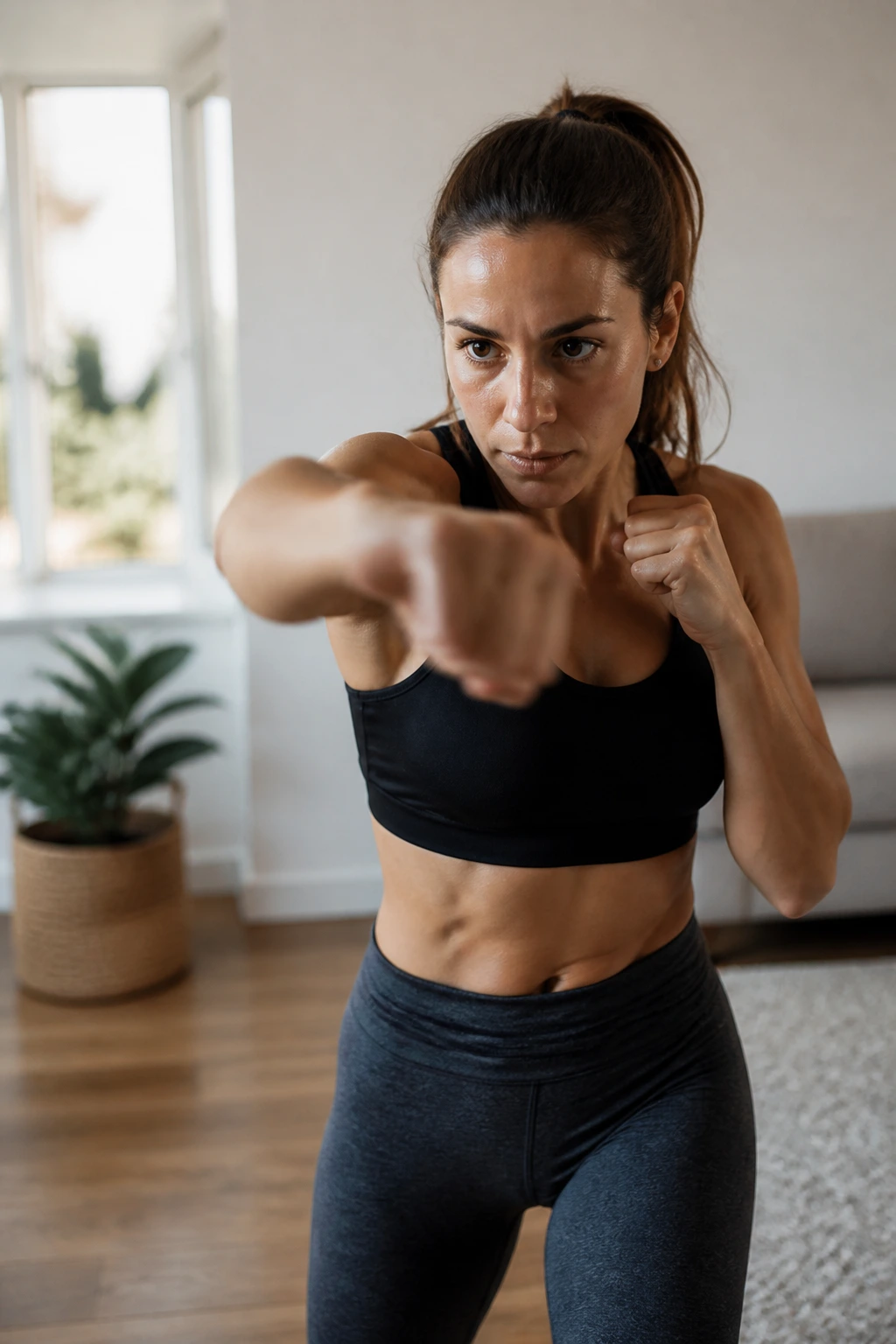
If you want one session instead of twenty choices, steal this circuit.
It is simple, compact, and easy to repeat on days when energy is low but you still want a real cardio hit. The move mix gives you bounce, upper-body work, lateral motion, and a little core control, which keeps the workout from feeling one-note. That matters when you are training at home and need something you can finish without a long setup.
Run it like this
-
40 seconds jump rope or shadow rope, then rest 20 seconds.
-
40 seconds shadow boxing, then rest 20 seconds.
-
40 seconds skater steps, then rest 20 seconds.
-
40 seconds squat thrusts or step-back burpees, then rest 40 seconds before the next round.
Repeat the circuit 4 times for a 16-minute finisher. If you want a softer version, replace the squat thrusts with high-knee marches and the skater steps with low-impact step-outs. If you want more bite, shorten the rests to 15 seconds and keep the same work blocks.
The order matters a little. Start with the move that feels smoothest, then go into the drills that ask more from your legs and lungs. By the last round, the whole thing should feel tight, fast, and a little messy in the best way.
Pick two or three of these workouts and rotate them through the week, or build a longer session by pairing one hard move with one low-impact move. That balance keeps home cardio from turning into a joint-wrecking grind, which is the trap a lot of people fall into when they try to do too much too fast.
The best no-running cardio plan is the one you will actually repeat. Some days that means jump rope. Some days it means dance cardio in socks and a T-shirt. Either way, the room gets quieter, the breathing gets louder, and the workout still gets done.
