



Knee pain has a way of silencing your fitness ambitions faster than almost anything else. One day you’re hitting personal bests, and the next, a single split-squat sends a sharp, sickening jolt right through your patella. It’s isolating. Most traditional lower-body training programs lean heavily on lunges, step-ups, and Bulgarian split squats—all of which require a deep, unstable range of motion that puts significant shear force on the knee joint. If your cartilage is worn, your tracking is off, or you’re dealing with chronic tendinitis, these movements aren’t just uncomfortable; they are detrimental.
You don’t have to skip leg day. In fact, you shouldn’t. The muscles surrounding the knee—the quads, hamstrings, glutes, and even the calves—act as the primary suspension system for that joint. If those muscles are weak, the knee takes the full brunt of every step you take. The goal here is simple: train the muscles without subjecting the joint to the grinding, shearing forces that aggravate pain. We are looking for movements that prioritize stability, maximize glute engagement, and keep the knee joint as quiet as possible while the muscles do the heavy lifting.
If you are dealing with chronic discomfort, think of these exercises not as compromises, but as surgical interventions for your training. By shifting the focus to the posterior chain and using controlled, fixed-range movements, you can build impressive lower-body strength while actually protecting your joints long-term. Let’s look at the best movements to keep your legs growing and your knees happy.
1. Glute Bridges
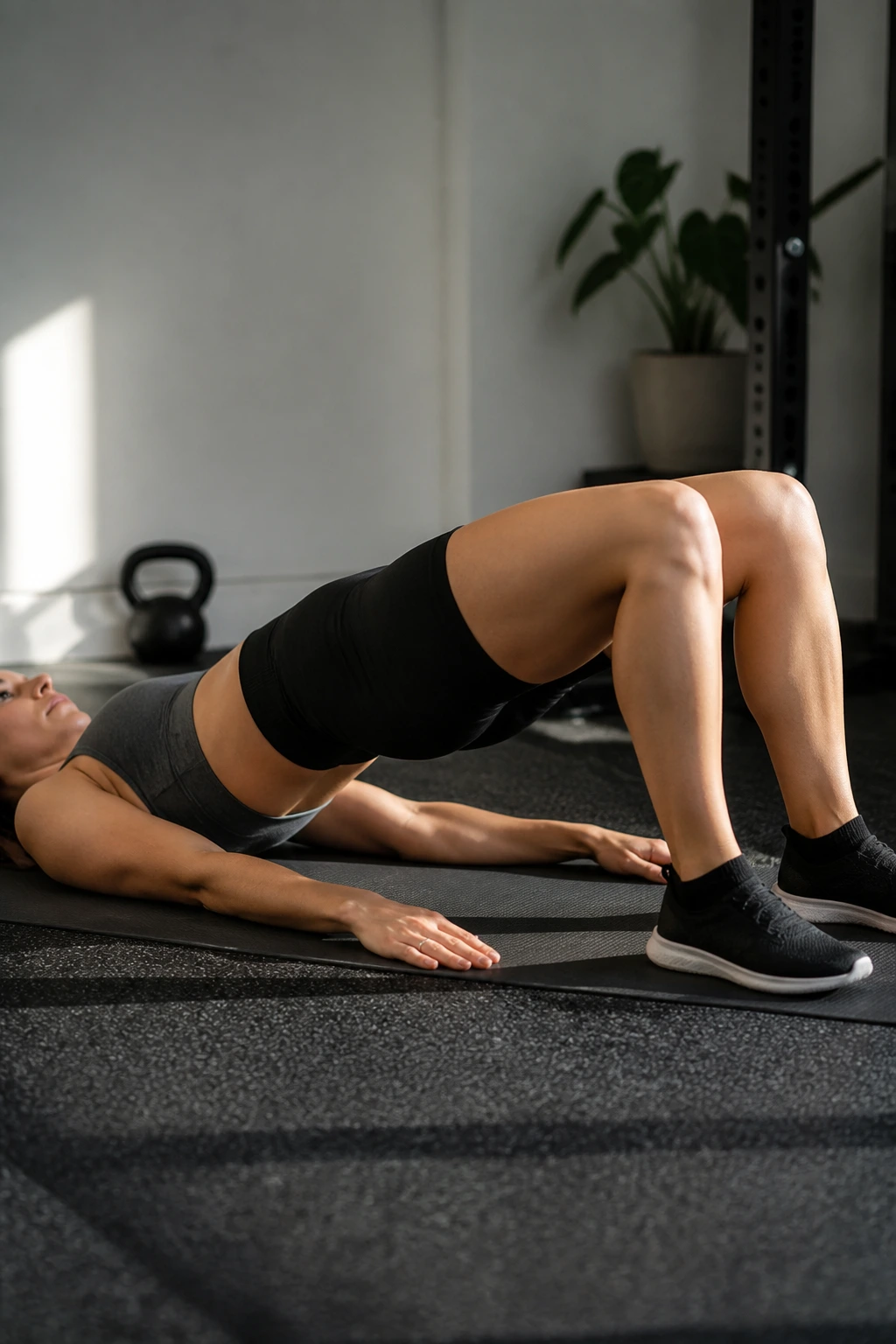
The glute bridge is the foundational movement for anyone with knee issues because it completely removes the weight-bearing requirement from your legs. By lying flat on your back, you shift the center of gravity and place the entire load on your posterior chain.
Why It Works for Bad Knees
When you stand and squat, the knee must manage stability, leverage, and force distribution simultaneously. When you bridge, the floor provides the stability. You only have to worry about hip extension. This allows you to overload the glutes—the primary stabilizers of the hip and knee—without the grinding sensation that accompanies standing movements.
The Execution
Lie on your back with your feet flat, knees bent, and heels roughly six to eight inches from your glutes. Drive through your heels to lift your hips toward the ceiling. Pause at the top for a two-second count, squeezing your glutes as hard as you can. Avoid arching your lower back; the movement should come entirely from your hips. If your knees start to hurt, bring your feet slightly further away from your body.
2. Clamshells
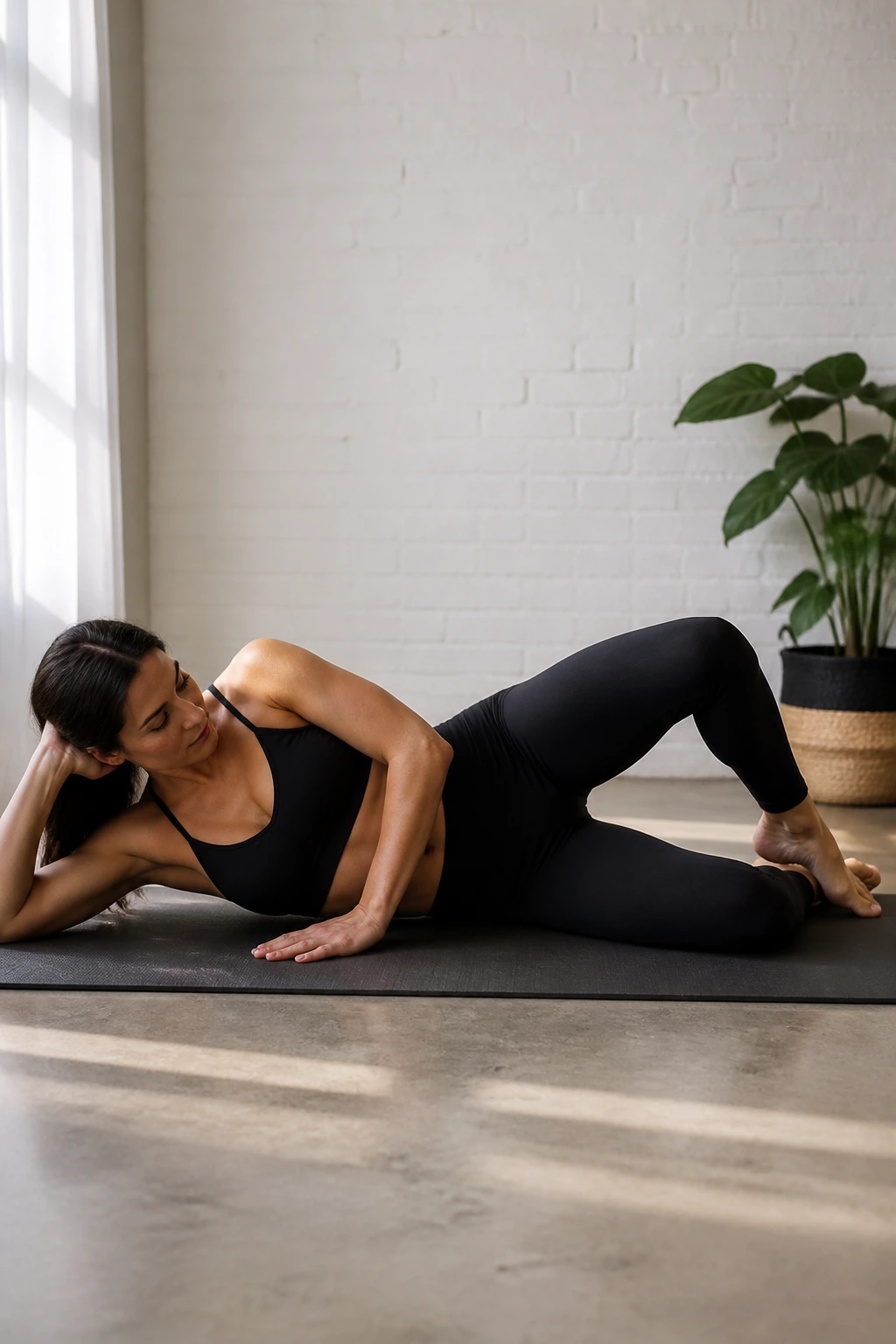
Knee pain often stems from poor hip stability rather than an issue with the knee itself. When your gluteus medius is weak, your femur tends to rotate inward during movement, causing the knee to cave. This is the “valgus collapse,” and it’s a knee-killer.
Strengthening the Outer Hip
The clamshell is the gold standard for isolating the gluteus medius. It’s simple, it requires almost no equipment, and it forces you to pay attention to your hip rotation. You’ll be lying on your side, knees stacked and bent at a 45-degree angle. Keep your feet touching throughout the entire movement.
Lift your top knee while keeping your feet together, like a clam opening its shell. Do not let your hips roll backward. If you feel the movement in your lower back, you are rotating too far. Aim for 15 to 20 slow, controlled repetitions per side. You should feel a deep, burning sensation in the side of your hip—that is exactly where you need the stability.
3. Side-Lying Leg Raises
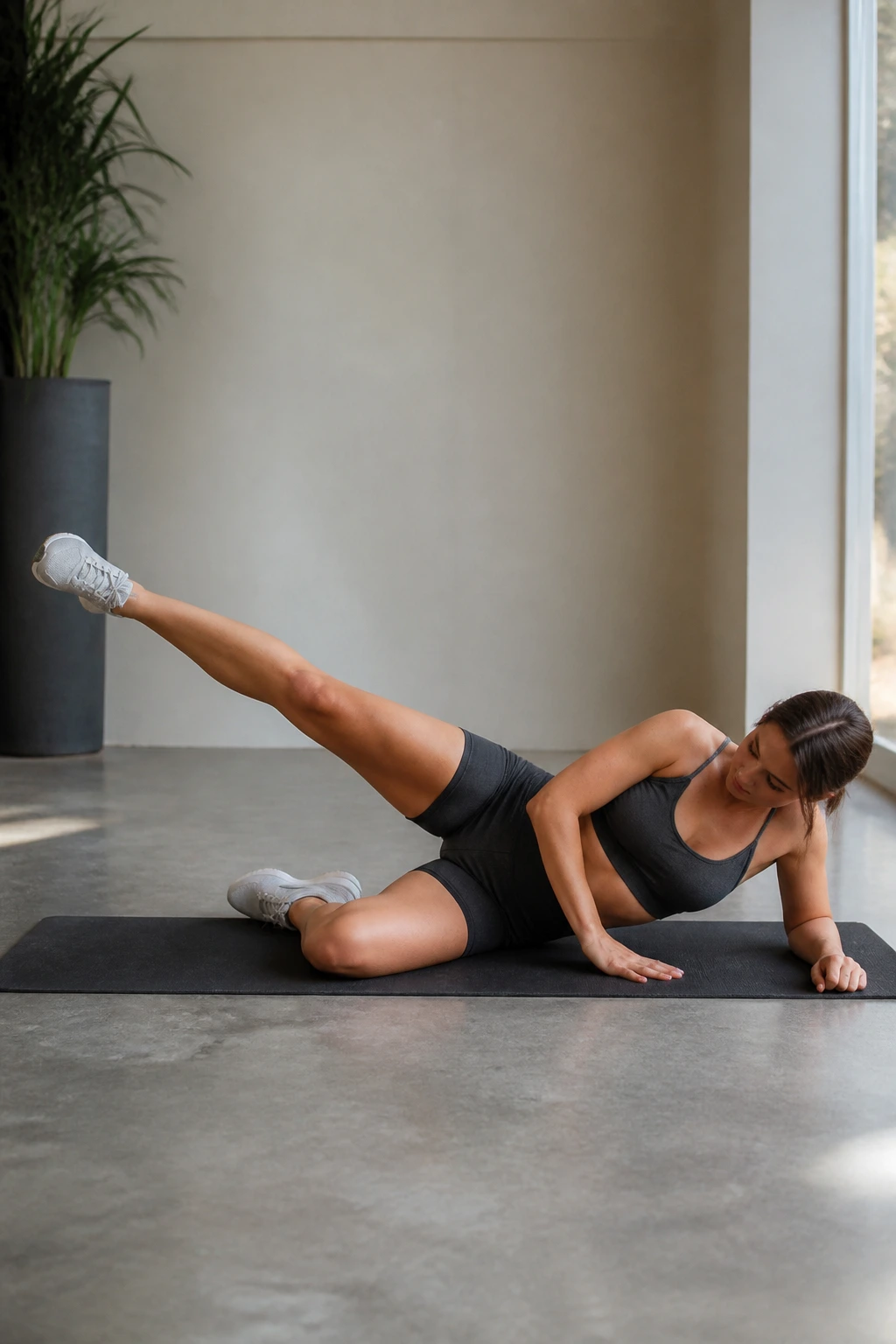
While clamshells target rotation, side-lying leg raises focus on pure abduction. This is a subtle but vital movement for balancing the musculature around the hip joint.
Start on your side, bottom leg bent for stability and the top leg extended straight out. Keep your top foot flexed and rotate your toe slightly downward—yes, downward. This small adjustment changes the recruitment pattern, forcing the gluteus medius to work harder than the hip flexors.
Lift the leg toward the ceiling until you feel the glute tighten. Lower it back down with control. Do not let the leg drop. This is not about speed; it is about keeping constant tension on the hip muscles. If you find your leg drifting forward, reset your posture. A straight line from your heel to your shoulder is the target position.
4. Straight Leg Raises
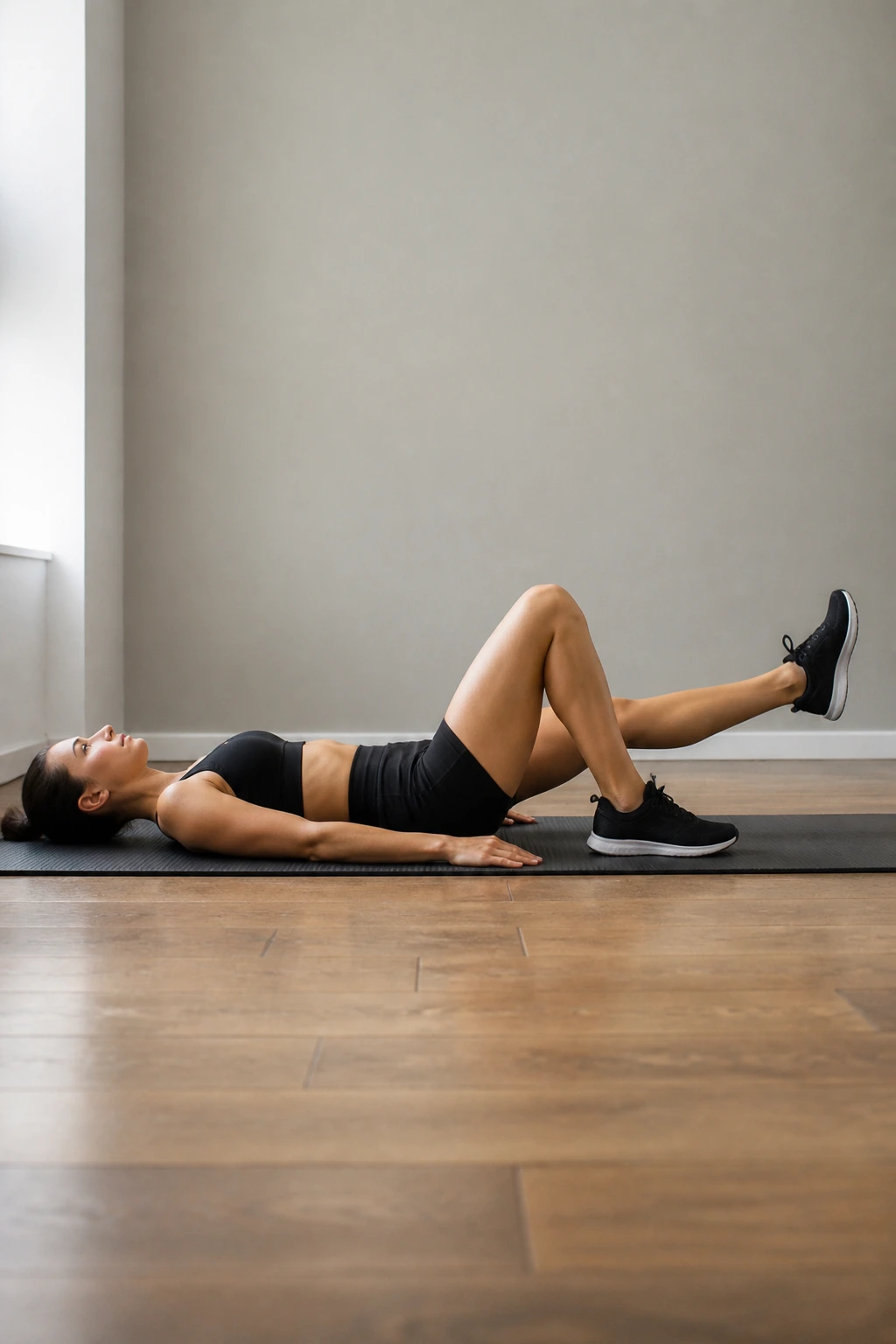
This exercise is a staple in physical therapy, and for good reason. It builds quad strength without requiring any knee flexion. When your knee is injured, flexion—the act of bending the knee—is often where the pain lives. By keeping the leg straight, you bypass that painful range of motion entirely.
Lie on your back. Keep one leg bent to support your spine. Extend the other leg fully, locking the knee gently to engage the quadriceps. Lift the straight leg about 12 inches off the floor. Hold it there for a three-count.
Lower it slowly. The descent is where the work happens. You should feel your quad twitching as it struggles to control the weight of your own leg. If the movement is too easy, add a light ankle weight—start at one pound, no more—but keep the movement slow.
5. Box Squats to a High Bench
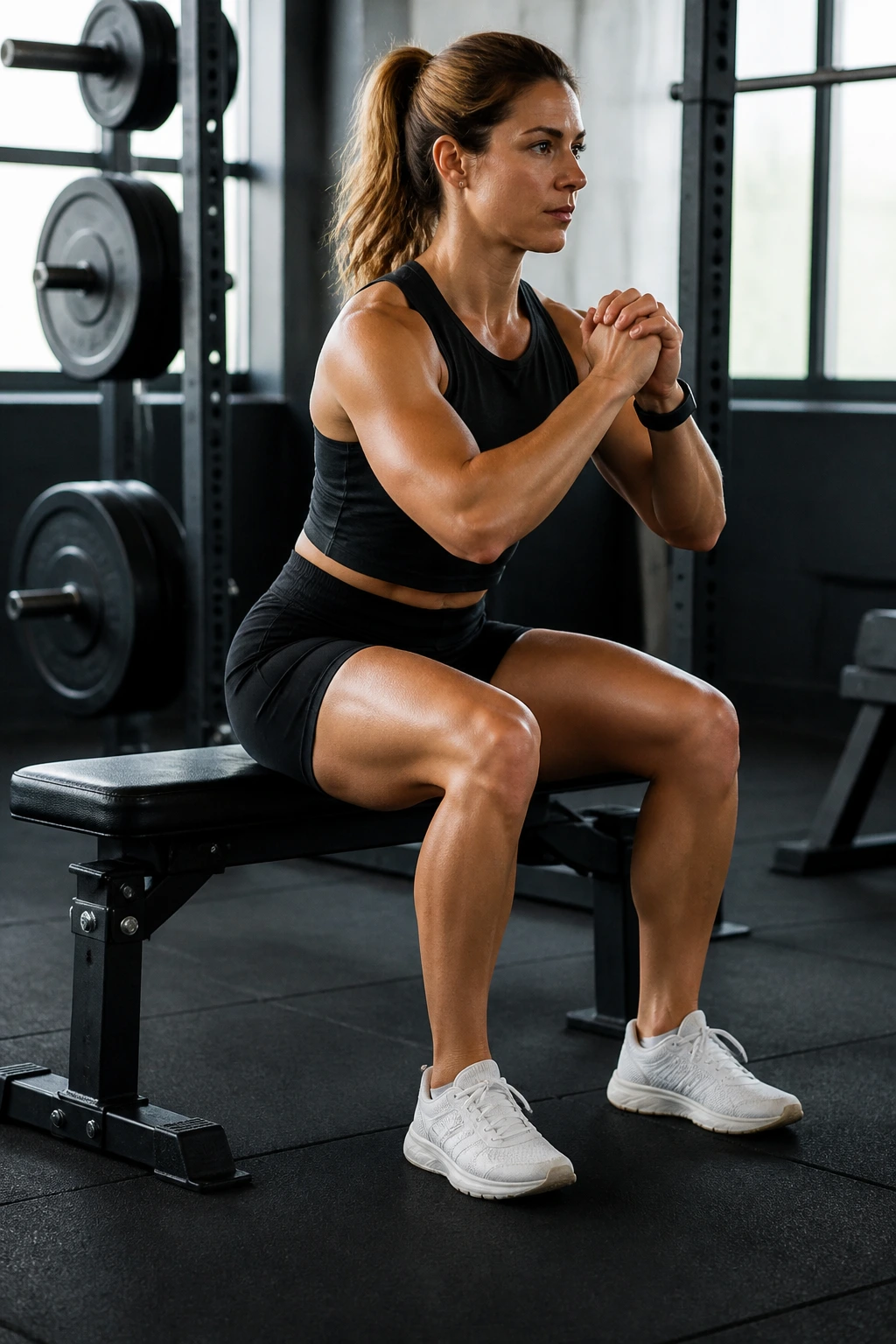
Squatting is non-negotiable for leg development, but deep squats can be brutal on the patella. The solution? Box squats to a high target. By setting a bench or box high enough that your knees don’t go past 90 degrees, you eliminate the pressure of a deep squat.
Stand in front of a bench. Keep your feet shoulder-width apart. Hinge at your hips and sit back, not down. Your weight should be predominantly on your heels. Lightly tap your glutes to the bench and stand back up immediately.
The key is the “sit back” cue. If you dive straight down, your knees will drift forward over your toes, which is exactly what we want to avoid. By keeping your shins vertical, you shift the load back into your glutes and hamstrings, sparing the knee joint while still teaching your quads how to load under pressure.
6. Wall Sits
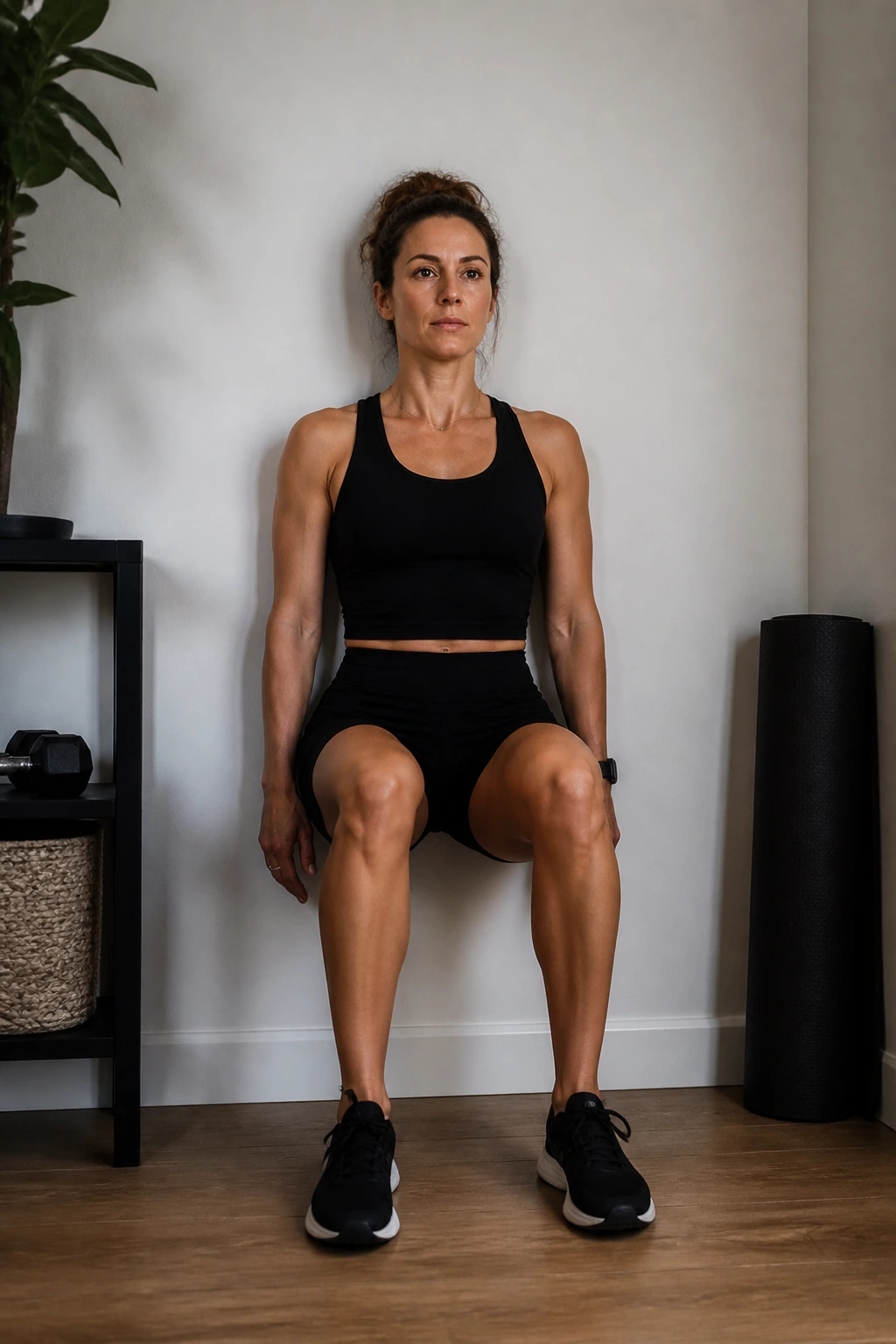
Isometrics are arguably the most effective tool for managing tendon pain. By holding a static position, you can load the muscle without the grinding motion of joint movement. This helps “turn on” the quad muscles without the irritation of moving through a range of motion.
Lean your back flat against a wall. Slide down until your knees are bent at a comfortable angle—maybe 45 or 60 degrees, not 90 if that hurts. Keep your feet flat. Do not let your heels lift off the floor.
Hold the position for 30 to 60 seconds. You will feel your quads scream. That is good. The isometric load can actually help reduce knee pain by strengthening the tendons in a static, stable environment. If your knees hurt at a 90-degree angle, move your feet further out or stand higher. Adjust until you find a position that burns the muscle but leaves the joint alone.
7. Romanian Deadlifts (RDLs)
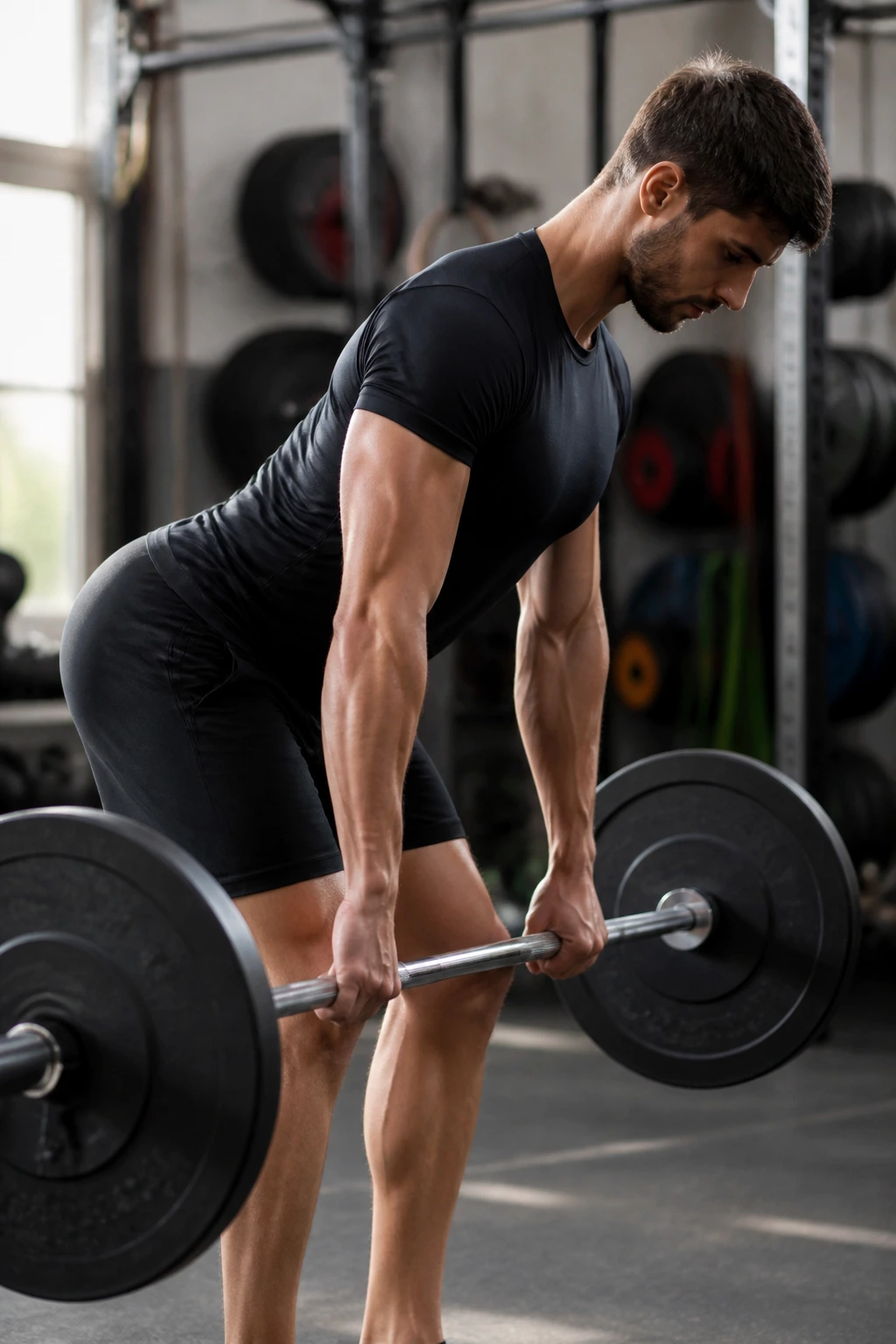
The Romanian Deadlift is arguably the king of posterior chain exercises. Because the primary movement is a hip hinge—pushing your butt back until you feel a stretch in the hamstrings—the knee flexion is minimal.
Hold a pair of dumbbells or a barbell. Keep your knees “soft”—meaning unlocked, but not bent. As you lower the weight, maintain a flat back and push your hips backward as far as you can. You are not trying to touch the floor; you are trying to stretch your hamstrings.
Once you feel the tension in your hamstrings, reverse the motion by driving your hips forward. Think of it as a horizontal thrust, not an upright pull. Because the knees stay almost frozen in one position, this movement is remarkably safe for those with knee issues, provided you do not turn it into a squat.
8. Donkey Kicks
Donkey kicks are a fantastic way to hit the glutes without any weight-bearing stress on the knee joints. Since you are on all fours, your knees are supporting weight, but not in a dynamic, moving, or shearing capacity.
Get into a tabletop position on a mat. Keep your core tight. Lift one leg, maintaining the 90-degree bend in your knee, and drive your heel toward the ceiling. Focus on squeezing your glute at the very top.
Avoid the temptation to let your lower back sag. A common mistake is to kick so high that the lumbar spine compensates. Keep your spine neutral. Think about stamping your footprint on the ceiling. The movement should be small, controlled, and intensely focused on the gluteal contraction.
9. Fire Hydrants
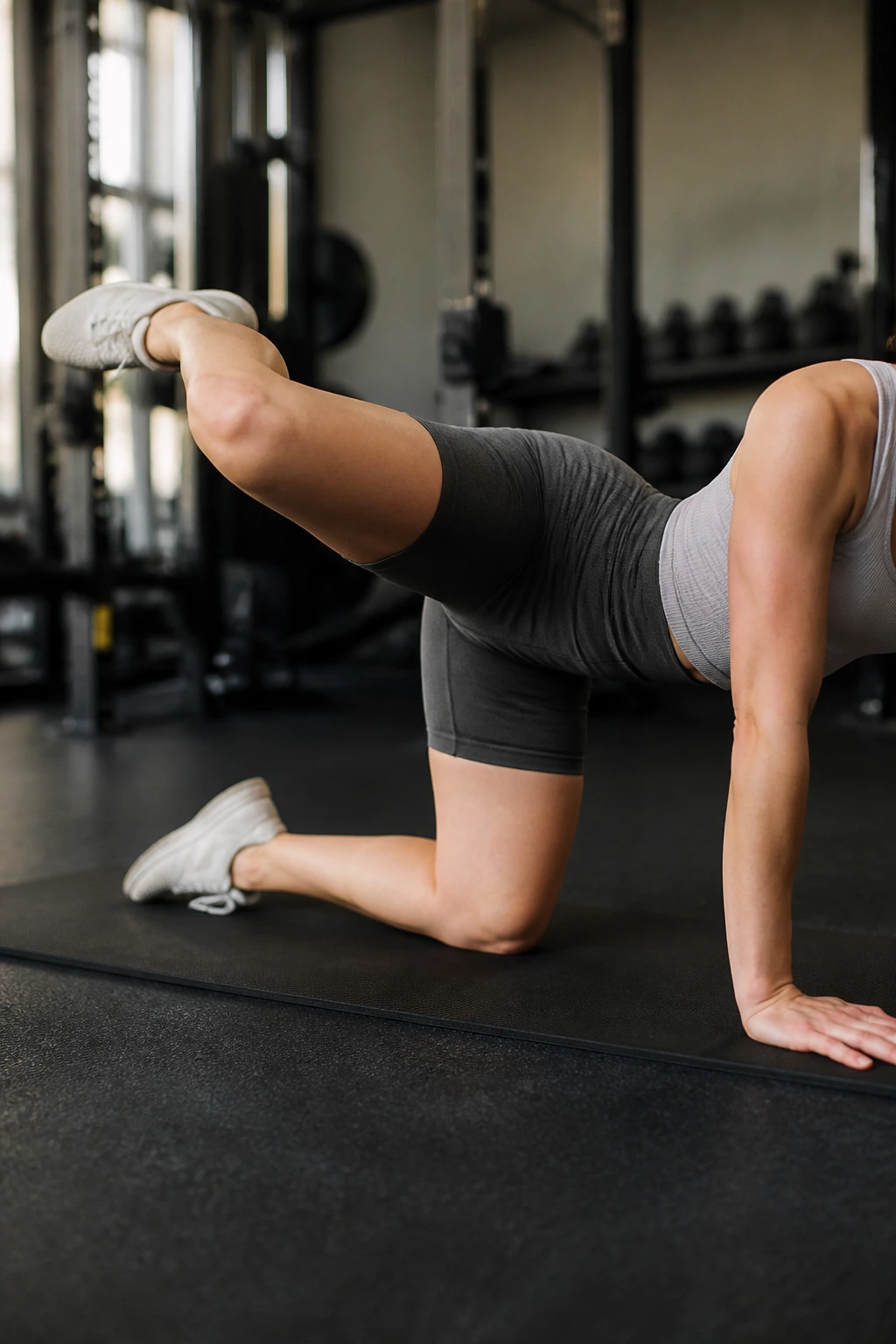
While donkey kicks focus on extension, fire hydrants focus on abduction and rotation. This hits the gluteus medius and minimus, providing stability for the pelvis.
Remain in your tabletop position. Keep your knee bent at 90 degrees. Lift your entire leg out to the side, away from your body, like a dog at a fire hydrant. The goal is to get the knee as high as possible without rotating your torso.
Your torso should remain perfectly still. If you find yourself tipping over, reduce your range of motion. The isolation of the hip muscle is the priority here. This is a subtle movement that targets the deep stabilizers, which in turn helps keep your knees tracking correctly when you are finally back to walking and standing.
10. Hamstring Curls (Slider or Stability Ball)
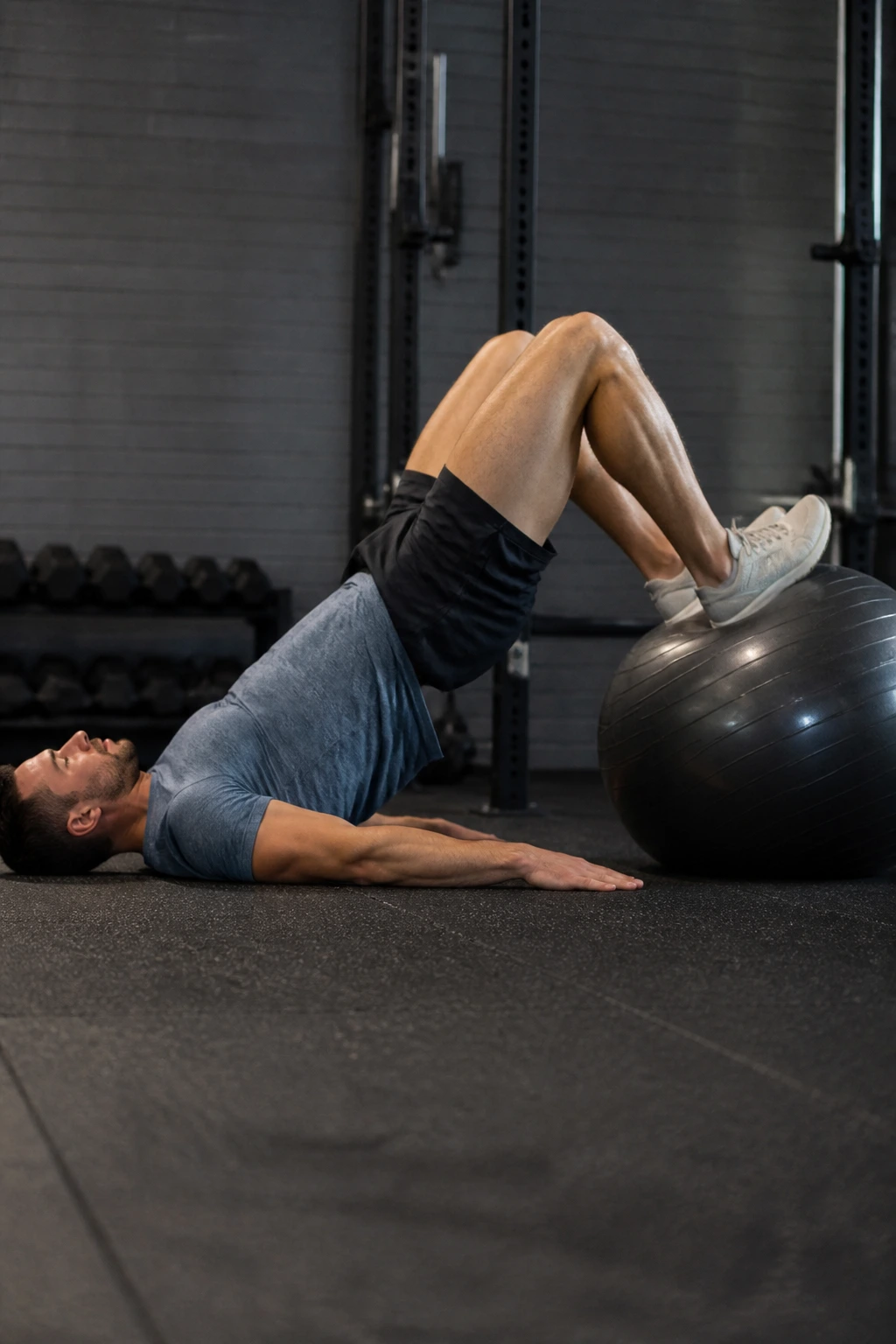
The hamstring is the most overlooked muscle group when it comes to knee health. A strong hamstring pulls the tibia backward, taking tension off the ACL and providing critical knee stability.
If you have a stability ball, lie on your back and place your heels on top of the ball. Lift your hips into a bridge, then curl the ball toward your glutes using only your heels. If you don’t have a ball, use sliders—or even a pair of fuzzy socks on a hardwood floor—under your heels.
Slide your heels out until your legs are nearly straight, then pull them back in. Keep your hips high the entire time. If your hips drop, you lose the hamstring engagement and dump the stress back into your lumbar spine. This movement is brutal but incredibly effective for building the “brakes” of the knee joint.
11. Step-Ups (Low Height)
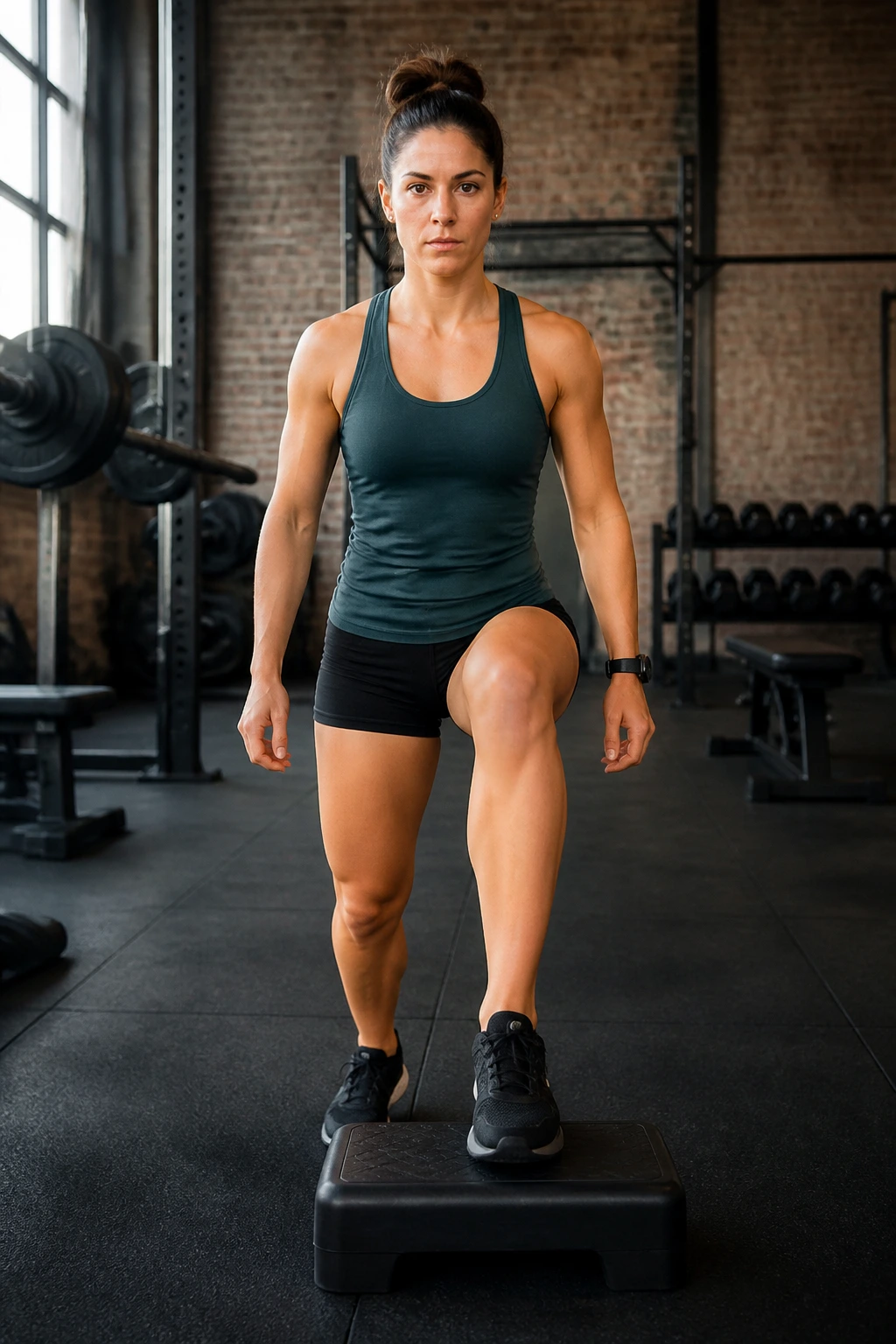
Step-ups are typically a knee-intensive movement, but the secret lies in the height of the step. If you use a standard chair or high box, the knee flexion is extreme. If you use a single, small aerobic step (four inches or less), you minimize that stress.
Step up with one foot, driving through the heel, and bring the other foot up to meet it. Step back down. Focus on the eccentric phase—the lowering part. Don’t just plop down. Lower yourself with control.
This eccentric control is vital for rehabilitating bad knees. It teaches the quad how to decelerate the body. By keeping the step height very low, you ensure that the knee stays in a safe range of motion while still gaining the benefits of a single-leg movement.
12. Seated Leg Extensions (Isometric Focus)
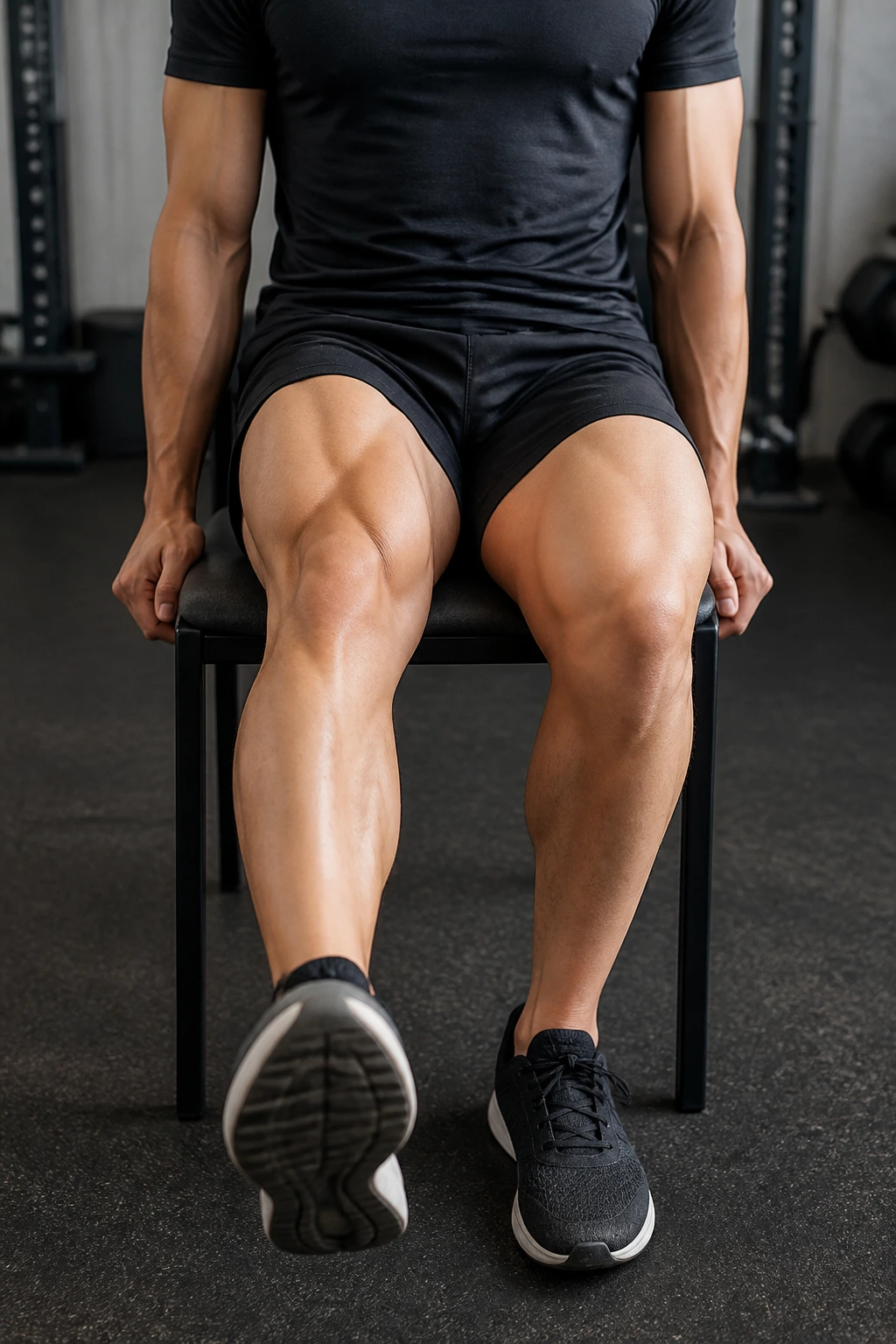
Standard leg extension machines can be tough on the knees because of the pivot point and the arc of motion. However, you can simulate a safe version using an isometric hold.
Sit in a chair. Extend one leg out until it is straight. Flex your quad as hard as you possibly can. Hold this contraction for 10 seconds. Release.
You are training the muscle to fire without the mechanical shear of a moving hinge. If you have resistance bands, you can loop one around your ankle and the chair leg to add resistance, but keep the motion minimal. The burn should be in the muscle belly of the quad, not behind the kneecap.
13. Seated Calf Raises
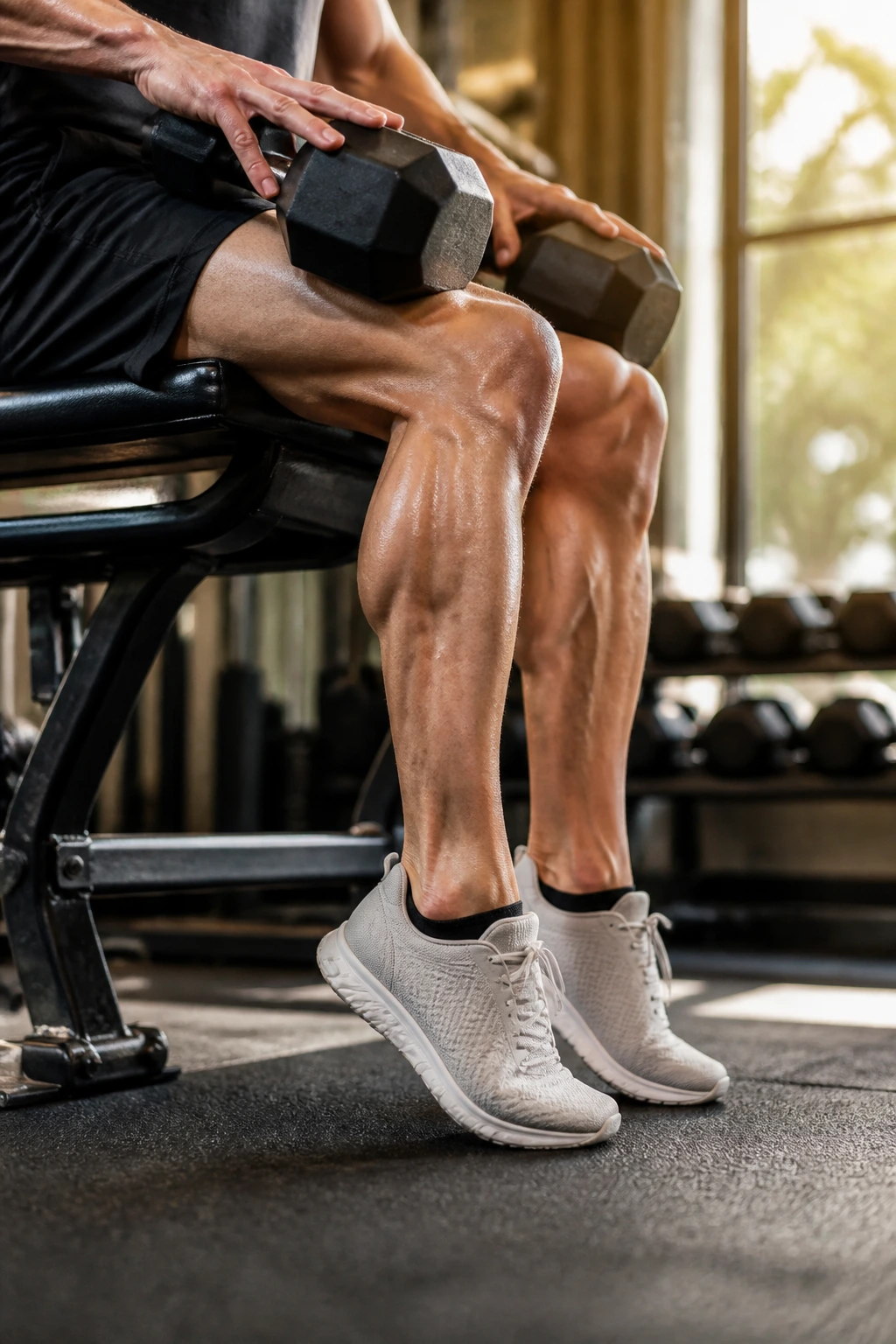
Calves are often forgotten, but they provide critical support for the ankle and knee. If your calves are weak, your body compensates further up the chain, often putting extra stress on the knee.
Sit on a bench with your feet flat on the floor. Place a dumbbell on each knee for resistance (or use a machine if you are in a gym). Lift your heels as high as possible, squeezing the calf at the top. Lower the heels back to the floor.
Seated raises target the soleus, the deep calf muscle, which is essential for endurance. Avoid using momentum. Do not bounce your knees. The movement should be deliberate and slow. This keeps the work centered in the calf and prevents any awkward knee involvement.
14. Bird Dogs
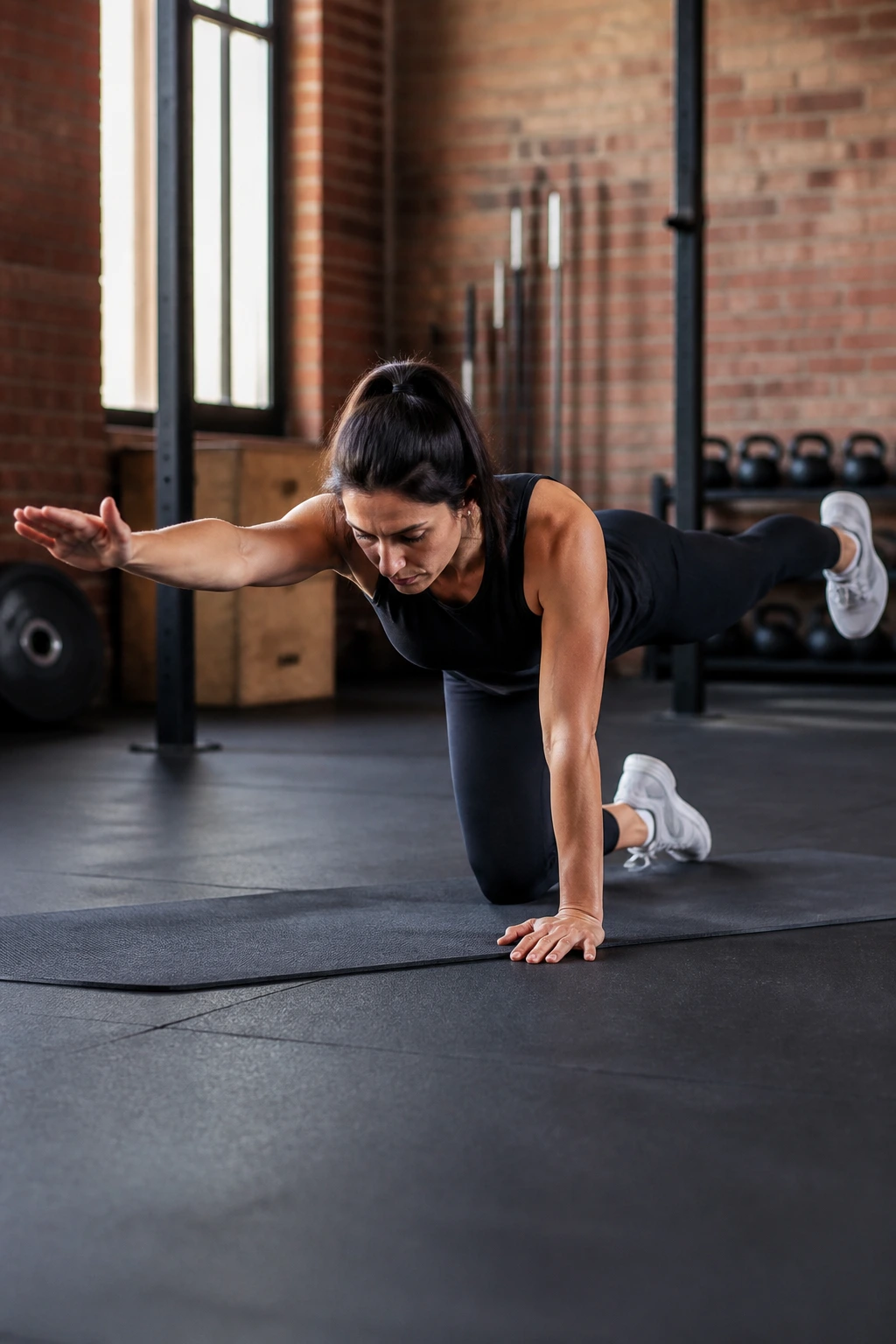
The bird dog is a full-body stability exercise that forces the core and glutes to work together to keep the spine safe. It indirectly helps your knees by improving your overall balance and posture, reducing the “compensation patterns” that cause knee pain.
Start on all fours. Simultaneously extend your right arm forward and your left leg backward. Keep your body in a straight line. Do not let your hips rotate.
Hold for a count of three. You will feel your obliques and glutes firing to keep you from falling over. This is a foundational movement pattern that translates to better stability in daily life. Keep your gaze on the floor to maintain a neutral neck position.
15. Pilates Swimming (Floor Extensions)
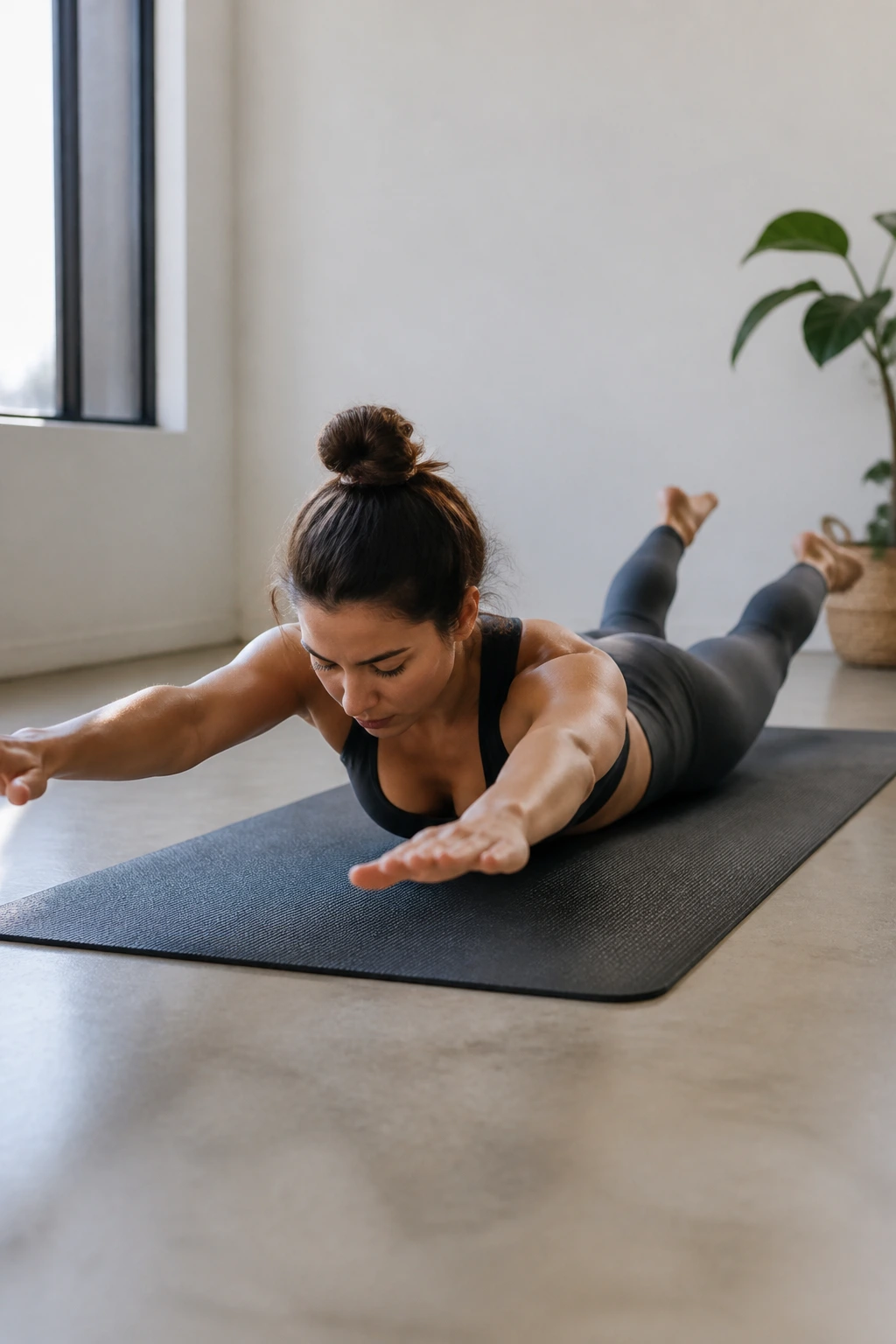
This is a core-focused move that also requires you to hold your legs in an extended position, which challenges the hip flexors and quads without any impact.
Lie on your stomach. Extend your arms forward and your legs backward. Lift both your arms and legs off the ground simultaneously. Flutter them up and down in a small, controlled motion, breathing steadily.
Think of it as swimming on dry land. The key here is to keep the legs locked straight. You are not cycling; you are extending. This builds endurance in the posterior chain and forces your muscles to stabilize your joints in a long-lever position, which is a great “pre-hab” move for the knees.
16. Nordic Curls (Assisted/Eccentric Focus)
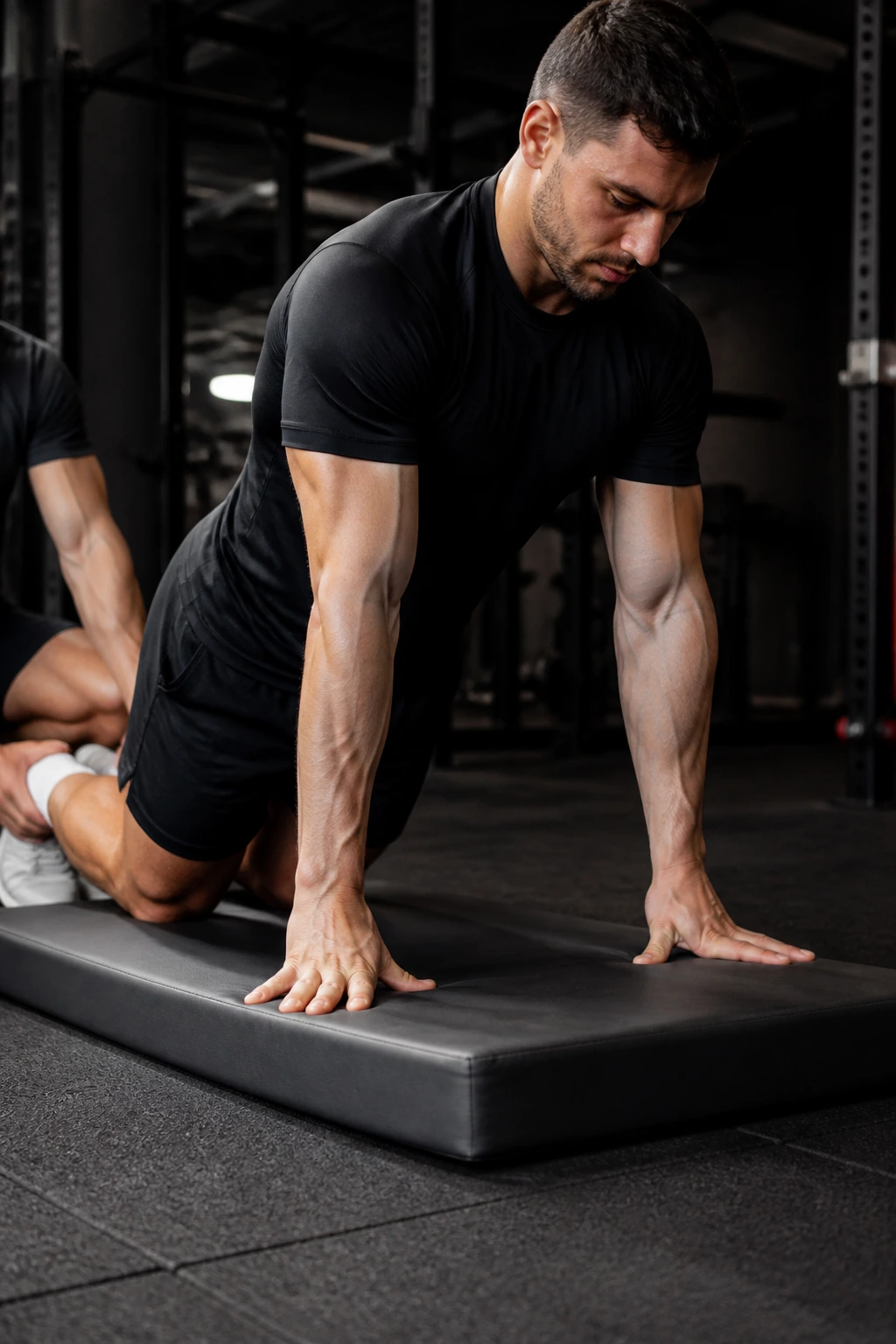
Nordic curls are legendary for hamstring strength. They are usually done by kneeling and having a partner hold your feet, but that can be hard on the knees if the padding isn’t thick enough. Use a yoga mat or a pillow for your knees.
With your feet anchored, slowly lower your torso toward the floor, keeping your back and hips perfectly straight. You are acting like a hinge. Go down as far as you can control, then use your hands to push yourself back up.
Do not try to be a hero. The eccentric strength you gain from simply lowering yourself is massive. This will build incredible hamstring health, which effectively acts as a support brace for the knee joint, holding it in place during more dynamic activities.
17. Sumo Squats (Wide Stance)
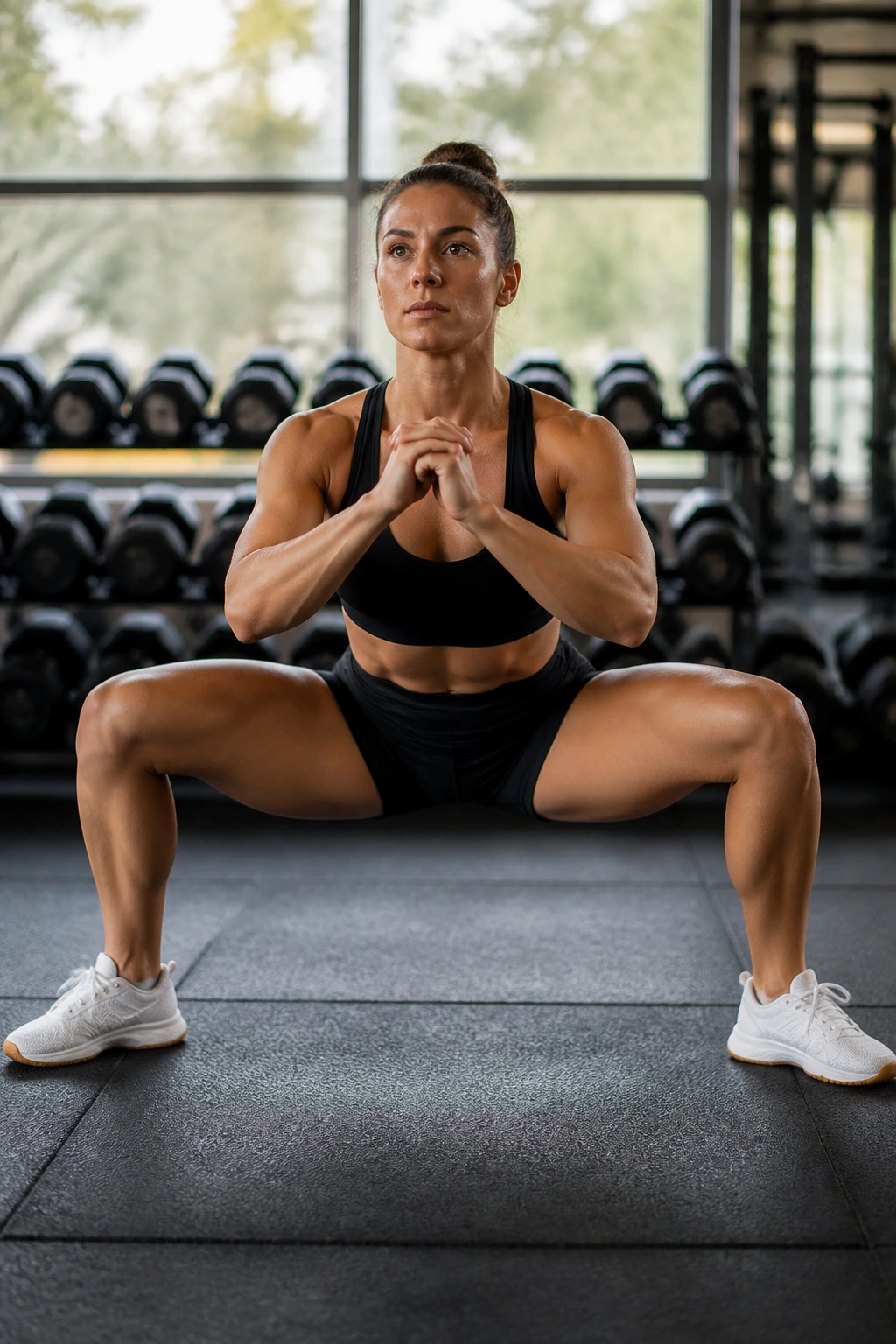
The wide stance of a sumo squat changes the angle of the femur and shifts the emphasis to the inner thighs (adductors) and glutes. This often feels much more comfortable for people with knee issues because it prevents the knees from having to travel as far forward.
Take a stance wider than shoulder-width, with your toes pointed slightly outward. As you lower your hips, push your knees out in the direction of your toes. Do not let them cave in.
Keep your torso upright. Because your feet are wide, you can sit your hips back more easily than in a narrow-stance squat. Keep the depth moderate. You do not need to go “ass-to-grass.” Stopping when your thighs are parallel to the floor—or even slightly higher—is perfectly fine.
18. Reverse Hyperextensions
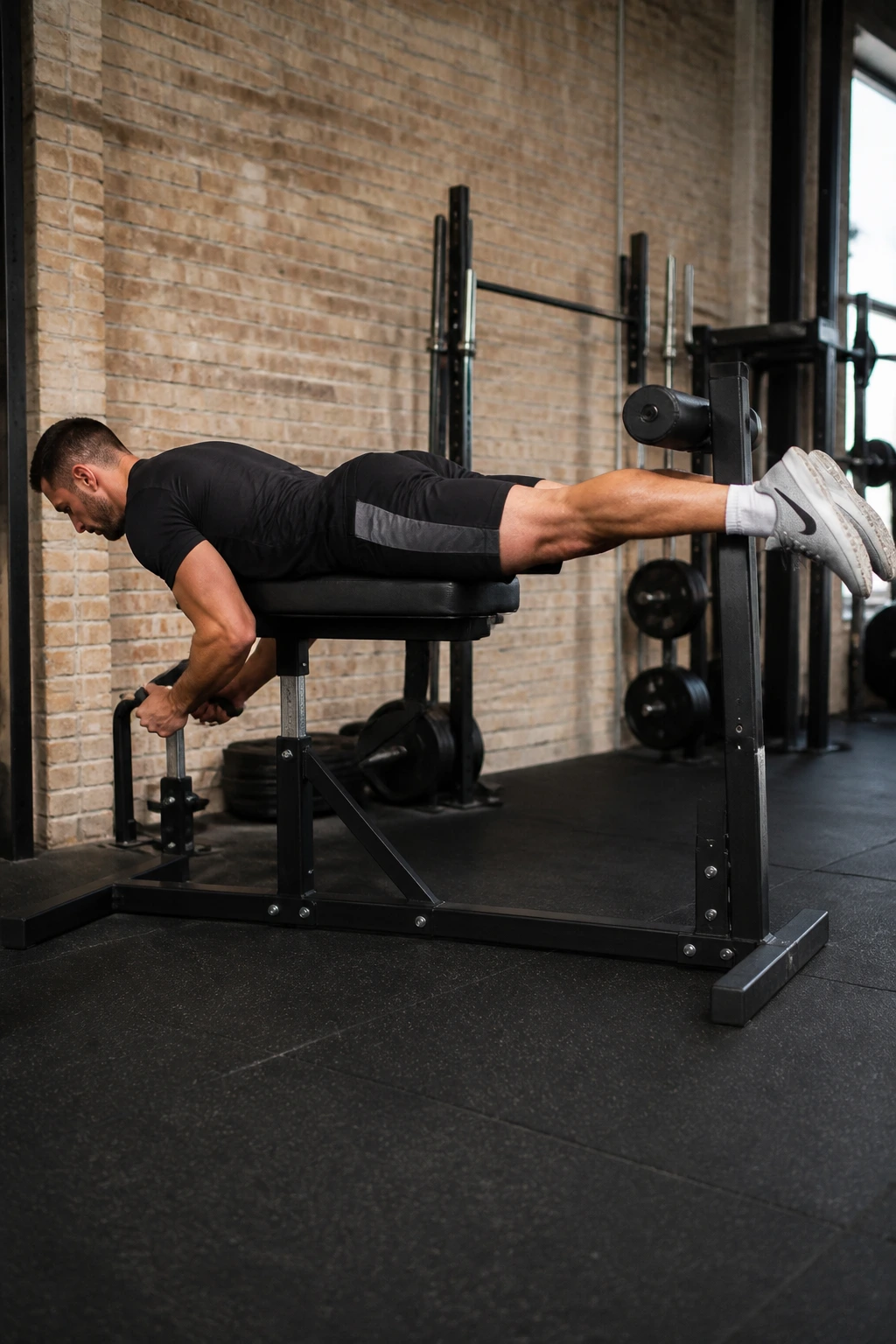
If you have access to a reverse hyper machine, use it. If not, you can simulate this on a sturdy table or bench. Lie with your stomach on the bench, legs hanging off the edge.
Using your glutes and hamstrings, lift your legs up until they are parallel with your torso. Focus on the squeeze. Do not swing your legs; use muscle power.
This is a decompression exercise for the spine and a strengthening exercise for the posterior chain. Because the legs are moving in an arc behind you, there is zero compression on the knee joint. It is a fantastic way to train the lower body while giving the knees a complete break from weight-bearing stress.
19. Single-Leg Hip Thrusts
The single-leg hip thrust is the more aggressive cousin of the bridge. It isolates one glute at a time, which is essential for fixing muscle imbalances. Often, one knee hurts more than the other because one glute is significantly weaker.
Get into your bridge position. Lift one leg off the ground, keeping it bent or straight, and perform the bridge using only the other leg.
Control is everything. You will likely find that one side is much shakier than the other. That is the side that needs the most work. By forcing each glute to work independently, you ensure that both sides of your pelvis are pulling their weight, which takes the uneven load off your knees.
20. Stability Ball Leg Press
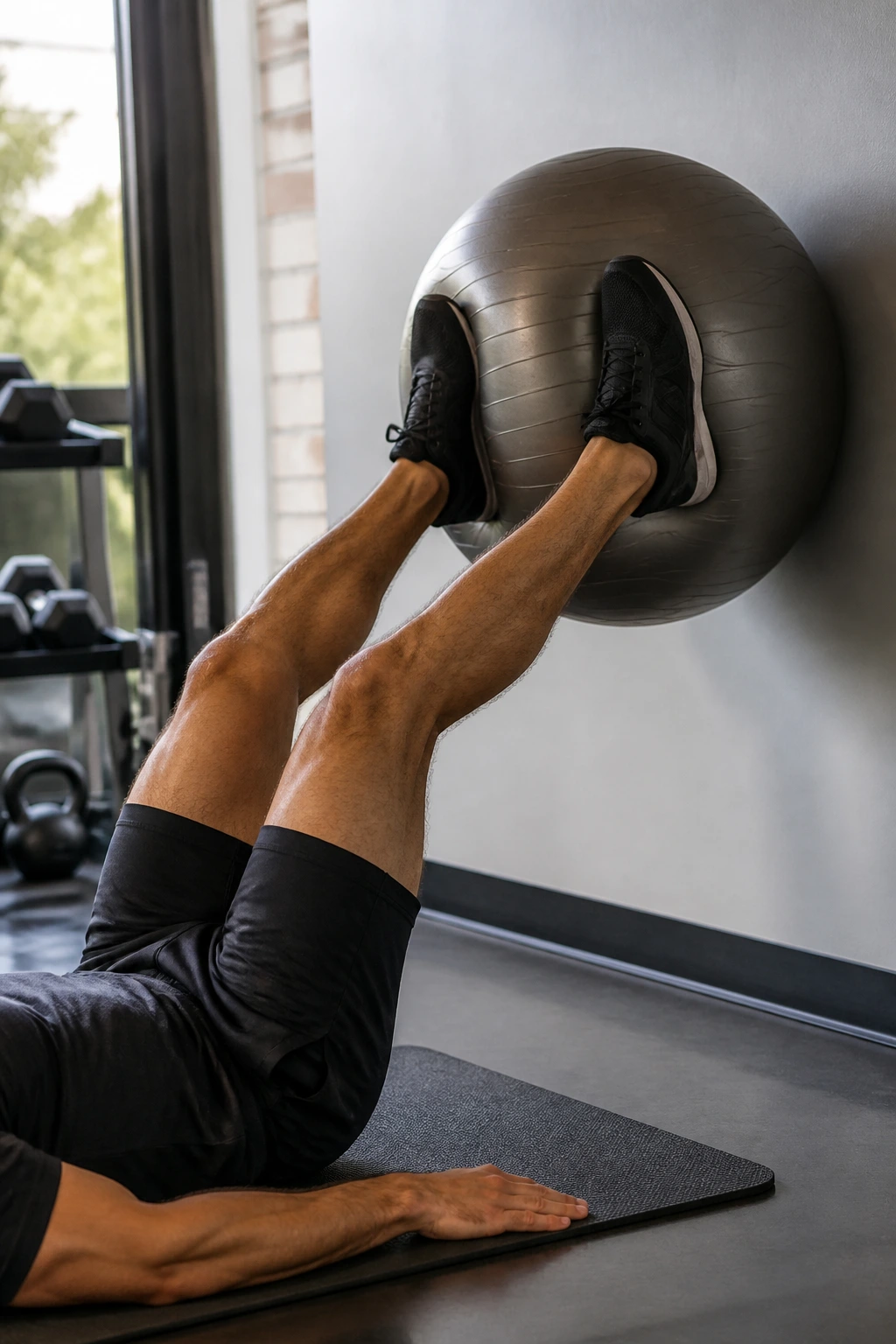
This allows you to simulate a leg press—which is usually a knee-heavy machine—in a way that removes the excessive crushing force.
Lie on your back with your feet against a wall. Place a stability ball between your feet and the wall. Press your feet into the ball and the wall, extending your legs to “push” the wall away.
The instability of the ball forces your stabilizing muscles to fire. Because you are controlling the resistance (you can push harder or softer), you can keep the tension well within your pain-free range. It’s an effective, gentle way to build quad endurance without the heavy mechanical load of a gym leg press machine.
Final Thoughts
When your knees are the limiting factor, your training strategy must shift from “more weight, more range” to “more tension, more stability.” It is entirely possible to maintain muscle mass and lower-body strength without subjecting your joints to the punishing mechanics of a standard lunge.
Consistency will always trump intensity in this scenario. You might not feel the massive, explosive fatigue of a heavy squat session, but you will feel the deep, slow burn of muscle-focused training. Focus on the “mind-muscle” connection—really feeling the glute or hamstring do the work—rather than just moving the weight from point A to point B.
If you find that an exercise causes sharp, stabbing pain, stop immediately. Discomfort in the muscle is the goal; pain in the joint is the warning sign. Respect the joint, push the muscle, and you will find that you can continue training hard for years without needing to force yourself through painful movements. Your knees are the foundation of your mobility—treat them with the patience they deserve.
