



A long run can feel easy at mile two and miserable by mile eight if breakfast was wrong. The stomach does not care that the food looked healthy on paper. It cares about fiber, fat, portion size, timing, and whether you’ve asked it to do too much too close to the start.
Pre-run workout foods matter because you’re making your body do two jobs at once: digest and move. That works best when the food is familiar, mostly carbohydrate, and light enough that it doesn’t sit there like a brick. Heavy omelets, bran-heavy muffins, giant handfuls of nuts — those are the usual suspects when a runner feels sluggish, crampy, or bloated before a long run.
Boring is good here.
A lot of runners eventually come back to the same reliable foods: bananas, toast, oatmeal, rice, yogurt if they tolerate dairy, and a few salty snacks when the clock is tight. The sweet spot changes with timing. A snack 20 minutes before the door opens should be tiny and simple; a meal 2 hours before can be a little larger and a little more complete.
1. Bananas
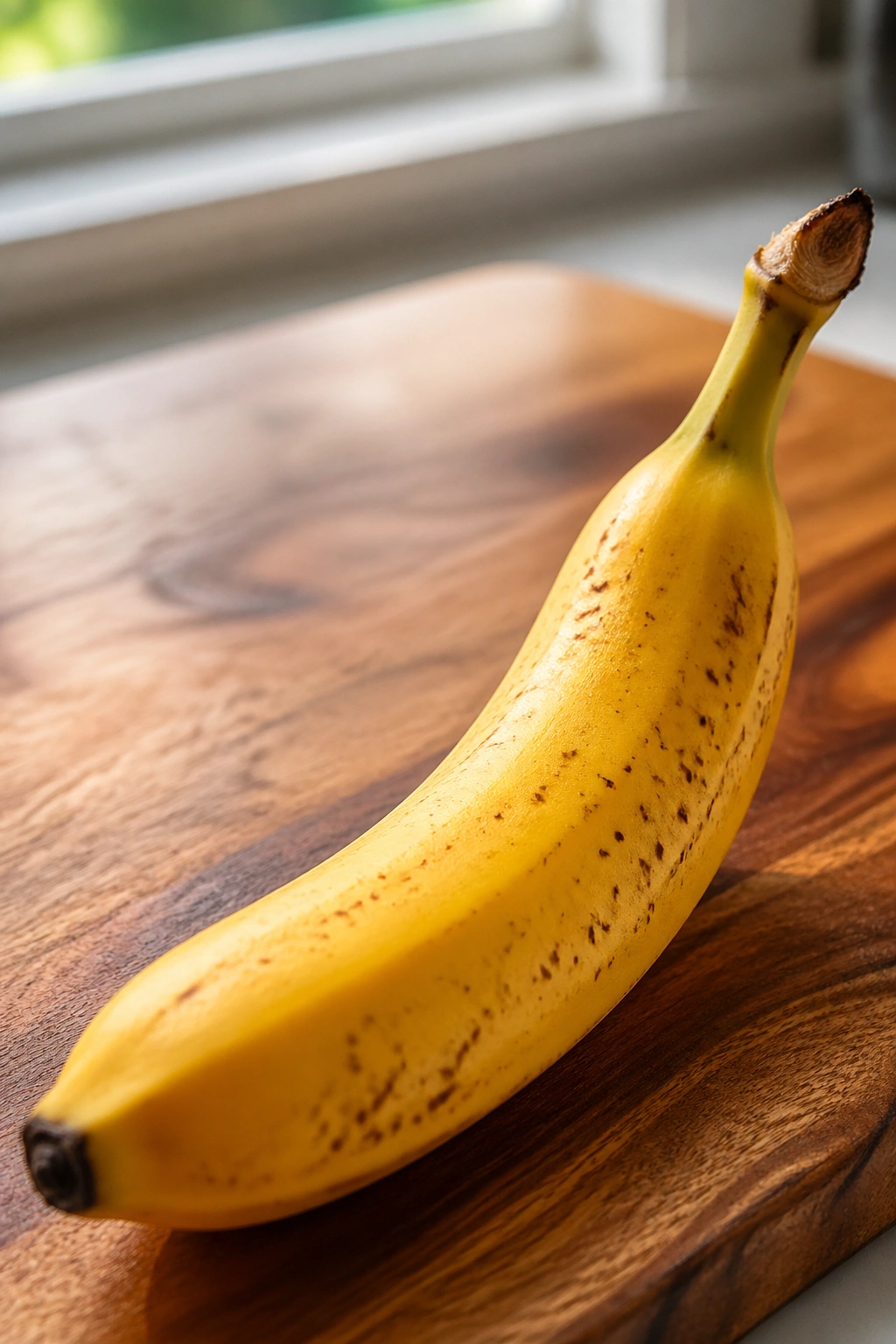
A ripe banana is one of the cleanest pre-run workout foods you can keep around. It’s soft, portable, cheap, and ready the second you peel it. That sounds almost too plain to matter, but plain is exactly why it works.
Why a Banana Fits So Well Before a Long Run
One medium banana gives you about 25 to 27 grams of carbohydrate, which is enough to move the needle without making your stomach work overtime. The texture is soft, the fiber is modest, and the fat is close to zero. That combination matters when you’re about to ask your legs to stay busy for an hour or more.
A ripe banana is usually the better pick than a green one. The green fruit has more resistant starch and can feel heavier. Speckled yellow is the sweet spot for most runners — still firm enough to hold together, but soft enough that it disappears fast once you eat it. If you’ve got 15 to 45 minutes before the run, this is one of the least fussy choices you can make.
How I Like Runners to Use It
- Eat 1 medium banana on its own when you want the lightest possible option.
- Pair it with 1 slice of toast if the run starts in about an hour and you need a little more fuel.
- Skip peanut butter right before the run unless you know your stomach handles fat well.
- If bananas sometimes taste too sweet before exercise, chill one in the fridge for 10 minutes and eat it cold.
Tip: A banana with brown freckles is usually easier to digest than a green one and feels less “starchy” in the stomach.
2. Oatmeal
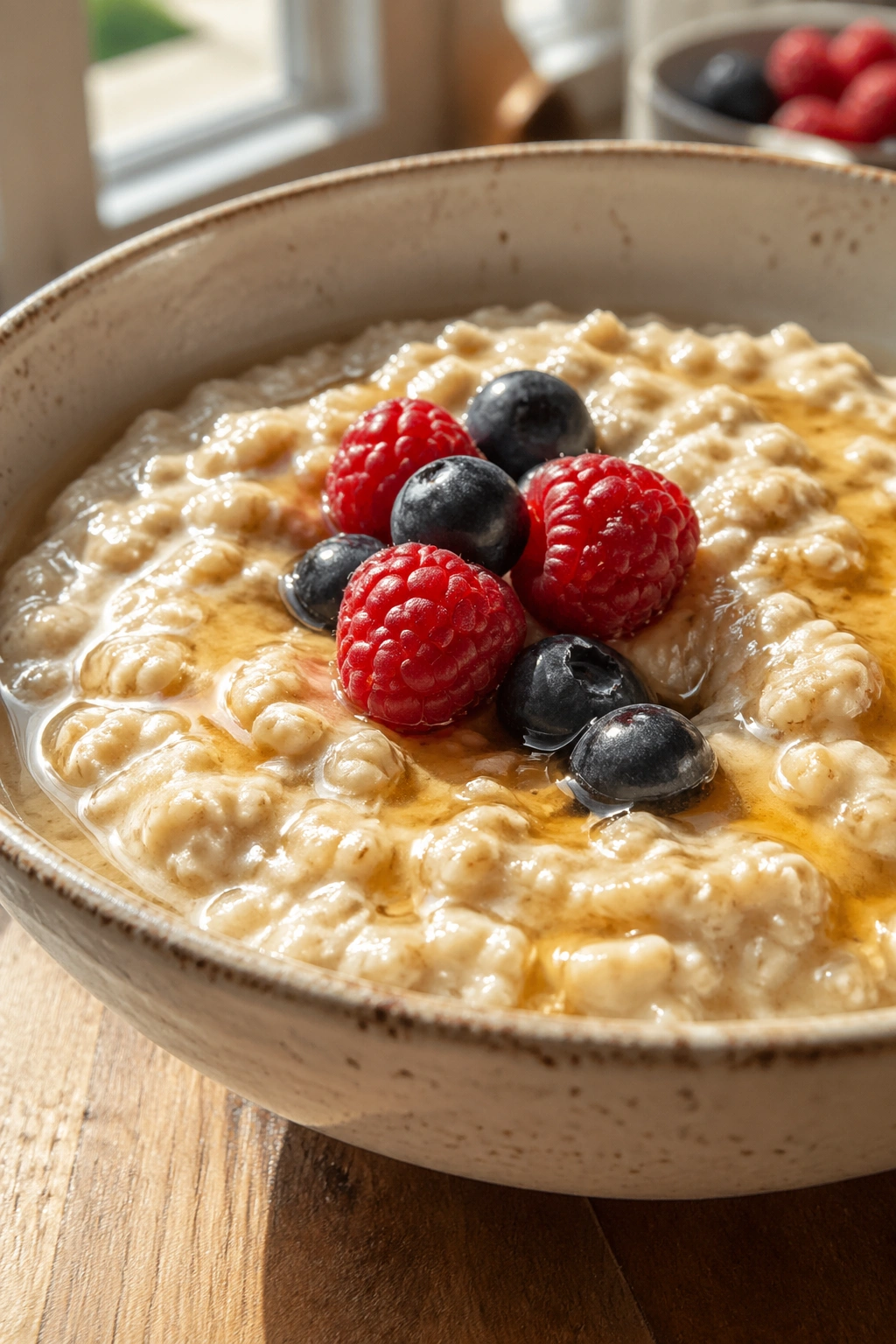
Oatmeal is the breakfast I trust when there’s enough time to do it right. It gives a steadier release of carbohydrate than a lot of quick snacks, and that steadiness is useful before a long run where you want fuel that keeps showing up mile after mile. Warm oats also tend to sit well for runners who don’t love cold food first thing.
The trick is to keep the bowl loose, not dense. A thick mound of oats with chia seeds, almond butter, flax, and three kinds of fruit is a meal, sure, but it’s not a smart pre-run meal unless you’ve got plenty of time. A simple bowl made with 1/2 to 1 cup dry oats, cooked in water or a mix of water and milk, usually lands much better. Add a little honey, maple syrup, or sliced banana, and stop there.
How to Keep Oatmeal Runner-Friendly
- Use instant oats if you need a fast, softer texture.
- Use rolled oats if you want a little more chew and have 90 minutes or more before running.
- Cook the oats with extra liquid so they stay porridge-like, not gluey.
- Keep nuts and seeds to a small spoonful, not a heavy topping layer.
- Add a pinch of salt if you sweat heavily or tend to cramp early.
Oatmeal can also work the night before a long run. That’s especially true if early-morning eating makes you uneasy. A simple bowl, eaten calmly, does more than a “healthy” breakfast that leaves you too full to lace up.
3. White Toast With Honey or Jam
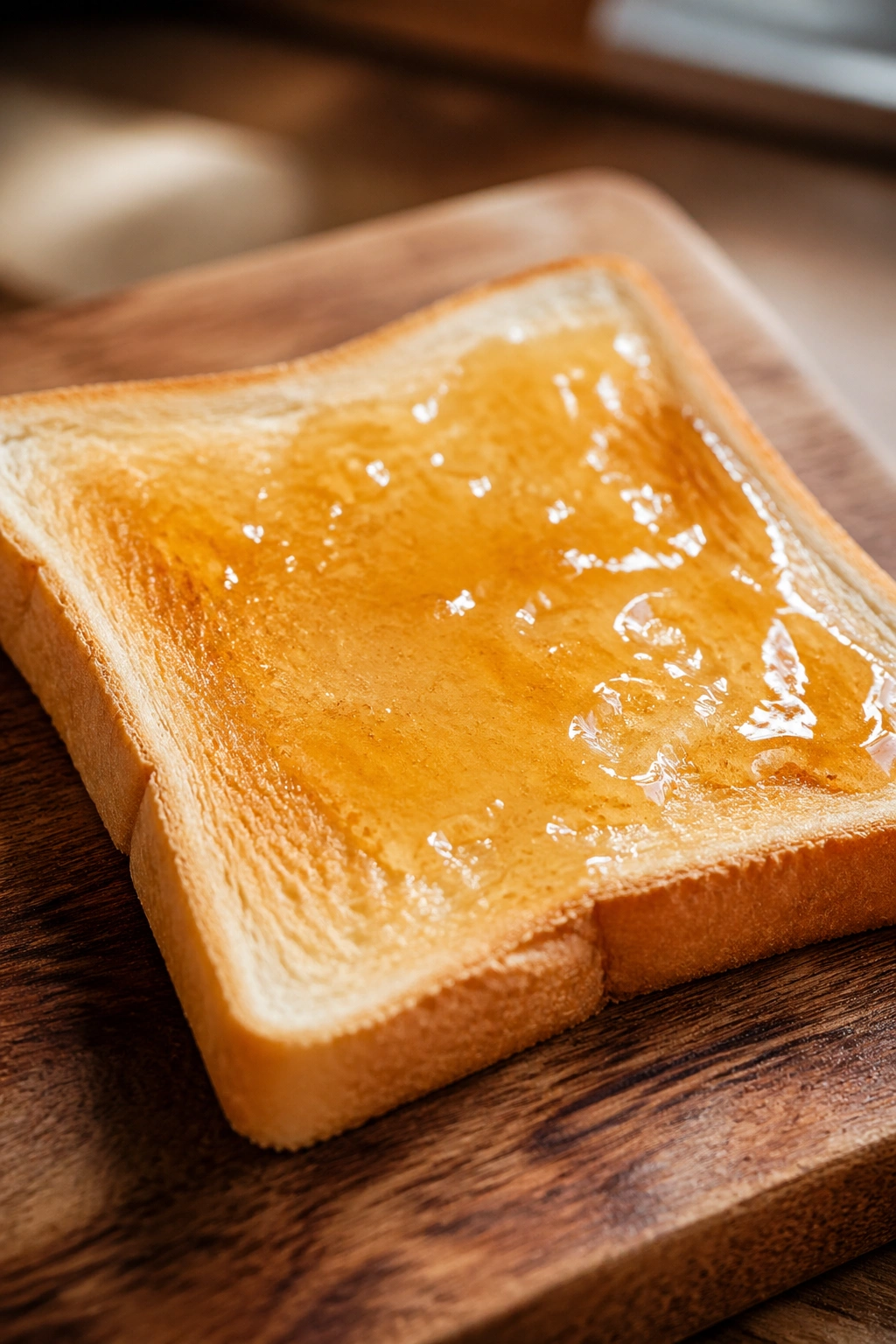
Six in the morning, shoes by the door, brain half awake — that’s where white toast with honey earns its keep. It’s one of the easiest pre-run workout foods because it’s light, quick, and familiar. No drama. No chewing marathon.
White bread digests faster than dense whole-grain bread, which matters when the run is close. A slice or two gives you a clean carb base, and honey or jam tops it off with fast sugar. That’s not a bad thing before a long run. It’s the point.
I like this option when the runner has 30 to 60 minutes, not 3 hours. Two slices of toast with 1 tablespoon of honey or jam per slice is enough for many people. If you need more, add a banana rather than loading on peanut butter or a pile of seeds. Heavy toppings are where a simple snack turns into a mistake.
- Choose bread that gives about 12 to 15 grams of carbohydrate per slice.
- Toast it well enough that the surface dries a little.
- Use a thin, even layer of honey or jam.
- Keep butter out of the picture if you’re eating close to the start.
Skip the giant smear of nut butter. That’s for a later meal, not a quick pre-run bite.
4. Applesauce
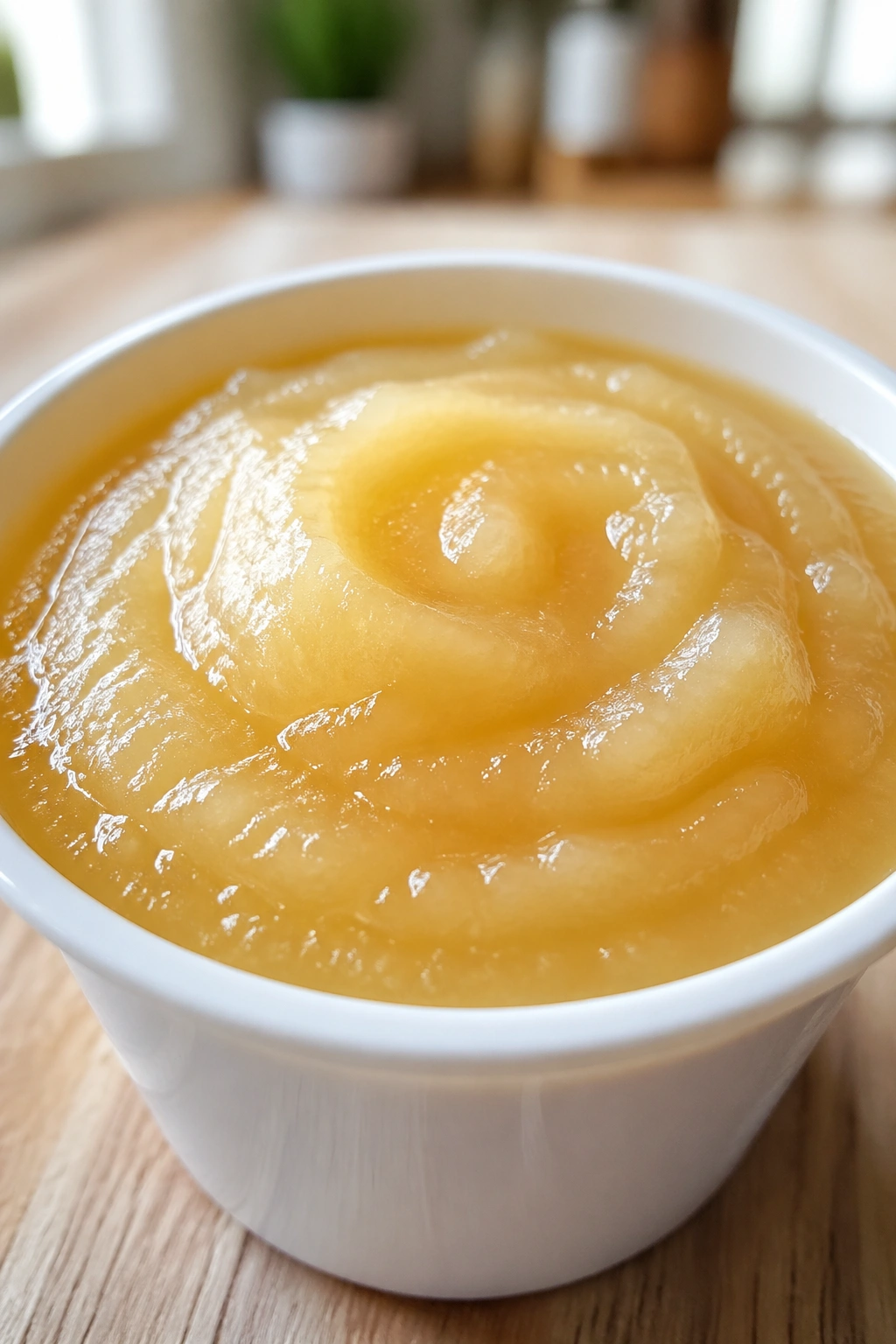
Why do runners keep buying applesauce pouches? Because they work. That’s the whole story, and it’s a good one.
Applesauce is mostly water and carbohydrate, with very little chew and almost no stomach effort. That makes it a sneaky-good choice when you want fuel but you do not want the feeling of “I just ate breakfast.” Unsweetened cups and pouches usually land light, and the texture is smooth enough that many people can handle it even when nerves are rattling around before a long run.
When Applesauce Earns a Spot
If you’ve got 15 to 30 minutes before the start, applesauce can do the job better than a heavier snack. It also works as part of a bigger breakfast when you want something soft alongside toast or a few crackers. One pouch or about 1/2 to 1 cup is usually enough for a quick hit of carbohydrate.
There’s a nice side benefit here: applesauce can feel easier than a whole apple if raw fruit tends to bother you. The fiber is broken down, the chewing is gone, and the whole thing goes down fast. That matters more than people admit.
A few runners do better with sweetened applesauce because it supplies more immediate carbohydrate. Others prefer unsweetened because it feels less sticky. Both are fine. The deciding factor is your stomach, not the label.
5. Bagel With Peanut Butter
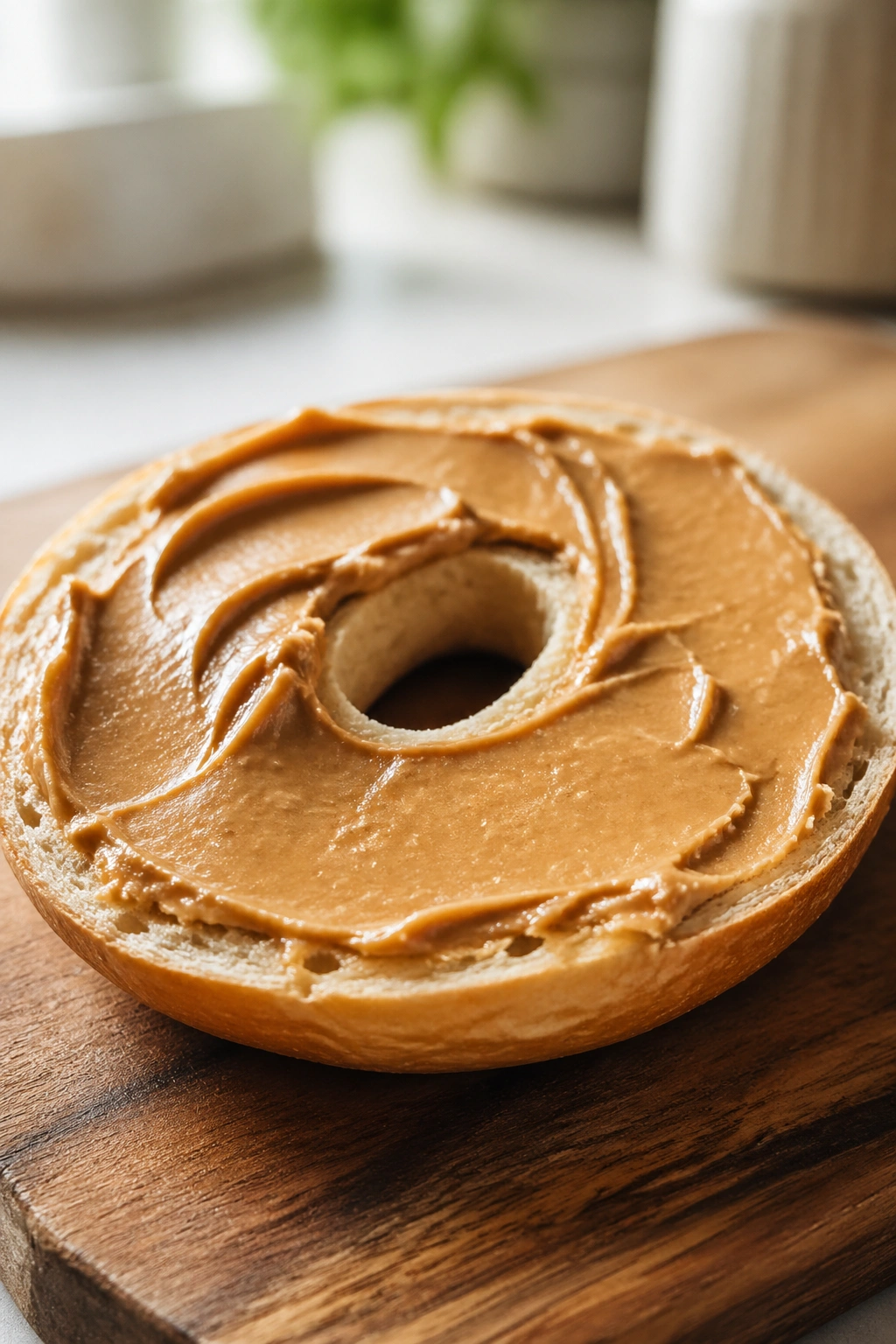
Unlike toast, a bagel brings real staying power. That’s why it belongs on this list. A plain bagel gives you a larger carb load in one package, and a thin layer of peanut butter turns it from “quick snack” into “serious pre-run breakfast” without making it feel fussy.
The timing matters. A bagel with peanut butter is usually best 2 to 3 hours before a long run, not 20 minutes before. The bagel itself is mostly carb, but peanut butter adds fat and some protein, which slows digestion. That can be useful when there’s time on the clock and you want something that lasts. It is not useful when you’re trying not to slosh.
What to Look For
- A plain white bagel is usually easier on the gut than a dense whole-grain version.
- Use 1 tablespoon of peanut butter, maybe 2 if you know you tolerate it well.
- Add banana slices if you want more carbohydrate without making the meal heavier.
- Skip seeds, big chunks of nuts, and very thick nut butter layers if you’ve had stomach issues before.
I’m a bigger fan of this option for runners who wake up hungry and have a long window before the start. If you’re running soon, keep the peanut butter thin or leave it off entirely. Honey or jam is cleaner fuel in that case. Plain matters.
6. Greek Yogurt With Honey and Berries
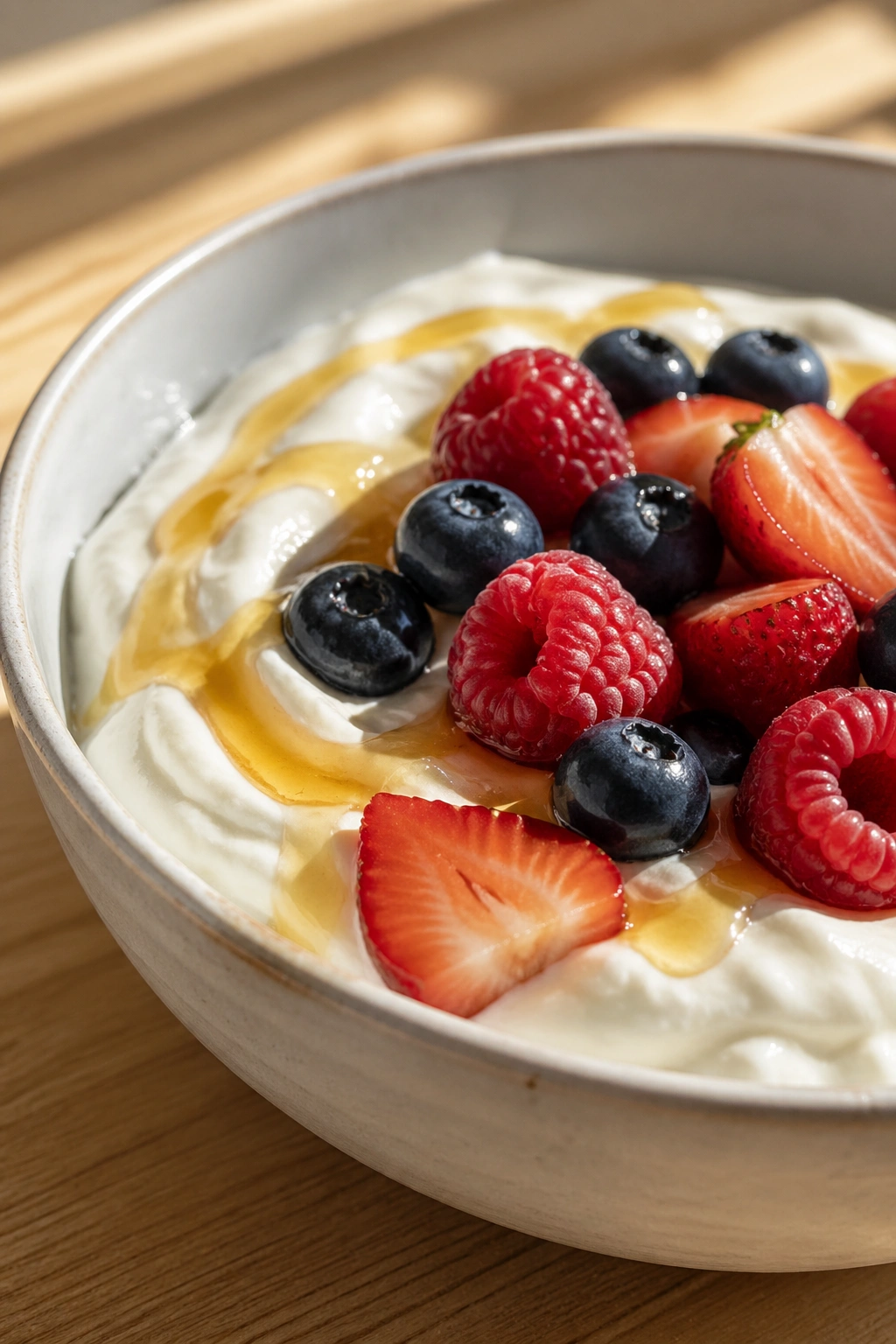
Cold, creamy, and only a little bit fancy, Greek yogurt can work well before a long run when you want breakfast to feel like breakfast. It gives you carbohydrate from the honey and fruit, plus some protein that can help keep hunger from coming back too fast. The protein is not the star. It’s a side character.
Low-fat or lactose-free Greek yogurt tends to be the safer choice if you’re sensitive. A thick, full-fat version can feel rich and slow, especially when the run starts soon. I usually think in terms of 3/4 to 1 cup of yogurt, a small drizzle of honey, and a modest handful of berries. That’s enough to matter without turning the bowl into a fiber bomb.
Runners sometimes overdo the berries. Blueberries are fine. Strawberries are fine. A mountain of blackberries and raspberries right before a long run is a different story because the fiber can get noisy in your gut. Keep the fruit amount sensible, and don’t bury the yogurt under granola unless you’ve got a couple of hours.
If dairy sits well with you, this is a strong pre-run breakfast. If it doesn’t, don’t force it because the nutrition chart looks tidy. Your stomach gets the final vote. Always.
7. Rice Cakes With Nut Butter and Banana
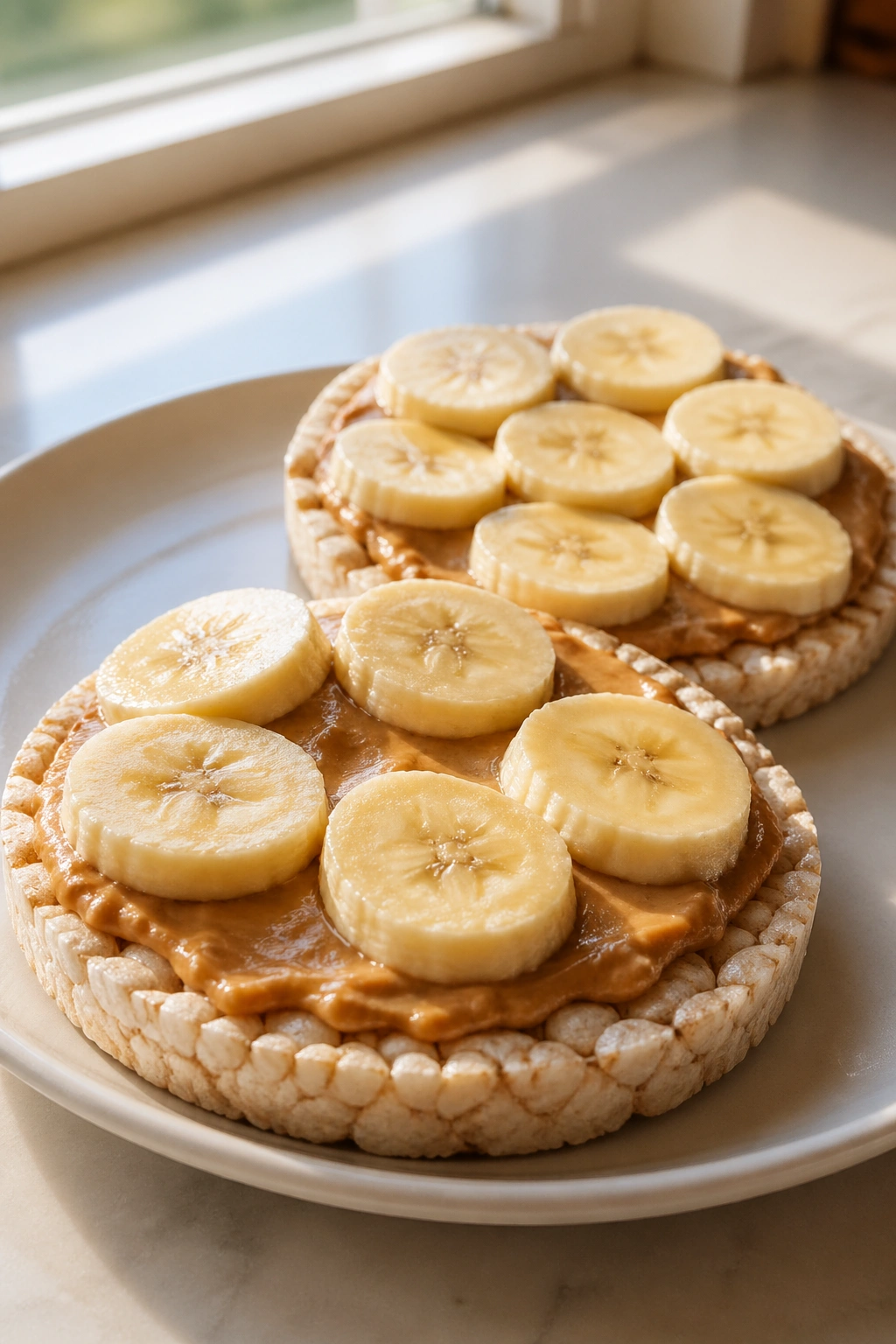
Two rice cakes, a thin swipe of nut butter, and a few banana slices may look almost insultingly simple. That’s why I like it. There’s not much here to upset your stomach, but there is enough carbohydrate to do actual work.
Rice cakes bring quick-digesting starch with very little bulk. Nut butter adds flavor and staying power, and banana fills in the gaps with more carbohydrate and a soft texture. The combination works especially well when you want something between “tiny snack” and “full breakfast.”
The Simple Build
- Start with 2 plain or lightly salted rice cakes.
- Spread 1 to 2 teaspoons of nut butter per cake.
- Top with banana slices rather than a big pile of fruit.
- Add a pinch of salt if you sweat a lot or the run is warm.
This is one of those foods that can be adjusted without getting messy. Need it lighter? Cut the nut butter down. Need more fuel? Add another rice cake, not more fat. That keeps the energy up without making the meal sit too long.
Salted rice cakes beat plain ones for many runners. The salt makes the snack taste more complete, and it can take the edge off that flat, empty feeling some people get before a long run. Small detail. Big difference.
8. Dates Stuffed With Peanut Butter
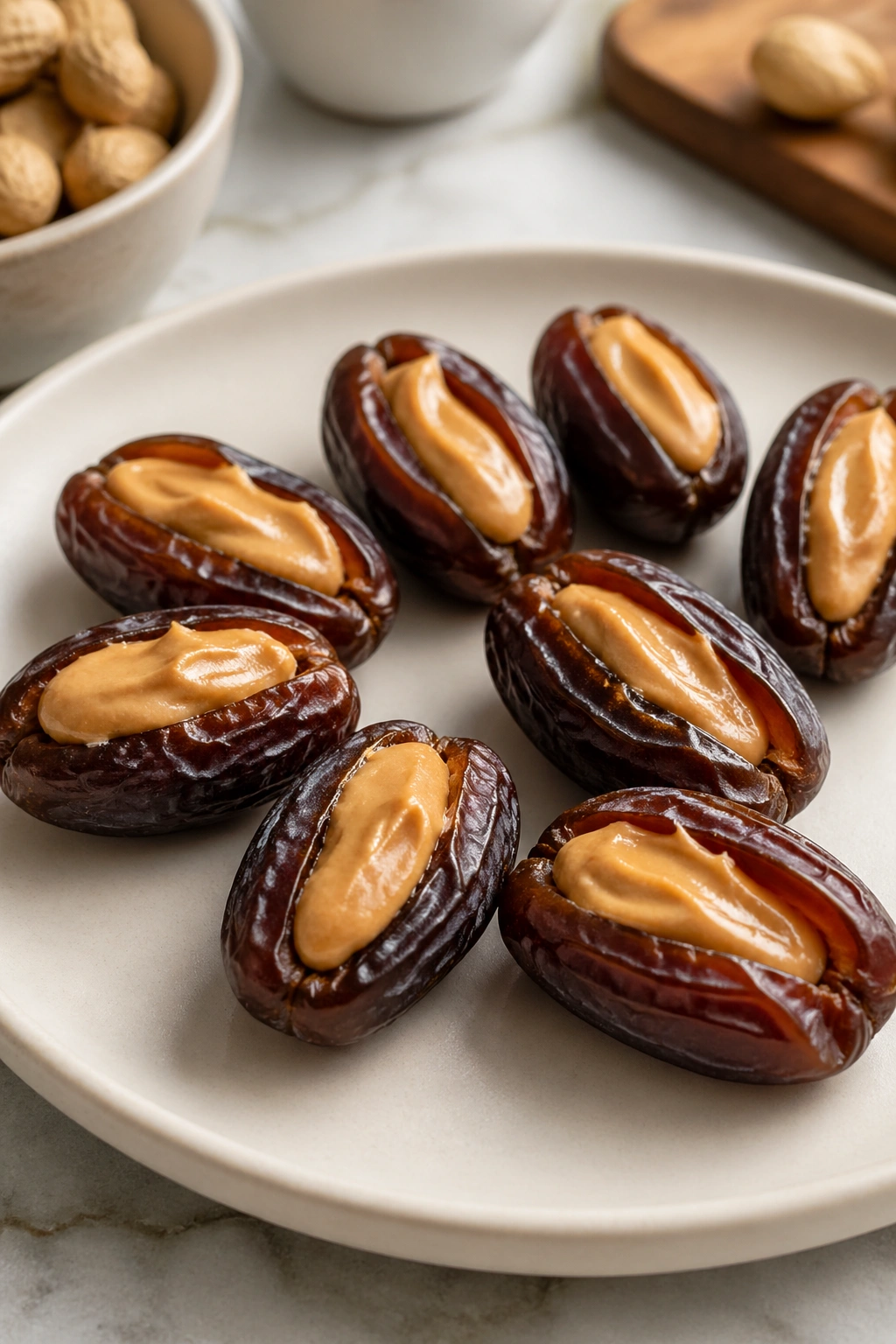
Dates are candy with a runner’s purpose. That’s not an insult; it’s the reason they belong here. They’re concentrated, sweet, portable, and packed with carbohydrate in a tiny package. When you want fuel without a plate, dates make a lot of sense.
A Medjool date is especially useful because it’s large and soft, with a caramel-like chew that goes down fast. Two to four dates can give you a quick hit of energy without a huge volume of food. Stuffing them with a small amount of peanut butter slows the sugar rush a little and makes the snack feel less one-note. That works well 30 to 60 minutes before a run if you know your stomach likes sticky foods.
A few things matter here. Pitted dates are easier to handle. A teaspoon of peanut butter is enough; more than that starts to drag the snack in the wrong direction. And water helps. Dates are chewy, so you want a drink nearby.
If fructose sometimes bothers you, keep the portion small and test this on a normal training day, not before a big event. Sticky food is not for everyone. But for many runners, it’s one of the fastest ways to get a useful carb load in a tiny space.
9. Plain White Rice
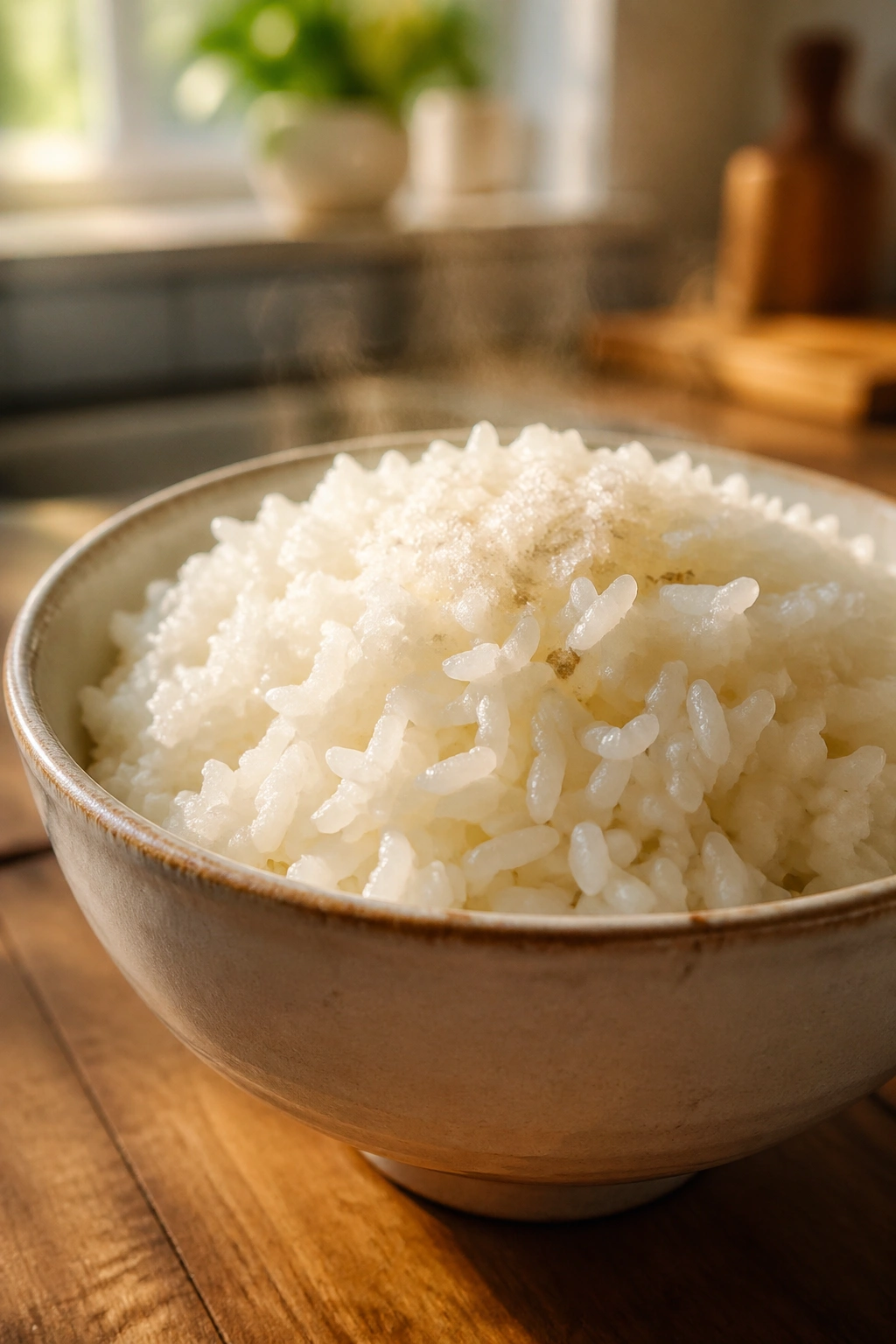
White rice before a long run sounds plain until you notice how calm it feels in your stomach. That is its superpower. Low fiber. Low fat. Easy to chew. Easy to digest. It doesn’t ask for much, which is exactly what a pre-run meal should do.
A bowl of 1 to 1 1/2 cups cooked white rice gives solid carbohydrate without a heavy feeling. Jasmine, basmati, and sushi rice all work. They differ in texture, not usefulness. A pinch of salt is smart, and a tiny splash of soy sauce can make the bowl taste finished without loading on fat. Leftover rice from the night before is fine if it’s stored safely and reheated well.
How to Serve It Without Making It Heavy
- Keep the portion moderate rather than giant.
- Use white rice instead of brown rice if your stomach is touchy.
- Add salt, not a rich sauce.
- Pair it with a small piece of fruit if you need a little more carbohydrate.
This is the meal I’d choose when a runner says, “My stomach is nervous, but I need real food.” It’s plain. It works. And sometimes that’s all you need.
10. Baked Potato With Salt

A medium baked potato is one of those old-school runner foods that keeps showing up because it works. The starch is easy to use, the texture is soft, and the salt on top makes the whole thing feel satisfying without adding much fat. For a long run, that matters.
A potato gives roughly 35 to 40 grams of carbohydrate depending on size. That’s enough to fuel a meaningful chunk of effort, especially when eaten 2 to 3 hours before the run. If your stomach is sensitive, peel it. The skin adds fiber, which can be helpful on an ordinary day and annoying on run day. Plain butter is fine in a small amount if you’ve got time, but it is not required.
I like potatoes because they’re honest food. No tricks. No weird texture. Just starch, salt, and warmth. Sweet potatoes can work too, though they often bring more fiber and a different feel in the gut. If you’re trying this for the first time before a long run, the white potato is usually the safer bet.
A leftover baked potato, reheated and salted, is better than many polished breakfast foods. That’s not glamorous. It is practical.
11. Smoothie With Banana, Oats, and Yogurt
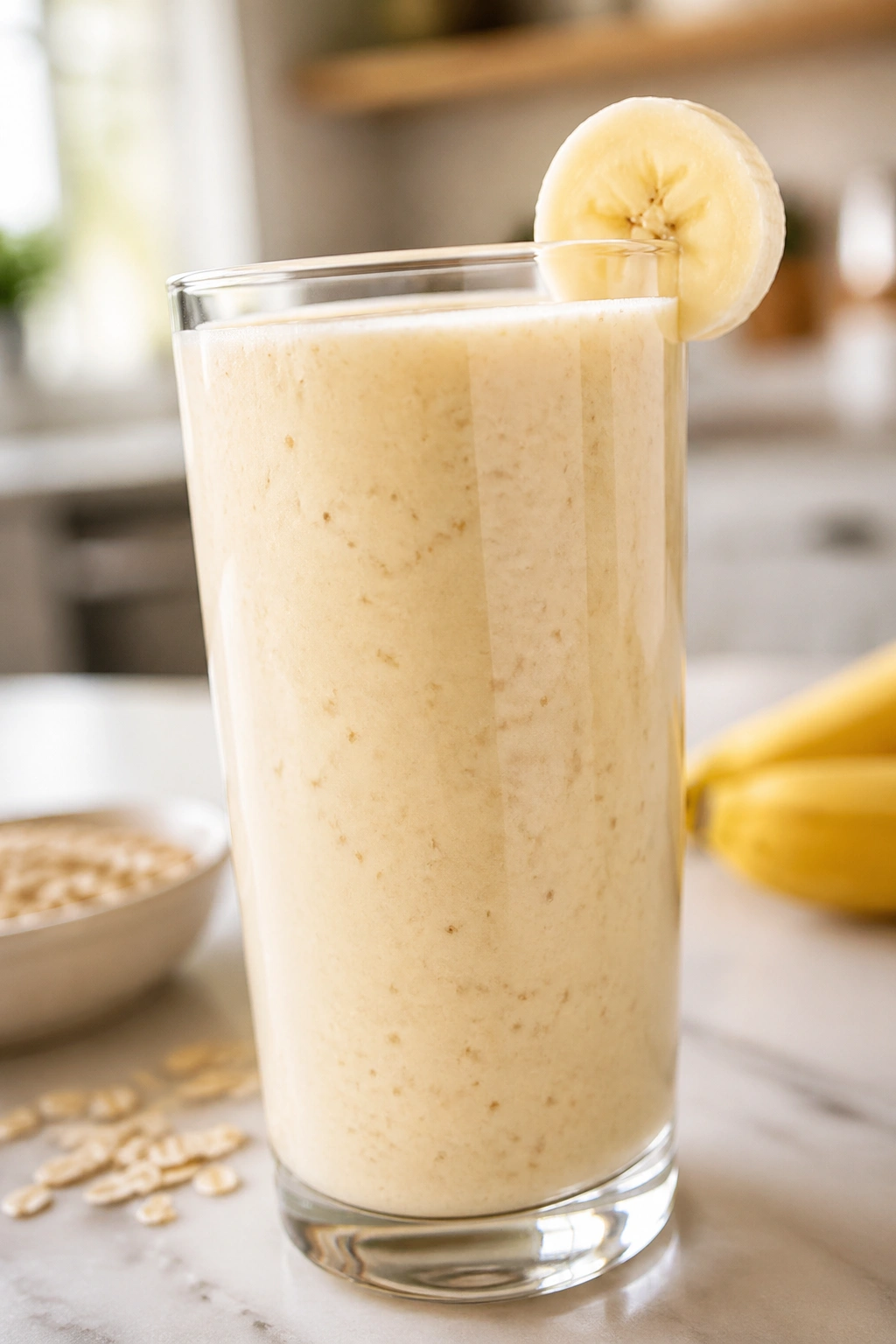
A smoothie can be a lifesaver when appetite is low or nerves have shut down your desire to chew anything. It turns pre-run fuel into something you can drink in a few minutes, which is why so many runners lean on it before a long run. The catch is simple: keep it thin. Thick smoothies are just cold mashed food in a cup.
Make It Thin, Not Dense
A good starting point is 1 banana, 1/3 cup oats, 3/4 cup plain yogurt or milk, and 1 tablespoon honey. Blend until the texture is completely smooth. If you can still spot oat flakes, keep blending. If it tastes like a milkshake with too much ice, it’s probably too thick for close-to-run comfort.
The oats give the drink more staying power than fruit alone. The yogurt adds a little protein and creaminess. The banana keeps it sweet without needing a pile of sugar. If you want a little more salt, add a pinch. That tiny touch can make the flavor better and help with sweat losses later.
Avoid chia seeds, flax, giant spinach handfuls, and heavy spoonfuls of nut butter unless you’ve got a long gap before the run and know your gut tolerates them. A pre-run smoothie should feel easy going down. If it takes work, it’s too much.
12. Pretzels or Salted Crackers
Pretzels are what I reach for when I need simple carbs and a little salt, not a sit-down breakfast. They’re dry, portable, and easy to nibble when the clock is tight. Salted crackers can do the same job. Neither one is fancy. Both can save a run.
The dry texture is part of the appeal. These snacks are low in fat and usually low in fiber, so they tend to sit lightly. A small bowl — maybe 20 to 30 pretzel twists or 6 to 8 plain salted crackers — can be enough when you’re eating close to the start and don’t want anything heavy in your stomach.
They also pair nicely with other simple foods. Pretzels plus applesauce. Crackers plus a banana. Pretzels plus a small yogurt cup if you’ve got more time. That kind of mix gives you more carbohydrate without making the meal feel like a brick.
I like this option most when the pre-run window is short and the runner needs something salty to wake up the palate. It’s not a complete breakfast. It is a clean, reliable stopgap that does its job and gets out of the way.
The simplest rule wins: the closer the run, the smaller the portion and the plainer the food. Feed the tank, don’t bother the engine.
