



The first few minutes after waking up are rarely as graceful as we would like them to be. You step out of bed, your joints protest, and your muscles feel as though they were locked in place for the last eight hours. This sensation isn’t just “getting older” or a lack of sleep; it is a physiological reality. During deep sleep, your body temperature drops, your metabolism slows, and your muscles lose their fluid, elastic quality. They become dehydrated and slightly stiff. When you move immediately into your morning routine without waking those systems up, you are essentially asking a cold engine to sprint the moment the ignition turns over.
Stretching is the grease for those rusted gears. It signals to your nervous system that the day has begun. It increases blood flow, lubricates your joints with synovial fluid, and helps flush out the metabolites that settle in your tissues overnight. You do not need to be a gymnast or a yoga practitioner to see the benefits. You simply need a deliberate, sequenced approach to coaxing your body back into motion. Here are twenty specific routines, ranging from simple neck releases to full-body activations, designed to help you reclaim your mobility before the day demands anything of you.
1. The Gentle Neck Release

We carry an incredible amount of tension in our neck and traps, often exacerbated by pillows that provide inadequate support or the way we subconsciously curl up while sleeping. This release focuses on the sternocleidomastoid and the upper trapezius muscles—the areas that tighten up when you stare at screens or sleep at awkward angles.
Start by sitting or standing with a tall spine, shoulders pulled back and down. Slowly drop your right ear toward your right shoulder. You do not need to force it; gravity is enough. Keep your left shoulder pressed down; reaching your left fingertips toward the floor will intensify the stretch along the side of the neck. Hold this for thirty seconds, breathing slowly. The key here is resisting the urge to collapse your posture. If you lean your whole torso, you lose the isolation of the neck muscle. Repeat on the left side, then slowly roll your chin toward your chest to stretch the back of the neck.
2. Dynamic Shoulder Rolls and Openers

Shoulders are complex joints prone to rounding forward, especially if you spend your days at a desk. Morning rolls are less about deep static stretching and more about synovial lubrication—waking up the joint capsule so it moves smoothly.
The Mechanics of the Roll
- Stand with feet hip-width apart.
- Inhale and shrug your shoulders up toward your ears as hard as you can.
- Exhale as you roll them back, squeezing your shoulder blades together.
- Drop them down, opening your chest, and then roll them forward.
Perform ten circles in each direction. Use your breath as a metronome. If you hear clicking, that is often just tendon snapping over bone; if it is painless, ignore it. However, if you feel sharp pain, decrease the range of motion immediately. Focus on the sensation of your scapula gliding against your ribcage. This rhythmic motion clears out the stagnation built up from lying still, preparing your upper body for the postural demands of the day ahead.
3. Cat-Cow Spine Awakening
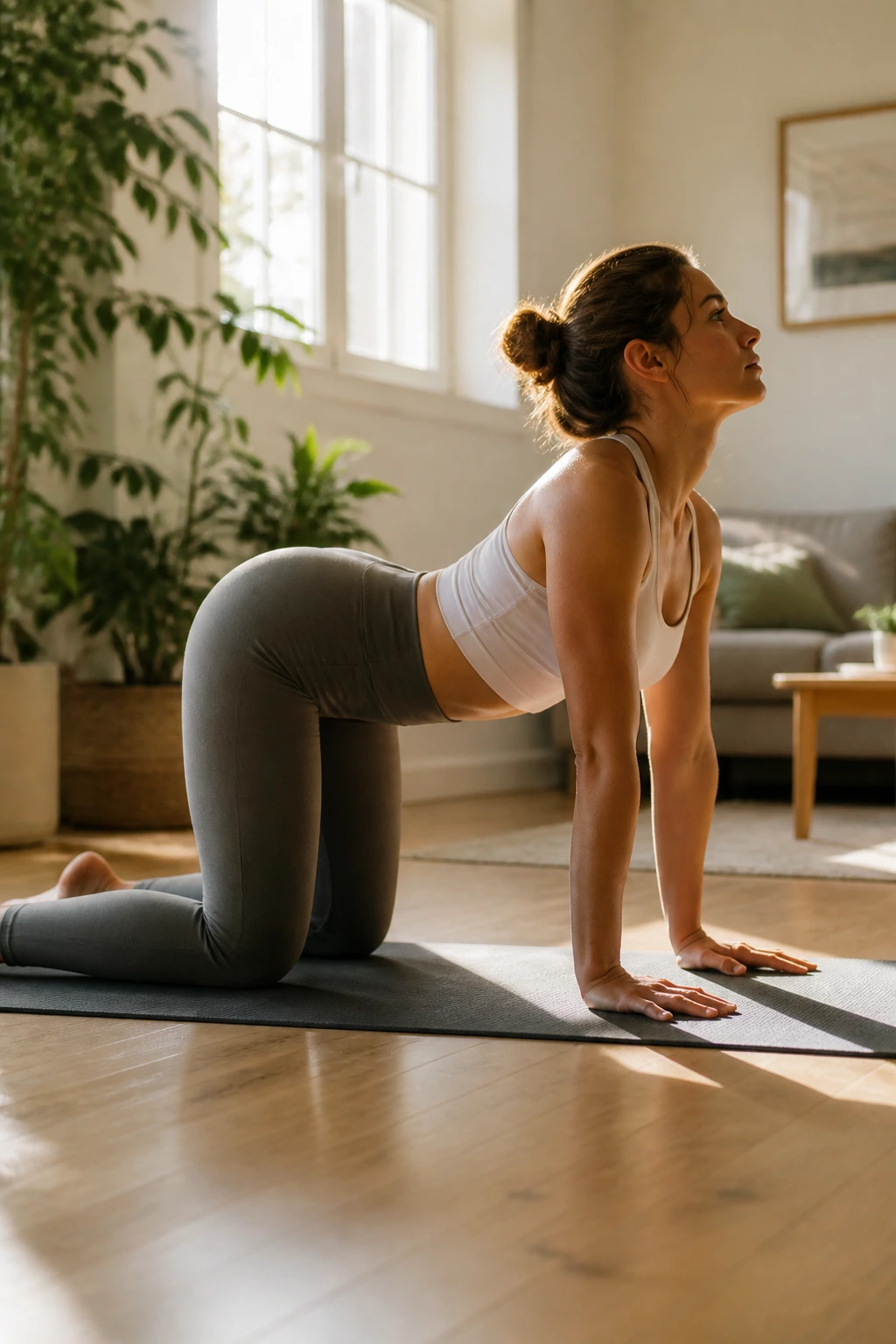
The cat-cow sequence is perhaps the single most effective way to wake up the entire length of your spine. It combines flexion and extension, forcing the vertebrae to move independently rather than as a single rigid block.
Come onto your hands and knees in a tabletop position. Ensure your wrists are directly under your shoulders and your knees are under your hips. As you inhale, drop your belly toward the floor, lift your chin, and gaze upward. This is the cow pose. As you exhale, push the floor away, arch your back toward the ceiling, and tuck your chin toward your chest. This is the cat pose.
The magic happens when you move slowly. Do not rush the transition. Imagine articulating your spine one vertebra at a time, starting from the tailbone and ending at the crown of your head. This isn’t a race; it is a deliberate mobilization of the entire spinal column. Ten repetitions should be enough to feel the warmth spreading through your back.
4. Child’s Pose for Decompression
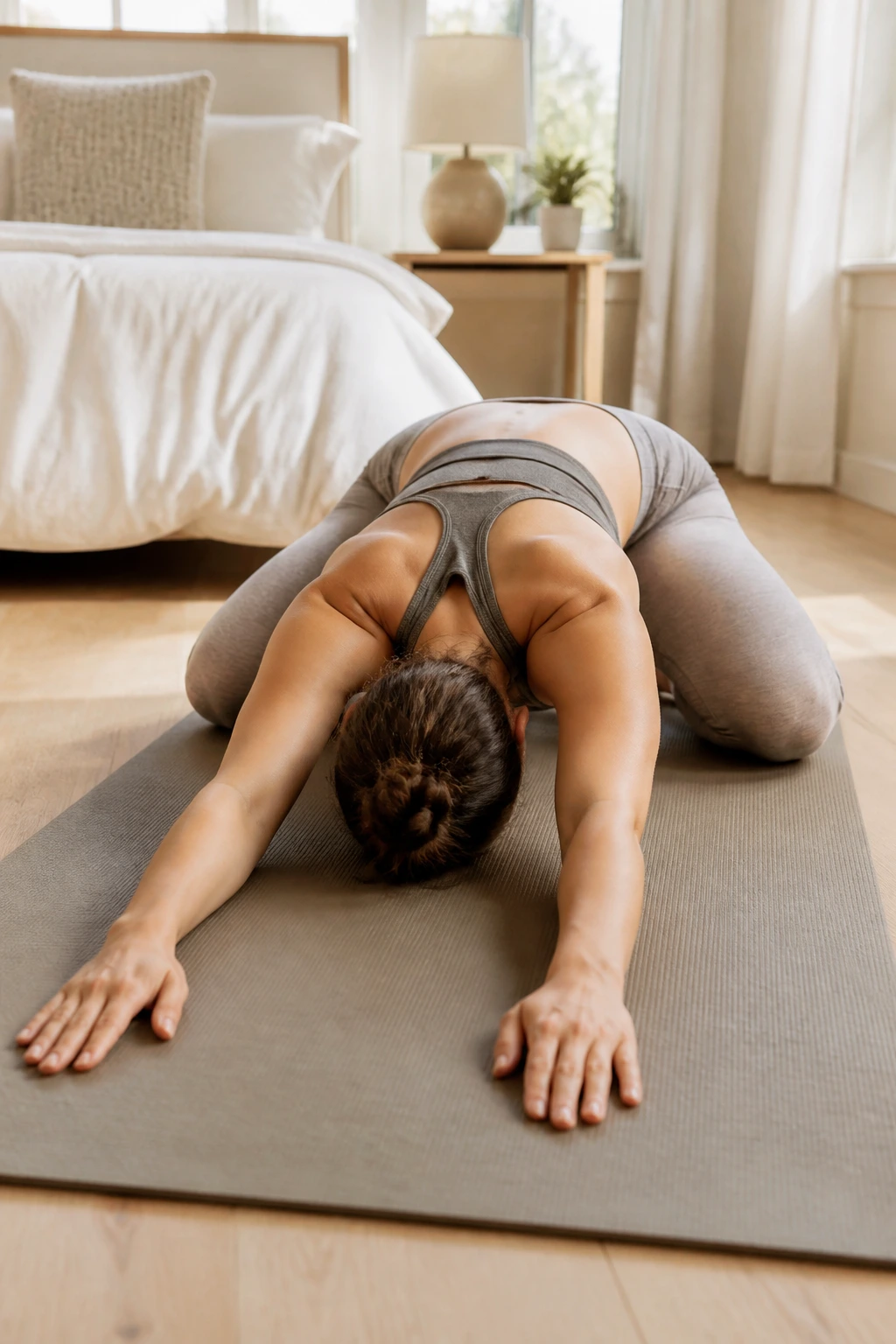
Child’s Pose is a resting position, but it is also a powerful tool for gently stretching the lower back, hips, and ankles. It provides a moment of decompression for the spine, which has been under the influence of gravity all night.
From your tabletop position, keep your knees wide and bring your big toes to touch. Push your hips back until they rest on your heels. Extend your arms forward on the floor, forehead resting on the mat. If your forehead does not reach the floor, rest it on a folded towel or block. Focus on the feeling of your lower back lengthening. With every exhale, allow your chest to sink closer to the ground. This stretch is non-intrusive and soothing, making it ideal if you feel particularly stiff or groggy. Stay here for a full minute, breathing into the back of your ribs.
5. Thread the Needle
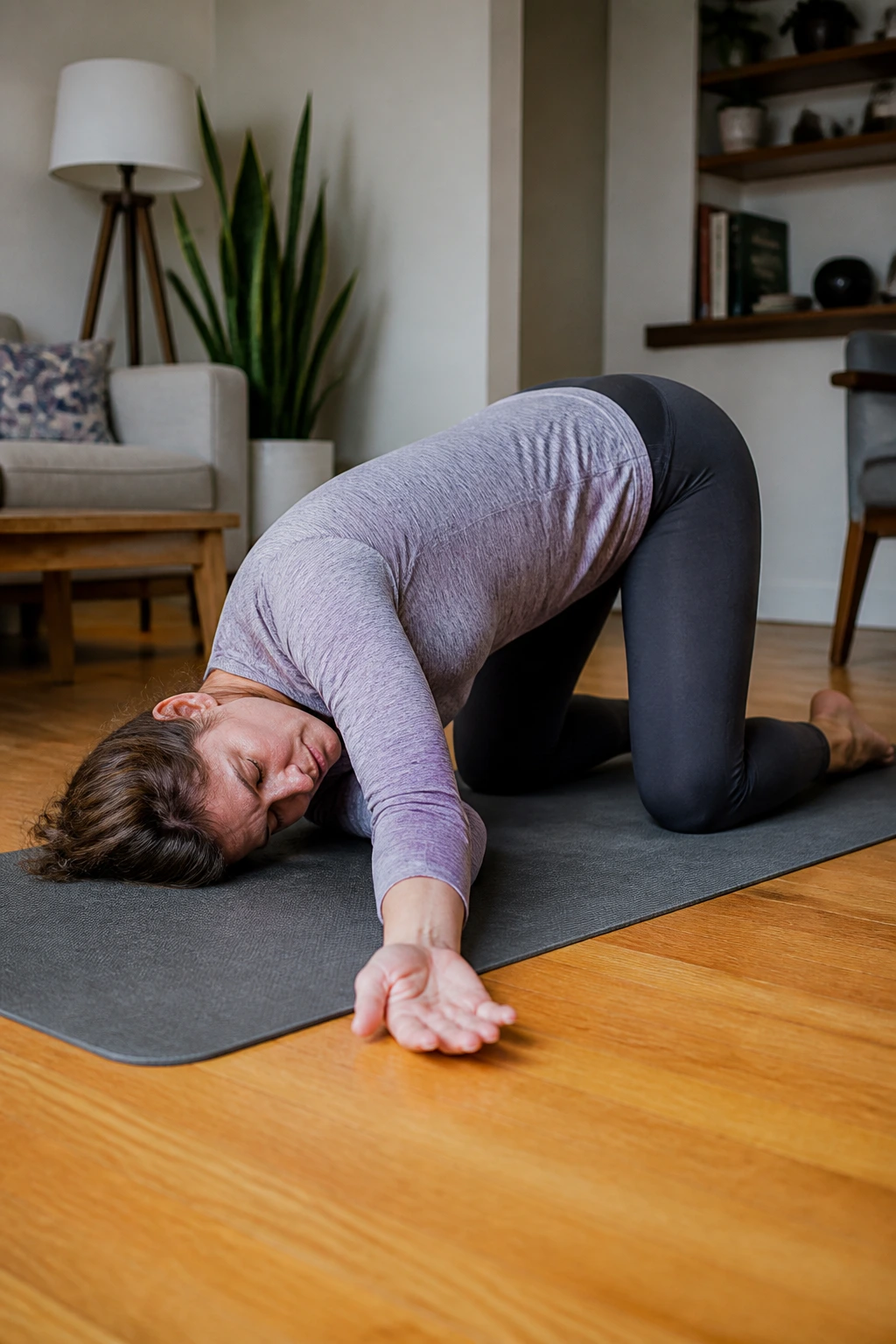
This is a rotational stretch that targets the thoracic spine—the upper and middle back—which is often the most neglected part of the torso. Most of our movement is forward and backward; we rarely rotate, which leaves the thoracic area tight.
Start in a tabletop position. Inhale and reach your right arm toward the ceiling, twisting your torso. On the exhale, thread your right arm underneath your left arm, resting your right shoulder and ear on the floor. Keep your hips high and square. You should feel a deep, gentle stretch across the upper back and the back of the right shoulder. Stay for five deep breaths, then switch sides. This move is incredible for undoing the “slouch” that tends to accumulate in the upper back. It creates space between the shoulder blades that you simply cannot get from a basic stretch.
6. Downward-Facing Dog
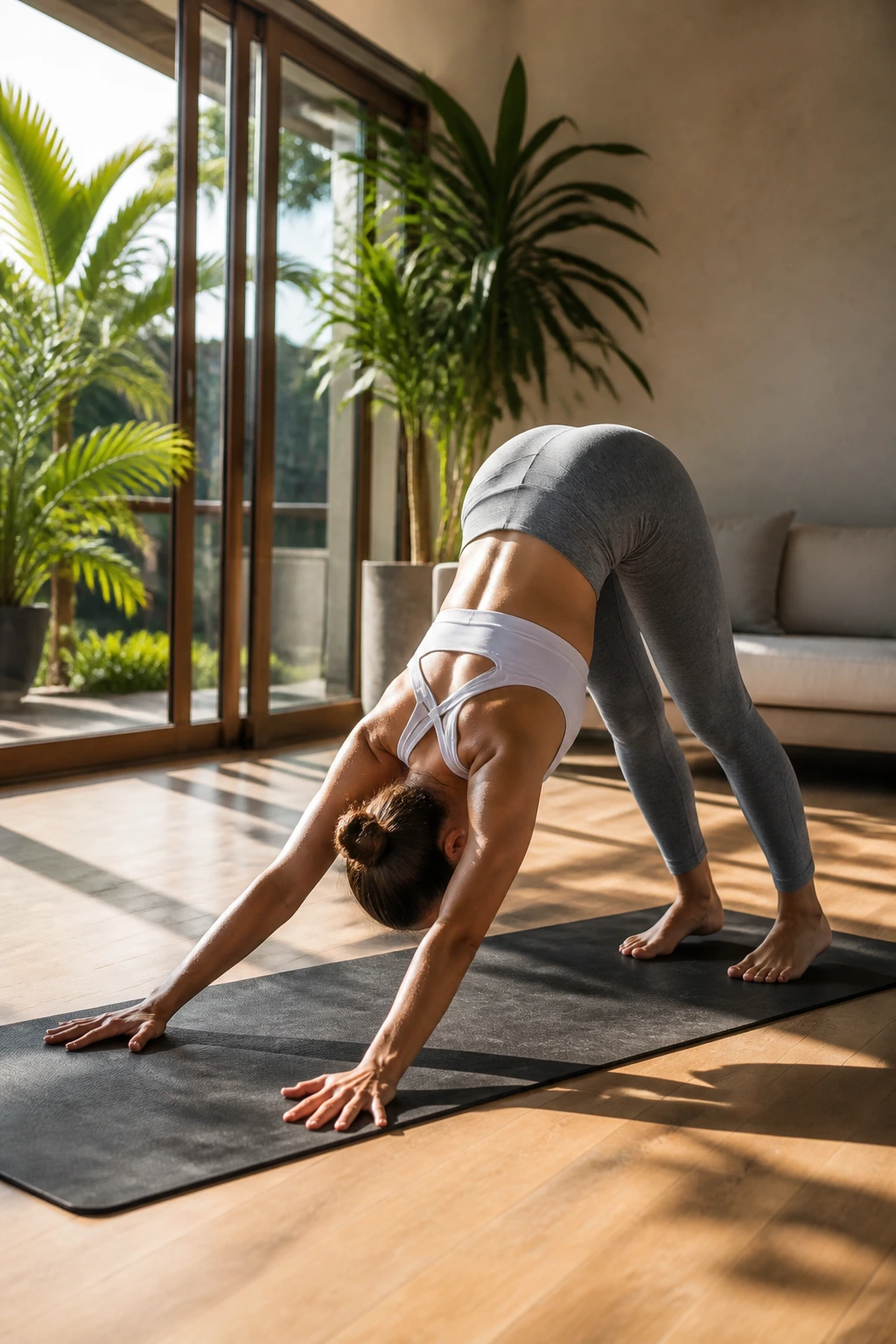
Down Dog is a classic for a reason. It is a full-body inversion that stretches the hamstrings, calves, and even the arches of your feet, while simultaneously lengthening the spine and opening the shoulders.
From your hands and knees, tuck your toes and lift your hips high, pushing your chest toward your thighs. Keep a slight bend in your knees if your hamstrings feel tight—your goal is a long, straight spine, not necessarily straight legs. Pedal your feet one at a time, pressing one heel toward the floor while bending the other knee. This calf-lengthening action is vital for anyone who walks or runs. Your hands should be pressed firmly into the mat, fingers spread wide to distribute the weight. Hold for five to ten breaths, letting your head hang heavy to release the tension in your neck.
7. Cobra Stretch for Abdominal Length
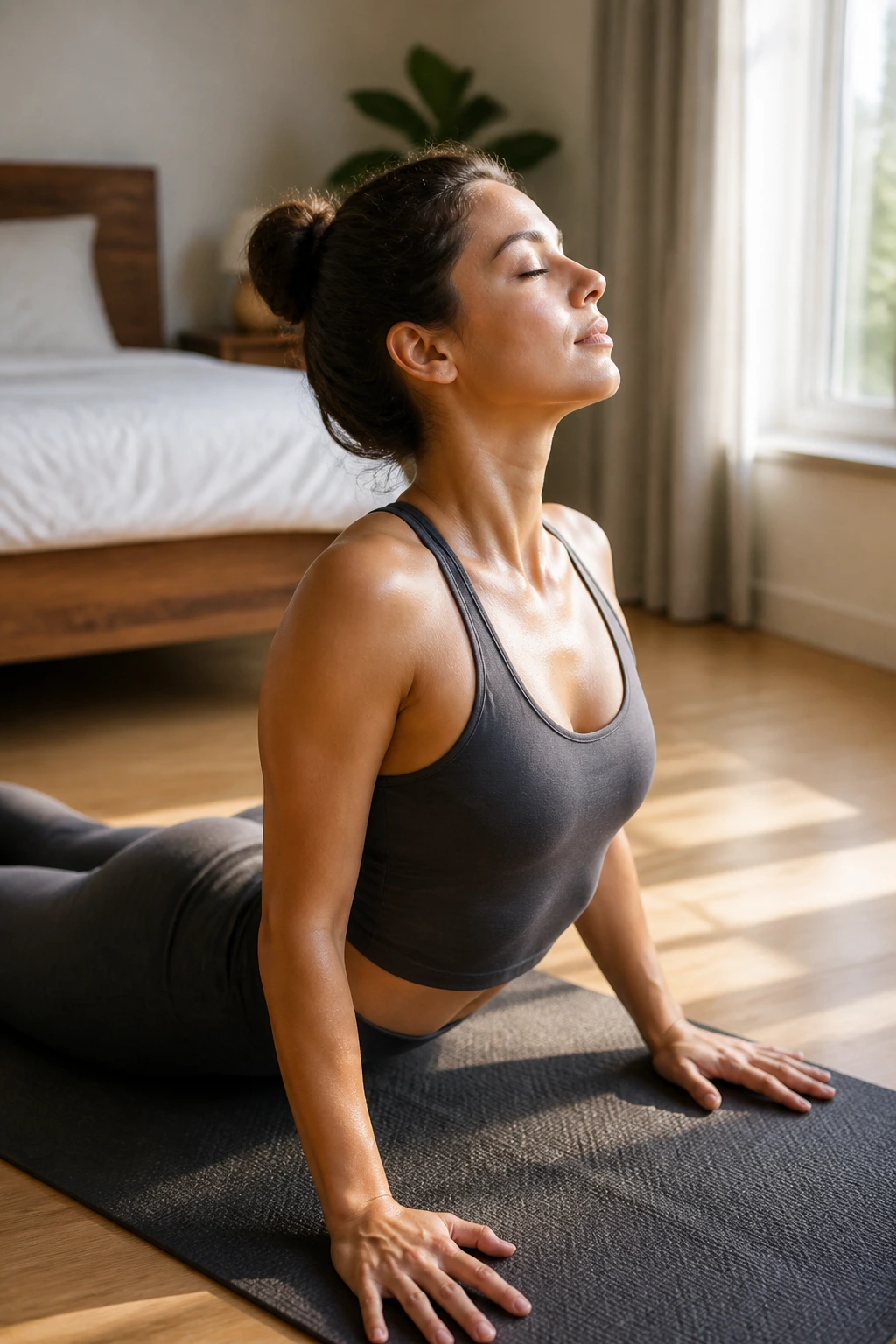
After hours of being curled up, the front of your body—specifically your abdominals and hip flexors—needs to be lengthened. The Cobra pose is a gentle backbend that opens the chest and stretches the abs.
Lie on your stomach with your legs extended behind you. Place your hands under your shoulders, elbows tucked close to your ribs. Inhale as you gently peel your chest off the floor, using your back muscles more than your arm strength. Keep your shoulders down and away from your ears. You are not trying to push yourself into a high arch; a low, controlled lift is much more effective for the morning. Feel the stretch move from your pubic bone up to your sternum. This pose helps counter the urge to hunch over, setting a tone of openness for your posture throughout the day.
8. Standing Forward Fold
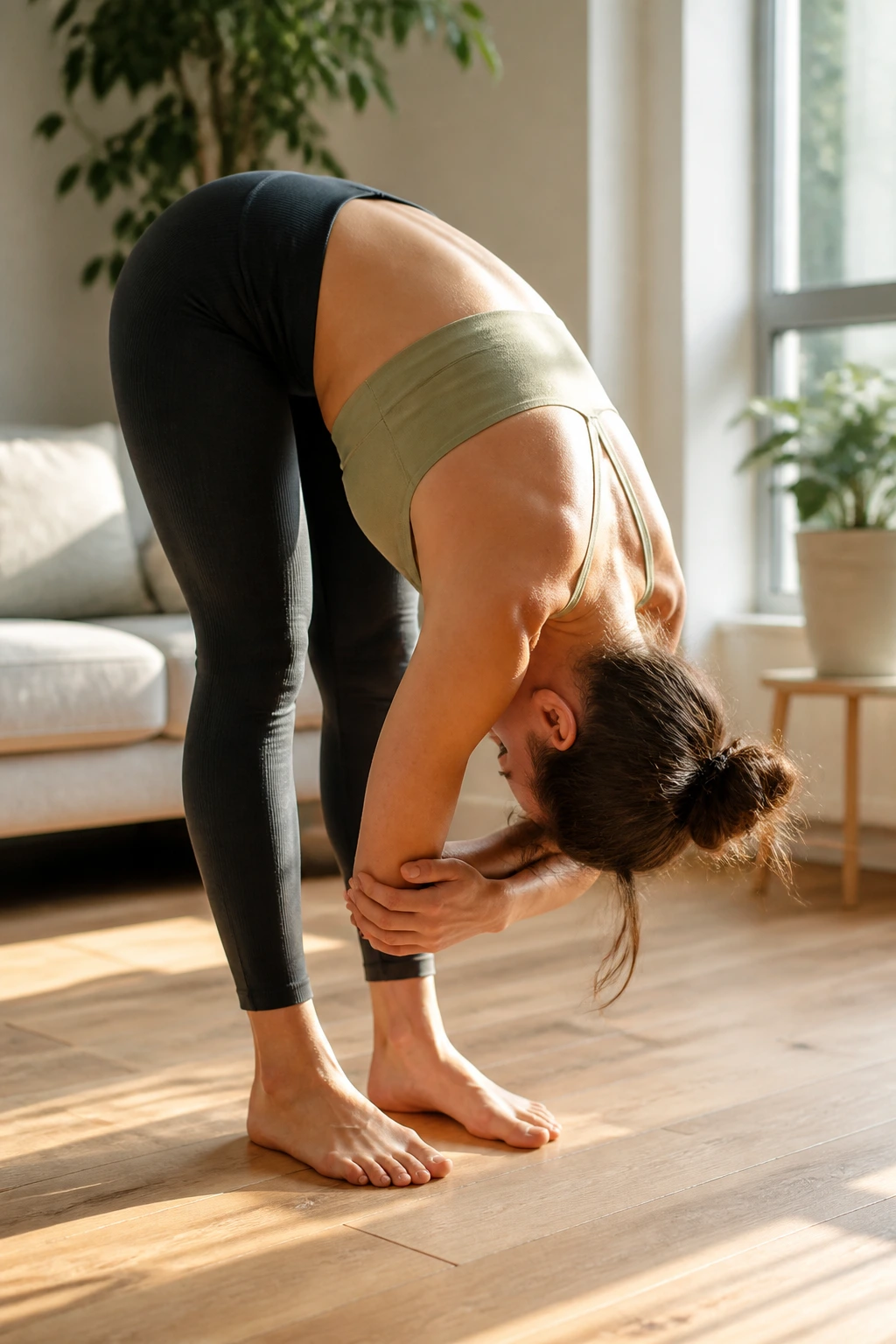
The Standing Forward Fold targets the posterior chain—the back of the legs, the glutes, and the lower back. It is arguably the most honest test of morning tightness.
Stand with feet hip-width apart. Hinge at your hips and fold forward. Keep a significant bend in your knees initially. Let your upper body hang like a ragdoll. Grab opposite elbows with your hands and gently sway from side to side. This creates traction for your lumbar spine, allowing the vertebrae to pull apart slightly. Do not lock your knees; hyperextension here will put unnecessary pressure on the joint. As you hold, you can gradually try to straighten your legs, but prioritize the feeling of your lower back relaxing. This position also serves as a mild inversion, encouraging blood flow to the head and neck.
9. Single-Leg Quad Stretch
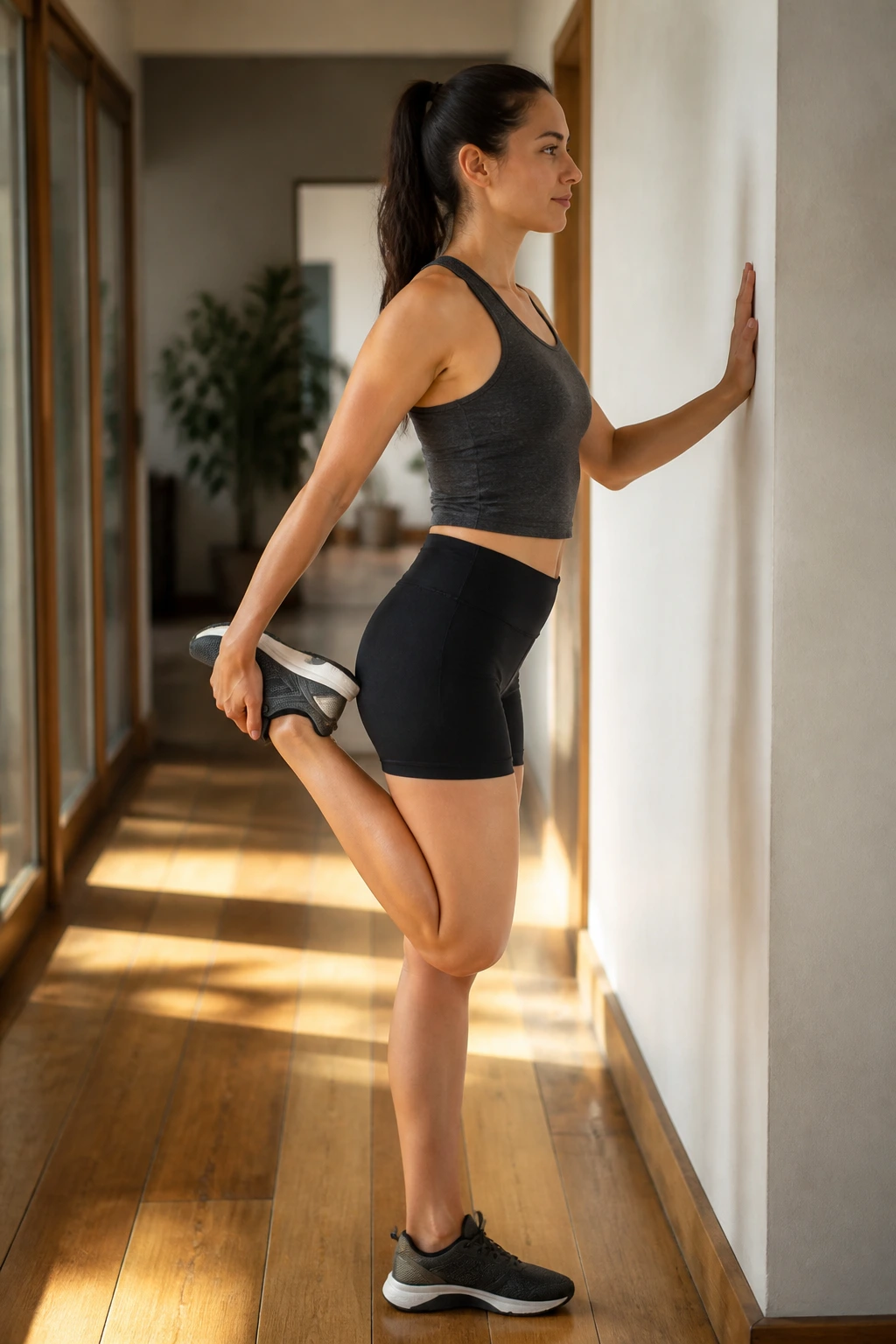
Your quadriceps are powerful muscles that often get short and tight from sitting. This stretch helps reset the tension and promotes balance, which is a great way to wake up your proprioception (your body’s ability to sense its position in space).
Stand on your right leg. Use a wall or chair for balance if you need it. Bend your left knee and grab your left ankle with your left hand, pulling your heel toward your glute. Keep your knees close together and tuck your tailbone slightly. This pelvic tuck is crucial; if you arch your back instead of tucking, you miss the stretch in the quads and put stress on the lower back. Hold for thirty seconds. You should feel a stretch running down the front of the thigh. If you cannot reach your ankle, use a towel wrapped around your foot to pull it toward you.
10. Deep Lunging Hip Flexor Stretch
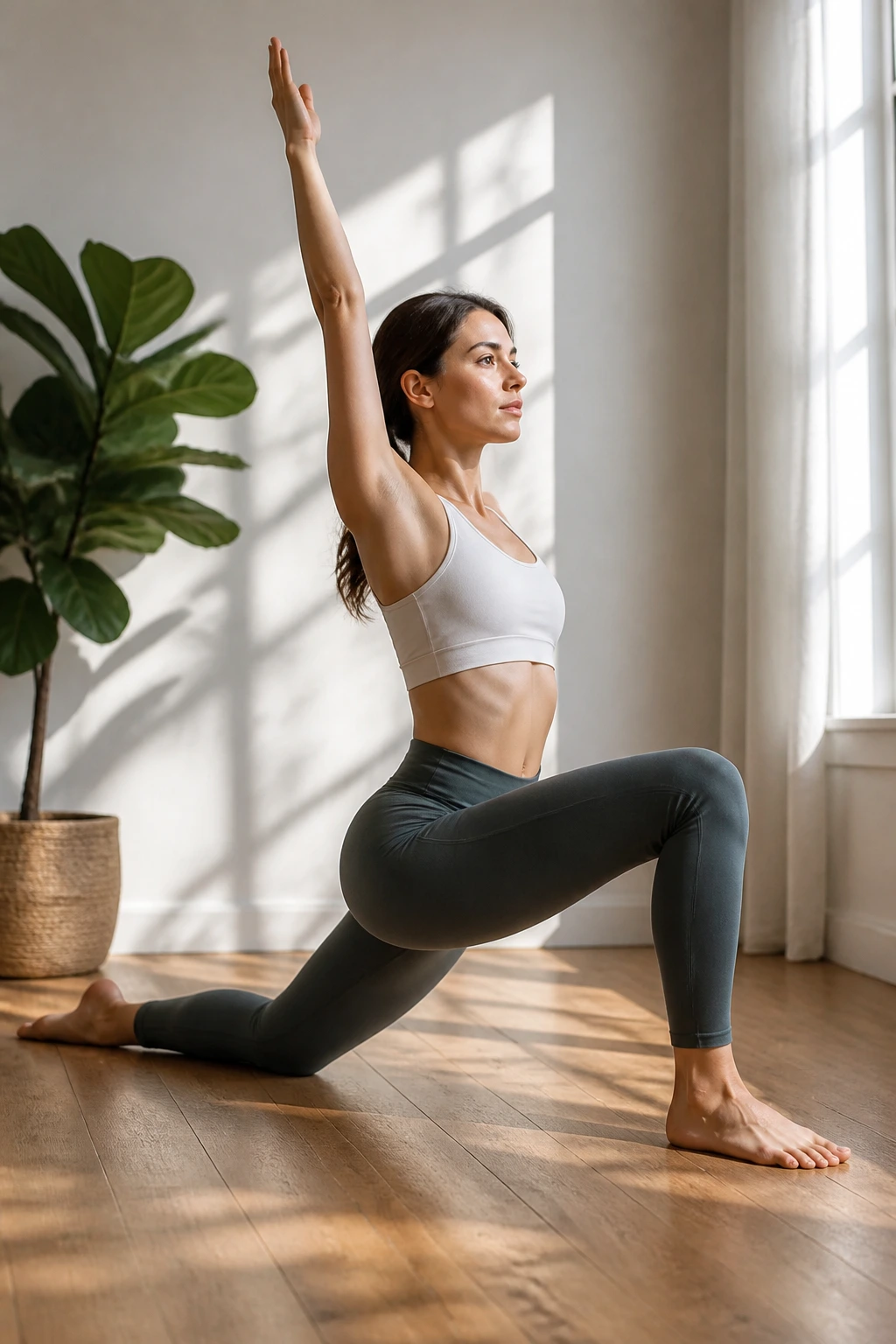
Hip flexors are notorious for locking up. They are the muscles that connect your legs to your torso, and they stay in a shortened, contracted state whenever you sit. Opening them is essential for preventing lower back pain later in the day.
Step your right foot forward into a wide lunge, lowering your left knee to the floor. Keep your right knee stacked over your right ankle. With a straight spine, lean forward slightly, pushing your hips toward the floor. To deepen the stretch, squeeze your left glute—this “reciprocal inhibition” tells the hip flexor to release. Reach your left arm overhead and lean slightly to the right to open the side body. Hold for thirty seconds per side. This stretch is a game-changer for those who spend hours in a chair. It feels like taking a deep, literal breath for your hip sockets.
11. Butterfly Stretch for Inner Hips
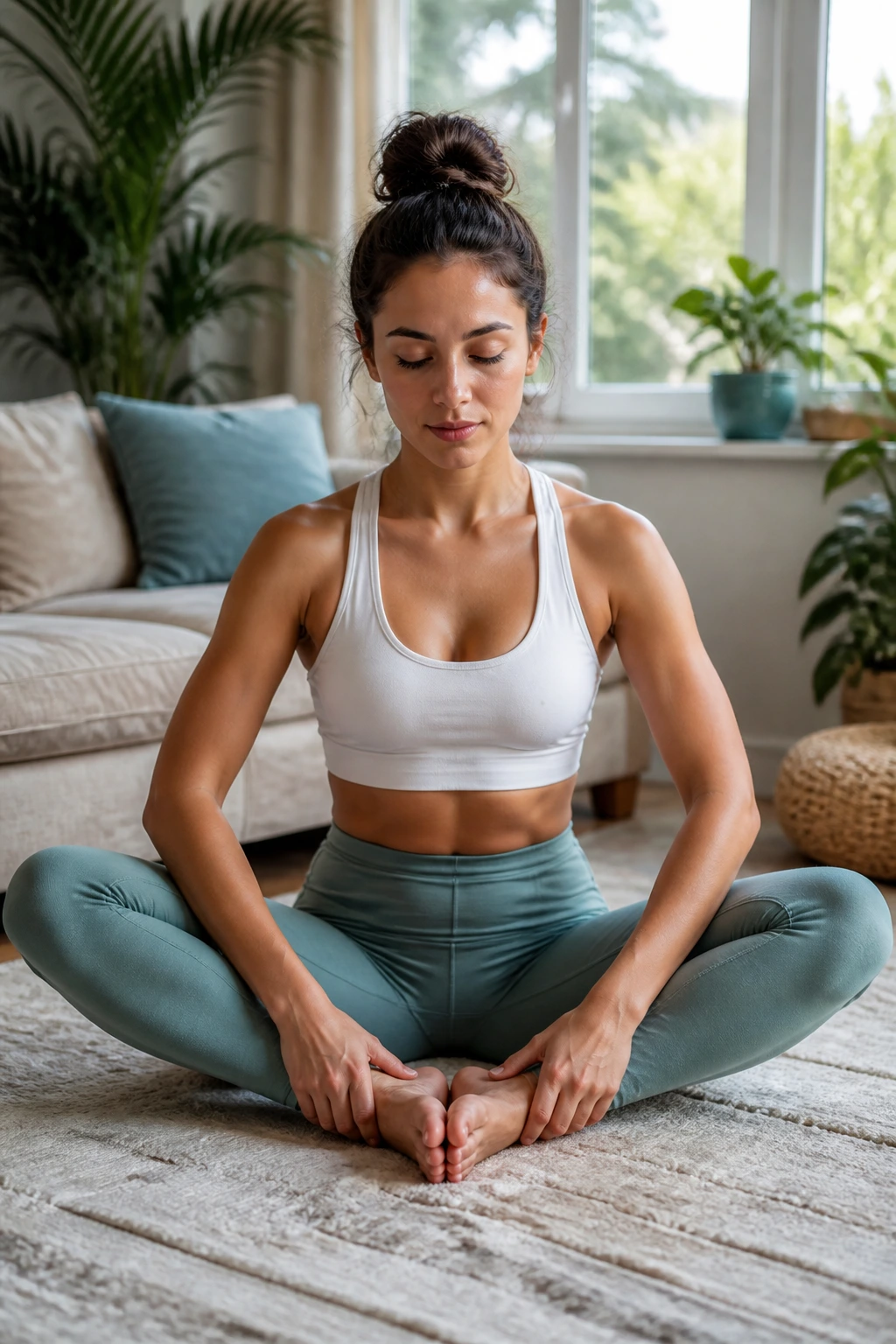
The adductors (inner thighs) can become very tight, pulling the pelvis out of alignment and causing discomfort in the hips and knees. The butterfly stretch is a simple, effective way to open this area while sitting comfortably.
Sit on the floor with your feet together, knees dropping out to the sides. Hold onto your ankles or feet. Use your elbows to gently press your knees down, but do not force them. A better approach is to lean forward from your hips with a long spine. Keep your chest open. If you round your back, you are just straining your spine rather than opening your hips. This is a great position to hold while you take a few moments to mentally map out your day. Focus on relaxing the inner thighs on the exhale. The more you relax, the more the tension will dissipate.
12. Supine Spinal Twist
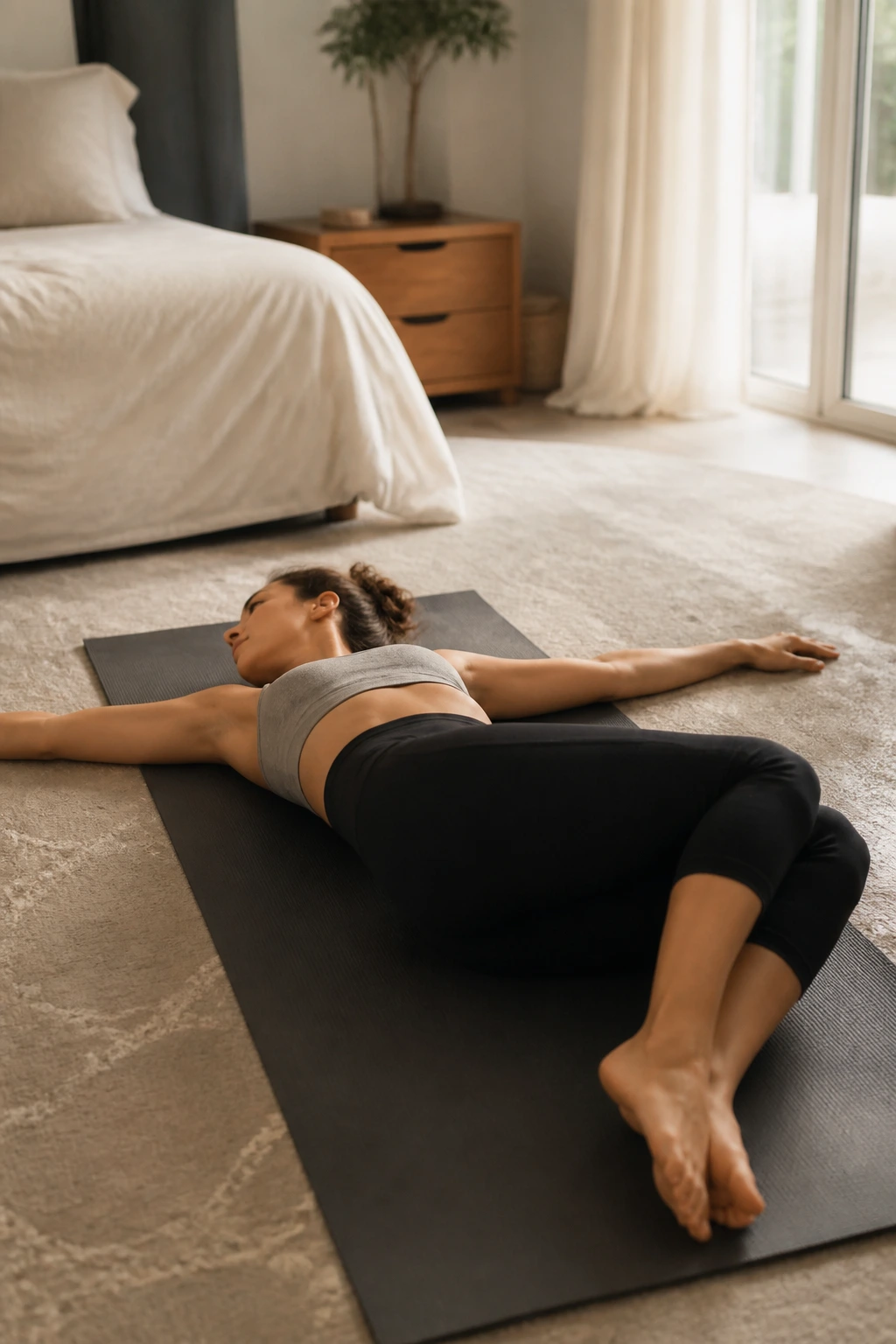
This move is the ultimate reset for the spine. By pinning the shoulders and rotating the hips in opposite directions, you create a gentle wringing-out effect that can help release stored tension in the lower back and obliques.
Lie on your back, knees bent, feet flat on the floor. Extend your arms out to the sides in a T-shape. Lower both knees to the right side of your body, keeping your left shoulder firmly planted on the mat. If your shoulder lifts, your knees don’t need to go all the way to the floor. Turn your head to look toward your left hand. The tension should feel like a mild, restorative pull across your lower back and ribs. Hold for forty-five seconds, then switch sides. This isn’t about intensity; it’s about gently mobilizing the spine after the static nature of sleep.
13. Torso Side Stretch
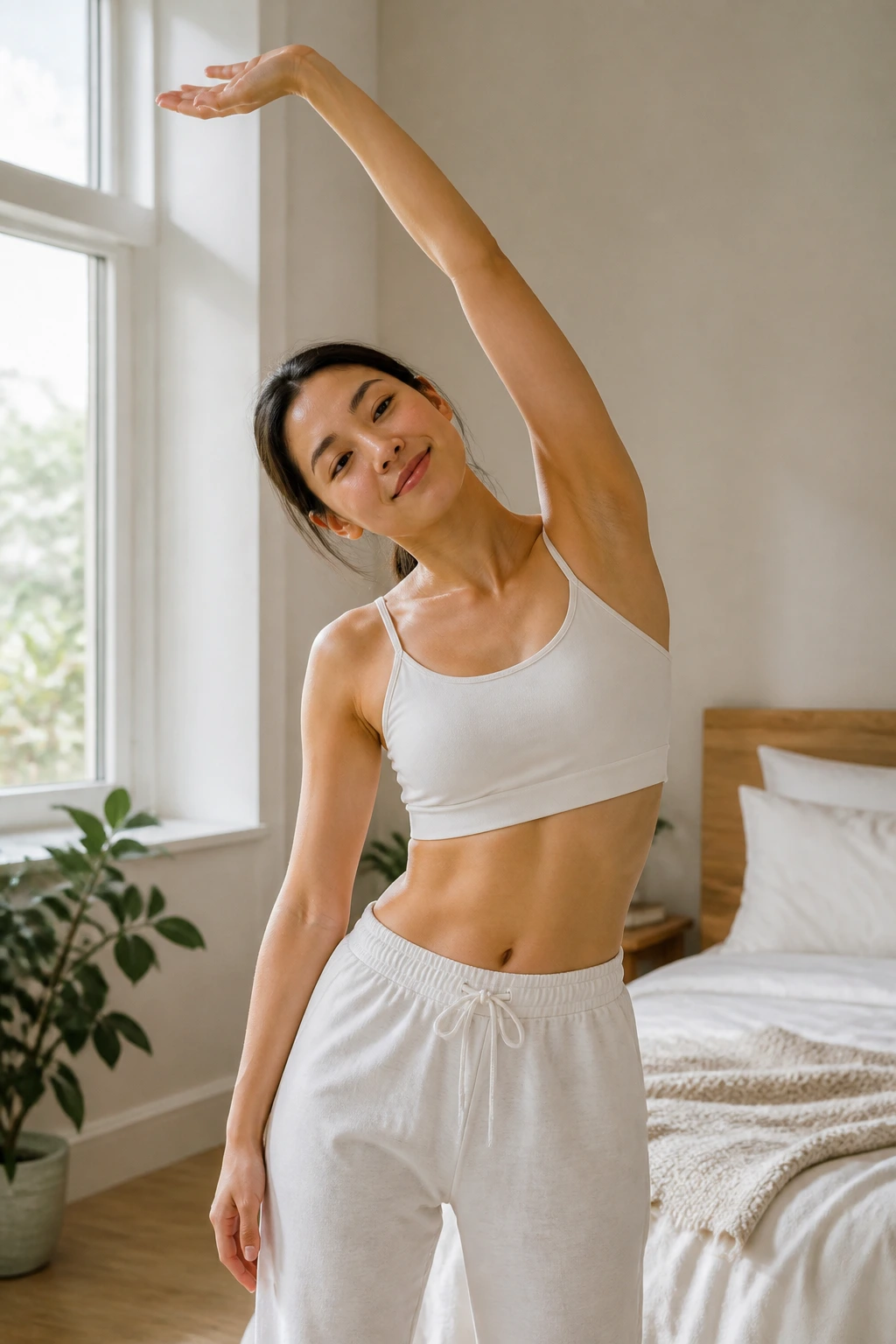
We often forget about the muscles between the ribs—the intercostals. These muscles are vital for breathing. If they are tight, your ribcage cannot fully expand, leading to shallow, ineffective breathing.
Stand tall, feet shoulder-width apart. Reach your right arm straight up toward the ceiling. Keep your left arm down by your side. Lean your entire torso to the left, reaching your right hand over your head. Keep your chest facing forward; do not let your shoulder rotate toward the floor. Feel the stretch from your hip all the way up to your armpit. Hold for five deep breaths. Switch sides. By creating space in the ribcage, you literally give your lungs more room to work. This makes you feel more awake and energized almost instantly.
14. Wrist and Forearm Flex
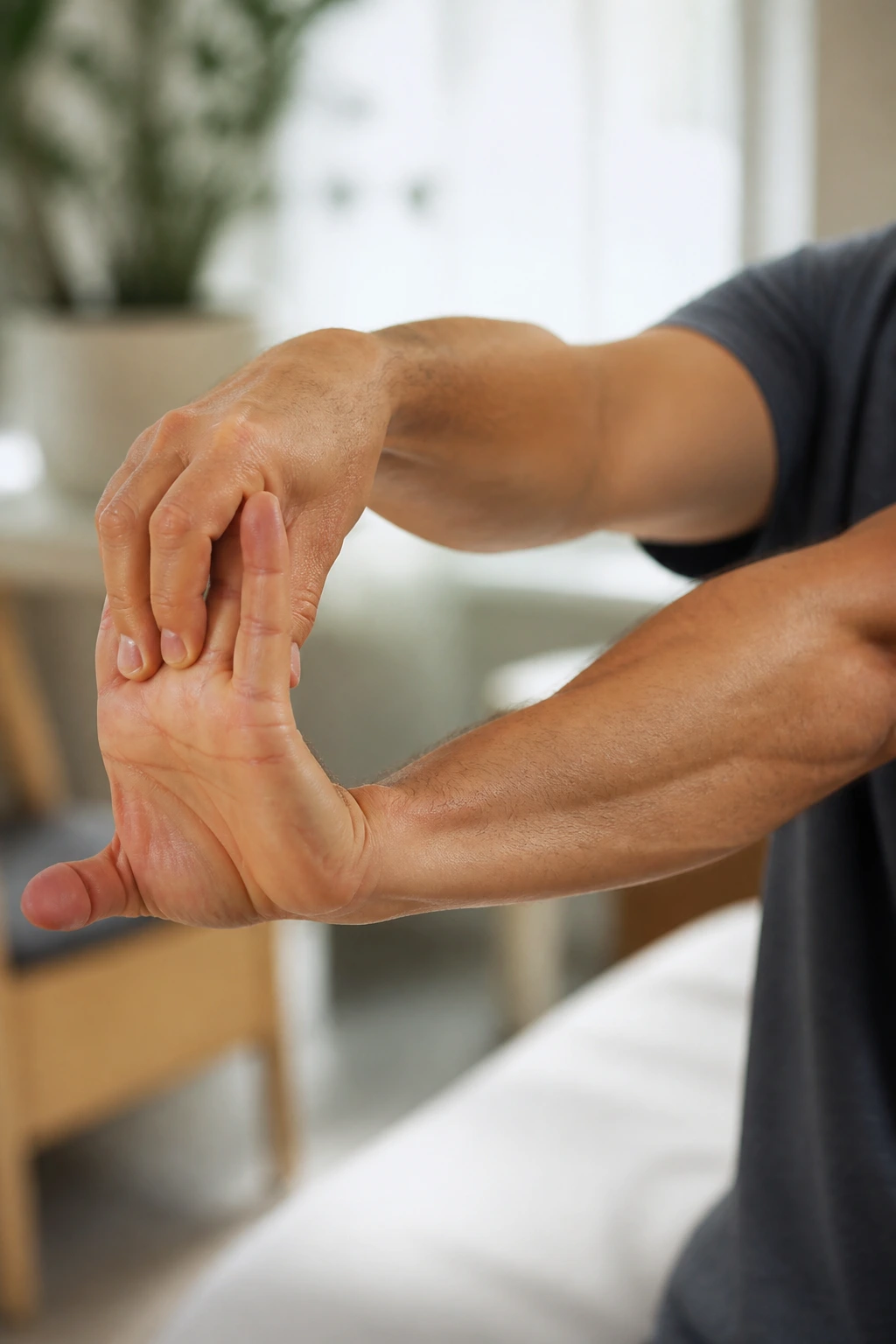
In a digital world, our wrists and forearms are constantly under strain. We often overlook them in morning routines, but they hold a lot of tension from sleeping with curled hands or wrists.
Extend your right arm forward, palm facing up. Use your left hand to gently pull your right fingers back toward you. You will feel this in the inside of the forearm. Hold for fifteen seconds. Then, flip your palm to face down and pull your fingers back, stretching the top of the forearm. Repeat on the left side. Finally, shake your hands out loosely for ten seconds. This quick sequence is incredibly beneficial for preventing stiffness if you have a job that involves heavy typing or manual labor. Think of it as giving your hands a fresh start.
15. The Pigeon Pose
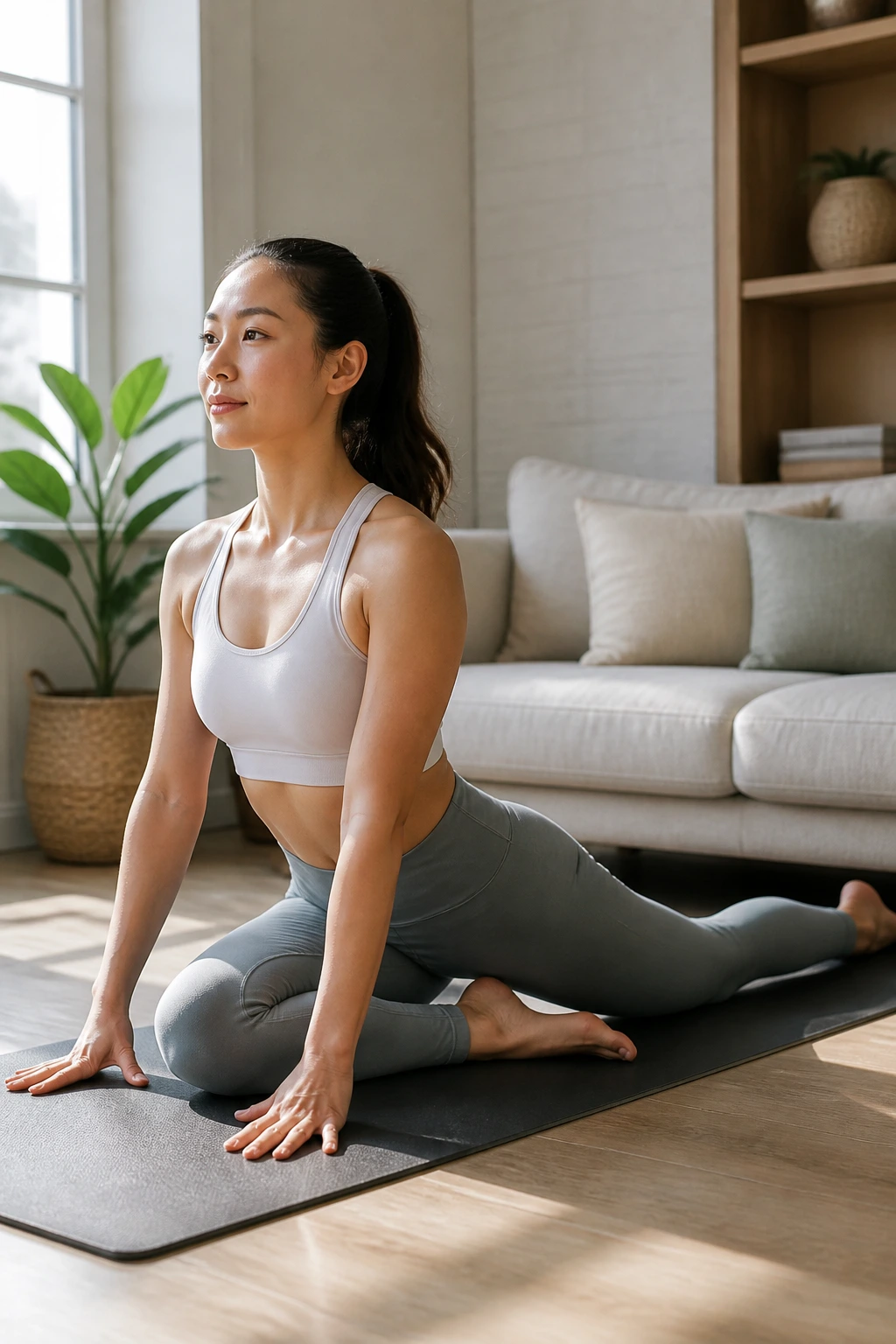
This is a classic yoga posture for the glutes and hips, specifically targeting the deep external rotators like the piriformis. If you have “tight hips” that feel like they are stuck, this is the remedy.
From a downward dog position, bring your right knee forward and place it behind your right wrist. Extend your left leg straight back behind you. Your right shin should be angled across your body. Square your hips—imagine your left hip pulling forward and your right hip pulling back. If this is too intense, place a folded pillow under your right hip for support. Fold forward over your right leg. Breathe into the deep glute stretch. Consistency here matters more than depth. Do not worry if your shin isn’t parallel to the front of the mat; just go to where you feel a strong but manageable pull.
16. Seated Hamstring Stretch
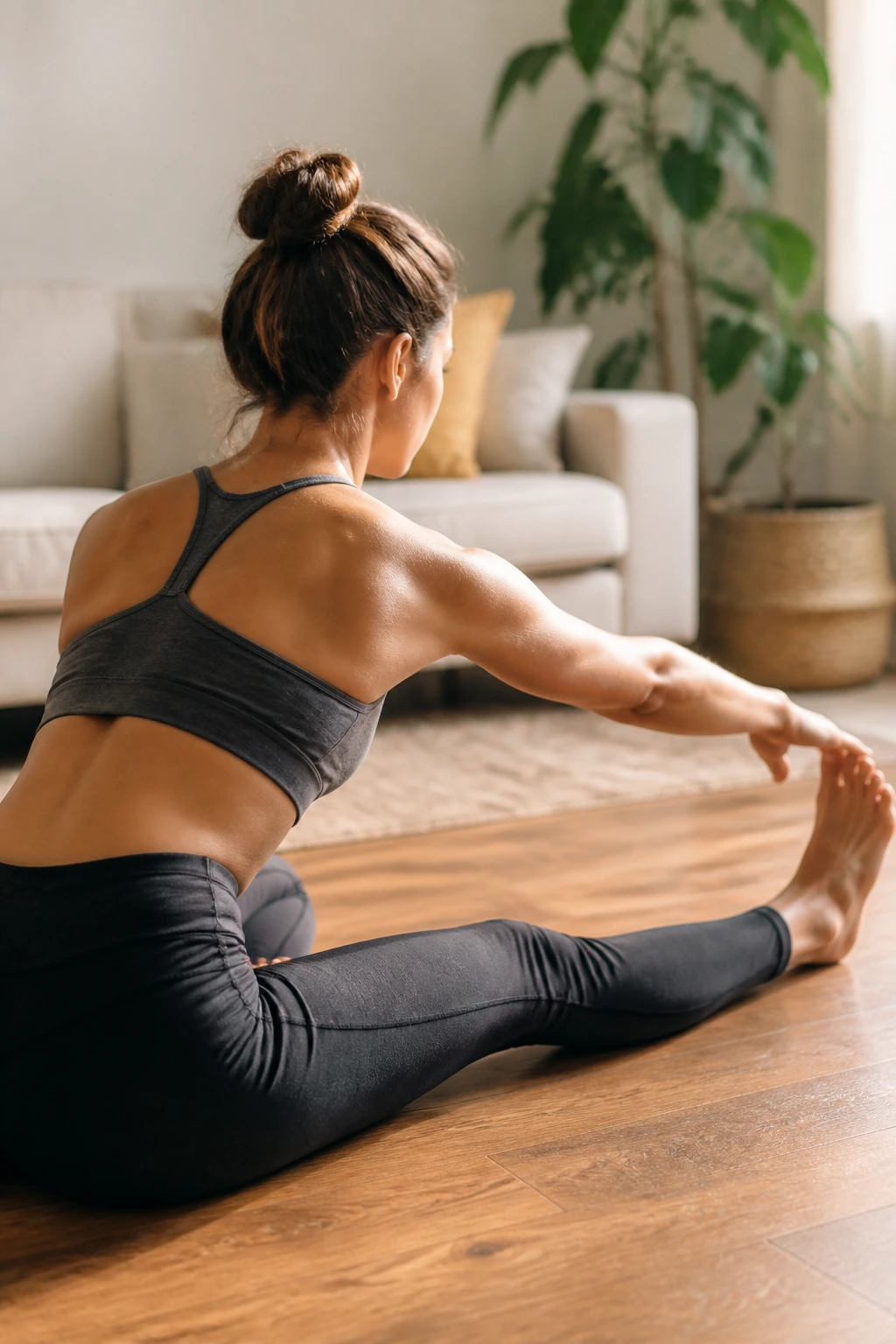
Tight hamstrings are a leading cause of back pain. When the hamstrings are short, they pull on the pelvis, flattening the natural curve of the lower back. This seated version allows you to focus on the leg without needing to balance.
Sit on the floor with your right leg extended and your left foot tucked against your right inner thigh. Reach forward toward your right foot. Keep your spine long. It is far better to reach for your shin with a straight back than to reach for your toes while rounding your spine and straining your neck. Feel the stretch running down the back of your knee and thigh. Hold for forty-five seconds. Switch sides. If you have extremely tight hamstrings, sitting on a folded blanket can help tilt your pelvis forward, making the stretch much more accessible and effective.
17. Cross-Body Shoulder Stretch
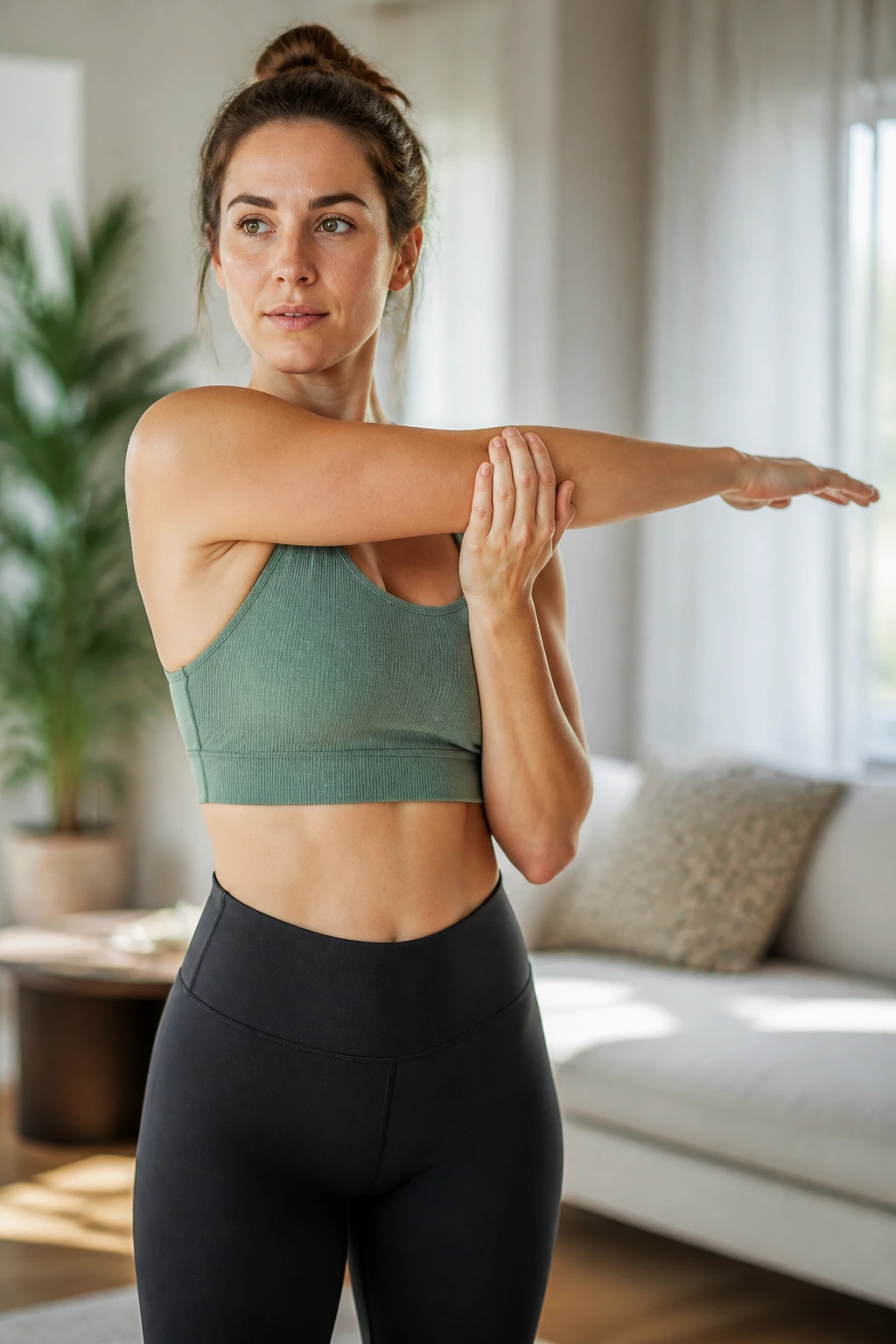
This stretch targets the posterior deltoid—the back of the shoulder—which often gets tight from sitting with rounded posture. It is a simple, effective move you can do almost anywhere.
Bring your right arm across your chest. Use your left forearm to gently hug your right arm in toward your chest. Keep your right shoulder down; do not let it creep up toward your ear. You should feel a stretch across the back of the right shoulder. Hold for thirty seconds. This move effectively isolates the shoulder capsule. If you want to increase the intensity, try to keep your chest facing forward rather than rotating with the arm. This is a very targeted stretch—perfect for waking up shoulders that feel “frozen” in the morning.
18. Triceps Overhead Stretch
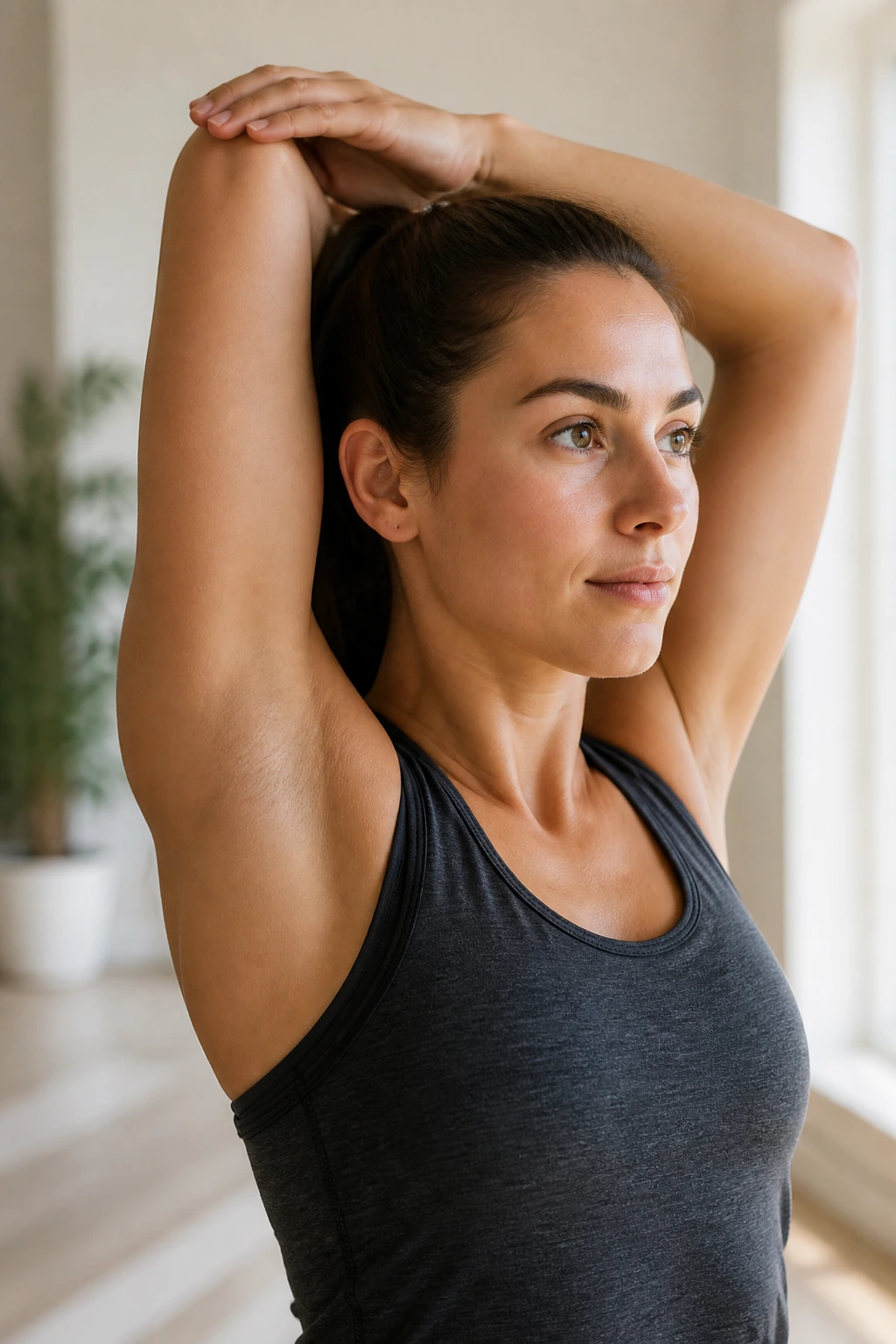
The triceps are involved in pushing motions, and they also connect to the shoulder blade, meaning tight triceps can limit overall shoulder mobility.
Reach your right arm overhead, then bend your elbow so your right hand touches the middle of your back. Use your left hand to gently push down on your right elbow. Keep your head upright; do not let it collapse forward. If your head is pushing your arm forward, your chest is too tight. Keep the neck neutral and the chest open. Hold for thirty seconds per side. This stretch can also be done while standing or sitting, making it versatile for any space. It feels particularly good after a night of sleeping with your arms tucked under your pillow.
19. Glute Bridge Activation
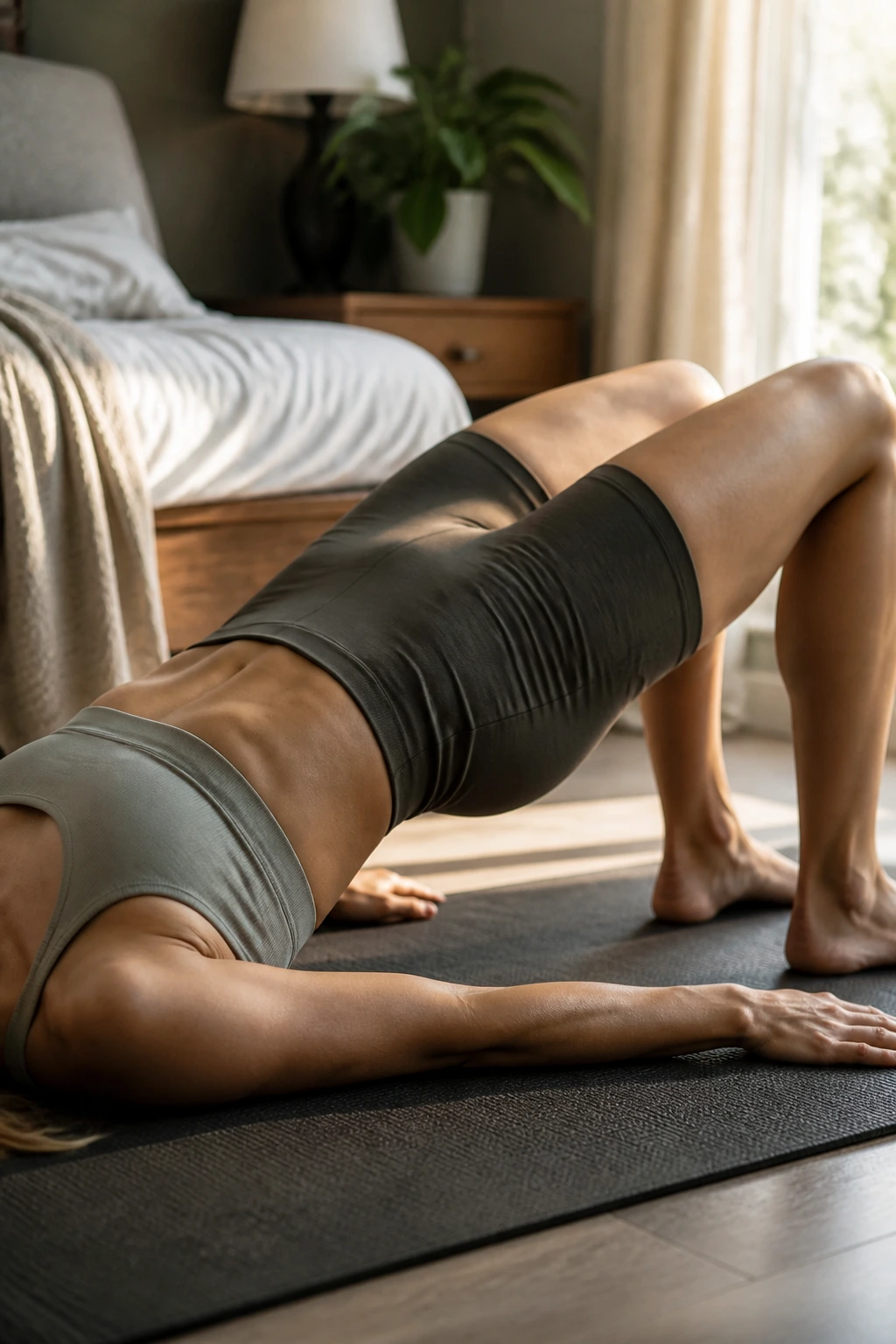
While technically a strength move, the glute bridge is an essential morning activation. It “wakes up” the posterior chain, which often goes dormant when we sleep. It is the perfect antidote to the atrophy of bed-rest.
Lie on your back, knees bent, feet flat on the floor hip-width apart. Press through your heels to lift your hips toward the ceiling. Squeeze your glutes at the top of the movement. Hold for three seconds, then slowly lower. Do ten repetitions. Do not arch your lower back; ensure the lift comes from the glutes. This engages the muscles that are responsible for stabilizing your pelvis throughout the day. By activating them in the morning, you are essentially telling your body to support itself better before you even leave the bedroom.
20. The Full Body Reach and Breathe
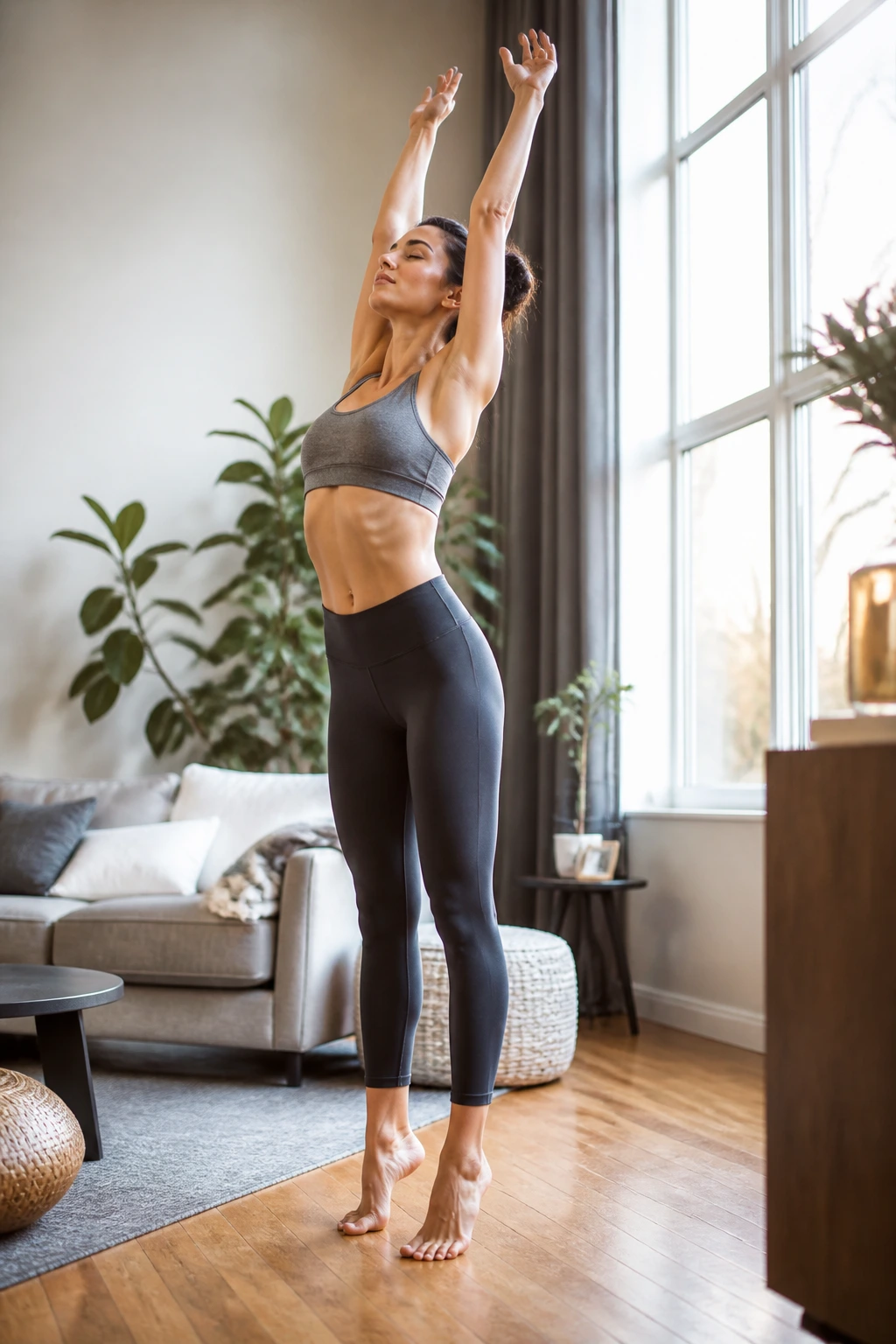
This is the final seal on your routine. It is less about a specific muscle group and more about total body integration and breath control. It marks the transition from “maintenance mode” to “day mode.”
Stand tall, feet together. Interlace your fingers and reach your arms overhead, palms facing the ceiling. Rise onto your toes, stretching your entire body from your fingertips to your heels. Take a massive, deep breath, filling your lungs to capacity. Hold for two seconds, then exhale, lower your heels, and let your arms drop to your sides. Repeat three times. This stretch is a symbolic wake-up call for your entire nervous system. It creates space, floods your blood with oxygen, and resets your posture. After this, you are truly ready to take on whatever comes next.
Final Thoughts
Stretching in the morning is not about achieving extreme flexibility or contorting yourself into complex positions. It is about acknowledging the state of your body after a long period of inactivity and providing it with the movement it craves. You are transitioning from a state of repair to a state of performance. Even if you only have time to pick three or four of these routines, you will notice a difference in how you carry yourself.
The most important aspect of any morning routine is consistency, not intensity. A short, five-minute sequence that you actually perform every day is far superior to a thirty-minute, complex session that you only attempt once a week. Listen to your body—some days it will need more focus on the hips, other days more on the shoulders. Adjust your routine based on what you feel, and you will find that these movements become as automatic and vital as brushing your teeth. Keep your movements slow, keep your breathing deep, and start your day with a body that feels ready to move.
