



A mat, a timer, and one pair of dumbbells can carry a lot of weight.
Monthly workout plans for women at home work best when they feel calm on paper and a little demanding in practice. Not chaotic. Not punishing. Just structured enough that you know what Monday looks like, what to do when your energy dips, and how to keep moving without needing a perfect room, a perfect schedule, or a perfect mood.
That matters more than people admit. A lot of home routines fail because they’re built like a wishlist — a little cardio here, a random glute video there, maybe a stretch if there’s time. Useful? Sure. Repeatable? Not always. A better month has a shape. The basic activity targets used by major public-health groups usually land around 150 minutes of moderate movement a week, plus strength work on at least 2 days, and that’s a useful anchor even if you train in your living room and hate jumping.
So the plans below are not copies of one another. Some are gentle. Some lean hard into strength. Some help when your knees are cranky, your back is stiff, or your schedule is a mess. The trick is picking the month that fits your life instead of trying to force your life around a workout.
1. The Beginner Body-Weight Reset Month

Start here if you want the least intimidating month possible. No drama. No complicated moves. Just enough structure to stop the “I’ll start tomorrow” loop.
This plan uses 3 strength days, 2 walking days, and 2 easy recovery days. The strength sessions stay short — about 20 to 30 minutes — and each one uses the same small list of moves: chair squats, wall or countertop push-ups, glute bridges, dead bugs, and a short plank hold. The point is not to gas yourself. The point is to learn the rhythm of training and finish each session feeling like you could have done a bit more.
What Makes It Stick
The first week should feel slightly easy. That is not a flaw. It is the whole idea.
- Week 1: 2 rounds of each circuit
- Week 2: 3 rounds
- Week 3: add 2 to 3 reps per move
- Week 4: keep the reps, shorten the rest by 10 to 15 seconds
Pro tip: stop each set with about 2 good reps left in the tank. If your form falls apart, the set is over.
This is the month that teaches consistency without giving your nervous system a fight. Boring can be beautiful.
2. The Low-Impact Fat-Loss Circuit Month

You do not need jumping to work hard. That idea dies fast once you try a low-impact circuit done with real effort.
This month uses 4 workout days built around 40 seconds of work and 20 seconds of rest. Think marching high knees, step jacks, reverse lunges, shadow boxing, glute bridges, and mountain climbers with your hands on a couch or sturdy chair. It keeps the heart rate up without turning your floor into a trampoline.
The nice part is how quietly it fits into normal life. You can do it before breakfast, after work, or between laundry loads. A small space is enough. A timer is enough. And if you keep your rests honest, your breathing will tell you the truth long before your legs do.
For the strongest version of this plan, pair two circuit days with one lower-body strength day and one upper-body day. That mix tends to feel better than hammering cardio four days in a row. It also keeps the routine from getting stale, which is where a lot of home plans fall apart.
3. The Pilates-and-Core Control Month
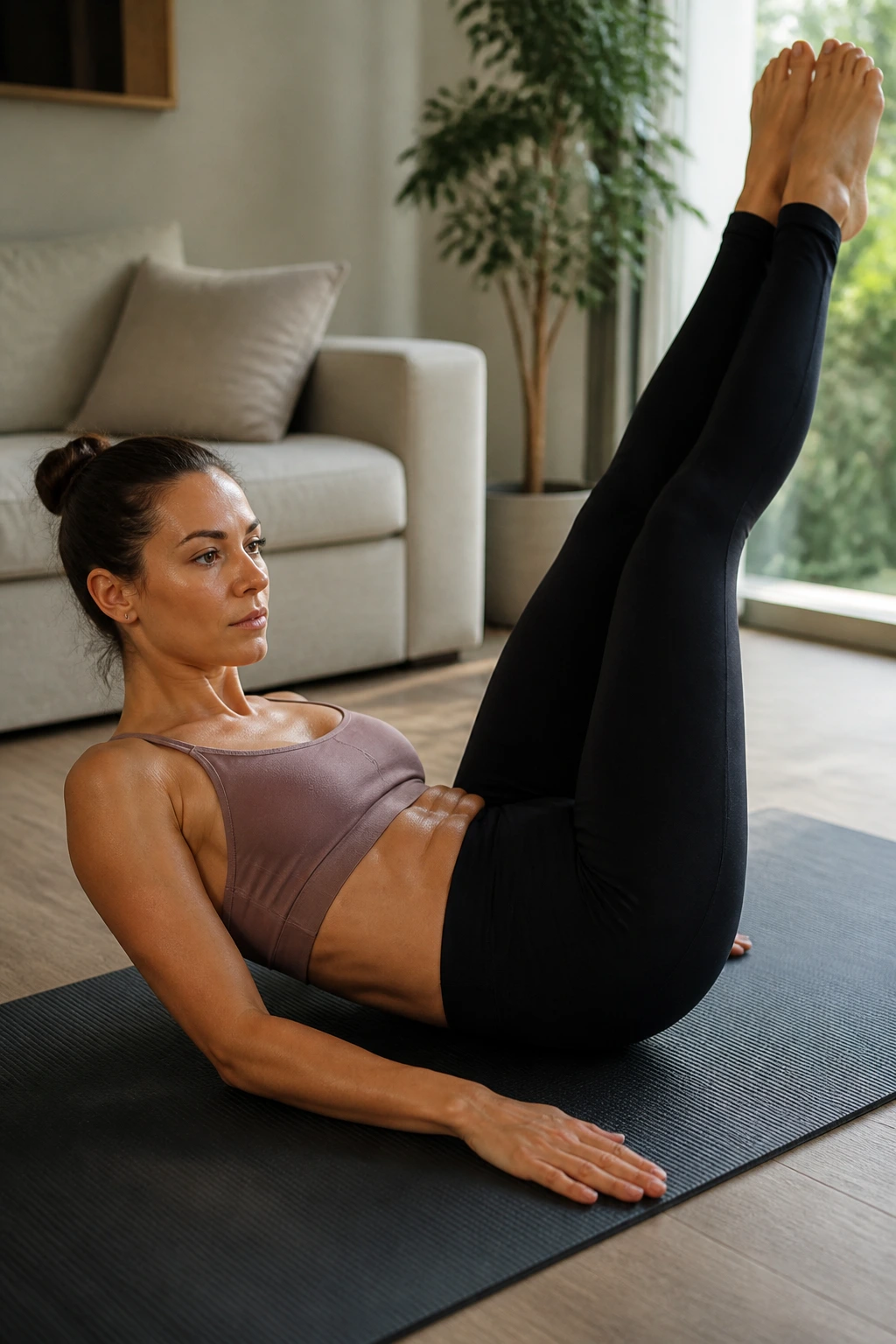
Why do slow workouts sometimes leave you trembling more than fast ones? Because the work is sneaky. Your deep core, hips, and small stabilizers have to stay awake the whole time.
This month leans on Pilates-style movement: hundred prep, leg lowers, tabletop toe taps, bridge variations, side-lying leg lifts, and slow roll-downs. The pace is controlled, the transitions are clean, and the breathing matters. If you rush through it, you miss the point. If you stay patient, the session starts to feel almost meditative — until your center starts shaking.
How to Use It
A simple weekly rhythm looks like this:
- Monday: 25-minute Pilates flow
- Tuesday: 30-minute walk
- Wednesday: core and glute control
- Thursday: mobility work
- Friday: another 25-minute Pilates session
- Saturday: optional stretch or easy walk
- Sunday: rest
The big win here is posture. Ribs down, pelvis neutral, neck long. Tiny details, yes. They matter. A lot.
This month suits anyone who wants to feel tighter through the middle without chasing sweaty chaos every day.
4. The Four-Day Dumbbell Strength Split

A pair of dumbbells at the foot of the sofa can do more than most people think. A lot more.
This plan runs on 4 lifting days: lower body, upper body, lower body, upper body. Each session lasts 30 to 40 minutes and uses compound moves first — goblet squats, Romanian deadlifts, rows, floor presses, split squats, and overhead presses. Accessories come after, if you have the energy.
The sweet spot for home strength work is usually 8 to 12 reps with a load that makes the last 2 reps slow but still clean. If the dumbbells feel too easy, slow the lowering phase to 3 seconds down. That small change can make a familiar weight feel fresh again.
A Simple Weekly Shape
- Day 1: Lower body, squat focus
- Day 2: Upper body, push and pull
- Day 3: Rest or walk
- Day 4: Lower body, hinge focus
- Day 5: Upper body, shoulders and back
- Weekend: Light movement, stretch, or full rest
If you want to get stronger at home without living in the gym, this is one of the cleanest paths.
5. The Body-Weight Endurance Ladder

Ladders look innocent. Then you’re halfway through one and sweating through your shirt.
This month uses rep ladders instead of long straight sets. You might do 2 squats, 4 squats, 6 squats, 8 squats, then work back down, or build from 20-second holds to 40-second holds on planks and wall sits. It’s a sharp way to train endurance because the effort changes shape as the session goes on. Your body never quite settles.
I like this plan for people who get bored fast. The numbers keep moving, and that alone changes the feel of the workout. It also works well in small spaces because the exercise list stays short: squats, incline push-ups, glute bridges, lunges, plank taps, and maybe a few burpees if you enjoy suffering in a playful way.
Do not chase sloppy speed here. The ladder works because each round stays clean enough to repeat. Once your knees cave, your back arches, or your shoulders shrug, the set is done. Simple rule. Good payoff.
6. The Posture and Mobility Reset
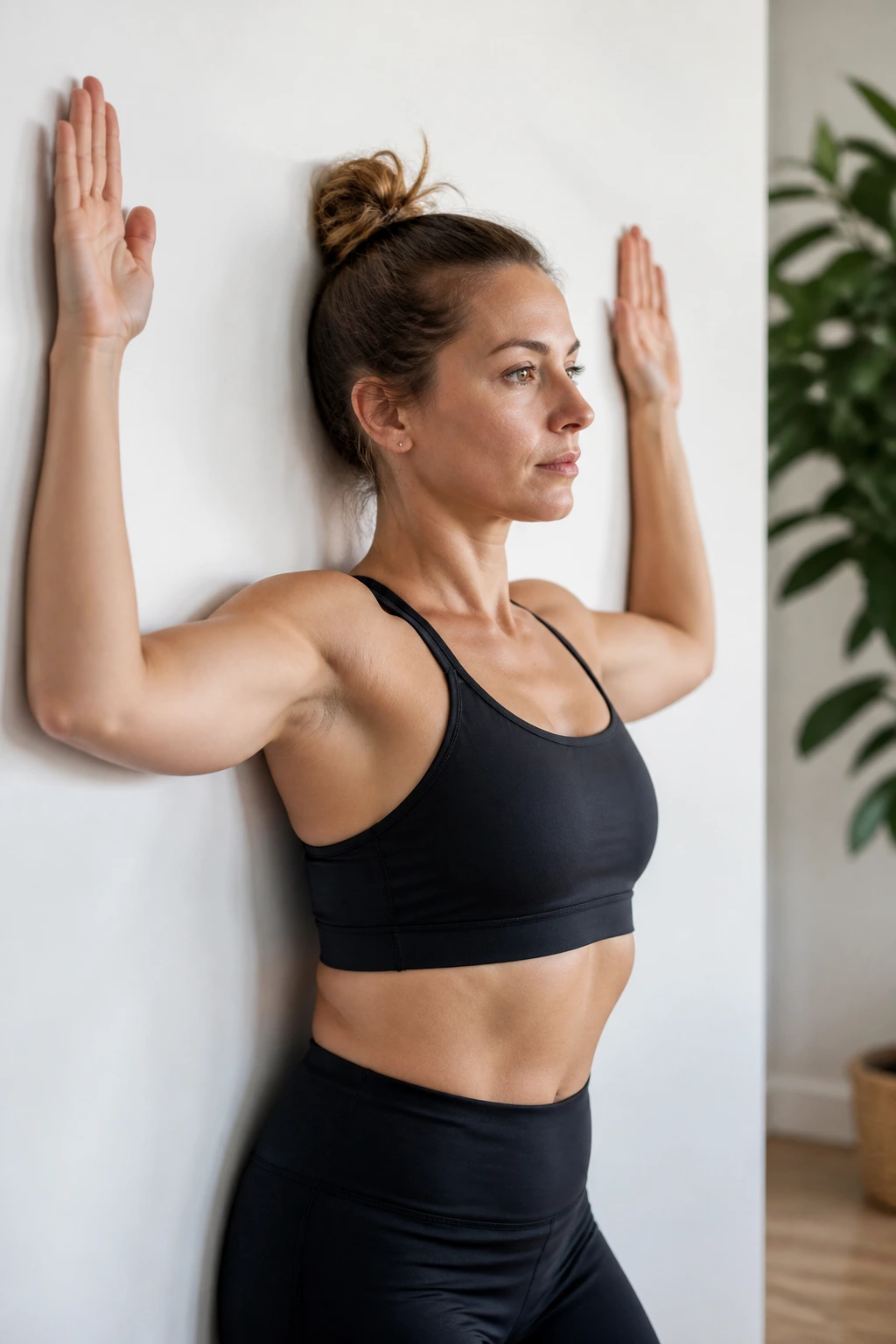
This month is not flashy, and that’s exactly why it earns its keep.
Compared with hard cardio plans, a posture-and-mobility month is gentler on tired hips, tight shoulders, and a stiff lower back. It fits people who sit a lot, drive a lot, or wake up feeling creaky for no obvious reason. The sessions combine short strength work with mobility drills: wall slides, thoracic rotations, hip flexor stretches, bird dogs, glute bridges, and suitcase carries with a heavy tote or backpack.
The best version of this plan uses 15 minutes of mobility most days and 3 short strength sessions each week. You are not trying to win a sweat contest. You are trying to move better, stand taller, and stop feeling welded to your chair.
A lot of home routines skip this kind of work because it looks too easy on paper. That’s a mistake. A body that moves well tends to tolerate everything else better too. Workouts, walks, errands, carrying groceries — all of it.
7. The HIIT-and-Recovery Balance Plan

Hard intervals are useful. Doing them every day is a fast way to feel cooked.
This month keeps the spice but adds a brake pedal. Two days are interval-based, one or two days are strength, and the rest are light recovery or walking. A clean interval set might look like 30 seconds hard, 30 seconds easy, for 8 to 10 rounds. Shadow boxing, fast step-ups, body-weight skaters, and mountain climbers all fit here.
Weekly Split
Monday: interval cardio
Tuesday: lower-body strength
Wednesday: walking and mobility
Thursday: interval cardio
Friday: upper-body strength
Saturday: easy yoga or a longer walk
Sunday: rest
That structure matters because HIIT works best when it’s actually hard. If every day is hard, none of it is. Recovery lets the hard days do their job.
I’d use this plan for someone who likes that “I worked” feeling and can handle a bit of sweat noise in the schedule. Not for burnout. Not for punishment. Just honest intervals with space to breathe afterward.
8. The Glutes-and-Legs Emphasis Month

A chair, a mini band, and one dumbbell can make your legs complain in the good way.
This month focuses on lower-body strength without turning every workout into a squat marathon. The staples are split squats, reverse lunges, Romanian deadlifts, hip thrusts on a couch, step-ups, and calf raises. If you want to shape a month around glutes and legs, this is the cleanest place to put your effort.
A good structure is 3 lower-body sessions and 2 lighter upper-body or mobility days. Keep one of the leg days heavy and slow, one day more explosive or tempo-based, and one day lighter with a band. That mix helps because your body stops adapting to one exact pattern.
One thing I love here: the slow lowering phase. Three seconds down on a split squat changes everything. So does pausing for one second at the bottom of a hip thrust. The burn shows up fast, and the exercise quality stays high if you keep your torso steady.
If your goal is stronger legs that feel useful in daily life, not just exhausted after a workout, this month delivers.
9. The Upper-Body and Back Builder

Most home plans overfeed chest work and undertrain the back. That imbalance shows up fast in rounded shoulders and cranky necks.
This month fixes that. Rows, reverse flys, band pull-aparts, push-ups, overhead presses, triceps work, and biceps curls make up the core of it, with a little core work tucked in between. If you’ve got dumbbells, great. If not, a resistance band and a loaded backpack can still do a decent job.
Best rhythm: 2 pulling-focused sessions, 2 push-focused sessions, and 1 short posture day. On the pulling days, do at least as many rows as presses. Maybe more. Your shoulders tend to thank you after the second week.
Best Fits
- people who sit at a desk
- people who carry kids, bags, or groceries a lot
- people who want better shoulder strength without a gym
- people who feel push-ups in the front of the body and nowhere else
Do not skip rowing work. It’s the part most home routines leave out, and it’s the part that often makes the whole body feel more solid.
10. The Active Recovery and Walk-Plus-Mat Plan

Some months call for less heroics and more sanity.
This plan uses walking as the backbone and short mat sessions as support. Think 20 to 40 minutes of walking most days, then 10 to 12 minutes on the mat three times a week with glute bridges, dead bugs, side planks, and gentle hip mobility. That’s enough to keep the body online without asking for a big emotional speech first.
It’s a smart choice when sleep is off, stress is high, or your calendar keeps chewing up the day. A shorter plan you actually finish beats a grand plan you keep postponing. Every time.
There’s a nice side effect too: walking tends to make the next workout feel smoother. Hips loosen up, breathing settles, and your head clears a little. Not glamorous. Extremely useful.
This is the month I’d pick if life is loud and you want movement that calms things down instead of adding another layer of noise.
11. The Yoga and Strength Blend
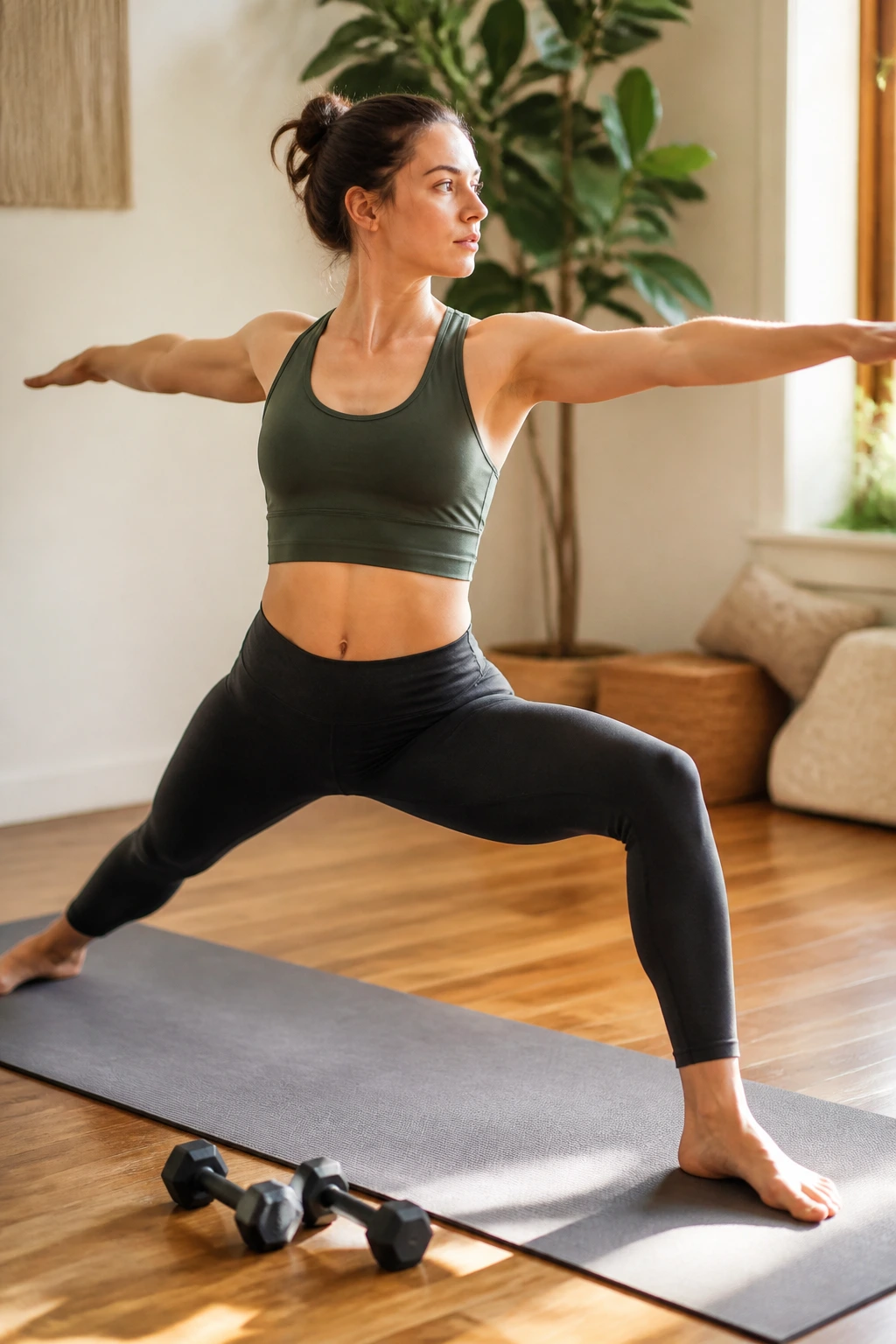
Can a plan be calm and still make you stronger? Yes. And it works better than people think.
The trick is not to let yoga become a fancy rest day. In this month, yoga handles mobility, balance, and breath control, while strength sessions handle load and tension. You get both sides of the coin without pretending one replaces the other.
The Strength Side
Use 3 short full-body lifts each week. Squats, presses, rows, dead bugs, and glute bridges are enough. Keep the rest periods honest. No rushing.
The Yoga Side
Add 2 yoga flows of 20 to 30 minutes. Focus on hips, hamstrings, spinal rotation, and shoulder opening. Slow transitions matter more than fancy poses. A good flow leaves you warm and a little loose, not folded into a pretzel.
The best part of this plan is how stable it feels. You still train. You also recover. That combination suits anyone who wants a month with less pounding and more range of motion.
12. The No-Jump Cardio Month

Cardio does not need to sound like a herd of stampeding feet.
This month replaces jumping with quiet, controlled effort. Marches, fast feet, step-ups, skater taps, knee drives, shadow boxing, and low squat pulses do the work. Your joints get a break. Your downstairs neighbors get a break. Your breathing does not.
A simple session might be 45 seconds on, 15 seconds off, repeated for 6 to 10 rounds. Rotate through four moves and keep the pace brisk. If you want to raise the challenge, shorten the rest before you add more impact. That order matters.
This plan is useful for anyone with a sensitive floor, a noisy apartment, or knees that hate repeated landing. It also works well as a bridge between strength days, because the effort is real without being brutal.
No-jump does not mean low effort. It means smart effort.
13. The Resistance Band Month
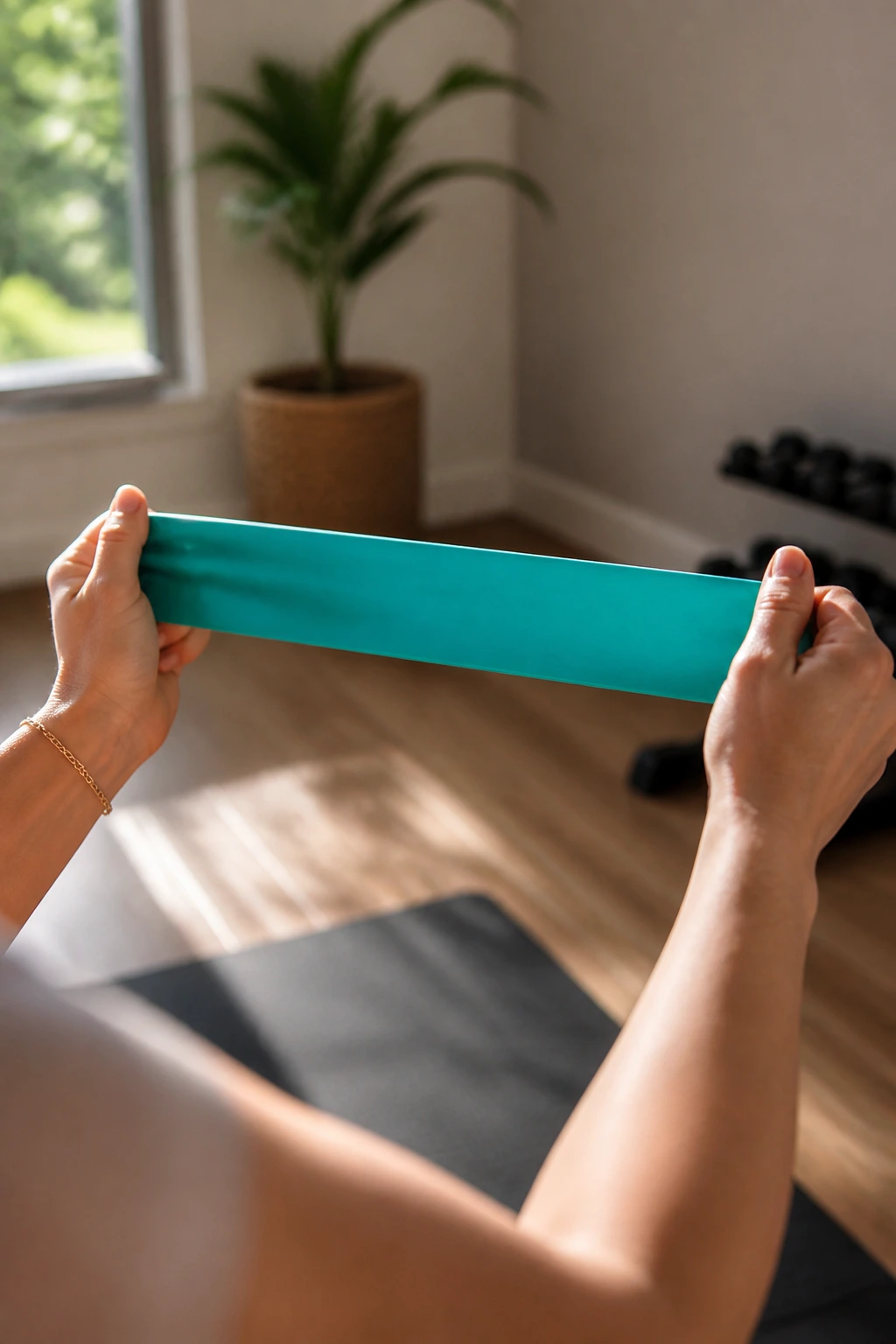
Resistance bands are small, cheap, and annoyingly effective.
This month uses a mini band and, ideally, one long loop band. Mini bands light up the glutes during lateral walks, clamshells, and bridge variations. Long bands handle rows, presses, pull-aparts, and assisted squats. The tension curve is different from dumbbells, which is part of the point — bands get harder as you stretch them, so the top of the movement often feels tougher than the bottom.
Best Band Moves
- lateral band walks, 10 to 15 steps each way
- banded glute bridges, 12 to 20 reps
- seated rows, 10 to 15 reps
- overhead presses, 8 to 12 reps
- band pull-aparts, 12 to 20 reps
- banded good mornings, 12 to 15 reps
A band month is a good pick if you travel, keep your equipment in a drawer, or want to train quietly. It’s not the flashiest option. It is one of the most practical.
14. The Core and Pelvic-Floor-Friendly Plan
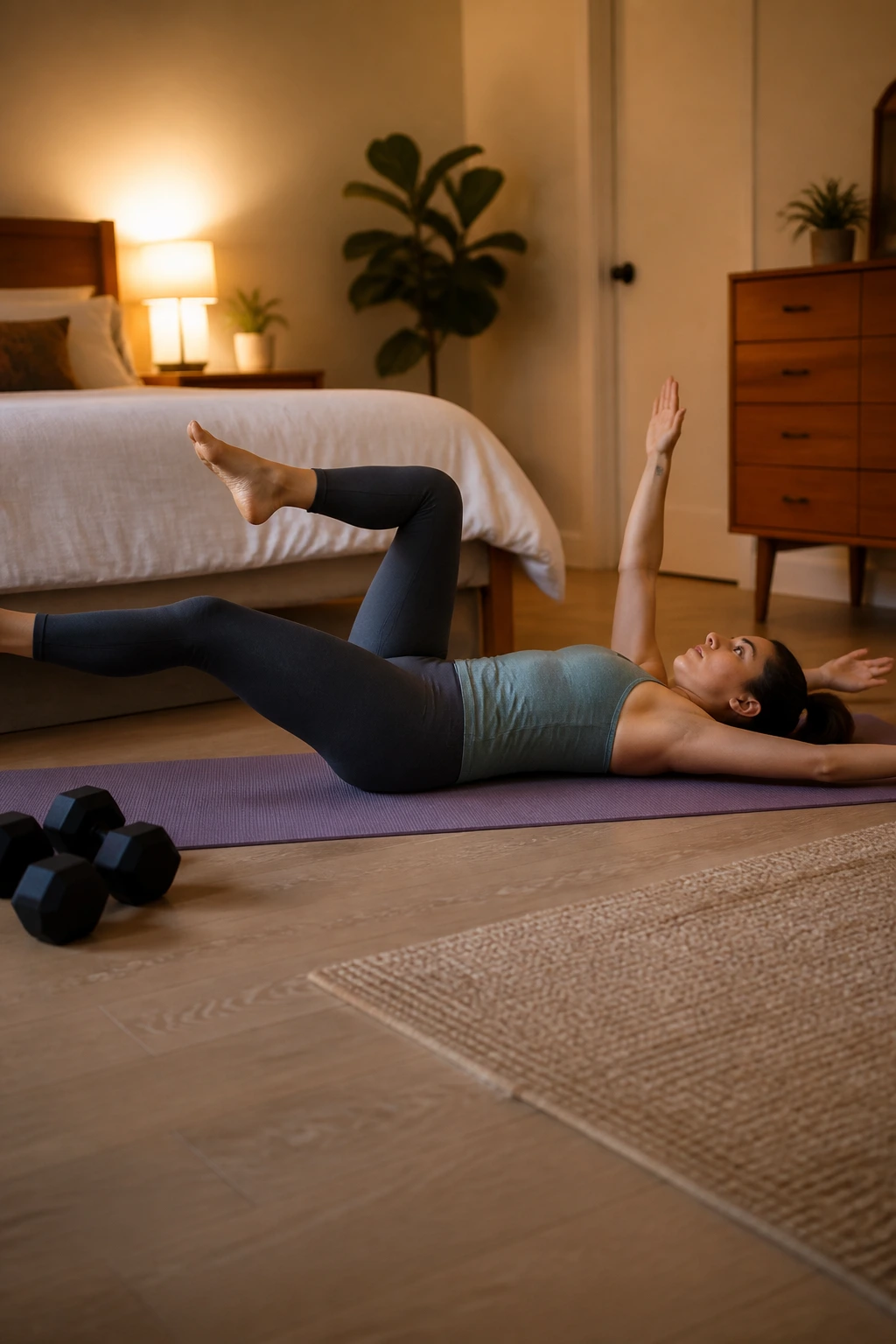
This month is for anyone who wants to build strength without cranking up pressure too fast.
The focus is on breathing, deep core control, and low-load stability. Dead bugs, bird dogs, heel slides, side planks from the knees, glute bridges, and Pallof presses are all useful here. The key cue is simple: exhale during effort instead of holding your breath. That one habit changes how much pressure your midsection has to manage.
If you notice leaking, heaviness, or pain, get checked by a qualified clinician. Don’t try to muscle through it. That kind of thing deserves proper attention, not random internet bravado.
This plan is also a smart choice for postpartum return-to-movement work, but it is not only for that. Plenty of people want a calmer core month because high-pressure training feels like too much right now. Fair enough. This one respects that.
Gentle does not mean weak. It means controlled.
15. The Progressive Overload Strength Month

If you want measurable progress, this is the month to pick.
Progressive overload sounds technical, but the rule is simple: make the work a little harder over time. Add a rep. Add a set. Slow the lowering phase. Use a slightly heavier dumbbell. Change one thing at a time so your body can keep up.
Week-by-Week Progression
Week 1: learn the movements and find your starting load.
Week 2: add 1 or 2 reps per set.
Week 3: keep the reps and add a set to your main lift.
Week 4: hold the volume steady and clean up your form.
That’s enough. You do not need to chase chaos.
This month works best for home exercisers who like numbers and want proof that the plan is doing something. Keep a notebook nearby. Write down the load, the reps, and how hard the last set felt. Tiny records add up faster than people expect.
The body likes clear signals. This plan gives it plenty.
16. The Busy-Schedule Maintenance Month

Sometimes the win is not building more. It’s not losing what you already have.
This plan is built for a hectic month: 3 short sessions of 20 minutes and 1 longer session of 30 to 35 minutes on the weekend. The short sessions cover the basics — squat, hinge, push, pull, core — and the longer one ties everything together with a few extra rounds.
It sounds modest. It is. That’s why it works.
When your schedule is messy, the biggest mistake is pretending you have time for an ideal routine. You probably don’t. A maintenance month respects the reality of school runs, late meetings, errands, low energy, and the general noise of life. The workout still happens. The plan stays alive.
I’d use this one when consistency matters more than transformation. It keeps your strength from sliding, preserves the habit, and makes it much easier to ramp back up later.
17. The Return-After-Break Rebuild Month

Your body hates being surprised. That’s the first thing to remember after a long gap.
This month starts easier than you probably want. Good. That keeps soreness from wrecking the week and helps you build back without feeling flattened by day 3. The first week uses light effort and fewer sets. Week 2 adds volume. Week 3 adds load or pace. Week 4 steadies the pattern.
A Sensible Ramp
- Week 1: 2 sets per move, easy pace
- Week 2: 3 sets per move
- Week 3: add a little weight or a few reps
- Week 4: repeat the best version and keep form clean
This is not the place for ego lifting, or for deciding you should “make up for lost time.” That’s how people get sore, annoyed, and inconsistent again.
A rebuild month works because it gives the joints, connective tissue, and nervous system time to remember what’s happening. The momentum comes back faster than you think when the plan is kind enough to survive the first week.
18. The Athletic Conditioning Month

If you want to feel quicker, more springy, and less clumsy going up stairs, this month makes sense.
Athletic conditioning at home uses footwork, core bracing, and controlled power. Think skaters, split-stance hops if your joints like them, bear crawls, fast step-ups, mountain climber variations, squat-to-press combos, and loaded carries with a backpack or heavy tote. Add balance work too. Standing on one leg while you move the other side is humbling in a useful way.
What Changes This Month
- better deceleration control
- faster foot turnover
- more stable hips and trunk
- stronger shoulders when you carry things
- less panic when the workout gets quick
Keep the sessions short and crisp. 20 to 30 minutes is enough if the effort is sharp. The goal is power plus coordination, not just sweat.
This plan fits people who get bored by steady-state work and want training that feels athletic instead of decorative. It’s a little playful. It also wakes everything up.
19. The Strength-and-Stretch Hybrid

Some people want to feel stronger and looser at the same time. I get it.
This month blends 3 strength sessions with 2 longer stretch or mobility sessions and one optional walk. The strength work handles muscle and bone loading. The stretching handles tight hips, calves, chest, and upper back. The two pieces work better together than they do in isolation.
A clean hybrid week might look like this:
- Monday: full-body strength
- Tuesday: 20-minute stretch flow
- Wednesday: lower body strength
- Thursday: mobility and breathing
- Friday: upper body strength
- Saturday: optional walk or yoga
- Sunday: rest
The nice thing here is emotional, not just physical. You never have to choose between training and feeling human. Some days you lift. Some days you lengthen the body out a bit. Both count.
I’d pick this month for people who hate rigid routines but still want structure that has a backbone.
20. The Stay-Consistent Momentum Month

This is the month for people who care less about “perfect” and more about not stopping.
The plan is simple: 2 rotating full-body workouts, 1 optional bonus session, and 2 short movement breaks during the week. Each workout stays near 25 minutes. You keep the equipment visible, the plan written down, and the timer ready. Less friction. Fewer excuses. More repeats.
What makes this different from the maintenance month is the habit design. This one is built to survive a bad Tuesday. If a session gets cut short, you do the first two rounds and move on. If the day gets messy, you swap in a 10-minute circuit and still count it. That flexibility is the whole point.
A lot of women do better with this kind of month than with a highly technical plan. Not because they lack discipline. Because life is busy, and a plan that bends a little tends to last longer than one that snaps the first time dinner runs late.
The Bottom Line
The best monthly workout plan is the one you can repeat without hating your life by week two.
If you want the simplest filter, pick the plan that matches your current energy, your equipment, and the amount of noise your home can tolerate. A dumbbell split is great if you like lifting. A walk-plus-mat month is smarter if stress is high. A low-impact circuit or resistance band plan can carry you a long way with almost no setup.
Track one thing. Reps, minutes, or load. Pick one and keep an eye on it for the full month. That single habit makes progress easier to see, and it stops the “am I doing anything?” spiral that creeps in when workouts stay too vague.
The plan that survives a busy Wednesday is the one worth keeping.
