



Some mornings, you do not want a heroic workout. You want shoes on, heart rate up, and enough energy left to handle the rest of the day.
That is where morning cardio workouts for women earn their keep. The right session wakes up stiff hips, gets blood moving, and shakes off the fog without turning breakfast into a negotiation. A 12- to 20-minute burst can be enough if the pace makes sense.
The mistake I see most often is starting too hard, then calling the whole thing a failure when the legs feel heavy by minute five. Morning bodies are a little sleepy. They need a ramp, not a slap.
So this list leans on variety. Some options are gentle. Some will make you sweat through your shirt. All of them can fit into a real morning, which is the part that matters.
1. Morning Cardio Walk With Pace Changes

A plain walk gets a lot more useful when you stop treating every minute the same. Keep the first five minutes easy, then alternate 90 seconds brisk with 90 seconds relaxed for 15 to 20 minutes. That small shift is enough to wake up your lungs without making your calves feel like they were ambushed.
Why the pace changes matter
The body responds fast to a change in tempo. A brisk walk raises your heart rate, while the easier stretch keeps the whole thing sustainable, especially before coffee has even finished brewing. You’re not trying to win a race. You’re trying to feel alert, warm, and mobile.
Quick setup
- Start with 5 minutes at an easy stroll.
- Pick a brisk pace where you can still speak, but not sing.
- Swing your arms naturally and keep your chest lifted.
- Finish with 3 to 5 minutes easy so your breathing settles.
Pro tip: if your watch says you’re moving “fast,” but your body still feels sleepy, shorten your stride and speed up your feet instead. That usually lands better than stomping forward.
2. Jump Rope Intervals
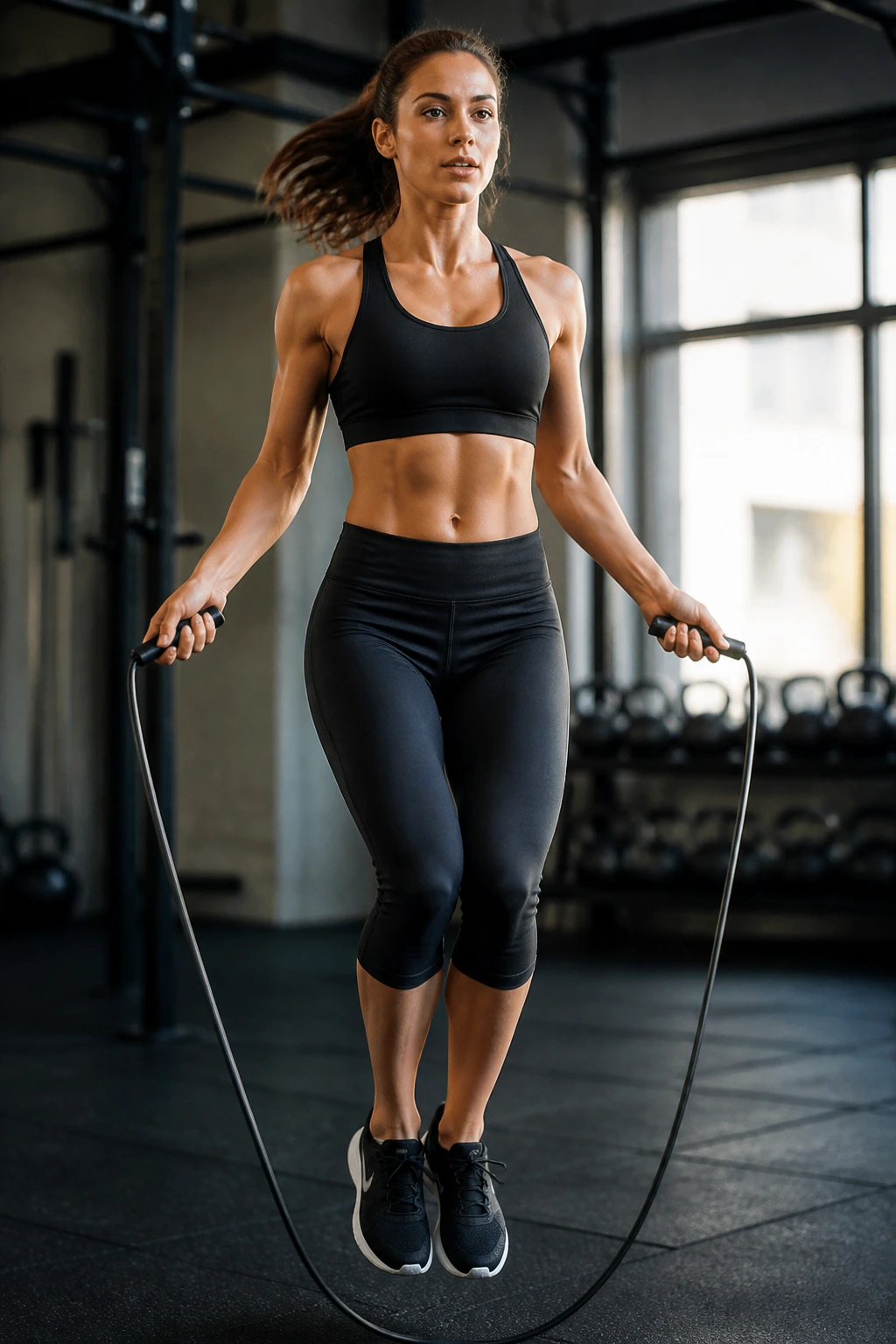
Three minutes of jump rope can humble people who can run for half an hour. That is why it works so well in the morning. The effort climbs fast, your coordination wakes up, and your shoulders, calves, and lungs all start paying attention at once.
Try 20 seconds jumping, 40 seconds resting for 10 rounds if you’re new to it. If that feels too easy, switch to 30 seconds on, 30 seconds off. Boxer step, alternating feet, or basic two-foot hops all count. The point is to keep the rope moving, not to look fancy.
Bare feet are a bad idea here. So is a slippery floor. Use a little space, a firm surface, and a rope that reaches about your armpits when you stand on the middle of it. If the rope keeps catching your toes, the length is probably off.
Skip this one if your knees hate impact before sunrise. No shame in that. Pick a walk, bike, or stair session instead and save your joints for another day.
3. Morning Cardio Dance Break in the Kitchen

Can a dance session count as real cardio? Yes, if you keep moving long enough to raise your heart rate and stop pretending the dishwasher is your cool-down.
A good dance workout is less about choreography and more about staying in motion for 15 to 25 minutes. Pick songs that make you want to move without thinking too hard. If you need to memorize steps, you’re probably overdoing it for a morning session.
How to build it
- Use 2 songs to warm up with side steps and easy arm swings.
- Push harder for 4 to 6 songs with bigger moves, faster feet, and turns.
- End with 1 slower song to let your breathing drop.
You can keep it low-impact by stepping side to side, tapping back, and adding arm reaches. Or you can turn it into a sweatier session with knee lifts, fast grapevines, and quick pivots. The sweet part is that it barely feels like exercise until your shirt sticks to your back.
And yes, the kitchen counts.
4. Stair Climb Intervals
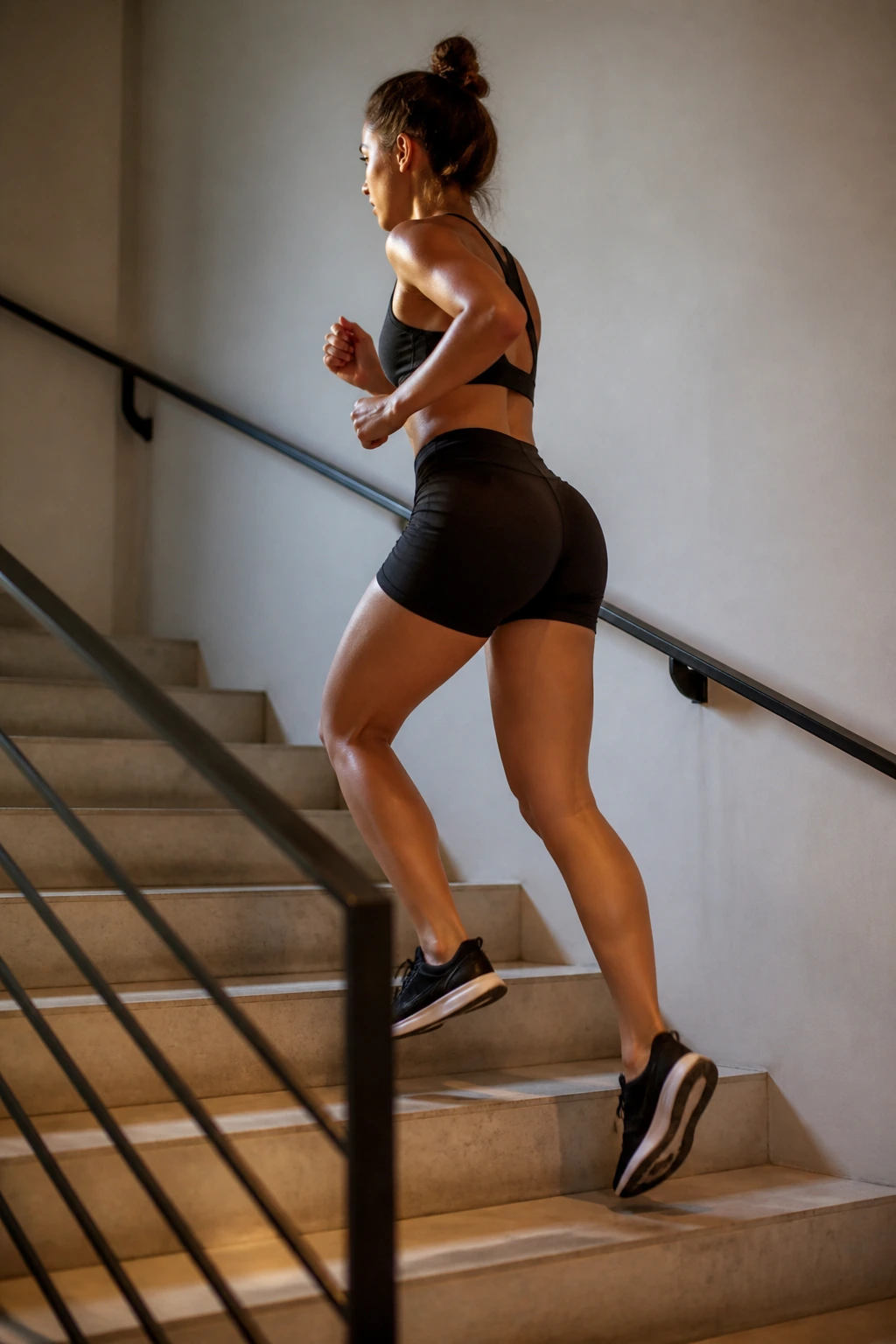
Stairs are rude. That is also why they’re effective. A short stair workout loads the glutes, hamstrings, and calves fast, and the heart rate climbs before you have time to negotiate with yourself.
Use one flight or a sturdy set of steps and go up for 30 to 45 seconds, then walk back down slowly. Repeat 8 to 12 times. The descent is not wasted time; it gives your breathing a beat to recover so the next climb feels clean instead of sloppy.
A simple form check
- Step with the whole foot, not just the toes.
- Keep a light forward lean from the ankles.
- Don’t yank on the railing.
- Take shorter steps if your knees feel cranky.
The burn shows up quickly here, and that’s normal. Your lungs will know it first, then your thighs will complain. If the pace makes you huff but still controlled, you’re in the right place.
A stair workout is a good pick for mornings when you want a short session that feels like it meant business.
5. Low-Impact Marching and Knee Drive
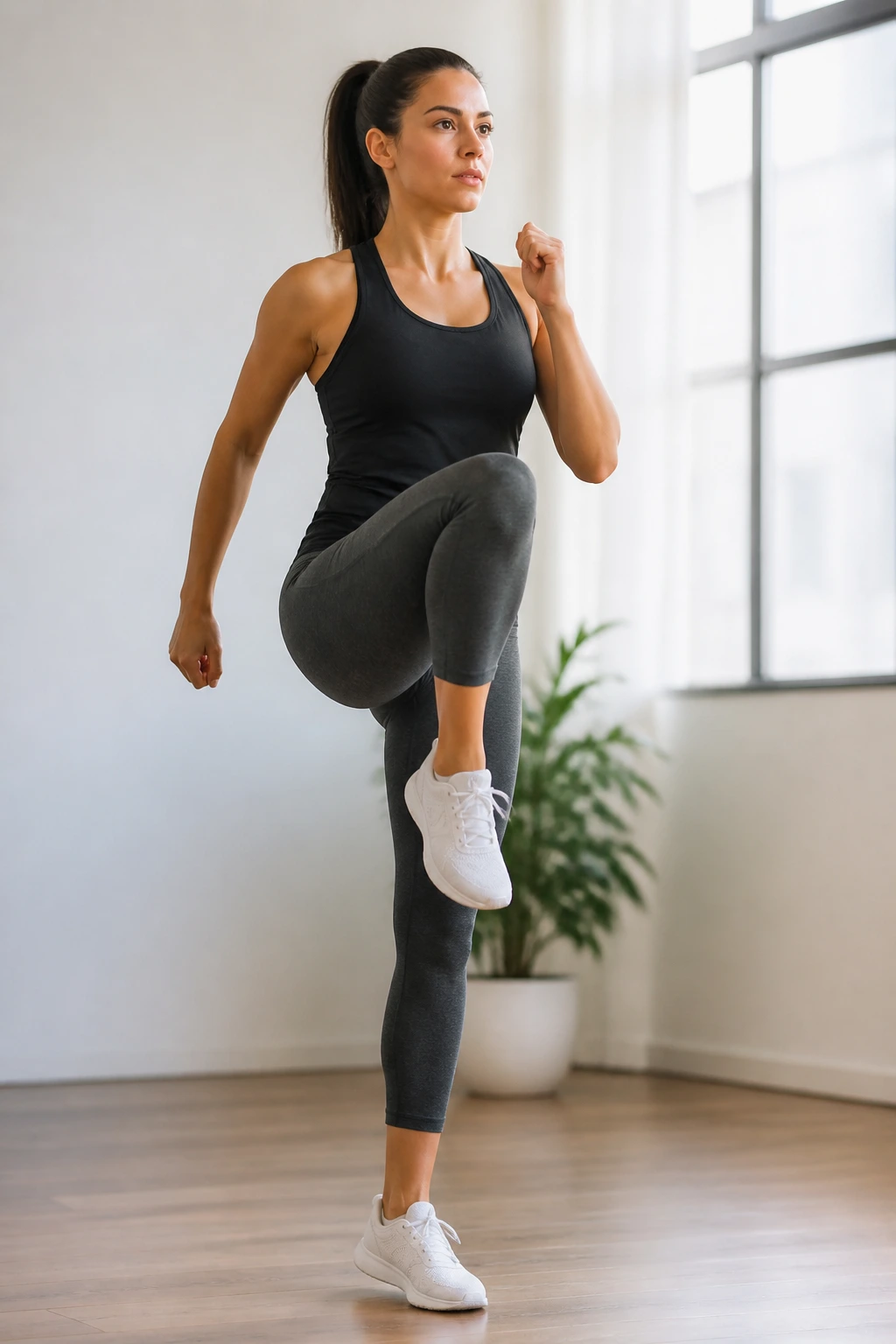
Not every cardio workout needs bouncing, pounding, or a sweaty apology to your downstairs neighbors. A fast march with knee drives can still get the job done, especially if you use your arms like you mean it.
Try 45 seconds of marching, then 15 seconds of high-knee drive for 10 rounds. Stay upright, keep your core lightly braced, and land softly through the middle of the foot. The movement looks simple, but the rhythm matters. A lazy march will barely wake you up. A sharp one will.
What makes it work
- Arms pump opposite the legs.
- Knees rise to a comfortable height, not a forced one.
- Feet stay quick and light.
- The pace should feel like brisk walking with attitude.
This is one of those workouts that looks almost too easy until minute six. Then your breathing changes, your hips loosen, and you realize the whole room feels a little less stiff. That’s the point.
Use it on mornings when you’re sore, sleepy, or just not in the mood for jumping. It still counts.
6. Treadmill Run-Walk Intervals

Unlike steady jogging, run-walk intervals let you keep the speed honest without blowing up your legs before breakfast. You get the benefits of running practice, but the walk breaks keep the session sane.
A simple starting pattern is 1 minute run, 2 minutes walk for 20 to 24 minutes. If you already run a little, shift to 90 seconds run, 90 seconds walk. Keep the running pace modest. You should finish each run segment feeling challenged, not hunted.
How to use it
Start with 5 minutes of walking at a comfortable pace. Then move into your intervals and let the walk sections be an actual recovery, not a half-jog disguised as rest. Finish with a 3-minute easy walk and breathe through your nose if that feels natural.
If the treadmill makes you want to stare at the numbers and spiral, cover the display with a towel and focus on your feet. Boring? A little. Useful? Absolutely.
This workout is a smart bridge between walking and continuous running. It teaches your body to handle impact without demanding a giant leap on day one.
7. Stationary Bike Sprints
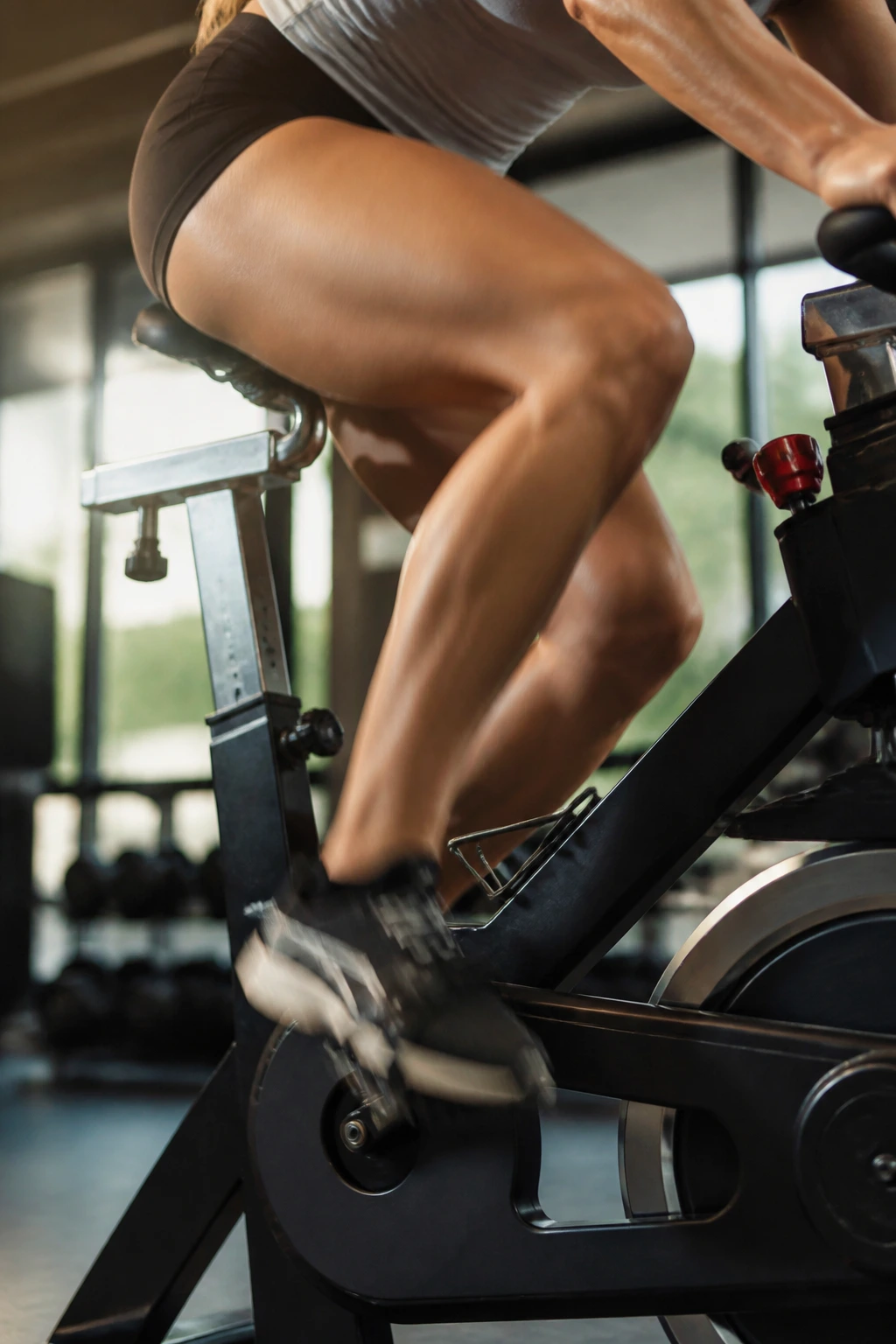
A bike session can be the cleanest kind of morning cardio because your legs do the hard part while your upper body stays calmer. That makes it a strong choice when you want sweat without pounding the floor.
Try 20 seconds hard, 100 seconds easy for 8 rounds. If you prefer a smoother feel, use 30 seconds fast, 90 seconds easy. The hard parts should make your thighs work and your breathing sharpen. The easy parts should bring you back down enough to go again.
Where the effort should live
- Push the pedals in a smooth circle, not a stomp.
- Keep your shoulders loose.
- Set the seat high enough that your knees stay slightly bent at the bottom.
- Add resistance until the sprint feels real.
If your hips rock side to side, the seat is too high. If you can chat through the sprint, the resistance is too light. Both fixes are simple, and both matter more than fancy bike metrics.
This one is good for early mornings because it wakes you up fast and doesn’t leave the joints annoyed.
8. Bodyweight Cardio Circuit
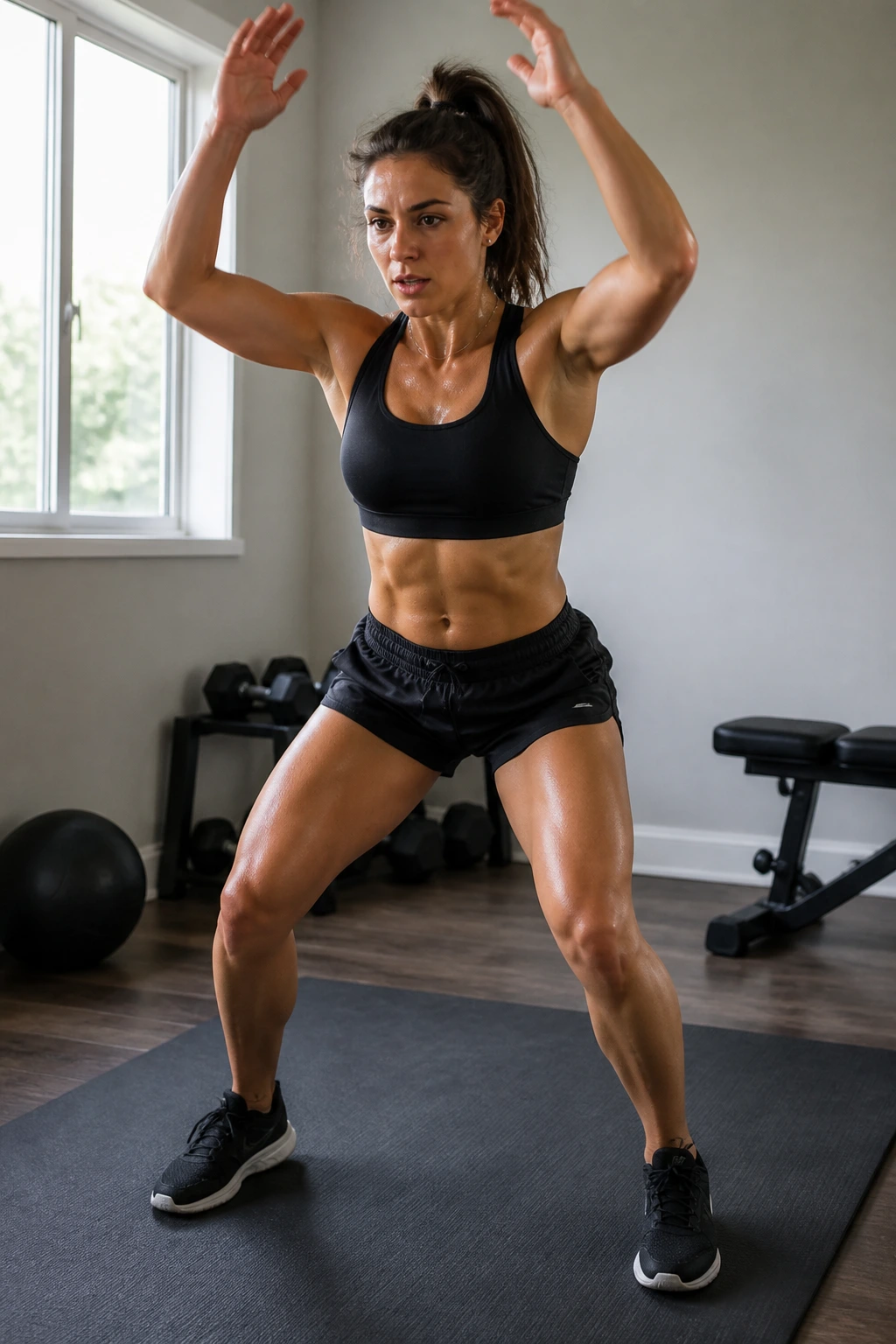
You do not need burpees to get your heart rate up. I’m saying that with full seriousness. A sharp, nonstop bodyweight circuit can do the job without turning the workout into a burpee-based punishment ritual.
Use 40 seconds on, 20 seconds off for 3 rounds. Pick four moves: squat jacks, mountain climbers, skater steps, and fast feet or plank shoulder taps. Keep the transitions short. The value is in the rhythm, not in resting long enough to cool off.
A good circuit feels busy. Your breathing should climb by the second round, and your legs should start to talk back. That is normal.
- Squat jacks raise the heart rate fast.
- Mountain climbers wake up the core and shoulders.
- Skater steps add side-to-side work.
- Fast feet give you a simple finisher.
If impact is the issue, take the jumps out and keep the speed. Fast marching, step jacks, and slow climbers still make this worthwhile.
9. Hill Repeats Outside

Why do hills feel so effective so quickly? Because they shorten your stride, load the glutes, and force your breathing to catch up without asking for a long run. It’s cardio with a built-in rude alarm clock.
Find a hill that takes 30 to 60 seconds to climb at a strong effort. Walk back down for recovery and repeat 6 to 8 times. If the hill is steep, the climbs will be shorter. That’s fine. The goal is not distance. The goal is effort with enough control to repeat it.
How to climb without blowing up
- Keep your steps short.
- Lean slightly from the ankles, not the waist.
- Drive your arms back and forth.
- Walk the recovery, don’t shuffle it.
The first two reps often feel easy. The third one is where the truth shows up. After that, you’ll know whether the pace is right. Too hard, and your form falls apart. Too soft, and you’re basically sightseeing.
Hill repeats are one of my favorite outdoor options when I want a workout that feels short but leaves a real mark.
10. Shadow Boxing Rounds

A quiet living room and a little open space are enough for a strong shadowboxing session. No gloves, no bag, no drama. Just hands, feet, and enough rhythm to keep the whole body awake.
Try 2-minute rounds with 30 seconds of rest for 5 to 8 rounds. Start with simple combinations like jab-cross, jab-cross-hook, or double jab-cross. Move your feet between combos instead of planting them like you’re waiting for a bus.
A simple round plan
- 30 seconds of easy movement and stance work.
- 60 to 90 seconds of punch combos.
- 15 seconds of faster hands.
- 30 seconds of reset and breathing.
Exhale on the punches. Keep your shoulders down. If your neck starts creeping up toward your ears, slow the pace and reset your stance. Good shadowboxing is sharp, not frantic.
This is a surprisingly good morning option if you want to feel awake fast but don’t want to jump around. It also has a nice side benefit: it clears out a little stress before the day starts asking for anything.
11. Step-Up Workout on a Bench or Sturdy Step
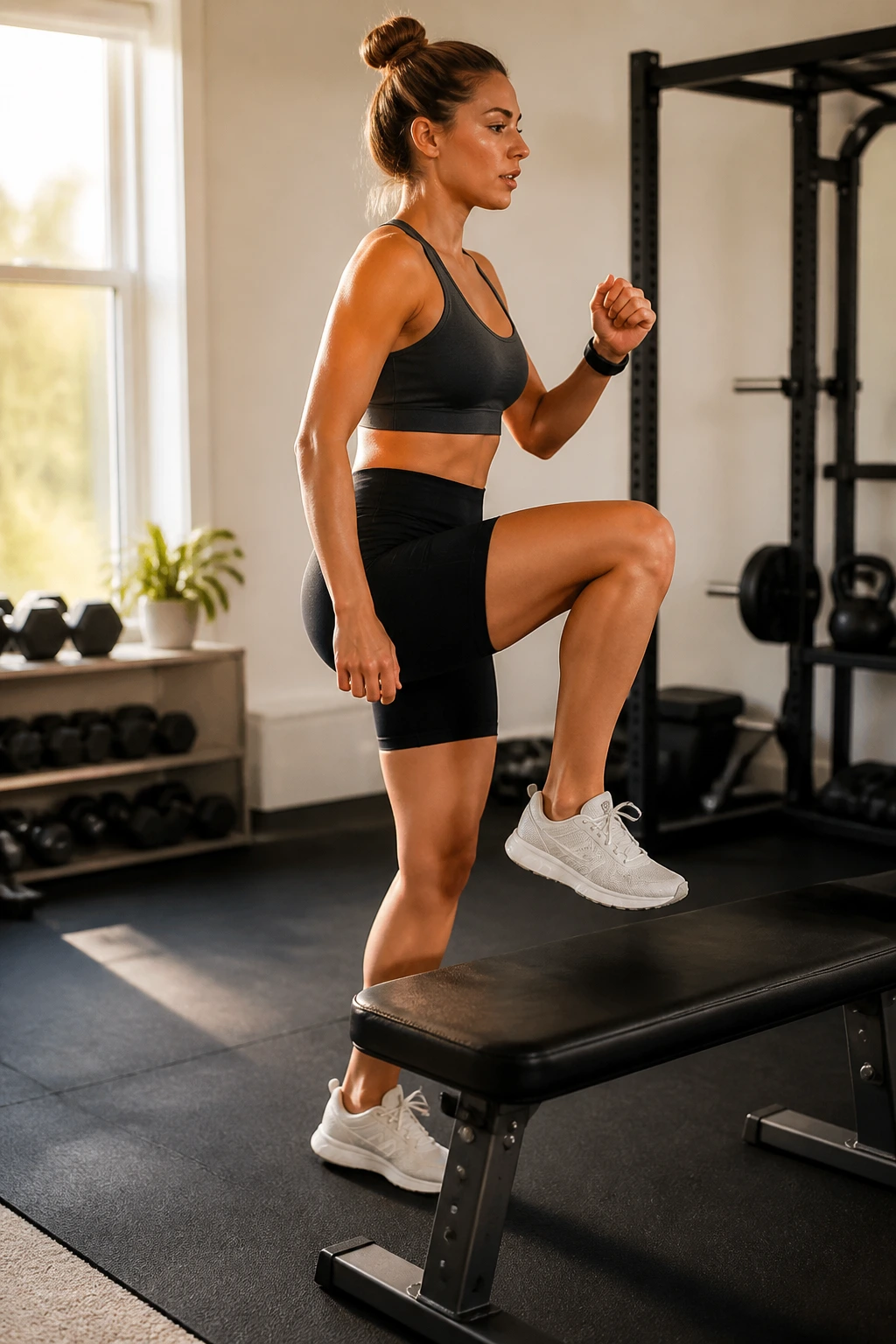
A bench, a stair, or a sturdy aerobic step can turn into a real cardio tool if you use it with purpose. Step-ups look modest. Then your breathing changes, and your quads get that deep, clingy burn.
Keep the step low enough that your knee doesn’t feel jammed at the top. About mid-shin to just below knee height is a sensible range for most people. Work for 45 seconds, switch the lead leg halfway through, and repeat for 8 to 10 minutes.
A step-up workout is one of those sessions that sneaks up on you. Your heart rate climbs from the repetitive drive, but the movement stays simple enough to repeat without much thinking. That makes it good for mornings when your brain isn’t fully online yet.
If you want more intensity, add a knee drive at the top. If you want less, keep both hands lightly on a wall or rail for balance and focus on smooth, even steps.
12. Rowing Machine Intervals

Rowing is one of the few cardio machines that can make your legs, back, and core all show up at the same time. Done well, it feels powerful. Done badly, it turns into a yanking contest between your arms and the handle.
Try 250 meters hard, then 1 minute easy for 6 rounds. If your rower doesn’t show distance clearly, use 45 seconds strong, 75 seconds light. The hard part should feel like a smooth drive, not a panic sprint.
The order matters
Push through the legs first. Then swing the body. Then pull with the arms. On the way back, reverse it: arms, body, legs. That sequence sounds fussy until you try rowing the wrong way and feel your lower back take the blame.
A few quick cues help:
- Keep the handle low and close.
- Sit tall at the catch.
- Don’t snap backward.
- Let the recovery be calm.
This workout is a strong pick if you want something intense without impact. It’s also useful on mornings when running sounds unappealing and you still want a real sweat.
13. Morning Cardio Incline Walk on the Treadmill
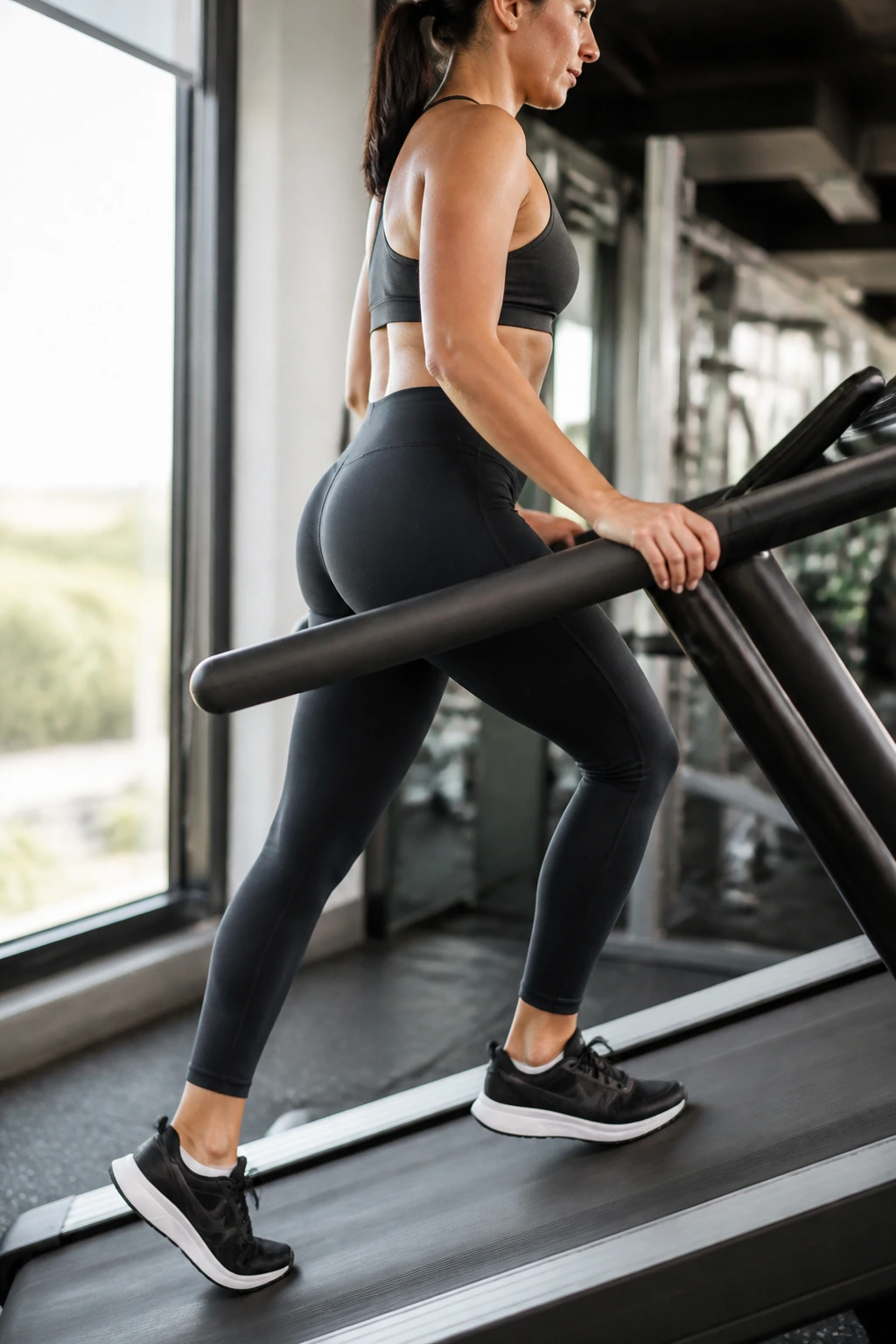
A flat treadmill walk is fine. An incline walk earns its place fast. The slope forces your glutes and calves to work harder, and the heart rate climbs without the pounding that comes with faster running.
Set the incline somewhere around 5 to 12 percent and keep the speed between 2.8 and 3.5 mph for 20 to 30 minutes. You should feel the work in your backside and the front of your thighs, with breathing that settles into a steady, stronger rhythm.
Numbers that work
- Warm-up: 3 to 5 minutes at zero incline.
- Main set: 10 to 20 minutes at a working incline.
- Cool-down: 3 minutes flat and easy.
- Posture: tall torso, eyes forward, light arm swing.
If you have to hold the rails, the incline is probably too steep or the pace is too fast. That’s a common mistake, and it steals work from the legs. Keep the hands free whenever you can.
This is one of the most reliable morning cardio workouts for women who want low-impact effort that still leaves them warm, awake, and a little glowy in the face.
14. Kettlebell Swing Complex

This one is not cute. If you know the hip hinge and can swing a kettlebell cleanly, it gives you a fast cardio hit with a strength bonus tucked inside.
Use a light-to-moderate bell and repeat a small complex like 10 swings, 5 goblet squats, 5 deadlifts. Rest 45 to 60 seconds, then repeat for 4 to 6 rounds. The idea is to keep moving without turning the session into a powerlifting meet.
The swing should come from the hips. Your arms guide the bell; they do not lift it like a front raise. The bell should float because your hips snap, not because your shoulders are working overtime.
If your back feels it more than your glutes, stop and reset. This is one of those workouts that pays off when the form is honest. Sloppy swings are not a badge of honor. They’re a fast route to a bad morning.
15. Swimming Laps With Short Rest

If you have pool access, swimming gives you a morning cardio option that feels almost unfair in the best way. Your joints get a break, your lungs still work, and the cool water can make a groggy start feel much less sticky.
A simple set looks like 4 x 50 meters easy, 4 x 25 meters faster, with 20 to 30 seconds of rest between repeats. If meters aren’t how your pool is marked, just swim one to two lengths at a time and keep the pattern steady.
A pool set that wakes you up
- Warm up with easy freestyle or backstroke.
- Keep your strokes smooth, not frantic.
- Breathe on a steady pattern.
- Finish with a few relaxed lengths.
Swimming works well when you want movement without pounding, but it does ask for a little setup. Goggles help. So does showing up with your suit already on under clothes if the locker-room shuffle annoys you.
Some mornings, the pool is the only thing that feels civilized. I get that.
16. Low-Impact Aerobics Flow
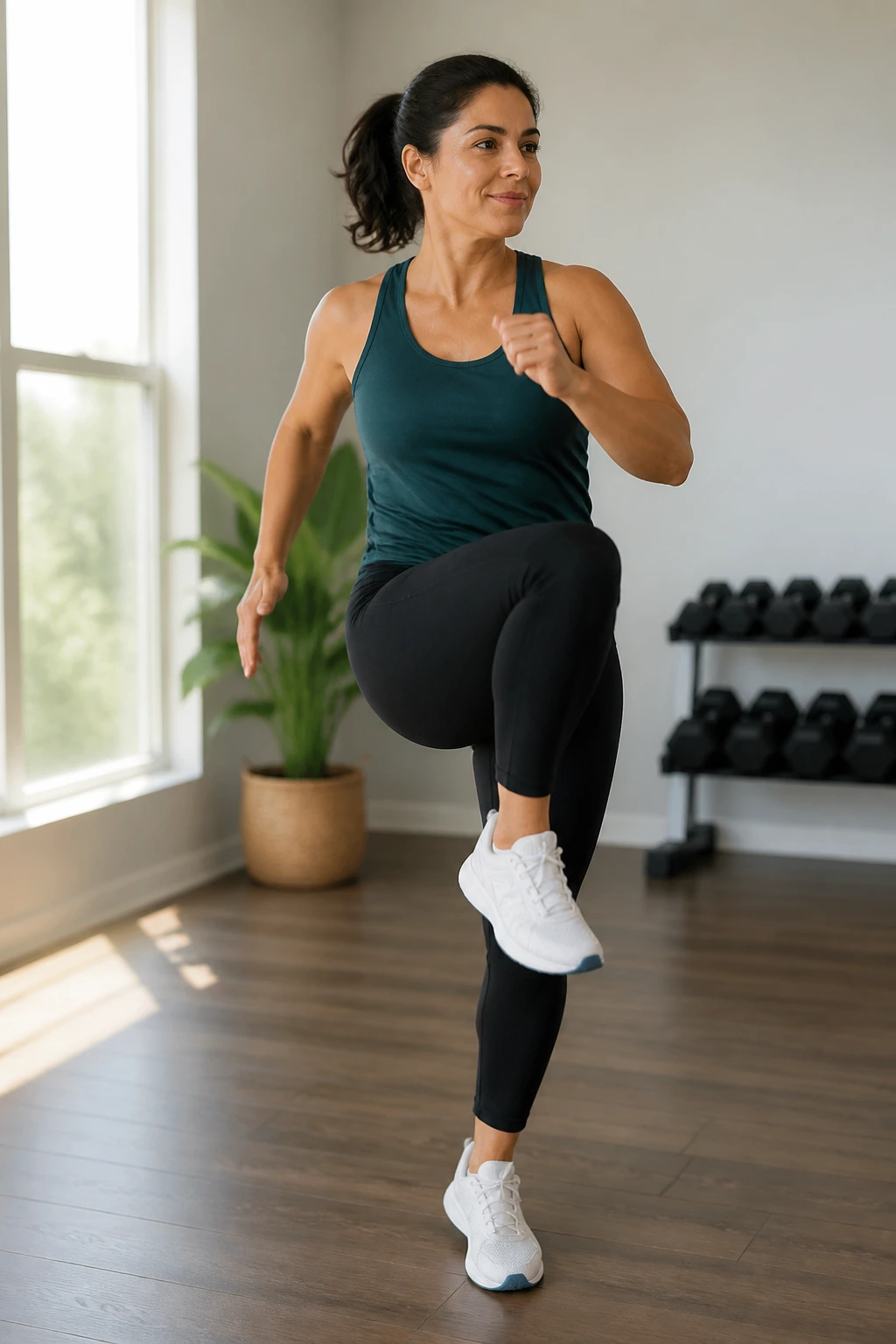
Old-school aerobics never stopped being useful. The music may change, but side steps, grapevines, knee lifts, and heel digs still move blood around fast when you string them together with purpose.
Try a 20-minute flow with no jumping at all. Start with side steps and arm sweeps, then layer in grapevines, knee lifts, back taps, and quick marches. Keep the movement continuous. The goal is to stay light on your feet and keep the rhythm flowing.
A few good building blocks:
- Side step right, side step left.
- Grapevine right, grapevine left.
- Knee lift with opposite elbow reach.
- Heel dig with an easy arm pull.
This style is friendly on floors, friendly on knees, and friendly on mornings when you want movement but not impact. It also works well if you like a little music-driven structure but don’t care for dancing in a chaotic way.
Low-impact aerobics has a very real place in a balanced routine. It’s not boring. It’s practical.
17. Sled Push Intervals
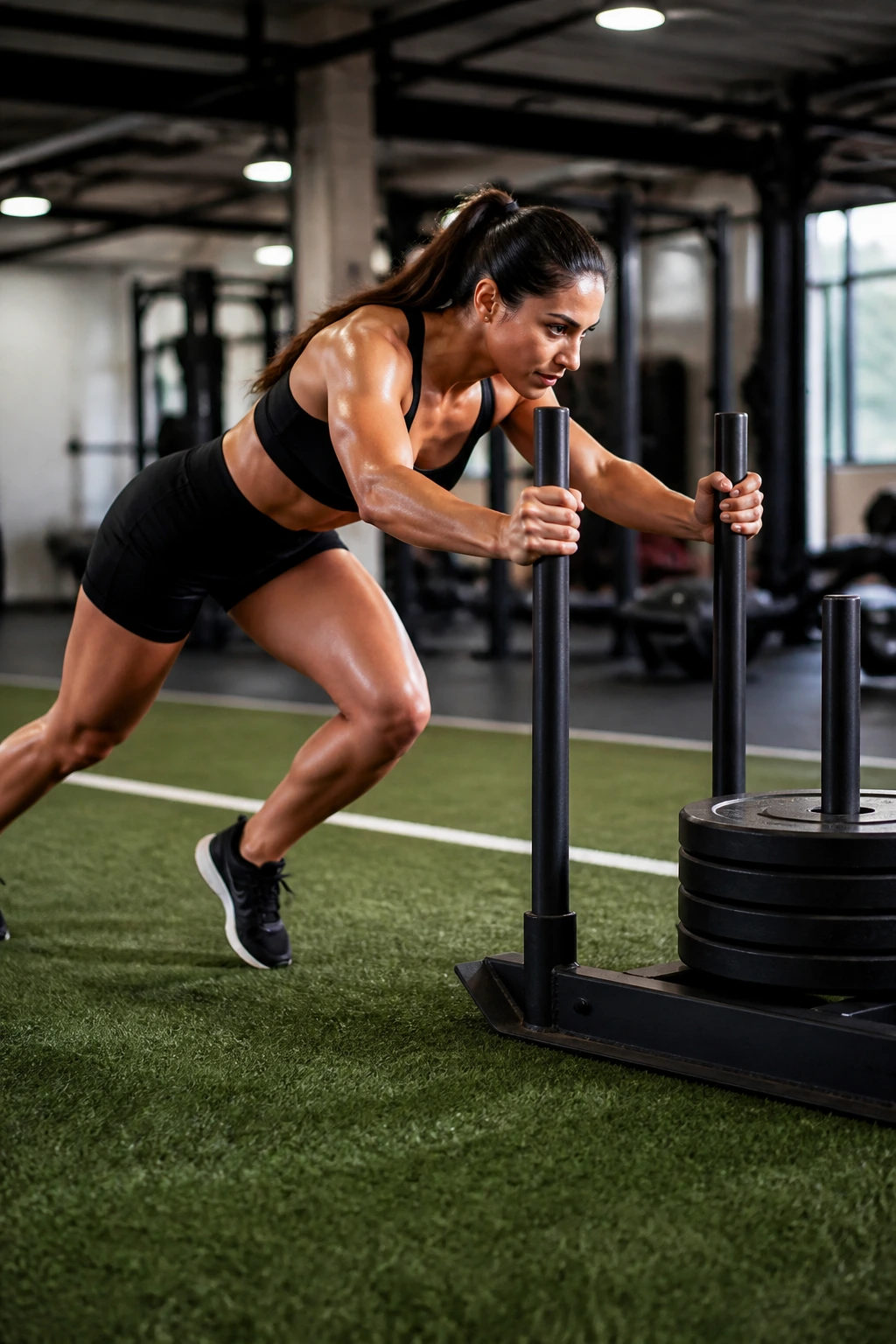
If your gym has a sled and a turf lane, use it. Sled pushes are straightforward, brutal in a good way, and easier on the joints than a lot of high-impact cardio options because the feet stay planted and the work goes into drive.
Push for 15 to 20 meters, rest while you walk back, and repeat 6 to 10 times. Load the sled so it moves slowly but steadily. If you’re racing it, the weight is too light. If it barely budges, the weight is too heavy.
The torso should stay angled forward with a tight core and active arms. Short, powerful steps work better than giant lunges. You want the feet to churn, not flail.
This is one of those sessions that feels plain from the outside and serious from the inside. It gets your heart rate up, lights up the legs, and leaves you with that heavy-but-good feeling that only comes from pushing against something real.
18. Outdoor Track Fartlek Run

Fartlek sounds fancy, but it’s really just speed play. And that’s what makes it so useful when a rigid interval plan feels annoying before breakfast.
Pick a track, path, or stretch of road and alternate effort based on landmarks. Run hard between two trees, then easy to the next corner. Speed up for one song, then recover for the next. The pattern stays loose on purpose.
Why it feels different
- The hard parts can be short or long.
- Recovery happens by feel, not a stopwatch.
- You can match the effort to how you woke up.
- The workout stays mentally fresh.
That freedom matters. Some mornings, you’ve got more in the tank than you expected. Other mornings, you need to back off after the first hard surge. Fartlek lets both versions of you show up without calling the session a failure.
This is a strong option for runners who want variety without losing structure entirely. It feels more human than a perfect interval chart. I like that.
19. Fast-Paced Hike With Pack or Poles
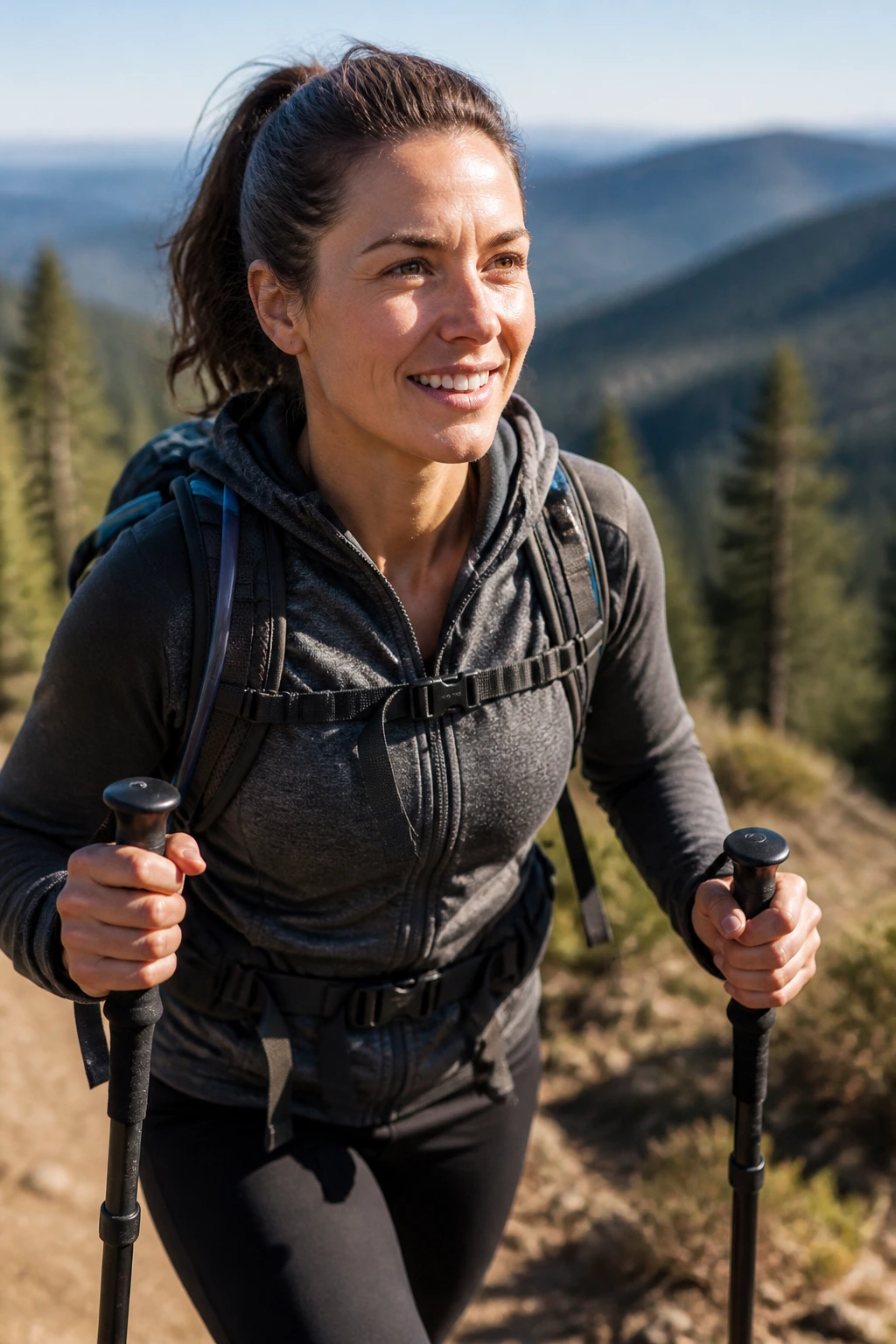
A hike does not have to be a slow scenic stroll. Pick a route with hills, keep your steps brisk, and it turns into a solid cardio session that also happens to get you outside.
Use a small day pack with water if you want a little extra load, or grab poles if your route is uneven. Walk at a pace where your breathing is steady but stronger than a casual walk, and keep that pace for 30 to 45 minutes.
What changes the feel
- A hill forces a stronger push.
- Poles bring your upper body into the work.
- A light pack adds a touch more demand.
- Brisk steps keep it from drifting into wandering.
This is a smart choice if you want morning movement without the sameness of a treadmill. The air, the light, and the uneven terrain keep your brain engaged enough that the time passes faster than you’d expect.
Don’t turn it into a weighted march just to prove a point. A small load is enough. Save the ego for something else.
20. Morning Cardio Elliptical Pyramid

The elliptical is underrated when you want sweat without impact. A pyramid format makes it better because it keeps the effort climbing and dropping in a way your body can follow without feeling trapped in one speed.
Use 1 minute moderate, 2 minutes harder, 3 minutes hard, 4 minutes hardest, then back down to 3, 2, and 1. Rest or pedal easy for 1 minute between each rung if needed, or keep the easy pedal built into the recovery. The high points should feel like work, but not panic.
A few details matter:
- Increase resistance before you chase speed.
- Keep the motion smooth, not rushed.
- Hold an upright posture.
- Let the pedals do the work, not your lower back.
This is a tidy option for women who want a machine session that feels organized but not rigid. It’s also easy to scale. If the peaks are too much, make the top of the pyramid shorter. If they’re too mild, add resistance instead of flailing harder.
Final Thoughts
The smartest morning cardio plan isn’t the hardest one. It’s the one you can start before your brain has time to argue.
Keep one low-impact option and one sweatier option in your back pocket. That way, sleep, soreness, weather, and bad moods do not get to cancel your routine before it starts.
A good session leaves you awake, warm, and more ready for the day than you were ten minutes earlier. That’s enough. Put your shoes by the bed tonight, and tomorrow morning gets a little easier.
