



Small band. Big burn.
Mini band workouts at home look modest on paper, but a loop around your thighs can light up your glutes, hips, and core faster than most people expect. There’s a reason these little bands keep showing up in warm-ups, rehab rooms, and living-room training sessions: they punish sloppy form and reward clean reps.
The placement changes the feel more than most people realize. Above the knees is friendlier for beginners and better for squats. Around the ankles makes every side step harder. In the hands, the same loop can wake up your upper back and shoulders. Fabric bands tend to stay put better on bare skin, while latex bands usually give a snappier feel with a little more stretch.
And yes, the small size is part of the appeal. You do not need much room, much noise, or much setup. You do need control, though. If your knees cave in, your ribs flare, or you rush the return, the band tells on you immediately. That honesty is useful. It’s the whole point.
1. Mini Band Glute Bridge Pulse Burner
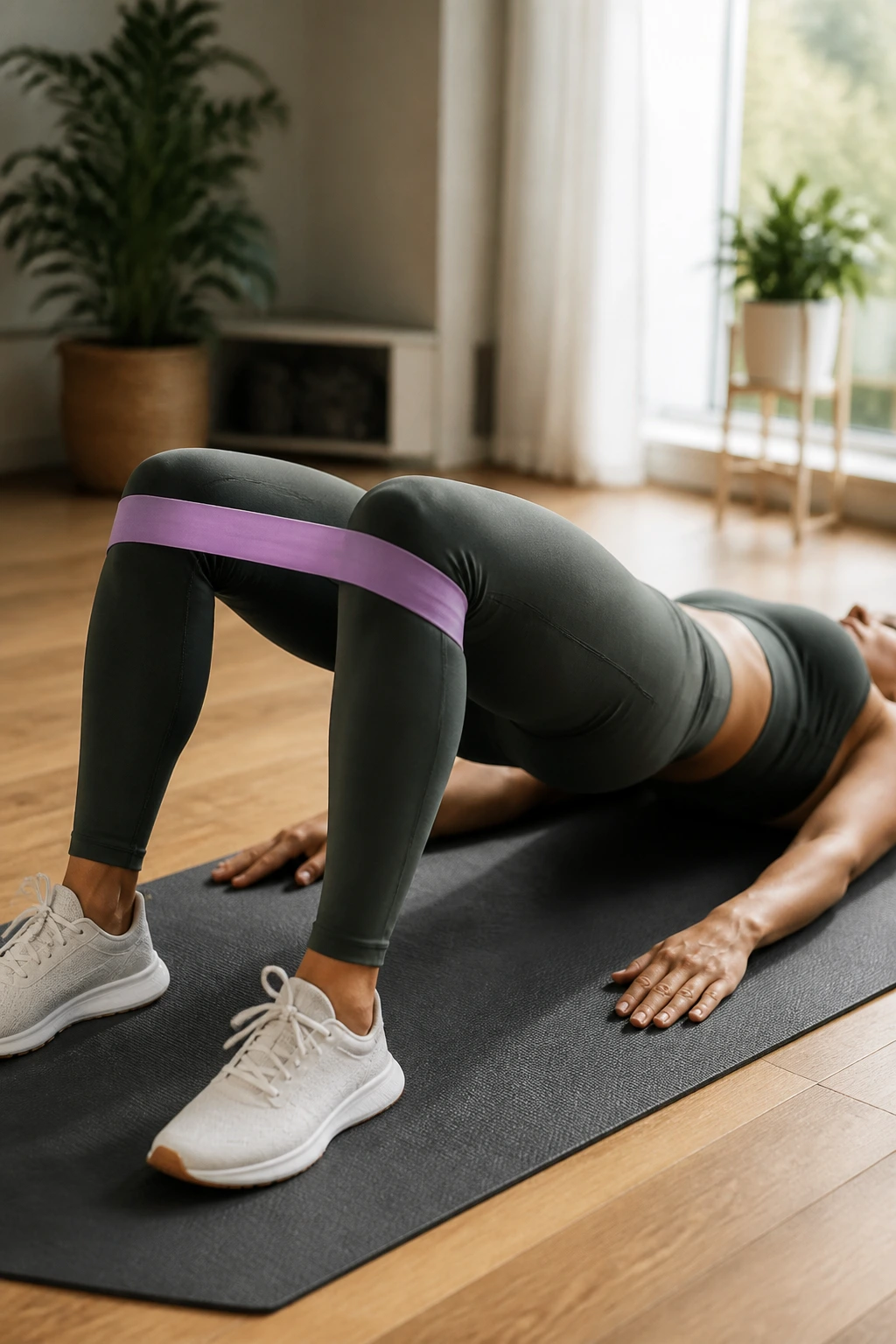
If your glutes wake up slowly, start here.
Lie on your back with the band just above your knees, feet flat, and heels about a hand’s width from your hips. Drive through your heels, lift your hips, and press your knees gently out against the band as you come up. Then keep the top position alive with small pulses — not huge hip thrusts, just short, controlled squeezes.
How to make it hit the right place
Keep your ribs down and your lower back quiet. If you feel this mostly in your hamstrings, walk your feet a little closer to your seat. If your knees are drifting inward, slow down and think about spreading the floor with your feet.
A clean format is 12 bridge reps, 10 pulses at the top, then a 10-second hold. Do 3 rounds. That’s enough to wake up the glutes without turning the exercise into a circus act.
- Setup: band above the knees, feet hip-width, chin slightly tucked
- Tempo: 2 seconds up, 1 second squeeze, 2 seconds down
- Cue: your hips should rise together, not twist
- Stop when: your lower back starts taking over
Tip: If the band rolls, move it a touch higher and clean up the rep speed. Rolling usually means you’re rushing.
2. Mini Band Lateral Walk Ladder
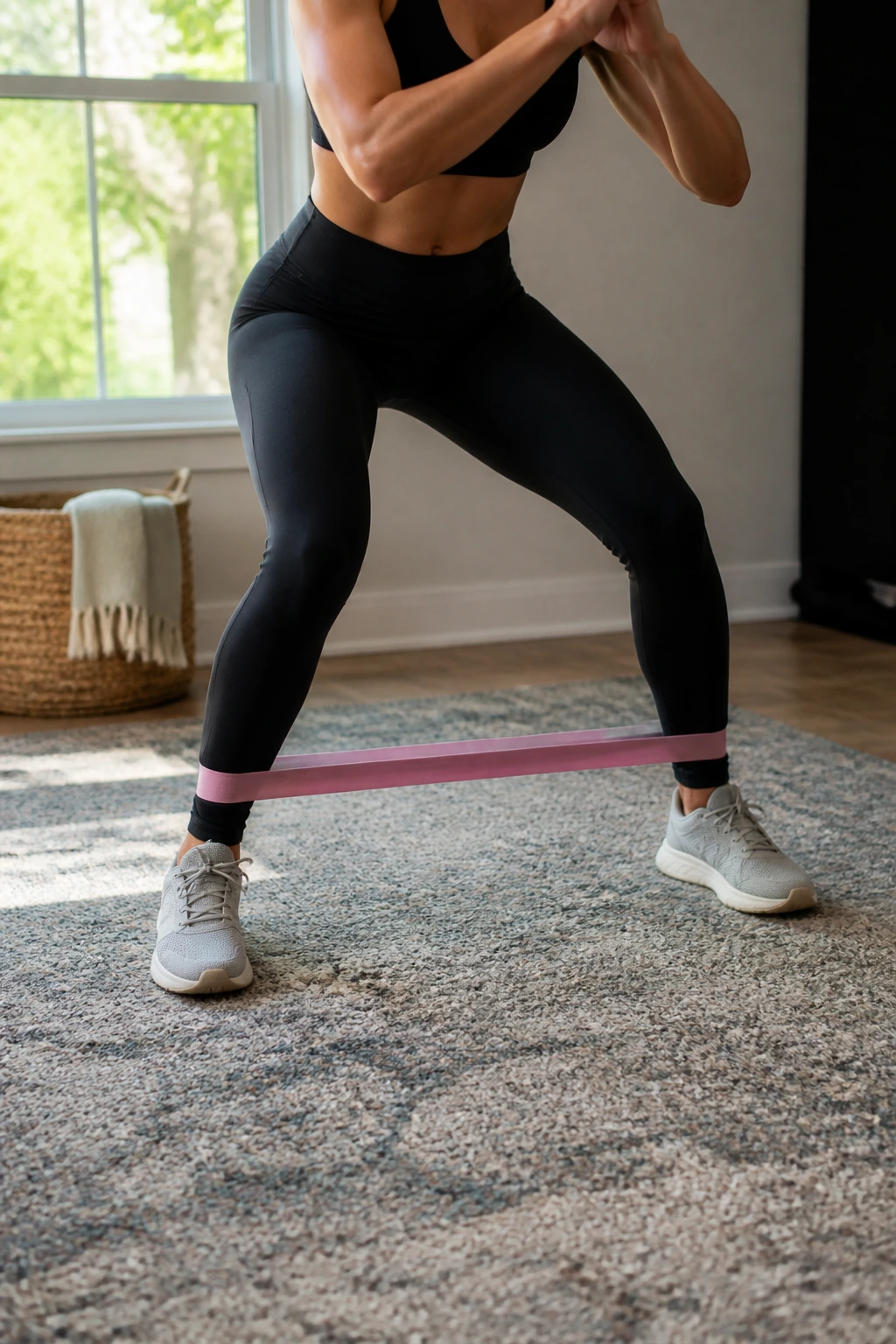
This one looks easy right up until step six.
Place the band above your ankles for the hardest version, or above your knees if you want a kinder start. Sink into a quarter squat, keep your toes pointing forward, and step sideways under tension. Every step should feel deliberate. No toe drag. No bouncing. No swaying from side to side like you’re dodging a puddle.
The ladder format keeps the burn from going stale: 10 steps right, 10 steps left, then 8 and 8, then 6 and 6, then 4 and 4. Rest 20 to 30 seconds between rounds. Two or three rounds is plenty. The outer hips will be on fire, and that’s the point.
This move pays off because it trains the glute medius, the muscle that helps stabilize your pelvis and knees. If your knees tend to collapse inward during squats or stairs, lateral walks are worth your time. Not glamorous. Effective, though.
Best cue: keep your head level. If your shoulders are bobbing up and down, the band is winning.
3. Squat Hold and Press-Out
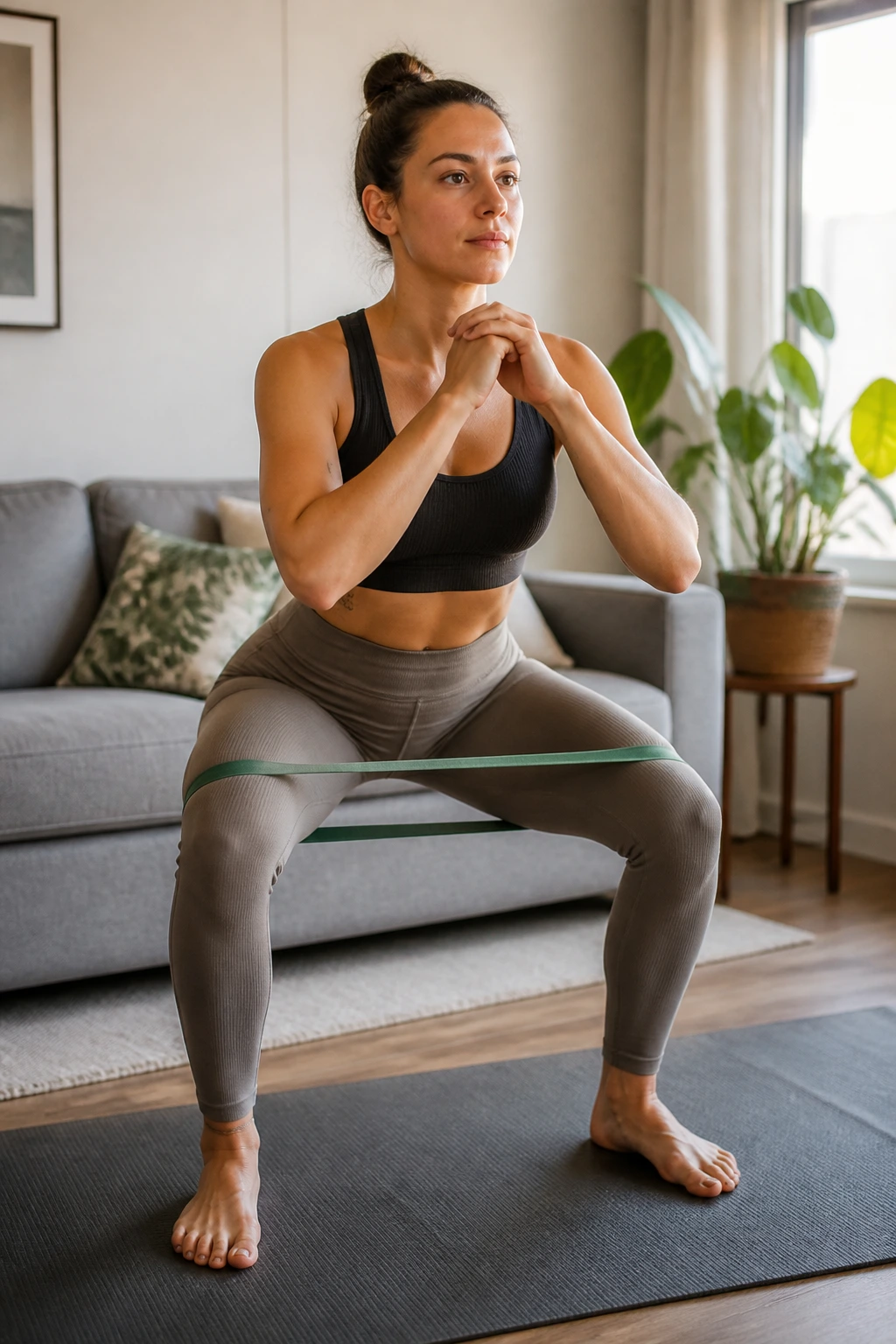
A static squat sounds boring. It isn’t.
Put the band above your knees, stand with feet a little wider than hips, and lower into a squat as if you’re sitting back to a sturdy chair. Hold that bottom position, then press your knees out gently against the band for 8 small reps while keeping your chest lifted. Stand up, reset, and repeat.
Why this one works
The hold makes your legs do the work for longer, and the press-out reminds your hips not to collapse inward. That combo is sneaky. You feel it in the quads, glutes, and inner thighs all at once, especially if you pause for 20 to 30 seconds at the bottom before standing.
Try 3 rounds of 8 press-outs. If your back rounds or your heels come up, stand a little taller in the squat and shorten the hold. I’d rather see a cleaner half-squat than a sloppy deep one.
A chair behind you helps if you’re learning. Tap it lightly, then hover. That tiny hover is where the work starts.
4. Monster Walk Power Set
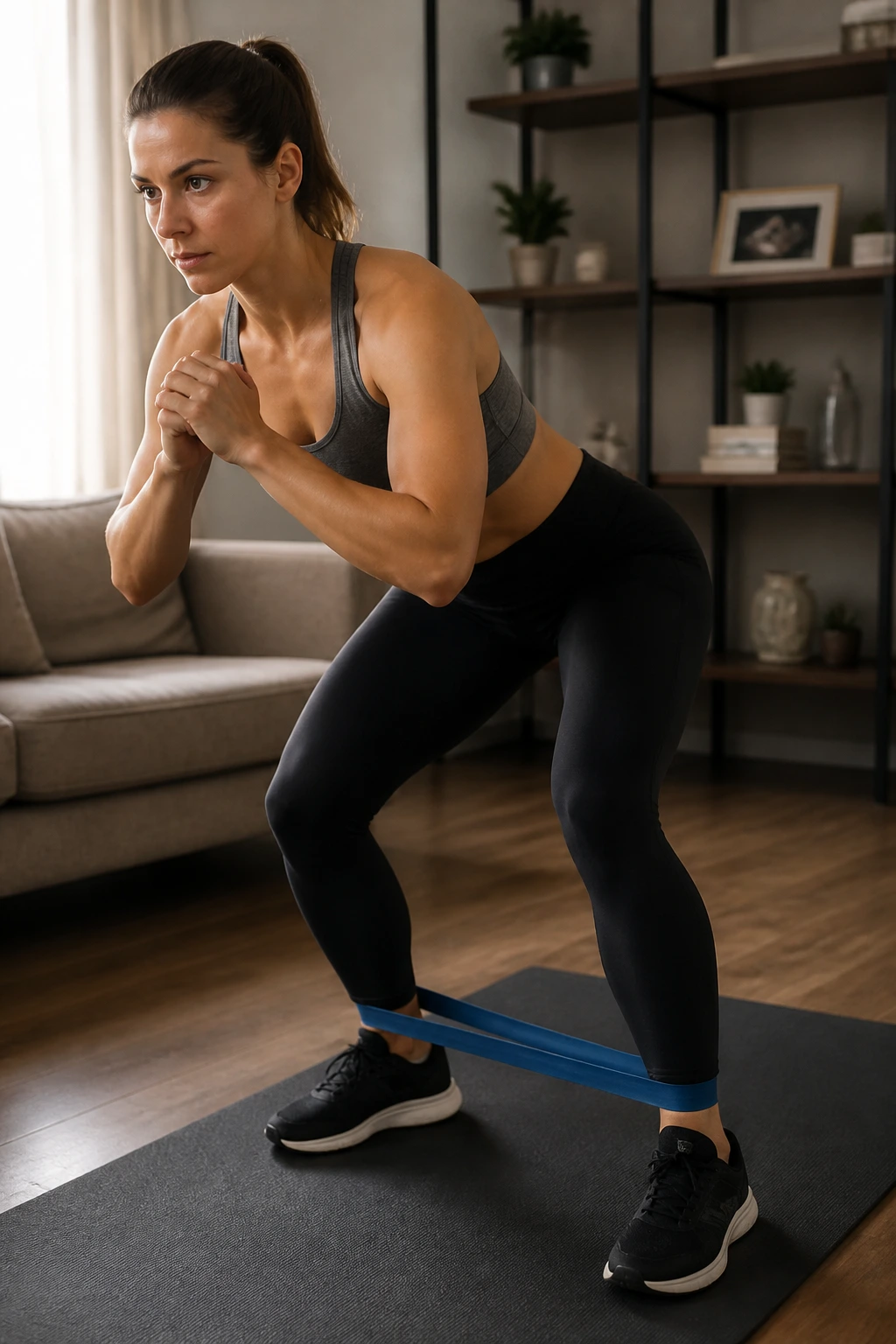
The monster walk is the cousin of the lateral walk, but it feels more like a squat march with attitude.
Keep the band above the ankles or above the knees, soften your knees, and step forward at a diagonal. Then step back the same way. The feet should stay wide enough that the band never goes slack. If it does, you’re basically taking a stroll.
Use 8 steps forward and 8 steps back as one round. Do 3 rounds. If you want a quicker burn, lower your hips a little more on the second round. Not enough to fold over. Just enough to make the quads and glutes share the load.
The best version of this move is quiet. Your feet land softly. Your torso stays steady. Your knees track over your toes instead of wobbling inward. That clean line matters more than speed.
This is a strong warm-up before squats, lunges, or even a walk outside. It wakes up the hips without chewing up your energy.
5. Clamshell Ladder
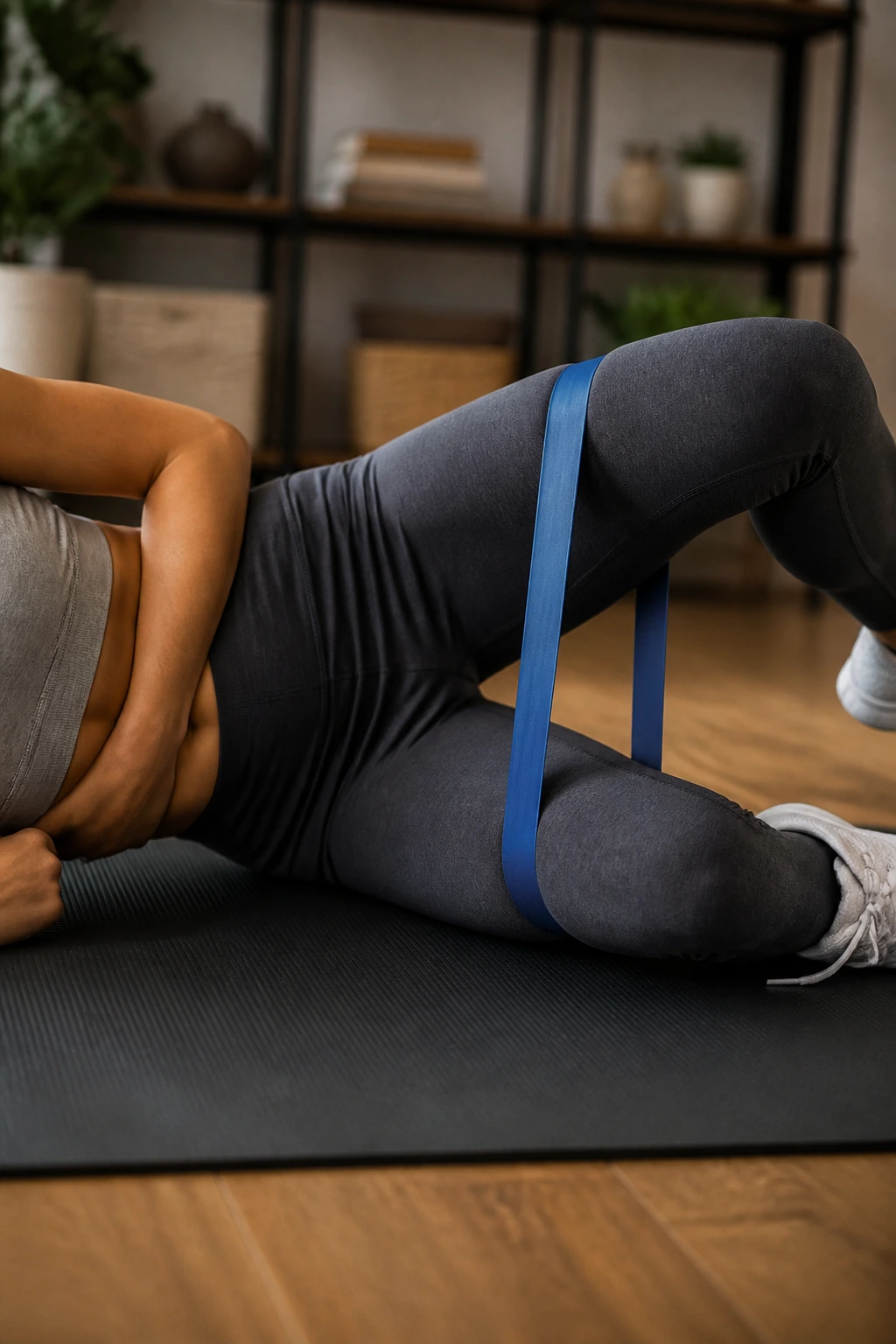
Side-lying clamshells are old-school for a reason.
Lie on one side with knees bent about 90 degrees, band just above the knees, heels together, and hips stacked. Open the top knee like a clam shell, but keep your pelvis still. No rolling backward. No hiking the top hip. The movement should come from the outside of the hip, not from twisting your whole body.
Use a ladder: 12 smooth reps, 10 tiny pulses, then a 10-second hold at the top. Switch sides. If one hip feels lazy, start there first while your focus is fresh.
What to watch for
- Don’t let your feet separate more than a few inches.
- Do keep your belly lightly braced.
- Do slow the lowering phase; that’s where a lot of the work happens.
- Don’t chase height. A small, clean opening beats a big sloppy one.
This move is one of my favorites for outer-hip strength because it’s honest. You can’t fake much here. If you cheat, the band tells on you.
6. Standing Kickback and Reach
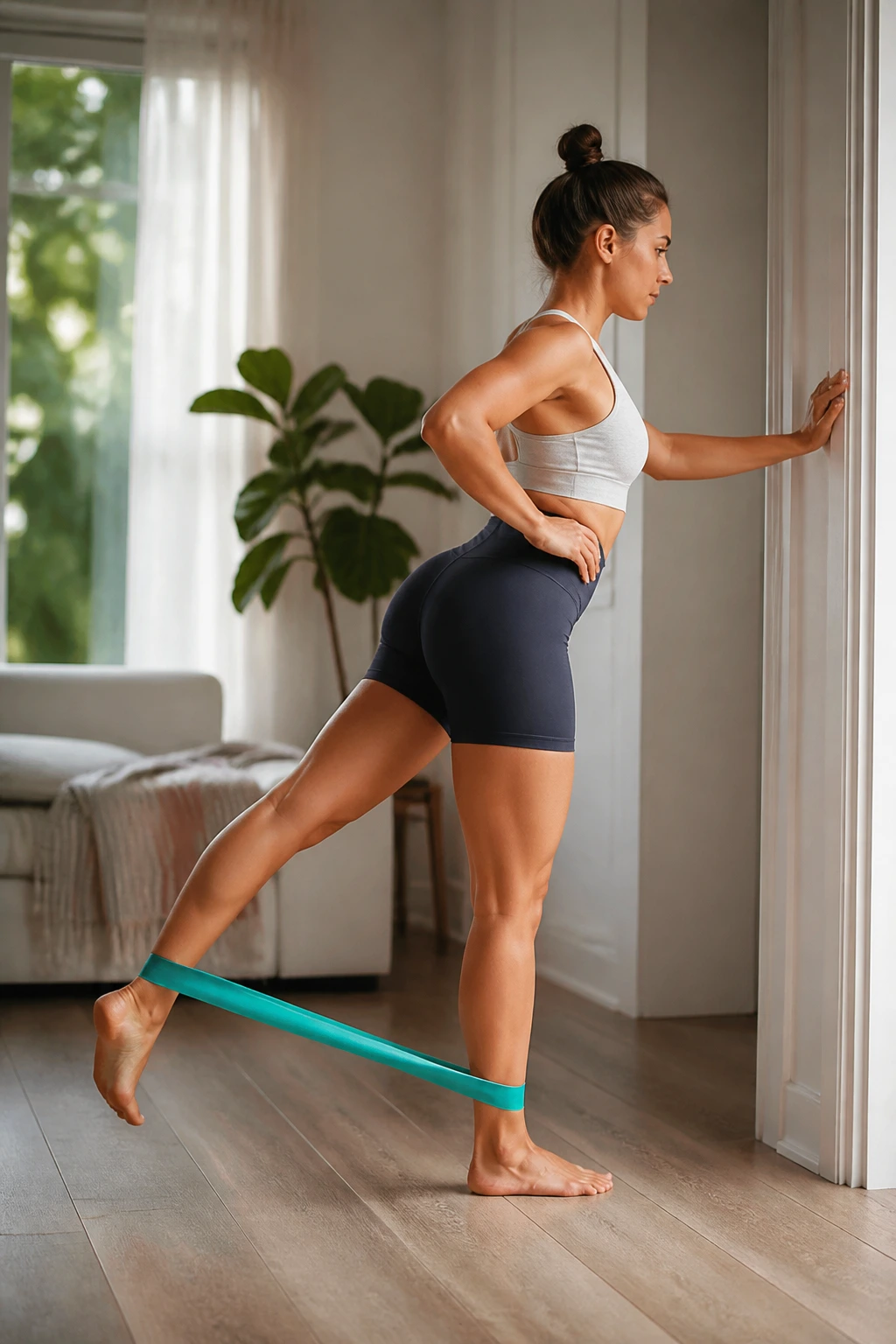
This is the one I like when I want glutes without getting on the floor.
Stand tall, band above the ankles or above the knees, and hold onto a wall or chair with one hand. Shift your weight onto one leg, then reach the other leg straight back without arching your lower back. Think “long leg,” not “wild swing.” At the top, squeeze for one count, then return under control.
Do 12 reps per side for 2 to 3 rounds. If balance is shaky, put one fingertip on the wall and slow down. The standing leg should stay soft, not locked like a pole.
The key is keeping your hips square to the floor. If you twist open every time the leg goes back, the glute gets less of the work and your lower back tends to pick up the slack.
A tiny pause at the top makes a big difference. Tiny. Really.
7. Fire Hydrant Hold
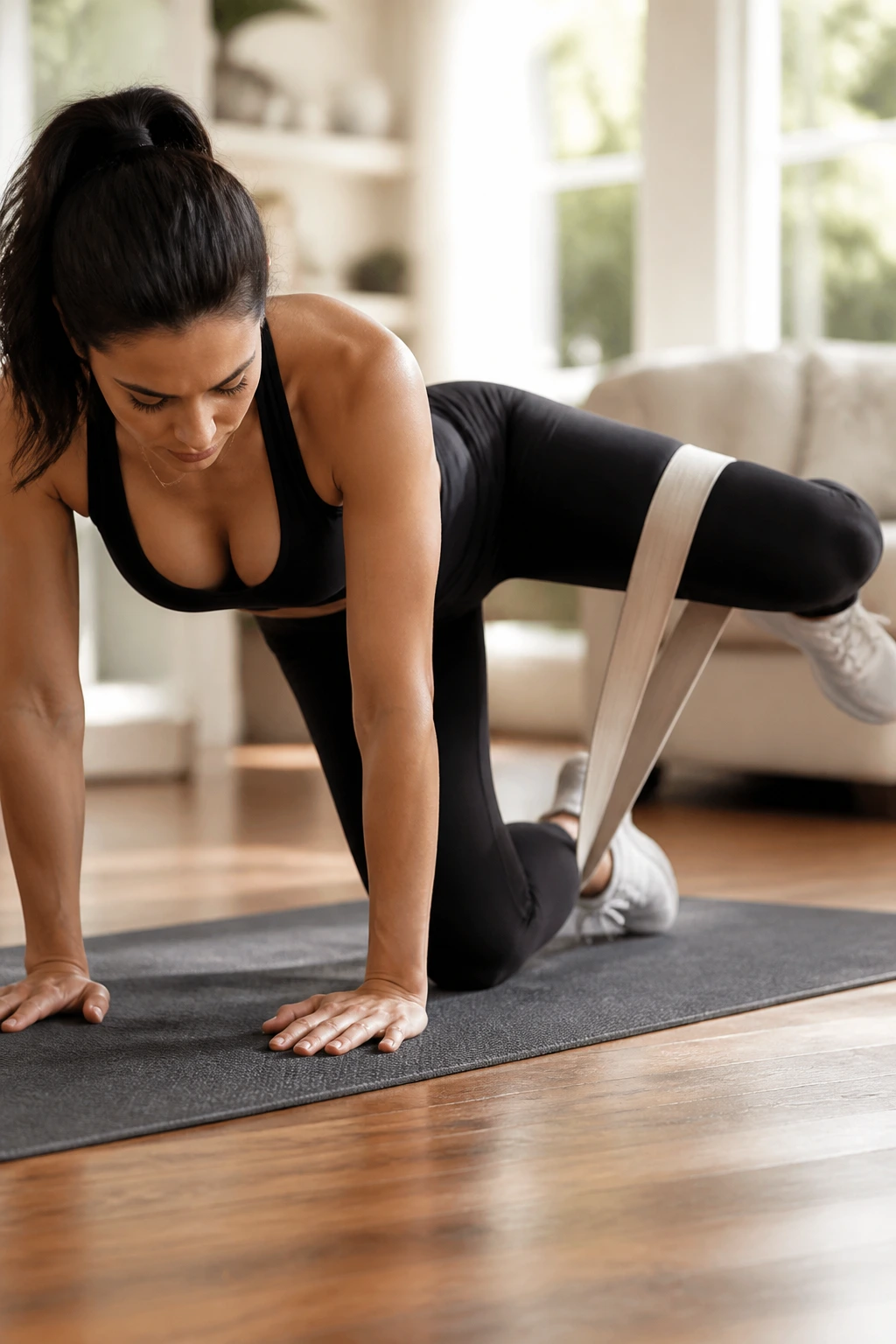
Fire hydrants look a little awkward. They work.
Get on all fours with the band above the knees, hands under shoulders, and knees under hips. Lift one knee out to the side without shifting your weight to the other side. Pause for 2 to 3 seconds, then lower slowly. The pause matters. It keeps the movement from turning into a fast swing.
A good starting dose is 10 reps per side for 2 rounds. If you’re stable and the glute is doing the job, add a third round. If your lower back feels it more than your hip, shorten the lift and brace your midsection harder before you move.
A simple rule
If your torso is rocking, the rep is too big.
That’s the whole trick. Keep the movement small enough that the pelvis stays level. The side of the glute should light up near the top of the motion, and the band should keep tension the whole time.
8. Dead Bug With Band Pressure
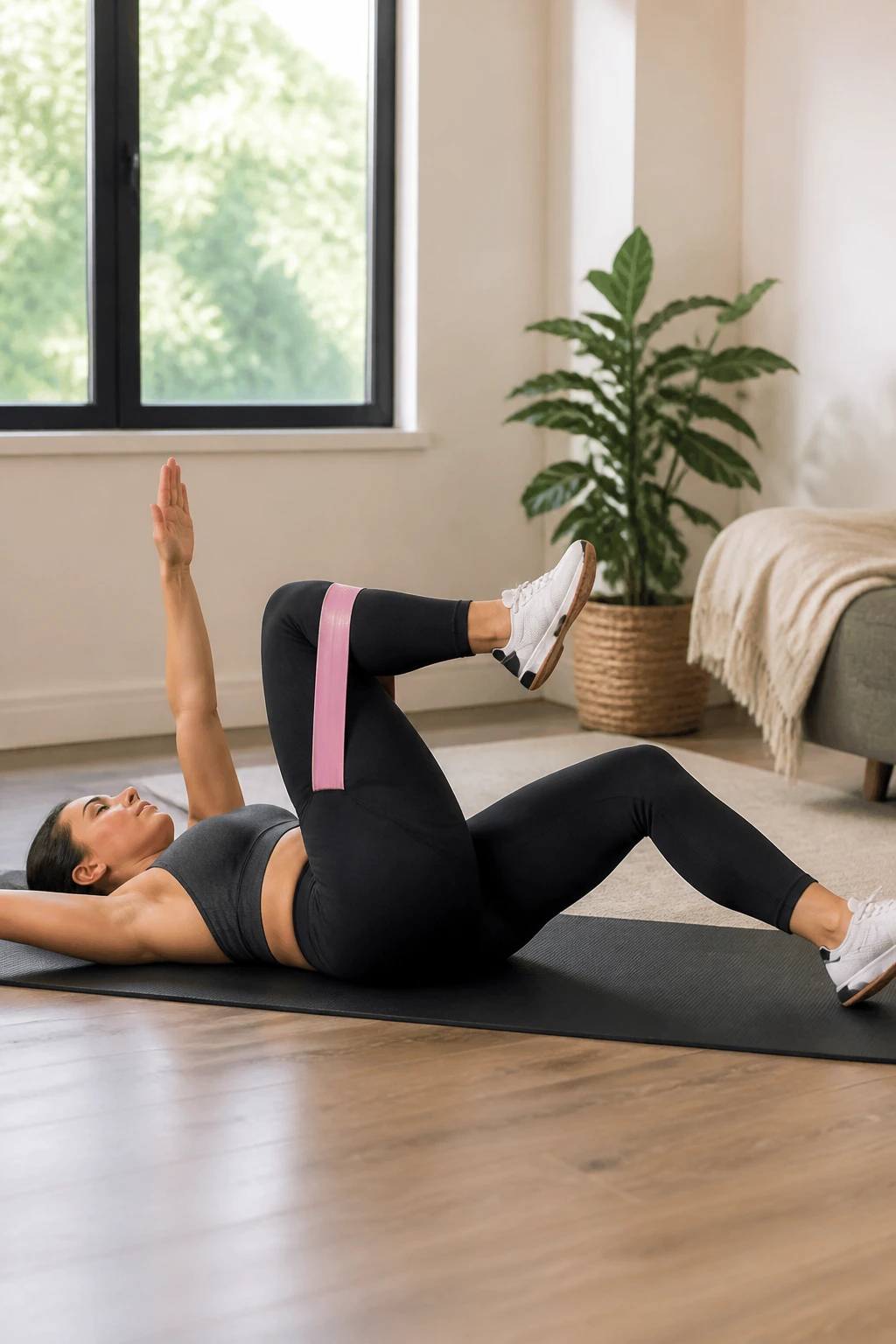
A dead bug gets more interesting when the band shows up.
Lie on your back with knees bent to tabletop and the band above the knees. Press the band outward just enough to keep tension while you lower one heel toward the floor and extend the opposite arm overhead. Return to center, switch sides, and keep your lower back gently glued to the mat.
Use 8 reps per side, and exhale as the leg reaches away. That exhale helps keep the ribs from flaring and the back from arching. If the band tension makes your hips shake a little, good. That means your core is paying attention.
This version is especially useful if you sit a lot or feel your lower abs switch off during floor work. It trains the body to hold shape while the limbs move. Not flashy. Very useful.
If the neck starts cranking forward, lower your arms and make the reach smaller. Control beats range every time.
9. Marching Bridge
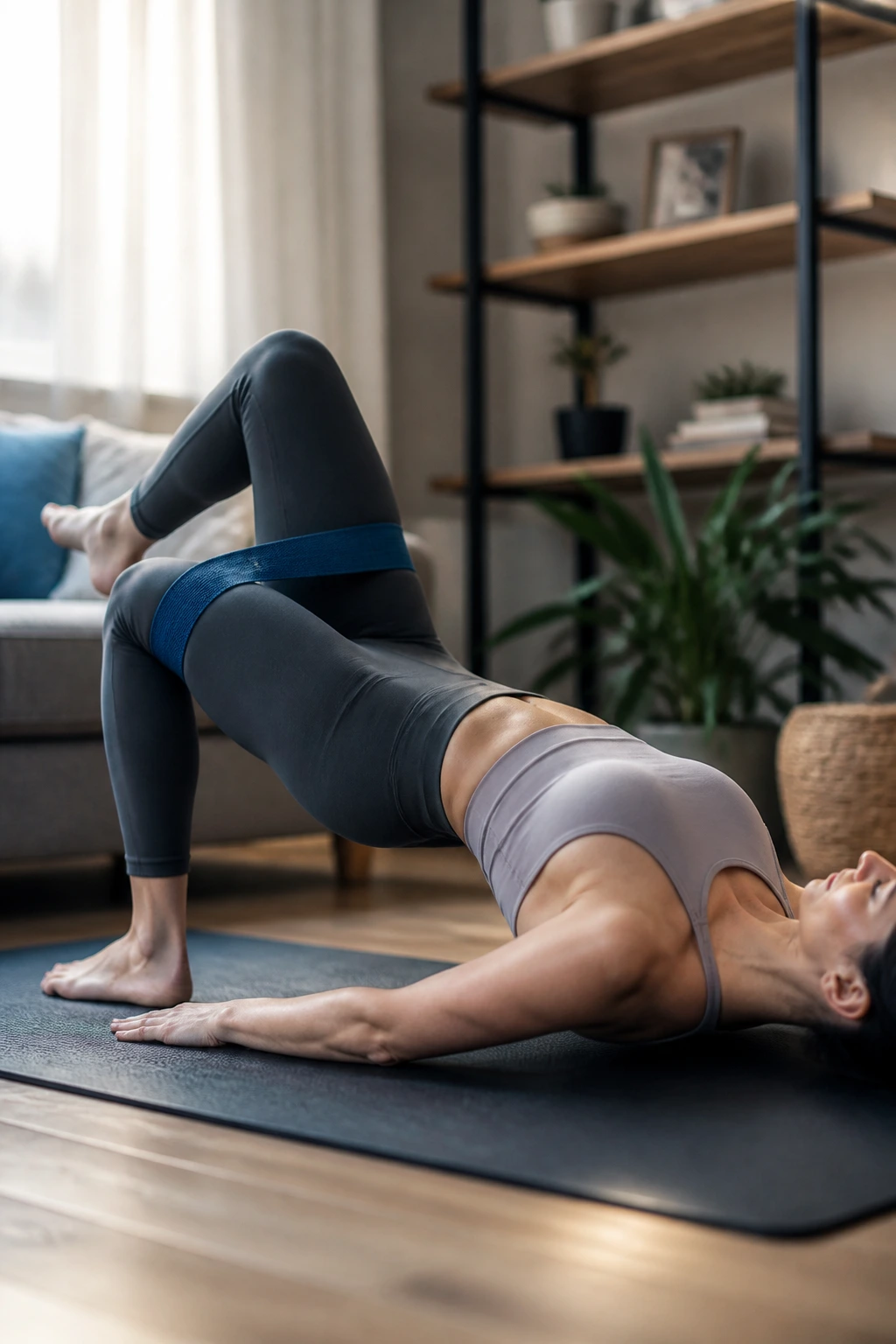
This is the bridge variation that punishes a lazy core.
Start in a glute bridge with the band above the knees. Lift one foot a few inches off the floor, then place it down and switch sides. Keep the hips as level as you can while marching in place. If your pelvis drops like a broken elevator on one side, slow the pace and shorten the lift.
A strong target is 20 total marches for 2 or 3 rounds. You can also count 10 per side if that feels cleaner. The band keeps the knees from drifting together while the bridge position forces your glutes and abs to work together.
This one feels simple for the first few reps, then the supporting leg starts complaining. Good. That complaint is useful information.
Best cue: imagine balancing a glass of water on your hips. If the water spills, you’re moving too fast.
10. Mini Band Good Morning Hinge
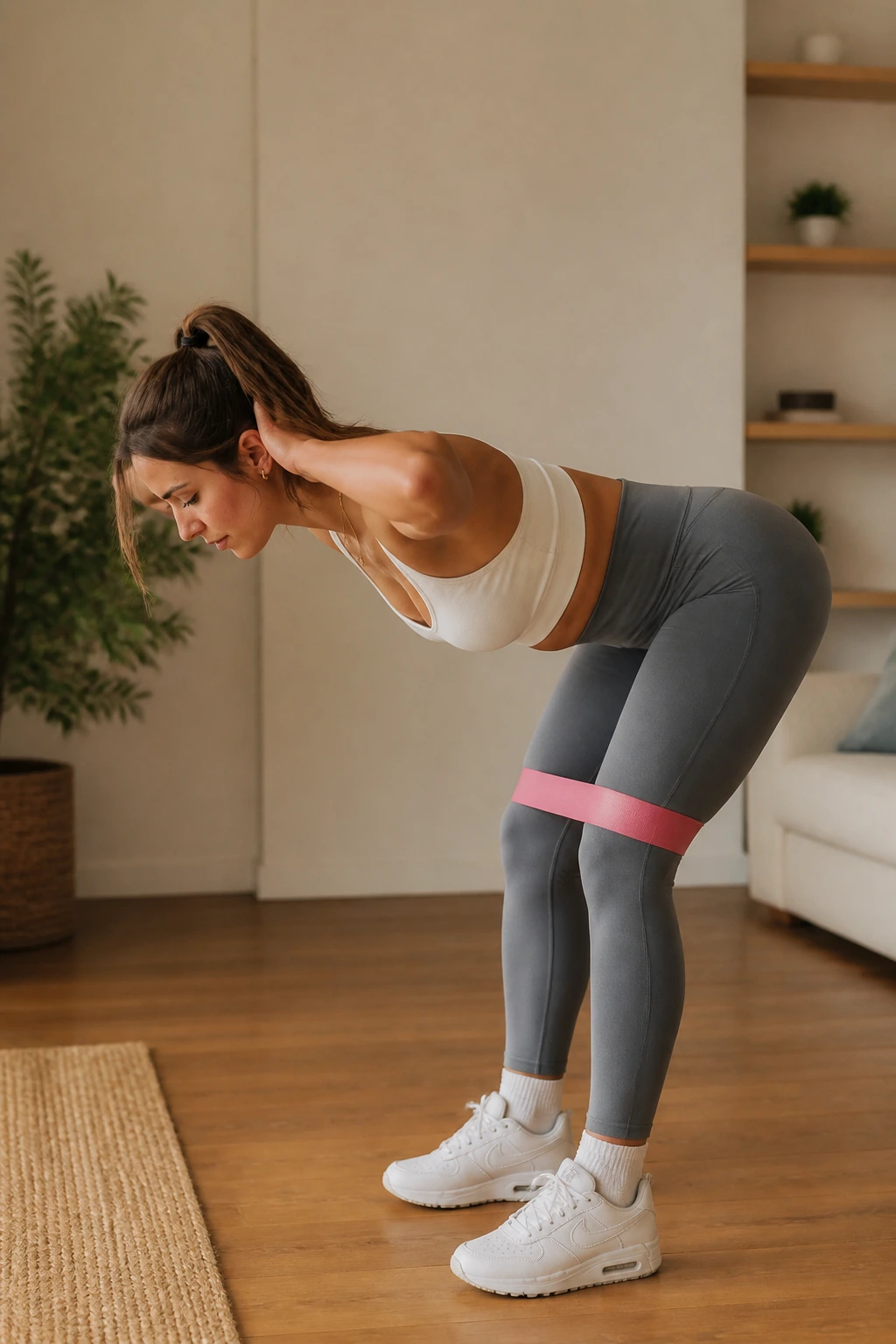
People usually think of good mornings as a barbell move. You can still use the same hinge pattern at home.
Place the band above the knees, soften your legs, and tip your hips back as if you’re closing a car door with your backside. Your torso leans forward, your spine stays long, and your hamstrings should feel the stretch before you come back up. Do not round your back to reach lower. That’s the wrong game.
Try 15 controlled reps for 3 rounds. On the way down, press the knees gently apart so the band stays active. On the way up, drive through the heels and squeeze the glutes at the top without over-arching.
A hinge is one of the cleanest patterns for home training because it teaches the body where the hips live. Most people bend their knees too much and call it a squat. This fixes that.
It also pairs well with bridge work. Hinge, then bridge. You’ll notice the difference.
11. Pull-Apart Posture Reset
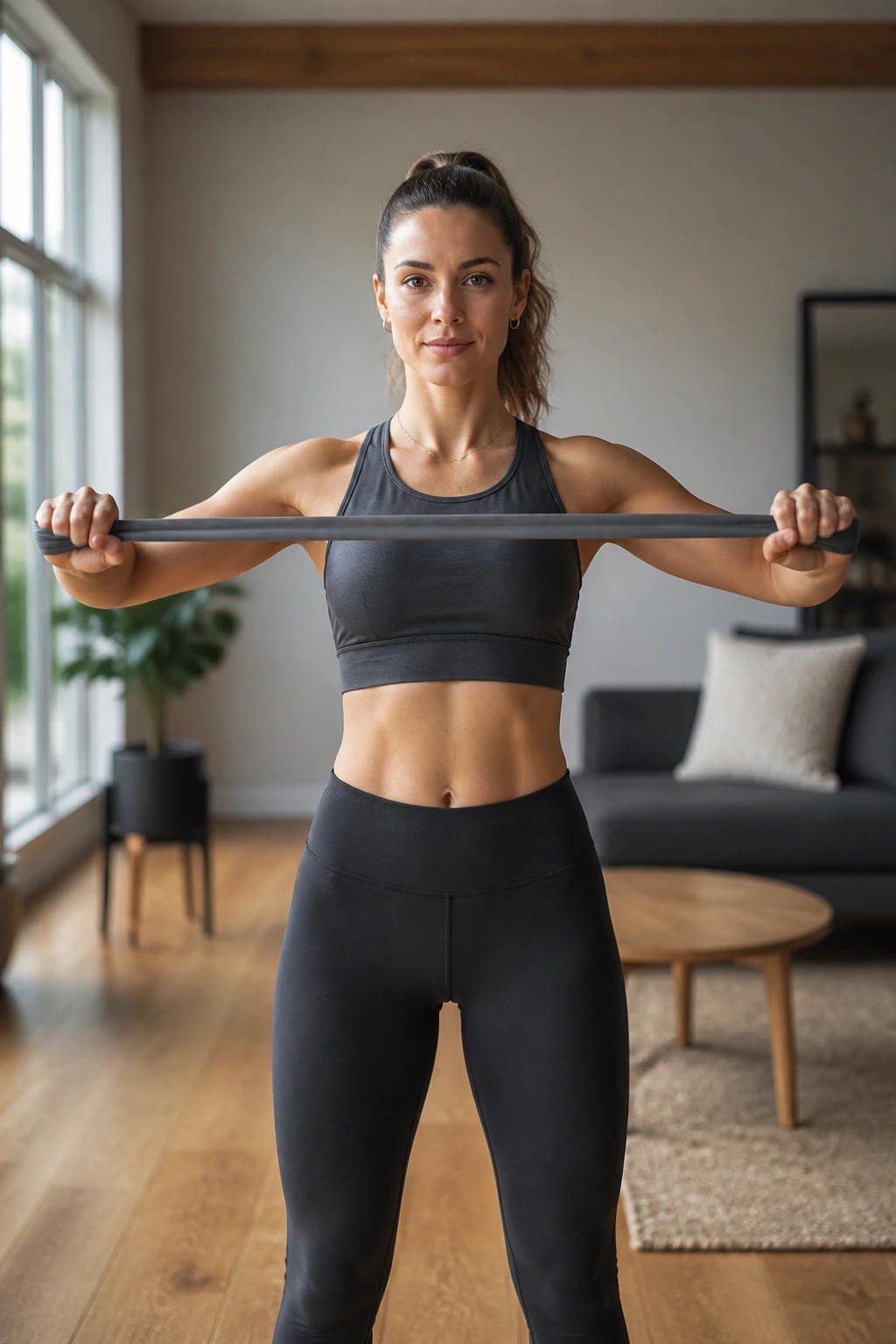
A mini band in your hands can do more than people expect.
Hold the loop in front of your chest with both hands and enough tension that the band already feels awake. Pull your hands apart until the band touches your chest or upper ribs, pause for one count, then come back in slowly. Keep your shoulders down, not shrugged up around your ears.
Use 15 to 20 reps with a steady rhythm. This is one of the nicer exercises to slot between leg moves because it opens up the upper back after a lot of sitting or phone scrolling.
What makes it work
The band should move because your shoulder blades are doing their job, not because you’re yanking with your wrists. If your neck tightens, reduce the tension and slow down.
This is a small move, but it cleans up posture fast. I like it before push-ups, after glute work, or as a desk break when your upper back starts feeling like cardboard.
12. Standing Chest Press
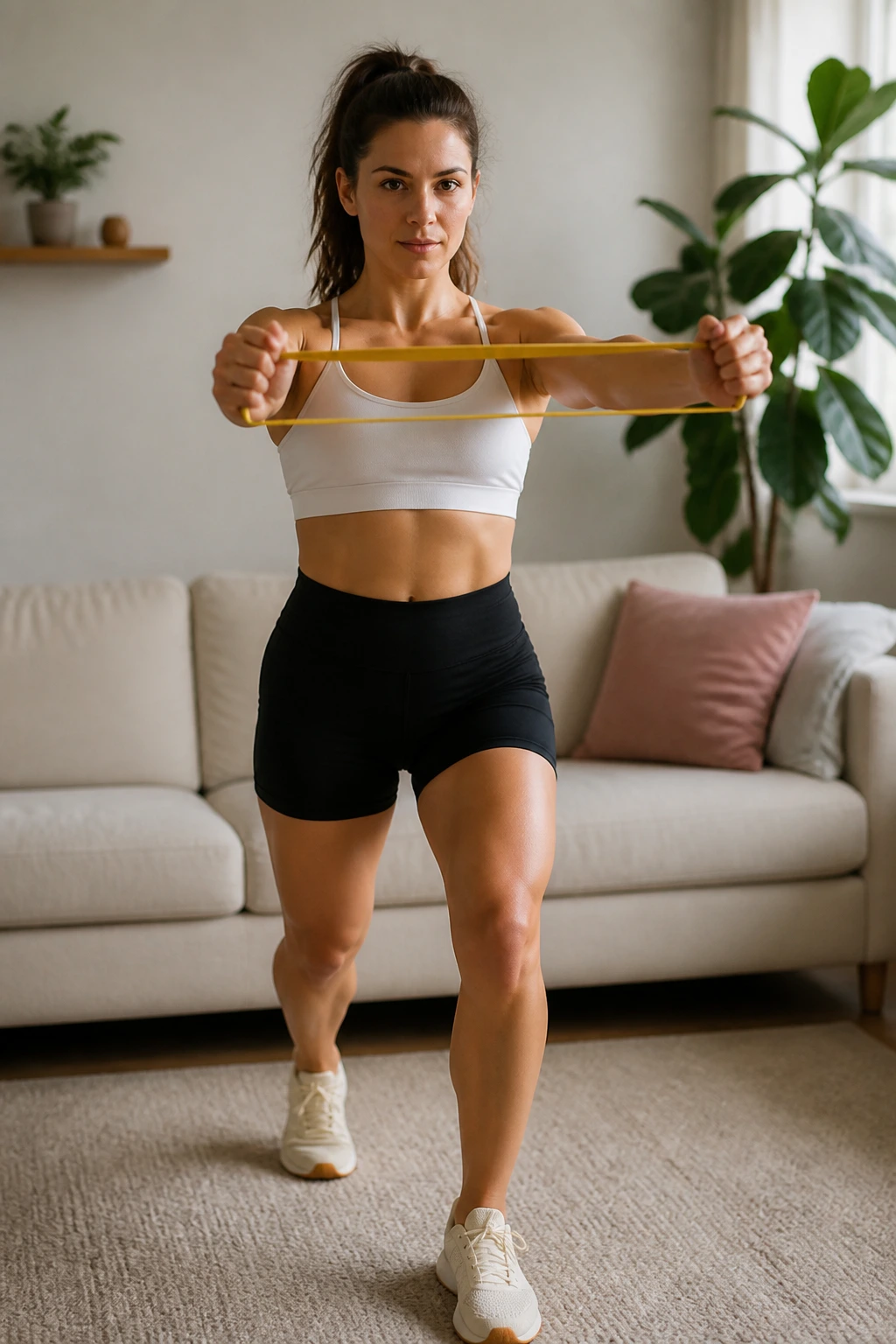
A lot of people skip chest work at home because they assume they need dumbbells or a bench. Not true.
Loop the band around your upper back and hold the ends in front of your chest. Step into a split stance so you feel steady. Press your hands forward until your arms are straight, then bring them back with control. Keep your ribs stacked over your pelvis so the press comes from the chest and triceps, not from a big lower-back arch.
A solid target is 12 reps for 3 rounds. If the band feels too slippery, wrap the loop around your palms once so it sits better. You want tension, not a wrestling match.
This move is useful because it gives you a push pattern without much noise or setup. That matters in a home space. You can train the chest, triceps, and front of the shoulders without leaving the room or dropping to the floor.
One clean rep is better than ten sloppy ones here. Especially if you tend to flare your elbows.
13. Side-Lying Leg Lift Ladder
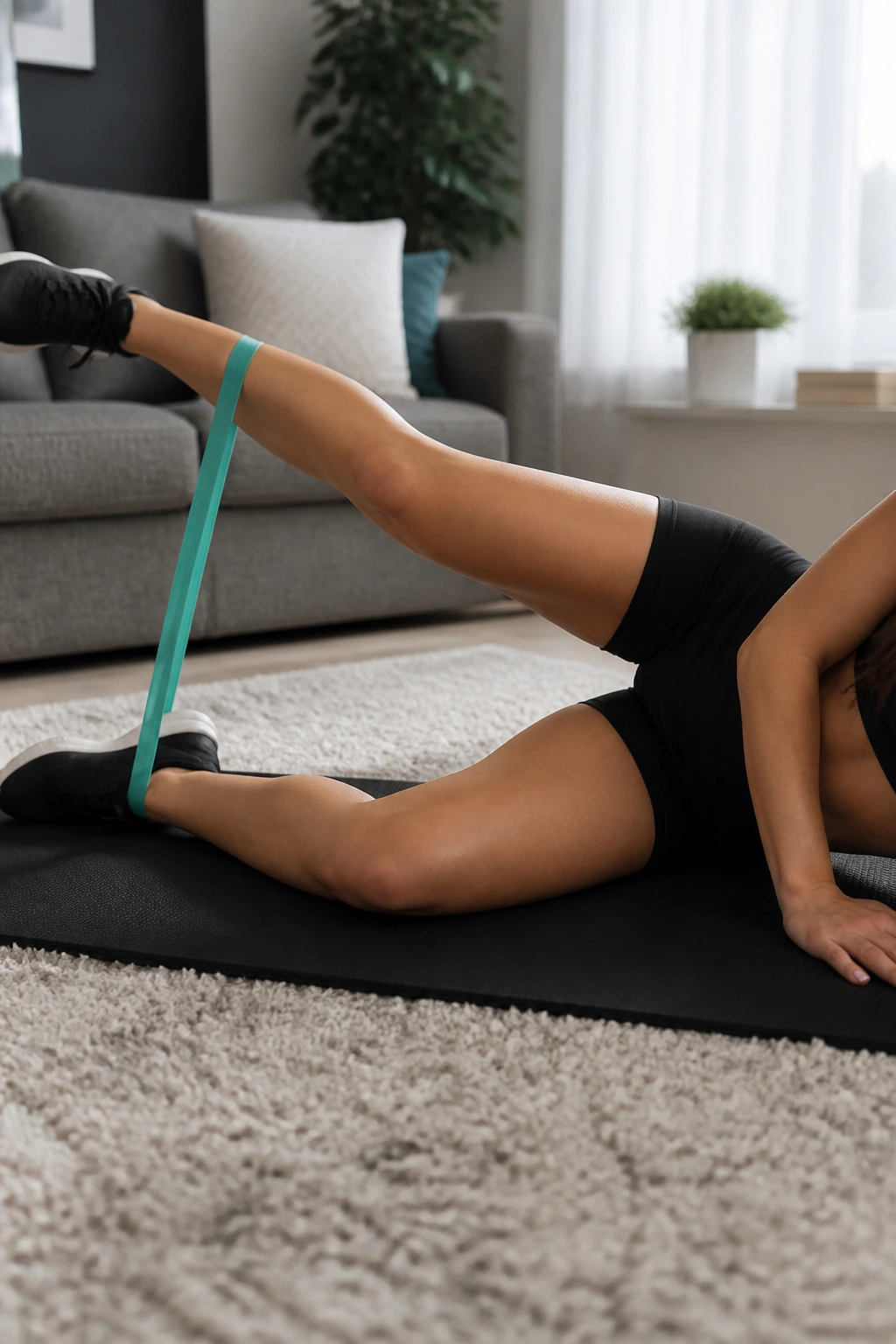
If you want the outer hip to burn without standing around, this is a good one.
Lie on your side with the band above the ankles or above the knees, bottom leg bent for support, top leg straight, and hips stacked. Lift the top leg slowly, pause, lower slowly, then finish with tiny pulses at the top. Keep the foot neutral, not turned upward like you’re trying to show off the sole of your shoe.
The ladder is simple: 10 full lifts, 10 pulses, 10-second hold. Then switch sides. If the top hip keeps rolling backward, tuck it forward a touch and think about lifting straight out of the side seam of your shorts.
This one feels modest for the first few reps, then the outside of the hip starts to complain. That’s normal. That’s also why people who sit a lot tend to benefit from it.
Don’t fling the leg. If you have to swing, the band is too heavy or the range is too big.
14. Reverse Lunge Drive
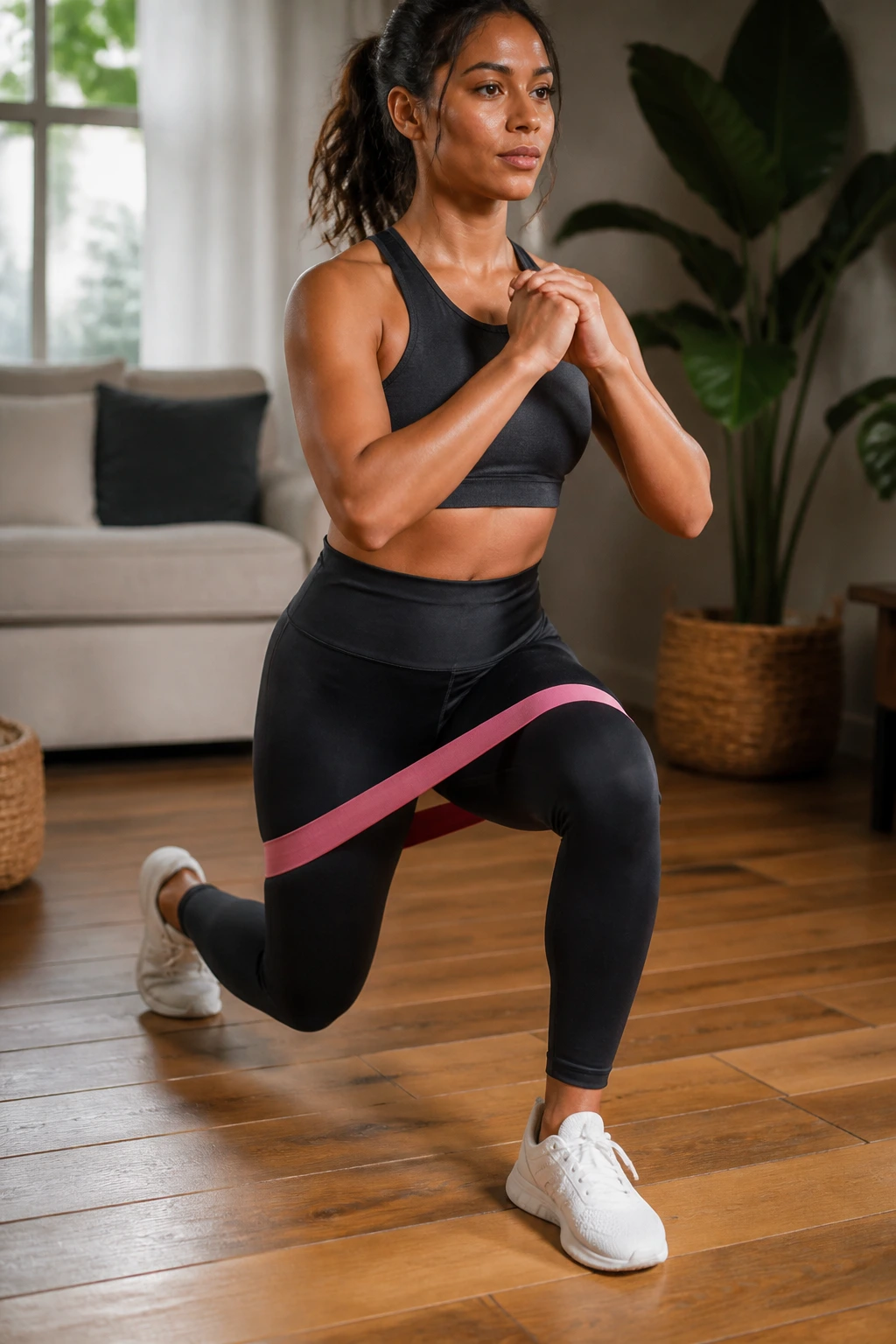
A reverse lunge is kinder on the knees than a forward lunge, and the band makes it more useful.
Place the band above the knees, stand tall, and step one leg back into a lunge. Lower until both knees bend comfortably, then push through the front heel to come back up. As you rise, keep the front knee tracking over the second toe instead of collapsing inward.
Use 8 reps per side for 3 rounds. If balance is wobbly, lightly tap a wall with one hand. That’s not cheating. It’s smart.
What I like here is the way the band forces the front leg to stay honest. You can’t just drop into the hole and hope for the best. The glutes have to stabilize, and the quads have to do their share.
If your back knee slams into the floor, shorten the depth. Controlled range beats depth every time.
15. Curtsy Squat Flow
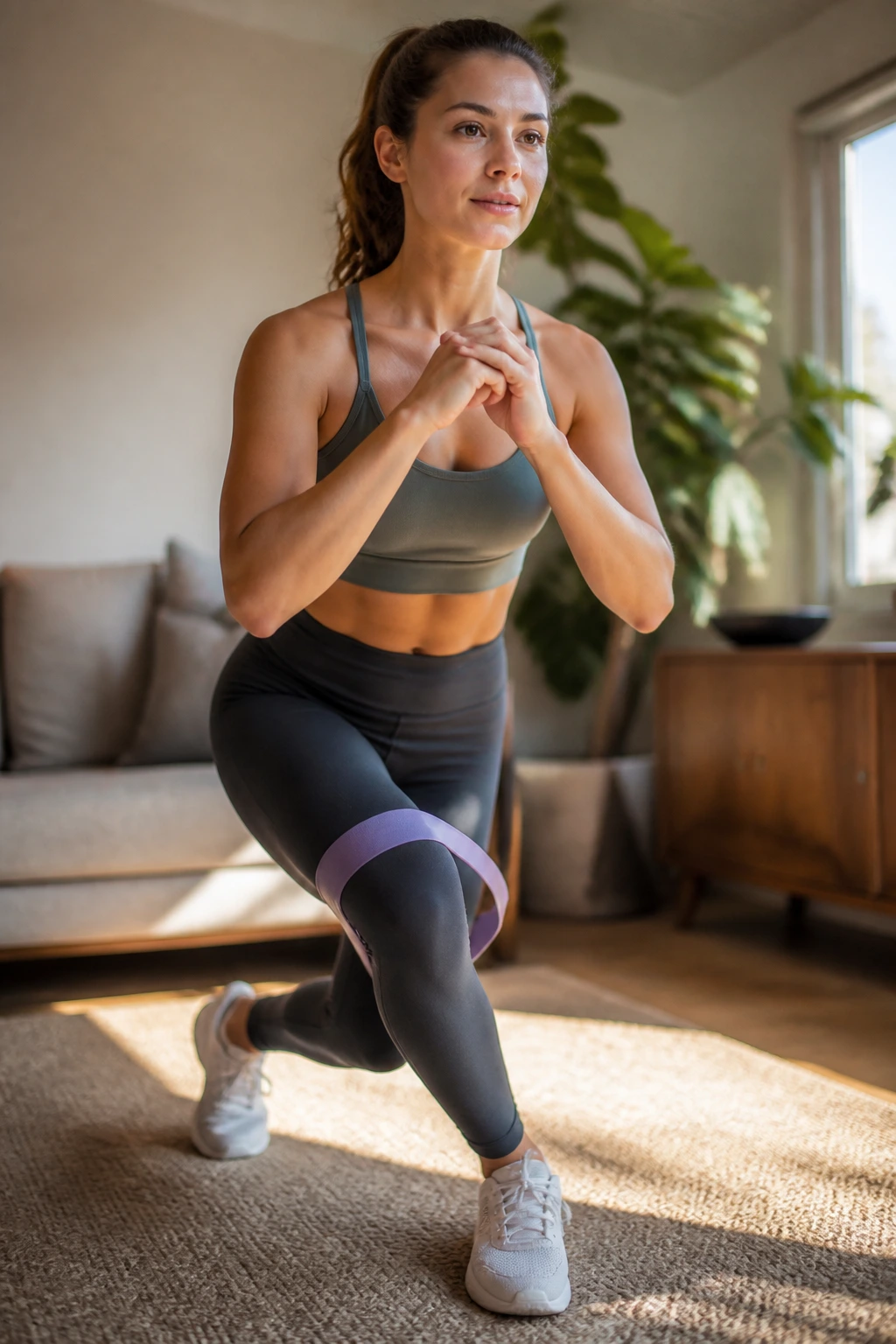
Curtsy squats can be awkward if you rush them. Done slowly, they’re useful.
With the band above the knees, step one leg back and across behind the other as you lower into a small squat. Come back to center with control, then switch sides. Keep the front foot planted and the front knee from collapsing inward. The move should feel like a diagonal step, not a twisted knee.
Try 8 reps per side, moving at a pace that lets you feel your glutes and inner thighs working together. If your knees don’t love the crossover, make the step smaller. There is no prize for taking the deepest diagonal in the room.
This move hits the glutes from a different angle than a straight squat or lunge. That’s useful. Variety matters when you’re training with one small band and limited space.
A narrow stance plus fast tempo usually turns this into a balance mess. Slow it down. Clean it up.
16. Side Plank Knee Drive
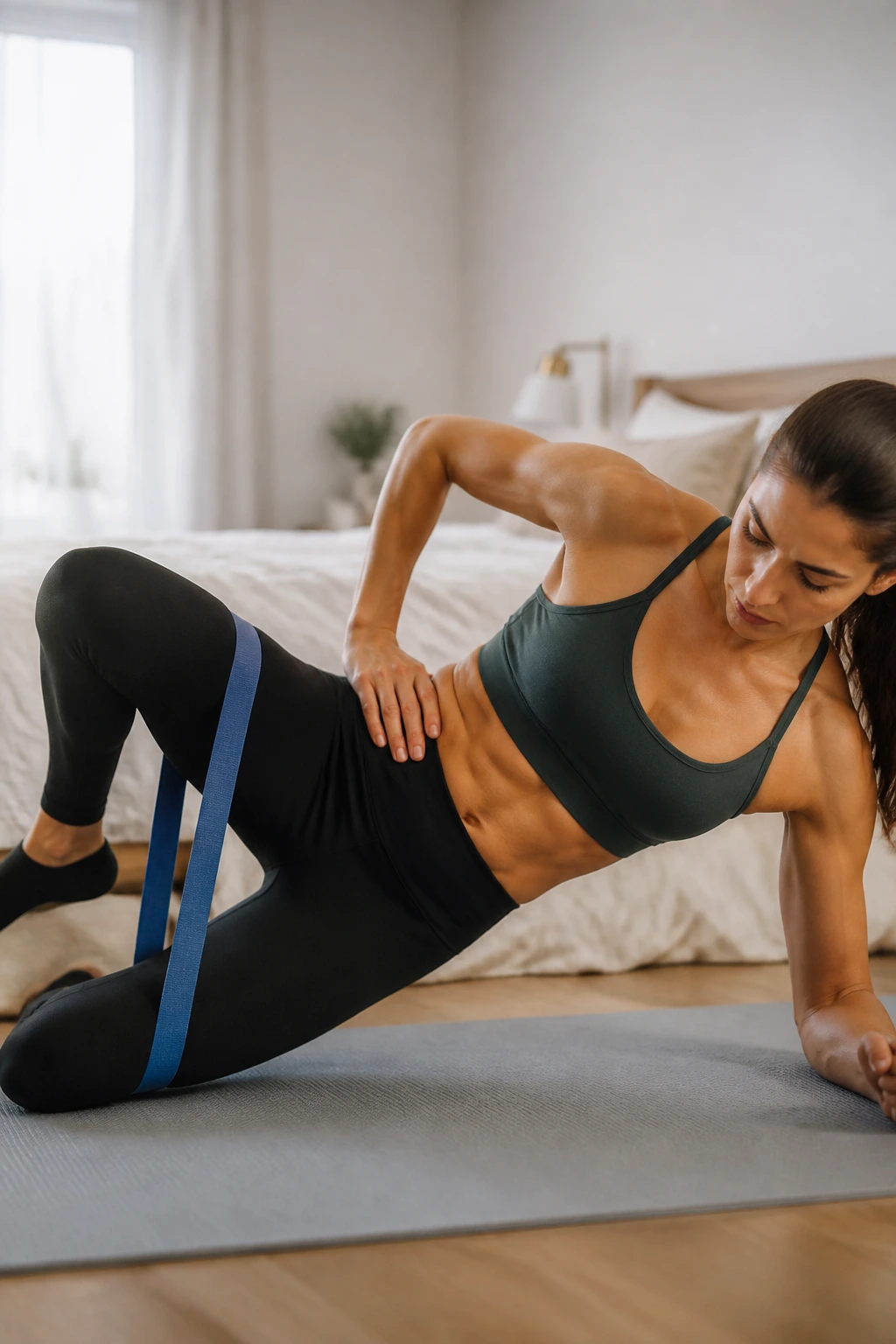
Side planks aren’t just for people who enjoy suffering on purpose.
Set the band above the knees, come onto your side on one forearm, and lift your hips into a side plank, knees bent if you need the easier version. From there, drive the top knee slightly upward against the band, then lower it with control. Keep the torso from sagging or rotating open.
Start with 6 to 8 reps per side. The goal is not a giant motion. The goal is to keep the side body, glutes, and shoulders working together while the band adds resistance to the outer hip.
A small modification
If the full side plank feels too much, keep the bottom knee on the floor and lift the hips a few inches. That still trains the obliques and glute med without turning the move into a grind.
This one earns its place because it’s the rare core exercise that also trains hip stability. That matters more than people think, especially if one hip always feels weaker during lunges or single-leg work.
17. Donkey Kick to Kickback
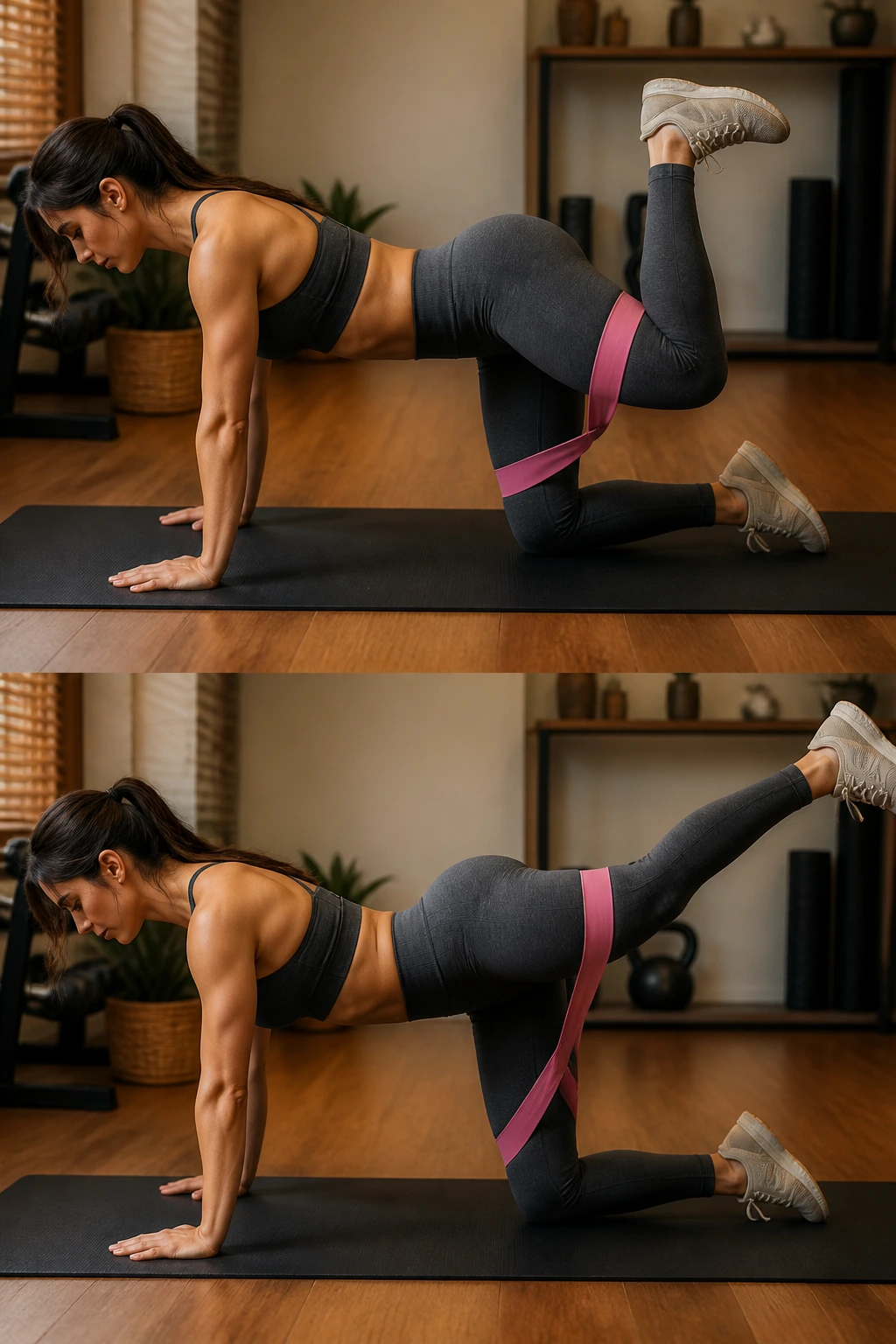
This is one of those moves that looks plain until your glutes start talking back.
From all fours, keep the band above the knees, bend one knee, and drive the heel upward in a donkey kick. At the top, extend the leg a little farther back for a kickback shape, then return with control. The combo keeps the glute under tension longer than a basic kick.
Use 12 reps per side for 2 to 3 rounds. Brace your belly first so the lower back doesn’t try to steal the show. If your hips open toward the ceiling, square them back down before the next rep.
The rhythm should be slow enough that you can feel the squeeze at the top. Fast reps tend to turn into back swings. Slow reps make the glutes earn their keep.
This is a solid late-workout move because it can finish the legs without a lot of impact, noise, or setup.
18. Frog Pump Burnout
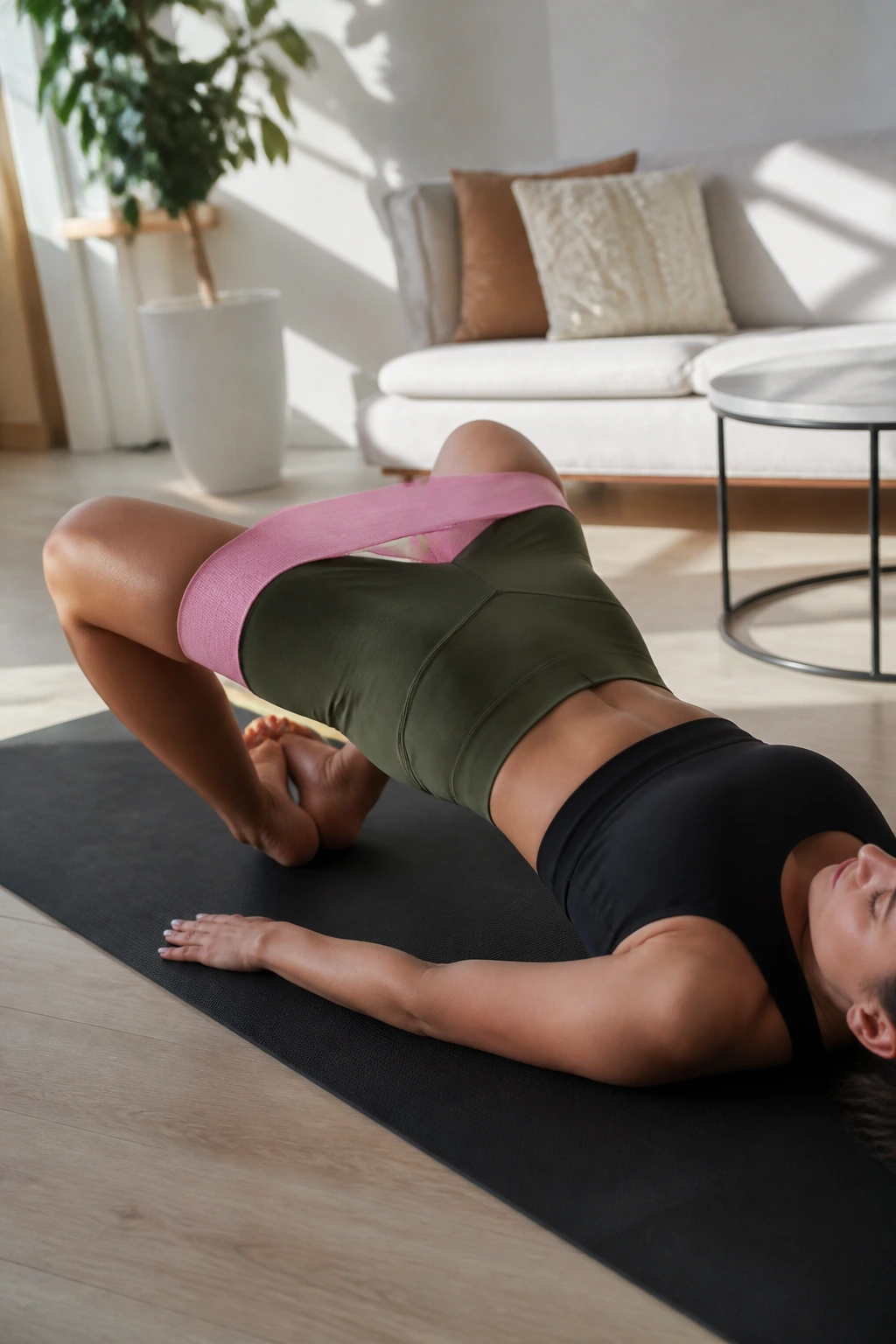
This one is ridiculous in the best way.
Lie on your back, bring the soles of your feet together, let your knees fall open, and place the band above the knees. From there, pump your hips up and down in a short range. The feet stay together, the knees stay pushed out, and the glutes do the heavy lifting.
Go for 20 to 30 reps, or keep pumping for 30 to 40 seconds if you prefer time. You’ll know you’re in the right place when the glutes feel full and tired while the lower back stays mostly quiet.
Frog pumps are useful because they hit the glutes hard without needing much range. That means they’re friendly for home sessions, warm-ups, and finishers. They’re also one of the faster ways to make a band feel much heavier than it looks.
Don’t turn it into a hip thrust marathon. Small, quick, controlled reps are the whole deal.
19. Standing Abduction Balance Tap
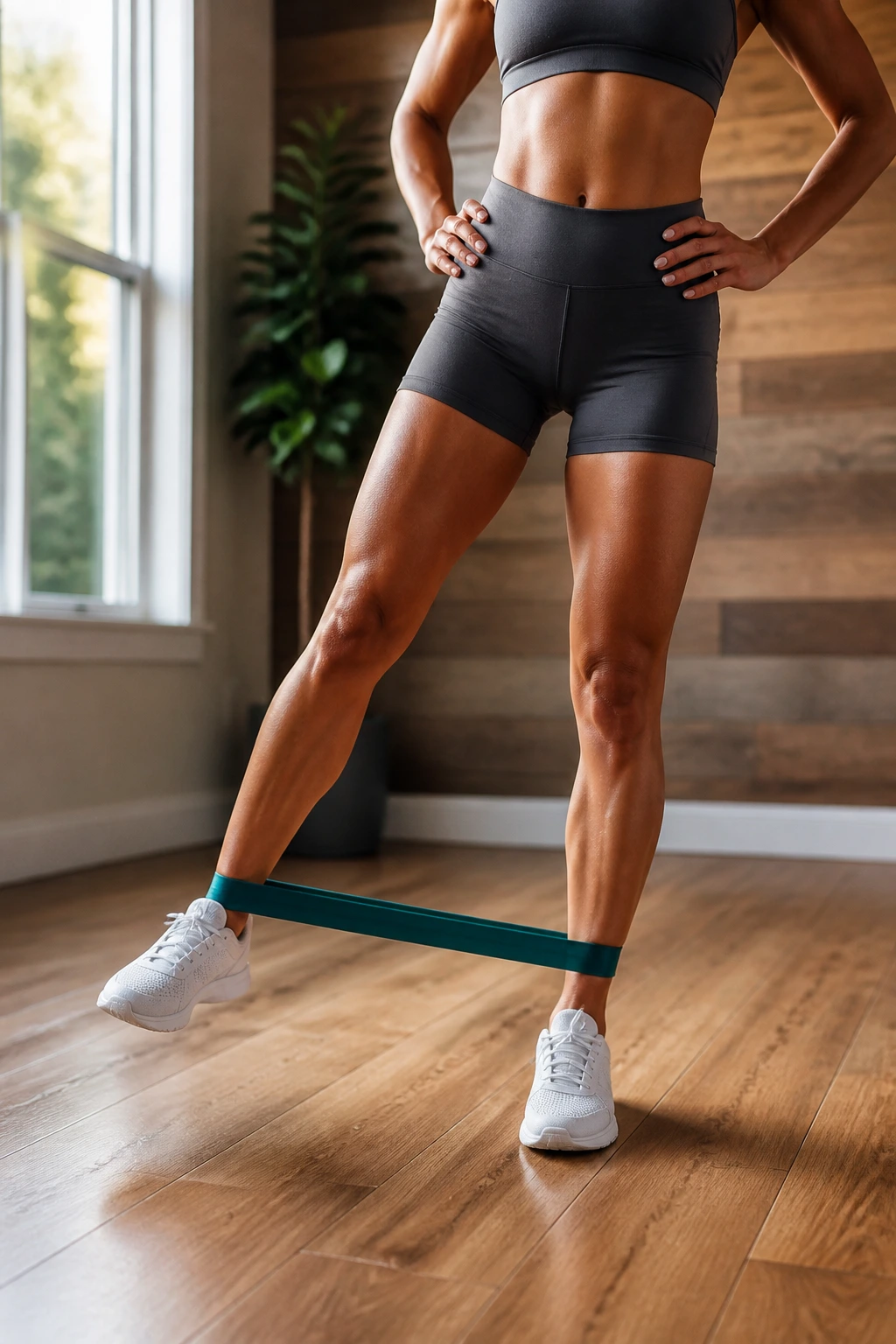
If you want a move that teaches the hips and ankles to work together, this is a nice one.
Stand tall with the band above the ankles. Shift your weight onto one leg, then tap the free leg out to the side and bring it back in. Keep your torso quiet and your standing foot planted. The standing hip should stay level instead of dropping every time the working leg moves.
Aim for 10 taps per side, then switch. If balance is shaky, keep one hand near a wall without leaning on it. That tiny support lets you focus on the actual work instead of trying not to fall over.
This exercise looks almost too simple, which is probably why people underestimate it. But the standing leg has to stabilize, the moving leg has to abduct cleanly, and the core has to stay switched on enough to stop the torso from swaying.
A smaller tap is better than a big fling. Bigger is not better here.
20. 10-Minute Full-Body Ladder
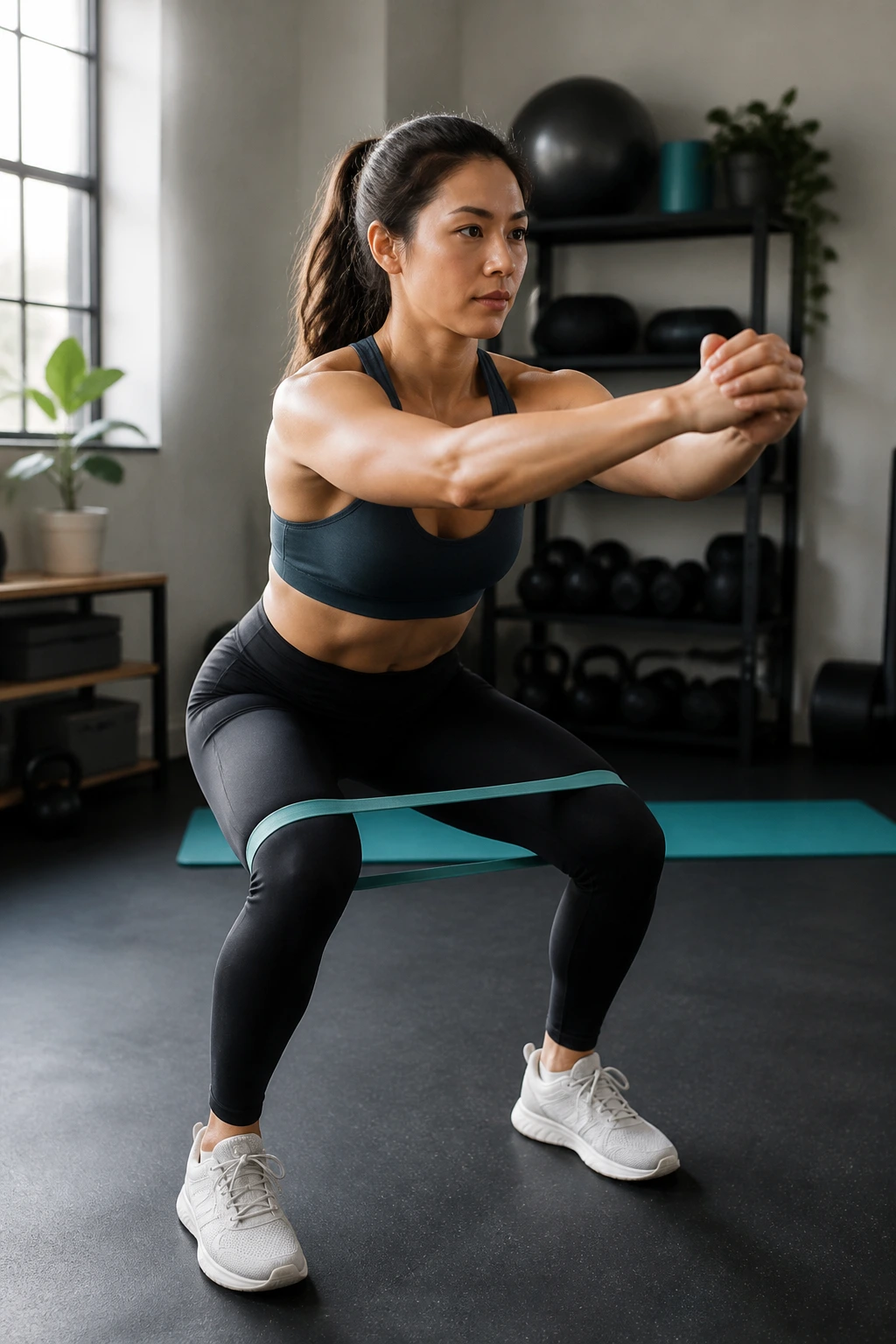
If you only have the energy for one loop band circuit, make it this one.
Set a timer for 10 minutes and move through these five exercises in order: 30 seconds of squat hold and press-outs, 30 seconds of lateral walks, 30 seconds of glute bridges, 30 seconds of pull-aparts, and 30 seconds of dead bugs. Rest 30 seconds, then repeat the circuit one more time. If you’re moving with good control and the timer runs out before you’re done, that’s fine. Stop where the form still looks clean.
This is the kind of home session I like because it covers the whole body without wasting time on setup. Legs, glutes, core, upper back. Done. And because the band keeps tension constant, you don’t need a huge number of reps to feel like you trained.
A simple way to scale it
- Easier: keep the band above the knees for everything lower-body related.
- Harder: move it to the ankles for walks and bridges.
- Even harder: slow every lowering phase to 3 seconds.
That’s the session to reach for when you want a full-body hit and the room is small, the floor is clear, and you’d rather not think too much about it. Clean reps. Short rest. Enough burn to feel like you earned the shower.
