



A living room floor can do more than hold a coffee table. Give it a mat, a little open space, and a Pilates sequence that respects your joints, and you have a surprisingly serious workout.
For a lot of women, that matters because the usual fitness options come with trade-offs: loud music, crowded studios, jumping that bugs the knees, or routines that ignore the deep core and glutes. Pilates does the opposite. It asks you to slow down, keep the ribs stacked over the pelvis, and make small movements count. That sounds gentle until your hips start shaking on rep eight.
The best part is how little you actually need. A sofa can anchor your legs. A wall can steady your spine. A rolled towel can save your neck from doing all the work. Those details matter more than people think, and they’re usually the difference between a session that feels clean and one that turns into flailing on the rug.
What follows is a mix of mat work, standing work, and a few sneaky balance drills that fit into a normal room without dragging furniture around.
1. The Hundred on a Rug
If there’s one move that makes a Pilates session feel official, it’s the Hundred. The rhythm of the arms, the steady breathing, and the low hover of the legs wake up the whole center of the body fast.
How to Set It Up
- Lie on your back with knees in tabletop, or rest your calves on the sofa if your neck wants a kinder start.
- Lift your head only as high as you can keep the back of the neck long.
- Pump your arms briskly for 5 counts in and 5 counts out.
- Aim for 10 full breath cycles, which gives you the classic 100 arm pumps.
Keep the ribs heavy. If they pop up, the movement gets sloppy fast.
A lot of women like this move because it trains the deep core without jumping or twisting. It also works as a clean check-in. If you can breathe evenly while the legs stay still, your control is probably better than you thought.
One blunt rule: if your neck starts yelling, put your head down and keep the arms pumping anyway.
2. Roll-Ups Beside the Sofa
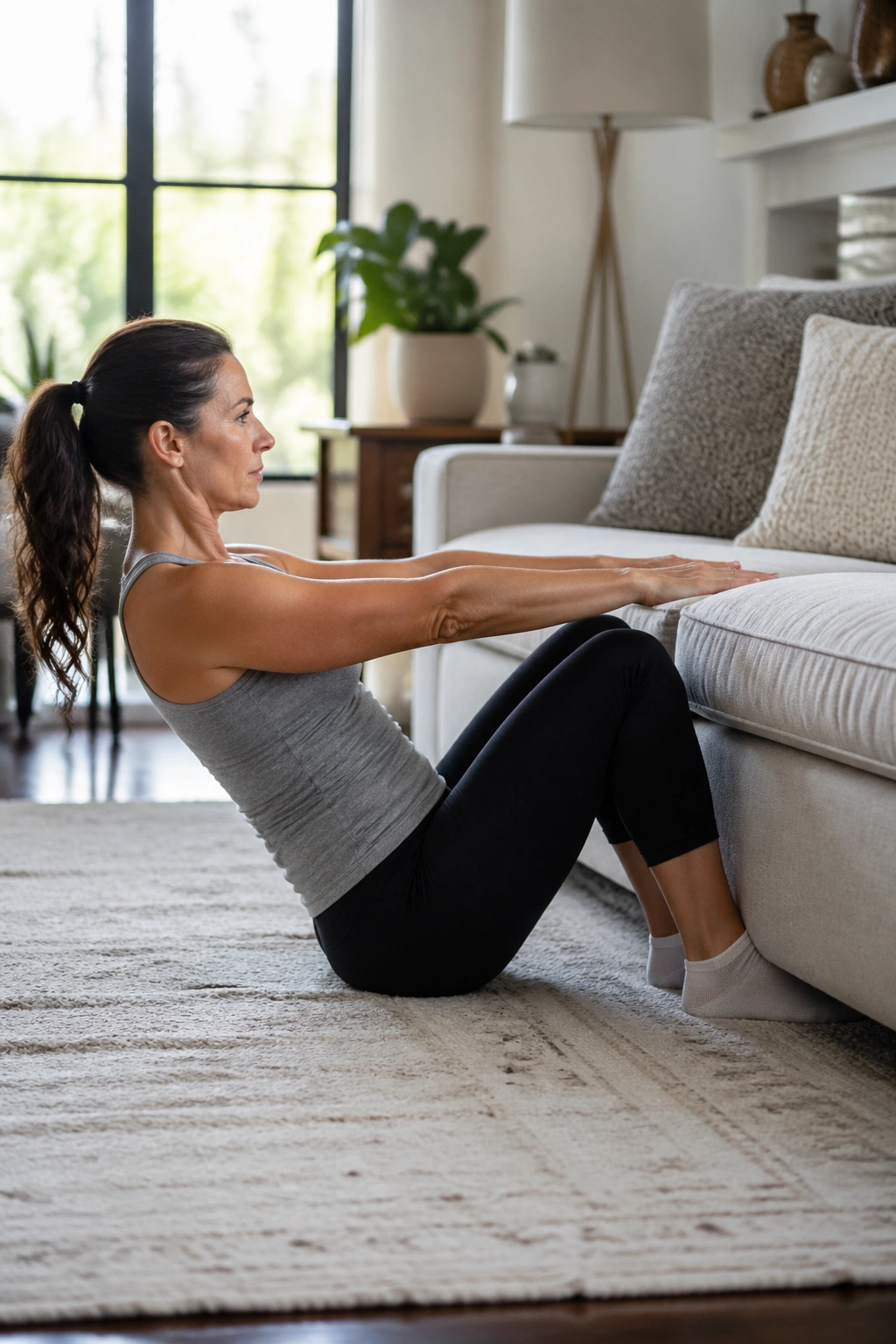
Why do roll-ups feel so much harder on a living room rug than they do in a studio? Because the floor is honest. There’s no spring under you, no machine to help, and every little collapse shows up immediately.
Start with bent knees and arms reaching overhead. Exhale as you peel off the mat one vertebra at a time, then sit tall without yanking the neck forward. On the way down, move slowly enough that you can feel each section of the spine touch the floor.
If a full roll-up feels rough, use the sofa in a smart way. Hook your feet lightly under the front edge of the couch or keep them flat with knees bent, then make the movement smaller. That extra anchor helps the lower belly work without turning the whole thing into a neck exercise.
The goal is control, not speed. A clean three-rep set beats ten sloppy ones every time.
3. Single-Leg Stretch with a Pillow Under Your Head
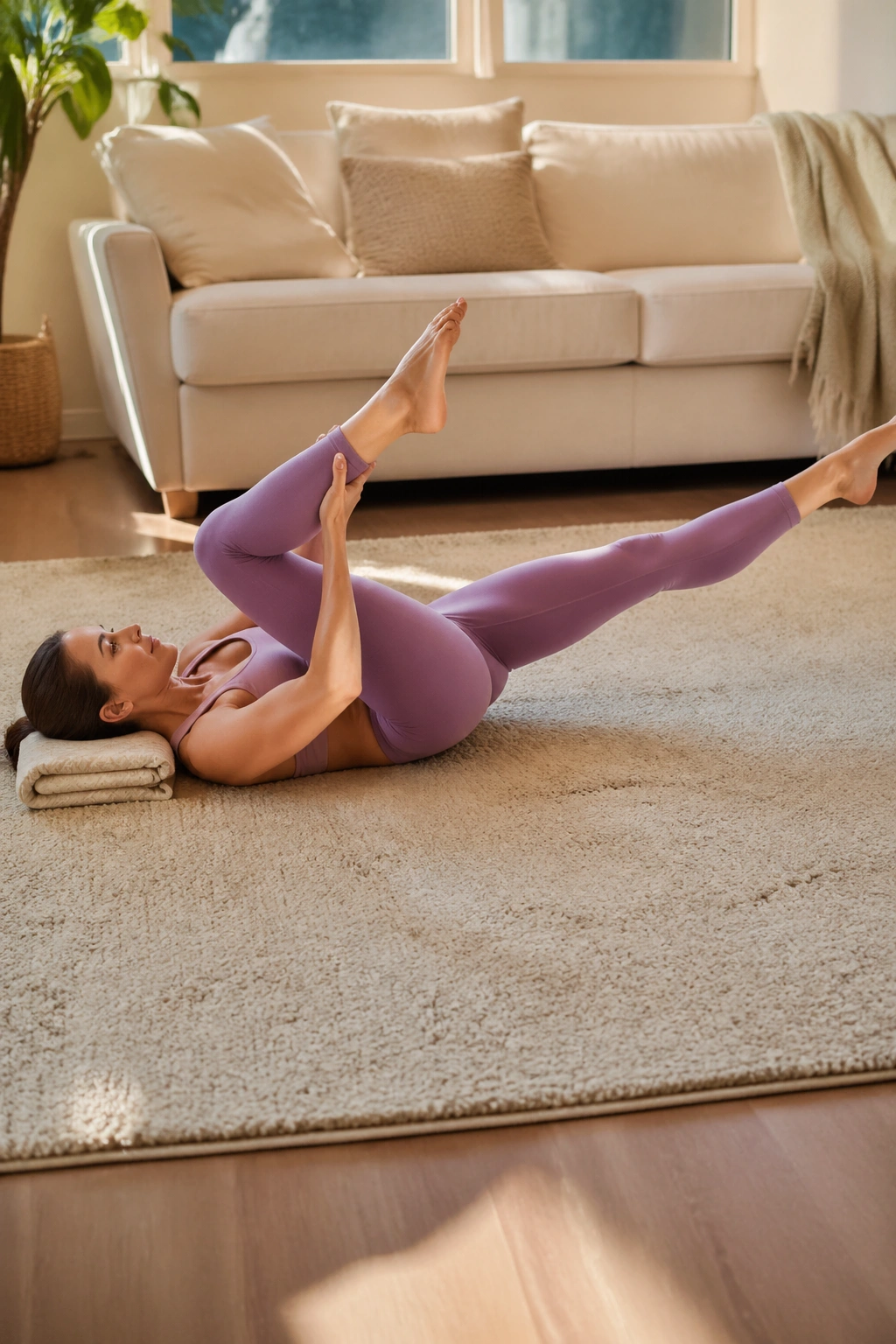
Picture this: your shoulders are lifted, your fingers are wrapped behind one shin, and the other leg hovers low enough to challenge you but not so low that your back arches. That’s the kind of small, mean little work Pilates does best.
Place a folded towel or thin pillow under your head if you tend to strain your neck. Then bring one knee toward your chest, extend the other leg long, and switch with a steady exhale on each change. Keep the pelvis quiet. The temptation is to rock side to side like a tiny bicycle, but that steals the work from your center.
Try 8 to 12 switches per side. The slower the swap, the better the feedback. You should feel the lower abs holding the spine still while the legs do the flashy part.
If you want more heat, lower the extended leg a few inches closer to the floor. Small move. Big difference.
4. Wall Dead Bugs for a Steadier Core
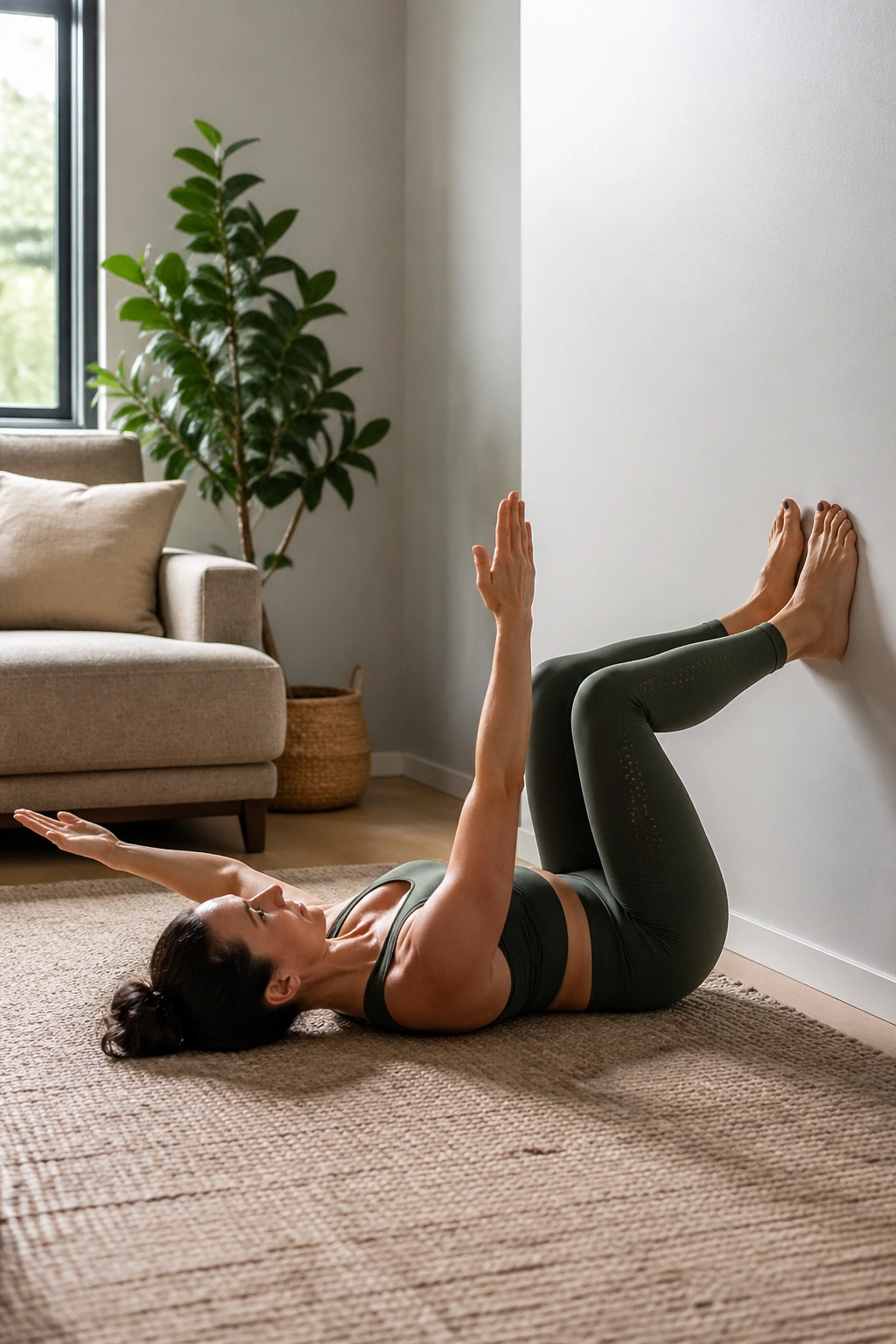
The wall is underrated. Put your feet on it and suddenly your core has something to organize around, which makes dead bugs cleaner and less shaky.
Lie on your back with knees bent and calves on the wall at a 90-degree angle. Exhale to draw the ribs down, then lower one heel to tap the floor while the other leg stays still. Alternate sides slowly. The back should stay heavy, not pressed so hard that you’re holding your breath.
This version is gold if you’re rebuilding core control after a break or if regular dead bugs feel too loose. The wall gives you feedback immediately. If your pelvis tilts or your lower back starts lifting, you know before the rep turns messy.
What to Watch For
- Keep the exhale long.
- Don’t let the ribs flare.
- Tap the heel, don’t slam it.
- Stop the set before your back starts arching.
Ten taps per side is enough for a clean set.
5. Glute Bridge March
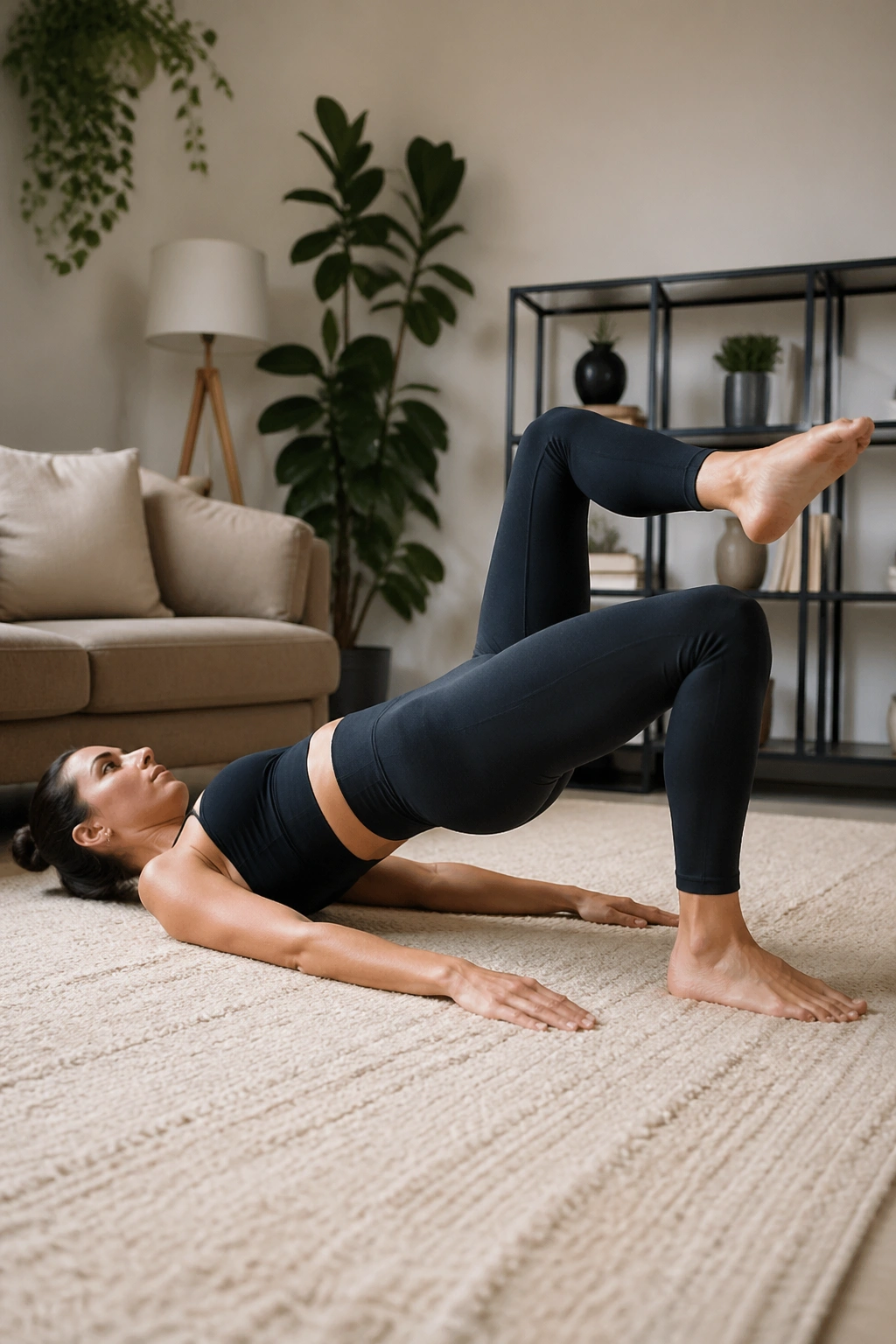
The floor looks harmless until a bridge march lands in your glutes and hamstrings. Then it gets interesting.
Lie on your back with feet hip-width apart, heels close enough that your fingertips can brush them. Lift into a bridge until your knees, hips, and shoulders form a firm line. Hold that shape and lift one foot a few inches off the floor, then set it back down and switch sides. The pelvis should stay level. If it wobbles like a shopping cart wheel, reduce the height.
This move is one of my favorites for women who sit a lot, because the glutes tend to go quiet while the hip flexors take over. The march brings the backside back online without heavy loading. It also teaches pelvic stability, which shows up later in better standing balance and less lower-back grip.
Work for 8 marches per side. If that feels too easy, pause for 2 counts at the top of each lift.
6. Side-Lying Leg Series
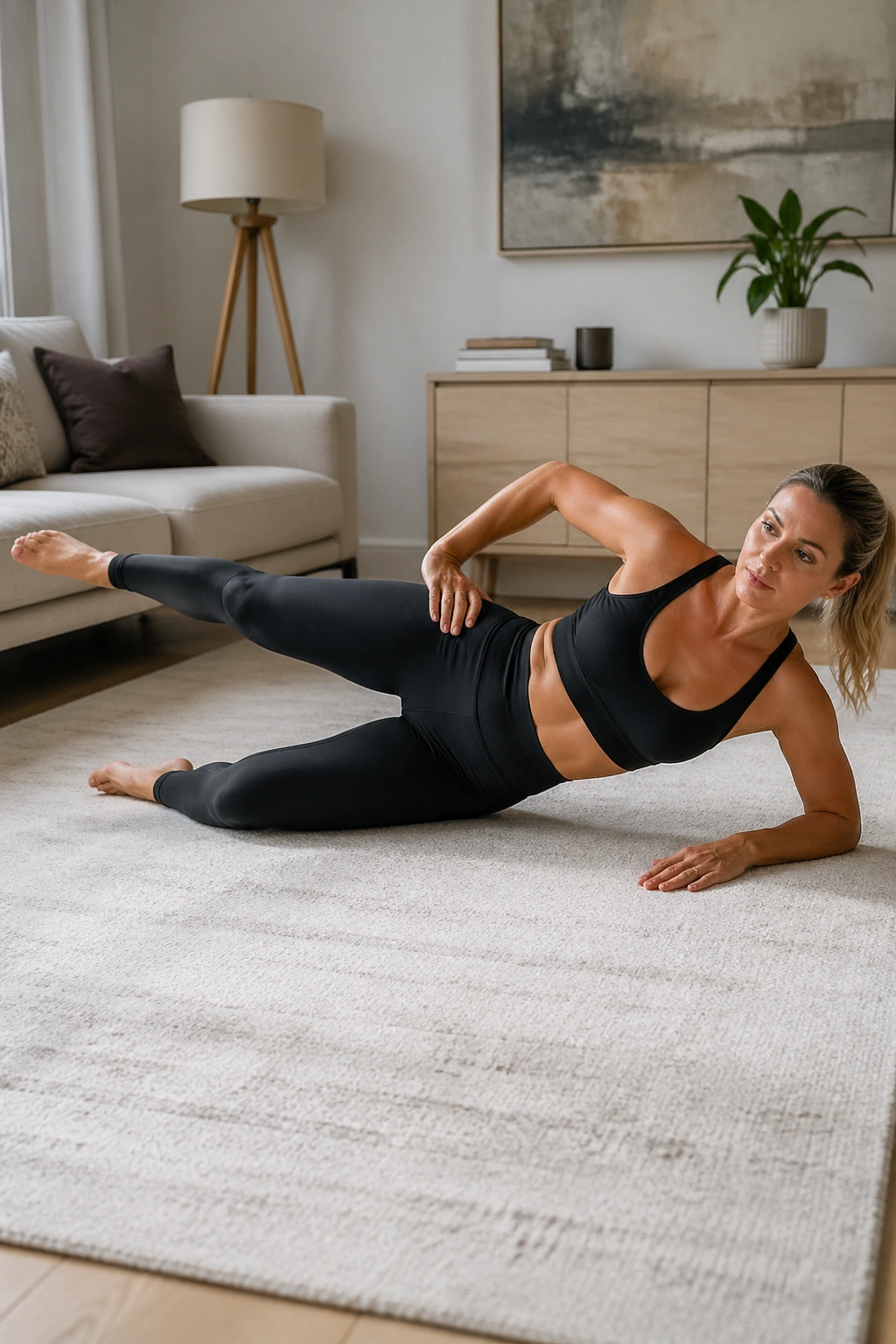
Roll onto one side and suddenly the room feels a lot smaller. Good. That’s where the work gets precise.
Stack your hips, reach the bottom arm long, and support your head with the top hand or a pillow. Lift the top leg, then sweep it slightly forward and slightly back without letting the waist collapse. Classic side-lying leg series tends to wake up the outer hip in a way that standing moves often miss.
Do 10 small lifts, 8 front-and-back swings, and 8 tiny circles in each direction. Keep the foot flexed if you want more glute work, or point the toes if you want a smoother line and a little less intensity.
The real trick is keeping the waist lifted away from the floor. If the bottom side squishes down, the hip loses its clean path. Tiny range. Strong burn. That’s the whole game here.
7. Mermaid Stretch with a Slow Reach
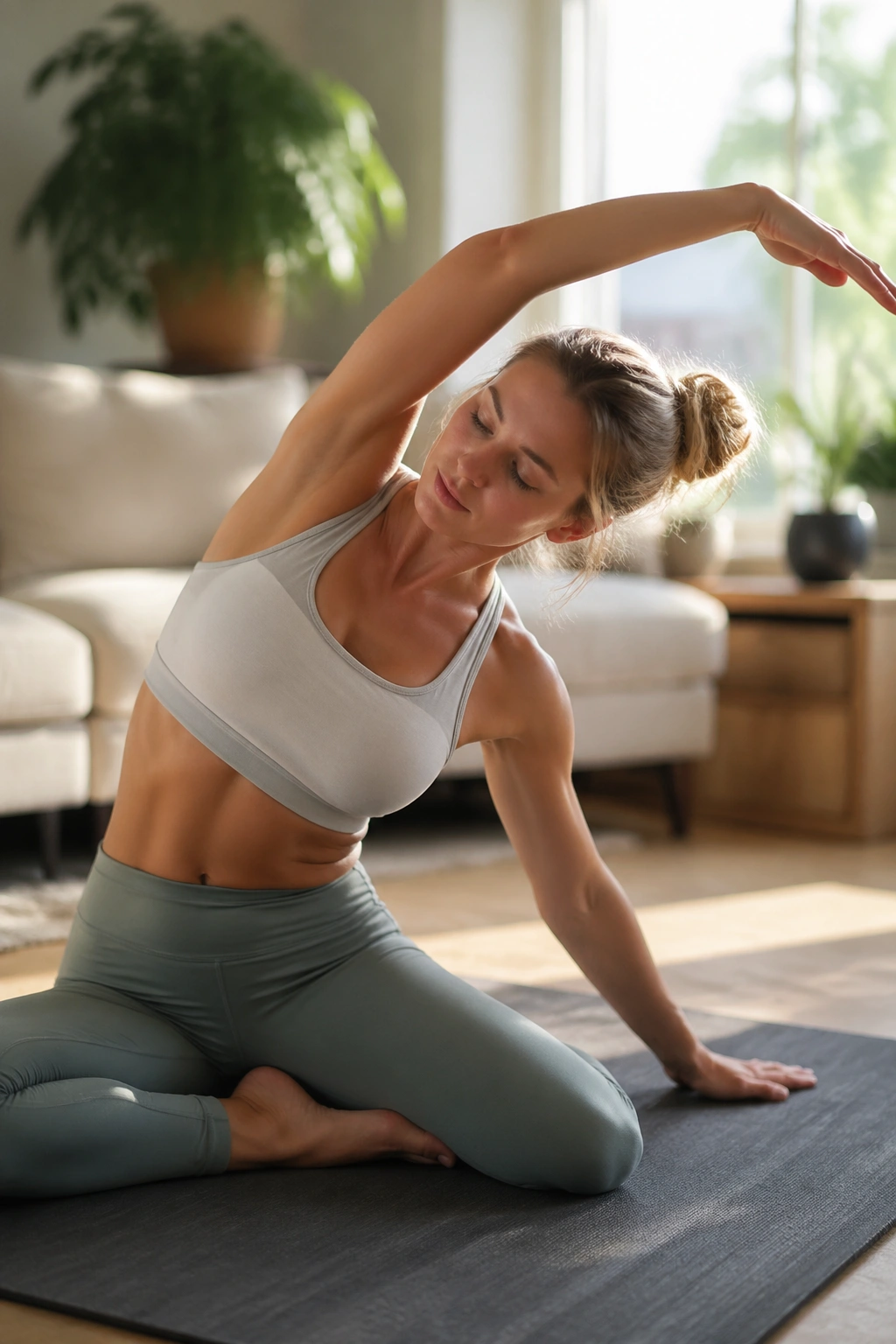
Some Pilates moves feel like work. Mermaid feels like relief that still does a job.
Sit to one side with both knees bent and the shin stack angled like a crescent. One hand stays on the floor or mat for support while the other arm arcs overhead. Reach long through the ribs, then fold gently toward the floor and breathe into the side body. Come back up on an inhale and repeat on the other side.
This is a smart midpoint in a living room session because it opens the ribs after core work and keeps the spine from turning into a stiff plank. If you’ve been hunching over a laptop or carrying kids around all day, the side stretch can feel weirdly specific in a good way.
Three slow reaches per side is enough. Don’t force depth. The stretch should feel wide, not crunchy. If your shoulder feels pinched, shorten the arc and keep the top arm a little forward instead of directly overhead.
8. Squat to Calf Raise with Pilates Posture
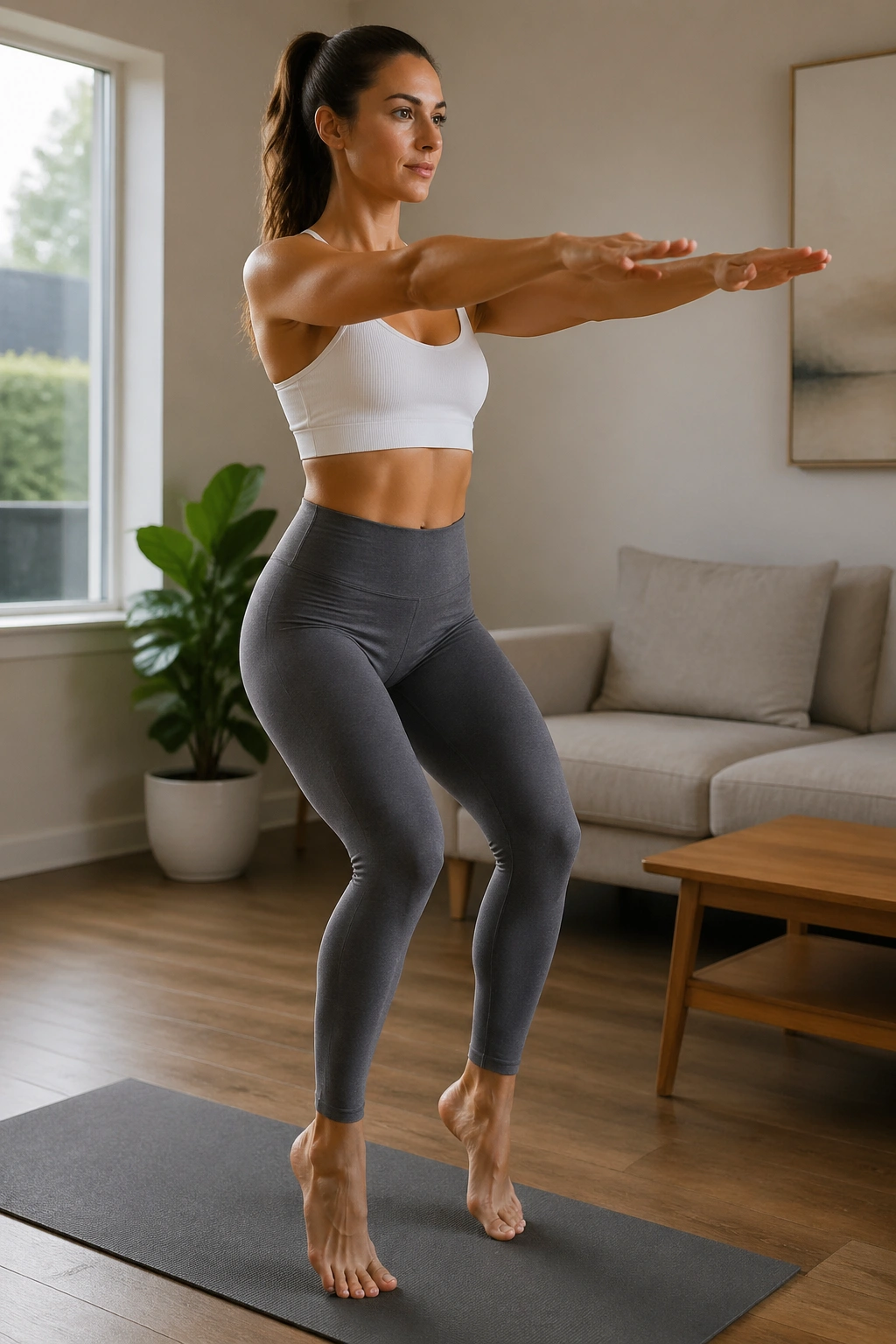
Can a squat count as Pilates? Yes, if you do it with enough control to make your legs complain in the right way.
Stand tall with feet slightly wider than hips, ribs stacked over the pelvis, and arms reaching forward. Sit back into a small squat, keeping the chest open and the knees tracking over the toes. Stand up, then rise onto the balls of the feet for a calf raise. That one extra lift turns a plain squat into a balance and ankle-strength drill.
Do 10 to 12 reps slowly. The descent should take two counts, the rise one count, and the calf lift another count. Keep your weight centered over the big toe, little toe, and heel. If the knees cave inward, narrow the stance a touch and slow down even more.
This one is especially handy in a living room because it needs almost no space. It also pulls together legs, glutes, and posture in one tidy package.
9. Plank Shoulder Taps at the Couch
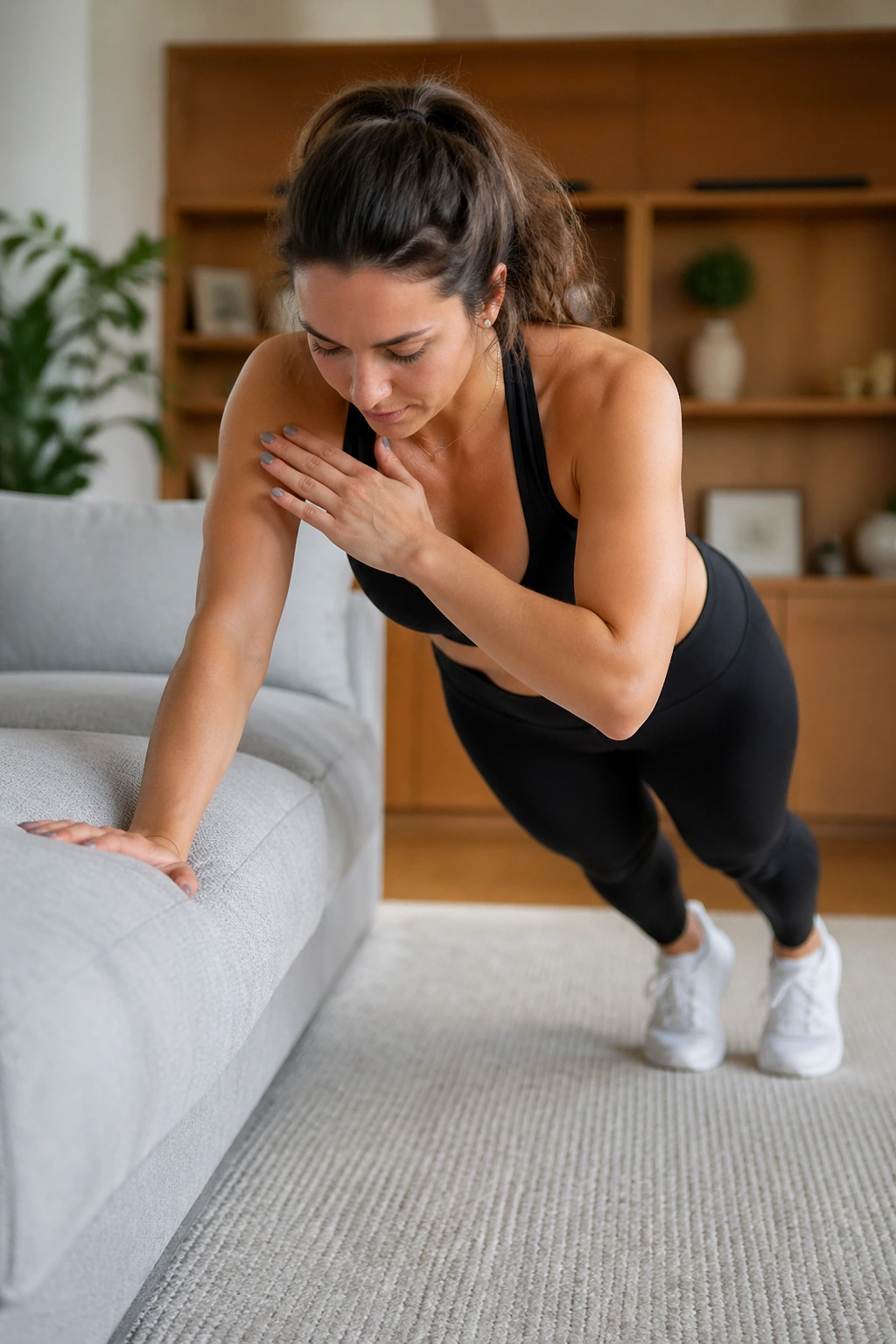
A full floor plank is great. A couch-height plank is kinder on the wrists and still plenty demanding.
Place your hands on the sofa edge, step your feet back, and form a long line from head to heels. Tap one hand to the opposite shoulder without letting the hips swing. Set it down and switch sides. The feet stay planted. The ribs stay pulled in. The moment the body starts twisting, the set gets messy.
Start with 6 taps per side. If that feels too easy, walk the feet farther back or move down to the floor for a lower plank. If it feels too hard, widen the feet and shorten the hold between taps.
Watch the neck. People love to crane forward here, and that steals the clean line you’re after. Keep the gaze a few inches ahead of the hands and let the shoulders do the work.
10. Swimming on the Floor
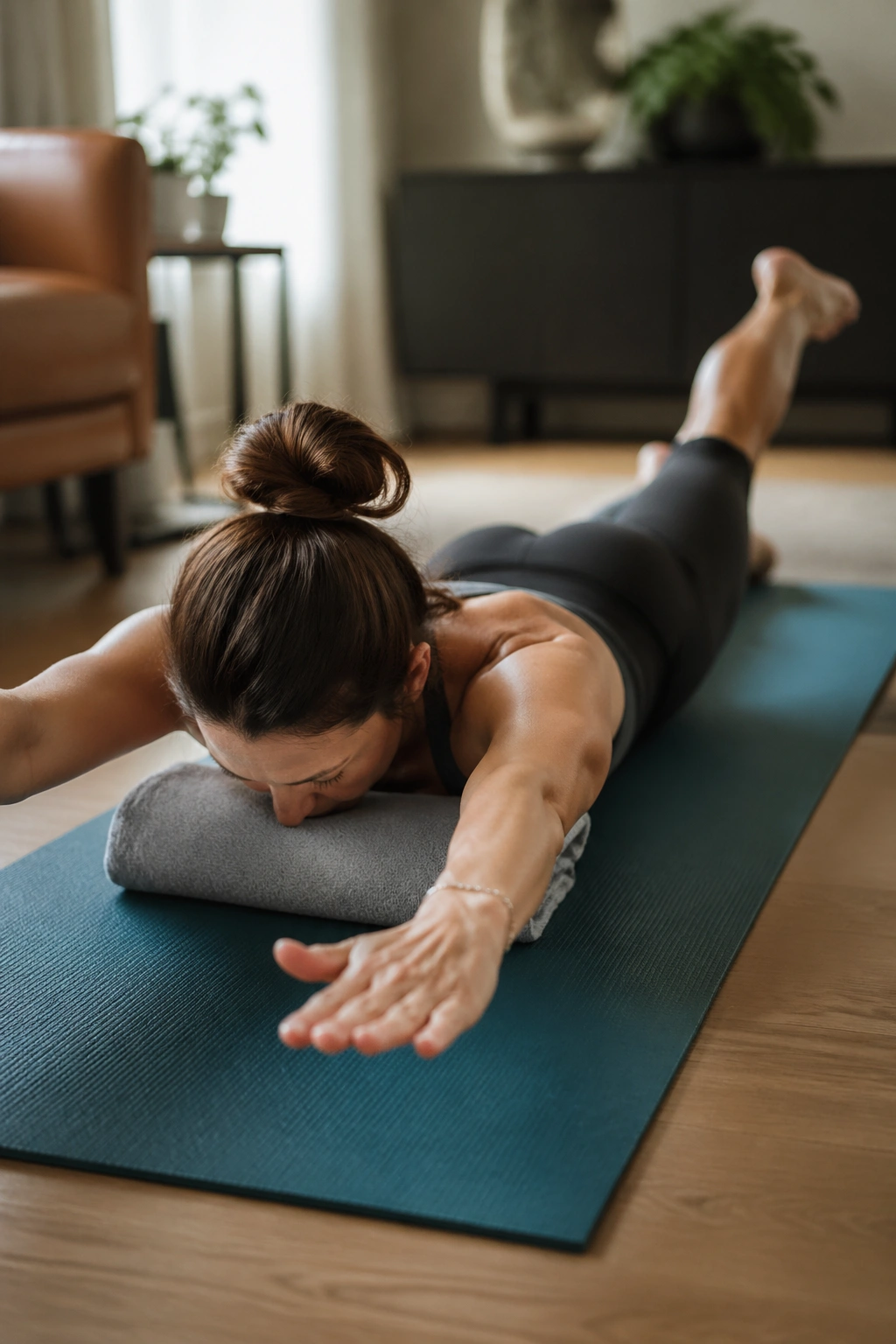
Lying face down is not glamorous. It is, however, one of the fastest ways to wake up the back body.
Stretch both arms long overhead, lengthen the legs, and lift opposite arm and leg slightly off the floor. Then switch sides in a quick, steady rhythm like you’re swimming through air. The lift should be small. If you heave yourself up, the lower back takes over and the whole thing turns clumsy.
Do 20 alternating lifts, or hold and pulse for 15 seconds at a time. Keep the forehead hovering or resting on a folded towel so the neck doesn’t crank backward. Exhale as the opposite limbs reach away from each other. That long line through the body is what makes the move useful.
Women who spend a lot of time sitting tend to feel this one in the upper back and glutes almost immediately. Not because it’s magic. Because those muscles are usually waiting around to be asked.
11. Teaser Prep with a Pillow Behind the Hips
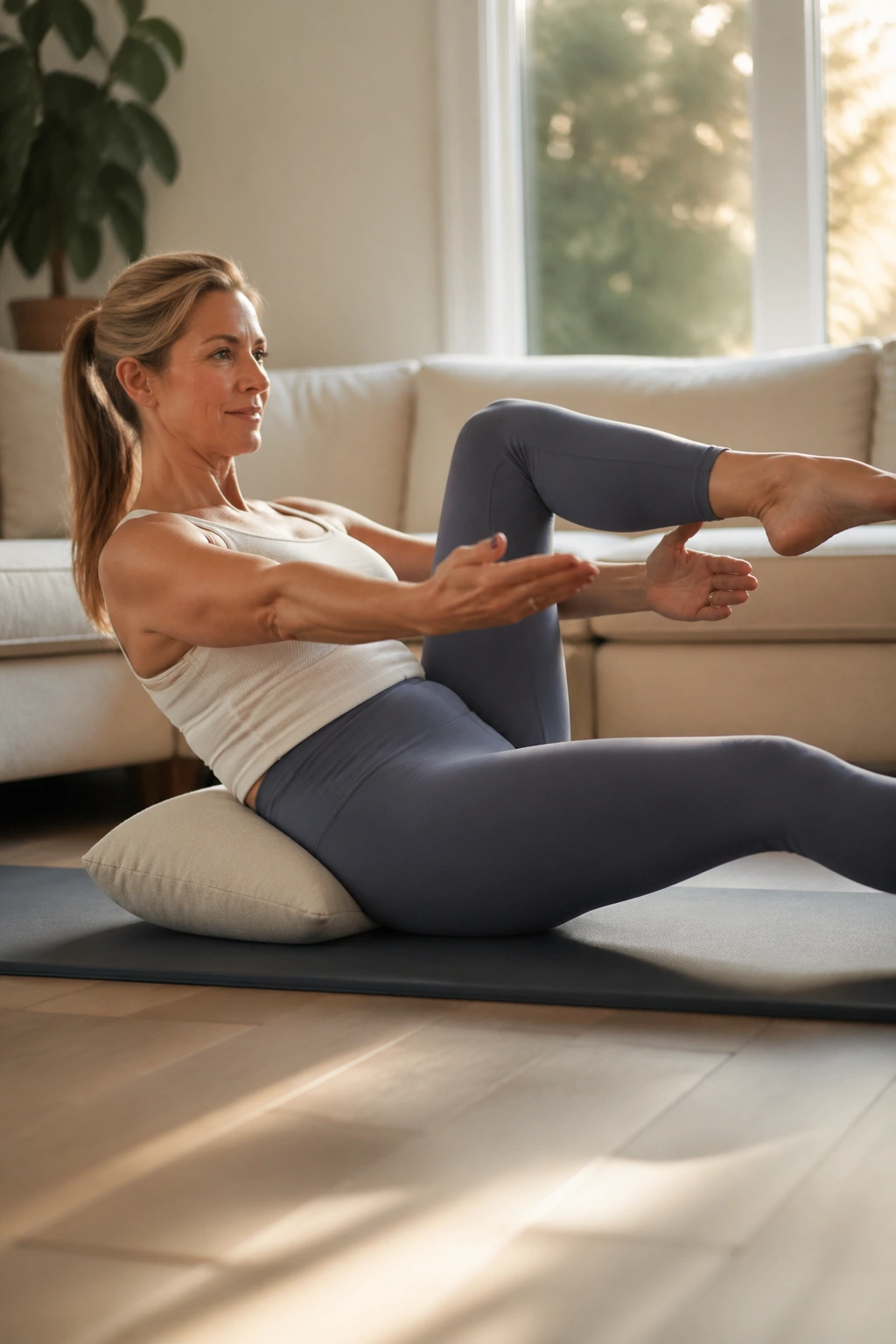
Teaser has a dramatic reputation, which is fair. It’s a hard move. Teaser prep is the version that earns it.
Sit on the mat with knees bent and a pillow behind your lower back or hips if you need a little support. Hold the backs of your thighs, lean back until your torso feels loaded but not strained, then lift one shin at a time into tabletop. From there, either hold the shape or extend one leg at a time if the core stays steady.
A lot of people rush this. Don’t. The real win is in the pause. When the chest stays open and the lower belly stays flat, you can feel the spine balancing instead of collapsing.
How to Use It
- Hold the tucked position for 3 breaths.
- Extend one leg for 2 counts.
- Switch sides without dropping the chest.
- Stop before the lower back grabs.
Three rounds is plenty. Teaser prep rewards patience more than bravado.
12. Wall Roll-Downs for the Spine
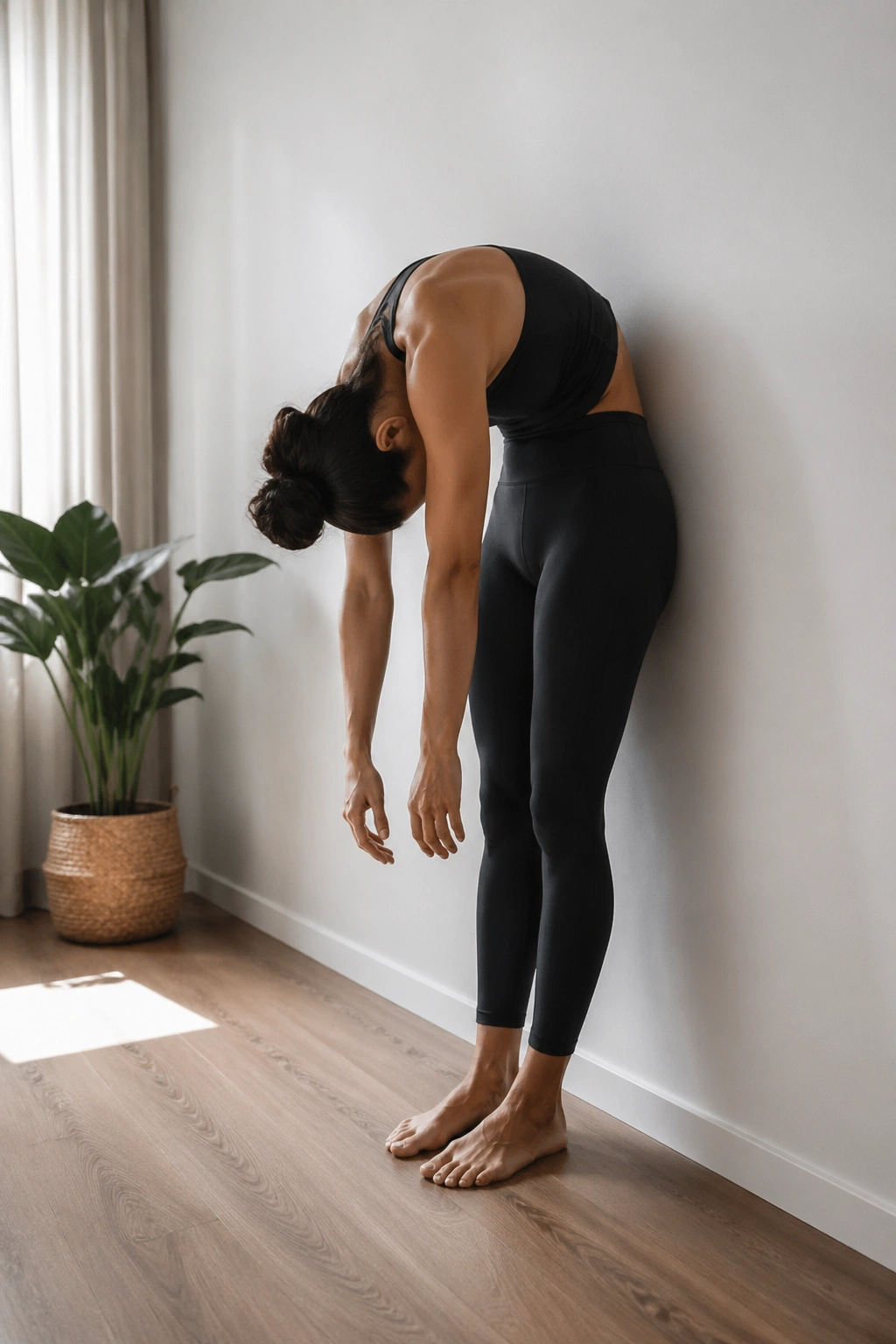
The wall gives roll-downs a little discipline. You cannot cheat much when your back is sliding down a flat surface.
Stand with heels a few inches from the wall, soften the knees, and peel the spine forward one section at a time. Let the arms hang heavy. Then reverse the motion and stack the spine back up slowly, starting from the pelvis and finishing with the head. Keep the chin soft, not jammed into the chest.
This is a favorite on days when the body feels stiff and the mind feels noisy. It loosens the hamstrings, wakes up the abs, and puts the rib cage back over the pelvis without any drama. Do 5 slow roll-downs, breathing out on the way down and in on the way up.
If you feel pulling behind the knees, bend them more. That’s not failure. That’s smart adjustment.
13. Clamshells with a Pillow Between the Knees
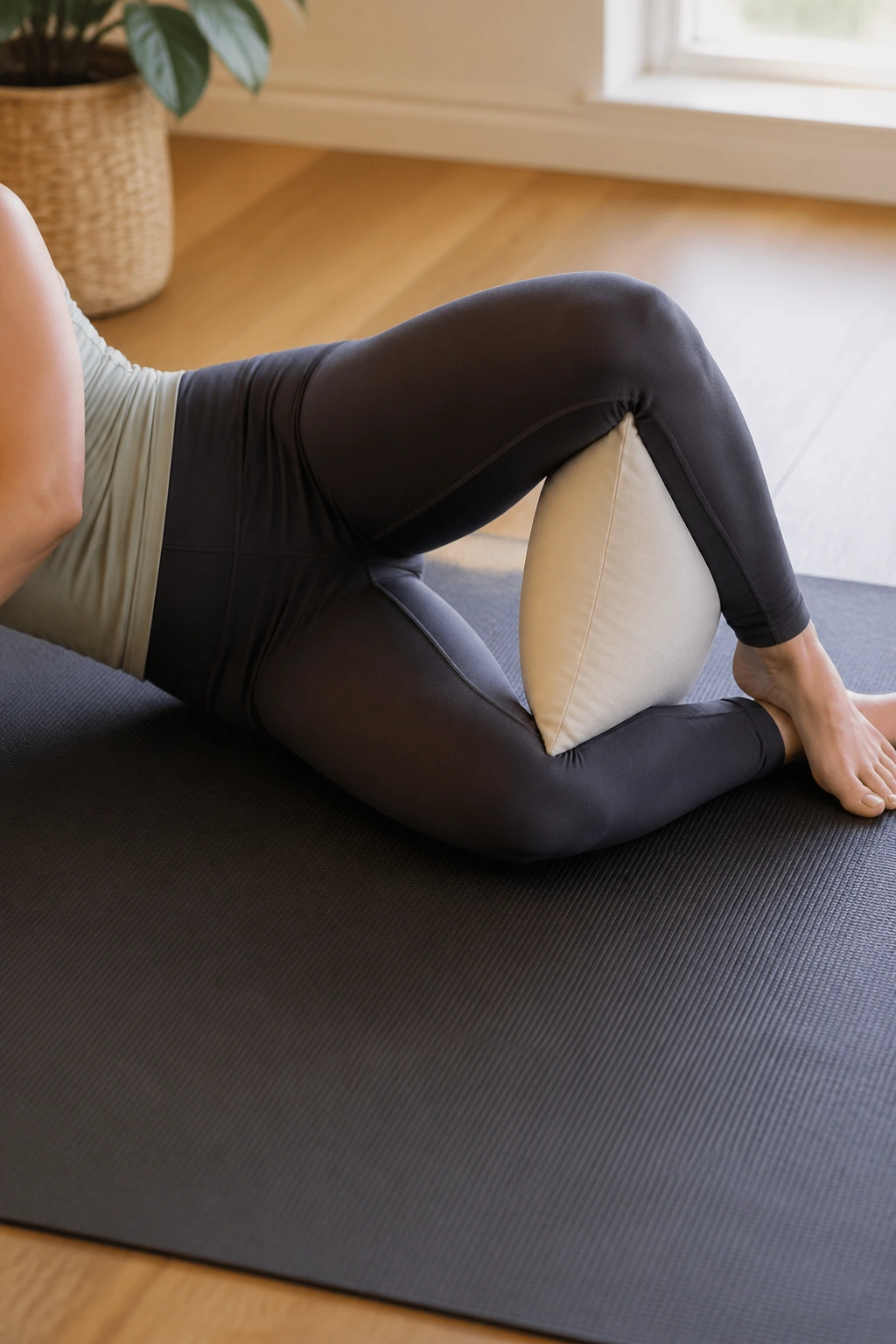
Clamshells get boring on paper. In practice, they’re one of the cleanest glute medius builders around.
Lie on your side with knees bent and a thin pillow or folded towel between the knees. Keep the feet together, then open the top knee without rolling the pelvis backward. Close slowly. The pillow keeps the inner thighs awake and stops you from cheating by flinging the leg open.
Do 12 reps per side, and pause for 1 count at the top. If you want more heat, lift the feet slightly off one another and work without the pillow for the final 4 reps. If the waist collapses, reset. The side body should stay long and quiet.
This move is small enough to do between chores, which is honestly half the charm. You can finish a set while waiting for water to boil or before the next song on a playlist ends.
14. Bird Dog Reaches Across the Rug
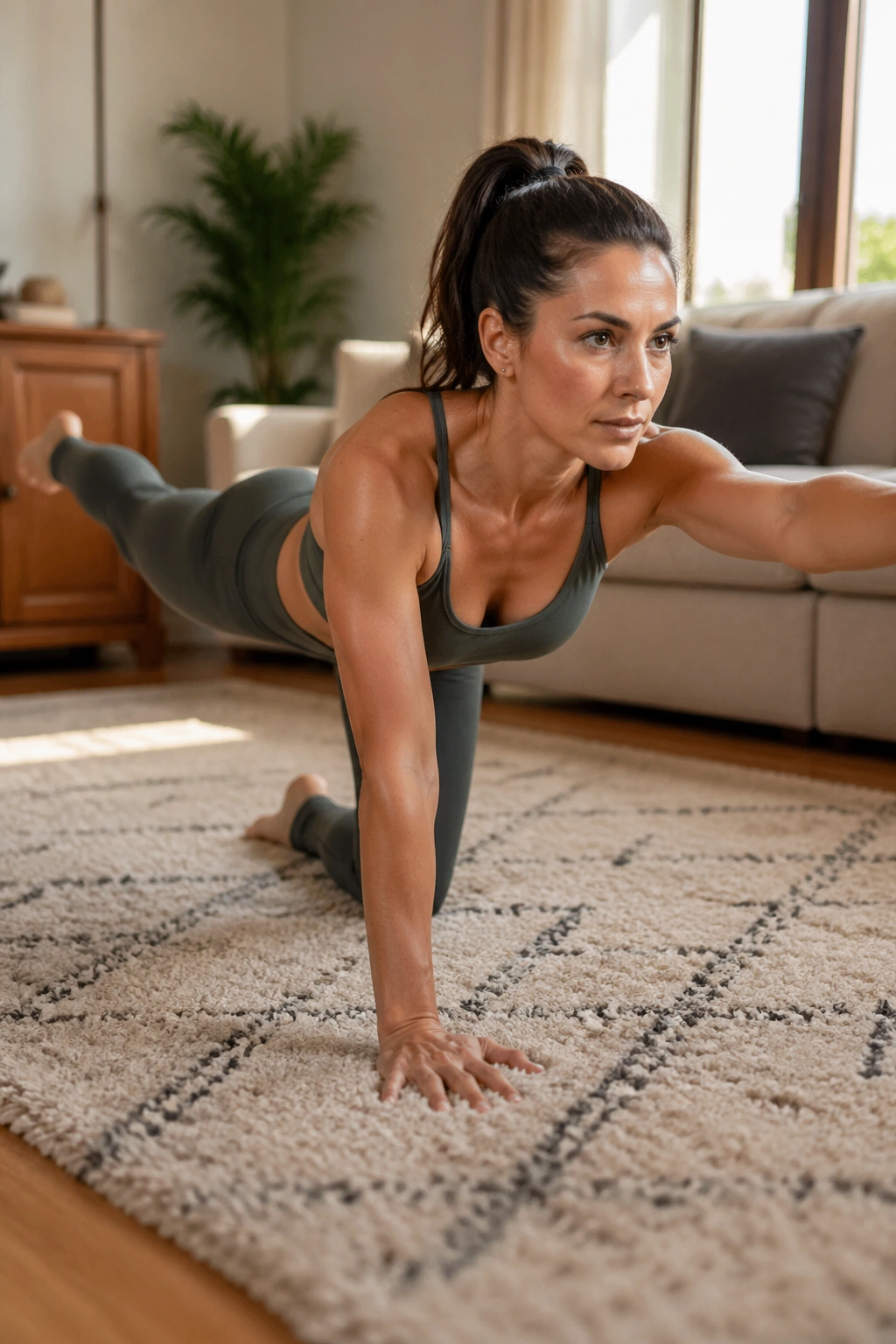
Bird dog looks simple until you try to keep the pelvis still. Then the room gets very honest.
Start on hands and knees with wrists under shoulders and knees under hips. Reach the right leg back and the left arm forward. Hold for 2 breaths, then switch. The movement should feel long, not high. A leg that lifts too far usually means the lower back is doing the job instead of the glutes and abs.
Try 6 reaches per side first. If the balance is clean, add a tiny elbow-to-knee crunch underneath before reaching out again. That extra squeeze turns the move into a sneaky core burner without needing any equipment.
If your wrists get cranky, drop to fists or place hands on the edge of a folded mat. Small changes matter here.
15. Standing Side Kicks by the Sofa
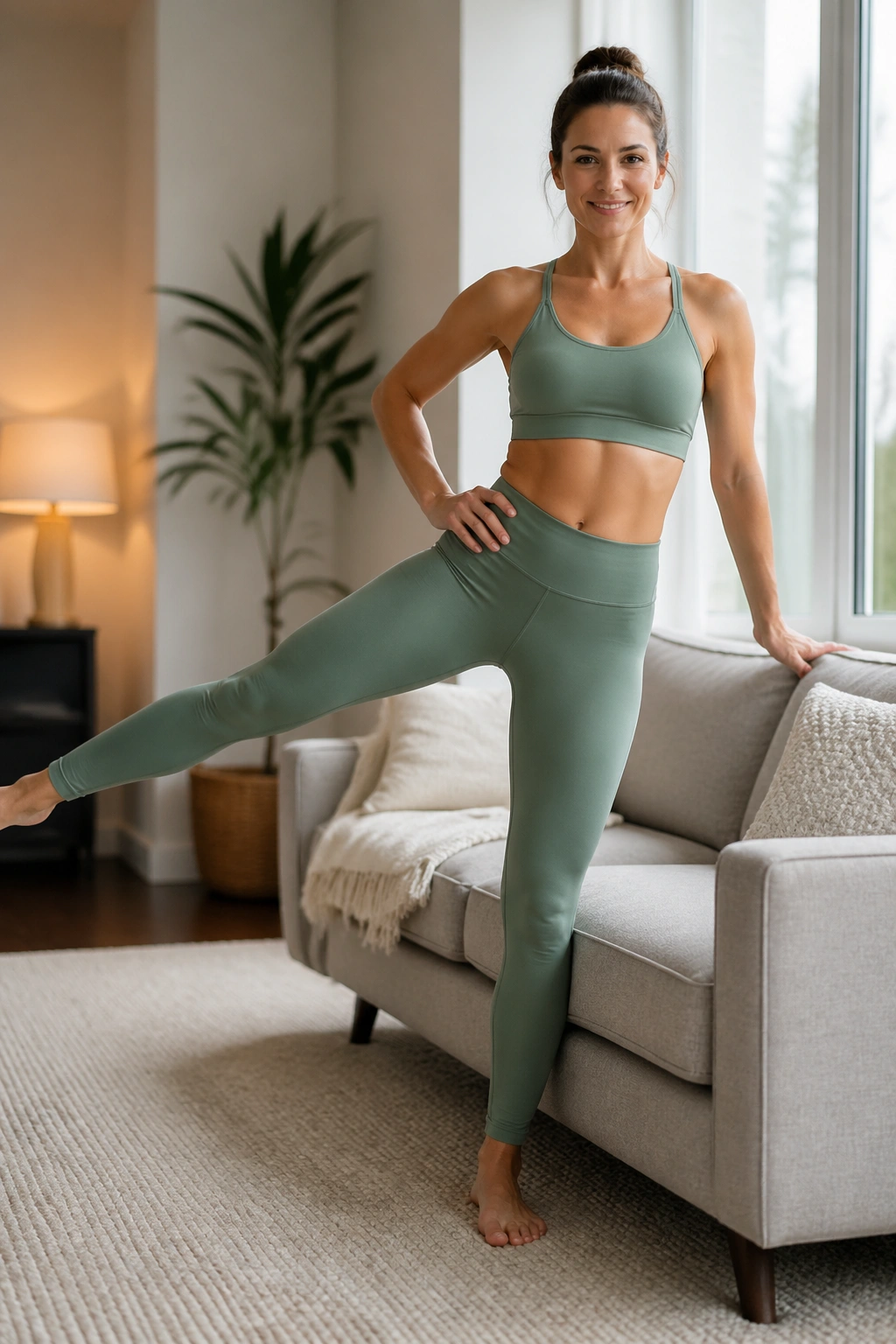
Not every Pilates move has to happen on the floor. Sometimes standing work hits the balance muscles harder, and this one is a good example.
Stand beside the sofa with one hand lightly resting on the back for support. Shift weight onto the standing leg and lift the other leg out to the side a few inches, then sweep it slightly forward and back. Keep the torso upright and resist the urge to lean away from the lifting leg.
This is especially helpful if you want glute work without another floor-based series. The standing leg works to stabilize your ankle and hip, while the moving leg gets a cleaner line through the outer thigh.
Do 10 controlled swings per side. The motion should be crisp but not jerky. If the standing hip feels wobbly, shorten the range and slow the tempo. The goal is control you can feel in your feet.
16. Kneeling Side-Lift Series
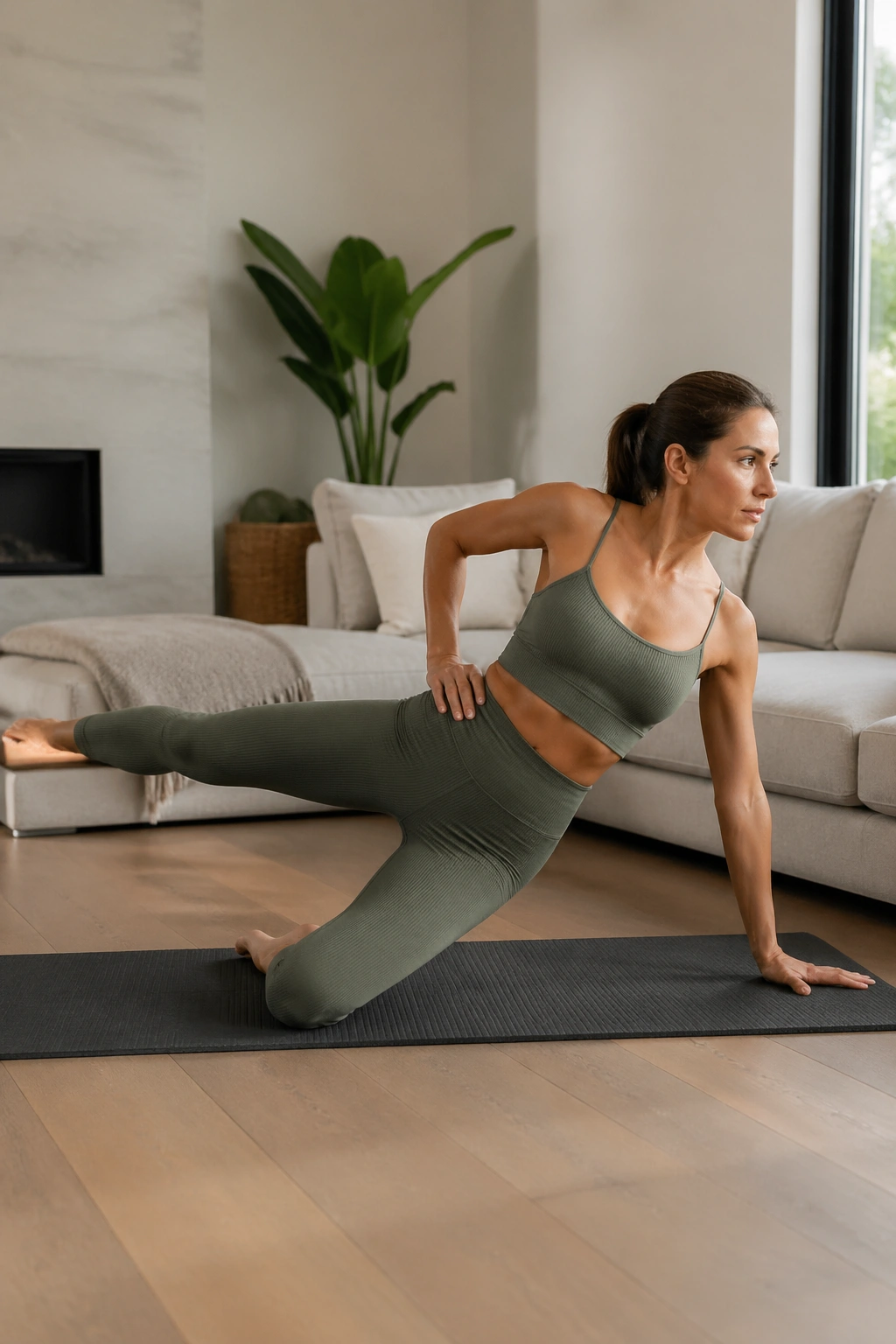
Kneeling side work has a funny way of making people sweat faster than they expect.
Start in a tall kneeling position, then shift both knees slightly to one side so the hip on the lifted side has room to work. Place one hand on the floor for support and lift the opposite leg out to the side in a small arc. Bring it down with control. The torso should stay tall, not tipped over like a lamp.
This drill targets the side glutes and obliques without the impact of jumping or lunging. It also pairs well with women who want strong hips for walking, stair climbing, or just getting through a long day without feeling wobbly.
What Makes It Hard
- The range is tiny.
- The balance challenge sneaks up on you.
- The standing knee has to stay quiet.
- The side waist works harder than it looks.
Eight lifts per side is enough to feel the heat. A second round is even better if the form stays tidy.
17. Shoulder Bridge on the Sofa Edge
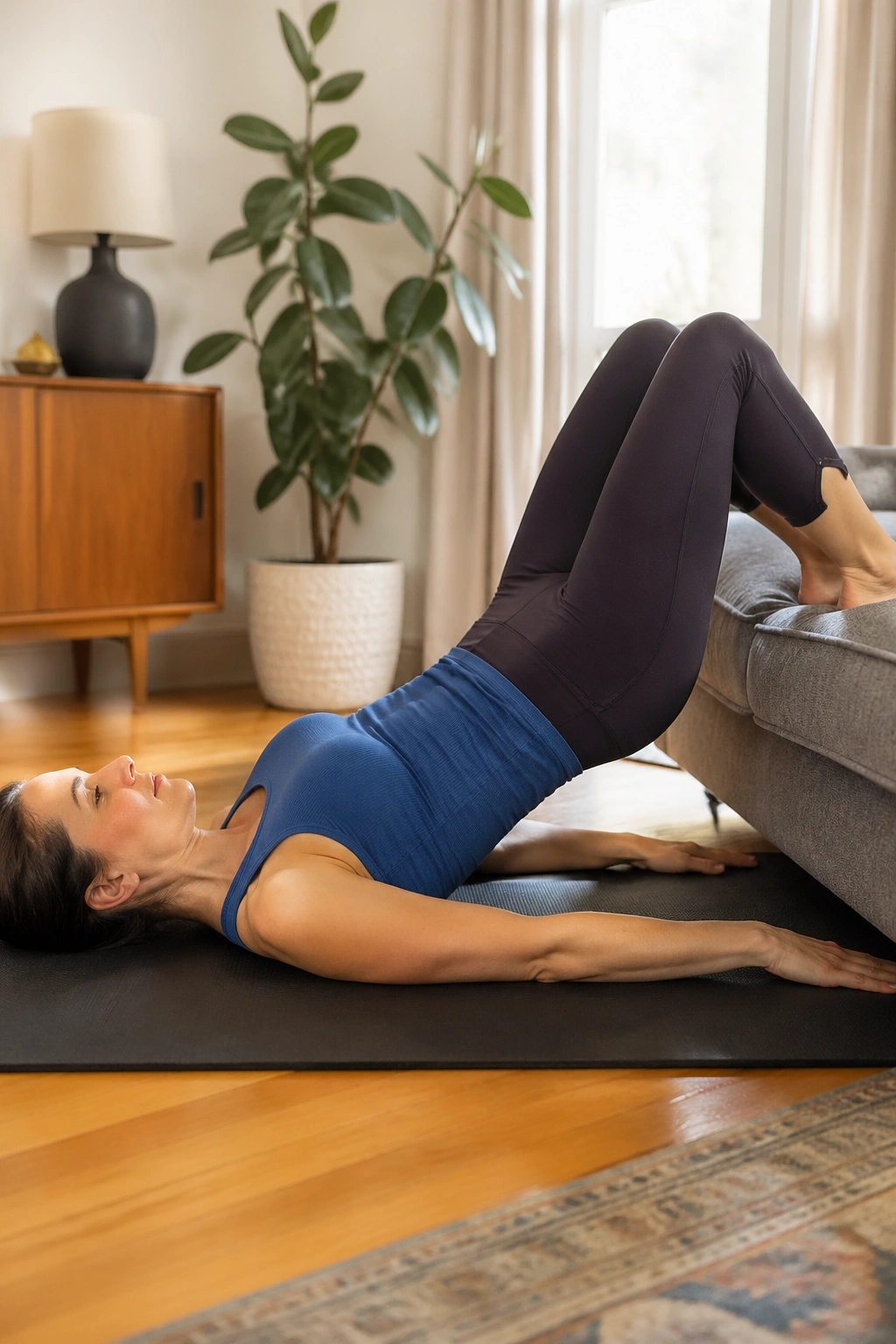
Here’s a version of bridge that brings in the hamstrings a little more.
Lie on your back with your heels on the sofa edge and your knees bent. Press through the heels and lift the hips into a shoulder bridge, keeping the ribs calm and the front of the body soft. Lower slowly until the tailbone almost touches the mat, then rise again. The sofa raises the feet just enough to make the back of the legs work harder.
Do 8 to 10 reps. If the hamstrings cramp, walk the feet a little farther away or move back to a floor bridge. Cramping usually means the setup is off, not that the move is wrong.
This one feels especially nice after a day of sitting because the hips open and the backside finally gets to do its share. It is not flashy. It doesn’t need to be.
18. Saw Stretch with a Mat and a Tall Spine
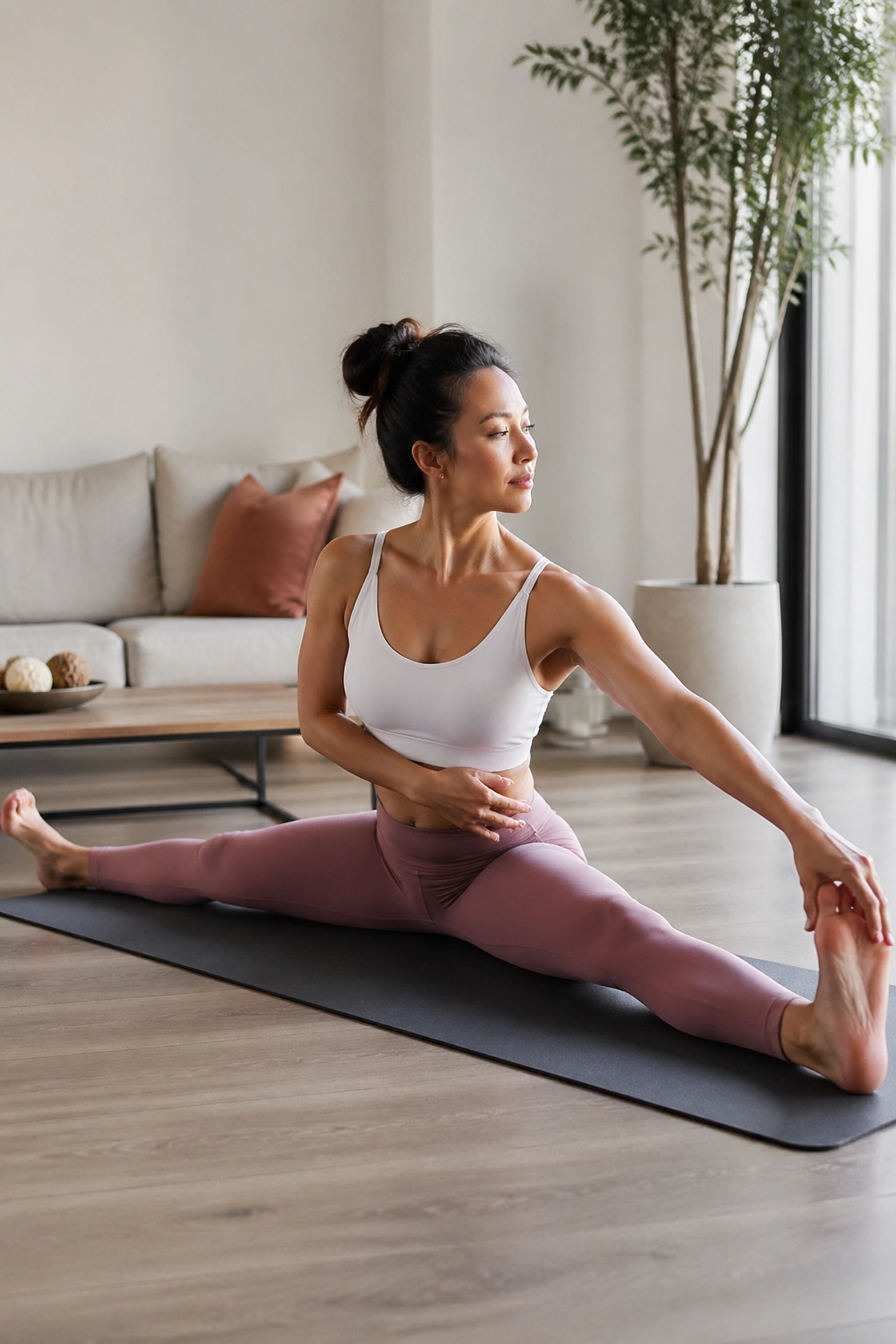
A seated stretch can still be a workout if you keep it honest.
Sit with the legs wide, arms out at shoulder height, and the spine lifted. Rotate the torso toward one leg and reach the opposite hand toward the outside of the pinky toe, as if you’re sawing off a little piece of the floor. Come back to center and switch sides. The reach should come from the waist and ribs, not from collapsing the chest.
This one opens the hamstrings, stretches the side body, and gives the back a break after all the crunching and bridging. Keep both sit bones grounded. If they lift, the stretch becomes a wobble.
Two to three slow reaches per side is enough. Hold the end position for one full breath if the back of the legs feel tight. No need to force depth. A long spine beats a deeper fold every time.
19. Slow Criss-Cross with Precision
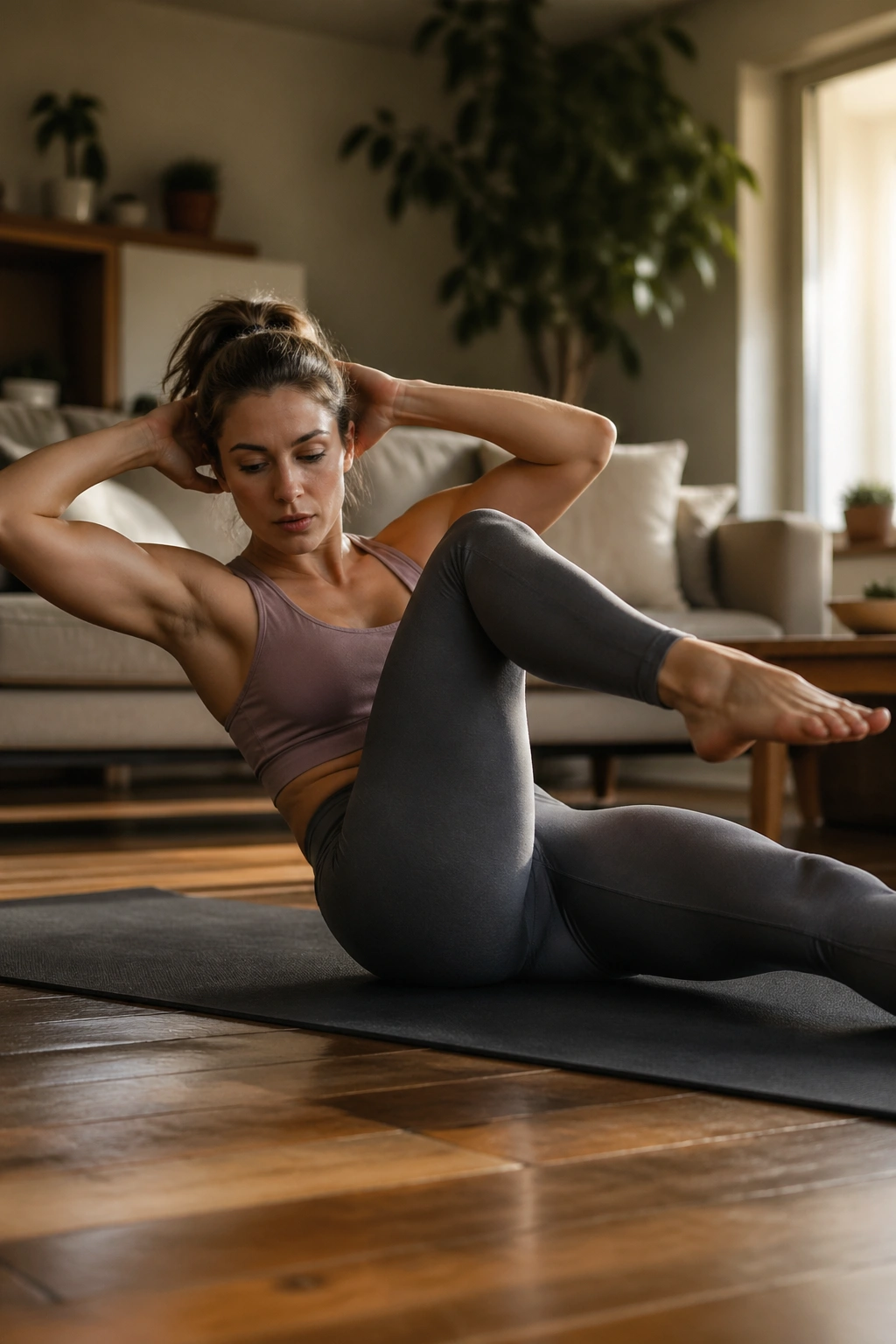
Fast bicycle crunches get a lot of attention. Slow criss-cross gets the job done better.
Lie on your back with hands behind the head, knees bent, and one leg extended long. Exhale as you rotate the shoulder toward the opposite knee, then switch sides with almost annoying control. The elbows should not yank the neck. The torso does the twisting, not the hands.
Do 8 to 10 reps per side. If your lower back starts to arch, shorten the leg extension and bring the heel higher. The lower the leg goes, the harder the core has to fight to keep the spine stable.
This is one of those moves that looks calm and feels much tougher than it looks. Nice little trick. The slower you go, the more the deep waist muscles have to hold the shape.
20. Five-Minute Reset Flow
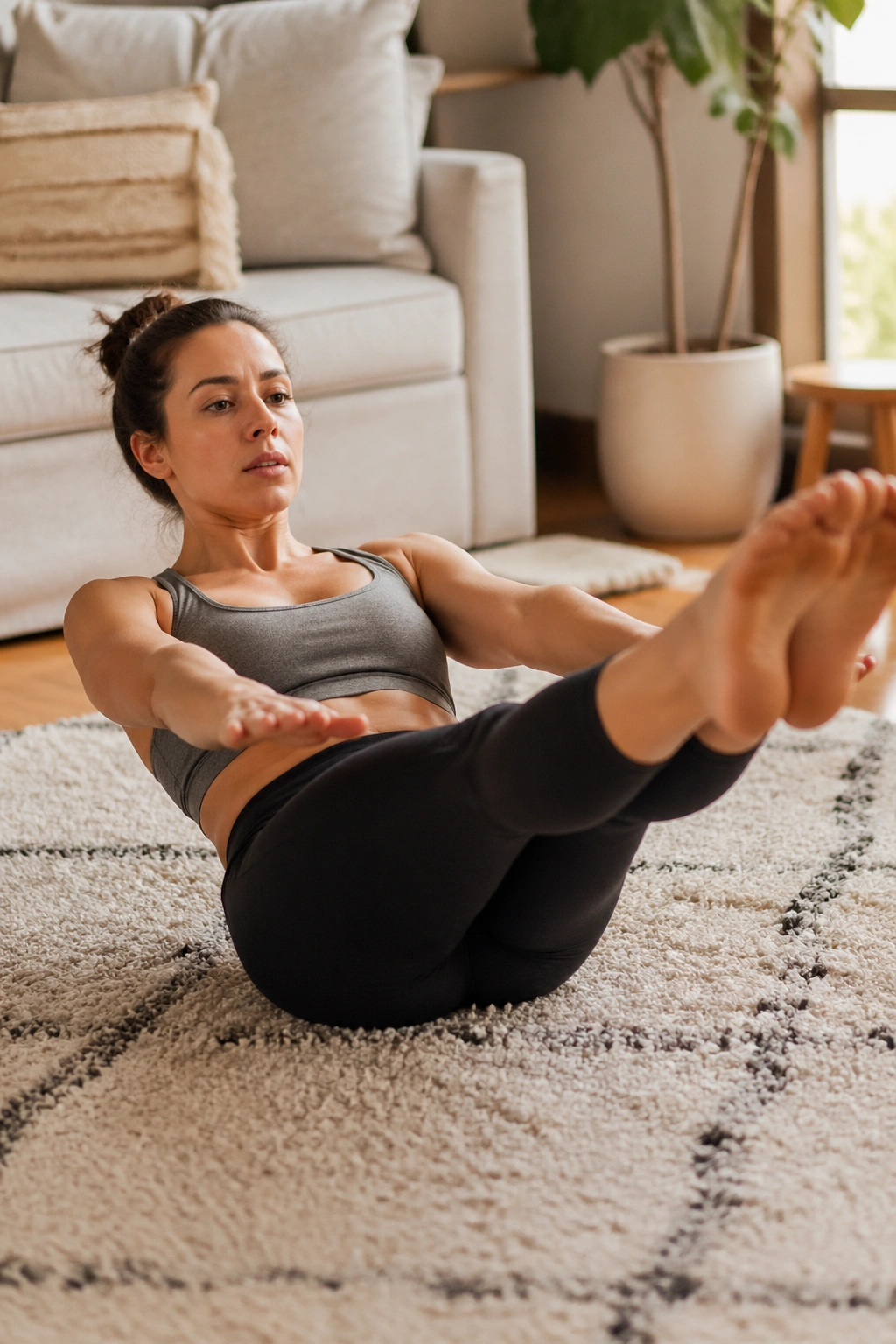
If the day got away from you, this compact flow is enough to make the room feel like a workout space again.
Start with 3 wall roll-downs, move into 10 glute bridge lifts, then finish with 20 slow Hundred arm pumps or 6 controlled dead bug taps per side. That mix gives you spinal movement, backside activation, and a clean core finish without needing to change position every thirty seconds.
Keep the whole thing smooth. No rushing. The magic here is in how little setup it needs. You can do it in socks, on a rug, with the television still off and your phone face down.
On busy days, this is the one I’d keep. It is short enough to actually happen and specific enough to leave you feeling more stacked, less slouched, and a little more awake through the center of the body. That matters more than a perfect plan.
