



Leg strength is the foundation of everything you do. Whether you are chasing a bus, hiking up a steep trail, or simply getting out of a low chair, your legs are doing the heavy lifting. The beauty of training your lower body at home is that you do not need racks, plates, or expensive gym memberships to see real results. You have gravity and your own body weight, which, when manipulated correctly, can be more than enough to stimulate muscle growth, improve joint stability, and increase endurance.
Consistency is the secret sauce here. Many people think they need a grueling, hour-long session once a week to “see gains,” but doing a focused, high-quality lower body session every day—or alternating days for recovery—is often much more effective for building the habit and the strength. You do not have to train until you cannot walk. In fact, if you train every day, the goal is to hit the muscles effectively without completely frying your central nervous system.
It comes down to how you move. By changing your tempo, your stance, or your range of motion, you can turn the simplest movement into a challenging exercise. You will notice that as you go through these, the goal is not to count reps to infinity but to find that “sweet spot” of tension where the muscle actually works. Forget the idea that home workouts are “lesser than”—if you are shaking by the end of a set, your muscles do not know the difference between a dumbbell and your own body weight.
1. Bodyweight Squats
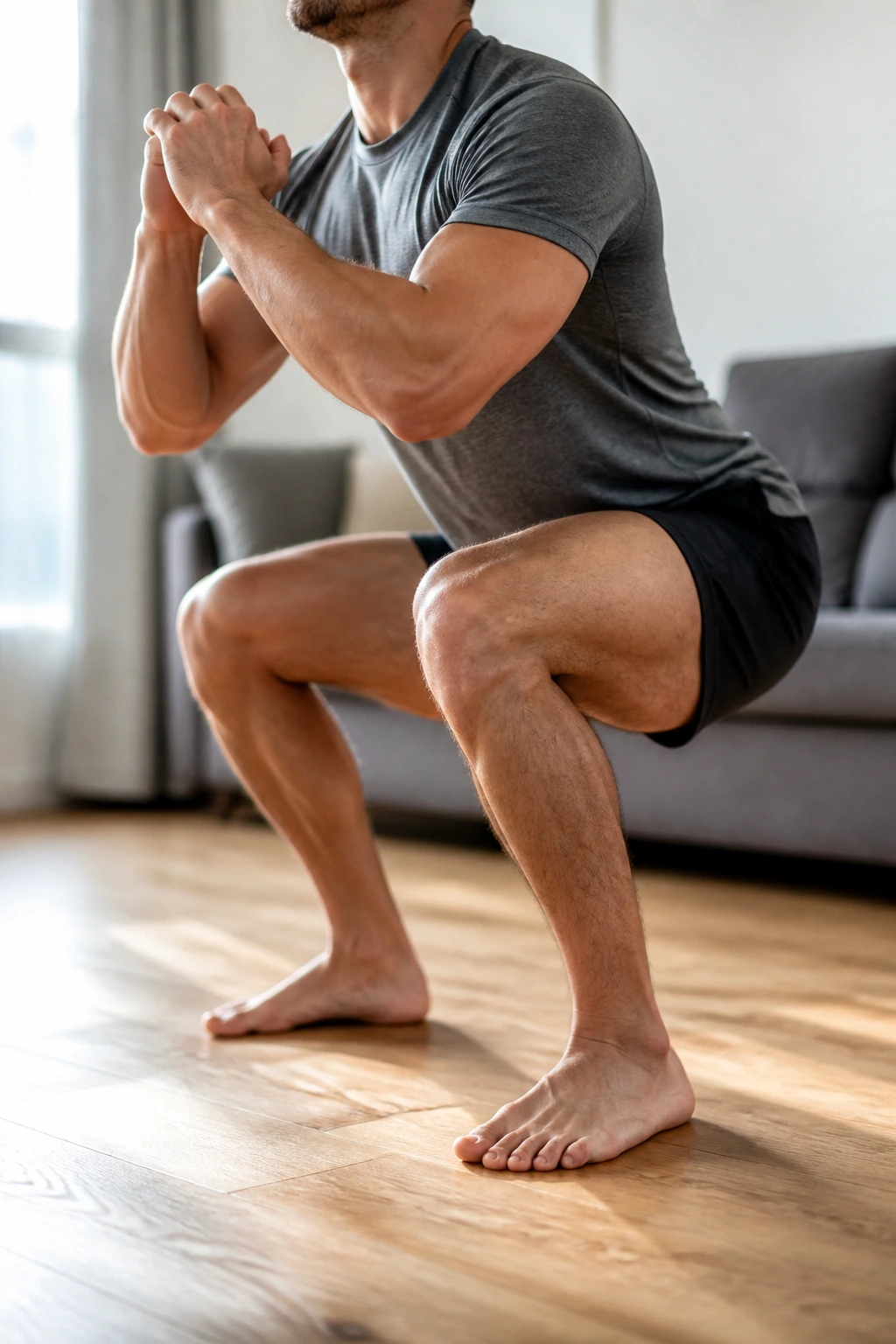
The humble squat is the king of leg exercises for a reason. It recruits almost every muscle in your lower body, including your quads, hamstrings, glutes, and even your core for stability. When performing these, start by placing your feet shoulder-width apart with your toes pointed slightly outward. As you descend, think about pushing your hips back as if you are sitting into an invisible chair behind you.
Getting the Form Right
Many people rush this movement, but the key is control. Lower yourself over three seconds, pause for a split second at the bottom, and then drive up through your heels. Keep your chest up; if you find yourself hunching forward, reach your arms straight out in front of you for a counterbalance. You should feel the tension in your thighs and glutes, not your lower back.
- Keep your heels glued to the floor.
- Drive your knees outward; never let them cave inward toward each other.
- Aim for a depth where your thighs are parallel to the floor, but do not sacrifice form for depth.
Pro tip: If you want to increase the intensity without weights, try a “1.5 squat.” Squat down, come halfway up, go back down to the bottom, and then stand all the way up. That counts as one rep.
2. Reverse Lunges
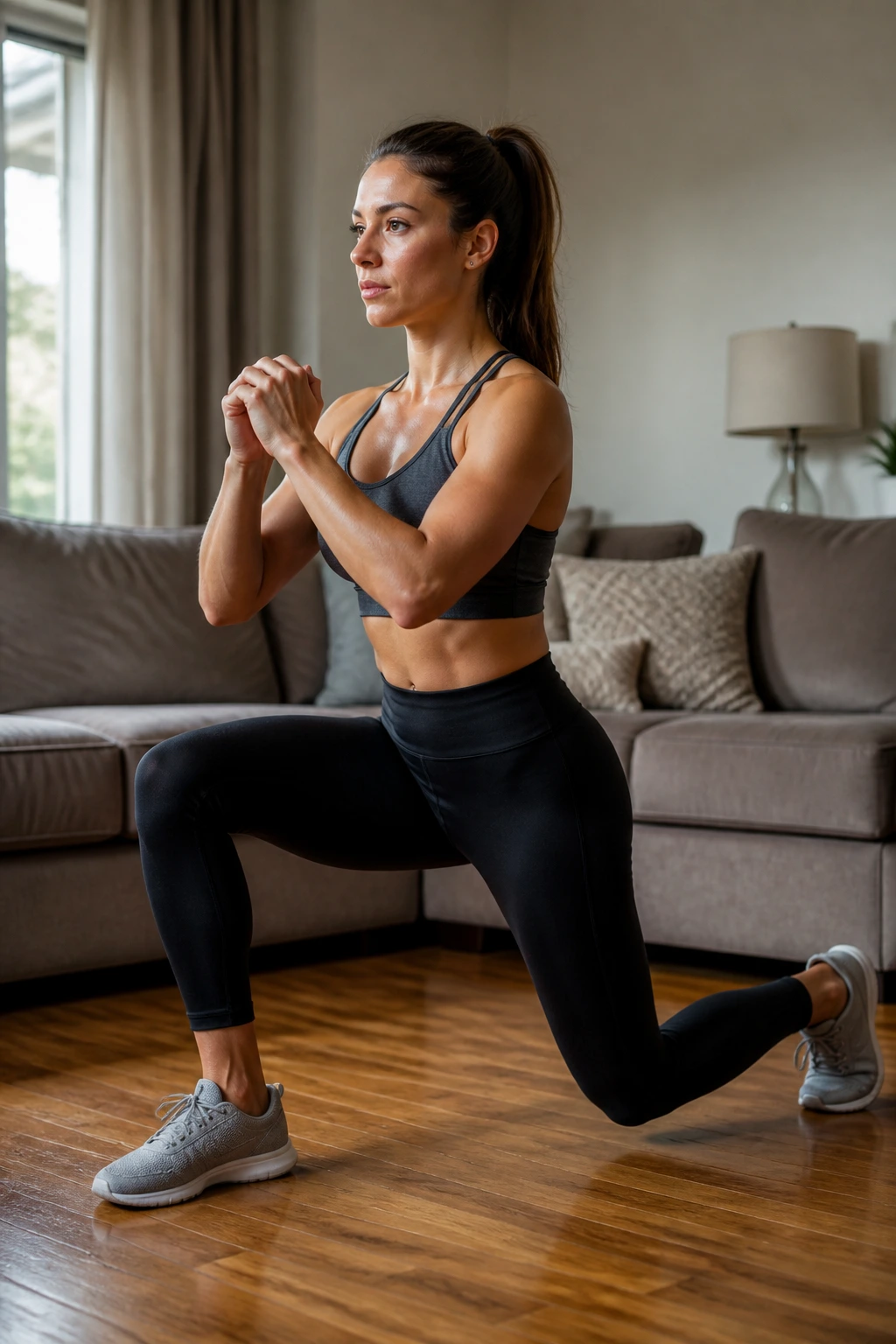
Reverse lunges are generally safer for your knees than forward lunges because they put less shearing force on the joint. You step backward rather than forward, which forces you to load the front leg—the one you are targeting—while the back leg provides stability. It is a fantastic way to correct muscle imbalances, as you must perform the work on each leg independently.
Finding Your Balance
Stand tall with your feet together. Take a large step back with your right foot, planting the ball of your foot on the floor. Lower your hips until both knees are bent at approximately a 90-degree angle. Your front knee should be aligned over your front ankle, not tracking way over your toes.
- Focus on pushing off the front heel to return to the standing position.
- Keep your torso upright; leaning too far forward shifts the focus away from the glutes.
- Do not slam your back knee into the ground; tap it lightly or hover just above.
This exercise is excellent for improving balance and coordination. You will find that after a few weeks of consistent practice, the wobbliness you felt in the beginning completely vanishes.
3. Glute Bridges
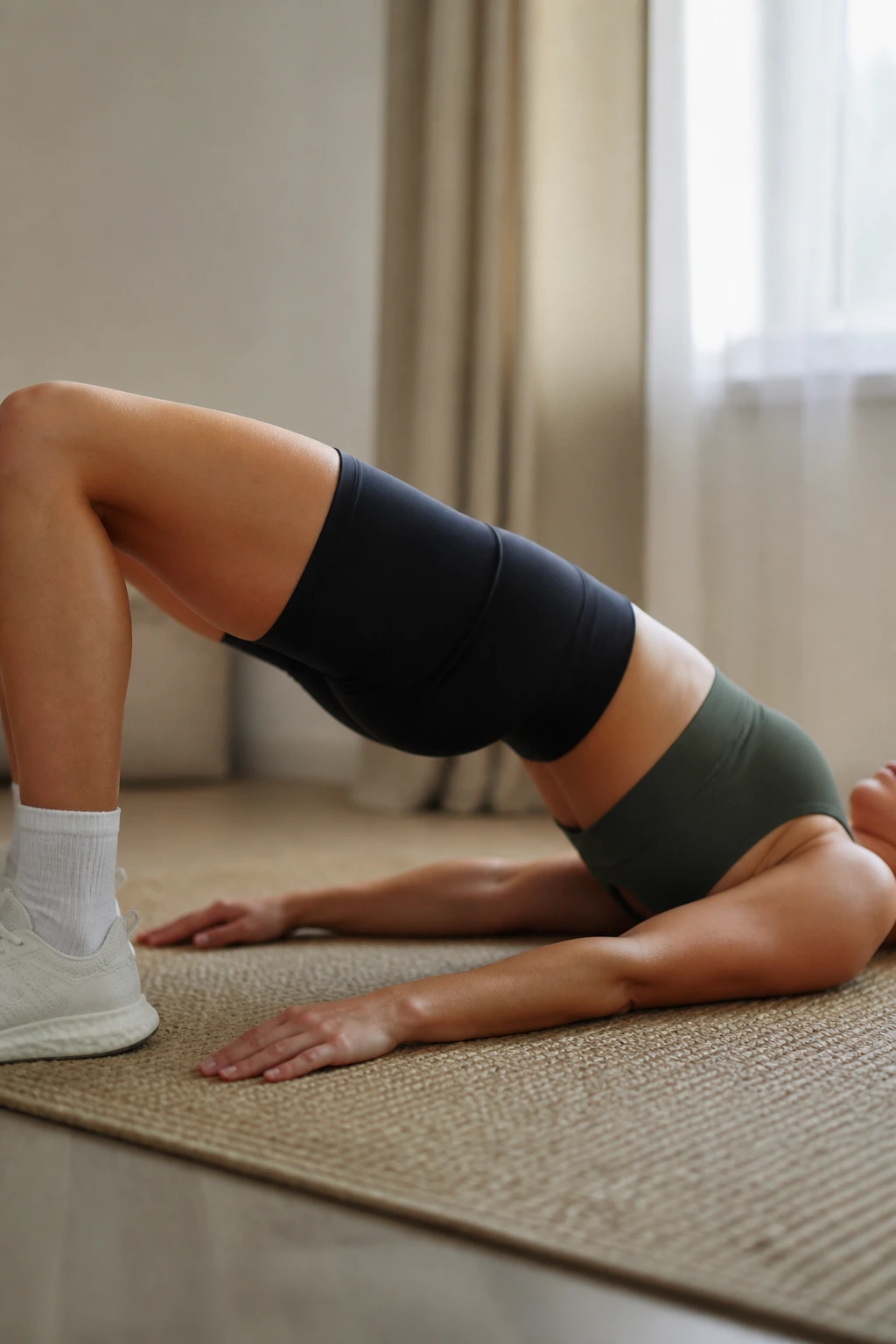
If you spend a lot of time sitting, your glutes are likely “asleep.” Glute bridges are the most effective way to wake them up. Lie flat on your back, knees bent, and feet planted on the floor about hip-width apart. From this position, drive through your heels to lift your hips toward the ceiling, squeezing your glutes hard at the top of the movement.
The Importance of the Squeeze
At the top of the bridge, your body should form a straight line from your knees to your shoulders. Do not overarch your back. The goal is to reach full hip extension using the glute muscles, not the lower back. If you feel it in your hamstrings, try inching your feet slightly closer to your butt.
How to Add Difficulty
Once the basic bridge becomes too easy, you do not need to add weight immediately. Instead, move to a single-leg bridge. Extend one leg straight out while the other remains planted, and lift your hips. This significantly increases the demand on your glutes and hamstrings, making for a much tougher set.
4. Curtsy Lunges
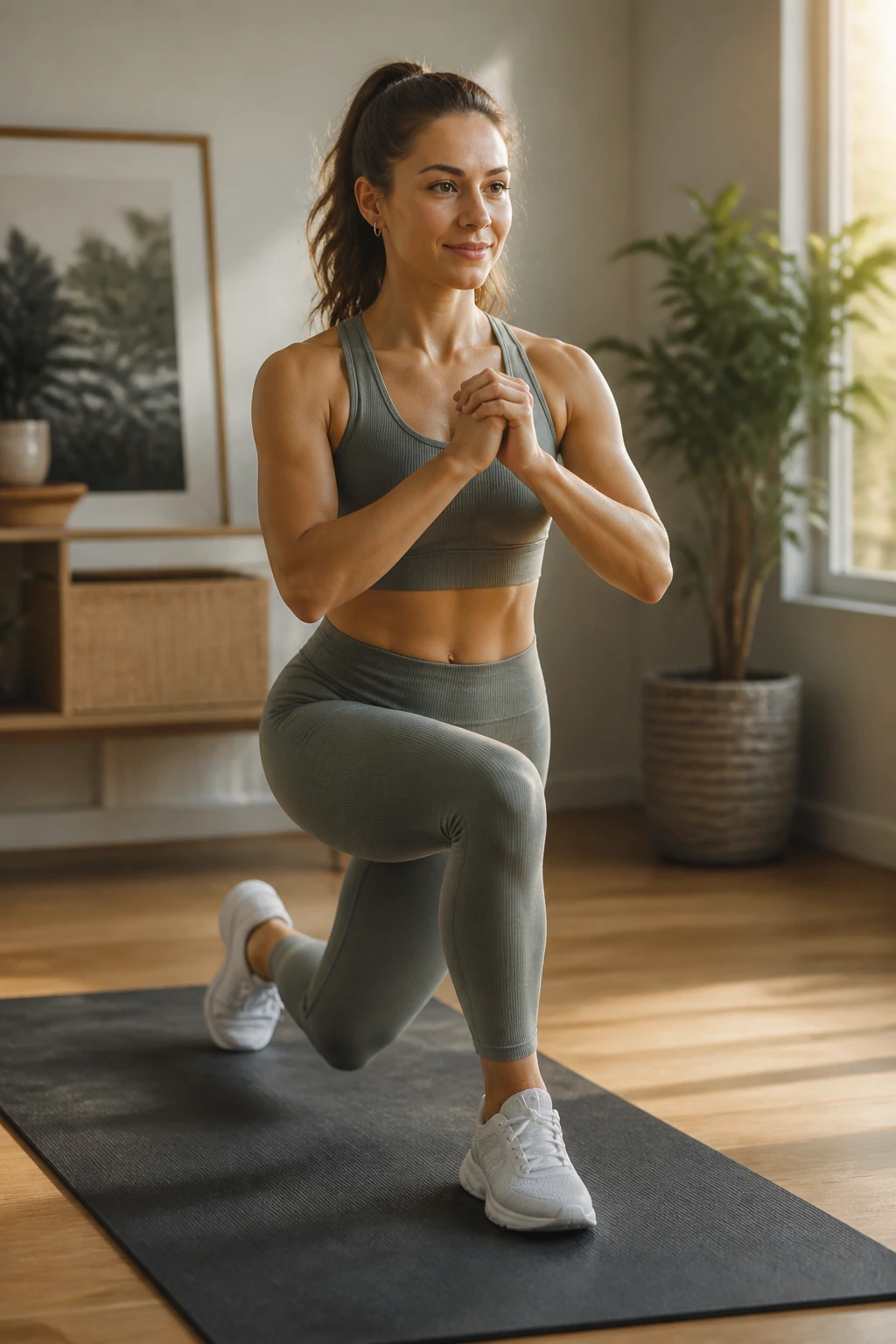
Curtsy lunges target the gluteus medius, a muscle on the side of your hip that is often neglected in standard squats and lunges. This muscle is vital for knee stability and preventing that “caved-in” knee look during other exercises. To perform them, start standing tall, then step your right leg behind and across your left leg, as if you are doing a curtsy.
Why This Works
The cross-behind motion forces you to stabilize your pelvis while your muscles are under tension. Lower your back knee until it is just above the floor. You will likely feel a significant stretch in the side of your outer glute on the front leg.
- Keep your hips facing forward, not angled toward the side.
- Engage your core to prevent your upper body from twisting.
- Press through the front heel to return to the starting position.
Because this movement requires balance, it also fires up your smaller stabilizing muscles. It is not just about the quads; it is about teaching your legs to work together to keep you upright.
5. Sumo Squats
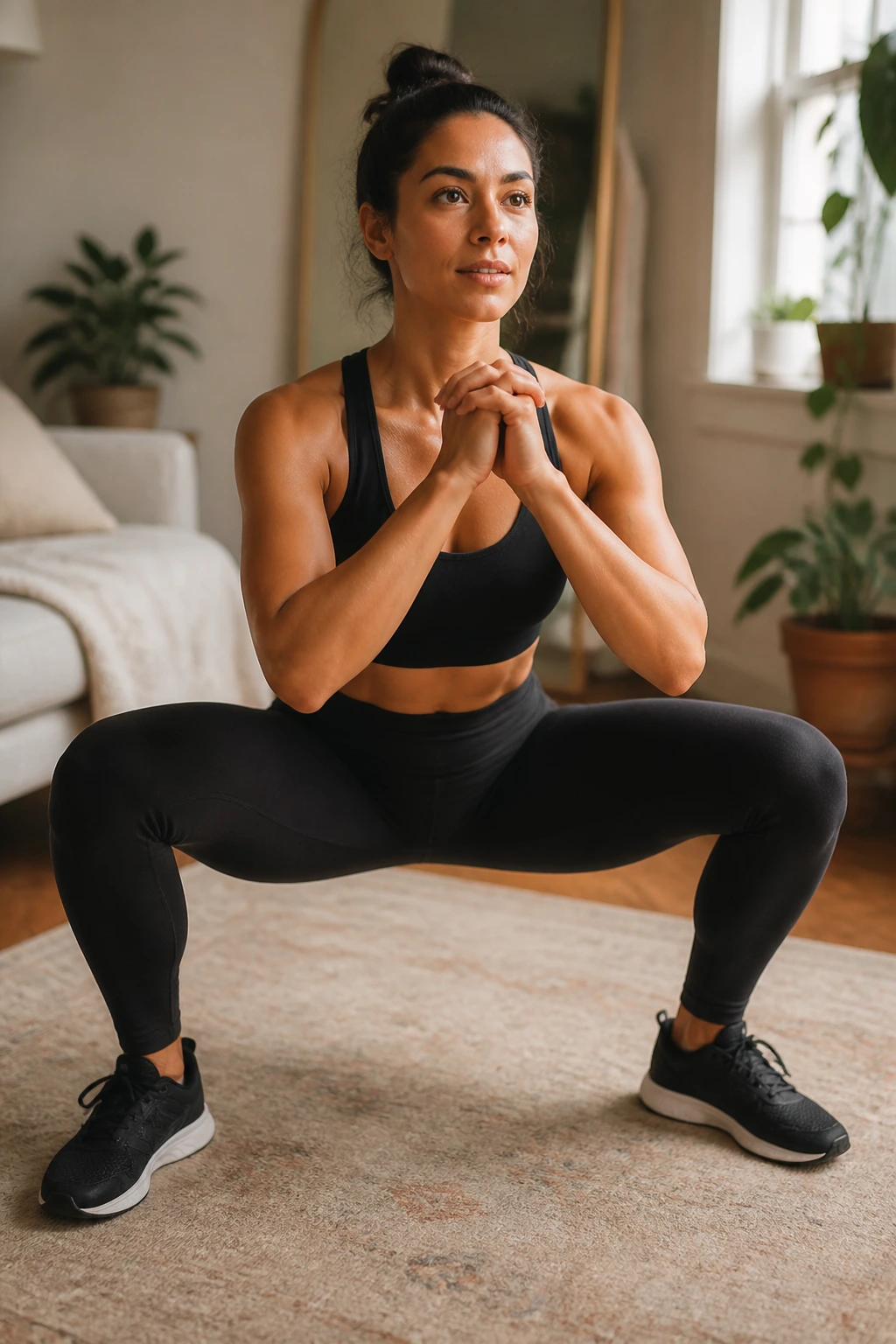
Sumo squats require a wide stance, which shifts the emphasis of the exercise to your inner thighs (adductors) and glutes. Stand with your feet wider than shoulder-width, toes turned out at about 45 degrees. As you descend, focus on keeping your chest up and your knees tracking directly over your toes.
The Inner Thigh Burn
The wider your feet, the more you will feel the stretch in your inner thighs. Ensure you are not leaning forward; the wide stance can sometimes cause people to pitch their torso toward the ground. Stay tall, as if you are sliding your back against a wall.
- Go deep enough to feel a stretch, but stop before your pelvis tucks under.
- Drive up through your heels and squeeze your glutes at the top.
- Maintain a steady, controlled tempo; fast, bouncing movements will not give you the same results.
This is a great movement to pair with a pulsing variation. At the bottom of the squat, do three tiny pulses before driving back up to a standing position.
6. Side Lunges
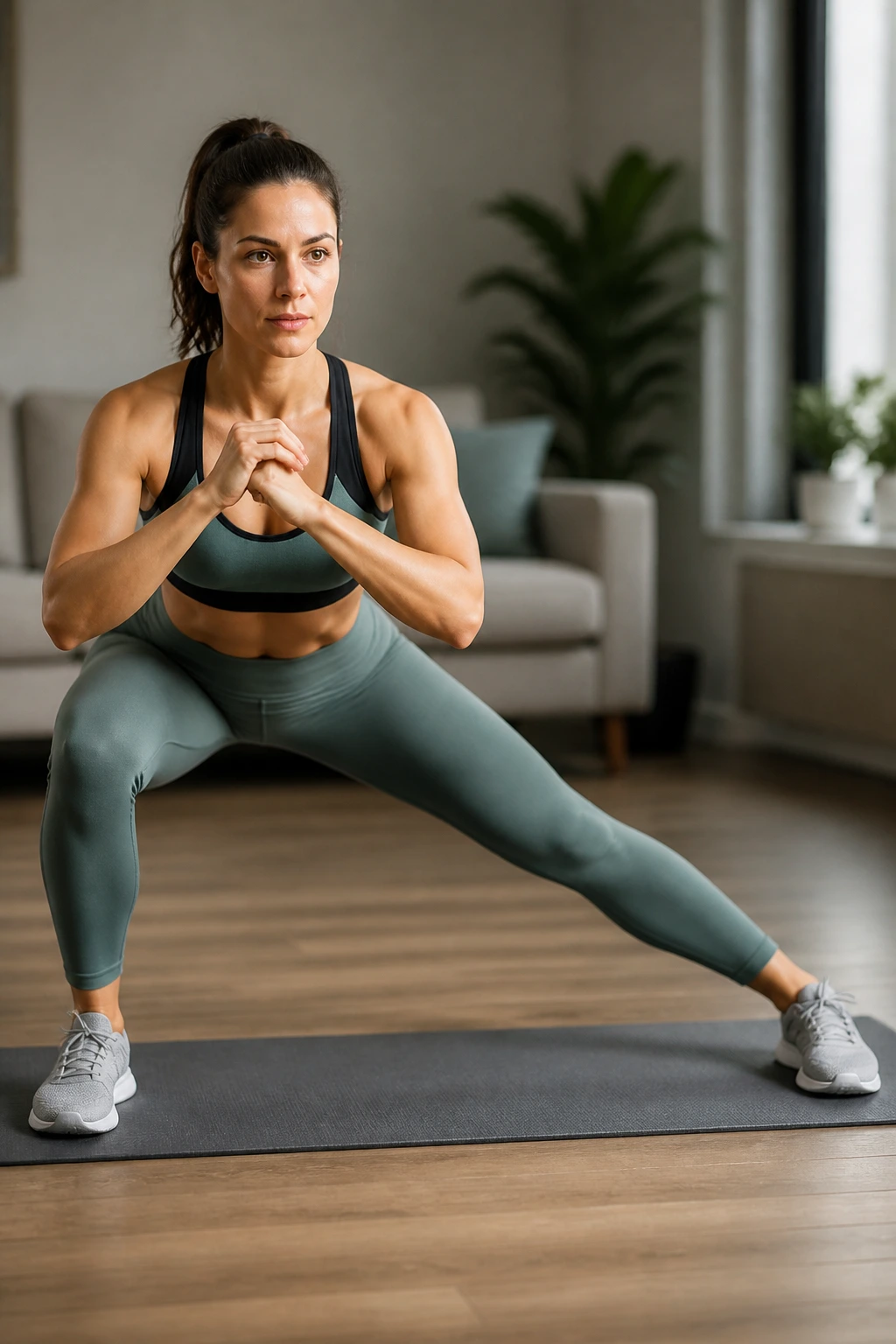
Lateral movement is often missing from typical home workout routines, yet it is crucial for agility and injury prevention. Side lunges force you to move in the frontal plane, which hits your glutes and quads differently than standard forward-back movements. Stand with feet together, take a large step to the right, and push your hips back while keeping your left leg straight.
Perfecting the Side Lunge
Ensure your right knee stays in line with your right toes. Do not let it cave inward. Your left leg should remain fully extended, providing a deep stretch through the inner thigh. Push off your right foot forcefully to return to the center.
Common Mistakes
A frequent error is bending the straight leg or lifting the heel of the lunging leg. Keep the heel planted and the straight leg locked out to maximize muscle recruitment. If you find your chest dropping too low, focus on keeping your eyes on the wall in front of you—this simple cue often helps keep your spine aligned.
7. Calf Raises
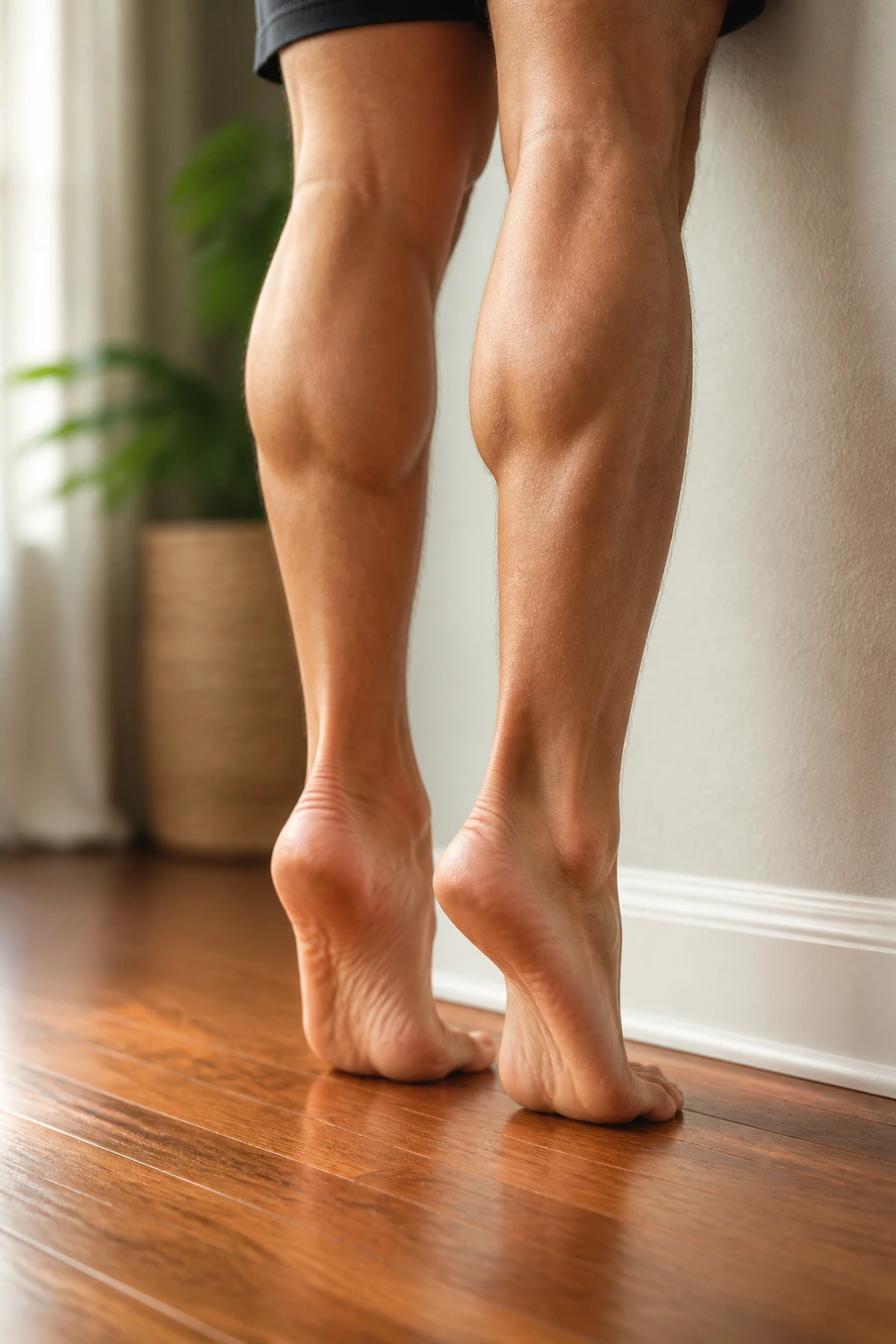
Do not ignore your lower legs. Your calves are responsible for propelling you forward and stabilizing your ankles. Calf raises can be done anywhere, anytime. Stand with feet hip-width apart, holding onto a wall or chair for balance if needed. Rise onto the balls of your feet, squeezing your calves at the top, and then slowly lower your heels back to the ground.
Building Strength and Endurance
The calves are stubborn muscles; they are designed for endurance, which means they often respond better to higher reps. Aim for 20-30 reps per set. You can also vary your foot position: toes pointing inward hits the outer calf, while toes pointing outward emphasizes the inner calf.
- Pause at the top for one second to maximize the contraction.
- Do not bounce at the bottom; use a slow, controlled descent to keep the muscle under tension.
- To add difficulty, perform these on the edge of a step to increase the range of motion.
8. Step-Ups
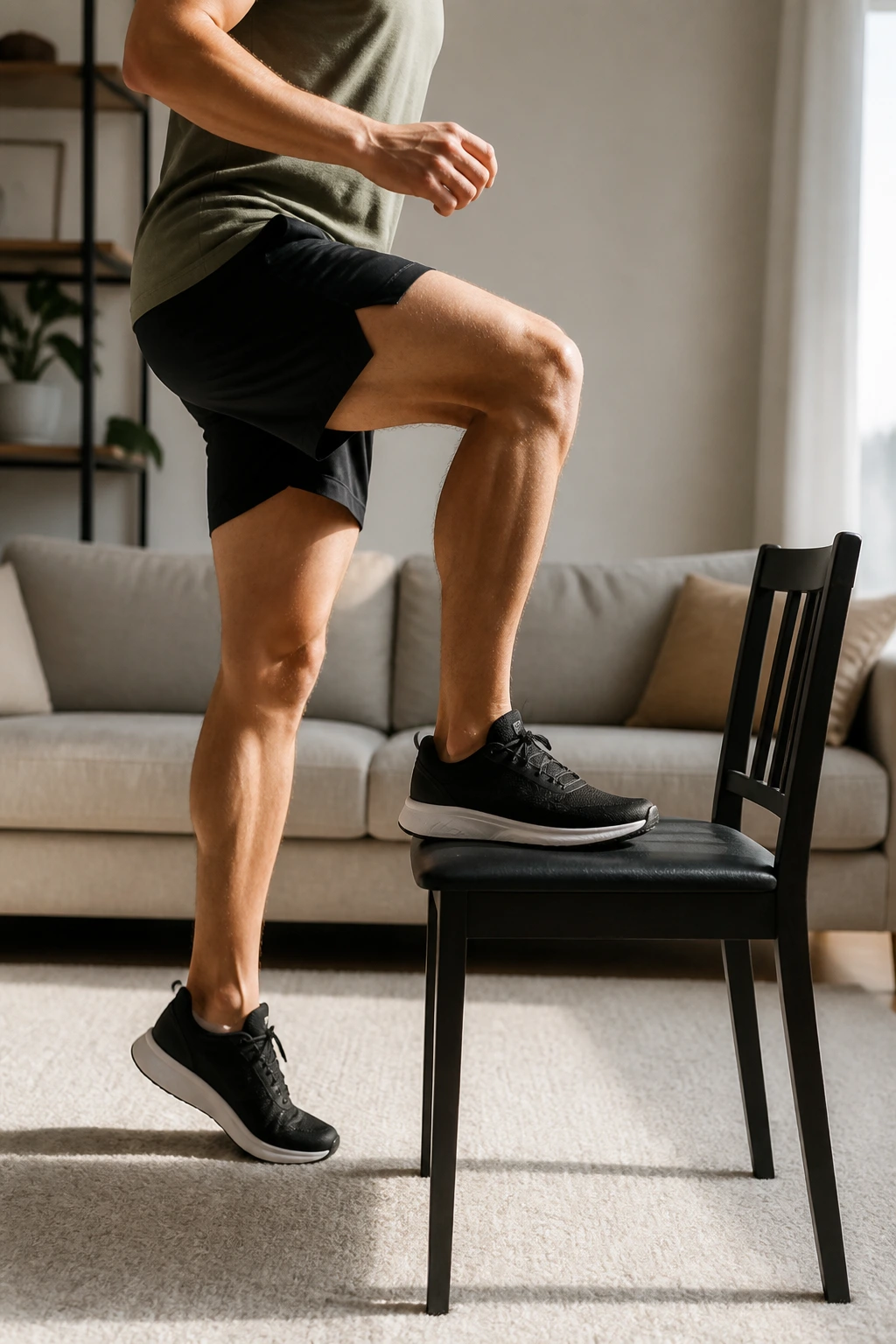
Step-ups are a fantastic functional movement that mimics climbing stairs. All you need is a sturdy chair, a bench, or even a sturdy step. Place your right foot firmly on the surface. Drive through your right heel to lift your entire body, bringing your left foot up to meet your right. Step back down with your left foot, returning to the start.
The Power of the Drive
The goal is to use the leg on the step to do all the work. Try not to use your back foot to push off the ground. If you find yourself jumping to get up, the surface might be too high. Start with a lower chair or stool until you build the necessary strength.
- Keep your knee aligned with your toes; do not let it collapse inward.
- Control the descent—do not just drop down, as this is where you build strength and joint stability.
- Alternate legs or do all reps on one side before switching.
9. Assisted Pistol Squats
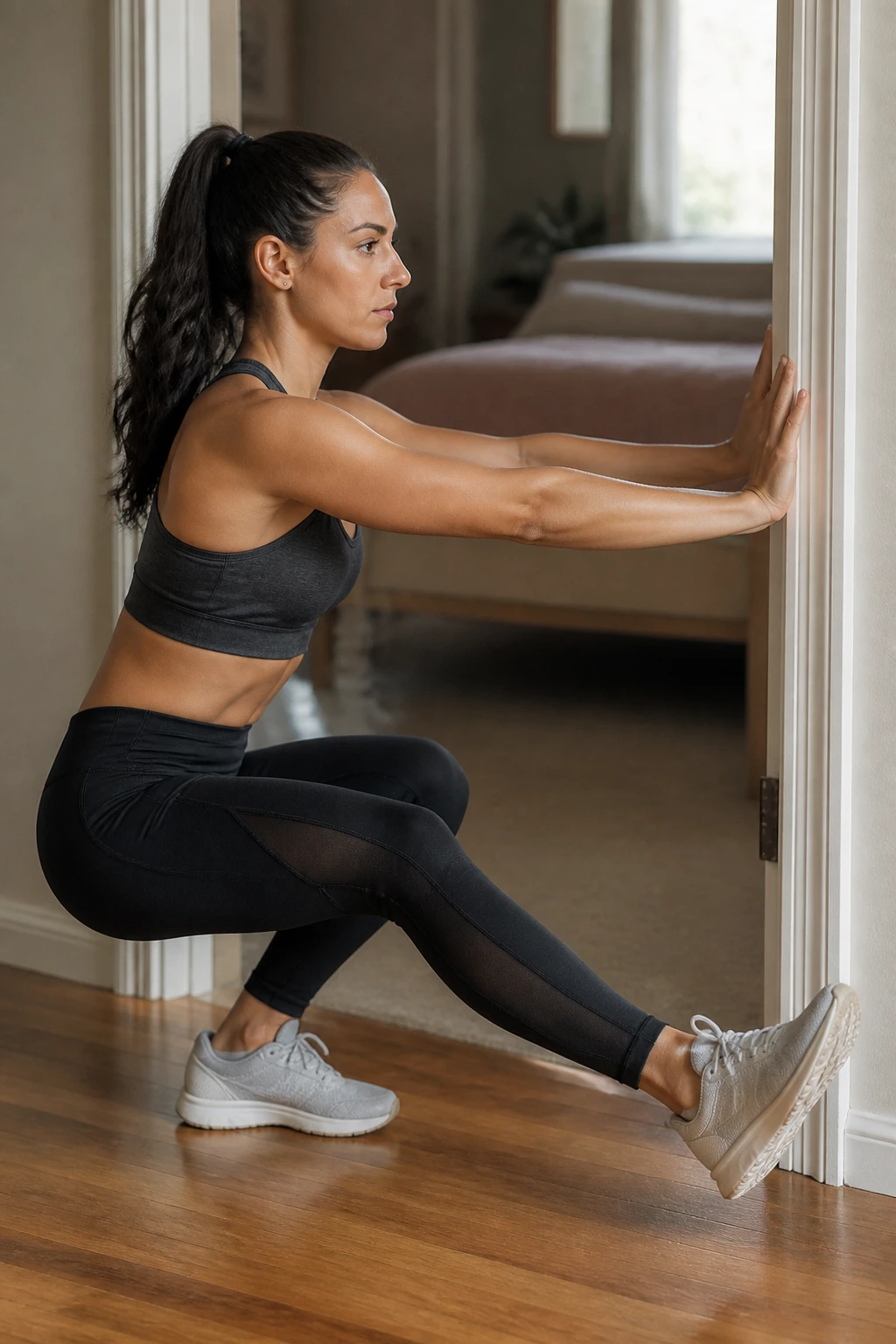
The pistol squat is a one-legged squat, and it is the gold standard for lower body strength and mobility. Because it is incredibly difficult for most people, we use the “assisted” version to build up to it. Find a sturdy pole, doorframe, or piece of furniture to hold onto. Stand on one leg, extend the other leg forward, and lower yourself into a squat.
Why They Are So Effective
The assist allows you to maintain balance while you work on the extreme range of motion required for the full movement. It is humbling, but it is one of the most effective exercises for targeting the quads and glutes simultaneously.
The Progression
Your ultimate goal is to do these without assistance. Start with a deep grip on your support, lowering as far as your mobility allows. Over time, use less and less grip, eventually moving to just a fingertip touch.
10. Bulgarian Split Squats
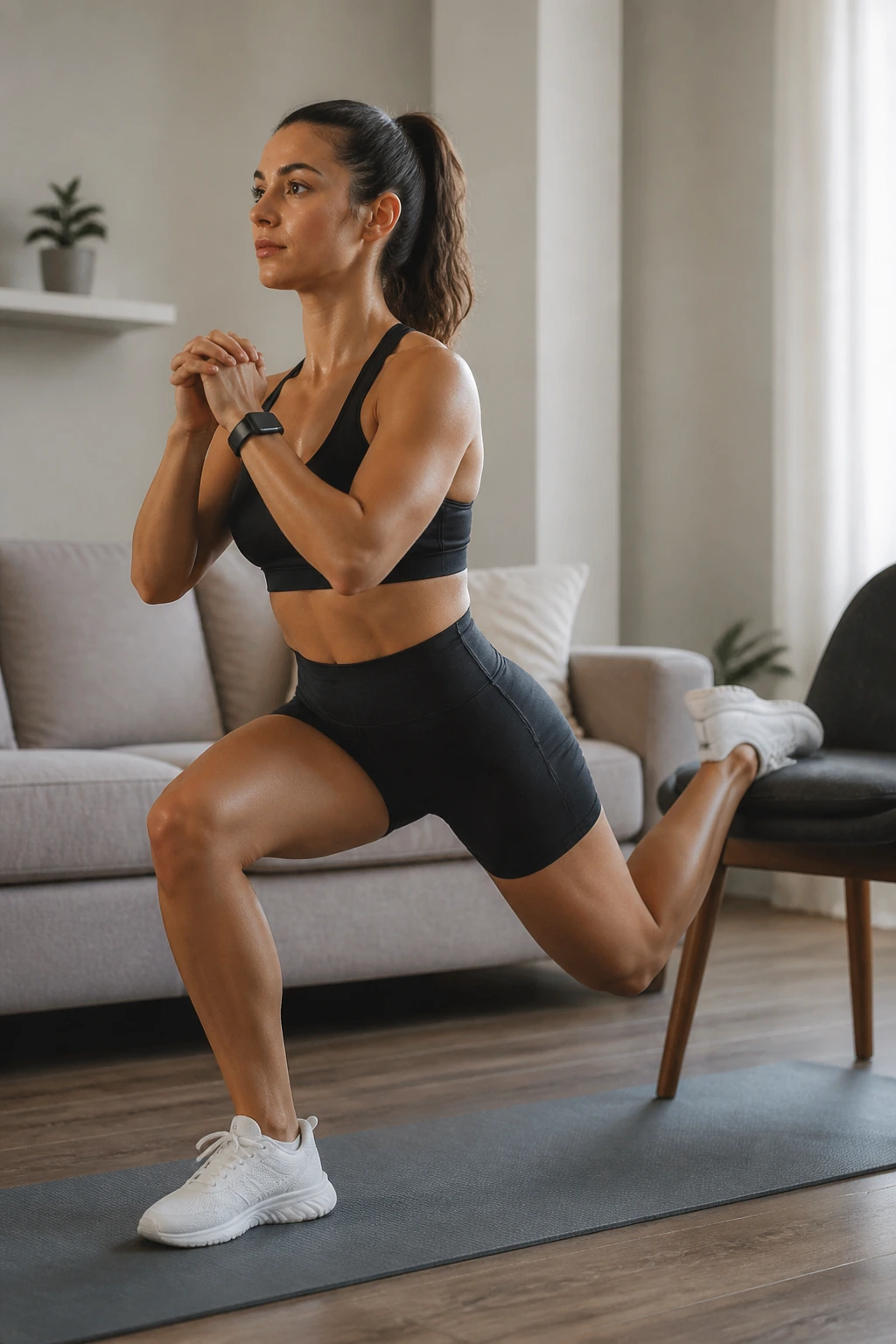
If you want a love-hate relationship with an exercise, this is it. Bulgarian split squats are one of the most effective ways to build leg mass and strength. Stand about two feet in front of a chair or couch. Place your back foot on the elevated surface, shoelaces down. Lower your hips until your front thigh is parallel to the floor.
The “Pain” Is the Gain
This movement puts an incredible amount of load on the front leg. Because your back leg is elevated, you cannot cheat by using it for balance or power. You are forced to stabilize, which builds incredible core strength alongside your legs.
- Ensure your front foot is far enough forward that your knee doesn’t travel excessively past your toes.
- Keep your torso upright; leaning forward turns this into a glute-focused movement, while staying upright hits the quads harder.
- If you lose your balance, focus your eyes on a single point on the wall.
11. Fire Hydrants
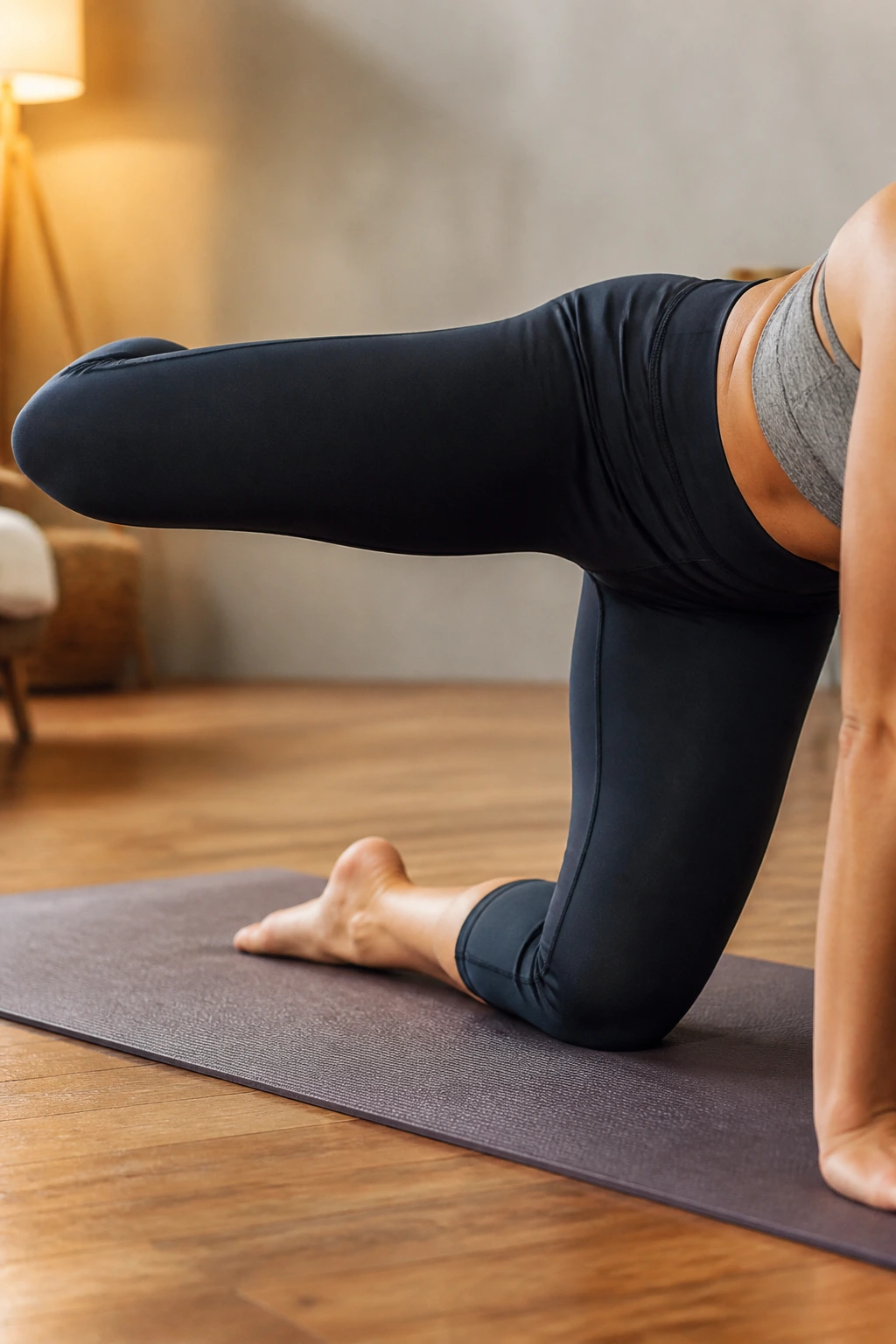
This is an isolation exercise for the gluteus medius and minimus. Get on all fours, hands under shoulders and knees under hips. Keeping your knee bent at a 90-degree angle, lift your right leg out to the side until your thigh is parallel to the floor. Return it to the starting position without letting your knee touch the ground.
Why This Matters
Isolation exercises like this are great for “finishing” a workout. You will feel a deep burn in your outer hip and glute. It is also excellent for hip mobility. Make sure you are not rotating your entire torso to get your leg higher; keep your spine neutral and move only from the hip joint.
12. Donkey Kicks
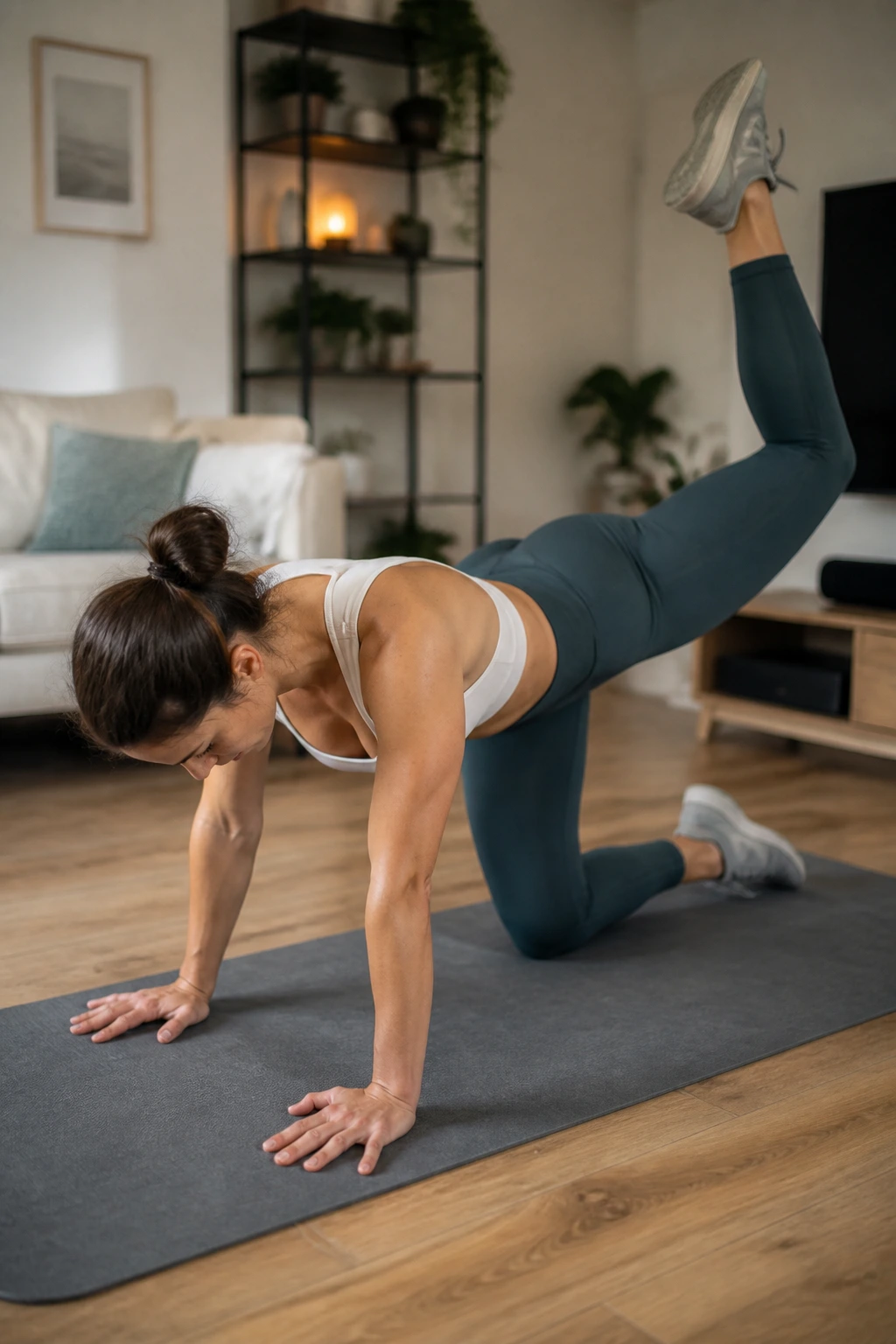
Donkey kicks target the gluteus maximus, the largest muscle in your body. Start in the same all-fours position as the fire hydrants. Keeping your right knee bent, kick your foot toward the ceiling, driving with your heel. Squeeze your glute at the top of the movement and return your knee to the floor.
Precision Matters
Focus on the squeeze. It is easy to just swing your leg around, but to get results, you must focus on the mind-muscle connection. Imagine you are pushing a heavy object with the sole of your foot. Do not arch your lower back as you kick; keep your core tight to protect your spine.
13. Wall Sit
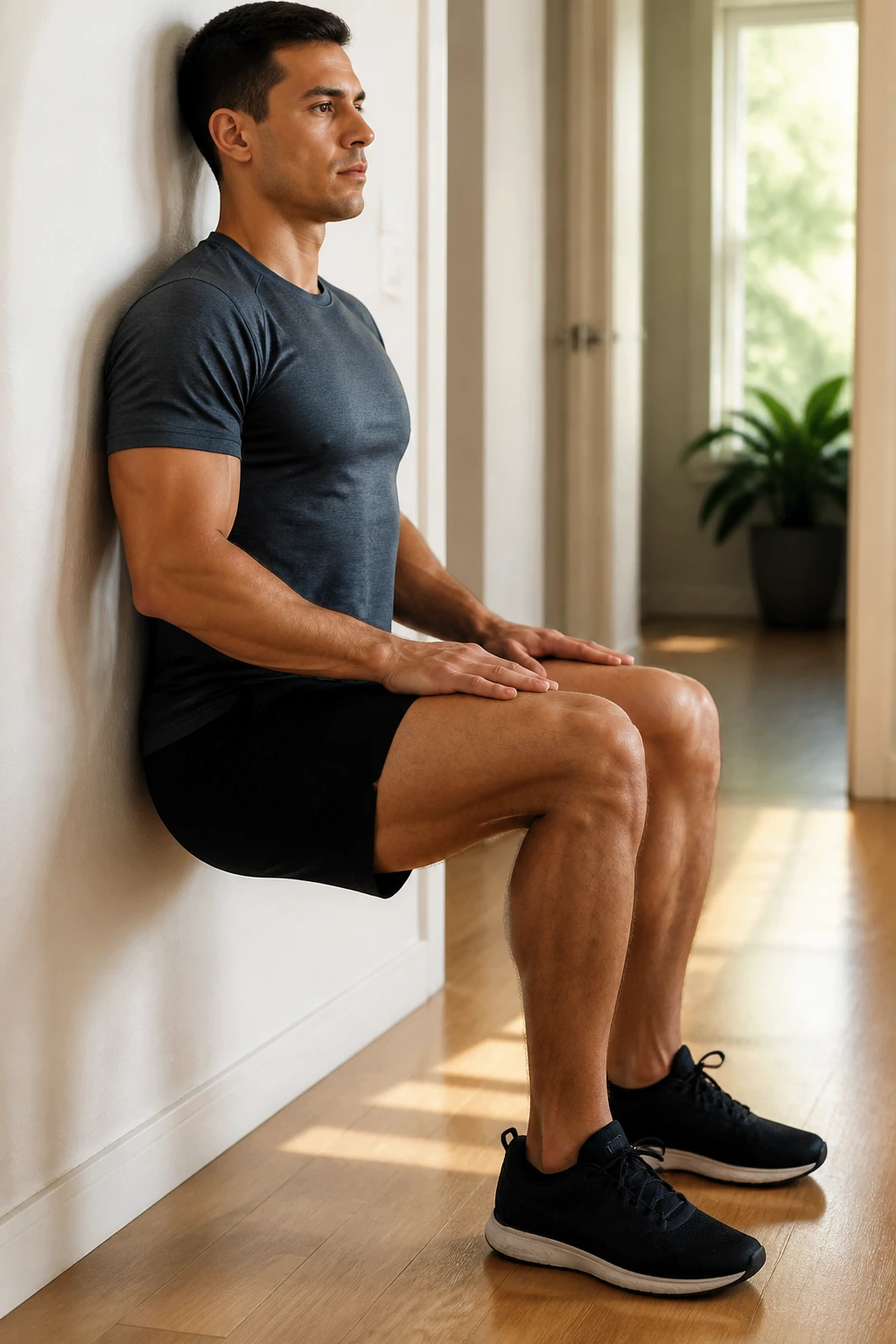
The wall sit is an isometric exercise, meaning your muscles are working without changing length. It builds endurance and teaches your legs to remain stable under tension. Lean your back flat against a wall and slide down until your thighs are parallel to the floor. Your knees should be at a 90-degree angle.
The Endurance Test
Hold this position for as long as you can. It might feel easy for the first 20 seconds, but your legs will start to burn shortly after. The secret is to breathe—do not hold your breath. If you feel your legs trembling, that is a sign your muscles are working, not a sign to quit.
- Keep your back pressed fully against the wall.
- Distribute your weight evenly through your feet.
- Aim to increase your hold time by 5-10 seconds each day.
14. Glute Bridge Marches
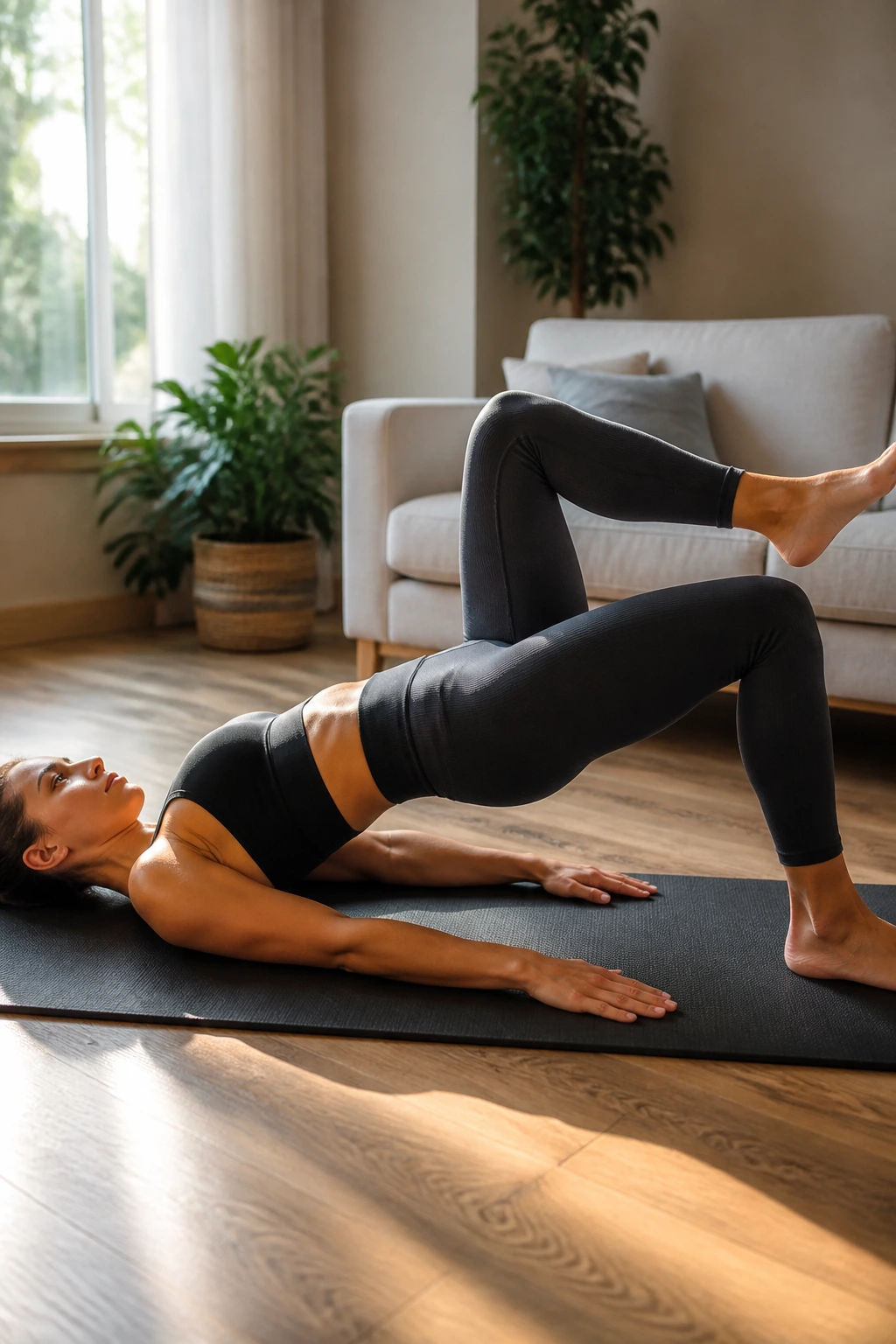
This takes the standard glute bridge and turns it into a core and stability challenge. Start in a glute bridge position, hips elevated and glutes squeezed. While keeping your hips steady and level, lift one foot off the floor and bring that knee toward your chest. Lower it and repeat with the other side.
Preventing Hip Drop
The challenge here is to keep your pelvis from rotating or dipping when you lift a leg. Your hips should remain glued in that top position as if you are holding a tray of drinks on them. If your hips are sagging, the exercise is not working effectively. It is better to move slower and keep your form perfect.
15. Jump Squats
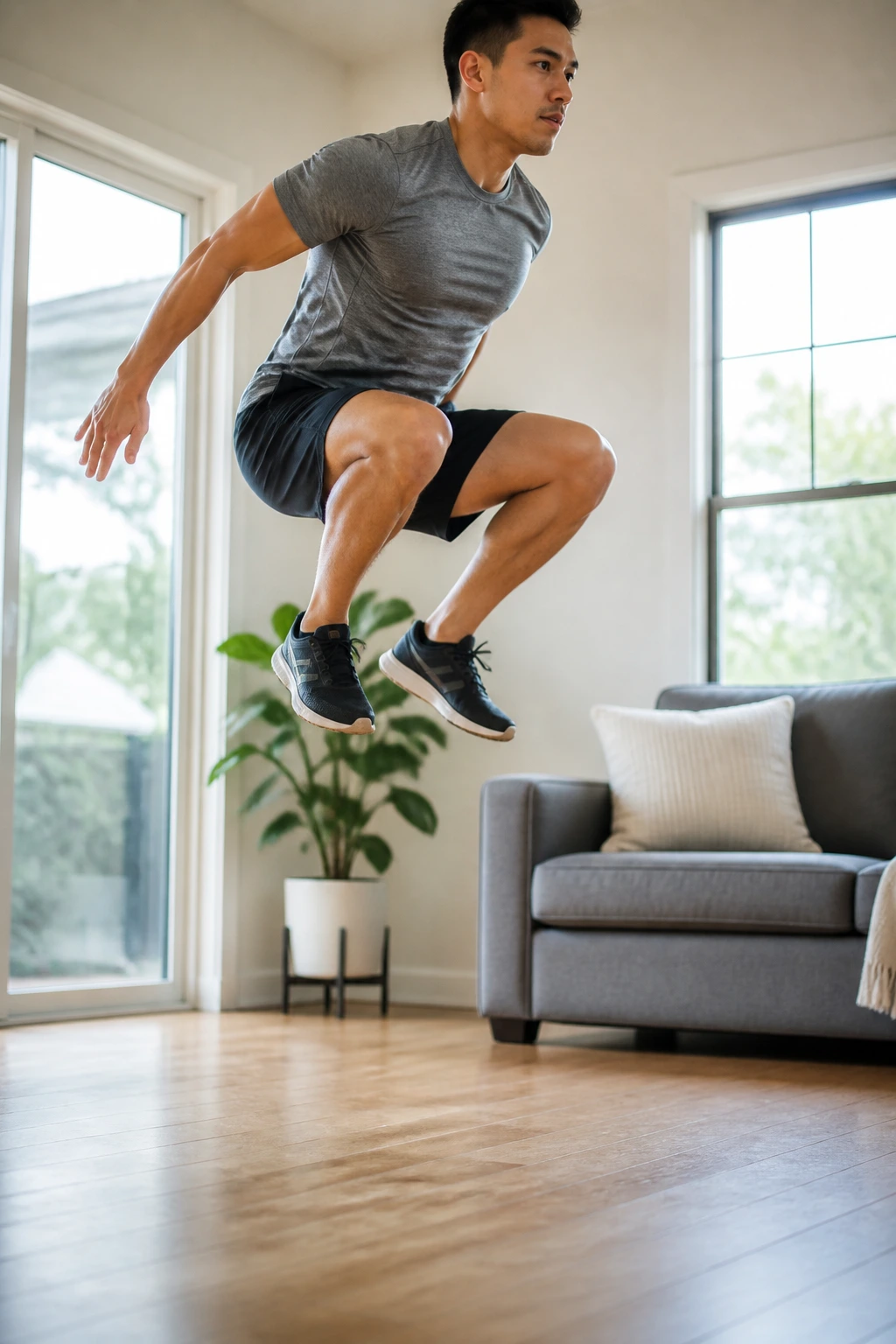
Jump squats add an explosive, plyometric element to your training. Perform a standard bodyweight squat, but as you come up, explode through your heels to jump off the ground. Land softly with bent knees—this is crucial to protect your joints—and immediately move into the next rep.
Landing Matters
The landing is just as important as the jump. If you land with locked knees or heavy feet, you are putting unnecessary stress on your joints. You want a “silent landing,” where you absorb the impact using your quads and glutes. This move will get your heart rate up in seconds.
16. Lateral Leg Raises
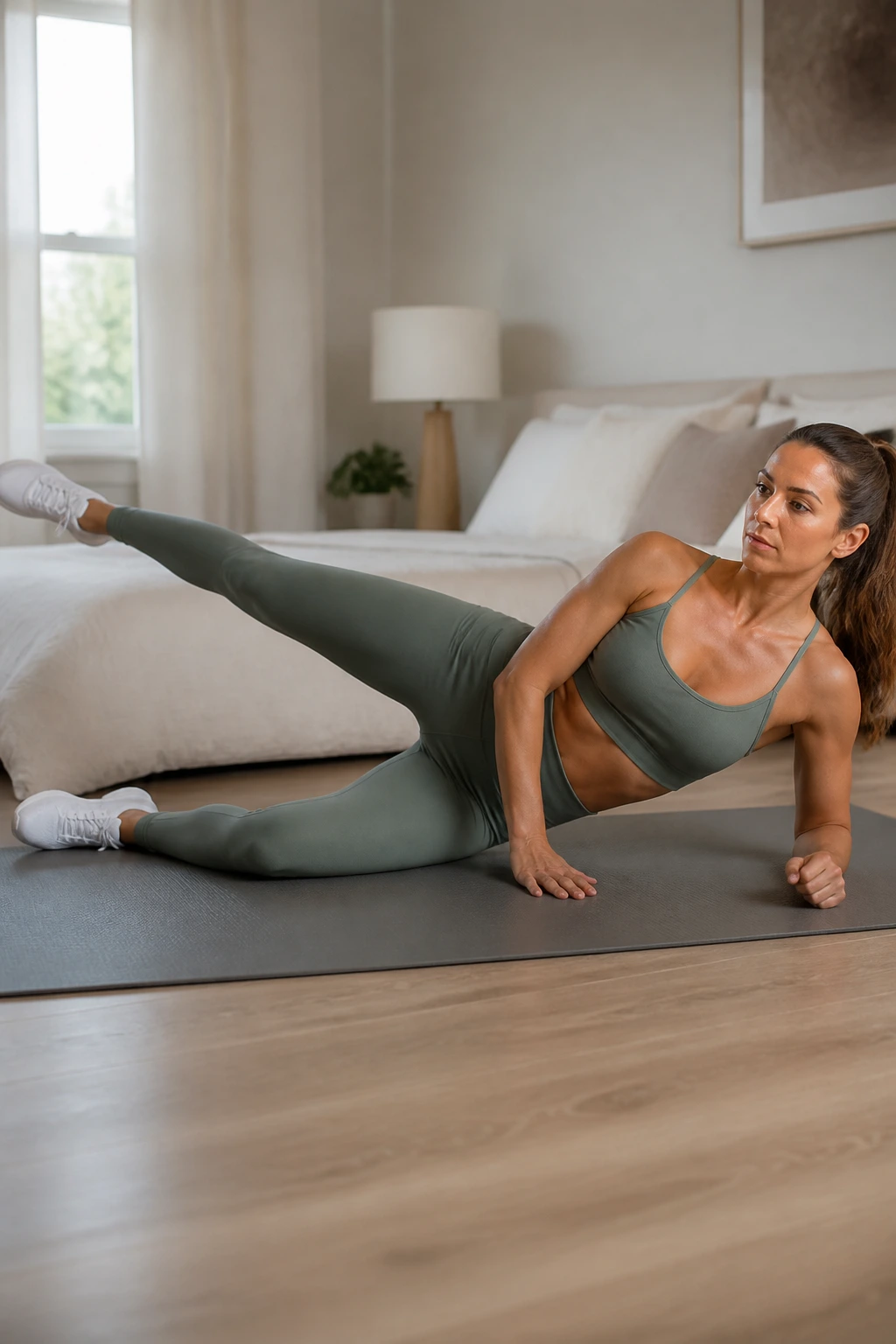
This move is simple but effective for strengthening the hips and thighs. Lie on your side with your legs stacked. Slowly lift the top leg as high as you can without moving your torso, then lower it back down with control. You should feel this in the side of your hip—the gluteus medius.
Small Movements, Big Impact
You do not need a huge range of motion to make this effective. In fact, keeping the movement small and controlled is often better than swinging your leg wildly. You want to feel a burn in the hip, not a pull in your lower back.
17. Cossack Squats
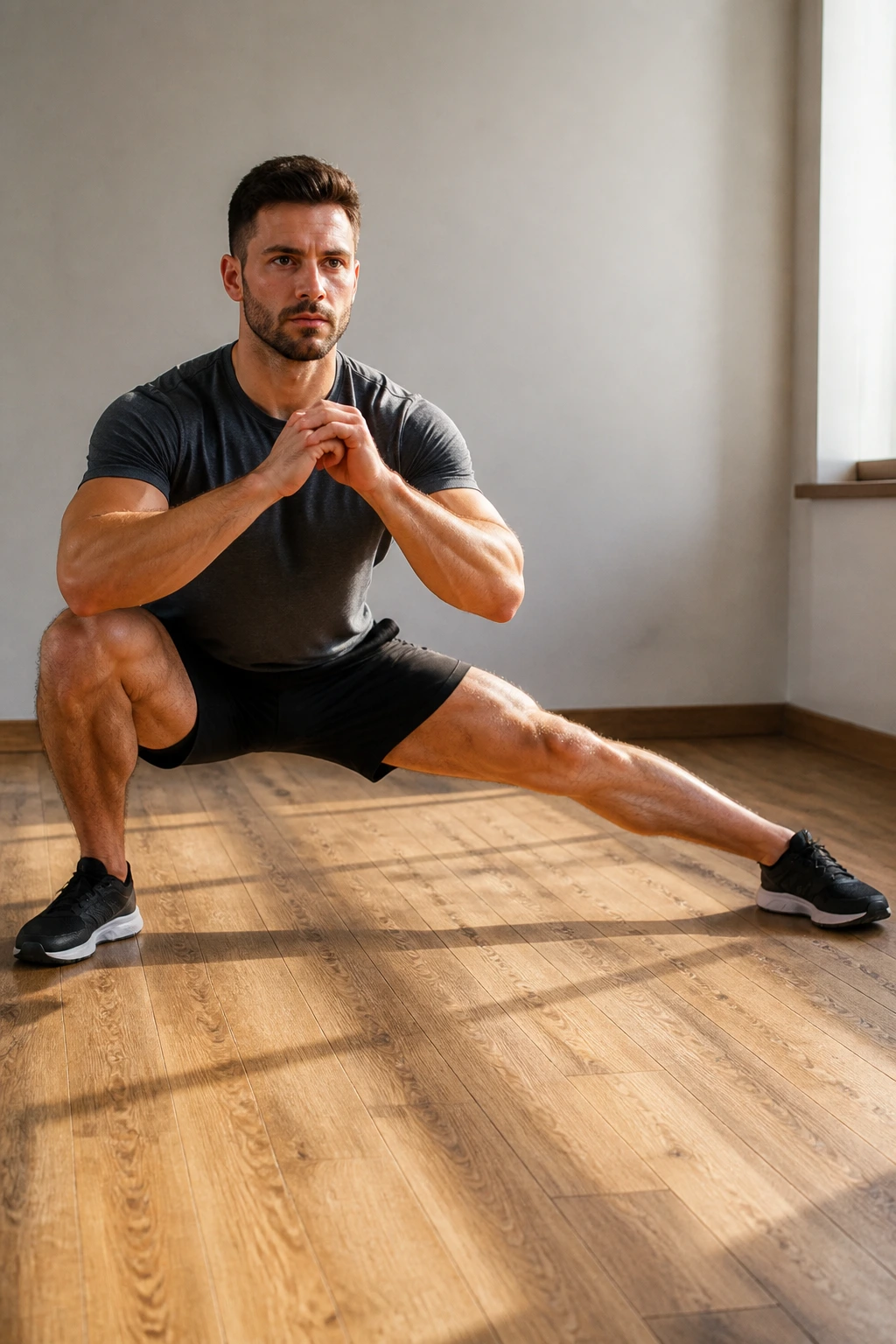
Cossack squats are a dynamic, side-to-side movement that builds strength and incredible hip mobility. Stand with a very wide stance, toes pointed forward. Shift your weight to your right side, bending your right knee into a deep squat while keeping your left leg perfectly straight. Drive back up to the center and switch sides.
Why They Are Hard
You will likely find that one side feels much tighter than the other. This is normal. The Cossack squat is fantastic for identifying and working on those imbalances. It combines the mechanics of a squat with the stretch of a lunge. Do not force the depth; go only as far as your mobility allows, ensuring your heel stays on the floor throughout.
18. Single-Leg Romanian Deadlifts
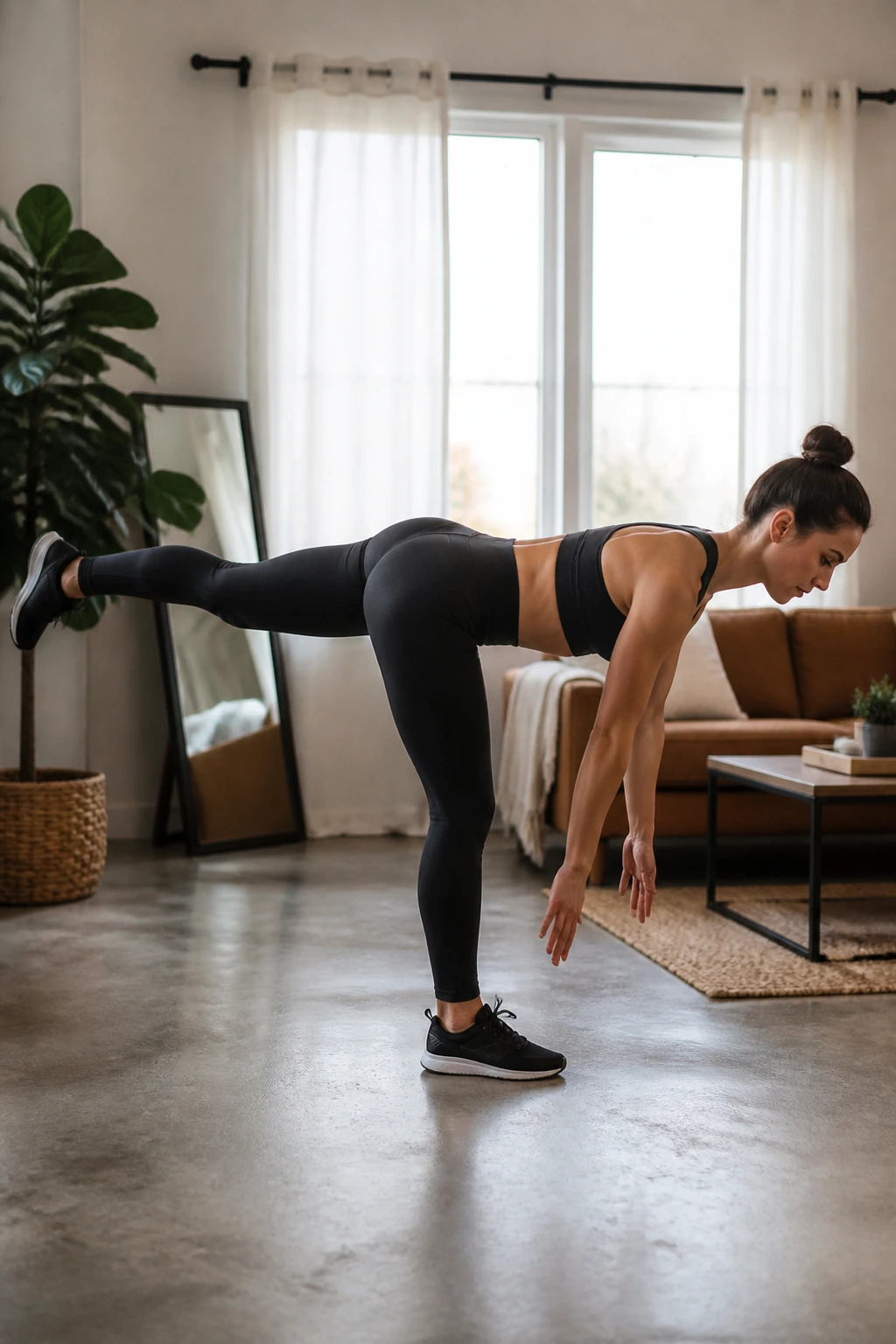
This is a hinge movement, which is essential for healthy hamstrings and lower backs. Stand on one leg. With a slight bend in your knee, hinge at your hips, sending your other leg straight back behind you while lowering your torso until it is parallel to the floor. Return to standing by pulling with your glute.
Balancing Act
The key here is to keep your back straight and your hips level. Many people rotate their hips open as they lift their leg; try to keep your toes pointed toward the ground. You will feel a significant stretch in the hamstring of your standing leg. If you have trouble with balance, hold onto a chair for support until you feel comfortable.
19. Skater Hops
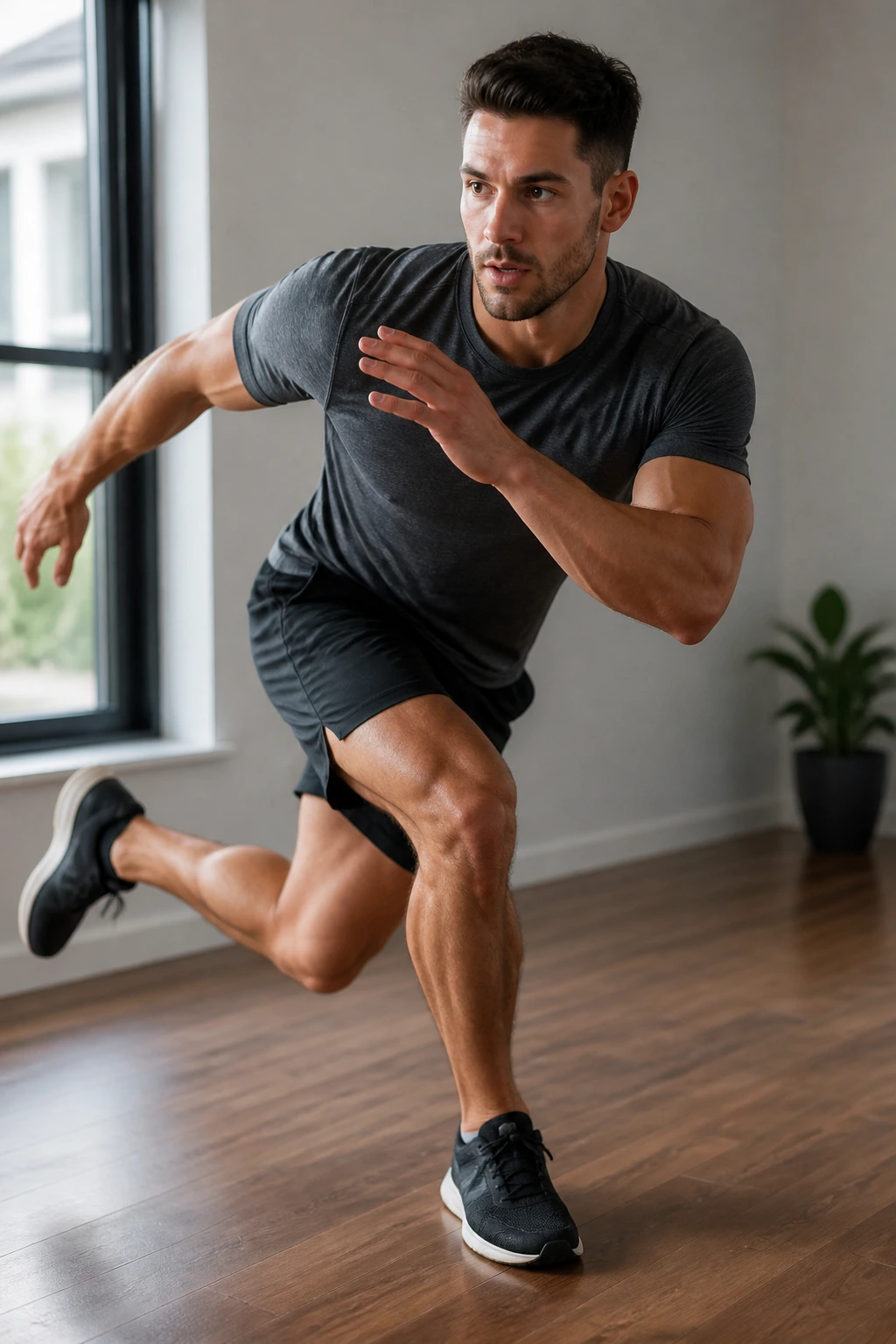
Skater hops are a lateral plyometric movement that mimics a speed skater. Start with feet together. Hop to the right, landing on your right foot and swinging your left foot behind your right. Then, explode to the left, landing on your left foot and swinging your right foot behind.
Cardio and Strength
This is excellent for building explosive power and stability. The faster you move, the harder your heart will work, making this a great way to combine leg strength and cardiovascular conditioning. Ensure you are getting low in your “landing” squat each time to maximize the muscle engagement.
20. Eccentric Slow-Down Squats
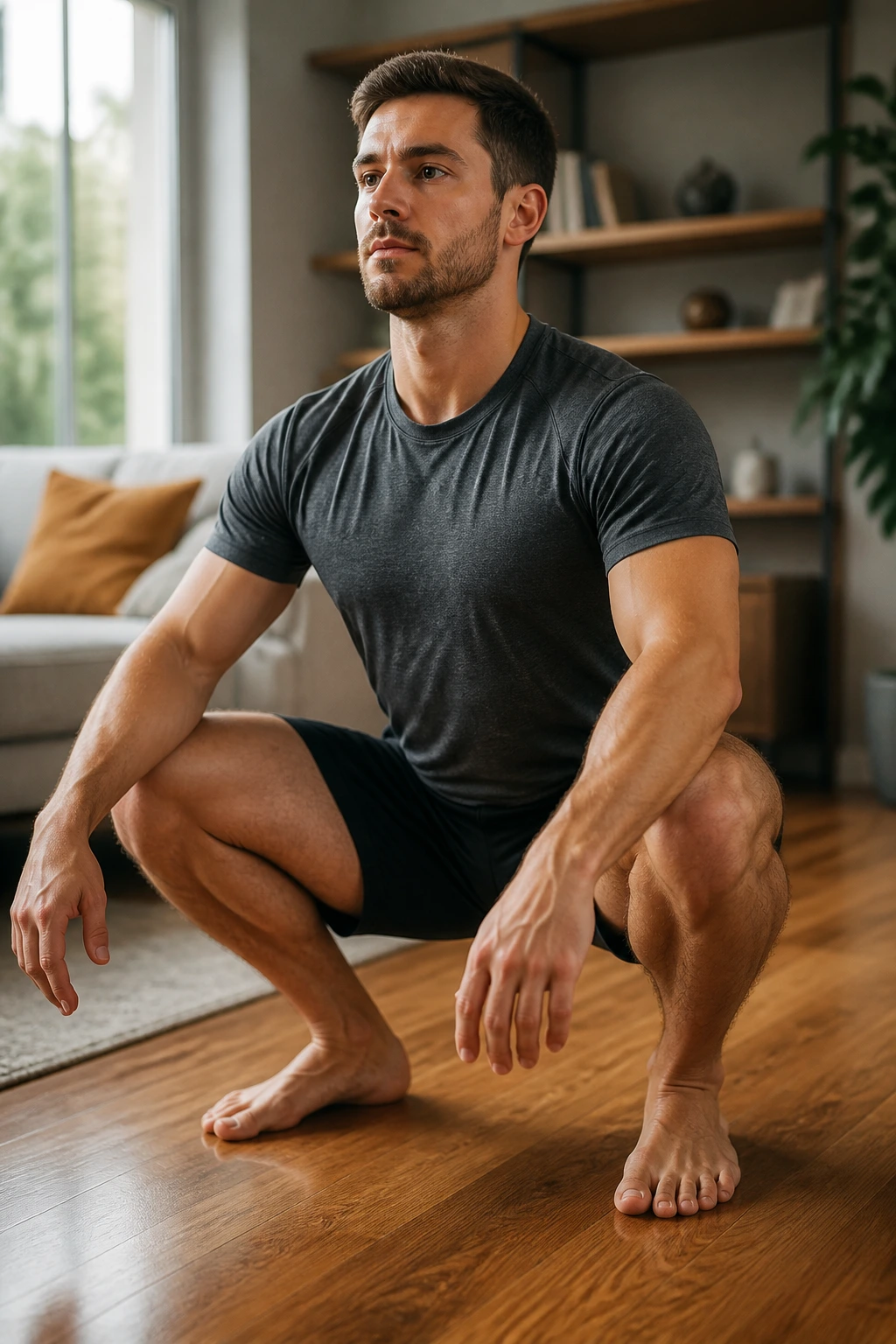
Eccentric training—focusing on the lowering phase of a movement—is one of the most effective ways to build strength quickly. Perform a standard squat, but take 5 full seconds to lower yourself to the bottom. Once you hit the bottom, explode up normally.
Time Under Tension
That 5-second descent creates a tremendous amount of muscle damage and metabolic stress, which forces your muscles to adapt and grow stronger. You do not need to do many of these to feel the effects. Just a few sets of 8-10 reps will leave your legs shaking. It is simple, requires zero equipment, and is arguably the best “finisher” for any leg routine.
Final Thoughts
The key to long-term success with home leg workouts is not about finding the “perfect” routine, but about building a structure you can actually stick to. You don’t need a gym; you need a floor and the willingness to move. Start by picking three or four of these exercises and performing them a few times a week, gradually adding more as your strength and confidence improve.
Don’t be afraid to experiment with the tempo or the order. Some days you might feel like doing high-intensity jump squats, while other days, a slow, controlled set of bulgarian split squats might be exactly what your body needs. Listen to your joints, stay consistent, and remember that every rep counts toward building a stronger foundation. There is no secret formula—just the work you put in today.
