



The idea that you need to spend hours on a treadmill to lean out your lower body is a persistent myth that refuses to die. While cardiovascular work has its place, if you want your legs to look defined, sculpted, and strong, you have to prioritize resistance training. Your legs are home to the largest muscle groups in your body—the quadriceps, hamstrings, and glutes. When you train these muscles with intent, you force your body to work harder, burn more fuel, and build the kind of metabolic intensity that changes your physique.
Most people make the mistake of wandering into the gym and performing a few light sets of leg extensions, hoping for results. That rarely works because it fails to challenge the central nervous system or recruit the full range of motor units in the lower body. To truly “shred” your legs, you need to shift your focus from simply moving weights to executing compound movements that demand stability, power, and sustained effort.
Strength training for the legs isn’t just about looking a certain way; it’s about function. When you improve your squat mechanics or master a unilateral movement, you’re creating a foundation that supports better posture, improved daily movement, and higher caloric expenditure during and after your session. This is about building muscle density, which creates the shape you want, while simultaneously pushing your heart rate high enough to facilitate fat loss. Stop thinking in terms of “toning” and start thinking in terms of mechanical output.
1. The Goblet Squat Focus
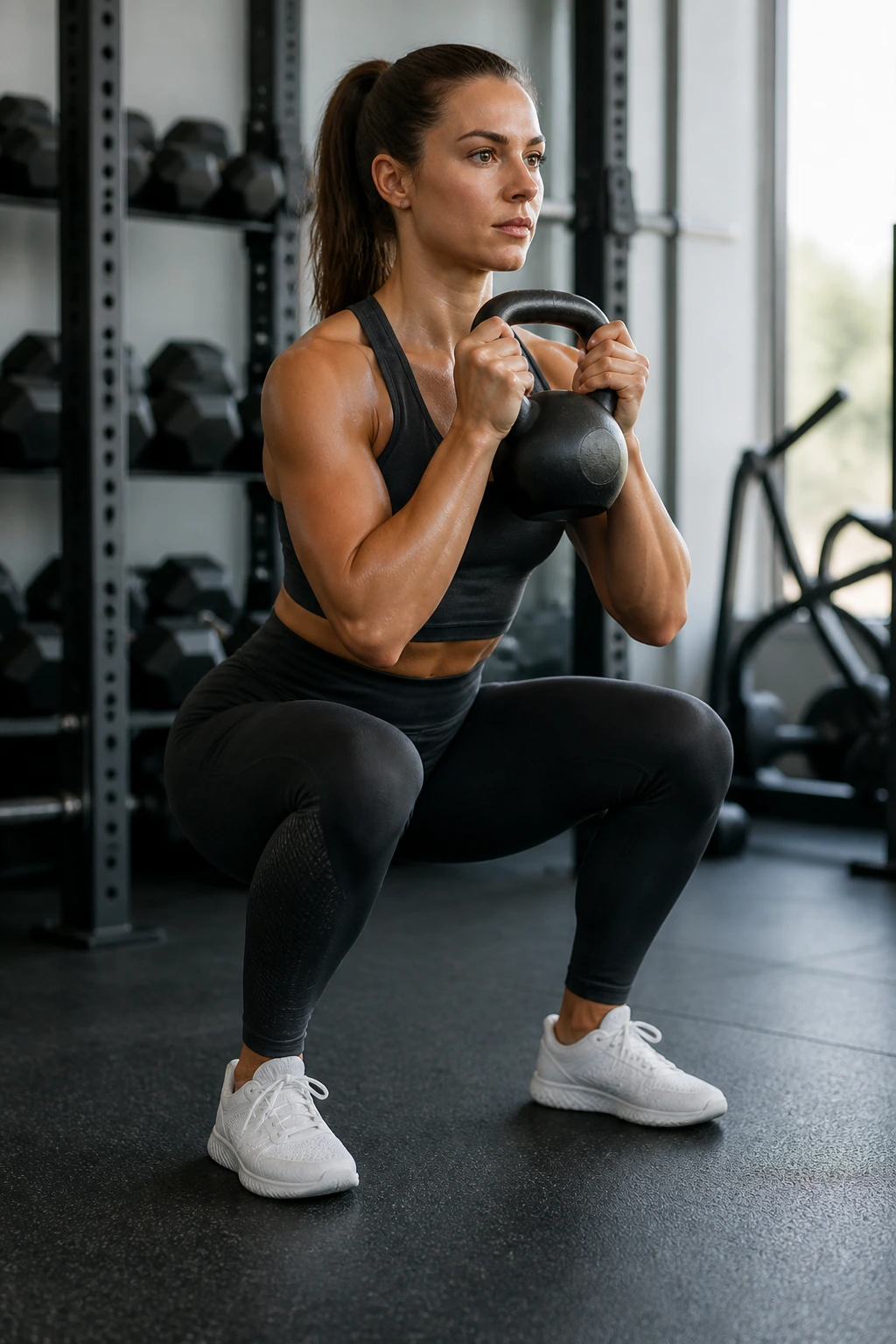
The goblet squat is the ultimate teacher for anyone looking to master squat mechanics. By holding a weight against your chest, you force your torso to remain upright, which shifts the load onto your quads and core. If your chest caves, you drop the weight—it’s an immediate, built-in feedback loop.
Why It Works for Shredding
Because the load is anterior (in front of your body), you cannot cheat by leaning forward. This engages the core stabilizers and prevents the common mistake of letting your lower back take over. You’ll find that you can hit a deeper range of motion here than with a back-loaded squat, which recruits more muscle fibers in the glutes.
How to Execute
- Hold a single dumbbell or kettlebell against your chest with both hands.
- Stand with feet slightly wider than shoulder-width, toes turned out just enough to feel comfortable.
- Descend slowly, aiming for a count of three seconds on the way down.
- Drive through your entire foot on the way up, focusing on squeezing your glutes at the top.
Pro tip: Don’t let your heels lift off the ground. If they do, your stance is likely too narrow or your ankle mobility needs work.
2. Bulgarian Split Squat Mastery
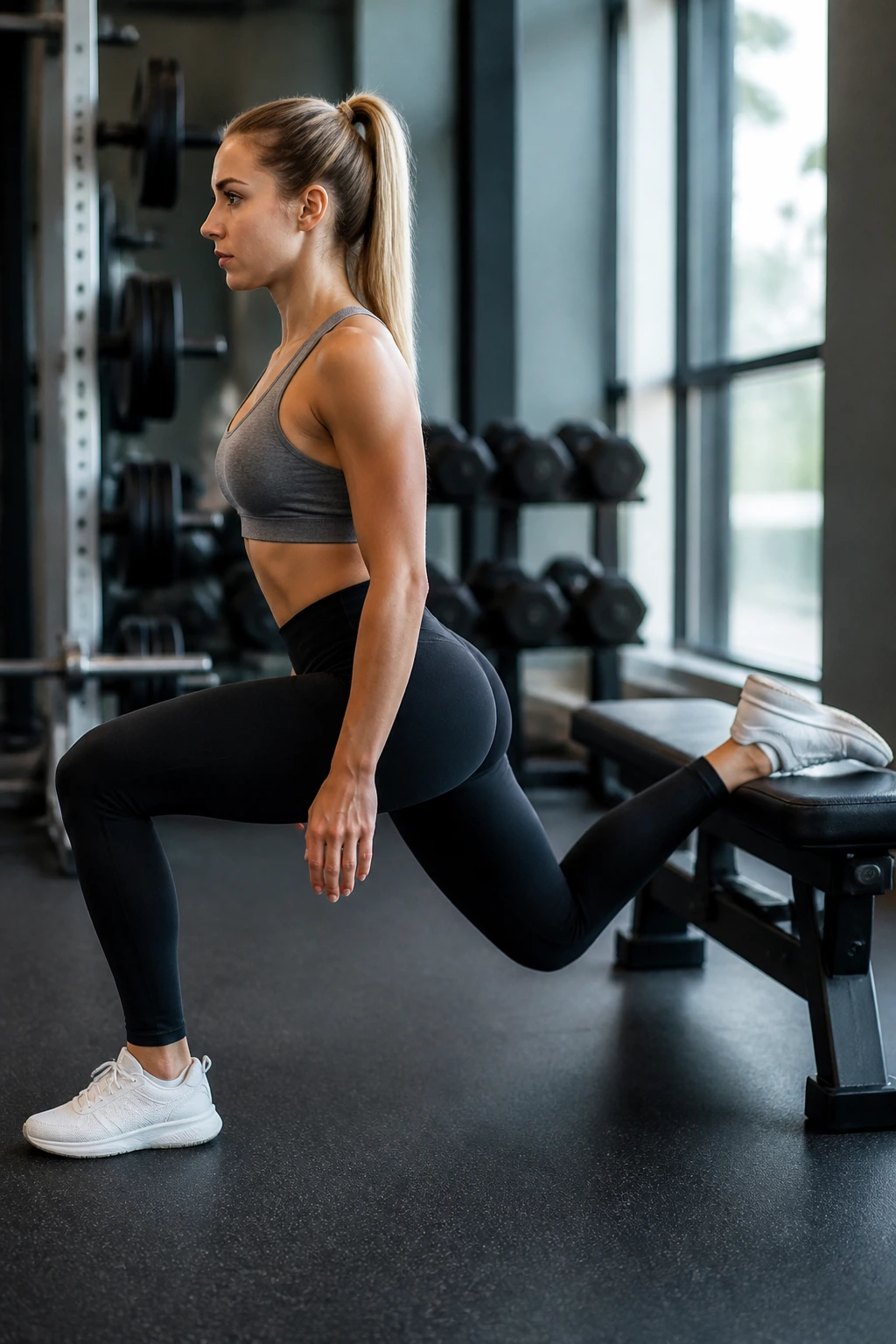
There is no movement that exposes muscular imbalances quite like the Bulgarian split squat. It’s a love-hate relationship for every lifter. You’ll hate the burn, but you’ll love the way it forces your quads to work in isolation.
The Mechanics of the Split
Place your back foot on a bench or elevated surface and keep your front foot firmly planted. When you descend, the emphasis is entirely on that front leg. This single-leg focus forces your stabilizing muscles to fire constantly, which builds a level of definition that two-legged exercises often miss.
Why Consistency Matters Here
- Keep your front knee tracked over your second toe.
- Avoid letting the front knee cave inward.
- Maintain a neutral spine throughout the movement.
- If you feel this in your lower back, you are likely leaning too far forward; try to keep your torso stacked vertically over your hips.
3. Romanian Deadlifts for Hamstring Definition
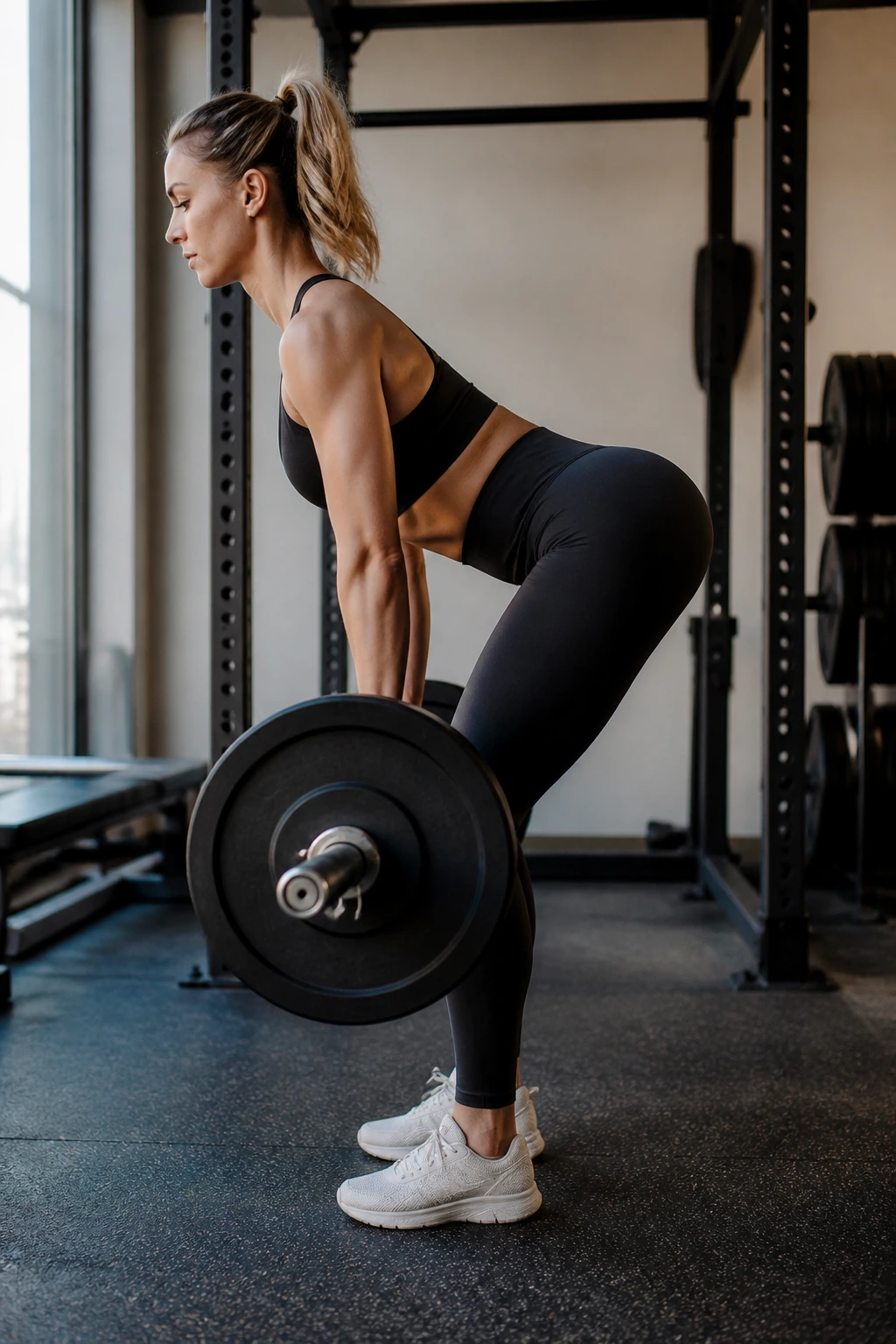
If you want to create separation between your hamstrings and your glutes, you must master the hip hinge. The Romanian deadlift (RDL) is the primary tool for this. Unlike a traditional deadlift, you aren’t pulling from the floor; you’re controlling the weight as you stretch the posterior chain.
The Hinge Pattern
Focus on pushing your hips backward as if you are trying to close a door behind you with your glutes. Your knees should have a soft, micro-bend, but they shouldn’t bend further as you lower the bar. The goal is to feel a deep, intense stretch in your hamstrings.
Common Pitfalls
Many people round their back to get the weight lower. Stop the movement the moment your hamstrings stop stretching and your back starts to curve. It’s better to have a shorter range of motion with perfect form than to reach for the floor and compromise your spine.
4. Lateral Lunges for Inner Thigh Engagement
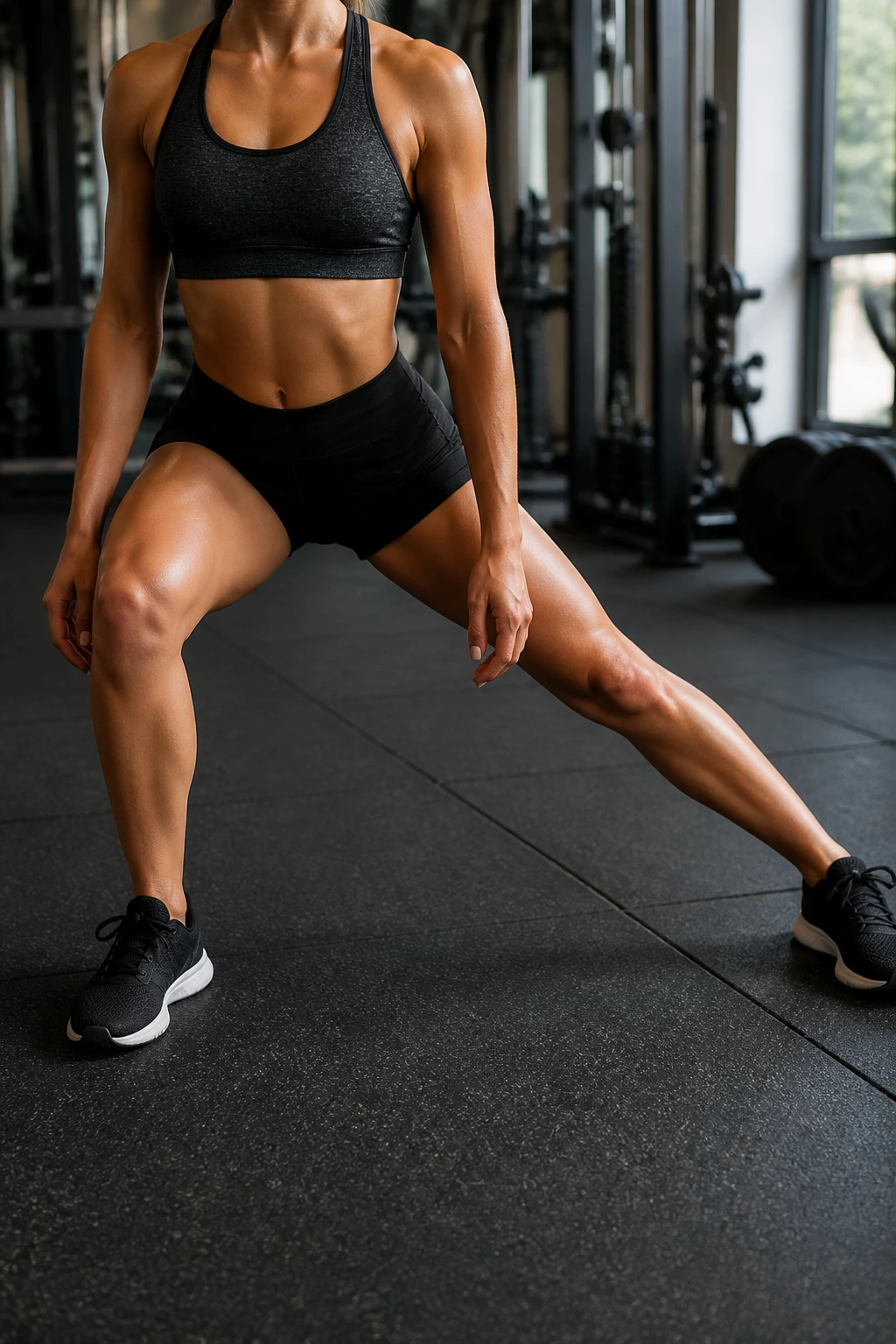
Most leg training happens in the sagittal plane—meaning front-to-back movements. Lateral lunges break this pattern, targeting the adductors (inner thighs) and the abductors (outer glutes). This is crucial for leg shape and stability.
Developing Dynamic Stability
- Take a wide step to the side, keeping your trailing leg straight.
- Sit your hips back and down, keeping the working leg’s heel flat.
- Push off the entire foot to return to the starting position with power.
- Repeat on one side for the full set before switching.
You will notice quickly that one side feels stronger than the other. This is perfectly normal. Focus on controlling the eccentric phase (the descent) to maximize the time under tension.
5. Step-Ups with a Controlled Eccentric
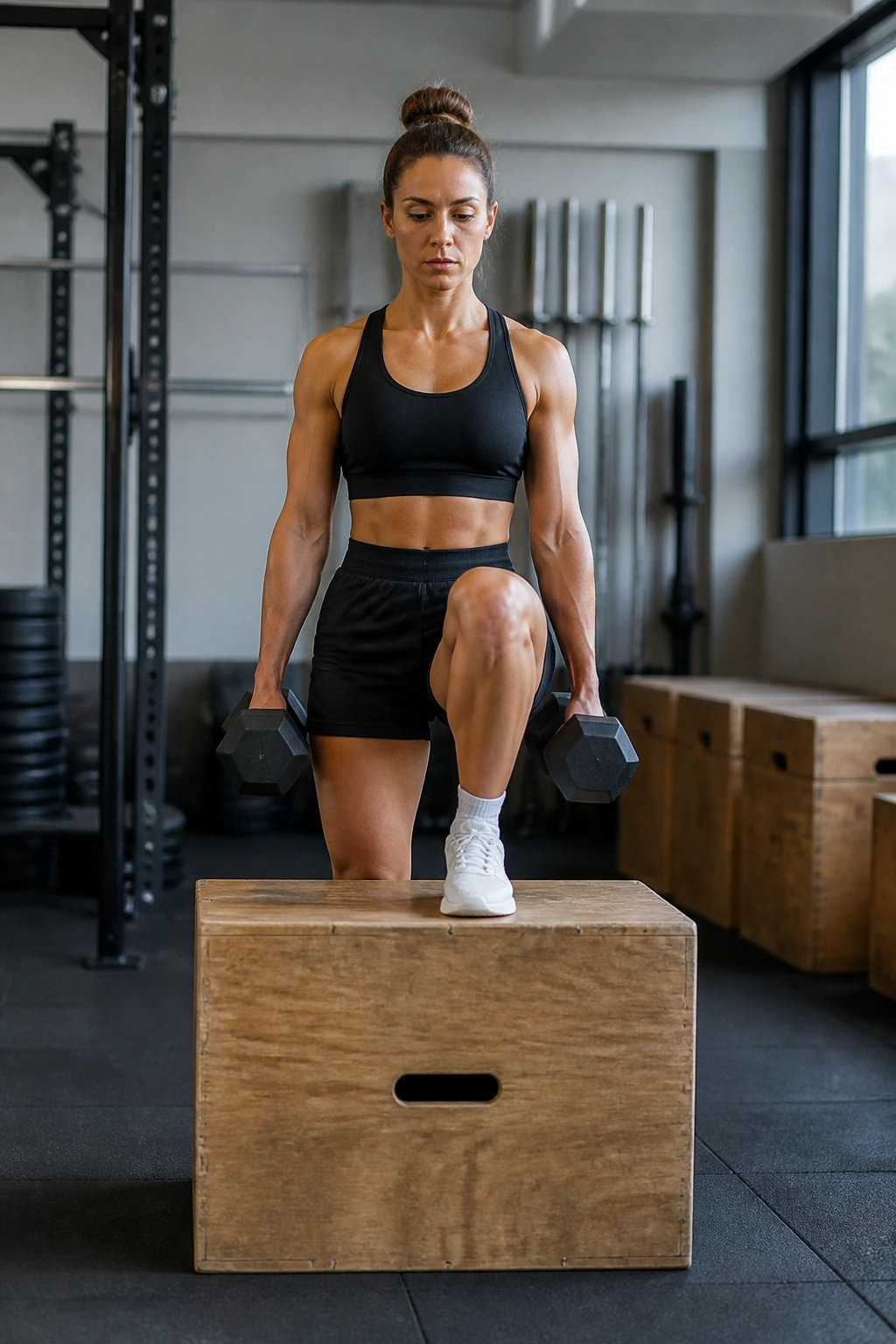
Step-ups are often dismissed as “cardio,” but when done with heavy weights and a focus on control, they are a powerful tool for leg hypertrophy. They force each leg to lift your entire body weight, plus external resistance, from a dead stop.
Why Slow Down?
The mistake most people make is using momentum to jump off the floor. Don’t do that. Plant your foot on the box, drive through that heel, and stand tall. Then, lower yourself back down slowly, taking at least three seconds to return to the start. The descent is where the muscle fibers tear and repair to get stronger.
Setup Tips
- Use a box height that places your knee at a 90-degree angle when your foot is planted.
- If you feel unstable, keep the box height lower.
- Keep your torso upright—don’t hinge forward to “cheat” the lift.
6. Glute Bridges for Targeted Activation
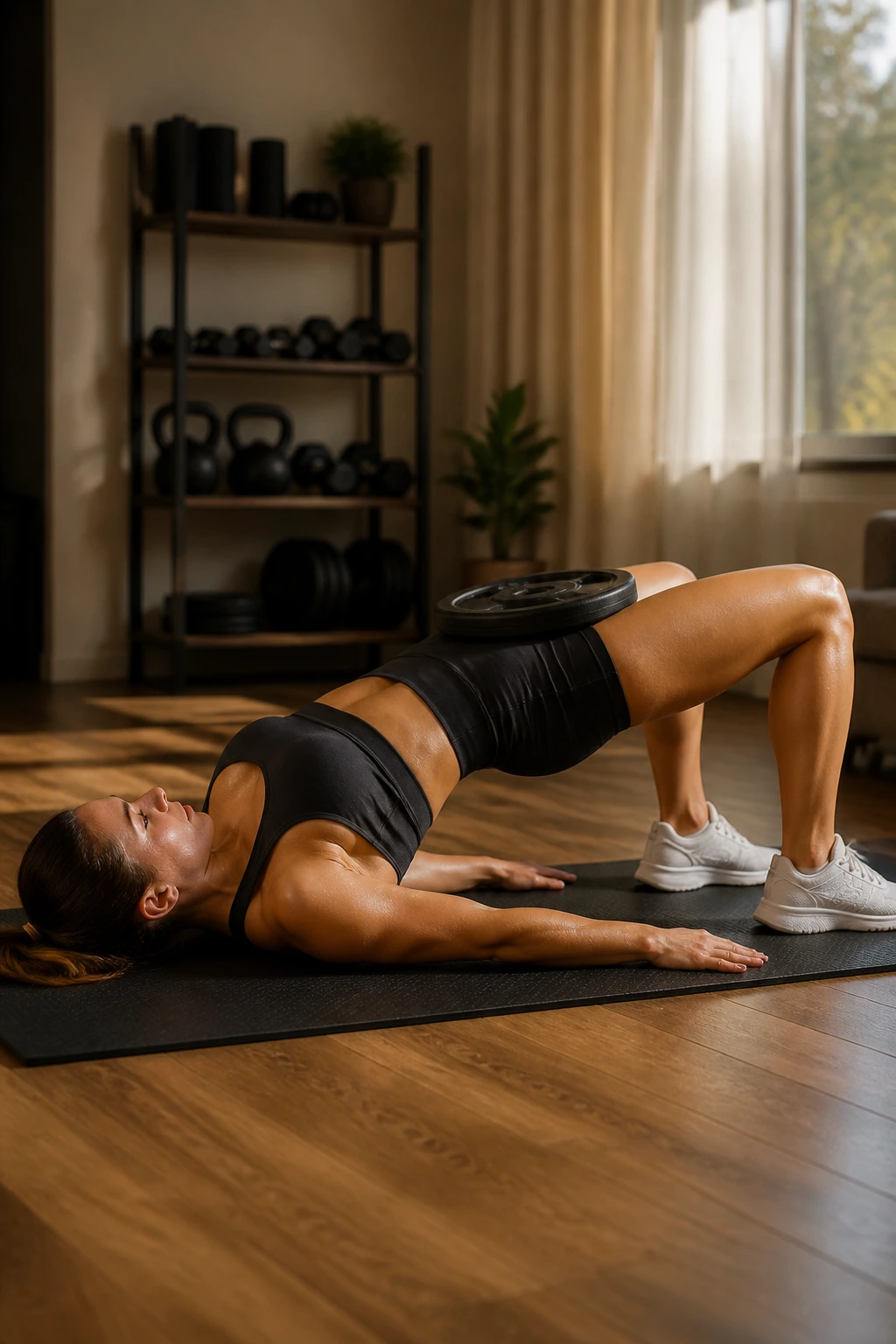
The glute bridge is the ultimate “mind-muscle connection” exercise. While it’s often relegated to a warm-up, turning it into a primary movement with added weight will change how your glutes look and function.
The Power of the Squeeze
- Lie on your back, knees bent, feet flat.
- Place a plate or a dumbbell across your hips.
- Drive your heels into the ground and lift your hips toward the ceiling.
- At the top, pause and squeeze your glutes as hard as you can for two full seconds.
Don’t hyper-extend your lower back. The movement should come from your hips, not your lumbar spine. If you feel it in your lower back, you’re likely over-arching at the top. Focus on keeping your ribs tucked down.
7. Sumo Squat Variations
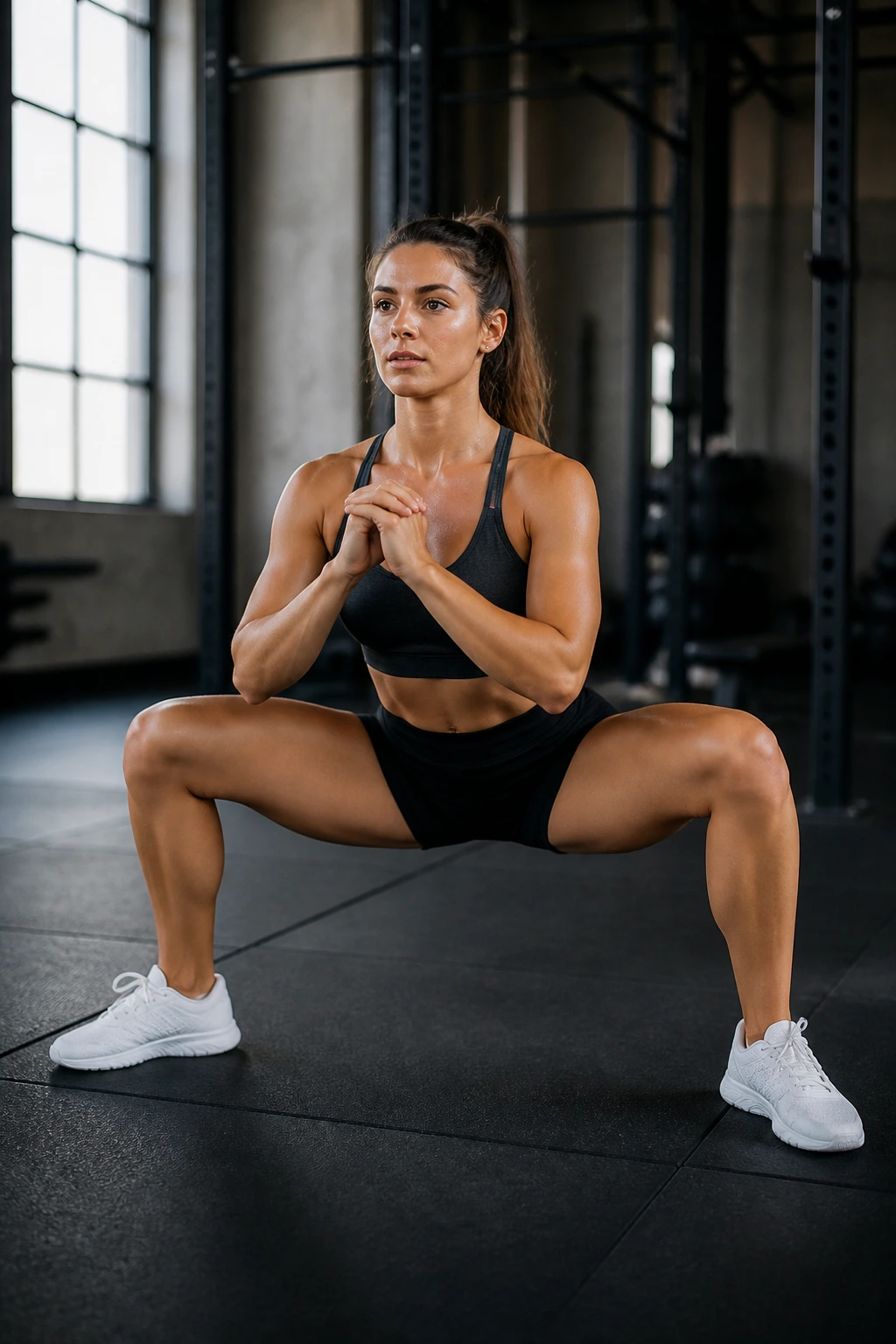
By widening your stance and pointing your toes outward, you shift the primary stress of the squat away from the quads and toward the adductors and inner glutes. This is a staple for building width and density in the legs.
Why This Stance Matters
The wider the stance, the more you have to focus on hip external rotation. You need to actively push your knees out throughout the entire movement. If your knees collapse inward, you lose the tension that makes this exercise effective.
Adding Resistance
Hold a single kettlebell between your legs or a barbell in front of you. Because your stance is wider, you don’t need to descend as far to get the same muscle engagement as a standard squat. Focus on depth that feels comfortable for your hips, not depth that compromises your form.
8. Walking Lunges with Weighted Load
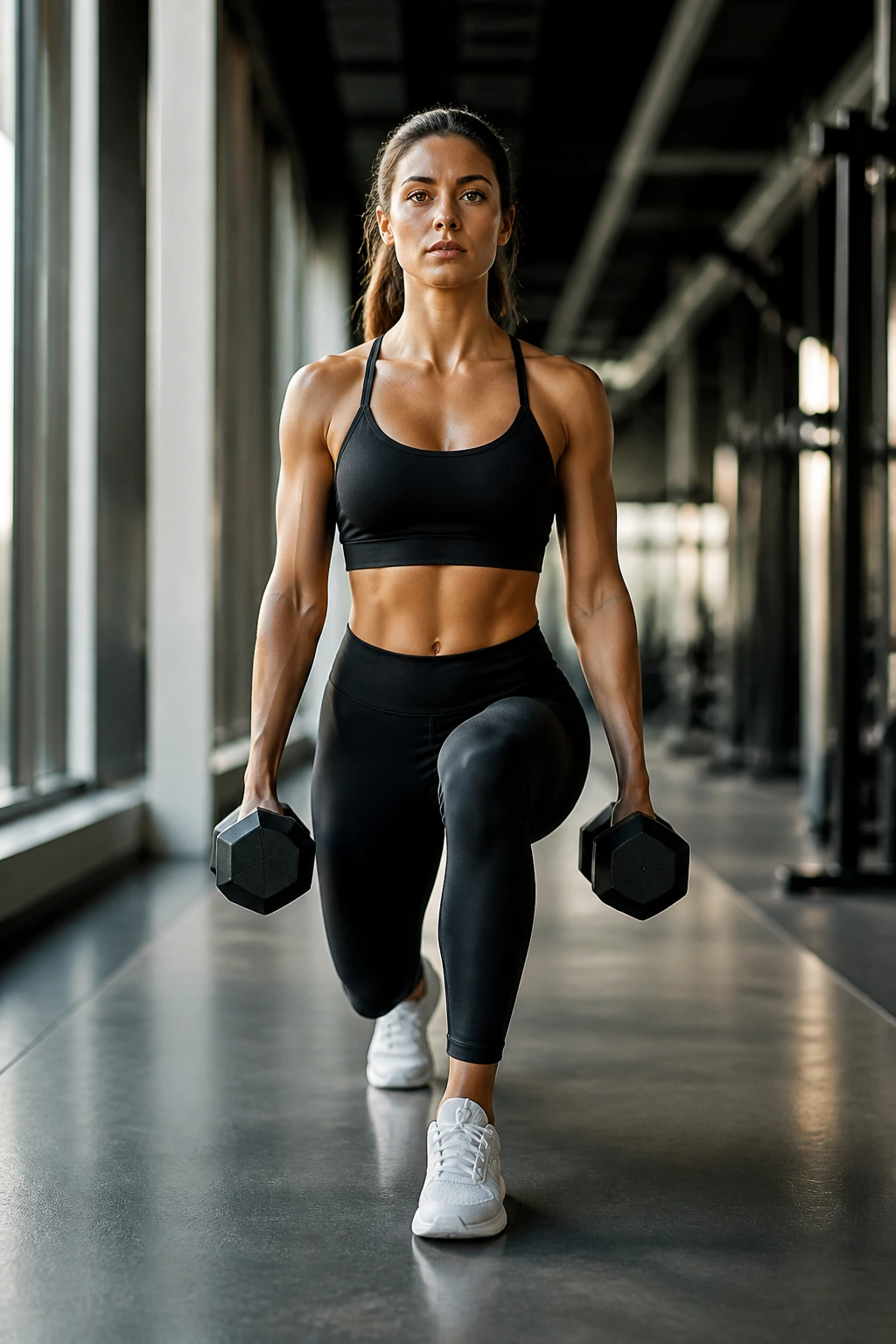
Walking lunges are a classic for a reason: they are brutal, effective, and require zero equipment if you’re in a pinch. When you add weight, they become one of the best ways to build quad endurance and core stability simultaneously.
Staying Balanced
- Take long, controlled strides.
- Don’t rush the transition between steps.
- Keep your torso completely vertical. If you lean forward, the focus shifts to your back, which defeats the purpose of the leg-focused work.
- Ensure your back knee hovers just above the floor but does not slam into it.
If you find yourself wobbling, shorten your stride slightly. The goal is to keep your center of gravity stable, not to cover the most distance as quickly as possible.
9. Kettlebell Swings for Posterior Power
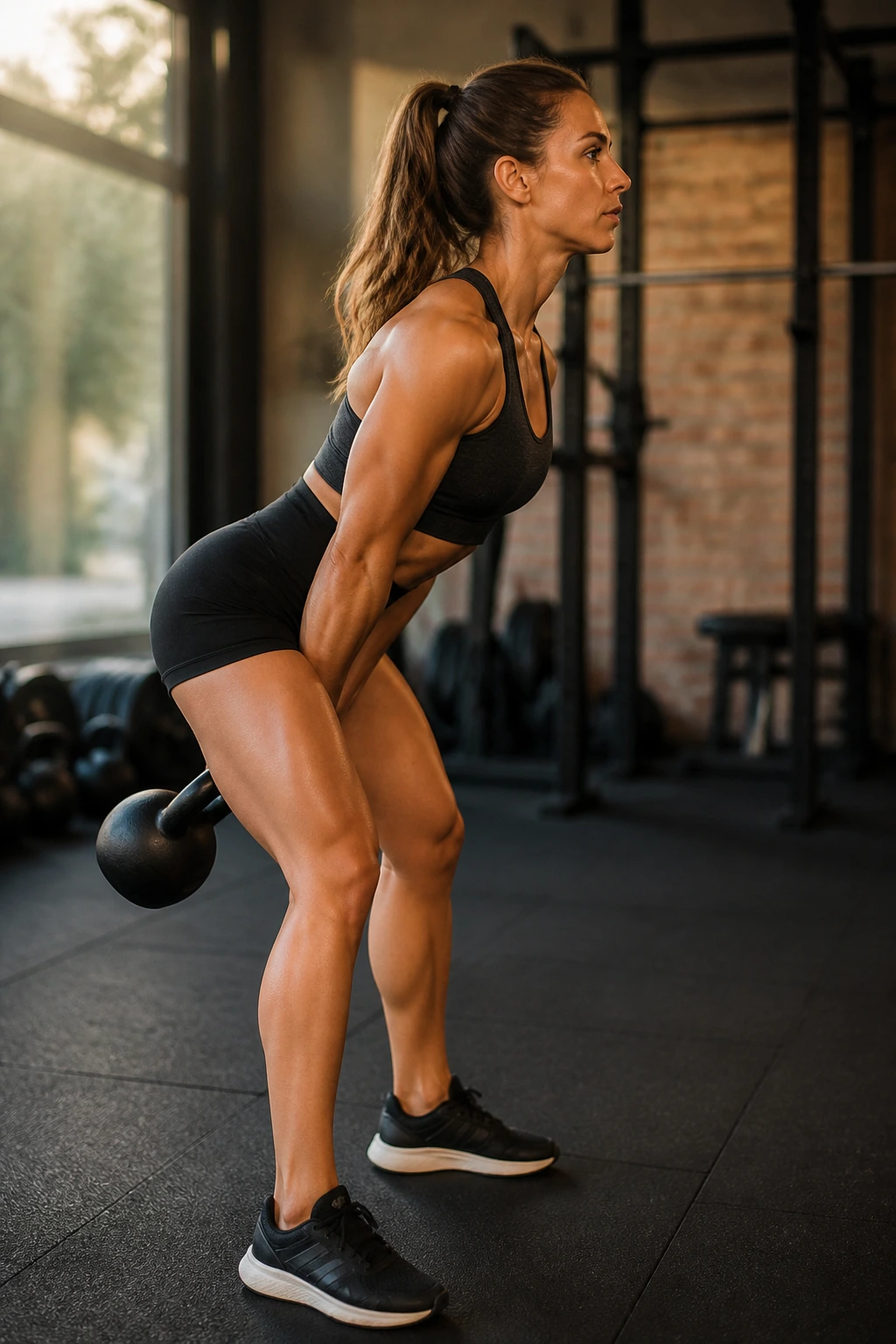
The kettlebell swing is a full-body movement that acts as a secret weapon for the hamstrings and glutes. It’s a hinge movement, not a squat. Think of it as a dynamic RDL.
The Physics of the Swing
- Start with feet shoulder-width apart, kettlebell about a foot in front of you.
- Hinge at the hips, grab the handle, and hike the bell back between your legs.
- Explosively snap your hips forward to propel the bell upward.
- Let the bell float at the top—don’t use your arms to lift it.
- Your arms are just ropes; your hips are the engine.
If you feel your arms getting tired before your legs, you’re lifting with your shoulders. Focus on the hip snap. That powerful forward motion is what drives the posterior chain.
10. Box Jumps for Explosive Fiber Recruitment
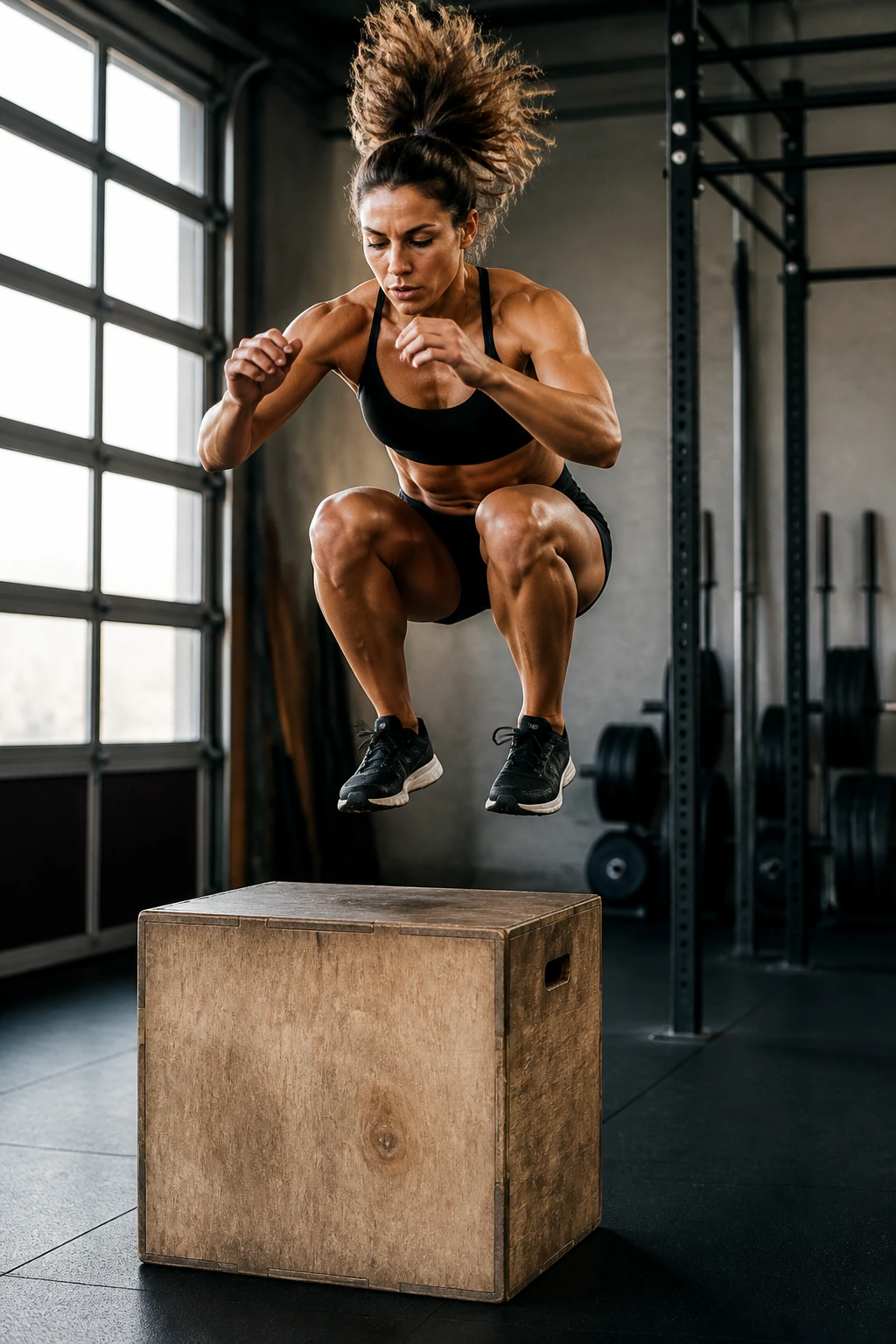
Not every leg workout needs to be heavy, slow lifting. Box jumps are perfect for recruiting fast-twitch muscle fibers, which gives your legs a more “athletic” and powerful look.
Ensuring Safety
- Choose a box height that you can clear confidently.
- Land softly—your goal should be to make as little noise as possible.
- Step down from the box instead of jumping down.
- Reset your feet completely between every single rep.
Jumping is great, but the landing is where you build the structural integrity of your tendons. Focus on absorbing the impact through your legs, not your joints.
11. Single-Leg Deadlift (SLDL)
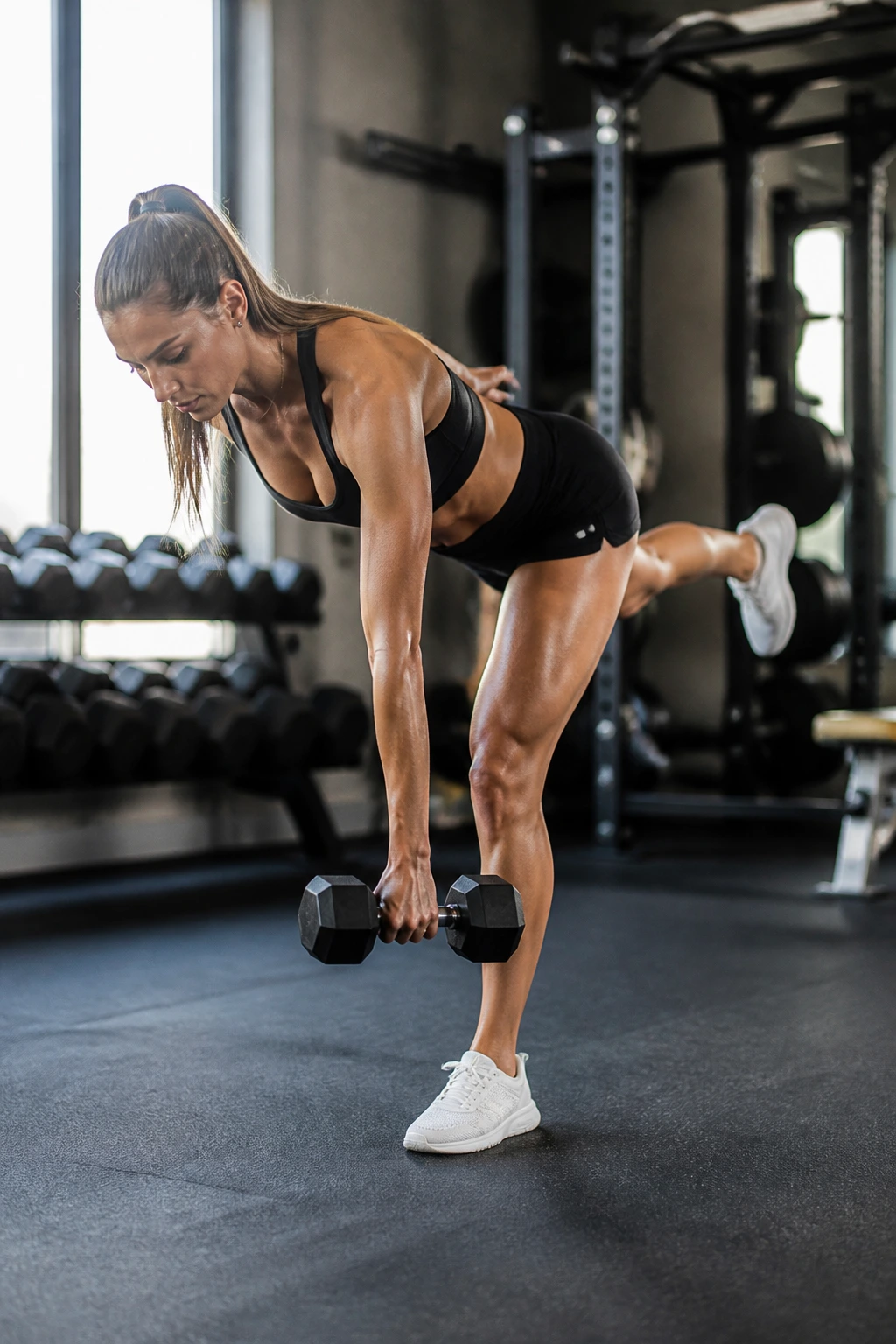
This is the ultimate test of balance and unilateral strength. Because you are only working one leg at a time, you have to stabilize your entire body, which engages the glute medius—the small muscle on the side of your hip that gives your glutes their shape.
Finding Your Balance
- Hold a weight in the hand opposite the working leg.
- As you hinge, extend your free leg straight back behind you.
- Imagine you are a seesaw, with your hips as the fulcrum.
- Keep your hips square to the floor—don’t let the hip of the floating leg rotate upward.
If you are struggling to balance, use a light weight or no weight at all. Perfecting the hip hinge is far more important than loading up heavy and falling over.
12. Wall Sits for Isometric Endurance
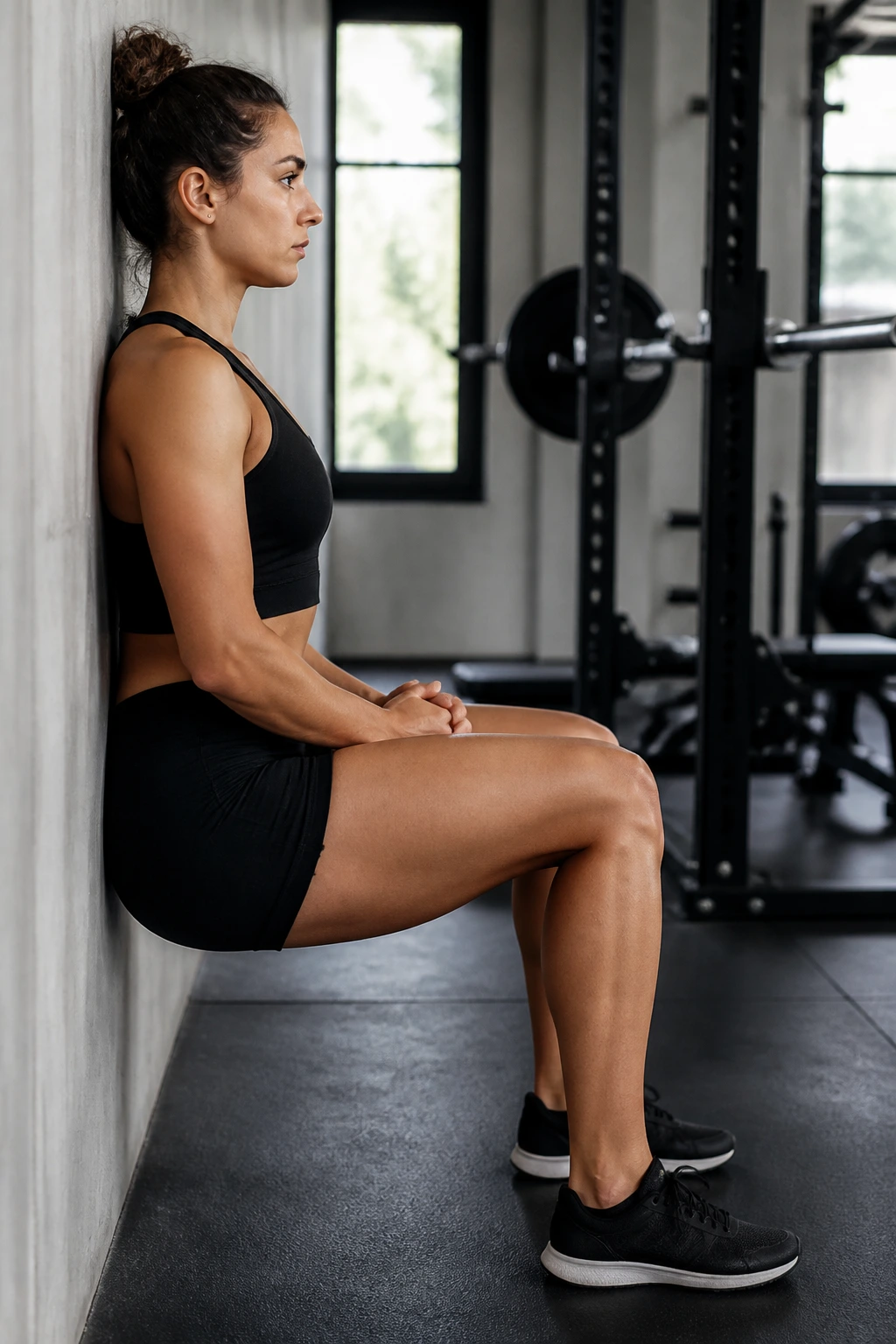
Wall sits are the perfect way to finish a leg session. They force your muscles to maintain tension for a long duration, which creates that “pumped” feeling and builds incredible endurance in the quads.
The Burn Factor
- Lean your back flat against a wall.
- Slide down until your thighs are parallel to the floor.
- Keep your knees at 90 degrees.
- If you can, hold a weight on your lap to increase the intensity.
Don’t hold your breath. This is a common mistake that causes your heart rate to skyrocket unnecessarily and limits the time you can hold the position. Practice rhythmic, controlled breathing throughout the entire hold.
13. Sumo Deadlifts
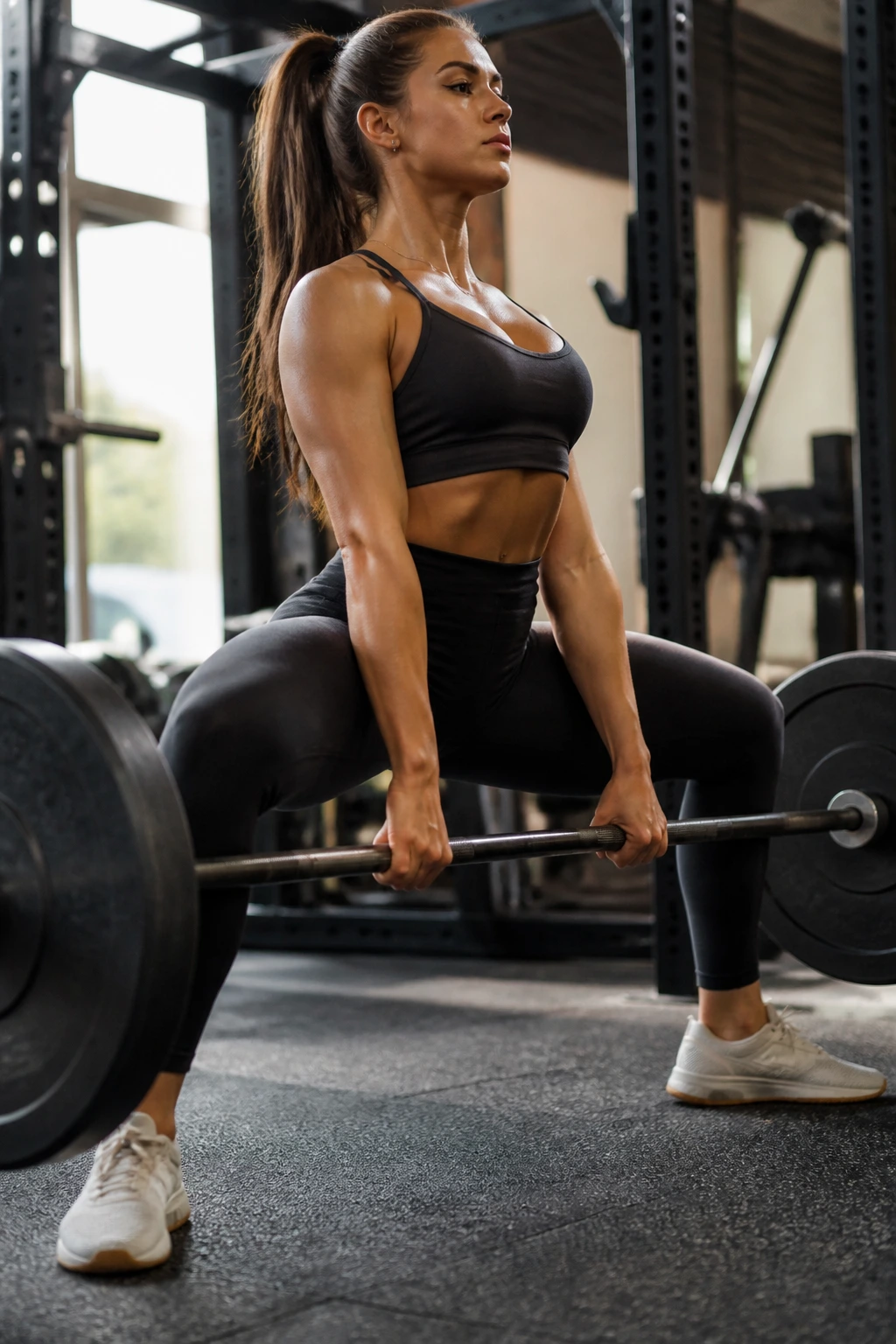
While sumo squats focus on the squat pattern, sumo deadlifts focus on the hinge from a wide stance. This is often more comfortable for people with long torsos who struggle with the back strain of conventional deadlifts.
The Setup
- Take a wide stance, toes pointed slightly out.
- Keep your shins as vertical as possible.
- Your hands should be inside your knees.
- Drive your heels through the floor to pull the weight up.
Because your torso stays more upright, you will feel this significantly more in your glutes and inner thighs than a conventional deadlift. It’s a fantastic variation for building total leg mass.
14. Curtsy Lunges for Glute Medius
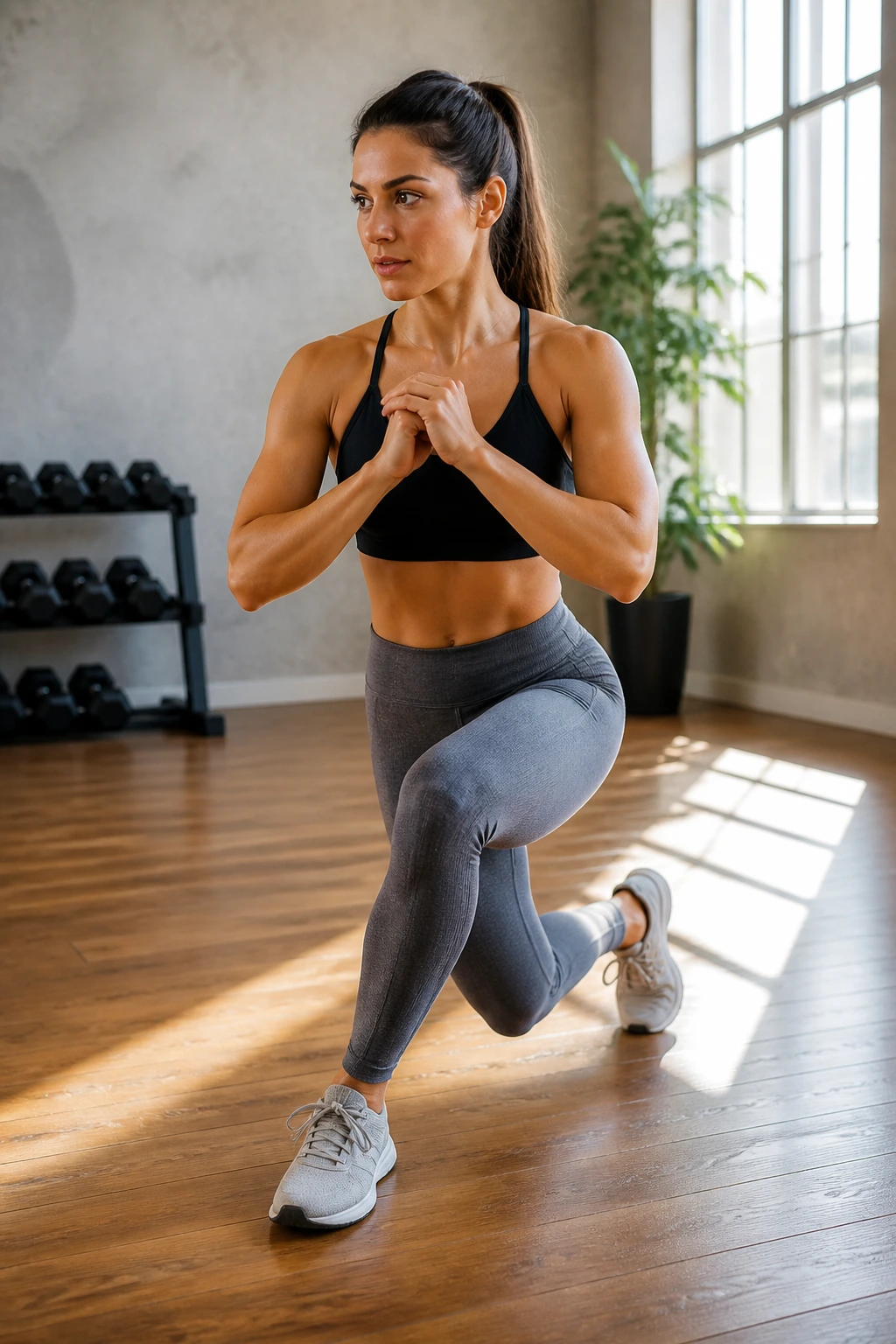
Most people focus on the glutes from the back, but the “side shelf” of the glute—the glute medius—is what gives the rear area that lifted, rounded look. Curtsy lunges are specifically designed to target this area.
The Movement Pattern
- Stand tall with your feet hip-width apart.
- Step one foot behind and across your other leg, as if you are doing a polite curtsy.
- Lower your hips until the front thigh is roughly parallel to the ground.
- Keep your front knee pointed forward—it will want to cave in, but you must resist that urge.
This is a subtle movement. You don’t need a massive amount of weight to feel it. In fact, lighter weights with slow, deliberate execution often provide a better workout.
15. Jump Squats
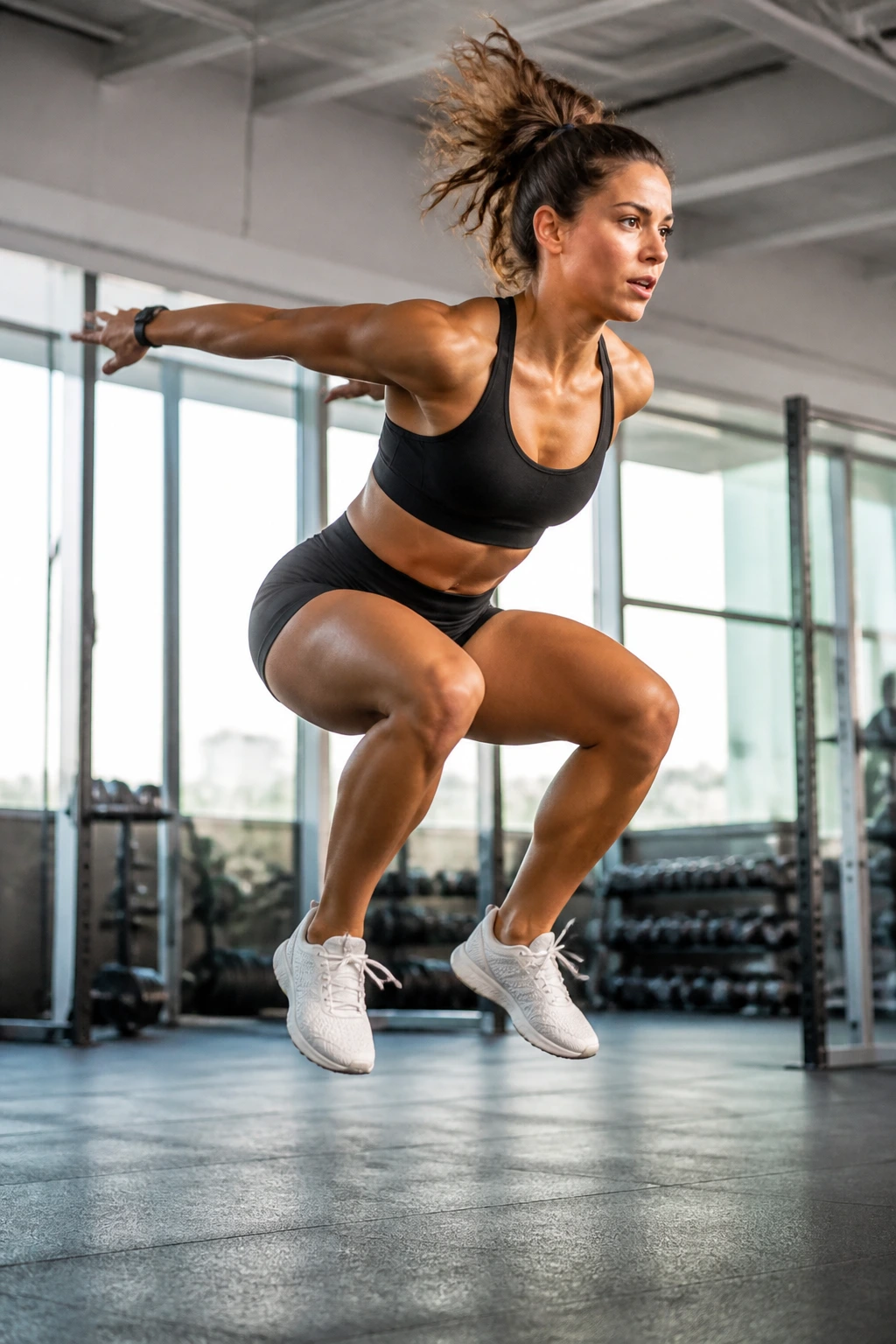
These are the plyometric version of the goblet squat. They combine the strength benefits of a squat with the explosive power of a jump, making them a high-intensity move that incinerates energy.
Maintaining Technique Under Fatigue
- Start with a standard squat stance.
- Squat down, and as you explode upward, drive through your heels to leave the ground.
- Land softly and immediately descend into the next rep.
- Avoid letting your knees cave in when you land.
If your form starts to break down, stop jumping. The goal is explosive height and controlled landings, not just flopping around. Quality of movement is non-negotiable here.
16. Weighted Calf Raises
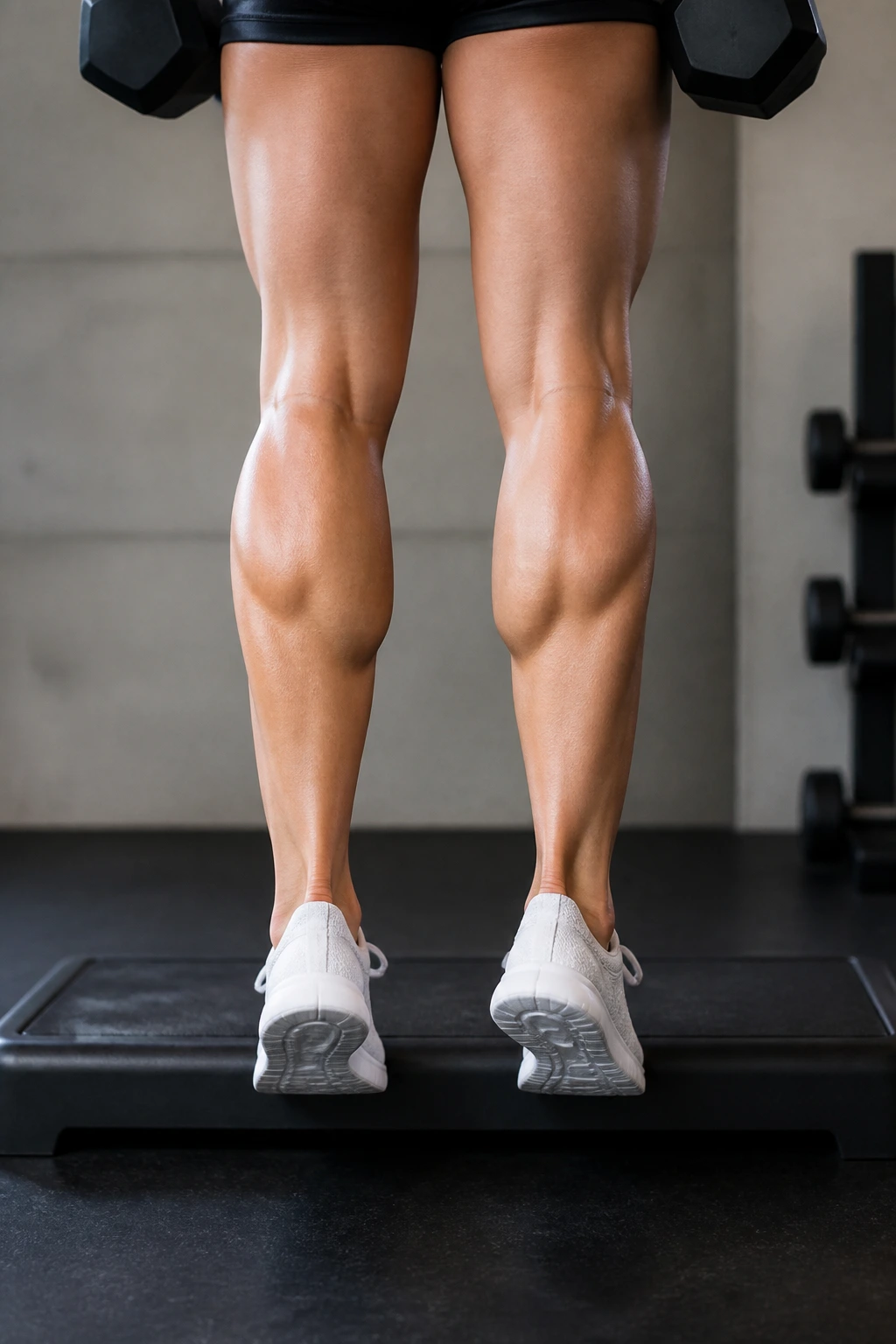
Leg shredding isn’t just about the thighs; it includes the lower legs. Many people ignore calves, but defined calves provide a balanced, aesthetic look to the lower body.
Full Range of Motion
- Stand on the edge of a step or platform.
- Lower your heels as far as possible to get a deep stretch.
- Explode upward onto your toes, squeezing at the peak.
- Do not bounce. The bounce uses the Achilles tendon as a spring, which takes the tension off the muscle.
Slow down the tempo. A three-second descent followed by a one-second pause at the bottom will do more for calf growth than 50 fast, bouncy reps ever will.
17. Glute Kickbacks
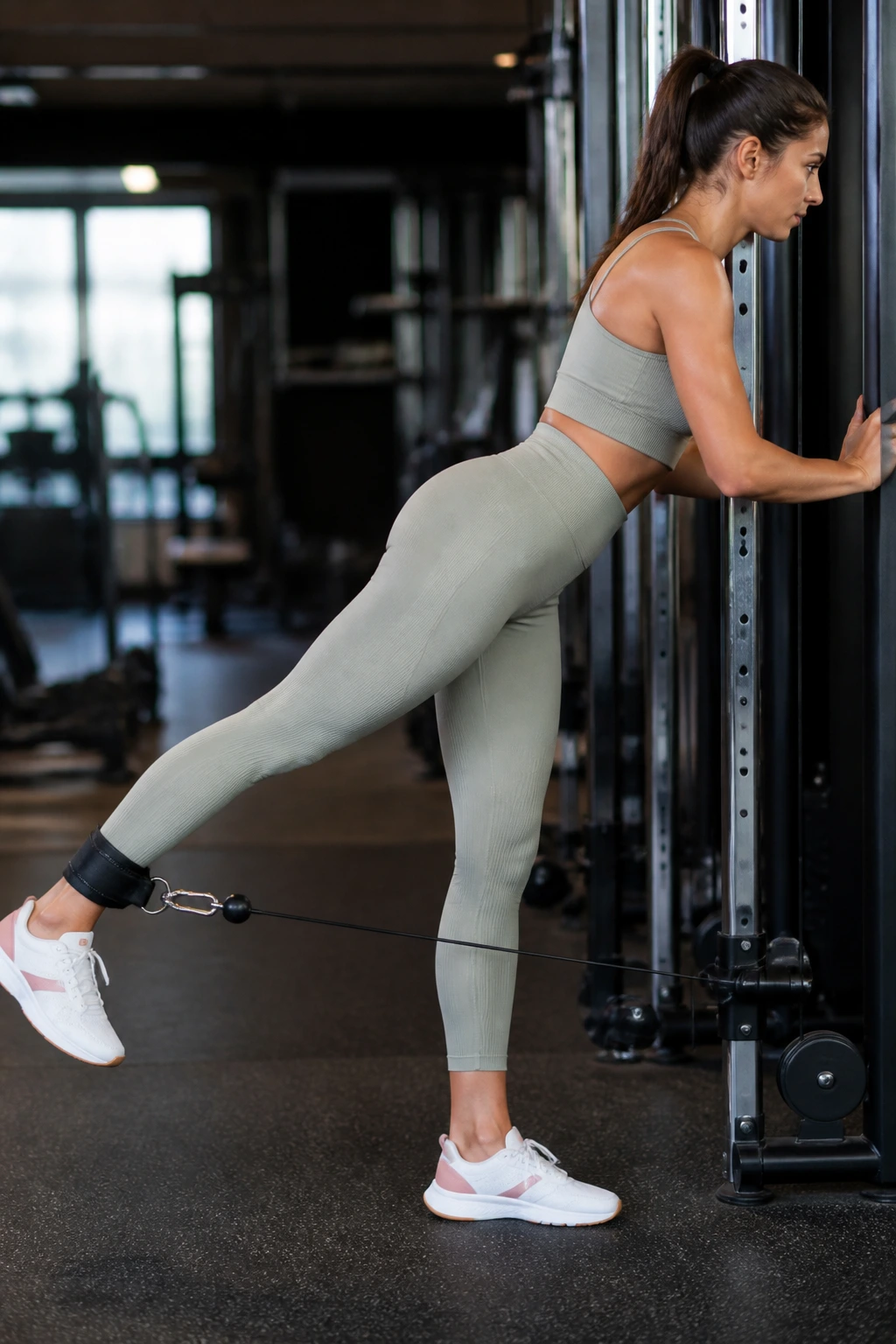
Whether you use a cable machine or a resistance band, glute kickbacks are the most effective isolation move for the posterior glute. This is purely about squeezing the muscle fibers.
Mind-Muscle Connection
- Keep your torso stable—if you’re using a cable machine, lean forward and hold onto the structure for support.
- Keep your back flat.
- Kick your leg back, leading with your heel.
- Squeeze the glute hard at the very top.
Don’t swing the weight. If you’re using a cable, pick a weight that allows you to control the movement on the way back down. The negative portion of the rep is just as important as the kick itself.
18. Side-Lying Leg Raises
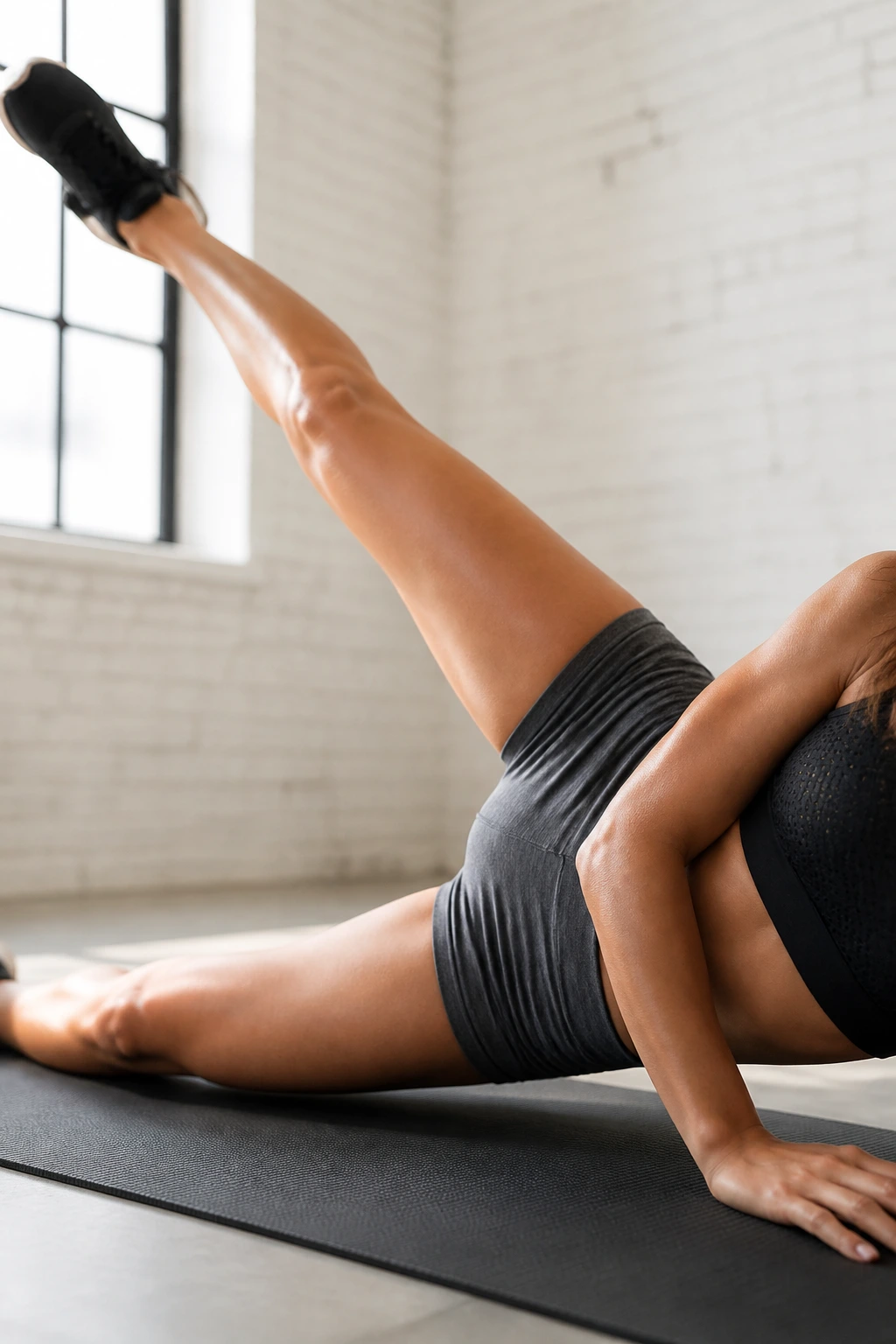
This is an old-school move that works for a reason. It isolates the hip abductors, which are often weak in people who sit for long periods. Stronger hip abductors mean better stabilization for all your other lifts.
Precision Over Speed
- Lie on your side with your legs stacked.
- Lift the top leg straight up toward the ceiling.
- Keep your toes pointed forward—if you rotate your foot toward the ceiling, you involve your hip flexors more than your glutes.
- Pause at the top for a second to feel the burn in your outer hip.
You will feel this quickly. It’s a great “finisher” exercise to include at the end of a leg session to ensure the lateral muscles are completely fatigued.
19. Speed Skaters

Speed skaters are a lateral plyometric movement that mimics a skating motion. They are incredible for developing explosive lateral power and shredding the outer thighs.
The Lateral Push
- Start in a semi-squat position.
- Leap laterally from one leg to the other.
- Land on your outside leg, absorbing the force by bending your knee and hip.
- Keep your chest up throughout the movement.
This movement is dynamic. If you want to make it harder, pause for a full second on the landing leg to really challenge your balance before leaping to the other side.
20. High-Volume Leg Press/Squat Finisher
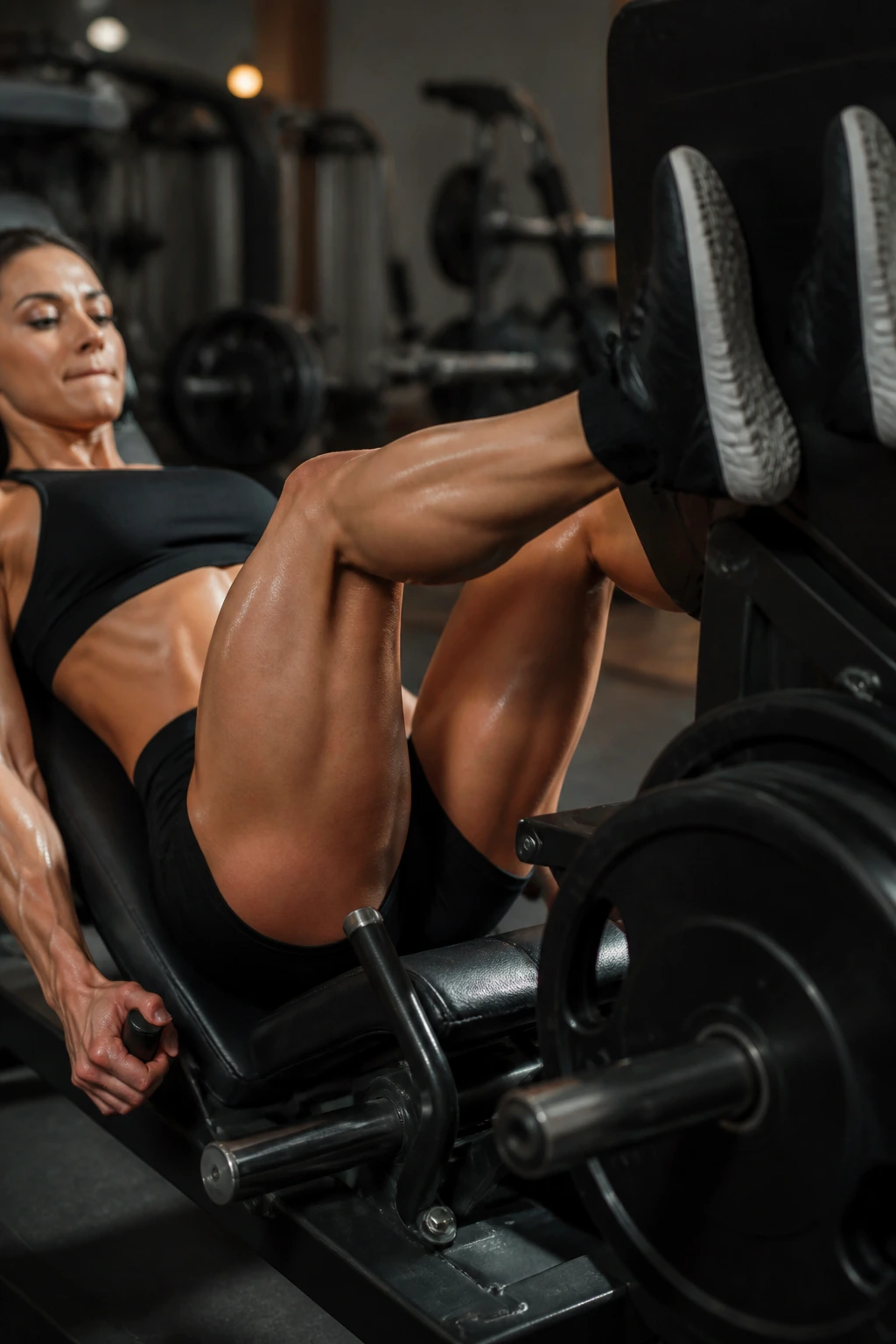
Finish your leg training with a high-volume set. This isn’t about setting a personal record; it’s about pushing blood into the muscle and reaching total failure.
The “Burnout” Philosophy
- Choose a weight that is about 60% of what you would use for a heavy set.
- Perform a set of 20 to 30 reps with strict form.
- The last 5 reps should feel nearly impossible, but you should still be able to complete them with decent technique.
- Do not rest between sets.
This style of training flushes the muscle with metabolic waste products, which is a major signal for growth. It’s not comfortable, but it’s the most efficient way to finish your session and ensure you’ve left nothing in the tank.
Final Thoughts
Shredding your legs is a process of mechanical loading and consistent effort. There is no magic pill or single exercise that will change your body overnight. You have to commit to the hinge, the squat, and the lunge, week after week. You have to be willing to struggle with a heavy barbell or fight for balance on a single-leg movement.
True results come from the progression. If you can do 10 squats today, aim for 11 next time. If you can squat with 50 pounds, work toward 55. That small, incremental increase in work capacity is the only secret that actually works. Your legs are capable of handling significant loads—stop treating them like fragile ornaments and start training them like the powerful engines they are. Keep your form tight, prioritize the quality of your reps, and be patient with the development. Your legs will eventually reflect the work you put in.
