



People reach for chia seeds for belly fat loss because they want one small food change that does more than fill a bowl. That instinct is not wrong, but the promise has to be kept honest: chia seeds do not melt belly fat on contact, and no single ingredient does. What they can do is make meals more filling, slow down how fast you eat, and help you stay inside a calorie range that actually moves the scale.
That matters because chia is small in the hand and big in the mouth. Two tablespoons bring roughly 9 to 10 grams of fiber and a decent dose of healthy fat, which is why soaked chia turns thick and gel-like instead of staying dry and crunchy. That texture is the whole trick. It changes how a breakfast, snack, or drink behaves in your body, and it does it without needing much sugar, much prep, or much money.
There’s also a downside people skip over. Dry chia by the spoonful is a bad idea, and adding chia to a meal that already runs heavy on sugar and calories does not magically make it weight-loss friendly. The seed works best when it replaces something less useful: sugary cereal, a pastry, a giant scoop of nut butter, or the mid-afternoon vending machine stop you never meant to make.
The smartest use of chia is the boring one. Use it in foods you already like, keep the portions measured, and let the fiber do its quiet work. That’s where the results come from, and it’s why the best chia habits are the ones you can repeat without thinking too hard.
1. Chia Pudding With Berries and Cinnamon
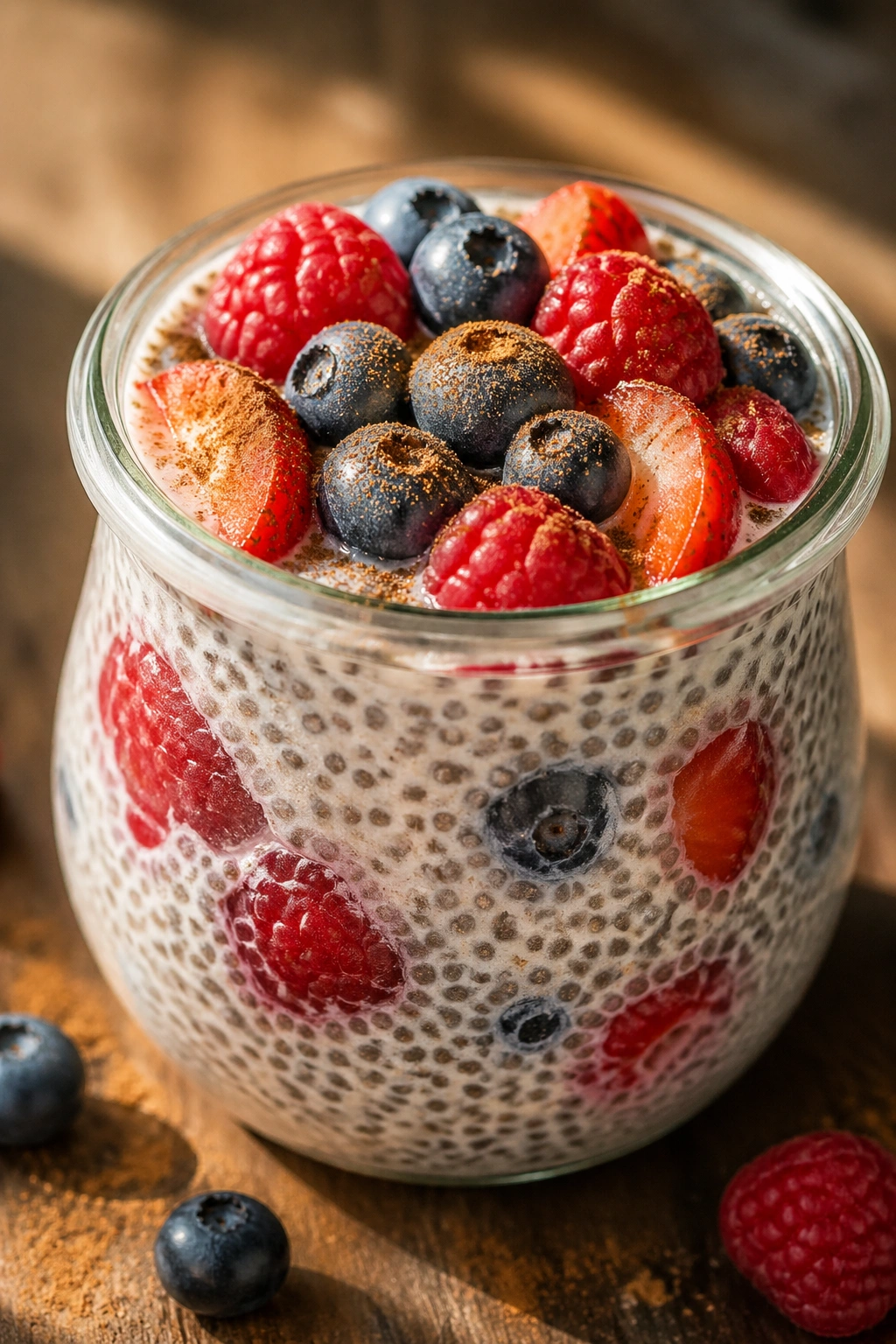
A good chia pudding should look a little like breakfast and a little like dessert. The spoon should stand up in it. Not literally, but close enough that you know the seeds have fully absorbed the liquid and turned into that thick, creamy, spoonable texture people either love or laugh at until they try it with the right toppings.
Why It Helps With Fullness
Chia pudding works well for weight loss because it slows the meal down. One to two tablespoons of chia in a cup of unsweetened milk gives you a lot more texture than the calorie count suggests, and that makes it harder to inhale breakfast in three minutes and go hunting for snacks an hour later.
The best version keeps the sugar low and the protein up. I’d rather see chia pudding made with unsweetened soy milk or plain Greek yogurt than with sweetened almond milk and a drizzle of syrup. The first one fills you up. The second one just tastes like a nicer dessert.
A Simple Build That Works
- 2 tablespoons chia seeds
- 1 cup unsweetened soy milk or dairy milk
- ½ teaspoon cinnamon
- ¼ teaspoon vanilla extract
- ½ cup berries
- Optional: 2 tablespoons plain Greek yogurt on top
Tip: Let it sit for 20 minutes, then stir it again. That second stir keeps the seeds from clumping at the bottom and gives you a smoother texture by the time it chills overnight.
If you want the easiest weight-loss friendly breakfast on the list, this is probably it. Keep the bowl plain, keep the sweetener light, and let the berries do the heavy lifting.
2. Plain Greek Yogurt With a Chia Swirl
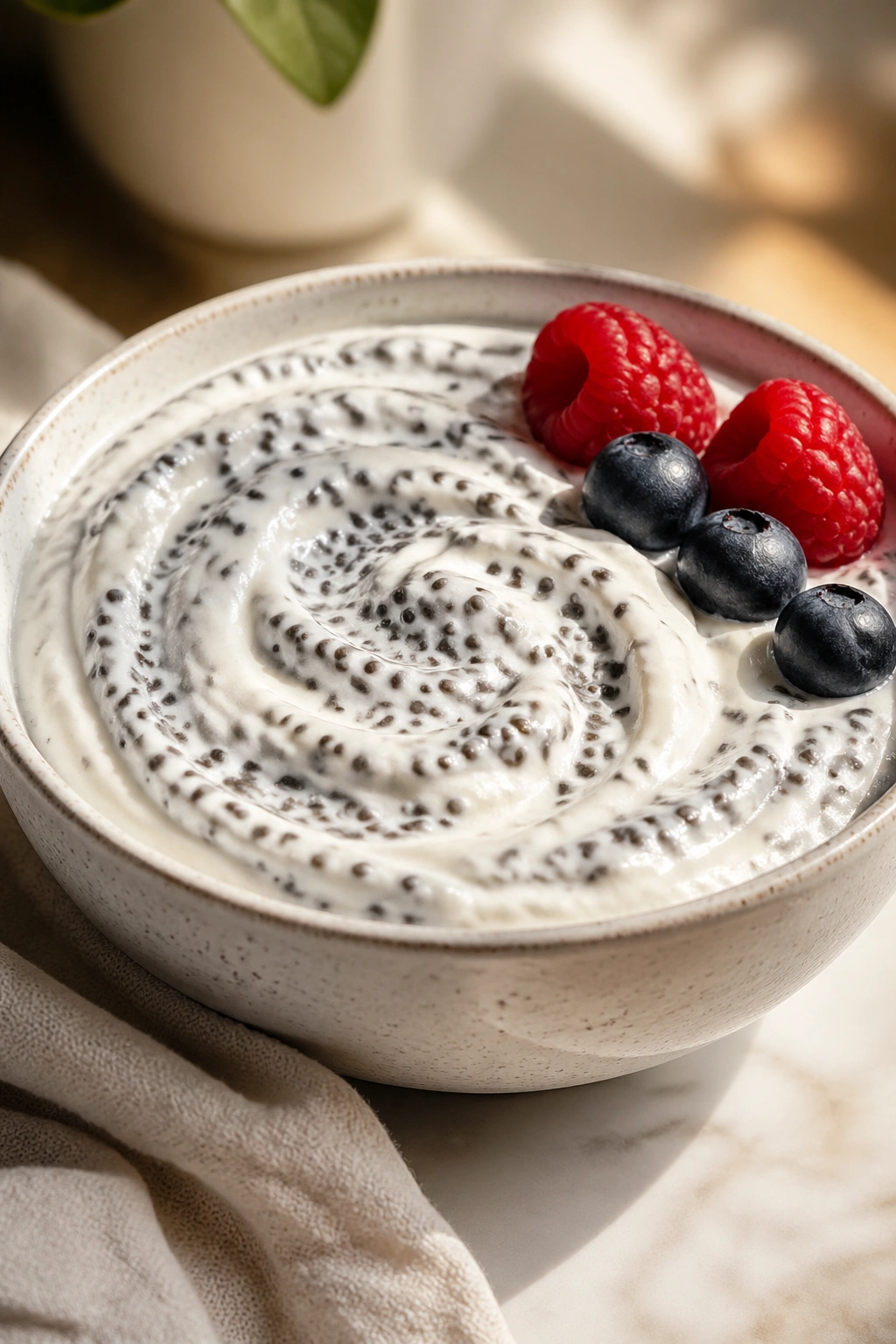
This is the simplest high-protein chia move I know, and it barely counts as cooking. A bowl of plain Greek yogurt turns thicker and more filling the moment you stir in chia seeds, which is exactly what you want when you’re trying to keep hunger under control without making breakfast feel like homework.
The texture is the payoff. Chia softens in the yogurt and gives you tiny bursts of chew instead of a flat, one-note spoonful. That matters more than people think. Meals that feel a little more substantial tend to be easier to stop eating, and that’s the real game when you’re aiming for fat loss.
Use 1 to 2 tablespoons of chia seeds per ¾ to 1 cup of plain Greek yogurt. Add cinnamon, a few berries, or a small handful of chopped strawberries if you want some sweetness without opening the sugar floodgates. Honey is fine in a teaspoon-sized amount, but it can sneak calories in fast.
Eat it as breakfast or as a late-afternoon snack. It works in both spots because the protein from the yogurt and the fiber from the chia make the combo sturdier than either ingredient on its own. If you tend to raid the pantry between meals, this is the kind of fix that quietly helps.
3. Smoothies That Hide Chia Without Changing the Flavor Too Much
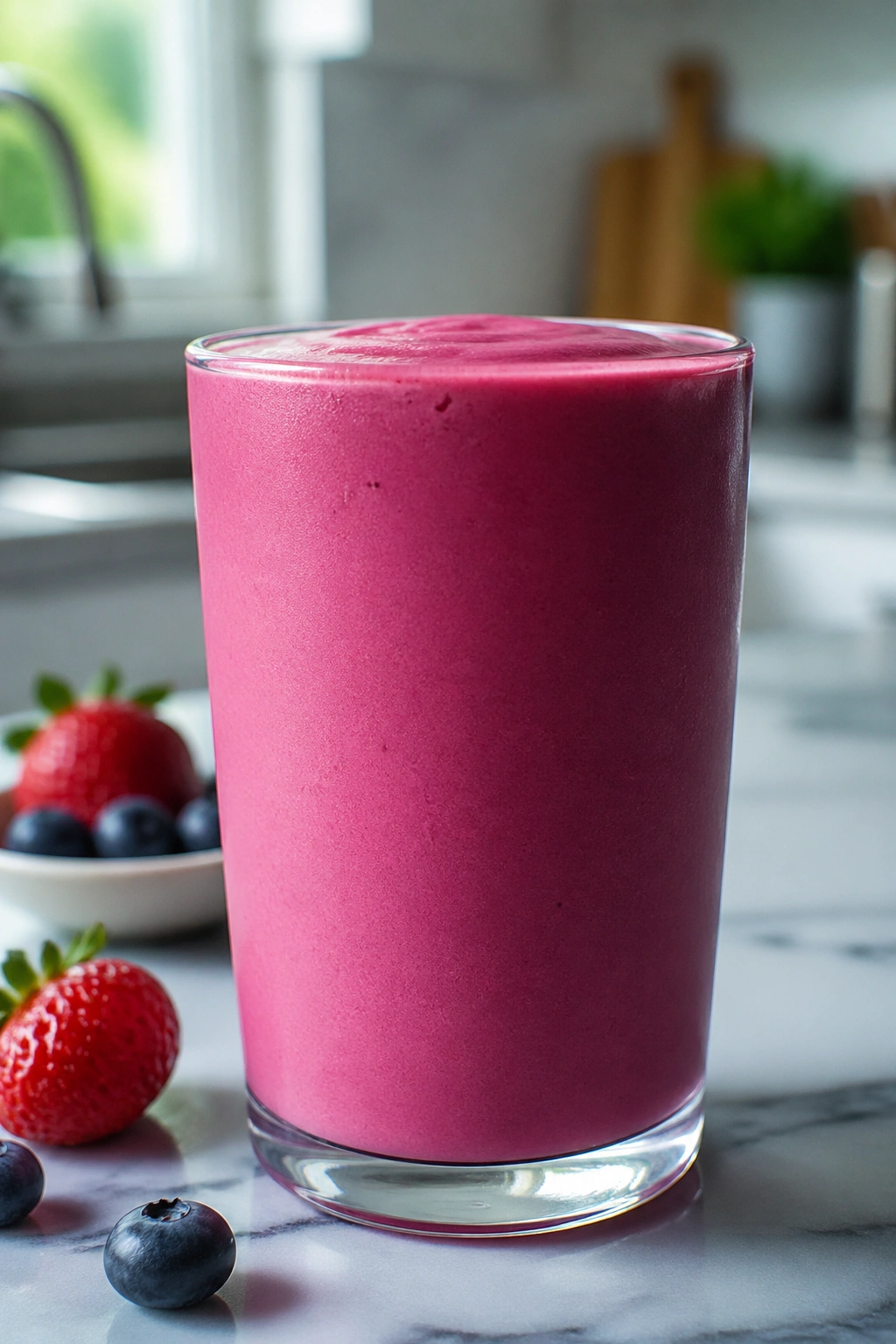
Why blend chia seeds into a smoothie instead of sprinkling them on top? Because a smoothie is one of the few places where chia can disappear a little and still do its job. Once the seeds are blended, they thicken the drink instead of floating around like tiny pebbles, and that thicker texture usually makes the smoothie more satisfying.
Start small. One tablespoon of chia seeds is enough in a single-serving smoothie, and you can move up to 2 tablespoons once you know your stomach likes the extra fiber. Pair it with a base that already has protein: plain Greek yogurt, unsweetened soy milk, kefir, or protein powder if that’s your thing. A smoothie made with fruit and chia alone can still leave you hungry.
How to Use It
Add chia to the blender, not the glass. That sounds obvious, but plenty of people stir it in after the fact and end up with a clumpy drink. Blend for 20 to 30 seconds until the texture looks even and slightly thicker than before.
Pick fruit that actually helps the balance. Frozen berries, half a banana, spinach, and unsweetened milk make a better weight-loss smoothie than mango juice, sweet yogurt, and a mountain of granola on top. The seed is the support act. Don’t let the rest of the recipe steal the show.
4. Chia Water Before a Meal
Picture this: it’s late afternoon, you’re not exactly hungry, but you are one snack away from making a bad decision. That is the moment chia water earns its place. It is plain, a little strange, and far less exciting than chips, which is precisely why it can help.
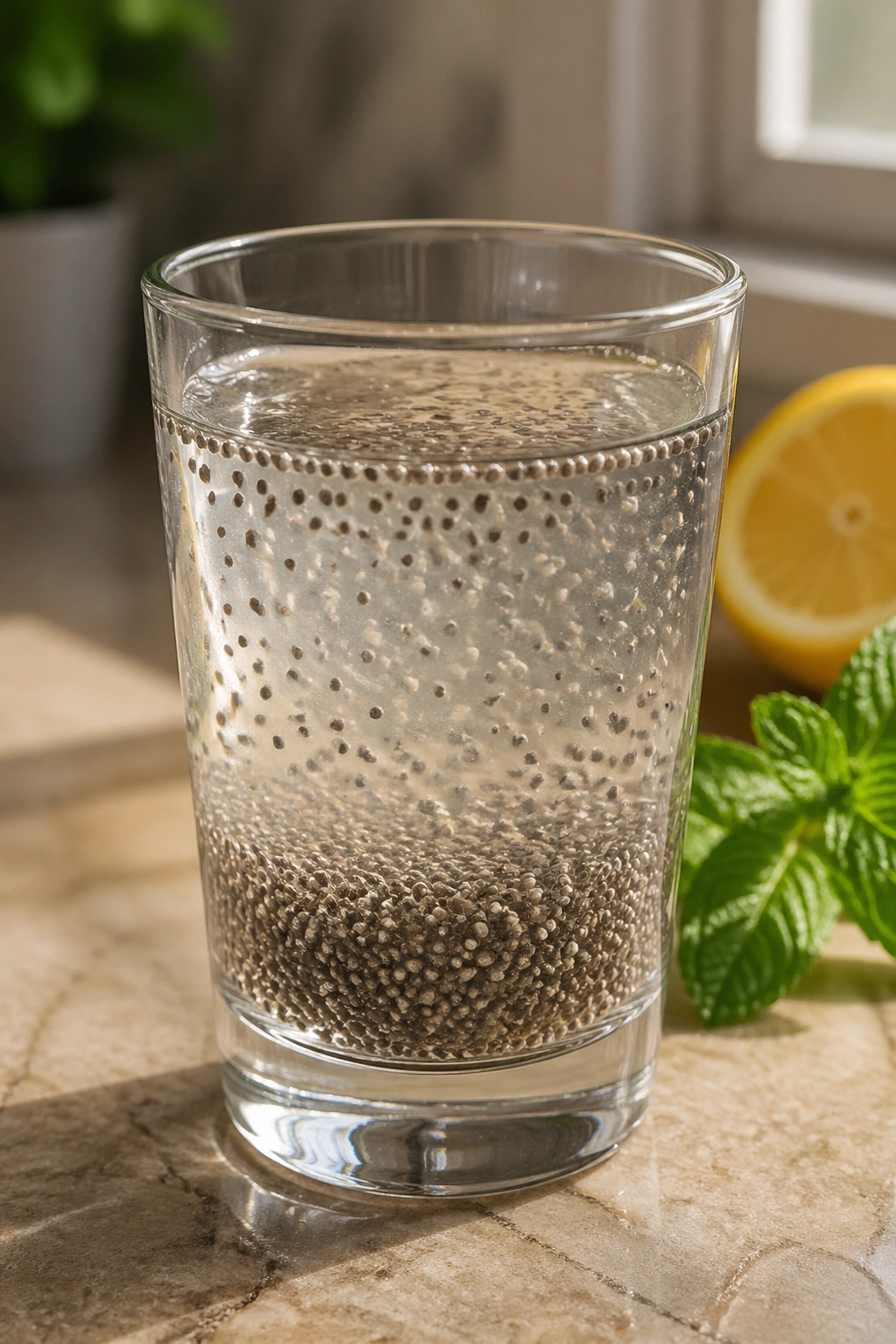
Chia water works because the seeds swell in liquid and turn the drink into something with more body than plain water. That doesn’t mean it’s magic or that it “burns fat.” It means you may arrive at dinner a little calmer and a little less likely to overdo the first few bites.
The Basic Mix
- 1 to 2 teaspoons chia seeds
- 12 to 16 ounces cold water
- 1 to 2 teaspoons lemon juice
- A few mint leaves, optional
- Ice, if you like it cold
Stir, wait 10 to 15 minutes, and stir again before drinking. The mix should look lightly speckled and slightly thick, not like a cup full of floating sand.
Here’s the part people miss: drink it before a meal, not as a replacement for one. It’s a small buffer, not dinner. If you want to make it more useful, have it 15 to 20 minutes before a meal that you tend to overeat, then sit down and eat slowly instead of grazing in the kitchen.
5. Oatmeal That Stays Filling Longer
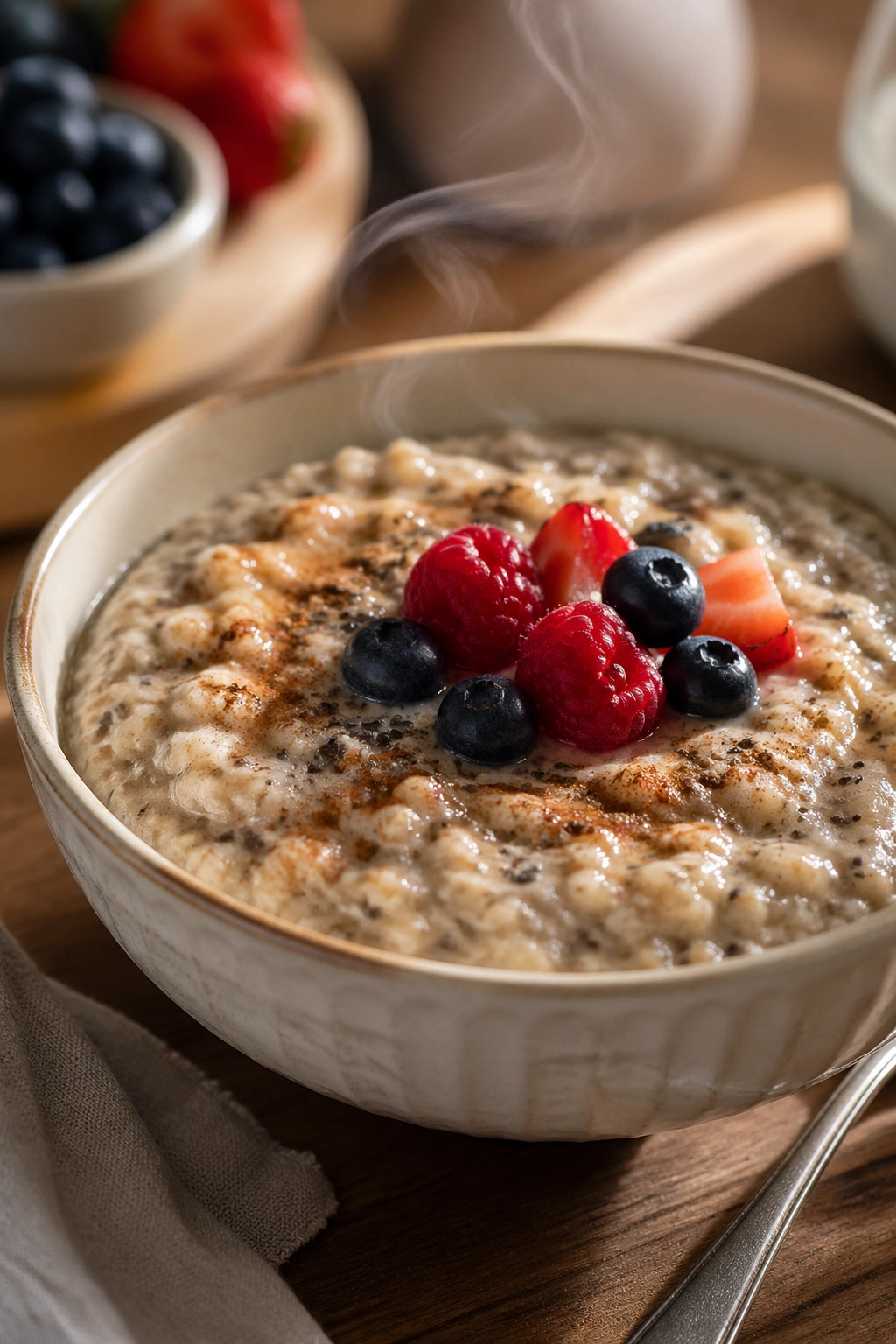
Chia belongs in oatmeal because oatmeal already does half the job. Add chia, and the bowl gets thicker, denser, and harder to burn through in five minutes. That sounds unglamorous. It is. And it works.
The mistake most people make is dumping chia in too early and then wondering why the bowl turned into glue. Better to cook your oats first, then stir in 1 tablespoon chia seeds near the end. For a larger, hungrier breakfast, 2 tablespoons is fine, but you’ll want extra liquid and a slower stir so the texture stays creamy instead of cement-like.
A good bowl has contrast. Warm oats, cool berries, a little cinnamon, maybe a spoonful of peanut butter if you’re not already pushing the calorie budget. Apples with cinnamon are especially good here because they add volume without turning the bowl into candy. The oats bring comfort, the chia brings staying power, and the fruit gives you something bright to break up all that soft texture.
I’d avoid packing this bowl with too many extras. Brown sugar, honey, dried fruit, nut butter, and chia can turn a modest breakfast into a calorie-heavy one fast. The bowl still tastes good when you keep the toppings simple. That’s the point.
6. Overnight Oats for Busy Mornings
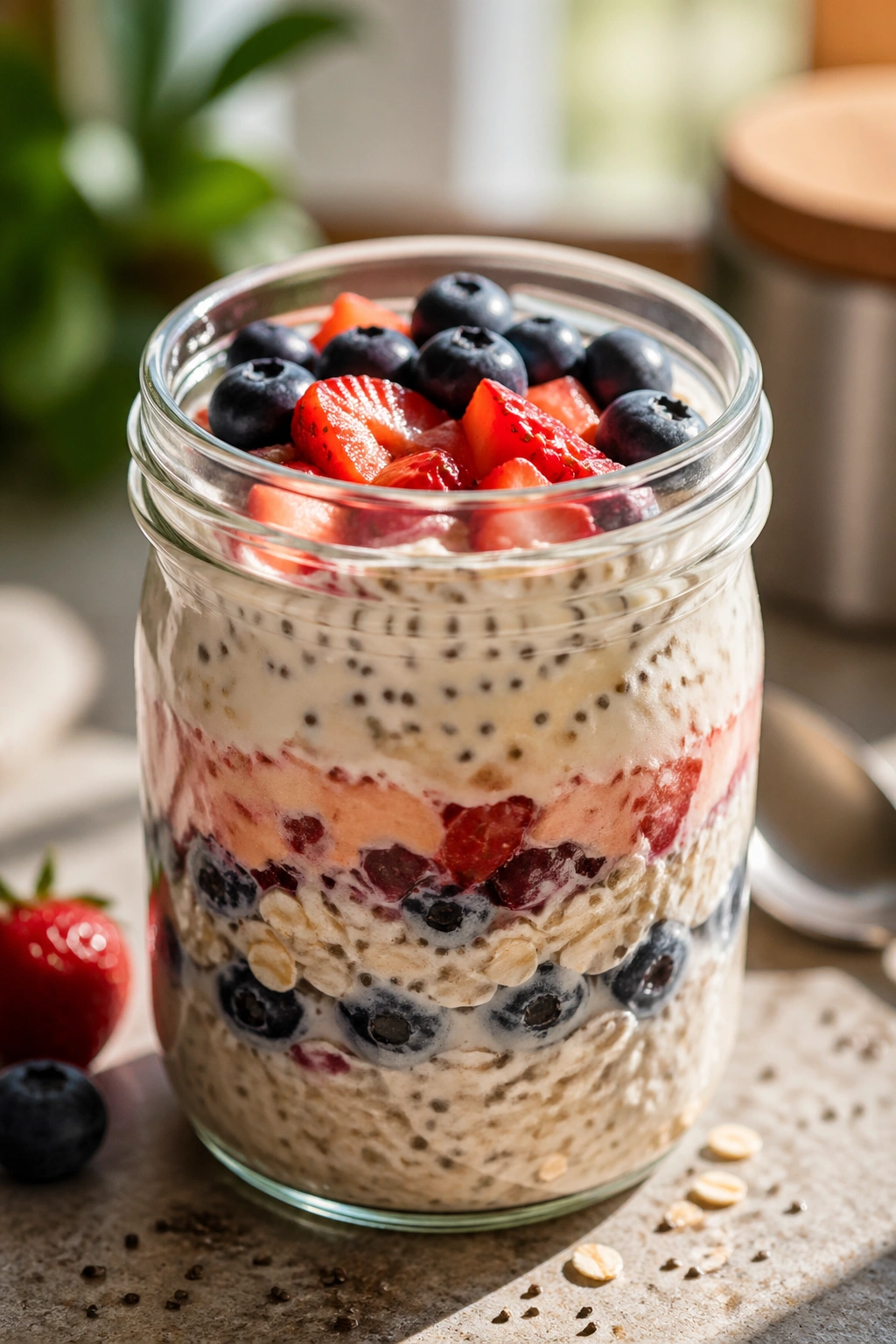
Overnight oats are what chia was almost made for. The seeds thicken the oats while the fridge does the work, so you wake up to a cold, spoonable breakfast instead of staring at a dry box of cereal and pretending that counts as planning.
The best part is how little effort the base needs. Use ½ cup rolled oats, 1 tablespoon chia seeds, and 1 cup milk or a milk-and-yogurt mix. Add cinnamon, vanilla, and a small handful of berries. Stir it well, let it sit overnight, and the texture will be softer, thicker, and more filling by morning.
What Makes It Different
Hot oatmeal feels comforting, but overnight oats are better when your mornings are chaotic. You get the same general satiety, plus a little more texture from the chia. That mix can keep you from reaching for pastry case breakfast on the way out the door.
The one caution is portion creep. Overnight oats are easy to overbuild because every ingredient feels innocent. Granola on top, a big swirl of nut butter, dried fruit, sweet yogurt — and suddenly the “healthy breakfast” is more calorie dense than the thing you were trying to avoid. Keep the base measured and let the chia do the thickening.
If you like a colder breakfast and want something that feels steady rather than flashy, this is a strong move.
7. Cottage Cheese or Skyr With Chia and Fruit
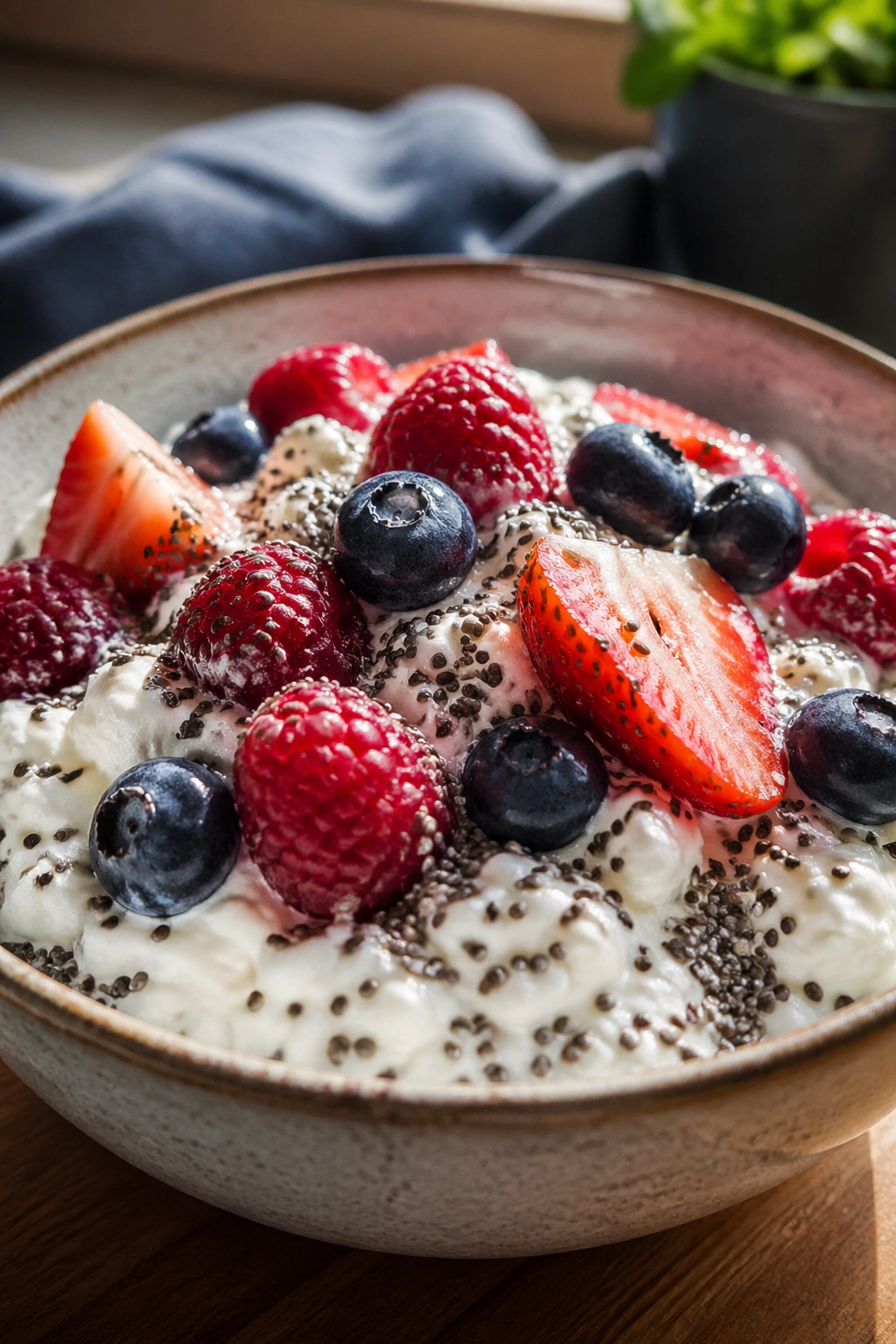
High-protein dairy plus chia is one of the easiest snack formulas to trust. Cottage cheese and skyr both bring a lot of protein to the bowl, and chia fills in the gap with fiber and texture. The result feels more like a real meal than a tiny snack, even when the portion is modest.
Why It Works
Cottage cheese can be a little plain on its own. Chia fixes that in a quiet way. The seeds soften just enough to make each spoonful less slippery and more substantial, which matters if your goal is to stop eating while you’re still satisfied, not after you’ve polished off half the tub.
I like this combo two ways. Sweet: 1 cup cottage cheese or skyr, 1 tablespoon chia seeds, berries, and cinnamon. Savory: cottage cheese, chia, chopped cucumber, black pepper, and a pinch of salt. The savory version sounds odd to some people, then turns into a habit.
- Use 1 tablespoon chia for a normal snack.
- Go up to 2 tablespoons if the rest of the meal is light.
- Add berries, peaches, or even sliced kiwi for sweetness.
- Keep sweeteners small unless you want the bowl to drift into dessert territory.
This is a strong pick when you want something cold, quick, and protein-heavy without leaning on a protein bar.
8. Salads That Need a Little More Staying Power
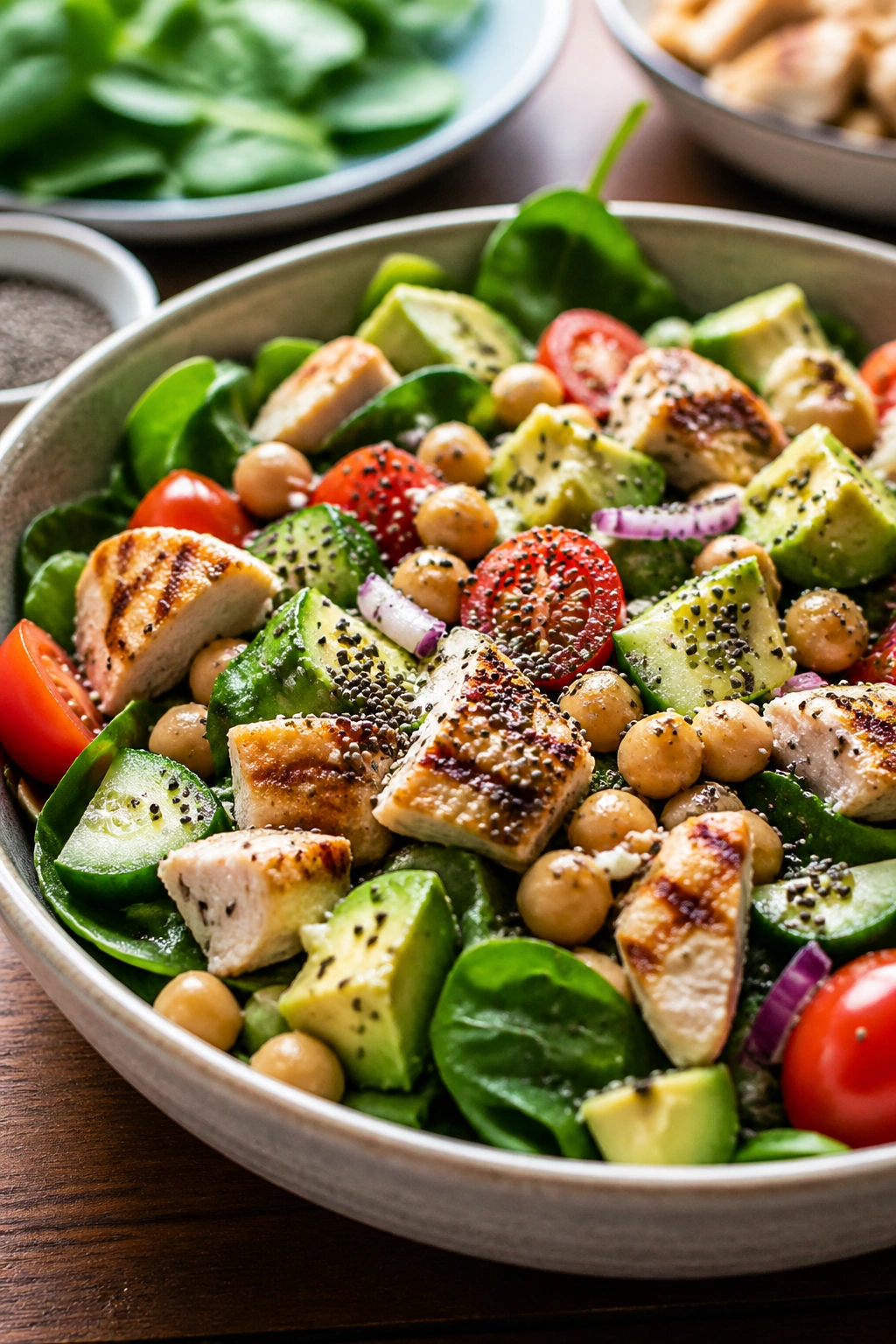
Chia belongs in salads more often than people think. A salad with just lettuce and a low-calorie dressing can leave you oddly hungry, which usually leads to snack grazing later. A teaspoon or two of chia fixes part of that by making the bowl feel more substantial without turning it into a heavy meal.
The trick is to treat chia like a texture tool, not a topping dump. Sprinkle 1 to 2 teaspoons over a salad that already has protein — chicken, tuna, salmon, eggs, tofu, chickpeas, or beans all work. That way the chia isn’t carrying the whole meal on its back.
A crunchy salad is the best match. Think cucumbers, shredded carrots, chopped bell peppers, cabbage, and greens that don’t wilt the second dressing touches them. Chia adds a tiny nutty note, but the real value is in how it stretches each bite.
I especially like chia in grain salads and slaws. Those bowls can handle the seeds better than delicate greens, and the thicker texture gives the whole thing a more finished feel. If your usual lunch leaves you hungry by 3 p.m., this is one of the simplest places to start.
9. Soups and Stews That Need a Thicker Finish
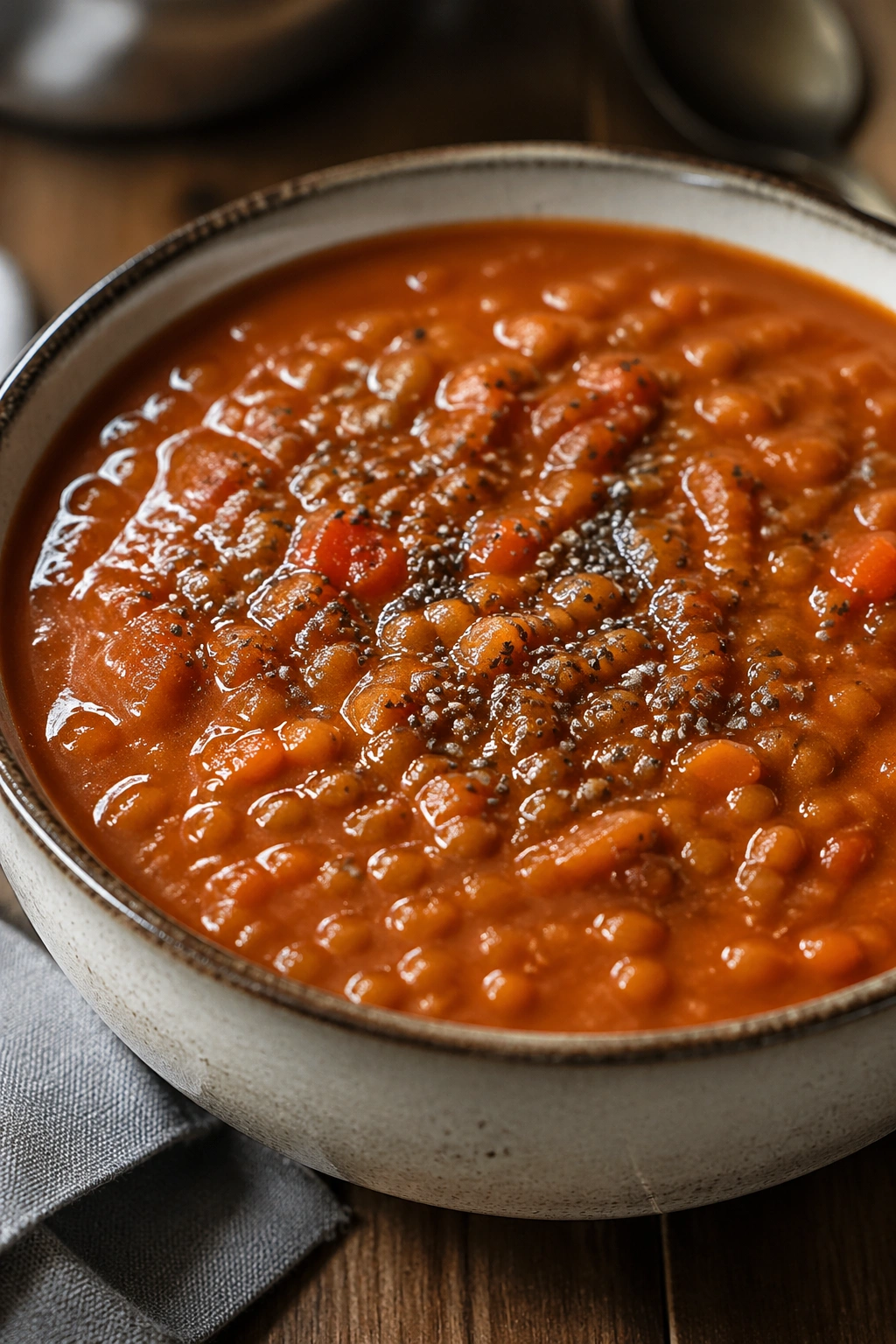
Can chia work in savory food without turning the whole pot weird? Yes, if you use a light hand. Stirred into soup or stew, chia acts like a gentle thickener and adds a little body to a meal that might otherwise feel too thin to satisfy you.
The best time to add it is near the end of cooking. One teaspoon to 1 tablespoon is enough for a single bowl or a small pot, depending on how thick you want it. Tomato soup, lentil soup, black bean soup, and chili all take to chia better than cream-based soups, which can get heavy fast.
How to Use It
- Stir chia in after the soup has finished simmering.
- Let it sit 3 to 5 minutes so the broth thickens a little.
- Add more liquid if it turns too dense.
- Taste before adding extra salt, because the thicker texture can make seasoning seem stronger.
The nice thing here is that you can make a smaller portion feel more complete. That matters if you’re trying to keep lunch modest without ending up hungry an hour later. Chia won’t save a bad soup, though. If the broth tastes thin and bland to begin with, the seeds only make it thicker, not better.
10. Chia Jam on Toast or Yogurt
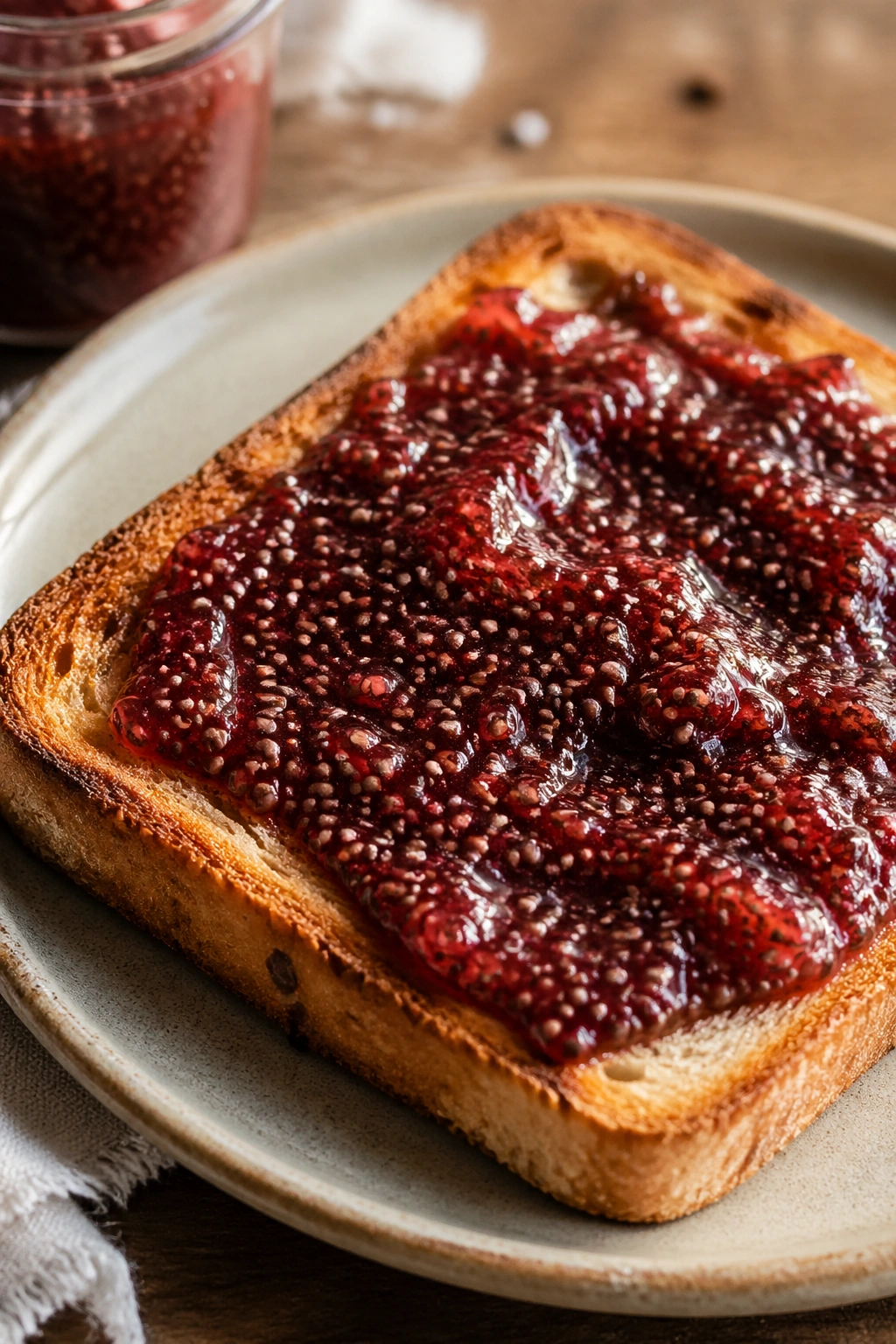
Chia jam is one of those ideas that sounds a little trendy until you make it once and realize it solves a real problem. You get the fruity taste people want on toast or yogurt, but without the huge sugar load that comes with a standard jam jar.
The process is simple. Warm mashed berries on the stove, stir in chia, let it cool, and the mixture thickens into something spreadable. Use 1 to 2 tablespoons chia seeds per 1 cup mashed fruit. Strawberries, raspberries, blueberries, and blackberries all work. If the fruit is tart, a teaspoon of honey can smooth it out, but you usually do not need much.
This is a smart move for people who eat toast often. A slice of bread with chia jam and a little plain yogurt on the side can feel like a proper breakfast instead of a sugar hit that fades fast. It also helps if you want fruit flavor without adding a lot of calories.
A lot of people make chia jam too sweet, which defeats the point. Keep it bright, keep it tart, and stop before it tastes like candy.
11. Muffins and Breakfast Bars With Chia
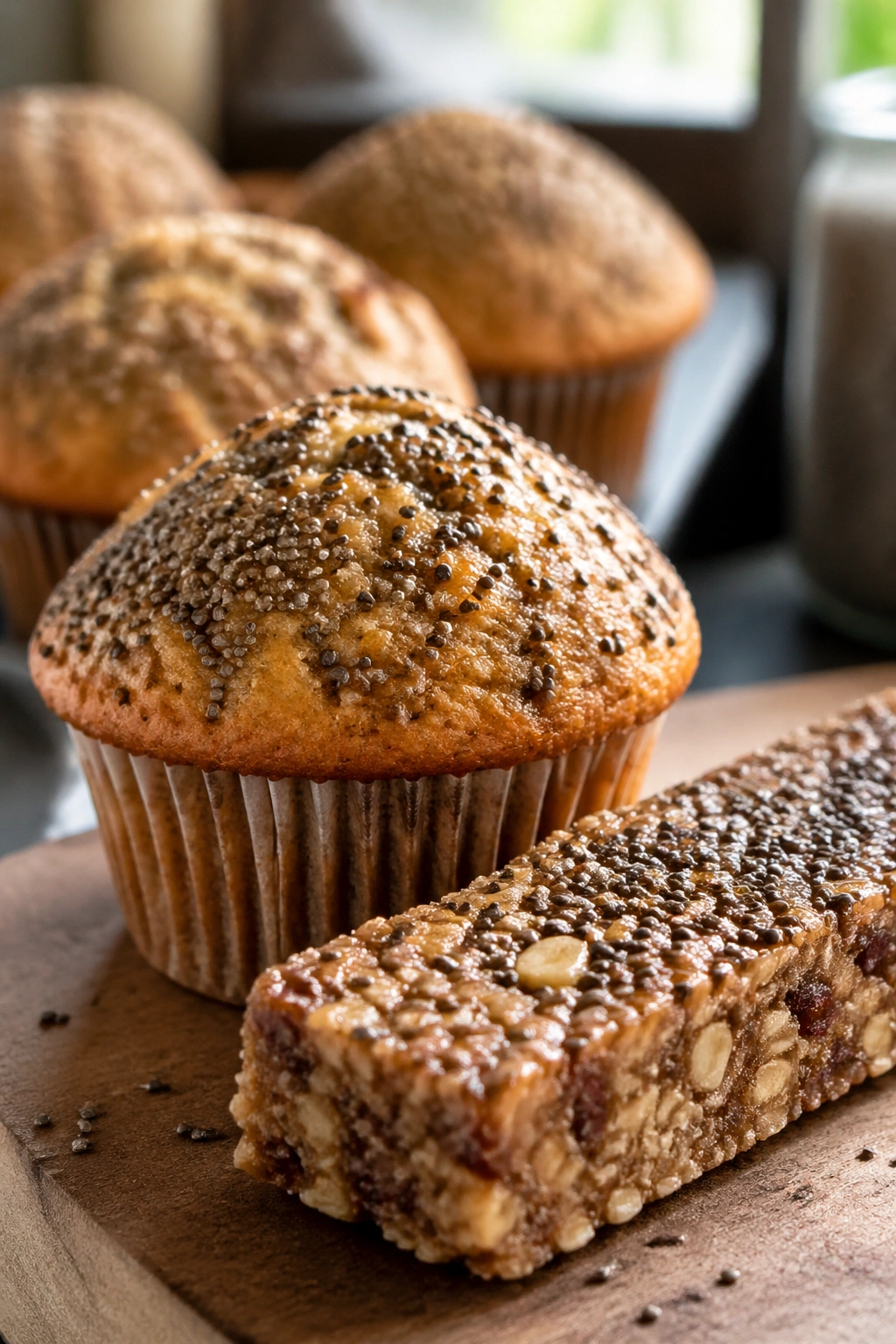
Baking chia into muffins or breakfast bars is less dramatic than making pudding, but it solves a different problem: portion control. A single muffin or a measured bar can replace the “I’ll just have something small” snack that ends up becoming a bakery run.
Chia adds a little crunch and helps baked goods hold moisture, which is useful when you’re making lighter recipes that could otherwise turn dry. It won’t turn a sugar-heavy muffin into health food, though. That part still depends on the rest of the recipe, which is where people fool themselves. If the batter is loaded with sugar, chocolate chips, and oil, chia is just a nice seed in a dessert.
For a more useful version, keep the add-ins reasonable:
- 1 to 2 tablespoons chia seeds per batch of muffins
- Rolled oats, whole wheat flour, or almond flour for the base
- Mashed banana or applesauce in place of some sugar
- Blueberries, grated apple, or chopped nuts in measured amounts
The key is portion size. One well-made muffin with chia can fit into a weight-loss plan. Three oversized bakery muffins, no matter how many seeds they contain, can take you in the wrong direction fast. Boring answer, but it’s the right one.
12. Chia as an Egg Swap in Lighter Baking
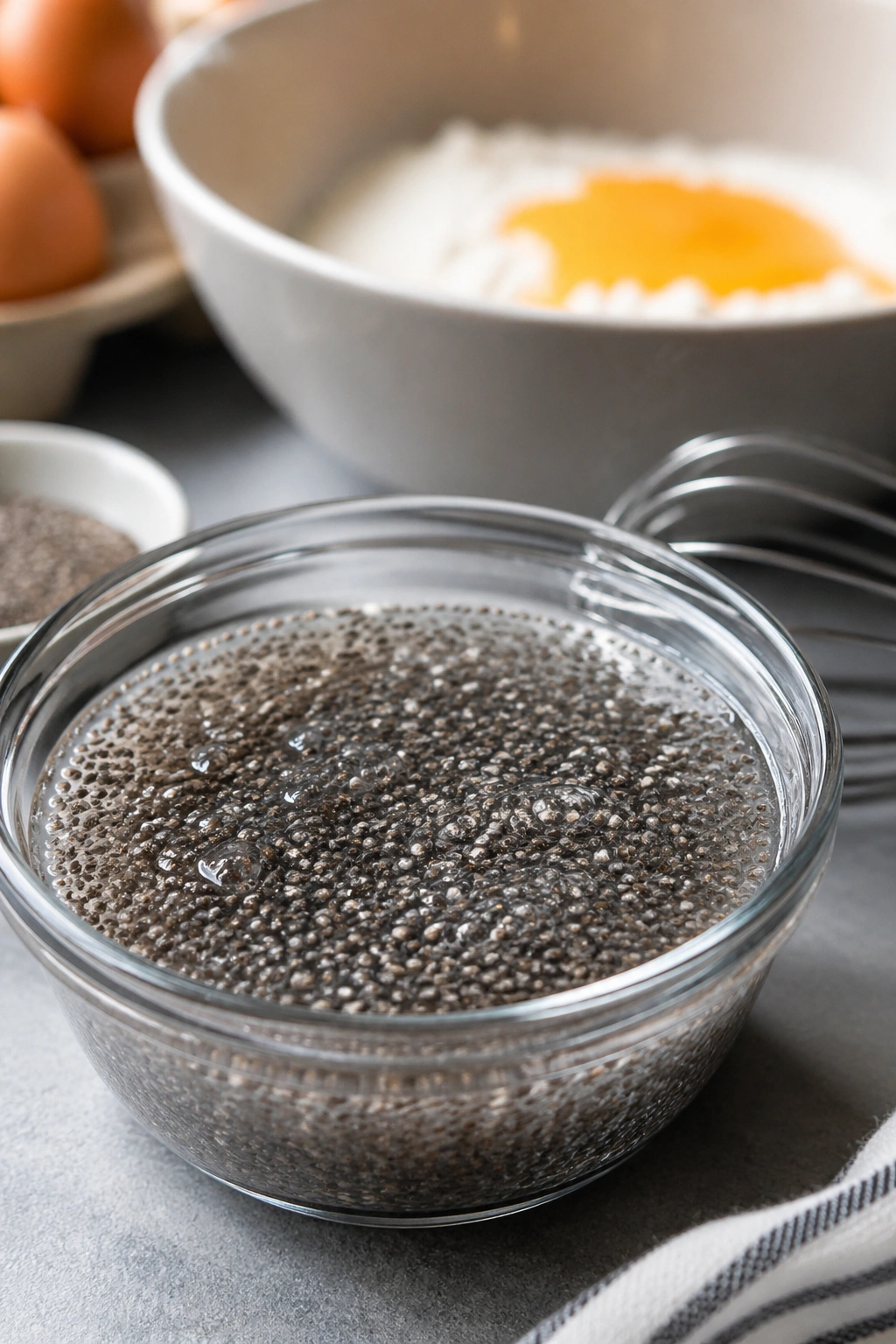
A chia egg is one of the cleanest swaps in baking. Mix 1 tablespoon chia seeds with 3 tablespoons water, let it sit for 10 to 15 minutes, and it turns into a gel that can stand in for one egg in muffins, pancakes, quick breads, and some cookies.
Unlike an egg that adds structure and lift on its own, chia egg leans a little denser and earthier. That makes it a better fit for recipes that already welcome a hearty texture. Think banana bread, oat muffins, breakfast bars, and pancakes. It is not my first pick for a delicate sponge cake, and pretending otherwise only sets people up for disappointment.
What Makes It Different
- Works best in recipes where a slightly heavier crumb is fine.
- Adds a little fiber to the batter.
- Keeps baked goods together without extra fat.
- Can be made with whole chia or ground chia, though ground blends more smoothly.
If you’re trying to make baked snacks that feel more filling, this is a handy trick. It does not reduce calories by itself, but it can help you build a recipe that relies less on richer ingredients. That matters when you want a muffin that behaves like breakfast instead of dessert.
13. Avocado Toast or Nut-Butter Toast With Chia
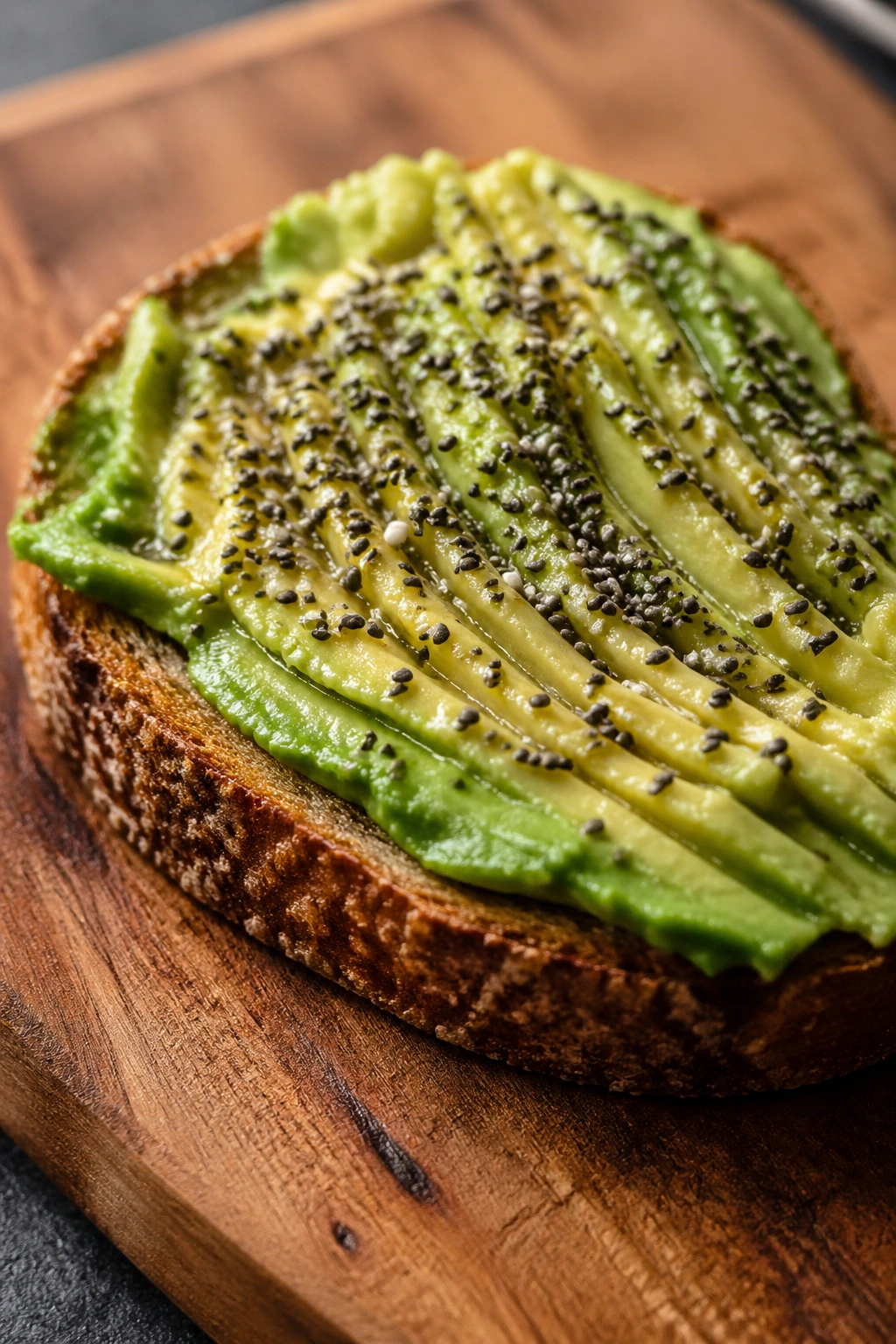
Avocado toast gets away with a lot. It feels healthy, and often it is, but the calories can climb quickly if the avocado is heavy-handed or the toppings get out of control. Chia helps by adding crunch and making the toast feel more finished, which can make a smaller portion feel like enough.
The safest approach is measured. Use ½ avocado on one slice of toast, then sprinkle 1 teaspoon chia seeds on top. If you’re doing nut-butter toast, keep the spread to 1 to 1½ tablespoons and use chia as the crunchy finish instead of adding jam, honey, banana, and seeds all at once.
A Better Way to Build It
- Start with sturdy bread so it doesn’t go limp.
- Add protein if the rest of the day tends to be light.
- Use salt, pepper, lemon, or chili flakes for flavor instead of more fat.
- Keep the chia layer thin. A little goes further than people expect.
This is a good breakfast or lunch when you want something quick but not flimsy. The toast still tastes like toast, which matters. You are not trying to eat bird food. You are trying to make a meal that keeps you calm until the next one.
14. Homemade Dressings and Sauces Thickened With Chia
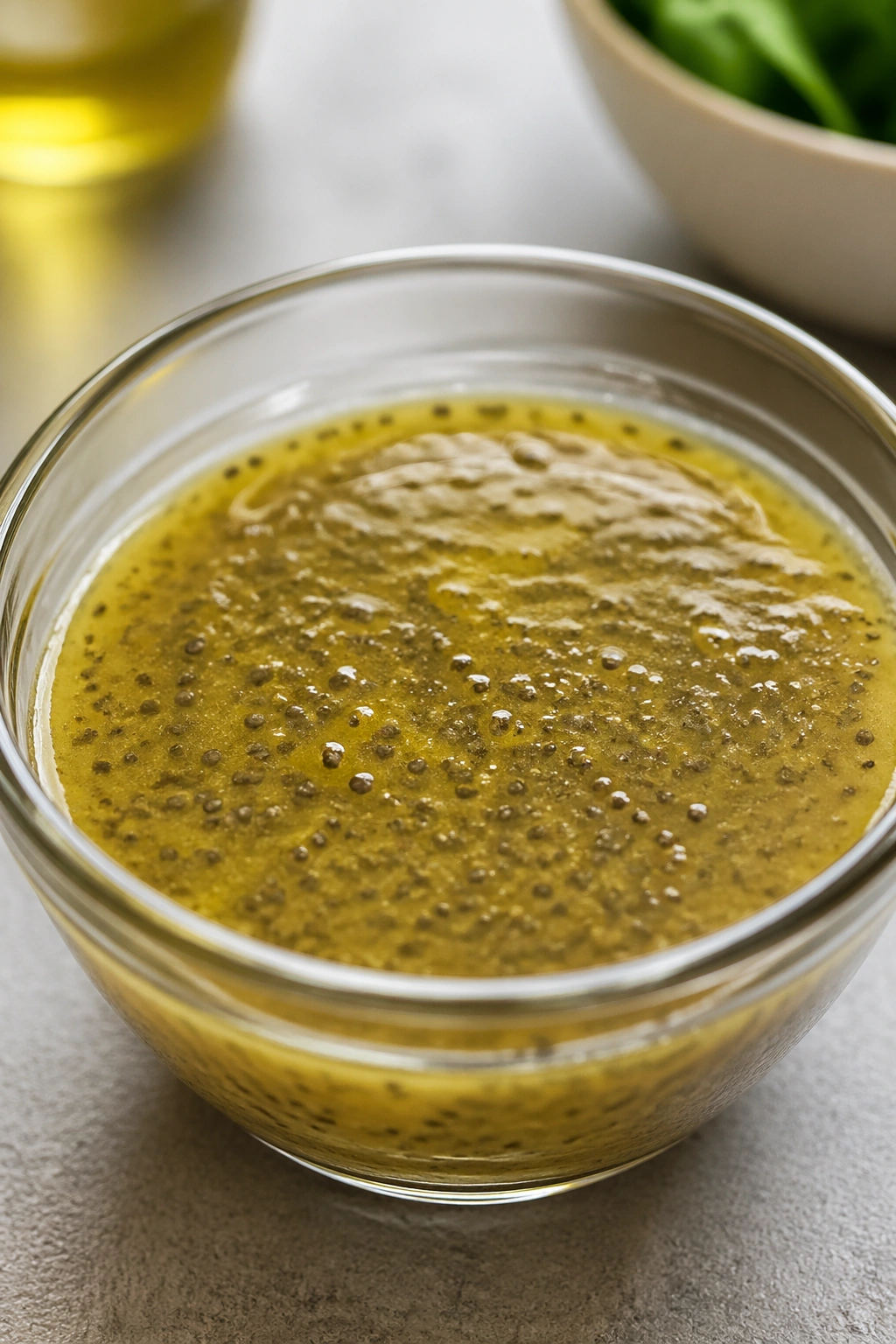
Chia in a dressing sounds odd until you taste it. The seeds thicken the sauce enough that a little goes further, which is useful when you want to coat greens, roasted vegetables, or grain bowls without drowning them in oil.
A basic vinaigrette can take 1 teaspoon chia seeds stirred into 2 to 3 tablespoons olive oil, vinegar or lemon juice, mustard, and salt. Let it sit for a few minutes, and it thickens just enough to cling to the salad instead of sliding off the leaves. That means you can use less dressing and still feel like you got enough on the plate.
The same trick works in yogurt sauces, tahini sauce, and simple herb sauces. If you’ve ever made a dressing that felt too thin and left the salad tasting bare, chia can fix that. It is not there for looks. It is there because a thicker sauce tends to make a meal feel more satisfying with a smaller amount of fat.
Do not overdo it. Too much chia in a dressing turns it gloopy fast, and that texture is not what you want on dinner. Keep it subtle. The goal is a sauce that coats, not one that behaves like paste.
15. A Portion-Controlled Chia Snack Cup for Cravings
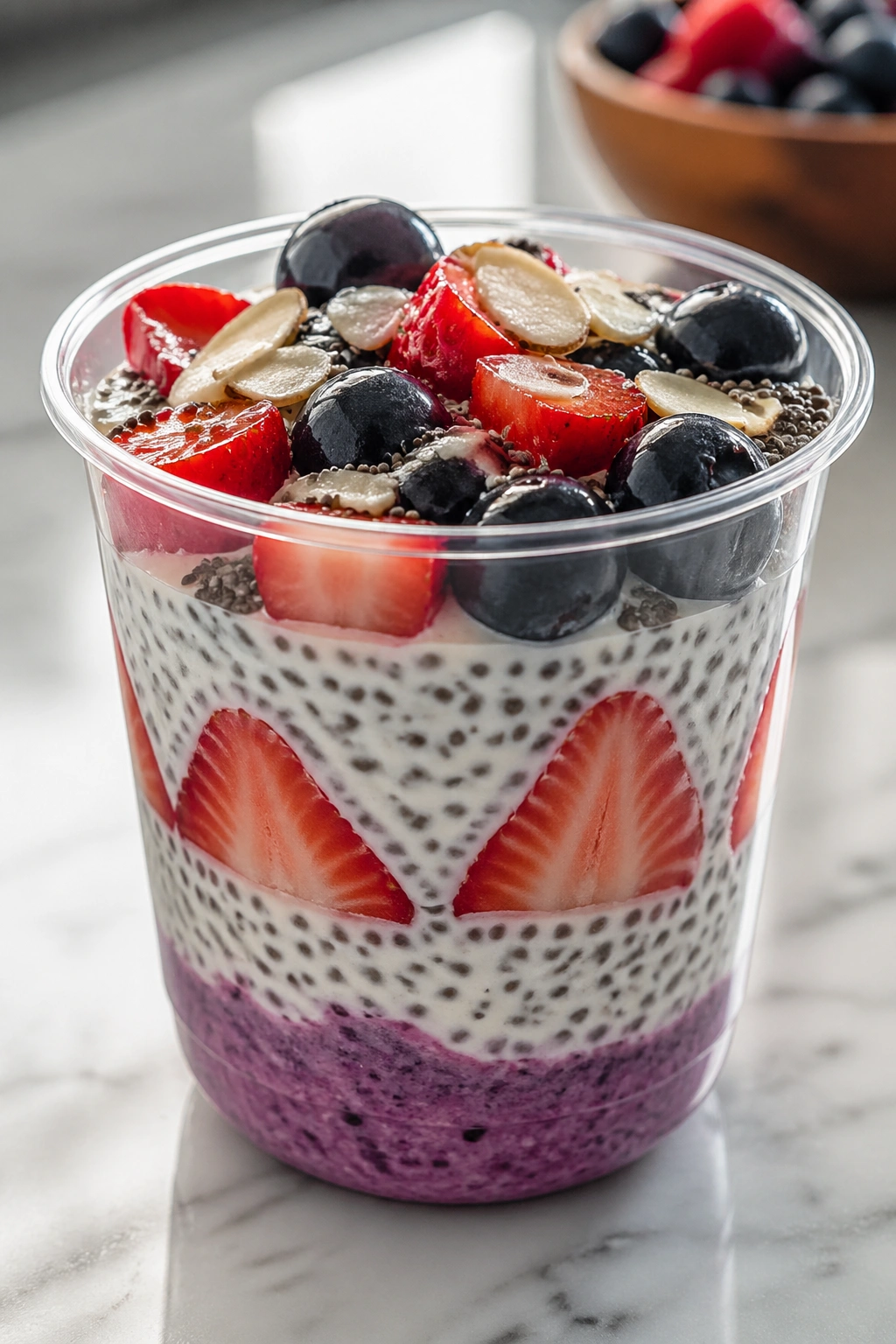
Late-night cravings are where a lot of eating plans quietly fall apart. Not with a dramatic blowout. Just a spoon here, a handful there, then another round because the kitchen is still open and the lights are still on. A small chia snack cup can interrupt that loop.
The formula is simple: 1 tablespoon chia seeds, ½ cup plain Greek yogurt or unsweetened pudding-style yogurt, a few berries, cinnamon, and maybe a teaspoon of chopped nuts if you need more bite. Stir it, let it sit for a few minutes, and eat it cold. It feels more deliberate than random snacking, which is half the battle.
You can also make a sweeter version with cocoa powder and a tiny splash of vanilla, but keep the sweetener light. If the cup starts tasting like dessert, you’ve probably crossed the line from snack into treat. That may be fine sometimes, but it is not the setup you want every night.
This is the most useful habit on the list if your problem is not breakfast. It is the gap between dinner and bed. Chia works there because it gives your mouth something to do, gives your stomach some volume, and keeps the portion small enough that you do not wander into the kitchen for a second round. Use the versions you’ll actually make. Keep them plain enough to repeat. That’s the whole point, really.
