



No, crunches are not magic. If your stomach is the first place you check in the mirror, the promise of belly fat workouts at home can feel almost too simple to trust.
But the simple part is the point. You cannot spot-reduce fat from one area, yet you can use short, hard bursts of movement to burn calories, train the core, and make your whole body do more work.
A mat helps. So does a chair, a wall, and enough floor space to sprawl out for a plank without kicking the coffee table.
Pick a few moves, string them into a circuit, keep the rest short, and stay honest about form. A clean setup looks like this: 30 seconds on, 15 seconds off, three rounds, with one or two low-impact moves mixed in if your knees or lower back need a break.
1. Mountain Climbers
Mountain climbers are the loud, sweaty move that makes a home routine feel serious fast.
Your hands stay under your shoulders, your knees drive toward your chest, and your hips try not to bounce like a loose door hinge. Done well, they hit the abs, shoulders, and lungs at once.
How to keep them clean
- Keep your shoulders stacked over your wrists.
- Drive each knee forward without rounding your upper back.
- Move fast enough to raise your heart rate, but not so fast that your feet turn into a blur.
Try 20 to 40 seconds per round. If your wrists get cranky, put your hands on a sturdy bench or couch edge and keep the same rhythm.
2. Dead Bug
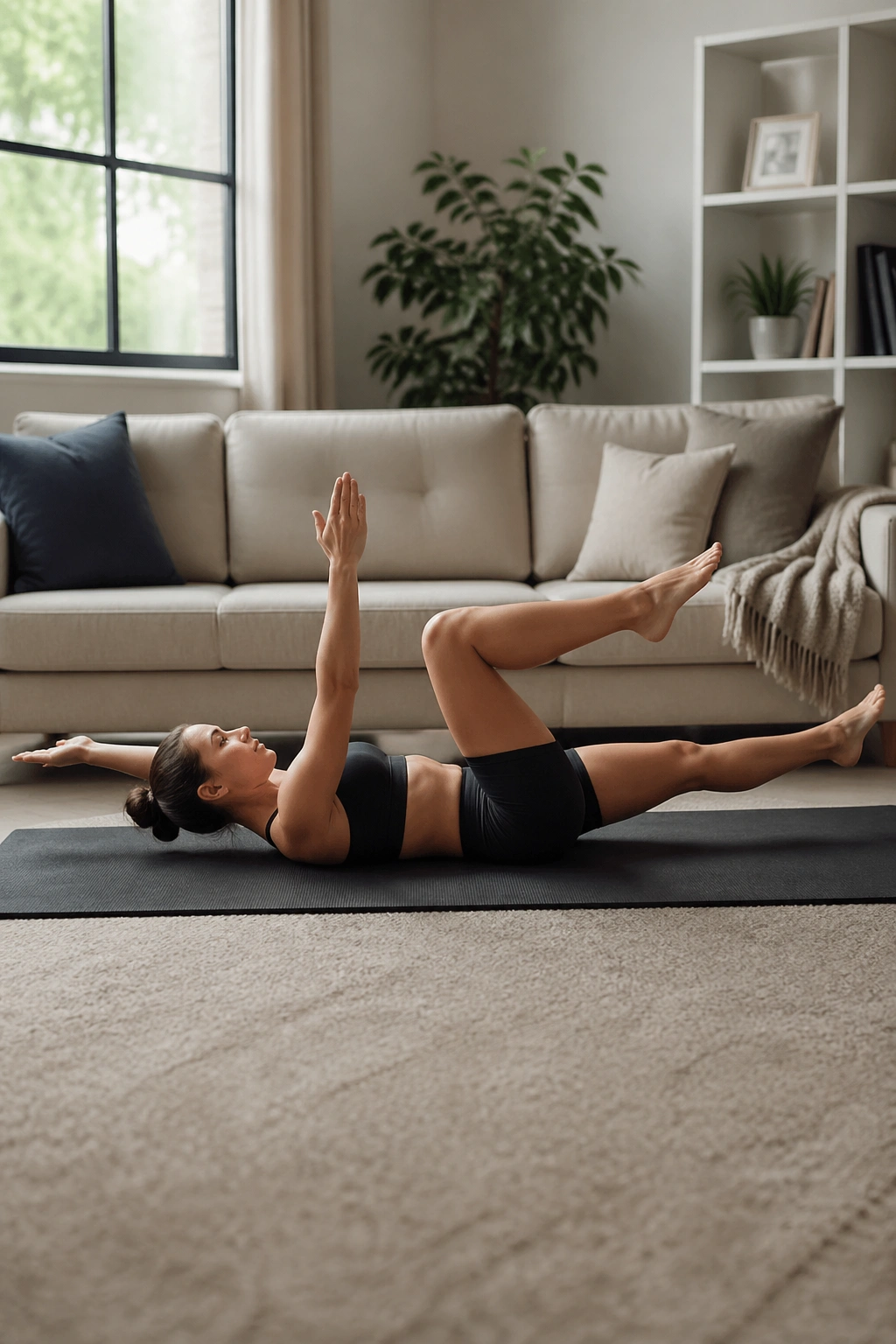
Want a core move that does not chew up your neck?
The dead bug is one of the best ways to teach your midsection to stay braced while your arms and legs move in opposite directions. That anti-extension work matters more than people think, because a stable trunk makes almost every other exercise feel cleaner.
Why it works
Lie on your back, press your lower back gently into the floor, and move slowly enough to keep that contact. If your back pops up, the range is too big. Simple.
Do 6 to 10 reps per side and pause for one full second each time a heel or hand reaches out. A bent-knee version is fine, and honestly, that is the version most people should start with.
3. High Knees
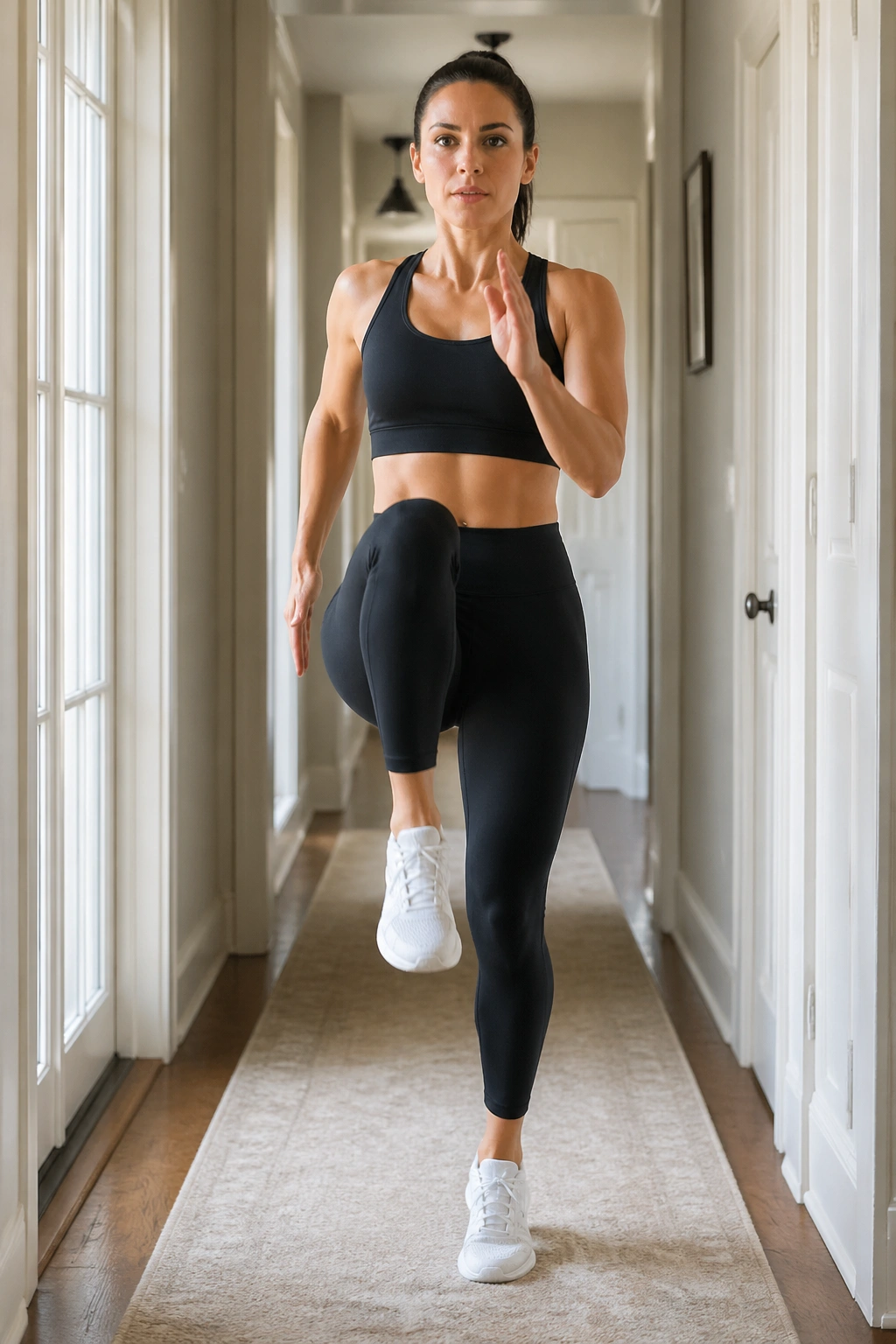
High knees are cardio with attitude.
Lift one knee at a time to hip height, or as close as your mobility allows, and pump your arms like you mean it. The move is simple, but the breathing gets heavy fast, which is why it earns a spot in belly fat workouts at home.
No need to bounce around mindlessly. Keep your chest tall and land softly on the balls of your feet. If you want a quieter version, march with power instead of jogging.
Run them for 20 to 30 seconds, then recover for 20 seconds. That short burst format keeps the pace honest without turning the floor into a trampoline.
4. Bicycle Crunch
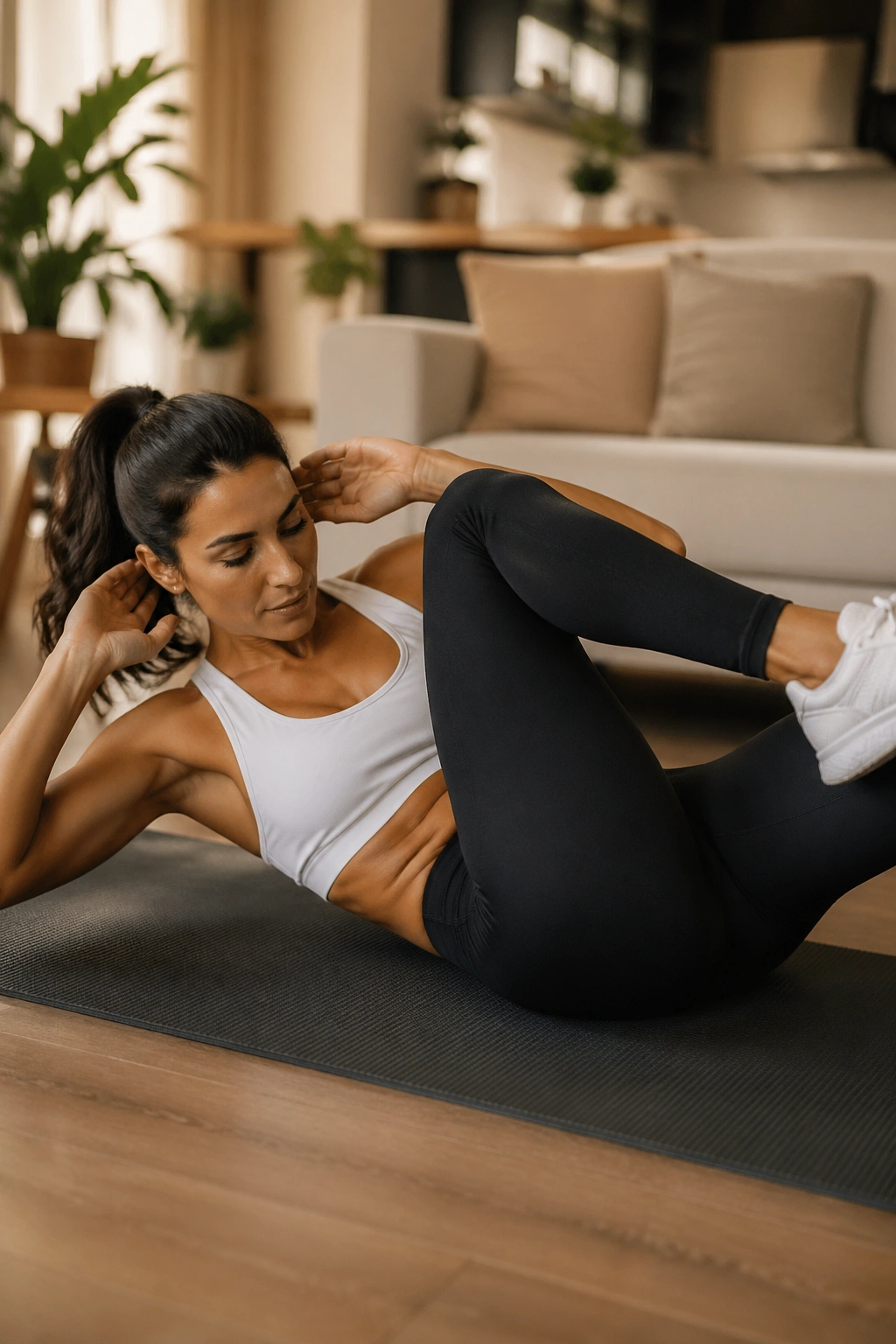
Slow bicycles beat fast flailing every time.
This move works best when you twist from the rib cage instead of yanking your elbows across your face. The goal is control, not speed. When people rush it, the neck starts doing the work and the abs get almost none of the credit.
Keep one shoulder blade lifted, extend the opposite leg, and rotate with enough range to feel the side of your waist wake up. A little burn is fine. A jerky, painful pull is not.
Aim for 10 to 15 controlled reps per side. If your lower back feels sketchy, keep one foot on the floor and slow the whole thing down.
5. Plank Shoulder Taps
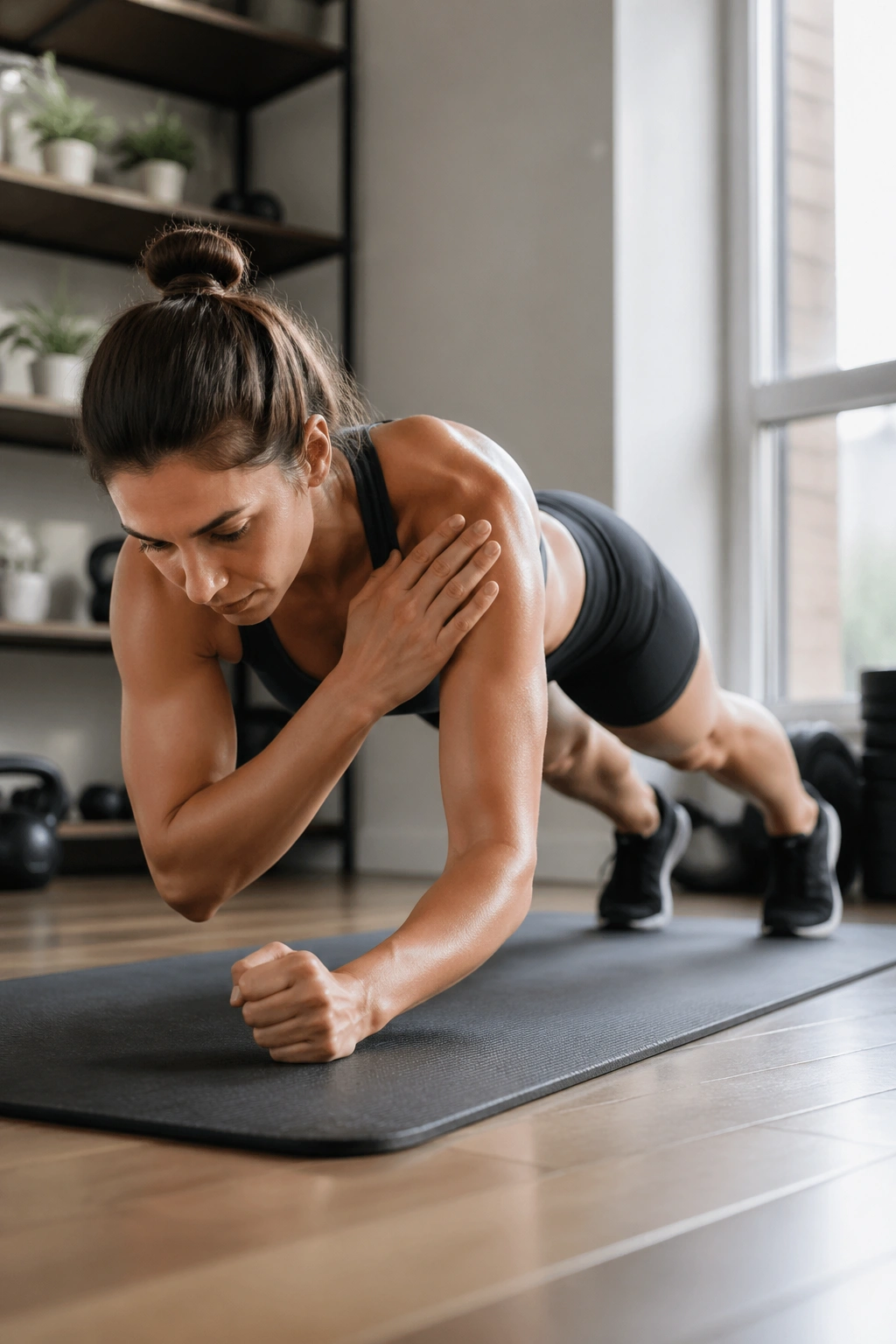
If you want a quick test of whether your core is actually working, tap one shoulder without rocking the rest of your body.
That’s the whole game here. Your feet sit a little wider than hip-width, your hips stay level, and your hands alternate taps while your abs fight to keep you from twisting. It looks calm. It is not.
This is a good choice when you want core work without endless crunching. It also teaches you how to resist rotation, which shows up in almost every real-life movement, from carrying groceries to picking up a kid.
Do 20 total taps to start, then build to 30 or 40. If your hips sway side to side, widen your feet and slow down.
6. Reverse Crunch
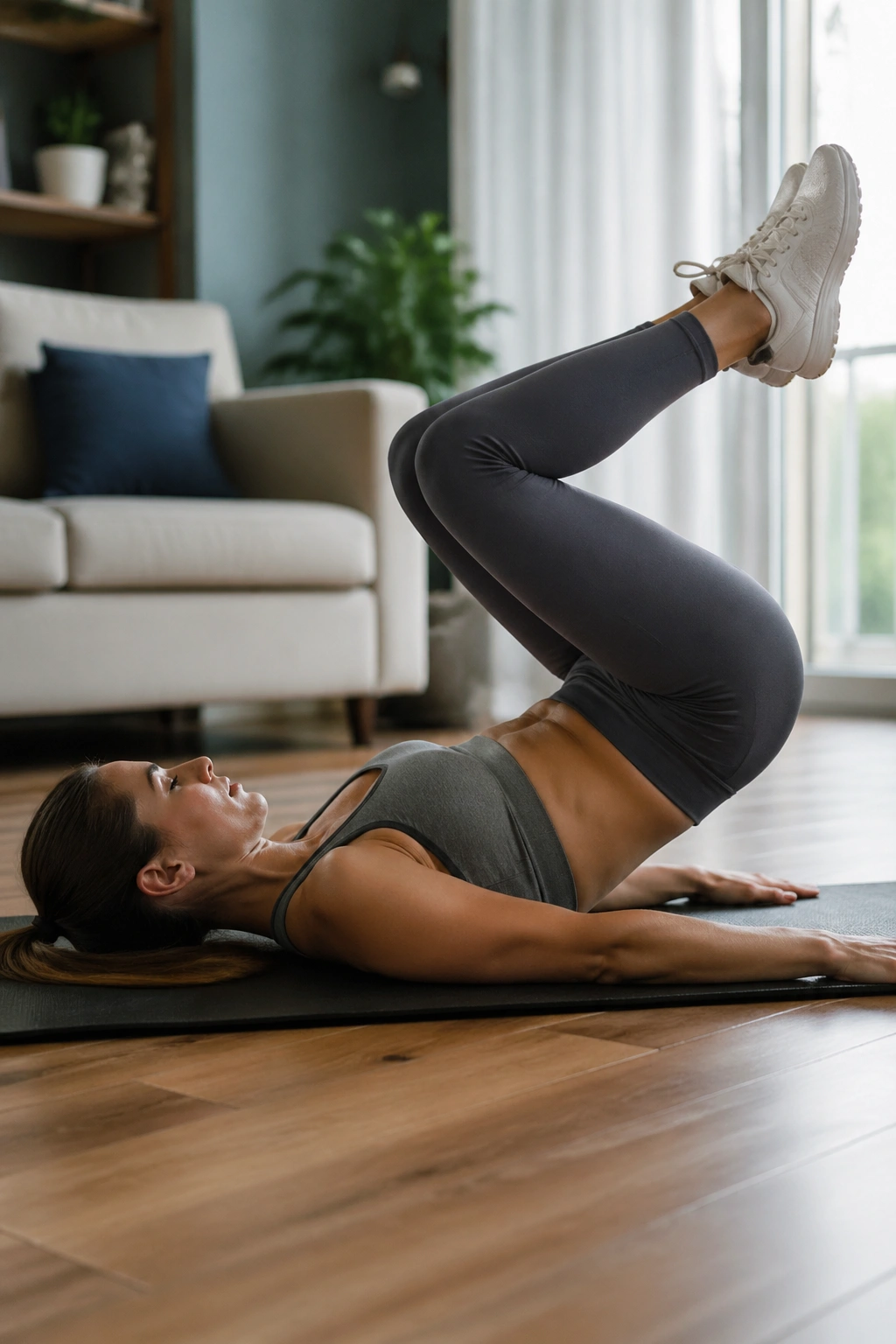
Unlike a regular crunch, the reverse crunch asks your pelvis to curl up instead of your ribs collapsing down.
That small difference matters. You’re not swinging your legs around and hoping for the best. You’re using your lower abs to lift the hips just enough for a clean curl, which is a lot harder than it sounds when you do it slowly.
Keep your knees bent, bring them toward your chest, and peel your tailbone off the floor an inch or two. Do not kick; that turns the move into momentum, and momentum is lazy.
A good set is 8 to 12 reps with a brief pause at the top. If your lower back arches, shorten the range and focus on exhaling as the hips lift.
7. Burpees
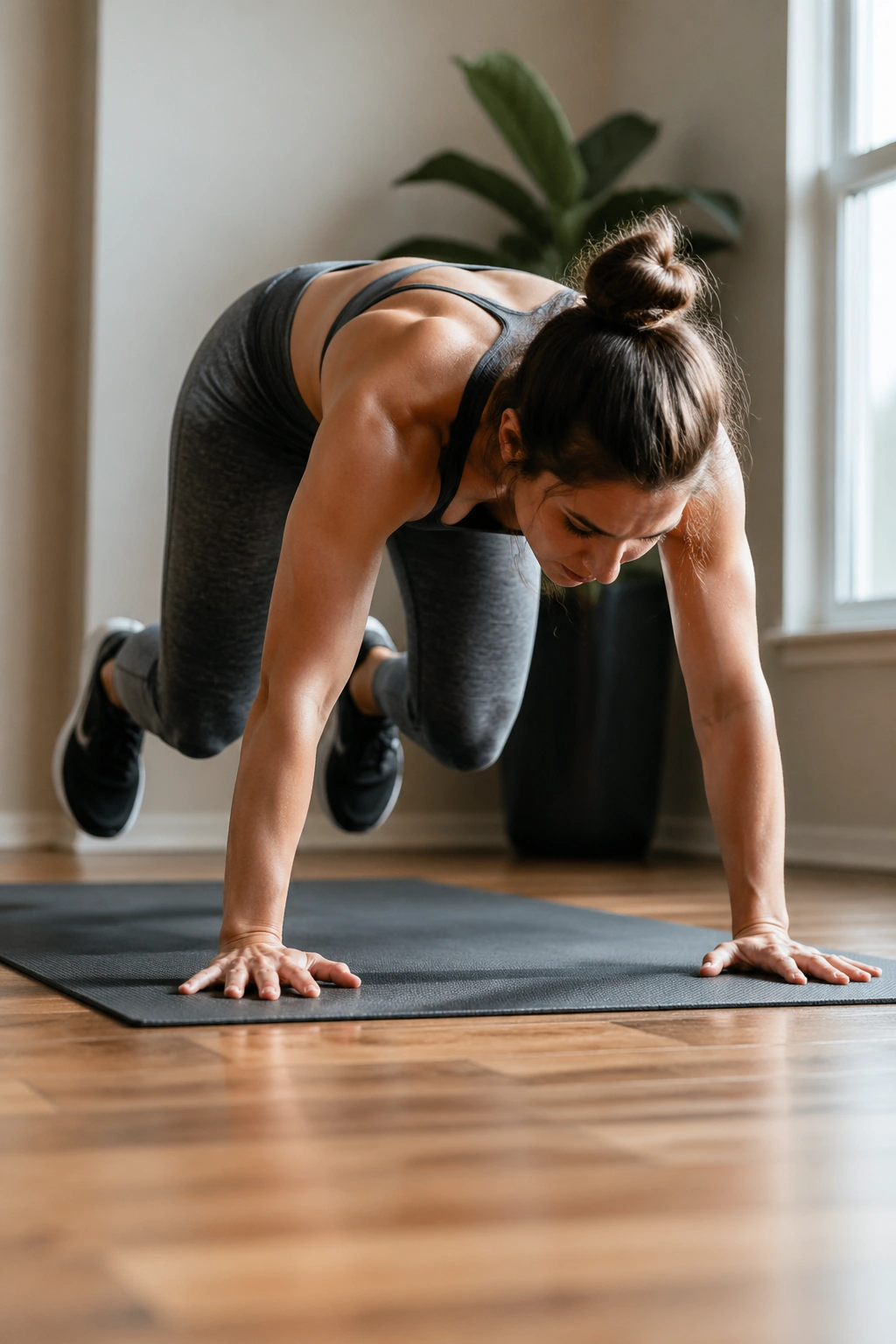
Do burpees belong in a belly-fat routine? Annoyingly, yes.
They combine a squat, plank, push-up, and jump into one fast, messy package, which is exactly why they burn so much energy. A few clean rounds can leave your whole body hot in under a minute.
The trick is not to treat every rep like a demolition job. Step back instead of jumping if needed, and keep the push-up optional when fatigue starts to drag your form into the floor. A burpee that looks tidy is far better than one that flops.
Start with 6 to 10 reps. If that sounds ugly, good — that means you’re probably honest about where your fitness is.
8. Jumping Jacks
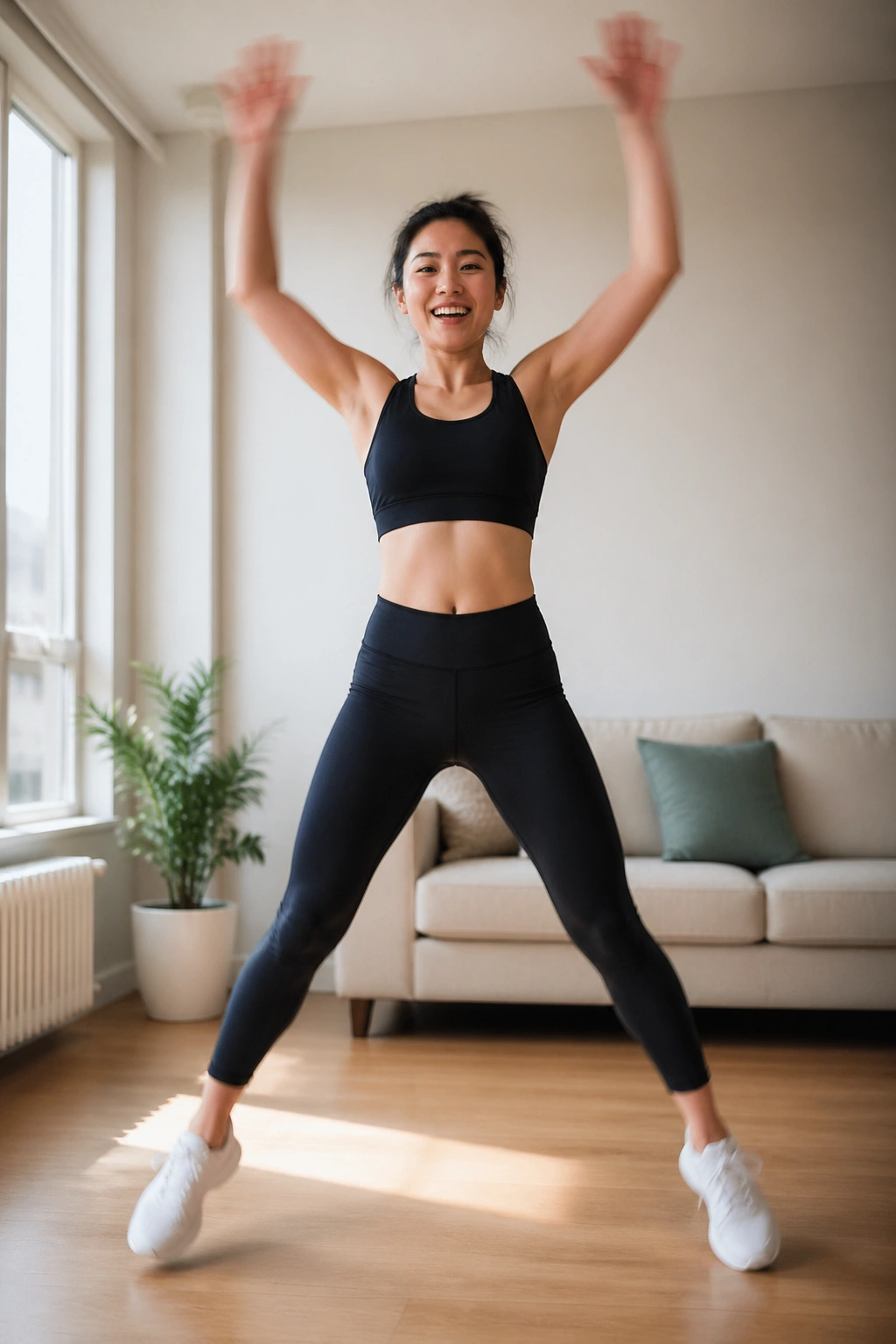
A jumping jack looks basic until you do 60 of them.
Arms reach overhead, feet jump out wide, then everything snaps back together. It is easy to dismiss because most people learned it as a warm-up, but that’s exactly why it works so well in home circuits. It keeps the pace up without needing space, equipment, or thought.
Use them as a starter, a finisher, or a recovery move between harder exercises. If impact bothers your joints, step one foot out at a time and keep the arm swing.
Work for 30 to 60 seconds. The best version feels springy, not sloppy.
9. Russian Twists
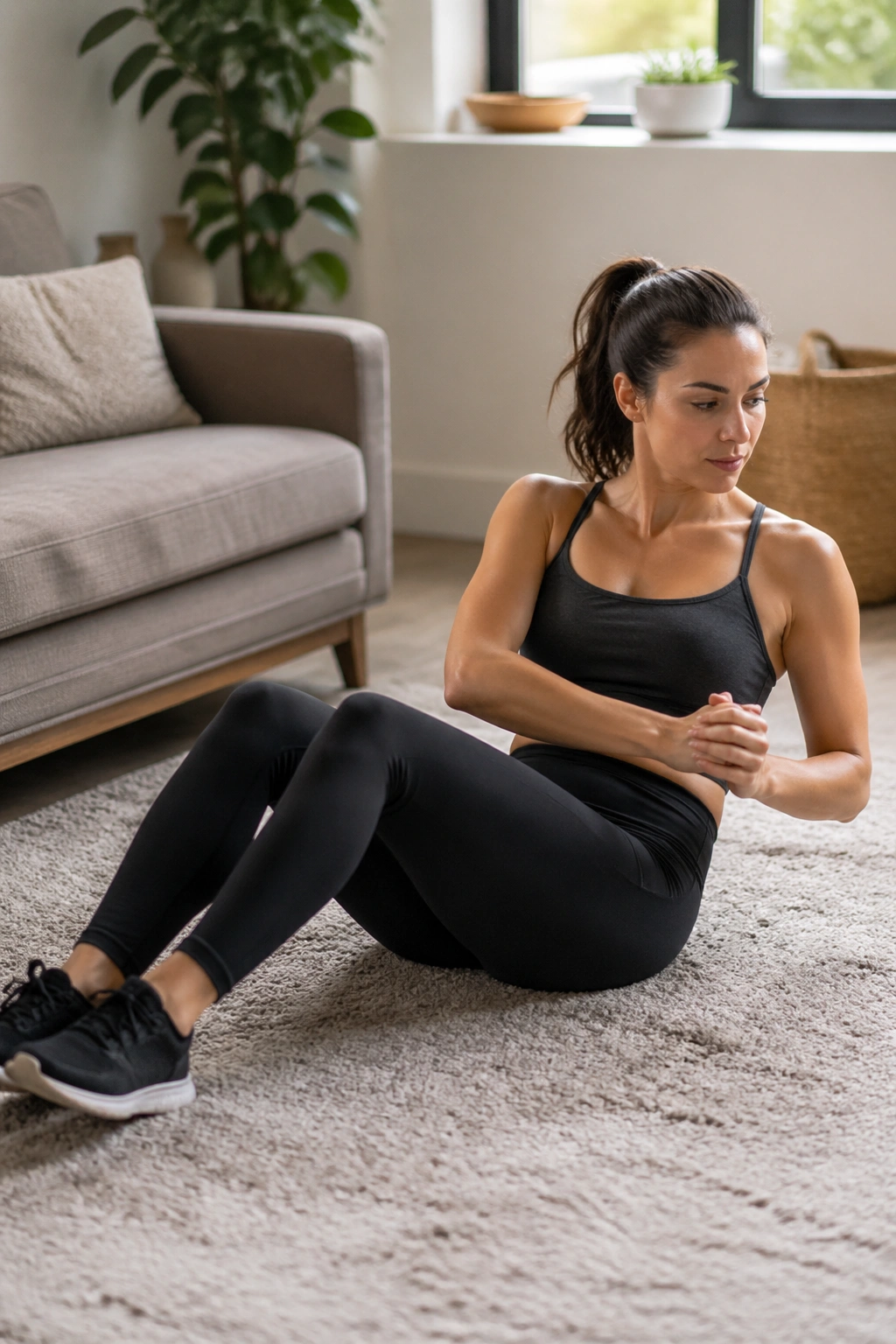
Russian twists are useful only when you keep them controlled.
How to stop them from turning sloppy
- Sit tall and lean back only a little.
- Twist your rib cage, not just your hands.
- Keep both feet down if your lower back feels tired.
The move is meant to train rotational control, not to turn into a frantic arm wag. A light weight can help, but only after you can stay steady without your spine rounding.
Do 16 to 24 total twists. If your hip flexors start yelling, put your heels on the floor and slow the tempo right down.
10. Squat to Reach
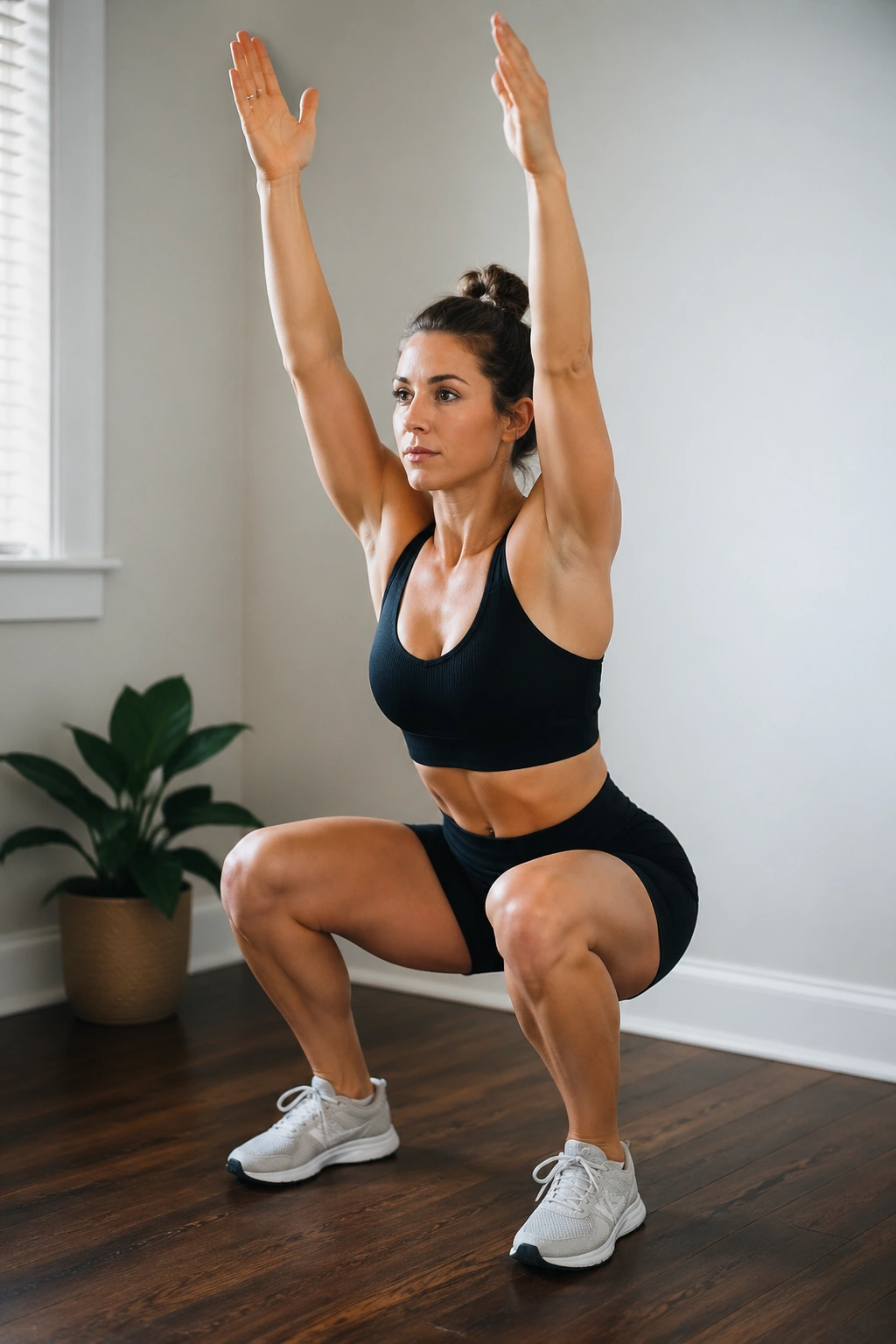
Squat to reach is the move I like when a workout needs to calm down a little without losing momentum.
Drop into a squat, stand up, and reach both arms overhead as you rise. That full-body pattern asks your legs, glutes, and core to work together, and it gives your breathing a second to settle while still keeping your heart rate honest.
Keep your heels planted and your chest open. If your knees cave inward, make the stance a bit wider and sink less deep for a few rounds.
Do 12 to 15 reps with a smooth rhythm. The best version feels athletic, not rushed.
11. Bear Crawl
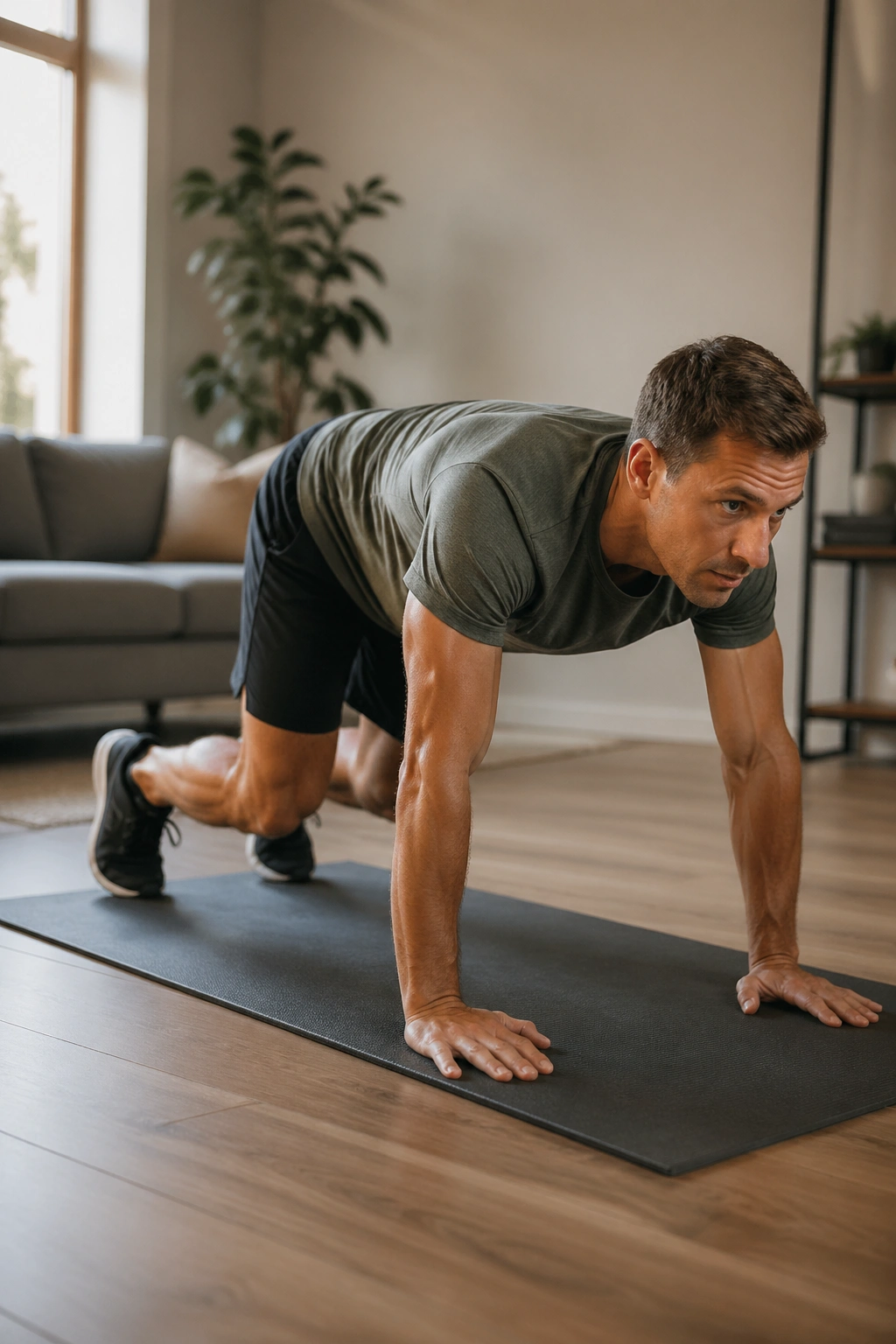
A bear crawl looks awkward because it is. That’s part of the point.
Why the crawl matters
You are hovering over the floor on your hands and feet, moving opposite limbs while your core tries to stop your hips from swinging all over the place. It is sneaky. It also trains shoulders, abs, and coordination at the same time.
Take small steps, keep your knees a few inches off the ground, and move forward for 10 to 20 steps before backing up. If your space is tiny, crawl in place for 20 seconds and focus on quiet feet.
Do not race it. Crawling cleanly is harder than crawling fast.
12. Plank Jacks
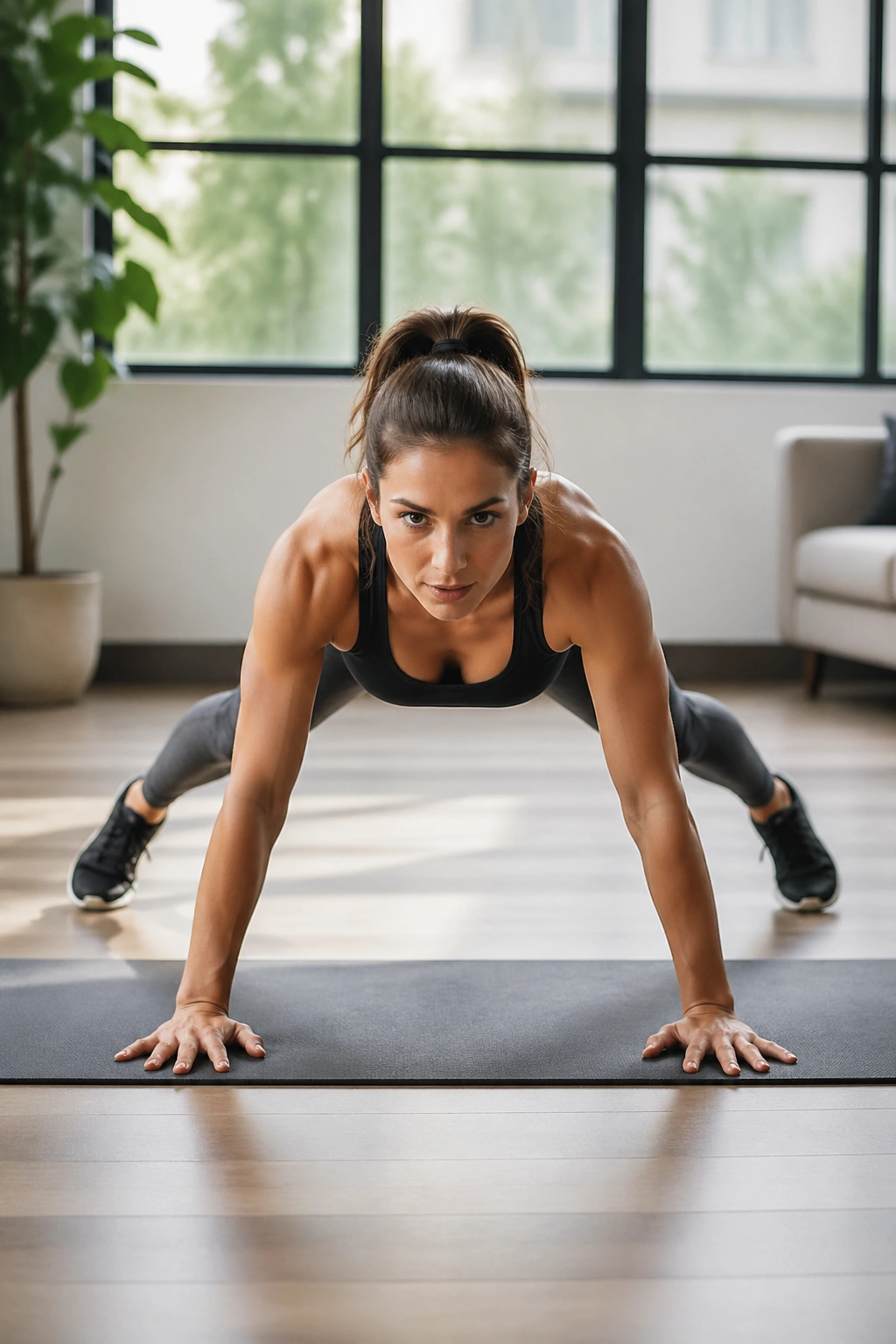
Plank jacks are what happens when a plank grows teeth.
Your body stays in plank position while your feet hop out and in, which jacks up the heart rate and forces your core to keep everything steady. They’re great when you want a cardio hit without standing up and down between moves.
If the jump is too much, step one foot out at a time. That slower version still trains the same pattern and saves your wrists and shoulders from getting sloppy.
Try 15 to 30 seconds. Keep the hips from sagging; once the low back starts dipping, the set is over.
13. Standing Cross-Body Knee Drives
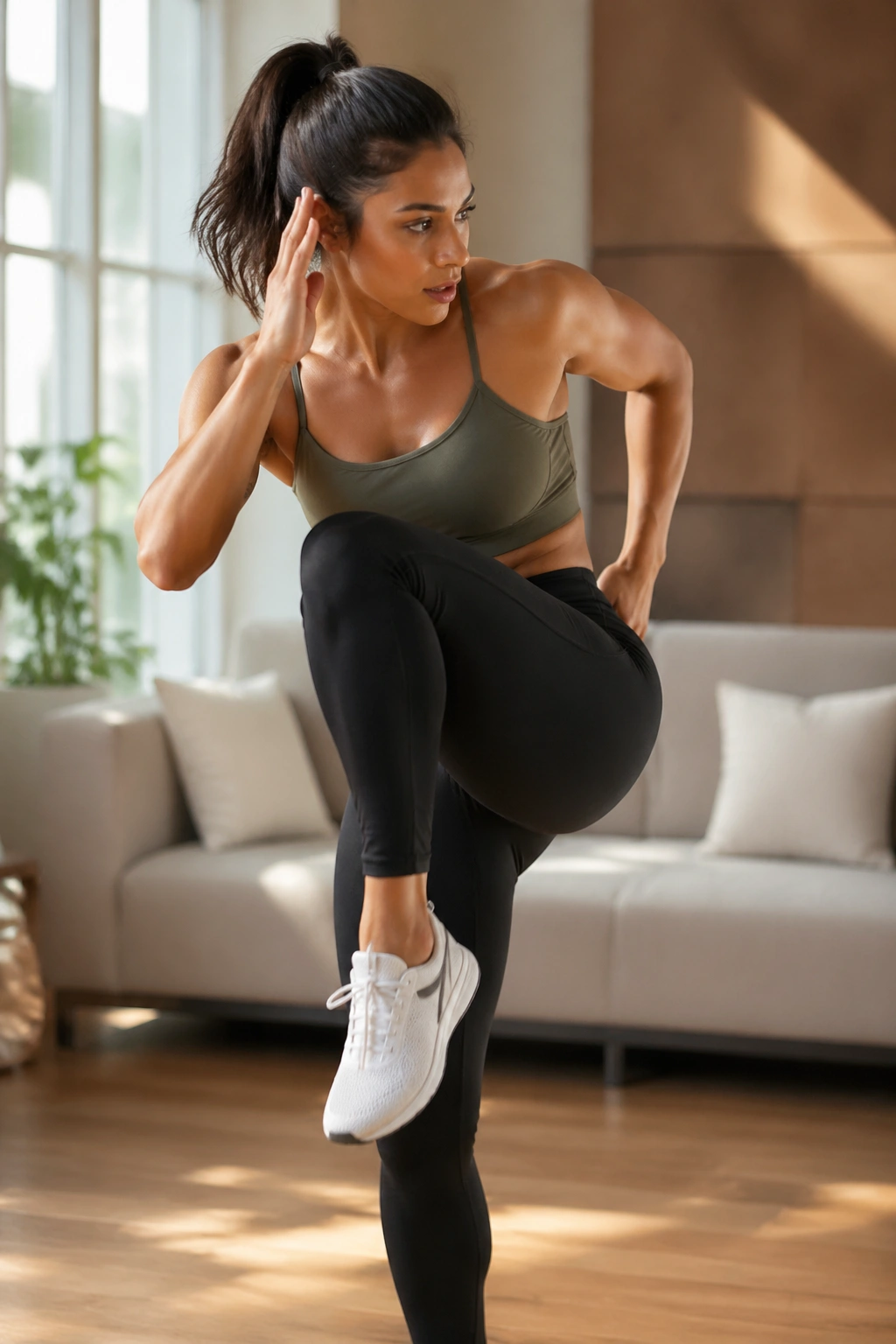
Not in the mood to get on the floor? Fine.
Standing cross-body knee drives let you train the core and heart rate without a single crunch. Bring one knee up toward the opposite elbow, squeeze through the waist, and switch sides with a quick but controlled rhythm.
This move is friendly on the knees, which is why it fits so well into home circuits on tired days. It also teaches a little balance and hip control, which people forget matters until they lose it.
Work for 30 to 45 seconds. The smaller, cleaner version usually beats the wild one.
14. Flutter Kicks
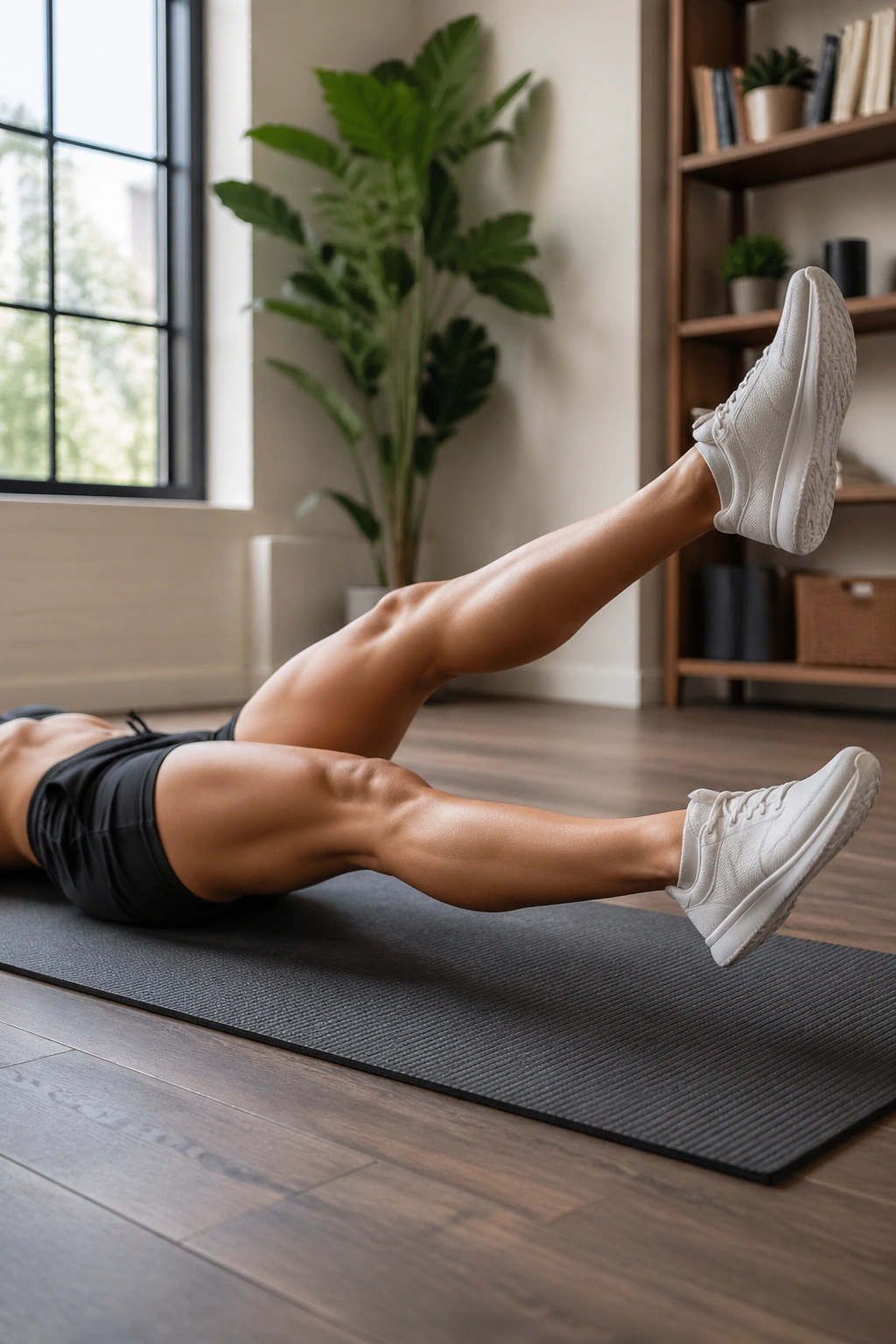
Your lower abs will know about flutter kicks within ten seconds.
Lie on your back, press your low back into the floor, and alternate small up-and-down kicks with straight legs or bent knees. The kicks should be quick but tiny. If the legs are dropping low enough to arch your back, the range is too ambitious.
Back check
- Keep your hands under your hips if you need support.
- Lift your head only if your neck feels fine.
- Stop the set the second your back starts to peel up.
Aim for 20 to 30 seconds. Short sets work better here than long ones, because the form falls apart fast.
15. Skaters
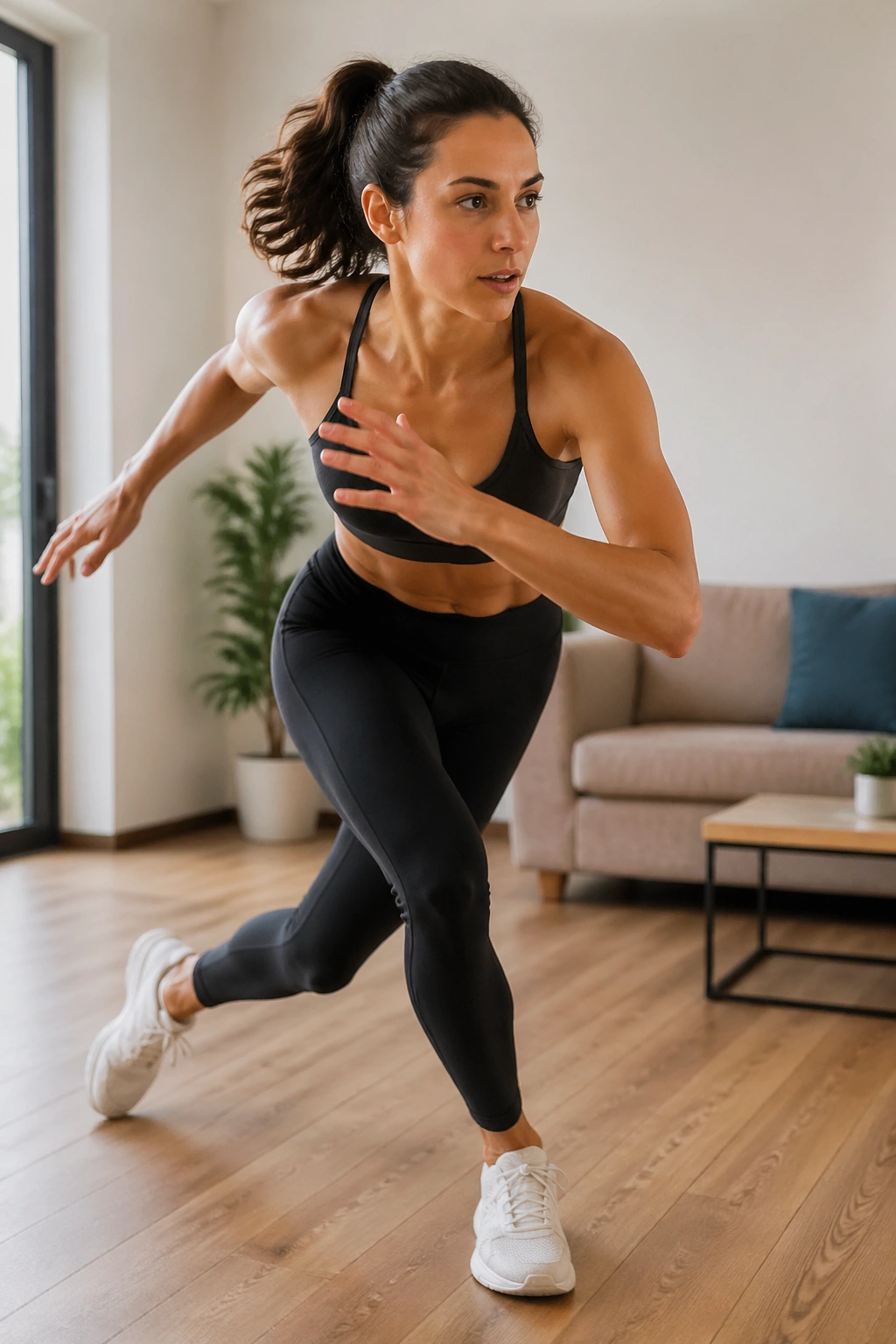
Skaters are the move that makes side-to-side work matter.
Jump or step from one leg to the other, reaching the back foot behind you like you’re crossing a line on the floor. The side-to-side push wakes up the glutes and keeps your core busy stabilizing the landing.
Land softly. That sounds obvious, but people forget and start slamming into the floor like they’re late for a train. A softer landing keeps the movement useful and kinder on the knees.
Do 10 to 16 total reps. If jumping feels rough, turn it into a fast step-touch with the same reach.
16. Slow Tempo Squats
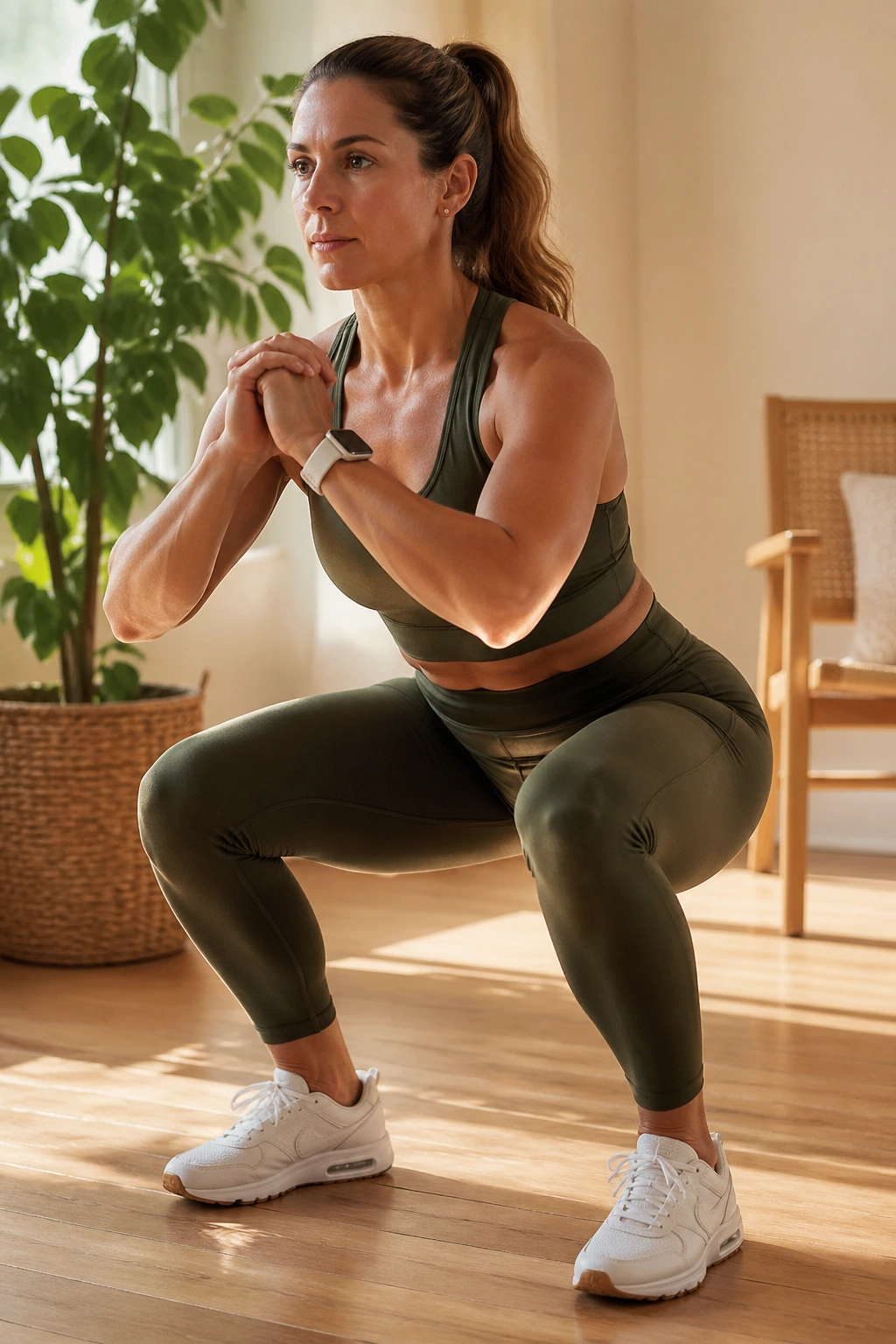
Not every belly-fat workout needs jumps.
Slow tempo squats make a light movement heavy by stretching the time under tension. Drop for 3 seconds, pause for 1 second, then stand up with control. The burn shows up in the thighs first, but the core works hard too because you have to stay stacked and balanced.
This is one of those moves that looks too easy until rep six. Then it starts to bite.
Use 8 to 12 reps and keep your feet rooted. If your heels lift, the squat is too deep or your stance is too narrow.
17. Side Plank Hip Dips
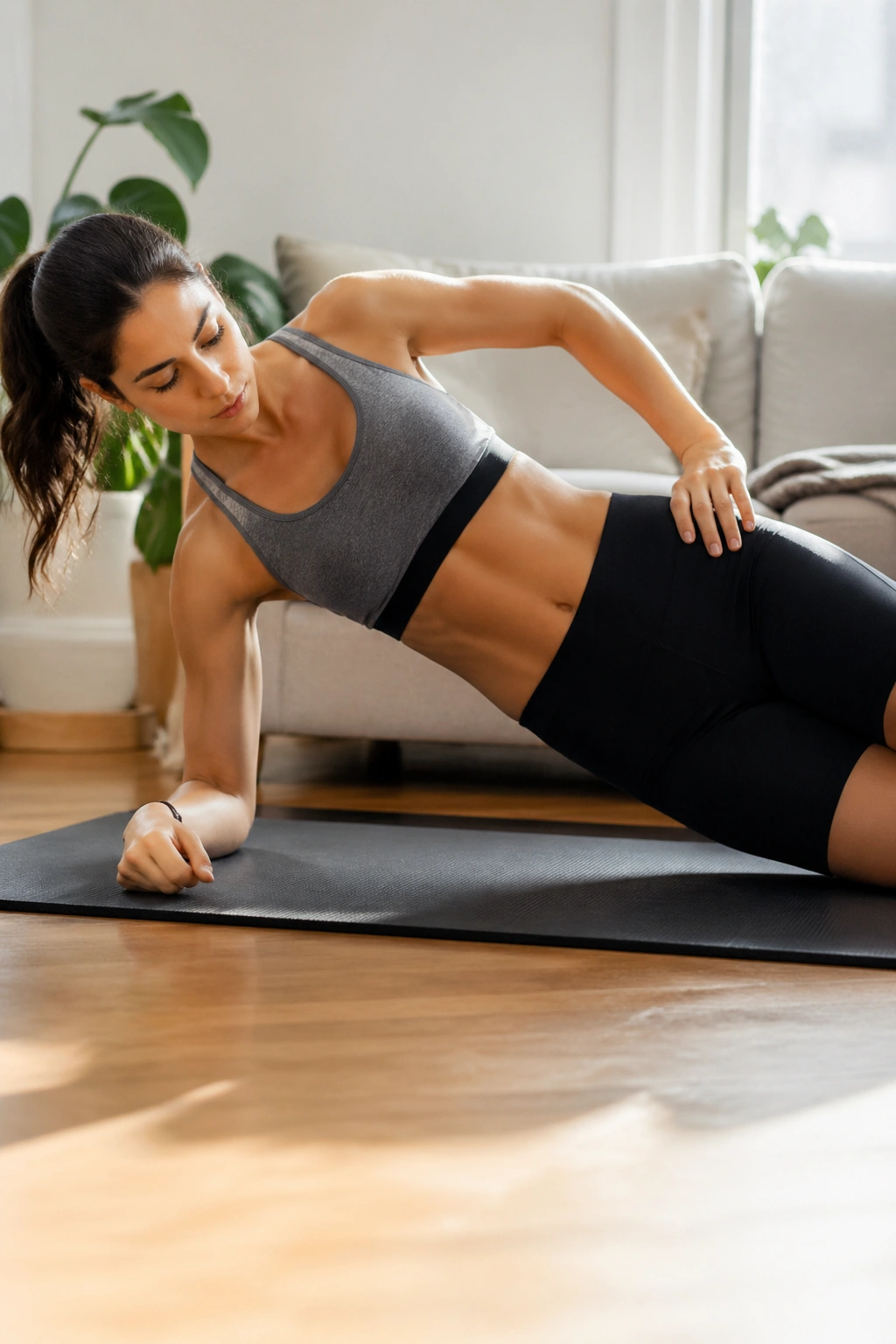
What makes side plank hip dips rough is not the dip — it is staying honest in the first place.
Hold a side plank, lower your hips a few inches, then lift them back to line. The side waist, shoulder, and outer hip all have to stay awake, and that makes the exercise far more useful than a lazy side hold.
Make it manageable
- Drop the bottom knee to the floor.
- Keep the top shoulder stacked instead of rolling forward.
- Move only through a small range at first.
Do 8 to 12 dips per side. The goal is control, not a huge drop.
18. Glute Bridge March
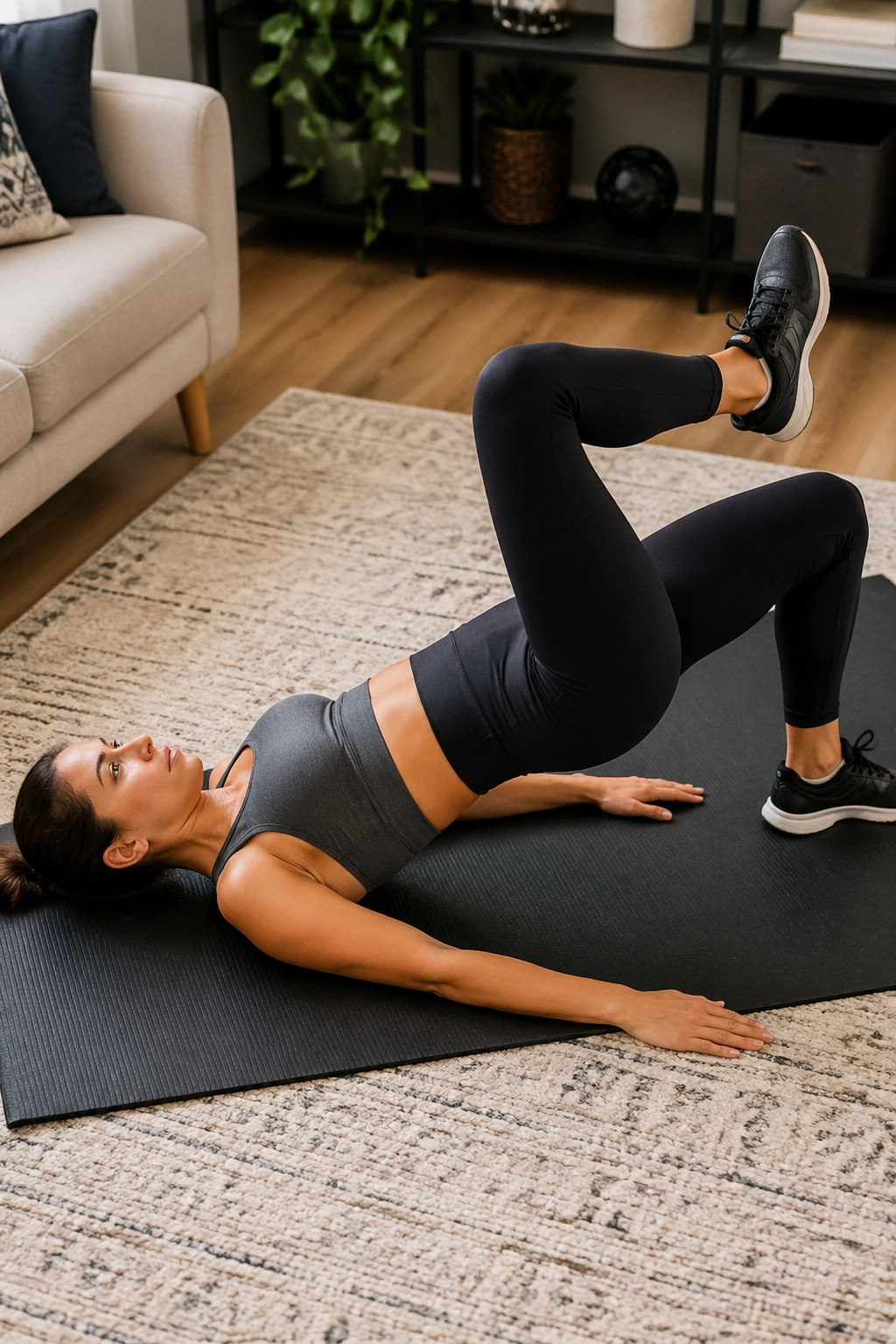
Glute bridge marches look tame from the side.
Lie on your back, lift into a bridge, and march one knee at a time without letting the hips wobble. That little wobble test tells you a lot. If your pelvis stays level, your glutes and core are sharing the load like they should.
How to keep hips level
- Press through your heels.
- Brace before each lift.
- Move one leg at a time, slowly.
Try 10 to 16 marches total. If your hamstrings cramp, lower the bridge a bit and reset your feet closer to your body.
19. Marching in Place with Overhead Reach
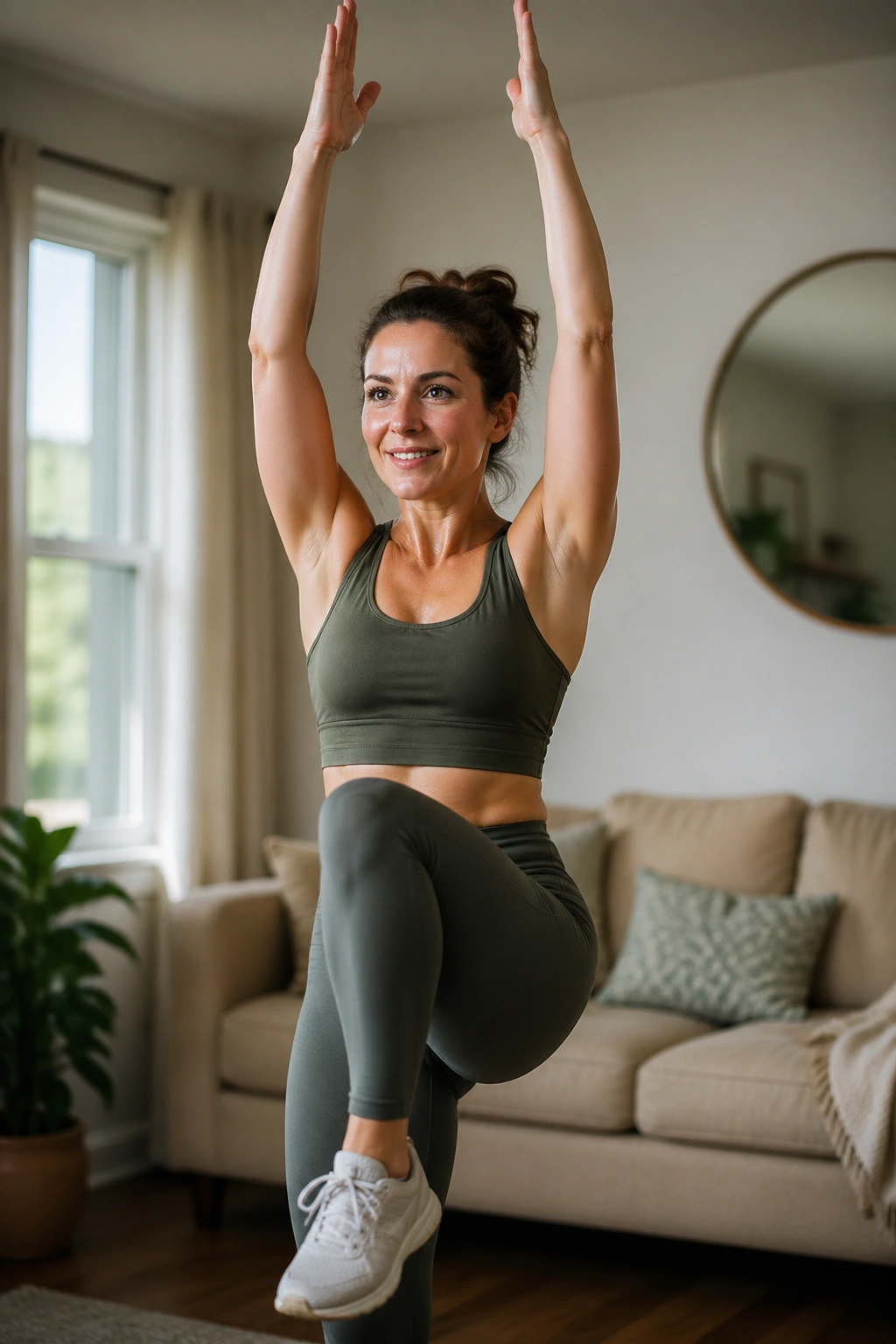
Marching in place sounds boring until you layer on intent.
Lift one knee, reach both arms overhead, and keep the rib cage from flaring open. The overhead reach turns a plain march into a posture drill that still gets your heart rate up, which is useful on low-energy days when jumping feels like too much.
This is the move I’d hand to someone who wants gentler belly fat workouts at home without lying on the floor. It fits beside the sink, next to the couch, or in a tiny apartment hallway.
Do 60 seconds at a steady pace. Taller posture matters more here than speed.
20. Toe Touch Crunches
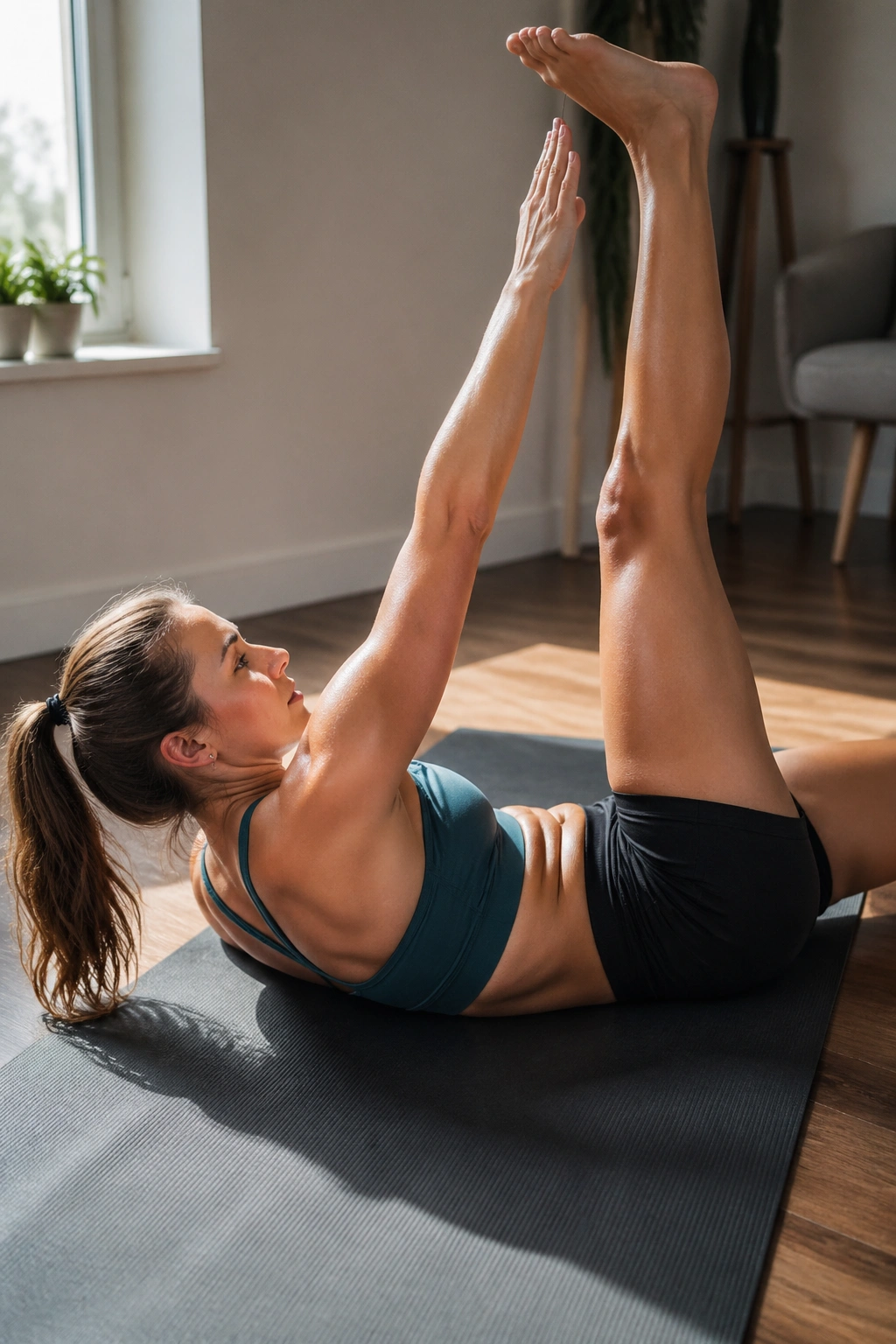
Toe touch crunches are the closest thing to a classic gym-class burn that still feels useful.
Lie on your back, extend your legs upward, and reach one hand toward the opposite foot or shin. The reach should come from the ribs lifting and the abs curling, not from yanking your neck forward like you’re trying to inspect your ceiling.
Keep the movement crisp. If your hamstrings are tight, bend the knees a bit and still chase control. A clean shorter range beats a sloppy big one every time.
Aim for 12 to 15 reps. Exhale as you reach; it helps the ribs lift without brute force.
21. Lunge + Twist
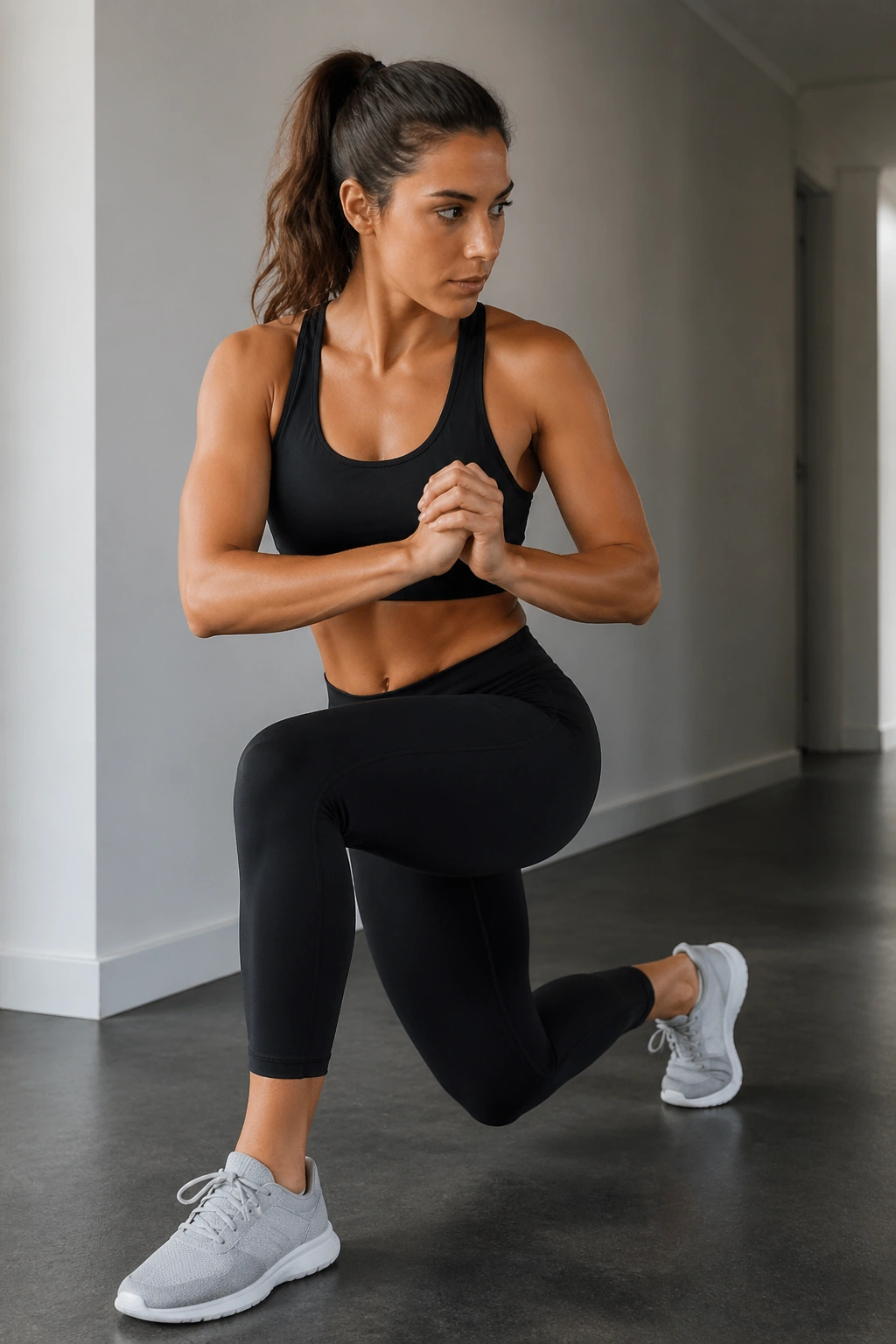
One lunge, one twist, and suddenly your abs have to help with balance.
Step forward into a split stance, sink into the lunge, then rotate your torso toward the front leg. That twist brings the core into the picture in a way that feels more athletic than a basic floor move, and it works the legs hard enough to keep the whole circuit honest.
Do not spin wildly. The twist should be controlled and small enough that your front knee stays lined up over the foot.
Use 6 to 10 reps per side. If balance is shaky, hold onto a wall with one hand and keep the rotation tiny.
22. Fast Feet
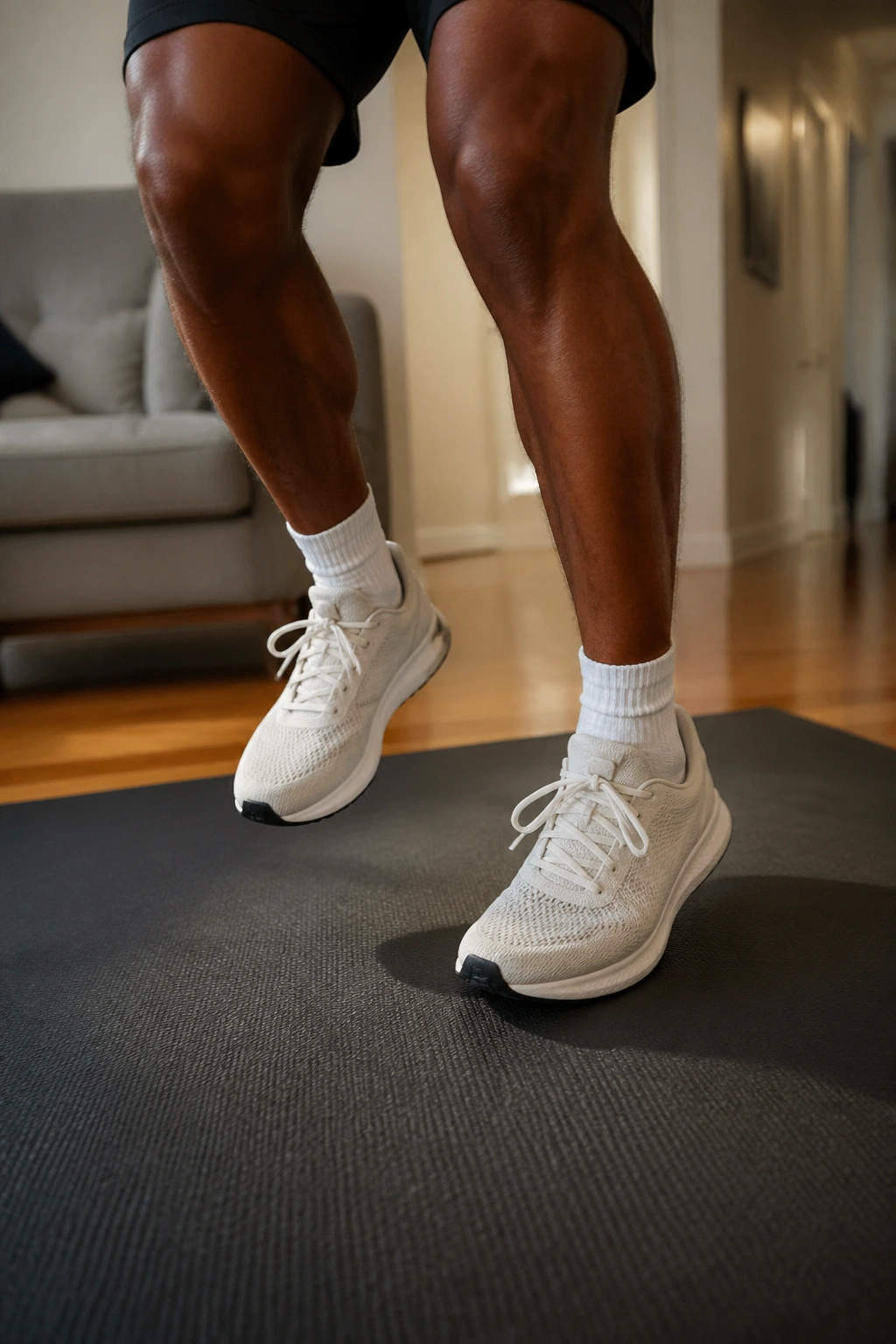
Fast feet are tiny, ugly, effective.
Stay on the balls of your feet and tap them quickly under your hips, like you’re trying not to get caught standing still. The move looks almost too small to matter, which is exactly why people underestimate it. Give it fifteen seconds and your breathing starts changing.
How to stay light
- Keep your knees soft.
- Stay tall through the chest.
- Move the feet fast, not the shoulders.
Run 15 to 30 seconds at a time. It’s a strong finisher when you need a quick cardio burst without a lot of room.
23. Hollow Body Hold
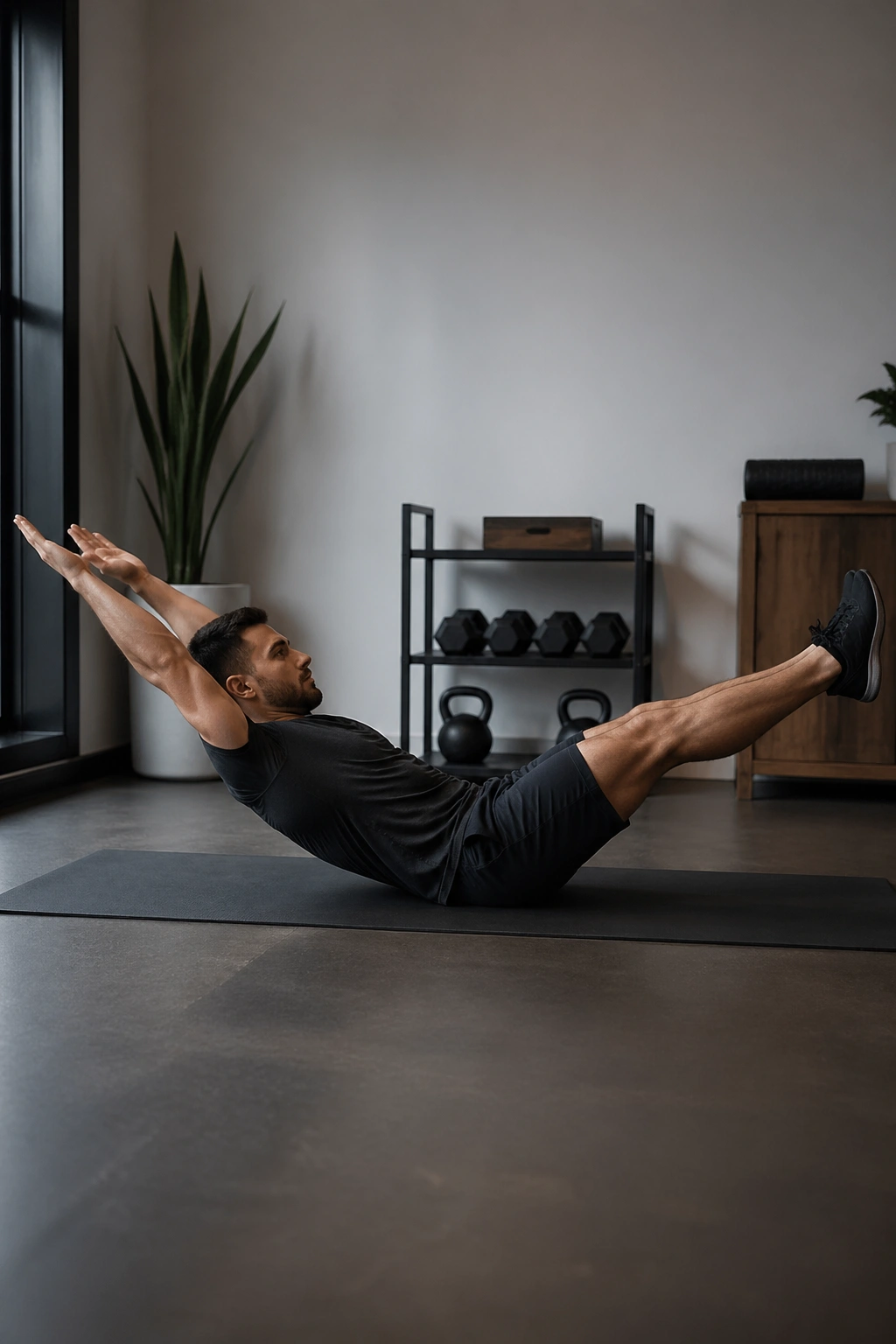
Few bodyweight holds are as honest as the hollow body hold.
Lie on your back, press your lower back into the floor, lift your shoulders, and extend your arms and legs into a tight, shallow banana shape. If your back arches, the hold stops being useful and starts being a lower-back complaint.
Start here if the full version is too hard
- Bend the knees.
- Keep the arms by your ears or down by your sides.
- Hold for 10 to 20 seconds before adding time.
Short, sharp sets are better than sloppy long ones. This is a hard move, and pretending otherwise helps no one.
24. Chair Step-Ups
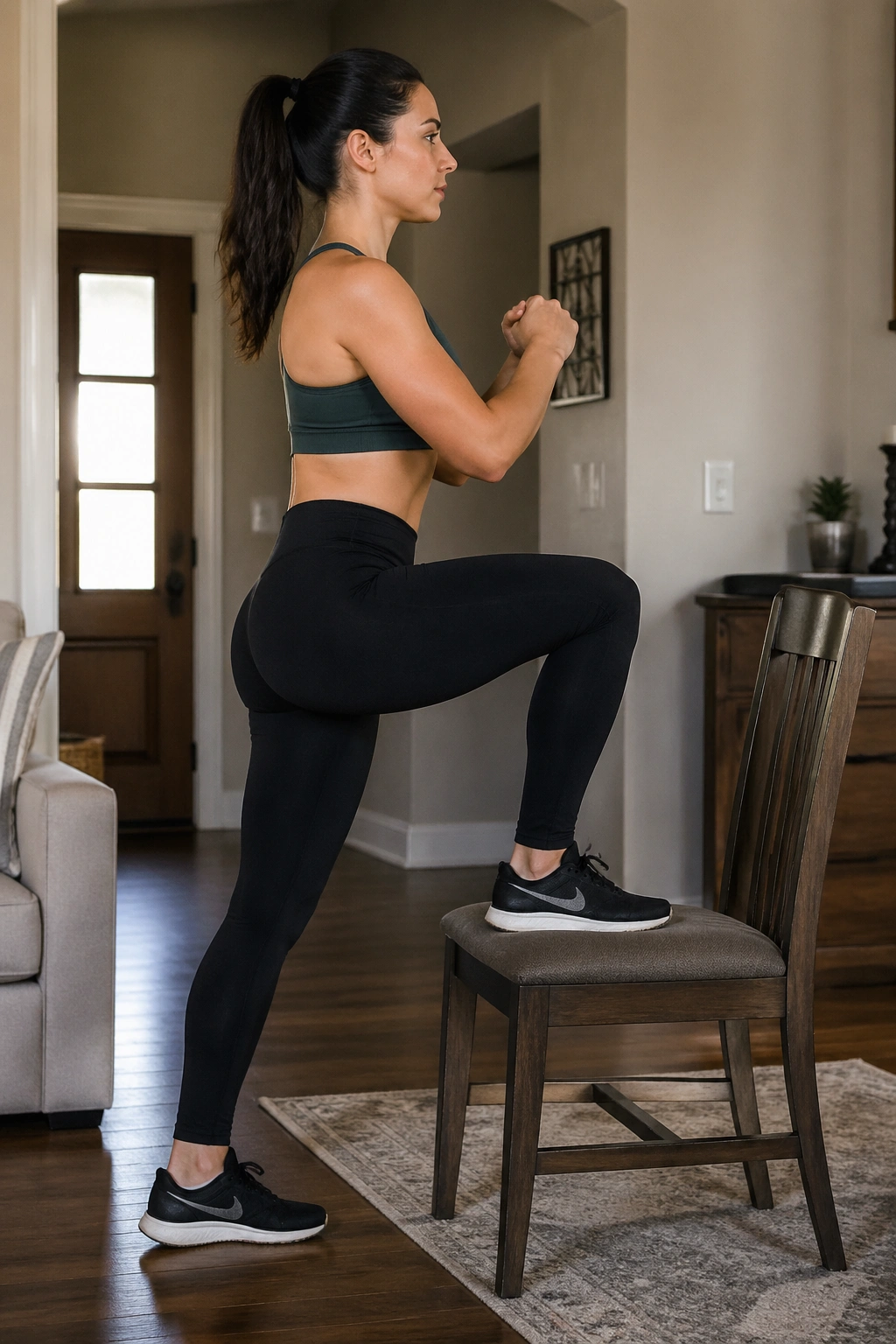
A sturdy chair or step turns boring leg work into a sneaky core test.
Step one foot up, drive through the whole foot, and stand tall on top before stepping back down under control. The body has to stabilize on one leg, and that little balance demand wakes up the waist more than people expect.
Use a chair only if it does not wobble. Seriously. A stable step, a bench, or a low stair is a better choice than something with slick legs or a soft cushion.
Do 8 to 12 reps per side. Keep your torso tall and avoid pushing off hard with the bottom leg.
25. Tuck Jumps
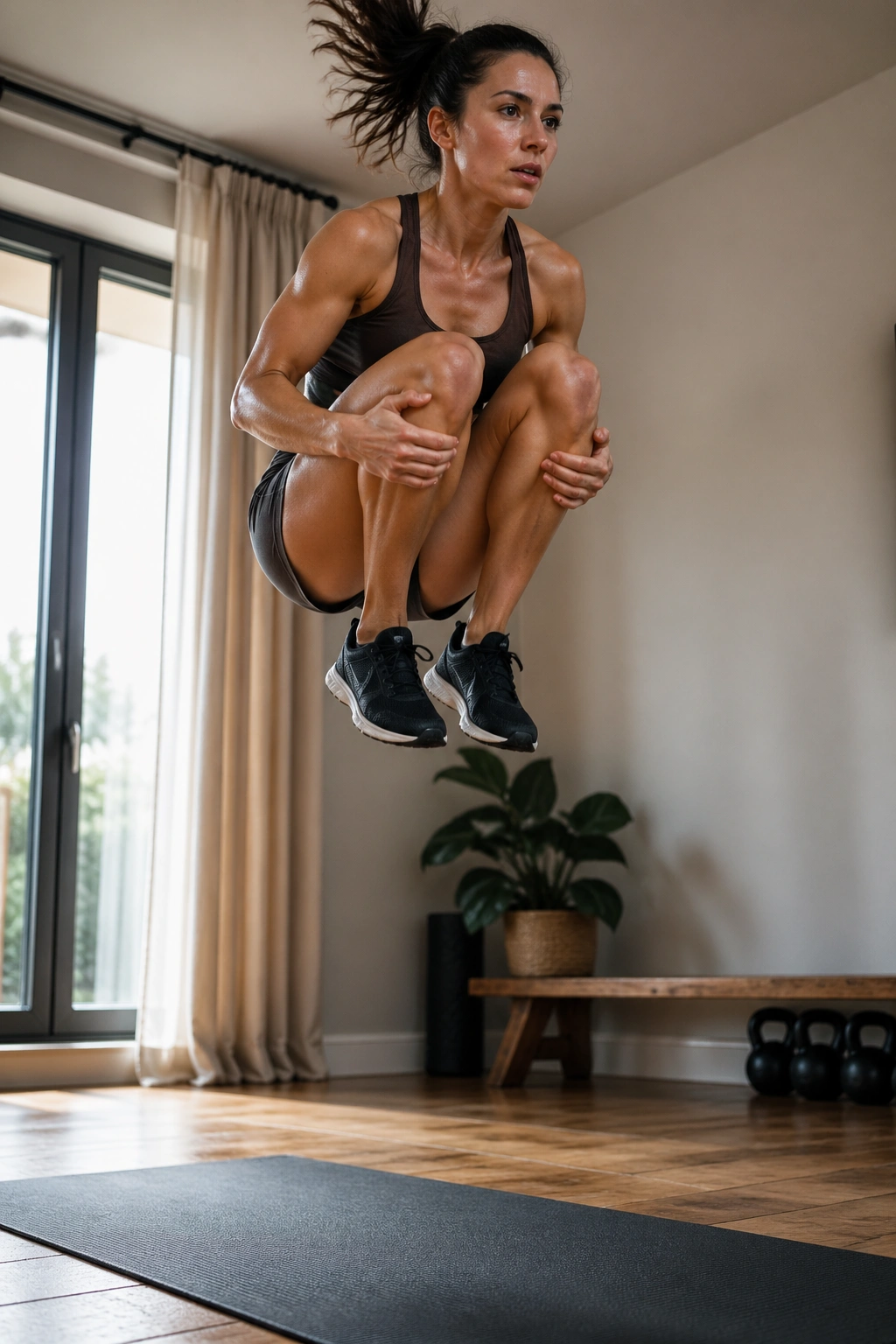
Tuck jumps are not gentle.
Jump straight up, bring the knees toward the chest, and land with bent knees so you can absorb the impact. They’re one of the most aggressive bodyweight moves on this list, which is exactly why they work so well when you want a short, hard burst.
If the landing feels rough, swap them for squat jumps or step-ups. There is no prize for making the movement ugly.
Start with 6 to 10 reps. Keep the jump vertical, not forward, and give yourself enough space to land quietly.
26. Shadow Boxing with Core Rotation

Shadow boxing is cardio that never feels stale if you stay sharp with it.
Throw jabs, crosses, hooks, and uppercuts in the air while your torso rotates a little with each punch. The core has to brace, twist, and reset over and over, which is why this move belongs in a home fat-loss routine more than people think.
Keep your chin tucked, ribs down, and hands snapping back to guard after each punch. Wild arm swings waste energy. Clean combinations make the whole thing feel faster and more athletic.
Work in 30-second rounds. Add a lateral step if you want more footwork and a bigger heart-rate bump.
27. Split Squat Pulses
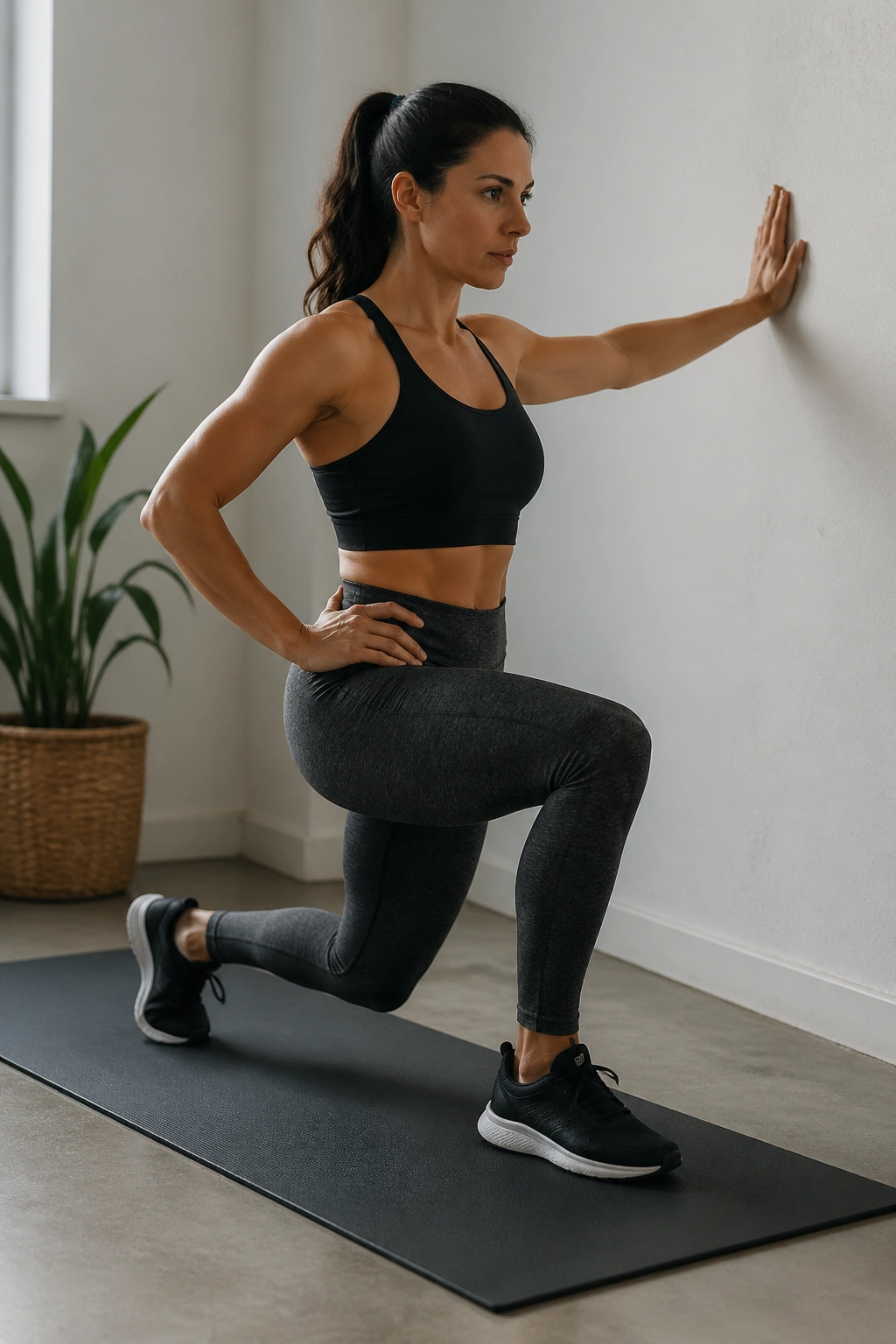
Split squat pulses make sense the second your front thigh starts burning.
Set yourself in a lunge stance, lower into the bottom position, and pulse in a tiny range without standing all the way up. The movement is small, but the legs and core have to hold a lot of tension to keep you steady.
A wall, chair, or counter can help if balance is shaky. I actually like a hand lightly touching support here, because it lets you focus on the pulse instead of wobbling all over the place.
Do 8 to 15 pulses per side. Stay low enough to feel work, but high enough that your posture doesn’t collapse.
28. Plank Walkouts
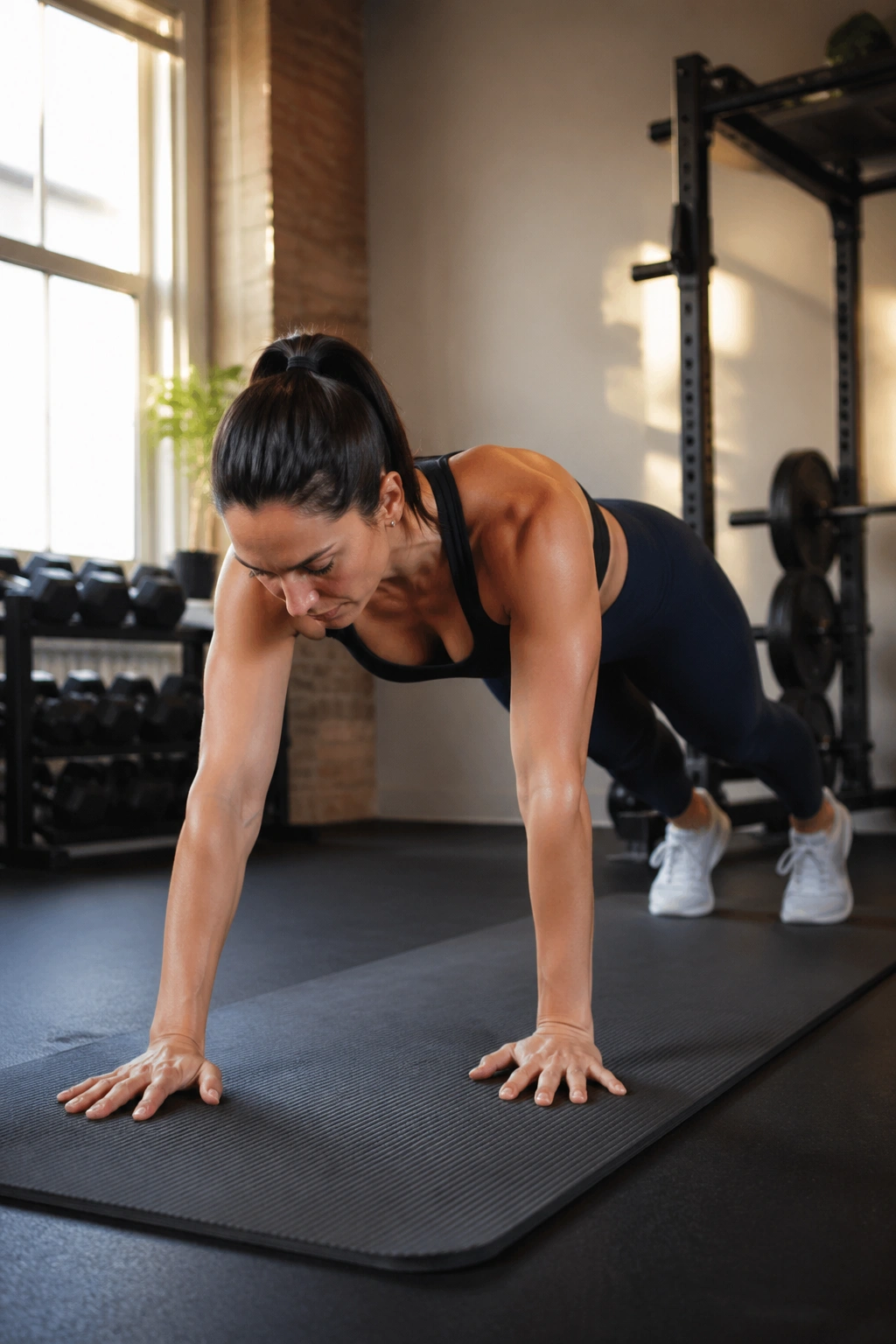
Plank walkouts are one of those moves that looks simple until your shoulders start shaking.
What to watch for
- Walk your hands out one at a time.
- Keep the hips from dumping toward the floor.
- Walk back in with control instead of dragging yourself.
Each rep takes you from standing into a plank and back again, which makes this exercise a full-body bridge between strength and core control. It also gives the hamstrings and shoulders a stretch under load, which feels good when your body has been sitting too long.
Try 5 to 8 reps. If your lower back arches, shorten the walkout and slow down.
29. V-Ups or Bent-Knee V-Ups
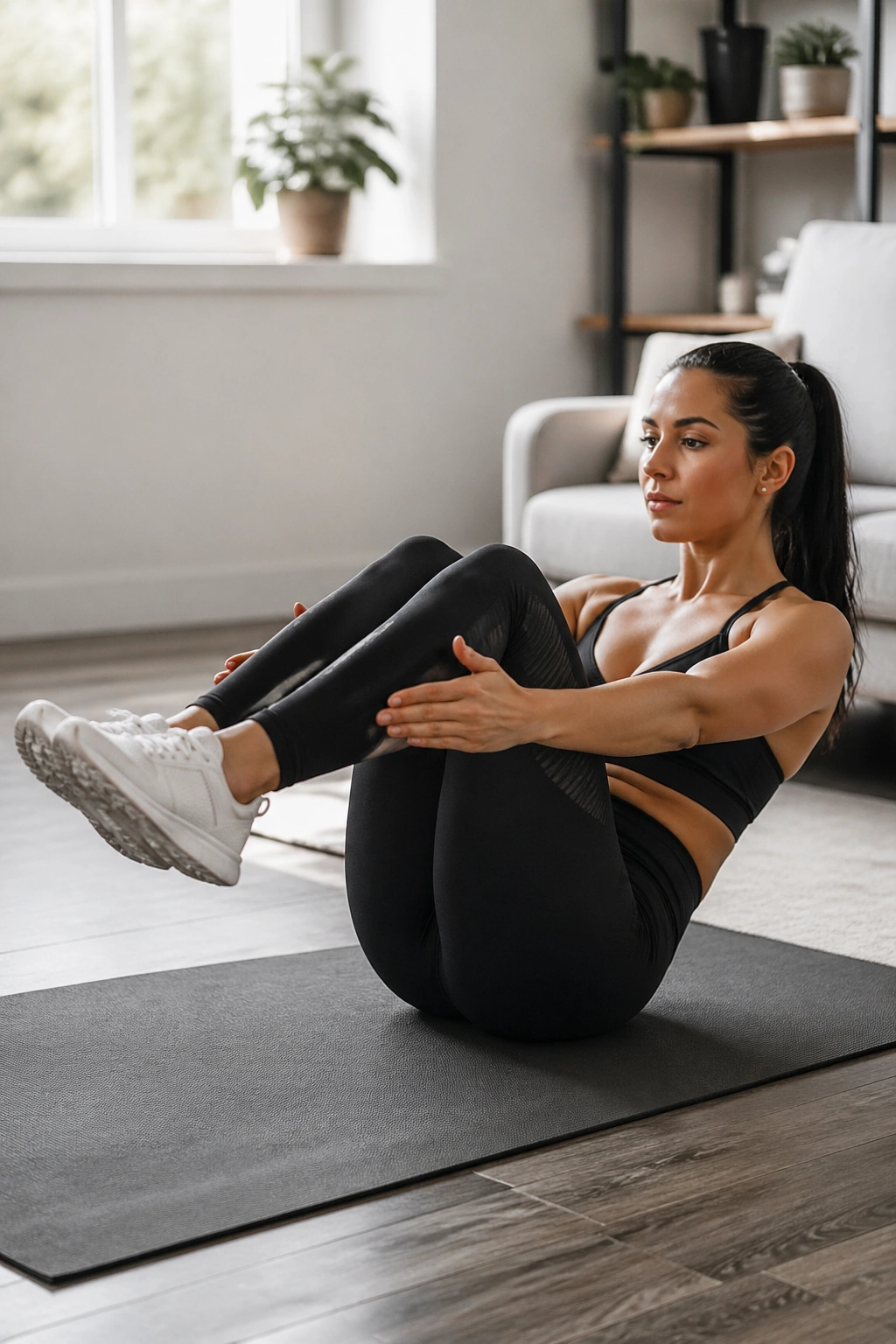
V-ups are powerful because they ask your upper and lower body to meet in the middle at once.
Lie flat, lift the legs and torso together, and reach toward your shins or toes. That compression hit is no joke, which is why the bent-knee version exists and should be used freely if your lower back is still getting used to the exercise.
Pick the version that matches your day
- Full V-up: straight legs, higher demand.
- Bent-knee V-up: easier on the hip flexors.
- One-leg V-up: a smart halfway step.
Do 6 to 12 reps with a slow lower. If you drop like a sack of laundry, the set got too sloppy.
30. Frog Jumps or Low-Impact Squat Thrust
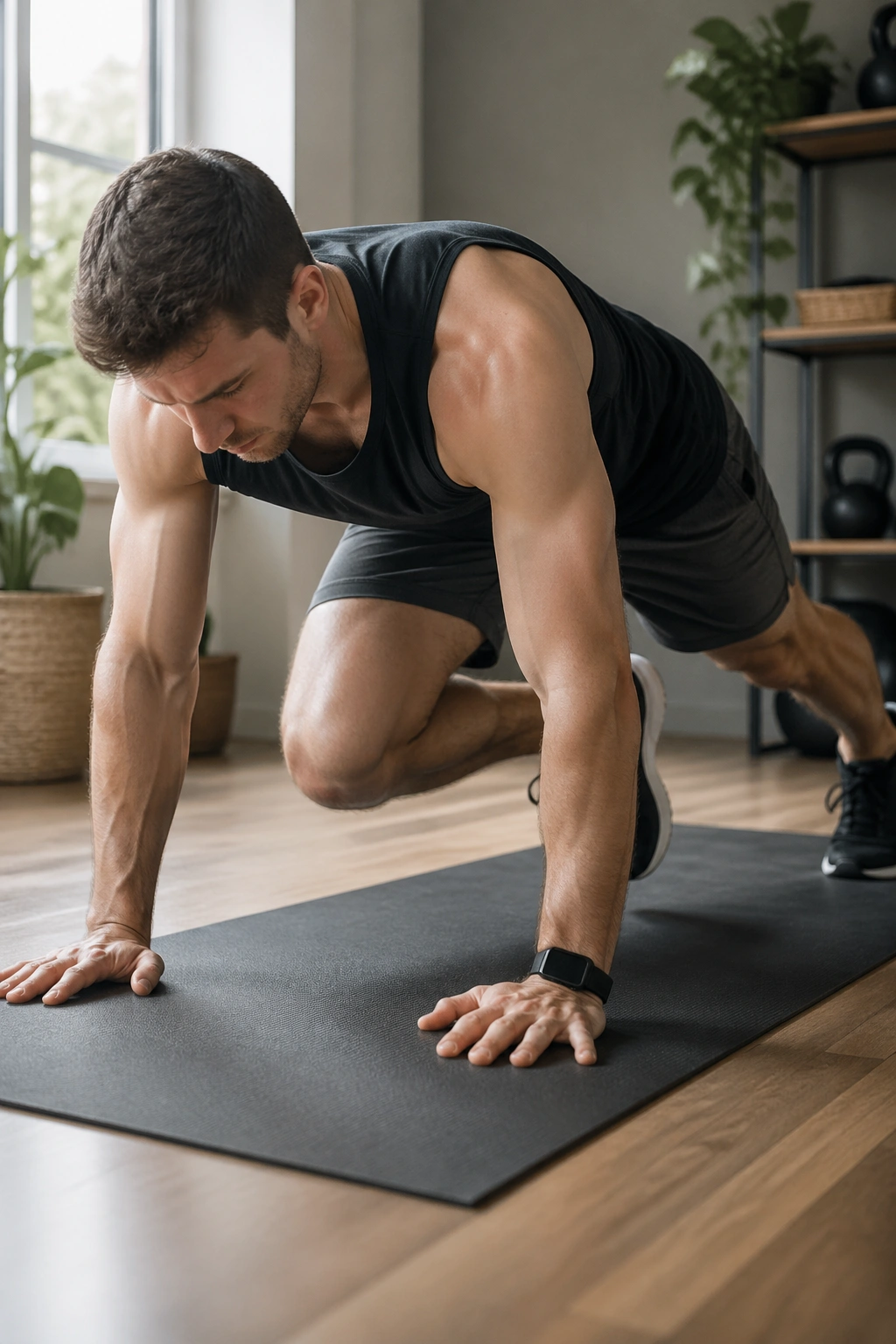
Finish with something honest.
Frog jumps drive you into a deep squat, then launch you upward with enough force to light up the legs and heart rate at the same time. If jumping bothers your joints, use a low-impact squat thrust instead: squat down, place the hands on the floor, step back to plank, step forward, and stand.
That swap matters. You still get a hard, full-body finisher without pounding the floor for the sake of drama.
Use 6 to 10 reps and keep the landing quiet. Then pick a few of the moves above, run them in a circuit, and repeat the kind of work that actually changes how your body feels: steady, hard, and repeatable.
