



You know the feeling. You finish a session that leaves your quads trembling, drive home with seat heaters on to loosen the stiffness, and by the next morning, walking down a single flight of stairs feels like a tactical operation. That particular soreness—the kind that reminds you of every squat, lunge, and hinge from the day before—is a badge of honor for anyone serious about building strength. But let’s be honest, the real battle isn’t just the workout; it’s the repetition. Sticking to the same three exercises every week gets old, and eventually, progress grinds to a halt because your muscles get bored.
You need variety not just to keep things interesting, but to force your body to adapt. When you switch up the rep ranges, the tempo, or the order of your movements, you prevent plateaus and address weak links you didn’t even know you had. Whether you have access to a fully equipped commercial gym, a sparse home garage, or just your own body weight, the legs can be trained in dozens of ways that remain productive for years. This isn’t about chasing the latest fad; it is about rotating through fundamental movement patterns in ways that challenge your output, your stability, and your recovery capacity.
The routines below are designed to be swapped in and out of your weekly schedule. Some are heavy and taxing, requiring significant recovery time, while others prioritize metabolic stress or movement quality. Do not try to do them all at once. Pick one, master the movements, and rotate to a different strategy the following week to keep your lower body guessing.
1. The Classic Barbell Strength Foundation
This is the baseline that separates the lifters from the casual gym-goers. It focuses entirely on heavy, compound movements that demand systemic force. You aren’t here to chase a pump; you are here to increase the amount of weight on the bar over time.
The Protocol
- Barbell Back Squats: 5 sets of 5 reps (keep the weight heavy, RPE 8-9)
- Conventional Deadlifts: 3 sets of 5 reps (focus on raw power off the floor)
- Barbell Hip Thrusts: 3 sets of 8-10 reps (drive through your heels)
- Calf Raises: 4 sets of 15 reps (use a slow, controlled tempo)
The goal here is progressive overload. If you can add two and a half pounds to the bar every session, you are winning. Do not rush the rest periods. Take three to five minutes between the heavy sets. You need full nervous system recovery to push that kind of weight properly. If you find your grip failing on the deadlifts, use straps—your back and legs should be the limiting factor, not your forearm endurance.
2. The Unilateral Balance Builder
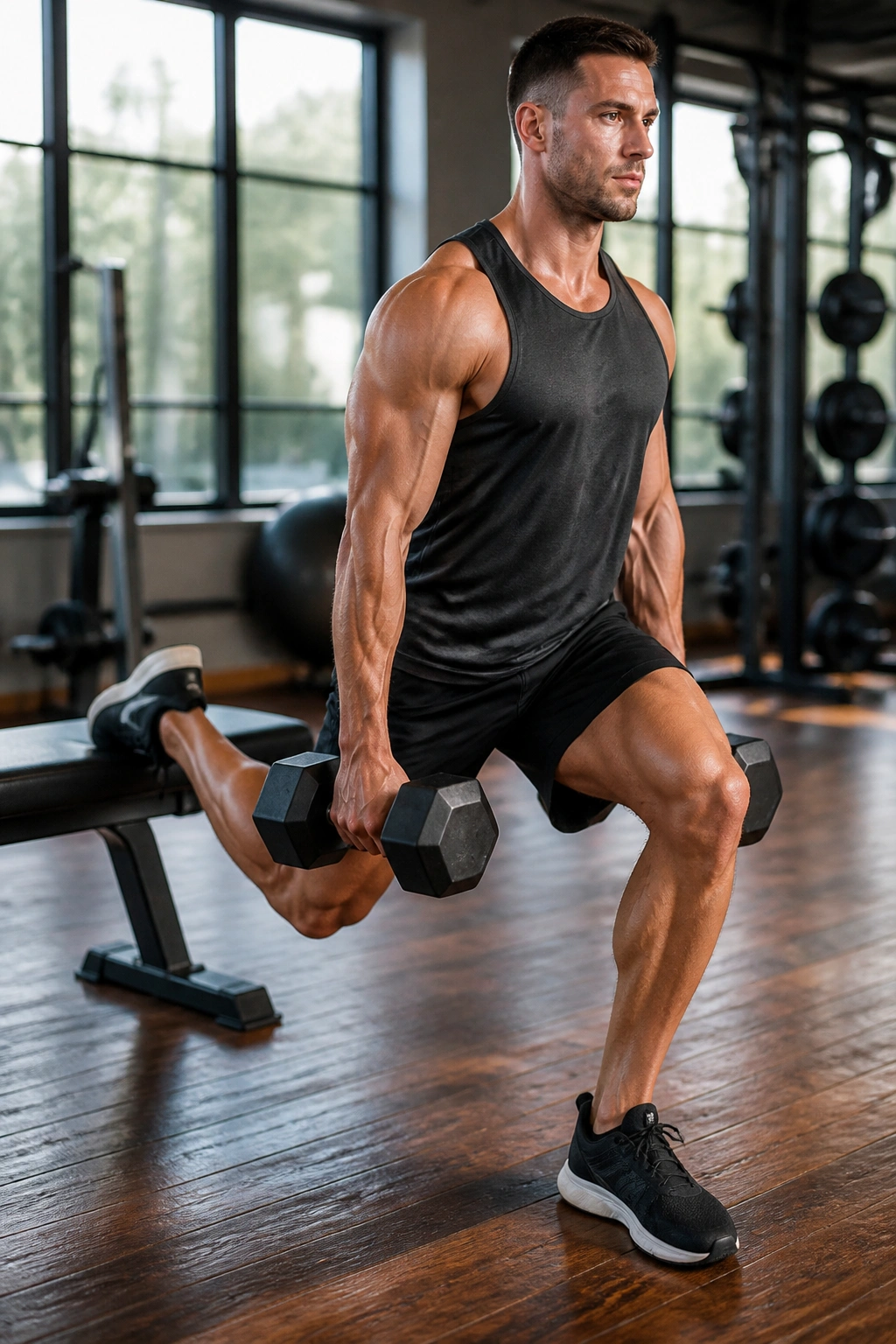
Often, we find that our dominant leg does most of the heavy lifting, leading to imbalances that eventually cause injuries. This routine forces both sides to work independently, highlighting those asymmetries so you can correct them. It is humble pie served in the form of lunges.
The Breakdown
- Bulgarian Split Squats: 3 sets of 10-12 reps per leg (hold dumbbells in each hand)
- Single-Leg Romanian Deadlifts: 3 sets of 10 reps per leg (focus on balance and glute activation)
- Step-Ups: 3 sets of 12 reps per leg (use a box height that places your knee at 90 degrees)
- Single-Leg Glute Bridges: 3 sets of 15 reps per leg (squeeze at the top)
By the time you finish the third set of Bulgarian split squats, your glutes will likely feel like they are on fire. That is the point. These exercises force your core to stabilize your entire body, adding a layer of abdominal work that standard back squats simply do not require. Keep your chest up and avoid leaning forward, or you will turn this into a back exercise.
3. The High-Volume Hypertrophy Circuit
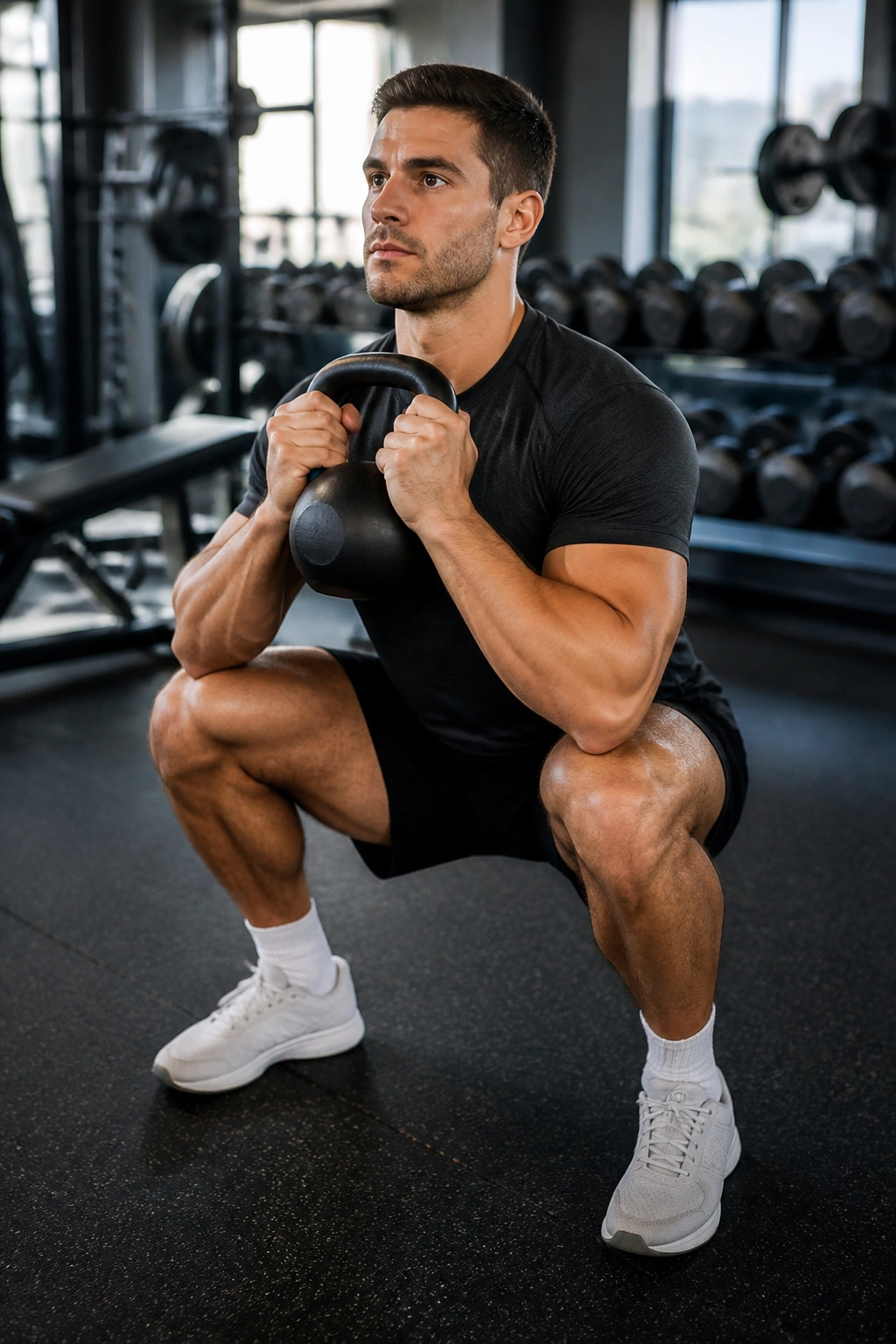
If you are after muscle size, volume is your best friend. This routine focuses on shorter rest periods and higher rep ranges to maximize metabolic stress. You will feel a massive pump in your quads and hamstrings, but keep an eye on your heart rate—it will stay elevated the entire time.
Why This Works
This strategy relies on “time under tension.” By slowing down the eccentric (lowering) phase of every movement, you create more micro-tears in the muscle tissue, which is the primary driver of hypertrophy. Rest no more than 60 seconds between sets.
- Goblet Squats: 4 sets of 15 reps
- Walking Lunges: 4 sets of 20 steps total
- Leg Extensions: 3 sets of 20 reps (focus on the squeeze)
- Seated Leg Curls: 3 sets of 20 reps (control the return)
- Bodyweight Squat Burnout: 1 set to failure
4. The Explosive Plyometric Power Day
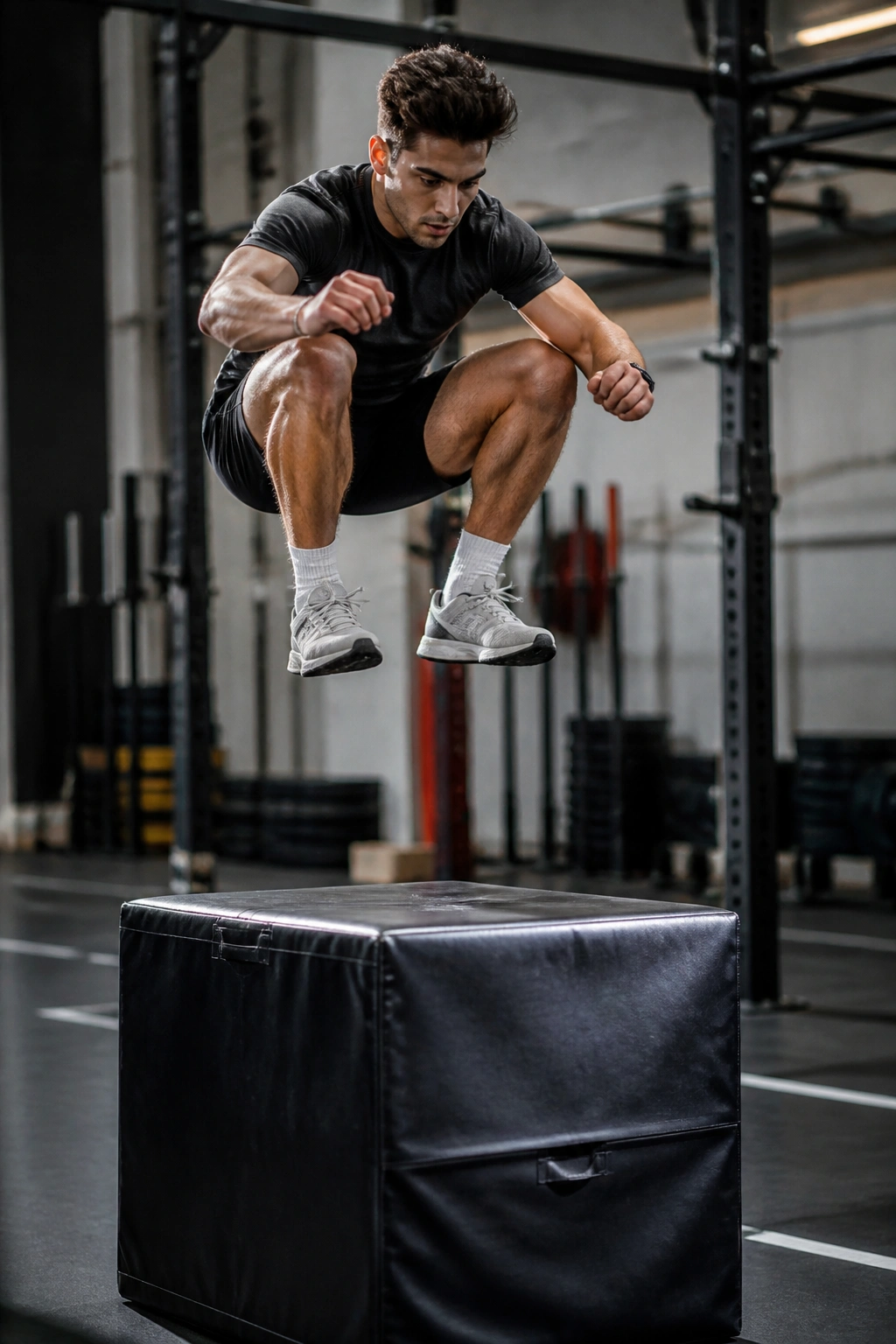
Athletes know that strength without speed is incomplete. This routine is not for beginners, as it puts significant stress on your tendons and ligaments. Ensure you are well-warmed up before attempting any of these jumps.
The Movements
- Box Jumps: 5 sets of 5 explosive reps (focus on landing softly)
- Broad Jumps: 4 sets of 5 reps (measure your distance)
- Weighted Step-Ups: 3 sets of 8 reps per leg (use moderate weight)
- Speed Squats: 5 sets of 3 reps (use 50% of your max weight, move as fast as possible)
The key to plyometrics is quality, not quantity. If you feel your form breaking down or your jump height decreasing, stop the set. This is about power output, not fatigue. Treat every rep like it is the only one that matters.
5. The Posterior Chain Focus

Most people are quad-dominant because they train what they see in the mirror. This routine shifts the emphasis entirely to the back of the legs—the hamstrings, glutes, and spinal erectors. It is crucial for preventing lower back pain and improving your deadlift strength.
The Focus Points
Start with your heavy hinge movement. The Romanian Deadlift should be the centerpiece of this session. Focus on pushing your hips back as far as possible rather than bending down. You should feel a deep, intense stretch in your hamstrings.
- Romanian Deadlifts: 4 sets of 8-10 reps
- Lying Leg Curls: 3 sets of 12-15 reps (pause at the peak contraction)
- Kettlebell Swings: 4 sets of 20 reps (drive through the hips)
- Back Extensions: 3 sets of 15 reps (hold a plate against your chest)
6. The Minimalist Home Routine
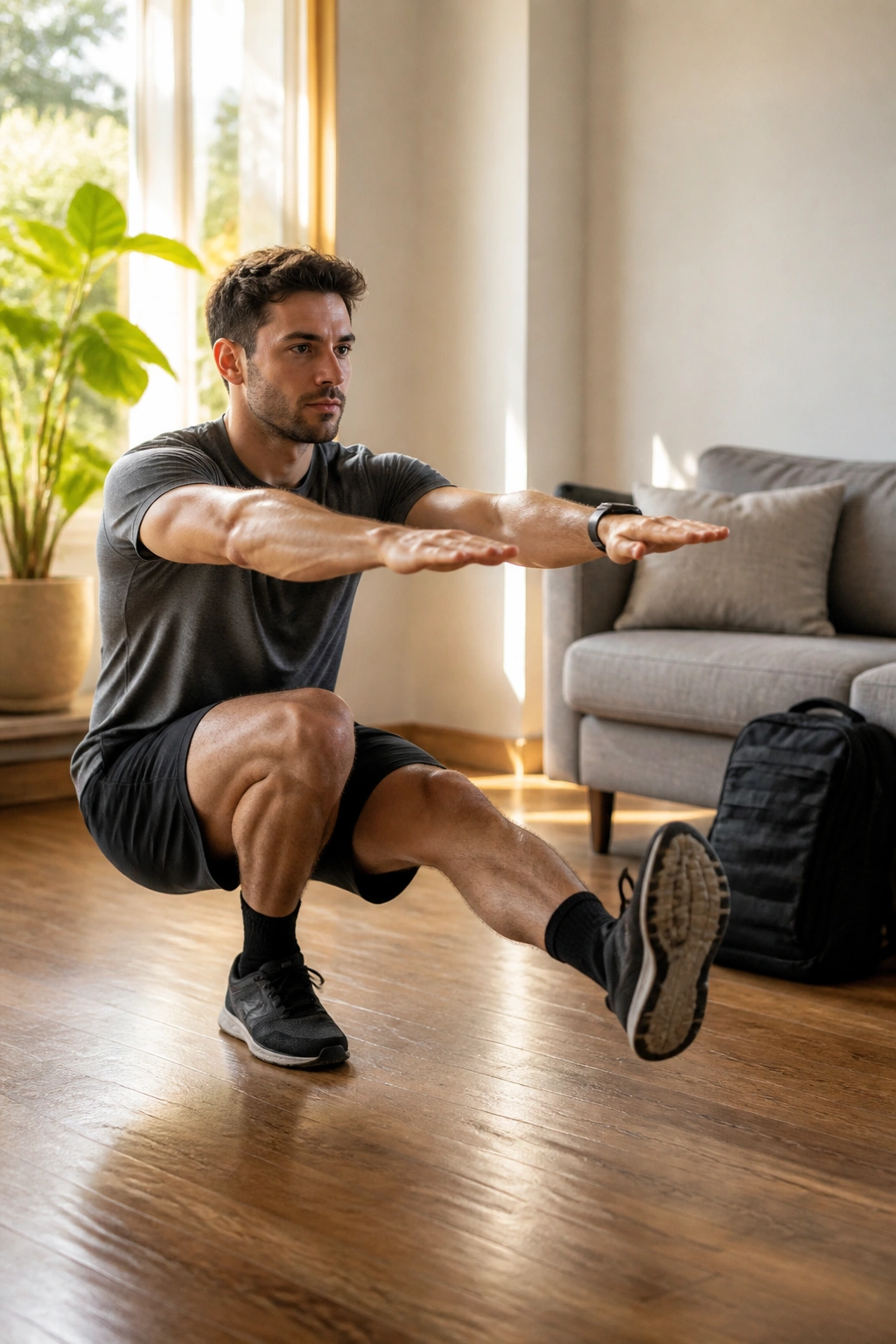
No gym membership? No problem. This routine proves you can still get a high-quality leg session using only your body weight or minimal equipment like a single heavy backpack or set of dumbbells. It is perfect for travel days or when you just cannot make it to the gym.
- Pistol Squats: 3 sets of max reps per leg
- Jump Squats: 3 sets of 20 reps
- Nordic Hamstring Curls: 3 sets of 5-8 reps (use a couch to anchor your feet)
- Glute Bridges: 3 sets of 30 reps (hold the top position for two seconds)
The Nordic curl is a deceptive movement. It looks easy until you try it. If you cannot do a full rep, lower yourself as slowly as you can (the eccentric phase) and then use your hands to push yourself back up. You will get stronger over time.
7. The Time-Saving Supersets
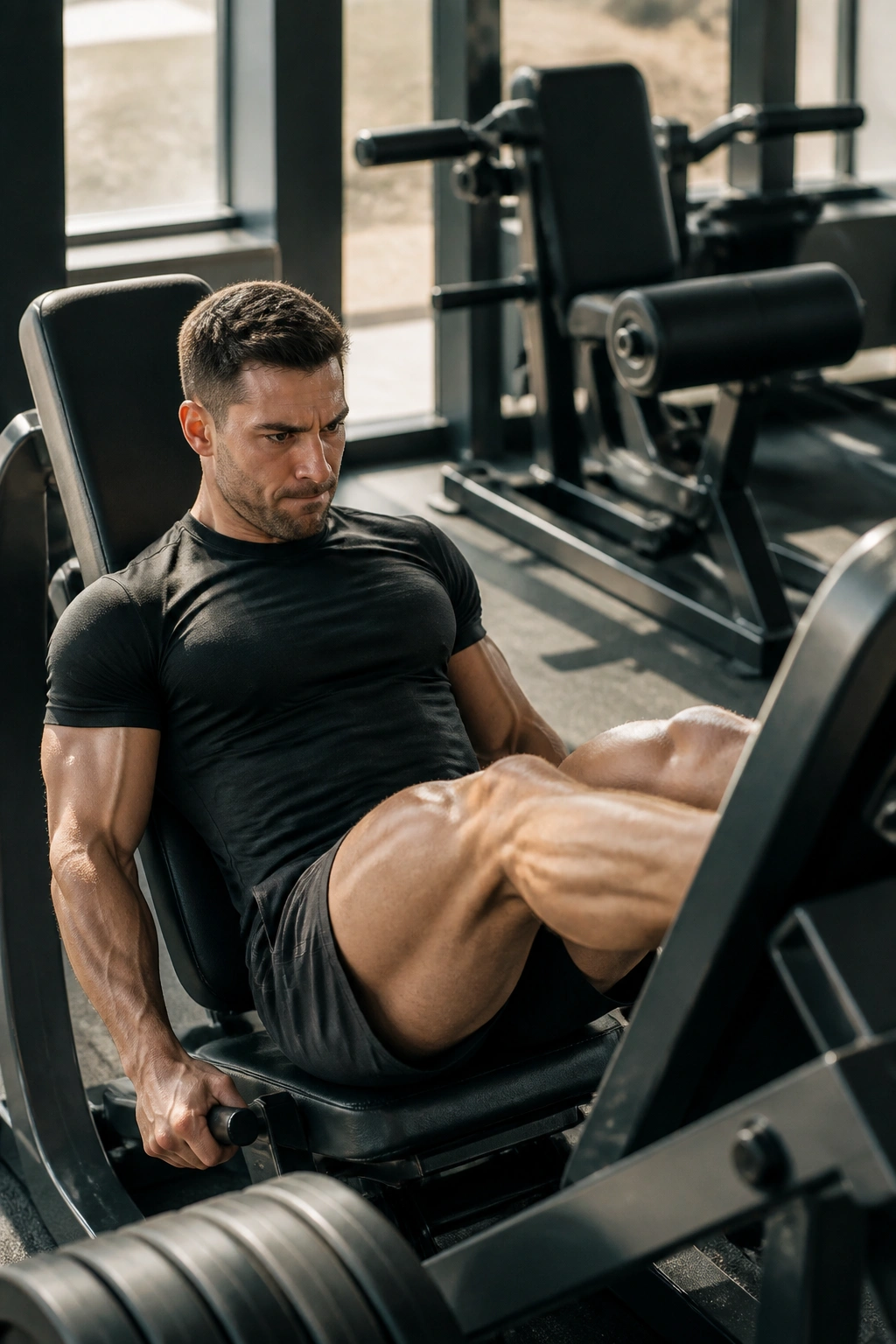
When you have forty-five minutes and want to get out, supersets are the solution. Pairing two opposing muscle groups allows you to rest the quads while working the hamstrings and vice versa. It keeps your intensity high and your workout duration low.
The Pairing Strategy
Perform a quad exercise immediately followed by a hamstring exercise. That counts as one round. Rest only after completing both movements.
- Superset A: Leg Press (10 reps) + Lying Leg Curl (10 reps) — 4 rounds
- Superset B: Dumbbell Goblet Squat (12 reps) + Stiff-Leg Deadlift (12 reps) — 3 rounds
- Superset C: Walking Lunges (20 reps) + Standing Calf Raises (20 reps) — 3 rounds
8. The Knee-Health and Stability Day
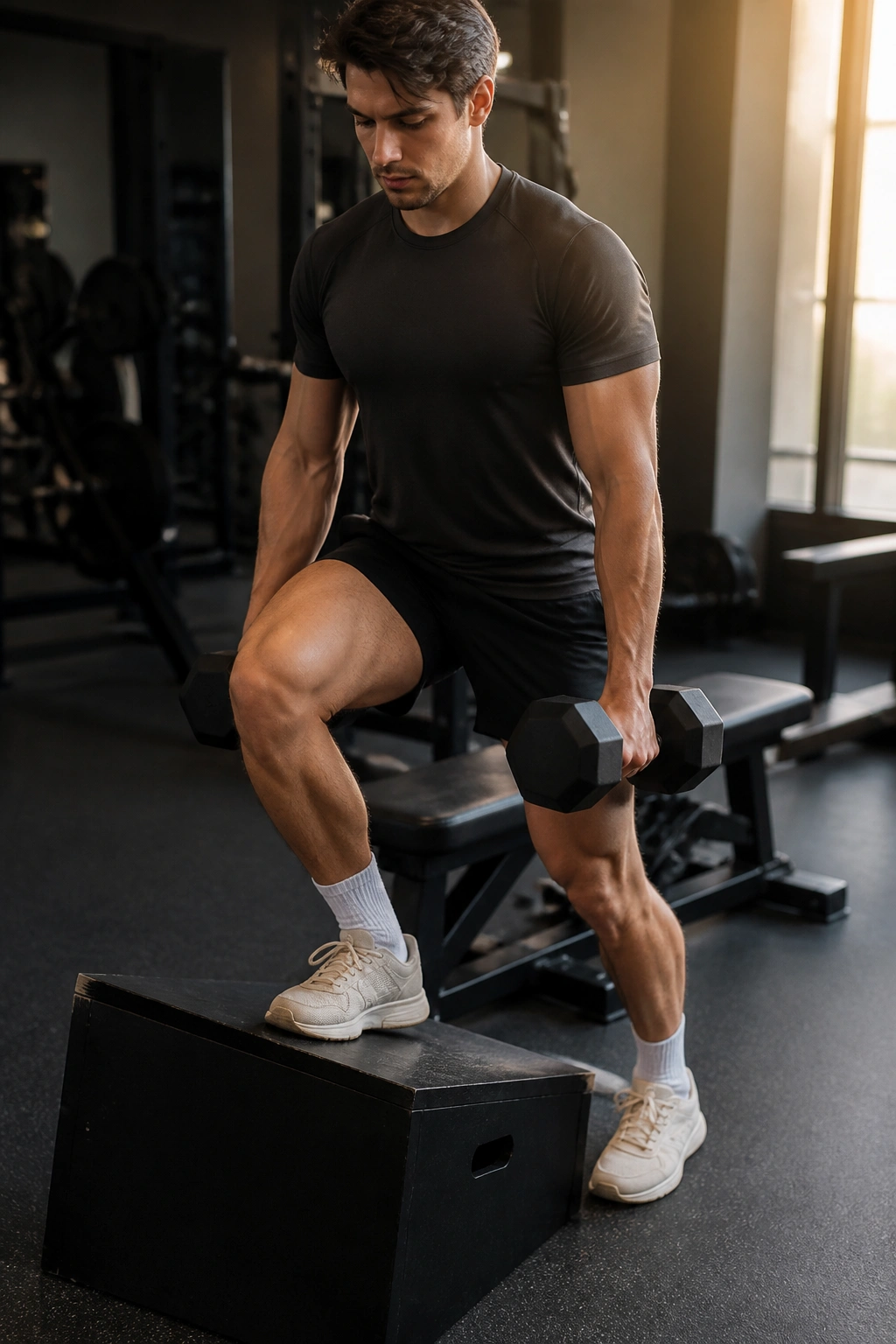
If you have ever had nagging knee pain, you know it can ruin your training progress. This routine focuses on VMO (vastus medialis obliquus) activation and general joint stability. It is less about lifting heavy weight and more about longevity.
Why Focus on Stability
Your knees are hinges; they are designed to move in one direction. When they track incorrectly, you experience pain. This session uses controlled movements to strengthen the connective tissue around the knee joint.
- Poliquin Step-Ups: 3 sets of 15 reps per leg (use a slanted surface if available)
- Tibialis Raises: 4 sets of 20 reps (great for shin splints)
- Copenhagen Planks: 3 sets of 30 seconds per side (for adductor strength)
- Reverse Lunges: 3 sets of 12 reps per leg (slow and controlled)
9. The Olympic Lifting Variation
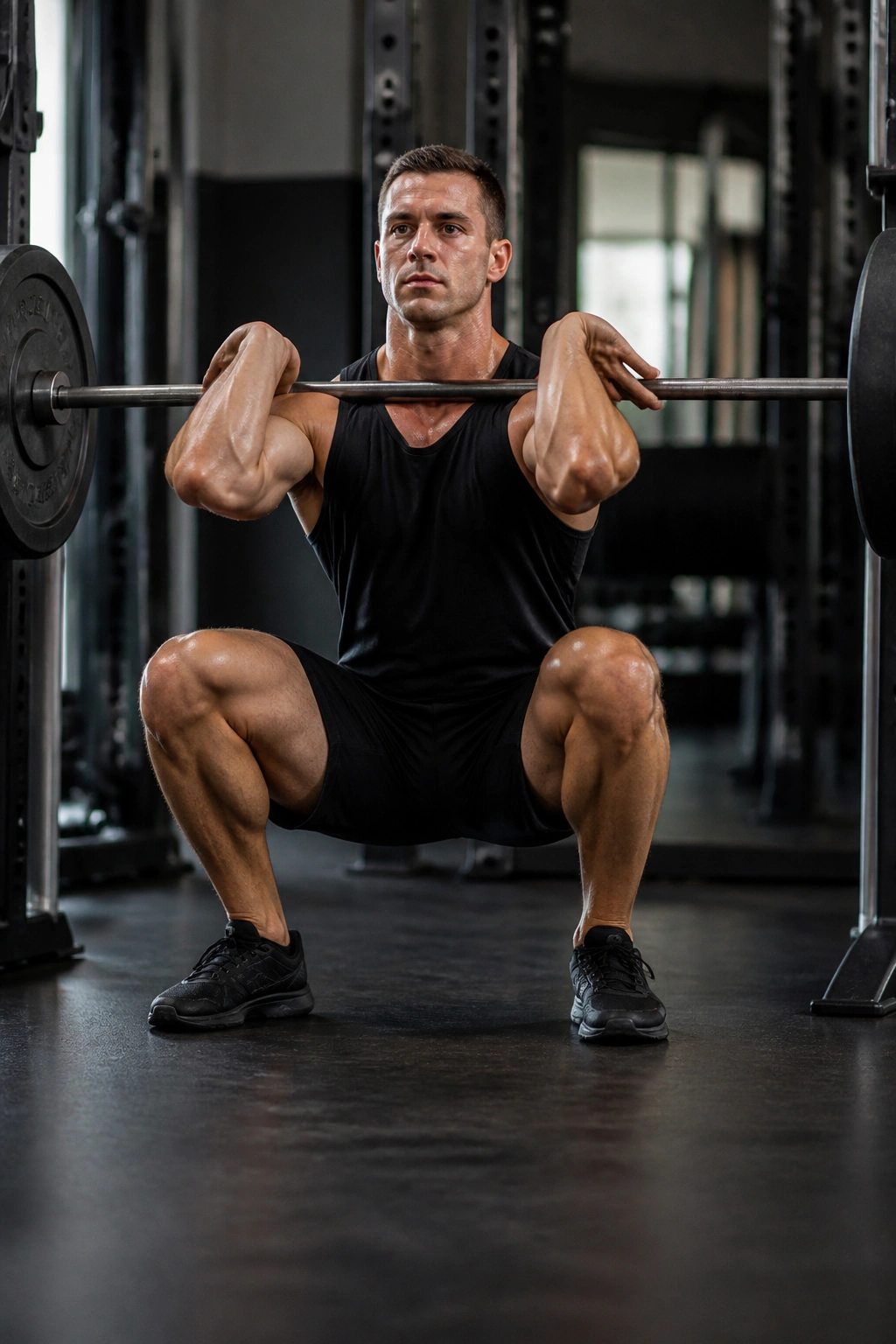
This routine introduces elements of Olympic weightlifting movements. It demands more coordination and mobility than standard bodybuilding-style leg work. If you are not proficient in the cleans or snatches, use the variations suggested below.
The Movements
- Front Squats: 4 sets of 6 reps (keep the chest vertical)
- Clean Pulls: 3 sets of 5 reps (focus on the hip extension)
- Barbell Thrusters: 3 sets of 10 reps (connect the squat to an overhead press)
- Good Mornings: 3 sets of 10 reps (keep the weight light; this is for form)
The front squat is superior to the back squat for developing the quadriceps. Because the load is in front of you, you are forced to maintain an upright torso, preventing the lower back from taking over the lift. It is humbling, but the carry-over to your other lifts is massive.
1**0. The “Legs and Core” Integration

Leg day is an excellent time to train your abs, as the core is heavily taxed during almost every compound movement. This routine interleaves abdominal work with leg exercises to ensure you aren’t just training legs, but also reinforcing the structural foundation of your body.
- Barbell Squats: 4 sets of 8 reps
- Weighted Hanging Leg Raises: 4 sets of 10 reps
- Dumbbell Lunges: 3 sets of 12 reps per leg
- Plank Variations: 3 sets of 60 seconds (add a weight plate to your back)
- Calf Raises: 3 sets of 20 reps
11. The Tempo-Control Session

Most lifters bounce the weight at the bottom of the movement. This routine makes that impossible. We will dictate the tempo for every rep to maximize muscle fiber recruitment and eliminate momentum.
The Tempo Method
Use a 3-1-1 tempo. This means:
- 3 seconds: Lowering the weight
- 1 second: Pause at the bottom
- 1 second: Explosive drive up
Apply this tempo to every single rep. You will need to drop the weight significantly—probably 30-40% lower than what you usually lift. Do not let your ego force you to use your standard weights. The goal is tension, not mass on the bar.
- Tempo Squats: 4 sets of 8 reps
- Tempo Romanian Deadlifts: 4 sets of 8 reps
- Tempo Goblet Squats: 3 sets of 12 reps
12. The Machine-Dominant Routine
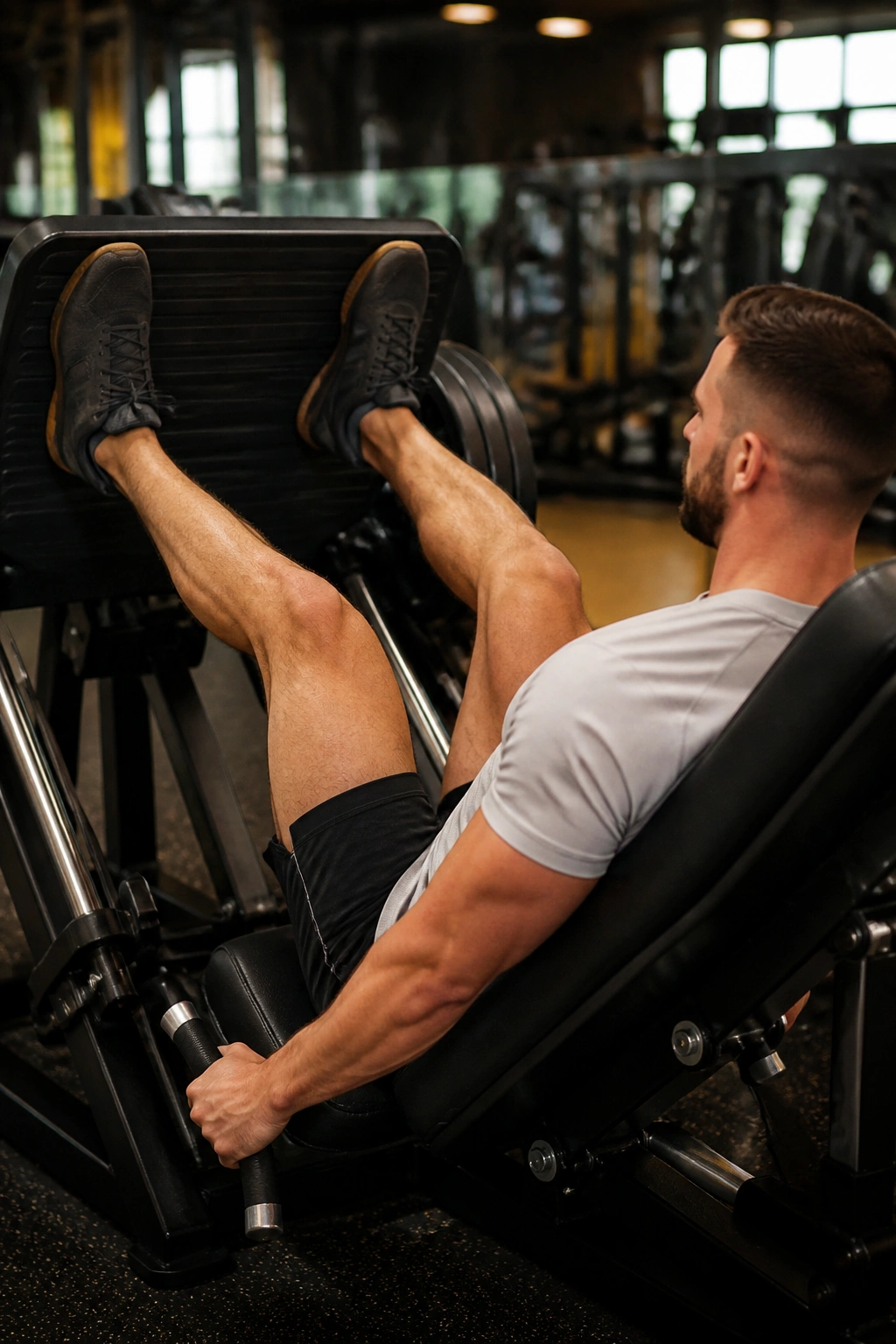
Sometimes, your back is exhausted from previous training sessions, or you just want to isolate the legs without worrying about stabilizing a heavy barbell. This routine uses selectorized machines and leg presses to provide a safe, stable platform for maximum effort.
- Leg Press: 4 sets of 10-12 reps (foot placement narrow for quads)
- Hack Squat Machine: 3 sets of 10 reps
- Leg Extension: 3 sets of 15 reps (hold the contraction for 2 seconds)
- Seated Leg Curl: 3 sets of 15 reps
- Standing Calf Machine: 4 sets of 15 reps
Machines are often criticized by barbell purists, but they have a place. They allow you to train to absolute failure safely. Without the risk of dropping a barbell, you can push your quads and hamstrings to a level of exhaustion that might be dangerous with free weights.
13. The “German Volume” Approach
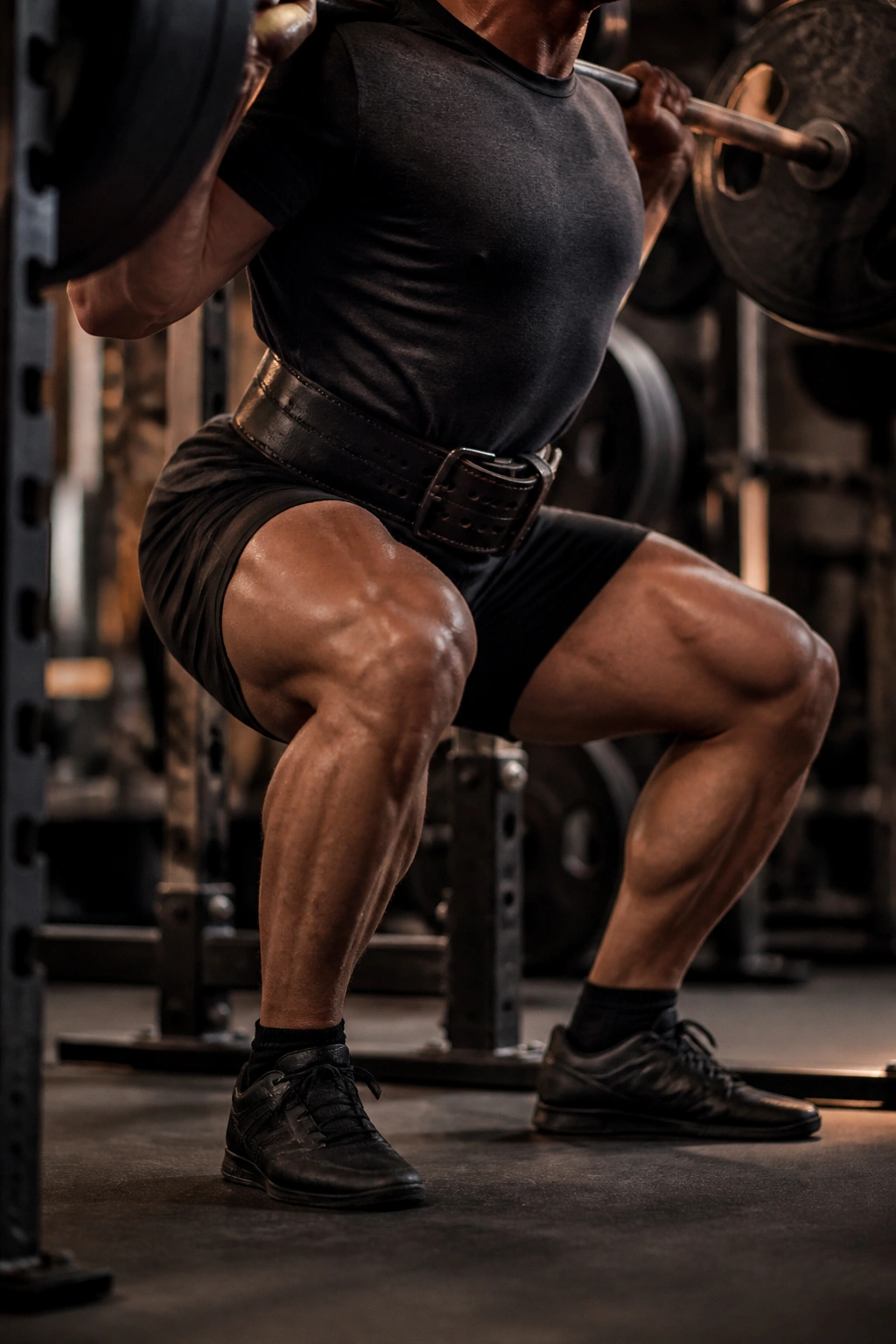
This is an old-school training method that involves doing ten sets of ten reps. It sounds simple, but it is brutal. Pick one or two compound movements and commit to the volume.
- Barbell Back Squat: 10 sets of 10 reps (60 seconds rest between sets)
- Leg Curls: 3 sets of 15 reps (to flush the hamstrings)
That first set of 10 will feel easy. The fifth set will feel like a challenge. The eighth set will make you question your life choices. The tenth set is pure mental endurance. If you can complete 10×10 with good form, you have built significant work capacity.
14. The Kettlebell-Only Day

Kettlebells offer a different type of resistance—the offset center of gravity forces your stabilizing muscles to work overtime. This is a great routine for athletic conditioning and grip strength.
The Routine
- Double Kettlebell Front Squats: 4 sets of 10 reps
- Kettlebell Romanian Deadlifts: 4 sets of 12 reps
- Kettlebell Lunges: 3 sets of 12 reps per leg
- Kettlebell Swings: 5 sets of 20 reps
If you do not have two heavy kettlebells, you can hold one, but your body will naturally rotate toward the loaded side. Focus on staying square. The core engagement required to keep that kettlebell steady is exactly why this workout is effective.
15. The Unilateral Pre-Fatigue Routine
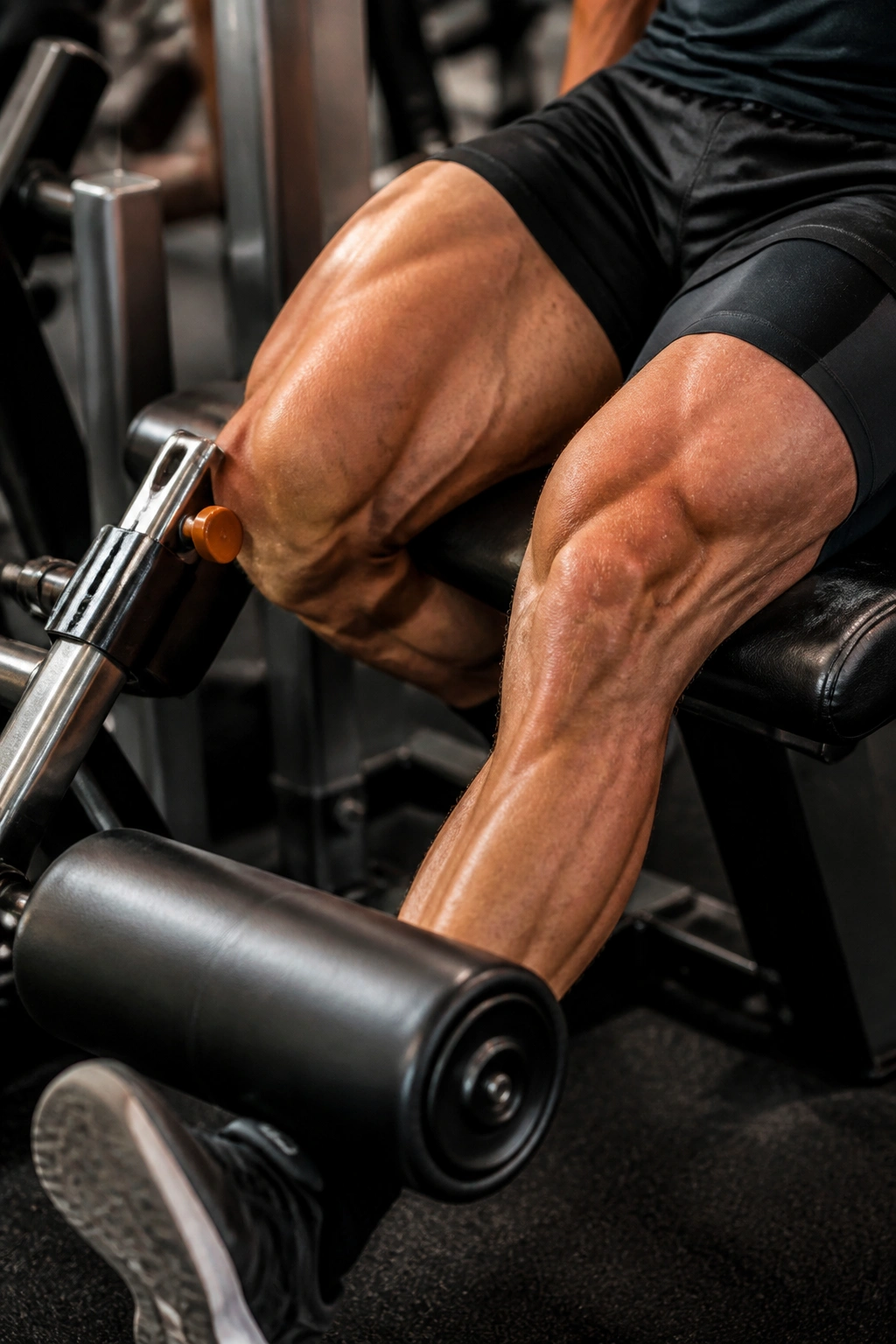
We start with isolation movements to tire out specific muscles, then finish with compound movements to “burn out” the remaining energy. This is fantastic for bringing up lagging body parts, like the quadriceps, without burning out your lower back.
- Leg Extensions: 3 sets of 15 reps (pre-fatigue)
- Lying Leg Curls: 3 sets of 15 reps (pre-fatigue)
- Barbell Squats: 3 sets of 8-10 reps (compound)
- Walking Lunges: 3 sets of 12 reps per leg (compound)
By the time you get to the squat rack, your quads are already screaming. You won’t be able to lift as much weight, but your quads will be working harder than if you had squatted fresh. This is a classic hypertrophy technique used by bodybuilders for decades.
16. The Pause-Rep Strength Routine
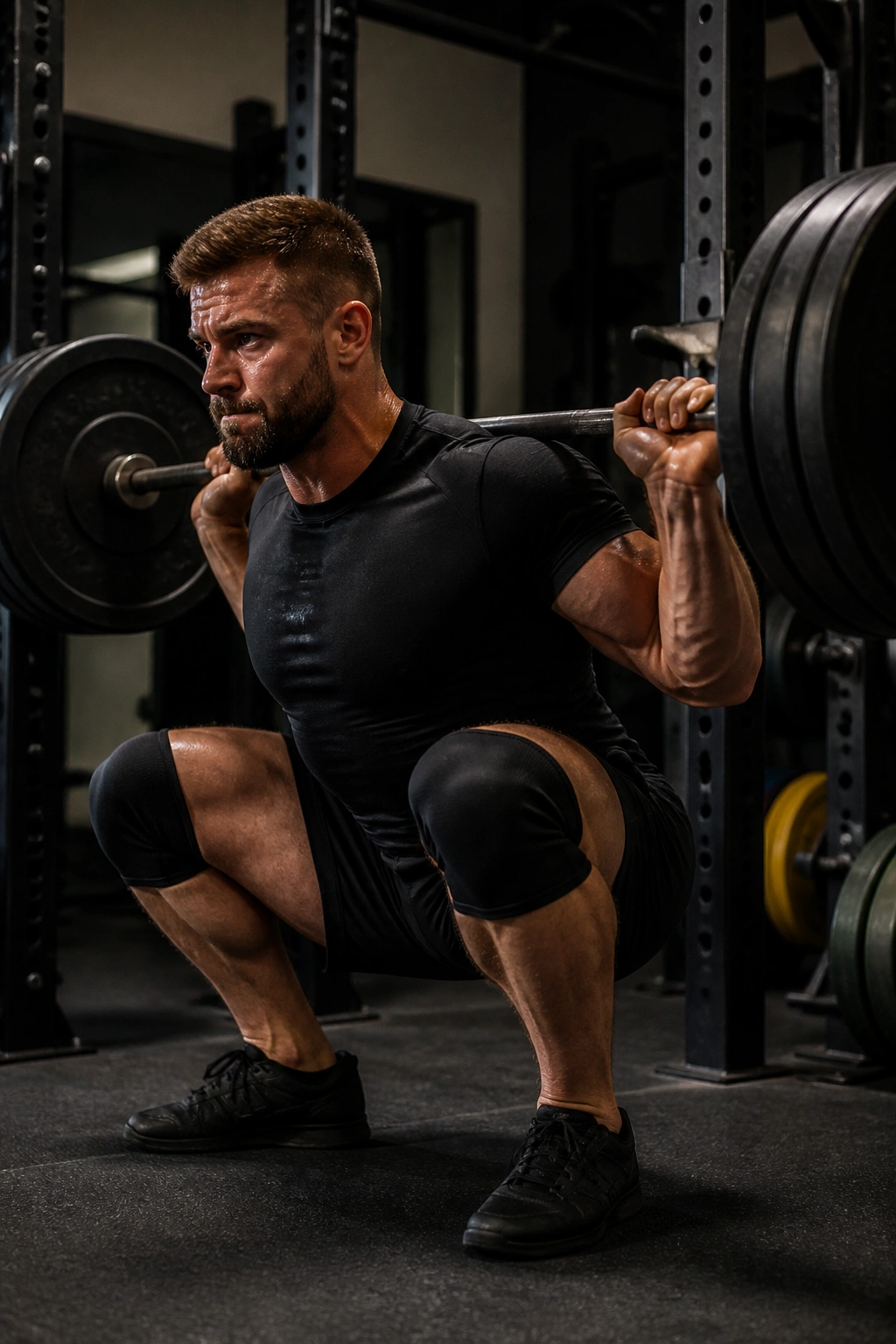
This session teaches you to dominate the “dead stop” position. If you are weak at the bottom of a squat or deadlift, this routine will fix it by forcing you to spend extra time in your weakest phase.
- Pause Squats: 4 sets of 5 reps (pause for 3 seconds at the bottom)
- Pause Deadlifts: 3 sets of 5 reps (pause 2 inches off the floor)
- Lunges: 3 sets of 12 reps
- Calf Raises: 3 sets of 15 reps
The pause removes the elastic energy you normally get from the stretch reflex. This forces your muscles to generate force from a dead stop. It is harder, slower, and significantly more effective for building raw starting strength.
17. The Dynamic Movement Day
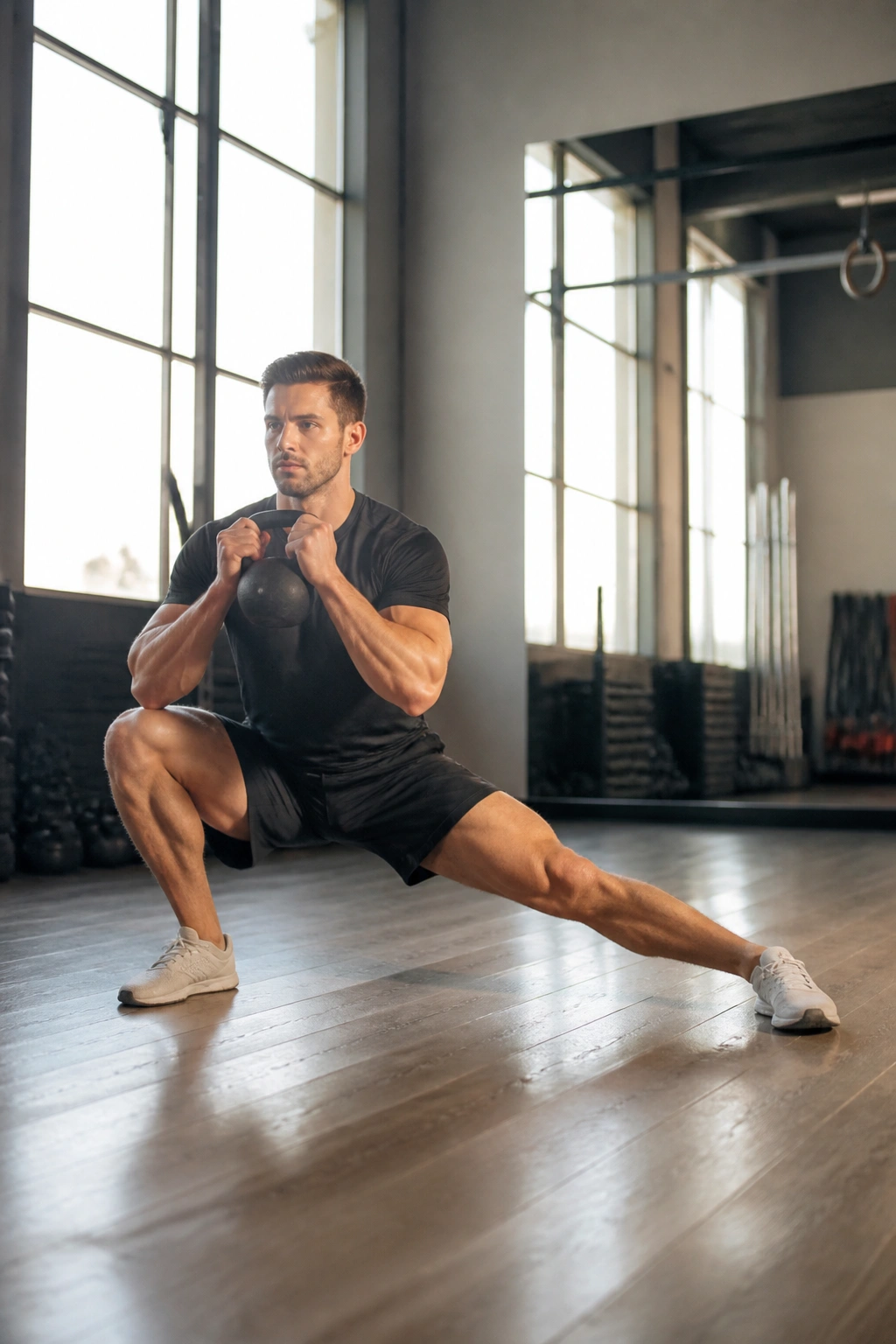
If you feel stiff or “tight” all the time, you need movement that flows. This routine combines strength with mobility work to ensure your hips and ankles remain functional, not just strong.
The Protocol
- Goblet Squat into Cossack Squat: 3 sets of 10 reps (alternating sides)
- Reverse Lunge into Knee Drive: 3 sets of 12 reps per leg
- Glute Bridges: 3 sets of 20 reps
- Duck Walks: 3 sets of 30 seconds
The Cossack squat is an incredible tool for hip mobility. As you squat down onto one leg while keeping the other straight, you are forcing the adductors to lengthen and the ankle to find stability. You will feel this in places you didn’t know you had muscles.
18. The “Weak Link” Correction Day
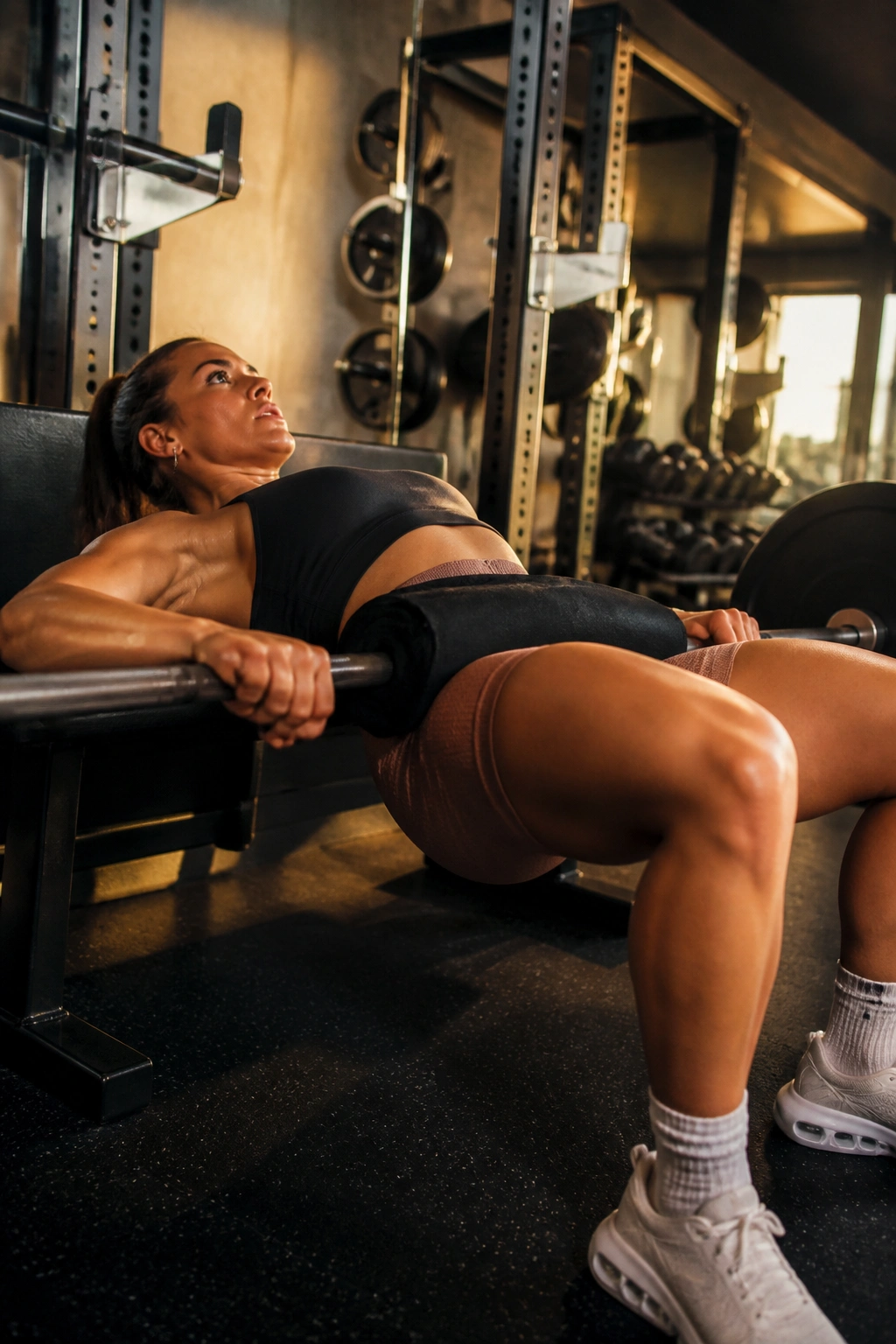
We all have weak points. Maybe your quads are strong but your glutes won’t fire. Maybe your hamstrings are lagging behind your quads. This session is designed to identify and hammer those specific weaknesses.
- Glute Focus: Hip Thrusts (4 sets of 10)
- Hamstring Focus: Romanian Deadlifts (4 sets of 10)
- Quad Focus: Leg Extensions (3 sets of 15)
- Calf Focus: Seated Calf Raises (4 sets of 15)
If you have a persistent issue—like knees that cave in during squats—this is the day to swap in band work. Wrap a resistance band around your knees while squatting to force your glutes to push outward, correcting the tracking issue.
19. The Farmers Carry Endurance Day
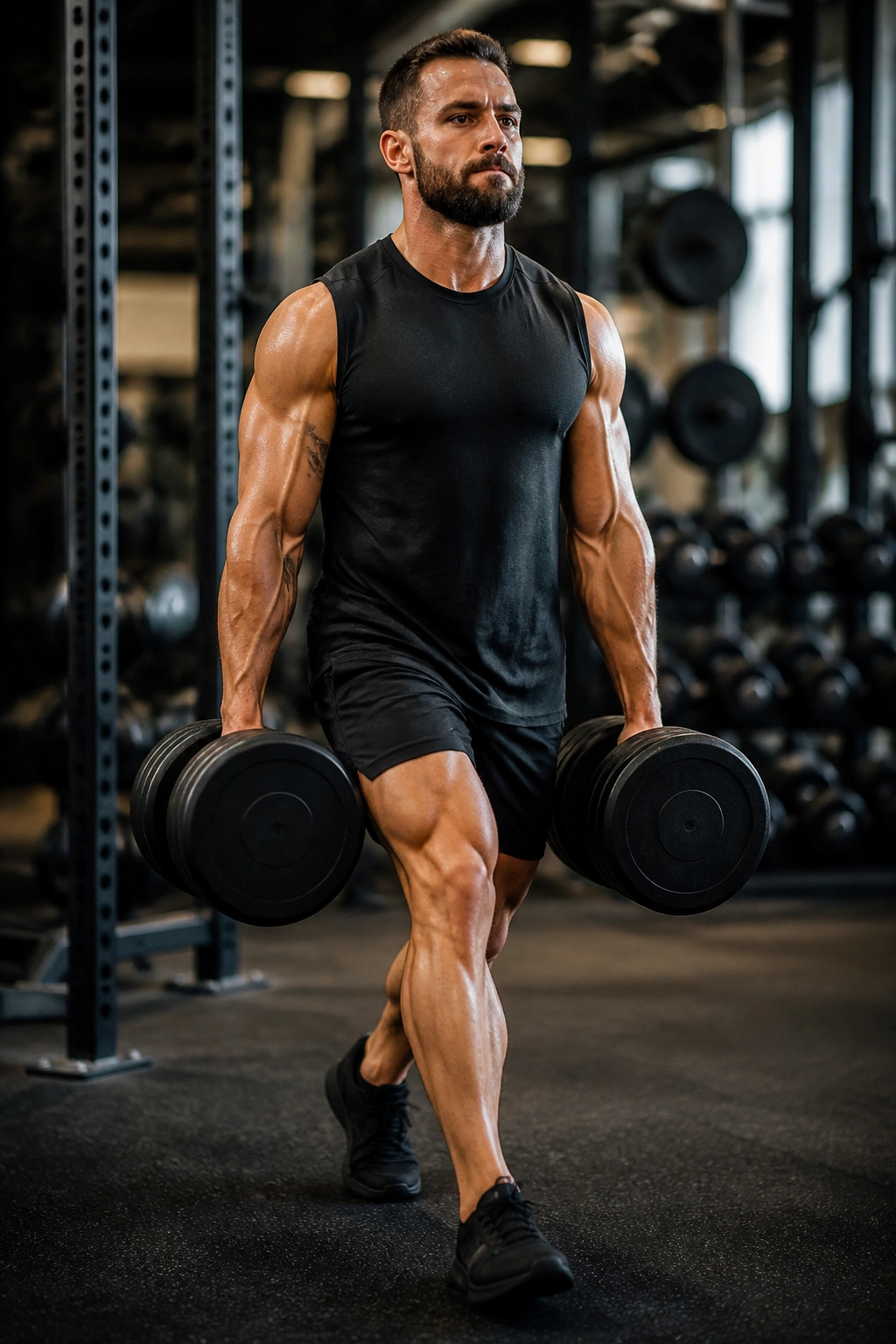
Leg day isn’t just about squats. Carrying heavy weight over a distance is one of the best ways to build a functional, resilient lower body. Your legs have to stabilize the load, and your core has to hold you upright.
The Workout
- Heavy Farmers Carries: 5 rounds of 40 yards
- Walking Lunges: 3 sets of 20 steps
- Step-Ups: 3 sets of 12 reps per leg
- Goblet Squats: 3 sets of 15 reps
Don’t underestimate the difficulty of the farmers carry. If you are holding heavy dumbbells, your grip will fail long before your legs. That is fine. It’s all part of the process. Keep your shoulders back, chest up, and take short, aggressive steps.
20. The Deload and Mobility Day
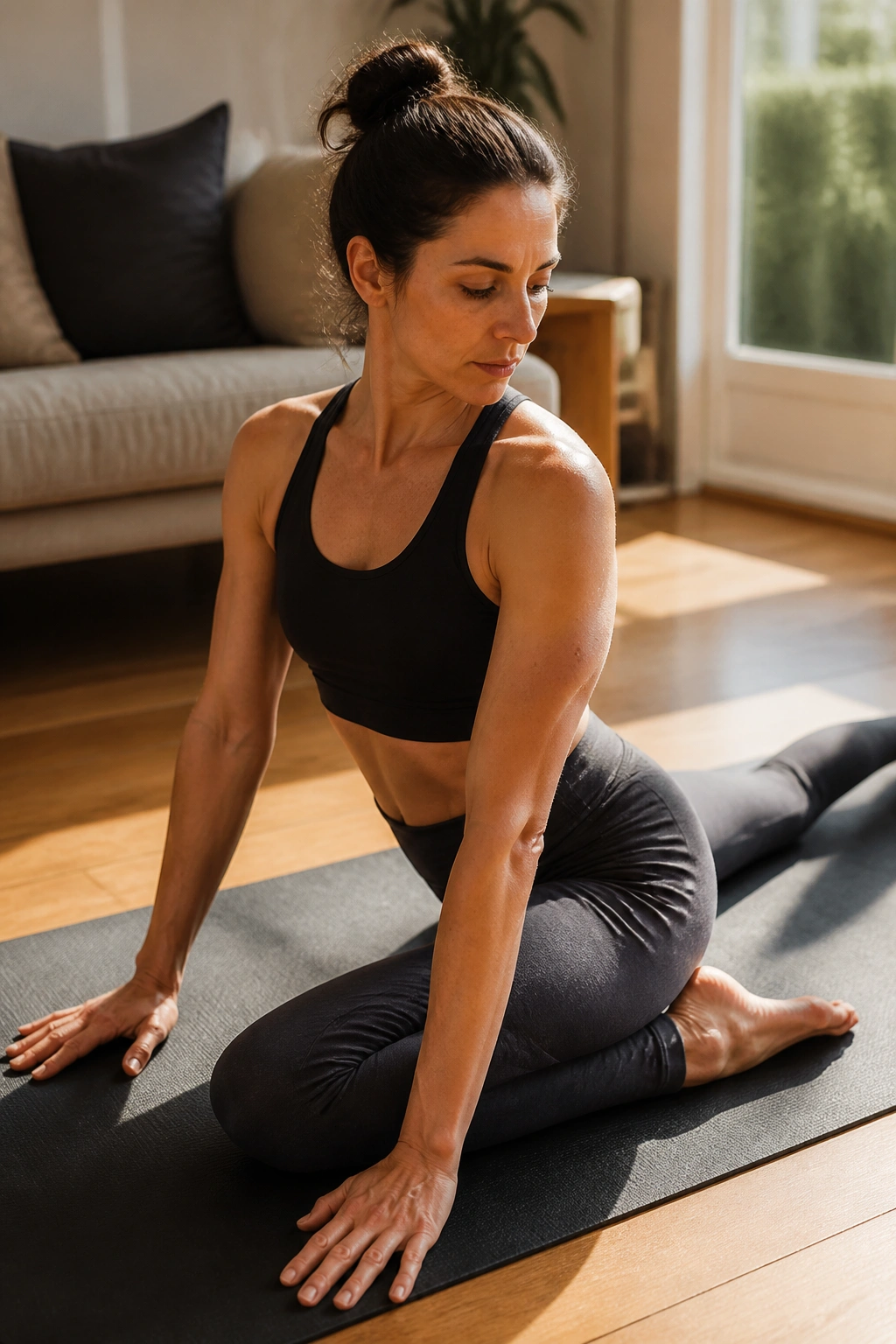
Sometimes, the best workout is the one that lets you recover. You cannot train at 100% intensity every single week forever. This routine is designed to keep you moving without breaking you down further.
- Bodyweight Squats: 3 sets of 20 reps
- Lunges: 3 sets of 10 reps per leg
- Cat-Cow Stretches: 2 minutes
- Pigeon Pose: 2 minutes per side
- Foam Rolling: 5-10 minutes focusing on quads, hamstrings, and calves
This isn’t a “rest day” in the sense of sitting on the couch. It is an active recovery day. By increasing blood flow to the muscles and working on hip mobility, you are preparing your body to attack the heavier routines again next week. Do not skip this; your joints will thank you in the long run.
Final Thoughts

Consistency is the quiet, often overlooked sibling of intensity. You do not need to invent a complex, world-class routine to see results. You need to show up, pick a plan, and execute it with focus. If you rotate through these twenty routines, you will never face a bored muscle group, and you will systematically address your weak points.
Pay attention to how your body responds to the high-volume days versus the heavy-strength days. Some routines will leave you feeling energized, while others will drain your tank for forty-eight hours. Adjust your week accordingly. If a workout leaves you excessively sore, do not force the same intensity the following week. Listen to the feedback your body gives you. That is the true mark of an experienced lifter—knowing when to push and when to dial it back to ensure you are ready to go again.
