



The legs represent the most powerful, hardworking, and frequently neglected foundation of the human body. When you spend enough time around gyms, physical therapy clinics, or even just observing people moving through the world, the difference between those who prioritize lower body strength and those who ignore it becomes painfully obvious. Leg strength isn’t just about the ability to squat a heavy barbell or have defined quadriceps. It is about mobility, metabolic health, and the sheer independence of being able to move comfortably without aches or instability well into later life.
Many people view “leg day” as a chore—a grueling, sweaty, and often painful session that leaves you walking like a newborn giraffe for two days. That reputation is partially earned, but it comes from approaching lower body training with more intensity than intelligence. If you treat your leg workouts as a foundation to be built rather than a punishment to be endured, you will find that consistency becomes much easier to maintain. You stop chasing the immediate burn and start looking at how your knees feel, how your balance is improving, and how your everyday movements—like picking up a heavy box or climbing a flight of stairs—become effortless.
We are going to break down eighteen distinct movements that form a complete toolkit for lower body development. These exercises cover everything from basic stability and range of motion to explosive power and unilateral strength. Whether you are working out in a small bedroom with no equipment or walking into a fully stocked gym, there is something here for you. The goal is to strip away the complexity and focus on the mechanics that actually move the needle for your strength and longevity.
1. Bodyweight Squats
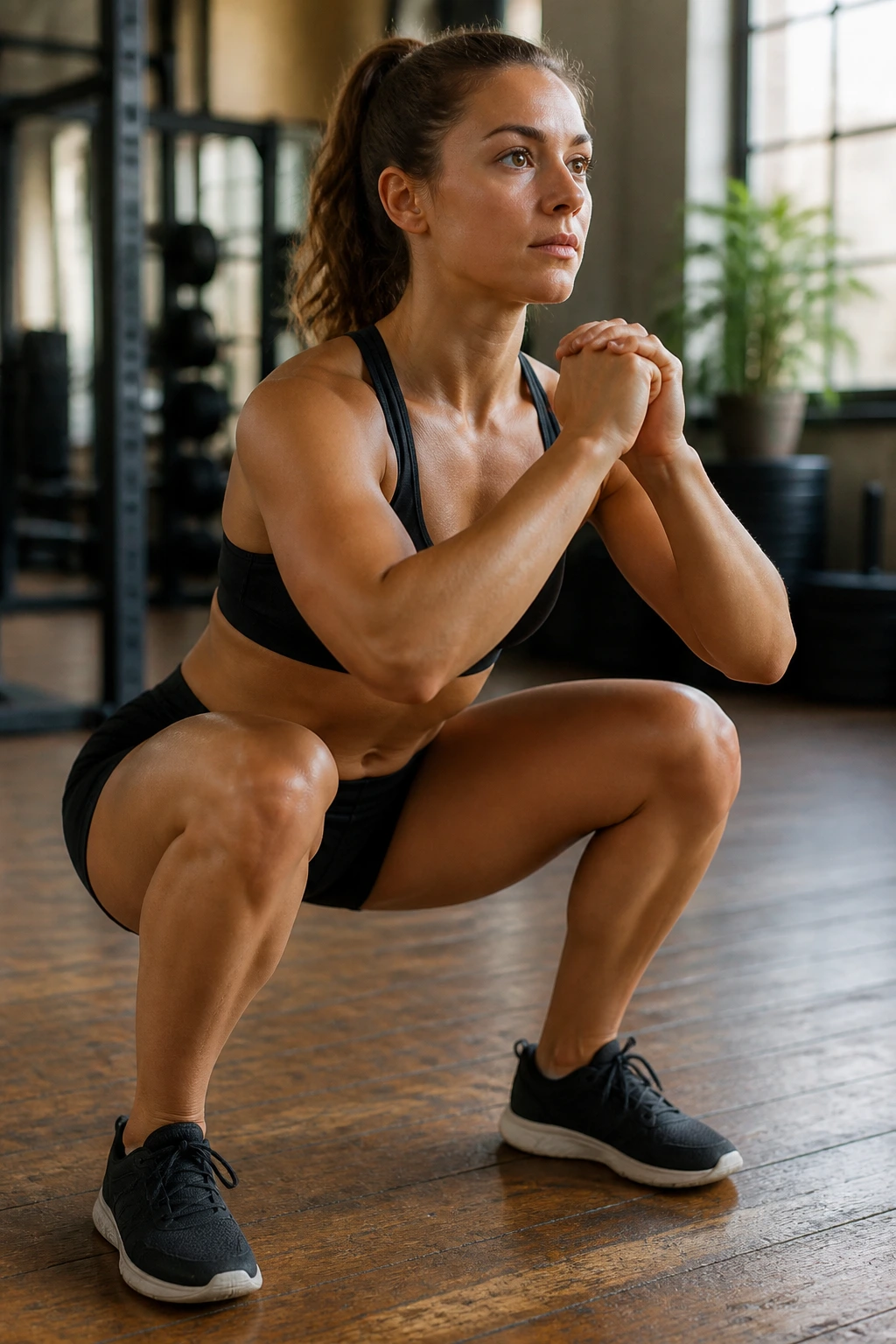
The squat is the absolute king of lower body movements, yet it is frequently executed with poor form. Before you add a single pound of resistance, you need to understand how to move through the full range of motion using only your body weight. The beauty of the basic squat is its simplicity and its necessity; if you cannot control your own body mass through a squat, you have no business trying to load it with a barbell.
How to Master the Pattern
Stand with your feet slightly wider than shoulder-width apart, with your toes turned out just a few degrees. As you begin to sit back, initiate the movement by sending your hips behind you, as if you are reaching for a chair. Keep your chest up and your gaze forward—don’t look at the floor, which pulls your spine out of alignment.
Pro tip: Imagine you are trying to screw your feet into the floor by twisting them outward without moving them. This creates tension in your hips and prevents your knees from caving inward, which is the most common mistake beginners make.
Why It Matters
This exercise teaches the neurological pattern of the hinge and the squat simultaneously. Once this becomes automatic, you have unlocked the ability to train your legs effectively anywhere. You are building the foundation for quad, glute, and core coordination that will support every other exercise on this list.
2. Reverse Lunges
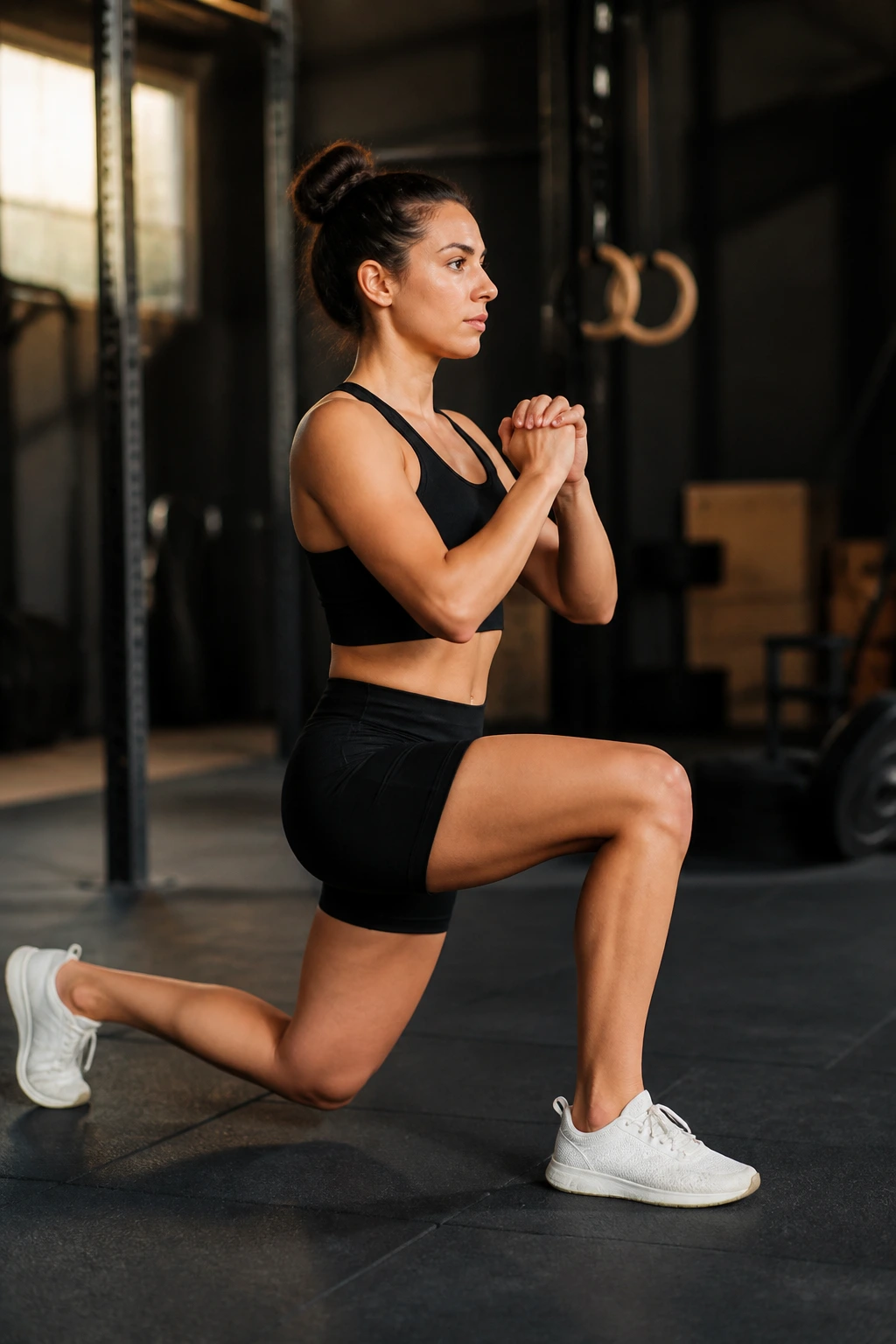
While forward lunges are popular, they are often harder on the knees because of the deceleration force required when stepping forward. Reverse lunges, where you step backward instead, tend to be much more forgiving on the joints while still providing a deep stimulus to the glutes and quadriceps.
The Mechanics of the Step Back
Step back with one foot, landing on the ball of that foot, and sink your hips straight down. Your goal is to have your front shin perpendicular to the floor. If your front knee is pushing forward far beyond your toes, you are likely taking a step that is too short.
Why You Should Choose This
- Stability: Stepping backward makes it easier to keep your torso upright.
- Joint-Friendly: The center of mass stays balanced over the front foot, reducing the strain on the patellar tendon.
- Versatility: You can hold dumbbells, a kettlebell in a goblet position, or just use your body weight.
If you struggle with balance, perform these near a wall and keep one hand lightly touching it. Do not use the wall for support, but rather for a tiny bit of tactile feedback to keep you from wobbling.
3. Glute Bridges
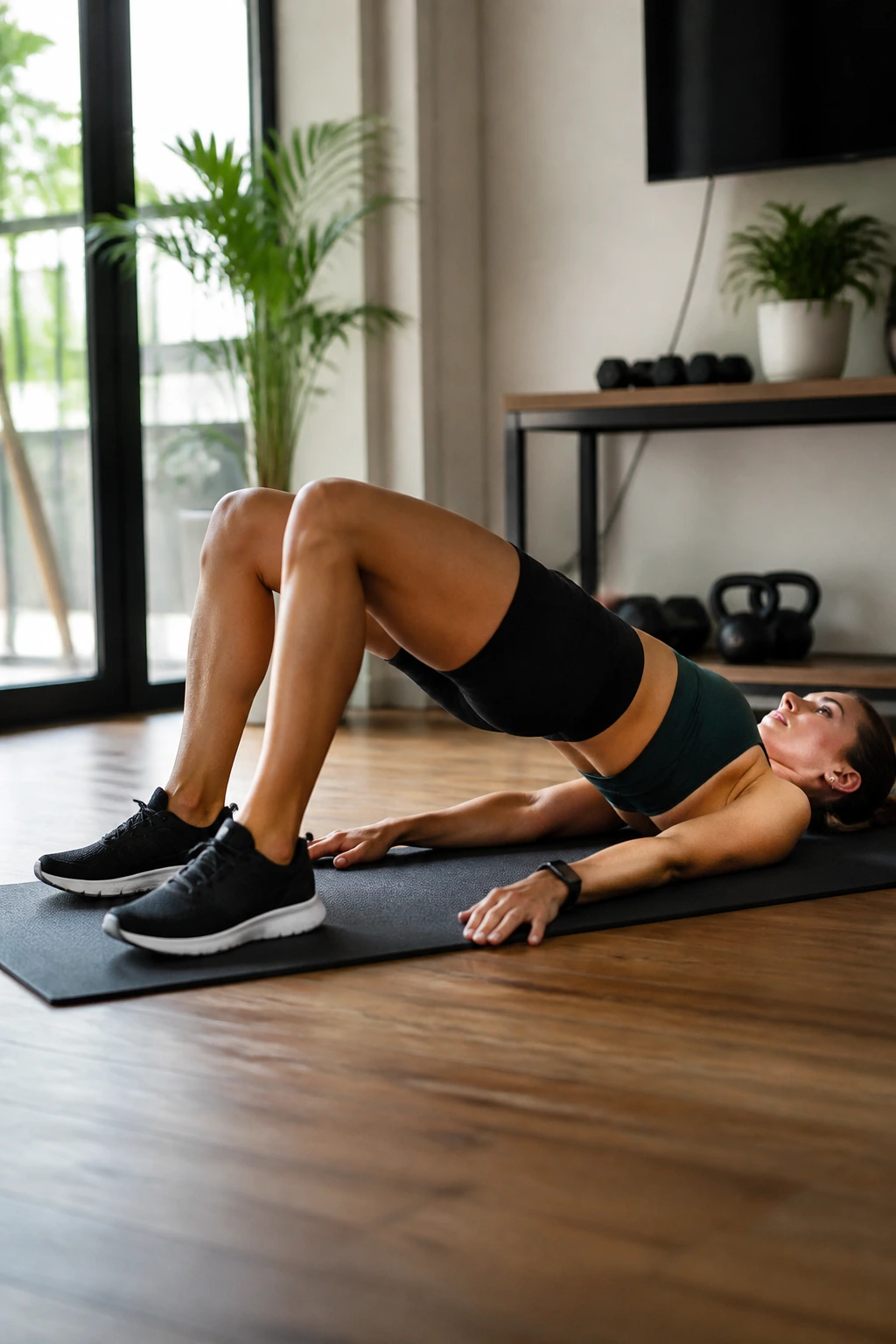
If you spend a lot of time sitting, your glutes are likely “asleep.” They become underactive because they are constantly in a stretched and relaxed position. The glute bridge is the corrective exercise of choice for waking up the posterior chain without putting any strain on your lower back.
Lay flat on your back with your knees bent and feet flat on the floor, about hip-width apart. From this position, push through your heels to lift your hips toward the ceiling. At the top of the movement, squeeze your glutes as hard as you can. Do not try to arch your back to get higher; the height should come entirely from hip extension.
One common error is using your hamstrings or lower back to do the work. If you feel a cramp in your hamstrings, move your feet a few inches further away from your body. If you feel it in your lower back, you are likely overextending your spine instead of engaging your glutes. Keep your ribs tucked down to maintain a neutral spine throughout the bridge.
4. Romanian Deadlifts
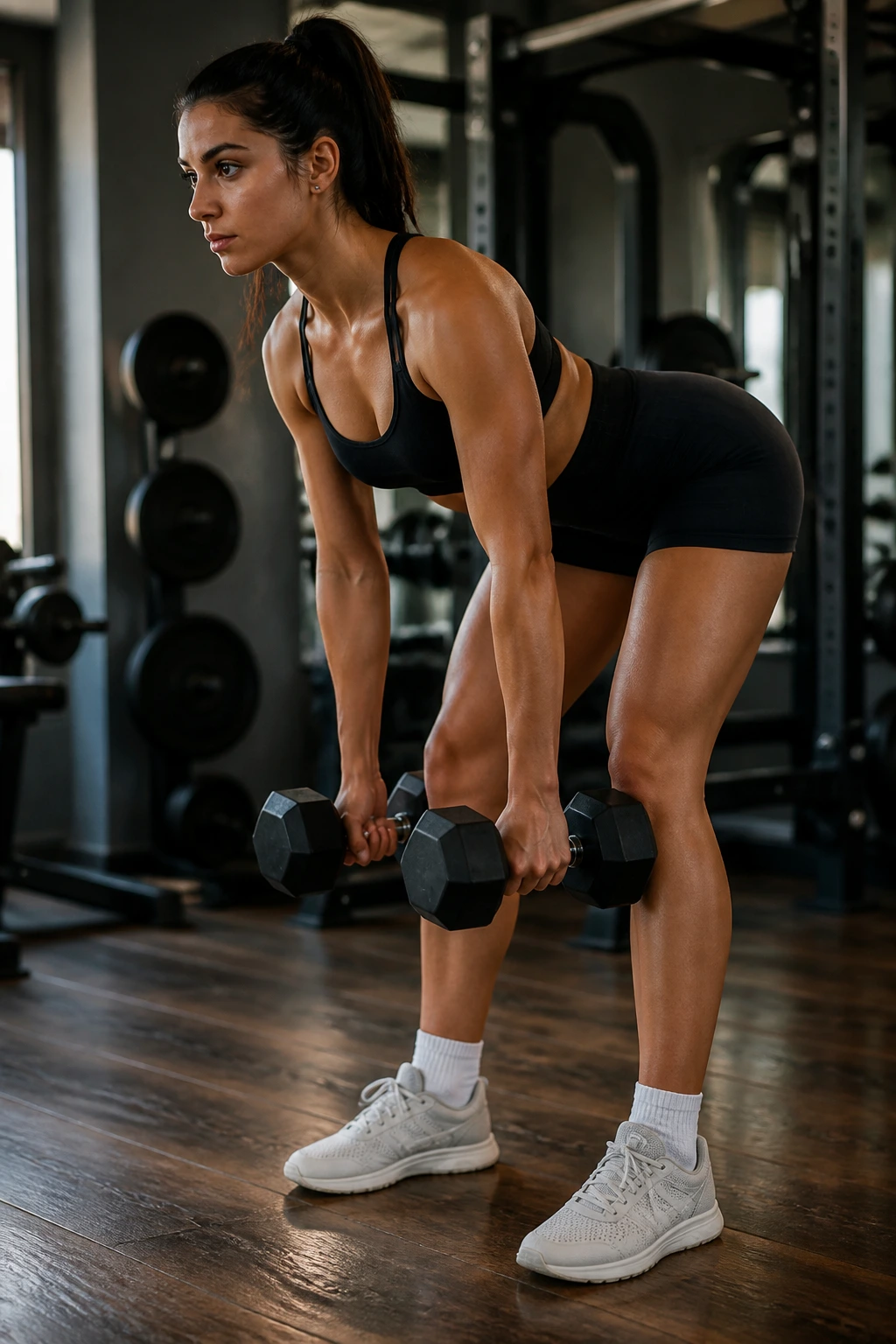
This is a hinge movement, which means it emphasizes the posterior chain—the hamstrings, glutes, and lower back. Unlike a standard deadlift that starts from the floor, the Romanian Deadlift (RDL) starts from the standing position, which allows for a deeper stretch in the hamstrings.
Technique Nuances
Hold a pair of dumbbells or a barbell at hip height. With a slight bend in your knees, push your hips straight back as if you are trying to touch a wall behind you with your glutes. Keep the weight tight to your legs, dragging it down your shins until you feel a significant stretch in your hamstrings.
Stop the movement the moment your hips stop moving backward. If you try to force the weight lower by rounding your back, you lose the tension on your hamstrings and put your spine at risk. The movement is about the horizontal travel of the hips, not the vertical travel of the hands.
Benefits for Longevity
The eccentric—or lowering—phase of the RDL is where most of the muscle-building and flexibility gains happen. By controlling the weight on the way down, you are essentially “loading” the hamstring tendon, which is vital for knee health and injury prevention.
5. Box Step-Ups
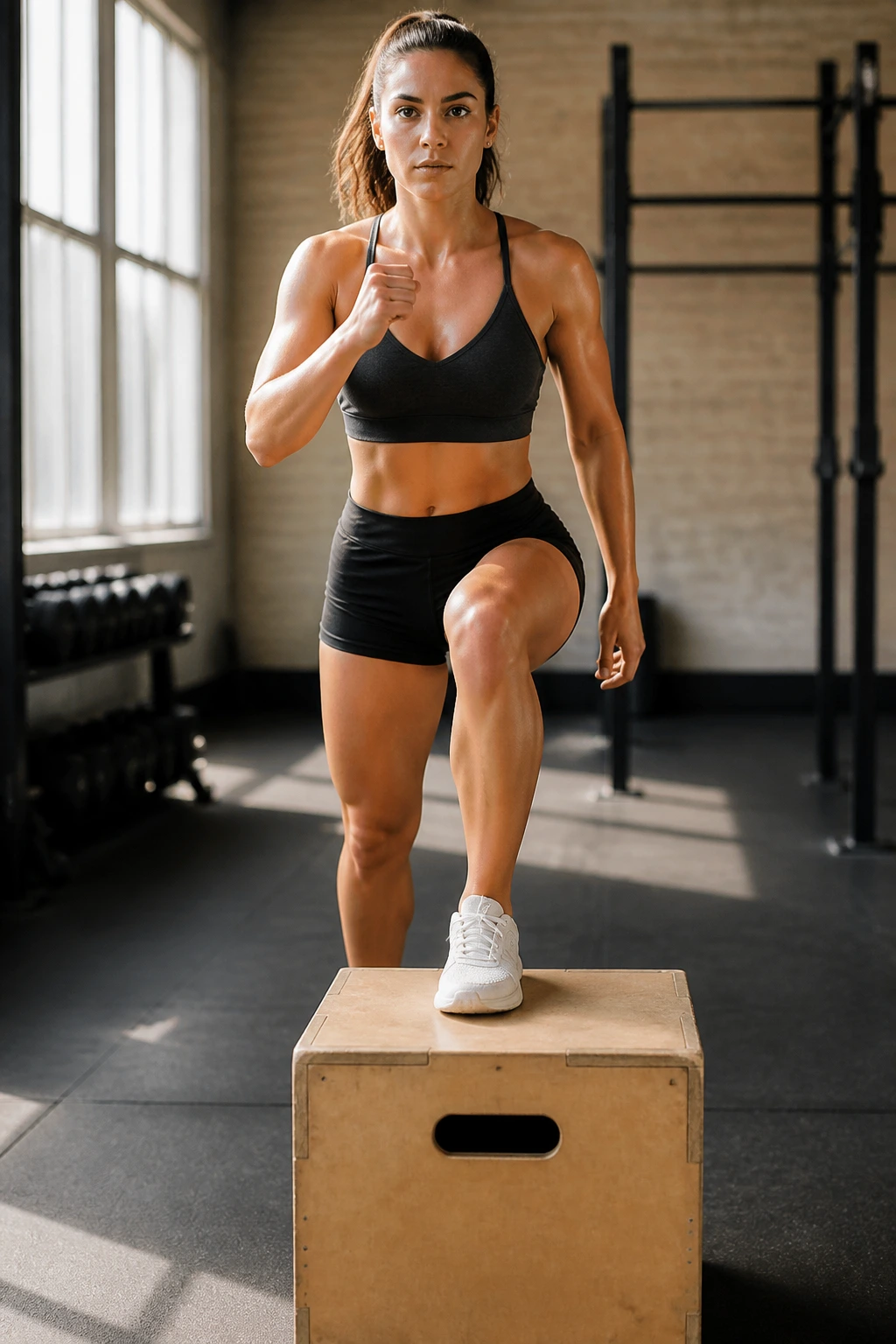
Step-ups are one of the most functional exercises you can do because they replicate the act of climbing stairs or stepping onto a curb, which is a daily requirement for almost everyone. They are also brilliant for correcting strength imbalances between your left and right leg.
Choose a box, bench, or sturdy chair that is about knee height. Place your entire foot on the surface—do not let your heel hang off the edge, as this makes the movement unstable. Step up by driving through the heel of the elevated leg.
Critical Warning: Do not push off with the bottom foot. If you are using your trailing leg to “jump” up, you are cheating the working leg out of the stimulus. Force the lead leg to do 100% of the work. If you find yourself having to push off the floor to make it up, lower the height of the step until you can complete the movement with control.
6. Sumo Squats
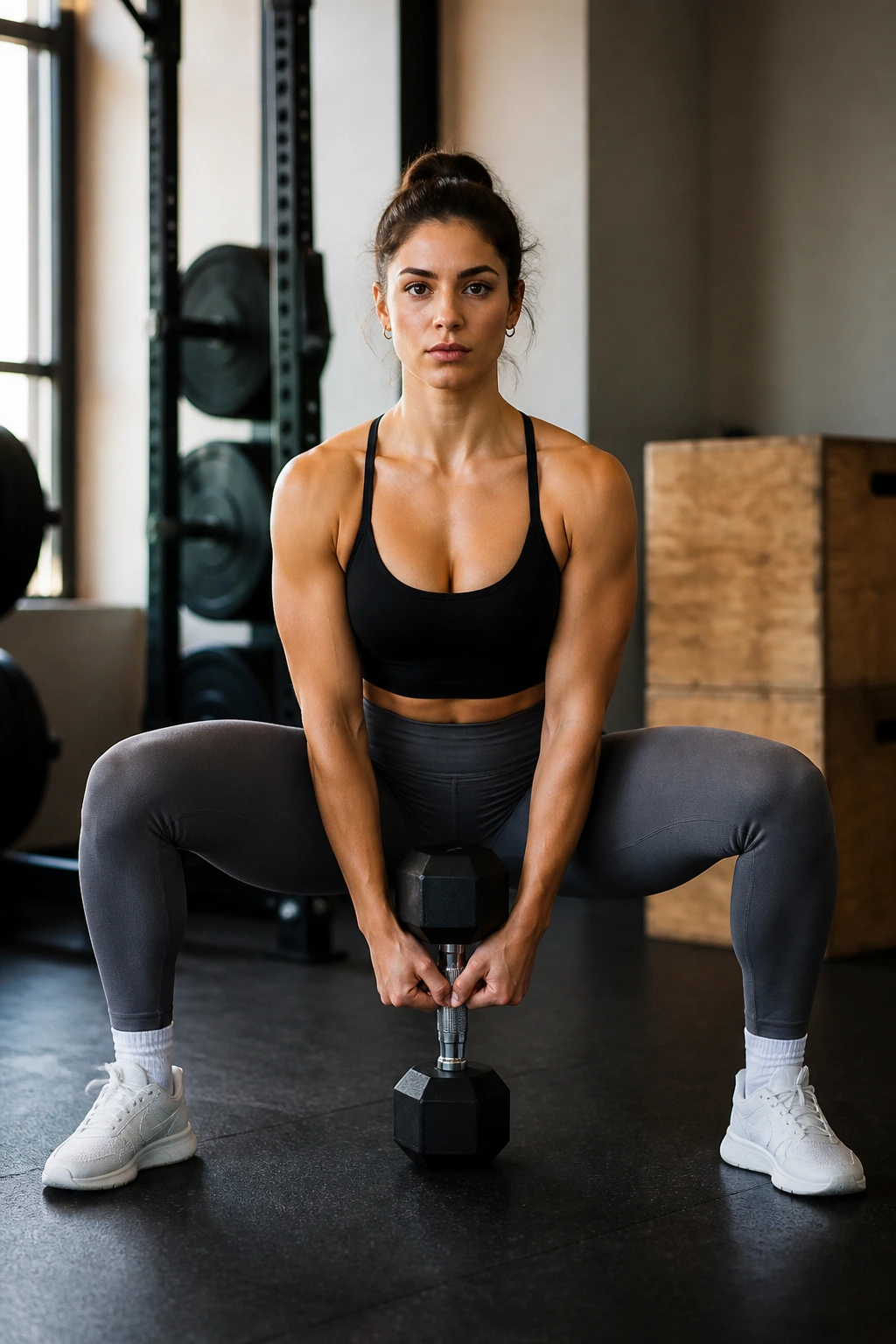
The sumo stance—where your feet are significantly wider than shoulder-width and toes are pointed outward—shifts the emphasis from the quadriceps to the inner thighs (adductors) and glutes. This is a great variation to include if you feel your standard squat has become stagnant.
Because your stance is wide, your knees will naturally track over your toes, but you must be diligent about not letting them collapse inward. The wide base also allows for a more upright torso, which can be helpful if you have limited ankle mobility and struggle to keep your heels on the ground during traditional squats.
The Feel of the Move
You should feel a distinct stretch in your groin as you descend. Hold a single heavy dumbbell or kettlebell between your legs with both hands. This keeps the center of mass underneath you, making it easier to maintain a tall, proud chest.
7. Calf Raises
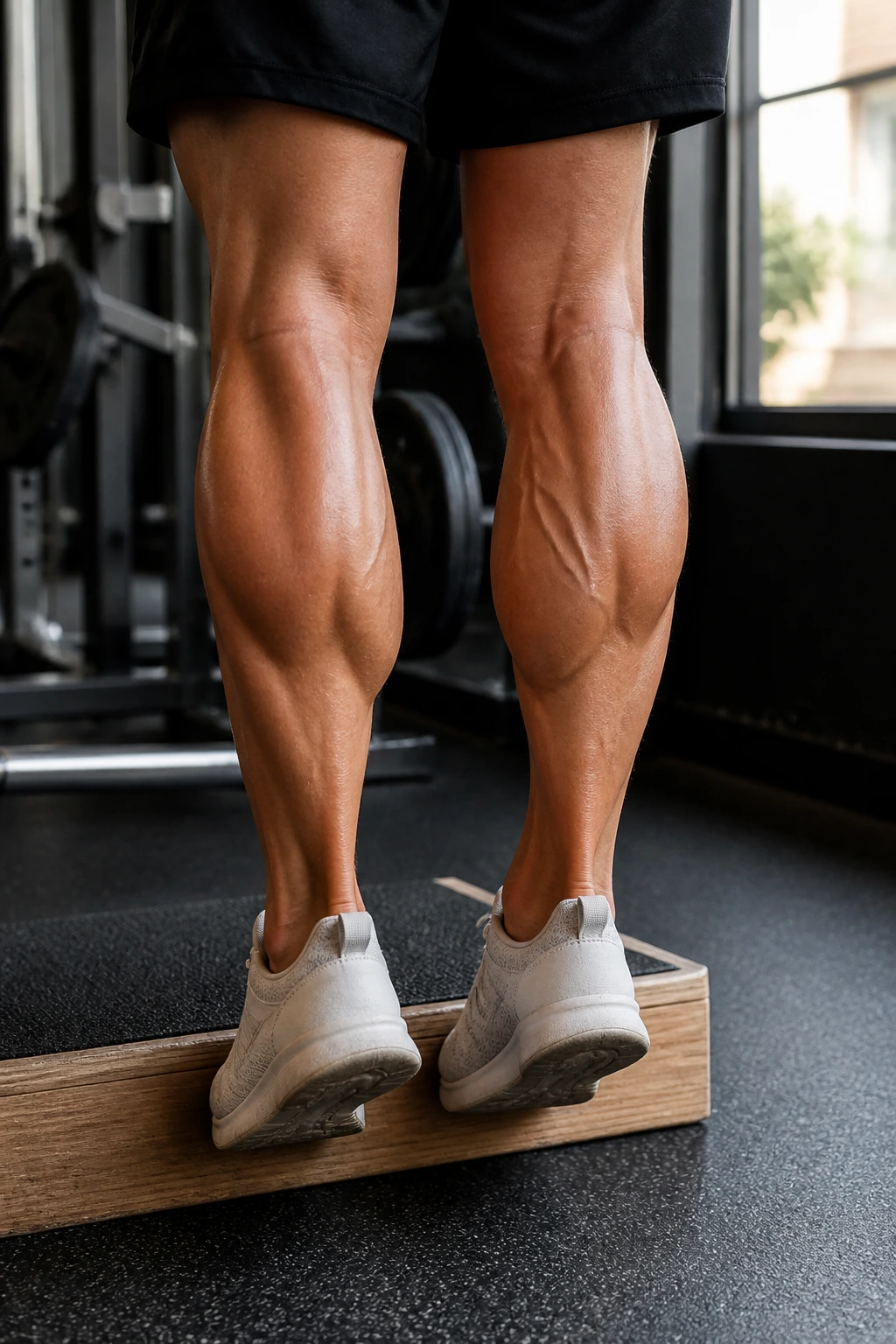
The calves are often the most ignored muscle group in the legs, despite being responsible for stabilizing the entire body during walking, running, and jumping. If you want to avoid ankle injuries and improve your overall leg aesthetics, you need to train the gastrocnemius and soleus.
Perform these on the edge of a step so you can get a full range of motion. Let your heels sink as low as possible at the bottom to get a deep stretch, then rise onto the balls of your feet for a strong contraction at the top.
Why Reps Matter
The calves are largely composed of slow-twitch muscle fibers, which means they often respond better to higher rep ranges. While you might do 8 to 12 reps for squats, for calf raises, try hitting 15 to 20 reps. You need to create enough metabolic stress to actually stimulate growth in those stubborn tissues.
8. Goblet Squats
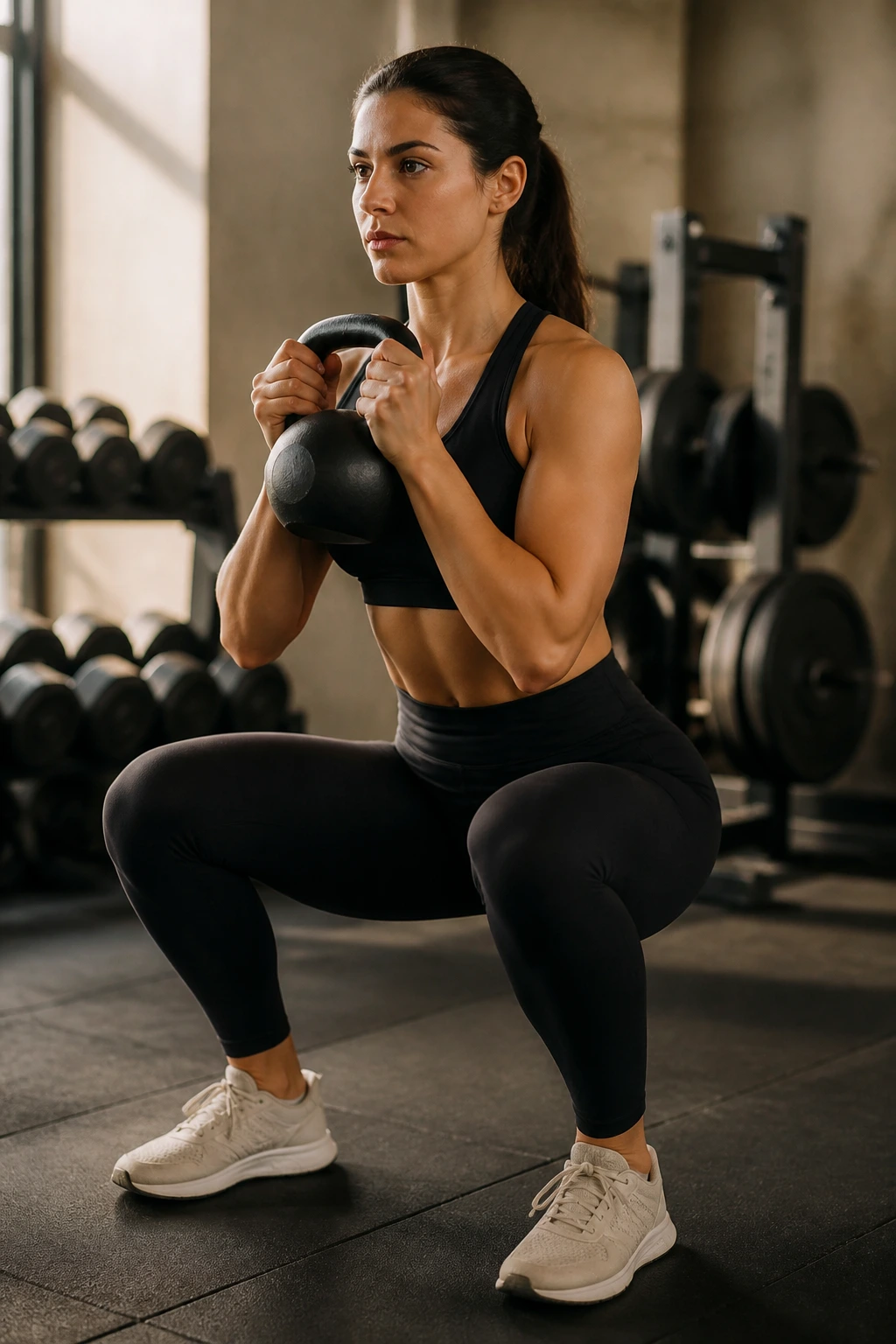
The goblet squat is often the best transition from bodyweight squats to weighted squats. By holding a weight against your chest, you force yourself to maintain an upright posture. If you lean forward, the weight will pull you off balance, providing instant feedback on your form.
Use a single dumbbell or kettlebell held against your sternum. Keep your elbows tucked in toward your ribs. As you squat, your elbows should naturally track inside your knees, which acts as a guide to keep your knees pushed out and aligned with your toes.
This exercise is particularly excellent for those with “long femurs,” which often makes squatting feel awkward. The counterbalance provided by the weight in front of your body allows you to sit back and down comfortably without feeling like you are going to fall over backward.
9. Bulgarian Split Squats
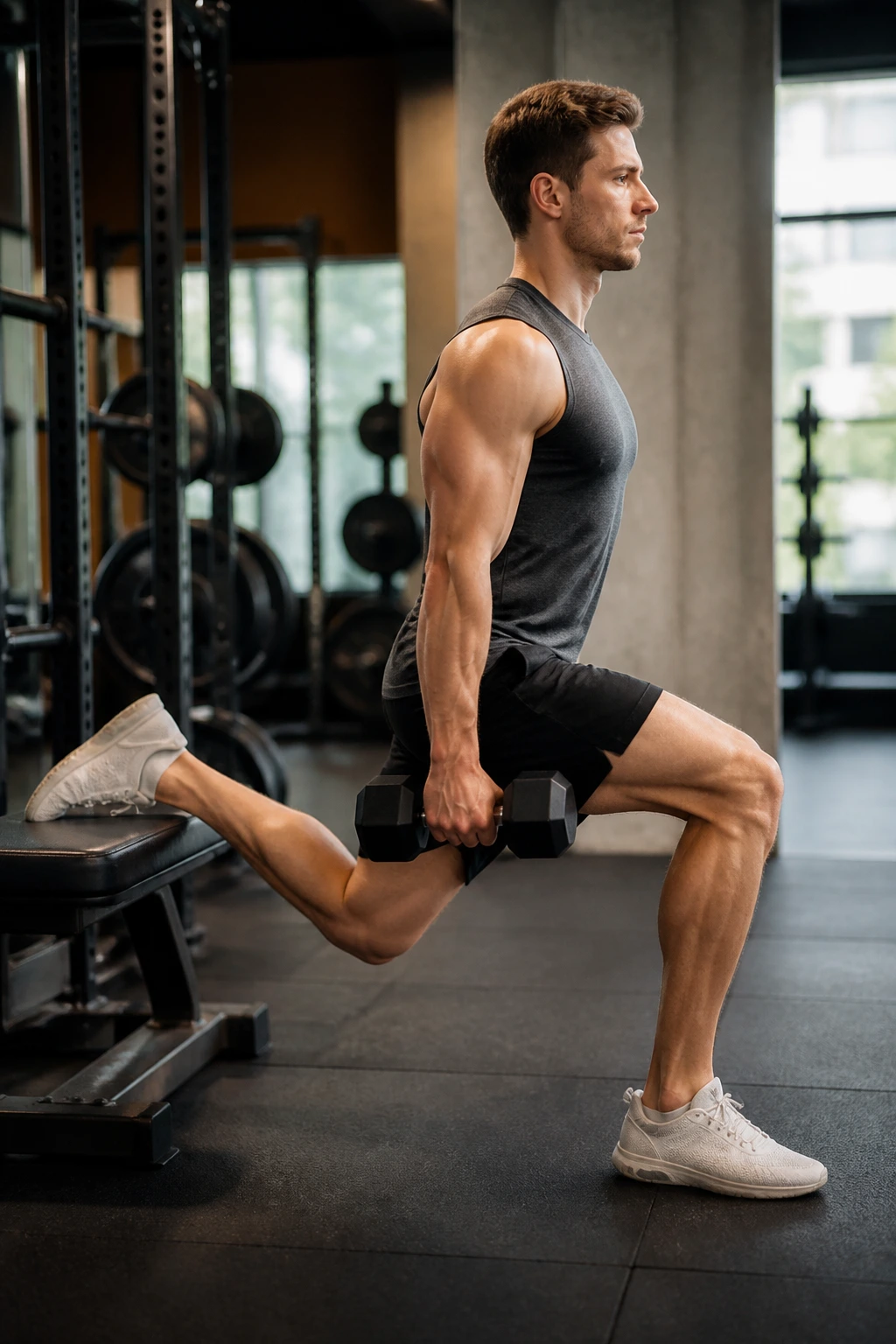
If there is one exercise that people love to hate, it is the Bulgarian split squat. It requires significant balance, stability, and raw leg strength. By elevating your back foot on a bench or chair, you shift almost all the load onto the front leg, essentially turning it into a single-leg squat.
The Setup
Stand about two to three feet in front of a bench. Reach back with one foot and rest the top of your foot on the bench. Keep your chest tall. Descend until your back knee is just an inch or two above the floor.
It takes practice to find the right distance. If you are too close, you will feel it in your knee; if you are too far, you will feel it entirely in your hip flexor. Play with your foot placement until you feel the tension primarily in the glute and quad of the front leg.
A Warning on Intensity
This exercise is exceptionally taxing. Do not be surprised if you can only manage half the repetitions you would normally do for a standard squat. It is a humbling movement, but it is one of the fastest ways to fix leg asymmetry and build functional strength.
10. Lateral Lunges
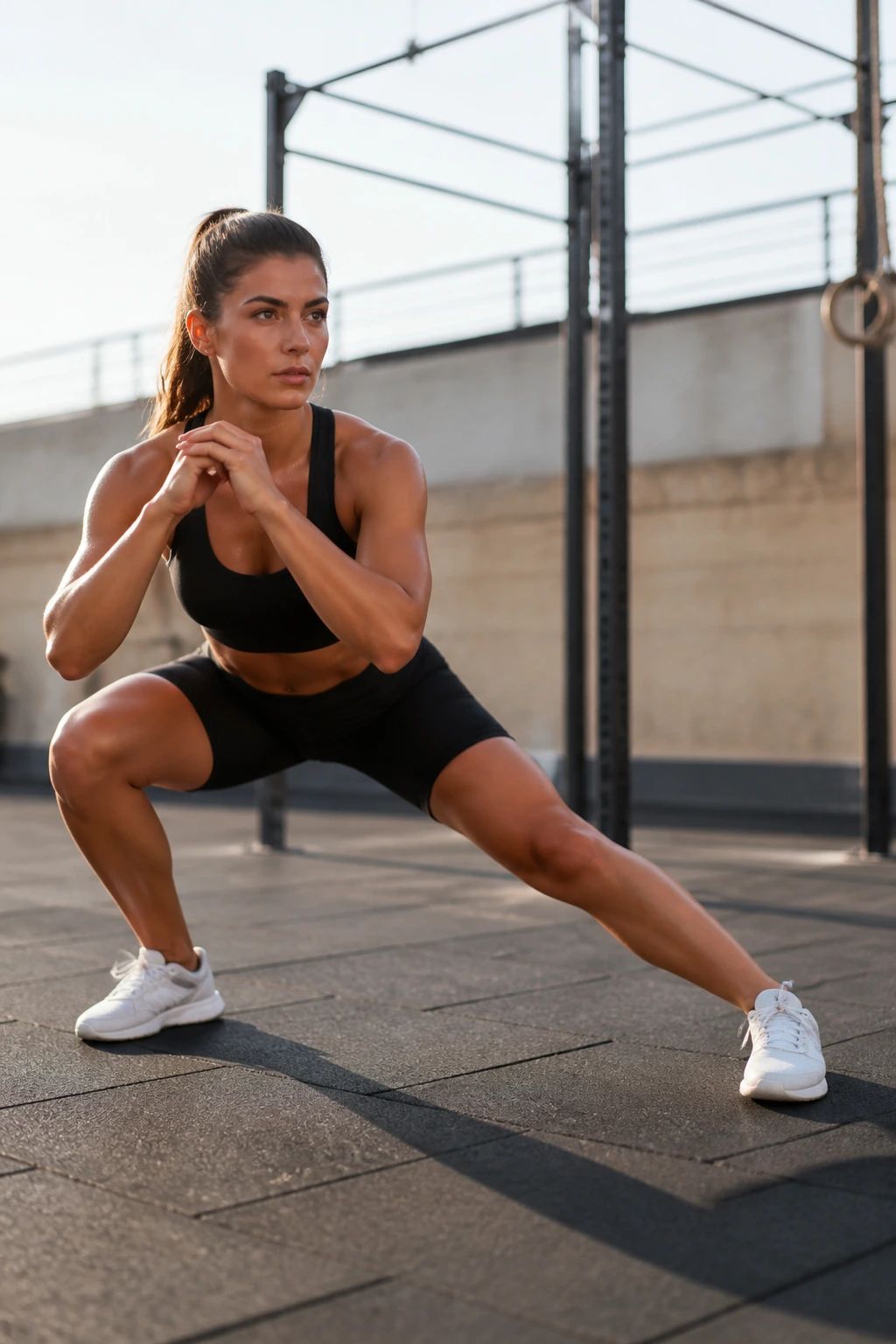
Most of our daily movement happens in the “sagittal plane,” meaning we walk and run forward. But real life requires us to move sideways, too—think of stepping out of a car, dodging a puddle, or reacting in a sport. Lateral lunges train your legs to handle force in the frontal plane.
Step out wide to the side, keeping one leg straight and bending the other. Push your hips back as you lower your body toward the bent leg. The straight leg should remain completely locked out, which provides a fantastic stretch for the inner thigh.
This movement is essential for hip health. By training the muscles to control lateral movement, you protect your knees and hips from the kind of shearing forces that often cause injuries when you trip or step awkwardly during daily activities.
11. Kettlebell Swings
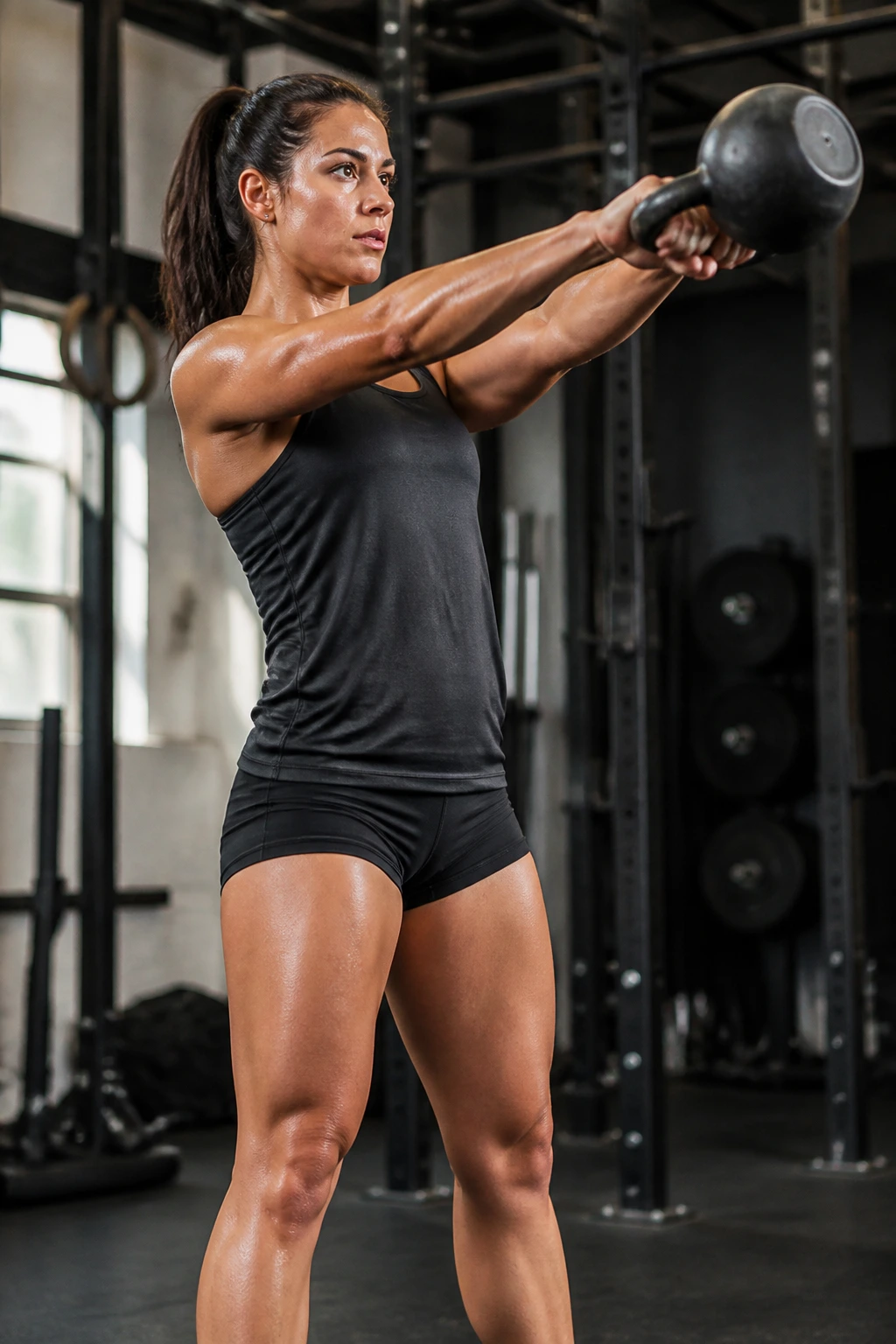
While this is technically a full-body movement, the primary engine driving the kettlebell swing is the hips and hamstrings. It is an explosive hip hinge that develops incredible posterior chain power, which carries over directly into your ability to jump, run, and lift heavy objects.
The Hinge Pattern
Do not squat the kettlebell. This is a hinge, not a squat. Stand with feet slightly wider than shoulder-width, hold the bell with both hands, and initiate the movement by pushing your hips back. Once the bell is between your legs, snap your hips forward aggressively to “pop” the bell up.
The height of the bell is determined by the speed of your hips, not by your arms. Your arms are merely cables connecting the weight to your body. If you feel like you are lifting the bell with your shoulders, you are doing it wrong. Focus entirely on the explosive contraction of the glutes at the top of the swing.
12. Wall Sits
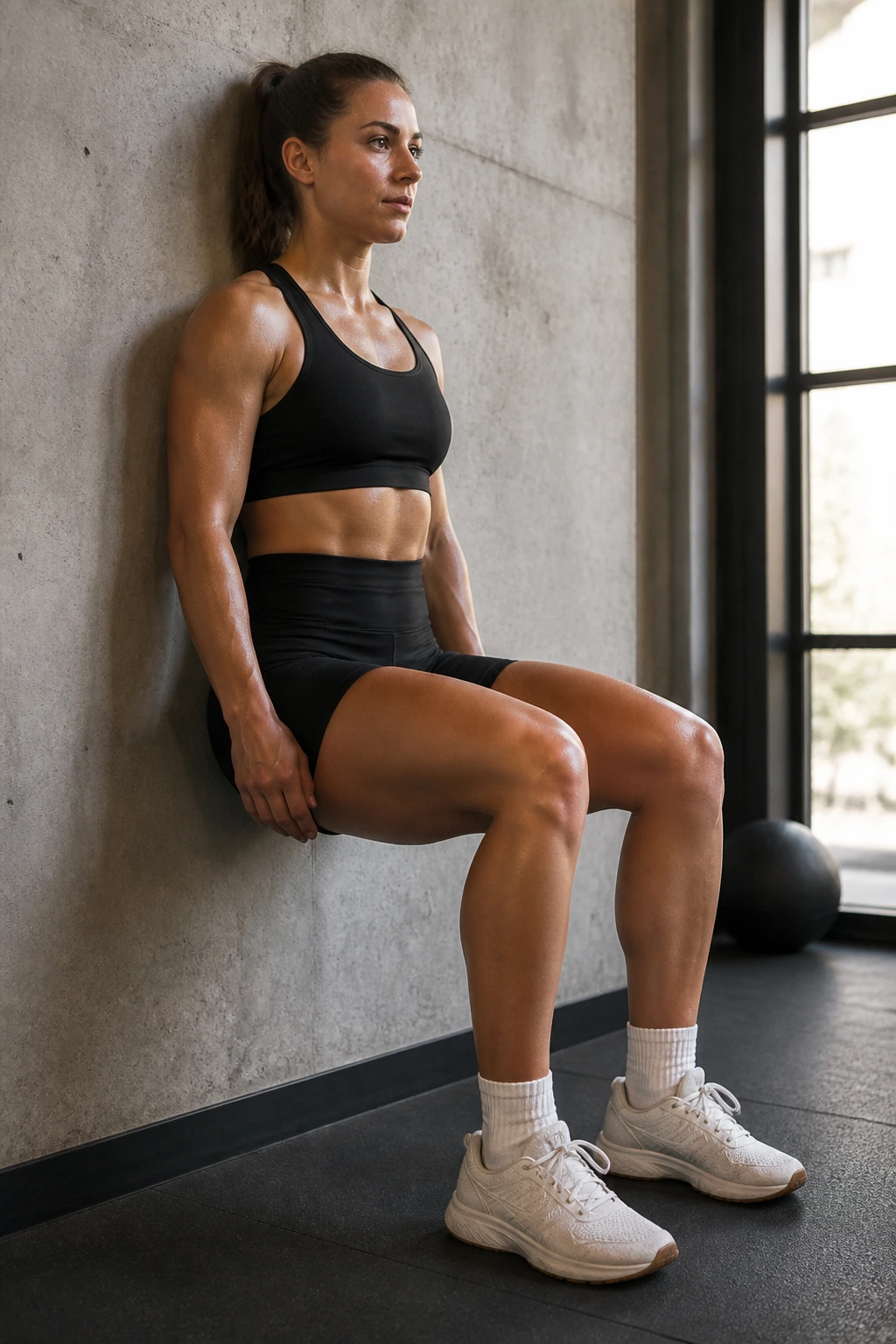
Sometimes the simplest movements are the most brutal. The wall sit is an isometric exercise, meaning you are holding a position without moving. It is widely used in rehabilitation to strengthen the quadriceps without subjecting the knee joint to the stress of moving through a full range of motion.
Lean your back flat against a wall and slide down until your thighs are parallel to the floor—or as close as you can manage. Keep your knees at a 90-degree angle and press your entire back against the wall.
The Mental Game
You will start feeling a burning sensation in your quads within thirty seconds. The temptation will be to wiggle, shift, or stand up. Resist that urge. The magic of the wall sit is in the static hold. Challenge yourself to add five seconds to your hold every time you perform it, until you can comfortably sit for two full minutes.
13. Cossack Squats
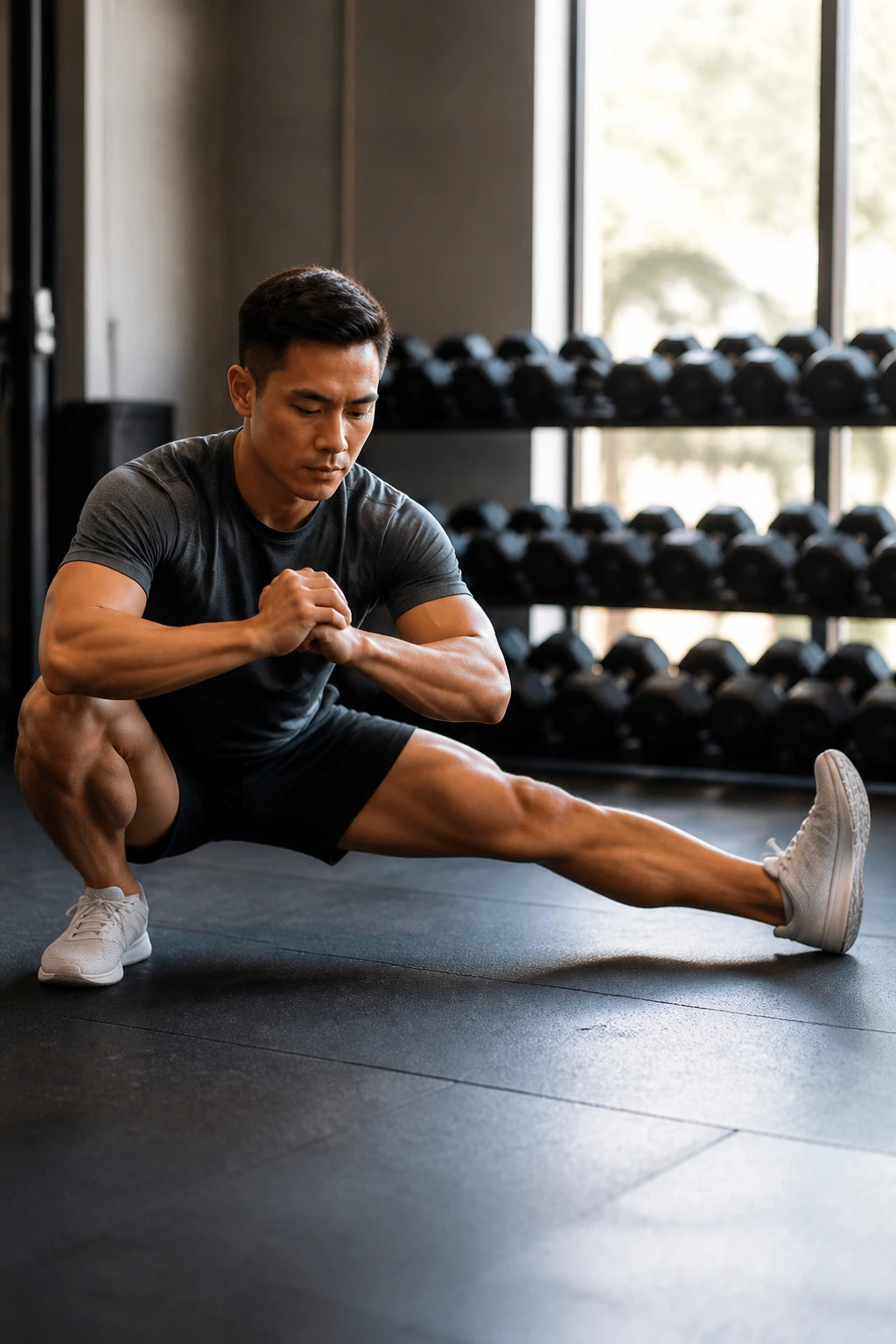
If the lateral lunge is the middle ground, the Cossack squat is the deep-tissue specialist. It is essentially a lateral lunge that goes down much deeper, requiring significant ankle mobility and hip flexibility. It is an elite movement for opening up the hips.
Start in a very wide stance. Shift your weight completely to one side, squatting down on that leg while keeping the other leg perfectly straight and the heel planted on the floor. Ideally, you want to get your butt as close to your heel as possible.
If your heel comes off the ground on the straight leg, that is perfectly fine when you are starting. Just keep working on sitting lower over time. This exercise is one of the best ways to prepare your body for more complex movements like pistol squats or even just to maintain deep-squat mobility as you age.
14. Single-Leg Romanian Deadlifts
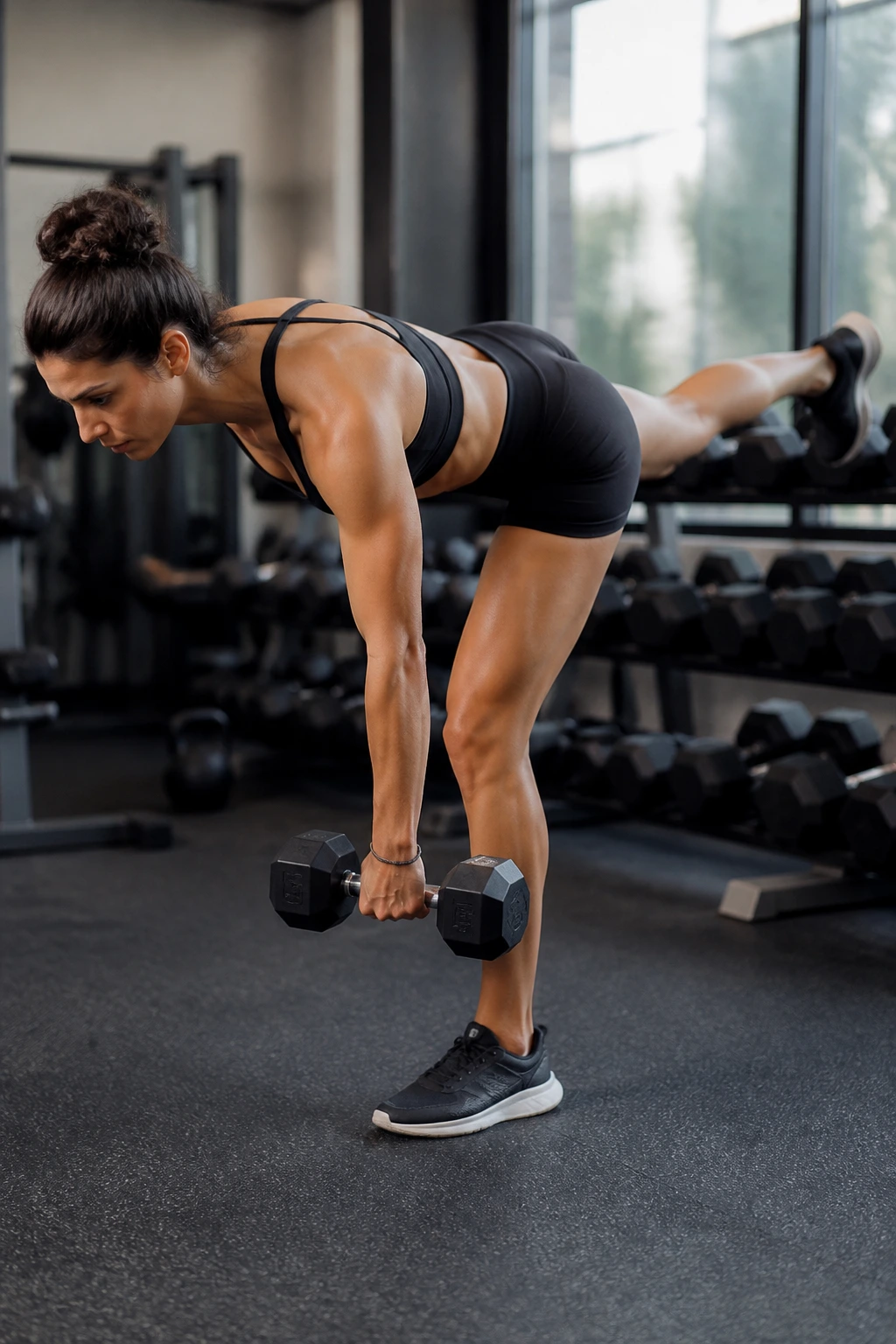
If you want to test your coordination and balance while simultaneously torching your hamstrings, this is your move. The single-leg Romanian deadlift (SLRDL) forces your stabilizing muscles—especially those in your ankles and hips—to fire rapidly to keep you from falling over.
Hold a weight in the hand opposite the leg you are standing on. As you hinge forward, kick the free leg back, keeping it in line with your torso. Your body should form a “T” shape at the bottom of the movement.
Because of the balance requirement, you will likely need to use much lighter weights than you think. Do not let the desire to lift heavy compromise your balance. Focus on the slow, controlled lowering of the weight and the feeling of your hamstrings doing the work to pull you back to an upright position.
15. Nordic Hamstring Curls
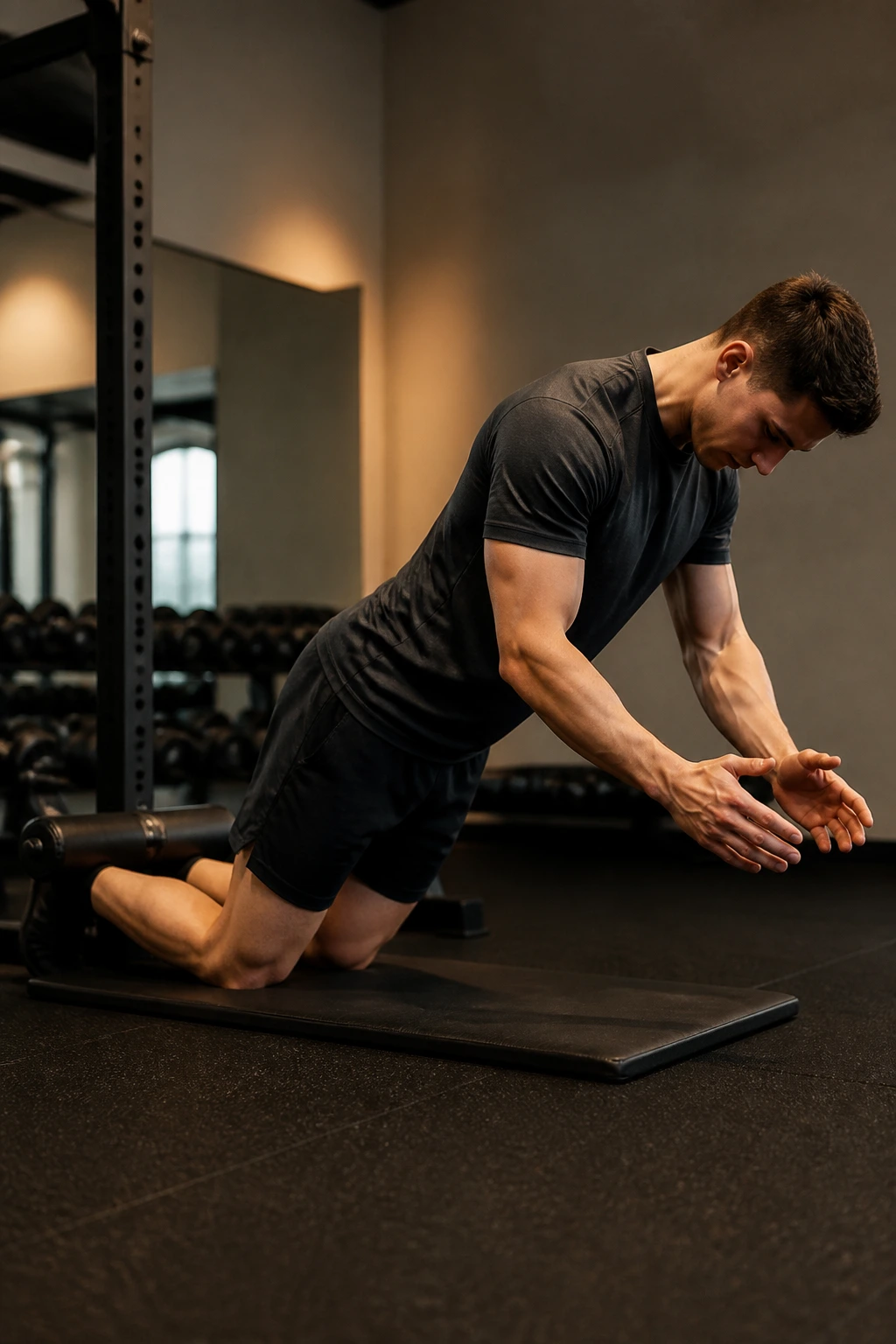
The Nordic curl is often referred to as the gold standard for hamstring strengthening. It is an eccentric-focused exercise, which means you are focusing on the lengthening phase of the muscle. This type of training is scientifically linked to a massive reduction in hamstring strain risk.
You will need something to anchor your feet, like a heavy sofa, a partner, or a dedicated piece of gym equipment. Kneel on a soft surface, keep your body in a straight line from knees to head, and slowly lower your torso toward the floor.
The Reality Check
You will likely only get a few inches before gravity takes over, and that is normal. Fight the urge to bend at the hips. Use your hamstrings to hold your body up for as long as possible before eventually letting your hands catch you. Push yourself back up with your arms and repeat. This is an advanced movement, so treat it with respect.
16. Pistol Squats
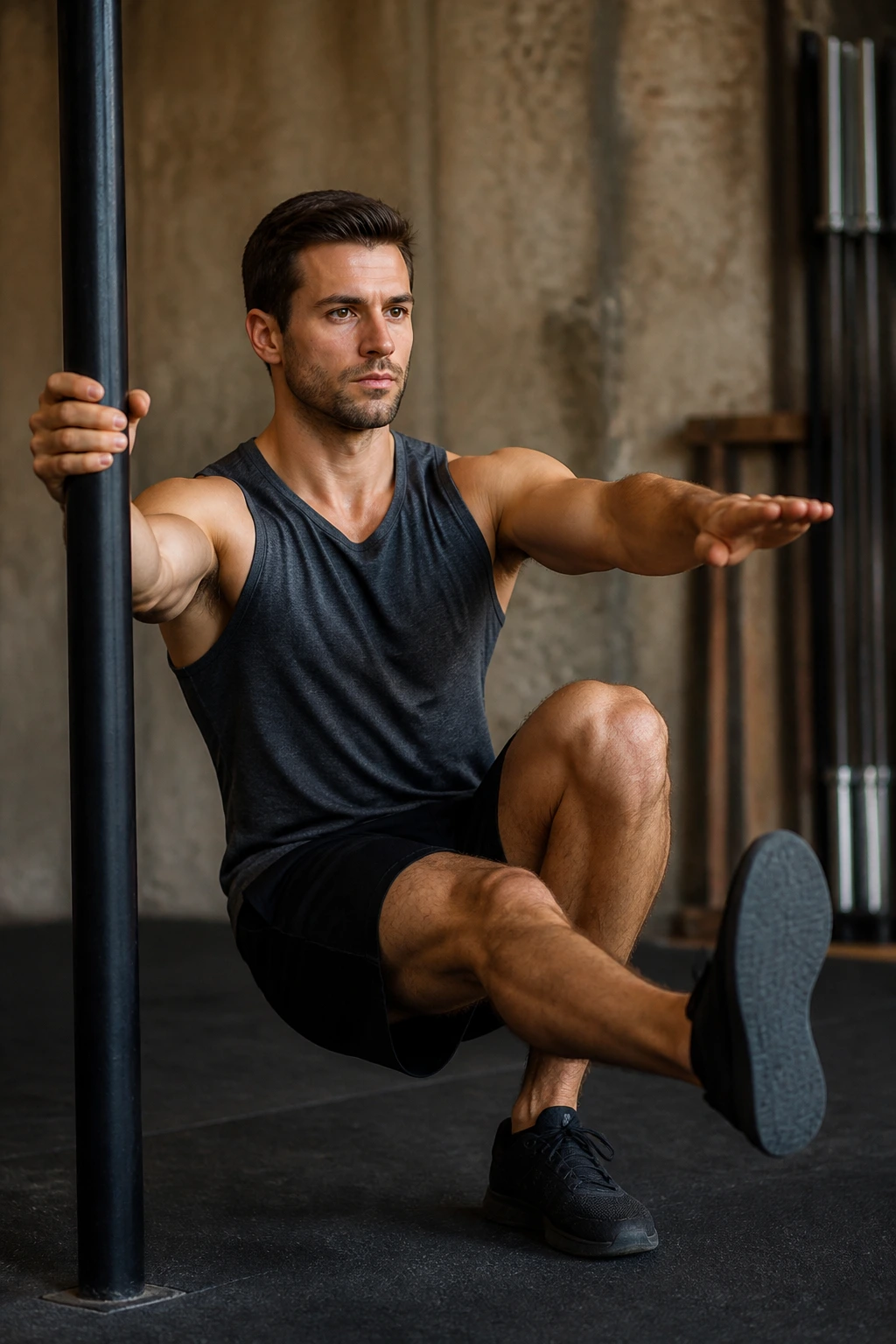
The pistol squat, or single-leg squat, is the ultimate display of lower body control. It requires a blend of extreme strength, balance, and mobility. Many people never achieve this, not because they aren’t strong enough, but because they lack the specific ankle mobility to keep their heel down at the bottom of the squat.
To practice, start by holding onto a sturdy pole or doorframe for balance. Extend one leg out in front of you and squat down on the other. Use your hand on the pole to assist you on the way up.
As you get better, slowly decrease the amount of assistance you provide yourself. This is not just a quad builder; it is a full-body engagement drill. You have to lock your core and keep your back straight, or you will simply tip over.
17. Jump Squats
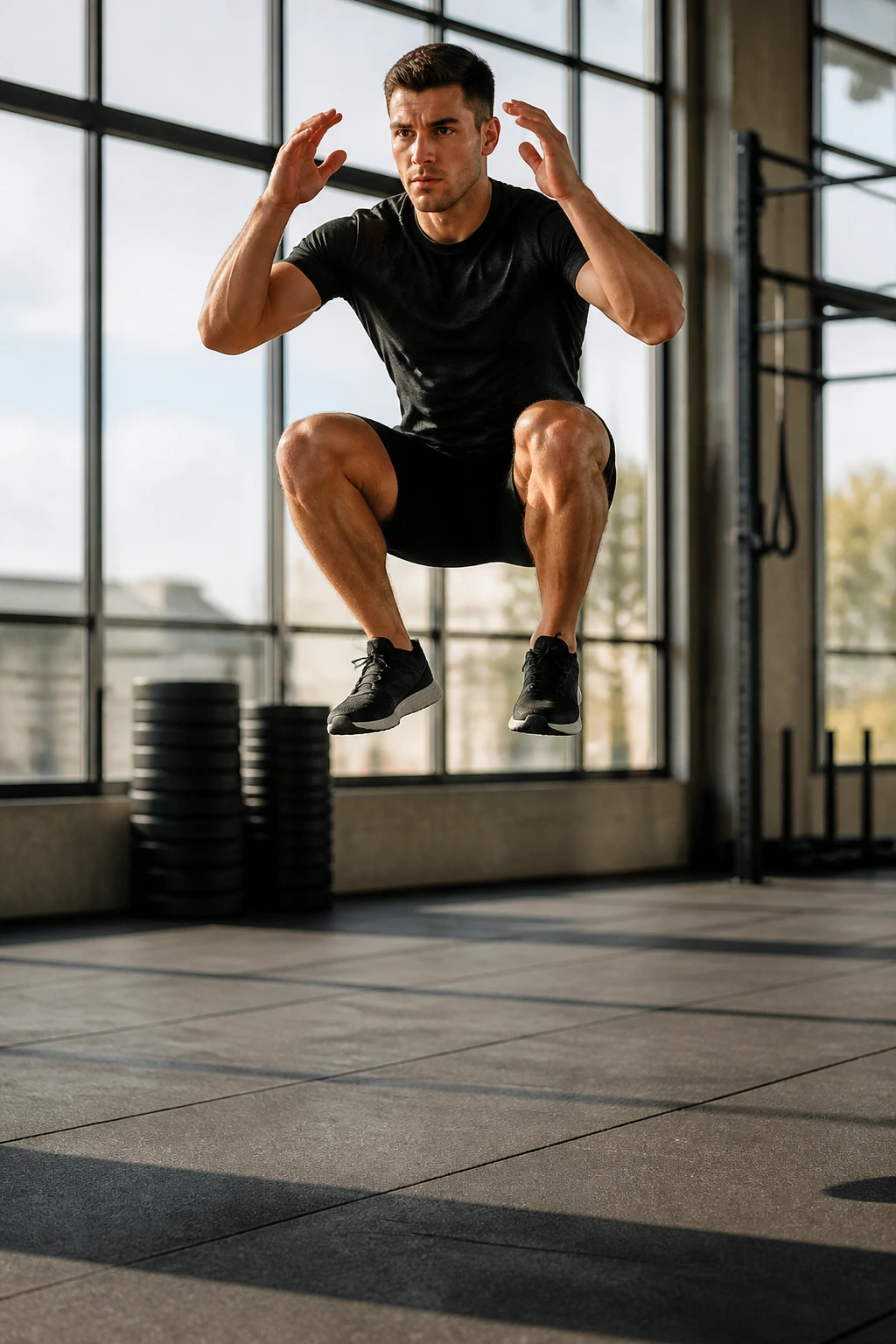
Explosive power is the first thing we lose as we age if we don’t actively train for it. Jump squats add a plyometric component to your routine, teaching your muscles to produce force rapidly. This is essential for athletic performance, but also for the simple act of catching yourself if you stumble.
Perform a standard bodyweight squat, but instead of coming up slowly, drive upward with maximum intensity and leave the ground. Your goal is height and soft landing. When you land, immediately transition into the next squat.
Safety First: Do not perform these if you have any acute knee or joint pain. The landing phase is where the impact happens. If you cannot land quietly like a ninja, you are jumping too high or are not ready for this movement. Focus on a soft, controlled landing that absorbs the shock through your muscles, not your joints.
18. Farmer’s Carries
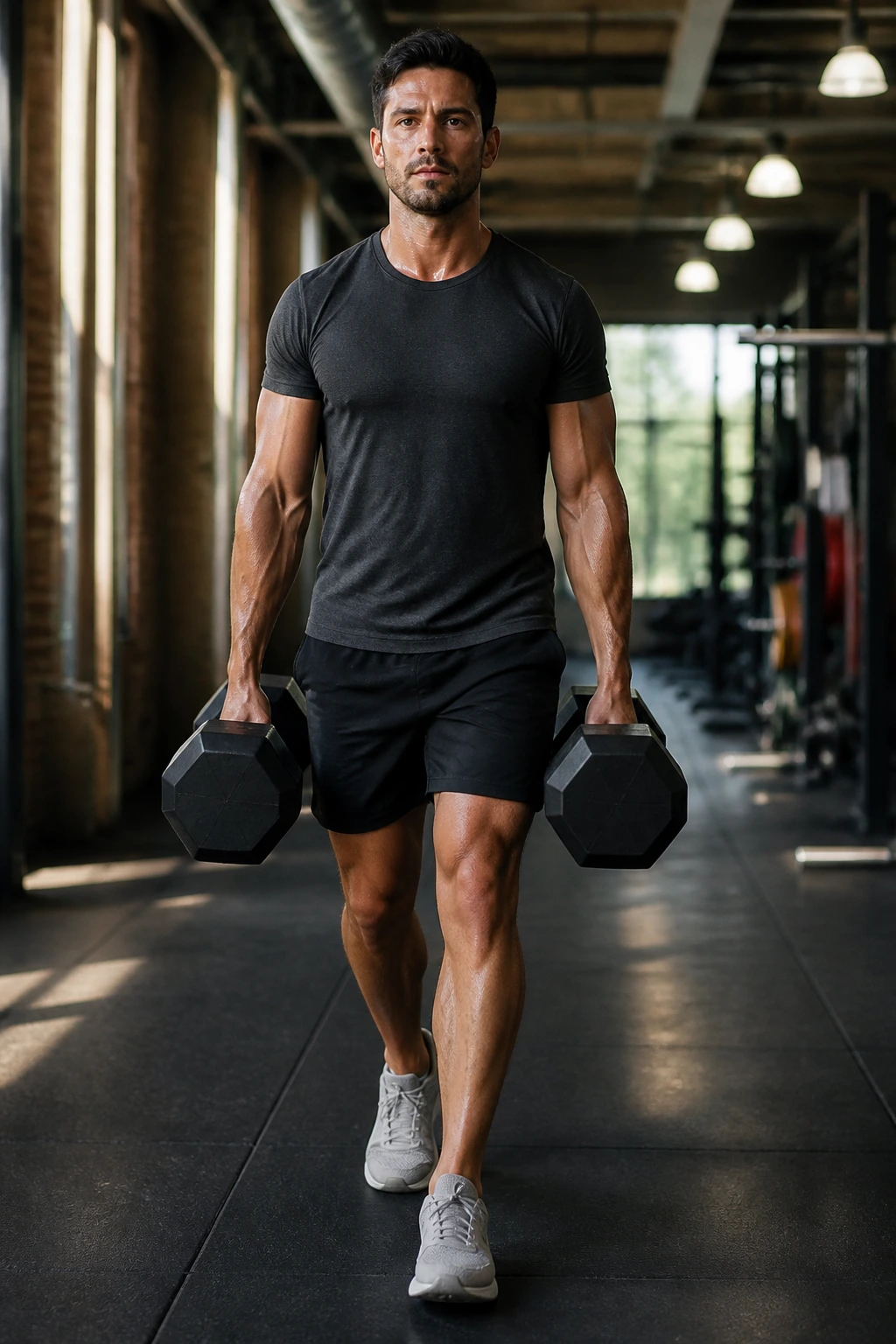
While it looks like an upper-body exercise, the farmer’s carry is arguably one of the most effective lower-body stability drills in existence. By walking while carrying heavy loads, you force your legs, hips, and core to stabilize your body against the shifting weight with every single step.
Pick up two heavy dumbbells or kettlebells—one in each hand. Stand tall with your shoulders back and walk for a set distance or time. The key is to keep your torso perfectly still. Do not let the weights pull you side-to-side; your legs must actively resist that sway.
This builds what we call “dynamic stability.” It strengthens the small, often-ignored stabilizer muscles around the hips and knees that protect you during everyday activities. It is a simple, no-nonsense movement that leaves your legs feeling solid and resilient.
Final Thoughts
Building leg strength is a marathon, not a sprint. You don’t need to try all eighteen of these movements in a single week. Pick three or four that resonate with your current fitness level, master the form, and focus on slow, steady progress. Whether you are adding a few pounds to your weight, holding an isometric pose for five seconds longer, or finally nailing the balance on a single-leg movement, those small wins accumulate into a foundation that will carry you for decades.
Remember that the best workout is the one you can sustain. If your joints feel inflamed, back off the intensity. If you feel bored, switch to a different variation. Your legs are the engine that powers your life—treat them with the respect and attention they deserve, and they will, in turn, provide the freedom of movement that is the true hallmark of physical health. Keep showing up, keep focusing on the quality of your movement, and the strength will follow.
