



Inner thighs get ignored until they start complaining. You feel it on stairs, in side lunges, or the first time you try to move with a little more speed and your hips wobble like they’re made of wet cardboard.
That gap shows up in a lot of home routines. People do squats and lunges, maybe a few glute bridges, then wonder why the inside of the thigh still feels weak, tight, or strangely unworked. The muscles there — the adductors — do a lot more than people give them credit for.
The good news is that inner leg workouts at home do not need fancy equipment. A pillow, a wall, a towel on a smooth floor, and a bit of patience can hit the adductors hard if you use the right angles and stop rushing every rep.
Some moves look almost boring. Those are often the ones that matter most. Start with the wide-stance pattern, because it teaches the inner thigh to load under control instead of just surviving whatever the rest of the legs are doing.
1. Sumo Squat With a Three-Second Lowering Phase
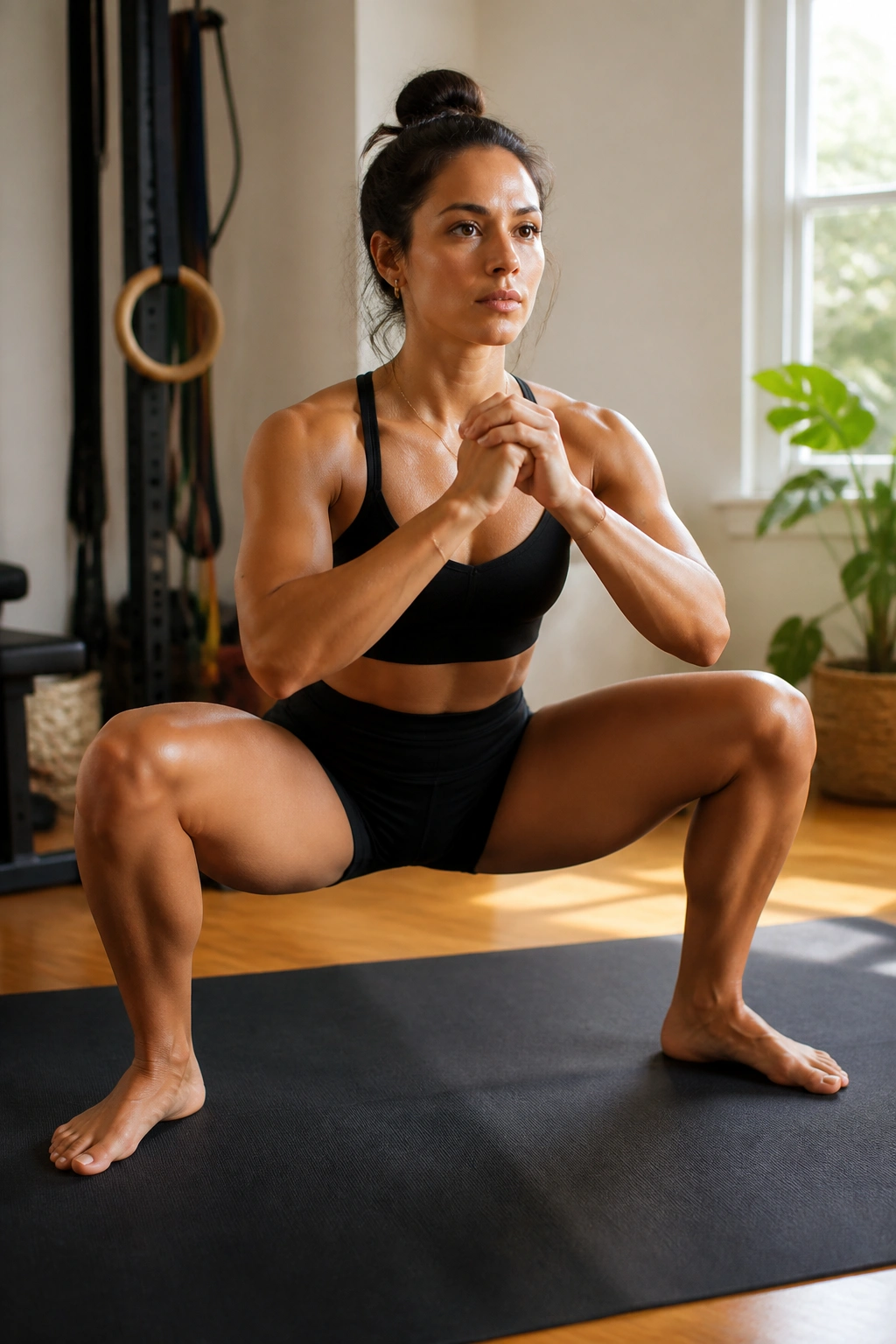
A sumo squat is the plainest place to start, and that is exactly why it works. The wide stance gives the inner thighs more to do, especially if you slow the descent and keep your knees tracking over your toes instead of letting them cave in.
Why It Works
The adductors help keep the legs from collapsing inward when you squat wide. If you lower for a full three counts, you force them to stay active through the whole range instead of letting momentum take over.
Use a stance a little wider than shoulder width, toes turned out about 20 to 30 degrees. Lower for three seconds, pause for one second near the bottom, then stand with your heels rooted. Three sets of 8 to 10 reps is plenty if you keep the tempo honest.
- Keep your chest tall.
- Push the knees out, not forward.
- Stop the descent if your lower back starts rounding.
- Exhale as you stand.
Best tip: set a water bottle or book in front of you as a depth target. It keeps the squat honest without forcing you too deep too soon.
2. Wide-Stance Pulse Squats
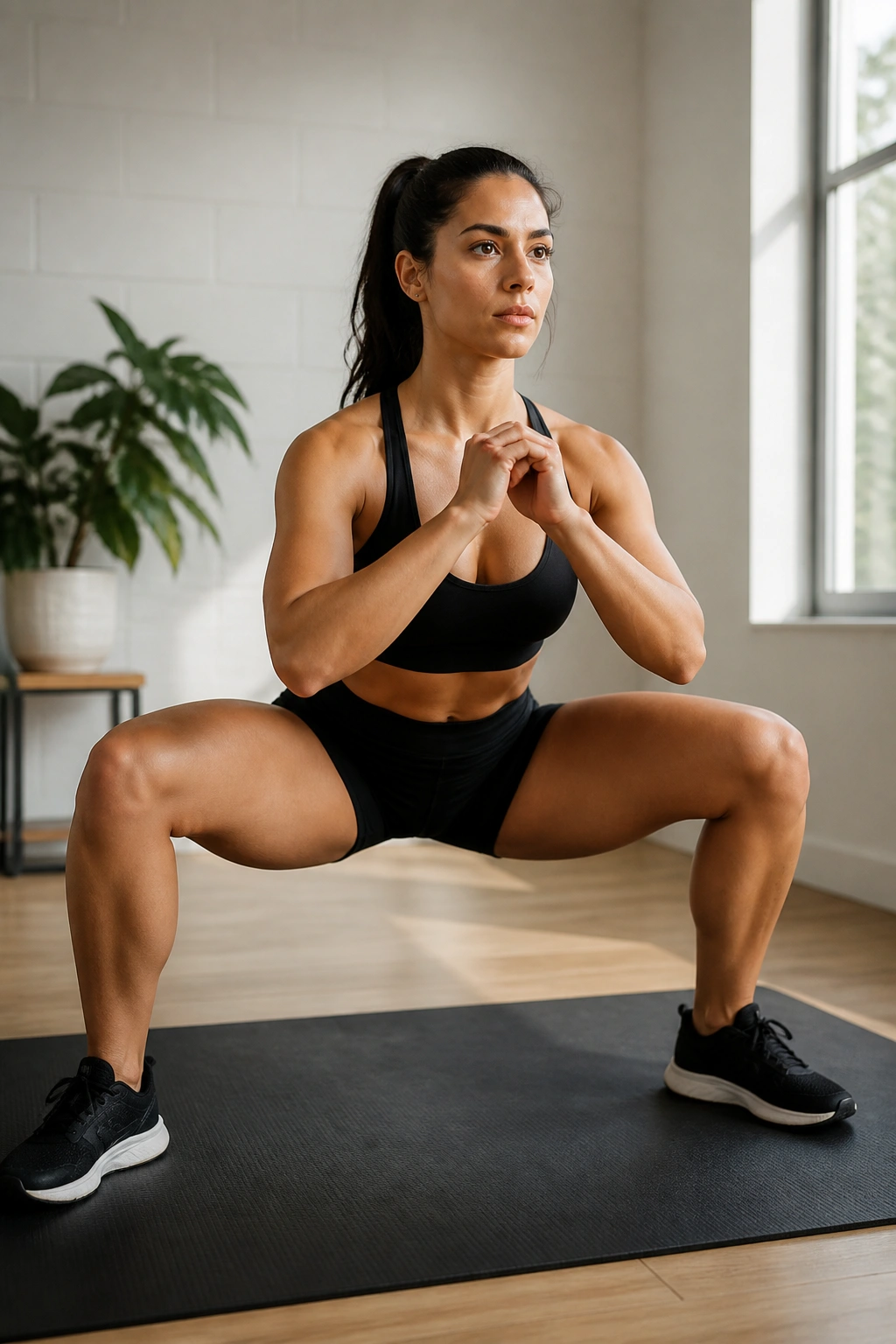
Pulse squats are mean in the nicest way. You settle into the bottom part of a sumo squat, then move just a few inches up and down so the inner thighs never get to relax.
That tiny range matters more than people expect. The adductors stay under tension, the quads light up, and the burn climbs fast because there is nowhere to hide. Do 15 to 25 pulses after 8 slow full squats, or use them on their own for a short finisher.
Don’t bounce. That turns the move into a sloppy knee dip and takes the work out of the inner thigh. Stay low, keep the weight through the middle of the foot, and think about moving like the floor is a hot stove.
Short range. Big sting.
If your hips feel jammed, pulse a little higher. You still get the job done.
3. Cossack Squat
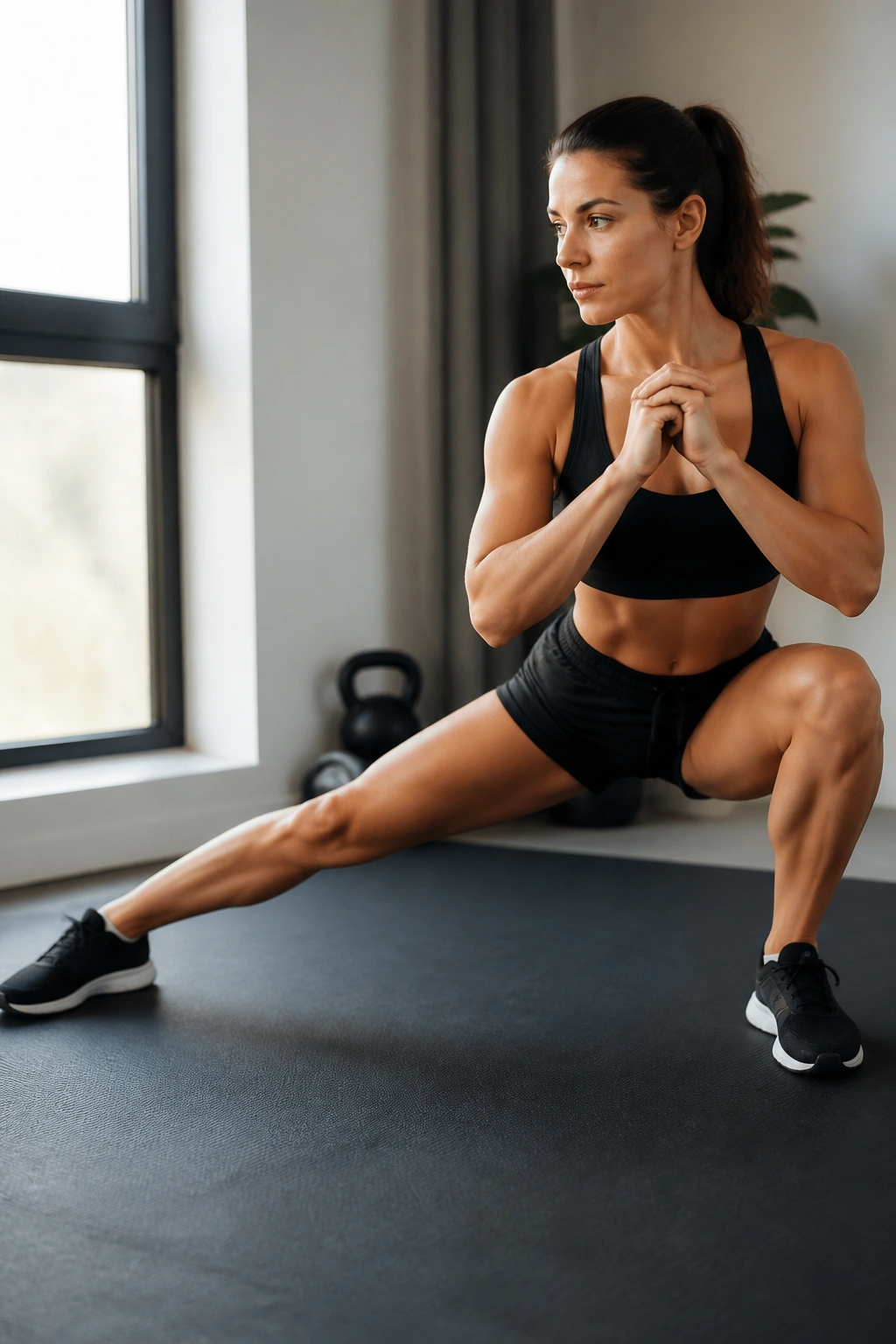
Need one move that trains the inner thigh and opens tight hips at the same time? The Cossack squat does both, and it does not care whether you own weights or not.
How to Make It Easier
Start with a very wide stance. Shift your weight to one side, bend that knee, and keep the other leg long and straight with the heel on the floor if you can manage it. The deeper leg does the work; the straight leg gets a serious adductor stretch.
A chair or countertop is fair game here. Hold it lightly with one hand if balance is shaky. Do 5 to 8 reps per side and move slowly enough that you can feel the inside of the straight leg lengthen before you push back to center.
- Keep the working heel flat.
- Turn the toes up on the straight leg if your hips allow it.
- Stay proud through the chest.
- Stop short if the knee caves inward.
This one is gold for people who sit a lot. Tight adductors usually show up as stiff, cranky hips, and the Cossack squat gives you both strength and mobility without pretending those are separate jobs.
4. Lateral Lunge With a Long Reach
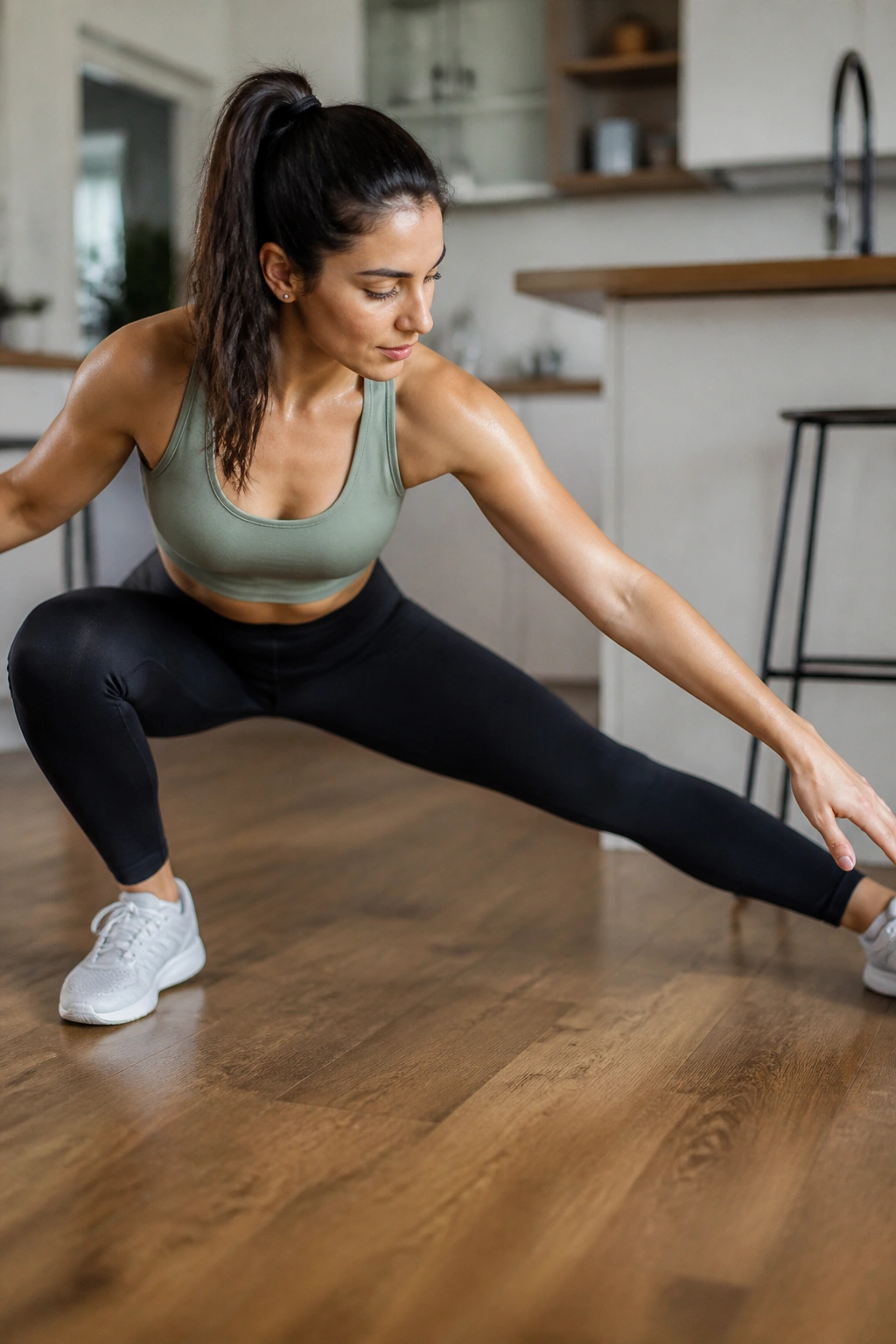
Picture stepping out into a busy kitchen and needing to dodge something on the floor without losing your balance. That sideways lunge is the same pattern, only slower and a lot more useful for inner thigh work.
Step wide to one side, send the hips back, and let the bending knee track over the foot. Then reach the opposite hand toward the ankle or the inside of the foot. That cross-body reach keeps the torso honest and loads the adductors on the bent leg.
A good set looks like 8 reps on each side, with a pause for a second at the bottom. The long reach matters because it stops you from just dropping straight down and turning the move into a bland squat in disguise.
Keep the step controlled. A huge step can feel dramatic, but if you cannot control the return, it is mostly theater. A medium step with a slow push back is better for the inner thigh and kinder to the knees.
5. Side-Lying Inner Thigh Lift
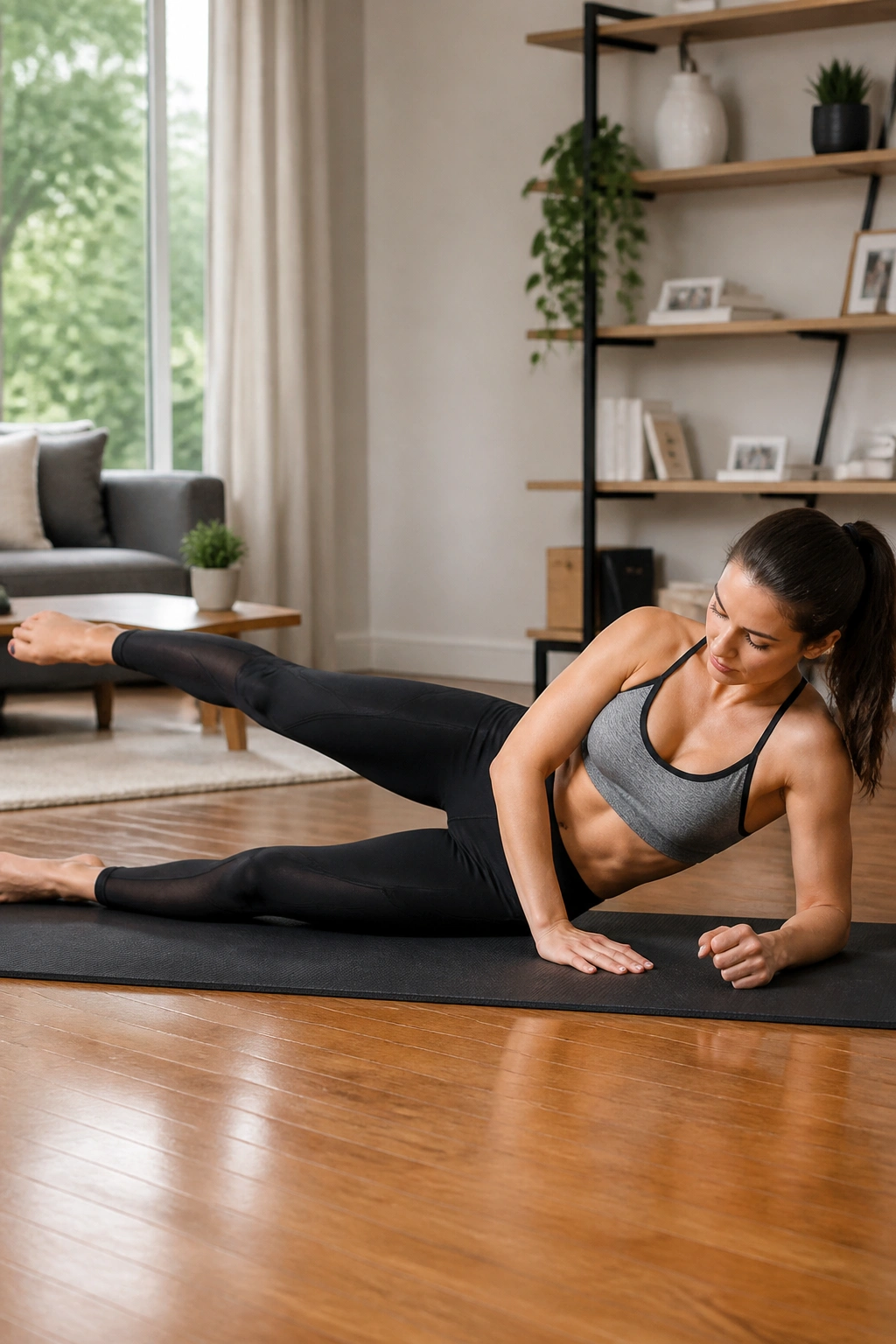
This one looks small. It is not. Lie on your side, bend the top leg and place the foot flat in front of the bottom knee, then lift the bottom leg a few inches off the floor and lower it with control.
The bottom leg does the work, which is the whole point. You are asking the inner thigh to lift against gravity without help from momentum or a big machine. That makes the adductor group wake up fast, especially if you keep the motion tiny and slow.
What to Watch For
Stack your hips. If you roll backward, the glutes start stealing the job. Put a folded towel under your waist if the floor feels hard, and keep your toes pointing forward or slightly up.
Do 12 to 15 reps per side, then hold the last lift for 5 seconds. Tiny range. Huge sting. If you rush this one, you lose the benefit almost immediately.
I like this move for anyone whose knees hate standing work. It is quiet, simple, and sneaky in the best way.
6. Pillow Squeeze Glute Bridge
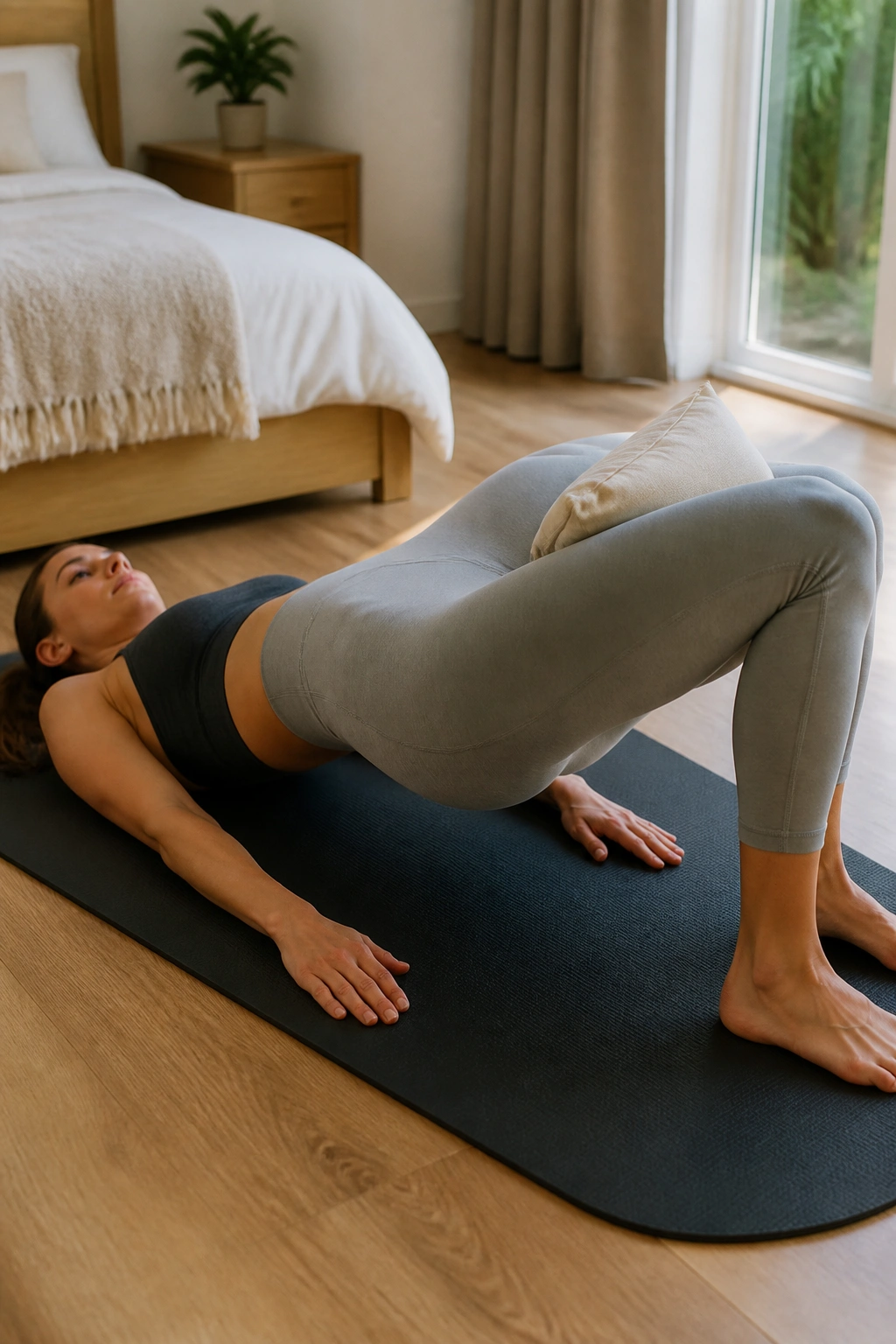
Unlike a regular bridge, this one asks the inner thighs to help from the first rep. Put a pillow, yoga block, or rolled towel between your knees, lie on your back with feet flat, and press the pillow as you lift your hips.
The squeeze does two things at once. It keeps the knees from drifting apart and gives the adductors a job while the glutes lift the pelvis. That mix is useful if your lower body routine leans too hard on the front of the thighs.
Use 2 to 3 sets of 10 to 12 reps, and hold the top for 2 seconds each time. Press the pillow firmly, but not so hard that your inner thighs cramp up. If they do cramp, ease off a bit and keep the squeeze lighter.
This is a good bridge-day move between squats and floor work. It feels clean, controlled, and a little old-school, which I mean as a compliment.
7. Seated Ball Squeeze Hold
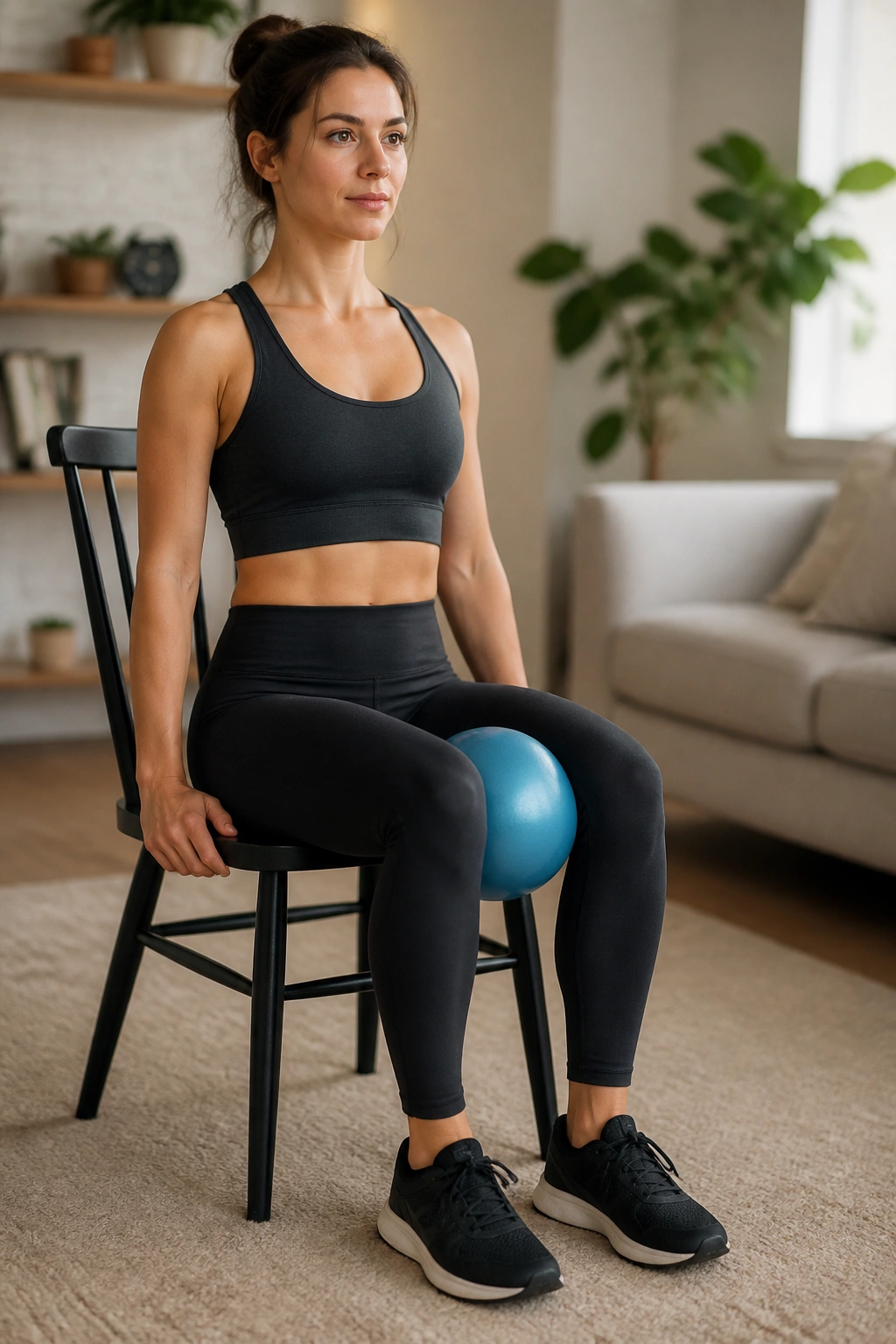
A seated squeeze hold looks too simple until round three. Sit tall on a chair, place a ball, yoga block, or folded towel between your knees, and squeeze for 20 to 30 seconds.
The Ugly Little Hold That Pays Off
The adductors love isometrics, which is a fancy way of saying they work hard when they have to stay still. That fixed squeeze can be a nice bridge between warm-up and real strength work, or a quick reset if you have been sitting all day.
Keep your feet flat and your ribcage stacked over your hips. Don’t slouch. If you fold forward, the tension leaks out of the hips and into your lower back, and that is not the goal.
Try 4 to 5 rounds with a 10-second rest between holds. Use it before squats, after a walk, or on days when the legs feel flat and you want to wake them up without a long session.
Small movement. Serious burn.
8. Wall Sit With a Pillow Press
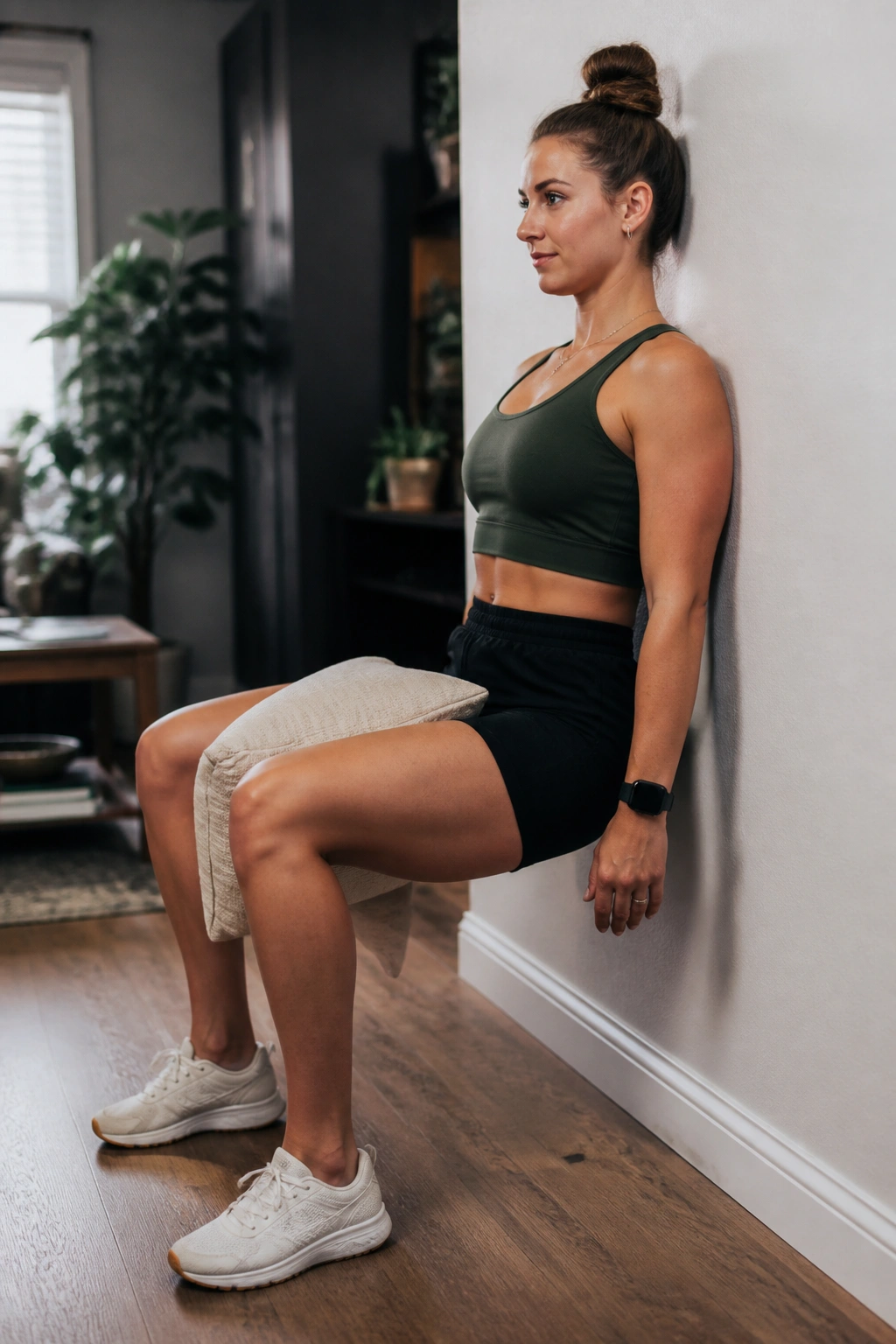
A wall sit gives the thighs a long, dull burn; the pillow press gives the inner thighs a reason to join the party. Slide down the wall until your knees are near 90 degrees, place a pillow between them, and press inward while you hold the sit.
Hold for 30 to 45 seconds, or break it into 3 rounds of 20 seconds if your legs shake fast. Press the pillow for 5 seconds, ease off for 5, then repeat. That on-off rhythm keeps the adductors active instead of letting them go numb.
If your knees dislike deep angles, move your feet a little farther away from the wall. A higher wall sit is fine. What matters is the squeeze and the steady posture, not some perfect picture in your head.
Do not let your lower back arch off the wall. Stay flat, keep the weight through the heels, and breathe through the burn. It gets spicy fast.
9. Modified Copenhagen Plank
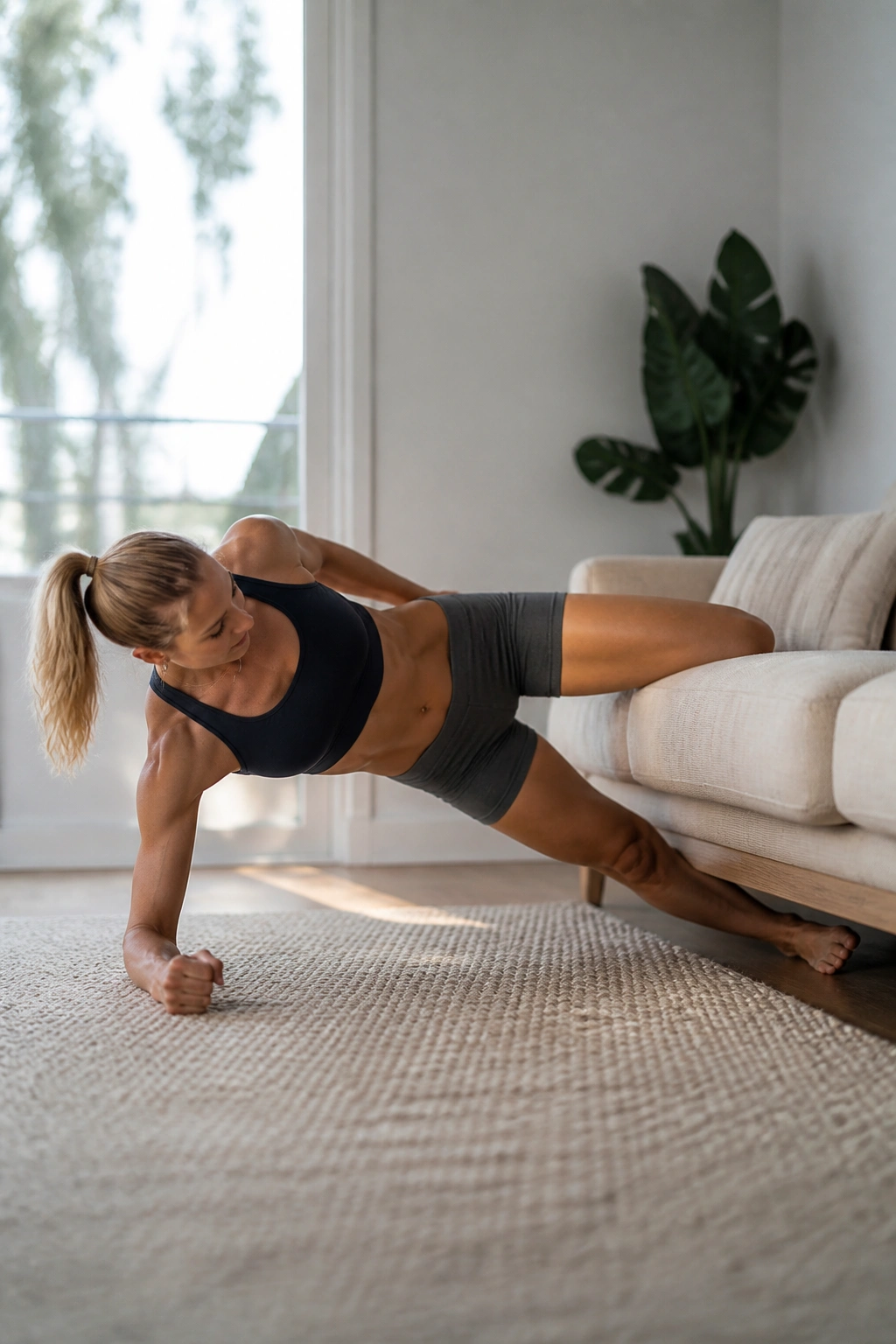
Can one side plank variation hit the inner thigh hard enough to matter? Yes — if you do the easier version first and stay honest about the hold.
Place your top knee on a couch, bench, or sturdy chair, and keep the bottom leg on the floor or tucked lightly under you for support. Lift the hips so your body makes a straight line from shoulder to knee. Then hold.
Start with 10 to 15 seconds per side. Build to 20 seconds before trying to lengthen the lever. The inner thigh on the top leg has to work hard to keep the pelvis lifted, and that is why this move has such a nasty reputation.
Start Here if Full Copenhagen Is Too Much
- Keep the lower leg on the floor.
- Use a softer surface for the top knee.
- Shorten the hold before you chase longer time.
- Stop if you feel pinching at the outer hip.
This is one of the few home moves that can feel advanced without needing much space. Respect it.
10. Frog Pump With Heel Press
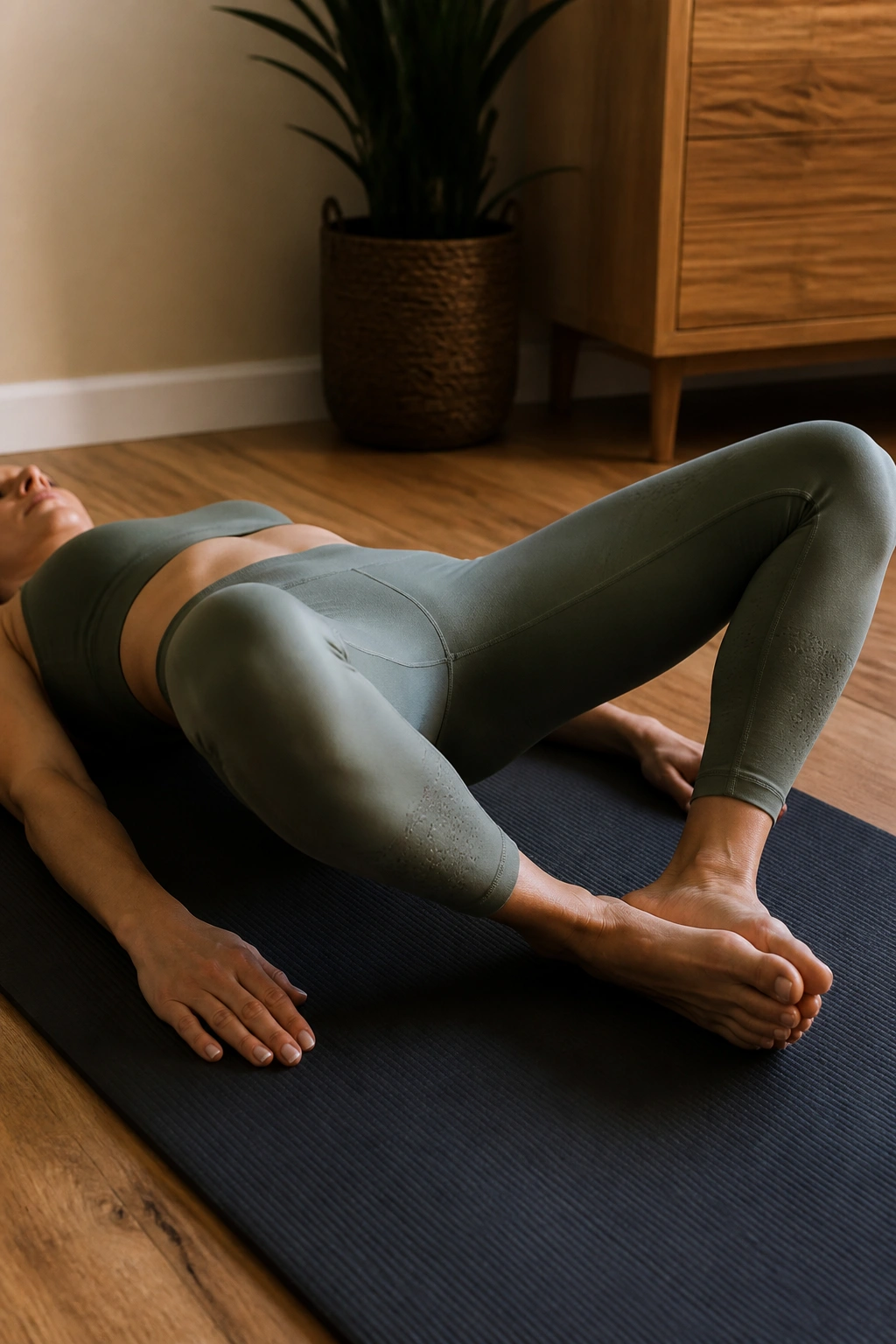
Put the soles of your feet together, draw your heels in close to your hips, and let your knees open wide. From there, press the heels together, squeeze the glutes, and lift the hips in small, sharp reps.
That weird-looking position is exactly what makes it useful. The legs are turned out, the adductors are engaged, and the glutes still drive the lift. If you want a move that feels like a bridge with more inner-thigh involvement, this is a smart one.
Do 15 to 20 reps for 2 or 3 sets. Keep the motion short and snappy, but not wild. The hips should lift and lower in control, not slam up and down like you are trying to win a race no one entered.
A light pillow between the knees can make the squeeze clearer. Use it only if it feels natural. If it makes the movement awkward, skip it and keep the heels pressed together.
11. Adductor Rock-Backs
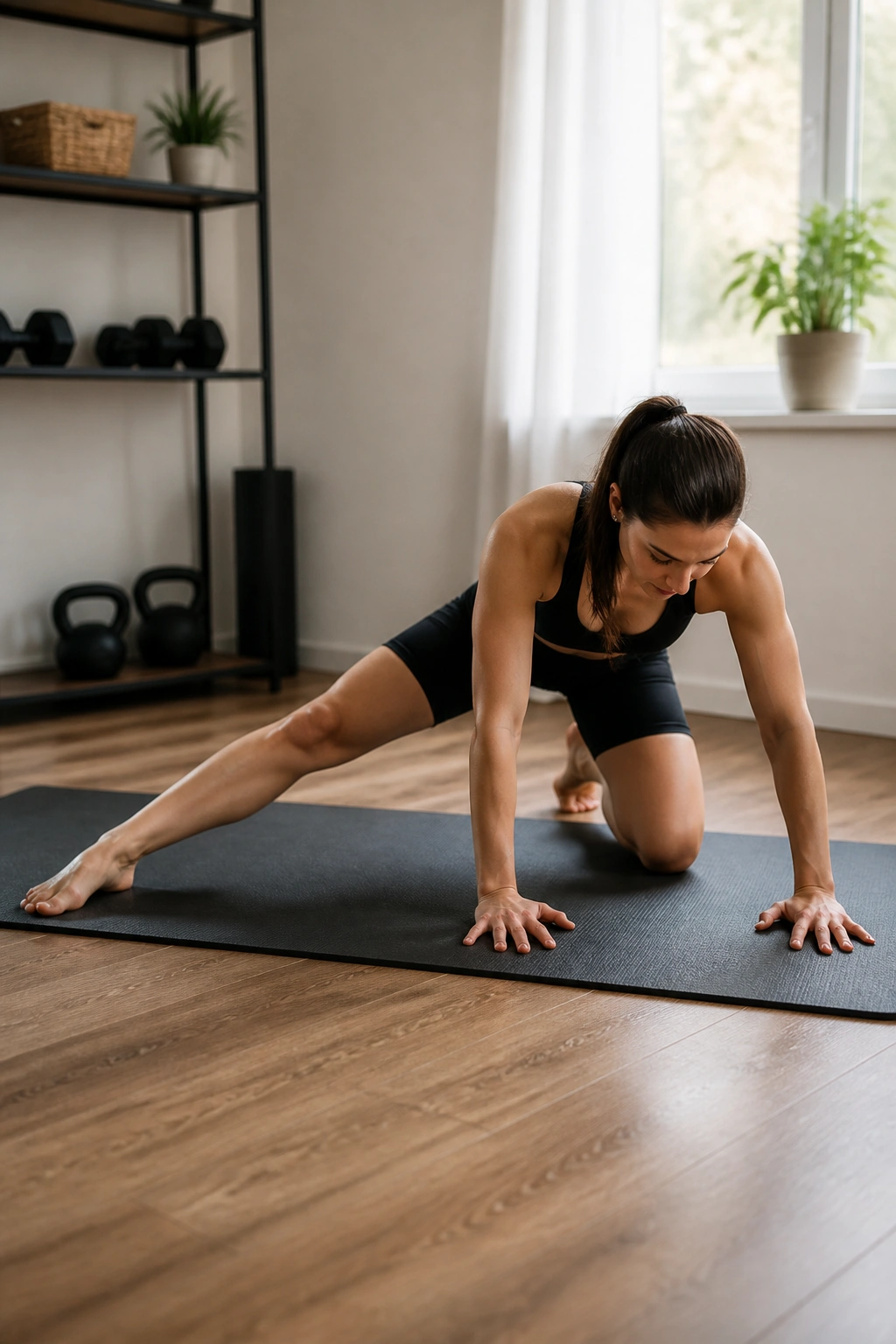
On hands and knees, slide one leg out to the side with the knee straight or softly bent, then rock your hips back toward your heels. The inner thigh of the outstretched leg will feel the stretch almost immediately.
This is not a flashy strength move. It is a smart warm-up that wakes the adductors up before they get loaded. It also tells you a lot about how tight your hips are on a given day, which can save you from forcing a deep squat when your body clearly wants a smaller range.
Do 8 to 10 slow reps per side. Rock back until you feel the stretch, pause for a breath, then come forward with control. Keep the spine long and do not sink so far that you lose control at the bottom.
Do not bounce. Slow wins here.
If the stretch feels too sharp, bend the working knee a little. That small change usually makes the position much friendlier.
12. Standing Cross-Body Leg Slide With a Towel
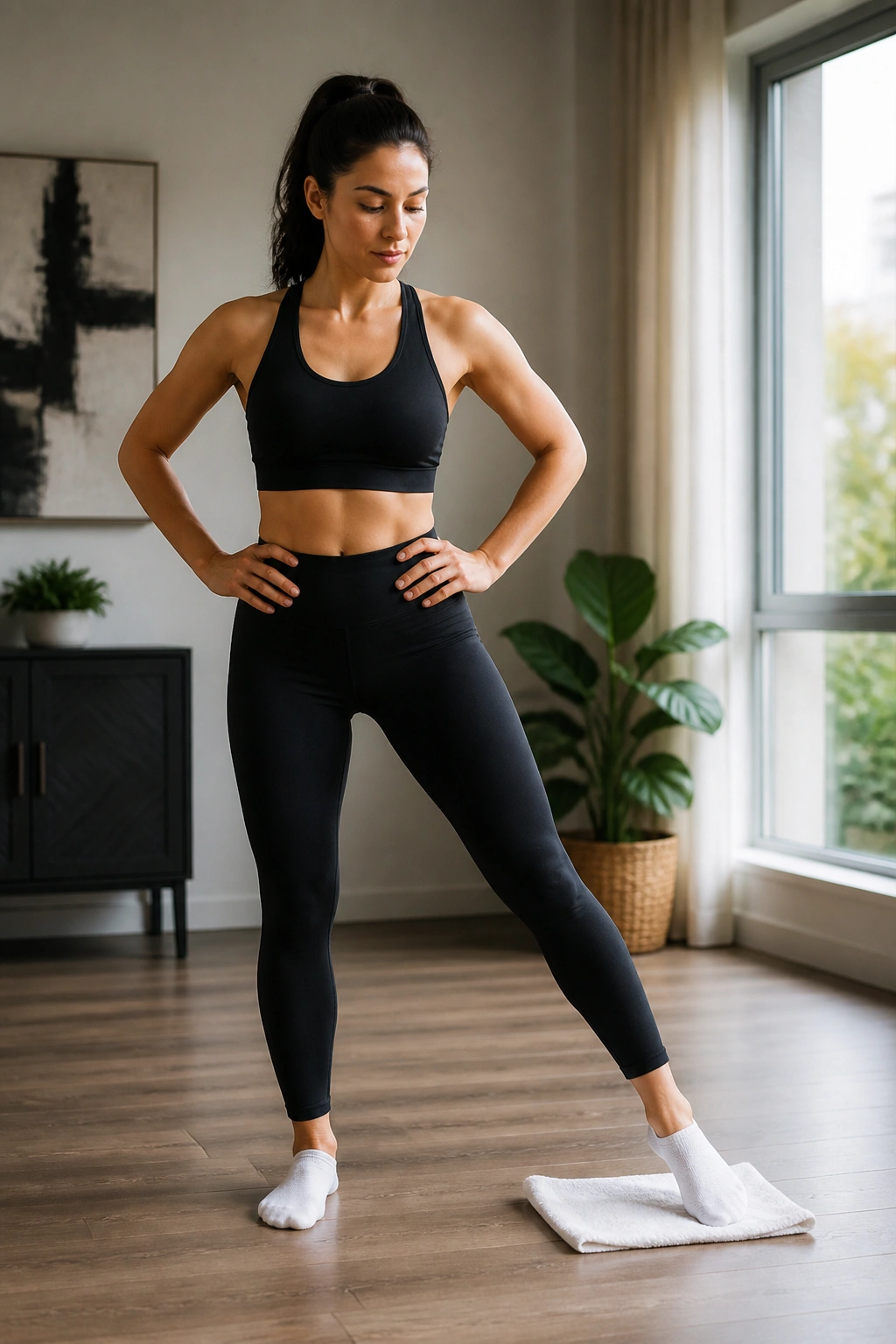
Unlike leg swings, this one takes momentum out of the picture. Put a towel or sock under one foot on a smooth floor, stand tall on the other leg, and slide the working leg across your body and back out again.
The sliding foot has to travel under control, which forces the inner thigh to do real work. The standing leg also gets plenty of stability practice, so the move ends up being more useful than it first looks.
Aim for 8 to 12 slow reps per side. Keep your hips level and your torso tall. The moving leg should glide, not fling itself around the room like it has somewhere to be.
This is a good choice if you dislike getting on the floor. It also pairs nicely with a warm-up walk because the adductors are active, but not fried, when you finish.
A small towel on hardwood or tile is enough. No need to get clever.
13. Curtsy Lunge With a Short Step
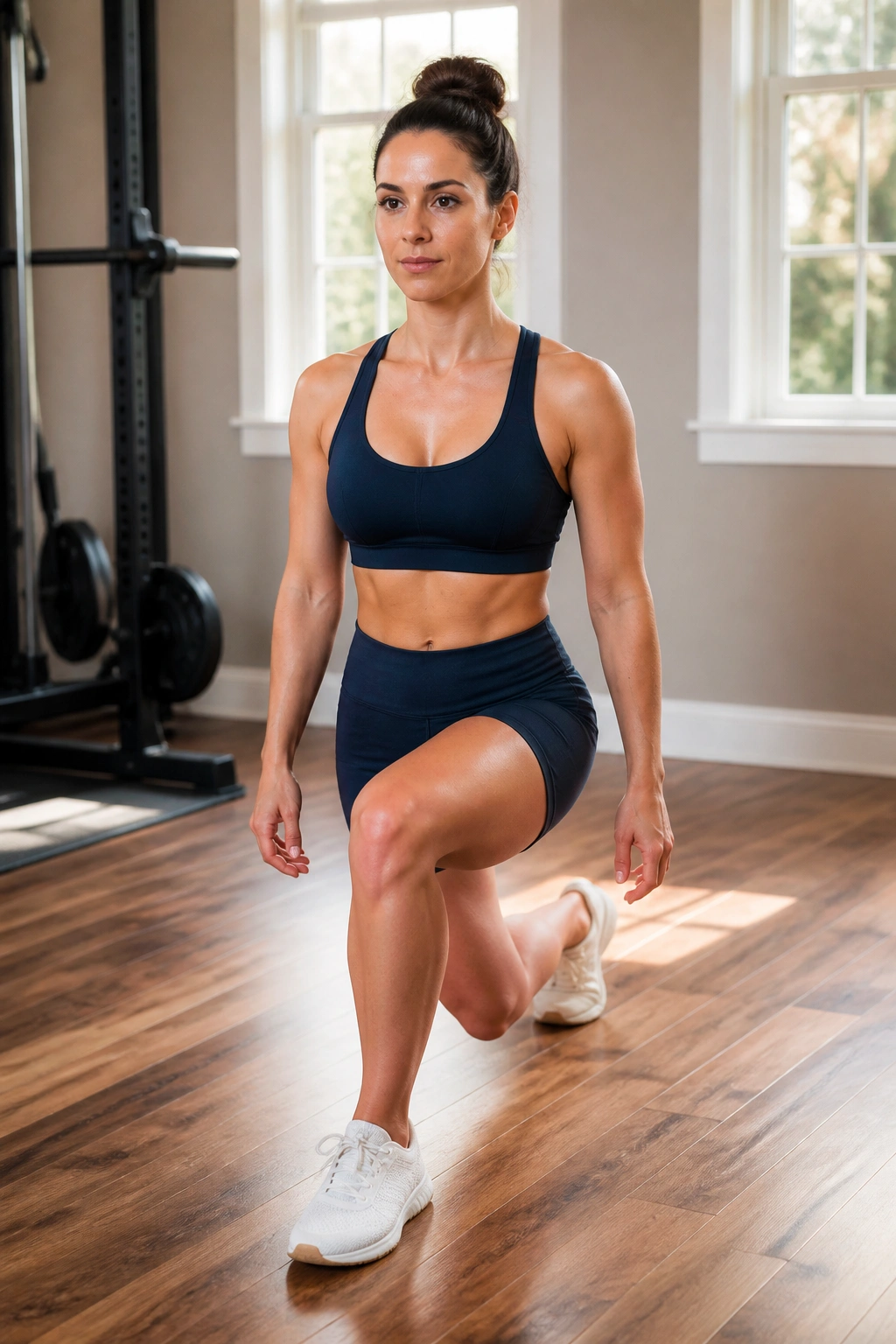
A curtsy lunge is not a pure inner thigh move, and I would not pretend otherwise. What it does offer is a strong hit to the stabilizers on the inside of the hip, especially when you keep the step short and controlled.
Step one leg behind and across the other, lower into a shallow lunge, then press back to standing. The adductors help keep the pelvis from twisting, which is part of why this move feels tougher than it looks.
What to Watch For
- Keep the crossing step modest.
- Stay on the front heel.
- Do not force depth if the knee complains.
- Hold onto a chair if balance wobbles.
Use 2 to 3 sets of 8 reps per side. If you feel it mostly in the glutes, that’s fine; the inner thighs are still working in support. If your knees hate the angle, switch to a regular reverse lunge and save this one for another day.
It is a useful choice, not a holy one.
14. Sumo Deadlift With a Backpack
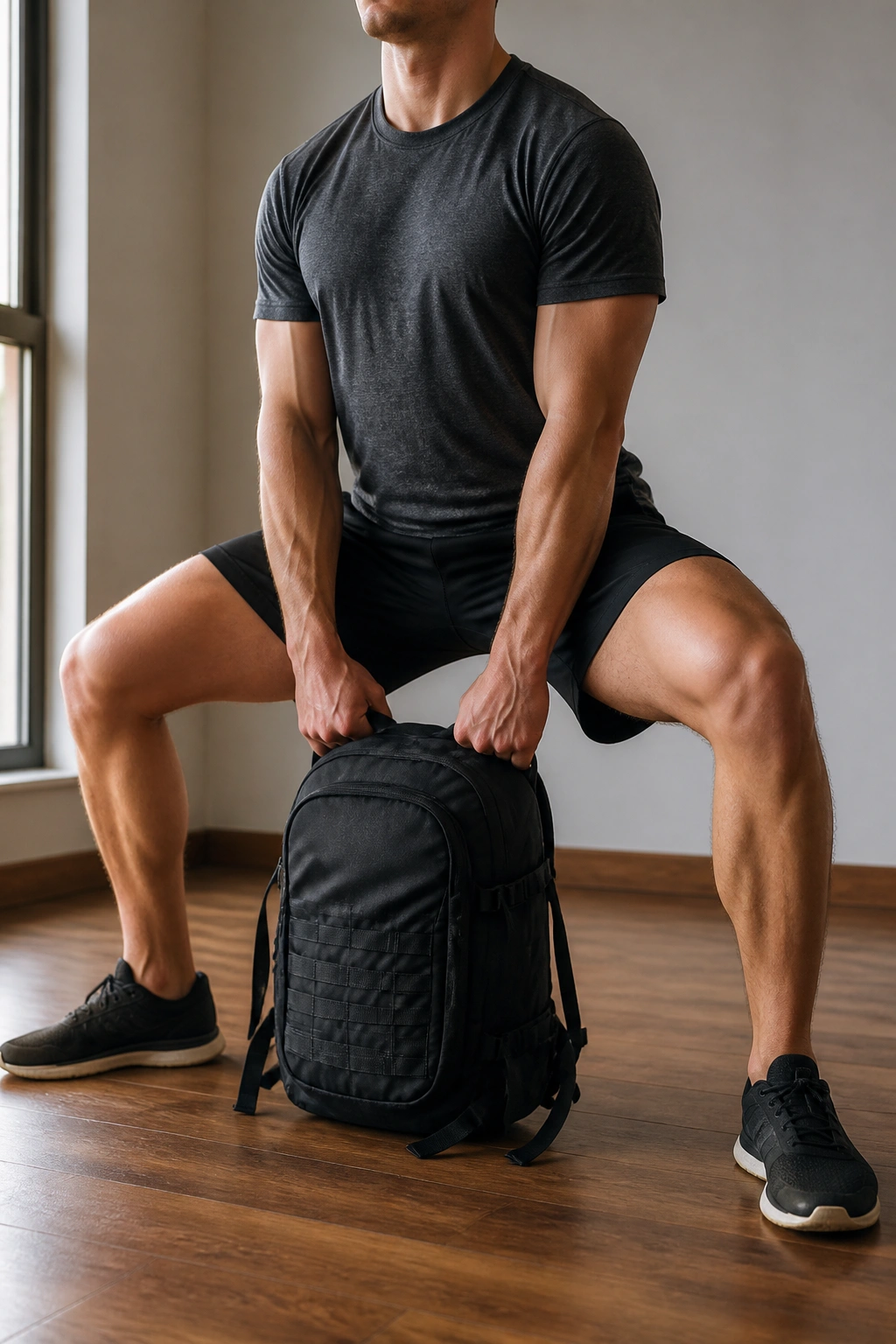
A wide-stance deadlift is one of the best ways to load the inner thigh while also teaching the hips to hinge. Fill a backpack with books or grab two water jugs, stand with a wide stance, and push the hips back until the weight reaches mid-shin.
The adductors help brace the legs from the outside in. That matters more than people think. If you keep the knees gently pushed out and the feet rooted, the inside of the thigh has to stay active all the way up.
Do 3 sets of 8 to 10 reps with a 2-second pause near the bottom. That pause stops you from bouncing out of the hole and makes the inner leg work harder.
If your back rounds, shorten the range. A deadlift only counts when you can keep the spine controlled. Use less load, not more drama.
15. Split Squat With an Inner-Thigh Brace
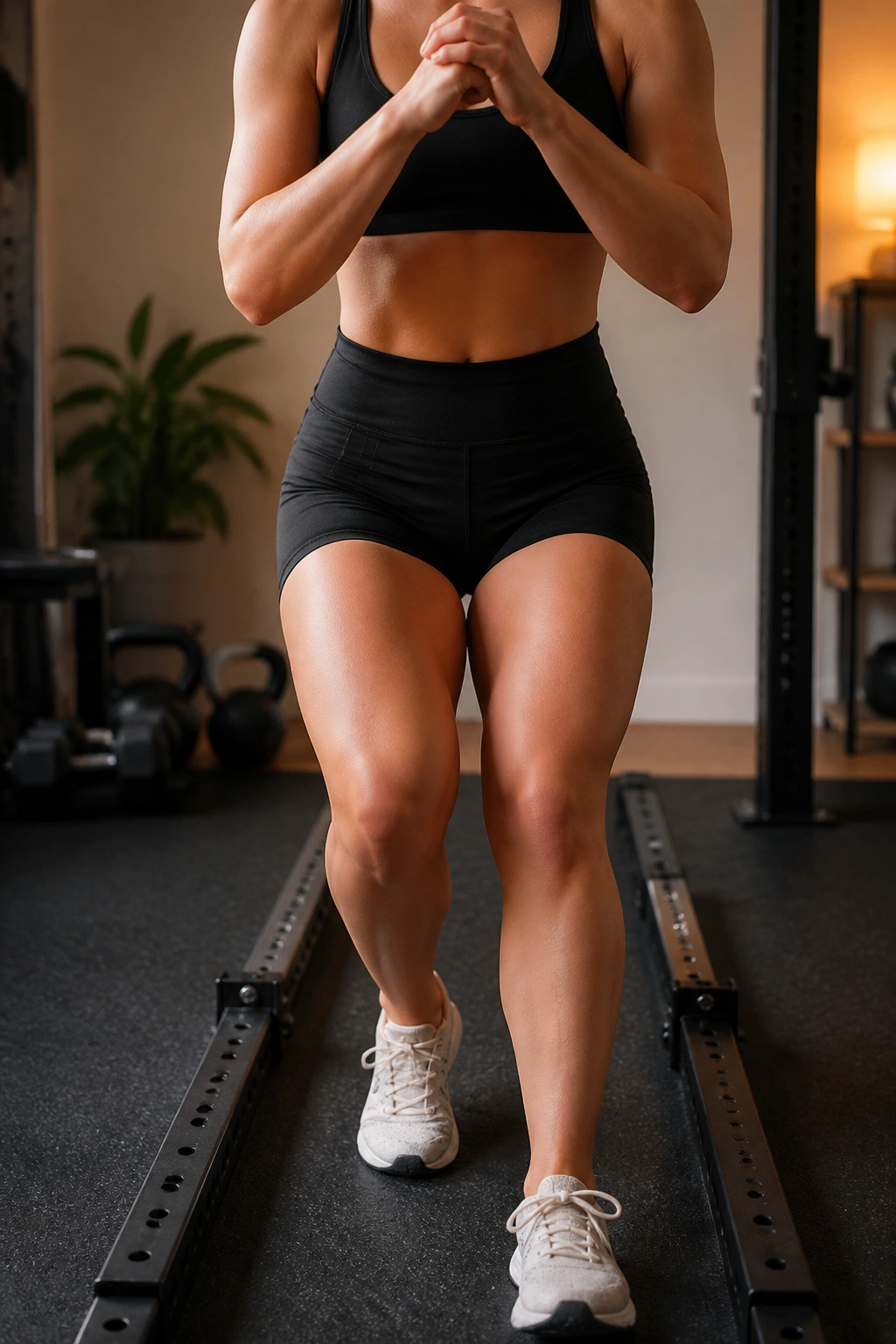
Why does a narrow split stance light up the inside of the thigh? Because the adductors work hard to keep your hips from swaying around while one leg does most of the load-bearing.
Set your feet on two parallel tracks, not a tightrope. Lower straight down, keeping the front heel grounded and the back heel lifted. A pillow squeezed lightly between your knees can make the inner-thigh brace feel even clearer.
Do 8 to 10 reps per side with a slow drop and a firm push back to standing. The torso stays tall; the front knee tracks over the second toe; the pelvis stays square. That is the whole game.
What to Watch For
- Shorten the stance if the back hip feels jammed.
- Hold a wall or chair if balance gets shaky.
- Keep the front foot flat.
- Stop before the front knee caves inward.
This is a sneaky one. It looks like a basic lower-body move, then the adductors start complaining around rep six.
16. Side-Lying Bottom-Leg Circles
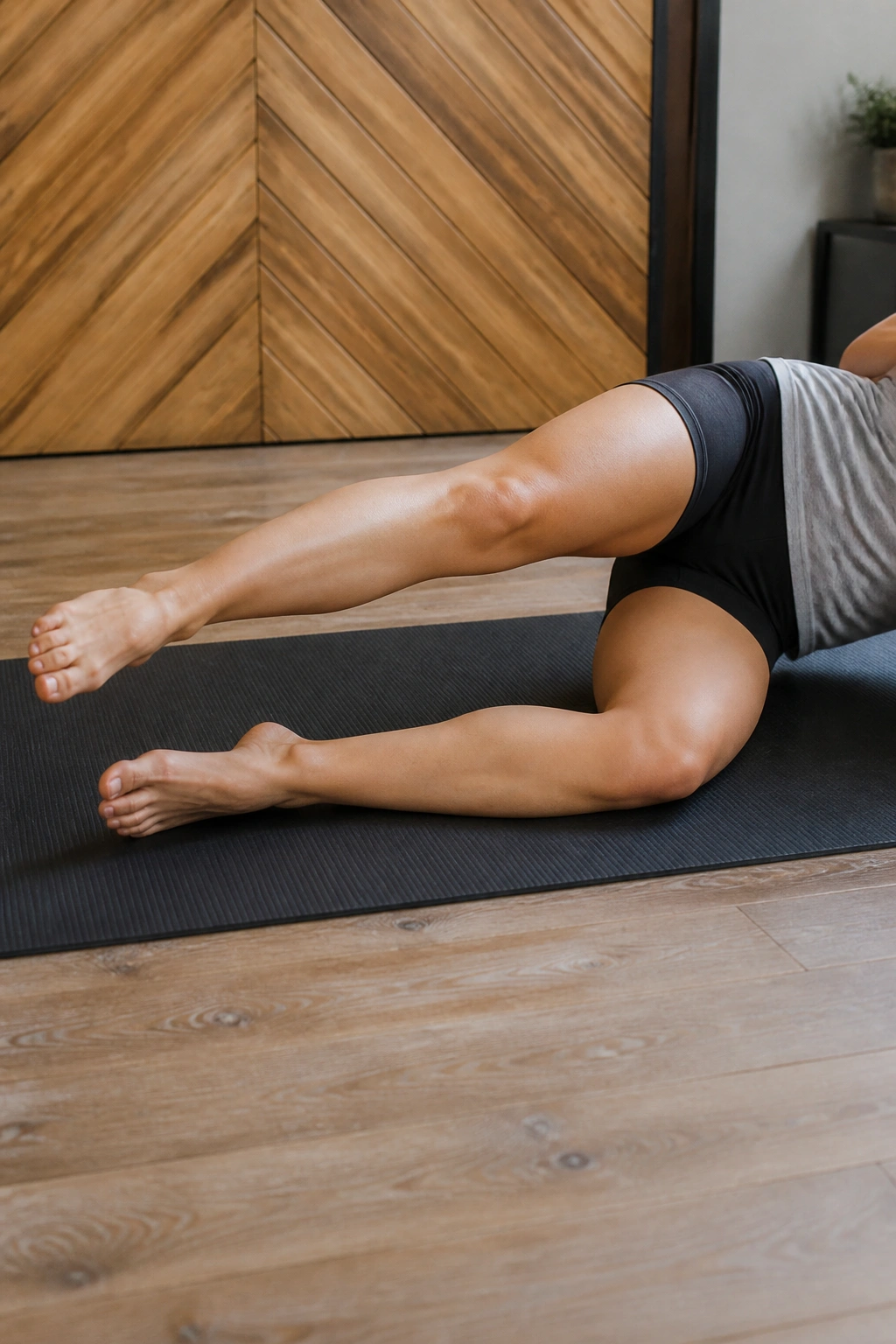
A straight lift is good. Tiny circles are nastier. Lie on your side, bend the top leg for balance, lift the bottom leg a few inches off the floor, and draw slow circles the size of a saucer.
The point is not to whip the leg around. The point is to keep the inner thigh working while the hip stays steady. Small circles are enough. If the circle grows too wide, the hip flexors take over and the movement gets sloppy.
Try 8 circles forward and 8 backward per side, then finish with 5 slow lifts. The adductors will feel different from the straight-lift version — less brute force, more steady burn.
A folded towel under the waist helps a lot here. It keeps the body line cleaner and stops you from sagging into the floor.
This is one of those moves that looks almost too calm to matter. It matters.
17. Reverse Lateral Lunge to Knee Drive
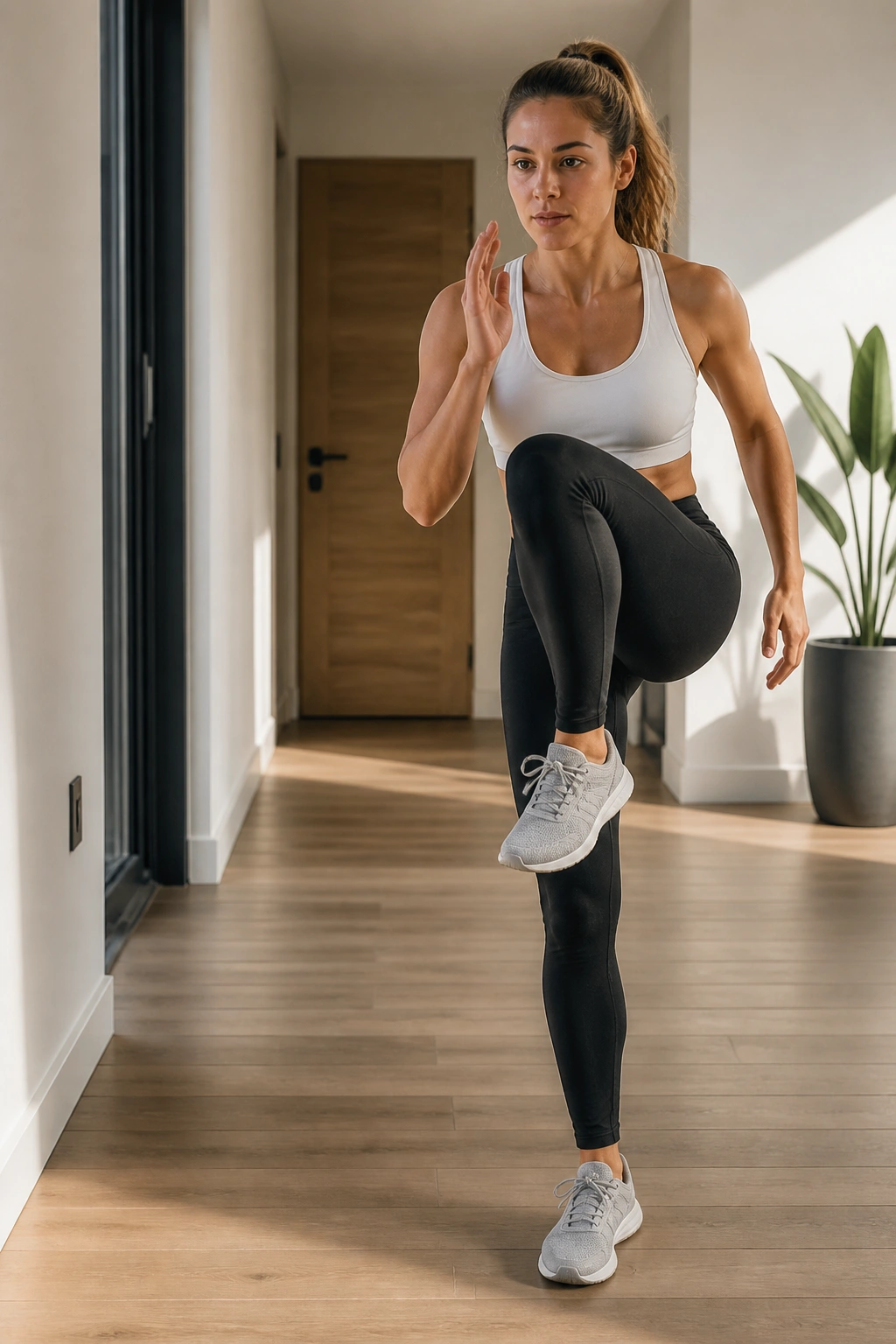
Step out to the side, sit into the lunge, then drive back to center and pull the same knee up toward your chest. That small knee drive makes the return leg work harder, because the inner thigh has to help control the push back in.
The move has a nice rhythm to it, and that rhythm is useful. You get a side-load, a return, and a balance challenge all in one rep. If you like exercises that feel athletic without needing a lot of space, this one fits.
Do 6 to 8 reps per side and keep the step width consistent. A huge side step turns it into a balance circus. A medium step with a clean drive is better for the adductors and much easier to repeat well.
If the knee drive makes you tip backward, shorten the range. The hip should move, not the spine.
A chair in front of you can help the first few times. Use it.
18. Lateral Step-Out Squat
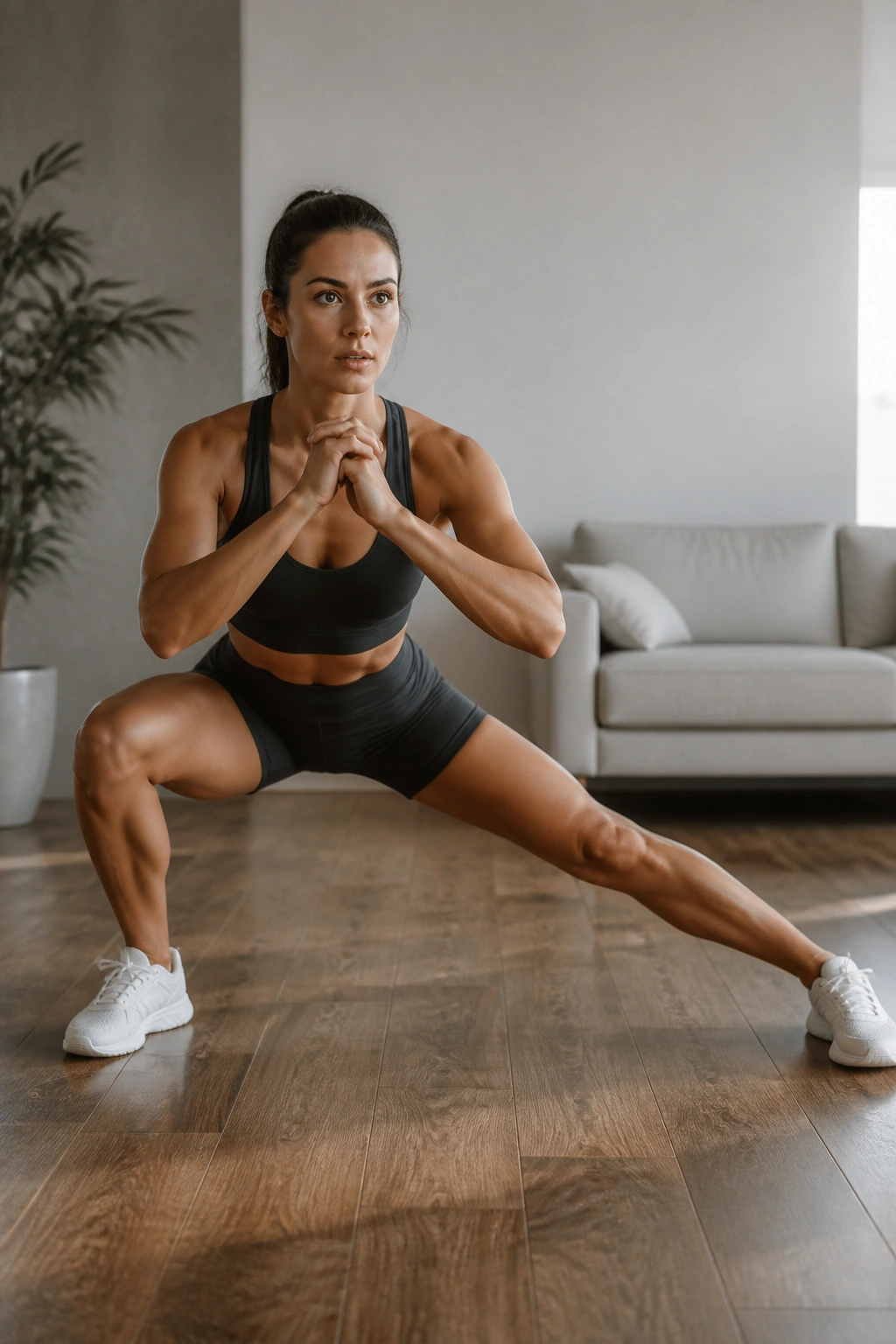
Unlike a regular squat, this one keeps the inner thighs under tension because you never fully lose the wide stance. Step out, squat, step the other foot in, and keep moving side to side with a soft, low posture.
It feels simple. It burns anyway. The adductors have to help control the legs each time you replant the foot, and the constant side-to-side shift turns the whole thing into a low-level endurance test.
Use 10 to 16 total steps, then rest for 30 to 45 seconds. If you want more challenge, hold a backpack at your chest or stay lower the whole time. The lower you sit, the more the thighs have to share the work.
A lot of people rush this move and turn it into a sloppy shuffle. Don’t. Keep the steps clean, keep the knees soft, and think about staying wide the entire time.
It is not fancy. It is effective.
19. Standing Inner-Thigh Wall Press
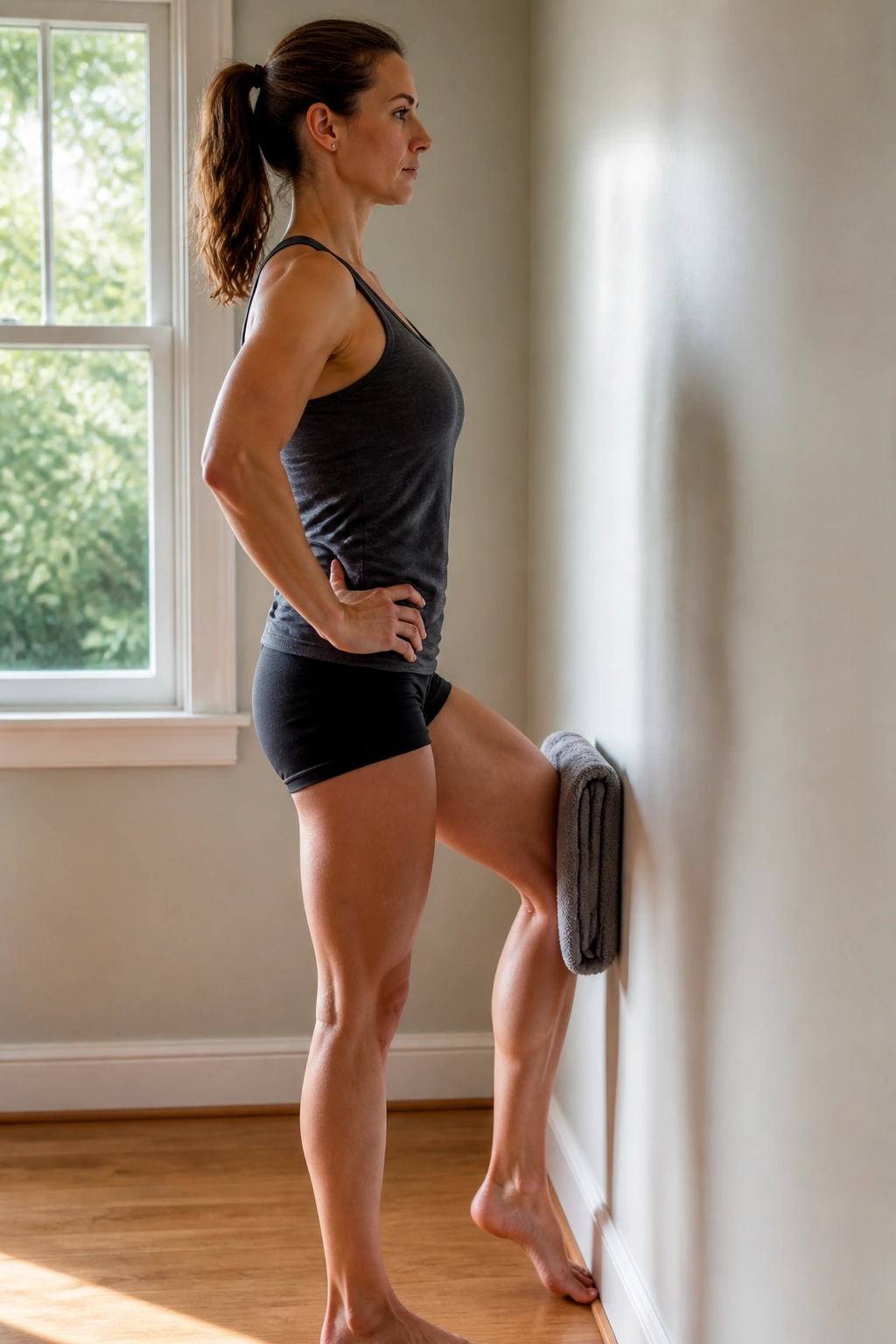
A wall can do more than people expect. Stand side-on to it, bend the knee of the leg closest to the wall, and place a folded towel or pillow between your inner knee and the wall. Then press the knee inward and hold.
That press is a pure isometric adductor drill. No moving parts, no guesswork, just a hard squeeze that teaches the inner thigh to stay on. It works well on days when you want a low-sweat option that still feels like training.
Hold for 20 to 30 seconds per side, rest for 10 seconds, and repeat 3 or 4 times. Keep the ribs stacked and avoid leaning into the wall for help. The squeeze should come from the hip, not from a twist in the torso.
A Cleaner Way to Set It Up
- Keep the standing leg slightly bent.
- Use a soft object that does not slide.
- Press, hold, breathe, release.
- Stop if the hip flexor starts gripping more than the inner thigh.
This one is quiet, but it can be brutal by the last round.
20. 10-Minute Inner-Thigh Finisher Circuit
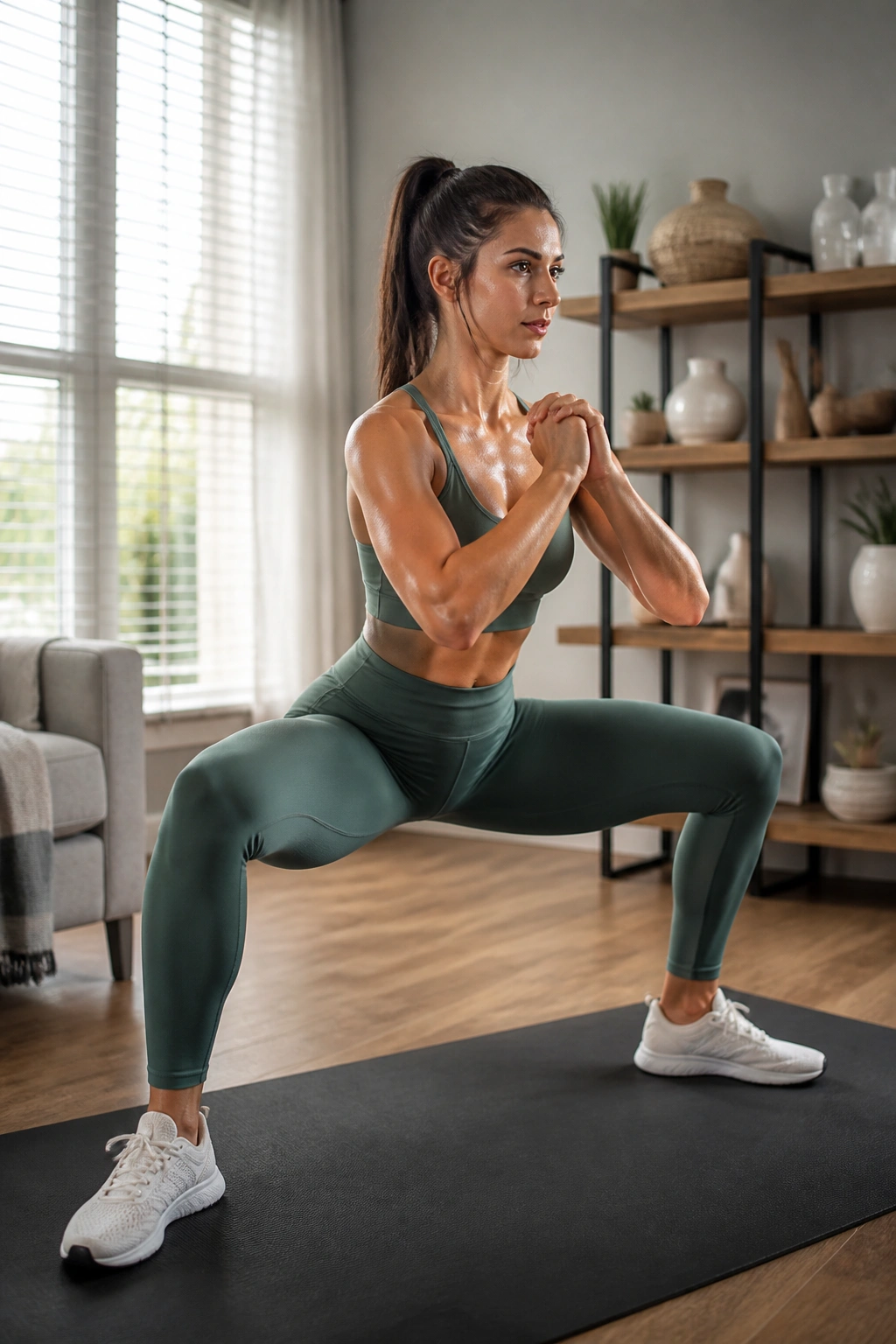
If you want one short at-home session that ties the whole thing together, this is the one I would reach for. It mixes a squat pattern, a floor squeeze, and a mobility drill so the inner thighs get hit from more than one angle.
Here is a simple round:
- 30 seconds of sumo pulse squats
- 30 seconds of pillow squeeze glute bridges
- 20 seconds of wall sit with a pillow press
- 8 reps per side of adductor rock-backs
Rest for 45 seconds, then repeat for 2 or 3 rounds. Keep the pace steady instead of frantic. The point is to create fatigue in the adductors without letting the form fall apart halfway through.
If you only have time for one piece, do the pillow squeeze bridges and the rock-backs. That pair covers both strength and relief, which is a handy combination when the inner thighs feel tight from sitting, walking, or a hard lower-body day.
And if you want the blunt version: consistency beats novelty here. Pick four of these, use them two or three times a week, and keep the reps slow enough that your inner thighs can’t hide.
