



A living room, a timer, and enough floor space to take three quick steps is enough to make boxing cardio at home feel nasty in the best way. You do not need a heavy bag hanging from the ceiling to get your heart rate up; a clean shadowboxing round can leave your shoulders warm, your lungs tight, and your feet a little jumpy if you do it right.
Boxing works so well at home because it hides the boring part of cardio inside something technical. Jabs, crosses, slips, pivots, and short bursts of footwork force your hands, hips, and legs to work together, which is exactly why sloppy rounds fall apart fast. There’s nowhere to coast. If your stance gets lazy, the round tells on you.
A lot of people make home boxing harder than it needs to be. They throw wild punches, forget to breathe, and spend half the round bouncing like they’re trying to impress a camera that isn’t there. A cleaner setup works better: short combos, honest footwork, and a timer that actually makes you work. Hand wraps help if you like to punch with real speed, even into the air, because tired wrists drift before you notice.
These twenty drills keep the setup cheap and the space small. Pick the ones that fit your room, your joints, and your mood, then start with the first round before your brain has time to negotiate.
1. Shadowboxing Rounds That Feel Like Real Work
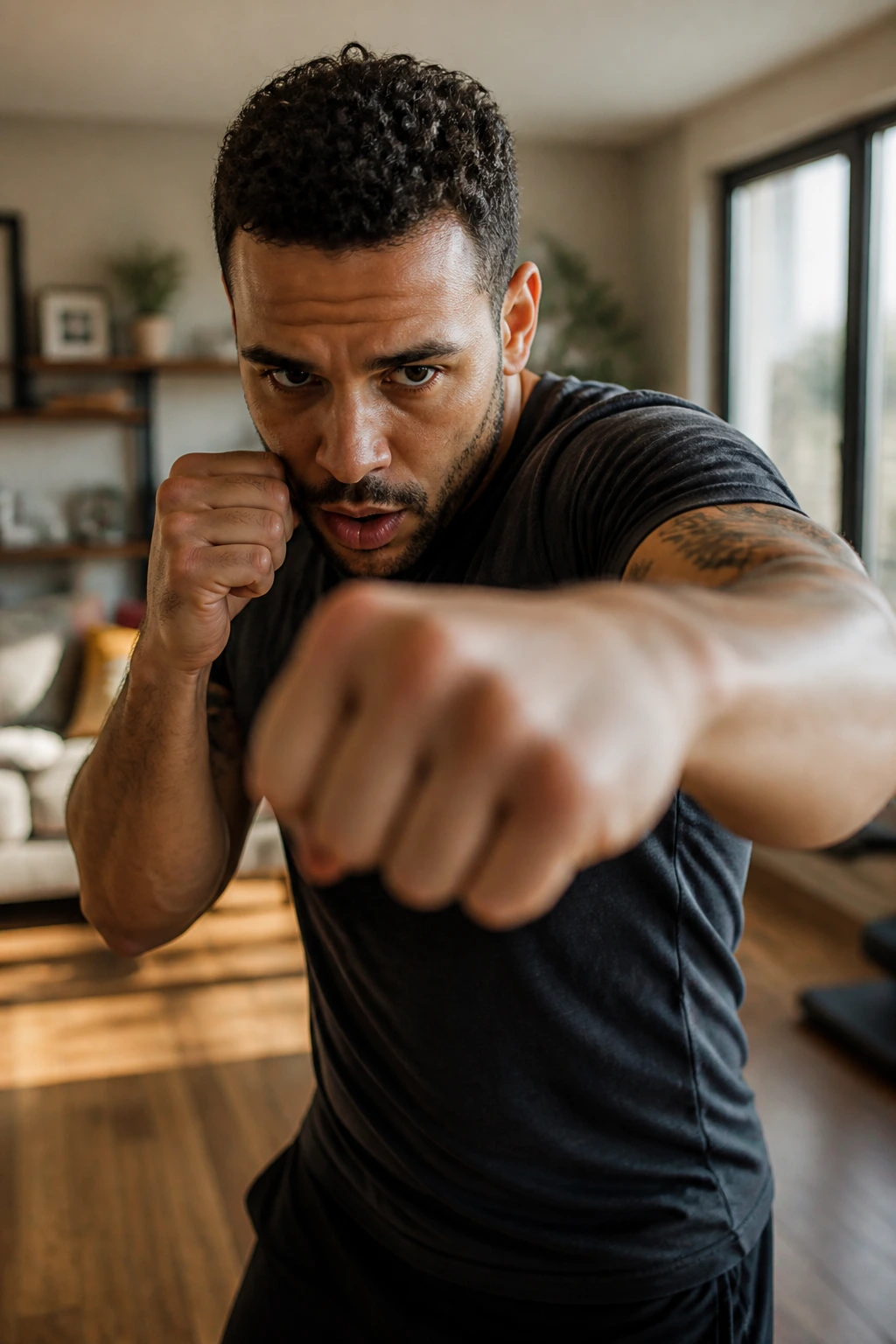
Shadowboxing sounds easy until you do it with a timer and a little honesty. Three-minute rounds are the sweet spot for most people because they give you enough time to settle into rhythm without turning the session into a long, sloppy dance.
How to Make the Round Count
Set a timer for 3 minutes on, 1 minute off, and aim for 4 to 8 rounds. Keep your feet under you, throw only 2 to 4 punches at a time, then move. That tiny reset between combinations matters more than people think. It forces your body to keep working instead of leaning on momentum.
The cleanest shadowboxing rounds use three ideas: jab, move, breathe.
That’s it.
What to Watch
- Keep your punches snapping back to your face.
- Turn your hips on the cross, not just your shoulder.
- Step after the combo, even if it’s only one small angle step.
- If your hands start floating low, slow the pace for 20 seconds and reset.
Best tip: shadowbox in front of a mirror at least once a week. Bad habits show up fast when you can see them.
2. Jab-Cross Sprint Intervals

If you want your heart rate up fast, make the jab and cross do the heavy lifting. Short bursts of 1-2 punches are harder than they look when you keep the pace honest and stop overreaching.
Use 30 seconds of work and 15 seconds of rest for 8 to 12 rounds. Throw the jab and cross straight down the middle, then reset your stance before the next burst. The goal is not raw power. It’s crisp, repeatable speed.
A good jab-cross sprint feels sharp in the shoulders and a little hot in the calves because you’re pushing off the floor every few punches. If your rear heel never turns, your cross gets flat. If your chin sticks out, the round looks busy but does nothing for your form. Small details. Big difference.
Try this pattern for a few rounds: jab-cross, jab-cross, step out. Then build to jab-cross-jab-cross. Keep the punches tight enough that your elbows don’t flare like wings.
3. Slip, Roll, and Return Drill
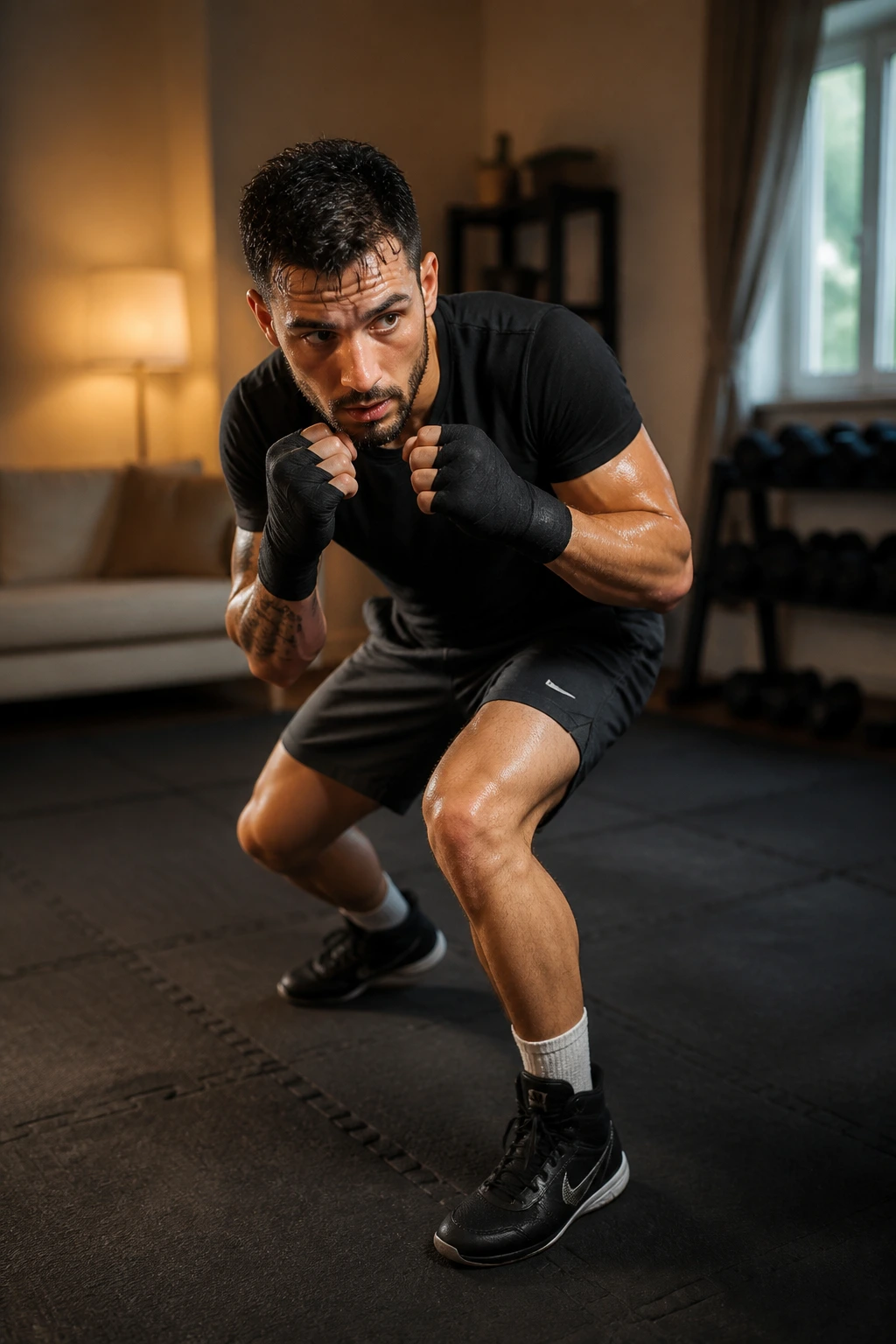
Why does a defensive drill leave you breathing hard so fast? Because once you start slipping and rolling with real rhythm, your legs and core have to keep working even when your fists are quiet.
Do 20 seconds of slips, 20 seconds of rolls, and 20 seconds of counter punches. That’s one cycle. Repeat it for 6 rounds, resting 30 to 45 seconds between cycles. Keep your head level when you slip. Do not bend at the waist like you’re bowing to the floor; the movement should come from the knees and hips.
How to Use It
- Slip left and right in a smooth line, not a huge sway.
- Roll under an imaginary hook by dropping your knees, not your back.
- Return with a jab-cross or a single cross every time you finish a defensive move.
- Keep your eyes forward. No looking at the floor.
This drill is clean, hard, and a little humbling. Good.
4. Boxer Shuffle With Punch-Outs
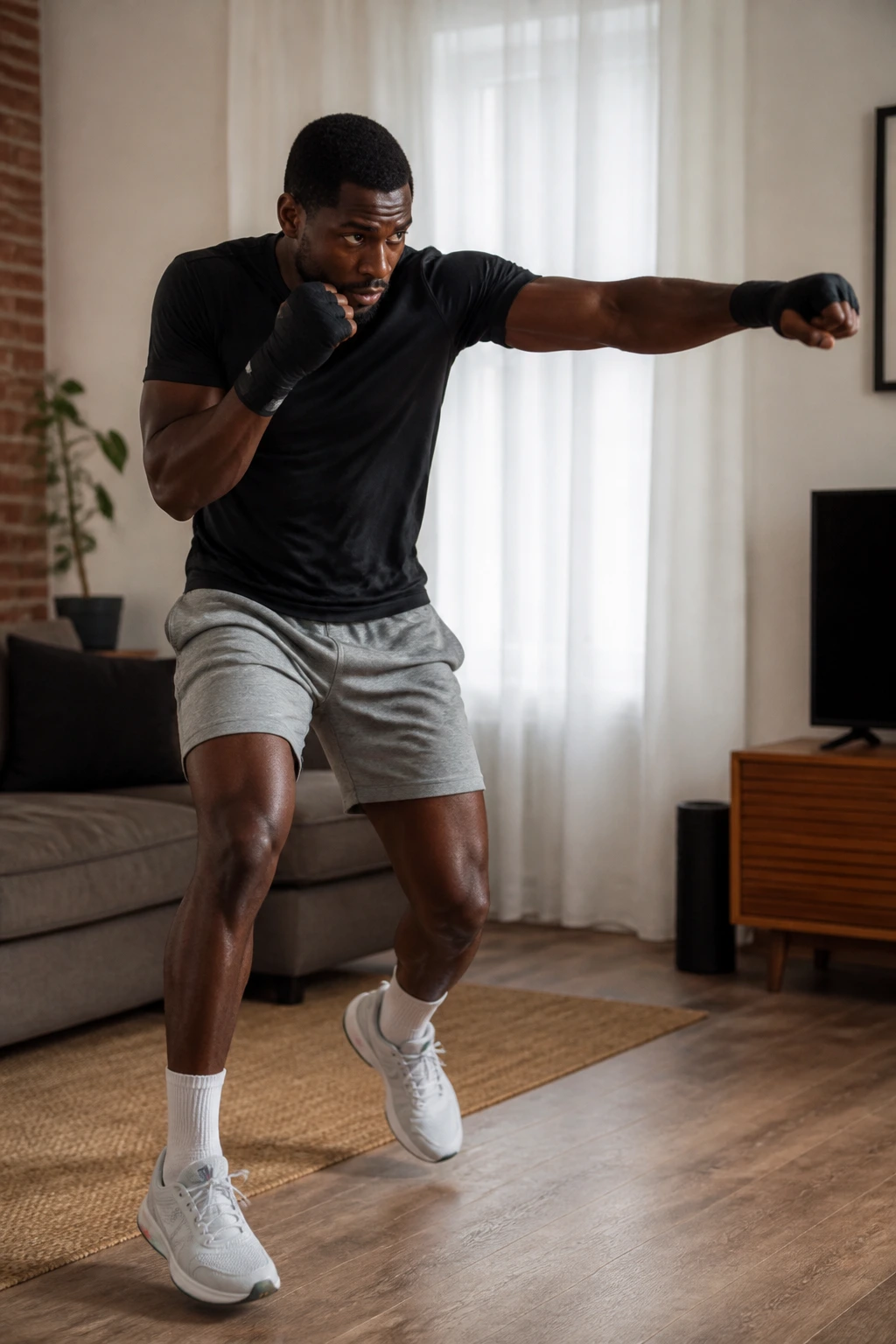
The boxer shuffle is what keeps your feet alive when fatigue starts stealing your bounce. Without it, home boxing gets stiff fast. With it, the whole workout feels more like a fight and less like arm flailing.
Picture this: two quick shuffles to the left, one hard punch-out, two shuffles to the right, another burst. That’s the shape of the drill. Use 40 seconds of work and 20 seconds of rest for 6 to 10 rounds, and keep the punch-outs short—8 to 12 punches is plenty.
Key Details
- Stay on the balls of your feet, not your heels.
- Let the feet move first, then the hands.
- Punch-out bursts should be fast, not wild.
- If your shoulders start rising toward your ears, cut the burst short and breathe.
The nice thing about this drill is that it teaches your body to switch gears. Fast feet. Fast hands. Then a reset. That rhythm pays off in every other round.
5. 1-2-3-2 Combination Ladder
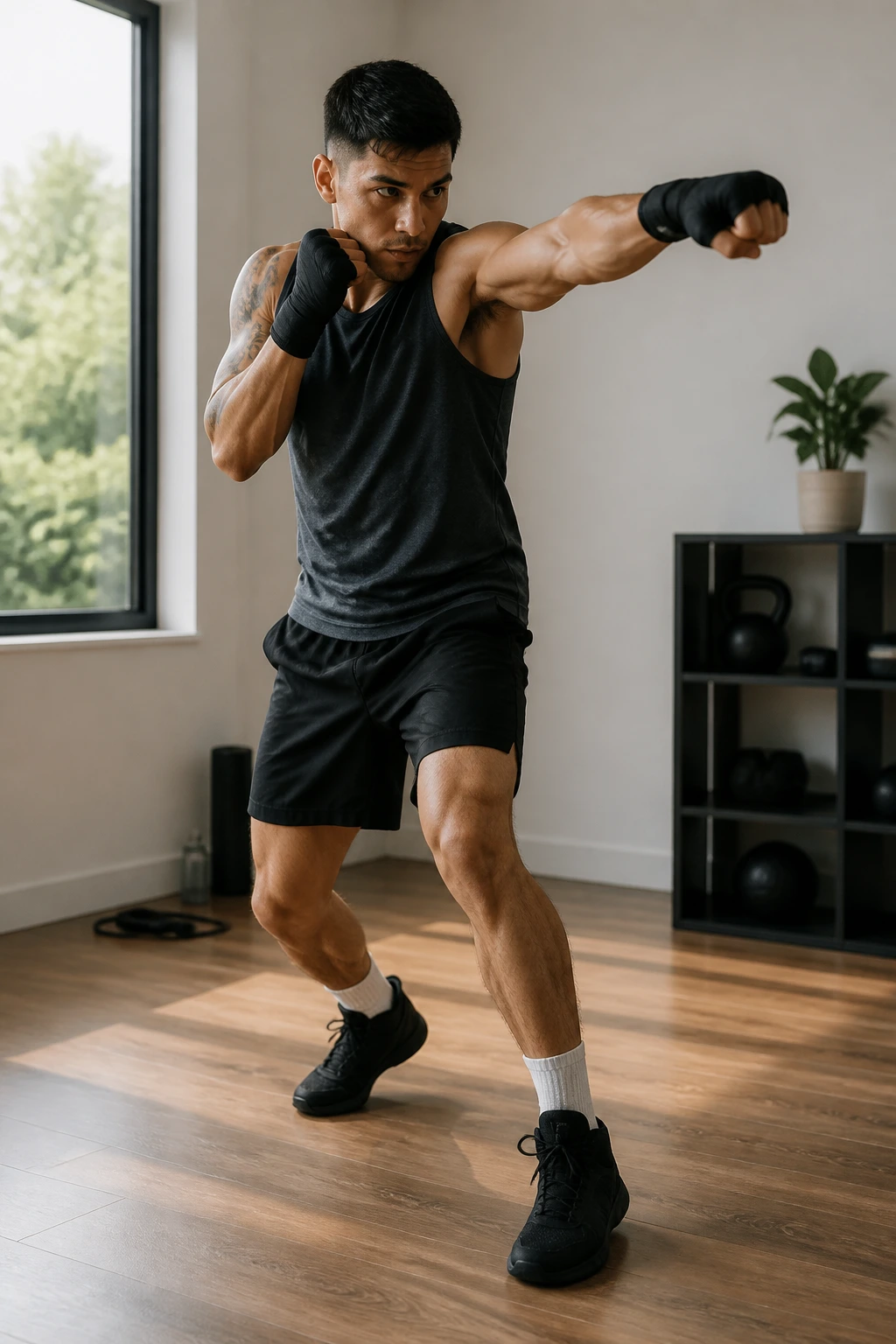
The 1-2-3-2 is one of those combinations that sounds plain until you feel how much it asks from your balance. The jab-cross-hook-cross pattern forces you to keep your weight centered while your shoulders and hips keep changing direction.
Start with 40 seconds on, 20 seconds off, and build the combo in layers. First round: 1-2 only. Second round: 1-2-3. Third round: 1-2-3-2. Fourth round: add a small step out after the cross. That tiny step matters. It keeps the combo from turning into a planted, awkward swing.
The real trick is the hook. Don’t whip it from your arm alone. Turn your lead foot a little, let the hip come with it, then let the fist follow. Once that feels normal, the cross lands cleaner too. Strange how often a hook fixes a cross.
After four rounds, take a longer rest—maybe 60 seconds—and repeat the ladder once more. If you still have gas, add one final round where you throw the combo faster but lighter. That round usually tells the truth.
6. Hook-and-Uppercut Pyramid
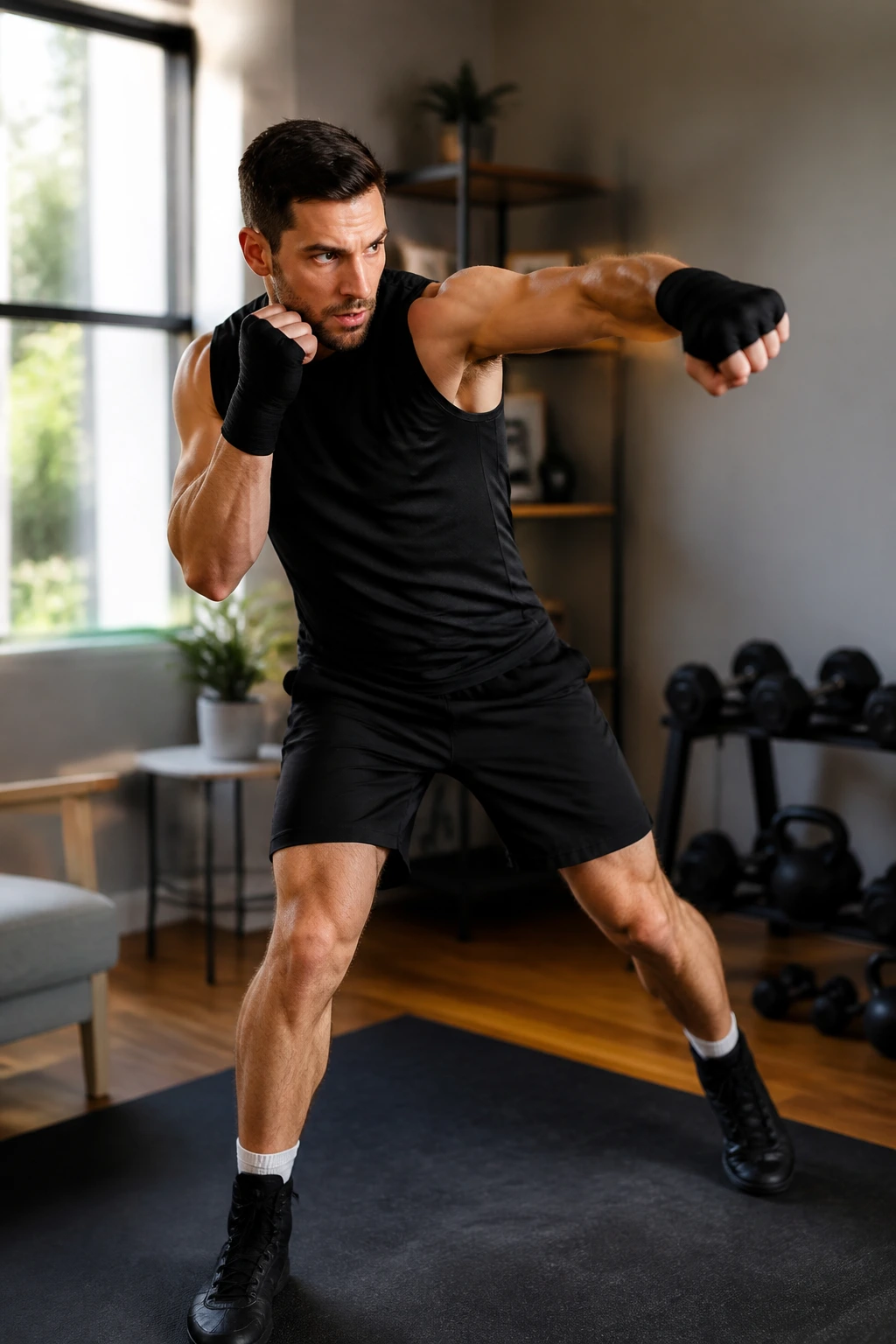
Unlike straight punches, hooks and uppercuts make your torso work harder, and that’s why this drill can light up your core in a hurry. It also punishes sloppy balance. If your stance is too narrow, the whole thing feels shaky. If it’s too wide, your punches slow down.
Use a simple pyramid: 3 reps, 5 reps, 7 reps, 5 reps, 3 reps on each side. Throw a lead hook, reset, then a rear uppercut, reset. Keep the reps tidy and controlled. You’re building torque, not trying to punch through a wall in the hallway.
This one is best when you want your cardio to feel a little different from straight-line punching. The elbows stay bent, the ribs rotate, and your breathing gets choppy if you rush the sequence. That’s fine. It’s supposed to feel demanding.
If you like a cleaner version, do the full pyramid on one side, rest 30 seconds, then switch. If your shoulders are already tired from earlier rounds, reduce the count to 2-4-6-4-2. No shame there. Better form beats bigger numbers.
7. Backpedal and Counter Drill
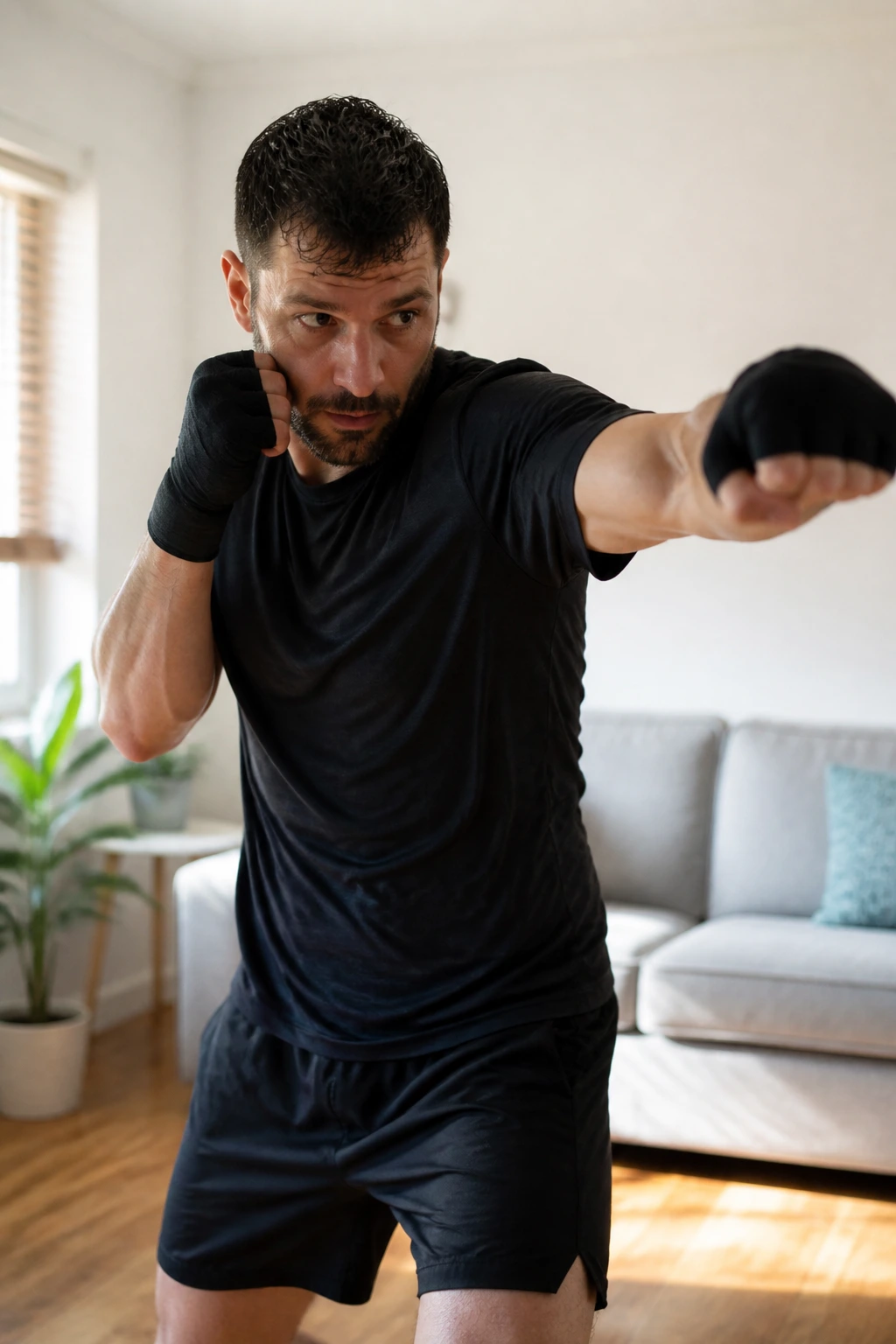
Moving backward under control is harder than moving forward, which is why this drill makes you look better fast. It also saves your knees from endless bouncing in place.
Take two small steps back, plant, then fire a counter combo as the front foot lands. A cross followed by a hook works well. So does jab-cross if you want to keep it cleaner. Repeat for 45 seconds, rest for 15 seconds, and run it for 6 to 8 rounds.
The Rhythm
- Step back, step back, plant.
- Punch the moment your feet settle.
- Reset with a tiny angle step instead of standing still.
- Keep your chin tucked while you move.
This drill feels simple until you try to do it at speed. Then your balance gets tested, and that’s the whole point. It teaches you not to panic when space opens behind you. You can breathe, reset, and still throw back.
8. High-Knee Boxing Bursts
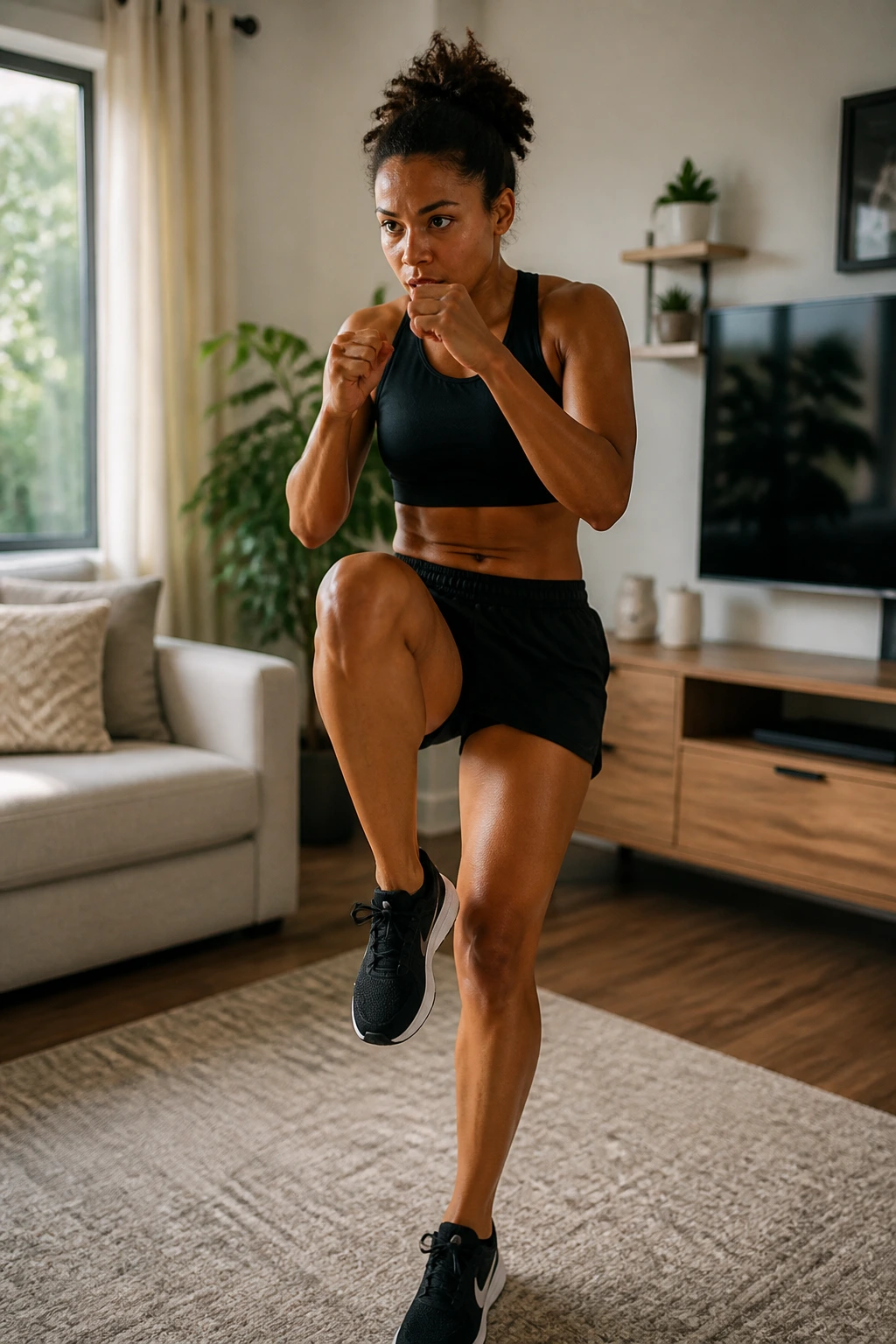
The first thirty seconds of high-knee boxing usually feel innocent. Then your hip flexors start talking, your shoulders stay busy, and your breathing gets loud enough to notice.
Work in 20-second bursts of high knees, followed by 20 seconds of boxing in place, then 20 seconds of easy marching. Repeat that pattern for 6 to 8 rounds. Keep your hands up during the high knees. They do not need to be frozen, but they should stay near your face instead of flapping at your sides.
A good version keeps the knees at about hip height, or close to it, without leaning your torso way back. Once the lean starts, the drill turns sloppy and your lower back takes more stress than it should. Small hops count. Fast feet count. You don’t need dramatic height.
This one is useful when you want cardio without a lot of room. It also works well near the end of a session, when your legs are already warm and your head starts looking for excuses. Don’t give it any.
9. Mirror Round for Clean Form
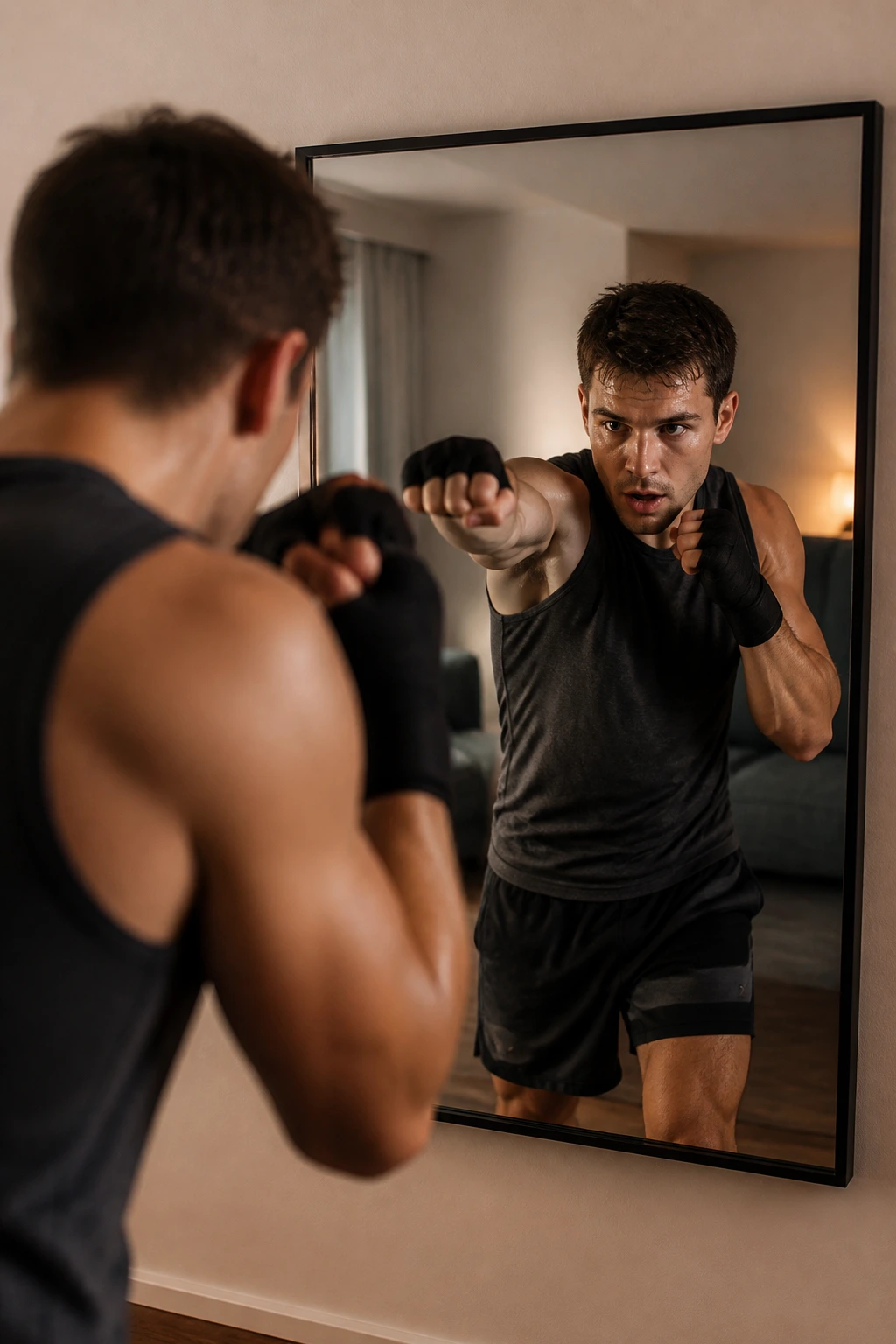
A mirror is rude, which is exactly why it helps. It shows you the dropped hand, the bent wrist, the lazy shoulder, the feet that stopped moving three minutes ago.
Do 2 slow rounds and 2 faster rounds in front of a mirror, using a single combo focus each time. Start with jab-cross only. Then add a hook. Then slip after every combination. The goal is not speed first. The goal is seeing what your body does when nobody is guessing for you.
Check These Four Things
- Your chin should stay tucked, not jut forward.
- Your rear heel should turn with the cross.
- Your wrists should stay straight at contact.
- Your feet should stay about shoulder width apart.
One useful trick: shadowbox slow enough that every mistake feels obvious. Then speed up only after the positions stay clean for a full round. That’s boring for about 30 seconds, and then it starts paying off.
10. Tabata Punch-Outs for a Home Boxing Workout
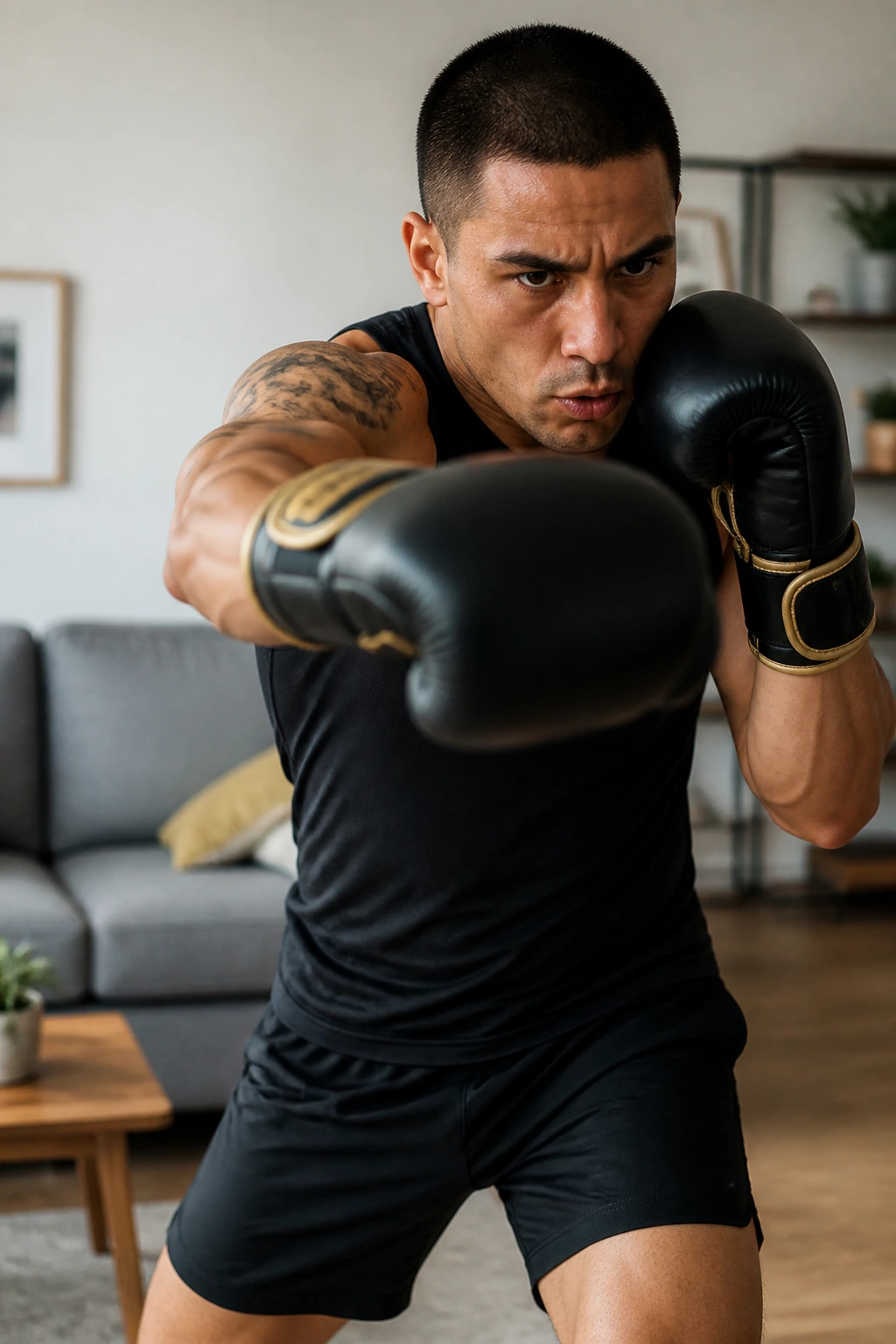
Tabata is brutal because the rests are too short to get comfortable. That’s what makes it useful. Twenty seconds sounds harmless until you repeat it eight times with almost no break.
Set a timer for 20 seconds on, 10 seconds off, and run 8 rounds. Use one combo only in each block, or your form will unravel fast. Jab-cross works well. So do alternating hooks if your shoulders can handle it. The point is to stay crisp under fatigue, not to invent a new punch every interval.
Good Tabata Choices
- 1-2 punches, repeated fast.
- Jab-cross-hook, reset, repeat.
- Body-shot feints with a quick counter.
- Fast foot taps with punches on the beat.
A clean Tabata round should end with you breathing hard but still able to stand tall. If you’re folding at the waist or throwing your head forward, the pace is too high. Cut the speed a notch and keep the punches neat. That little correction matters more than squeezing out two extra reps.
11. Uppercut Staircase
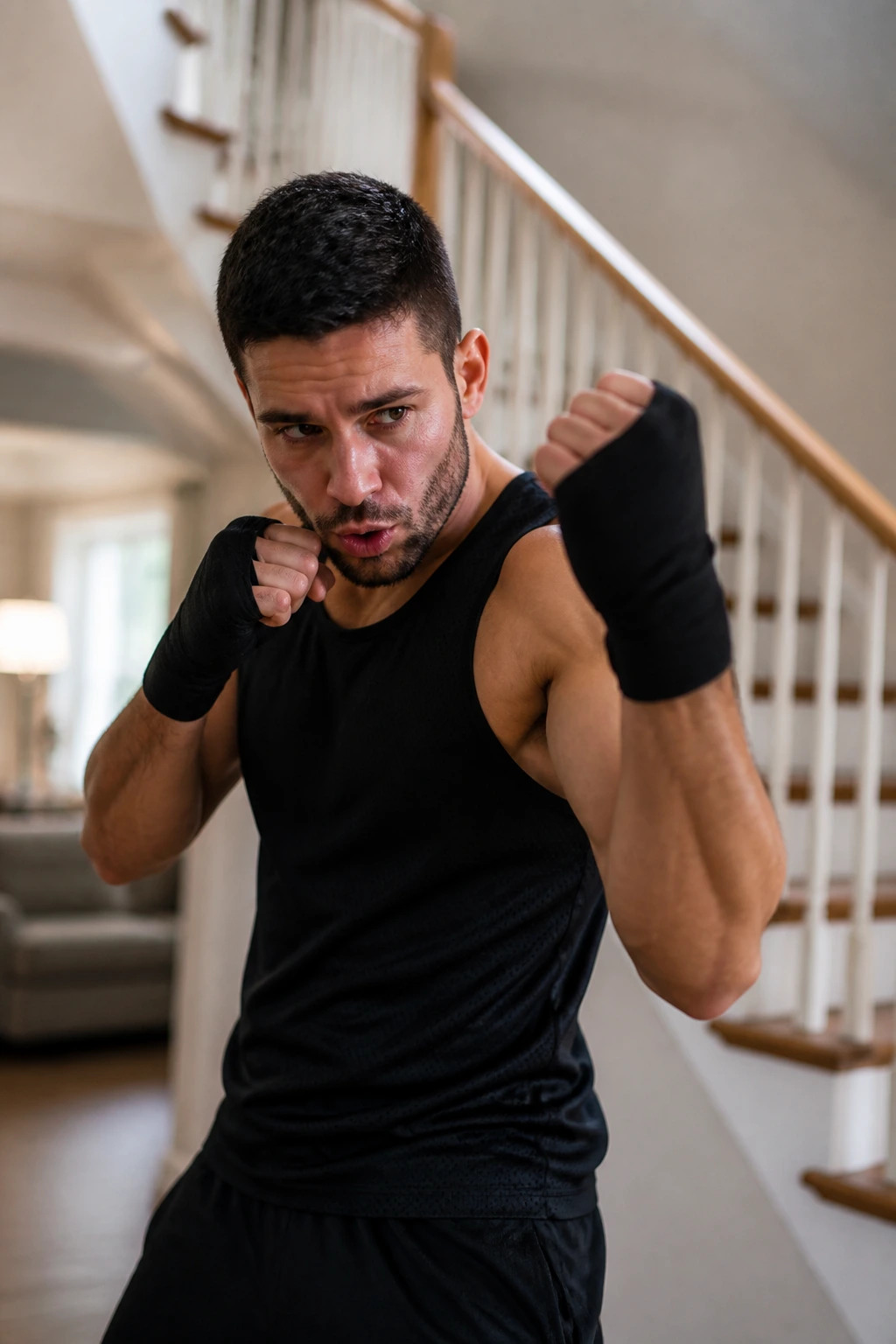
The uppercut staircase looks innocent on paper. Then the count climbs, your knees stay soft, and your arms start carrying the work your legs were supposed to share.
Use a ladder like 1-2-3-4-5 uppercuts on one side, then walk back down. Switch sides after a full ladder. You can do each number as a clean rep set or as a timed burst inside a 30-second interval. Keep your fist palm-up at the bottom, drive from the legs, and let the punch rise through the centerline instead of looping wide.
The best part of this drill is the way it teaches control on the way up. The worst part is that people rush the top of the ladder and turn the punch into a sloppy scoop. Don’t. The uppercut should feel tight, almost compact, like a short lift from the floor.
If you want a harder version, add a tiny knee dip before each punch. That turns the drill into a rhythm problem as much as a cardio one. Which is a nice way of saying your lungs will notice.
12. Squat-to-Jab Rounds
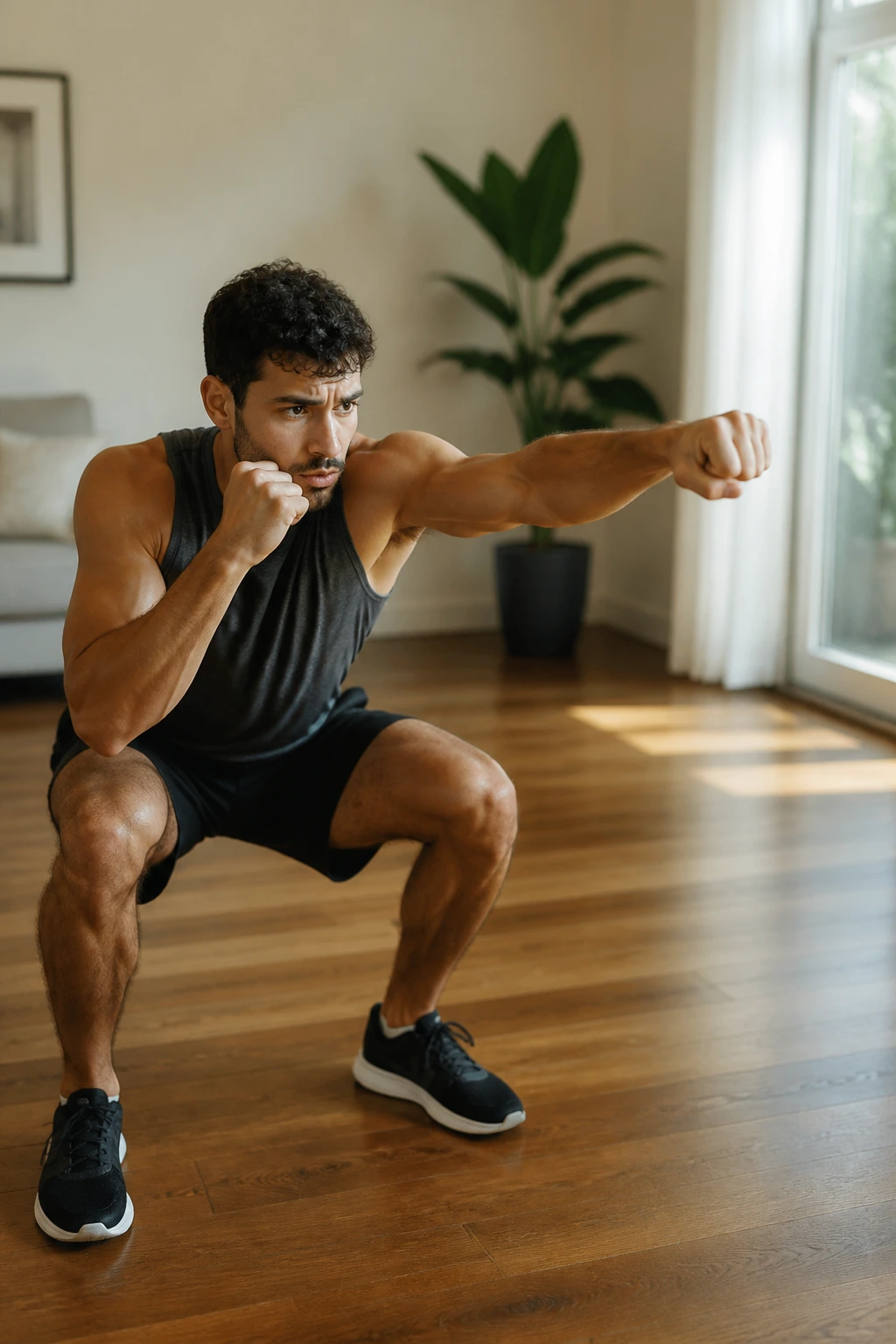
Adding squats to boxing changes the feel fast. Pure boxing lets your legs stay springy. Squat-to-jab rounds take that luxury away, and that is why they work so well for cardio.
Try 8 bodyweight squats, then 20 straight punches, then repeat for 4 to 6 minutes. Keep the squats controlled, with heels down and chest lifted. The punches should come right after the last squat, while your legs are still a little shaky. That’s the useful part.
This is not the prettiest drill in the set, and that’s fine. It’s the one you use when you want more lower-body work without turning the session into a full circuit of random exercises. The boxing gives the squats a rhythm. The squats give the boxing a little bite.
If your knees are irritated, shorten the squat depth and keep the punch count the same. If you’ve got good tolerance, add a small pivot on the final punch of each set. That keeps the round from going flat.
13. Cross-Cut Hooks With Lateral Steps
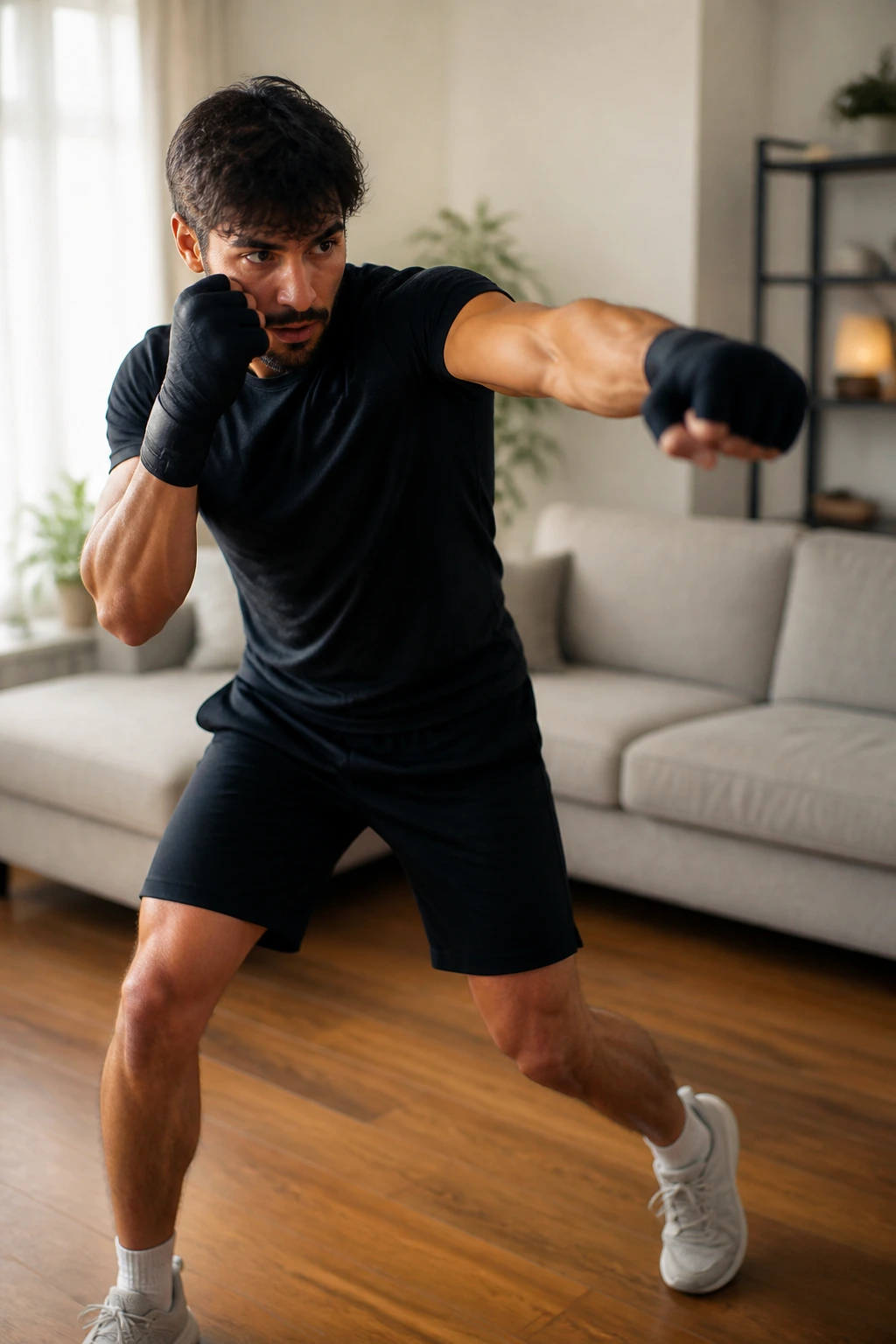
Cross-cut hooks are one of the better ways to make footwork feel tied to punching instead of sitting beside it. Step, punch, cut the angle, punch again. Clean and direct.
Set a timer for 40 seconds on, 20 seconds off, and work the drill in this pattern: step left, cross, hook; step right, cross, hook. After each combo, take a small lateral step out of the line. The side step keeps your body from freezing in front of an imaginary opponent.
Make the Floor Work
- Use short steps, not lunges.
- Let the rear hip turn on the cross.
- Keep the hook compact and close to the cheek line.
- Reset your stance after every combo instead of drifting.
This drill feels especially good in a small room because the side steps keep it honest without asking for much space. If you have a taped line on the floor, even better. If not, use the edge of a rug as your cue.
14. EMOM Fight-Clock Circuit
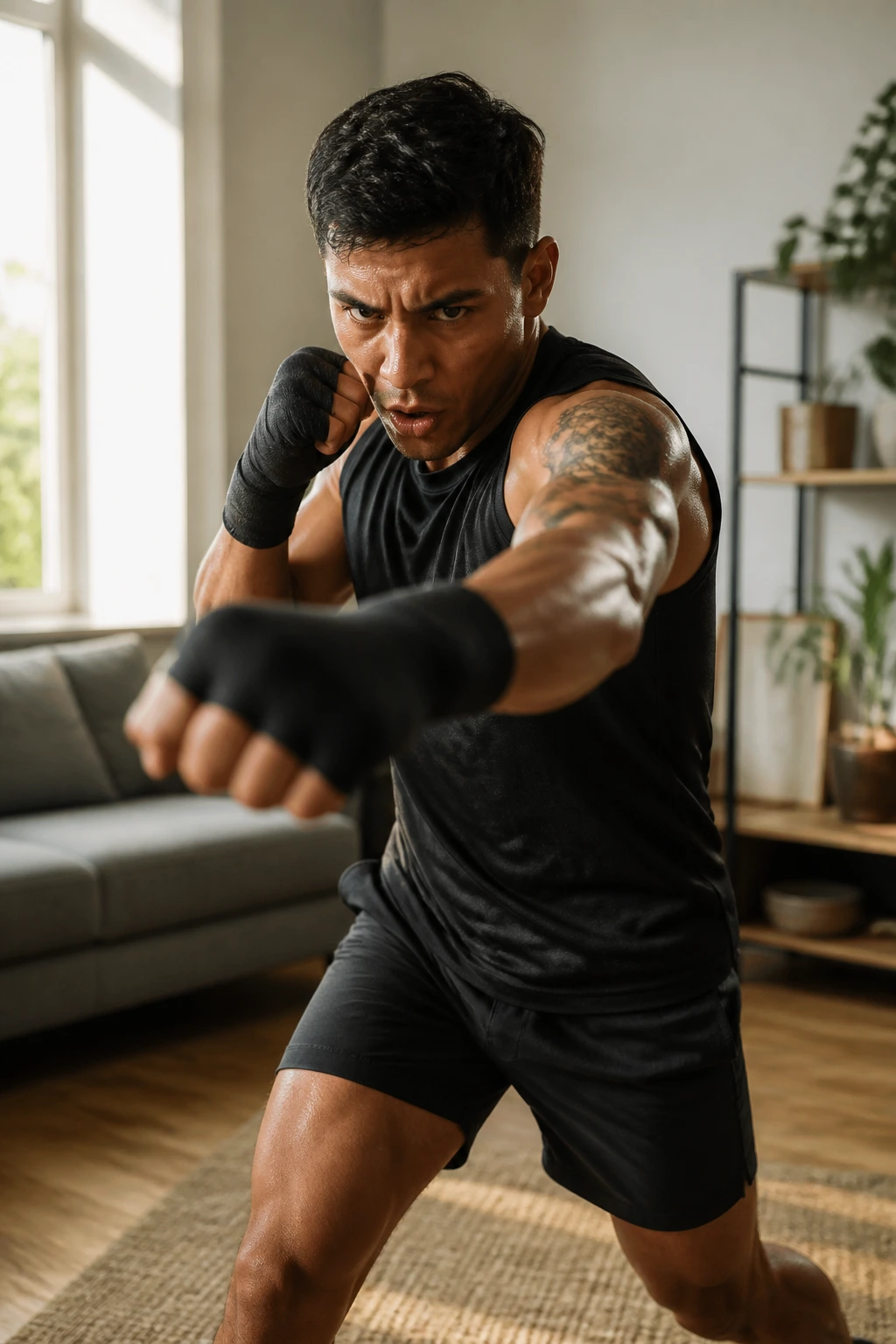
EMOM rounds are sneaky because they look calm between minutes, then the next minute starts and you’re back under the gun. That stop-start feeling is gold for home cardio.
Set a 10-minute EMOM. At the top of each minute, do the prescribed work, then rest for whatever time is left. A clean format is:
- Minute 1: 20 jab-cross punches
- Minute 2: 10 hooks per side
- Minute 3: 10 slips and 10 counters
- Minute 4: 20 fast foot taps
- Minute 5: 12 uppercuts
- Minute 6: repeat minute 1
- Minute 7: repeat minute 2
- Minute 8: repeat minute 3
- Minute 9: repeat minute 4
- Minute 10: repeat minute 5
The charm here is pacing. You learn fast whether your effort is realistic because the clock refuses to negotiate. If a minute leaves you gasping every time, scale the reps down by 2 or 3. That is not failure. That’s smart training.
15. Defensive Shell Drill
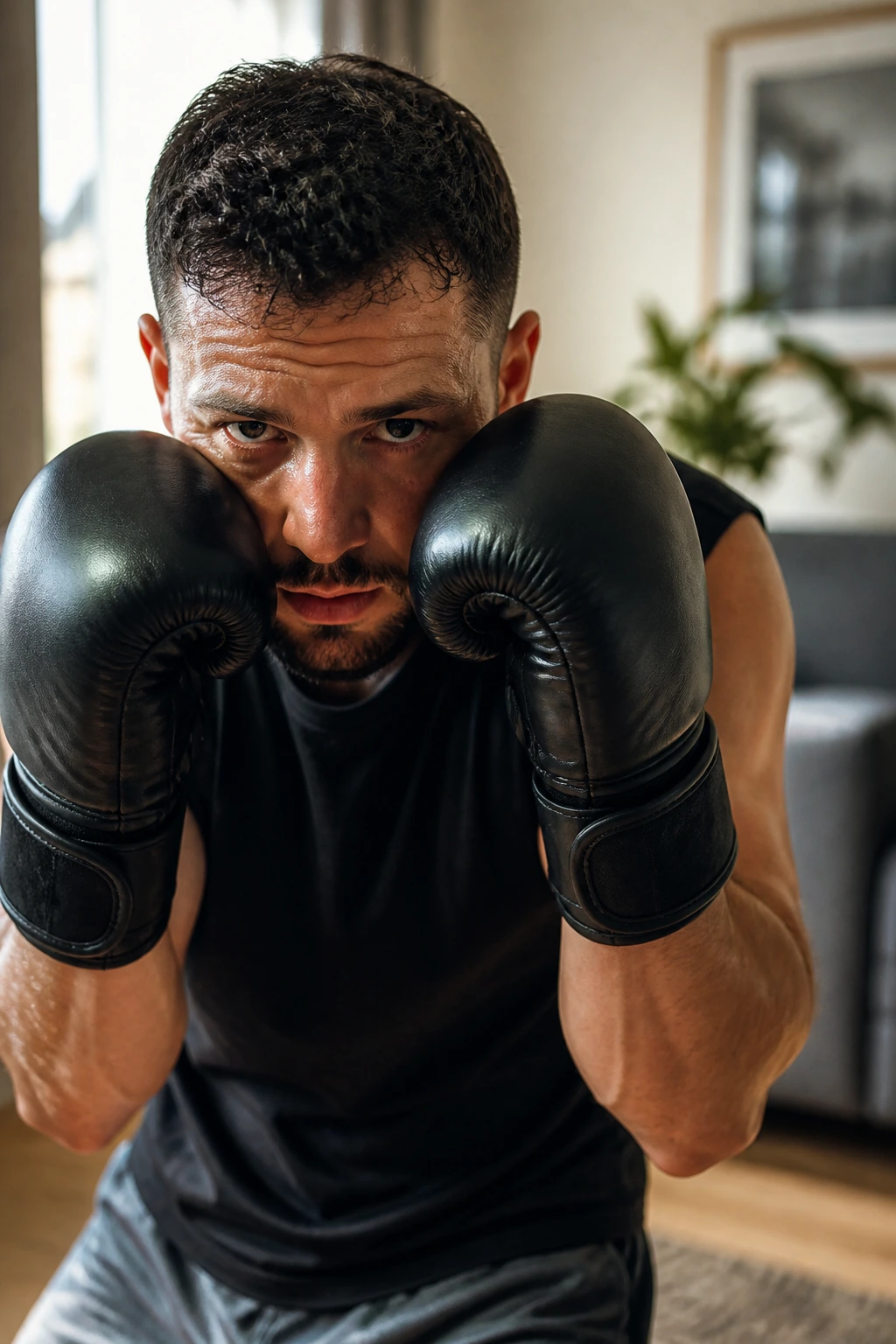
A defensive shell round is what happens when you stop pretending boxing is only about offense. Hands high. Elbows in. Eyes up. Then move like you’re catching shots that you can’t see.
Imagine someone tapping your gloves with a jab every few seconds. Your job is to stay behind the shell, slip right, slip left, then roll under a hook before firing a quick counter. Run it for 45 seconds on, 15 seconds off across 6 to 8 rounds. Keep the counters short. One cross or a short hook is enough.
What to Practice
- Tight guard with the gloves near your cheeks.
- Small head movement instead of giant sways.
- A quick return to center after every defensive move.
- Breathing out on the counter, not holding air in your chest.
This drill teaches patience under pressure, which sounds dramatic for a living room workout, but it matters. A lot. If you can stay neat while moving defensively, the faster rounds later feel easier.
16. Jump-Rope-Free Rhythm Rounds
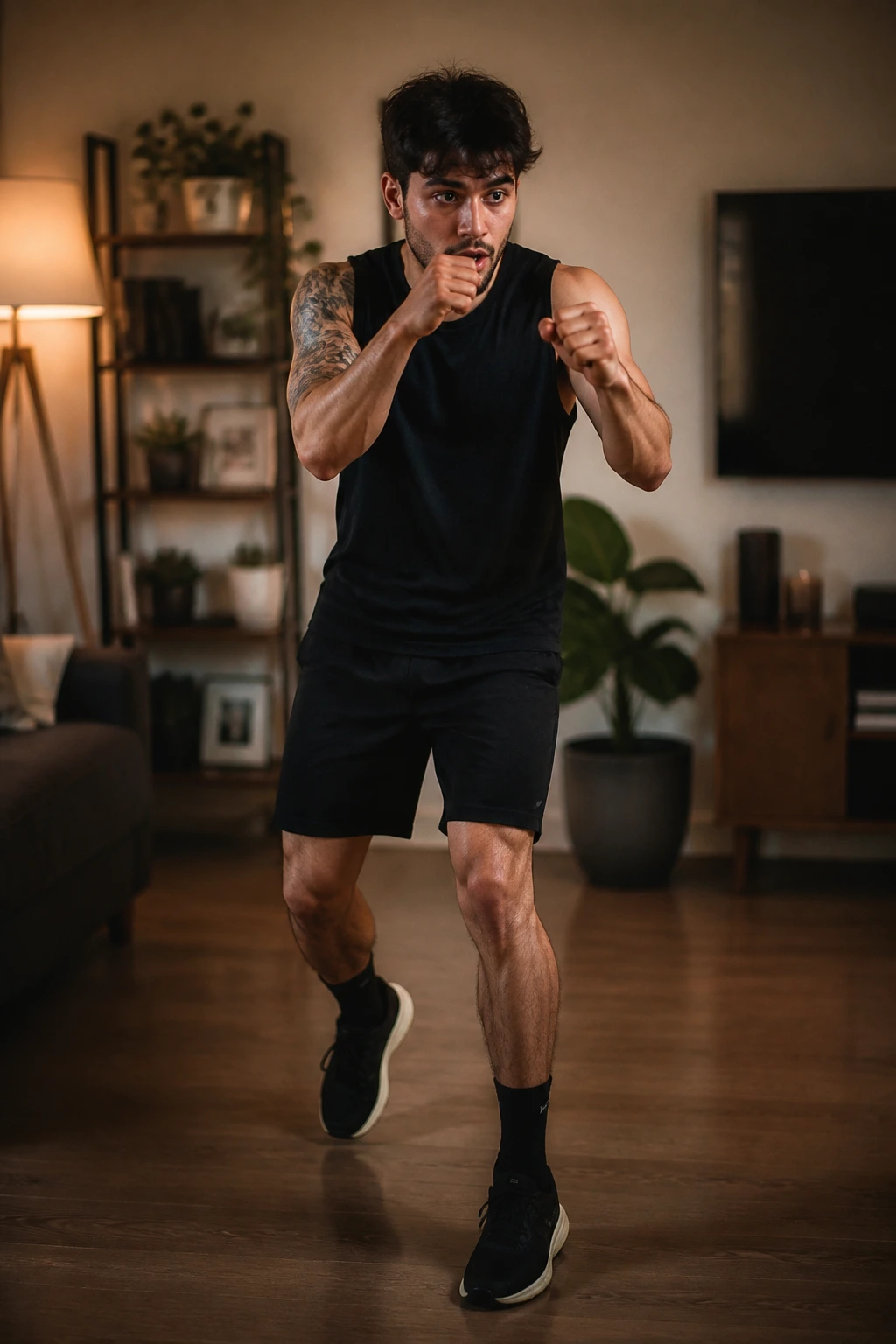
Missing the bounce of jump rope? Steal the rhythm and leave the rope behind. A lot of people like the feeling of quick feet more than they like the rope itself, and this drill scratches that itch.
Use 2-minute rounds with 30 seconds of rest, and keep a loose bounce on the balls of your feet. Alternate between tiny heel lifts, side-to-side shifts, and short forward-back steps. Throw a jab on every third beat if you want to tie the hands in. A metronome app or a song with a steady pulse helps more than you’d think.
How to Keep It Smooth
- Stay light, not high.
- Keep the knees soft.
- Let the shoulders stay relaxed while the feet move.
- Punch only when the rhythm stays steady.
The value here is rhythm under low stress. You’re not trying to win a sprint. You’re teaching your body to stay springy without a lot of extra noise. That skill carries over to almost every other drill in this set.
17. Power Shot Finishers
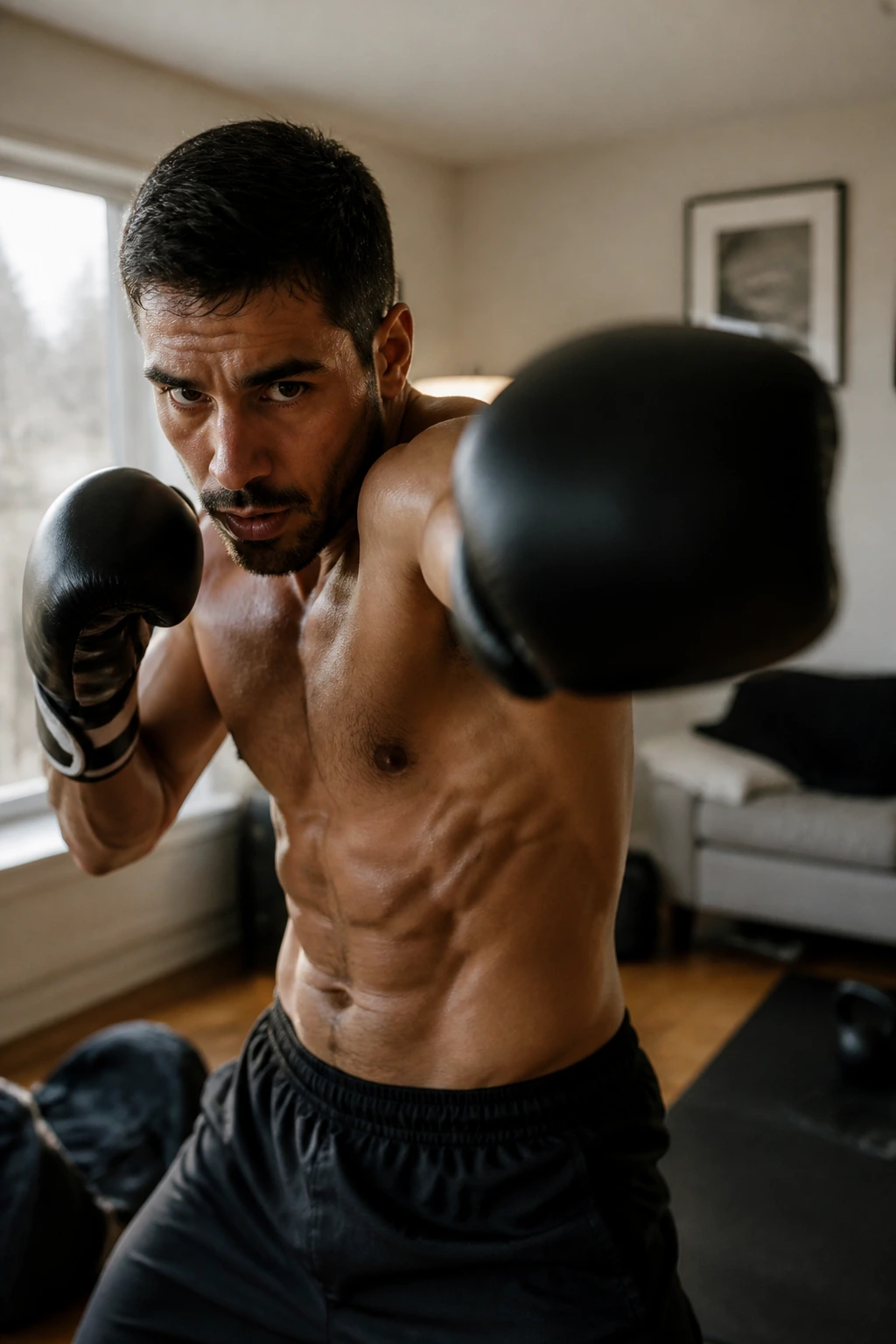
This is the round where you stop pretending every punch has to be fast. Some need to be heavy. Not sloppy. Heavy.
Pick one power combo—say jab-cross-hook—or even just a single rear cross, and throw it with full body turn for 10 to 15 reps per round. Rest 20 to 30 seconds, then repeat for 4 to 6 rounds. Keep the rest honest. If you rush the recovery, the next shot turns into a shoulder fling.
The key is to plant just long enough to transfer force, then reset fast. That means the feet, hips, and core all have to show up at the same time. If the punch feels weak, check the rear foot. If the torso twists but the arm lags behind, shorten the punch path.
Use this one after a longer warm-up or after a few lighter rounds. It’s a finisher, not a starter. Your form should still look clean on the last rep.
18. Three-Corner Footwork Drill
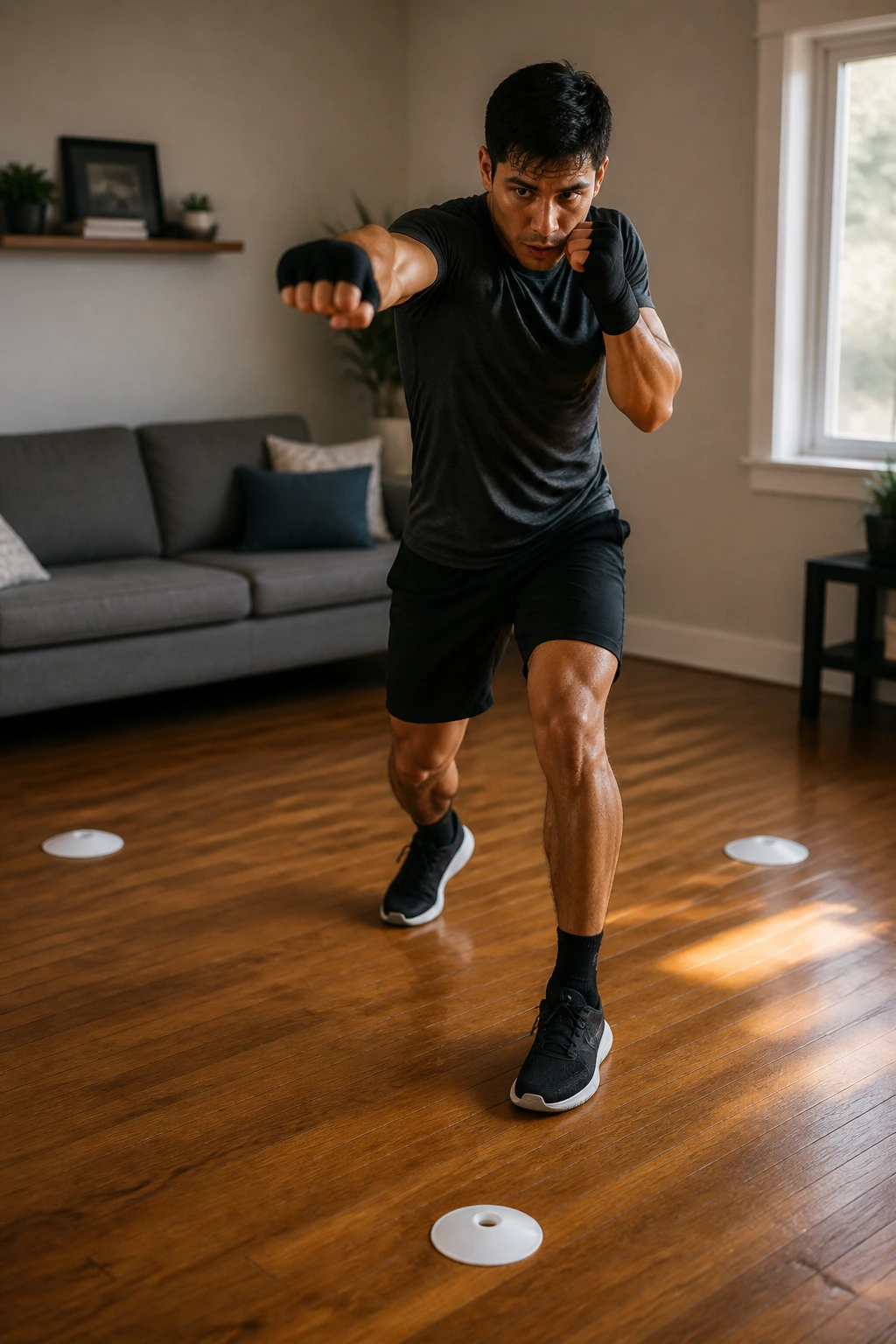
Tape three points on the floor, or use shoes, water bottles, or the corners of a rug. A triangle works well because it forces movement in more than one direction without needing much space.
Set the Triangle
- Mark one point in front of you.
- Mark one point to your left.
- Mark one point to your right and slightly back.
Now move from point to point for 45 seconds, punching on the arrival and pivoting out before moving again. A jab at the front point, a cross at the side point, then a hook as you cut across the last corner works nicely. Rest 15 to 20 seconds, then repeat for 6 to 8 rounds.
This drill is a little nerdy, and I mean that in a good way. It makes your feet stop treating the floor like a parking spot. You’re always arriving, punching, and leaving. That habit shows up later when your combos feel more balanced.
19. Punch, Plank, Repeat
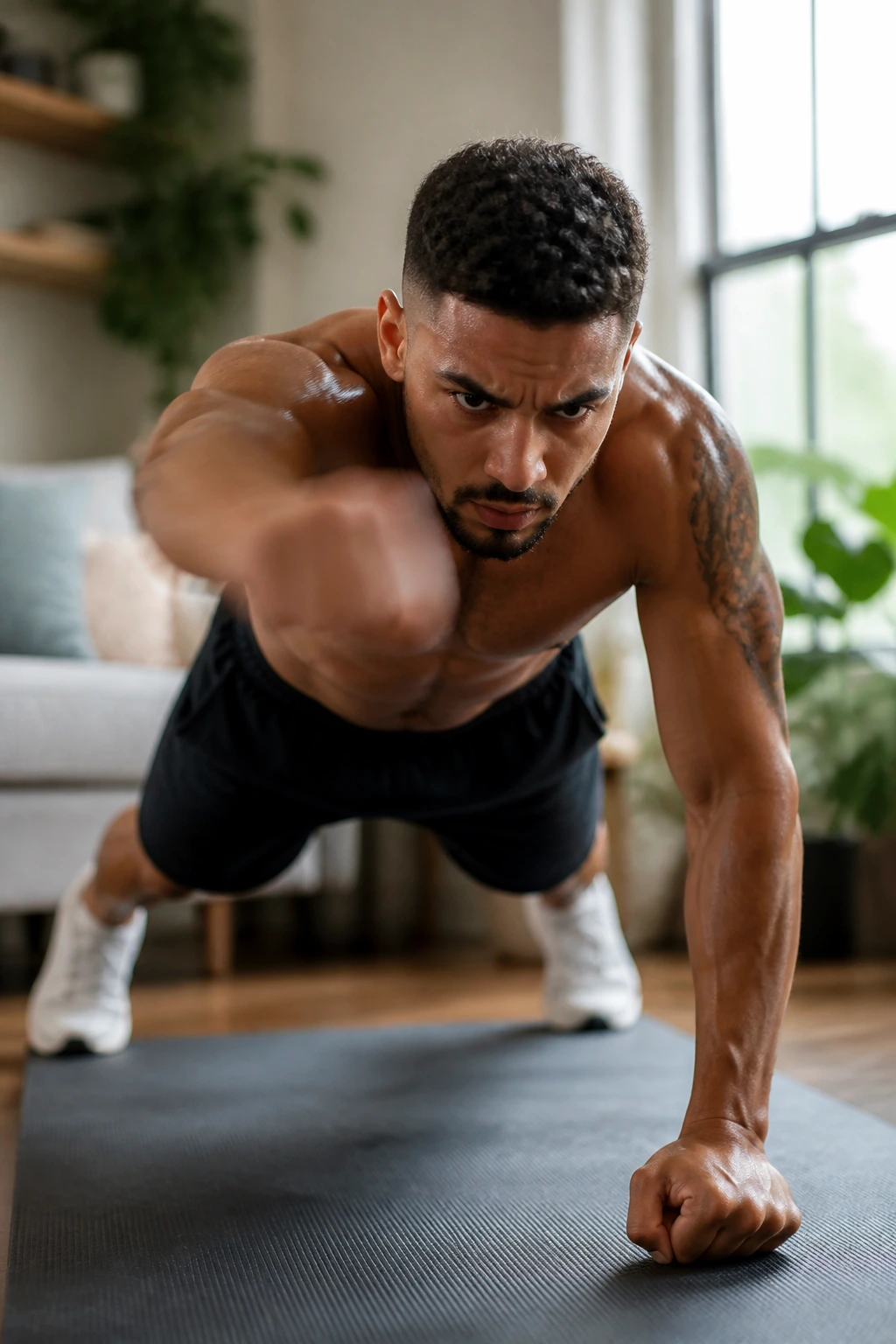
The floor changes the feel of the whole session. One minute you’re boxing. The next, your core is holding you up while your shoulders shake. It’s a clean way to finish hard without needing a single piece of equipment.
Do 20 punches, drop into a 20-second plank, then stand and repeat. You can keep the punches as simple jab-cross pairs or add hooks if your shoulders are fresh. Run the cycle for 6 to 10 rounds depending on how much gas you’ve got left.
The plank matters because it forces your midsection to keep organizing itself after the punches. If your hips sag, the drill gets messy. If your elbows flare in the plank, your shoulders pay for it later. Hold a straight line, breathe through the nose if you can, and stand up with purpose every time.
This is one of those sessions that feels almost too plain until the fifth round, when the simplicity starts biting back. Nice little trick, honestly.
20. Full Fight Simulation for Boxing Cardio at Home
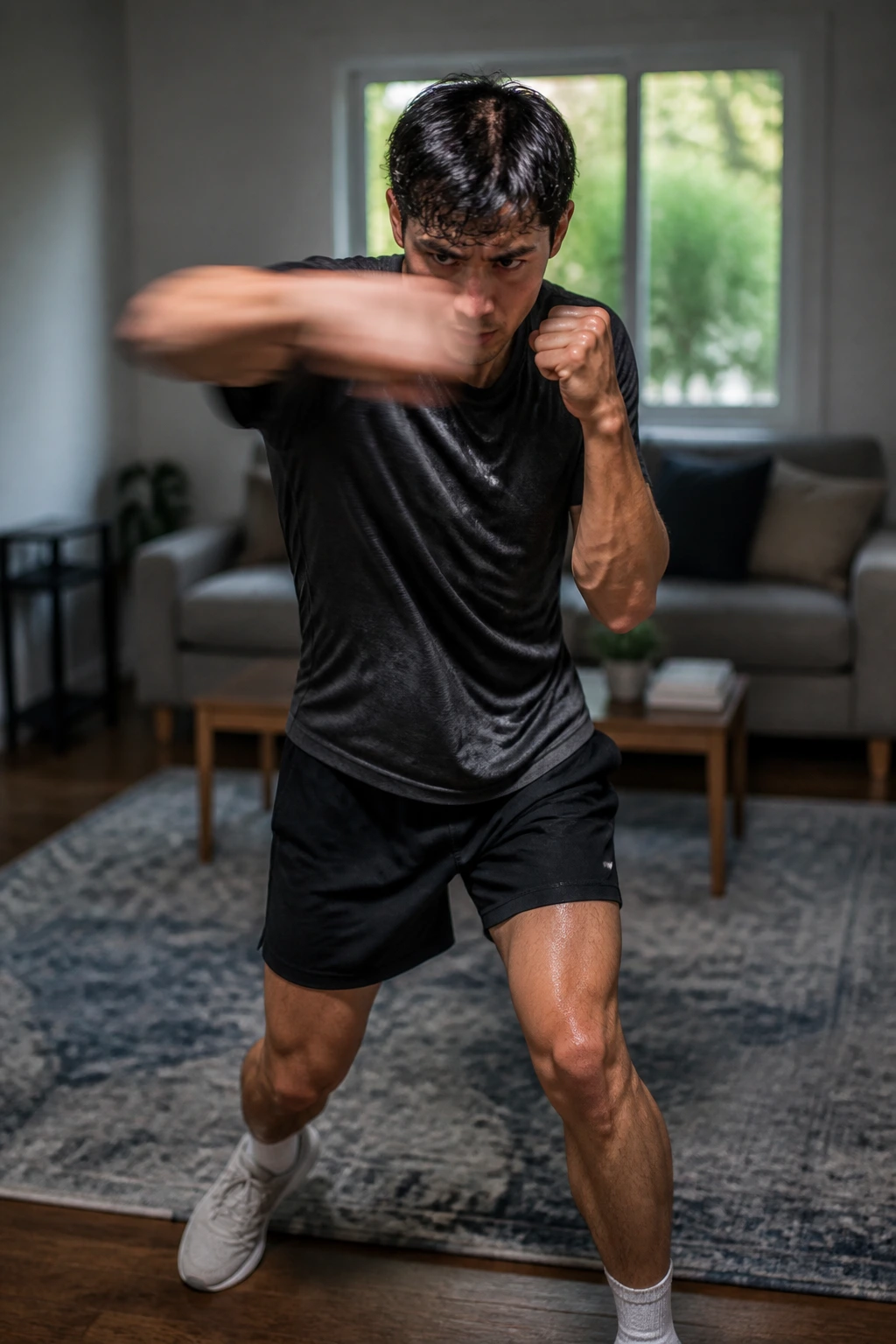
This is the one to use when you want the whole room to feel like a training session, not a random pile of exercises. A fight simulation ties the earlier drills together and gives the workout a shape.
Set 5 rounds of 3 minutes with 1 minute of rest between rounds. Each round gets a purpose:
- Round 1: light shadowboxing and footwork
- Round 2: jab-cross combinations at moderate pace
- Round 3: defense, slips, rolls, and counters
- Round 4: power shots with clean resets
- Round 5: nonstop punch-and-move burnout
Keep the first round easy enough that you could still speak a sentence. Round 2 should feel warmer. Round 3 should make you think. By Round 5, the goal is simple: stay clean while tired. That’s the whole test.
If you only have time for one home boxing workout, use this one. It borrows from the other nineteen without feeling stitched together, and it ends with the right kind of tired—the kind that comes from moving well, not just moving a lot.
