



January can feel oddly heavy. The floor is colder, the daylight is stingier, and every workout promise has to compete with a couch that suddenly looks like a wise life choice. That’s why January workout plans work best when they’re plain, repeatable, and a little forgiving. Fancy is overrated here. Reliable wins.
The smart move is to pick a structure that matches your real week, not the one you wish you had. Some people need short home circuits. Some need a barbell to stay interested. Others need walking, mobility, and one or two honest strength sessions so the month doesn’t turn into an all-or-nothing blur. That’s the whole game: build something you can actually keep doing when motivation gets patchy.
A good start-of-year plan should also do a few boring-but-useful things. It should warm you up properly, leave room for missed days, and make progress visible in some small way — one more rep, five more minutes, a slightly faster walk, a little less huffing on the stairs. Those small wins matter more than people admit.
So instead of chasing punishment, pick a plan that feels almost too doable on day one. That usually means you’ll still be doing it on day twelve.
1. The Three-Day Full-Body Reset

Three days is enough to make a real dent without making your week feel owned by training. This is the plan I’d hand to someone who’s coming back after a break and doesn’t want to wreck their legs on Monday or disappear by Friday.
Each session should hit the same basic pattern: one squat, one hinge, one push, one pull, and one carry or core move. Think goblet squats, Romanian deadlifts, push-ups or dumbbell presses, rows, and farmer carries. Keep the whole workout to 45 to 60 minutes, and stop a rep or two before failure. You’re rebuilding rhythm, not auditioning for a maximal-effort contest.
A simple week looks like this:
- Monday: Full body A
- Wednesday: Full body B
- Friday: Full body C
- Tuesday/Thursday: 20 to 30 minutes of walking
- Weekend: One longer walk or a lazy mobility session
The quiet advantage here is recovery. You feel challenged, but not crushed. That matters a lot in January, when sore legs can kill the next three workouts before they even begin.
2. The 20-Minute Home Circuit

Short workouts survive bad weather, bad moods, and bad schedules. That’s their superpower. A 20-minute home circuit is the plan for the person who needs something that starts fast and ends before the mind can start negotiating.
Use five moves, done for 40 seconds on and 20 seconds off, for four rounds. A clean version might look like squats, push-ups, reverse lunges, mountain climbers, and plank shoulder taps. No equipment required. If you’ve got a resistance band or a pair of dumbbells, fine, but don’t let gear become the excuse.
How to keep it honest
Don’t rush the reps just to make the timer feel dramatic. Quality matters more than speed. If your squat turns into a half-bow, slow down. If your push-up collapses into a chin-to-floor flop, raise your hands on a bench or counter.
The real win is consistency. Twenty minutes done four times a week beats a heroic 90-minute session that happens once and leaves you sore for three days. Small is not a weakness here. Small is the point.
3. The Gym Machine Confidence Plan

Machines get a bad reputation from people who’ve been lifting too long. That’s a shame, because they’re one of the easiest ways to get strong without spending half the workout trying to balance a dumbbell and your ego.
Start with six machines total: leg press, seated row, chest press, hamstring curl, lat pulldown, and a cable or machine for abs. Do 2 to 4 sets of 8 to 12 reps on each, with the last two reps feeling challenging but still clean. The seat setup matters more than people think. Take the extra minute to line up the handles and back pad properly.
Machines are great if you want to learn effort without wrestling with technique on day one. They’re also a gift for anyone who feels awkward in the free-weight area. No shame in that. I’d rather see a beginner using a machine with good form than flailing through a barbell squat they’re not ready for.
This plan works especially well as a January confidence builder. You leave the gym knowing exactly what you did, and that clean sense of structure can keep you coming back.
4. The Walking Plus Strength Blend

Walking gets dismissed because it feels too simple. That’s exactly why it works. Simple is sustainable, and sustainability is what most people actually need after the holidays.
Here the week is split between daily walking and two or three short strength sessions. Aim for 7,000 to 10,000 steps a day if that fits your life, but don’t obsess over the number. The better test is whether you’re moving more than you were before. Add a 25-minute strength session twice a week with squats, rows, presses, and glute bridges, and you’ve got a plan that quietly covers a lot of ground.
A one-sentence rule helps here: never let a missed workout cancel a walk. That little shift keeps momentum alive. A brisk 30-minute walk after lunch can clear the mental fog better than people expect, and it doesn’t leave you dreading the next session.
This plan is especially good for people who sit a lot. The movement doesn’t feel dramatic, but your hips, back, and energy levels usually notice the difference within a couple of weeks.
5. The Beginner Dumbbell Plan

Dumbbells are a sweet spot for beginners because they teach control without demanding perfect barbell technique. You can learn a lot with a pair of 5-pound, 15-pound, or 25-pound weights, depending on your current strength.
A simple weekly layout
- Day 1: Goblet squat, dumbbell bench press, one-arm row, dead bug
- Day 2: Romanian deadlift, overhead press, split squat, plank
- Day 3: Step-up, floor press, reverse fly, suitcase carry
Use 3 sets of 8 to 10 reps for the big moves and 2 to 3 sets of 10 to 12 reps for the smaller ones. The rule is boring but useful: when you can hit the top of the rep range with clean form, move up to the next pair of dumbbells.
Don’t chase failure on every set. That’s a rookie trap. Leave a little in the tank, especially in the first two weeks. You want your joints and your nervous system to learn the pattern before you ask them to grind.
The nice thing about dumbbells is that they scale easily. If one side is weaker, you see it. If your form slips, you know it. That honesty is useful.
6. The Low-Impact Joint-Friendly Plan
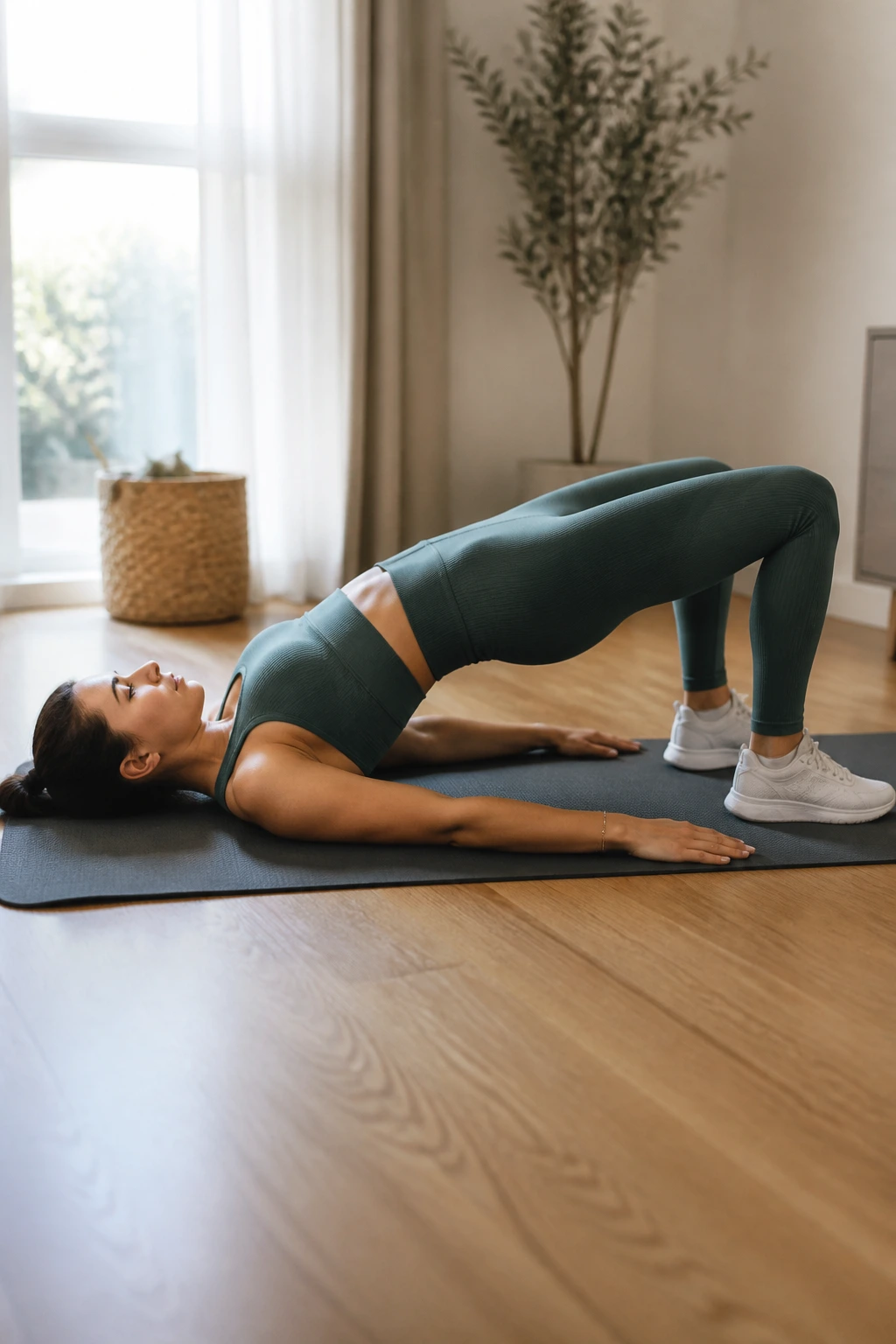
Some January workout plans need to be kinder on knees, hips, backs, and ankles. That doesn’t mean they’re soft. It means they’re smart.
Use bike rides, incline walking, rowing, glute bridges, step-ups, bird dogs, and dead bugs to build a week that raises your heart rate without pounding you into the floor. Keep effort around RPE 6 to 7 out of 10 — enough to feel work, not enough to trigger a grumpy joint flare-up the next morning.
A good low-impact week might look like two cardio days, two strength days, and one mobility-focused day. That split gives your body room to adapt. If even walking feels rough, shorten the stride, raise the incline a little, or swap in a stationary bike.
This plan is often the one people stick with longest because it doesn’t punish them for having a body. That sounds obvious. It isn’t. A lot of workout plans fail because they ignore the reality of stiffness, old injuries, or the simple fact that not every day should feel like a test.
7. The Cardio-Strength Alternating Plan

Boredom kills more workout streaks than lack of fitness does. If you get restless doing the same style of training too many days in a row, alternating cardio and strength can keep your brain engaged.
Try four training days a week: two strength sessions and two cardio sessions. Strength days can be full-body, upper-lower, or dumbbell-based. Cardio days can be intervals on a bike, treadmill, rower, or even a fast outdoor walk with hills. Keep one cardio day easy and one a little harder.
Why this works
The alternation gives you contrast. One day you’re lifting, the next you’re breathing hard. That change is nice, and it also reduces the chance that you’ll get mentally stale. You’re not staring down the same workout five days in a row.
For most people, the biggest mistake is making the cardio days too hard. Don’t do that. If every session turns into a near-death experience, the plan stops being livable. One steady session and one interval session is plenty.
This is a good January option if you want variety without randomness. There’s a pattern, just not a boring one.
8. The Morning Mobility-First Plan

Stiff mornings are common when the days are short and the sofa keeps calling. A mobility-first plan meets that problem head-on instead of pretending you’ll feel springy at 6:30 a.m.
Start with 10 minutes of mobility: cat-cows, hip circles, thoracic rotations, ankle rocks, and a few deep bodyweight squats. Then add 15 to 25 minutes of light strength or cardio depending on the day. The workout is less about crushing fatigue and more about getting the joints moving well enough that the rest of the day feels easier.
A lot of people skip this because it looks too gentle. That’s the mistake. Mobility work has a sneaky effect: once your hips and upper back loosen up, your squat depth improves, your walking feels smoother, and even your sitting posture gets less miserable.
This plan is good for anyone who wakes up feeling creaky, which is to say: a lot of people. Keep it simple, keep it early, and don’t turn the warm-up into a performance.
9. The Kettlebell Power Block

Kettlebells are compact, efficient, and a little unforgiving in the best way. They reward crisp movement and punish sloppy effort fast enough to keep you honest.
A solid kettlebell plan uses swings, goblet squats, cleans, presses, and carries across 3 or 4 sessions a week. You don’t need a huge menu. In fact, the smaller the exercise list, the easier it is to get good at them. Start with 10 to 15 swings, 8 goblet squats, 6 presses per side, then walk for 30 to 60 seconds before repeating the round.
The swing is the star for a reason. Done well, it trains hips, grip, and conditioning in a very clean package. Done badly, it turns into a back exercise you never wanted. Hinge from the hips. Let the bell float. Don’t lift it with your shoulders like you’re trying to win a weird contest.
This plan works well if you like workouts that feel athletic rather than gym-machine neat. It’s simple, sweaty, and hard to fake.
10. The Bodyweight Ladder Plan

Bodyweight ladders are a sneaky good way to build consistency because they feel structured without needing equipment. They’re also easy to scale, which is more useful than it gets credit for.
Pick three or four moves — push-ups, squats, lunges, and a core move like plank taps or hollow holds. Start with a ladder like 2 reps, 4 reps, 6 reps, 8 reps, then come back down if you want a longer session. Another version is time-based: 20 seconds, 30 seconds, 40 seconds, 30 seconds, 20 seconds.
What to watch for
The ladder should feel smooth, not frantic. If your first rung is already a grind, the numbers are too high. If the last rung feels easy, add one more round next time.
This is one of those plans that can live anywhere — hotel room, living room, basement, park. No excuses, yes, but also no drama. That matters when you want January to feel like a restart instead of a project you keep postponing.
A good ladder leaves you with a little satisfaction and not much soreness. That’s a good sign.
11. The Incline Treadmill Plan

Incline walking gets serious results without the wear and tear of all-out running. It also feels more manageable when the weather is ugly and the pavement outside looks like a bad idea.
Use the treadmill 3 times a week. One day can be steady incline walking for 30 to 45 minutes at a pace where you can still talk in short sentences. Another day can be intervals: 2 minutes at a steep incline, 2 minutes flat or low incline, repeated 6 to 8 times. The third day can be a shorter recovery walk with a moderate incline.
If you want to pair it with strength, put lower-body lifting on separate days or after the easier treadmill session. That keeps your legs from feeling like lead blocks.
The nice thing about incline work is that it’s honest. You’re not sprinting, but your breathing still changes. Your calves, glutes, and hamstrings show up. And unlike running, it’s usually easier to recover from the next day.
This is a smart January plan for anyone who wants conditioning without beat-up joints.
12. The Zone 2 Base-Building Plan

A lot of people go too hard on cardio and wonder why they burn out. Zone 2 training is the calmer answer. It’s the kind of effort where you can still speak in full sentences, but you’d rather not.
Use 2 to 4 sessions a week of 30 to 60 minutes on a bike, rower, incline walk, or easy jog if your joints tolerate it. The goal is not drama. The goal is a steady effort that builds endurance without leaving you wrecked. For many people, this feels almost too easy at first. Give it time.
The payoff is useful: better base fitness, easier recovery between harder sessions, and less of that breathless feeling when you climb stairs or carry groceries. It’s the unglamorous work that supports everything else.
If you already lift, Zone 2 slots in nicely on rest days. If you’re new to exercise, it can be the main event for a few weeks while your body gets used to moving regularly. That’s not settling. That’s smart sequencing.
13. The Push-Pull-Legs Split

Push-pull-legs is still around for a reason: it makes sense, especially if you like lifting and want a clear structure. Push day hits chest, shoulders, and triceps. Pull day covers back and biceps. Leg day does, well, the part everyone complains about.
A January version can run 5 or 6 days a week, but a lighter 3-day rotation works better for many people. For example, do push on Monday, pull on Wednesday, legs on Friday, then repeat the next week. Keep each session around 60 minutes and focus on a few big lifts plus one or two accessories.
A clean push-pull-legs setup
- Push: Bench press, overhead press, incline dumbbell press, triceps work
- Pull: Rows, pulldowns, face pulls, curls
- Legs: Squats, deadlifts or hinges, split squats, calf raises
This split is not for someone who hates the gym. It is for someone who likes having a lane and staying in it. The structure makes progression easy to track, which can be oddly motivating in the middle of a cold month.
14. The Athletic Conditioning Plan

If you miss the feeling of being able to move fast, jump, or change direction without thinking about it, this plan has teeth. It’s more athletic than aesthetic, and I mean that as a compliment.
Start each session with 10 minutes of warm-up: brisk walking, leg swings, arm circles, skipping, or easy bike work. Then do short bursts such as sled pushes, shuttle runs, box jumps, medicine ball slams, or battle ropes. Keep the work intervals short — 10 to 30 seconds — and the rest generous enough that your form stays sharp.
What makes it different
Athletic conditioning should feel crisp, not sloppy. The moment your landings get noisy or your sprint form falls apart, the session is too long or too hard. Better to stop while the movement still looks clean.
This plan suits people with a sports background or anyone who likes training that feels alive. It is not the gentlest choice, and it shouldn’t be. But it’s a satisfying one, especially if you’ve been stuck doing slow, repetitive cardio and want to wake your body back up.
15. The Lunch-Break Express Plan

A lunch-break workout has to be efficient, or it won’t happen. That’s the entire rule. You get about 25 to 35 minutes, maybe a shower if you’re lucky, and not much appetite for fuss.
Use supersets to cut dead time. Pair squats with rows, presses with hinges, or lunges with core work. Do 3 rounds of each pairing and keep rest short — 30 to 45 seconds between exercises if you can handle it, a bit longer if your form starts slipping. You can get a lot done with two dumbbells, a bench, and a timer.
The strength of this plan is its honesty. It doesn’t pretend your midday window is spacious. It respects the clock and still gives you something meaningful. That’s why it’s one of the easiest January plans to keep once work starts crowding the rest of your day.
If you only have time for one thing, make it a full-body circuit plus a five-minute cooldown walk. Short, clean, done.
16. The Recovery-Heavy Rebuild

Some months call for less heroics and more repair. If your body feels stale, stiff, or tired from a long stretch of inconsistency, a recovery-heavy rebuild can be the smartest January choice.
Use 2 strength days, 2 mobility days, and daily walking. Strength sessions stay light to moderate: goblet squats, rows, hip hinges, push-ups on a bench, and carries. Mobility days should include the hips, upper back, ankles, and shoulders. Keep them around 15 to 20 minutes. The goal is to move better tomorrow, not to leave the session bragging.
This kind of plan feels understated, but it’s often the one that gets people back on track faster than a hard reset does. You start sleeping a little better. The first set doesn’t feel as awful. Your back stops complaining every time you stand up too fast.
That’s real progress. Not flashy. Useful.
17. The Strength Progression Plan

If you like numbers, logs, and seeing weight go up in neat little steps, this is your plan. It’s built around progressive overload, which sounds more technical than it is. You’re just asking your body to do a little more over time.
Pick 4 main lifts — a squat, hinge, press, and pull — and keep them for the whole month. Use 3 to 5 sets in the 5 to 8 rep range for the main lifts, then tack on one or two accessory exercises. Each week, add one rep or 2.5 to 5 pounds if the previous session felt solid.
The part people miss
Progression works better when it’s boring. Don’t swap exercises every other day because you got bored on Tuesday. Keep the same lifts long enough to see a trend. The logbook is more useful than your memory, too. Write it down.
This plan is best for people who like measurable wins. You can point to the numbers and know you’re getting stronger, which is a nice antidote to the weird January feeling that nothing is moving.
18. The Core and Posture Plan

Core work gets goofy online. Too many crunches, too much twisting, not enough sense. A better January plan builds the trunk the way it actually works: to resist movement, hold posture, and support your lifts.
Use anti-rotation presses, dead bugs, planks, side planks, carries, back extensions, and bird dogs across 3 short sessions a week. Keep each one under 25 minutes and treat quality like it matters, because it does. A loaded carry done with a tall chest and steady ribs is worth more than fifty rushed sit-ups.
A few moves worth keeping
- Suitcase carry: one dumbbell, walk 20 to 40 meters per side
- Dead bug: slow legs, slow arms, lower back flat
- Side plank: 20 to 45 seconds per side
- Pallof press: hold the cable or band still, don’t twist
Good core training should make the rest of your workouts feel steadier. Your squats get cleaner. Your back feels less fragile. Even standing around starts to feel better, which sounds boring until you notice it.
19. The Outdoor Cold-Weather Plan

Cold air changes the whole mood of training. You need a plan that respects the temperature instead of pretending a bad warm-up is enough.
Use a 10-minute indoor warm-up before you head out: marching in place, bodyweight squats, arm circles, and ankle hops if they feel good. Then get outside for brisk walks, hill repeats, stairs, or a short bodyweight circuit at a park. Keep the first five minutes extra easy. Your joints will thank you.
Layering matters more than people think. Start slightly cool, not warm enough to sweat before you begin. Gloves help. A hat helps. If the ground is slick, keep the intensity moderate and skip anything that makes you land hard.
This plan works because it turns the weather into part of the training instead of a reason to hide. There’s something useful about moving through cold air with purpose. It wakes you up fast, and the walk back feels earned.
20. The Five-Day No-Excuses Finish

A lot of January plans fail because they are too precious. This one isn’t. It’s a plain five-day rhythm that covers strength, cardio, mobility, and recovery without asking for a dramatic mood shift first.
Try this:
- Day 1: Full-body strength, 40 to 50 minutes
- Day 2: Easy walk or Zone 2 cardio, 30 to 45 minutes
- Day 3: Upper- or lower-body strength, 40 minutes
- Day 4: Mobility and core, 20 minutes
- Day 5: Conditioning or incline work, 25 to 35 minutes
Then rest, walk, or repeat based on how you feel.
The beauty here is that nothing feels hard to start. That’s the whole trick. Once you lower the barrier to entry, training gets a lot less theatrical and a lot more consistent. You can adjust the volume up or down without wrecking the structure, which makes this a strong option for people who want one plan they can keep using after the month stops feeling shiny.
If you want the cleanest possible start, this is the one I’d bet on. Simple schedule. Clear roles. No drama.
