



Rain has a way of killing momentum. The run gets skipped, the walk gets shorter, and the bike ride outside turns into a wet sock situation nobody asked for. Indoor cardio workouts are what keep the routine from falling apart when the weather gets ugly.
The nice part is that cardio indoors does not need to mean a treadmill glued to a wall. The same weekly target most health groups use — 150 minutes of moderate aerobic work or 75 minutes of vigorous work — can be built from jump rope, stairs, dance, shadowboxing, or a plain old living-room circuit. You are not chasing magic. You are chasing heart rate, consistency, and a plan that fits the space you actually have.
That matters more than people admit. A workout you can repeat in a hallway or beside a couch beats a perfect plan that only works on dry, sunny days. If you live in an apartment, have sleeping kids, or share walls with someone who hates foot noise, the best rainy-day cardio is the one that keeps you moving without turning the floor into a drum.
And no, it doesn’t all have to feel like punishment. Some sessions should leave your lungs burning. Others should feel almost playful. The trick is picking the right tool for the mood, the room, and the amount of time you’ve got.
1. Jump Rope Intervals
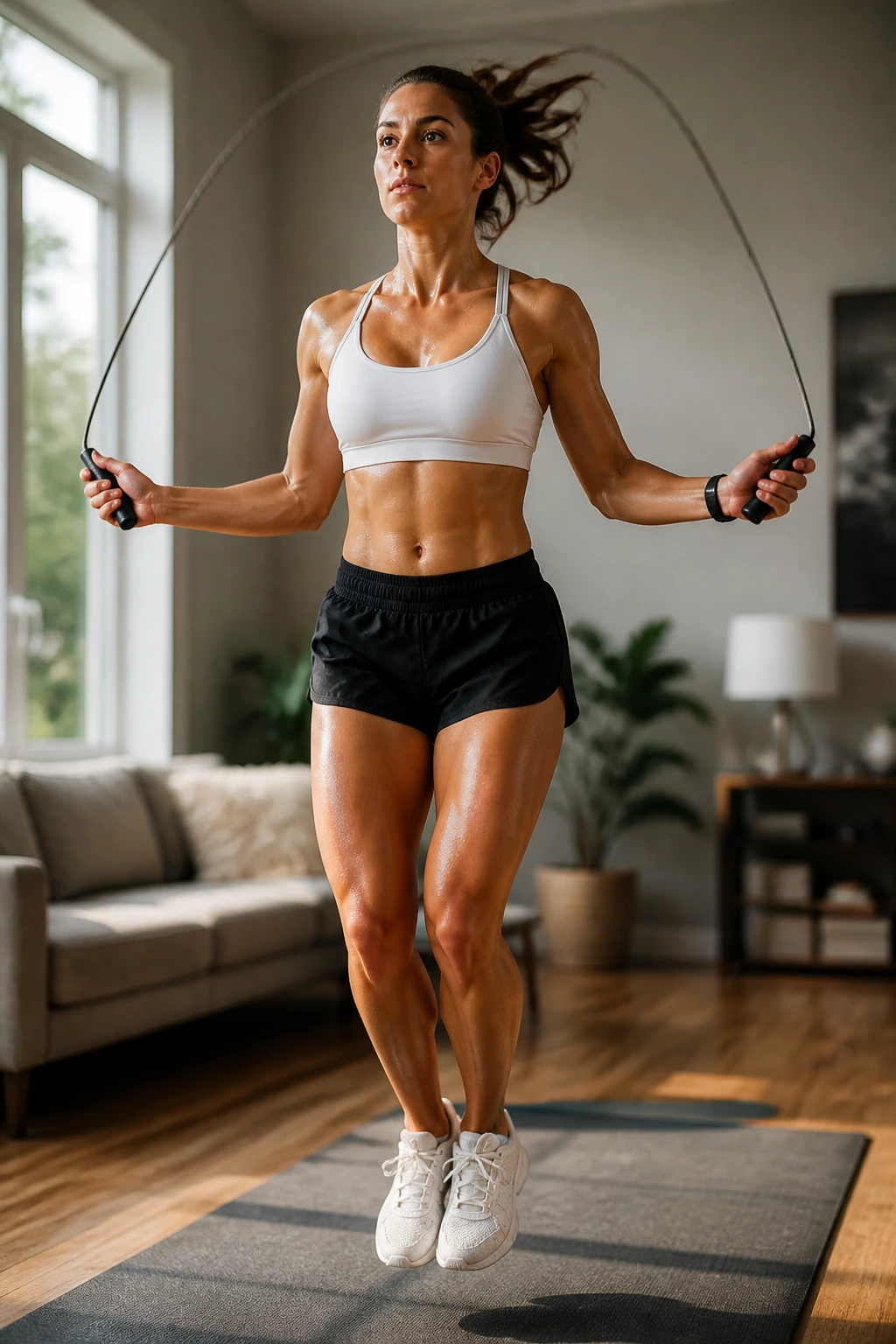
Jump rope is the sneaky monster on this list. It looks simple until your calves start talking back, and that’s exactly why it works so well for indoor cardio workouts on a rainy day.
Start with 30 seconds on, 30 seconds off for 10 rounds if you’re new. If you already know your way around a rope, stretch that to 15 or 20 rounds and keep the bounce light. Your feet only need to clear the floor by an inch or two. Big jumps waste energy and beat up your shins.
What Makes It Work in a Small Space
A rope gives you a lot of heart-rate change in very little room. That matters if all you’ve got is a strip of floor between the sofa and the coffee table.
Use a boxer step when your ankles get tired. It keeps one foot doing a tiny reset while the other lands, and it feels less choppy than jumping on both feet every time. If you miss the rope more than a few times, skip the shame and do “ghost rope” swings for one minute, then come back to the real thing.
- Best for: short, hard sessions
- Space needed: about 6 feet by 3 feet
- Nice add-on: 5 minutes of calf raises after the main set
- Quiet tip: land on a mat or a piece of rubber flooring
Pro tip: keep your wrists small and quick. The rope should turn from the hands, not from giant arm circles.
2. Stair Sprints
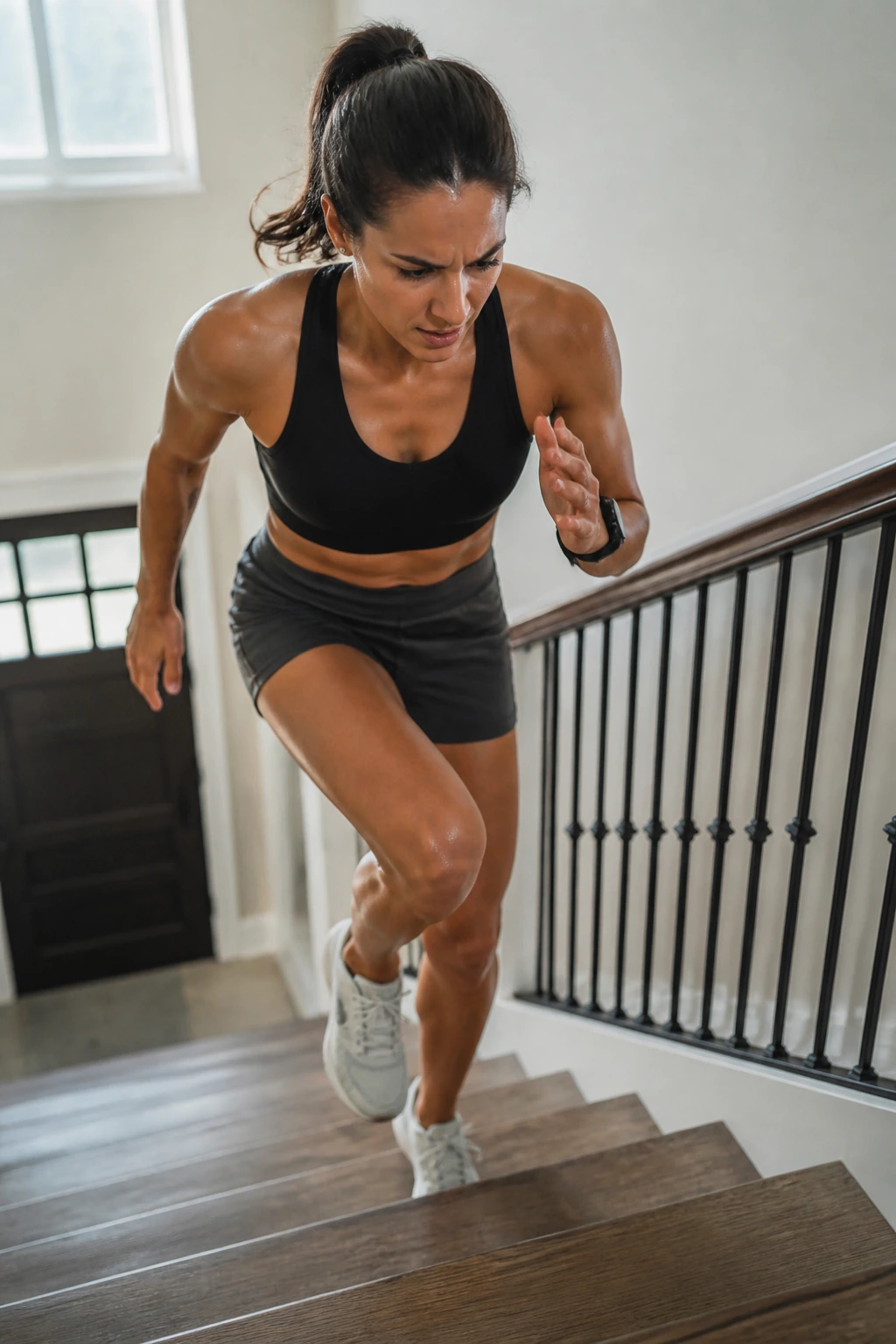
Got stairs? Good. That old staircase can become a brutal little cardio track without any fancy gear at all.
Sprint up one flight at a hard pace, walk down slowly, and repeat for 6 to 10 rounds. If you have more than one flight, pick a landing point that feels safe and stick to it. The descent is your recovery, so don’t rush it. That walk back down is where your breathing comes back under control before the next climb.
A Safer Way to Use the Stairs
Stairs ask a lot from your knees and ankles, so form matters. Stay tall, place the whole foot on the step, and use the handrail if the staircase is narrow or slick. Rainy days make some stairwells a little damp, and slick steps are not the place to prove anything.
If your legs hate sprinting, turn the session into brisk step-ups: one foot up, one foot up, then back down with control. You still get the heart-rate bump. You just lose some of the sting.
One sharp stair set can wake up your whole body. Two or three sets, and you’ll know you trained.
3. Dance Cardio to a Single Playlist
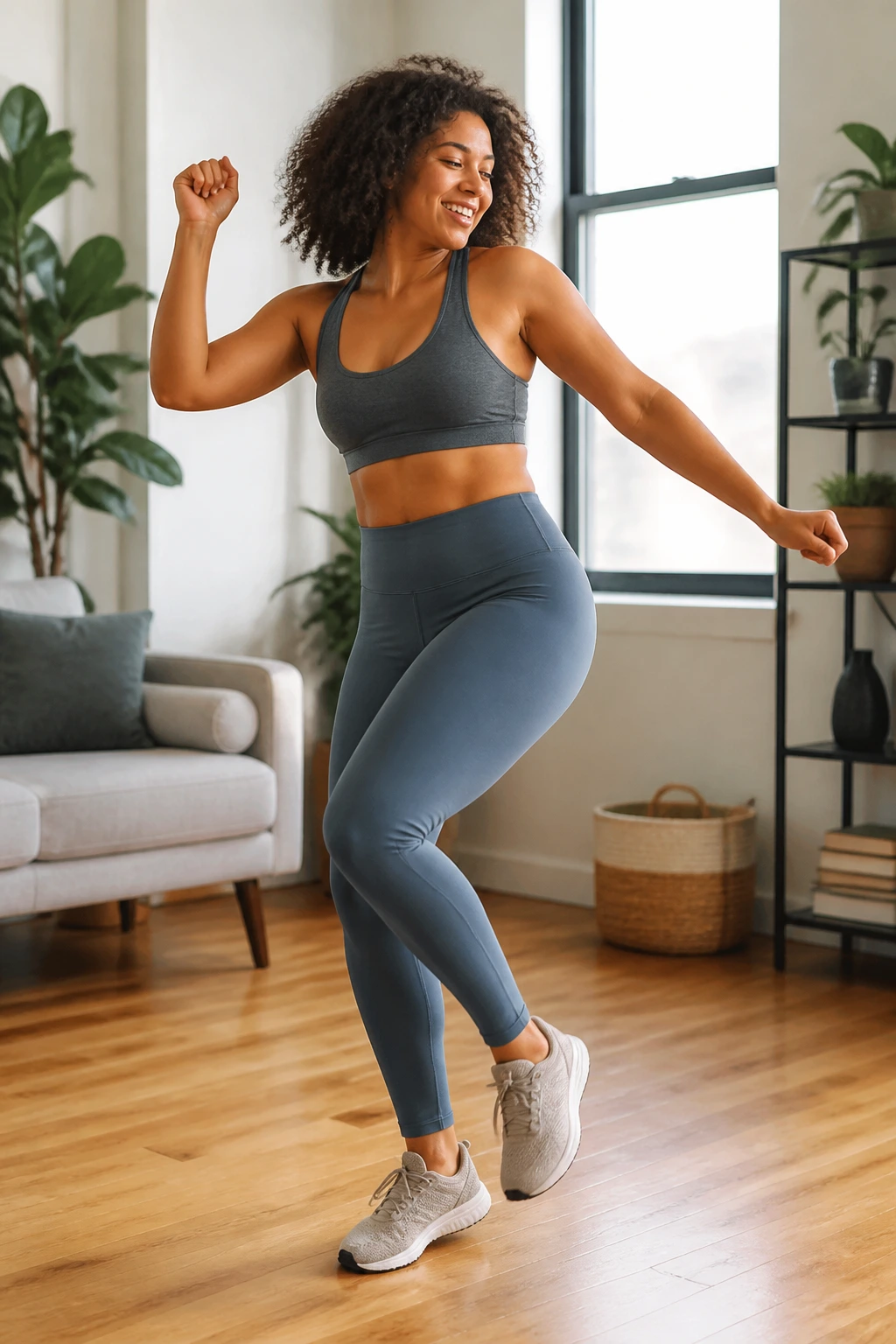
Put on three songs and stop thinking so hard. Dance cardio works because it keeps you moving long enough for the heart rate to climb, and the rhythm does half the work for you.
I like to build it around a simple rule: one song to warm up, one song to push, one song to finish hard. Use side steps, knee lifts, grapevines, arm reaches, and quick turns if you have the space. You do not need choreography. You need continuous motion and a beat you like enough not to quit on.
A good playlist makes the whole thing feel easier than it is. That’s not cheating. That’s the point.
How to Make It Feel Less Awkward
Start with the chorus when the song hits, then keep the movement loose through the verses. If a song slows down, use that break to march in place and keep your breathing steady.
- Best length: 12 to 20 minutes
- Best floor plan: clear a square about the size of a small rug
- Best move if you freeze up: step-touch side to side
- Best mood shift: pick songs with strong drums, not sleepy backgrounds
No one needs to see you. That helps.
4. Indoor Cardio Tabata Circuit
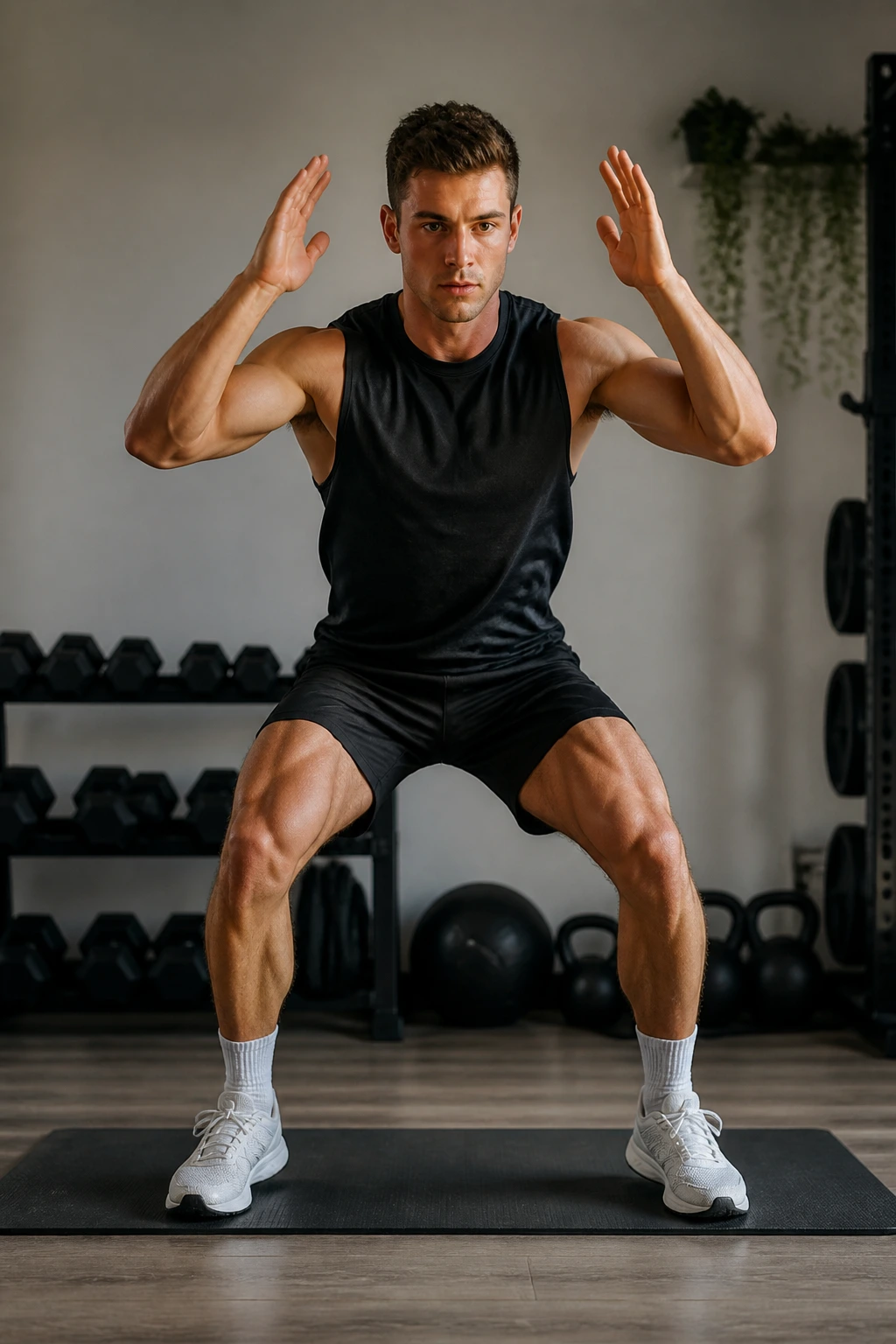
Tabata is fast, mean, and efficient. The standard format is 20 seconds of work, 10 seconds of rest, repeated eight times, which gives you four minutes per block.
A clean indoor cardio Tabata circuit might use squat jacks, mountain climbers, fast feet, and plank jacks. Do each move for one four-minute block, then rest for a minute and repeat the whole set if you’ve got more gas in the tank. Two rounds is enough for many people. Four rounds is a lot.
How the 20/10 Format Feels
The first round feels manageable. The second round starts to bite. By the third, your form has to stay honest or the whole thing falls apart.
That’s why Tabata works so well for rainy-day training: it rewards focus, not drama. Keep the reps snappy and stop one rep before your landings get sloppy. If jumping is too much, swap in step jacks and slow mountain climbers. You still get the heart rate up without turning your floor into a trampoline.
Do not turn the rest periods into phone-scrolling marathons. Ten seconds disappears fast, and that’s part of the challenge.
5. Shadowboxing Rounds

Shadowboxing is one of the best indoor cardio workouts because it doesn’t need much space, and it never gets boring if you move with purpose. Throw jabs, crosses, hooks, and uppercuts for 2 or 3 minutes, then rest for 30 to 45 seconds and go again.
The power comes from the feet and hips, not from flailing your arms around. Step in, punch, slip, pivot, reset. That rhythm keeps your heart rate climbing while your coordination gets sharper too.
A mirror helps. So does a timer.
Keep the Fight Clean
Keep your chin tucked and your shoulders loose. If your neck starts to creep up toward your ears, relax for a few breaths and start the next round with a lighter hand.
A nice beginner round looks like this:
- 30 seconds jab-cross
- 30 seconds jab-cross-hook
- 30 seconds forward and back footwork
- 30 seconds body shots
- Repeat until the round ends
If you want more intensity, use light hand weights only if your shoulders already know the drill. For most people, empty hands are enough. Fast hands, quick feet, clean breaths. That’s the good stuff.
6. Marching High Knees and Arm Drive
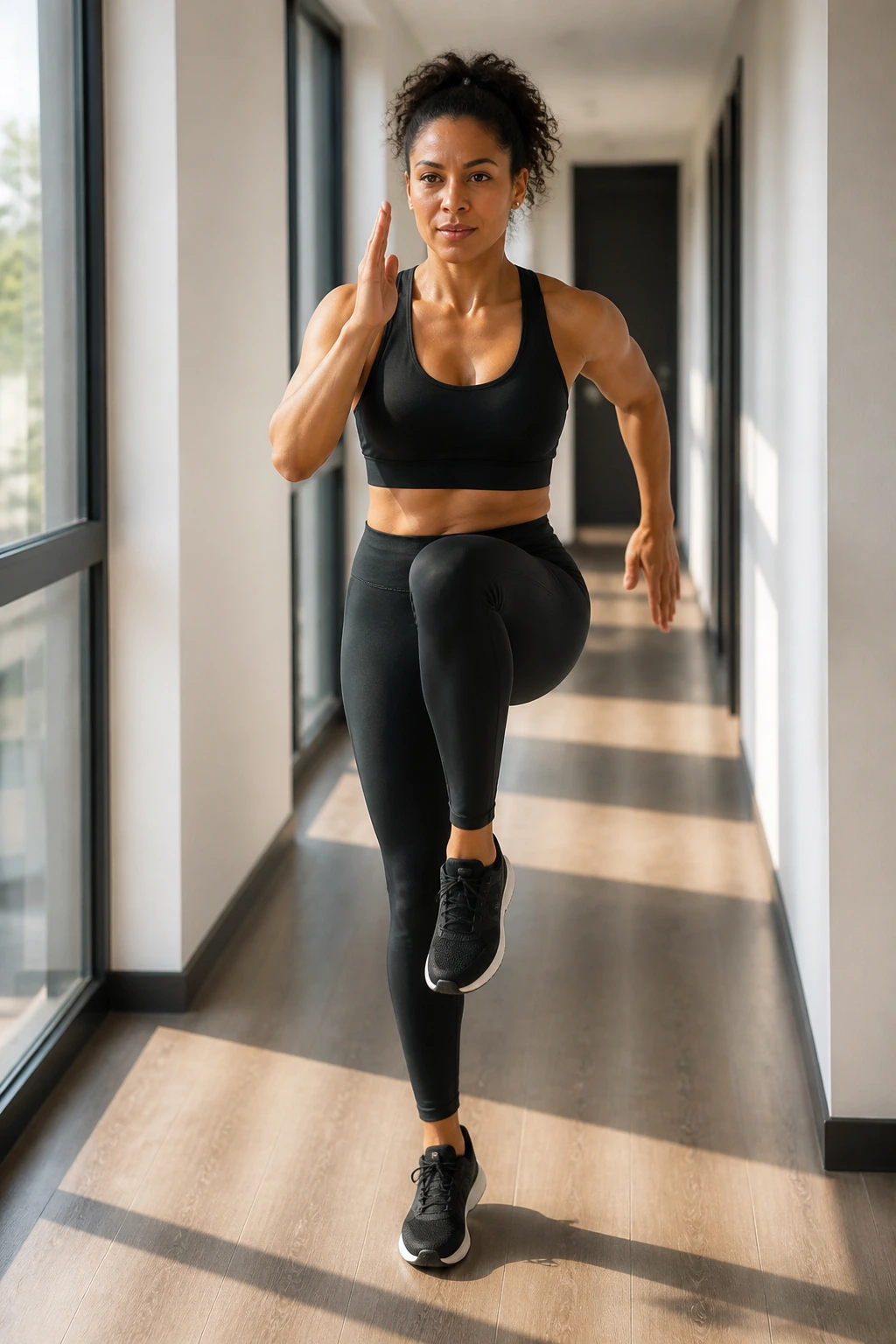
Not every cardio session needs jumping. Sometimes the smartest move is the boring one, and marching with purpose can fill that gap beautifully.
Lift the knees to about hip height if that feels fine, swing the arms hard, and keep the pace steady for 45 seconds on, 15 seconds off. Repeat for 10 to 15 minutes. Add cross-body reaches or side steps if you want a little more variety without adding impact.
How to Make Marching Count
Stand tall. That matters more than people think. If you slouch, the work disappears into your lower back and hips instead of lighting up your whole body.
- Keep your core lightly braced
- Drive the elbows back, not just forward
- Land softly through the whole foot
- Alternate with side taps every other minute
This is the workout I’d hand to someone who wants cardio but hates jumping. It’s also the one I’d use on a day when my legs feel flat and I still want to do something useful. No drama. Just steady work.
7. Stationary Bike Hill Climb
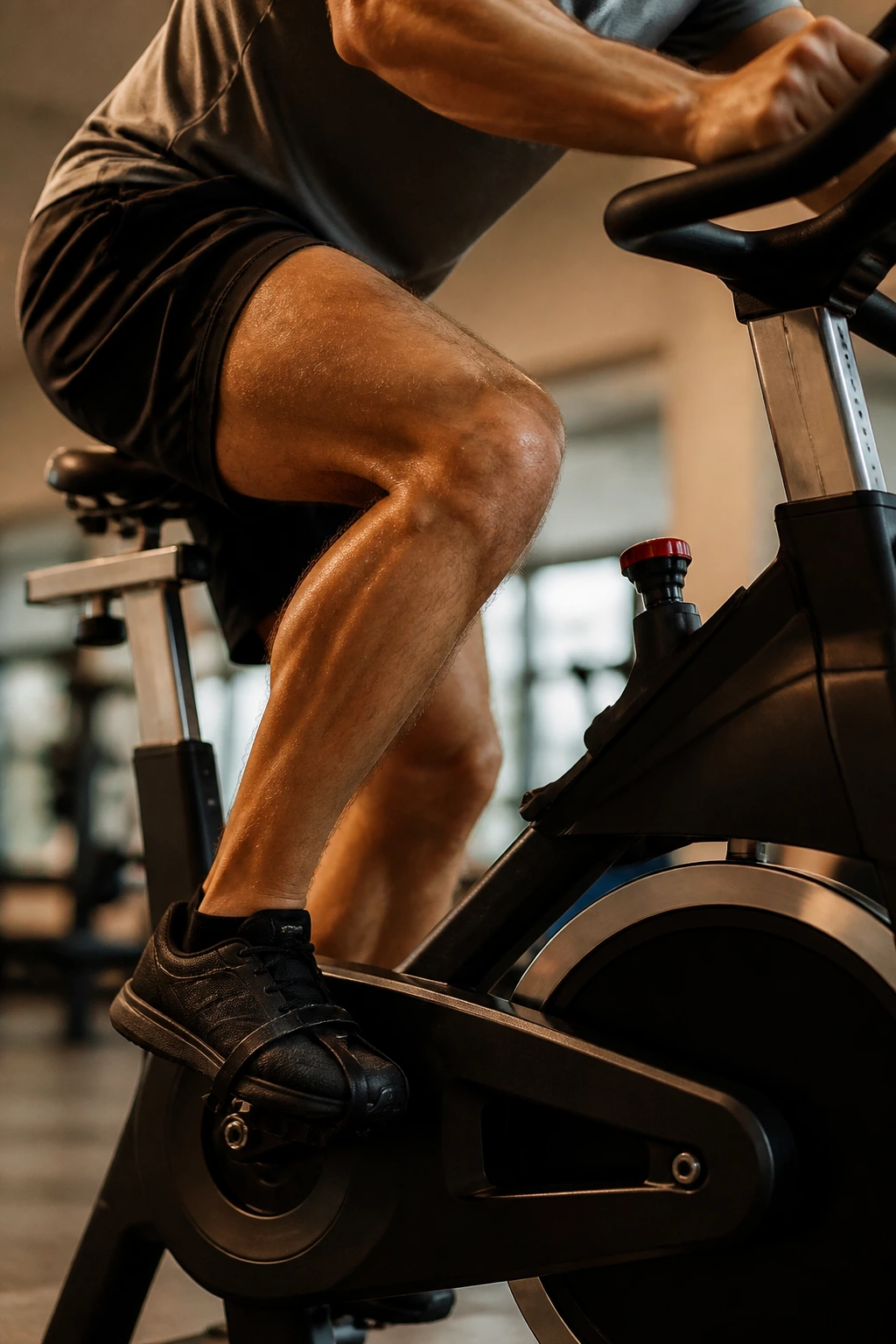
A stationary bike is rainy-day gold because it lets you go hard without pounding your joints. The hill-climb version is simple: start easy, then add resistance every minute or two until your breathing turns heavy, hold it there, and back off only when you need to.
Aim for 20 to 30 minutes if you want a full session, or use a tighter 12-minute block when time is short. A steady cadence in the 70 to 90 rpm range usually feels smooth, but the exact number matters less than the feel. Your legs should work. Your hips should stay quiet.
The Part Most People Miss
Seat height matters. If the saddle is too low, your knees end up jammed. Too high, and your hips rock side to side. You want a slight bend in the knee at the bottom of the pedal stroke.
A hill-climb ride can look like this:
- 3 minutes easy
- 4 minutes moderate resistance
- 3 minutes hard resistance
- 2 minutes easy
- Repeat once if you still have gas
It’s a clean workout. No jumping, no floor space, no excuses about the weather.
8. Treadmill Incline Walk
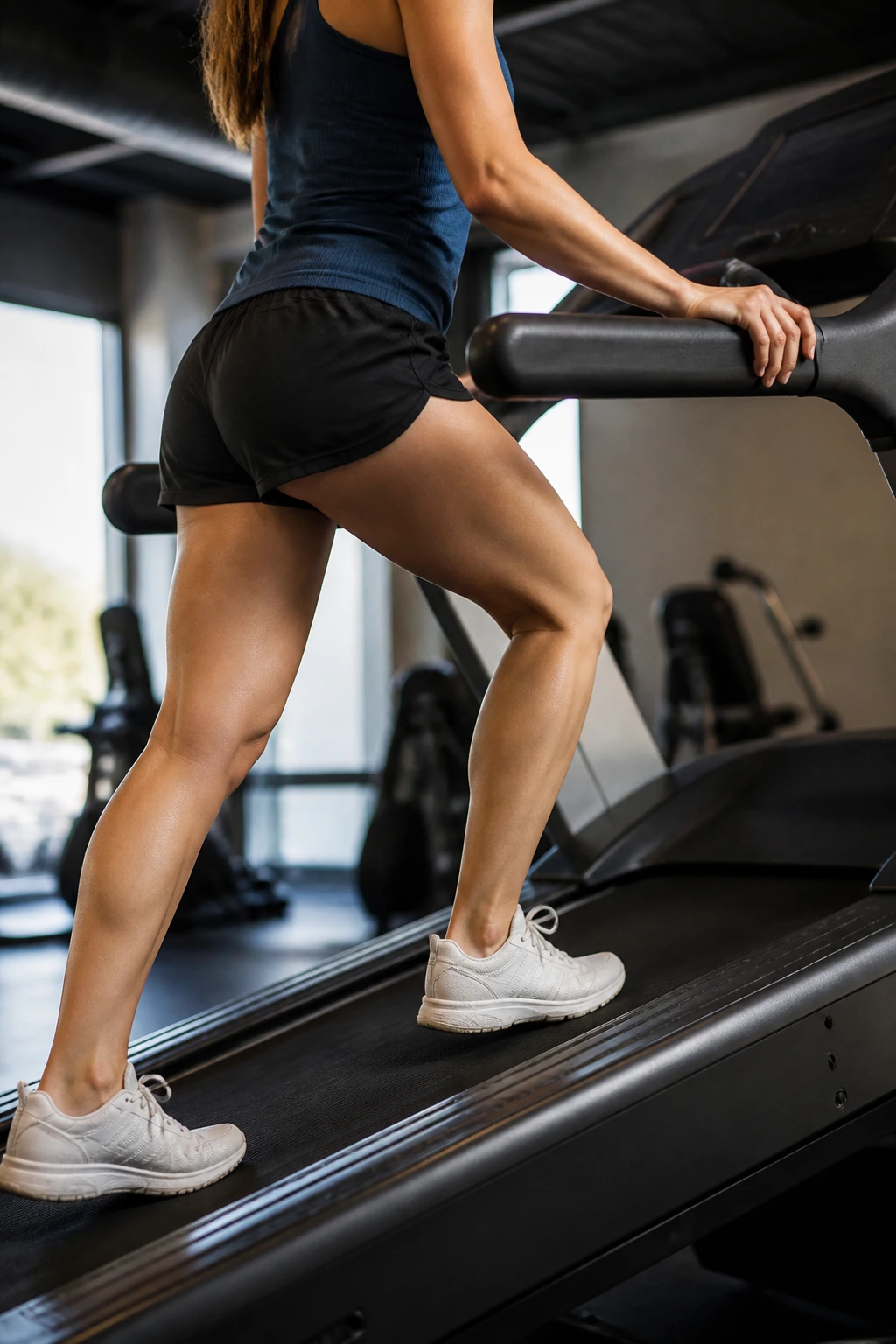
Running is not the only way to earn a sweaty shirt indoors. A treadmill incline walk can push your heart rate surprisingly high, and it’s easier on the joints than pounding out a run.
Set the incline between 4% and 10% and walk at a brisk pace, often somewhere between 2.5 and 3.5 mph depending on your stride and fitness. If you can talk in short phrases but don’t want to chat much, you’re in the right zone. Push the incline before you chase speed.
Why the Incline Matters
A steep walk pulls more from the glutes and calves than flat walking does. It also makes your posture matter, because leaning on the rails steals the work from your legs.
Keep your chest lifted and your stride natural. Don’t hang on unless you need a quick reset. If you do use the rails, use them lightly for balance, not for support.
A simple structure works well:
- 5 minutes easy
- 10 minutes at moderate incline
- 5 minutes at higher incline
- 5 minutes cool-down
It feels straightforward, and that’s part of its charm. Quiet, efficient, and tough in a way that sneaks up on you.
9. Step-Ups on a Sturdy Bench
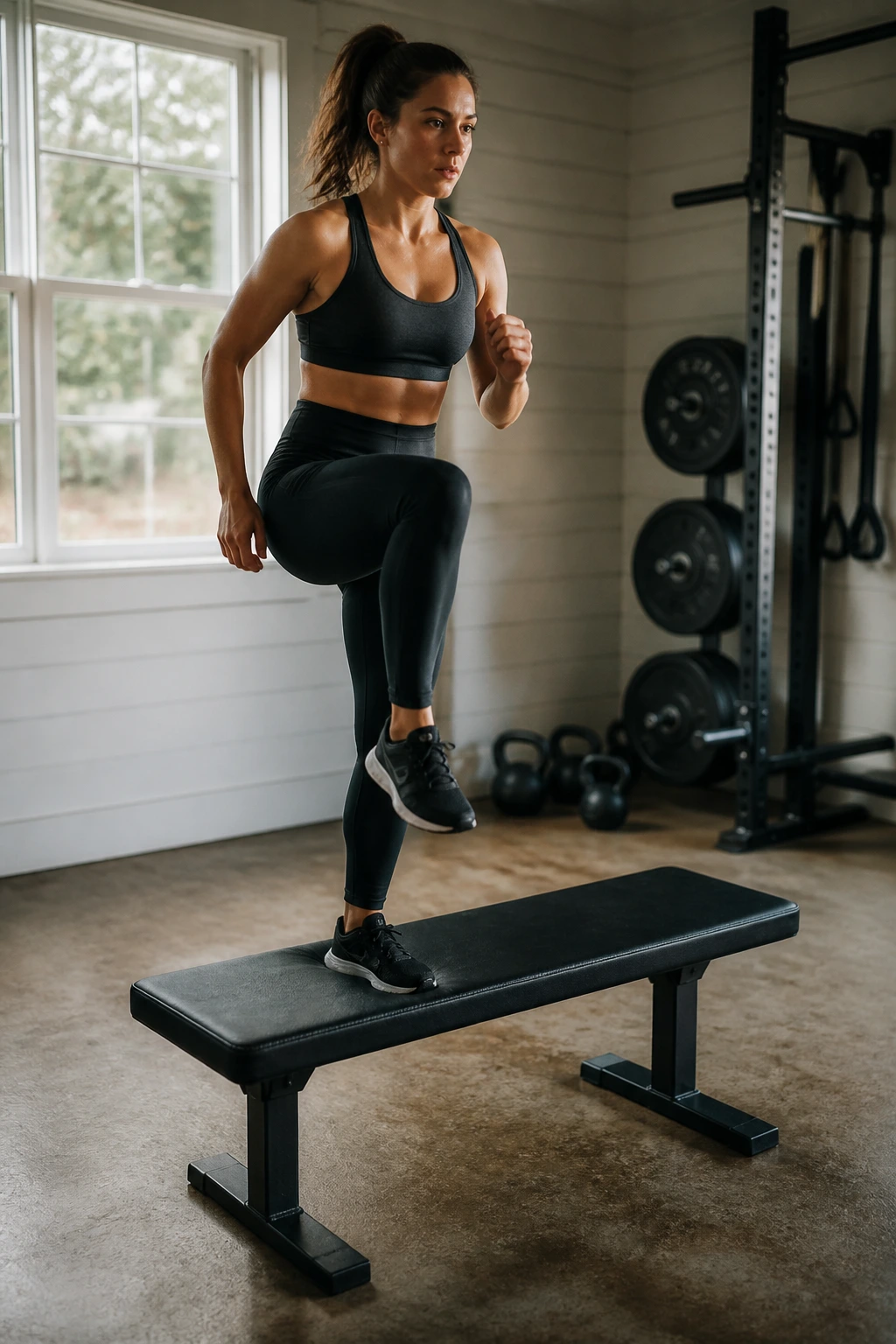
Simple. Brutal. Efficient.
Step-ups turn a bench, box, or stable stair into a full-cardio tool. Use a surface that lands around 12 to 18 inches high, step one foot up, bring the other foot to meet it, then step back down under control. Alternate the lead leg every rep or every set.
A 45-second work interval with 15 seconds of rest will do a lot here. Add knee drive at the top if you want more speed and more hip work. Hold light dumbbells only after the basic pattern feels smooth.
The Detail That Saves Your Knees
The box should not wobble. If it shifts at all, stop and fix that first. A sloppy surface turns a good exercise into a twisted-ankle story nobody wants.
Use these cues:
- Whole foot on the step
- Soft touch on the way down
- Tall chest at the top
- Quiet landing every single rep
This one hits the quads and glutes harder than most people expect, but the heart rate climbs too. That combo makes it a nice rainy-day choice when you want cardio with a little leg strength mixed in.
10. Low-Impact Aerobic Kickboxing
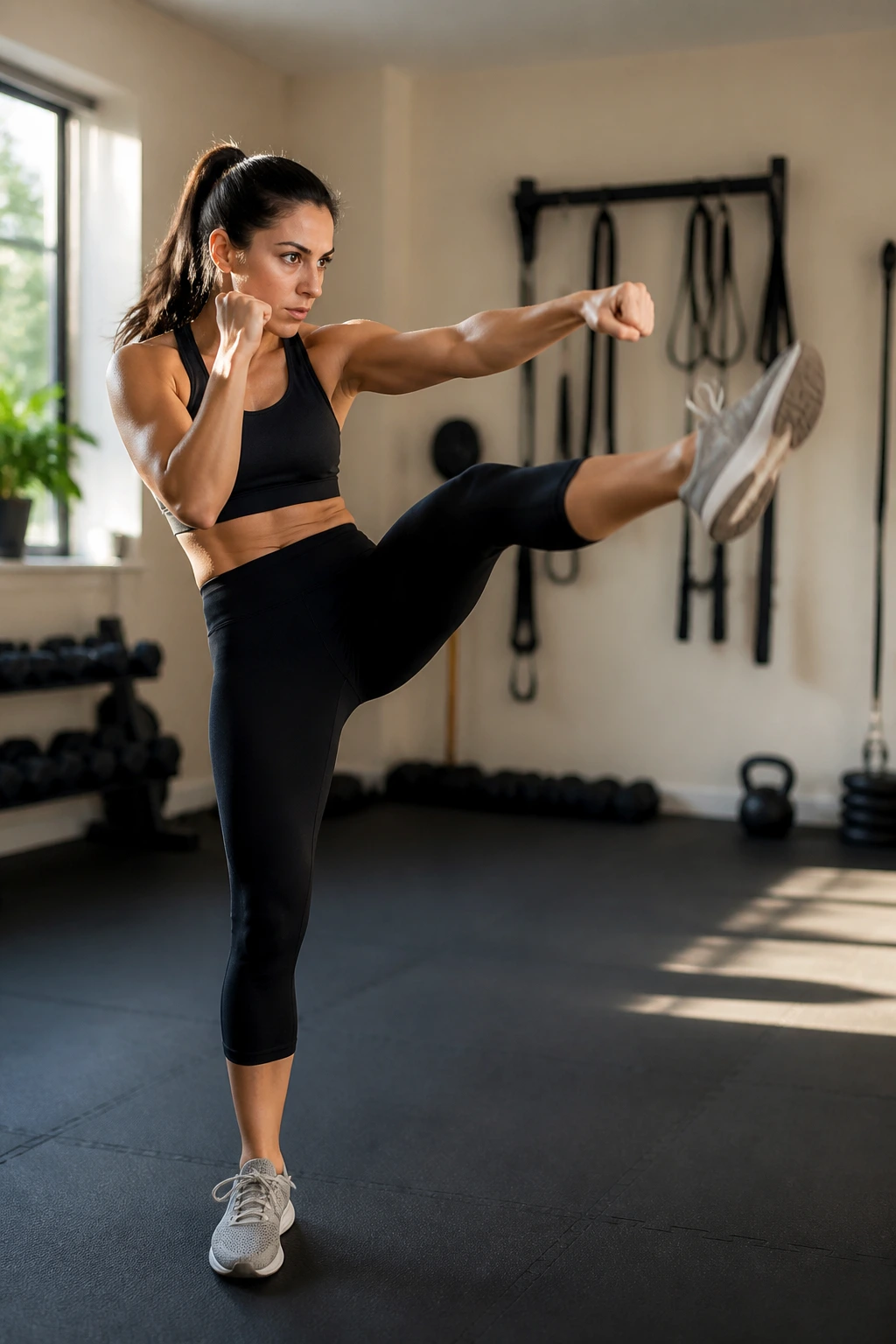
The room gets warm fast with this one.
Low-impact kickboxing gives you the punch-and-kick feel without the jumping. Throw jabs, crosses, front kicks, knee pulls, and elbow strikes in combinations that last 30 to 60 seconds each. Keep one foot near the floor at all times if you want the quiet version. That makes it friendlier for apartments and tired joints.
How to Keep It Moving
Don’t chase power on day one. Chase flow. A good combo feels clean before it feels hard.
Try this rhythm:
- 1 minute jab-cross
- 1 minute jab-cross-front kick
- 1 minute knee pulls and side steps
- 1 minute recovery march
- Repeat 3 to 5 times
The beauty of kickboxing is that it lets you work hard without the awkward stop-start feel some routines have. Your hands stay busy. Your legs stay awake. Your breathing climbs where it should.
And if you need more intensity, turn the recovery march into a fast march. No bouncing required.
11. Rowing Machine Intervals
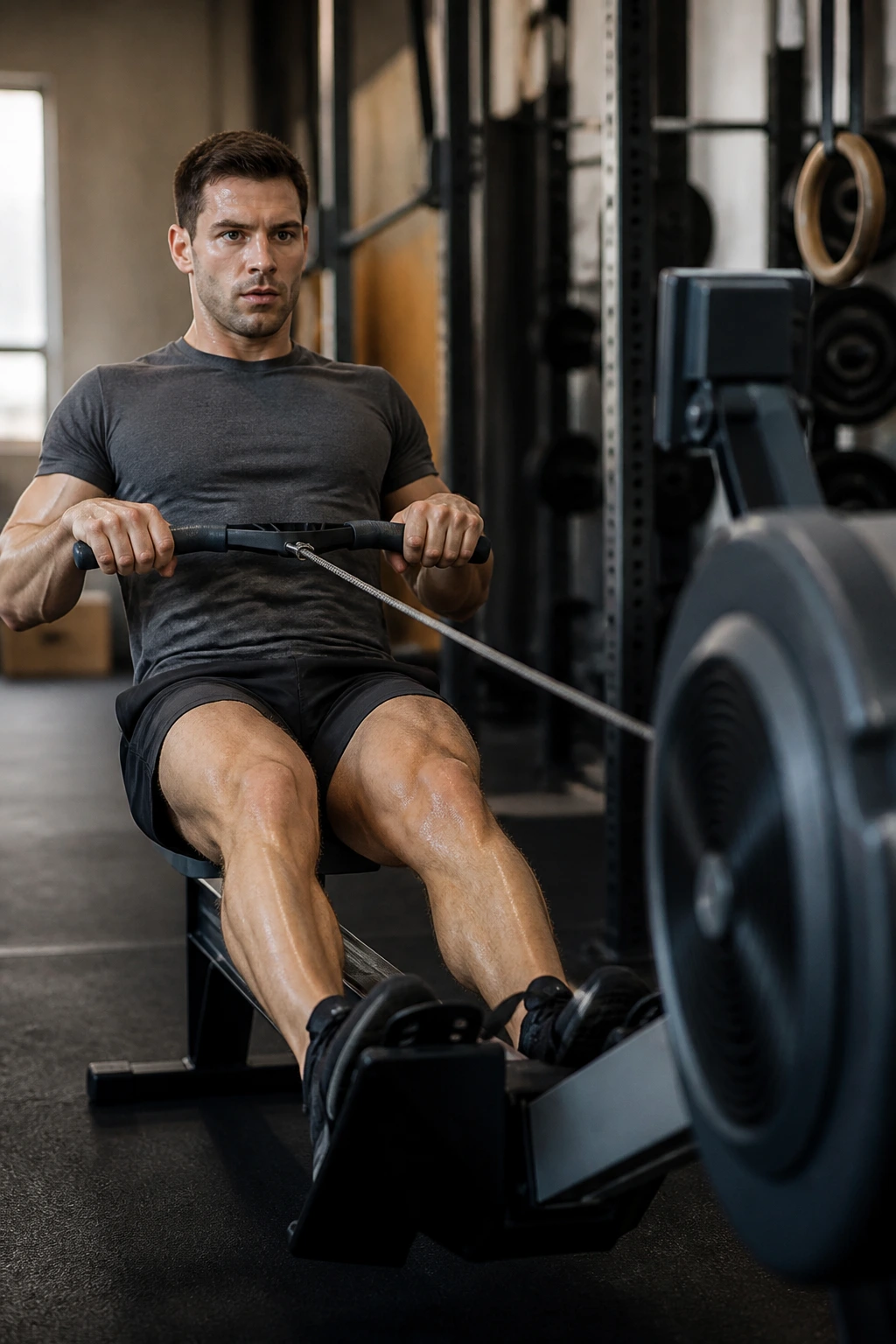
A rowing machine is one of the few cardio tools that makes your legs, back, and lungs all earn their keep at the same time. The catch is that the stroke has to be clean: legs first, body swing second, arms last.
Try 1 minute hard, 1 minute easy for 10 to 15 rounds, or row 500 meters at a strong pace with 90 seconds of recovery between repeats. The exact number is less important than keeping your strokes smooth. If you yank the handle with your arms first, you’ll gas out fast and miss the point.
What Good Rowing Feels Like
The drive should feel like a powerful leg press. The handle comes back because your legs push, not because your shoulders yank.
A beginner-friendly setup usually works best with a moderate resistance setting rather than the heaviest one on the machine. Heavy drag can make your stroke sloppy and your lower back grumpy. Clean pulls, calm recovery, consistent rhythm. That’s the recipe here.
If your breathing gets ragged, shorten the interval before you shorten the effort. One minute can be plenty.
12. Indoor Cardio Skater Steps
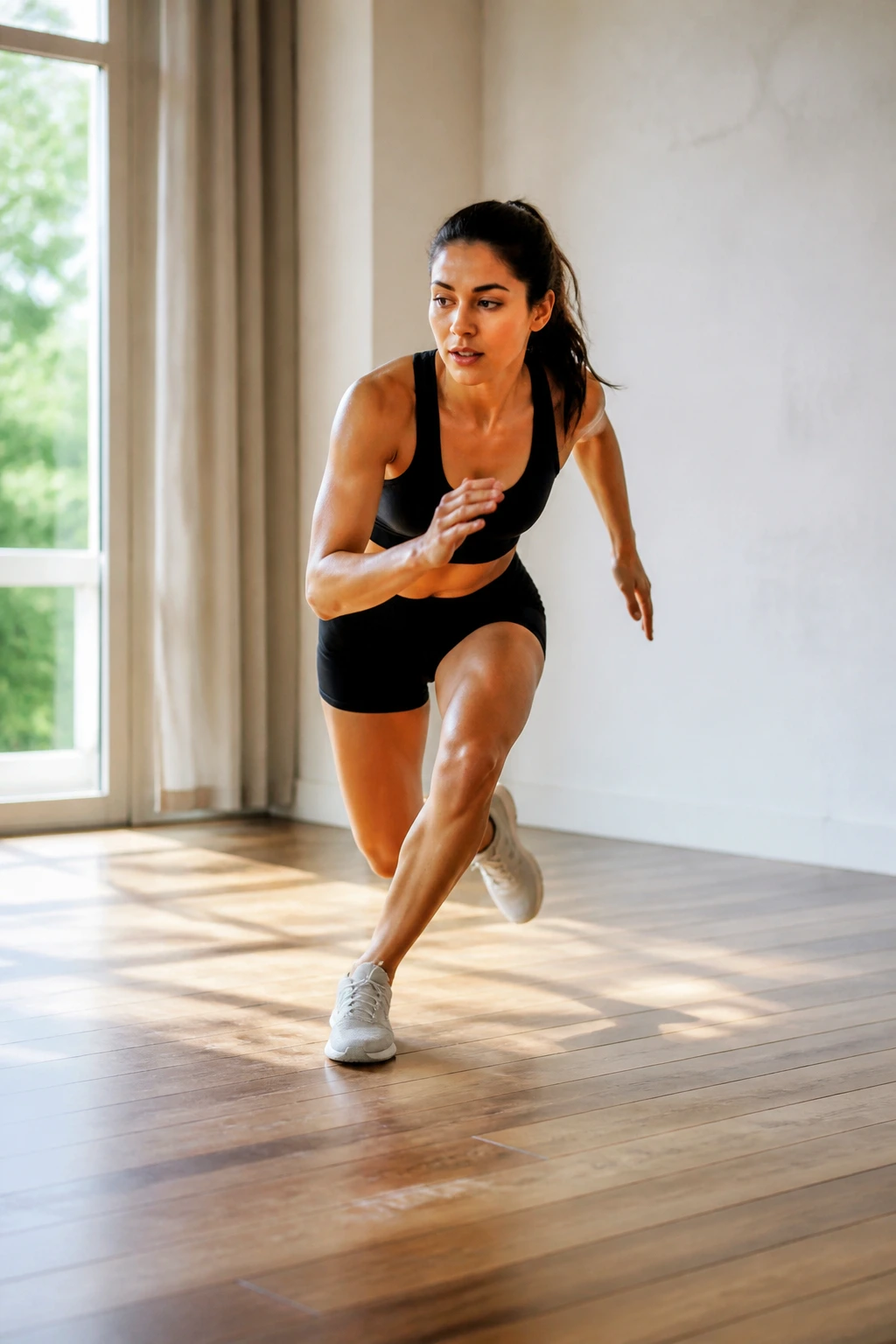
Want cardio that wakes up your hips too? Skater steps do that without needing a gym floor or a giant amount of space.
Step or hop side to side, land on one foot, and let the free leg sweep behind you. Work for 30 to 40 seconds, rest for 20, and repeat. The low-impact version is a wide step with a soft tap. The higher-intensity version adds a small hop and a bigger reach.
How to Get the Most From It
The move only works if you stay in control. Let the chest tip forward slightly, keep the landing soft, and do not let the knee cave inward. That inward collapse is what makes the exercise feel messy.
A clean set can look like this:
- 30 seconds skater step right to left
- 30 seconds fast feet in place
- 30 seconds skater step with a reach
- 30 seconds easy march
- Repeat 4 times
This is one of my favorite rainy-day options because it breaks up the straight-ahead motion most people get stuck in. Side-to-side work wakes up muscles that walking and biking tend to ignore.
13. EMOM Bodyweight Cardio
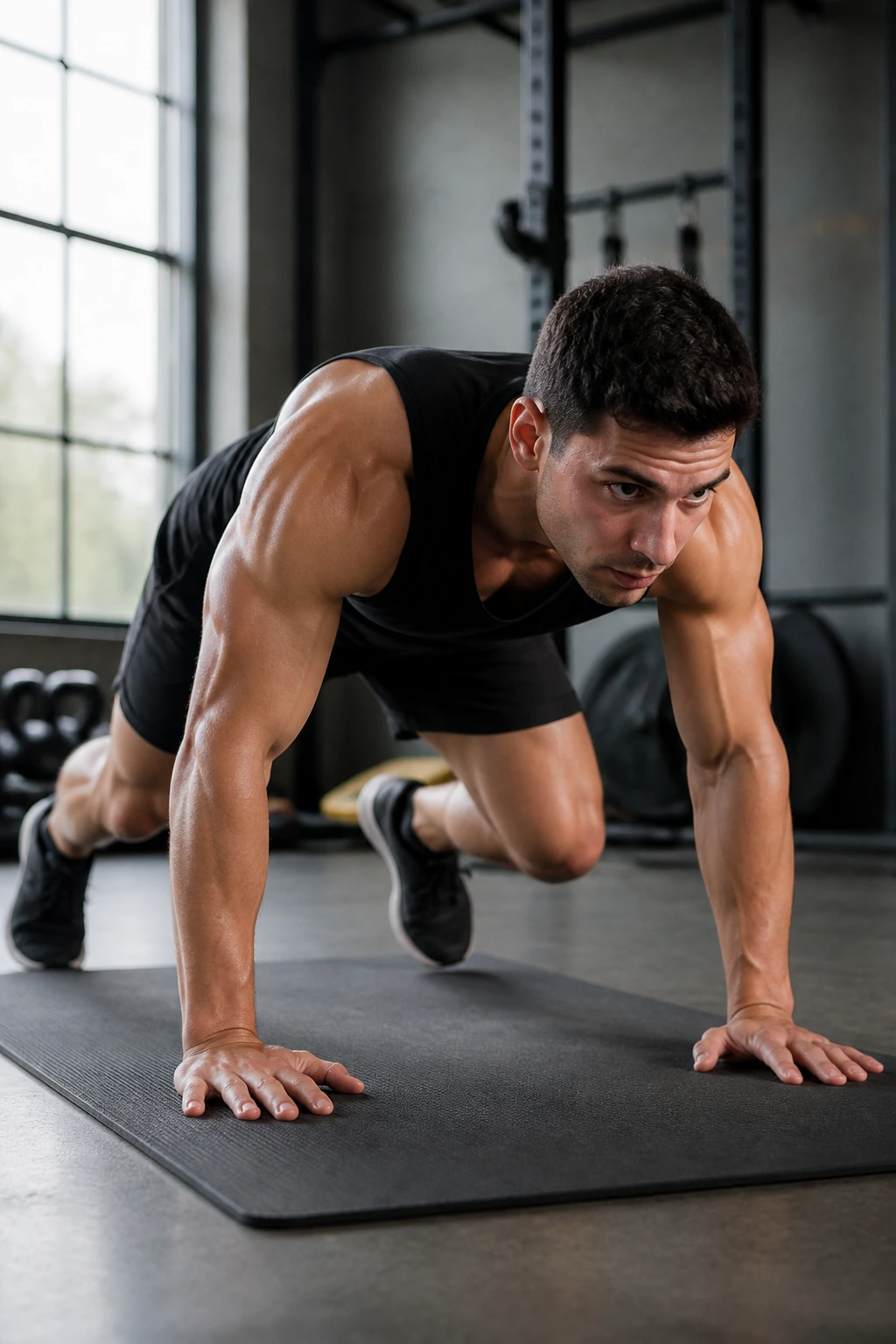
EMOM means every minute on the minute. You do a set amount of work at the top of each minute, then rest for whatever time is left before the next minute starts. The leftover time is the reward for moving with intent.
A clean 12-minute EMOM might be:
- Minute 1: 12 squat thrusts
- Minute 2: 20 mountain climbers per side
- Minute 3: 12 fast step-backs
- Repeat four times
That setup keeps the heart rate up without forcing you into one long, ugly grind.
Why EMOMs Feel Different
There’s a built-in deadline. That matters. You know the clock is coming back around whether you’re ready or not, so the pace stays honest.
Keep the work set short enough that you can finish with decent form and a little bit of breathing room. If you need 50 seconds to finish the reps, the workout is too hard for that day. Cut the reps down and keep moving.
A lot of people like EMOMs because they feel structured without being fussy. I do too. You can change the moves, change the length, and still keep the same clean rhythm.
14. Stair Climber Sessions
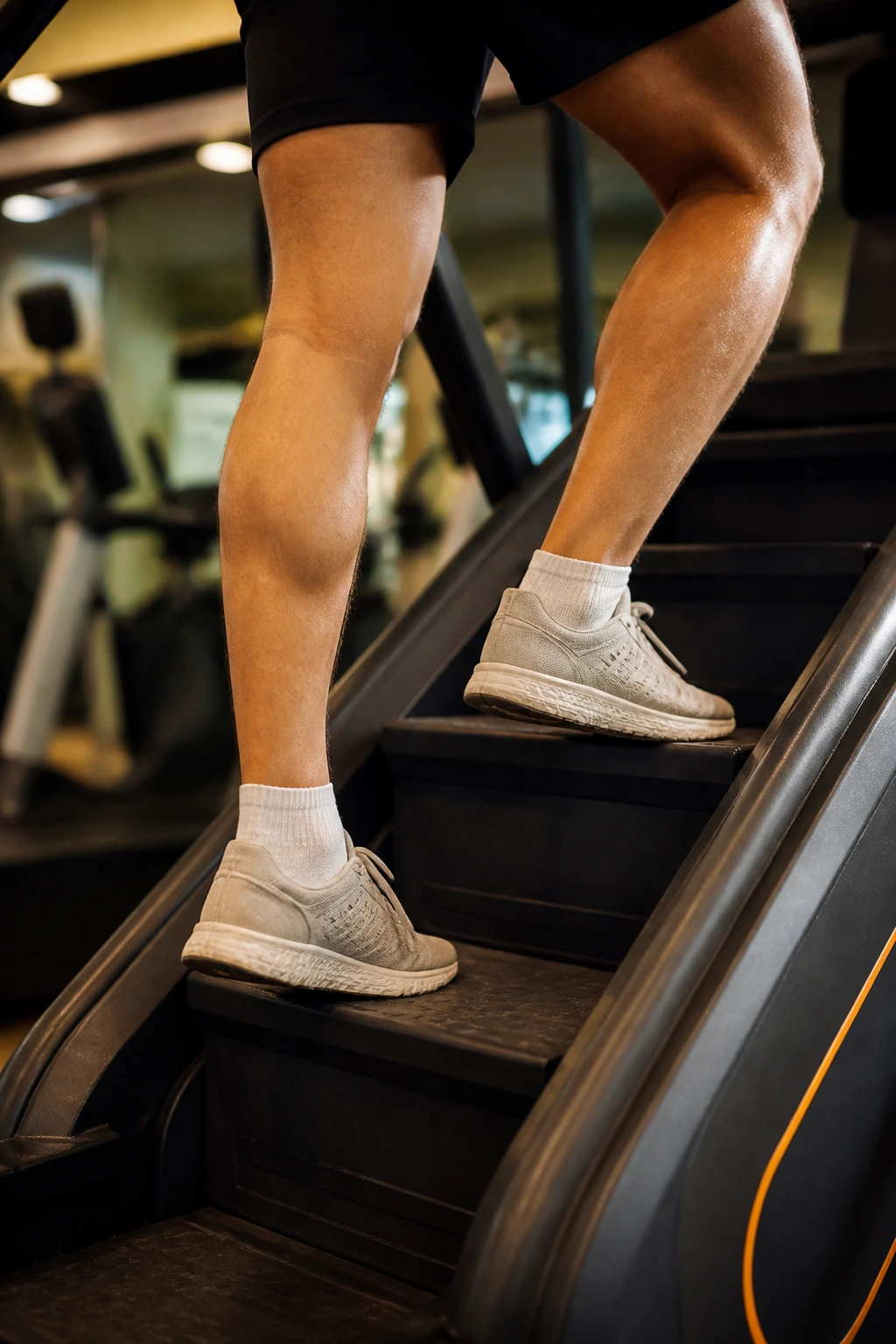
If your gym has a stair climber, rainy weather stops being a problem and starts looking like a free excuse to use one of the best conditioning machines in the room.
Start with 5 easy minutes, then alternate 1 minute hard and 1 minute moderate for 8 to 12 rounds. Finish with 2 or 3 minutes easy. Keep your whole foot on the step and resist the urge to lean heavily on the rails. Light hands, heavy legs.
The machine rewards steady pressure. If you bounce too much or half-step the pedals, your calves do most of the work and your hips check out. That’s not the goal.
A good stair-climber day feels like this:
- Breathing rises fast
- Legs load up gradually
- Sweat shows up early
- Recovery feels earned
You don’t need a wild resistance number. You need a setting that forces you to keep climbing without losing your shape.
15. Follow-the-Beat Cardio Game
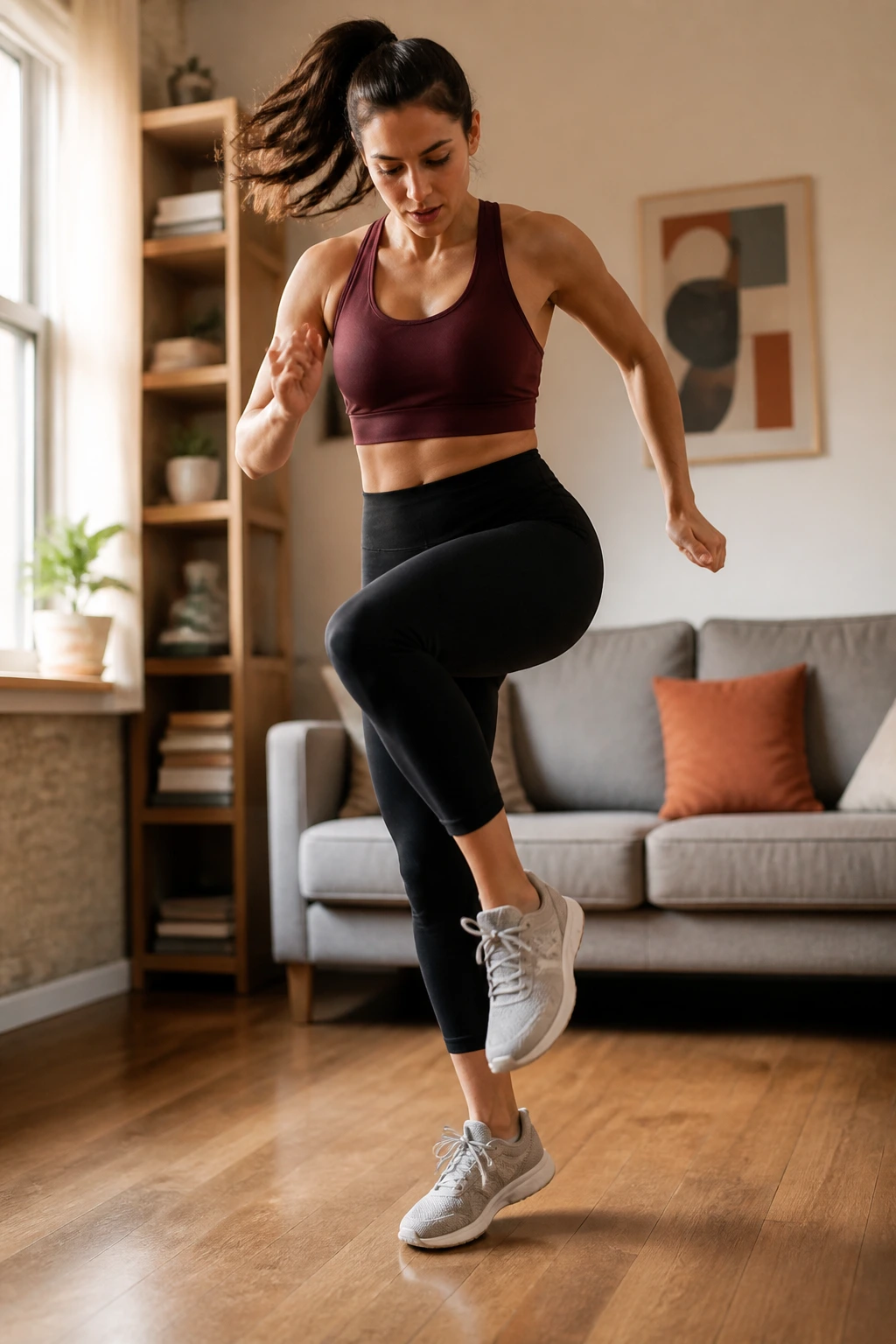
Counting reps can get dull. Following the beat gives you a reason to keep moving without staring at a spreadsheet of sets and intervals.
Pick 3 to 5 songs and assign a move to each part of the track. Chorus might mean fast feet. Verse might mean squat taps. Bridge might mean shadowboxing or a quick march. The song becomes the timer, which feels less sterile than a beep every 20 seconds.
How to Build the Playlist
Use songs with clear sections and a strong drum line. If the music shifts in energy, your effort shifts with it.
- Loud chorus: hard effort
- Quiet verse: moderate effort
- Bridge: recovery march
- Final chorus: all-out finish
This style works well when you want cardio but your brain is tired of thinking about cardio. It’s also nice for kids or roommates who like to join in without understanding interval training. Everyone can keep up with “move harder when the chorus hits.”
That little bit of play changes a lot.
16. Medicine Ball Slam Circuit
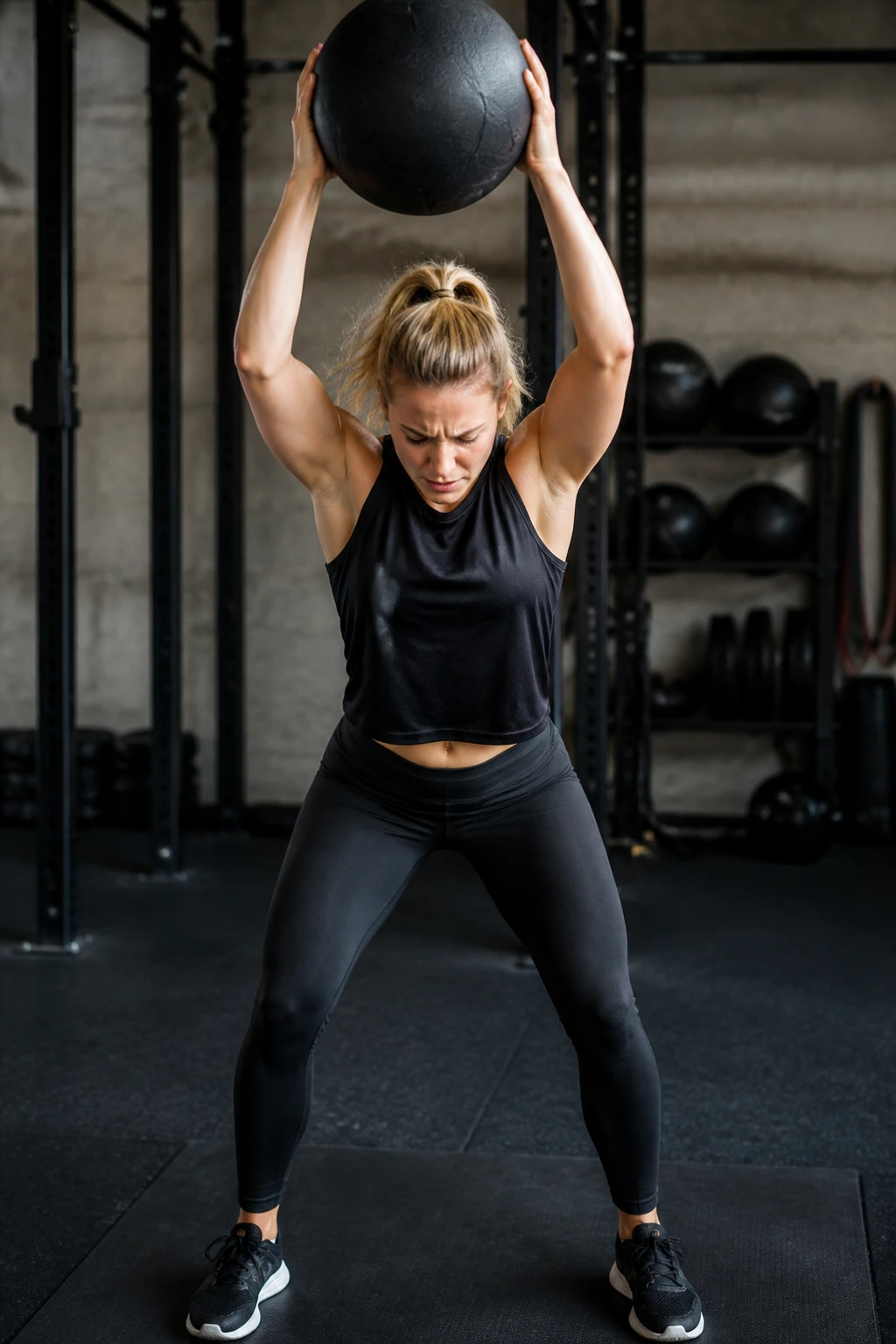
Pick up the ball and throw it down hard. That’s the whole point, and it’s a good one.
Use a 6- to 12-pound medicine ball if you’re new, stand with feet about shoulder-width apart, lift the ball overhead, then slam it into the floor with force. Catch the rebound or reset it from the floor and repeat for 20 to 30 seconds. Pair slams with squat-to-press reps, marching in place, or dead-stop carries if you want a fuller circuit.
What to Watch For
Use a mat or a forgiving floor surface if possible. A hard tile floor and a cheap ball can turn into a loud mess fast.
Keep your core tight and your back neutral when you lift. The power should come from the whole body, not from yanking the ball with a bent spine. Slams are satisfying because they let you be aggressive in a safe lane. That matters on rainy days when the whole house feels stuck.
A simple three-move round looks like this:
- 30 seconds slams
- 30 seconds bodyweight squats
- 30 seconds march or step-touch
- Rest 30 seconds
- Repeat 4 to 6 times
It’s loud, honest, and effective. I like that.
17. Burpee Ladder

Burpees have a reputation for a reason. They’re the kind of move that gets your heart racing before your brain has time to object.
A ladder makes them more manageable. Start with 1 burpee, rest briefly, then do 2, then 3, all the way up to 8 or 10 if you’re fit enough, and then come back down. Or keep it smaller and repeat 1 through 5 for three rounds. The point is controlled suffering, not collapse.
That sounds dramatic because burpees are dramatic.
If full burpees feel like too much, step your feet back instead of jumping them. You still get the down-and-up pattern, which is where most of the cardio effect lives. Keep your hands planted under your shoulders and your landings soft. Sloppy burpees are where wrists and backs get cranky.
One rep matters. The last good rep is better than three broken ones.
18. Cardio Core Flow

Can core work count as cardio? It can, if you string the moves together without long breaks and keep the transitions tight.
A cardio core flow might include bear crawls, plank jacks, dead bug marches, mountain climbers, and hollow holds. Work for 40 seconds, switch for 20, and keep the whole chain moving for 12 to 18 minutes. That’s enough to get sweaty without turning the session into a jump-heavy mess.
Keep the Transitions Short
The point is flow, not perfection. You want the next move to begin before the body cools off.
Try this pattern:
- 40 seconds bear crawl forward and back
- 40 seconds plank jack hold
- 40 seconds dead bug march
- 40 seconds mountain climbers
- Repeat 3 times
This feels different from a standard bodyweight circuit because your midsection has to stay awake the entire time. Your shoulders will notice too. So will your breathing. It’s a solid option when you want indoor cardio that feels athletic instead of chaotic.
19. Mini-Trampoline Rebounds
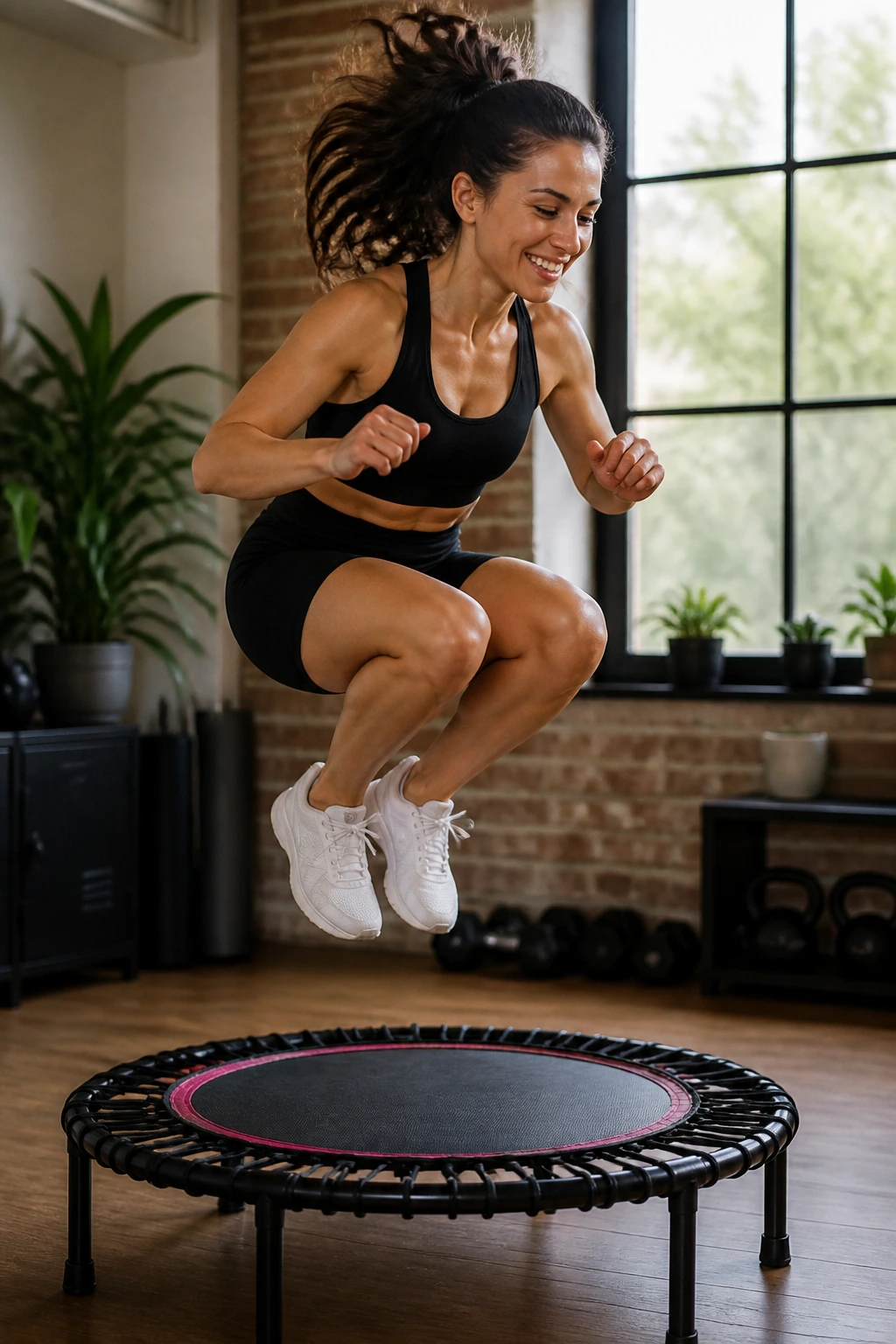
Rebounding looks easy until ten minutes pass.
A mini-trampoline gives you a low-impact way to keep the heart rate up with less pounding than running or jumping on a hard floor. Start with tiny bounces, jog-in-place steps, or side-to-side shifts for 1 to 2 minutes at a time, then rest for 30 seconds and repeat. The surface does a lot of the work for you, but your core still has to stay engaged to keep the movement tidy.
Why It Works for Rainy Days
It’s one of the few cardio options that feels almost playful. That matters when the weather makes the whole day feel boxed in.
Use a model with a stable frame and secure feet. If the mat feels loose or the frame wobbles, fix that before you try to speed up. A good rebound session can also pair well with arm swings, boxing jabs, or marching patterns, so the session never has to be one-note.
- Best when you want low-impact movement
- Best in a room with enough ceiling height
- Best kept small and controlled at first
Quiet? Not always. Fun? More than most people expect.
20. Indoor Cardio Living-Room Circuit
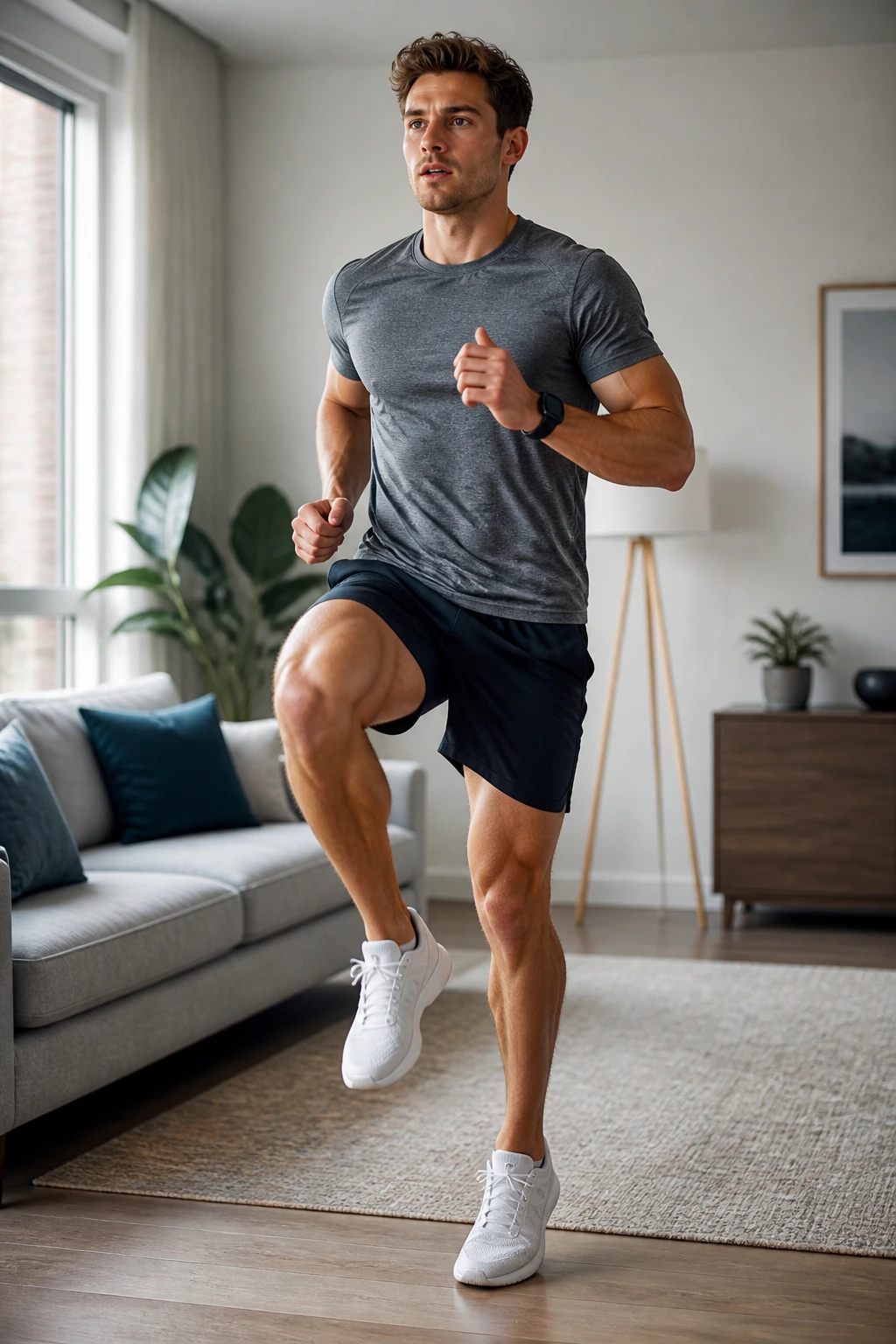
If I had to hand someone one rainy-day fallback, this would be it. No gear. No big setup. No special room. Just a timer, a little floor space, and five moves that work together.
Use 40 seconds on, 20 seconds off for each move, then repeat the whole circuit 3 or 4 times:
- March with arm drive
- Squat to knee raise
- Step jacks
- Plank shoulder taps
- Fast feet in place
That mix gives you an easy ramp up, a leg load, a side-to-side pulse, a bit of core work, and a finisher that wakes everything up again. It is not fancy. It does not need to be.
How to Finish Strong
Start the first round a little easier than you think you should. That leaves room to push later, which is what keeps the last round from falling apart. If your breathing gets rough, keep moving but slow the speed before you stop the circuit altogether.
Keep a timer nearby. Keep a towel nearby too. Those two things sound small, but they’re the difference between “I meant to work out” and “I got it done.” On a rainy day, that’s the whole game.
