



Your strong side is probably stealing work. That is the quiet problem behind a lot of stubborn strength gaps, wonky squats, one-sided shoulder aches, and the annoying feeling that one leg or arm is always doing a little more than its fair share.
Unilateral workouts make that cheating obvious. One leg. One arm. One side at a time. No hiding behind a barbell, no letting the better hip twist the rep into something it can survive, no shrugging off the difference because the set still got done.
That is why single-leg and single-arm training earns a place in real strength plans, not just rehab warm-ups. Done well, it can help clean up side-to-side strength gaps, improve balance, tighten up movement, and show you exactly where your body leaks force. Done badly, it becomes a circus of wobbling, momentum, and ego lifting. Not helpful.
Use the weaker side first. Match the stronger side to the same reps, not the other way around. And if one side keeps shifting, twisting, or shortening the range, don’t ignore that—it’s data. Start with the movements that make the lie impossible to miss.
1. Bulgarian Split Squat
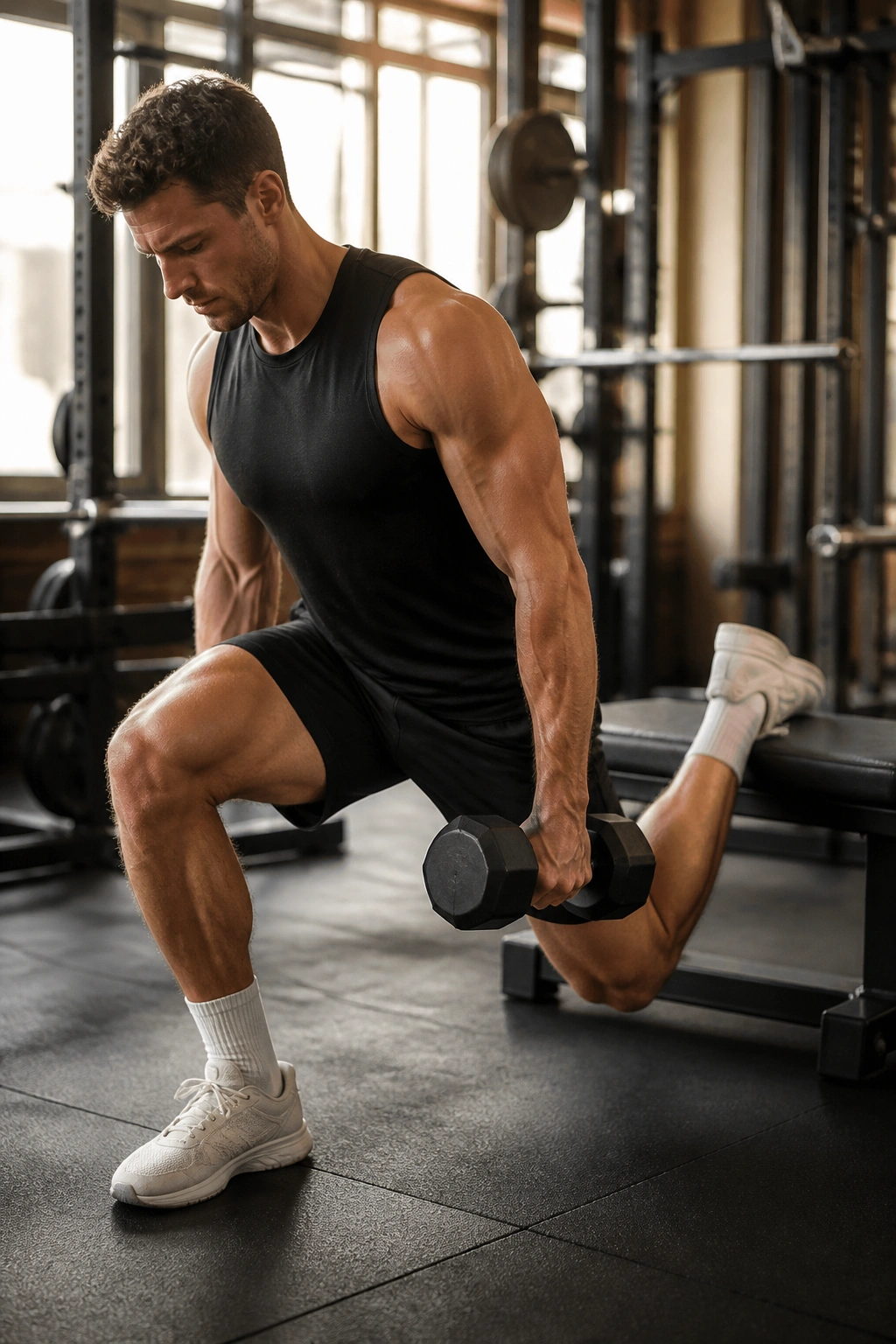
This is the blunt instrument of lower-body asymmetry work. One foot stays planted, the other rides behind you on a bench, and suddenly your quads, glutes, and hip stabilizers have nowhere to hide.
The reason it works so well is simple: the front leg has to produce nearly all the force while the rear leg contributes almost none. That makes side-to-side gaps show up fast. If your left leg drops deeper, your right knee caves less, or one side burns out two reps earlier, the split squat tells the truth better than most other leg exercises.
Why It Exposes Side-to-Side Gaps
The front foot should feel like a tripod: big toe, little toe, heel. If you feel pressure collapse into the inner edge of the foot, the knee usually follows. If you stand too narrow, the movement turns into a balance drill instead of a leg builder.
- Use a torso angle that stays slightly forward, not folded over.
- Lower for 2 to 3 seconds and pause for 1 second at the bottom.
- Stop the set when the front knee starts to wobble inward or the hips twist.
- Start with 2 to 4 sets of 6 to 10 reps per side.
Best tip: let the weaker side set the rep count for both sides. The stronger side does not get bonus reps. That habit alone keeps this exercise honest.
2. Single-Leg Romanian Deadlift
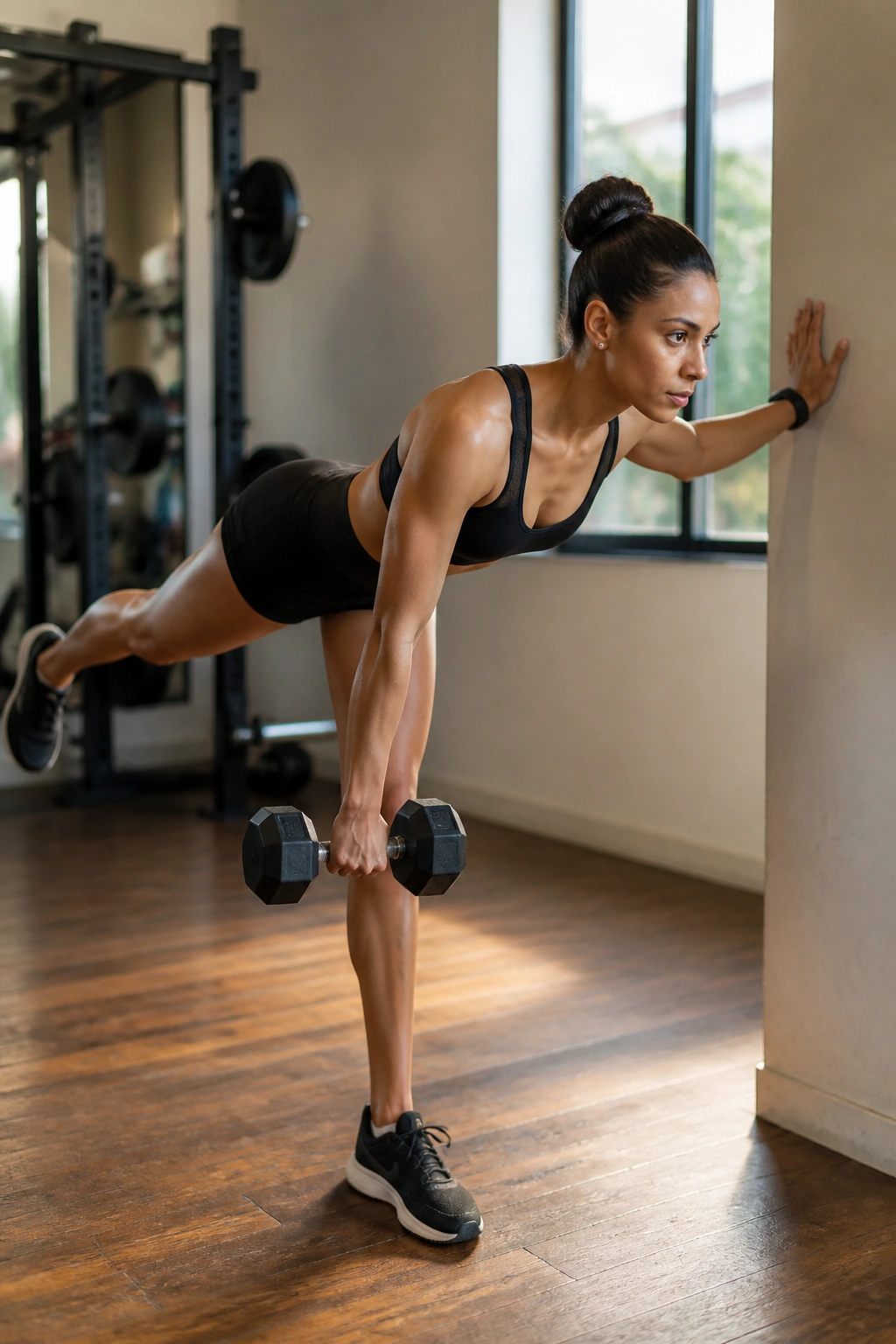
Why does one hamstring always feel tighter on hinges? Usually because one hip is rotating or one foot is gripping like a claw while the other side stays clean. The single-leg Romanian deadlift exposes that fast.
This movement is less about touching the floor and more about keeping the pelvis square while the back leg reaches long. The standing leg has to stabilize the foot, knee, hip, and trunk at the same time. That’s a lot. If one side of your posterior chain is weaker, shakier, or less coordinated, you’ll know within a couple of reps.
What the Working Leg Should Feel Like
The hamstring should lengthen on the way down, then the glute should take over on the way up. If you feel the low back doing the heavy lifting, the load is too high or the hip hinge is drifting.
Use a dumbbell or kettlebell in the opposite hand of the working leg if balance is the main challenge. If balance is all you feel, lightly touch a wall or rack with the free hand until the hinge pattern settles down. That is not cheating. That is smart.
A clean rep looks quiet. The pelvis stays level, the spine stays long, and the back foot reaches behind you instead of spinning open.
3. Step-Up
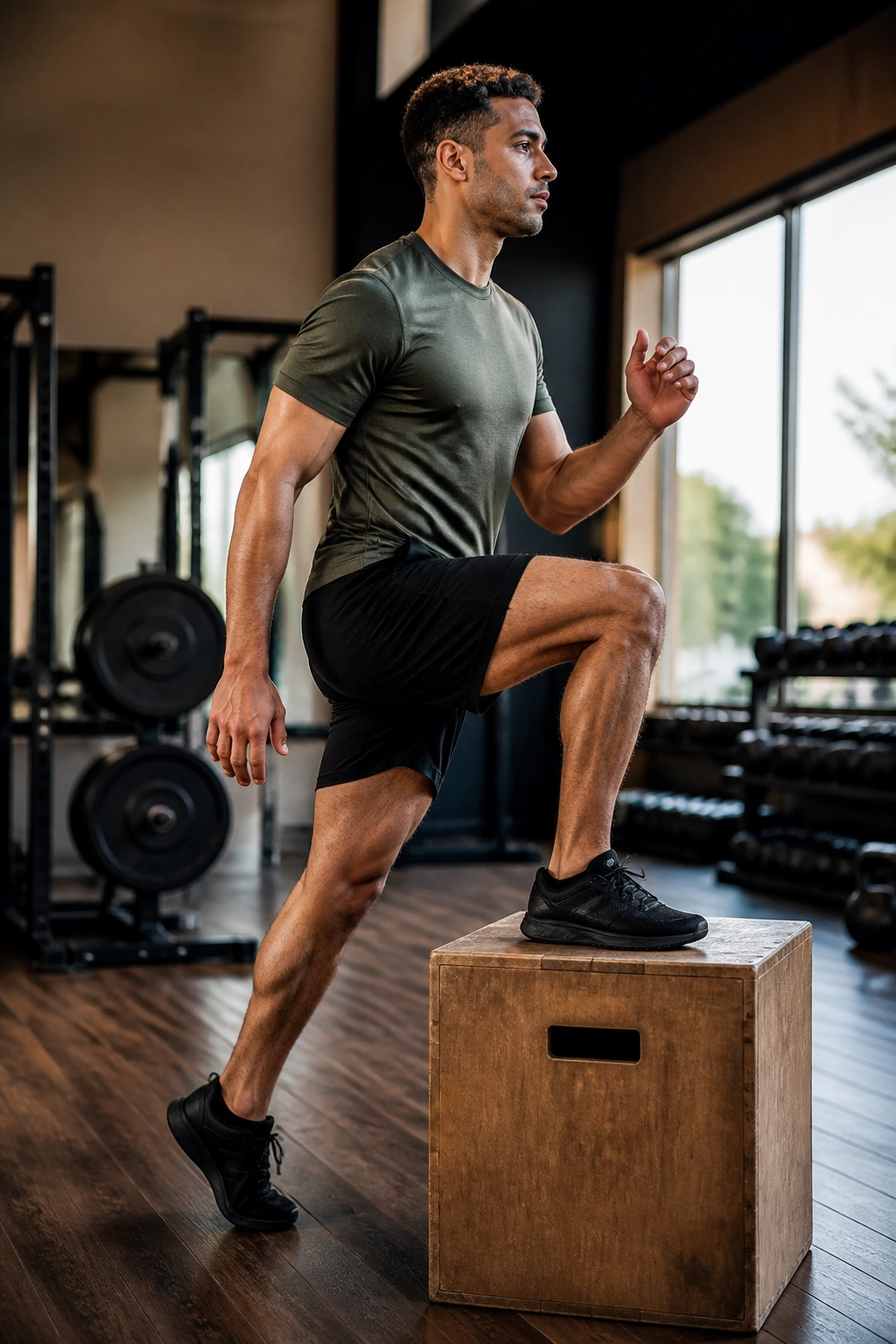
A staircase is a rude little mirror. If one leg pushes you up and the other just tags along, a step-up exposes it in seconds.
This is one of the easiest unilateral workouts to load well, and it carries over nicely to daily life because you are literally climbing against gravity. It also teaches the glute and quad of the working leg to finish the job without help from the trailing leg. That trailing foot wants to kick, bounce, and steal power. Don’t let it.
Pick a box or bench height that keeps the working thigh around parallel to the floor or a little below. Too high, and the exercise turns into a hip-flexor wrestling match. Too low, and you lose the point.
- Drive through the full foot on the box.
- Keep the torso tall, but not stiff.
- Lower under control; do not drop off the box.
- Use 2 to 3 sets of 8 to 12 reps per side before moving to heavier loading.
If one side always needs a little hop to finish the rep, that’s the side to train first.
4. Reverse Lunge
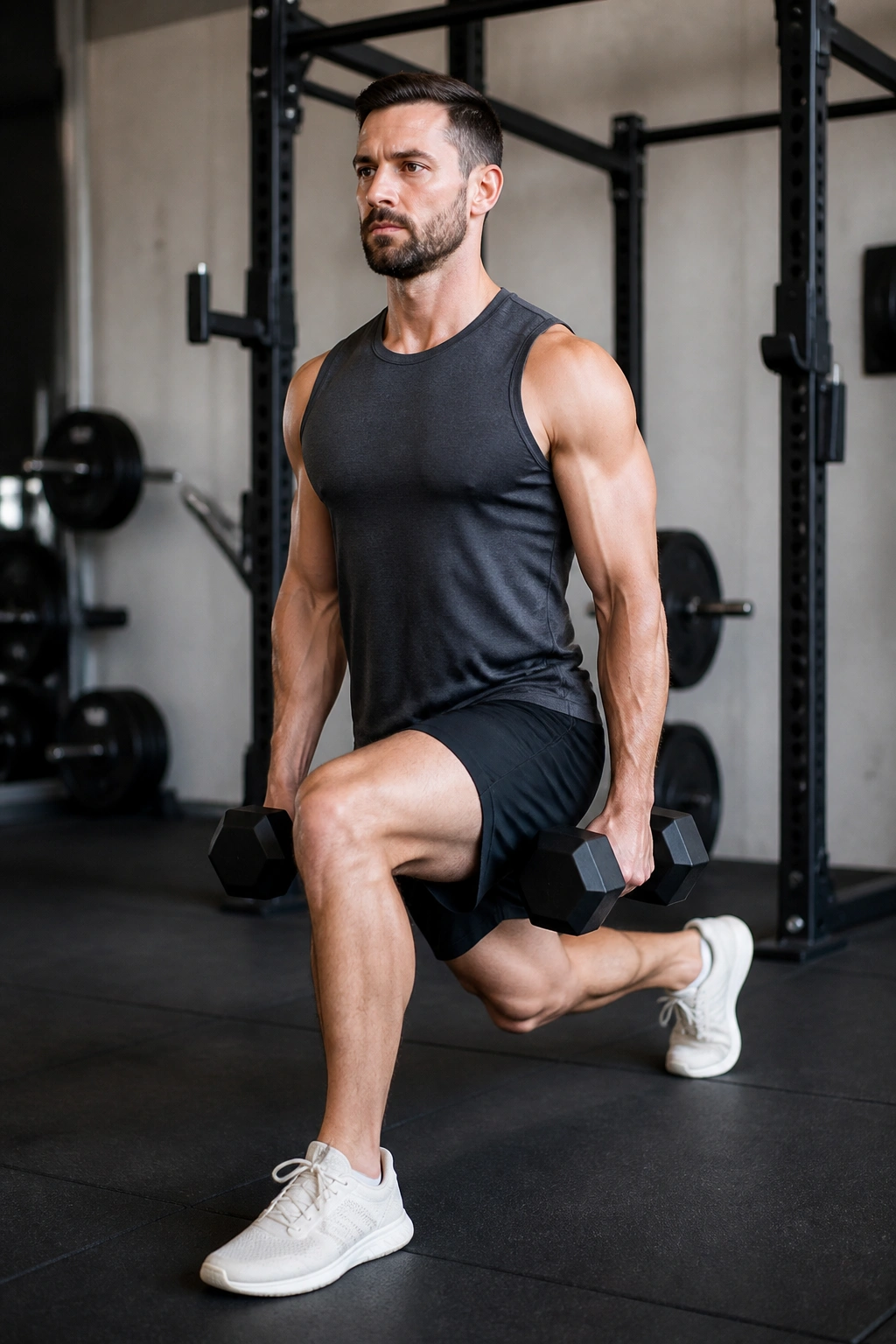
Forward lunges can feel messy. Reverse lunges are cleaner, calmer, and usually easier to own when you care about muscle imbalances.
The backward step removes some of the forward crash that makes people lose position in walking lunges. That means the front leg gets more time to work, the pelvis stays a little steadier, and you can actually see whether one side controls deceleration better than the other. It’s a quieter exercise, which is part of why I like it.
Use dumbbells at your sides and step straight back, not out on a diagonal. The front shin can travel forward a bit, but the heel should stay down. If you’re bouncing off the floor or using the back leg to launch back up, the set is too fast.
One small detail matters more than most people think: keep the front foot planted before you descend. Wiggling into position every rep wastes tension. Set it once. Then own it.
5. Lateral Lunge
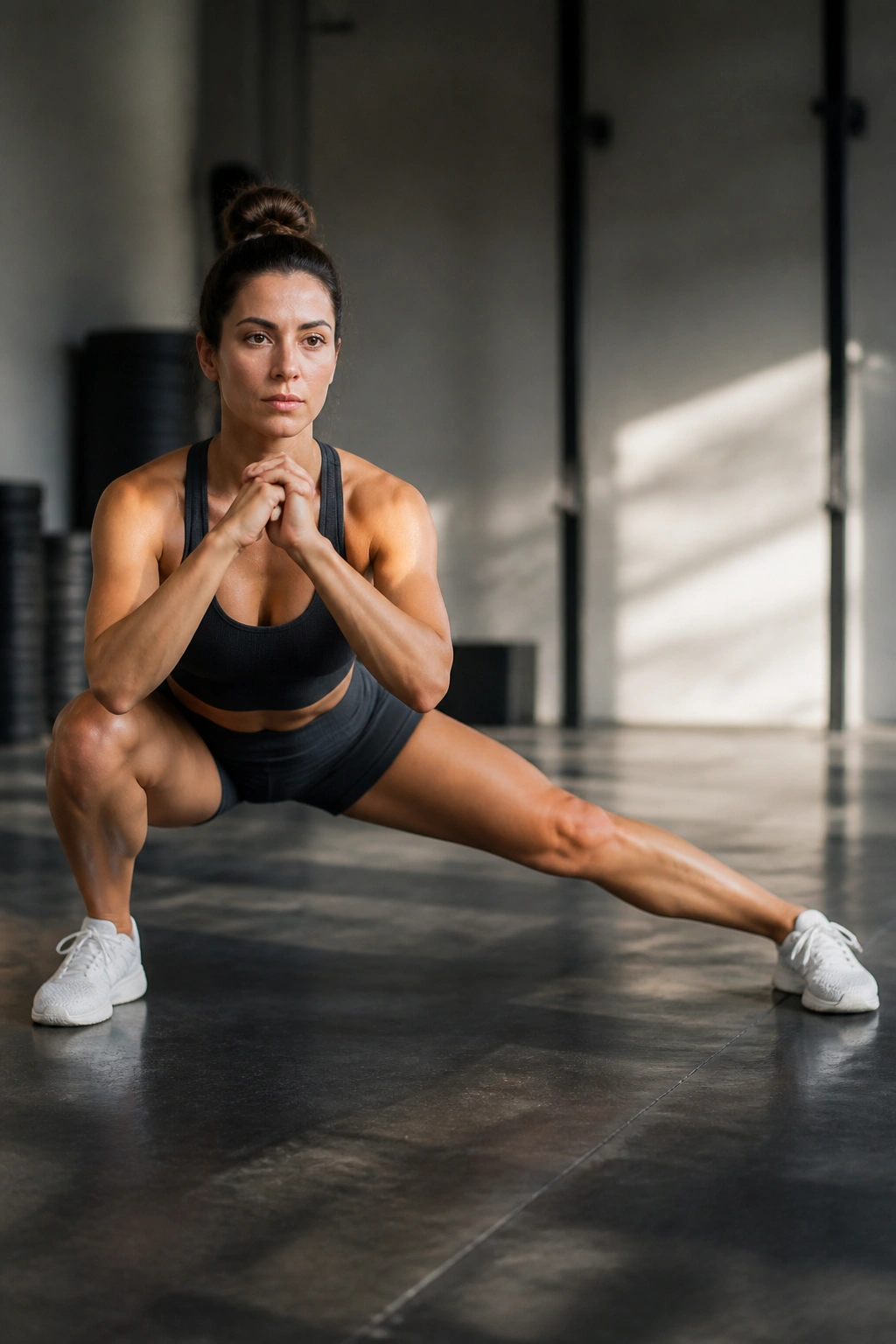
The first rep usually feels awkward. Good. That’s the point.
Most lifters live in forward-and-back movement patterns, so the lateral lunge hits tissues that get ignored: adductors, glute med, inner thigh, and the side of the hip. If one knee caves when you cut, pivot, or step sideways in life or sport, this is the kind of work that starts cleaning that up.
Drop into the lunge with one leg stepping out to the side while the other stays straight. Keep the stepping foot flat, then sit the hips back toward that side. The stretched leg should feel a strong pull along the inner thigh, but not a sharp tug.
The best reps are smooth and deliberate. If your foot turns way out, the arch collapses, or you sink into the lower back, shorten the range and slow down. A shallow lateral lunge done well beats a deep one done badly.
This is one of those exercises that looks simple on paper and gets interesting fast in the body.
6. Single-Leg Hip Thrust
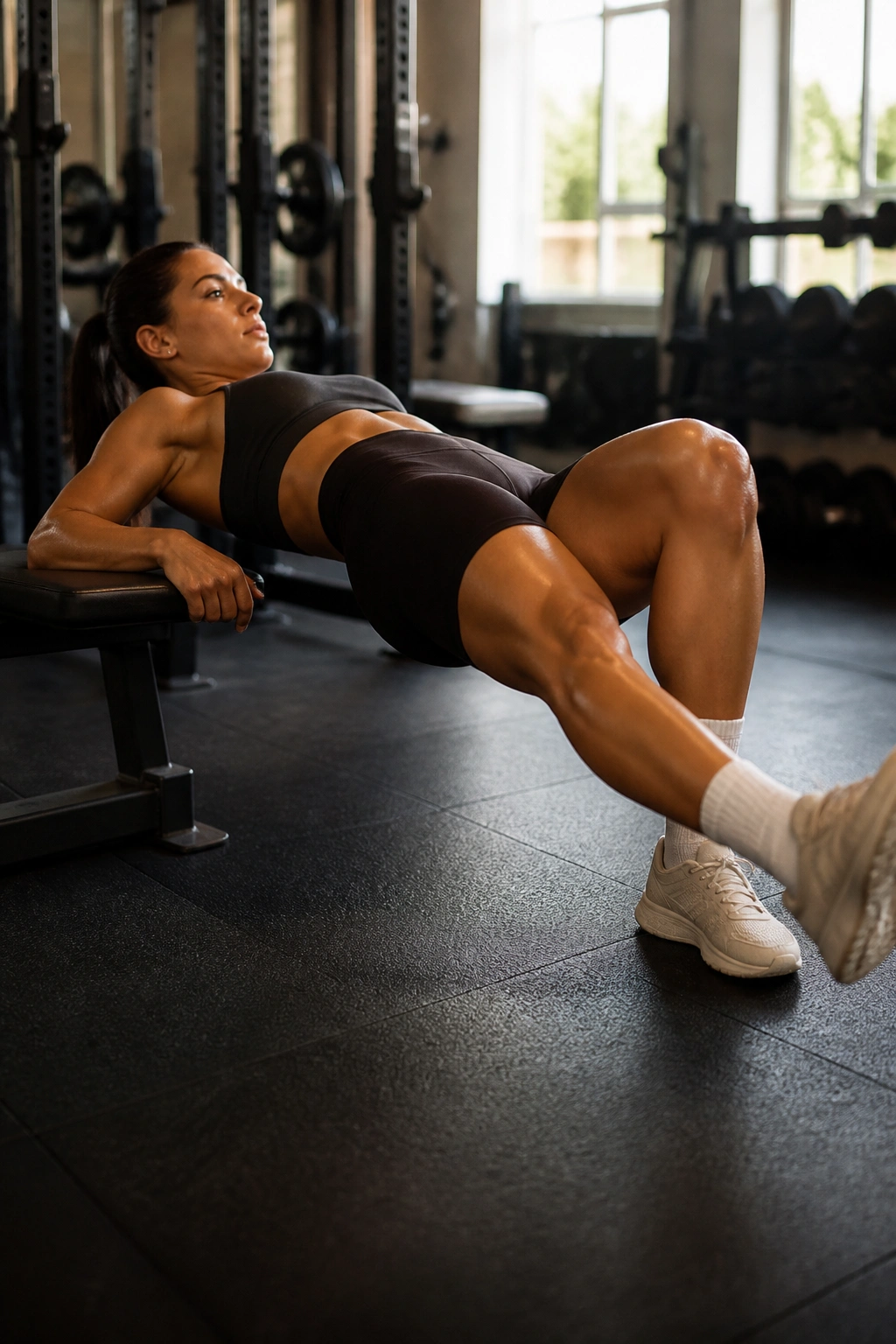
One glute not firing like the other? This is the exercise that makes the problem impossible to ignore.
A single-leg hip thrust strips away a lot of compensations. There’s no second leg to bail out the rep, and the pelvis has to stay level while the working side extends the hip. If one side cramps, lags, or twists at the top, you’ve found the weak link.
How to Keep the Pelvis Level
The bench height should let your upper back rest comfortably while your planted foot stays far enough out that the shin is close to vertical at the top. Too close, and you get knee-dominant tension. Too far, and the hamstring takes over.
- Press through the heel and midfoot, not just the toes.
- Hold the top for 1 to 2 seconds.
- Keep the ribs down so the lower back does not over-arch.
- Start with bodyweight or a light dumbbell across the hips.
You’ll know it’s working when the glute on the working side is the thing you notice first, not your low back. That is a better sign than load numbers.
7. Single-Leg Calf Raise
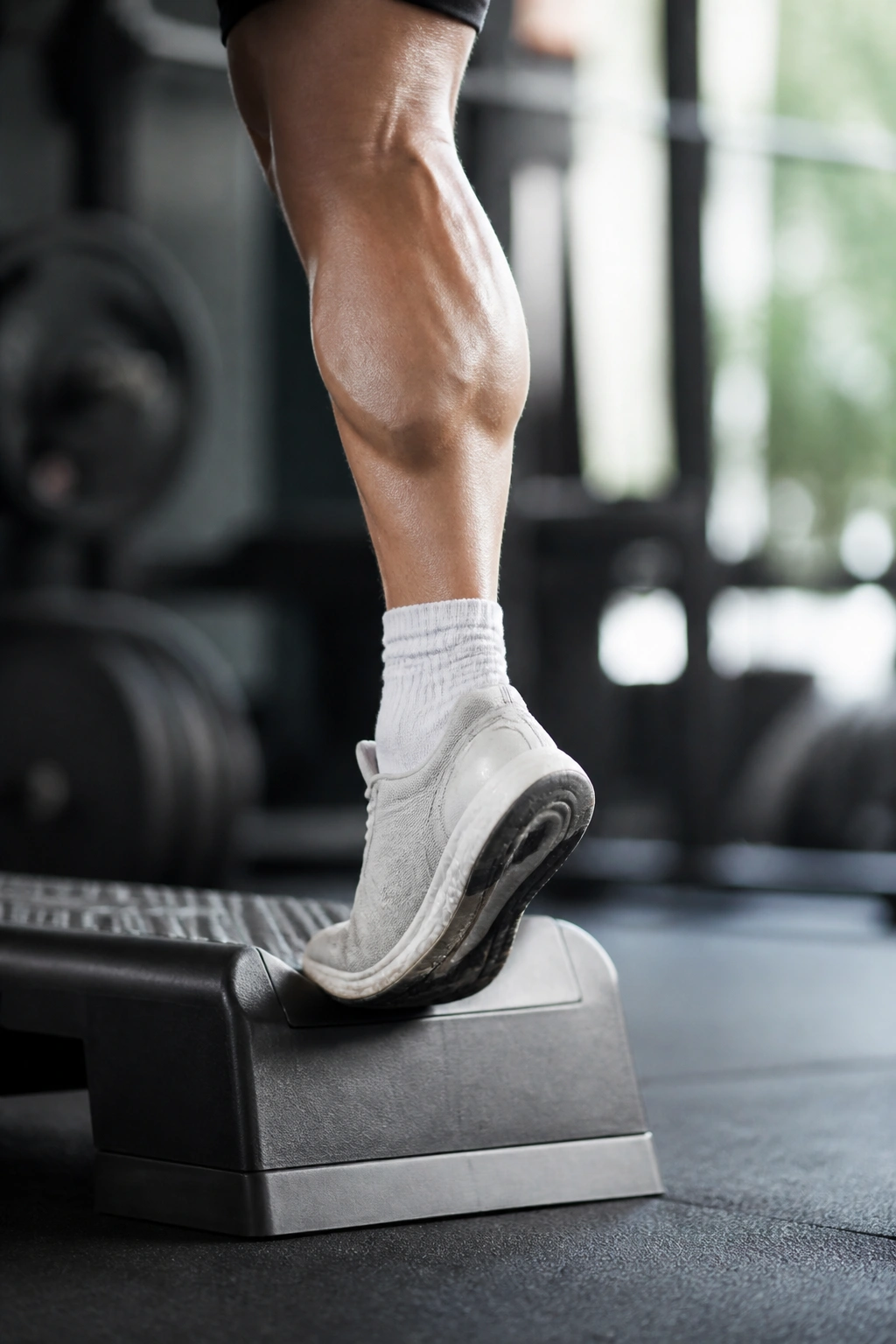
People skip calves until one ankle feels stiff or one foot keeps giving out. Then they remember this movement exists.
Single-leg calf raises are small, but they tell you a lot. One side may be stronger, yes, but it may also have better ankle mobility, better foot control, or a cleaner heel drop at the bottom. All of that matters. A calf that never gets the full stretch tends to stay lazy.
Stand on a step if possible so the heel can sink below the forefoot. Lower slowly, pause in the stretched position, then rise as high as you can without rolling onto the outer edge of the foot. That last part matters. If the ankle caves, the rep loses quality fast.
I like these with a 3-second lower and a 1-second pause at both ends. They’re boring. They also work.
8. Single-Arm Dumbbell Row
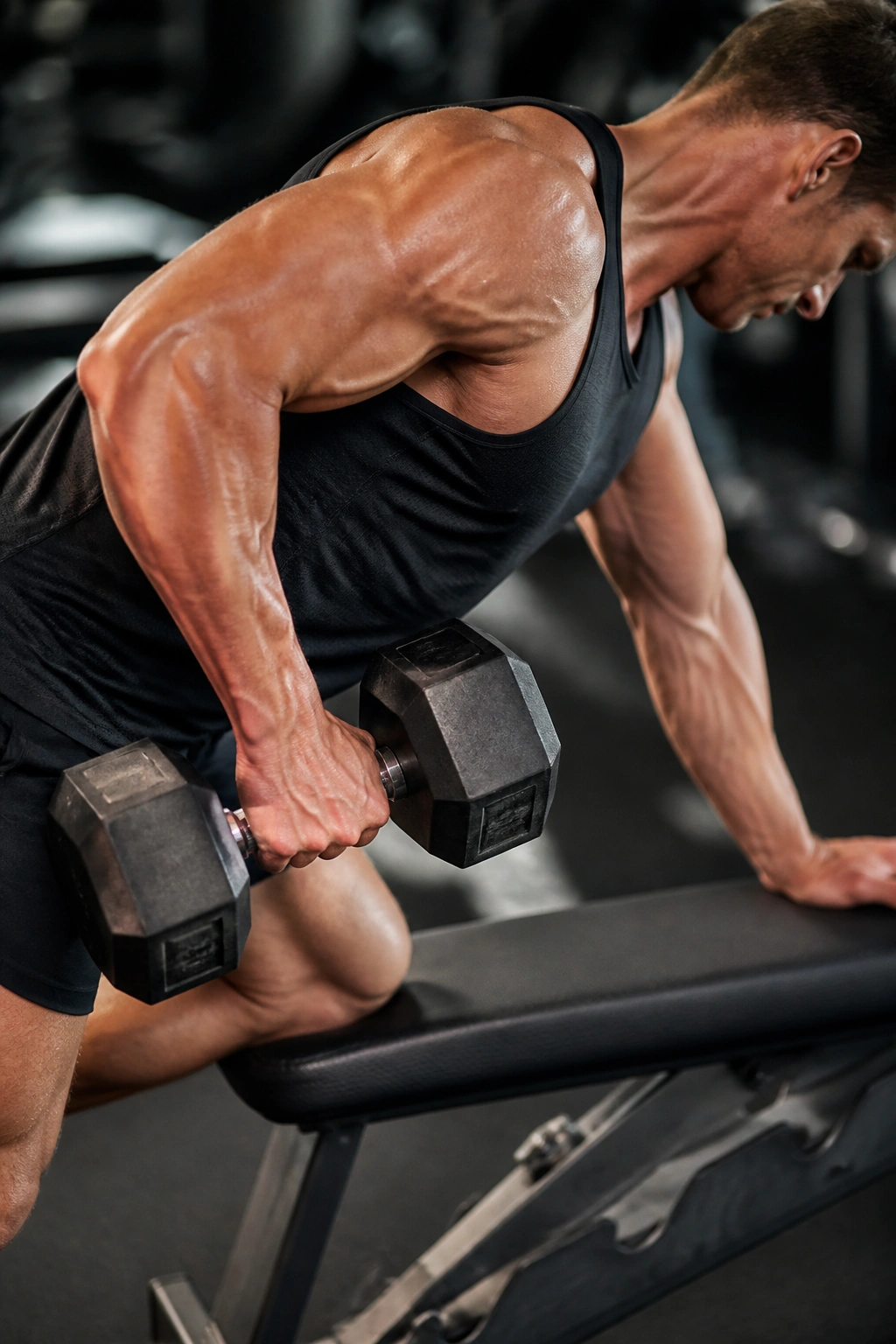
A barbell row can let the stronger side dominate without much drama. A single-arm dumbbell row removes that escape hatch.
This is one of the cleanest ways to build the lats, upper back, and scapular control on each side separately. It also lets you feel whether one shoulder blade glides better, whether one side shrugs too soon, or whether your trunk rotates every time the dumbbell leaves the floor.
You can row with the free hand supported on a bench, which is the easiest version to learn, or use a split stance if you want more anti-rotation demand. I prefer the supported version for most people because it lets you focus on the pull instead of surviving the setup.
What Makes It Different
Unlike a barbell row, the dumbbell row lets you adjust elbow path. Tuck the elbow a bit closer to the ribs to bias the lat, or row a touch wider to feel the upper back more. Keep the shoulder away from the ear.
If one side needs extra control, use a 2-second pause at the top and lower the weight slower than you think you need to. Speed hides problems. Stillness exposes them.
9. One-Arm Dumbbell Bench Press
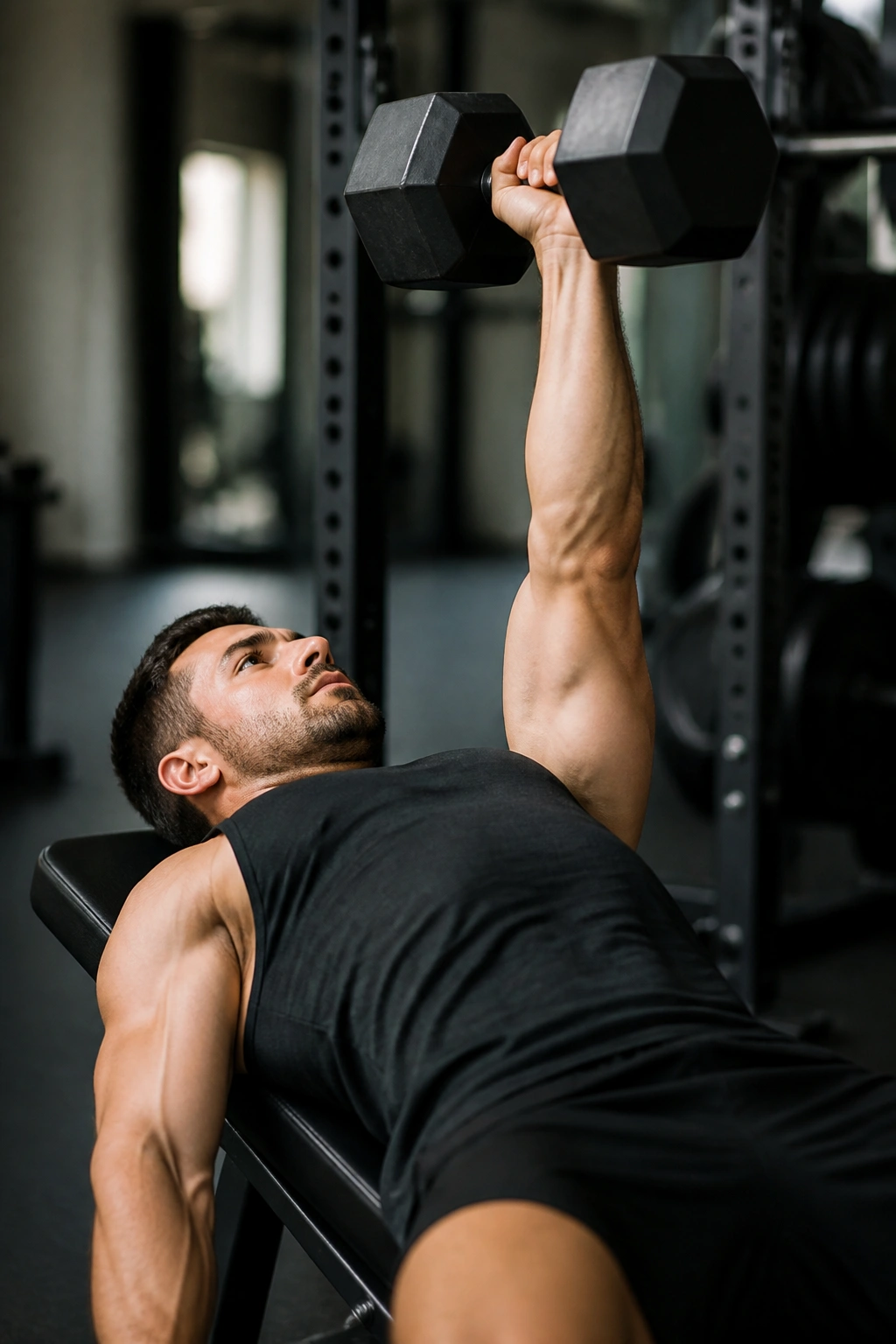
If your bench press is stronger on one side, you already know the weird feeling: one dumbbell rises cleanly while the other side wants to drift, wobble, or arch the rib cage.
The one-arm dumbbell bench press fixes that by making the trunk do more work. The pressed arm gets chest, triceps, and front shoulder work, while the rest of the body has to stop the torso from rotating off the bench. That combination is pure gold for asymmetry work.
Start lighter than your ego wants. Set the shoulder blade before the first rep, keep the wrist stacked over the elbow, and lower the dumbbell under control to the outer chest line. If the dumbbell drifts across the midline, the rep turns into a shoulder shrug with a bench attached.
- Plant both feet hard.
- Keep the opposite hip from popping off the bench.
- Pause briefly near the bottom.
- Use a neutral grip if the shoulder feels cranky.
One clean set tells you more than a heavy sloppy one. Every time.
10. Single-Arm Overhead Press
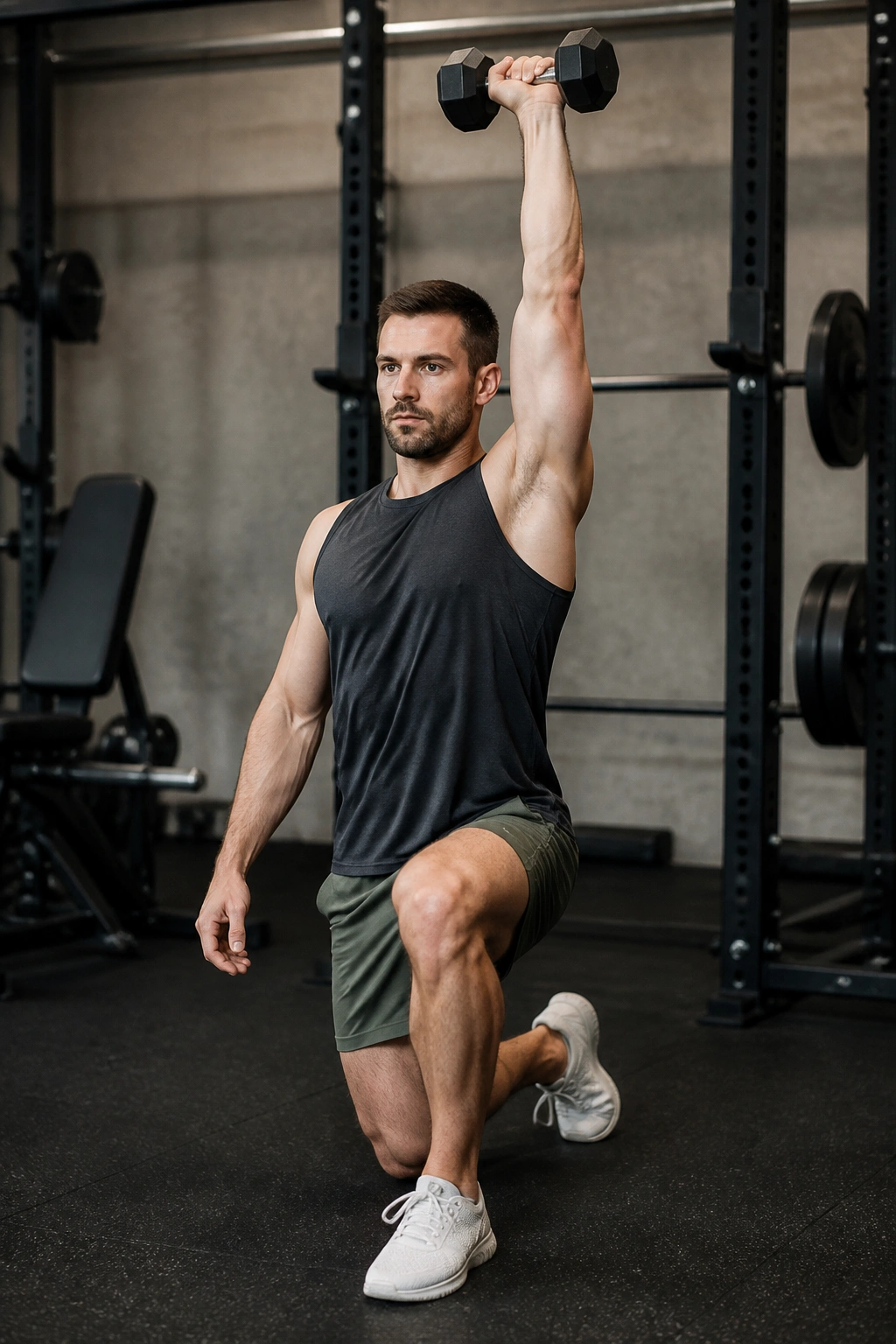
A one-arm overhead press is where weak links show up fast. If one side leans, arches, or turns into a sideways lean before the dumbbell reaches the top, the body is borrowing stability from the wrong places.
That’s why this movement matters. It trains the shoulder, triceps, serratus, obliques, and glute on the same side to cooperate. The press should go up in a straight line over the shoulder, not forward, not out, and not into a low-back compensation contest.
How to Get Honest Reps
Half-kneeling makes this more stable and often more useful for people who cheat with the lower back. Standing makes the trunk work harder. Both versions have a place.
- Squeeze the glute on the same side as the kneeling leg if you’re half-kneeling.
- Keep the ribs from flaring.
- Finish with the biceps near the ear, not the dumbbell drifting in front of you.
- Use 3 to 5 sets of 5 to 8 reps per side if strength is the goal.
If the torso leans every time, lower the load. That is not a form flaw to power through. It’s the exercise telling you the weight is too heavy for clean control.
11. Half-Kneeling Single-Arm Cable Press
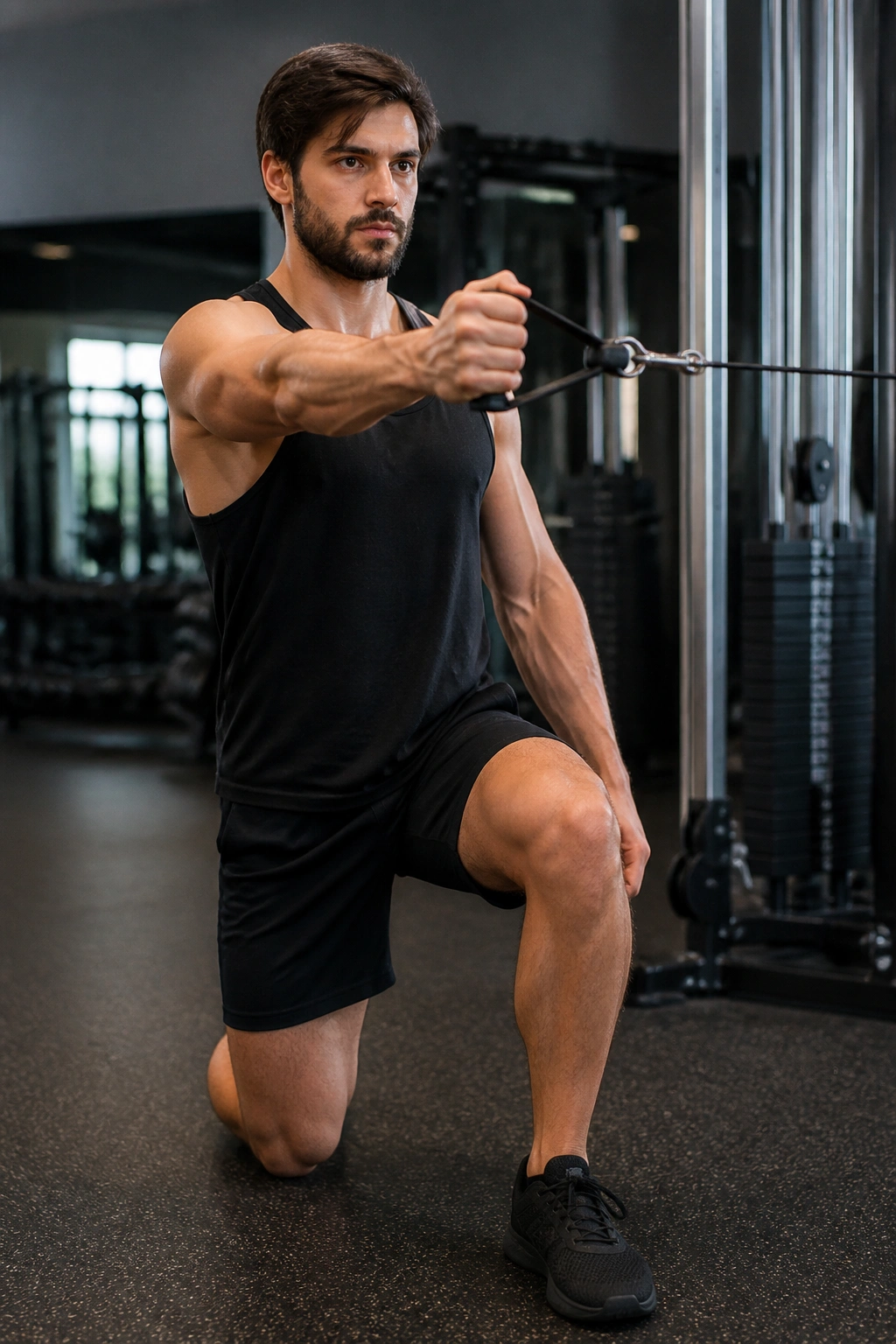
Why half-kneeling? Because it shuts down a lot of the nonsense.
This setup locks the lower body into a more stable base and makes the torso work harder to resist rotation. The cable also keeps tension through the whole press, which is useful because dumbbells sometimes feel easiest in the part of the rep where the shoulder and chest need them most. A cable does not care. It stays honest.
If you want to clean up a left-right pressing difference, this movement does a nice job of exposing whether the rib cage shifts, whether one shoulder rolls forward, or whether the press path changes side to side. Use a handle set at chest height and press straight out without letting the torso twist.
The rep should feel smooth. If it jerks, the stack of ribs, pelvis, and shoulder is probably not lined up well enough. A tiny pause out front helps.
12. Single-Arm Lat Pulldown
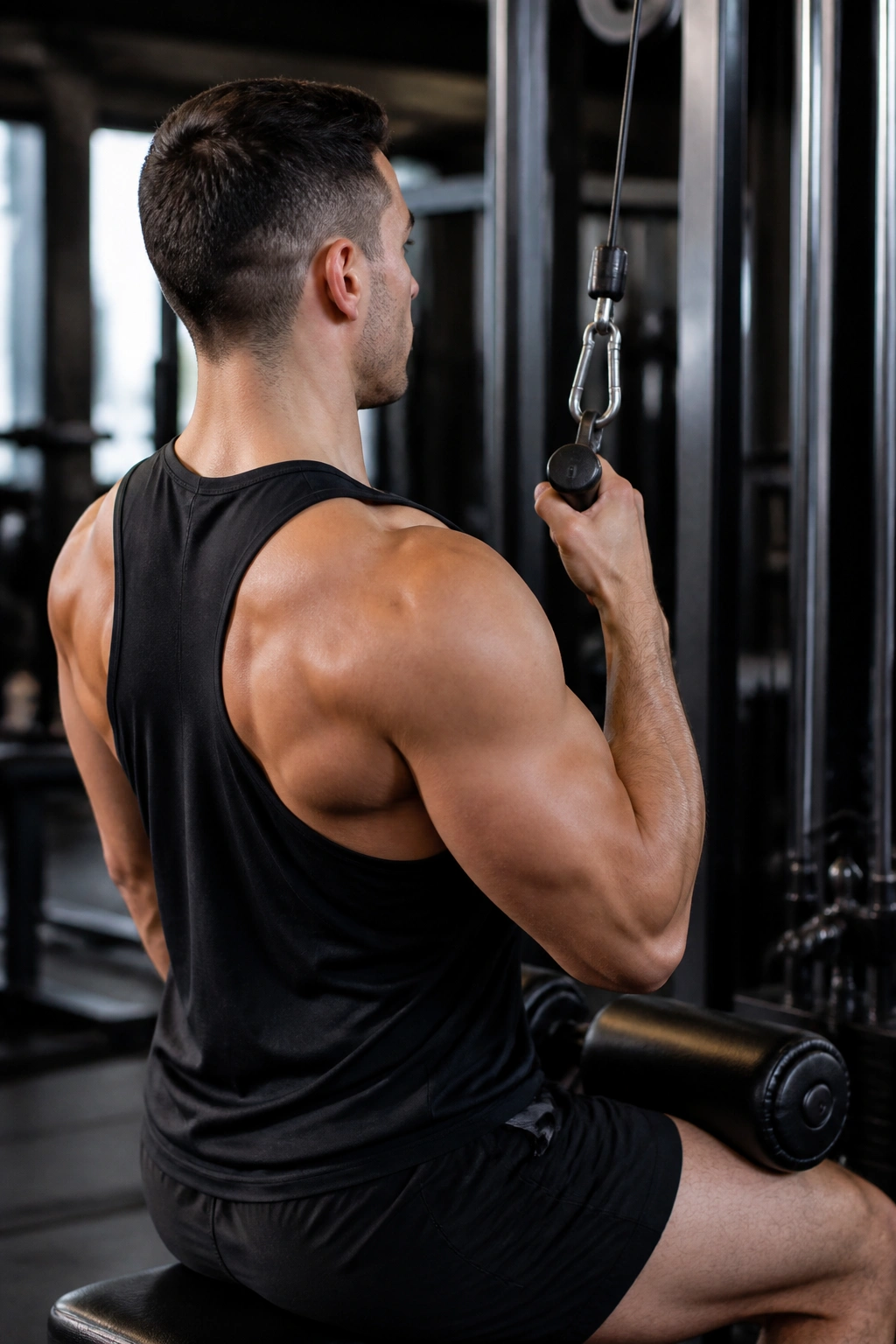
A lot of lifters think of the lat pulldown as a back-width machine. Fair enough. But one arm at a time changes the whole story.
Single-arm pulldowns make it easier to see whether one lat is doing more work, whether one shoulder rides up toward the ear, or whether the rib cage flares to fake the range of motion. That last one is common. The body loves to invent motion when the target muscle is asleep.
Use a cable station or pulldown machine with one handle. Pull the elbow toward the front pocket or the side of the rib cage, then let the arm return under control until the shoulder blade reaches up naturally. No yanking. No torso swing. No weird neck tension.
This is one of my favorite upper-body unilateral workouts because it’s hard to cheat for long. The moment the torso starts turning, the rep gets ugly. That is useful information, not a failure.
13. Suitcase Carry
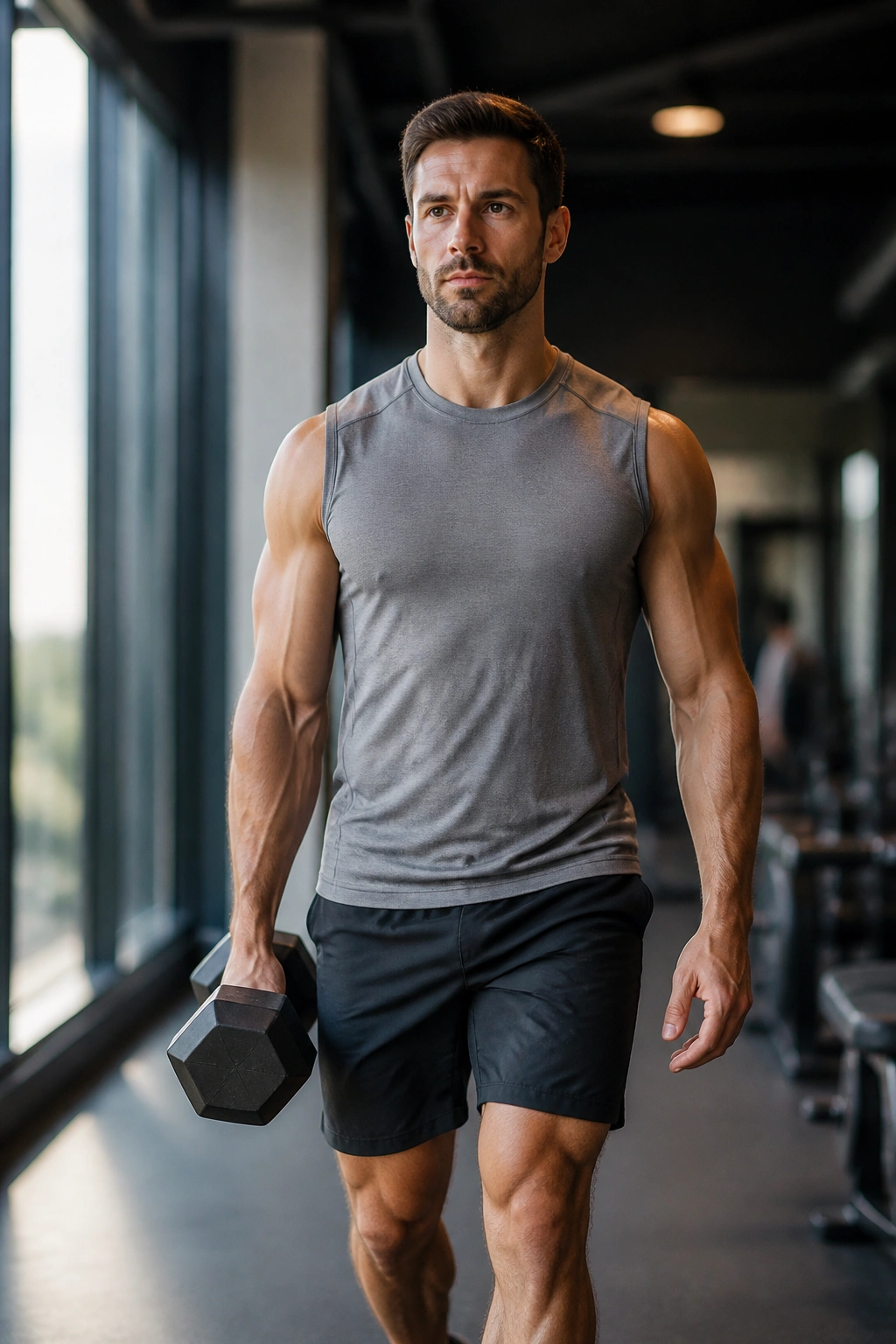
Pick up one heavy dumbbell, kettlebell, or trap-bar side load and walk. That’s the whole exercise. And it is nastier than it sounds.
The suitcase carry is a walking anti-tilt drill. Your obliques, quadratus lumborum, glute med, grip, and shoulder all have to work to keep you from bending toward the load. If one side of your trunk collapses, this movement snitches on it immediately.
What to Watch For
- Keep the shoulders level.
- Walk slow enough that you can control each step.
- Don’t lean away from the weight.
- Use 20 to 40 meters per side for most working sets.
A lot of people rush these. Bad idea. The benefit comes from staying tall while the load tries to pull you sideways. If the weight is so heavy that your torso folds, reduce it and make the walk cleaner.
It’s simple. Also brutal. That combination is why I like it.
14. Offset Front Rack Carry
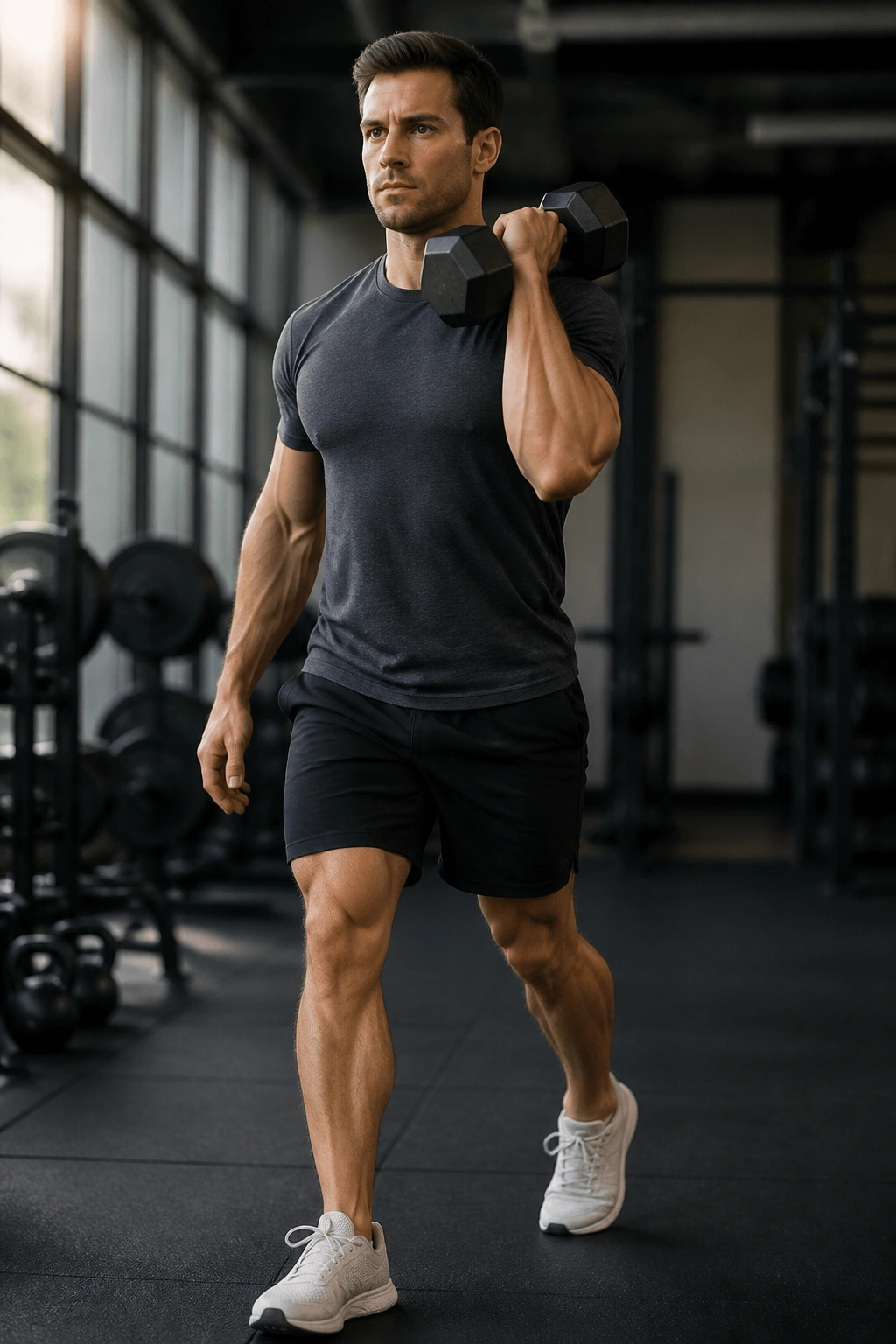
This one looks a little odd the first time you do it. Hold a kettlebell or dumbbell in the front rack on one side, then walk while the other arm stays free or carries a lighter load.
Compared with the suitcase carry, the front rack version asks more from the upper back, front shoulder, and rib cage. The weight sits higher, so the body has to resist both side bend and forward collapse. It’s a different kind of honesty. Less obvious at first glance, more demanding once you start moving.
This is a strong pick if you already own suitcase carries and want a harder trunk challenge without jumping straight into fancy core work. Keep the elbow slightly in front of the ribs, wrist neutral, and chest stacked over the pelvis. If the ribs flare, you’ll feel it in all the wrong places.
Best use? Short walks of 15 to 30 meters with crisp posture. No wandering. No bouncing.
15. Single-Arm Landmine Press
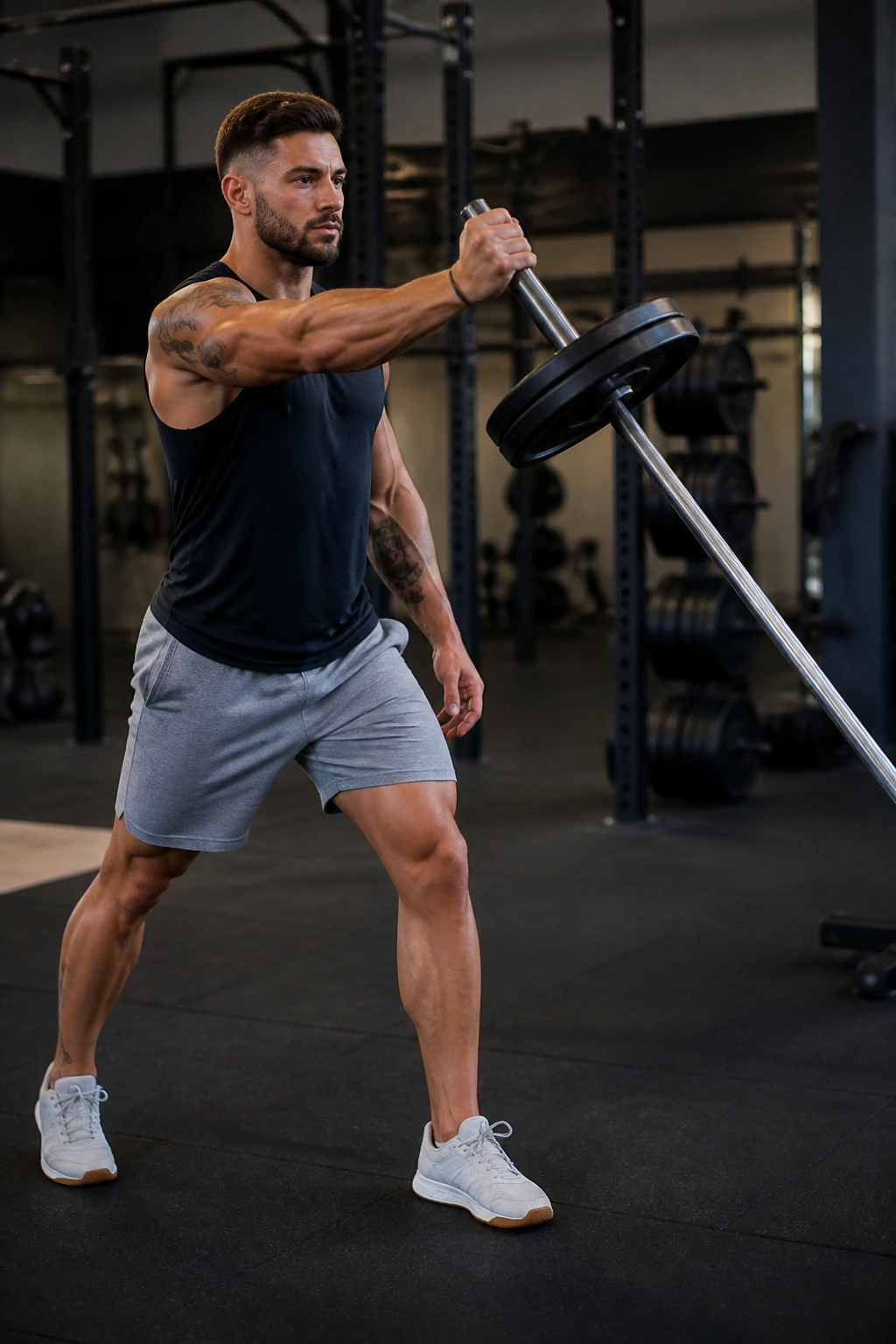
This is one of the most shoulder-friendly pressing options I’ve used, and I don’t say that lightly.
The landmine press gives the shoulder a friendlier arc than a straight overhead press. That matters because the humerus can move in a way that feels more natural for a lot of people, especially if one side gets cranky near full overhead range. The unilateral version also lets you feel whether the torso wants to rotate as the weight moves away from the body.
Press from the shoulder in a smooth arc, finishing with the arm extended and the ribs still stacked. If you’re half-kneeling, you get even more trunk control. Standing is fine too, but the half-kneeling version tends to cut down on cheating.
Use it as a main press or as a bridge between rehab-like work and heavier overhead training. The movement is friendly, but it still bites if you load it carelessly.
16. Single-Arm Kettlebell Clean and Press
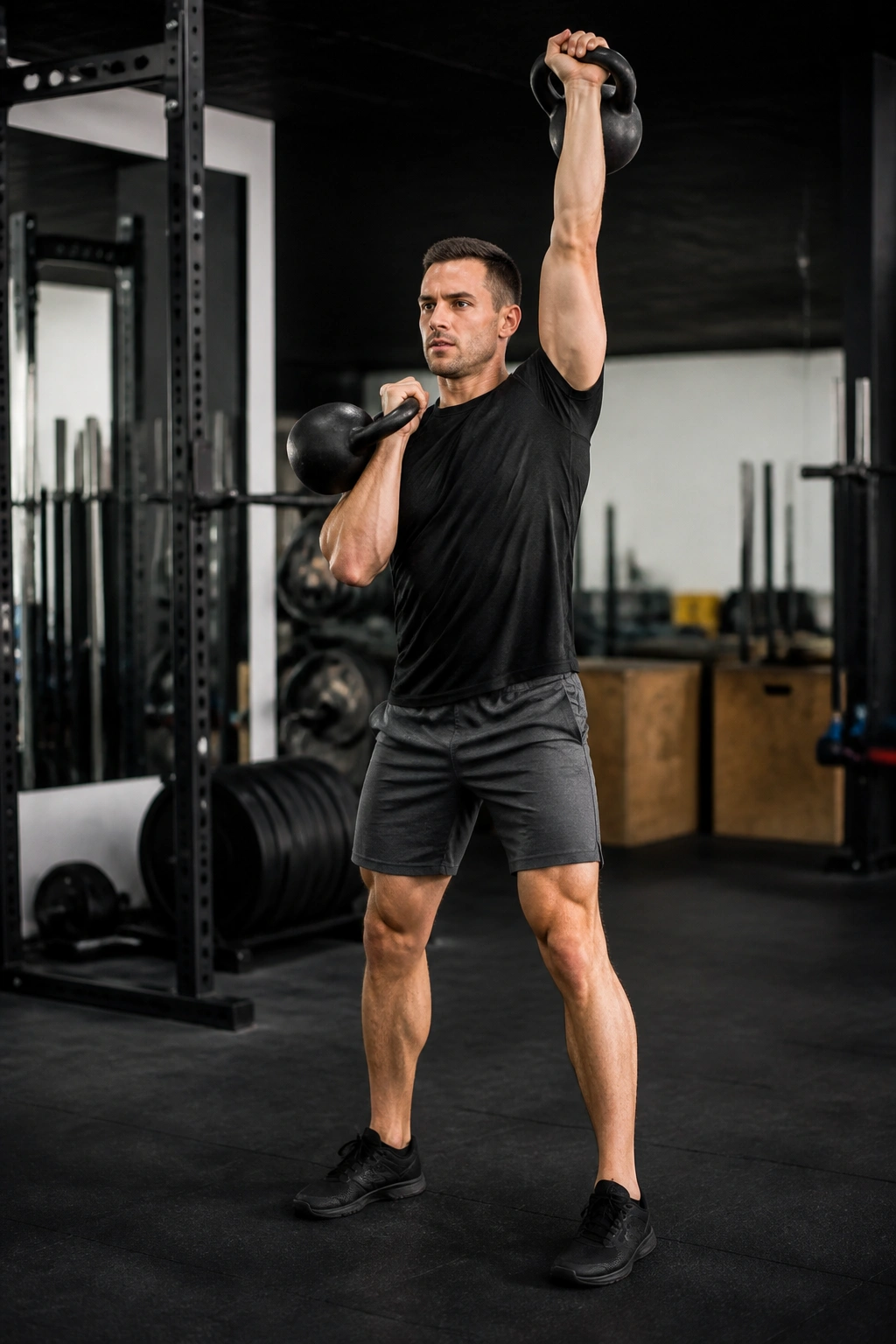
What makes this one useful is the transfer from hip to hand. The clean asks the body to coordinate a fast pull with a soft rack position, and the press asks whether that side can stay stacked after the bell gets there.
The clean is where ugly asymmetries tend to appear first. One side may loop around the body more. One shoulder may shrug. One hip may drive better off the floor. Then the press shows whether you can keep control once the kettlebell lands in the rack.
How to Keep the Clean Quiet
Use a light bell at first. The bell should roll around the wrist, not slap it. The forearm stays close, the elbow stays tucked, and the weight lands softly in the rack without banging into the forearm.
- Start from a hinge, not a squat.
- Keep the bell close to the body.
- Squeeze the glute as you stand.
- Press only after the rack feels stable.
This is a strong choice when you want strength, timing, and unilateral control in one package. It also exposes laziness fast. Which is a good thing.
17. Half-Kneeling Pallof Press
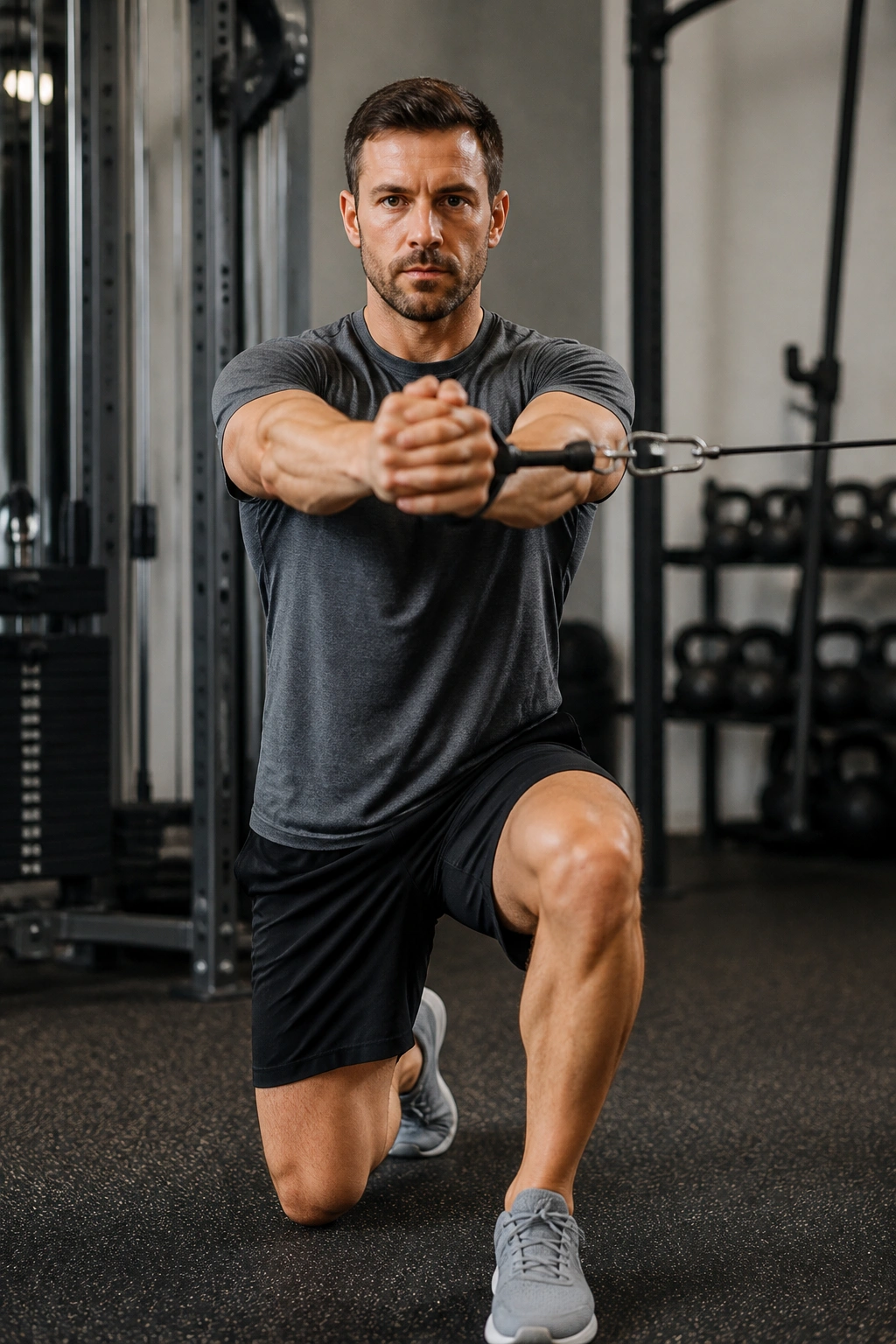
If your torso twists every time you press, row, or carry, this is a clean way to fix the leak.
The Pallof press is anti-rotation work, and the half-kneeling setup makes it more honest because the lower body can’t save you. You hold a cable or band at the chest, press it straight out, and resist the urge to let the torso spin toward the anchor point. That sounds easy until the line of pull gets heavy enough to make the ribs flare.
Use a tall kneel or half-kneel with the hips square and the glutes lightly on. Press out, hold for 1 to 2 seconds, then return without losing posture. The goal is not speed. The goal is staying still when the load wants motion.
This pairs well with single-arm presses and carries because it teaches the trunk to resist torque instead of creating it. That skill matters more than people think.
18. Single-Leg Hamstring Slider Curl
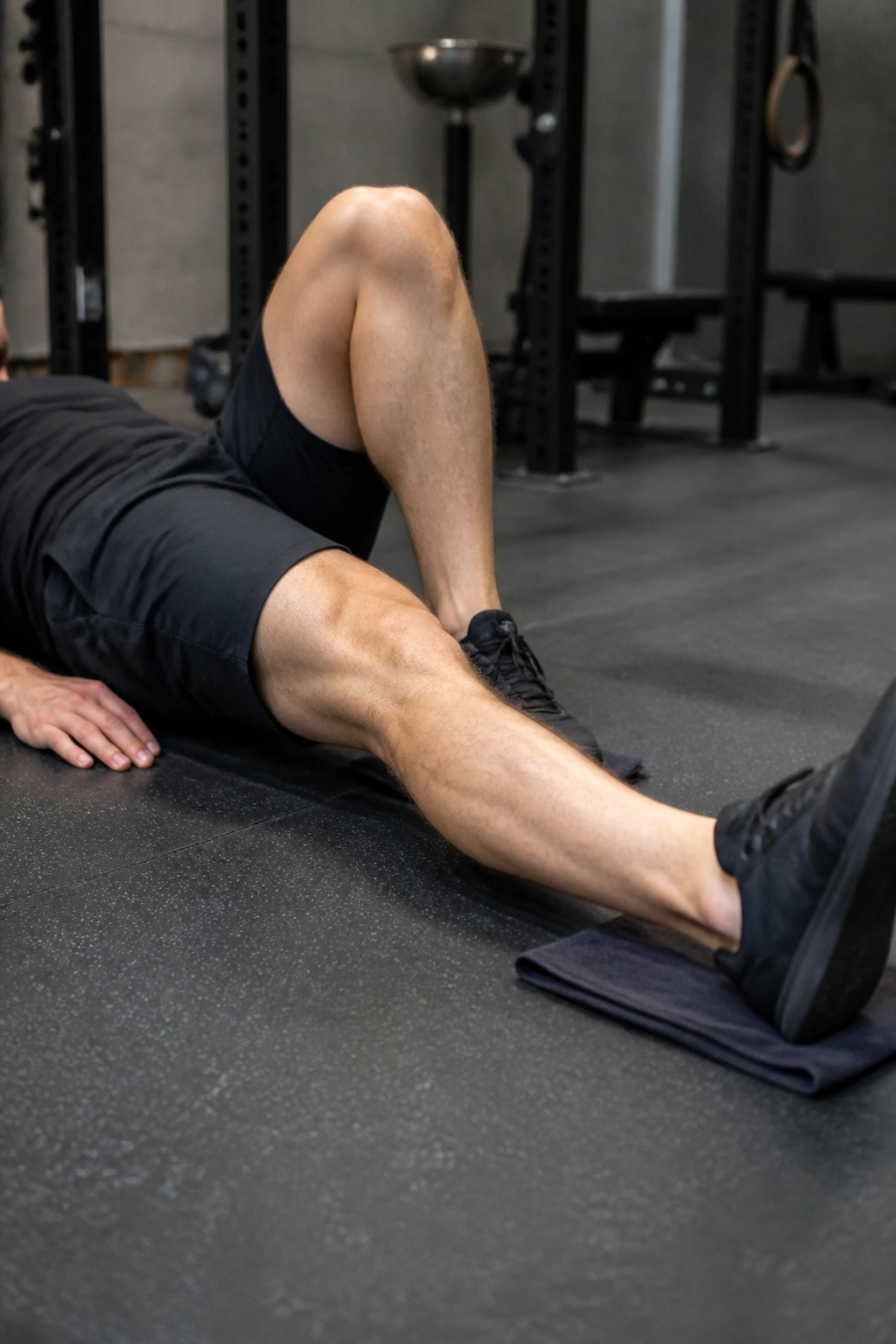
Hamstrings can lie to you. Bilateral curl machines make that easier than they should be, because the stronger leg often steals a bit of the work while the weaker one quietly coasts.
A single-leg hamstring slider curl removes that escape route. Use a towel, furniture slider, or socks on a smooth floor, lift one leg, and drag the working heel out and back while keeping the hips as level as you can. The hamstring works through knee flexion while the glutes keep the pelvis from dropping. That combination is brutally effective.
The best version is slow and controlled. Let the leg slide out over 3 seconds, then pull it back in without letting the hips sag. If you cannot keep the pelvis up, use both legs for the concentric and one leg for the eccentric. That still counts. It still matters.
Nope, this is not glamorous. It works anyway. And when one leg starts cramping before the other, you’ve found one more place where your body has been taking shortcuts.
