



Some weeks, the gym plan falls apart because every workout is built like a solo performance. Legs on Monday. Chest on Tuesday. Back if you remember. That split can work, sure, but total body workouts make a lot more sense when life is messy, your schedule is tight, or you simply want to train without turning every session into a half-day project.
The big win is simple: you keep hitting the movement patterns that matter most — squat, hinge, push, pull, carry, rotate — without waiting a full week to touch a muscle again. That gives you more practice, more useful volume, and fewer of those awkward “I haven’t done lunges in 11 days” moments. One well-built full-body workout can do a lot of heavy lifting. Literally.
I’ve always preferred sessions that feel clean and repeatable. Not easy. Clean. There’s a difference. You want enough structure to track progress, but not so much fluff that you spend half the workout rearranging dumbbells and staring at the ceiling.
Keep the weights honest. Keep the rest times honest. And if a session starts feeling stale, nudge it forward with a little more load, one extra round, or a slower tempo instead of ripping the whole thing apart. The 22 workouts below are built for exactly that kind of steady repeat use.
1. The 5-Move Dumbbell Circuit
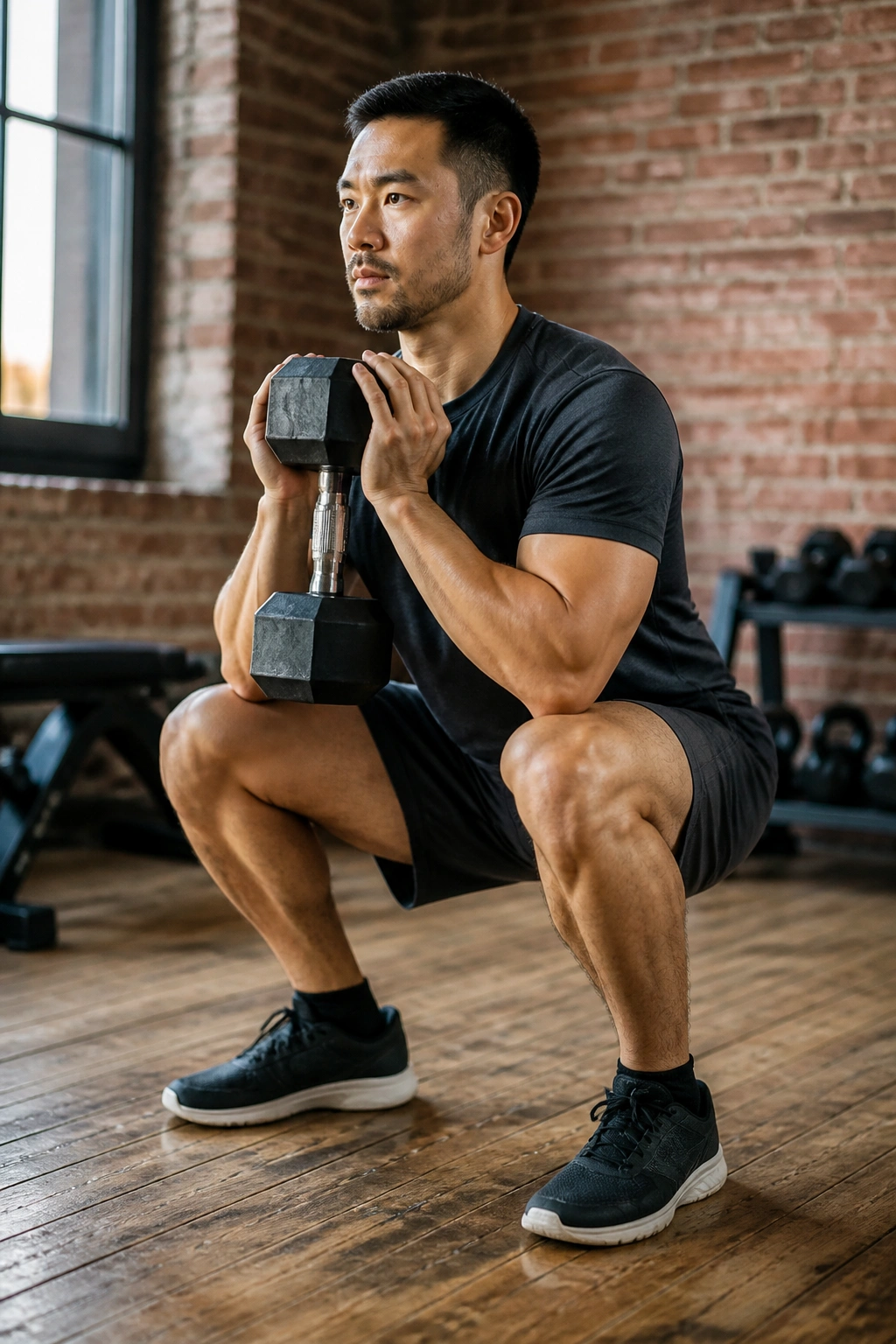
This is the kind of session I’d hand to someone who wants a reliable full-body workout without thinking too hard about it. One pair of dumbbells, five moves, 3 to 5 rounds. Simple setup. Good return.
How to run it
Start with a goblet squat for 8 reps, then move to a dumbbell floor press for 10 reps. After that, do a one-arm row for 8 reps per side, a dumbbell Romanian deadlift for 10 reps, and finish with a push press for 6 reps per side. Rest 60 to 90 seconds after each round. If you want more conditioning, cut the rest to 30 to 45 seconds. If you want more strength, keep the pace slower and use heavier bells.
- Goblet squat: 8 reps
- Dumbbell floor press: 10 reps
- One-arm row: 8 reps per side
- Romanian deadlift: 10 reps
- Push press: 6 reps per side
Pick a weight that makes the last 2 reps look honest. If your squat turns into a good-morning or your rows start twisting your torso, the load is too heavy.
2. Squat, Push, Pull, Carry
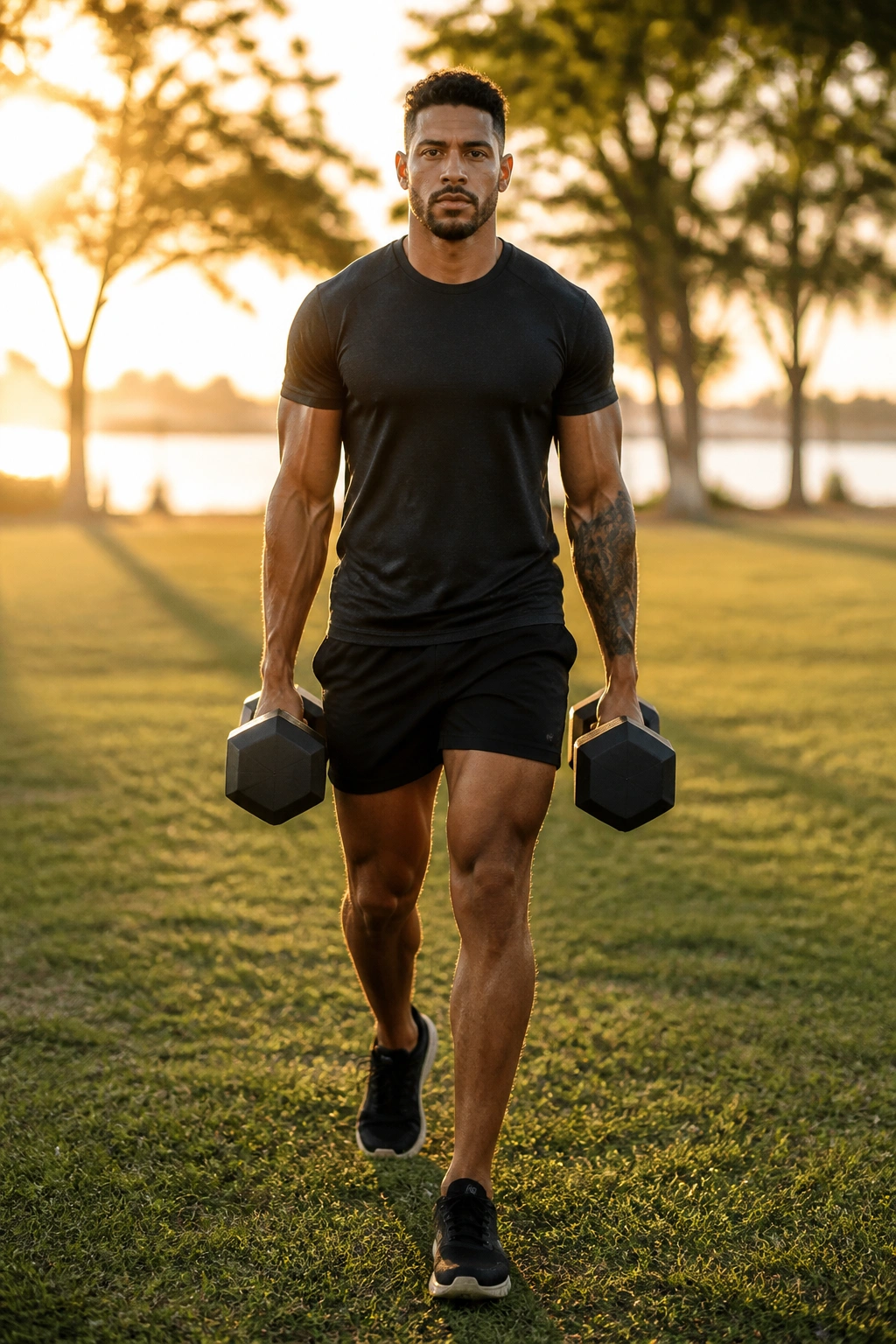
Four patterns. That’s the whole game here. And honestly, that’s enough.
The beauty of this workout is that it strips out all the noise. You hit a squat, a push, a pull, and a carry, then you repeat the sequence for 3 or 4 rounds. A lot of people make training too fancy and then wonder why it’s hard to stay consistent. This one is hard to mess up.
Use a front squat or goblet squat for 6 to 8 reps, a push-up or bench press for 8 to 12 reps, a chest-supported row or lat pulldown for 8 to 10 reps, and a loaded carry for 30 to 45 seconds. Rest about 60 seconds between movements if needed, or move straight through if you want the heart rate up.
The carry is what gives this session its grit. Farmers handles, dumbbells, kettlebells, sandbags — whatever you have. Walk tall, ribs down, shoulders quiet. That last part matters more than people think. Sloppy carries turn into sloppy posture fast.
3. Hinge-First Strength Day
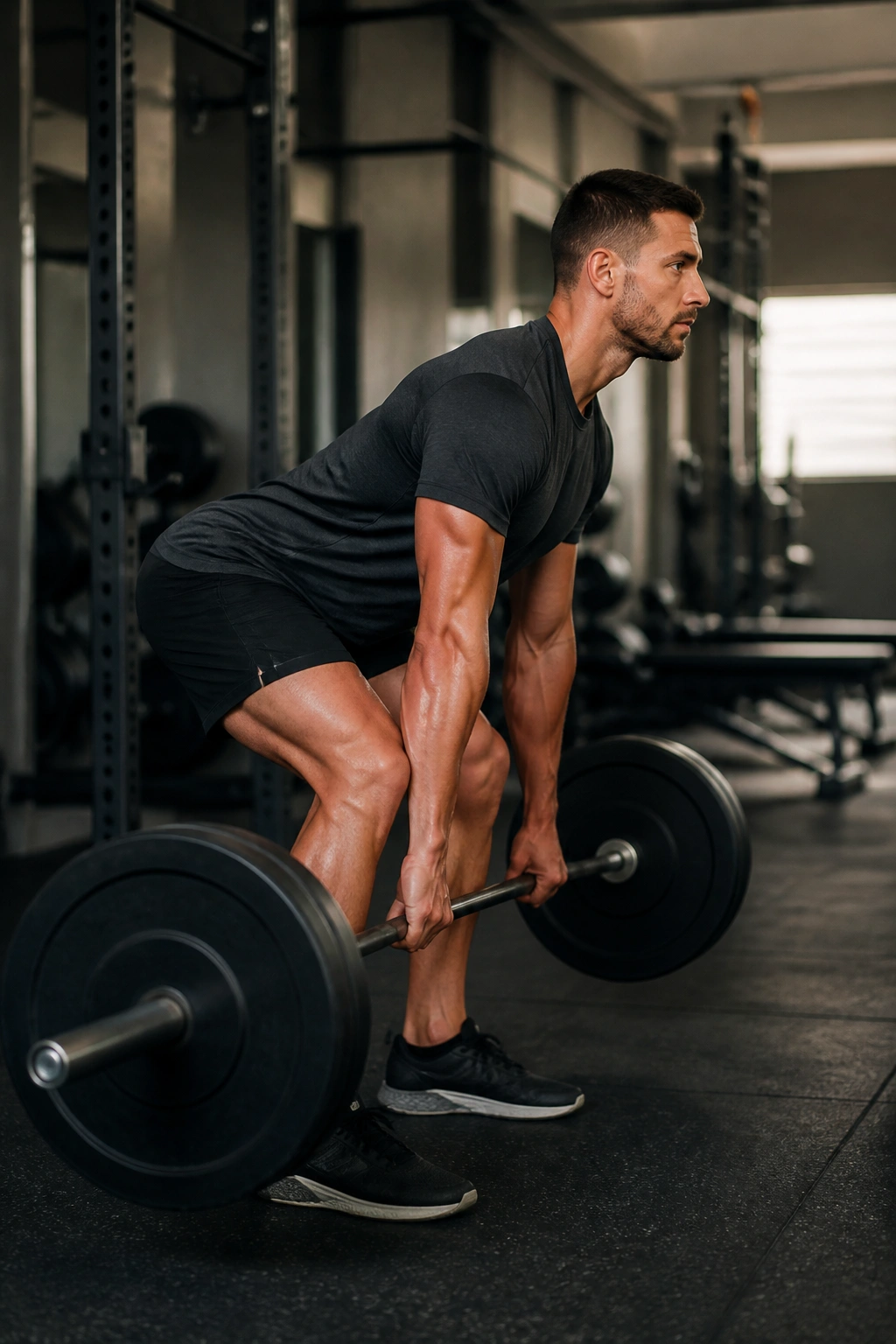
A lot of lifters start with squats because that feels obvious. I get it. But some weeks, the better move is to start with the hinge and let the rest of the workout build around it.
Key details
Begin with deadlifts, Romanian deadlifts, or trap bar deadlifts for 3 to 5 sets of 3 to 6 reps. Then follow with split squats, an incline dumbbell press, a seated row, and a short finisher like kettlebell swings or sled drags. Keep your deadlift work crisp. No grinding. No ugly reps. The first lift should feel powerful, not chaotic.
- Deadlift or trap bar deadlift: 3 to 6 reps
- Split squat: 8 reps per leg
- Incline dumbbell press: 8 to 10 reps
- Seated row: 8 to 10 reps
- Kettlebell swings or sled drags: 2 to 4 short sets
The hinge-first setup gives your lower back and hamstrings the main job early, when you’re fresh. Then the rest of the session adds balance instead of just piling on more fatigue. Good workout. Clean payoff.
4. Bodyweight EMOM Session
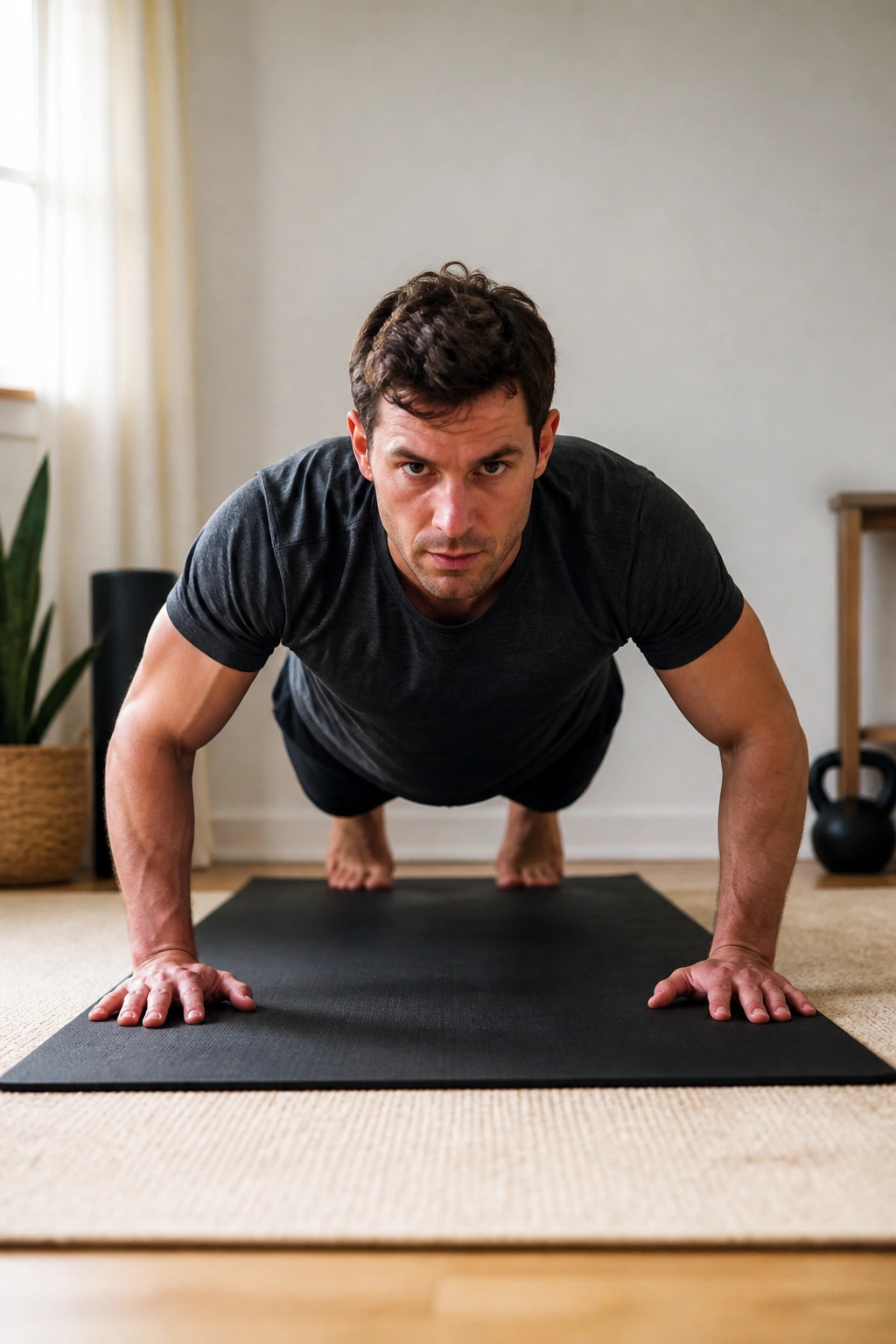
Can you get a useful total body workout with no equipment at all? Absolutely. And EMOM training — every minute on the minute — is one of the easiest ways to make it feel organized instead of random.
Set a timer for 20 minutes. Minute one: 12 air squats. Minute two: 8 push-ups. Minute three: 10 reverse lunges per leg. Minute four: 30 seconds of mountain climbers. Repeat that five times. If you finish early in a minute, rest until the next round starts. If you’re still working when the next minute hits, the pace is too hot.
How to keep it useful
Choose reps you can repeat cleanly for all 5 rounds. That’s the whole trick. The workout should feel brisk, not desperate. Keep your core braced on the lunges, and lower your chest under control on the push-ups instead of bouncing around like a pinball.
This style works because it forces you to move fast without turning form into a wreck. Simple. Efficient. No excuses.
5. Kettlebell Complex Flow
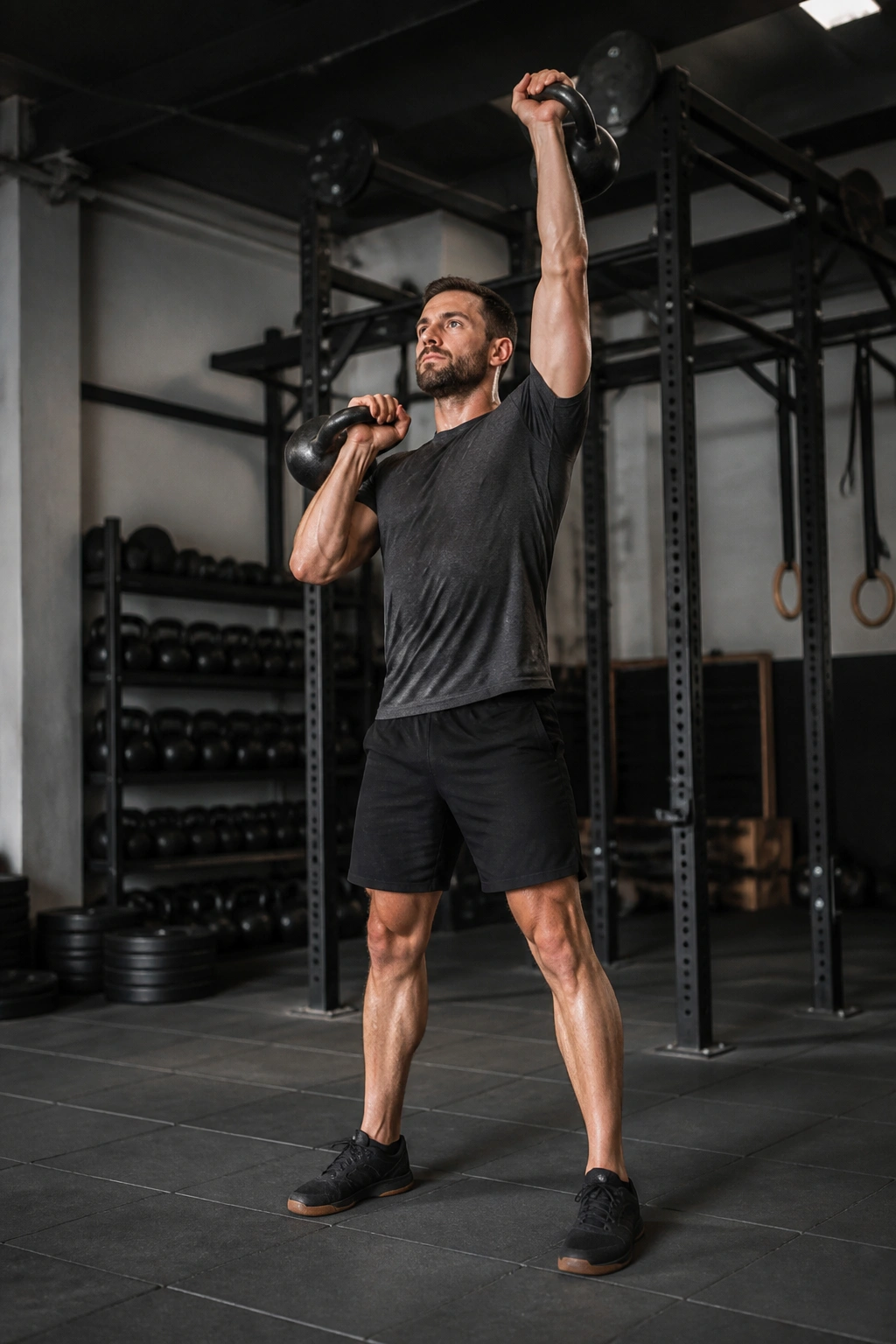
Kettlebells are a different animal from dumbbells. They sit lower in the hand, they force more control in the rack position, and they make it easier to chain movements together without setting anything down every 12 seconds.
That’s why a kettlebell complex feels like a workout and a lesson at the same time. Use one bell for 4 to 6 rounds of 5 cleans, 5 front squats, 5 presses, and 10 swings. Rest 90 seconds between rounds. If the clean is sloppy, lower the weight. If the swings start turning into back bends, lower the weight again.
What makes this one different is the transition work. Moving from clean to squat to press teaches you to stay tight while the bell keeps changing position. That’s harder than it looks. It also builds a kind of useful fatigue that carries over to real training better than a lot of random circuit work.
Best for people who want conditioning with a strength feel. If you only have one kettlebell, even better.
6. Barbell Basics for Full-Body Strength
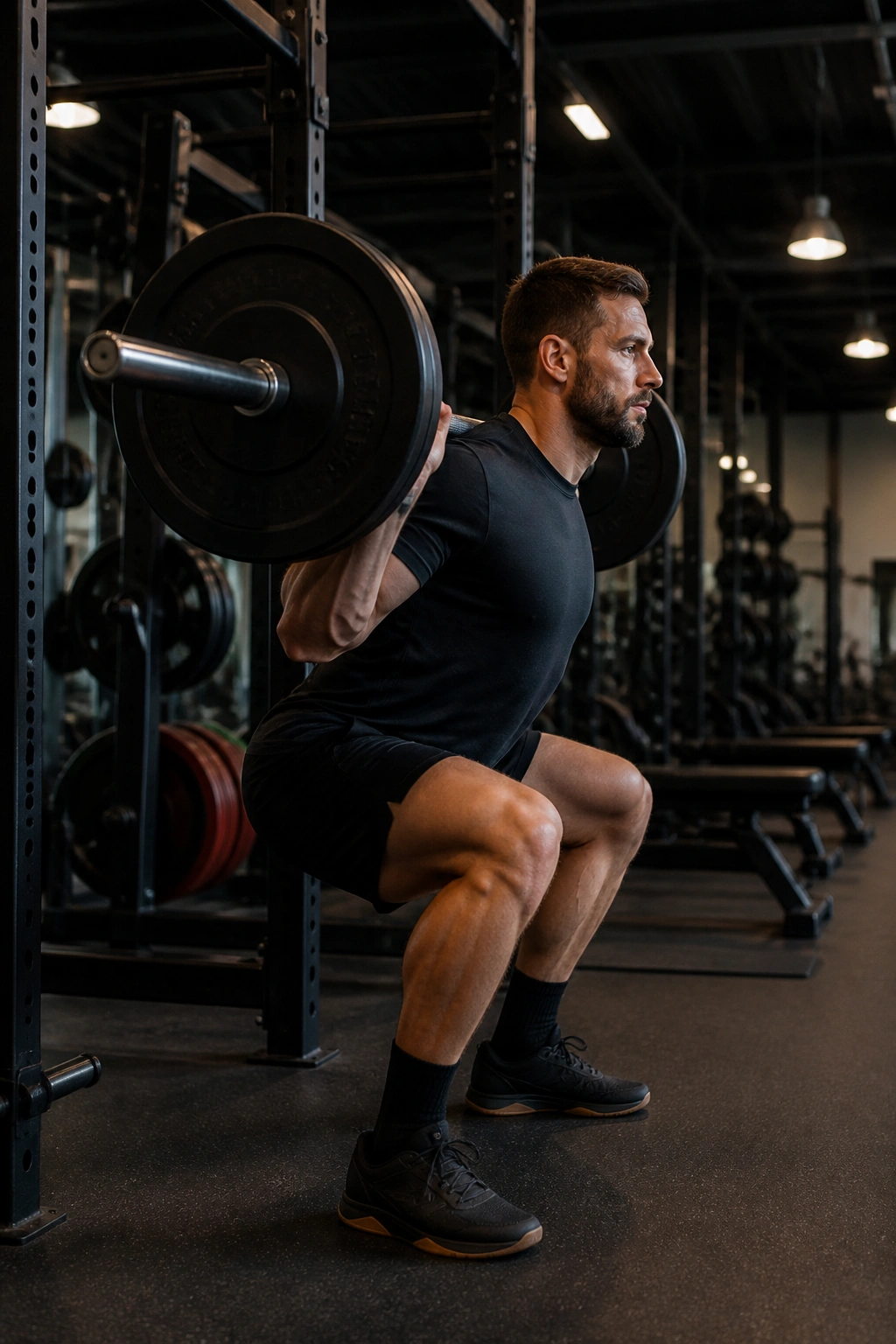
Barbells are blunt tools. That’s why they work so well.
A good barbell full-body workout usually lives on three big lifts: a squat, a press, and a pull or hinge. I’d run back squats for 4 sets of 5, bench press for 4 sets of 5, and barbell rows or deadlifts for 3 sets of 5. Then finish with a short carry or plank variation if you want a little extra work without turning the session into a marathon.
The main thing to watch here is bar speed. When reps start slowing down hard, the set is over. You do not need to prove anything by turning every set into a near-max struggle. That’s how people end up tired, sore, and weirdly undertrained at the same time.
Three lifts. Good rest. Maybe 2 to 3 minutes between sets if the load is heavy. Keep the reps tight and repeat this workout across the week with tiny load jumps.
7. Tempo Repetition Workout
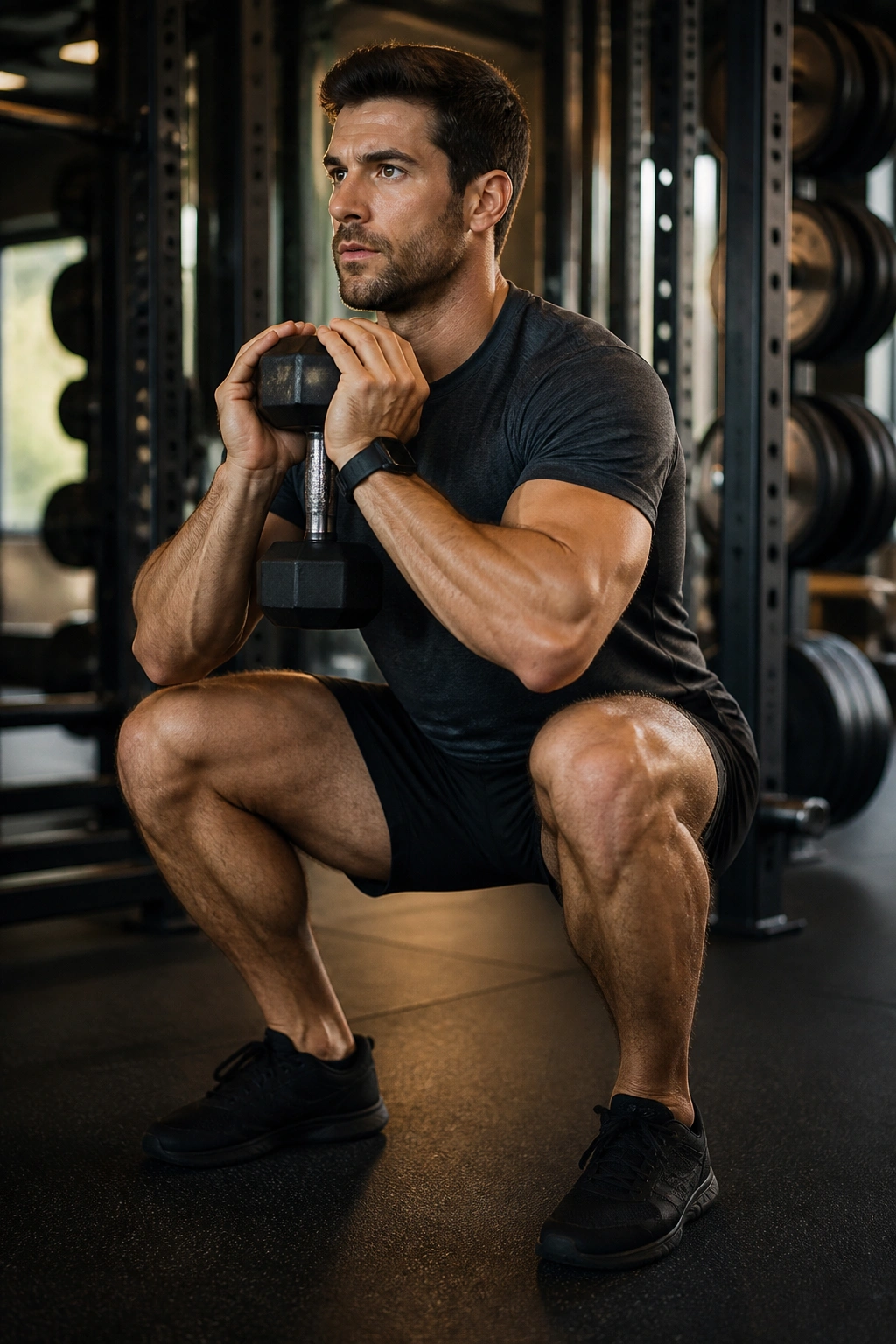
Slowing a lift down changes the whole feel of a session. Three seconds down, one second pause, one second up — that 3-1-1 tempo turns light and medium loads into serious work.
Use tempo goblet squats, tempo push-ups, tempo Romanian deadlifts, and tempo rows for 3 rounds of 8 reps each. The pause at the bottom is the real teacher. It exposes weak positions fast. If your knees cave, your chest collapses, or your hips shoot up too early, the tempo makes it obvious. No hiding.
I like this style when someone wants to train hard without chasing huge weights every time. It builds control, and control usually buys you better reps later when the load goes up. The workout feels slower, but don’t confuse slower with easier. A 3-second eccentric adds up fast.
One clean rule: if you can’t keep the same tempo on the last round, the load is too heavy or the rep target is too high.
8. Push-Pull Superset Session
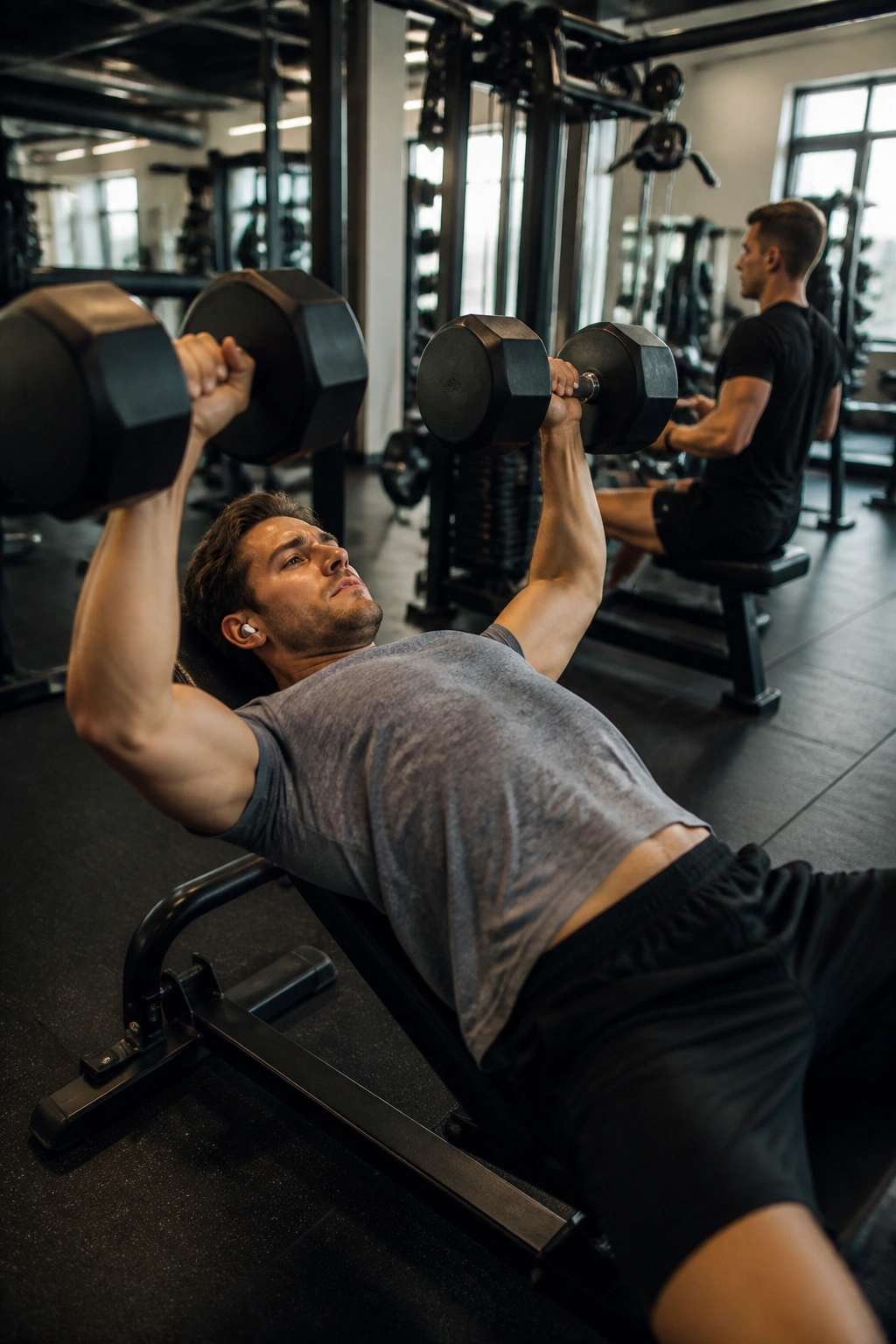
Supersets work best when you pair movements that don’t fight each other too much. A press and a row. A squat and a hinge. That sort of thing.
Run dumbbell bench press for 8 reps, then a cable row for 10 reps. Next, do overhead press for 6 to 8 reps and pull-downs for 8 to 10. After that, pair walking lunges with Romanian deadlifts, 8 reps per leg on the lunges and 10 reps on the hinge. Rest 60 to 90 seconds after each pair.
The nice part is how much work you can pack into a fairly short session without turning every set into a circus. The not-so-nice part is that sloppy supersets become very sloppy very fast, so keep the load moderate and the rest honest.
This is one of my favorite ways to train when time is short and the gym is crowded. You don’t need much floor space, and you can keep moving without losing the thread.
9. Single-Leg Stability Circuit
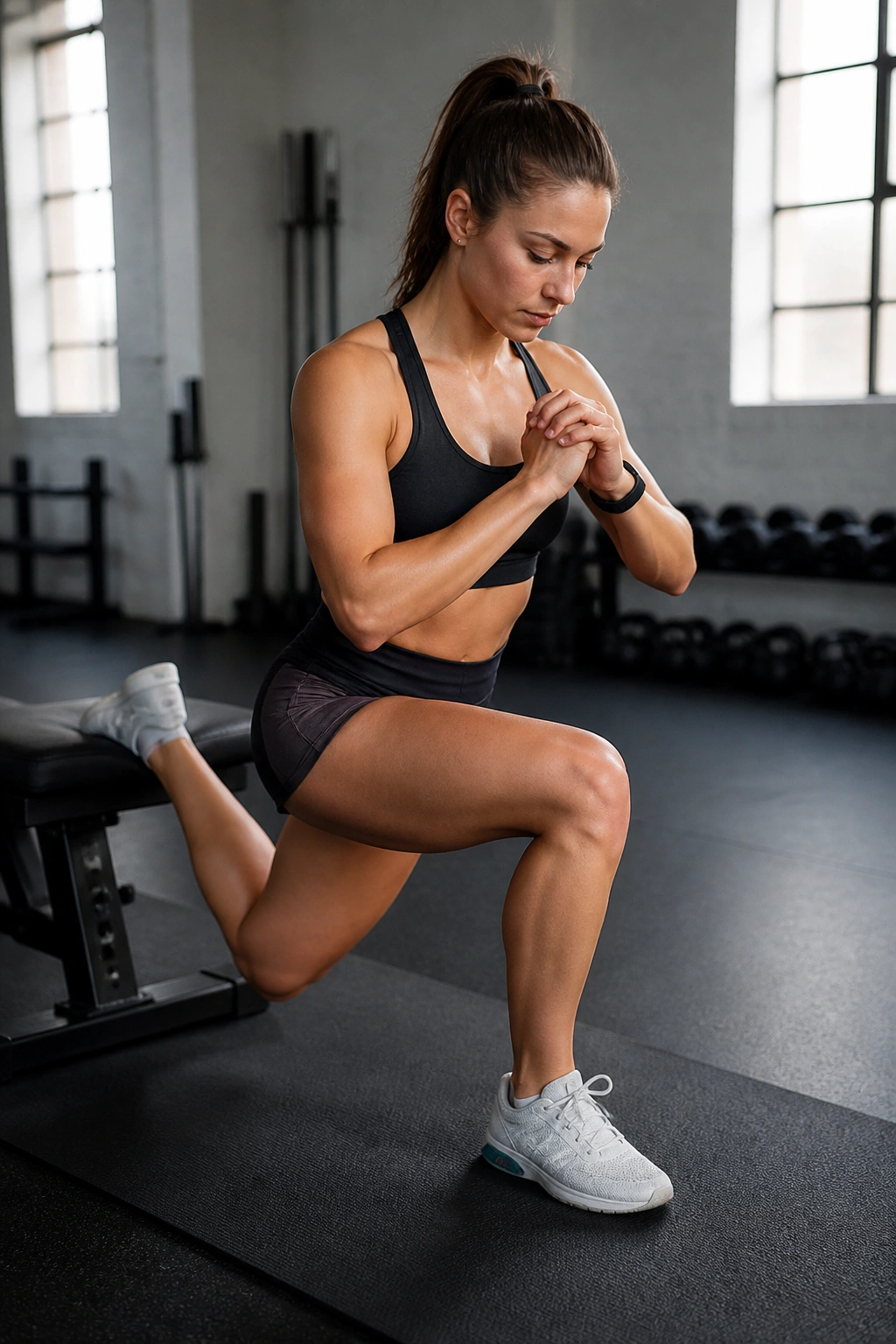
If your lower body work always looks like a squat contest, you’re missing a lot. Single-leg training finds the leaks fast.
Start with split squats for 8 reps per leg, then move to single-leg Romanian deadlifts for 6 to 8 per side. Add step-ups, lateral lunges, and a suitcase carry to finish the circuit. Two or 3 rounds is enough for most people. The goal is not to wobble around for drama. The goal is to control the wobble and clean it up.
What to watch for
- Keep the front foot planted on split squats.
- Reach the hips back on single-leg RDLs.
- Use a box or bench height that lets your whole foot stay active on step-ups.
- On the suitcase carry, don’t lean away from the weight. Stay square.
This workout hits legs, hips, core, and grip without beating you up the way some heavy bilateral days do. That makes it a strong weekly repeat option, especially if your knees like variety.
10. Med Ball Power and Core Work
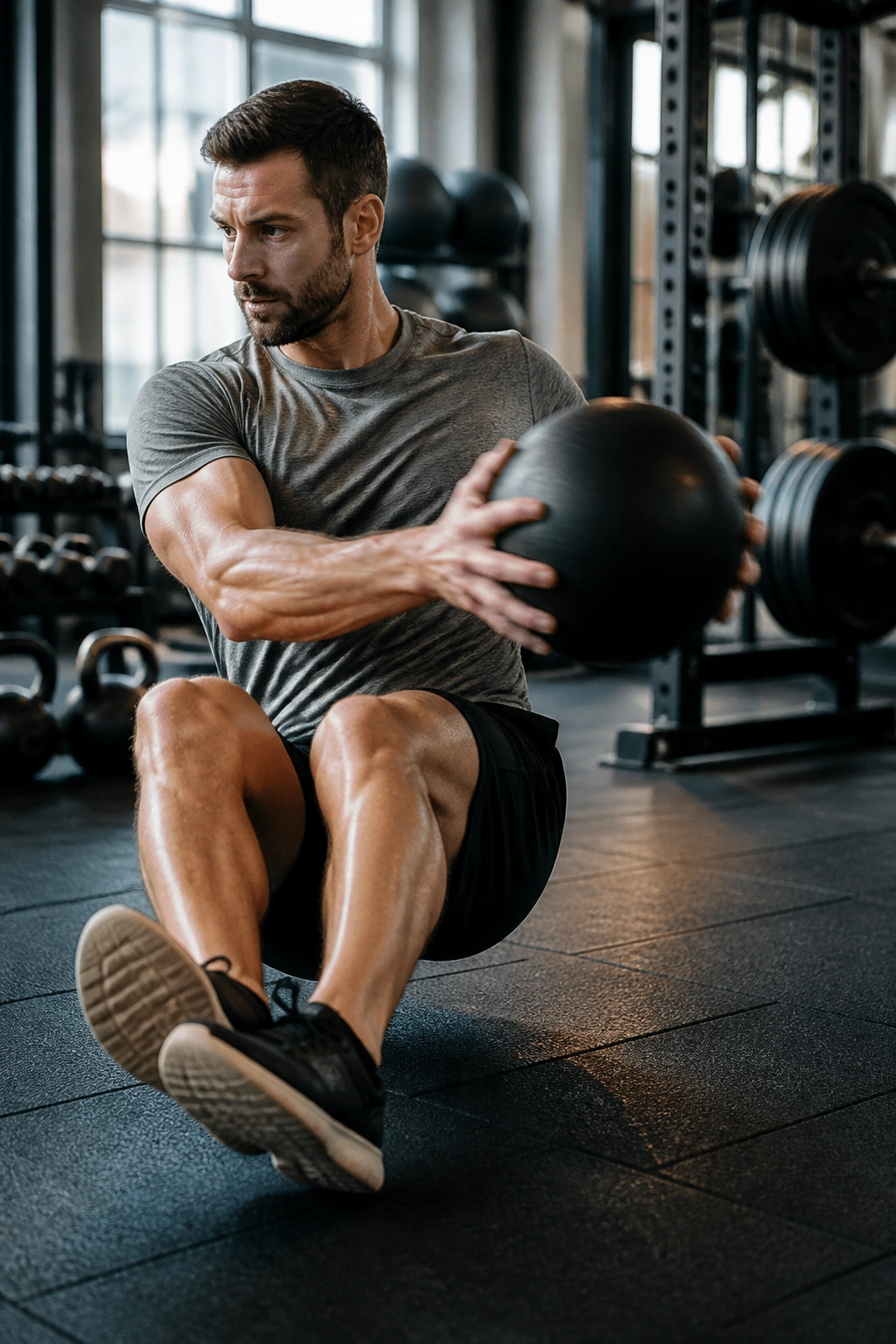
Medicine balls are underrated because they feel a little old-school. That’s part of the charm.
Use rotational throws, overhead slams, chest passes, squat-to-throw reps, and dead bug work for 3 to 5 rounds. Keep the explosive moves short: 4 to 6 reps each. Power training works best when the reps stay snappy. If the ball starts moving like wet sand, you’ve gone too far.
Here’s the useful part: med ball work teaches you to produce force without living in the grind zone. That matters if you want athleticism, not just fatigue. Throw hard. Reset. Throw again. The rest periods can be 30 to 60 seconds, depending on how much space you have and how much bounce your ball has.
A wall, a safe open area, and a 6- to 12-pound ball are enough for most sessions. Heavier isn’t always better here. Sometimes it’s just heavier.
11. Suspension Trainer Total Body Day
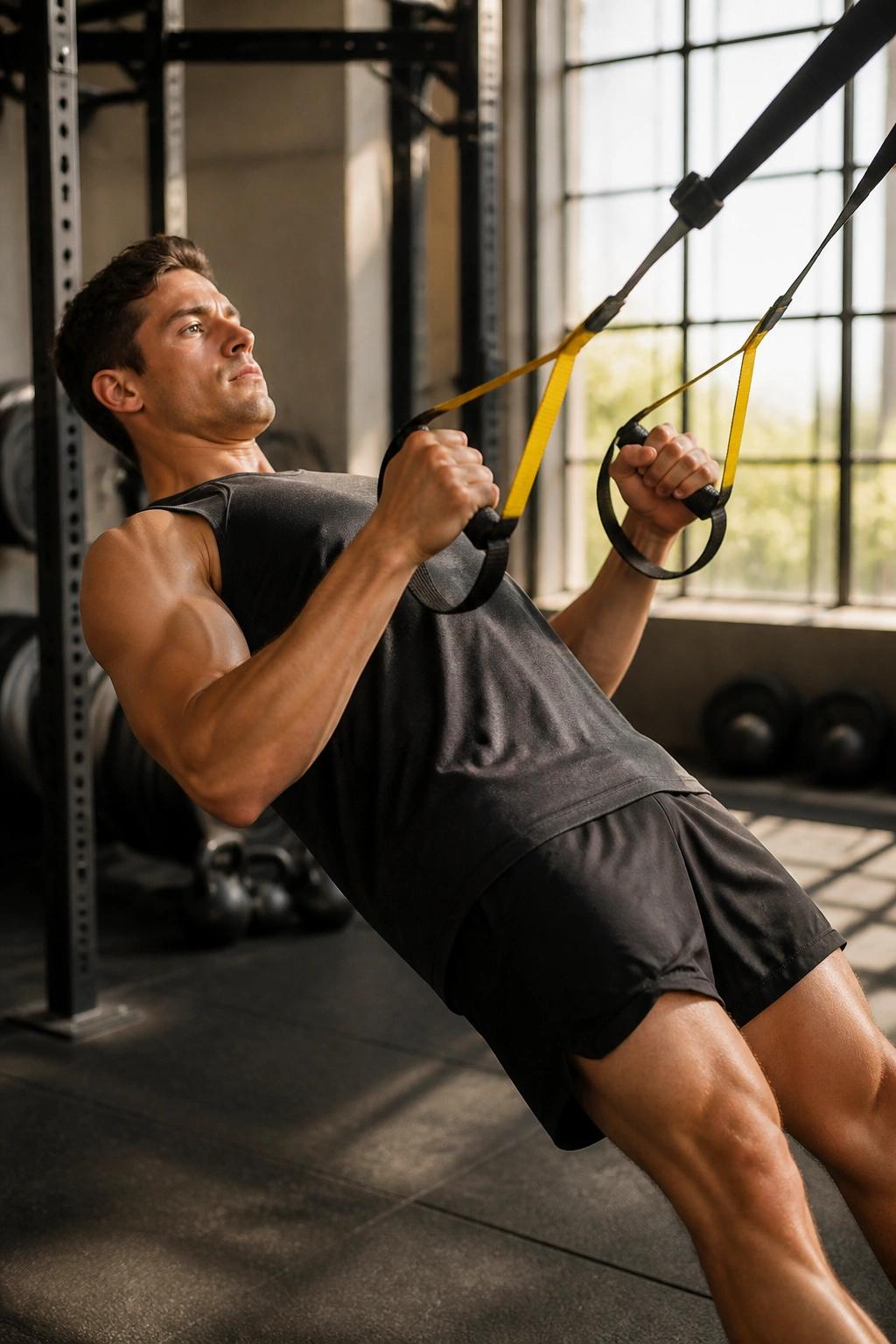
Suspension trainers can look a little awkward the first time you use them. Then they become one of the cleanest ways to train the whole body without a pile of equipment.
Why does this style work so well? Because the straps force you to own your body position. A suspension row, a suspended push-up, a hamstring curl, a fallout, and a single-leg squat all demand control from the trunk outward. That makes the session sneaky-hard.
What makes it different
Instead of chasing load, you chase angle and tension. Step your feet forward on rows to make them harder. Move them back on push-ups if your shoulders need a little less stress. Keep your ribs tucked on fallout work, or your lower back will steal the movement.
I’d run 3 rounds of 8 to 12 reps per exercise, with 45 to 75 seconds of rest. Best for travelers, home gyms, and anyone who wants a full-body workout that doesn’t take over the room.
12. Machine Circuit for Busy Gyms
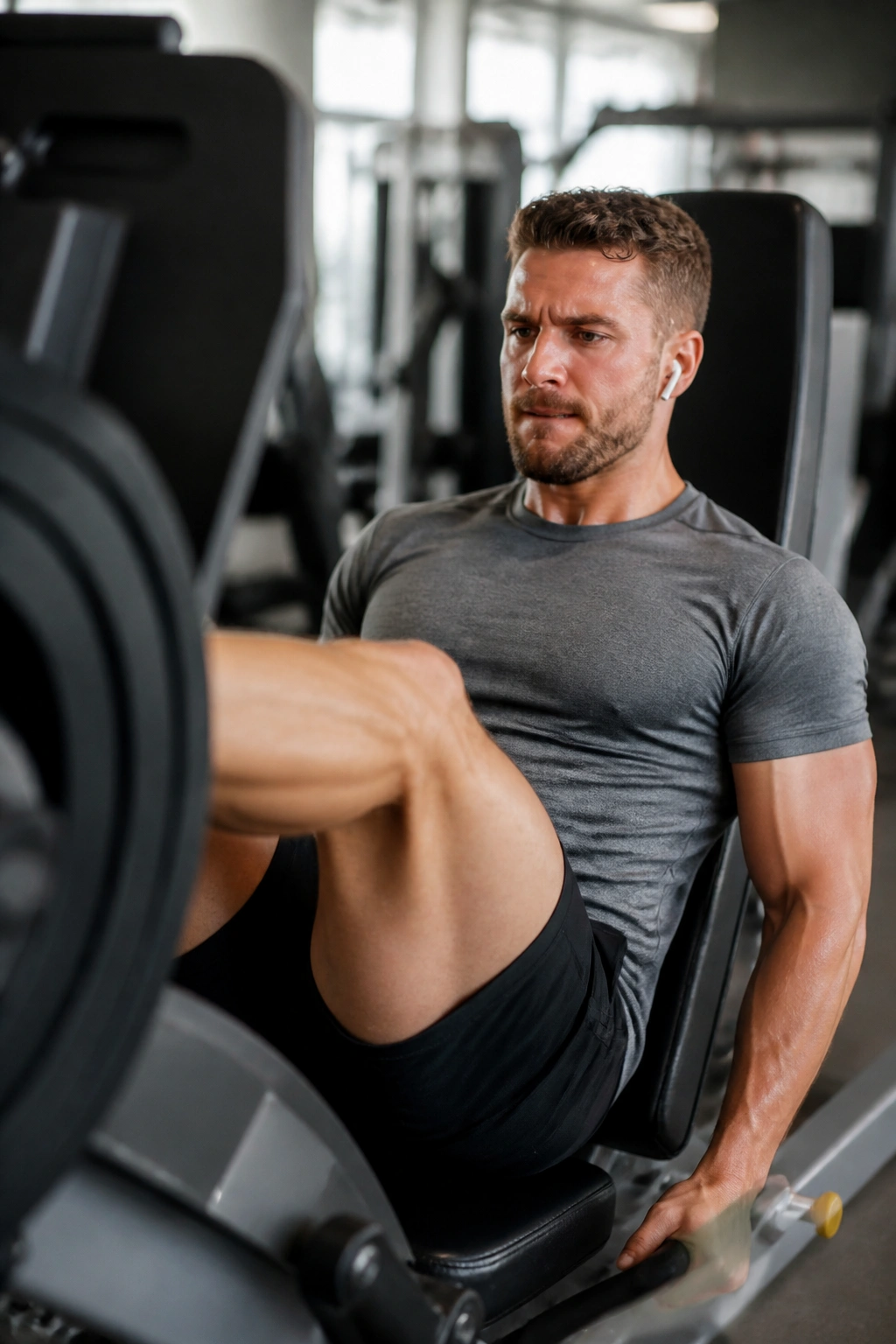
Crowded gym? Fine. Machines still count.
Pick a leg press, chest press, seated row, leg curl, cable chop, and back extension. Use 2 to 4 sets of 8 to 12 reps on each. The beauty here is that the setup is fast, the path is fixed, and you can keep the session moving even when every dumbbell rack is packed.
A lot of people act like machines are a backup plan. I don’t buy that. For steady volume, they’re efficient, repeatable, and easier to recover from than a bunch of uncoordinated free-weight circus work. They’re also easier to push close to failure without form breaking apart.
Keep rest around 45 to 75 seconds if you want more of a conditioning feel, or stretch it to 90 seconds if you want cleaner strength work. The cable chop is the glue that keeps the session from becoming just a lower-body and chest day in disguise.
13. Low-Impact Total Body Cardio
Not every workout needs to leave the floor looking like a crime scene.
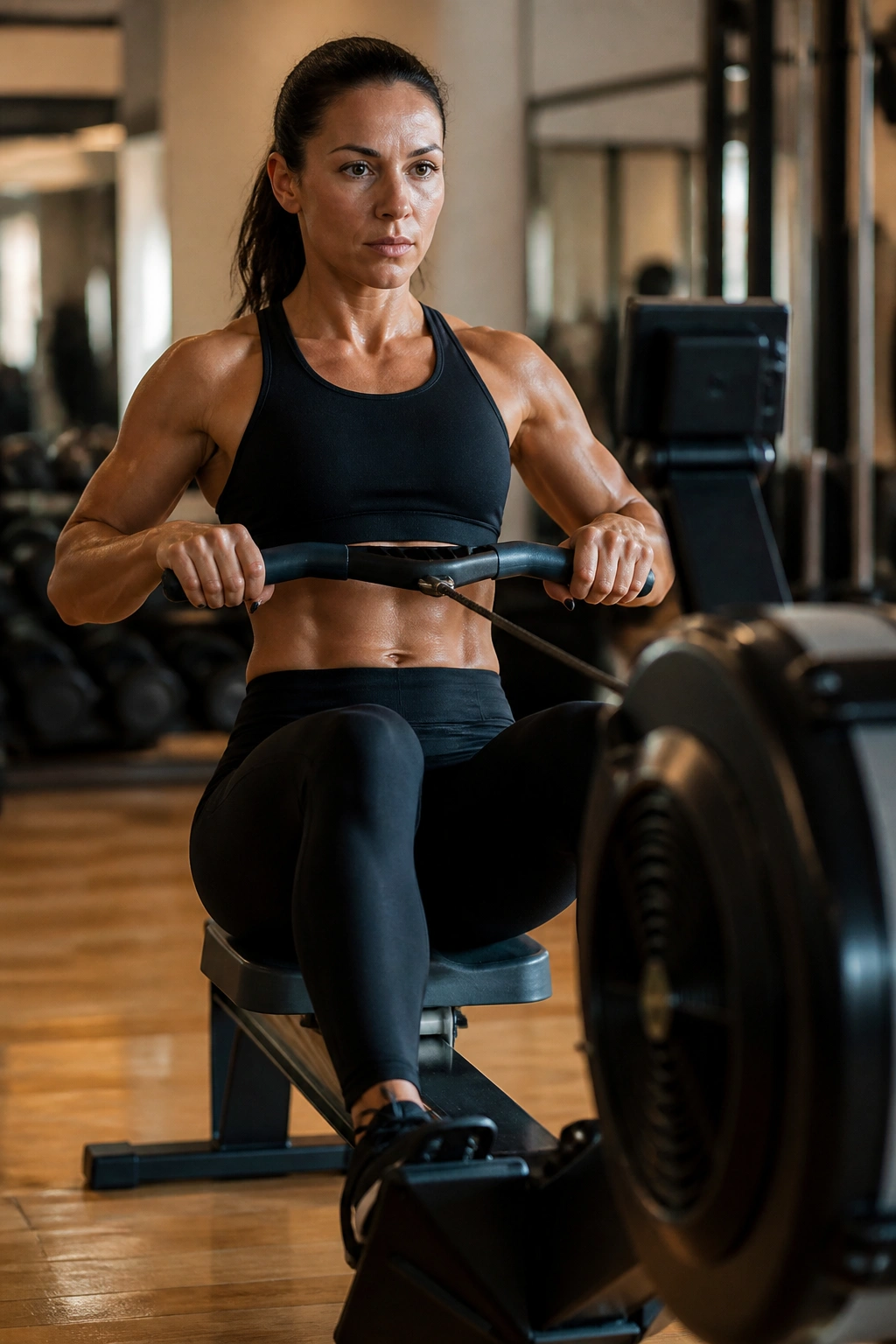
A low-impact full-body session can use rowing, incline walking, shadow boxing, marching lunges, glute bridges, and bear planks. The point is to keep your heart rate up without pounding your joints. That makes this a useful repeatable workout for recovery weeks, busy weeks, or any week when your body is already carrying some noise.
Try 5 rounds of 2 minutes on a rower or bike, followed by 10 glute bridges, 8 push-ups, 10 marching lunges per leg, and a 30-second plank. Keep the effort at a level where you can still talk in short sentences. You should finish warmer and looser, not smoked.
This is the kind of session people underestimate until they realize how much better they feel after it. No drama. No soreness contest. Just useful work.
14. Athletic Jump-and-Lift Session

Power lives in short bursts. If you want a workout that feels athletic, keep the reps crisp and the rest long enough to stay explosive.
Start with box jumps or broad jumps for 3 sets of 3. Then move to push press, front squat, pull-up or row, and kettlebell swing. Use 4 to 6 reps on the lifts and rest 90 seconds between sets. The jumps should never turn sloppy. Land quietly. Reset fully. Do not turn them into cardio.
What to keep in mind
- Use a box height you can land on cleanly.
- Stop jump sets the moment your takeoff slows down.
- Keep the push press fast, not grindy.
- Use a weight on swings that snaps back without yanking your shoulders forward.
This workout is best for people who want strength and pop in the same session. It’s not the place to chase exhaustion. Leave a little in the tank, or the quality disappears.
15. Home Floor Workout With One Pair of Dumbbells
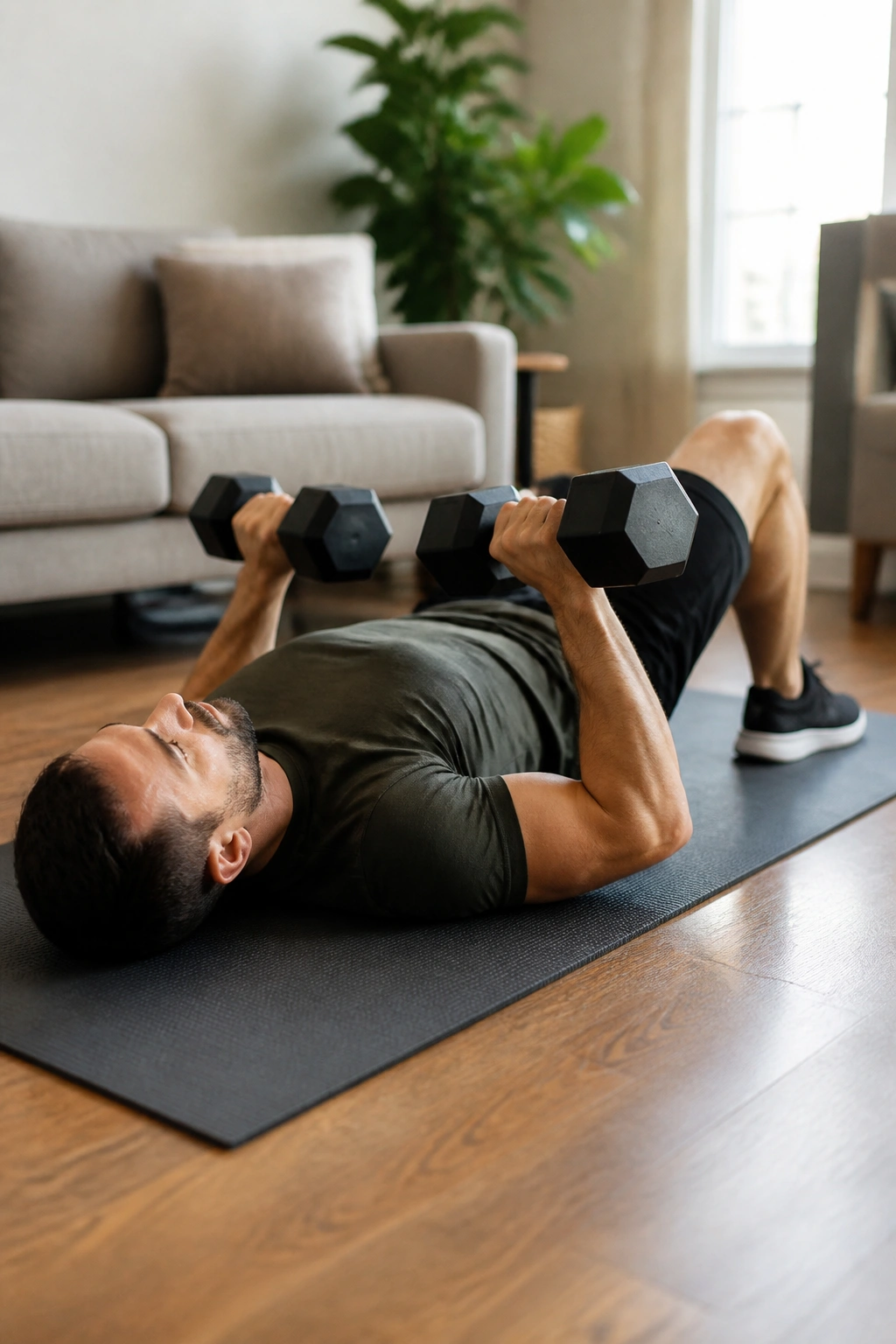
If all you have is one pair of dumbbells and a little floor space, that’s enough. Really.
This home session can run as a circuit: front squat, floor press, bent-over row, reverse lunge, dead bug, and glute bridge. Do 10 reps on the squats and presses, 8 to 10 on the rows, 8 per leg on the lunges, and 8 slow reps on the dead bugs. Two to 4 rounds is plenty.
The floor press deserves more love than it gets. It shortens the range a little, which can be helpful if your shoulders get cranky on a bench. The dead bug keeps the session honest by forcing the trunk to stay quiet while the limbs move. That matters more than people think.
This is a strong repeatable workout when you’re at home and don’t want to improvise with random objects. A mat helps. A timer helps. That’s about it.
16. Heavy Carry and Core Session

Carries are the closest thing lifting has to a secret handshake. They look simple. They’re not.
Use farmer carries, suitcase carries, front rack carries, and overhead carries if your shoulders tolerate them well. Pair each one with a squat or hinge move like goblet squats or Romanian deadlifts, then add a plank drag or side plank to finish. I’d keep each carry between 20 and 40 meters or 20 to 45 seconds.
The reason this session works is that carrying heavy weight forces almost everything to behave at once. Grip. Feet. Hips. Rib cage. Breath. If one piece breaks down, the whole thing gets sloppy in a hurry.
A blunt tip: if you can stroll through the carry like you’re walking to the mailbox, it’s too light. The load should make your torso work, but not fold. There’s a line there. Stay on the right side of it.
17. Push-Pull Density Ladder
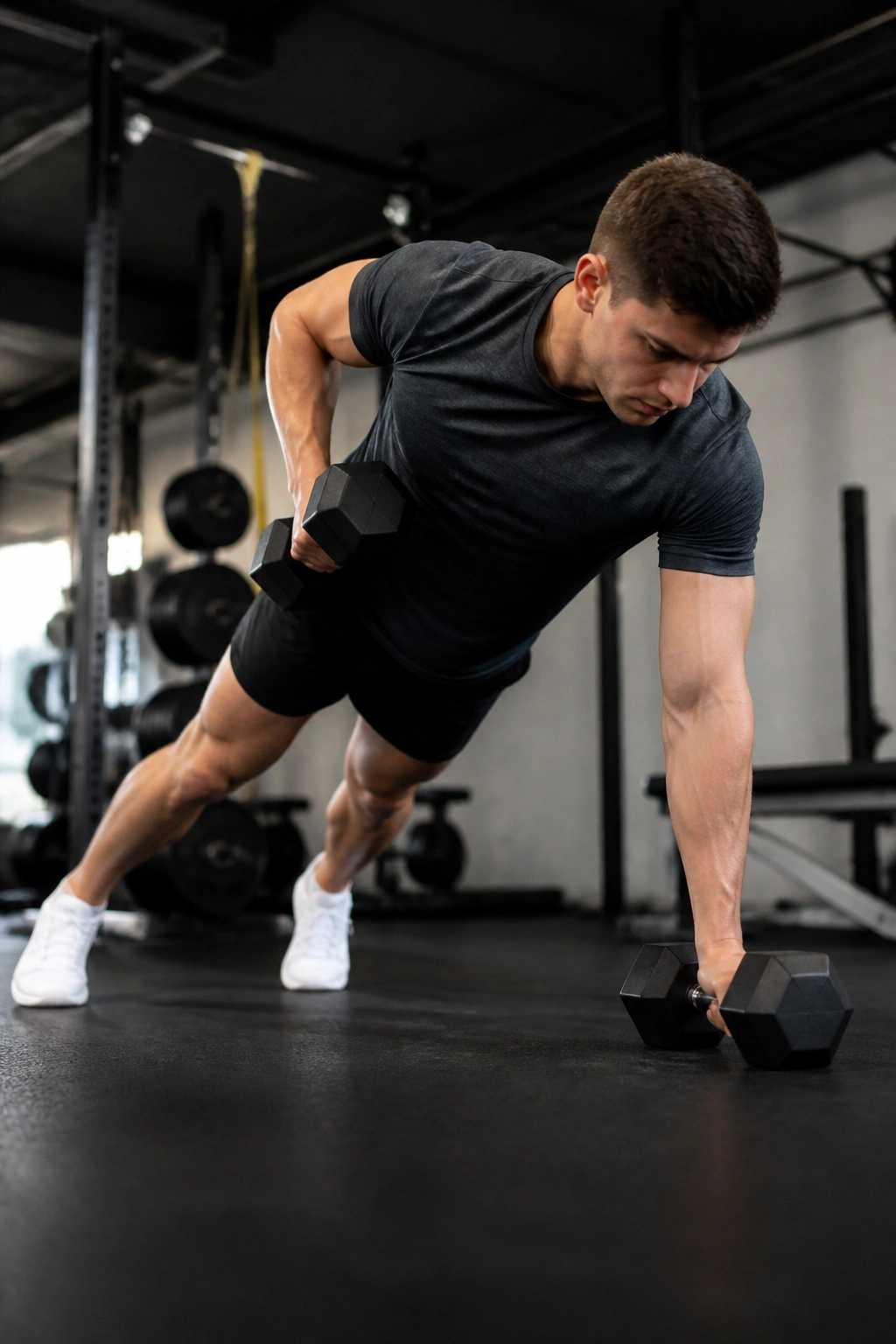
A density ladder is a neat way to build work without rushing into ugly reps. It’s controlled, but it still feels like you’re earning your rest.
Set a 12-minute clock. Do 2 push-ups and 2 rows, then 4 and 4, then 6 and 6, then 8 and 8. If you finish the ladder, start back at 2. Pair that with 2 sets of squats and 2 sets of hip hinges afterward. You can use dumbbells, a barbell, or cables. The tool matters less than the rep scheme.
Why it works
You accumulate volume fast, but the small early sets keep your form sharp. That means the later sets have a chance to matter. A lot of people go too hard too soon and then wonder why the last half of the workout looks sloppy. This setup prevents that.
Keep the clock honest. Keep the movements clean. That’s the whole deal.
18. Glutes, Back, and Shoulders Focus
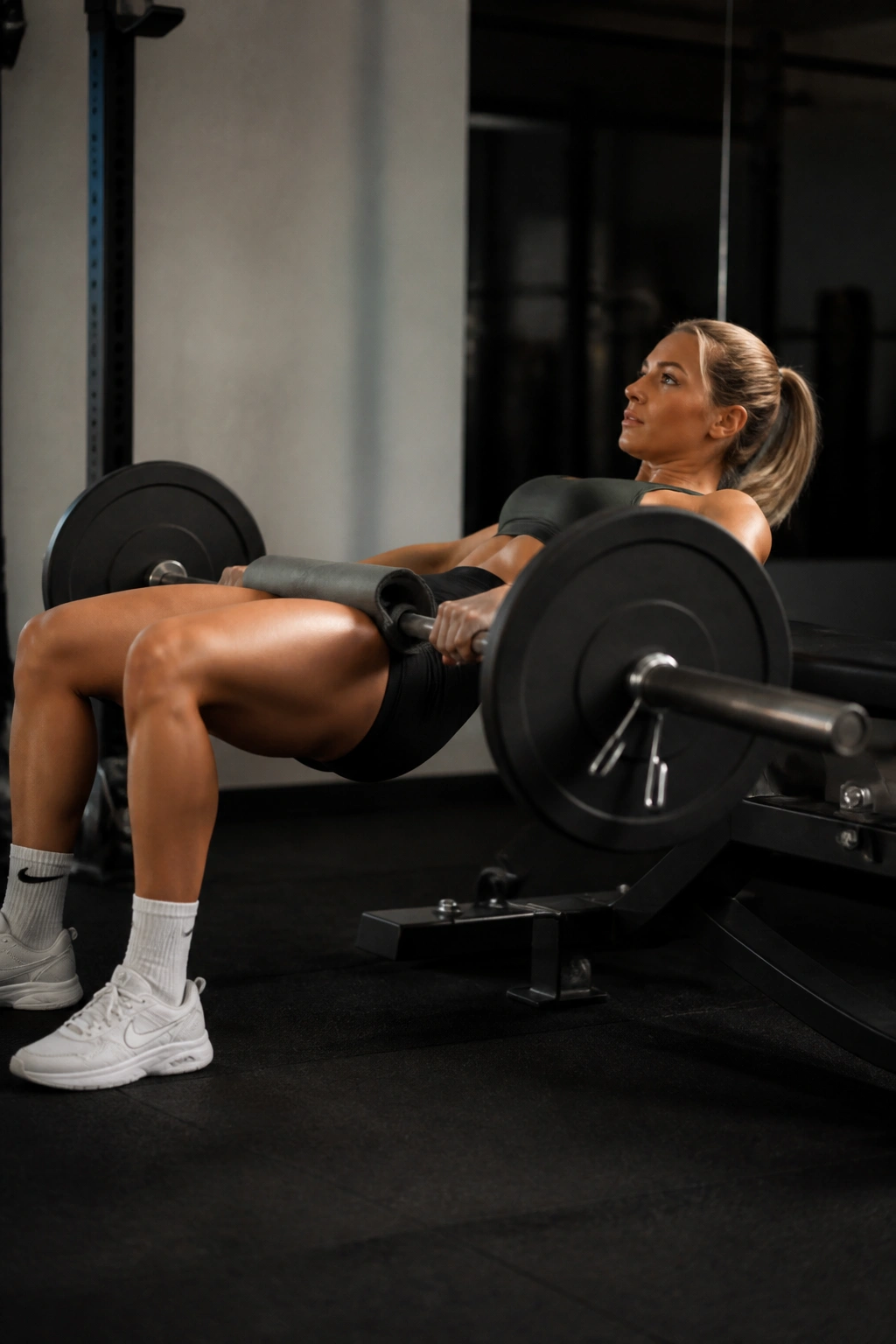
Some total body workouts lean a little harder on posture muscles, and I like that. Too many people spend the week curled forward at a desk and then wonder why their lifts feel stuck.
Run hip thrusts or glute bridges for 10 to 12 reps, chest-supported rows for 8 to 10, dumbbell overhead press for 8, reverse lunges for 8 per leg, and face pulls or rear-delt flys for 12 to 15. Three rounds usually does the job. You’ll feel the glutes, upper back, and delts wake up in a way that carries over to everything else.
I’d keep the rest moderate here, around 45 to 75 seconds. Enough to stay sharp, not so much that the session drifts.
This is one of those workouts that doesn’t look flashy on paper but makes the rest of your training feel better. Shoulders sit nicer. Hips behave. Rows feel cleaner. That is a good trade.
19. Sled Push Total Body Session
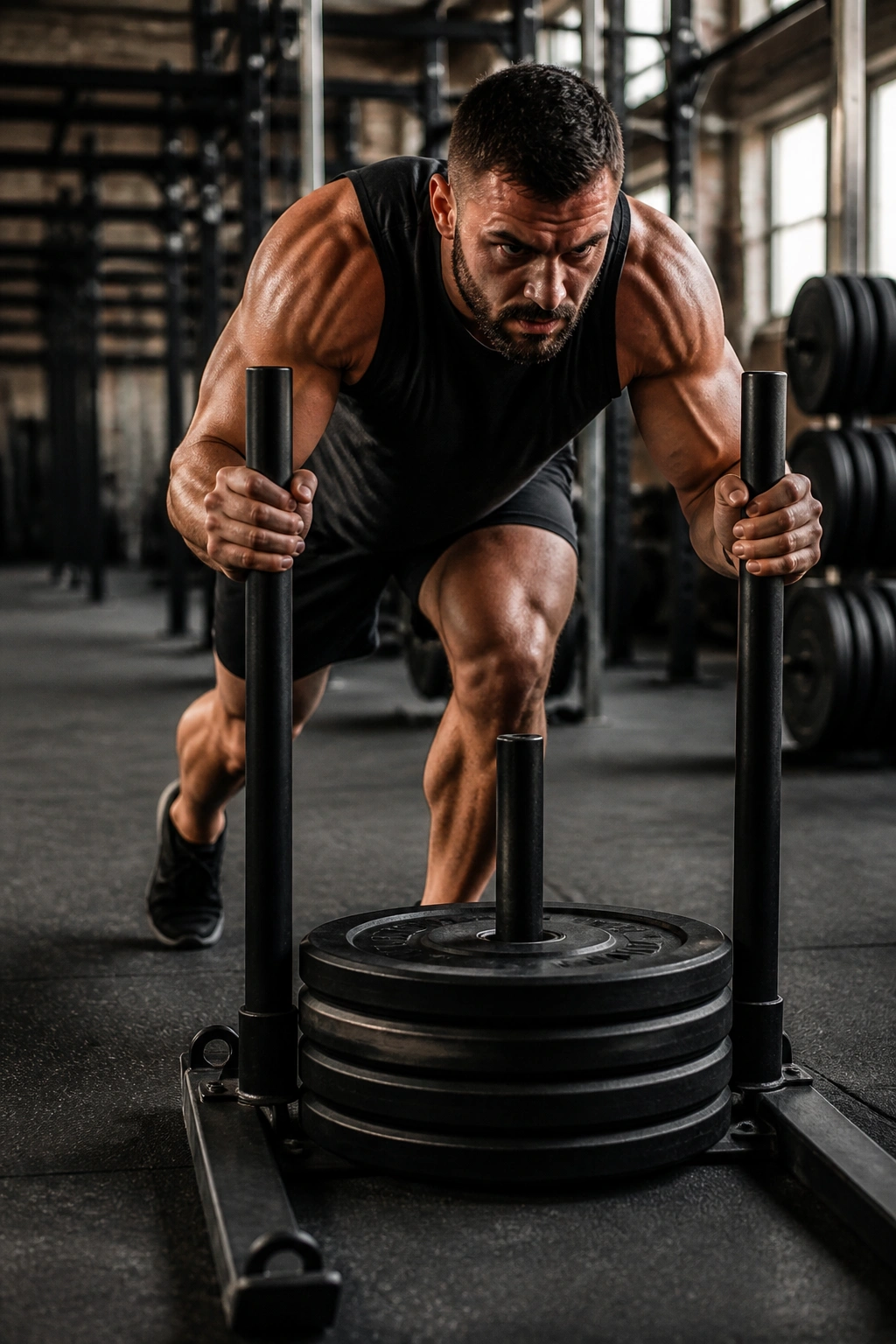
If you have access to a sled, use it. I mean that.
A sled session can include heavy pushes, backward drags, forward drags, walking lunges, bear crawls, and loaded carries. Try 6 to 10 pushes of 15 to 25 meters, then match it with 3 rounds of lunges and carries. The sled lets you work hard without the eccentric soreness that comes from a lot of jumping or heavy lowering.
That makes this a sneaky-good weekly repeat workout. You can push your conditioning without wrecking your legs for two days. Your quads burn. Your lungs complain. Your joints usually stay happier than they do after a pile of box jumps.
If the gym floor is slick, use lighter loads. If the sled stalls halfway through every push, lower the plates. Speed matters more than bragging rights here.
20. Recovery-Friendly Light Load Day
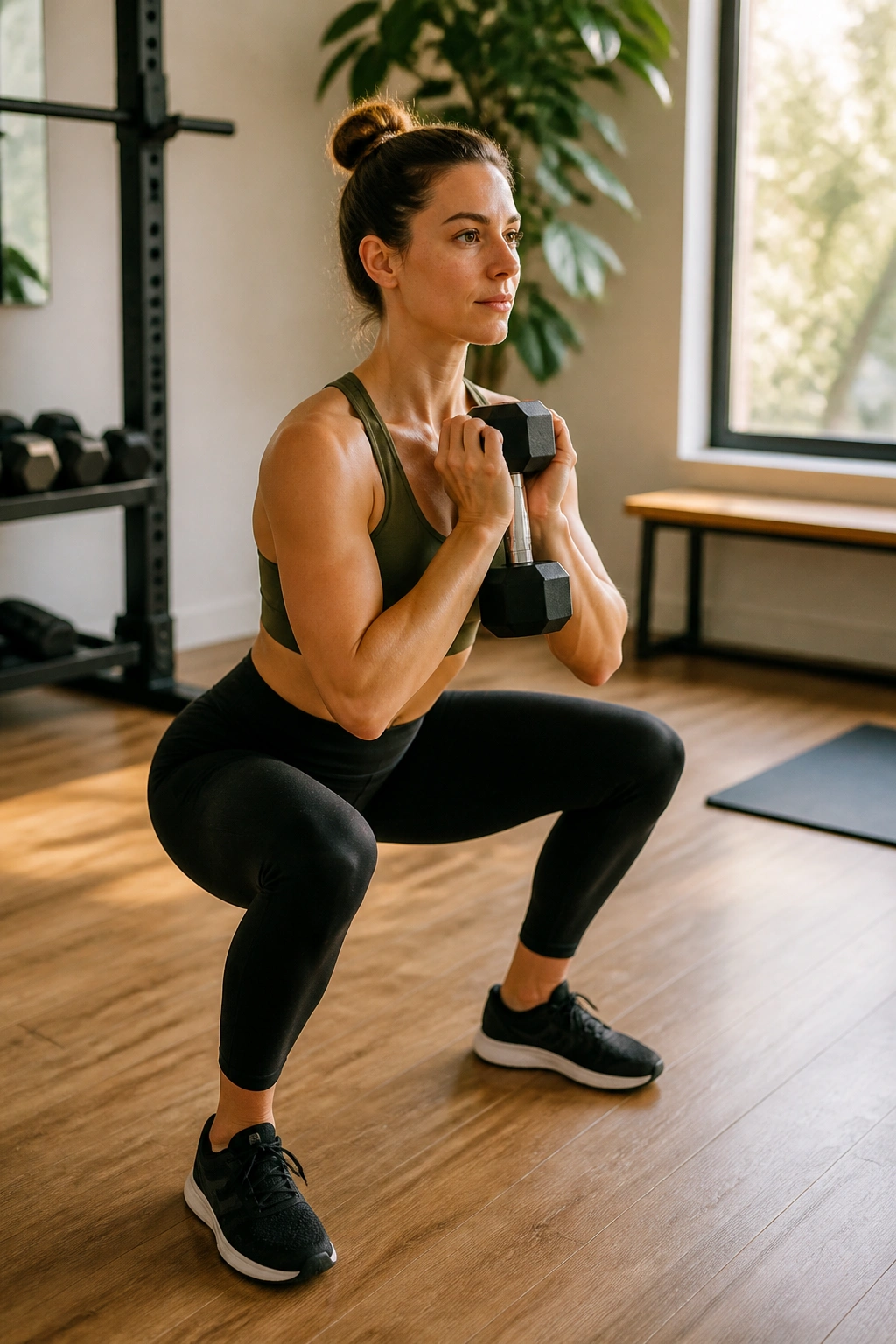
What if you want to train, but your body feels cooked? Use a light load day instead of pretending you’re fine.
Choose a goblet squat, an incline push-up, a cable row or band row, a hip hinge with a very light dumbbell, and a dead bug or bird dog. Do 2 to 3 rounds of 10 to 12 reps with a pace that leaves you breathing easier than a hard workout would. Keep the effort around a 6 out of 10. You should finish fresher than when you started.
This is not a throwaway day. It keeps the habit alive, moves blood through the muscles, and gives your joints a break from heavy strain. That matters, especially if your other sessions are hard.
A lot of people skip days like this because they don’t look impressive. Fine. More for everyone else. A light, clean total body workout can be the thing that keeps the week from falling apart.
21. Full-Body Benchmark Challenge
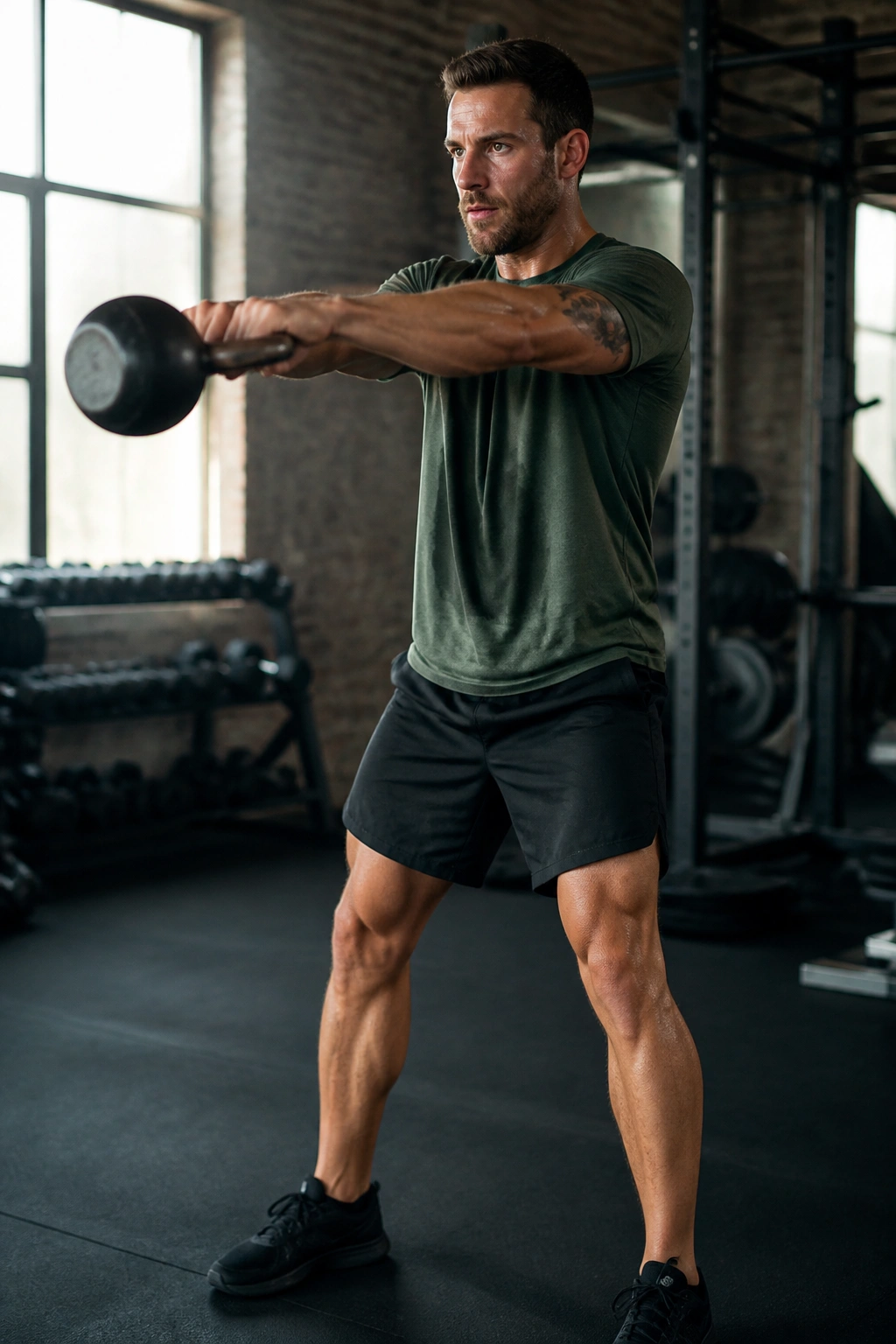
Every weekly training setup needs one session that tells the truth.
Use this benchmark: 5 rounds for time of 8 goblet squats, 8 push-ups, 10 kettlebell swings, 10 dumbbell rows per side, and a 30-second plank. Keep the same load and the same rest pattern each time you repeat it. That way you can track real progress instead of guessing.
How to judge it
- Finish time should drop a little over time.
- Reps should stay clean on round 5.
- Your breathing should recover faster between rounds.
- The plank should feel controlled, not like survival.
Do not chase speed so hard that your form turns into noise. That would ruin the test. The value here is that the workout gives you a simple standard you can repeat next week and the week after.
It’s a benchmark, but it’s also a real training day. Good tests should still build something.
22. The Weekly Anchor Workout
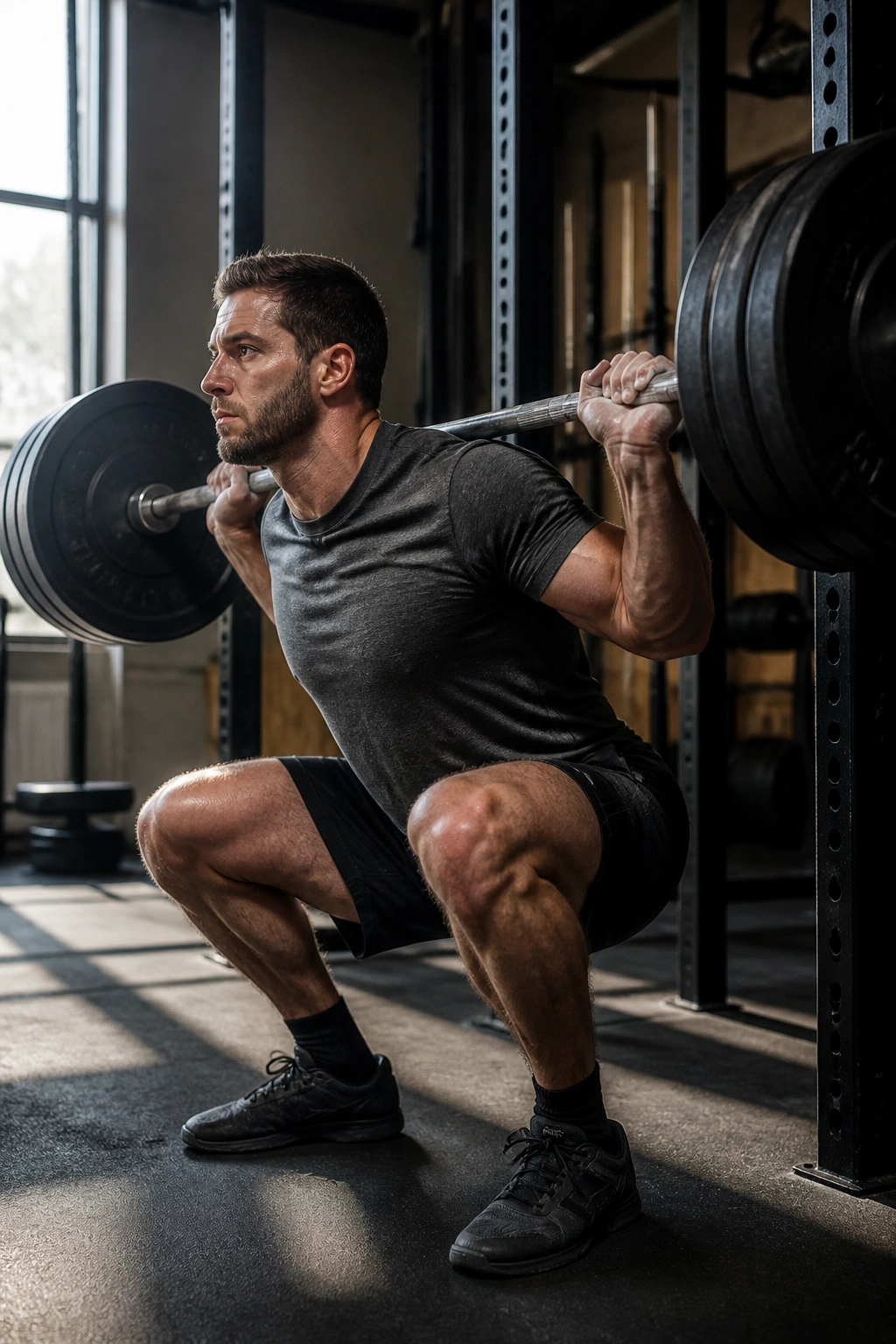
If I had to keep one total body workout on the shelf and use it again and again, this would be it. Not because it’s glamorous. Because it works.
Run back squat, bench press, row, Romanian deadlift, and a loaded carry. Use 3 sets of 5 on the squat and bench, 3 sets of 8 on the row, 3 sets of 8 on the deadlift, and 3 carries of 30 seconds. Rest 90 seconds to 2 minutes on the big lifts and about a minute on the carry. That gives you strength work, muscle work, and a finish that leaves you feeling like you trained, not wandered around.
What makes this such a solid anchor is the balance. You get push and pull. Knee bend and hip hinge. Bracing and grip. Nothing fancy, nothing wasted.
Keep this one in rotation for weeks at a time. Add a small amount of load when the sets stay crisp. If one lift stalls, leave the others alone and keep moving. That’s usually enough.
