



Pilates workouts for people who sit all day should do one thing well: undo the shape of the chair. A good session opens the front of the hips, brings the ribs back over the pelvis, and wakes up the muscles that stop your low back from doing all the work.
Sitting all day is sneaky. The body does not just get tight; it gets stuck in one pattern. Glutes go quiet. The chest collapses forward. The neck starts doing overtime. I see people waste time stretching hamstrings when the real issue is usually a sleepy core, a stiff thoracic spine, and hip flexors that have spent hours shortened and ignored.
The useful Pilates for desk bodies feels almost too simple at first. Then your back stops nagging you during the commute, your shoulders sit lower without you thinking about it, and standing up from a chair stops feeling like a small negotiation.
Start with the move that gets the body to notice itself again.
1. Seated Pelvic Clock Reset
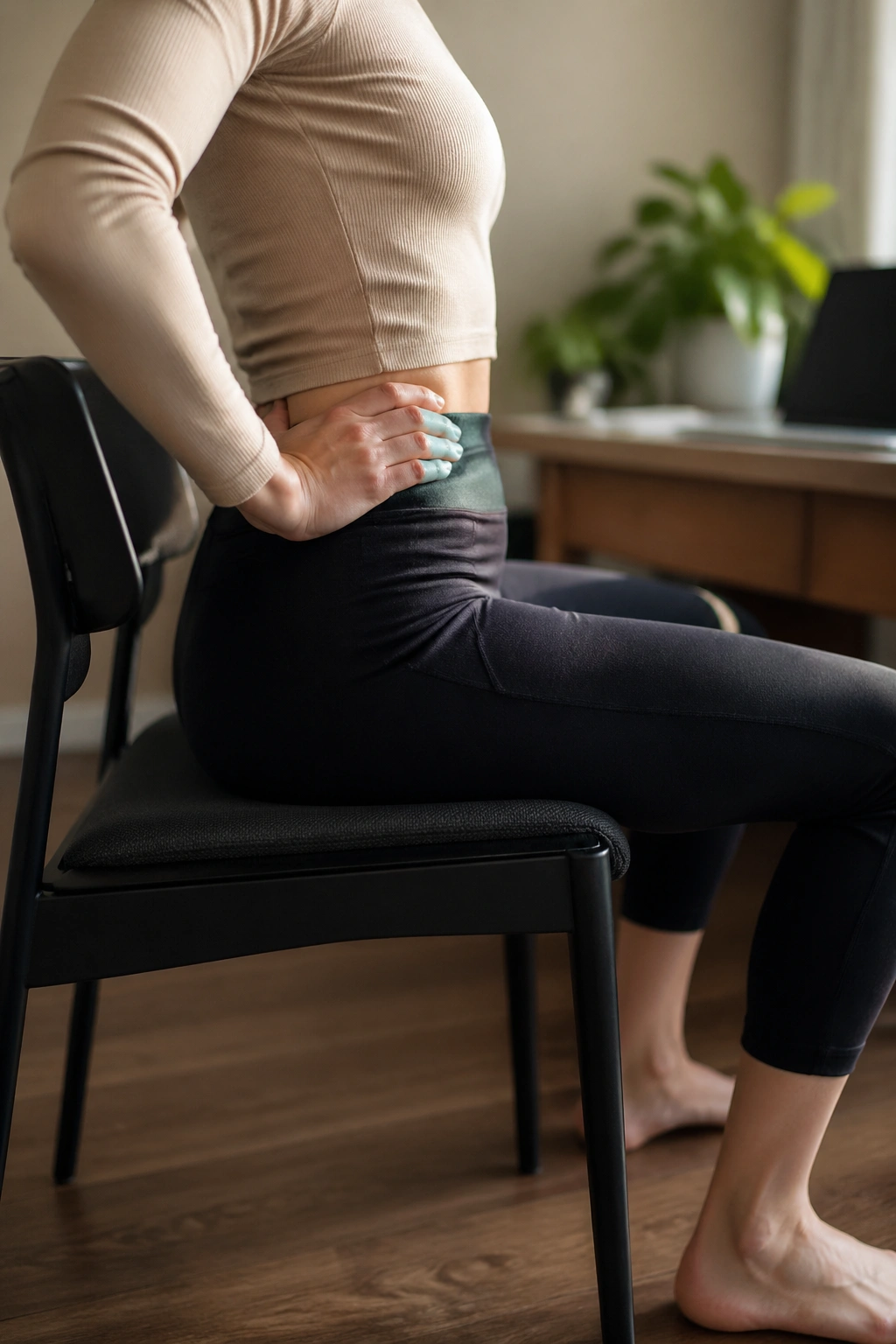
Start sitting on the edge of a sturdy chair. This is the least dramatic move on the page, and I mean that as a compliment.
The point is to teach the pelvis that it can tilt, tip, and circle instead of sitting frozen in one position. That matters more than people think. When you spend hours tucked into a seat, your pelvis often forgets how to move independently from your ribs.
Why It Works After a Long Desk Day
Think of this as a wake-up call for your low belly and lower back. You are not chasing a big stretch here. You are reintroducing small, clean motion so the rest of the routine feels easier.
A chair can be a trap, but it can also be useful. If you sit tall, keep both feet flat, and gently rock the pelvis forward and back, the spine starts to organize itself again.
How To Run The Reset
- Tilt the pelvis forward and back 5 times.
- Tip it side to side 5 times.
- Circle it slowly in one direction for 5 rounds.
- Reverse the circle for 5 more rounds.
- Finish with 3 slow arm reaches overhead, exhaling as the ribs soften down.
Tip: Keep the movement small. If it looks obvious from across the room, it’s probably too big.
2. Half-Kneeling Hip Flexor Release
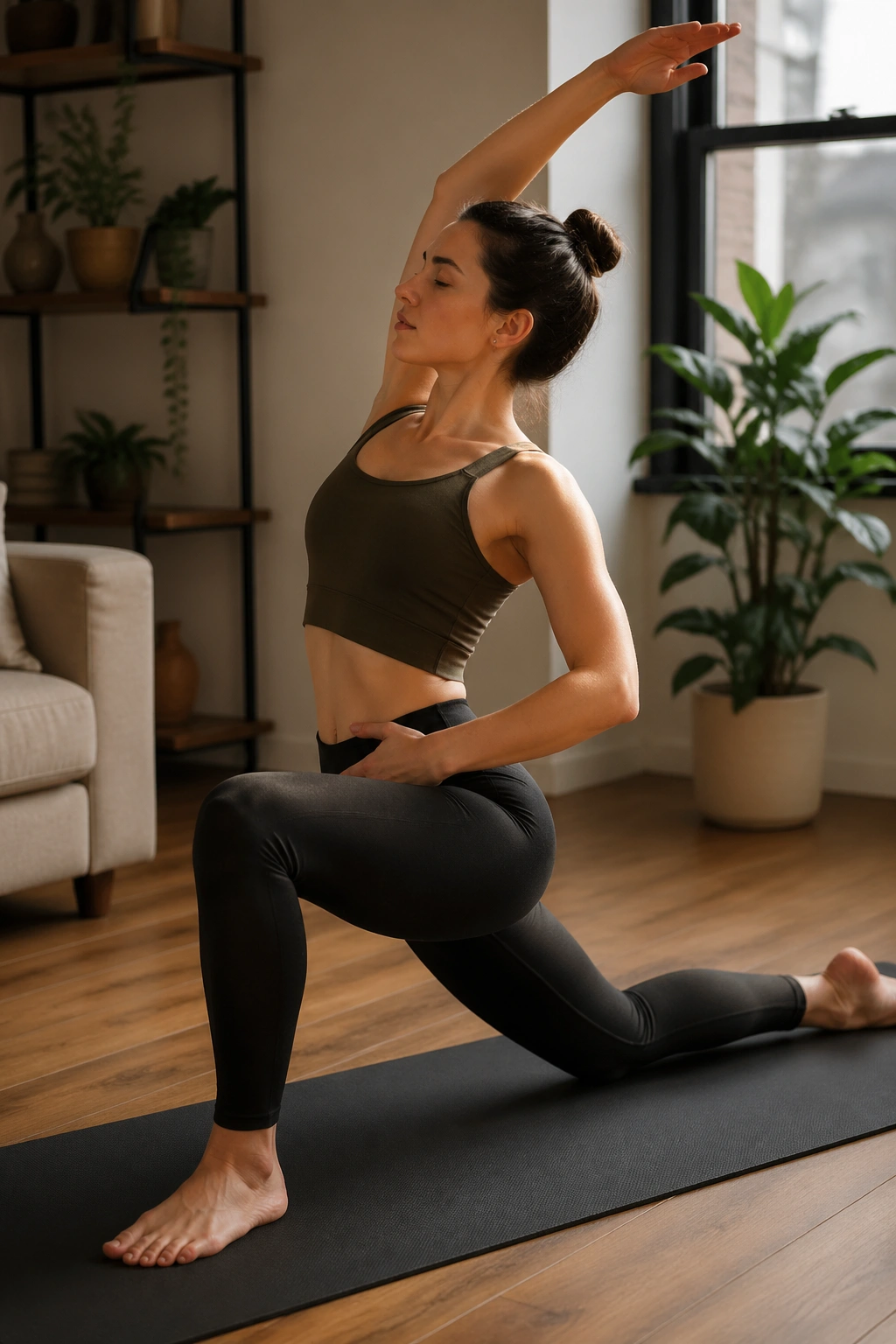
Why does the front of the hip feel like a bike lock after a desk day? Because it is basically living in a shortened position for hours.
Half-kneeling work helps because it puts one hip into extension while the other side stays grounded. You get a stretch that feels more honest than a standing lunge, and you can actually control the pelvis instead of hanging into your low back.
The trick is the back-leg glute. Squeeze it gently before you move anywhere else. Then tuck the tail just a touch, lift the sternum without flaring the ribs, and reach the same-side arm overhead. If your low back pinches, you are going too far. Back off and keep the shape smaller.
A lot of people try to yank the hip flexor open with sheer force. That usually just makes the lumbar spine arch harder. Better to hold 30 to 45 seconds per side, breathe into the side ribs, and let the front of the hip gradually stop gripping.
3. Glute Bridge Ladder
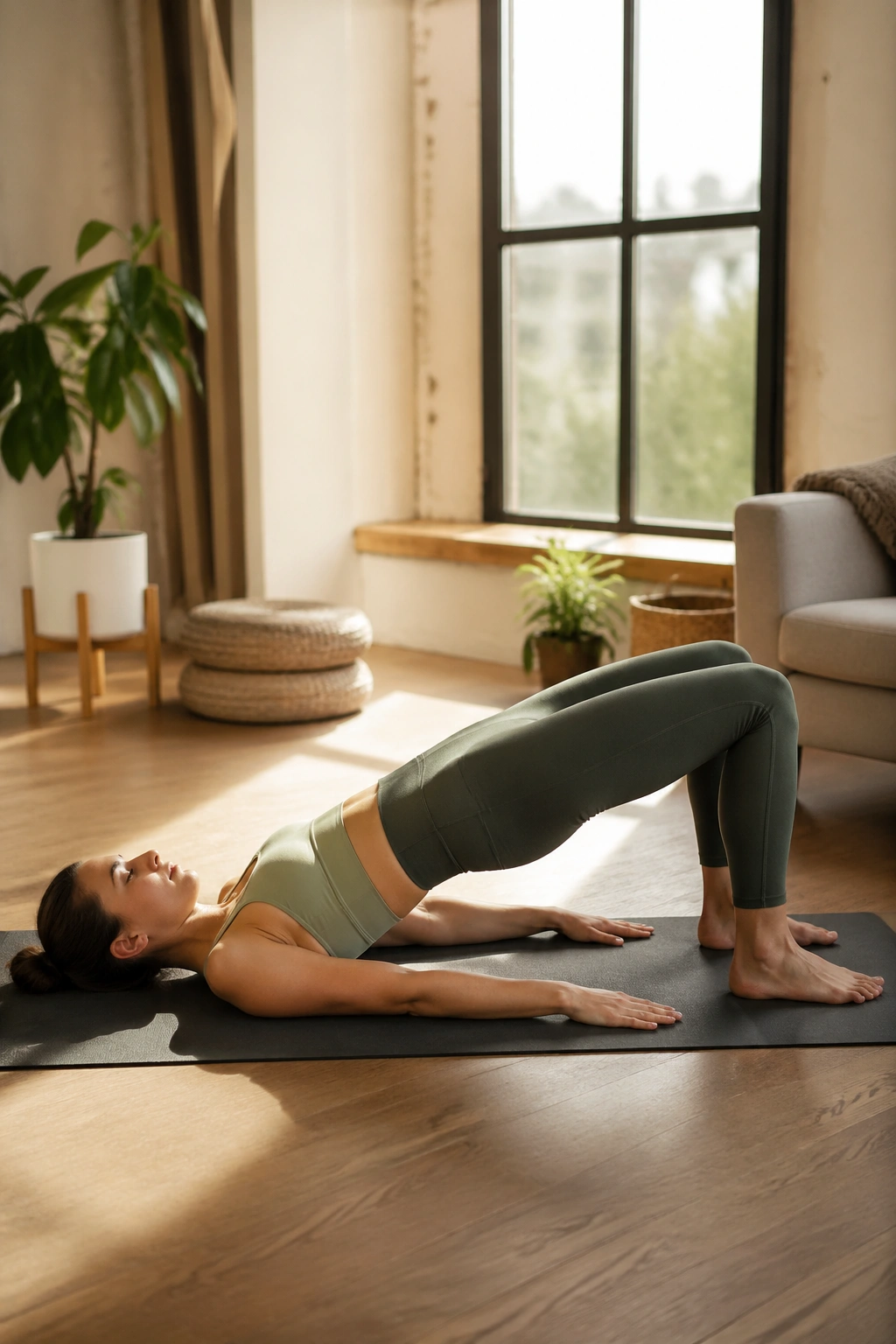
Your glutes do not need a pep talk. They need bridges.
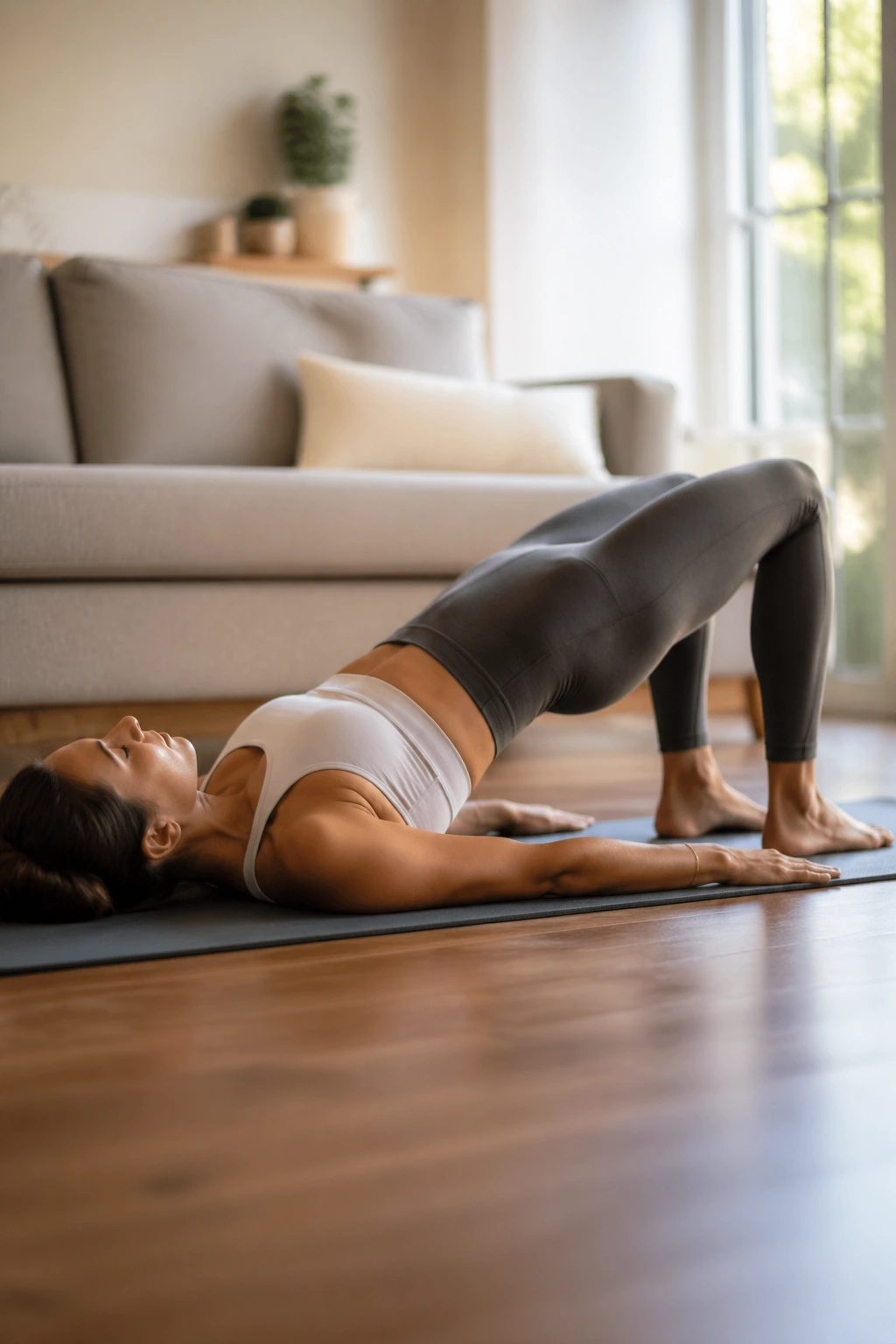
After sitting, the backside often acts like it has forgotten how to participate. A bridge ladder turns the glutes back on without asking the lower back to fake the job. It is one of those Pilates workouts that feels basic, then quietly solves a lot.
Build The Ladder
- Lie on your back with knees bent and feet hip-width apart.
- Exhale and lift for 8 slow bridges.
- Pause at the top for 3 seconds on the last 4 reps.
- Add 8 tiny pulse lifts at the top.
- Finish with 6 bridge marches, lifting one foot at a time without dropping the pelvis.
Keep the weight in the heels, but do not jam them into the floor. You want the back of the legs active and the ribs soft.
If your hamstrings cramp, bring the feet a little closer to your seat. If your low back takes over, lower the height of the bridge. A smaller bridge done well beats a huge one that looks dramatic and does nothing useful.
4. Cat-Cow Into Swan Prep
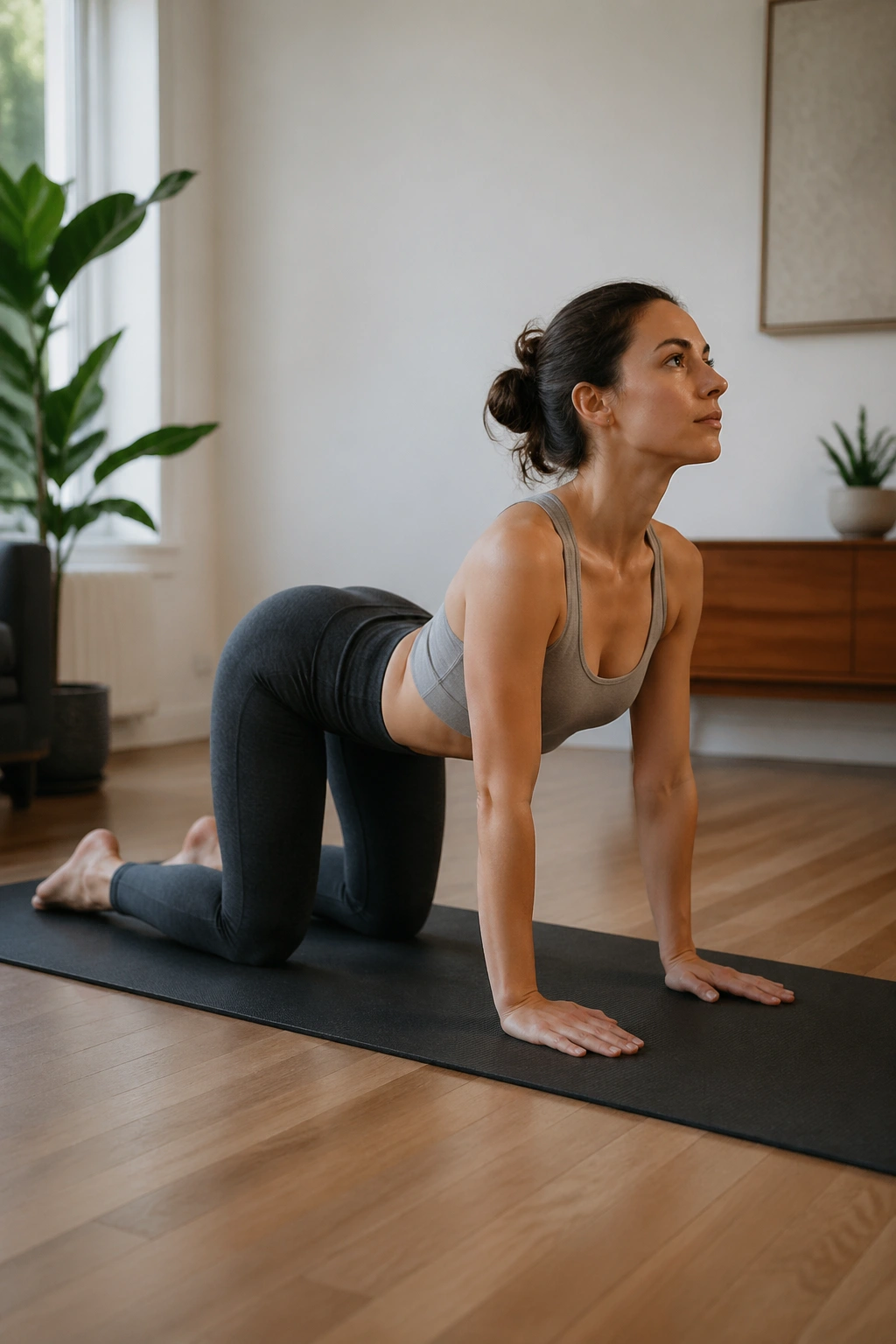
Rounded shoulders usually want extension, not another aggressive stretch.
Cat-cow gives the spine a chance to move segment by segment. Swan prep adds a little thoracic extension so the upper back can stop living in a permanent slump. Together, they loosen the places that desk work tends to freeze.
Keep The Neck Calm
The neck is usually the first place people overwork in this sequence. Don’t crank your chin up. Keep the back of the neck long, and think about lifting through the chest instead of throwing the head back.
A simple version works best: 6 slow cat-cows on hands and knees, then 4 swan preps with the elbows bent and the chest hovering just a few inches off the mat. If wrists are cranky, do the cat-cow on forearms or fists. No prize is given for suffering through bad wrist angles.
What matters is the change in shape. You should feel the chest open, the shoulder blades slide down a little, and the spine find a rhythm it never gets from a chair.
5. Side-Lying Clams And Leg Lifts
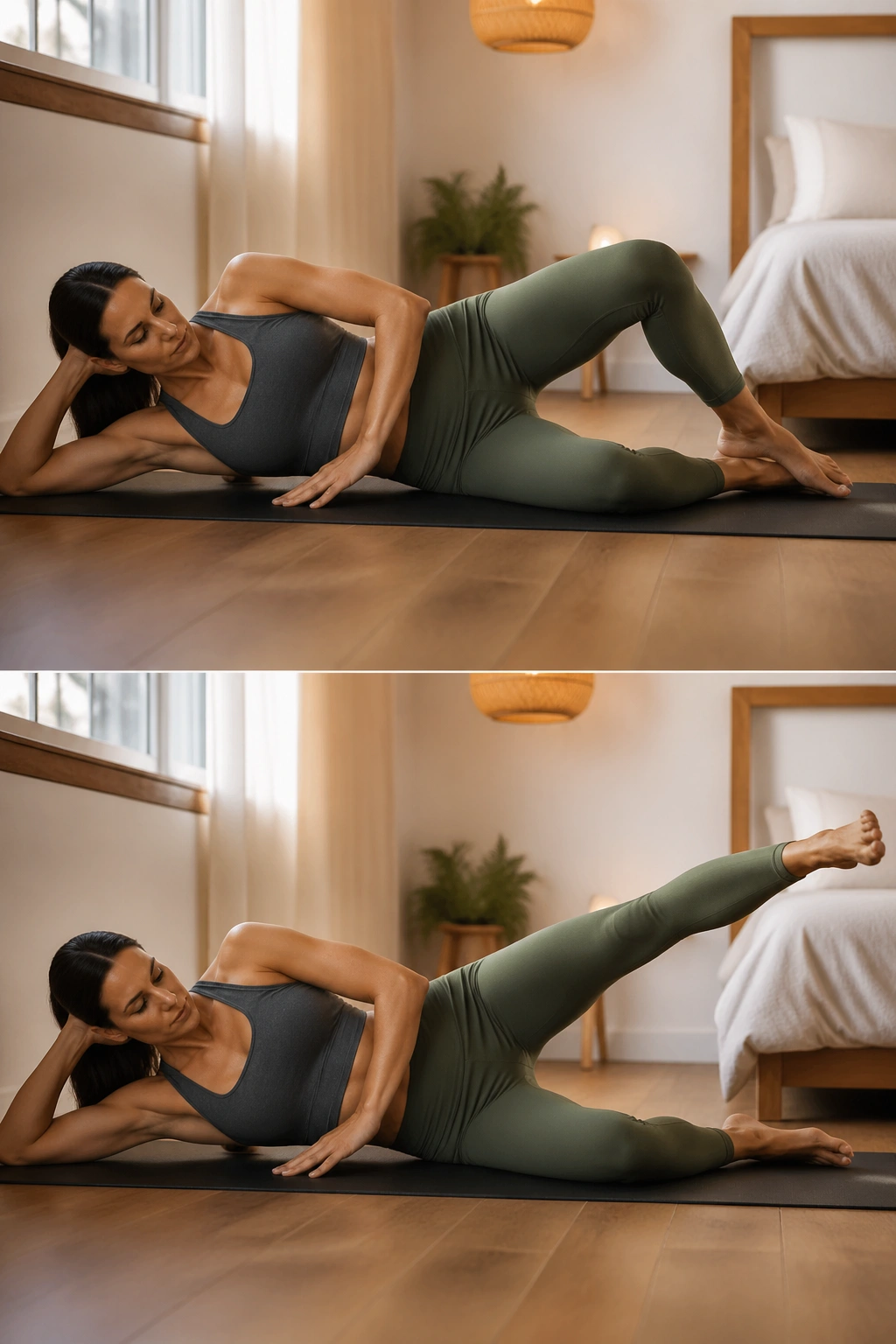
Unlike standing hip work, side-lying work strips away balance and makes the glute med do its actual job.
That muscle matters more than most desk workers realize. When it falls asleep, one hip can hike, the knees can cave, and walking starts to feel sloppy. Side-lying clams and leg lifts clean up that mess without needing much space or equipment.
Lie on your side with knees bent, hips stacked, and your waist lightly lifted off the mat. Do 10 clams with the feet staying together, then straighten the top leg and lift it 8 times. Finish with 8 tiny circles in each direction. The movement should feel precise, not splashy.
If your pelvis rolls backward, you’re losing the point. Keep the top hip stacked over the bottom hip, even if the leg lift gets smaller. Small is fine. Small and accurate is the whole game here.
6. Dead Bug With Breath Counts
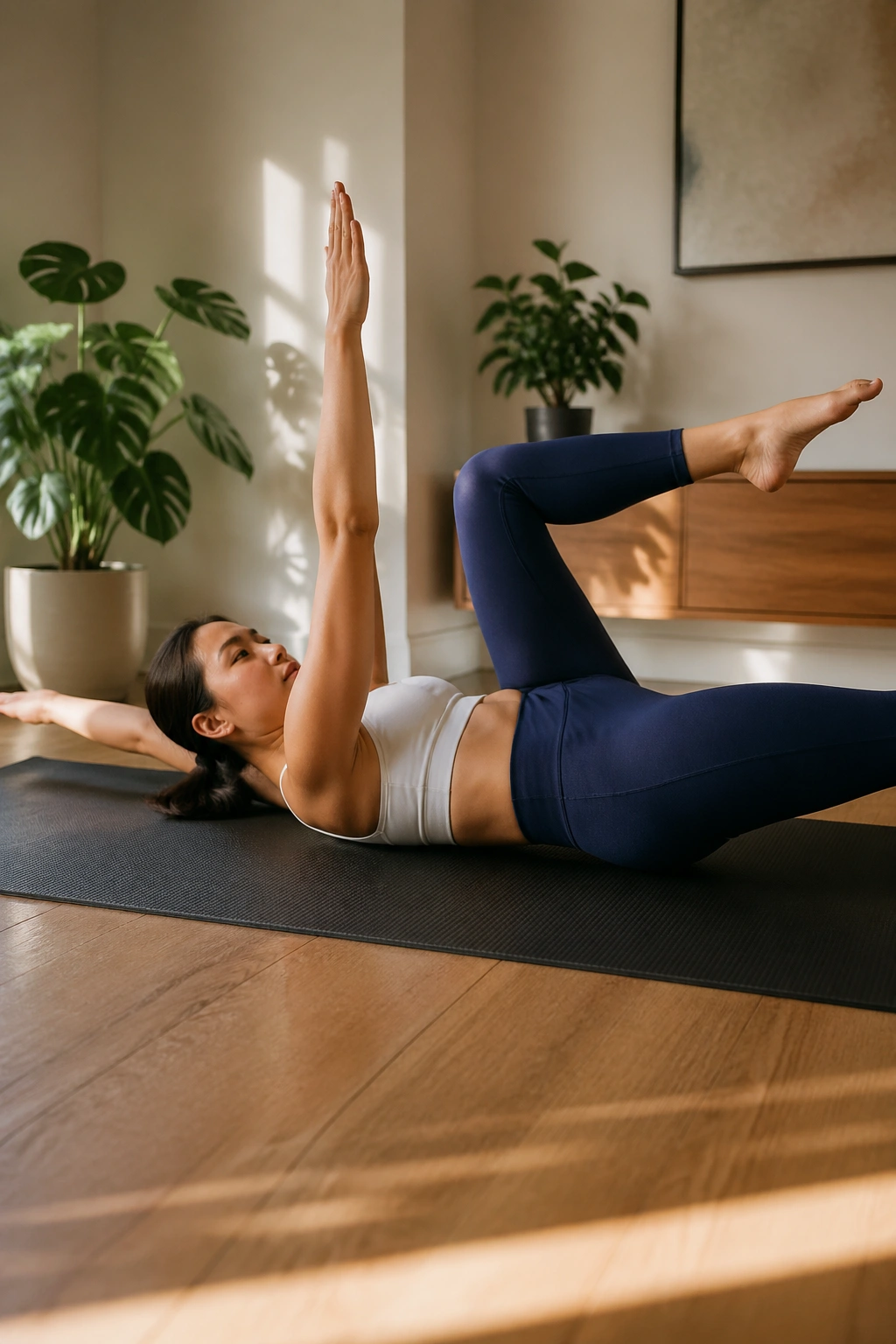
On a good dead bug, the low back feels heavy and quiet.
That is the feeling to chase. This exercise teaches your abs to hold the spine steady while the legs move, which is exactly the skill sitting tends to dull. You do not need big range. You need control.
What To Feel
Set up on your back with knees in tabletop, shins parallel to the floor. Exhale for a count of 4 as one heel lowers toward the mat, then inhale to bring it back. Switch sides for 6 to 8 reps each side. If that feels easy, add the opposite arm reaching back as the leg lowers.
The moment your ribs pop up, shorten the lever. Lower the leg less. Reach the arm less far. That tiny adjustment is not a downgrade; it’s the difference between real core work and a back-arch parade.
I like this one after a long day because it feels clean. No momentum. No drama. Just the body learning how to hold itself together.
7. Wall Shoulder Blade Slides
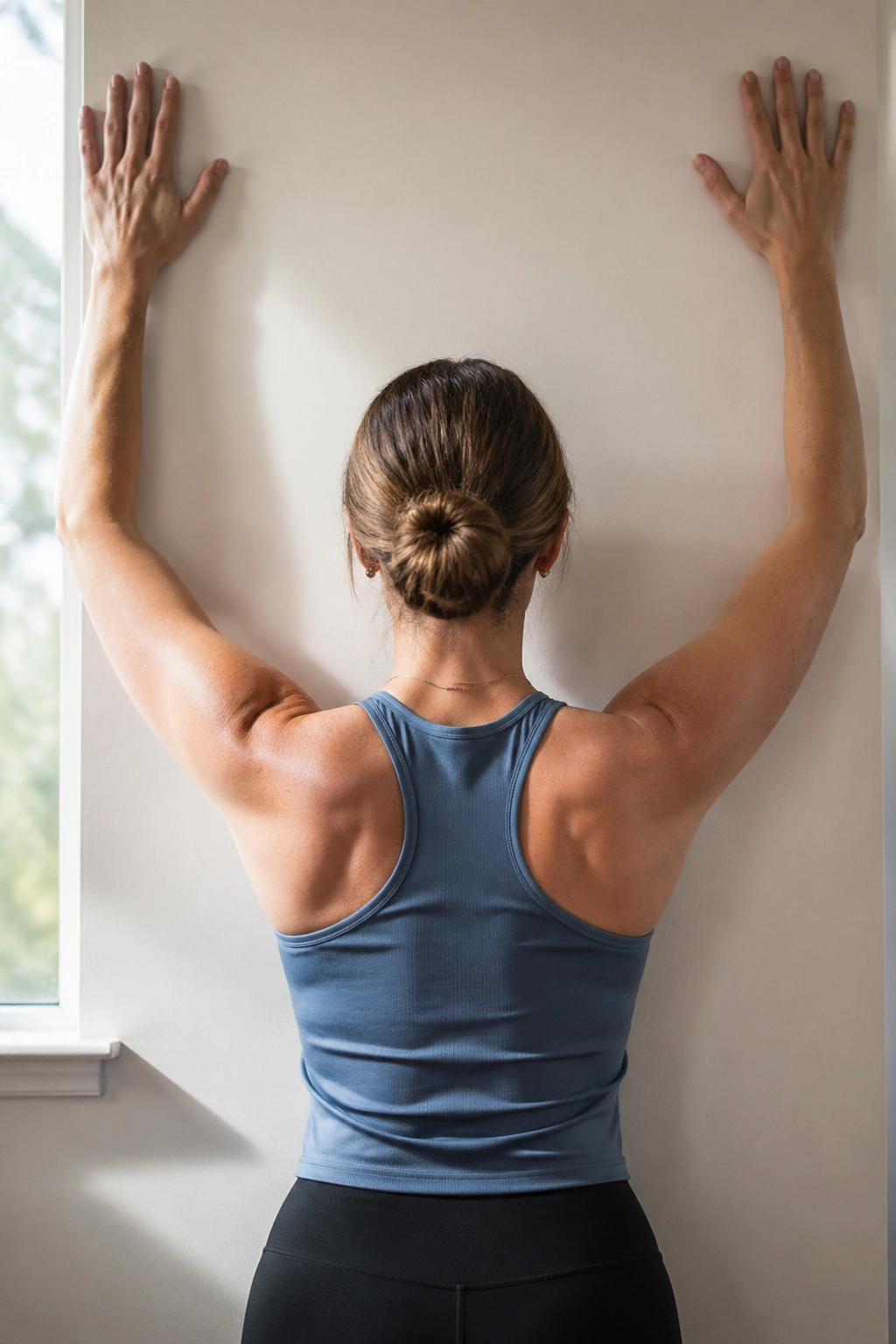
Wall work looks small. Then your shoulders feel different.
Desk posture loves to pull the shoulder blades forward and up. Wall slides reverse that pattern without forcing a big range of motion. They also expose the truth fast: if your ribs flare or your neck tightens, the wall will tell on you.
Stand with your back against a wall, feet a few inches forward, and the back of your head lightly touching if that’s comfortable. Raise your arms to a goalpost shape, then slide them upward 6 to 8 times. Keep the ribs down. If the hands cannot stay on the wall, move them a little farther away and try again.
A second pass with wall push-up plus moves helps too. Press the hands into the wall, let the shoulder blades spread apart, then gently draw them back without shrugging. It is a tiny thing. It also helps a lot.
8. Seated Spine Twist And Saw
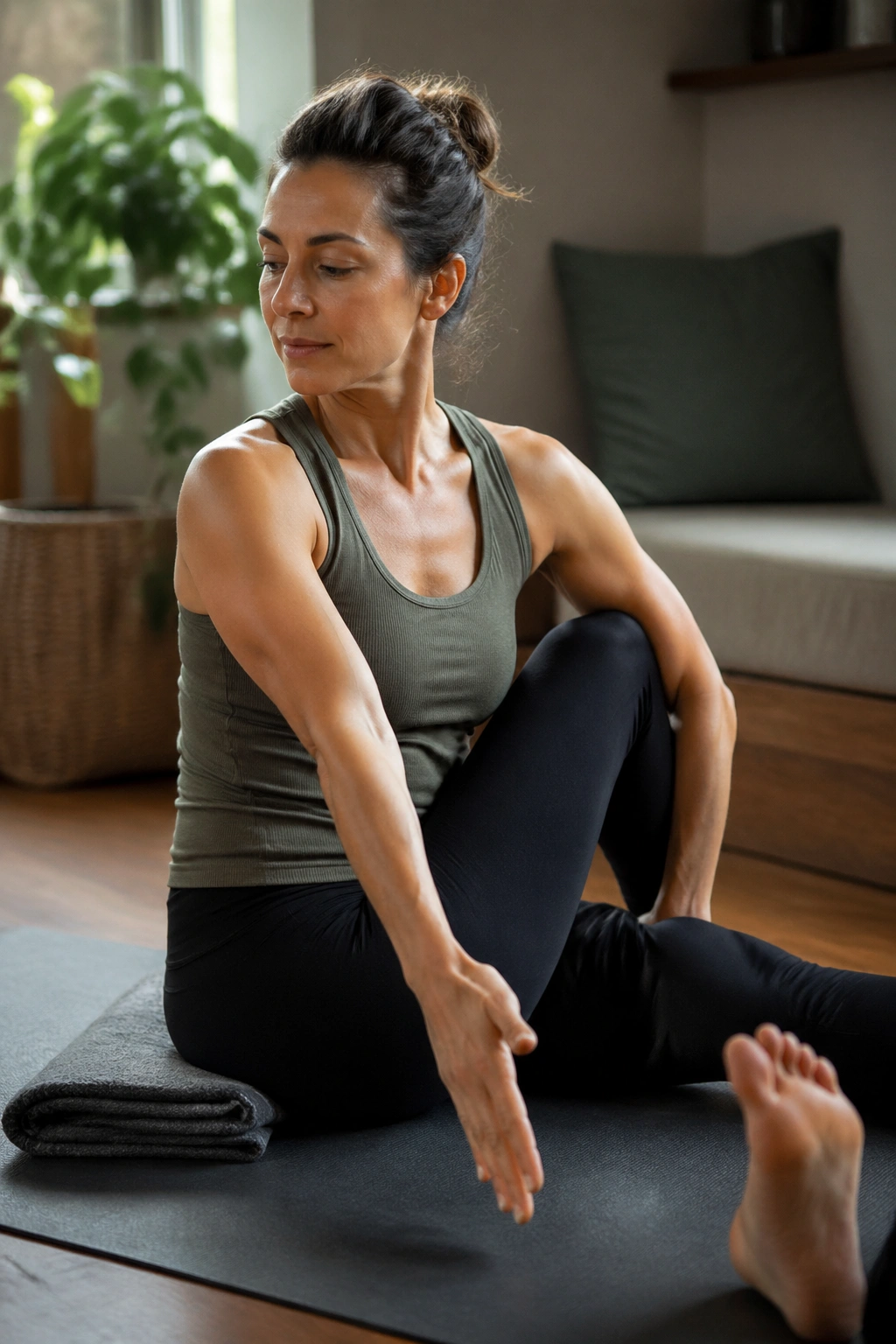
Stretching the low back is not the fix. Moving the ribs is.
That is why seated twist work deserves a place in any Pilates workout for people who sit all day. Rotation wakes up the thoracic spine, and the saw adds a side bend that many desk bodies barely get. The result is less stiffness up top and less cheating down low.
Sit on a folded towel or cushion so your pelvis can tip slightly forward. Twist to one side, pause for a breath, then reach the opposite hand toward the outside of the front foot, like you are sawing diagonally across the body. Come back up with control. Do 4 rounds per side.
Do not yank the arm to make the shape bigger. Let the ribs guide the twist and keep the hips quiet. If the hamstrings are yelling, bend the knees a little. The goal is a long spine, not a grimace.
9. The Hundred With Feet Supported
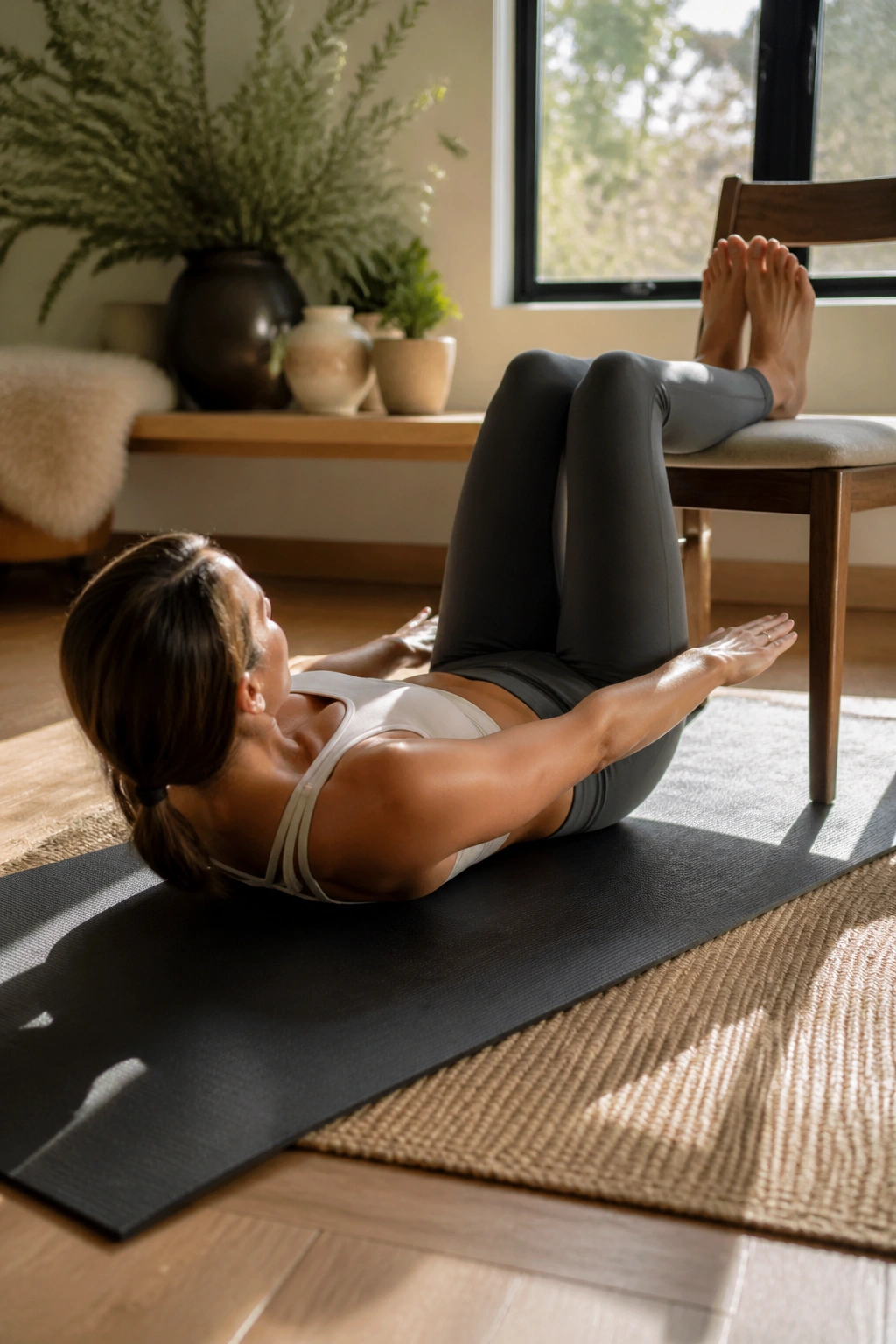
Can the Hundred work for tight desk bodies? Absolutely. It just needs a friend.
The classic version can feel like a lot if your hip flexors are cranky or your neck already feels cooked. Put your feet on a chair, keep them in tabletop, or leave the head down if lifting it makes the neck angry. The breath pattern still does the job.
How To Make It Useful
- Exhale for 5 arm pumps, then inhale for 5 arm pumps.
- Repeat for 5 to 10 breath cycles.
- Keep the shoulders heavy and the ribs from popping up.
- If the neck feels strained, lower the head and keep the chest relaxed.
The point is not to survive an ab contest. The point is to build endurance through the center while the chest and rib cage stay organized. That is what sitting tends to scramble.
And yes, the small pulses matter. They should feel crisp, not frantic.
10. Swimming For The Upper Back
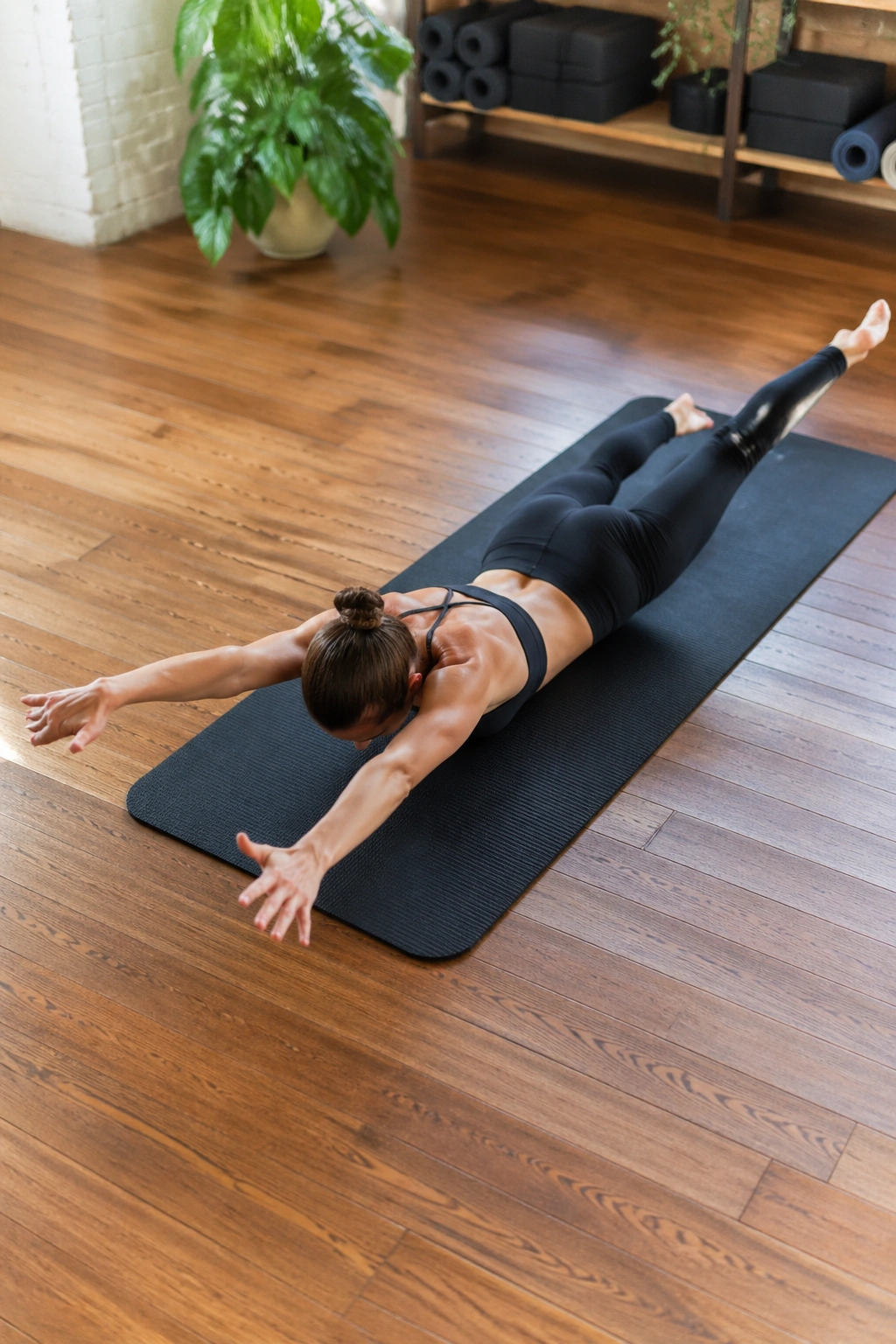
After a day of screen stare, prone work feels honest.
Swimming is a good antidote to the collapsed front-body pattern that comes with long sitting. It asks the back line to work without letting the legs or shoulders cheat too much. When it’s done well, you feel longer from the crown of the head to the heels.
Lie face down with the arms reaching forward and the legs long. Lift opposite arm and leg just a few inches, then switch sides for 6 to 8 alternating reaches. If that feels stable, hover both arms and both legs slightly and pulse them in a quick, small rhythm for 20 to 30 seconds.
Keep the pubic bone heavy into the mat. If the low back starts grabbing, reduce the height of the limbs. Big lifts are not better here. Cleaner lifts are better.
11. Side Plank Knee Down And Reach
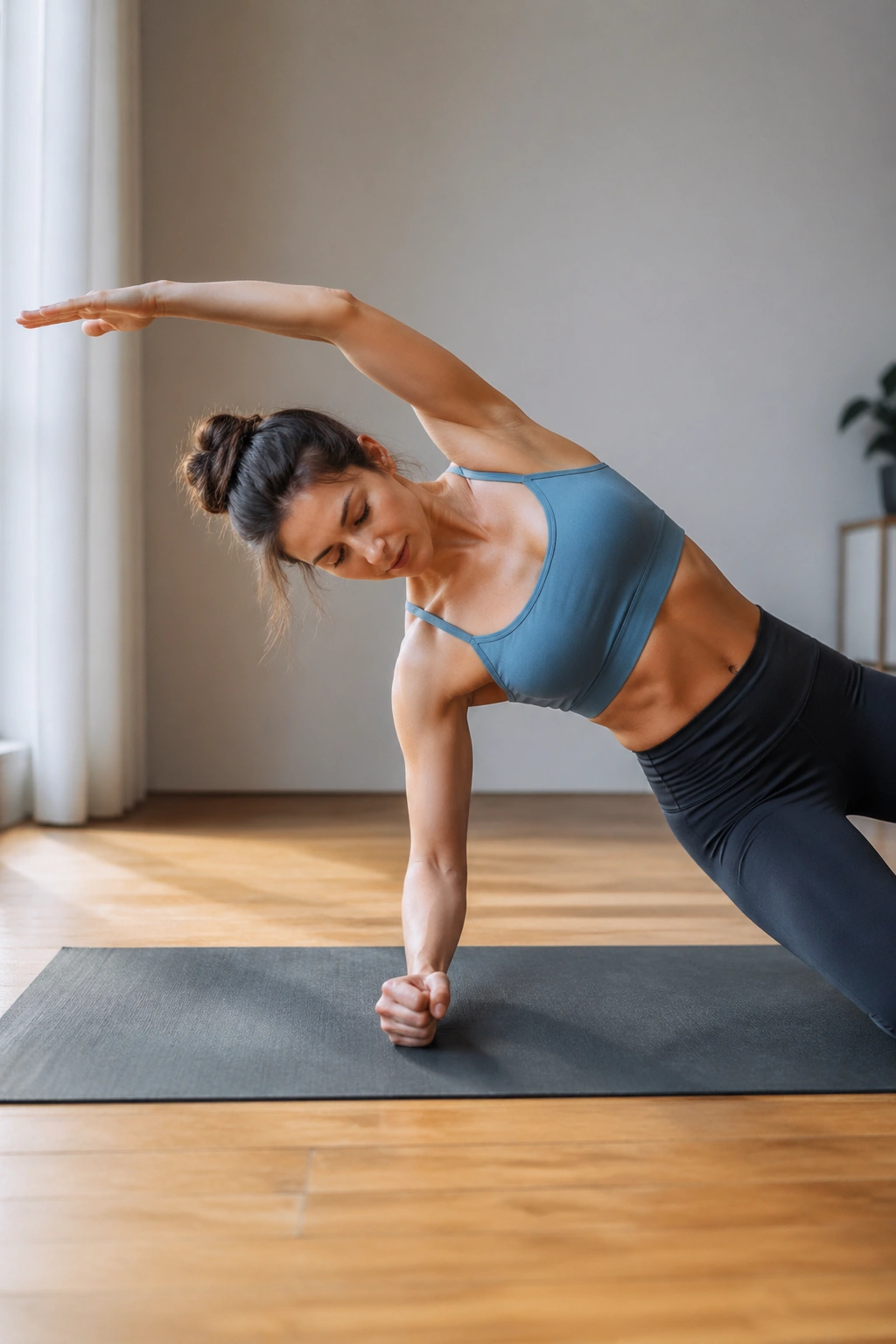
Side body strength changes desk posture more than people expect.
A lot of sitting problems come from living too long in the front and back planes. Side planks bring in the lateral chain, which helps the torso feel less like a folded lawn chair and more like something that can actually stay upright.
Use the forearm version if wrists complain. Place the bottom knee on the floor, stack the elbow under the shoulder, and lift the hips. Hold for 15 to 20 seconds per side, then reach the top arm overhead or thread it under the body for 3 slow reps.
Easier Version First
If the full side plank feels like too much, keep the top foot planted in front of the bottom knee. You still get the side body work without the wobble. That is a perfectly legitimate place to start.
Do not let the shoulder creep up toward the ear. Push the floor away and keep the neck long. That tiny cue changes the whole exercise.
12. Mermaid Side Bend Flow
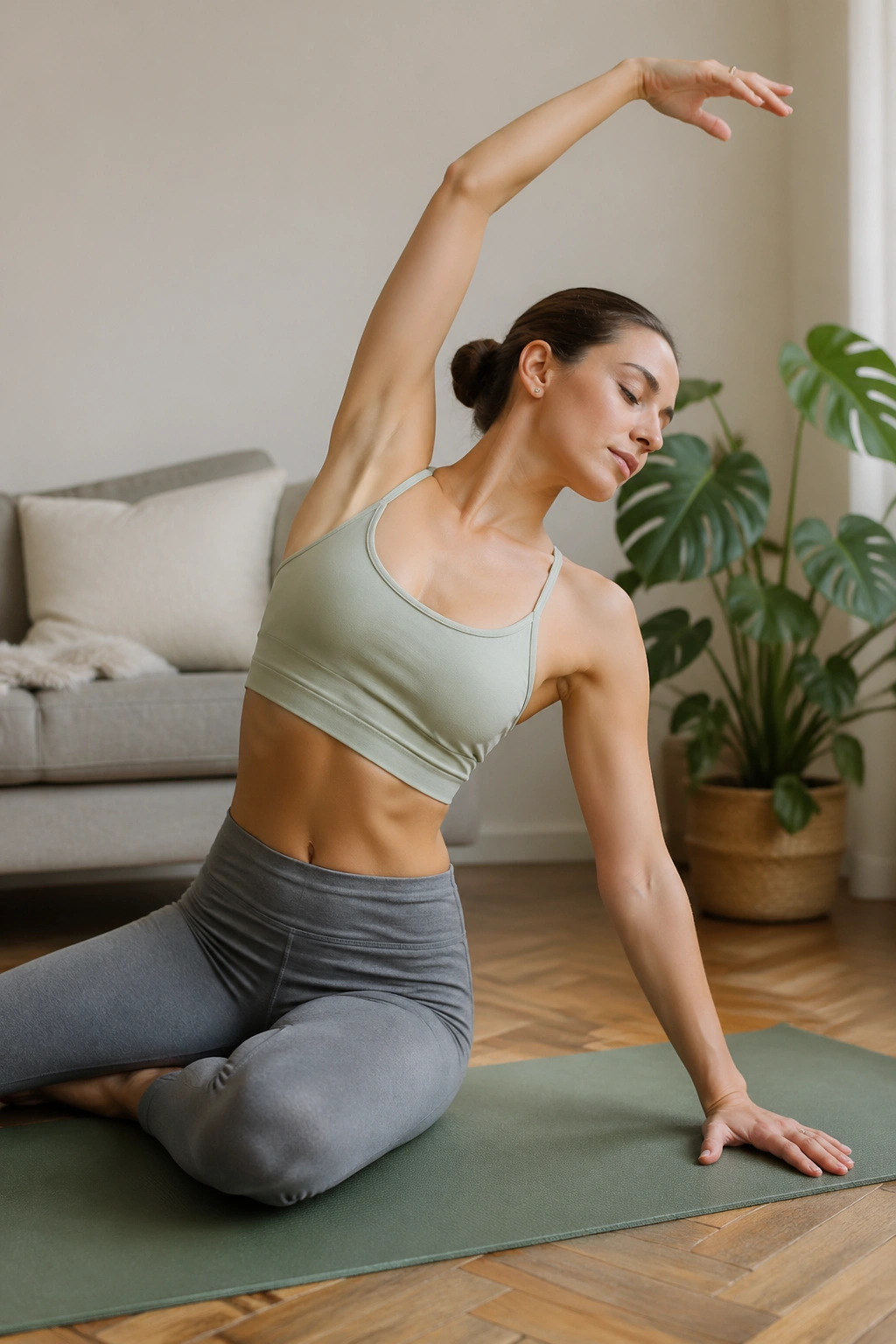
The side body gets ignored, then everyone acts surprised when one shoulder sits higher than the other.
Mermaid fixes that by giving you side bend, breath, and a little spinal rotation in one sequence. It feels gentle, but gentle is not the same as pointless. If you sit a lot, the tissues along the ribs tend to get short and bossy, and mermaid gives them a reason to lengthen.
Sit with both sit bones grounded, or use a chair if the floor is not happening. Sweep one arm overhead and arc into a side bend for 3 slow breaths. Come back to center, rotate the chest slightly, then repeat 3 to 4 times on each side. Keep the opposite hip heavy so the body does not simply tip over.
I like this one as a finisher because it feels like a reset for the whole torso. Not flashy. Just useful.
13. Standing Roll-Down And Spine Articulation
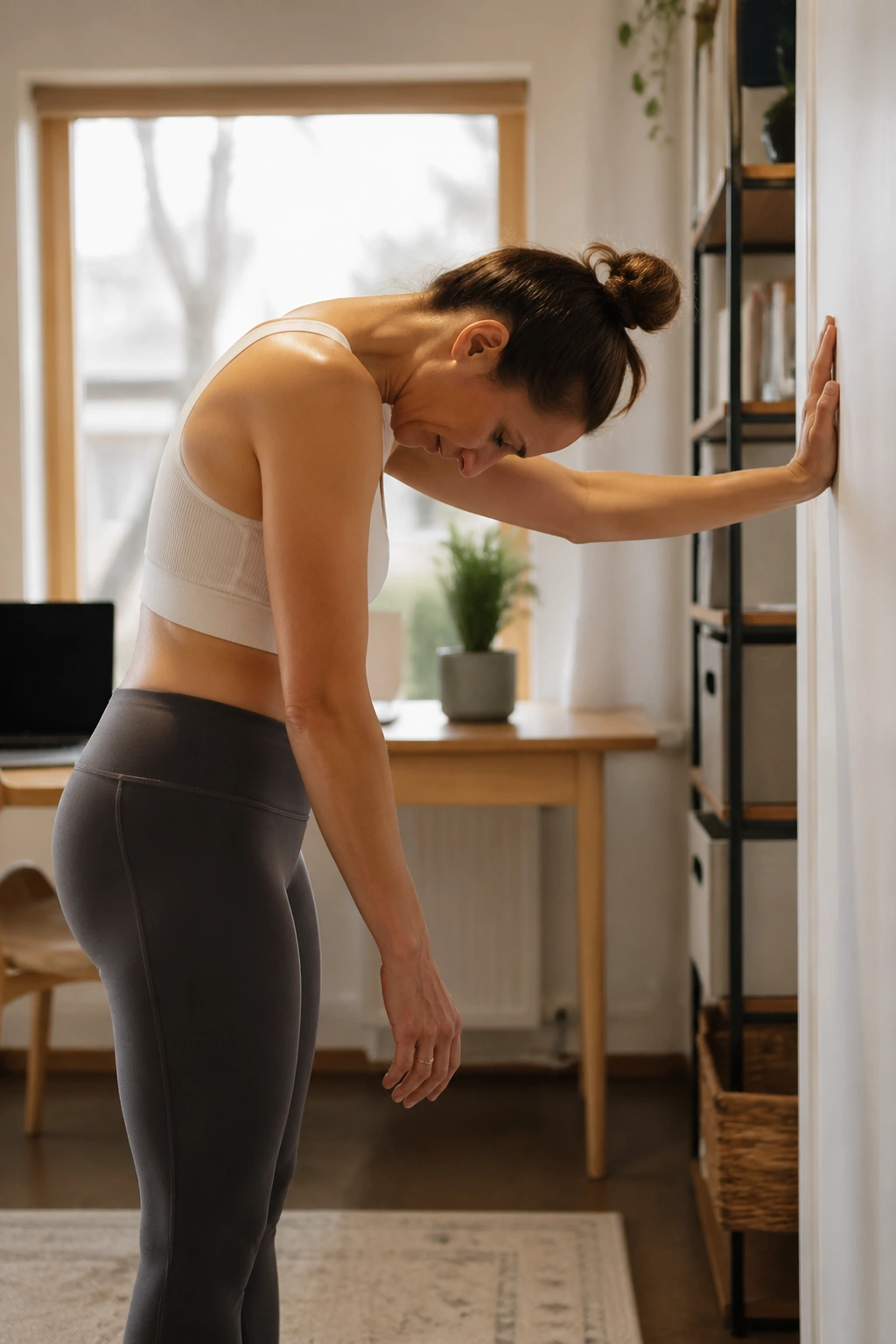
A toe touch and a roll-down are not the same thing.
Toe touches usually dump all the work into the hamstrings and lower back. A roll-down segments the spine one piece at a time, which is exactly what a desk body needs after hours of staying fixed. It also reminds the nervous system that the spine has more than one shape.
Stand with feet hip-width apart. Nod the chin, then peel the head, chest, and ribs forward one section at a time until you hang toward the floor. Let the knees bend if needed. Pause for 2 breaths, then roll back up slowly, stacking the spine like beads on a string.
If dizziness shows up, move slower and keep one hand on a wall. If your hamstrings are fierce, bend the knees more. The roll-down is not a test of toughness.
Add 5 calf raises at the top and 3 shoulder rolls if you want a little more. That turns it into a surprisingly complete desk-day reset.
14. Single-Leg Stretch And Double-Leg Stretch
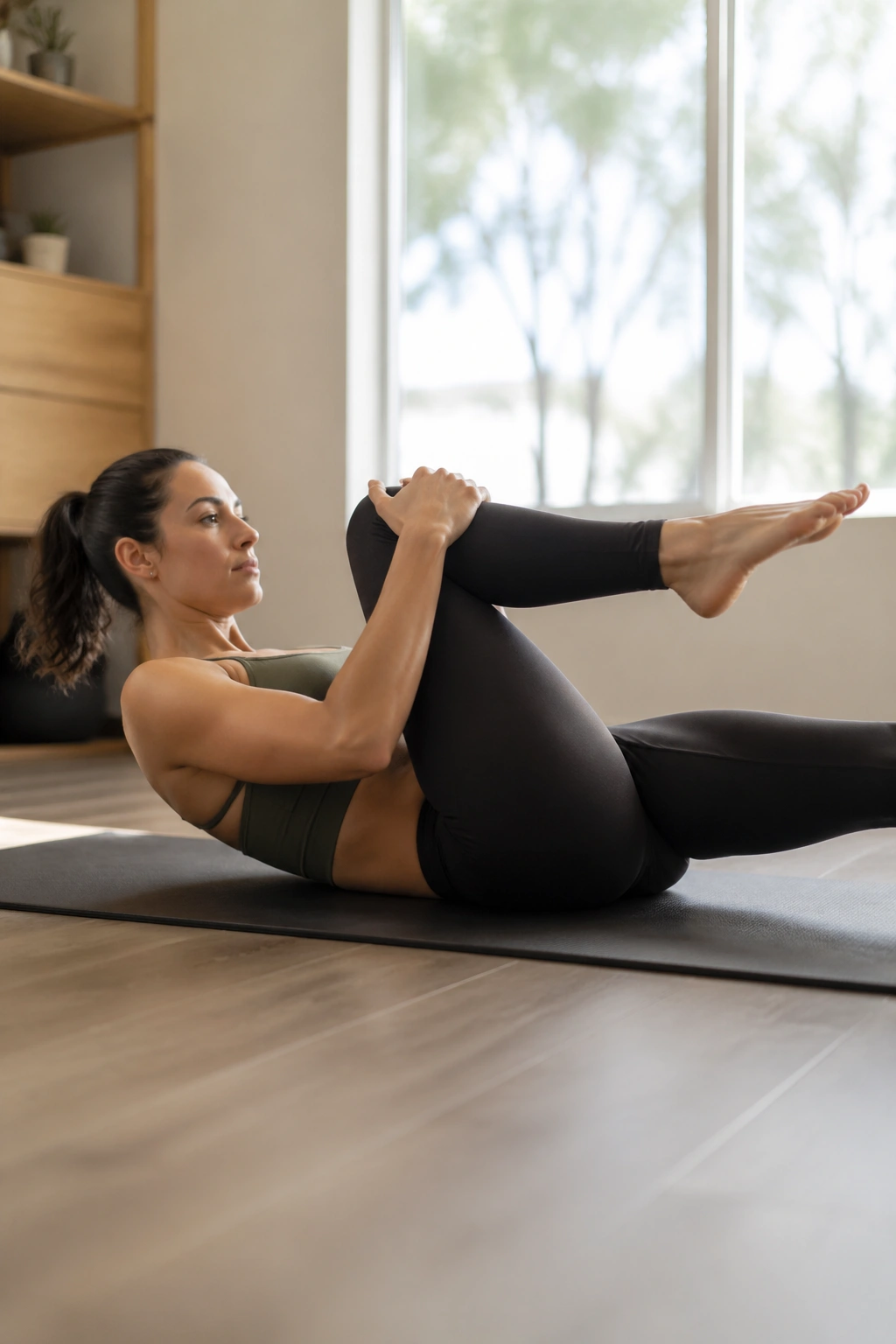
Why do classic ab exercises matter if you sit all day? Because they teach the hips and ribs to stay coordinated.
Single-leg stretch and double-leg stretch are not just about “abs.” They train the torso to hold steady while the legs move through space, which is a useful skill if your day has you folded into a chair and then suddenly standing up, walking, lifting, or twisting.
Lie on your back, knees in tabletop. Draw one knee in while the other leg extends long for 6 to 8 reps per side. Then move into double-leg stretch: reach both arms and legs away, circle the arms back in, and pull the knees in again for 6 reps. Keep the ribs quiet and the neck long. If the neck tires, lower the head.
The move should feel controlled, almost restrained. That restraint is the point. It tells the body that strength does not need momentum to count.
15. The 15-Minute Full Reset Circuit
If you want one routine that covers the main desk-day problems, make it this one.
It blends hip opening, spinal movement, glute work, and upper-back activation into a single short circuit. No fancy gear. No long warm-up. Just enough variety to make the body feel like it can breathe again.
A Simple 15-Minute Version
- 1 minute: Seated pelvic clock reset.
- 2 minutes: Half-kneeling hip flexor release, 1 minute per side.
- 3 minutes: Glute bridge ladder, moving from regular bridges to pulses.
- 3 minutes: Dead bug with breath counts, 6 reps per side.
- 3 minutes: Wall shoulder blade slides and wall push-up plus.
- 2 minutes: Seated spine twist and saw, 1 minute per side.
- 1 minute: Standing roll-down to finish.
Use this between meetings, after a commute, or as the first thing you do when you get home and feel welded to the chair. If 15 minutes is too much, cut it in half and keep the hip flexor release, bridge work, and wall slides.
The routine works because it changes shapes. That’s the part a seated body usually needs most.
Final Thoughts
The chair is not the villain. The real problem is staying in one shape for too long, then asking one stretch to fix it all. That never works well, and it usually leaves people more annoyed than helped.
The smartest Pilates workouts for people who sit all day hit three jobs at once: open the hips, wake up the back line, and give the spine enough motion that it stops acting like a board. Small, clean movement wins here.
If you only have a few minutes, pick one move for the hips, one for the shoulders, and one for the core. Do that often enough, and the day starts feeling less like a squeeze and more like a body moving through actual space.
