



A decent full workout at home does not need a fancy setup. It needs a plan that fits the space you actually have, the energy you walked in with, and the equipment sitting under the bed or leaning in a corner.
That’s the part people miss. They keep trying to turn home workouts into tiny gym sessions, then wonder why everything feels stale after a few weeks. A better approach is to treat each session like its own job: one day for strength, another for cardio, another for mobility, another for a hard sweat that leaves your lungs busy and your legs a little cooked.
The good news is that full workouts at home can be brutally effective with nothing more than bodyweight, a pair of dumbbells, a backpack, a resistance band, or a staircase. You do not need a sprawling floor plan. You need clear exercises, honest effort, and a stop point before form starts falling apart.
These 20 workouts cover that range. Some are quiet. Some are loud. A few are short and sharp. A few will make you stare at the ceiling for a minute afterward. The first one is the easiest place to start.
1. 20-Minute Full-Body Bodyweight Primer
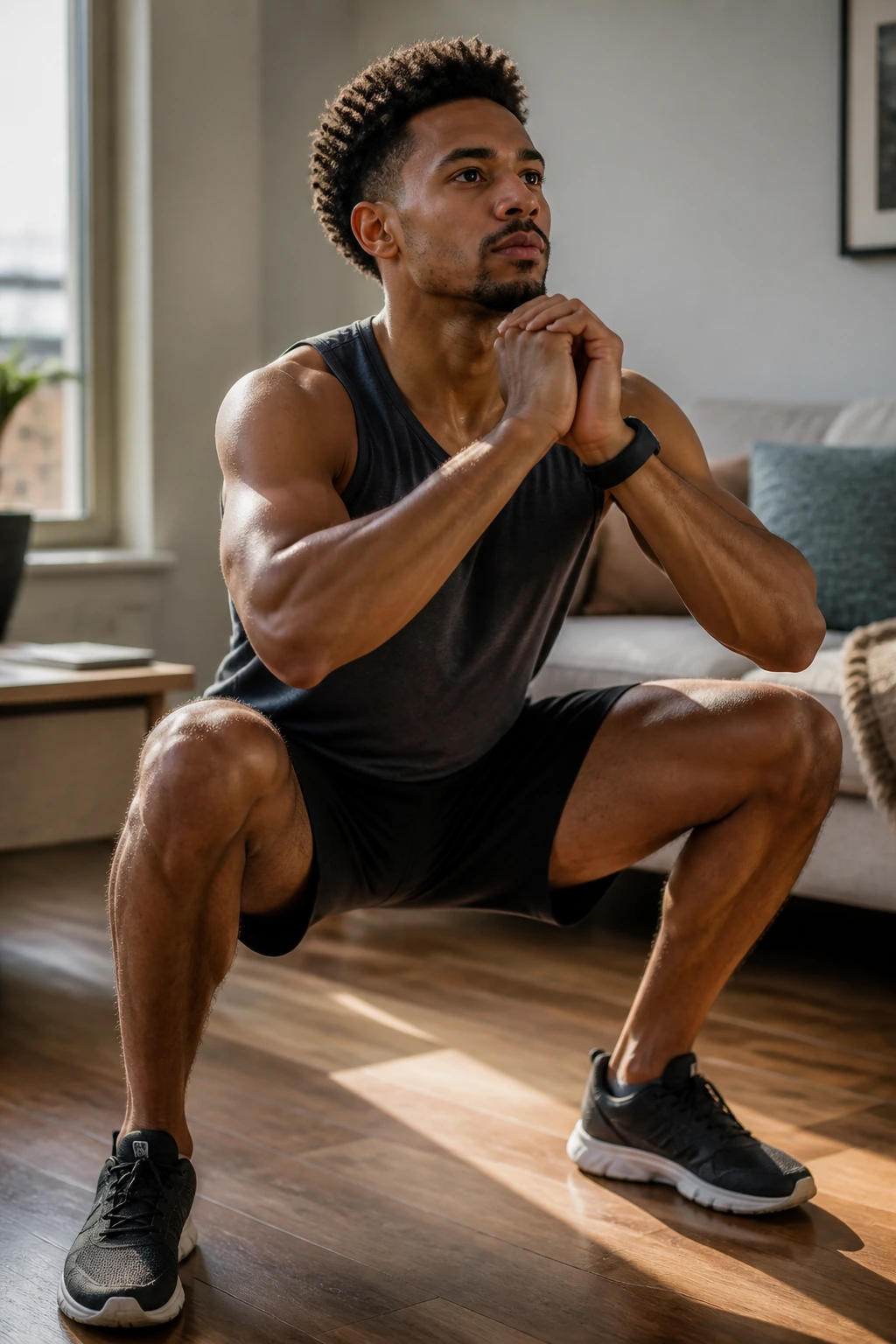
This is the workout I’d hand to someone who wants a clean, no-drama start. Twenty minutes, four movements, four rounds — that’s enough to wake up the whole body without turning the session into a mess.
How It Works
Set a timer for 40 seconds of work and 20 seconds of rest. Move through a squat, incline push-up, reverse lunge, and plank shoulder tap. Use a couch or sturdy chair for the push-ups if the floor version feels ugly. Keep the pace steady, not frantic.
- 40 seconds air squat
- 40 seconds incline push-up
- 40 seconds alternating reverse lunge
- 40 seconds plank shoulder tap
- 20 seconds rest between moves
- 4 total rounds
Best tip: stop each set with 1 or 2 reps left in the tank. That keeps round four from looking like round one’s exhausted cousin.
2. Dumbbell Home Workout for Legs, Push, and Pull
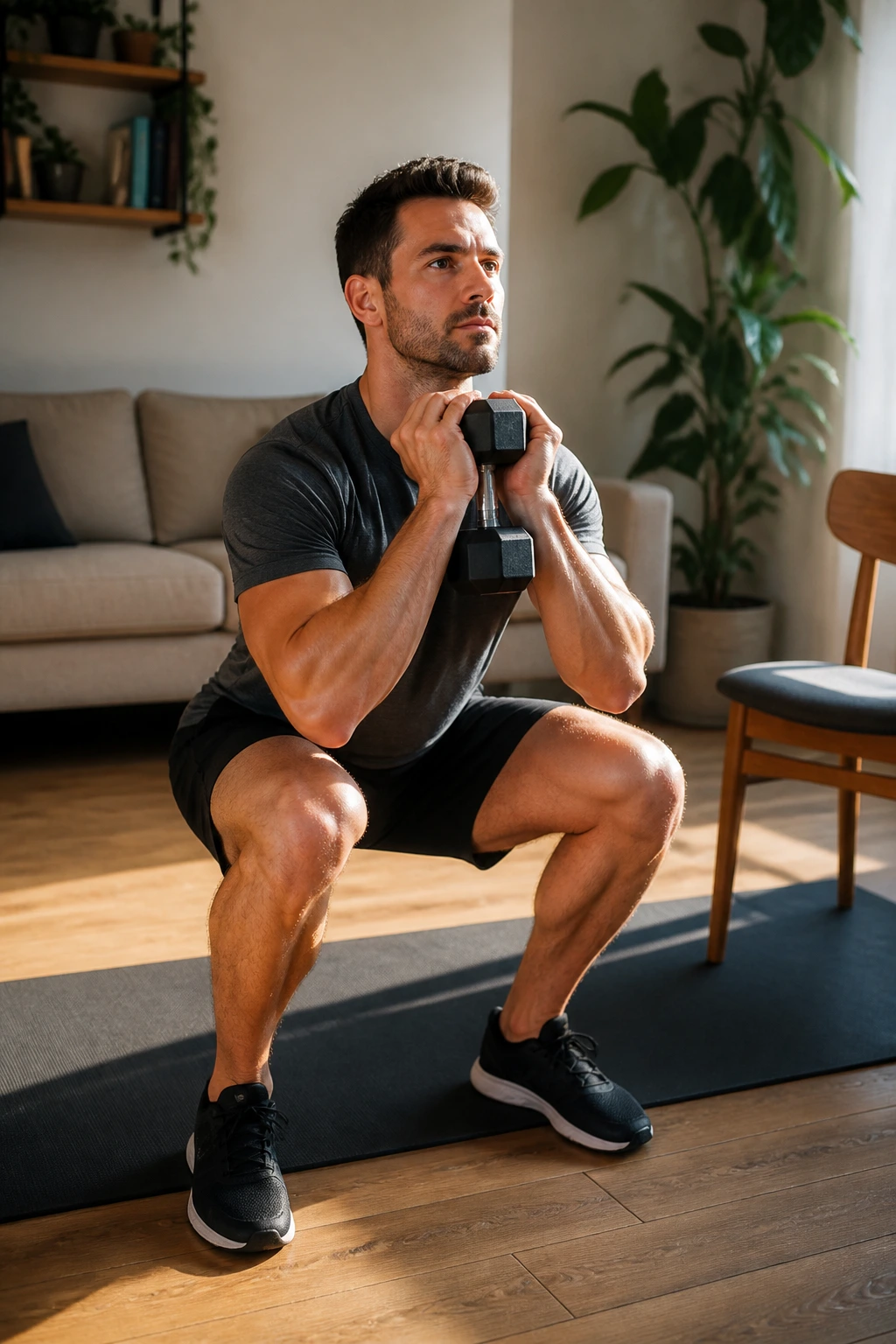
Two dumbbells and a chair can cover more ground than a lot of machines. That sounds dramatic, but it’s true when you build the session around big patterns: squat, hinge, push, pull, and carry. The body does not care whether the weight came from a gym floor or a living room.
Use a goblet squat, floor press, bent-over row, Romanian deadlift, and standing press. I like this one on days when I want a real strength session without setting up a dozen pieces of equipment. Three rounds of 8 to 10 reps on each movement is enough if the weights are honest.
Keep the last two reps slow. If your dumbbells are light, pause for 2 seconds at the bottom of the squat and row. That tiny pause makes a cheap pair of weights feel a lot less friendly.
The goal is simple: make the set feel controlled, then stop before you start twisting or shrugging to cheat the lift.
3. Low-Impact Cardio and Core Burn
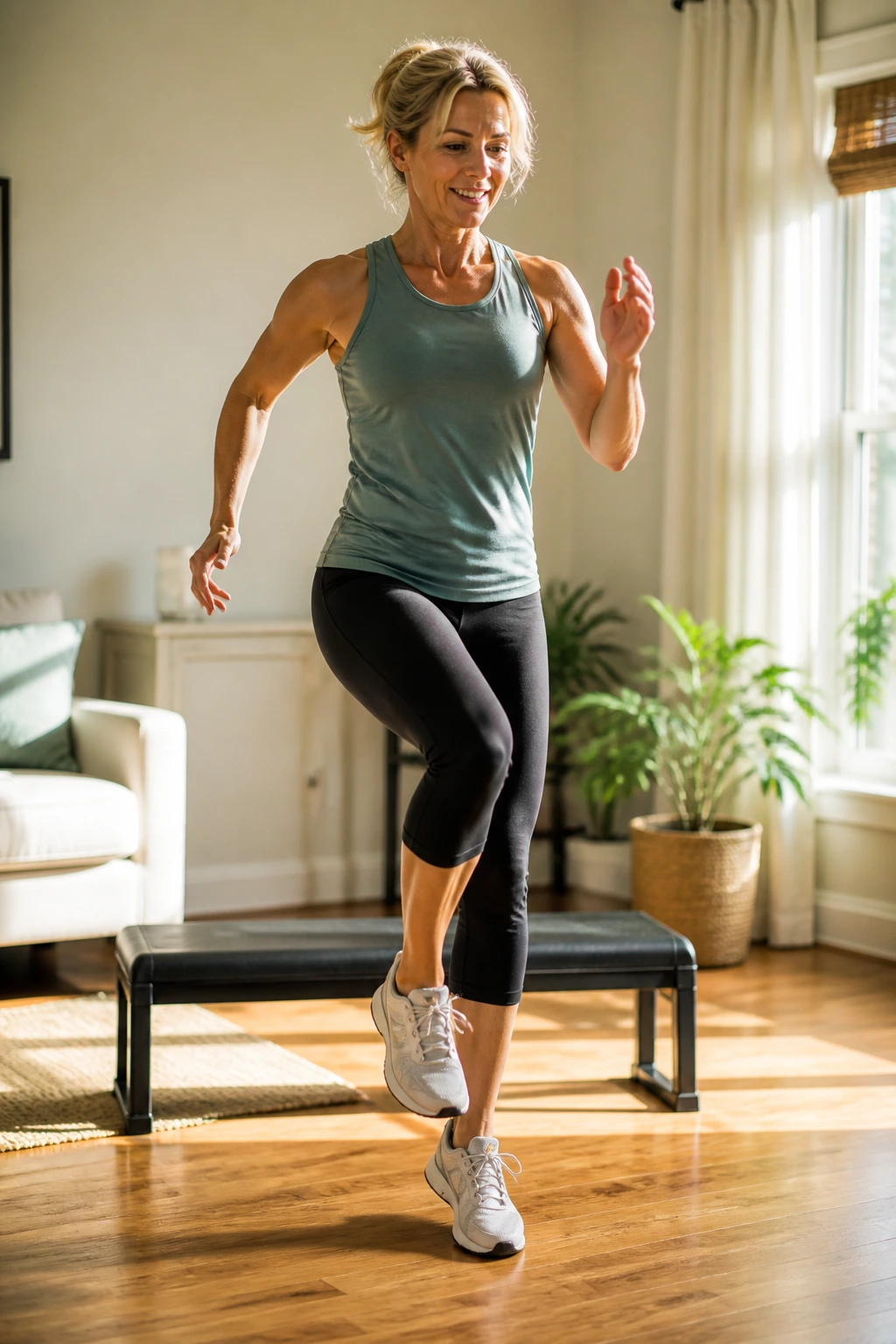
Can you raise your heart rate without pounding the floor? Absolutely. You just need to pick moves that make you work harder than they look on paper.
This session leans on marching, stepping, and controlled floor work. Think step jacks, cross-body mountain climbers with your hands on a bench, dead bugs, and fast-feet marches in place. Your lungs will notice. Your joints will not hate you for it.
How to Use It
Run each move for 30 seconds, rest 15 seconds, and repeat the circuit 3 times. If your heart rate spikes fast, keep the pace honest instead of adding more speed. That’s the whole trick.
- Step jacks
- Bench mountain climbers
- Dead bugs
- Fast march in place
- Side-to-side toe taps
- Forearm plank hold
If you want a quieter version, skip the fast march and replace it with a brisk bodyweight squat to calf raise. Same burn. Less noise.
4. Upper-Body Push and Pull Circuit
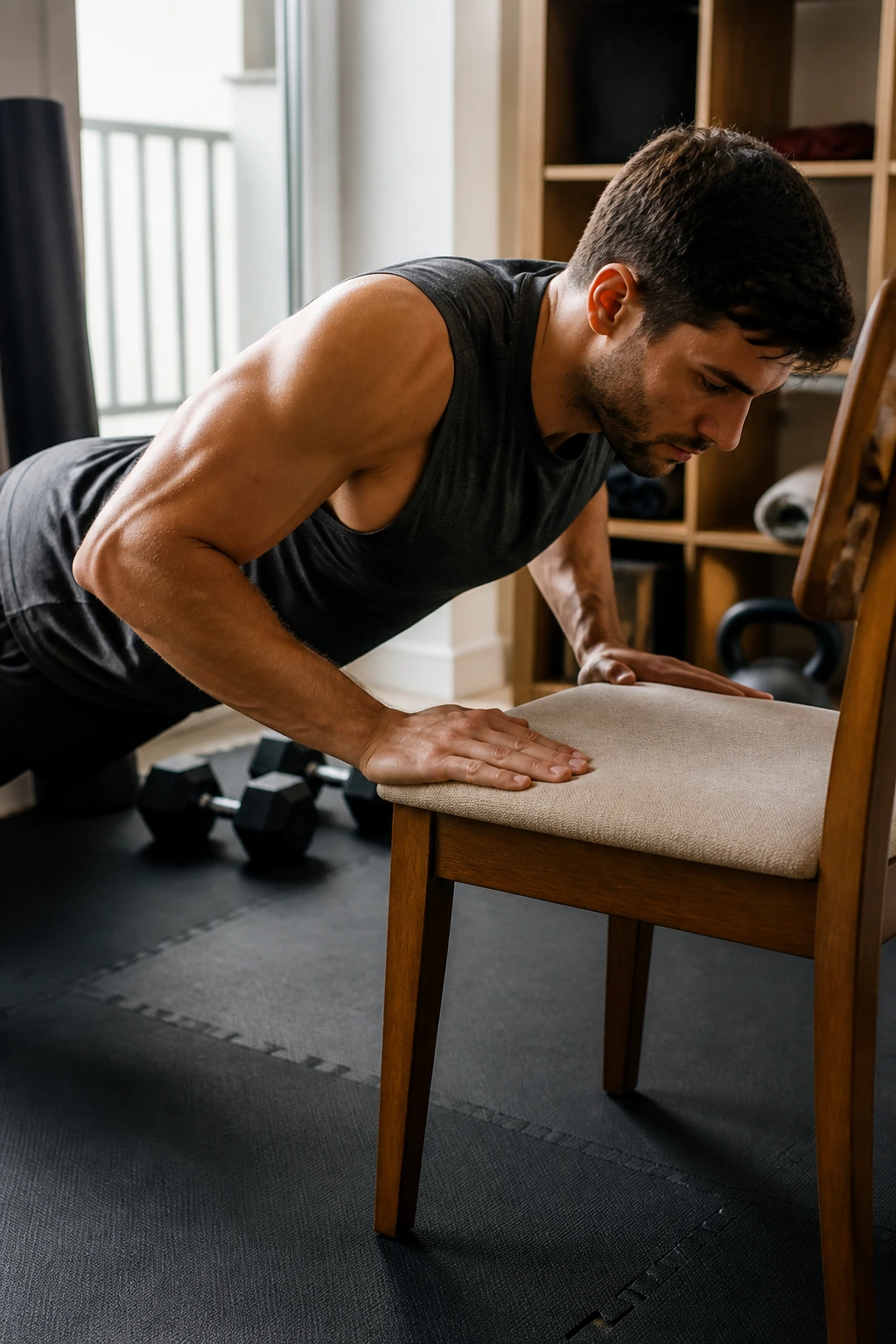
A lot of home upper-body training turns into endless push-ups, and that gets old fast. Your shoulders need pulling work too, or the whole thing starts feeling lopsided.
Picture this: you’ve been sitting all day, your upper back feels glued forward, and you want a session that opens you up instead of locking you tighter. That’s where a push-pull circuit earns its keep. It hits the chest, back, shoulders, and triceps without needing a barbell rack.
Do 3 rounds of incline push-ups, backpack rows, pike push-ups, triceps dips on a sturdy chair, and a short side plank. Rest about 45 seconds between exercises if you need it, or move straight through if your breathing is under control.
- 10 to 12 incline push-ups
- 12 bent-over rows with a loaded backpack
- 6 to 8 pike push-ups
- 10 chair triceps dips
- 20 seconds side plank per side
If the chair dips bug your shoulders, skip them. Narrow push-ups do the same job with less fuss.
5. Glute and Hamstring Builder
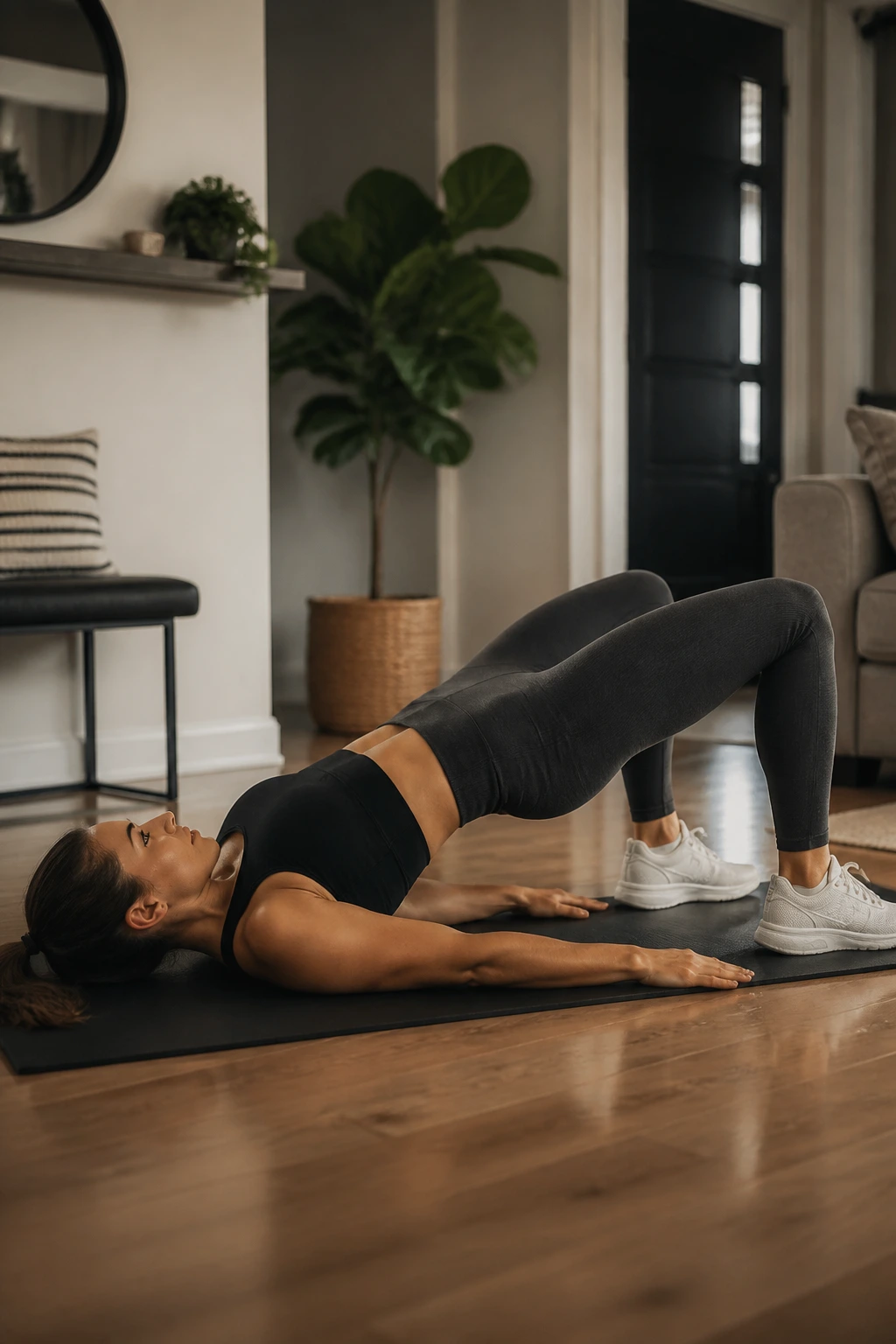
Your back side does not need a gym to get sore. It needs slow reps, a little patience, and some honesty about where the work should actually land.
Start with a hip bridge or glute bridge and squeeze hard at the top for a full second. Then move into a Romanian deadlift with dumbbells, a split squat with a slightly longer stride, and hamstring walkouts from the floor. If you rush, your quads will steal the job. If you slow down, the glutes and hamstrings wake up fast.
One thing I like here is the way the session punishes lazy tempo. A lot of people think they have weak legs when they really have fast, sloppy reps. Not the same problem.
Use 3 rounds of 10 to 12 reps on the bridge, deadlift, and split squat. Finish with 6 to 10 hamstring walkouts, which look simple and feel rude after round two. Keep your ribs down and your lower back quiet. That’s where the work should live.
6. EMOM Full-Body Sweat Session
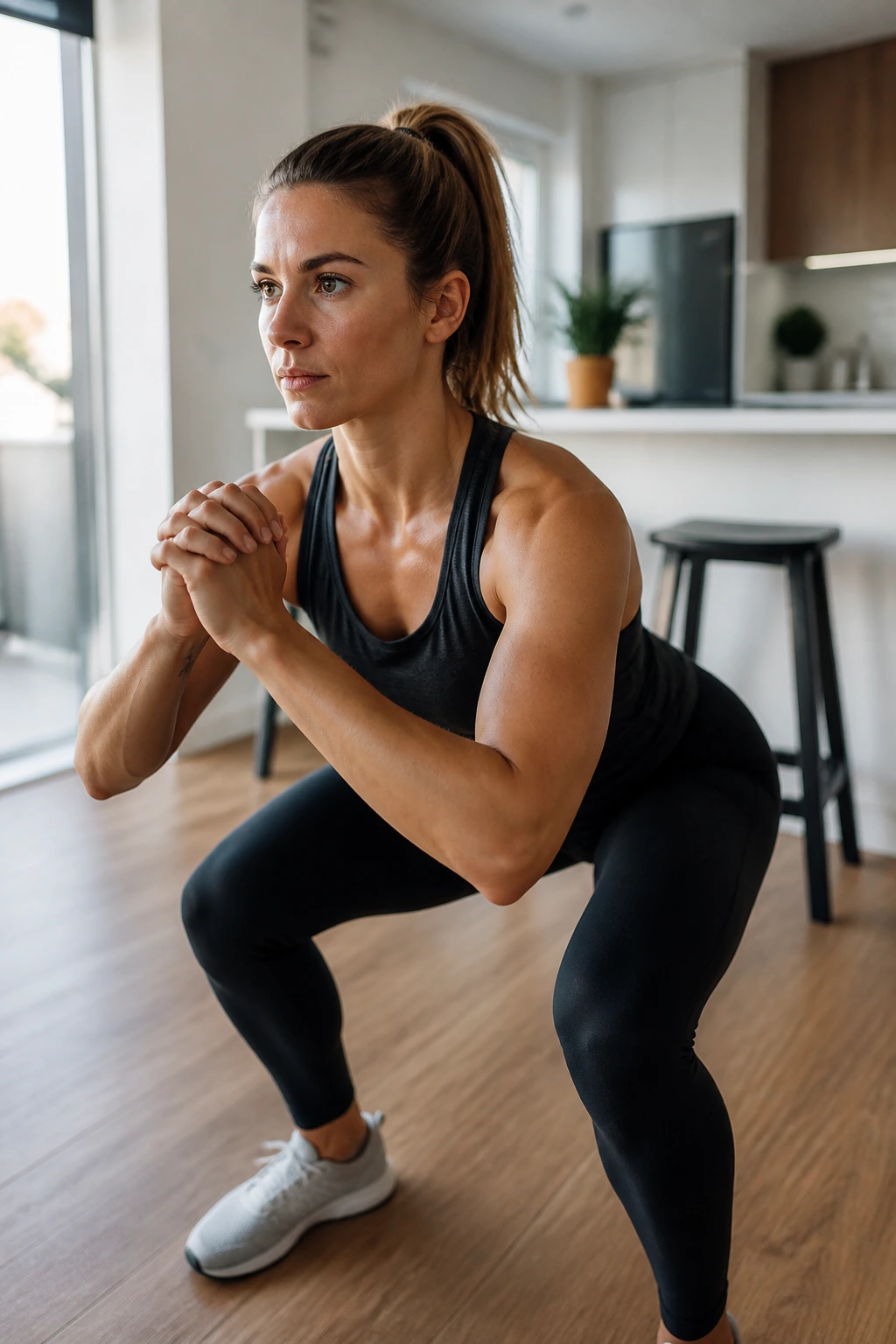
An EMOM is cleaner than a random circuit. Every minute starts on time, every minute has a job, and you never spend half the workout wondering if you’re “done enough.”
EMOM means “every minute on the minute.” Pick four moves, set four minutes, and repeat the block 5 times for a 20-minute session. The rest you get inside each minute becomes your recovery. That little structure keeps people from drifting.
Try this: minute 1 squats, minute 2 push-ups, minute 3 alternating lunges, minute 4 plank hold. Use a rep count that leaves you about 15 to 20 seconds of rest before the next minute starts. If you finish too early, add reps. If you finish late, trim the count.
This works best for people who like a hard finish line. No wandering. No checking the clock every ten seconds. Just clean work, minute after minute.
7. Mobility Flow with Built-In Strength
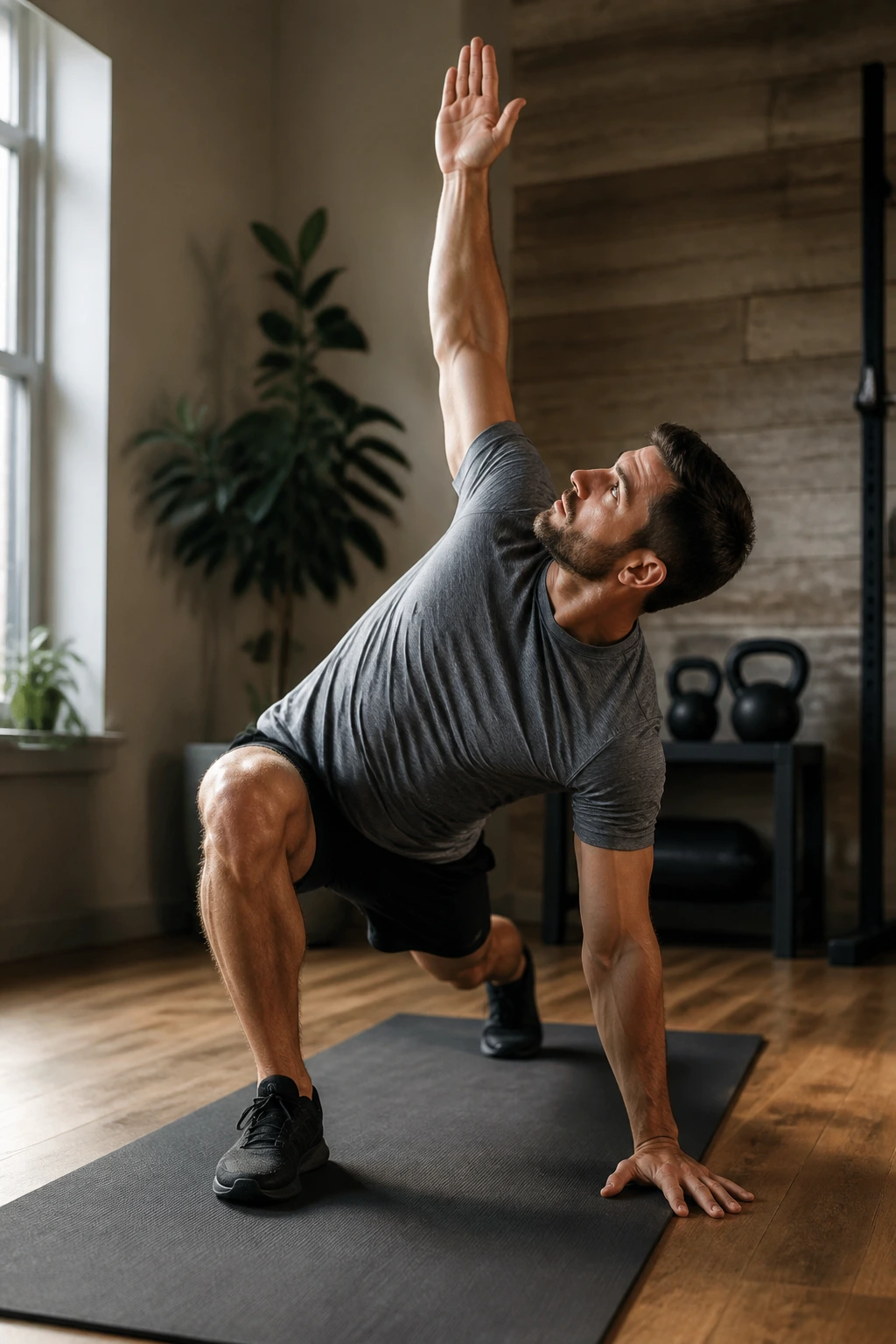
If you only stretch when you feel stiff, you’re always playing catch-up. A better move is to put mobility inside the workout so the joints get attention while the muscles still do some work.
The Sequence
Run through this flow for 2 rounds, spending 30 to 45 seconds on each move. Keep the breathing slow and the transitions smooth.
- Cat-cow
- World’s greatest stretch
- Squat to stand
- Inchworm to plank
- Side plank reach-through
- Glute bridge
The world’s greatest stretch earns its dramatic name because it opens the hips, thoracic spine, and hamstrings in one shot. The inchworm gets your shoulders and core involved without feeling like a punishment.
Do not rush the last two moves. If your lower back feels pinched, shorten the range on the bridge and side plank. This session should leave you looser, not crankier.
8. Quiet Apartment Metcon
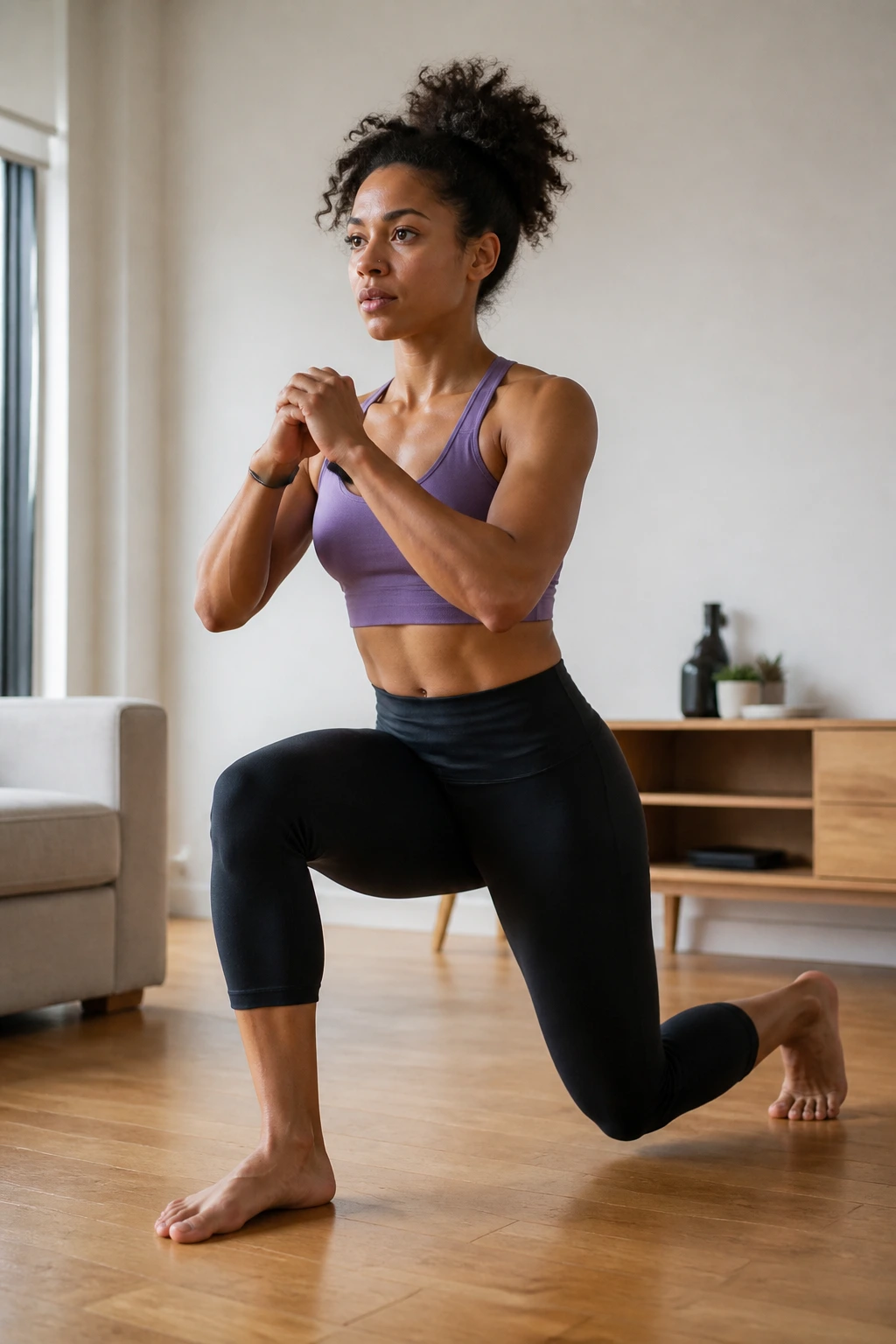
Quiet workouts can still make your lungs work. You do not need jumping jacks, burpees, or stomping feet to end up sweaty.
This one is built for early mornings, thin floors, and anyone who shares walls with another human being. The moves are all controlled: step-back lunges, tempo squats, dead bug marches, bear plank holds, and a brisk march in place. The pace stays high because the rest stays short.
Run 4 rounds of 45 seconds work and 15 seconds rest. Use a slow lower on the squat — three seconds down if you can manage it — and keep the lunges smooth instead of springy. The lack of impact lets you push harder on the muscles themselves.
I like this style when I want to train hard without making the room sound like a dropped toolbox. It is not flashy. It works.
9. Single-Kettlebell Complex
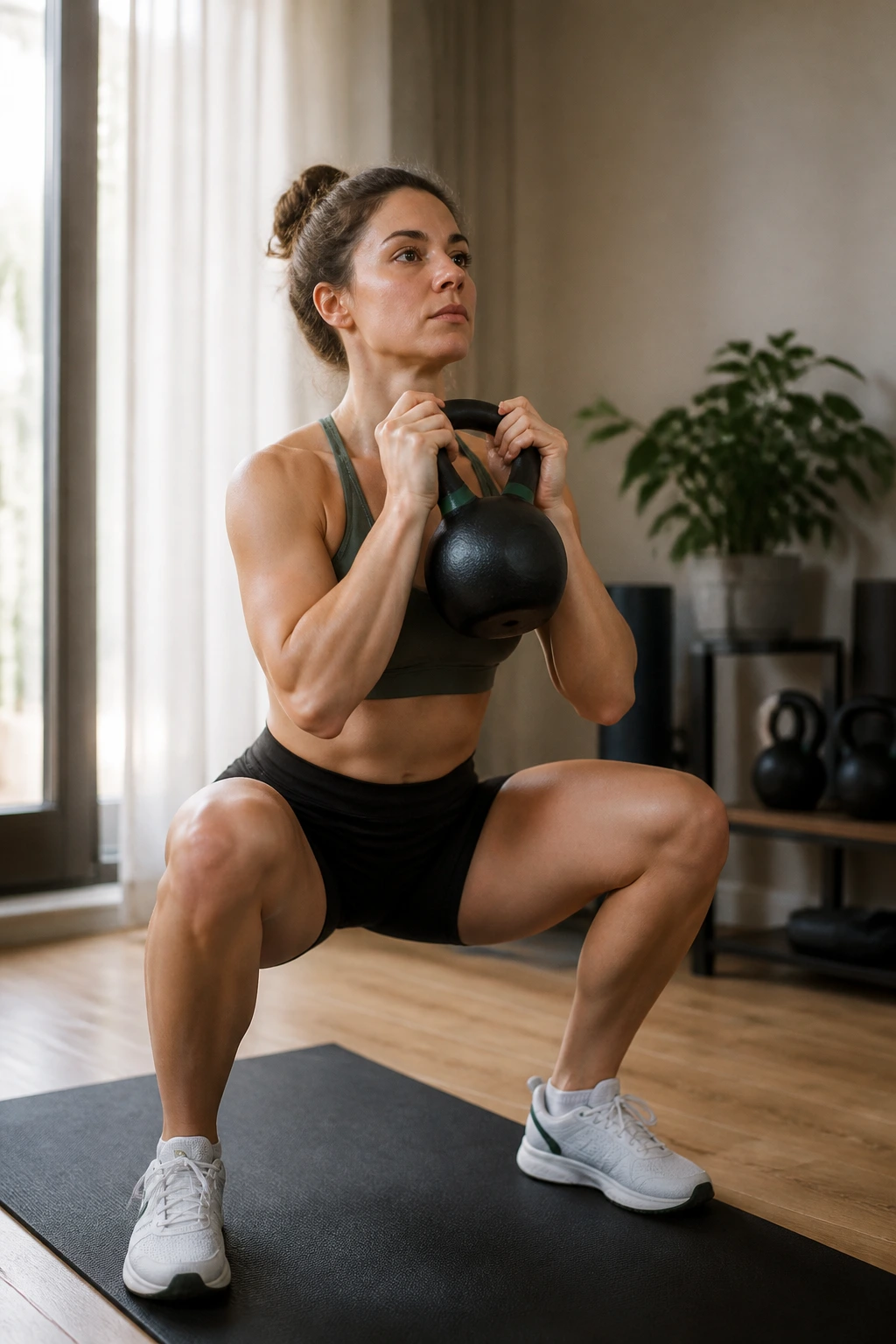
What happens when one kettlebell does all the work? You get a session that feels dense, efficient, and a little humbling if the bell is heavier than your ego wants to admit.
Use one weight and link a deadlift, clean, front squat, press, and reverse lunge on each side. The beauty of a complex is that you keep moving with the same tool, which means less setup and less wasted time. One bell. Many jobs.
How to Use It
Do 5 rounds. On each side, hit 5 deadlifts, 5 cleans, 5 front squats, 5 presses, and 5 reverse lunges. Rest 60 to 90 seconds between rounds. If the kettlebell feels awkward overhead, drop the press and keep the rest.
- Start with the bell between your feet.
- Keep your wrist straight on the clean.
- Rack the bell close to your chest on the squat.
- Step back softly on the lunge.
- Switch sides before your grip falls apart.
If you do not own a kettlebell, a single dumbbell works. Slightly clunkier. Still good.
10. Tabata Intervals for Busy Days
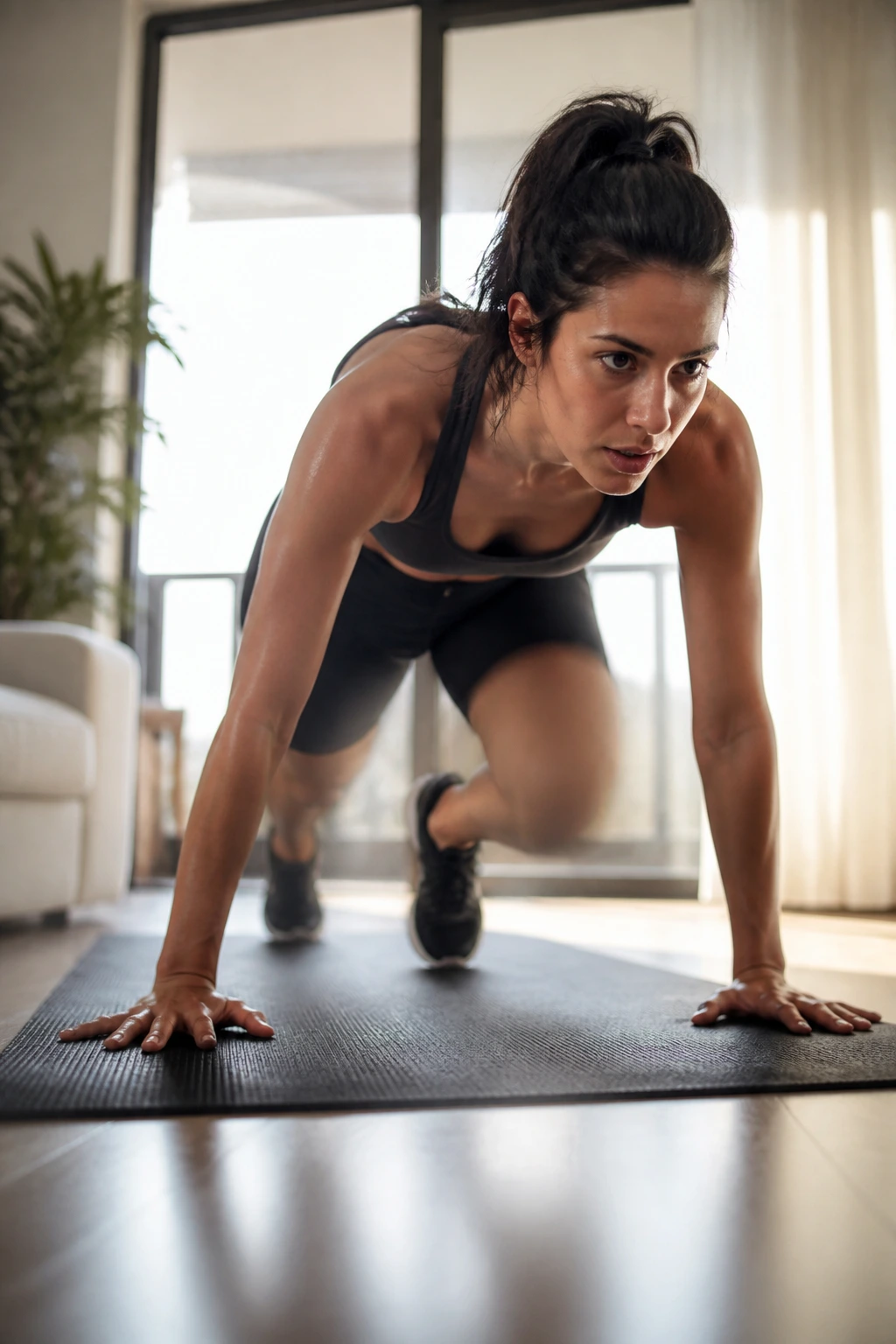
Some workouts need a stopwatch because the work is the point. Tabata is that kind of workout. Twenty seconds on, ten seconds off, and the clock never lets you pretend you’re taking it easy.
I like Tabata for days when I want a hard session without a long warm-up of excuses. It’s short enough to fit into a busy corner of the day, but it can still leave your legs and lungs buzzing. The catch is simple: you cannot coast through the work intervals and expect much from it.
Use 4 minutes per block. Choose one move for each block, or pair two moves and alternate them. Squat thrusts, mountain climbers, push-ups from a bench, and alternating skaters all fit well. Keep the form crisp. The moment your hips sag or your shoulders shrug, the set is done.
- 20 seconds work
- 10 seconds rest
- 8 rounds per block
- 2 to 4 blocks total
If you only have 8 to 12 minutes, do two blocks and call it a win.
11. Core, Carry, and Grip Workout
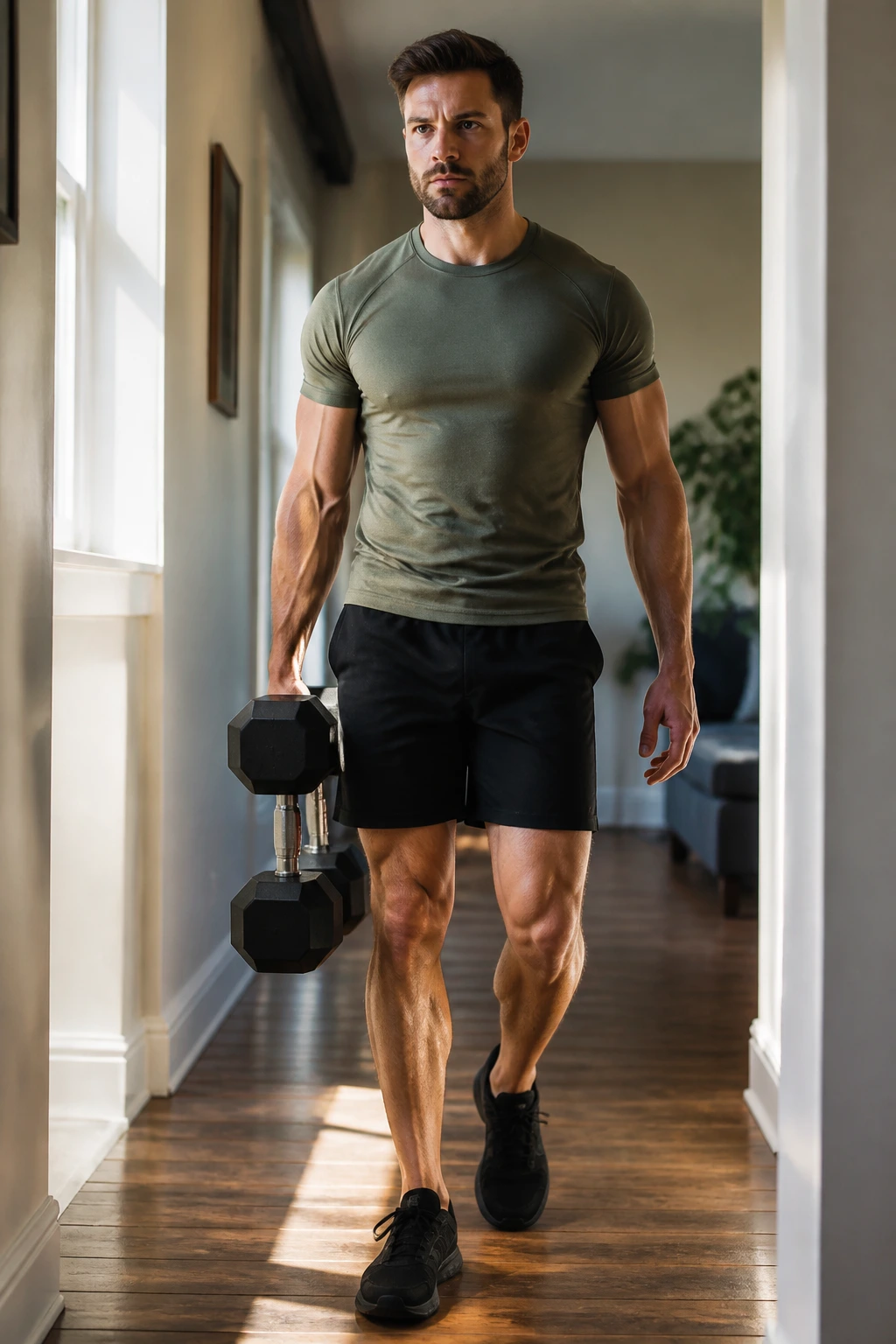
The best core work is rarely glamorous. It shows up when you carry something heavy across the room and your body refuses to lean sideways.
That is why this session uses loaded holds and carries. A dumbbell, kettlebell, water jug, or backpack works. Hold it on one side in a suitcase carry, then switch. Add dead bugs, a front rack hold, a plank, and a slow march in place with the load. The core has to brace while the grip and obliques do their own quiet work.
I like this one because it feels sneaky. People expect abs to mean crunches. Instead, they get posture, control, and a midsection that has to stay honest under load.
Try 4 rounds of 30 seconds suitcase carry each side, 8 dead bugs per side, 20 seconds plank, and 30 seconds front rack march. Move with purpose. If your shoulders start tilting, the weight is too heavy or the set is too long.
12. Stair Climb and Floor Strength Mix
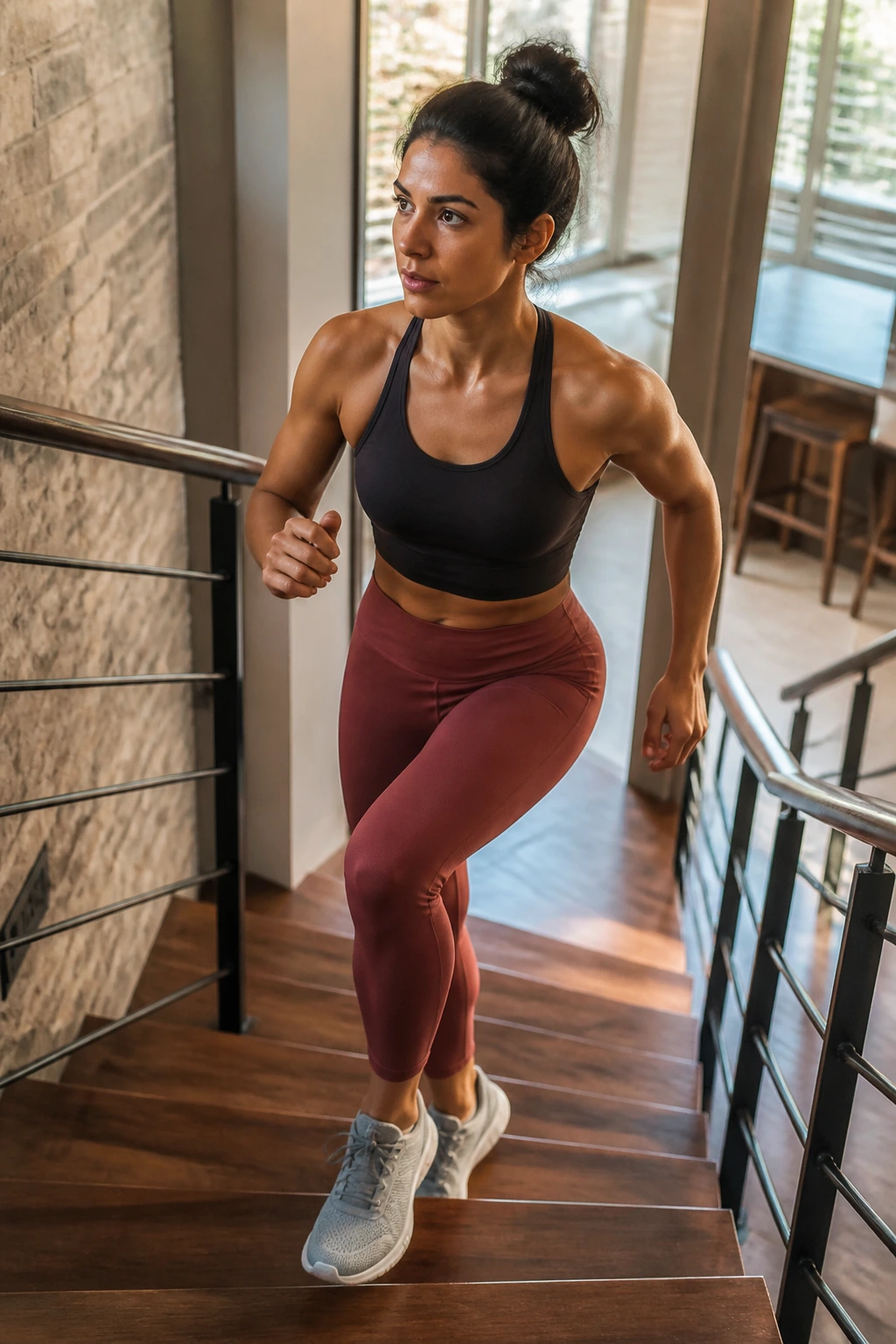
Stairs change the whole feel of a home workout. Every step up makes your legs and lungs work at the same time, which is why a simple staircase can beat a lot of fancier gear.
Compared with a treadmill or bike, stairs ask more from your glutes and quads with each rep. They also punish sloppy pacing. That can be good if you want a session that feels athletic, not sleepy. Just keep your descent controlled. Rushing downstairs is where knees start grumbling.
Do 6 to 10 climbs, then drop to the floor for push-ups, hip hinges, or glute bridges. A practical setup looks like this: 1 stair climb, 10 step-ups on each leg, 8 incline push-ups, 12 hip hinges, 20-second plank. Rest 45 seconds and repeat.
Best for: people with stairs, people who want sweaty legs without jumping, and anyone who likes a clear “up, down, work” pattern.
13. Pilates-Style Deep Core Session
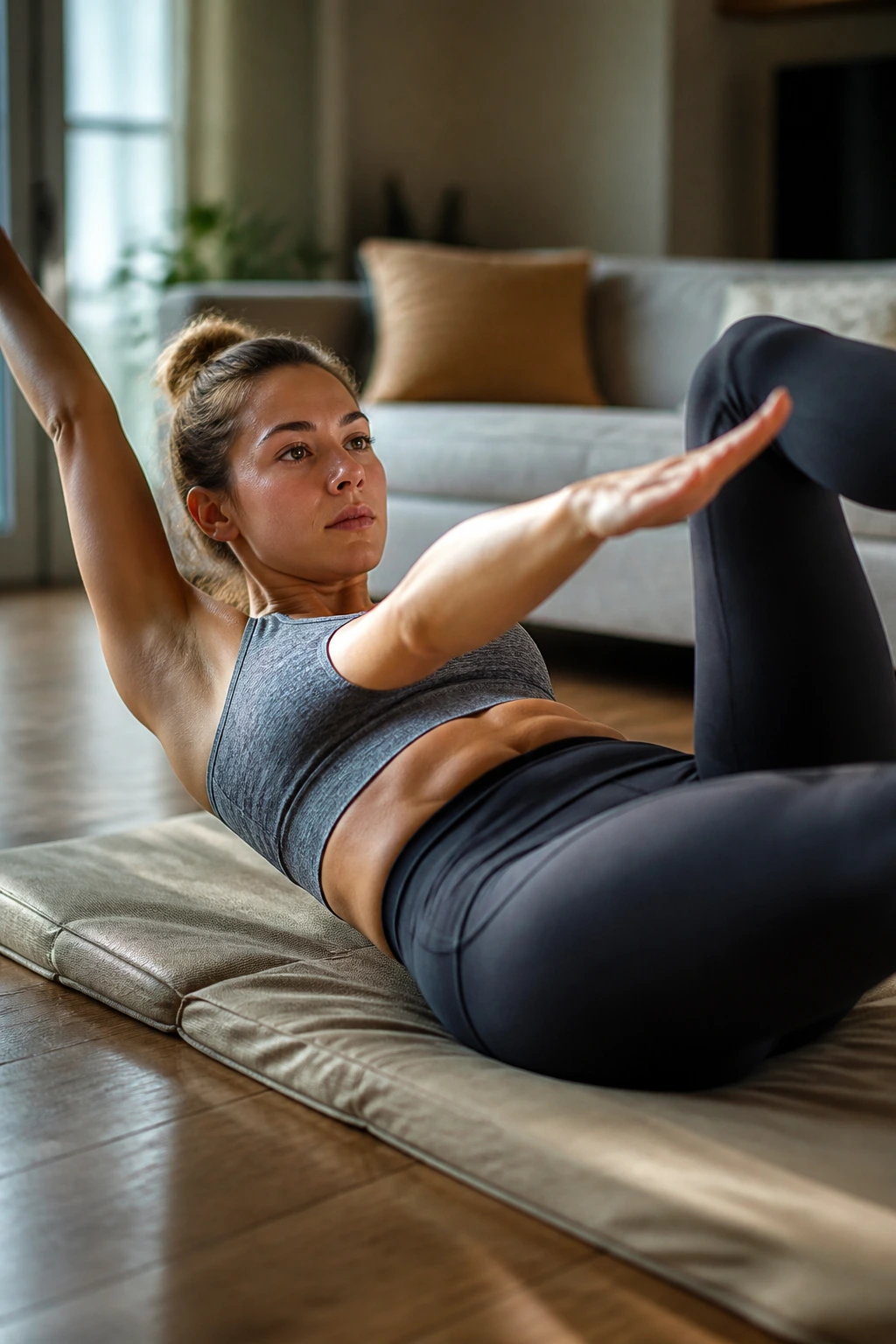
If crunches make your neck feel weird, this one is a relief. The core can work hard without a single ugly sit-up.
The focus here is control. Think hundred breathing, toe taps, side-lying leg lifts, glute bridge marches, and dead bugs. The pace stays slow because the point is to keep the lower back quiet while the abs learn how to hold the spine still.
Move List
- 30 seconds hundred breathing
- 10 toe taps per side
- 12 side-lying leg lifts per side
- 10 glute bridge marches per side
- 8 dead bugs per side
- 20-second plank knee hover
Do 2 to 3 rounds. Keep your ribs heavy on the floor during the floor work. If your back arches, shrink the range and slow down. That usually fixes more than people expect.
The funny part is that this session looks gentle and leaves you surprised later when you stand up from the couch.
14. Resistance Band Full-Body Workout at Home
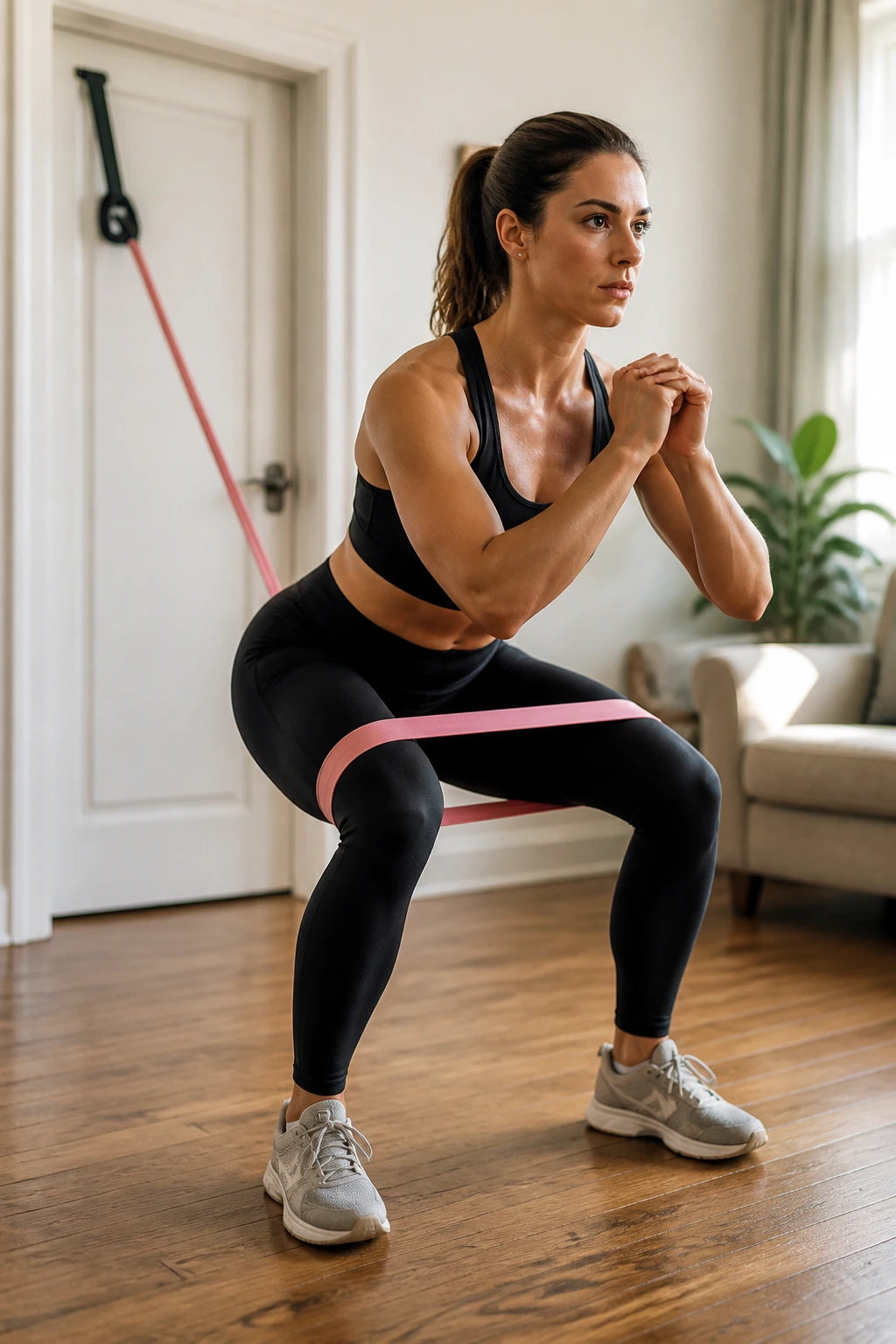
A resistance band changes a home workout fast. The tension is constant, the setup is easy, and the joint stress is usually lower than with heavy dumbbells.
Use a band squat, row, chest press, lateral walk, pull-apart, and good morning. This is one of those rare pieces of gear that earns its space because it can hit the legs, back, chest, shoulders, and glutes without taking over the room. Just check the anchor point if you’re using a door setup. A loose anchor is not a clever surprise.
Run 3 rounds of 12 squats, 12 rows, 10 chest presses, 10 steps each way on a lateral walk, 15 pull-aparts, and 12 good mornings. Keep the band tension smooth, not jerky. If the reps turn into a struggle for the wrong reasons, step farther from the anchor or choose a lighter band.
This one works well on recovery-adjacent days when you still want real muscle tension.
15. Pyramids for Strength and Cardio
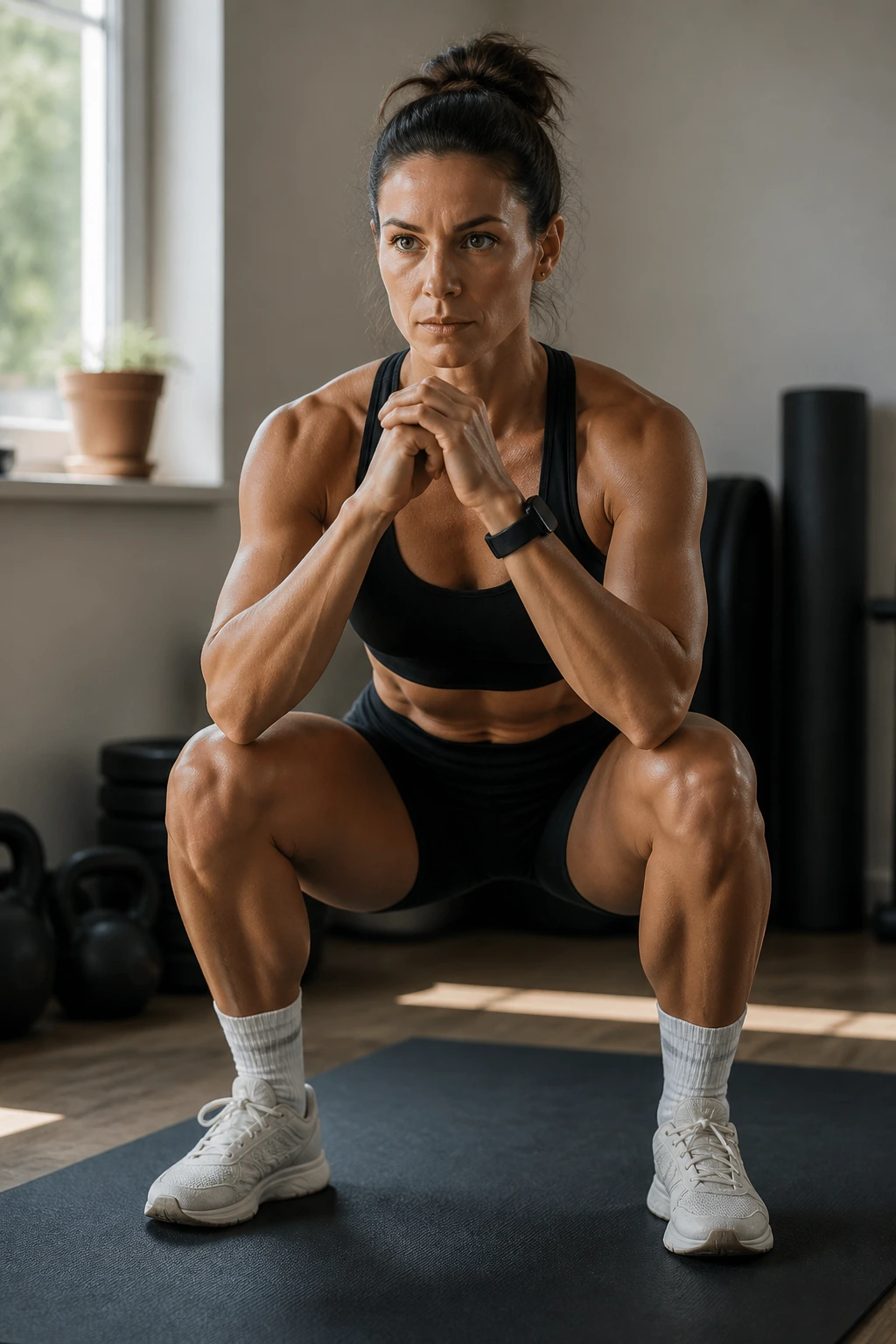
What makes a pyramid workout useful is the pacing. You build up, then back down, and the structure keeps your mind from wandering into snack territory.
A rep pyramid can be cleaner than a straight set because you get rhythm without boredom. Start with 2 reps, then 4, then 6, then 8, and come back down. Or use time: 20 seconds, 30 seconds, 40 seconds, 30 seconds, 20 seconds. Either way, the middle gets spicy and the edges stay manageable.
How to Use It
Pick three moves: squat, push-up, and reverse lunge. Do 2-4-6-8-6-4-2 reps for each move, resting 20 to 30 seconds between rounds. Keep the push-up version honest — incline is fine, knees are fine, ugly reps are not.
The nice thing about pyramids is that they feel like a climb and a descent at the same time. You can mentally count them down, which sounds trivial until you’re halfway through and every extra rep starts looking personal.
16. AMRAP Endurance Test
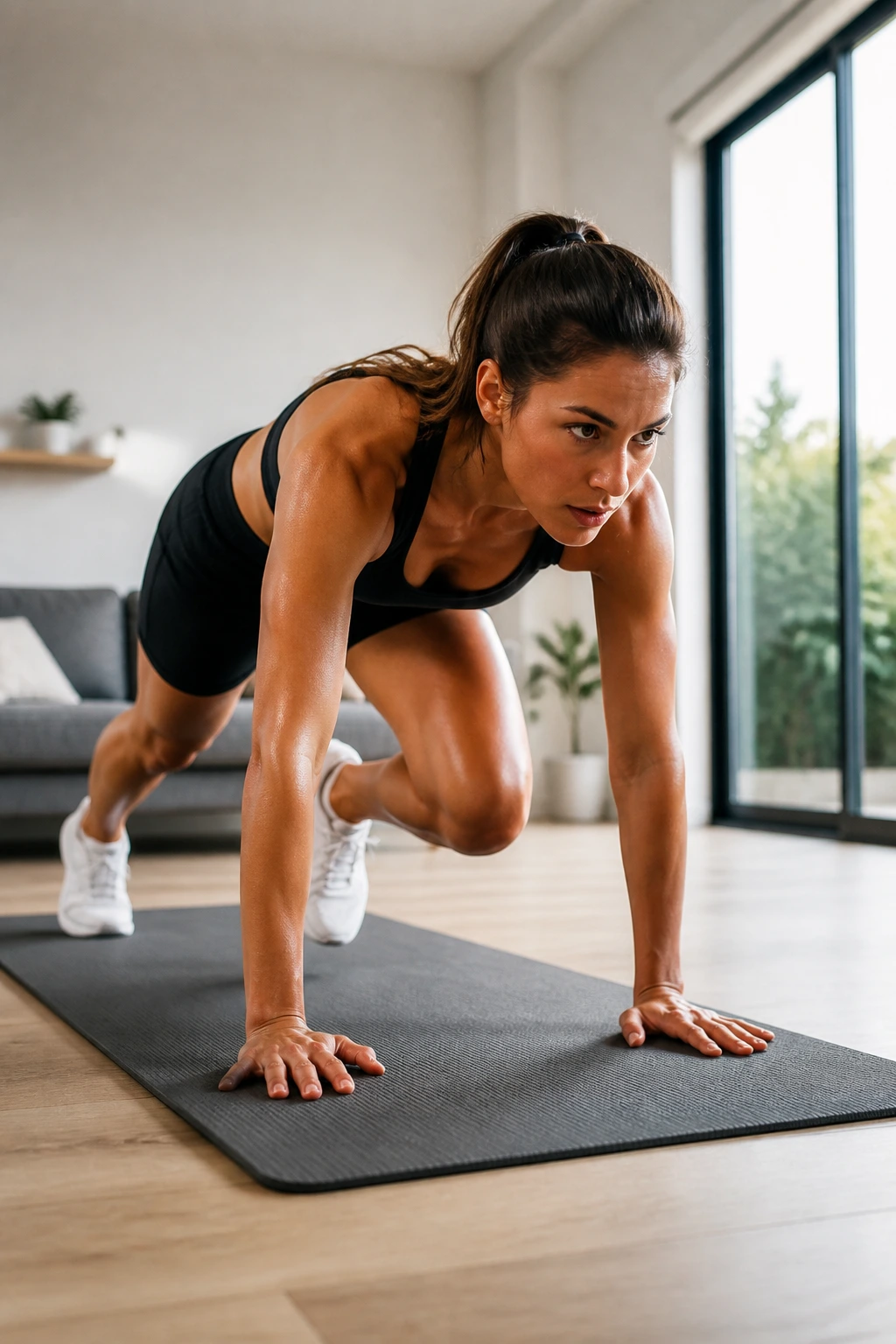
Some days you want a score, not a mood. AMRAP gives you that. It stands for “as many rounds as possible,” and the clock decides the length.
This is the kind of session that makes you pay attention to pacing. Start too fast and you’ll fade hard. Start too slow and the score will look sleepy. The sweet spot sits in the middle, where you keep moving but never fall apart.
Try this for 12 minutes: 8 air squats, 6 push-ups, 12 alternating reverse lunges, 8 mountain climbers each side, and 10 glute bridges. Every round should feel repeatable. If your push-ups collapse on round two, switch to incline before that happens.
- Track your completed rounds.
- Rest only when form slips.
- Keep each transition under 5 seconds.
- Write down the score if you care about progress.
That last part matters more than people think. A score turns “I worked hard” into something you can beat later.
17. Balance and Stability Workout
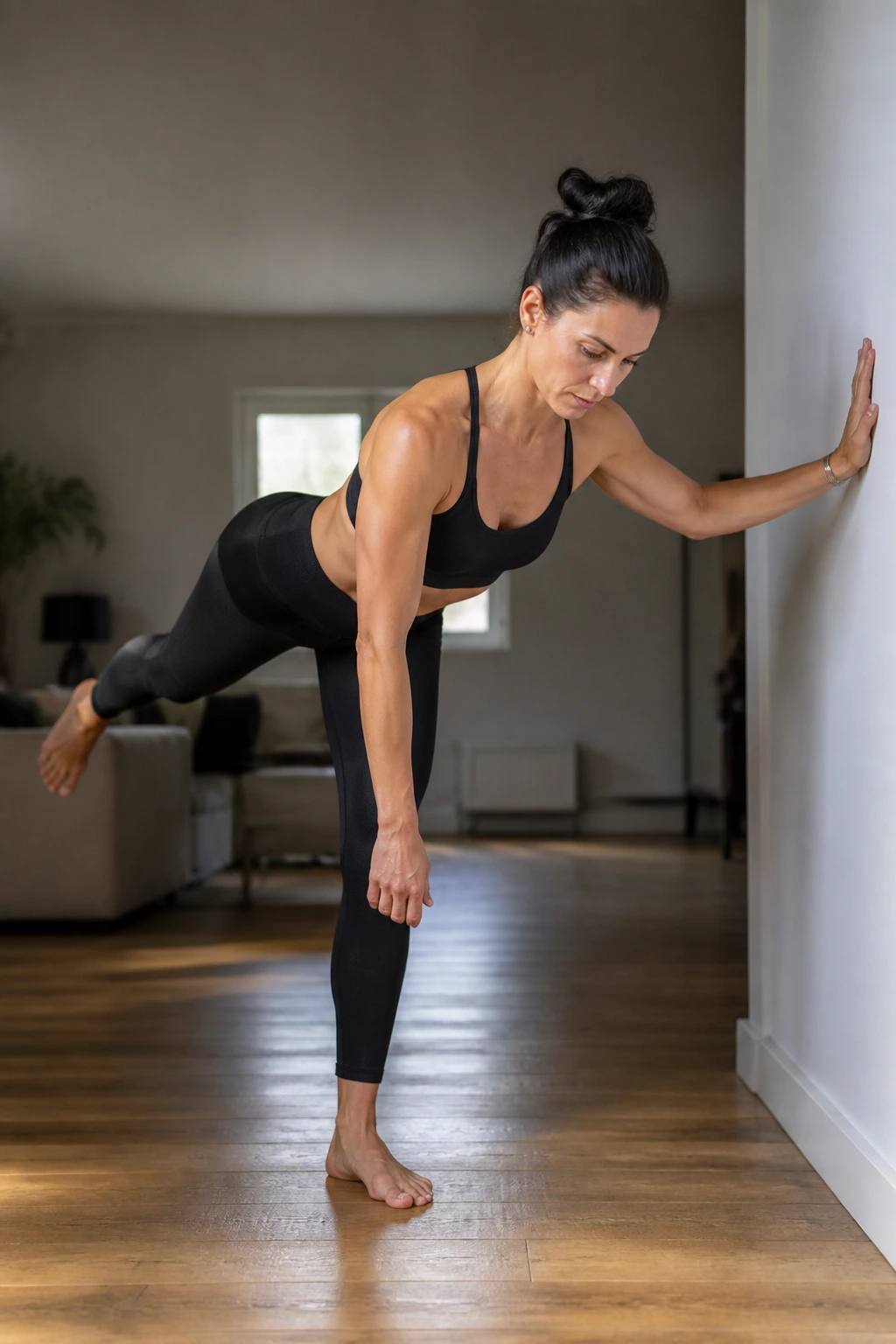
A lot of strength problems show up as balance problems first. You notice it when one side wobbles on a split squat or your foot wobbles during a hinge.
This workout leans into that. Single-leg RDLs, split squat holds, bird dog rows, single-leg calf raises, standing knee drives, and side planks all make your stabilizers pay attention. The load can be light. The movement still feels serious because the body has to organize itself around one planted foot or one fixed side.
Slow reps are the whole game here. A fast single-leg RDL is basically a balance gamble. A slow one tells you where the weak spots are. That’s useful information, even if it’s slightly annoying.
Do 3 rounds of 8 reps each side on the hinge and calf raise, then 20-second holds on the split squat and side plank. Finish with 10 standing knee drives each side. Stay near a wall if you need it. No shame in that. Better to train clean than wobble around pretending not to notice.
18. Boxing Rounds with Bodyweight Finisher
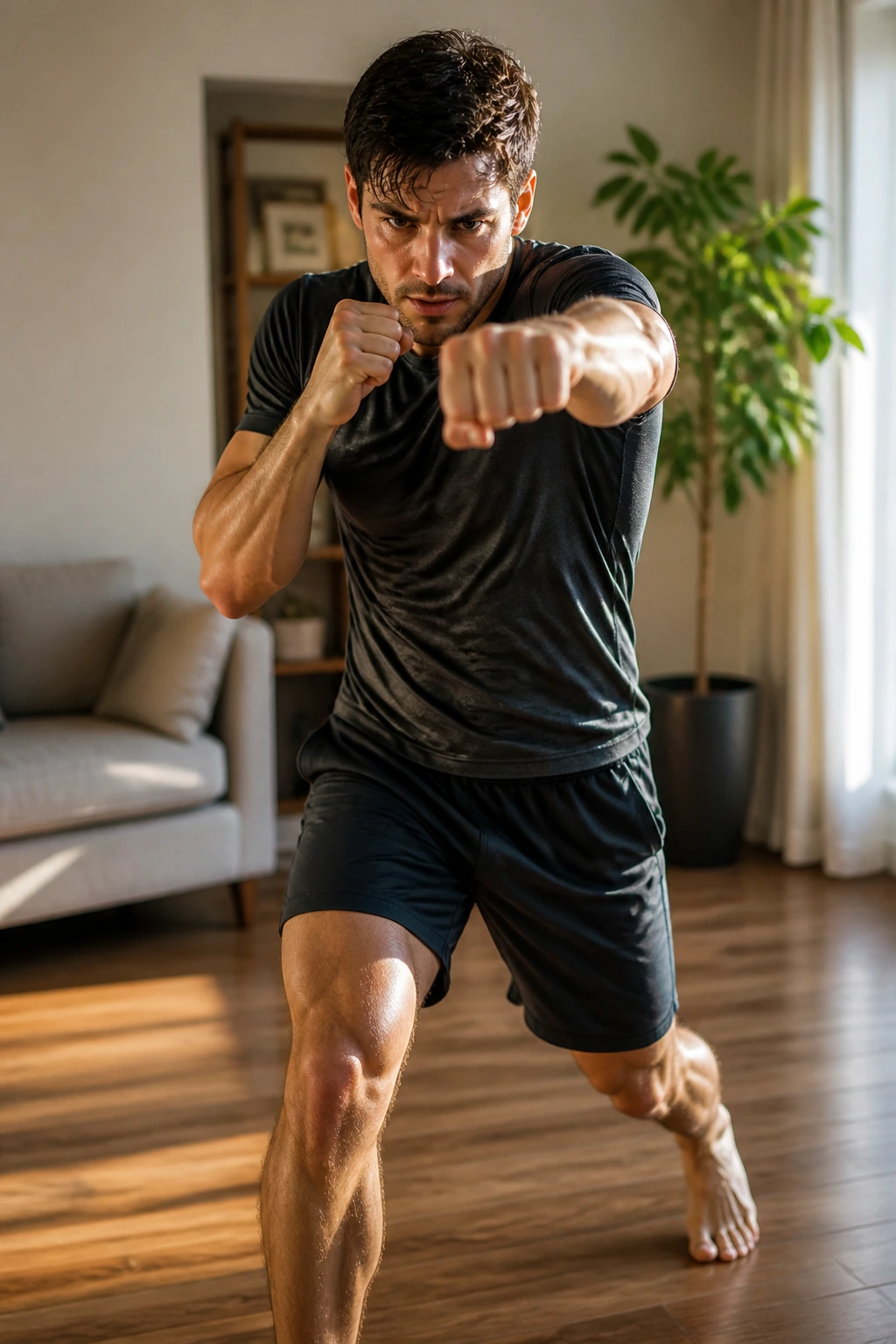
Shadowboxing beats another boring cardio grind when you want your brain involved too. It gets your heart rate up, makes your shoulders work, and gives your hands something to do besides scroll.
Compared with steady-state cardio, boxing rounds feel more alive. Your feet move, your torso rotates, and your lungs have to keep up with the tempo shifts. That makes it a strong choice for stressy days, especially if you like a workout that feels a bit more aggressive without needing heavy impact.
Do 3-minute rounds with 1 minute rest. Use simple combos: jab-cross, jab-cross-hook, slip and reset, then add a squat or sprawl after every few combinations. After each round, drop into 10 push-ups or 15 air squats. That keeps the lower body involved without turning it into a separate workout.
Best for people who want to burn off steam and still finish with decent form. Keep the chin tucked. Twist through the hips. Punching from the arms alone gets tired fast.
19. Recovery Strength and Stretch Circuit
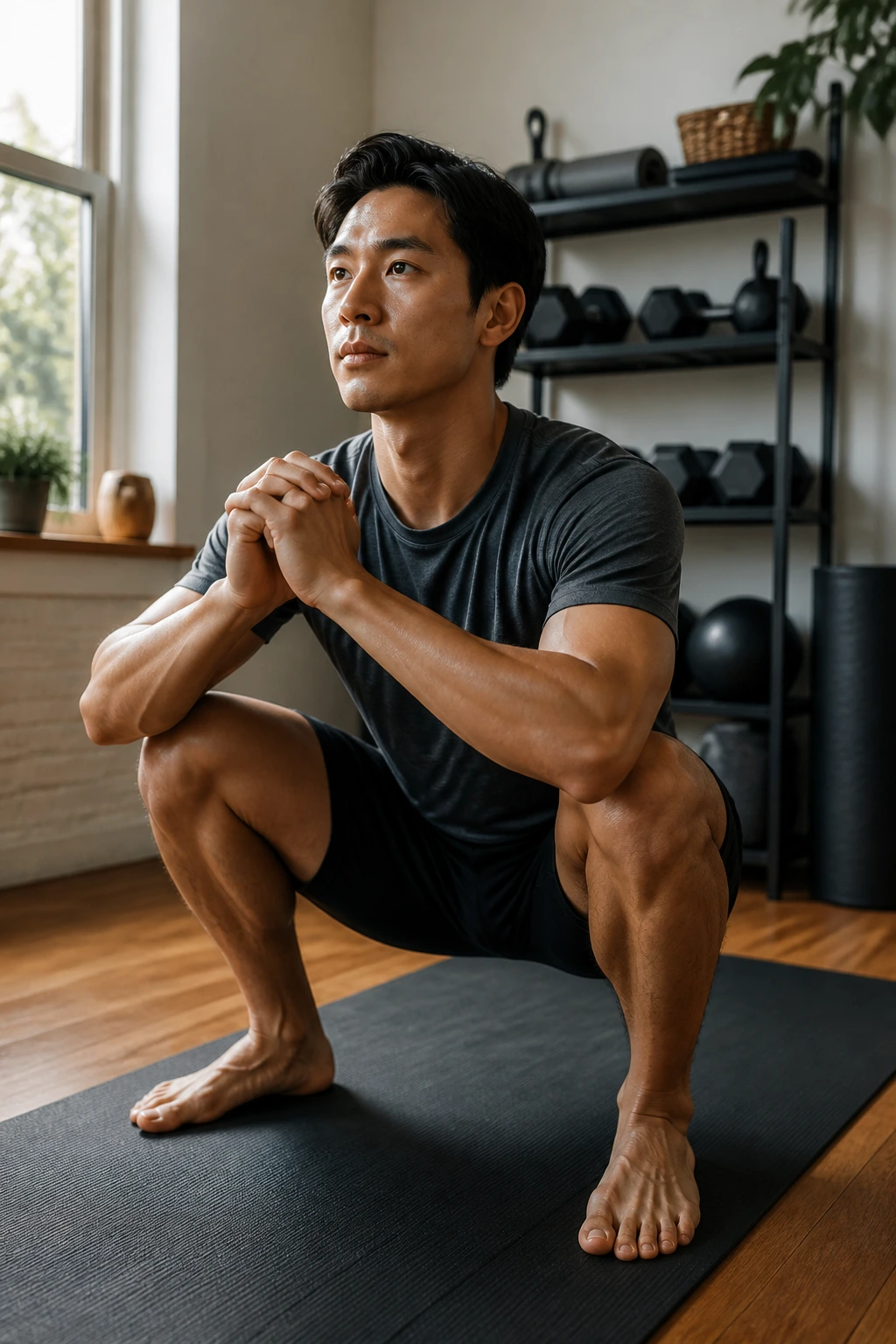
Not every workout has to leave you wrecked. Some days, the smarter move is to work the body hard enough to feel it, then leave enough in the tank to move well tomorrow.
This circuit mixes slow strength with long, honest stretches. Use bodyweight squats, glute bridges, wall slides, dead bugs, couch stretch, and child’s pose. It works well after a heavy week of training or on a day when your lower back, hips, and shoulders all seem to be sending messages.
Slow Cycle
- 5 slow squats with a 3-second lower
- 8 glute bridges with a 2-second squeeze
- 6 wall slides
- 8 dead bugs per side
- 30 seconds couch stretch per side
- 30 seconds child’s pose breathing
Move through 2 rounds. Breathe through the nose if it feels comfortable. If the stretch gets sharp, back off a little. Recovery work should feel useful, not heroic.
This is the session I reach for when the body wants movement but not punishment.
20. Sunday Reset Full Workout at Home
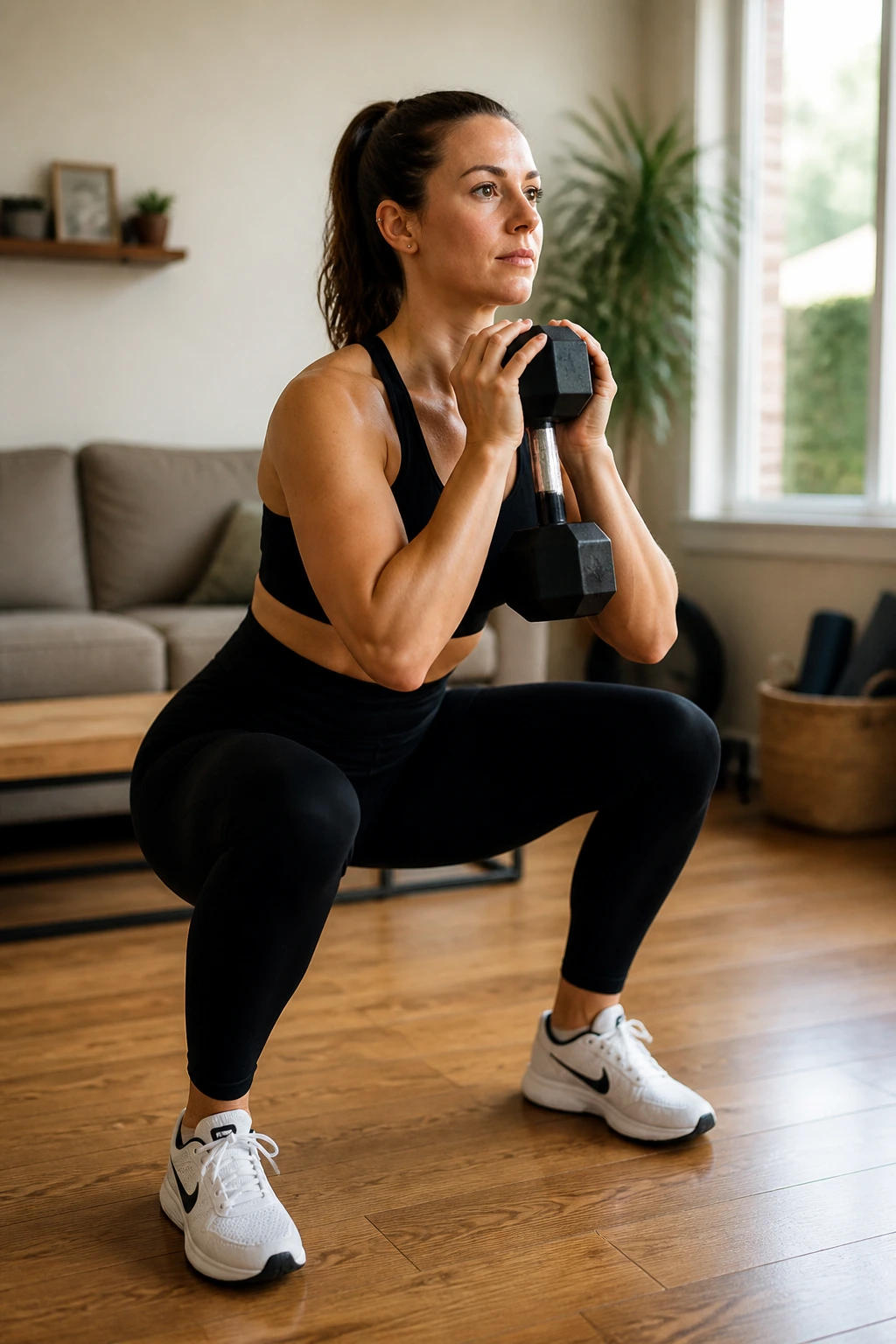
A good reset workout sits in that middle space between “too easy” and “why did I do that to myself.” It should wake you up, not flatten you.
Use this when you want a full workout at home that clears out the stiffness from the week and leaves you ready for the next one. Do 3 rounds of 12 goblet squats, 10 push-ups, 12 rows, 10 reverse lunges per side, 12 hip hinges, and a 30-second plank. Finish with 1 minute of brisk marching or easy stair climbing if you have it.
The rhythm matters. Keep the rest short, about 30 to 45 seconds between moves, and move at a pace you can repeat without rushing into bad form. If your legs are already tired, cut the lunges to 8 per side and keep the hinges clean. No hero points for sloppy reps.
This is the one I’d keep near the end of the week because it does a little of everything without stealing the next day. That’s a rare sweet spot. Use it well, and the rest of your home workouts get easier to place.
