



Space is the first thing people think they need to work out at home. It isn’t. A patch of floor, a little discipline, and a plan that actually respects the body go much farther than most people expect.
A solid total body no equipment workout at home has a rhythm to it. You want one move that pushes, one that squats, one that hinges at the hips, one that challenges one leg at a time, and one that makes your lungs work harder. If a session skips those pieces and throws in random jumping jacks, it feels busy but doesn’t train much.
That is the filter I use when I pick a bodyweight workout. Clear reps. Clear rest. A real reason for every exercise. The better sessions leave your legs warm, your shoulders awake, and your breathing up without turning the whole thing into chaos.
Pick the style that matches your day — steady strength, sweaty intervals, low-impact work, or a slower reset — and the rest gets easier.
1. Beginner Full-Body Circuit You Can Finish Without Dreading It
This is the workout I’d hand to someone who wants a clean start and hates the idea of getting buried in complexity. It has enough variety to hit the whole body, but not so much that you spend half the session wondering what comes next. Three rounds is plenty.
Do each move for 30 seconds, then rest 15 seconds. Keep the pace honest. You should feel worked by the end of round two, not crushed by minute four.
How to pace it
- Bodyweight squats — sit back, keep your chest tall, and stop when your thighs are about parallel to the floor.
- Wall push-ups or knee push-ups — use the version that lets you keep your torso tight and your elbows at about a 45-degree angle.
- Reverse lunges — step back softly, then drive through the front foot.
- Glute bridges — squeeze the top for one full second.
- Dead bugs — move slowly enough that your lower back stays glued to the floor.
One round takes about 4 minutes and change, so the whole thing lands in the 15- to 20-minute range with rest. That’s a nice place to start if your goal is consistency instead of punishment.
Best part: it teaches your body the basic pattern work that most home workouts skip. Push, squat, lunge, brace, and extend. That’s the whole game.
2. Ascending Rep Ladder That Feels Friendly Until It Doesn’t
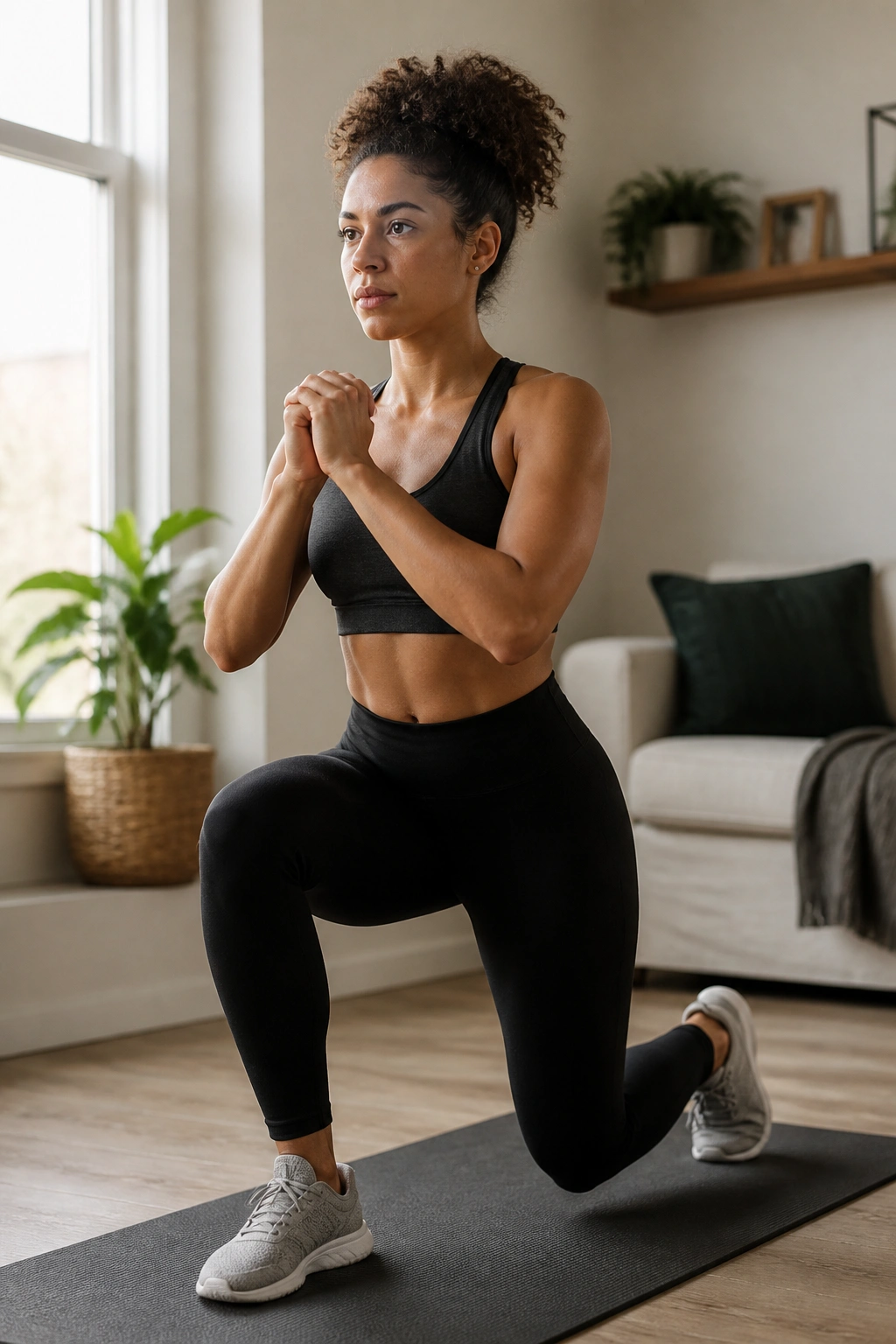
Ladders are sneaky. They look polite on paper and then your breathing changes somewhere around the 6-rep rung. I like them because they give you structure without needing a timer glued to your hand.
Start with 2 reps of each move, then build to 4, 6, 8, and 10. Rest 30 to 45 seconds between rounds, or a little longer if your form gets sloppy. Then walk the ladder back down if you’ve still got gas.
The lineup is straightforward: squats, push-ups, reverse lunges, glute bridges, and plank shoulder taps. That mix covers legs, chest, shoulders, hips, and the core that has to hold it all together. The key is not speed. It’s clean reps that still look clean on the last rung.
The biggest trap here is ego. A lot of people rush the early rounds because they feel easy, then their push-ups turn into half-reps and their lunges start wobbling. Don’t do that. Keep a steady pace and treat every rung like it matters, because it does.
I like this one on days when I want a workout that feels organized and a little old-school. It has a nice rhythm. No fluff.
3. Quiet Apartment Cardio Mix That Won’t Shake the Floor
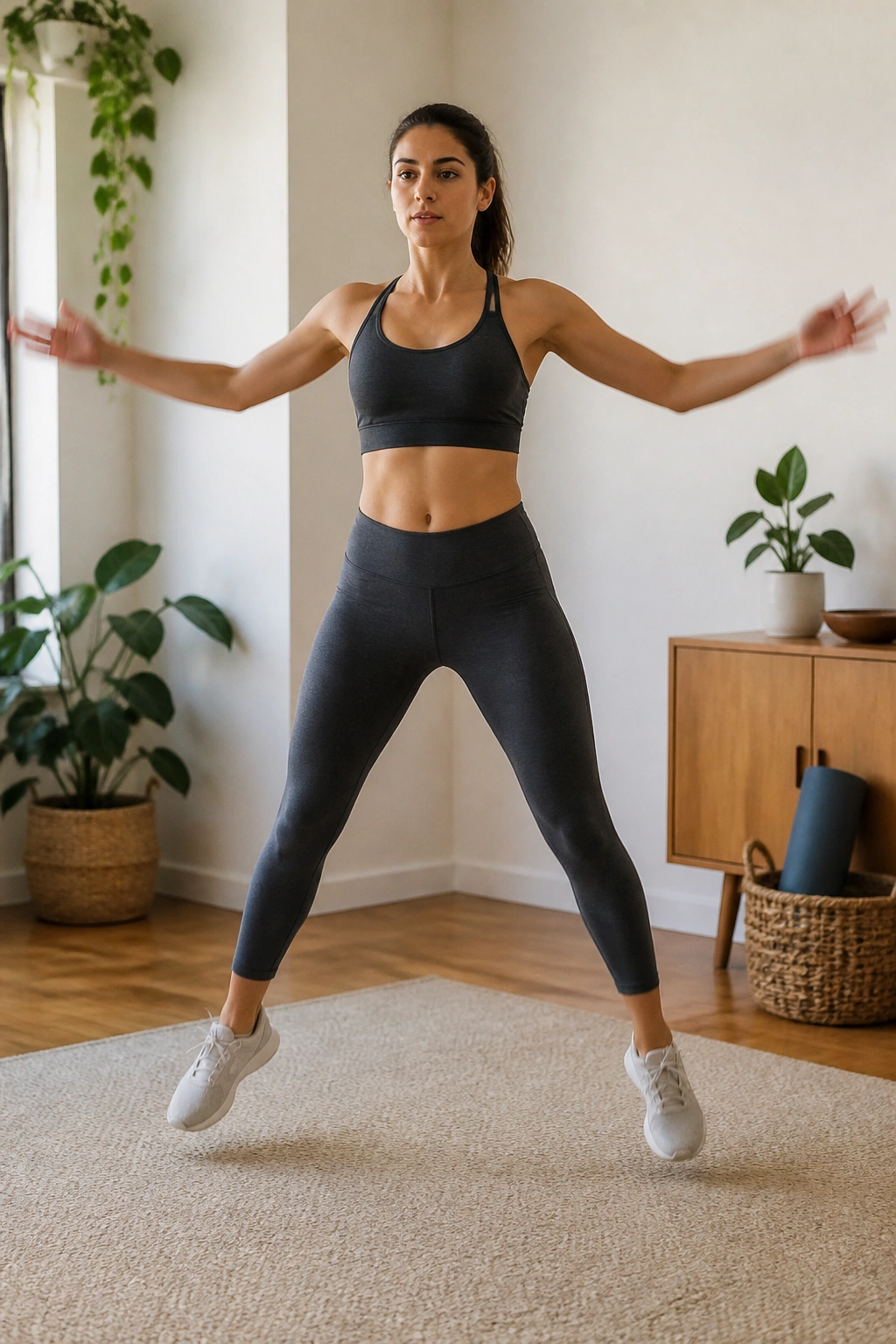
Need a workout that doesn’t sound like a herd of buffalo? This is the one. No jumping required, no noisy landings, and no weird dance moves you’ll regret halfway through.
Use 45 seconds of work and 15 seconds of rest for 4 rounds. The goal is to keep moving without bouncing around like a loose cabinet door.
Move list
- Step jacks instead of jumping jacks
- Alternating knee drives with a strong arm swing
- Skater steps that reach side to side, not big hops
- Squat to calf raise for legs and a little extra pulse
- Mountain climbers done controlled, with hips low
This kind of workout hits harder than it looks because there’s almost no dead time. Your heart rate climbs, your legs stay under tension, and the whole thing stays quiet enough to do before sunrise or after people in the next room have gone to bed.
One thing I like here is the shoulder work hidden inside the cardio. Big arm swings, knee drives, and even the squat-to-raise pattern wake up the upper body without needing weights.
Use it when you want sweat without chaos. That’s the niche.
4. EMOM Sweat Session With Almost No Wasted Seconds
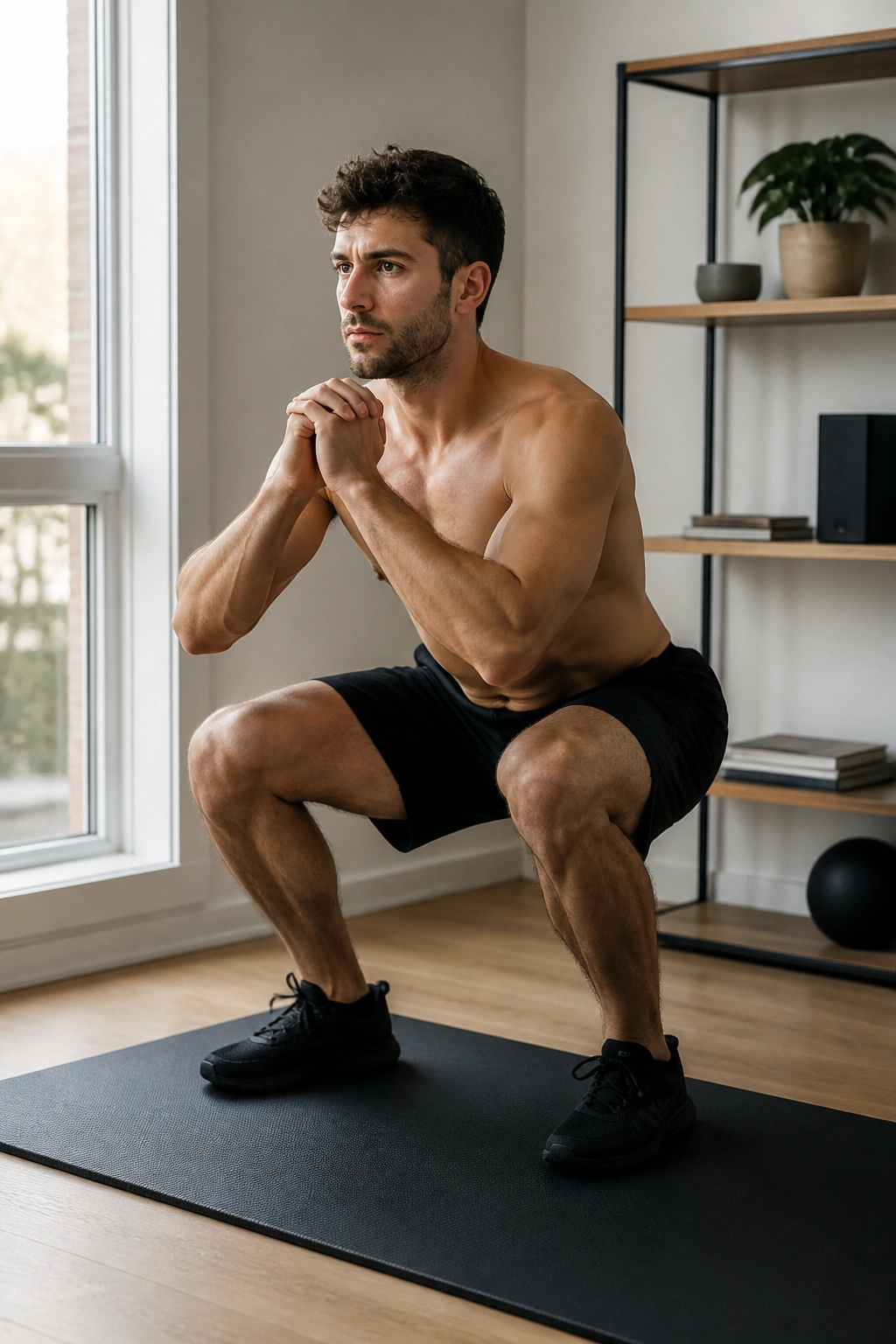
Set a timer for 16 minutes and let the clock do the nagging. EMOM means “every minute on the minute,” and it works beautifully when you want a workout that keeps you honest.
Here’s the setup: finish the reps in the first part of the minute, then rest for whatever time is left. If you get done in 35 seconds, you get 25 seconds to breathe. If you take 50 seconds, the next minute starts fast. That pressure changes the feel in a good way.
- Minute 1: 12 squats
- Minute 2: 8 push-ups
- Minute 3: 12 alternating reverse lunges each side
- Minute 4: 30-second plank or 20 mountain climbers each side
Repeat that four times.
What I like about EMOM work is that it punishes laziness without turning the session into a mess. You know exactly what’s coming. No guessing. No wandering around the room between exercises. Just work, breathe, repeat.
Keep the reps realistic. If 12 push-ups is too many, drop to 6 or 8 and keep the same minute structure. The workout should feel sharp, not sloppy. Sharp wins.
5. Slow Tempo Strength Work That Makes Bodyweight Feel Heavy
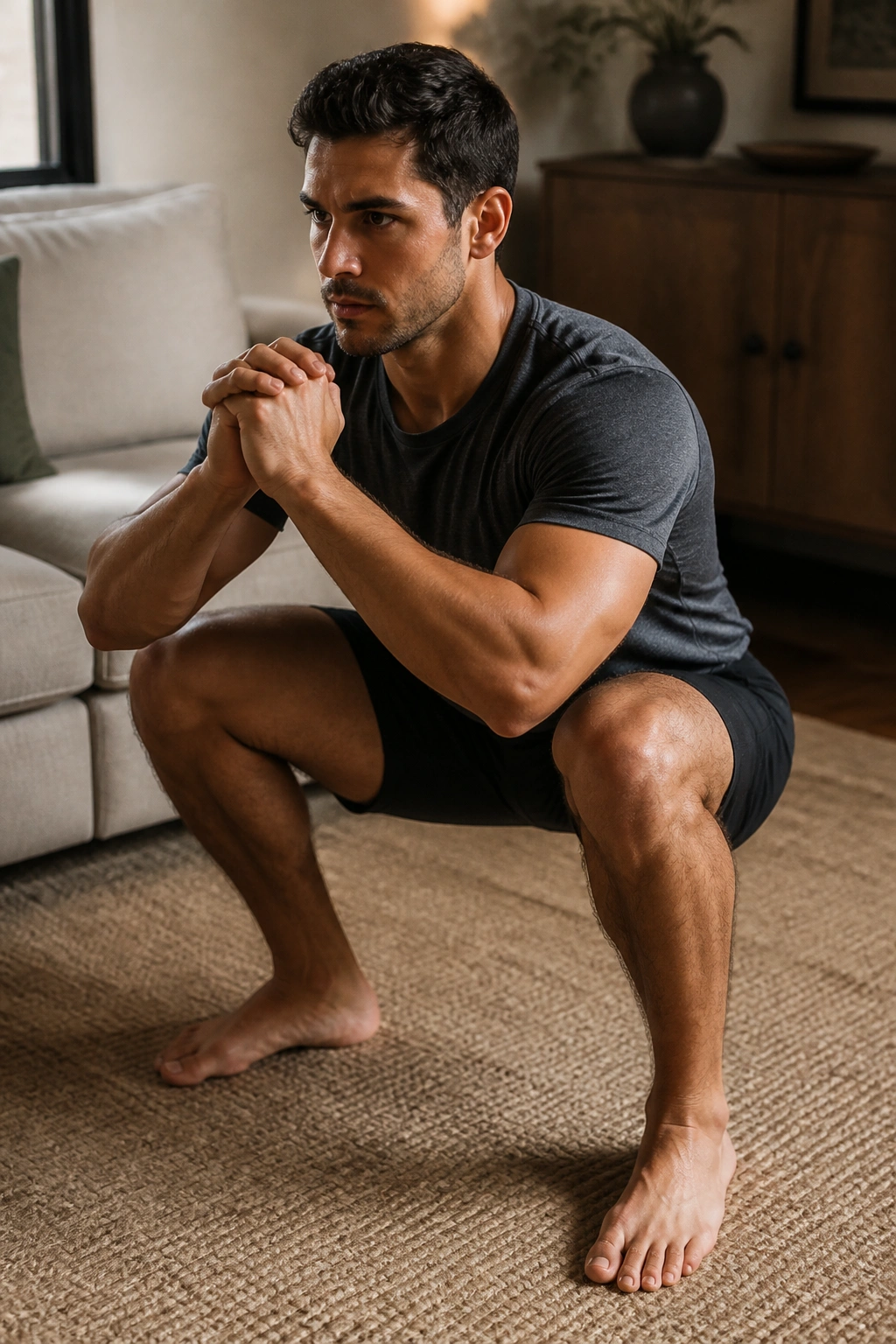
Slow tempo changes everything. A regular squat is one thing. A squat with a 4-second lower, 1-second pause, and strong stand is another animal entirely. You don’t need dumbbells to make a move hard; you need time under tension, and that’s the part most people skip.
Do 3 rounds of the following with 30 to 40 seconds of rest between moves:
- 5 tempo squats
- 5 slow push-ups
- 6 split squats each side
- 12 glute bridges with a 2-second squeeze
- 20-second hollow hold
The funny thing about slow work is that it feels calm while you’re doing it and nasty by the end. Your quads start talking early. Your shoulders get tired in a way that makes you notice every inch of the descent. And because the movement is controlled, your form has to stay clean or the whole thing falls apart.
I prefer this style when I want a strength session but don’t want to jump or sprint. It’s also kinder on the joints than a fast circuit, which makes it a useful option when your knees or ankles are a little cranky.
Tempo work is not flashy. It works anyway.
6. Core and Glutes Floor Session That Fixes Weak Links
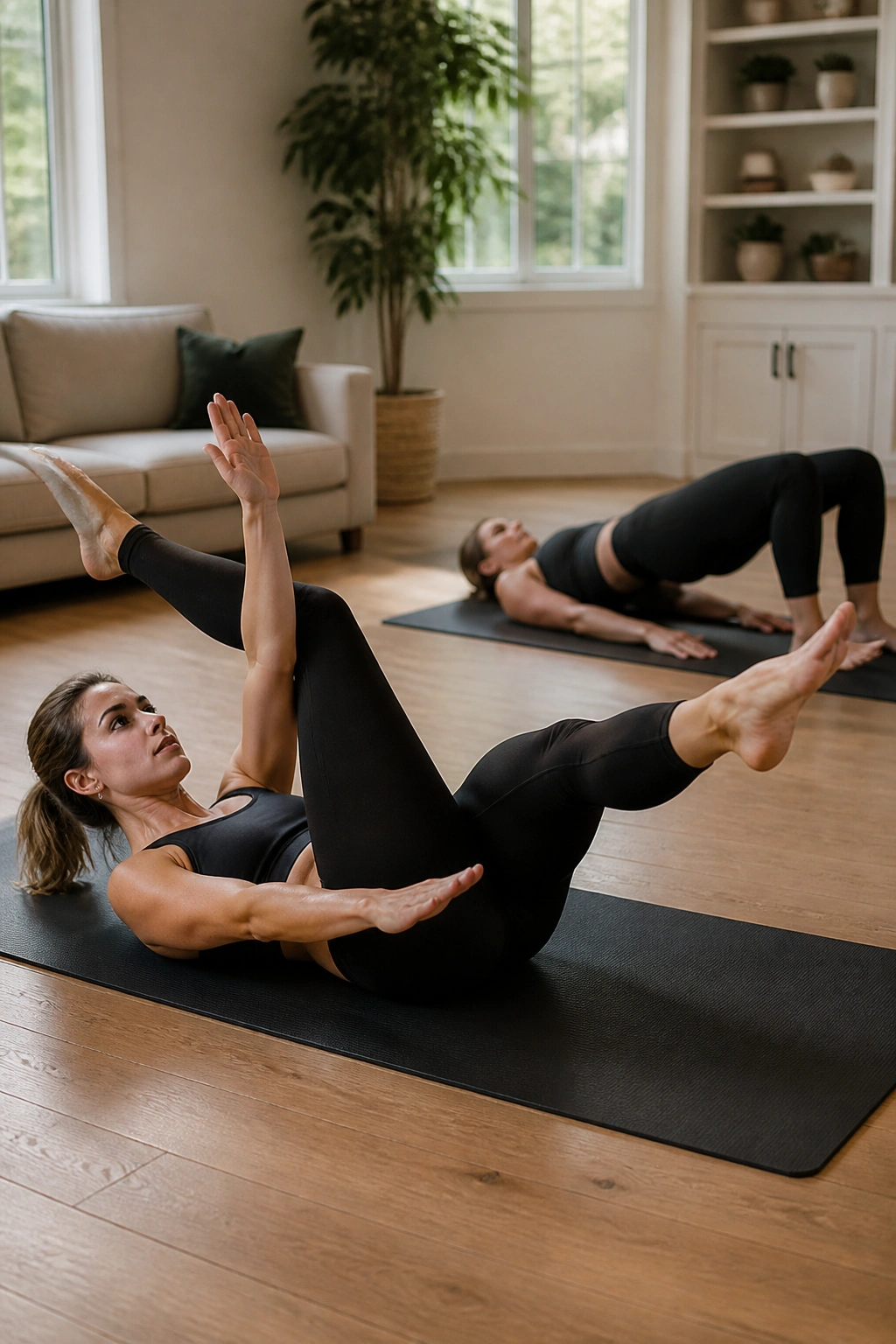
A lot of home workouts chase sweat and ignore the two areas that keep everything else honest: the core and the hips. That’s a mistake. If your trunk leaks and your glutes don’t fire, squats, lunges, and even push-ups start feeling uglier than they should.
This one stays mostly on the floor. Three to four rounds is enough.
Why it feels different
- Dead bugs — 8 to 10 each side, slow enough that your back does not arch
- Glute bridge march — 10 marches each side, hips level the whole time
- Side plank — 20 to 30 seconds each side
- Bird dog — 8 reaches each side with a pause at the top
- Bear plank hold — 20 seconds, knees hovering just off the floor
The point here is not to leave drenched in sweat. The point is to make your midsection work the way it should: stable, braced, and useful. That tends to carry over into every other workout, which is why this kind of session pays off more than it looks like it should.
If your lower back gets involved during dead bugs or bridges, slow down. Then slow down again. Quality matters more than reps here.
Your hips will notice this one by round two.
7. Athletic Power Circuit for Days When You Want to Move Fast

If you miss the feeling of a hard gym session, this one brings it back. It’s quick, explosive, and a little rude in the best way. Keep the total work time short and the effort honest.
Use 30 seconds on, 30 seconds off for 5 rounds. The moves are simple, but they ask a lot.
What to watch for
- Squat jumps — land softly and reset before the next rep
- Burpees — step back if you need to; the workout still counts
- Skater hops — think distance and control, not flailing
- Push-up to shoulder tap — keep the hips quiet
- High knees — pump the arms and stay tall
A few people try to sprint this style and burn out in two rounds. Bad plan. Go hard, yes, but keep enough control that the third and fourth rounds still look like the same exercise. Once the form goes, the workout turns into noise.
How to scale it down
- Swap squat jumps for fast air squats
- Turn burpees into walkouts
- Keep skater hops as side steps
- Drop to knees for push-ups if the shoulders fade early
This is the session I’d pick when I want the room to feel smaller by the end. Good sign. Not a subtle one.
8. Push-Up Focus Workout That Still Trains the Whole Body
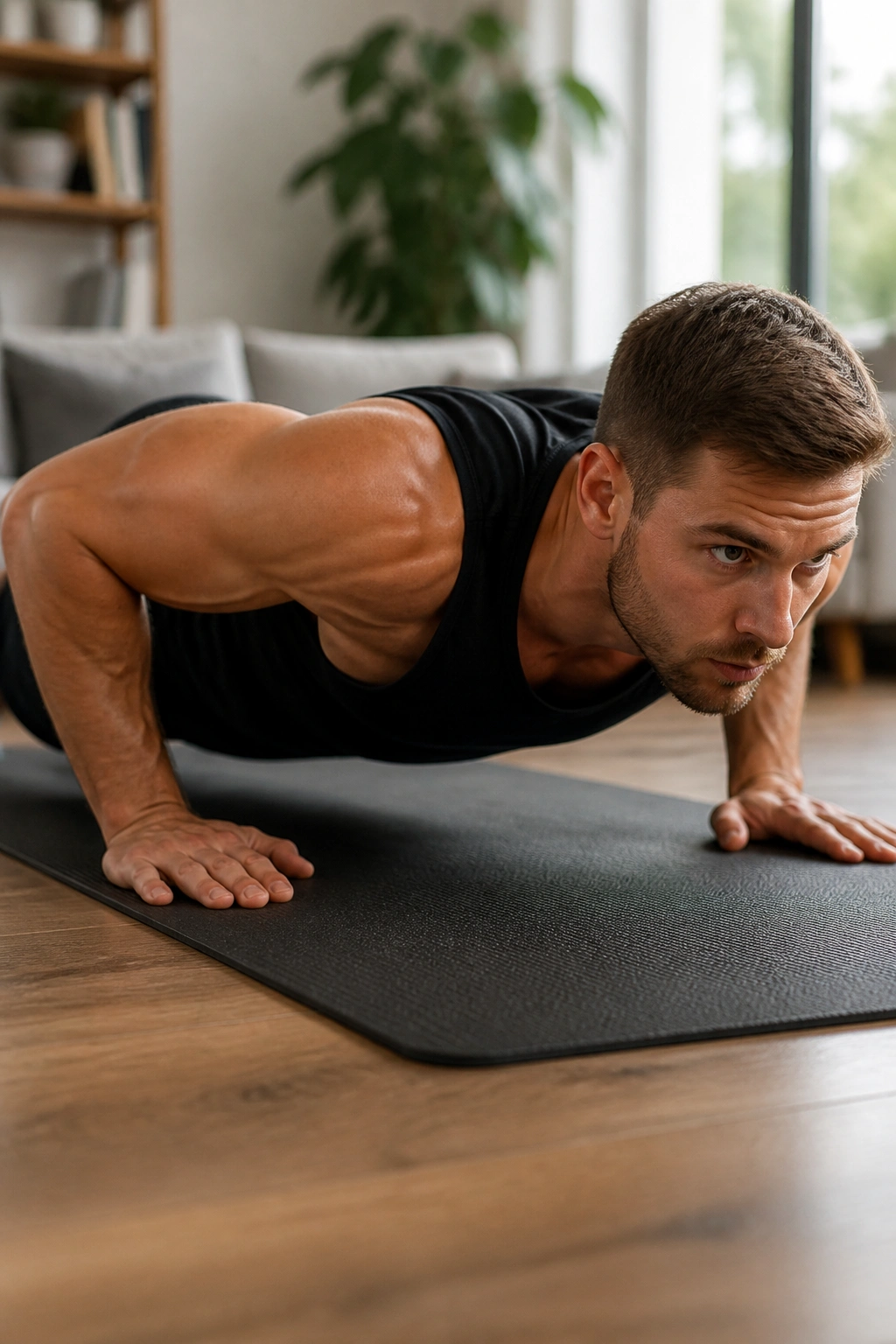
Can a no-equipment workout build your chest, shoulders, and triceps? Yes — if you do more than one kind of push-up and you stop pretending the core isn’t part of the job.
This one pairs upper-body work with enough leg action to keep it truly full-body. Do 3 rounds with 20 to 30 seconds between exercises.
You’ll cycle through push-ups, squats, pike push-ups, reverse lunges, and plank shoulder taps. The sequence matters because it keeps the body moving between patterns instead of frying the same muscles over and over.
A good push-up setup starts with hands under or slightly outside the shoulders, ribs tucked, and glutes lightly engaged. If the lower back sags, the set is too long or too ambitious. Shorten it. That isn’t a failure. It’s basic training logic.
Pike push-ups deserve respect here. They’re the closest thing this workout has to overhead pressing, and they light up the shoulders fast. Keep the hips high, bend the elbows under control, and stop before your neck starts taking over.
I like this session because it proves a point: bodyweight upper-body work is not second-rate. It just asks for better form and a little patience.
9. Low-Impact Fat-Burning March That’s Easier on the Joints
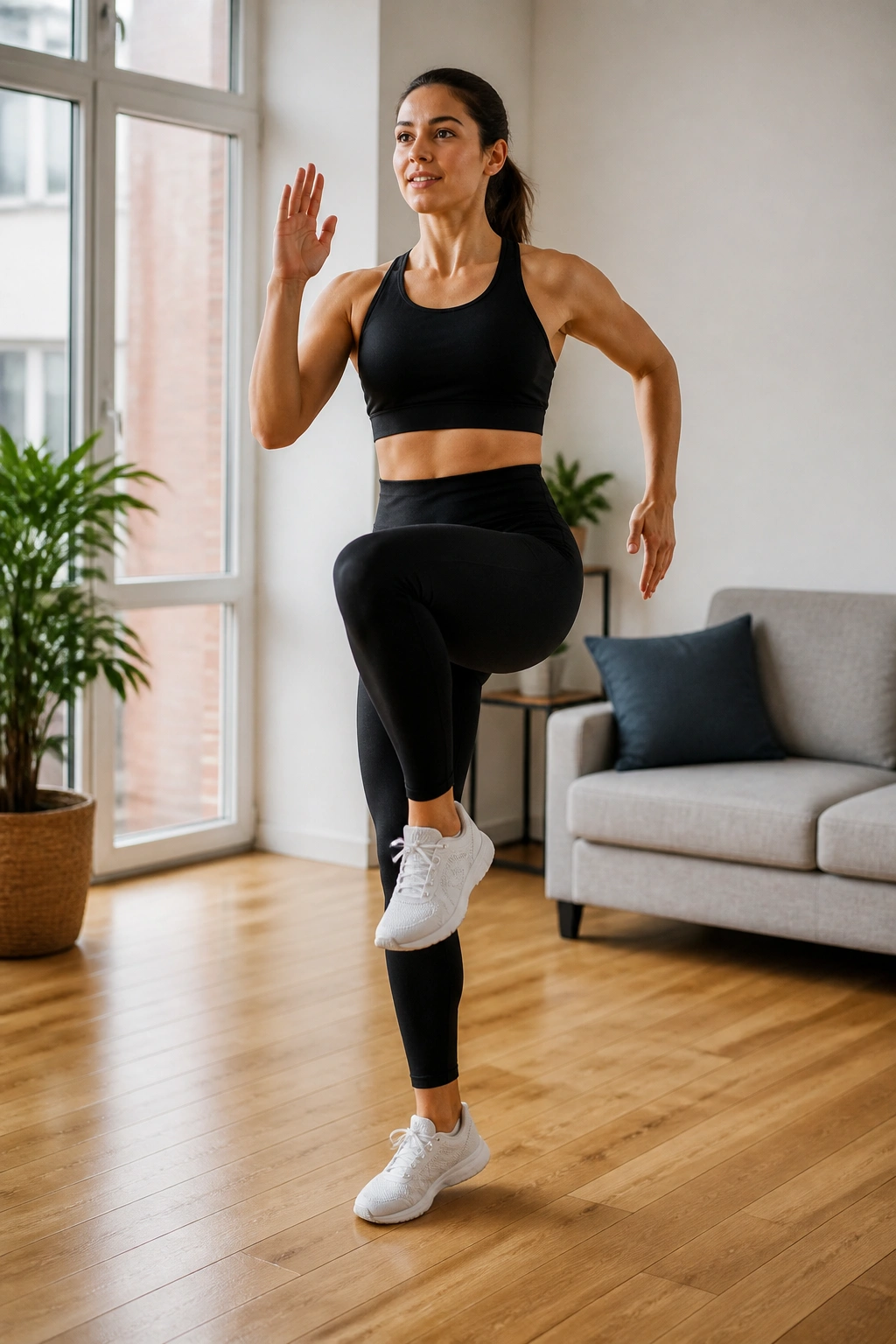
Not every cardio day has to jump. Some sessions should feel steady, useful, and calm enough that your joints don’t file a complaint afterward.
Use 40 seconds of work and 20 seconds of rest for 4 or 5 rounds. Stay on your feet the whole time if you want the session to stay low impact.
- March in place with big arm swings
- Alternating knee drives with a small torso twist
- Step-back lunges at a smooth pace
- Squat to calf raise for a little lower-leg work
- Side step and reach to open the hips and wake up the shoulders
The heart rate still climbs here. It just climbs without pounding. That makes this a smart option for thin apartment floors, tired knees, early mornings, or days when you want to move but not get smashed.
No jumping. Good.
If you want to make it harder, shorten the rest to 10 or 15 seconds and keep the pace brisk. If you want it easier, do the same moves with a smaller range of motion and longer pauses between rounds. There’s room to adjust either way.
This is one of those workouts that feels modest while you’re doing it and better than expected after.
10. Full-Body Pyramid Challenge That Builds as It Climbs
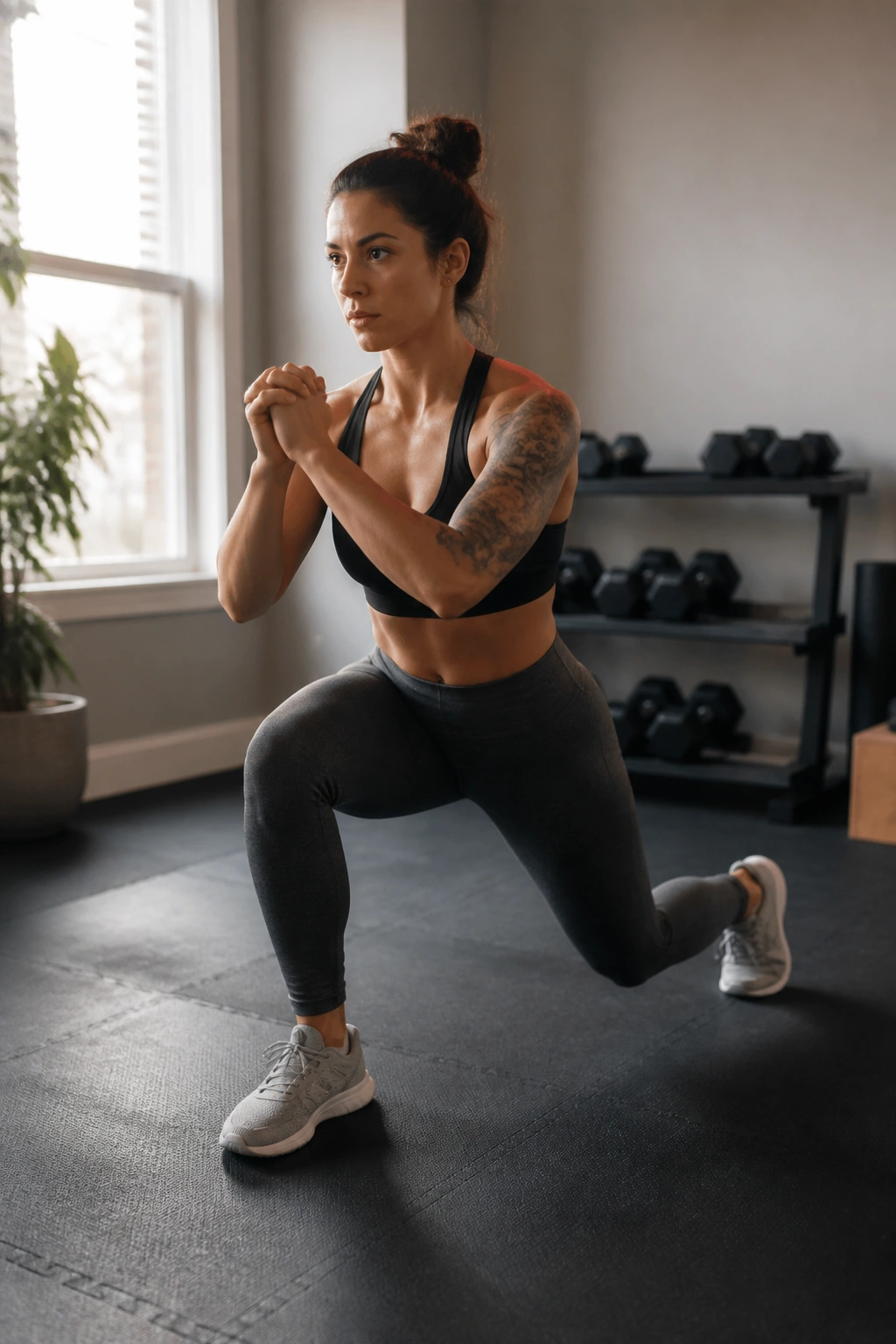
Pyramids work because they keep changing the workload before your brain gets too comfortable. You start small, the reps grow, and then — right when you think you’ve settled in — the count comes back down and asks you to finish well.
Use this structure: 2, 4, 6, 8, 10, 8, 6, 4, 2. Rest 20 to 40 seconds between rounds. Keep the movement list short enough that you can remember it without thinking hard.
A solid pyramid set looks like this:
- Squats
- Push-ups
- Alternating reverse lunges each side
- Glute bridges
- Mountain climbers each side
The center of the pyramid is where the work gets real. That’s where people start cutting depth on squats or rushing lunges to get to the next number. Resist that. The middle is where the training lives.
I like pyramids when I want a session that feels longer than it is. The count gives you a mental hook, and the descending half makes the workout feel less brutal than a straight sprint. Not easy. Just more forgiving than it looks.
If you only have one good hour of energy in the day, this is a fine place to spend part of it.
11. Mobility-Strength Reset for Stiff Hips and Tired Shoulders
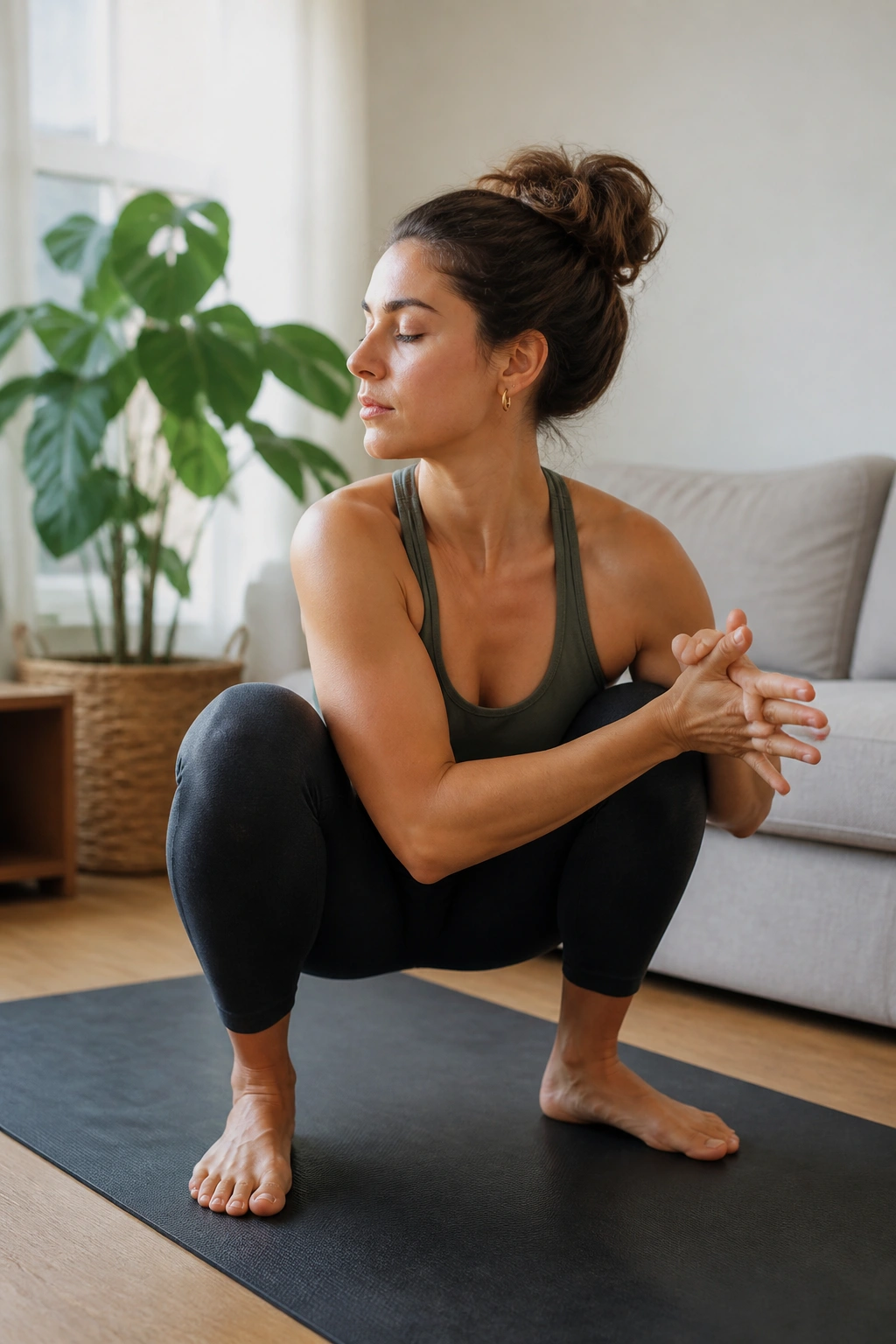
Your hips get sticky after long days. So do your shoulders. This workout is part mobility, part strength, and part reminder that movement does not always need to be aggressive to be useful.
Do 2 or 3 rounds at a smooth pace. There’s no rush here.
Why it feels different
The moves flow from one shape to another: deep squat hold, lunge with reach, inchworm to cobra, side lunge, scapular push-up, and glute bridge. That order opens the body, then asks it to support itself, which is the part a lot of stretching routines miss.
A few cues matter. In the squat hold, keep your heels down if you can. In the lunge with reach, let the front knee track over the toes without collapsing inward. In the inchworm, walk the hands out with control and avoid dumping the lower back. Little details. Big payoff.
This is the session I’d use after a hard run, a long car ride, or any day where your body wants motion but not punishment. It is not lazy. It is a smart kind of work that leaves you looser without making you feel wrung out.
Keep it smooth. That’s the whole point.
12. Shadow Boxing and Bodyweight Combo That Wakes Up the Whole Body

You start with your fists up, then your legs catch up. That’s why shadow boxing works so well at home: the punches are only half the story. Your feet, hips, shoulders, and core all have to cooperate if the session is going to feel right.
Try 6 rounds of the following:
- 90 seconds of shadow boxing
- 10 squats
- 8 push-ups
- 10 alternating lunges each side
- 20-second plank
- 30 seconds of rest
The boxing round should feel active, not sloppy. Keep your chin tucked, shoulders relaxed, and elbows close when you reset. Jab-cross, hook-cross, uppercut-cross — simple combinations are enough. You do not need a ring or gloves to get the benefit.
The bodyweight work between boxing rounds keeps the session honest. Squats and lunges bring the legs in. Push-ups and planks keep the upper body from hiding. By the last round, the whole thing feels connected, which is exactly the point.
Punching cues that help
- Turn the hips with the cross
- Keep the rear heel light
- Breathe out on each punch
- Return your hands to guard before the next combo
This one is a favorite when I want conditioning that feels less repetitive than straight circuits. It moves.
13. Tabata-Style Burner for Short, Hard Work Blocks

Tabata looks tiny until you actually do it. Twenty seconds of work, 10 seconds of rest, repeated 8 times, adds up fast when the moves are honest and the pace stays sharp.
A clean way to run it at home is with two or three Tabata blocks. Pick one move per block or pair compatible moves together.
- Block 1: squat jumps or fast air squats
- Block 2: push-ups or plank shoulder taps
- Block 3: reverse lunges or mountain climbers
That gives you 4 minutes per block. If you do three blocks, you’ve got a 12-minute workout before warm-up and cooldown. Short. Nasty. Efficient.
What makes Tabata work is restraint. People go out at full sprint and then their last four intervals turn into survival mode. Better approach: start at 80 percent, keep the reps crisp, and finish strong. You want the session to challenge your lungs and your legs, not turn into a form disaster.
I’m also a fan of using it for one body region at a time. Squats alone. Push-ups alone. Lunges alone. That focus can expose weak spots faster than a mixed circuit, which is useful if you’re trying to improve something specific.
Fast is fine. Sloppy is not.
14. Single-Side Balance Routine That Catches Weak Spots
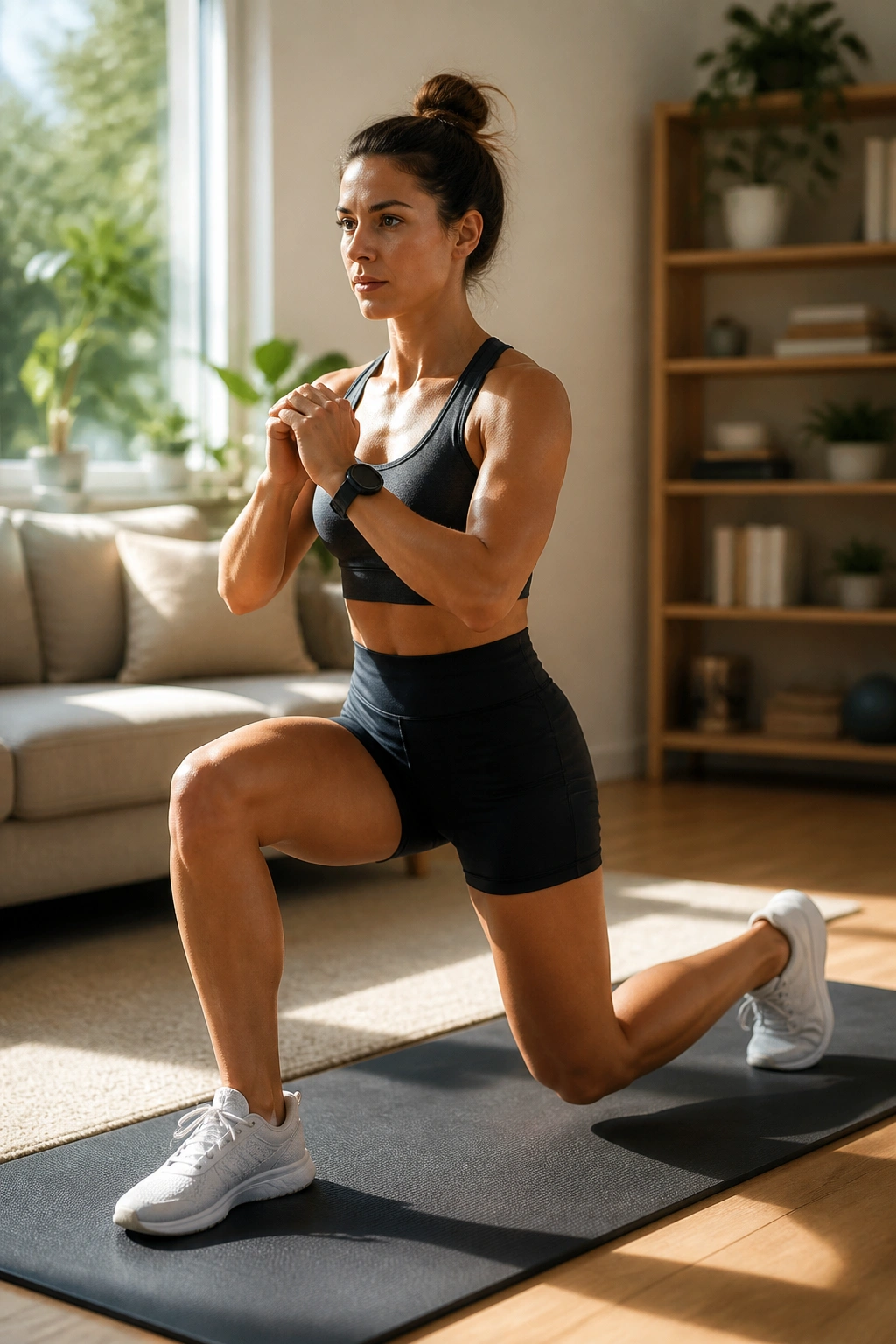
Some sessions should make your feet pay attention. This is one of them. Unilateral work exposes differences between sides that two-legged moves hide, and that matters more than people think.
Do 3 rounds with a slow, controlled pace.
- Split squat hold — 20 seconds each side
- Single-leg RDL reach — 8 reps each side
- Lateral lunge — 8 reps each side
- Single-leg glute bridge — 8 to 10 reps each side
- Side plank — 20 to 30 seconds each side
- Bird dog — 8 reps each side
This workout is quiet in a different way than the cardio sessions. The muscles shake a little. Your ankle stabilizers wake up. One side feels smoother than the other, which is normal and useful information. The goal is not to hide that imbalance. The goal is to train through it.
If the single-leg RDL feels awkward, shorten the reach and keep your hips square. If the split squat hold burns fast, that’s fine — it should. Use the wall lightly for balance if needed, then reduce the help as the round goes on.
This kind of work pays off in the background. It makes everything else feel more stable later.
15. End-of-Week Full-Body Finisher for When You Want One More Good Push
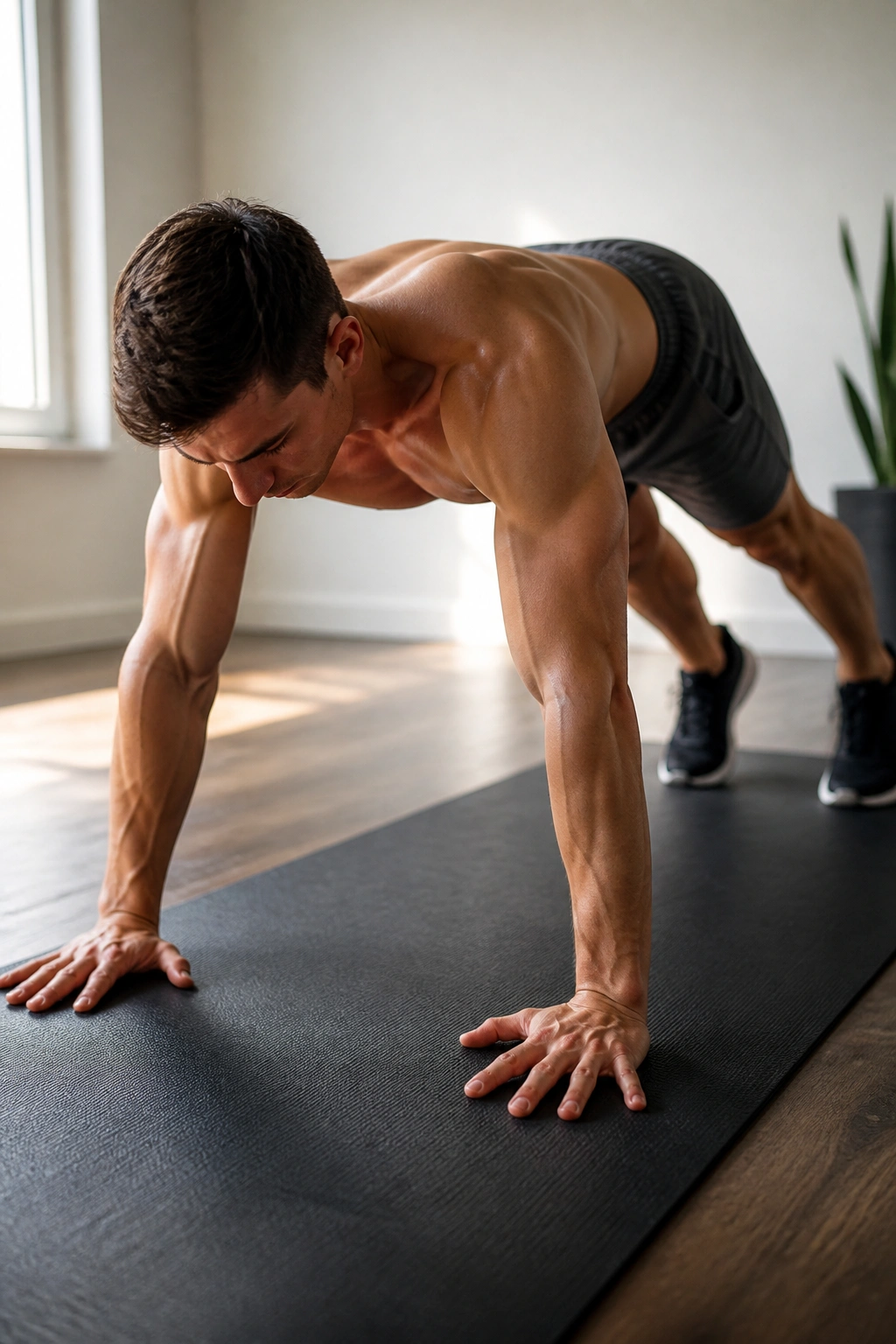
This is the workout I like when the week has already happened and you still want one honest session before you shut it down. It’s not about max speed. It’s about finishing with enough energy that you can still walk around the next day like a normal person.
Set a timer for 12 minutes and repeat this circuit as many quality rounds as you can:
- 8 squats
- 6 walkout push-ups
- 8 reverse lunges each side
- 10 glute bridge marches each side
- 20-second plank
The transitions are part of the work here. Standing to floor, floor to standing, back and forth. That shift keeps the heart rate up without needing a pile of exercises or any gear at all.
Keep the walkout push-ups clean. Walk the hands out, brace the core, do the push-up if you’ve got it, then walk back in with control. If that piece gets messy, shorten the range or switch to regular push-ups. A finisher should leave you taxed, not wrecked.
I like this one as a closer because it covers nearly everything in a small space. Legs. Push. Core. Hips. A little breathing room, then another round. That’s enough.
Final Thoughts
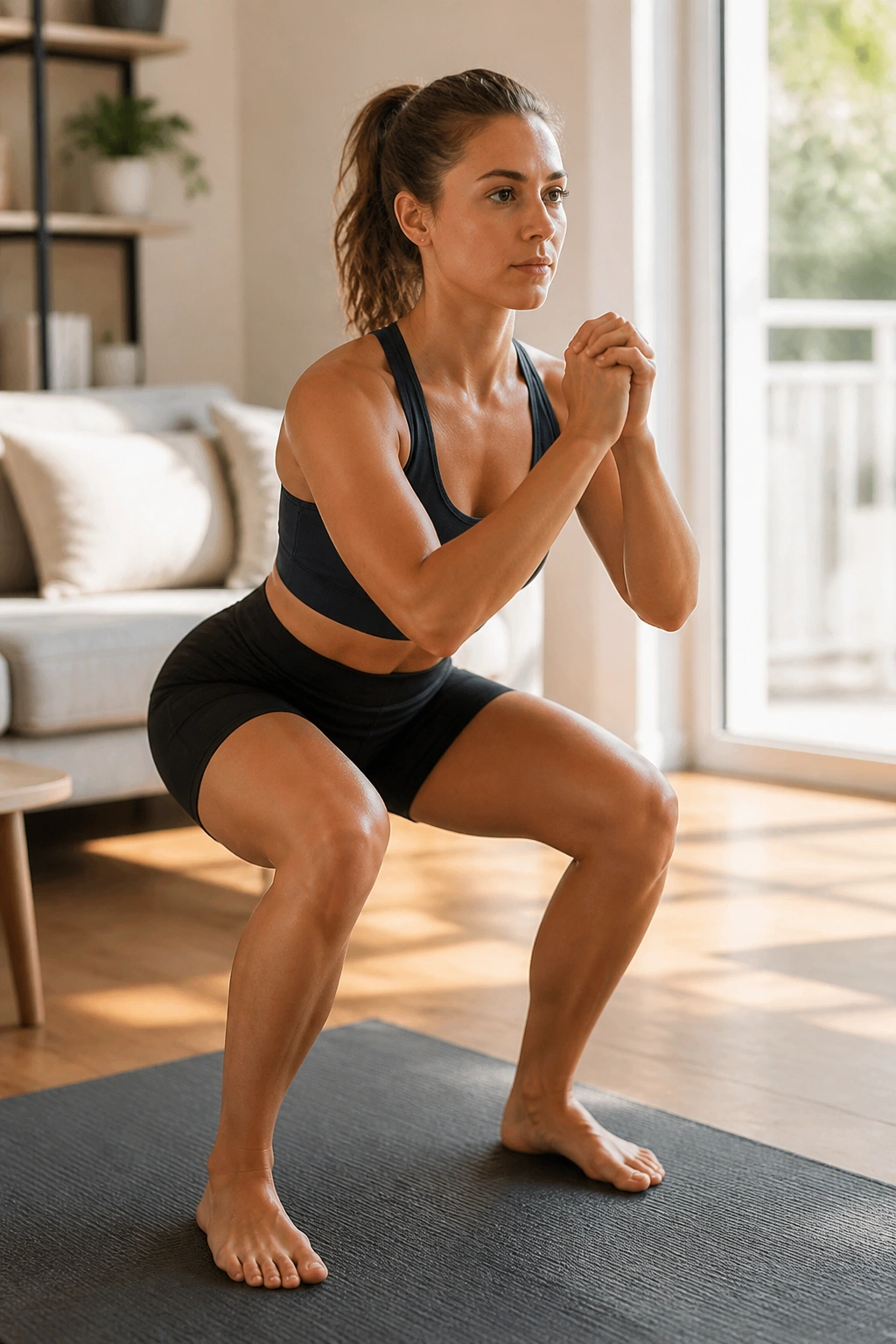
A floor, a timer, and a little structure can do more than people give them credit for. The best no equipment home workouts are not random sweat sessions. They’re organized enough to hit strength, cardio, balance, and core work without wasting your time.
Rotate the styles based on what your body needs that day. Heavy legs? Pick the slow tempo or the floor-based core session. Low energy but still want movement? Use the quiet cardio mix or the mobility reset. Feeling sharp? Go for the EMOM, Tabata, or power circuit.
The real win is repeatability. One good session is nice. A handful of workouts you can actually stick with is worth much more.
