



A good workout does not need a perfect body, fancy gear, or a dramatic personality to matter. The best exercise ideas for all fitness levels are the ones you can make easier on a tired day and harder when you want a bigger challenge. That sounds obvious, but most people still end up stuck with moves that are either too aggressive for beginners or too dull to keep an experienced person interested.
The sweet spot is a movement you can scale. A squat can become a box squat, a goblet squat, or a slow tempo squat. A push-up can live on a wall, a bench, or the floor. Even walking can turn into a hard interval session if you push the pace for 30 seconds and recover for 60.
That flexibility matters because real life is messy. Some days your knees feel stiff, some days your shoulders feel strong, and some days you only have 12 minutes before the day gets away from you. These 15 ideas were chosen because they can fit into that kind of life without asking for a perfect schedule or a perfect mood.
Start where your body feels safe, not where your ego wants to go. The first move below is as plain as it gets, and that is exactly why it works.
1. Bodyweight Squats That Fit Almost Any Day
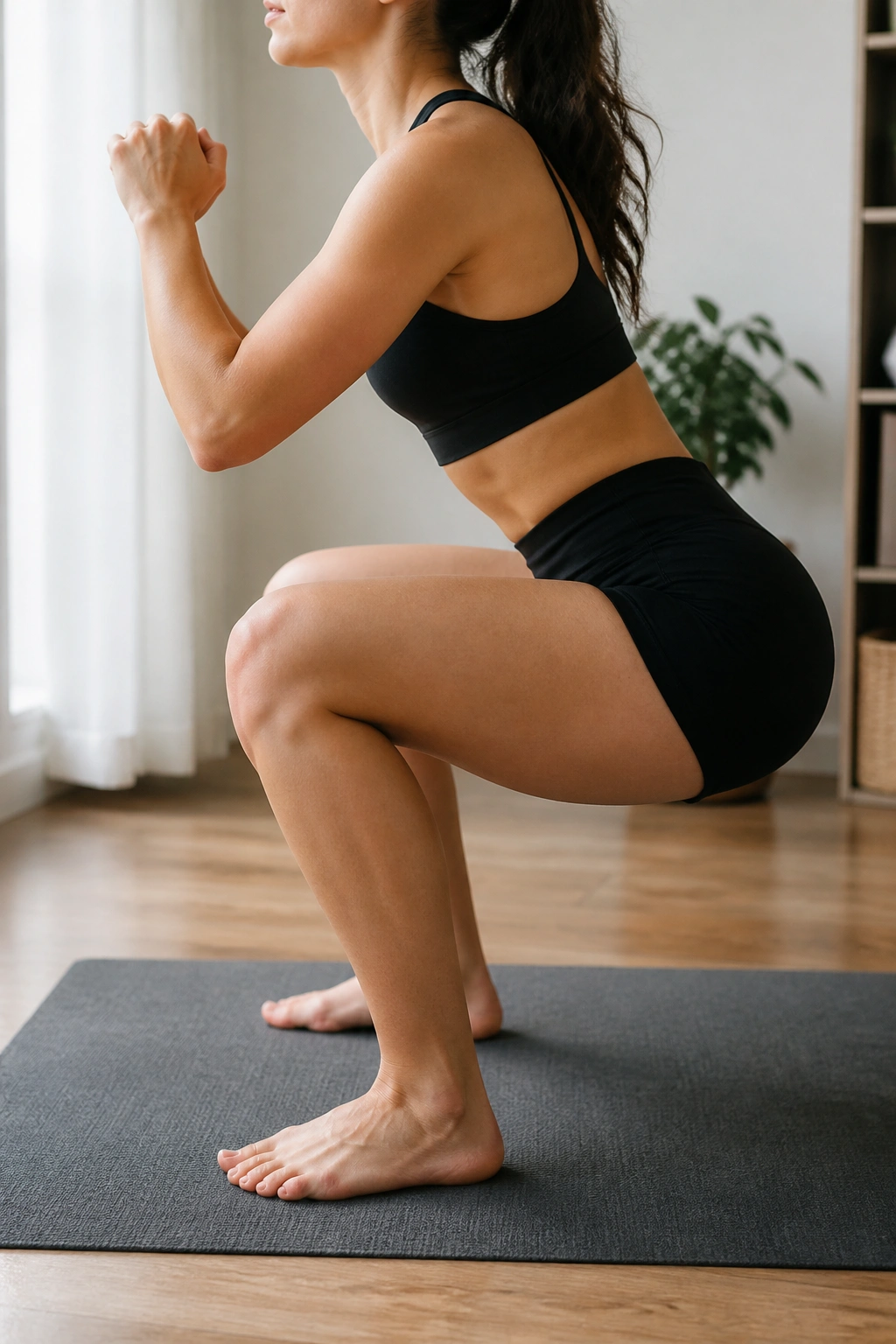
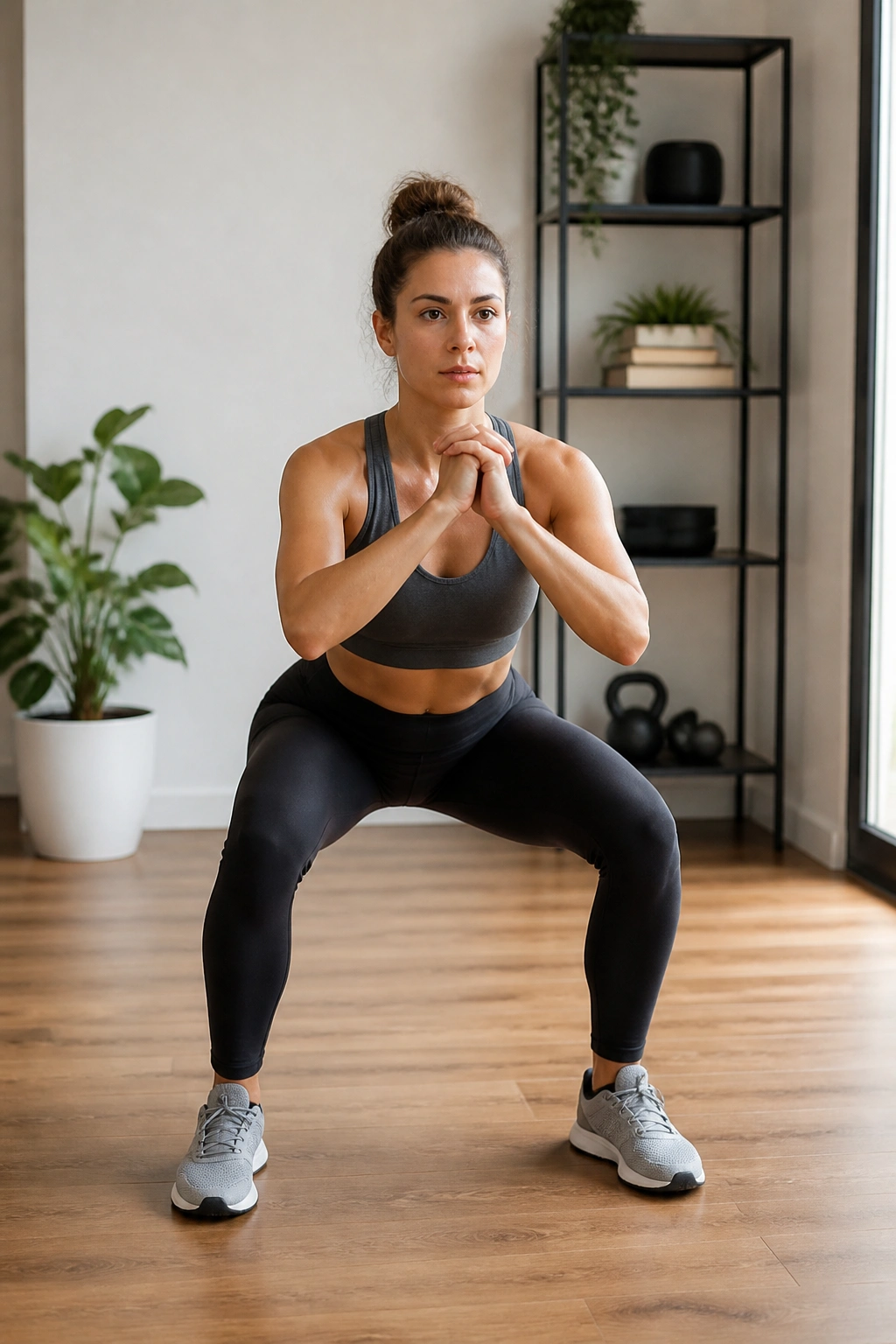
A squat is one of those rare exercises that shows up in strength work, warm-ups, rehab-style sessions, and hard finishers. That range matters. If you can squat well, you have a solid base for legs, hips, and daily movement.
The clean version is simple: feet about shoulder-width apart, weight in the middle of the foot, chest tall, hips moving back and down. Your knees should track in the same direction as your toes, not cave inward like they’re trying to escape. Simple. Not easy.
How to make it easier or harder
- Use a chair or box behind you if depth feels shaky.
- Hold a dumbbell or kettlebell at your chest for more resistance.
- Slow the lowering phase to 3 seconds if bodyweight feels too light.
- Pause for 1 second at the bottom if you want more control.
A box squat is a smart starting point because it gives you a clear target. A slow goblet squat is the next step when bodyweight feels boring. If your heels lift, take a slightly wider stance or shorten your depth for a while.
Best cue: keep your ribs stacked over your hips. That one cue usually fixes more squat problems than a dozen complicated form tips.
2. Incline Push-Ups for an Easy-to-Hard Upper-Body Press
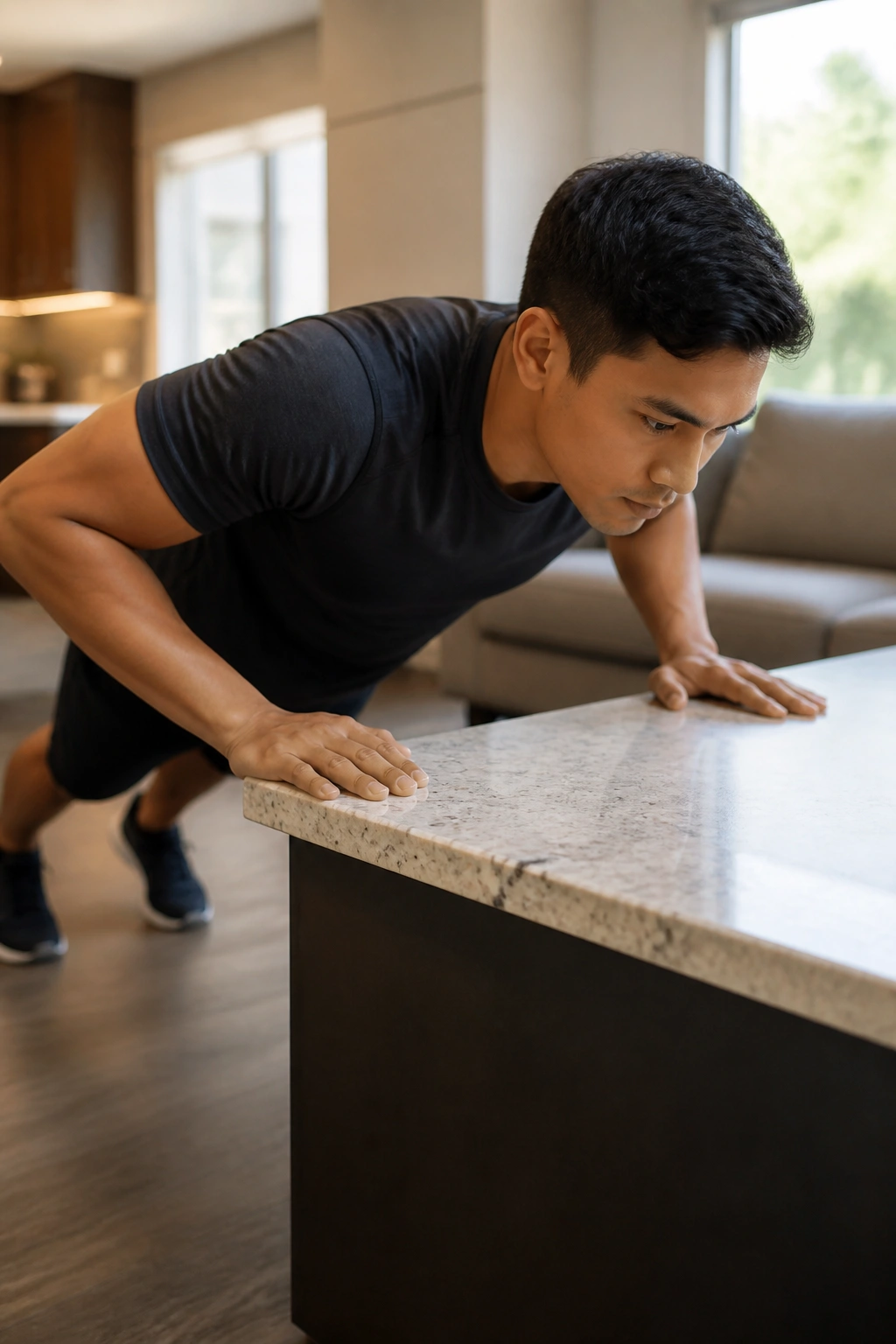
Incline push-ups are better than floor push-ups for a lot of people, and I say that without hesitation. A bench, sturdy table, couch arm, or wall lets you train your chest, shoulders, triceps, and core without forcing full floor range before you’re ready.
The angle is the whole trick. A wall push-up is the easiest version. A countertop or bench makes it harder. A low box gets you close to the floor version without making the movement ugly or painful. Lower the surface over time and the exercise naturally grows with you.
Keep your hands just a little wider than shoulder-width. Lower your chest toward the edge of the surface, then press away while keeping your body in a straight line from head to heel. If your hips sag, the movement stops being a push-up and turns into a bad back exercise.
Wrists angry? Use push-up handles or hold dumbbells as hand grips. That small change can make the whole thing feel cleaner. And if you can only do 3 good reps on a low incline, that’s fine. Better 3 clean reps than 15 sloppy ones.
3. Brisk Walking Intervals That Don’t Beat Up Your Joints
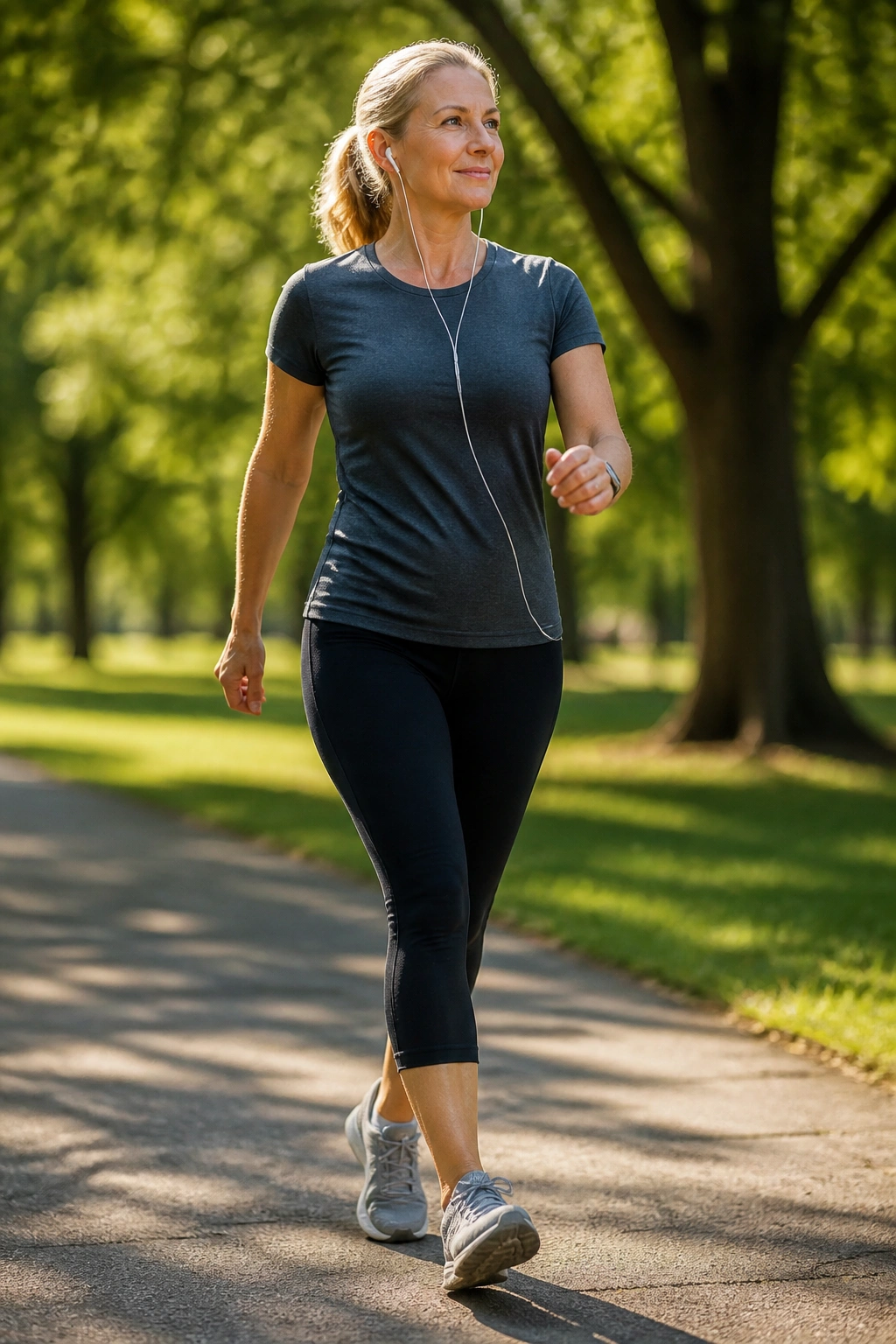
What if the most useful cardio workout was the one you already know how to do? Walking looks almost too plain to count, which is part of why people underestimate it. Add pace changes, hills, or longer duration, and it stops being casual.
A brisk walk can be a recovery day, a fatiguing cardio session, or the thing that gets you out of your head after a long stretch sitting down. It is friendly on the joints, easy to repeat, and easy to scale. You do not need special shoes for a basic version, either. You just need enough room to move.
How to use it
- Walk 20 to 40 minutes at a pace that raises your breathing but still lets you talk in short sentences.
- Add 30-second fast segments every 2 to 5 minutes.
- Use hills or stairs if flat ground feels too easy.
- Swing your arms naturally; don’t clamp them at your sides.
A very fit person can turn walking into a hard interval workout. A new exerciser can keep it steady and still get a real benefit. That range is why I keep putting walking on lists like this.
4. Glute Bridges for Hips That Feel Switched On
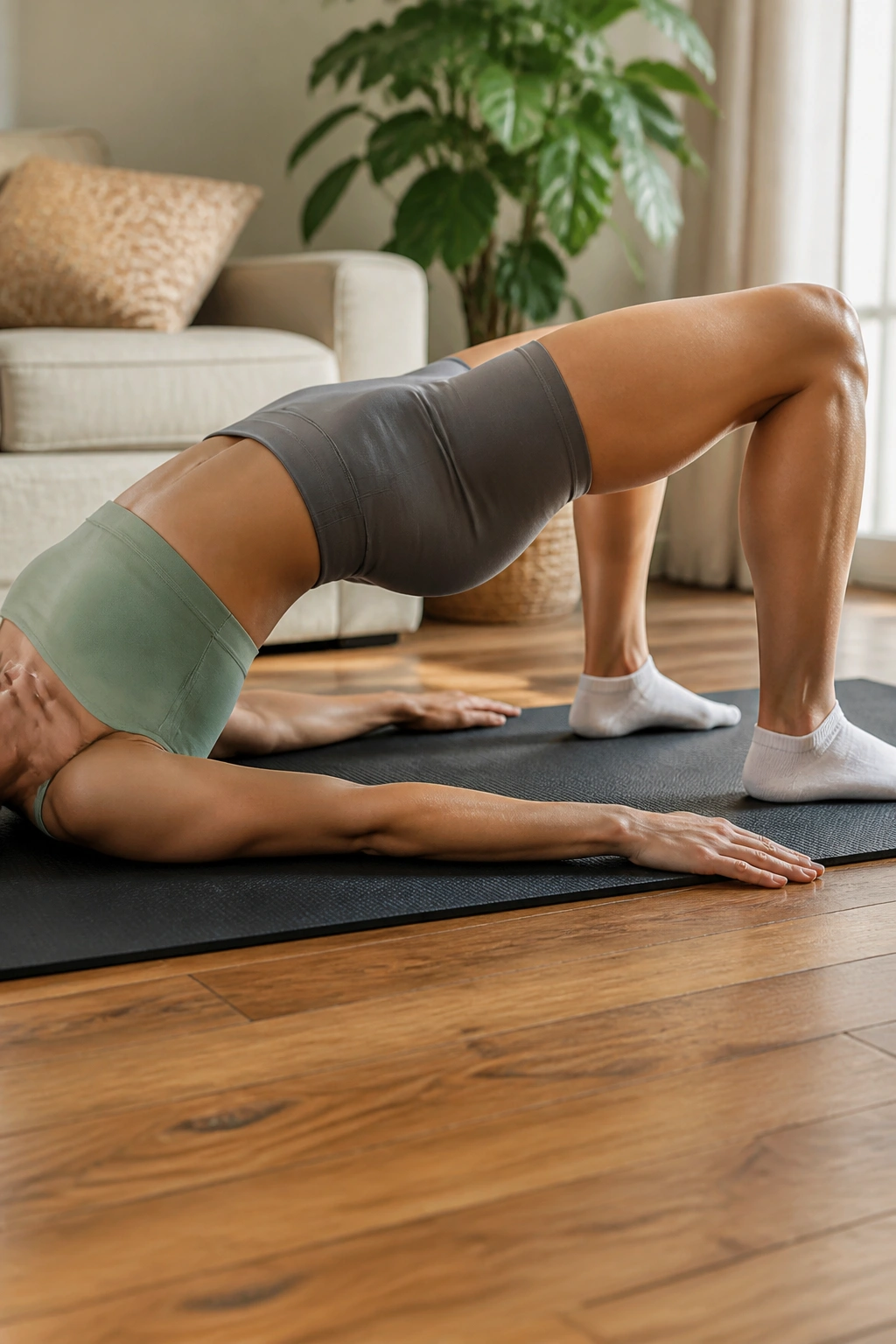
If your lower back takes over every time you train your legs, glute bridges are a smart reset. They teach hip extension without asking your spine to do all the work, and that alone makes them worth keeping around.
Lie on your back with knees bent and feet flat, about a foot from your hips. Press through your heels, squeeze your glutes, and lift your hips until your body forms a straight line from shoulders to knees. Don’t fling yourself upward. A smooth lift works better than a big one.
What to watch for
- Keep your ribs down; don’t over-arch your back.
- Pause for 1 second at the top.
- Think about squeezing the glutes, not pushing the belly upward.
- Start with 10 to 15 reps for 2 or 3 rounds.
One-leg bridges make it harder. A mini band around the knees adds more work for the outer hips. Feet elevated on a low bench changes the feel again. You can get a lot out of a movement that looks nearly boring on the floor.
That’s the point, honestly. Boring is often useful.
5. Forearm Planks Without the Neck Strain
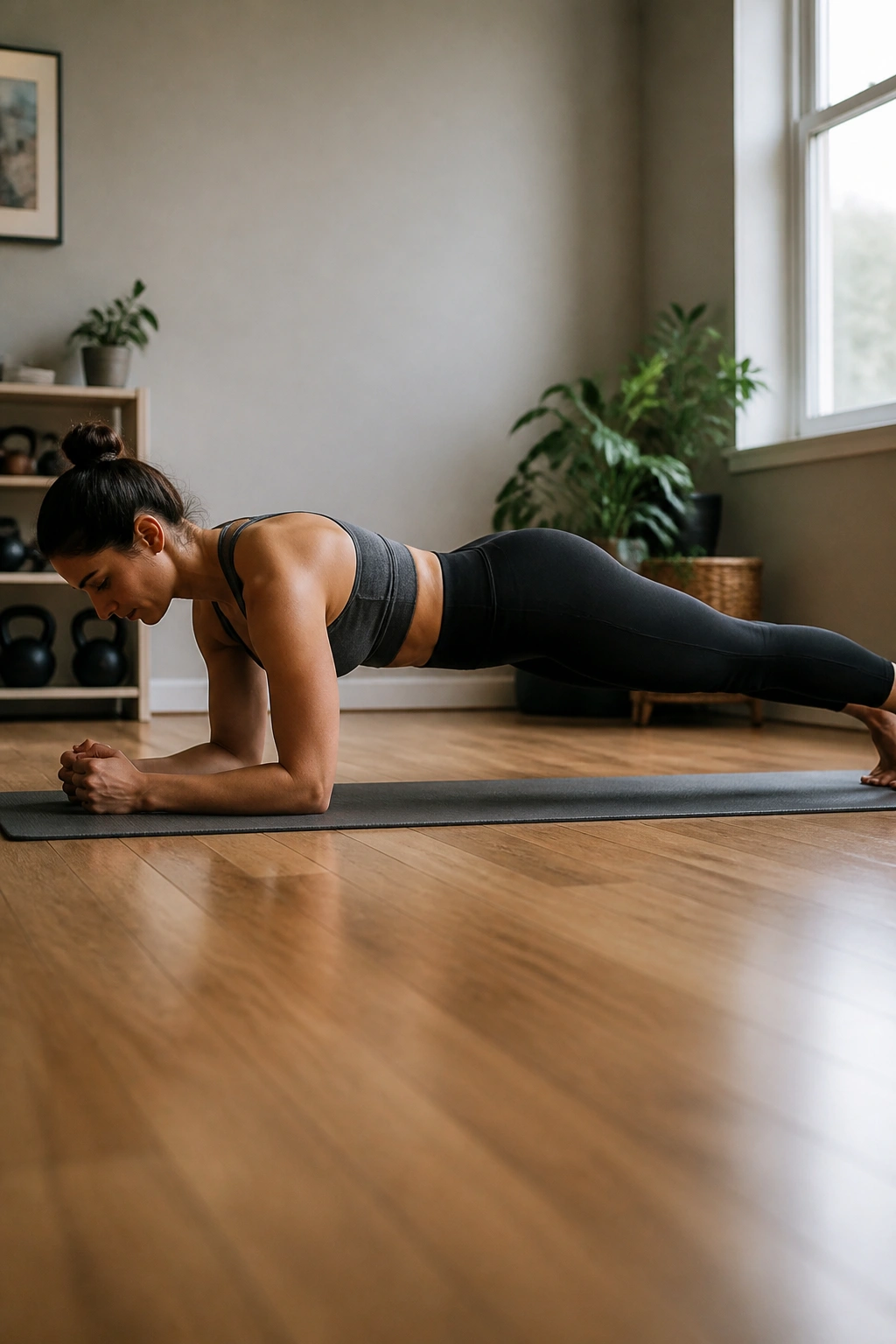
A plank is boring for about 15 seconds. Then it gets honest.
The forearm plank trains your core to hold position while your breathing gets a little harder and your hips want to drift. That makes it useful for almost everyone, from someone rebuilding strength to someone who wants a tough core finisher after lifting.
Get your elbows under your shoulders, legs long, glutes squeezed, and ribs pulled down. Your neck should stay long, not jammed up toward your ears. If you feel the front of your shoulders taking over, shorten the hold and fix the setup instead of just suffering through it.
The best plank is the one you can keep crisp. A 20-second plank with a flat back beats a 60-second saggy one every time. Beginners can start with knee planks or 10 to 15 second holds. More advanced lifters can use long-lever planks, shoulder taps, or longer holds with stricter breathing.
And breathe. People hold their breath on planks all the time, then wonder why their face turns red after 12 seconds. Slow nasal breaths, even under tension, make the exercise feel more controlled.
6. Resistance Band Rows for Better Posture
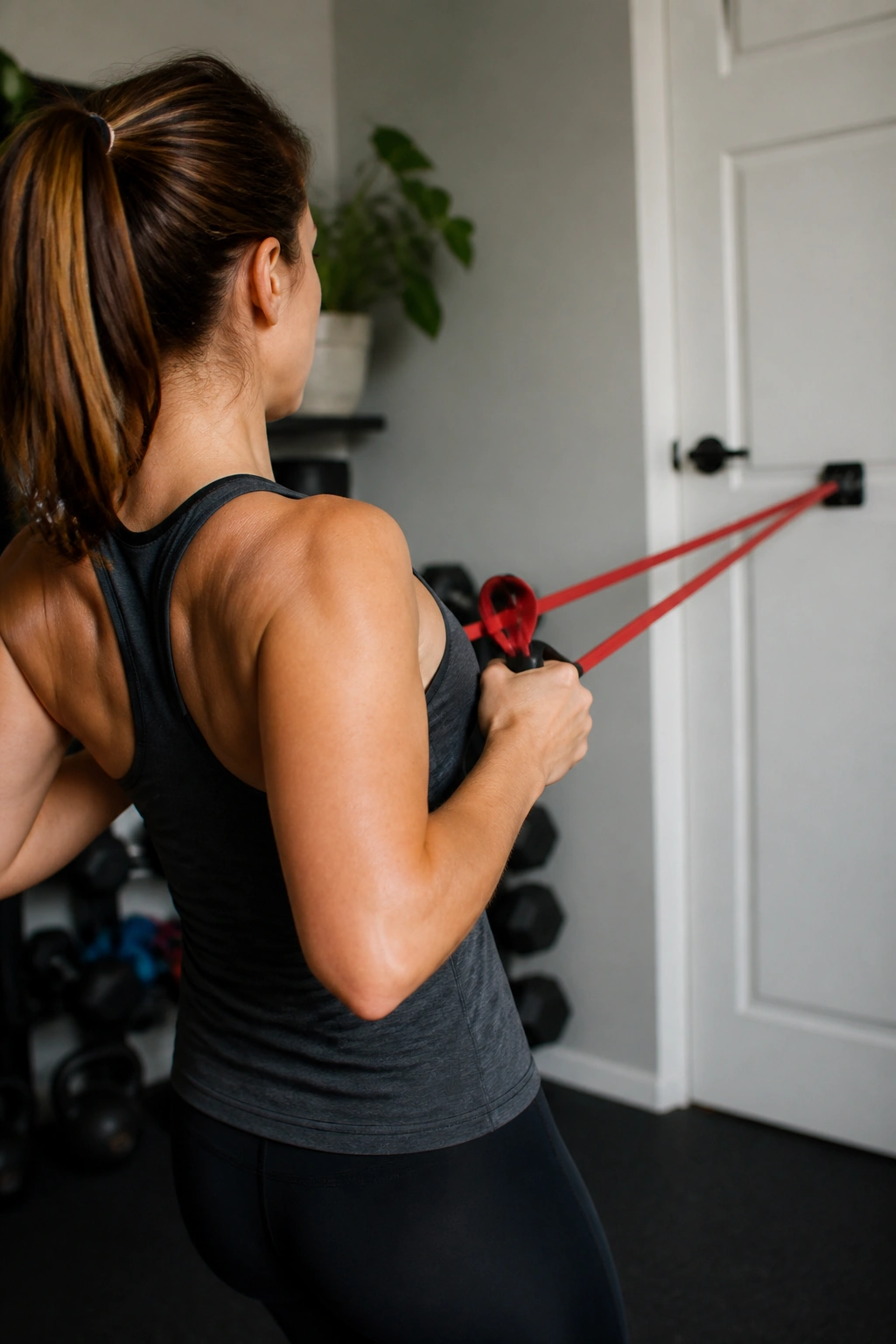
Unlike a heavy row machine, a resistance band row travels with you and asks very little from your joints. That makes it one of the easiest strength ideas to keep doing at home, in a hotel room, or in a corner of the gym where nobody is waiting for the cable station.
Anchor the band at chest height, step back until you feel light tension, and pull your elbows toward your back pockets. The movement should feel like your shoulder blades slide back and down, not like you’re yanking with your hands. If your shoulders shrug up toward your ears, the band is too heavy or you’re pulling too fast.
This is a good move for desk-heavy people because it gives your upper back some of the work it misses all day. It also scales neatly. Use a light band and higher reps for control, or step farther back and slow the return if you want more resistance.
A good starting range is 2 to 4 sets of 12 to 20 reps. Stop when the last few reps get sloppy. A clean row teaches more than a desperate one.
7. Reverse Lunges That Build Balance
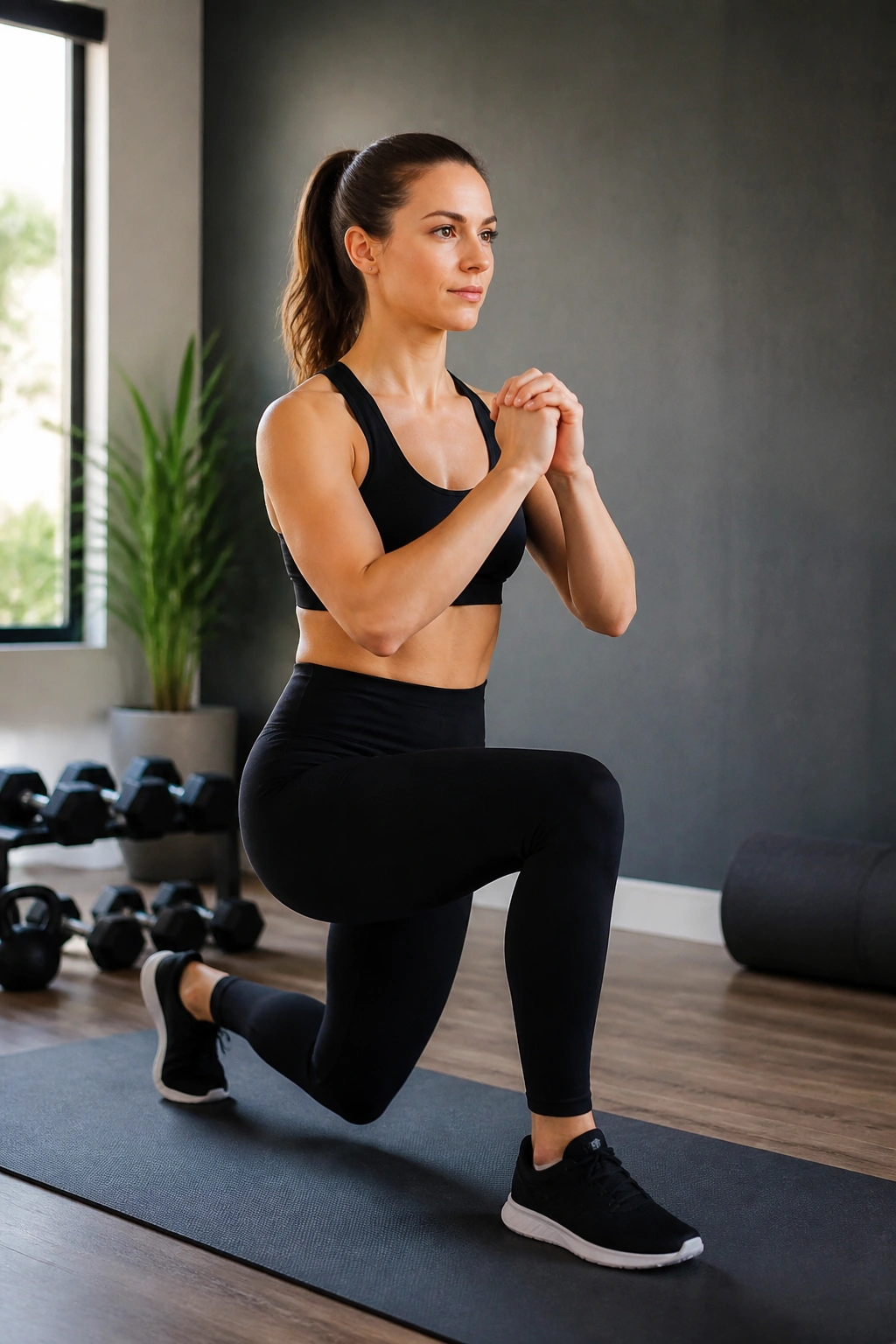
Why do reverse lunges feel kinder than forward lunges? Because stepping back usually gives the front knee an easier time, and that makes this version easier to learn and easier to repeat.
Stand tall, then step one leg back about 2 feet. Lower straight down until both knees bend, keeping most of your weight on the front leg. Push through the front heel and stand back up. The back foot is there for balance; it should not do the main job.
Common fixes
- Hold onto a wall or rack if balance feels shaky.
- Shorten the step if you feel stretched out.
- Keep the front knee pointing over the middle toes.
- Use a small dumbbell in each hand only after bodyweight feels stable.
Reverse lunges train quads, glutes, and balance in one shot. They also teach each leg to work on its own, which is handy if one side is stronger or more coordinated than the other. That happens a lot more often than people want to admit.
If your knees complain, reduce depth first. Don’t force a deeper lunge just because a deeper lunge looks more athletic.
8. Dead Bugs for a Calm, Strong Core
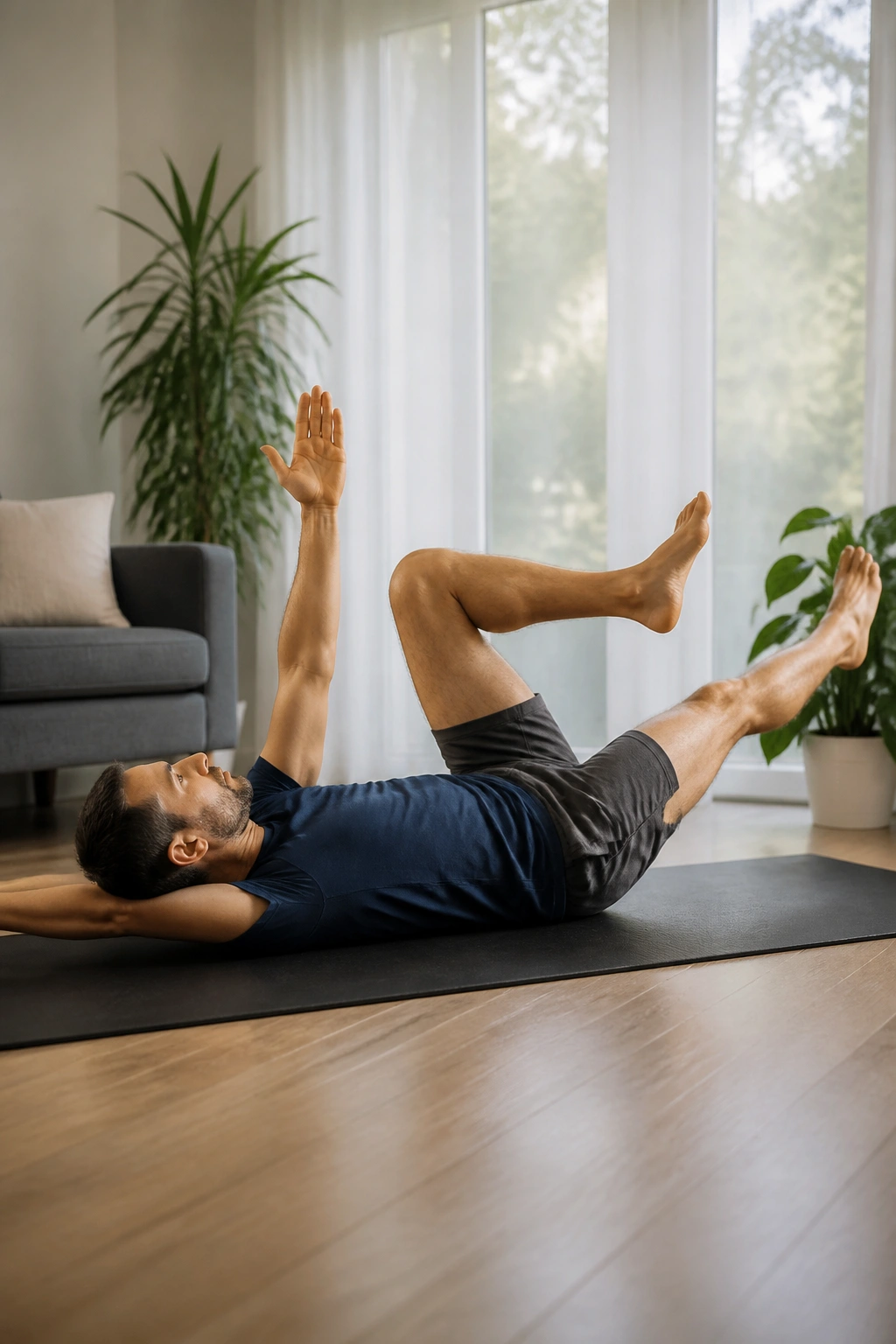
A dead bug looks almost too calm to count as exercise. That’s the joke. It sneaks up on your core by asking your torso to stay steady while your arms and legs move in opposite directions.
Lie on your back with arms straight up and knees bent above your hips. Press your lower back lightly into the floor, then slowly extend one leg and the opposite arm without letting your back arch. Return, then switch sides. The slower you go, the more useful the set usually is.
How to keep your back from popping up
- Exhale as you reach the arm and leg away.
- Stop the range if your lower back loses contact with the floor.
- Keep the movement slow enough that you could stop mid-rep if needed.
- Start with heel taps if full extensions feel too hard.
Dead bugs work well for beginners because they teach control before load. They also help stronger lifters who want core work that does not beat up the neck or hip flexors. That makes them a smart warm-up move or a standalone core drill.
I like them better than endless crunches for most people. Less drama. More control.
9. Dumbbell Deadlifts That Teach You to Hinge
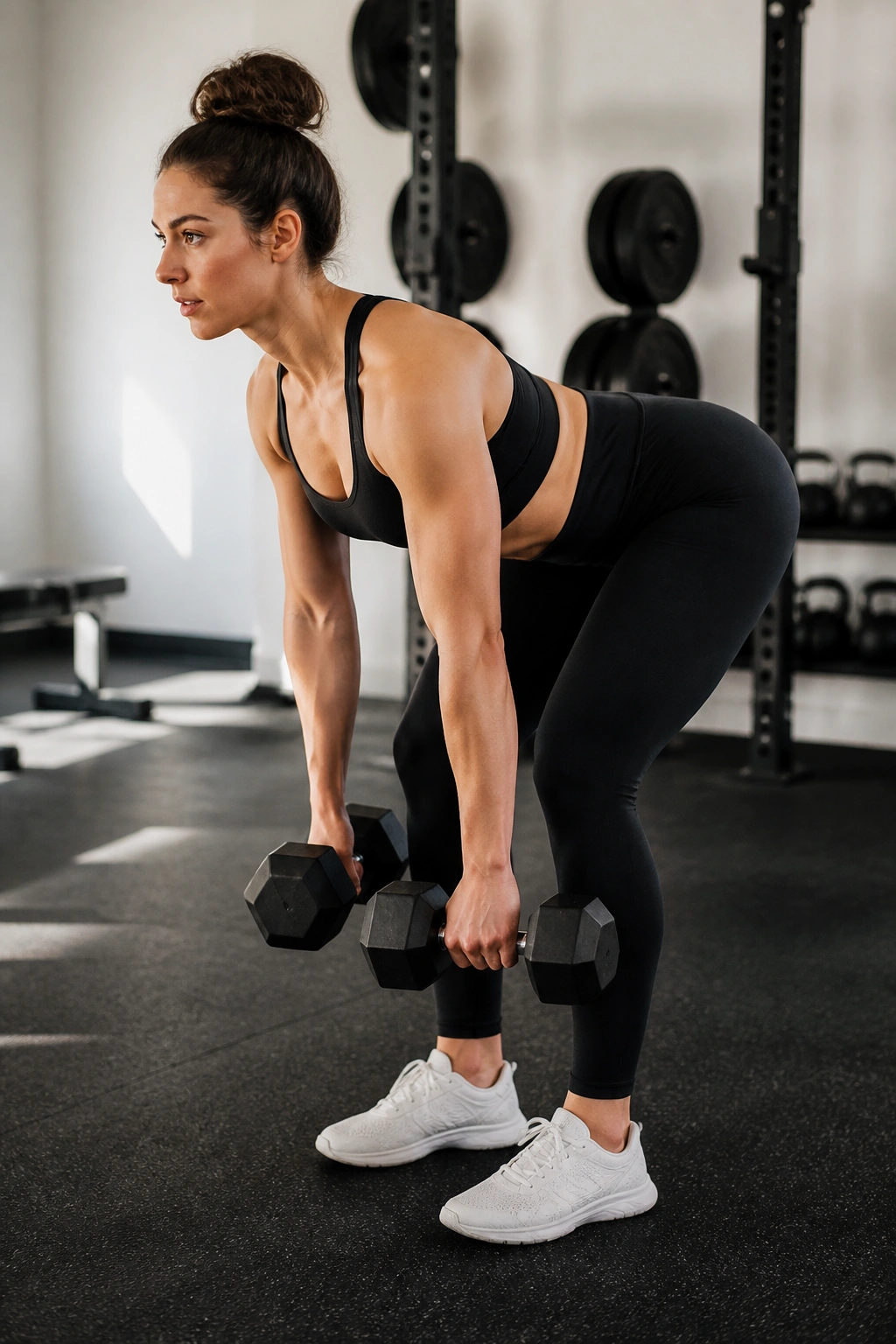
If you want one strength move that trains hips, back, and grip at the same time, pick the deadlift. It teaches a hinge, which is one of the most useful movement patterns in strength training and daily life.
Stand with feet about hip-width apart and a dumbbell or kettlebell between your feet. Soften your knees, push your hips back, and keep your spine long while you lower the weight. Stand up by driving the floor away and squeezing your glutes at the top. The weight should stay close to your legs the whole time.
A few cues matter a lot here:
- Keep the chest proud, not flared.
- Let the hips move back first.
- Stop the descent when your back starts to round.
- Start light enough that every rep looks the same.
Beginners can use a single kettlebell from a raised surface. Intermediate lifters can use a pair of dumbbells. More advanced lifters can slow the lowering phase, pause just below the knees, or add more load. Don’t yank the weight from the floor. That is a fast way to make a good movement feel ugly.
Deadlifts reward patience. Rush them, and they get messy. Keep them clean, and they pay off for a long time.
10. Step-Ups That Feel Like Real-Life Strength
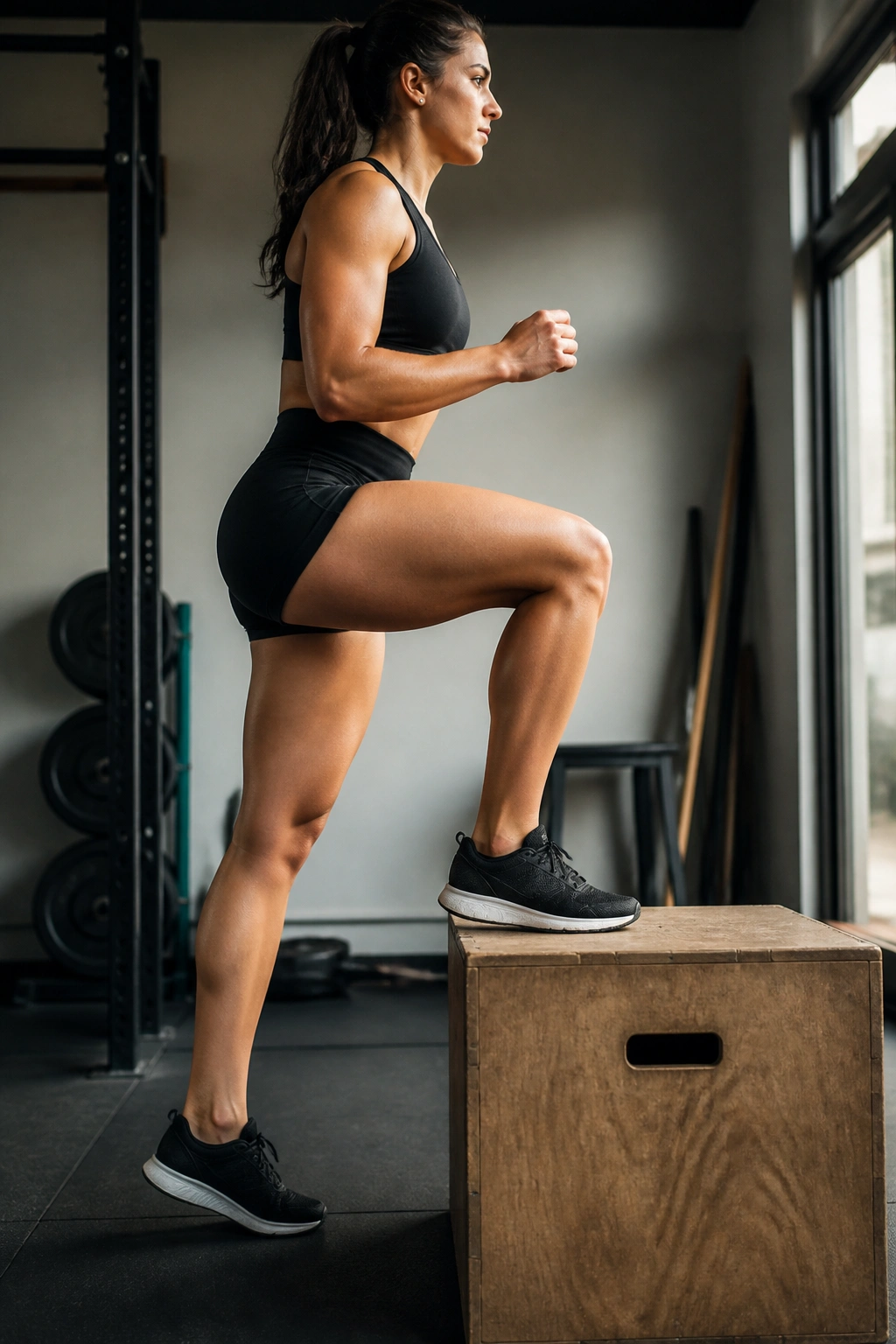
A sturdy box or bench can be a full workout if you use it right. Step-ups look like walking up stairs, which is exactly why they transfer so well to real life.
Pick a surface around knee height or lower if you’re still learning. Put one whole foot on top, lean slightly forward, and stand up through that front leg until the back leg rises. Then lower with control. If you push off the bottom leg too hard, the top leg never gets to do its job.
Step-ups are useful because they train each leg on its own, and they hit glutes and quads without the same balance challenge a lunge can bring. They also show you gaps in left-right strength fast. You’ll feel it on the first side that slows down.
A backpack, dumbbells, or a kettlebell make the movement harder once bodyweight feels easy. If your knee caves in, lower the box or slow the descent. The best step-up is the one you can control all the way down. That descent is where a lot of the work lives.
11. Jump Rope or Marching Rope for Fast Cardio
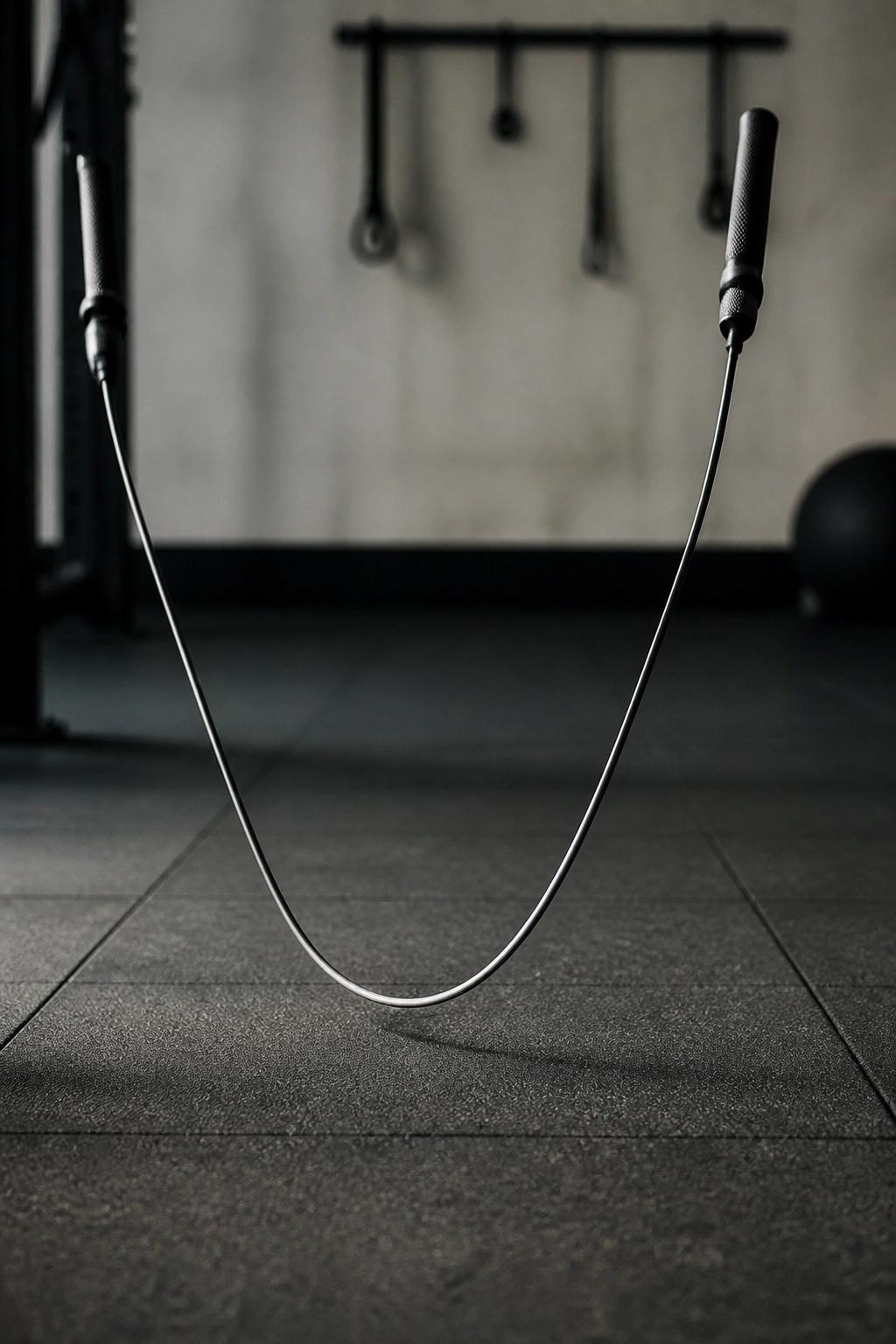
Jump rope gets attention because it looks hard, but the marching version is where many people should start. Both train rhythm, footwork, and cardio, and both can be scaled without turning the session into a circus act.
Start with a light rope or even an invisible rope if coordination is the real barrier. Keep the turns coming from your wrists, not giant arm circles. Your jumps should be low, almost skim-the-floor low. If you’re leaping high, you’re spending energy you don’t need to spend.
A marching rope works well for beginners because one foot lifts at a time while the rope rhythm stays the same. That lets you practice timing without the impact of constant jumps. On a rough day, this matters.
Try 20 seconds on, 40 seconds off for 6 to 10 rounds. More experienced people can use 45-second bursts or string together longer blocks. If your calves feel cooked after two minutes, that’s normal. Rope work sneaks up on you.
12. Mountain Climbers at Your Own Pace
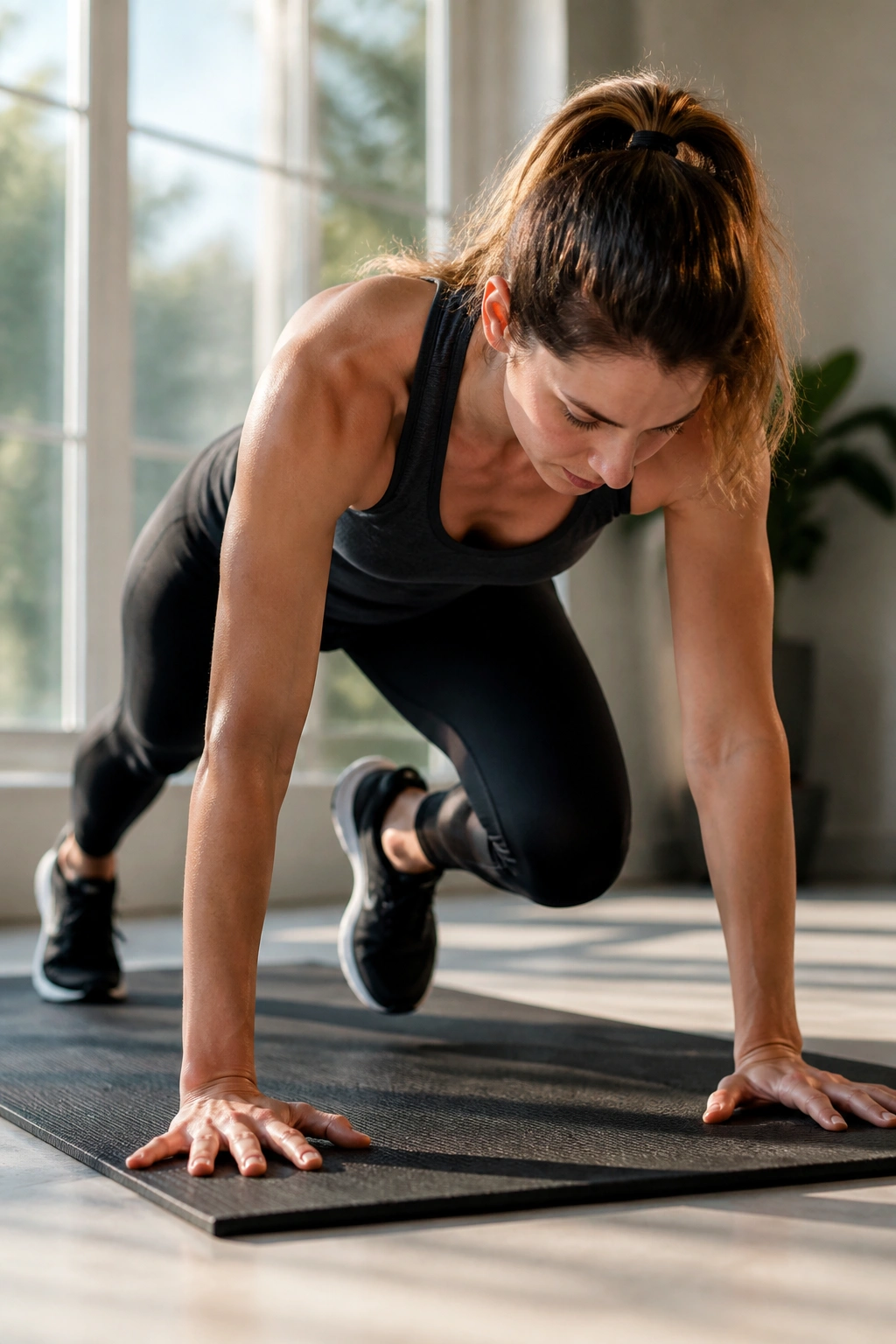
Mountain climbers are not just a cardio move; they are a coordination test. Hands on the floor, shoulders stacked over wrists, knees driving in one at a time. Fast version, slow version, cross-body version — they all count.
The fast version turns into a sweaty finish pretty quickly. The slower version is sneaky and usually better for people who want control. If your hips bounce all over the place, slow down. If your wrists hate the floor, raise your hands on a bench or sturdy chair.
Good ways to scale them
- March one knee in at a time for low impact.
- Step the feet back and forth instead of jumping.
- Cross the knee toward the opposite elbow for more oblique work.
- Use a short 10 to 20 second interval and build from there.
The biggest mistake is letting the lower back sag while the knees race around. Keep the ribs pulled in and the push-up position solid. That body line matters more than speed.
Mountain climbers are a good reminder that “cardio” does not have to mean jogging in place for half an hour. Sometimes it means one messy, honest minute on the floor.
13. Farmer’s Carries That Light Up Grip and Core

Pick up two heavy things and walk. That’s the whole exercise, and somehow it still manages to hit grip, posture, shoulders, and core all at once.
Use dumbbells, kettlebells, grocery bags, or even buckets if that’s what you have. Stand tall, brace your midsection, and walk for 20 to 40 meters or 30 to 60 seconds. Don’t rush. A smooth, steady walk works better than a frantic shuffle.
Why it feels harder than it looks
- Your grip tires before your legs do.
- Your torso has to stay upright the whole time.
- Breathing gets shallow if you brace too hard.
- Uneven loads expose side-to-side weakness fast.
A suitcase carry, with one weight in one hand, makes the core work harder on one side. A front rack carry changes the load again and challenges posture in a different way. Beginners should start light and short. Stronger people can go heavier and longer, but they still need clean posture.
I like carries because they feel practical. You are not pretending to be fit. You are carrying weight, which is a very human thing to do.
14. Shadow Boxing for Low-Drama Conditioning

Need cardio that does not feel like punishment? Shadow boxing is a strong choice. It raises your heart rate, teaches coordination, and lets you move in small spaces without a treadmill or bike.
Start with a light stance, hands near your face, and a simple jab-cross combination. Add hooks later if your shoulders and hips feel ready. Keep the punches snappy but relaxed. Tension in the fists is fine; tension everywhere else gets old fast.
A simple round structure
- 1 minute of jab-cross work
- 30 seconds of movement or light footwork
- 1 minute of hooks and body shots
- 30 seconds of easy bouncing or marching
- Repeat for 3 to 6 rounds
Newer exercisers can keep both feet planted and just work the arms. More experienced people can slip, pivot, and angle off after punches. The footwork matters more than people think. It turns a shoulder workout into a real conditioning drill.
Shadow boxing has a nice side effect: it wakes you up. Not in a fake motivational way. In the “my breathing changed and my focus got sharper” way.
15. The 10-Minute Mixed Circuit
Some days you do not want to choose one exercise. You want a short plan that covers the basics and gets you out the door. That is where a mixed circuit earns its spot.
Use 4 moves from this list and keep the pace honest but manageable. You do not need to annihilate yourself to make the session count. A solid 10 minutes done well beats a dramatic plan you never touch.
Try this simple layout:
- 30 seconds of bodyweight squats
- 30 seconds of incline push-ups
- 30 seconds of resistance band rows
- 30 seconds of dead bugs or forearm planks
- Rest 60 seconds
- Repeat for 2 to 3 rounds
If you want more lower-body work, swap in reverse lunges or step-ups. If you want more cardio, use mountain climbers or shadow boxing. If you want a quieter session, keep the planks and dead bugs and slow the tempo down.
This is the kind of workout that scales well for a beginner and still feels useful for a regular lifter. You can make it easier by shortening the work intervals to 20 seconds. You can make it harder by cutting the rest or adding load. Either way, you get a full-body session without having to argue with yourself about what to do first.
