



The best workout morning routines are the ones you can do half-awake and still repeat tomorrow. That’s the real test. Not how hard they look in a clip, and not how drenched your shirt is at the end.
Most people do not need a heroic 60-minute session before breakfast. They need something that shakes off stiffness, gets blood moving, and clears the thick, sleepy feeling that hangs around after waking. A good morning routine can be as simple as waking up the hips, opening the chest, and nudging the heart rate up just enough to feel human again.
Tiny work counts. A five-minute sequence can change the whole tone of the day if it’s done with intent.
And that’s the part people miss. The point of morning movement isn’t to win a workout. It’s to leave the house, kitchen, or home office feeling a little more alert, a little lighter in the joints, and less likely to slump into the first chair you see. Some mornings call for sweat. Some call for a walk. Some call for a few careful reps and a deep breath before the day starts barking at you.
1. 5-Minute Joint Wake-Up
If your first step out of bed feels like rust, start here. This is the kind of routine that looks almost too small to matter, then surprises you by making your shoulders sit lower and your spine feel less pinched by minute five.
The whole idea is to move every major joint through a gentle range before you ask for anything bigger. Neck nods, shoulder rolls, cat-cow, hip circles, ankle rocks, and a few bodyweight squats are enough. Keep the pace slow. Your goal is not to stretch hard. Your goal is to tell the body that the day has started.
A simple version looks like this:
- 5 slow neck nods in each direction
- 10 shoulder rolls backward, then 10 forward
- 6 cat-cow cycles
- 8 hip circles each way
- 10 ankle rocks per side
- 8 easy squats with a pause at the bottom
How it should feel: warm, loose, and a little more upright than when you started. If anything feels sharp, skip it and move to the next piece. No part of this should feel like a test.
Tiny work counts. Especially here.
2. 10-Minute Brisk Walk and Arm Swings

A short walk can do more for a foggy morning than a sweaty workout that leaves you annoyed and late. There’s something about moving outside, even for ten minutes, that makes the body stop acting like it’s still asleep. The air feels cooler. The legs wake up. The mind gets a little less sticky.
Keep the pace brisk enough that talking is easy but singing would be silly. If you’re on a treadmill, a slight incline makes the walk feel more alive without turning it into a grind. Add big arm swings for the first few minutes, then let the arms settle into a natural rhythm as your breathing evens out.
Best use: sleepy mornings, low-motivation days, and the kind of mornings where you know a harder workout would just become a fight. Walks like this also work well after a bad night of sleep because they wake you up without beating you up.
A nice pattern is 3 minutes easy, 5 minutes brisk, 2 minutes easy again. Simple. No drama. If you want more, add one short hill or one fast minute near the end. If not, stop there and let the walk do its job.
3. 8-Minute Bodyweight Circuit for Workout Morning Routines

This is the routine for people who want their whole body online before the coffee finishes brewing. It’s fast, it’s efficient, and it uses just enough effort to make your pulse rise without turning the morning into a suffer-fest.
Why It Wakes You Up
The body likes contrast early in the day. A squat lights up the legs. A push-up wakes the chest and shoulders. A lunge asks the hips to pay attention. A core move tells the trunk to stop wobbling. Put them together and you get a compact circuit that feels bigger than it looks.
Try two rounds of this:
- 30 seconds bodyweight squats
- 30 seconds incline push-ups
- 30 seconds reverse lunges
- 30 seconds dead bugs
- 30 seconds mountain climbers
- 30 seconds rest
Move cleanly, not fast. Quality matters more than speed here.
What To Watch For
The temptation is to turn every rep into a race. Don’t. Keep two good reps in reserve and stop before your form gets sloppy. If your knees dislike lunges first thing in the morning, step back into a split stance and use shorter range. If push-ups are a stretch, do them against a counter or sturdy table.
Good mornings reward crisp movement. They don’t reward ego.
4. Sunrise Yoga Flow That Eases You Into the Day

Yoga isn’t just for quiet afternoons and recovery days. It can be one of the sharpest workout morning routines if you use it as a full-body wake-up instead of a soft nap in stretchy clothes.
Start with cat-cow, then move into downward dog, low lunge, half split, chair pose, and a simple standing twist. Hold each shape for three slow breaths. You’ll feel the spine lengthen, the hips open, and the hamstrings complain a little before they give up and settle.
The beauty of a morning flow is that it teaches control before speed shows up. That matters more than people think. When you breathe well in the first ten minutes of the day, the rest of the body tends to follow. Shoulders drop. The face softens. The lower back stops acting like it’s made of old hinges.
A few poses are enough. You do not need a fancy sequence. You need a sequence you can repeat when you’re sleepy, stiff, and not in the mood for gymnastics.
Best for: people who want movement without noise, jumpiness, or impact. Also useful after a night of sitting, driving, or sleeping in a strange position.
5. Mobility and Core Reset for Desk-Heavy Mornings

Why does a little core work feel better than a hard stretch first thing? Because the torso usually wants light tension, not floppy looseness. If your lower back feels vague and your hips feel glued, a mobility-plus-core routine is often the fix that actually sticks.
The Order Matters
Start with 90/90 hip switches, then thoracic rotations, then glute bridges, then dead bugs or bird dogs. Finish with a short plank hold or shoulder taps if you want a little more wake-up. The order matters because the hips and spine usually need a bit of prep before the core starts doing its best work.
A clean version looks like this:
- 6 slow 90/90 switches per side
- 6 thoracic rotations per side
- 10 glute bridges
- 6 dead bugs per side
- 20-second plank hold
The goal is not to burn out. The goal is to reconnect. You should feel your ribs stack better over your hips and your pelvis stop tilting every which way.
What Changes Fast
Breathing gets cleaner. The low back feels less cranky. The glutes remember they have a job. That sounds minor, but it changes how walking, sitting, and even standing in line feel for the next few hours.
If you spend long stretches at a desk, this one earns its keep.
6. Low-Impact Cardio Intervals in a Small Space

Eight rounds, forty seconds on and twenty seconds off, can wake up your whole system without a single jump. That’s why low-impact intervals are one of the smartest morning options if you live in an apartment, share a wall, or just don’t want to shock your knees before breakfast.
Choose two or three moves and rotate through them: marching with strong arm drive, step jacks, skater steps without the hop, fast feet in place, or standing knee lifts. Keep the movement sharp. The work should feel active, not lazy. Even without impact, your heart rate will climb if your arms and legs are honest about it.
Quiet room. Fast heartbeat. That’s the sweet spot.
A simple set might look like this:
- 40 seconds march in place
- 20 seconds rest
- 40 seconds step jacks
- 20 seconds rest
- 40 seconds skater steps
- 20 seconds rest
Repeat the cycle once or twice. If you want more sweat, shorten the rests, not the movement quality. If your feet land loud, soften your knees and shorten your stride. Little adjustments go a long way here.
7. Dumbbell Strength Primer for Workout Morning Routines

A short strength primer can beat a long sweaty session if your goal is feeling solid by noon. Morning lifting does not need to be heavy to be useful. It needs to be deliberate, clean, and just hard enough to wake up the nervous system.
The Two-Set Rule
Pick four moves and do two sets of each: goblet squats, one-arm rows, overhead presses, Romanian deadlifts, and a farmer carry if you’ve got the space. Use a weight that feels challenging by the last two reps, not crushing. If form starts to wobble, the bell is too heavy for a dawn session.
A good flow:
- Goblet squat — 6 to 8 reps
- One-arm row — 8 reps per side
- Overhead press — 5 to 6 reps per side
- Romanian deadlift — 8 reps
- Farmer carry — 30 to 45 seconds
How It Should Feel
You should finish warmer, taller, and more switched on. Not wrecked. If your grip is already fried, the rest of the day may feel off. Keep the rest periods short but not rushed — about 30 to 45 seconds is enough for most people.
This routine shines when you want to feel strong without taking the whole morning hostage. It’s practical. It’s honest. And it leaves plenty of energy behind for whatever comes next.
8. Stair Climb or Hill Walk

A flight of stairs can tell you a lot about your morning. If the first few steps feel heavy, a short stair climb or hill walk is one of the fastest ways to bring the body back to life. The calves start working, the glutes wake up, and the heart rate jumps without needing fancy equipment.
Walk up with purpose. Walk down with control. That’s the whole trick.
You do not need to sprint. In fact, don’t. A strong, steady pace is enough. If you’re outside, look for a hill that takes one to three minutes to climb. If you’re indoors, use a stairwell or a long set of steps and repeat it five to eight times with easy recovery on the way down.
A few small cues make a big difference:
- Keep your chest tall
- Use the handrail only if needed
- Take shorter steps on the way up
- Breathe out on the hard part of each climb
Short, sharp, done. That’s what this routine gives you when you need it. It also pairs well with a walking commute or a longer warm-up later in the day.
9. Pilates-Inspired Core and Posture Work
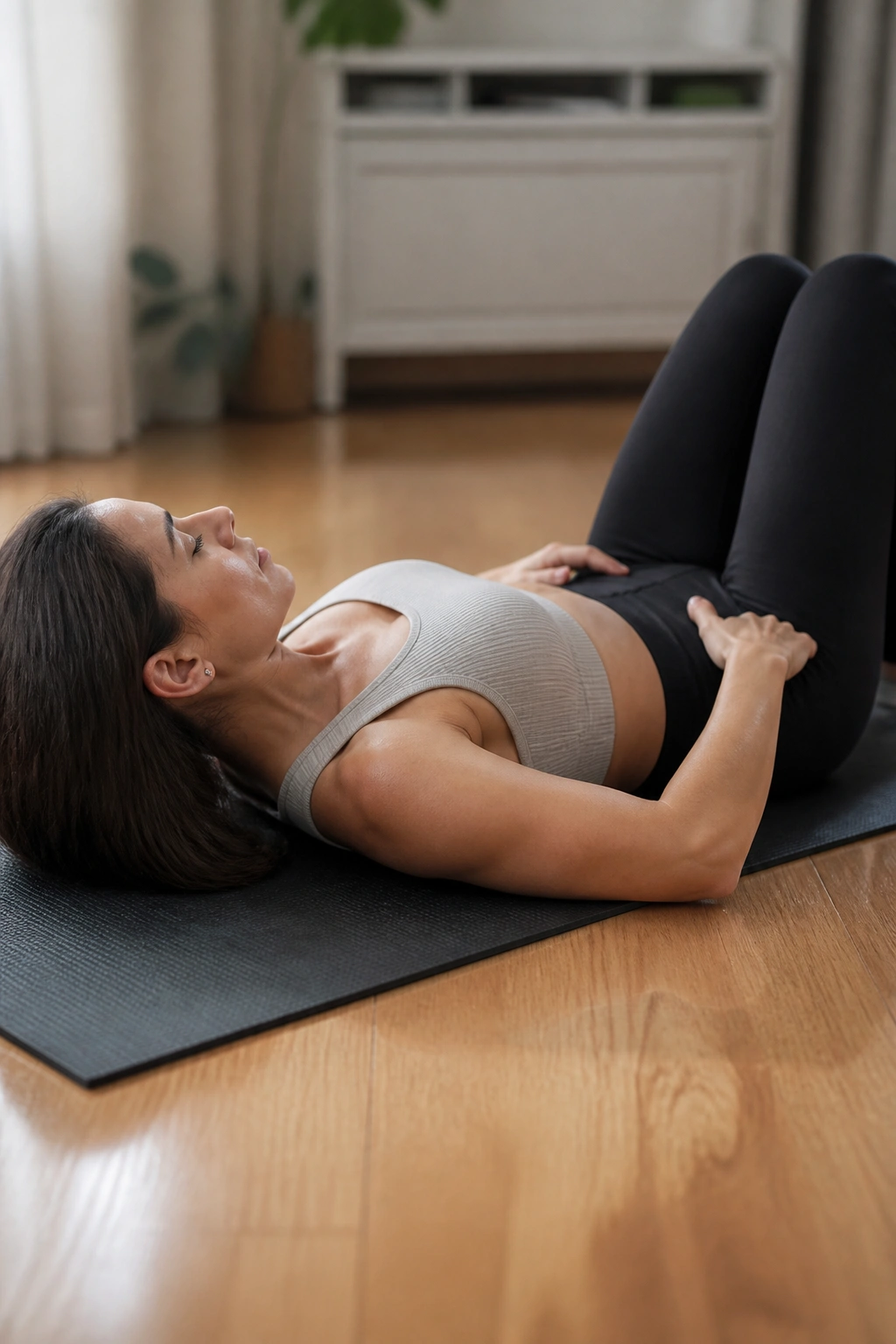
Need your back and shoulders to feel organized before a long day? This is the routine. Pilates-style work gives you that neat, stacked feeling through the middle — the one that makes standing, sitting, and even reaching for a bag feel less sloppy.
What You Feel First
You’ll notice the deep core before you notice a sweat. That’s normal. Start with pelvic tilts, then toe taps, side-lying leg lifts, glute bridge marches, and a short plank variation if your wrists are happy. Keep the movements slow enough that you can control the pelvis instead of letting it flop around.
Try this sequence:
- 8 pelvic tilts
- 10 toe taps per side
- 10 side-lying leg lifts per side
- 8 bridge marches per side
- 20 to 30 seconds of plank shoulder taps
How To Keep It Honest
The lower back should stay quiet. If it arches hard during toe taps, cut the range in half. If the shoulders shrug during planks, widen the feet and slow down. These are small exercises, but they reward attention.
This kind of routine is especially good on mornings when your body feels a little scattered. It gathers everything back in. Not flashy. Useful.
10. Jump Rope and Shadow Boxing

Jump rope isn’t punishment. It’s a fast way to wake up rhythm, calves, shoulders, and lungs at the same time. Add shadow boxing and you get a morning routine that feels sharp instead of repetitive.
Start with short intervals. Twenty seconds of rope, twenty seconds of shadow boxing, twenty seconds of rest. Repeat that pattern for six to eight rounds. If you don’t have a rope, keep the footwork and hand rhythm anyway. Shadow boxing alone can carry the whole session, and your joints may thank you for it.
Use light feet. Keep the shoulders loose. Punch with a twist through the torso, not a wild swing from the arms. The first minute might feel awkward. Then the body catches on.
A few quick cues help:
- Land softly on the balls of your feet
- Keep your hands near your face between punches
- Exhale with each strike
- Stay relaxed in the jaw
This is one of the best choices when you want a fast mood shift. There’s a little play in it, which matters more than people admit. If a routine feels like a chore before breakfast, it’s easier to skip the next day.
11. Kettlebell Complex for Fast, Focused Energy

A kettlebell complex can do more in 12 minutes than many people expect. One bell, a few movements, and almost no wasted time. The catch is simple: your form has to stay clean enough that the work feels controlled, not chaotic.
Keep It Clean, Not Heroic
Use a light to moderate bell and run through a small sequence without putting it down. A solid morning version is deadlifts, goblet squats, swings, and a suitcase carry. Three rounds is plenty for most people. If your back or grip starts complaining early, the bell is too heavy for a breakfast-hour session.
A practical setup:
- 6 kettlebell deadlifts
- 6 goblet squats
- 10 kettlebell swings
- 30-second suitcase carry on each side
Rest 60 to 90 seconds between rounds.
Who It Suits
This routine works best for people who already know basic kettlebell form and want a short burst of whole-body work. The hips, glutes, grip, and midsection all show up. Fast. Honest. No fluff.
If you’re still learning the swing, keep it simple and cut the volume. Morning is not the time to chase a personal record with sloppy mechanics.
12. Easy Run with Strides

A runner who starts with ten minutes easy and then adds four short strides usually feels smoother than the one who blasts off cold. That’s the whole reason this routine belongs on the list. It’s not about grinding. It’s about arriving at your run with some spring already in the legs.
Begin with an easy jog that feels almost too gentle. Then add strides — short accelerations of 15 to 20 seconds where you speed up to about 80 or 90 percent, stay relaxed, and then walk it off completely. The goal is crisp turnover, not gasping.
A simple morning run can look like this:
- 10 minutes easy jog
- 4 strides of 15 to 20 seconds
- Full walk or slow jog back between strides
- 3 to 5 minutes easy cooldown
The magic is in the contrast. The first part wakes you up. The strides sharpen your legs. By the end, your cadence feels smoother and the whole run stops feeling sticky.
If you’re short on time, skip the extra mileage and keep the strides. They do a lot with very little.
13. Resistance Band Activation
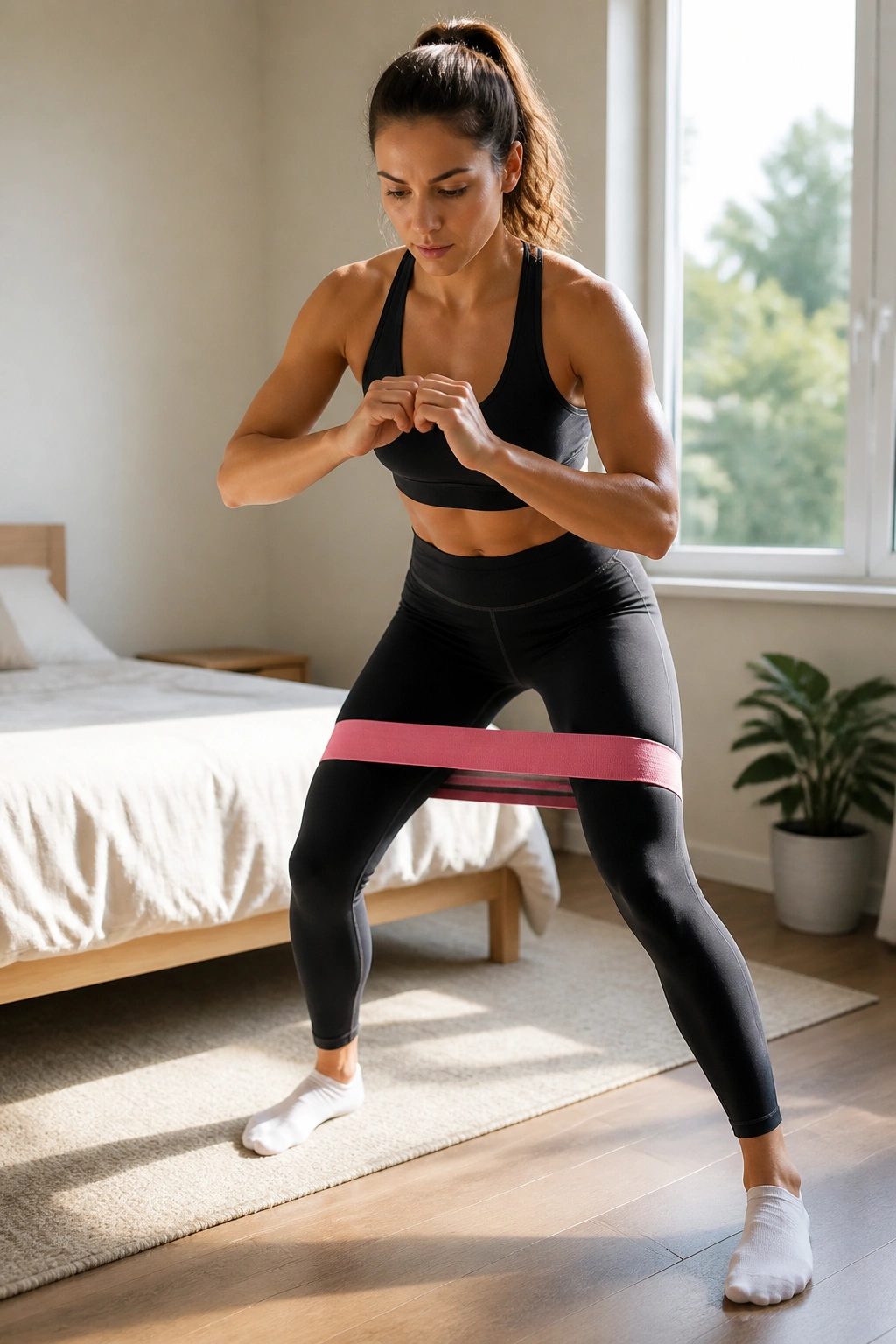
Do bands count as a workout? Yes, if you stop treating them like a warm-up toy and actually push against them with intent. A few minutes of band work can light up the hips, upper back, and glutes before the day gets moving.
What To Feel
Mini-band lateral walks should burn the sides of the hips. Pull-aparts should wake up the upper back. Face pulls should make the shoulders feel more open. Glute bridges with a band around the knees should remind the legs how to hold tension. That’s the point — not exhaustion, but activation.
A solid sequence looks like this:
- 10 lateral steps each direction
- 15 band pull-aparts
- 12 face pulls
- 12 glute bridges
- 10 banded knee extensions per side
Work through one or two rounds. Keep the band under tension the whole time. If it goes slack, the exercise gets lazy fast.
Where It Helps Most
This routine shines before long workdays, runs, and lifting sessions. It’s small enough to do in a bedroom, but specific enough to make your posture feel more awake. And yes, the glutes can absolutely light up from a few minutes of banded work — no heavy iron required.
If your morning body feels flat, this is a good place to start.
14. Dance Cardio Wake-Up

Three songs. That’s enough.
You do not need choreography, a mirror, or the confidence of someone filming a fitness clip. Put on music that makes your feet move faster than your excuses, then spend one song on hips and legs, one on arms and torso, and one on full-body movement that gets you a little sweaty. The room can be small. The point is motion, not performance.
Dance cardio works because it sneaks effort past the brain. You’re too busy keeping time to obsess over how hard you’re working. That helps on mornings when a formal workout feels heavy before it even starts.
Try this loose structure:
- Song 1: side steps, knee lifts, hip shifts
- Song 2: arm sweeps, punches, torso twists
- Song 3: bigger movements, faster feet, more bounce
If you’re stiff, start goofy and slow. If you’re sharp already, push the pace. This is one of the best mood-shifters on the list. It’s also the least likely to feel like a chore, which is a big deal for consistency.
15. Recovery-Based Routine for Low-Energy Mornings

Low-energy mornings still deserve movement. That’s not a consolation prize. It’s a smart choice when sleep was short, legs feel heavy, or your head hasn’t fully joined the room yet.
A Simple Sequence That Still Counts
Start with a glass of water, then spend two minutes breathing slowly while standing or lying on your back. Follow that with a short walk — even around the house if that’s what the morning allows. Add a few gentle movements: cat-cow, ankle circles, shoulder rolls, and five slow squats or calf raises if the body feels ready.
A clean version looks like this:
- 2 minutes slow breathing
- 3 to 5 minutes easy walking
- 6 cat-cow cycles
- 10 ankle rocks per side
- 5 to 8 slow squats or calf raises
Why It Matters
This routine keeps the habit alive without asking for more than you’ve got. That matters. Some mornings are not for performance, and forcing a hard session into a rough start can leave you flatter by lunch. A lighter routine can still change the day’s shape.
Sometimes the right workout is the one that leaves energy in the tank.
If you feel better after ten minutes, you can always add more. If you don’t, stop there and count it as a win anyway.
Final Thoughts

The smartest morning workout isn’t the hardest one. It’s the one that matches your actual morning — stiff, busy, tired, restless, or ready to go. That’s why these workout morning routines work as a set instead of a single perfect answer.
Some days call for joints and breath. Other days want cardio, lifting, or a little sweat that changes your mood before the first email lands. The useful part is having options that fit different levels of energy without making the choice feel complicated.
Keep one short routine ready and one more demanding version in your back pocket. That way, a rough start doesn’t turn into a skipped day.
