



The first thing that usually fails is the waistband. A pair of old leggings can feel fine for five minutes, then start folding, sliding, or pinching the minute you sit, bend, or walk uphill. That is why maternity workout clothes are worth thinking about before your favorite pair turns into a wrestling match.
Pregnancy changes what feels good on your body in small, annoying ways. The belly gets more sensitive. The ribcage changes. Feet swell. A bra band that used to disappear in the background can suddenly feel like a wire fence. Good activewear solves those problems with stretch, shape, and smarter seams, not with weirdly tight compression that leaves you distracted halfway through a walk.
I’m suspicious of anything that squeezes the belly from the wrong spot. A lot of regular gym clothes try to “support” you by clamping down, and that is the fastest way to end up tugging at your shirt every three minutes. The pieces below are the ones that actually earn their place in a maternity drawer because they move with you, stay in place, and don’t need constant fixing.
1. Over-the-Bump Leggings That Stay Put Through Squats and Walks
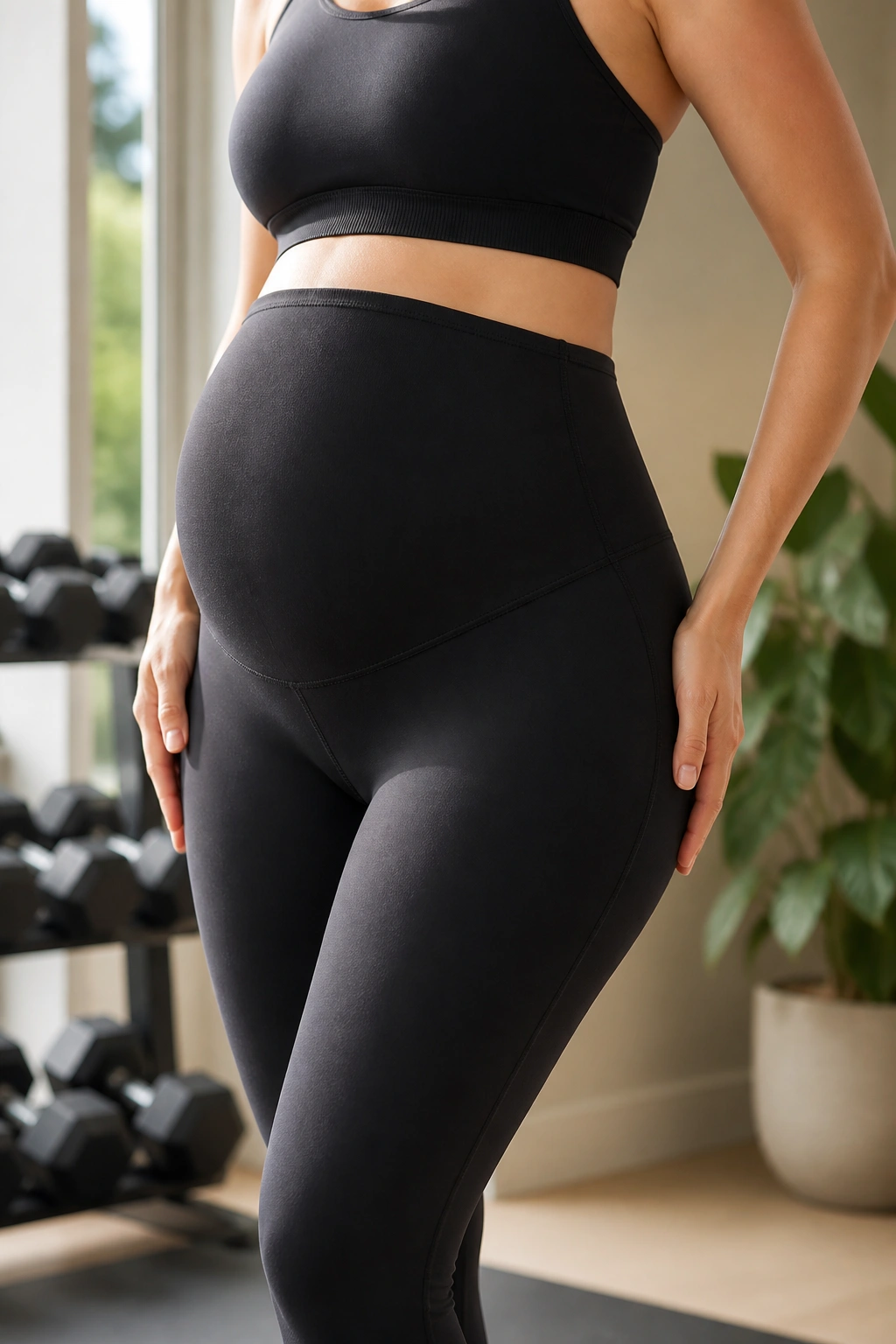
A good over-the-bump legging feels like a soft shelf, not a squeeze machine. The whole point is that the belly panel gives you coverage without digging into the lowest part of your stomach, which is often where pressure gets annoying first.
These are the leggings I’d pick for walking, prenatal yoga, light strength work, and any day when you know you will be standing up and sitting down a lot. The panel should rise high enough to cover the bump without folding over at the top. If it curls, it is too short or too loose.
Rolling waistbands are the enemy.
Look for flat seams, opaque fabric, and a panel that stretches evenly when you sit and bend. A 7/8 length is often easier to wear than a full-length legging if you are petite, but full length gives more coverage if you want a bit of warmth. The best pairs feel smooth when you slide your hand over them, not slick in a cheap way and not thick like yoga pants from another decade.
- Best for: long walks, prenatal yoga, strength sessions, travel days
- Look for: wide belly panel, flat seams, squat-proof fabric, medium compression
- Watch out for: thin panels that curl down or seams that press into the lower belly
- Fit tip: if the leggings feel fine standing but pinch when you sit, size up
My rule: if you have to pull them up after every set, they are not the right pair.
2. Under-the-Bump Leggings for Days You Want Less Belly Pressure
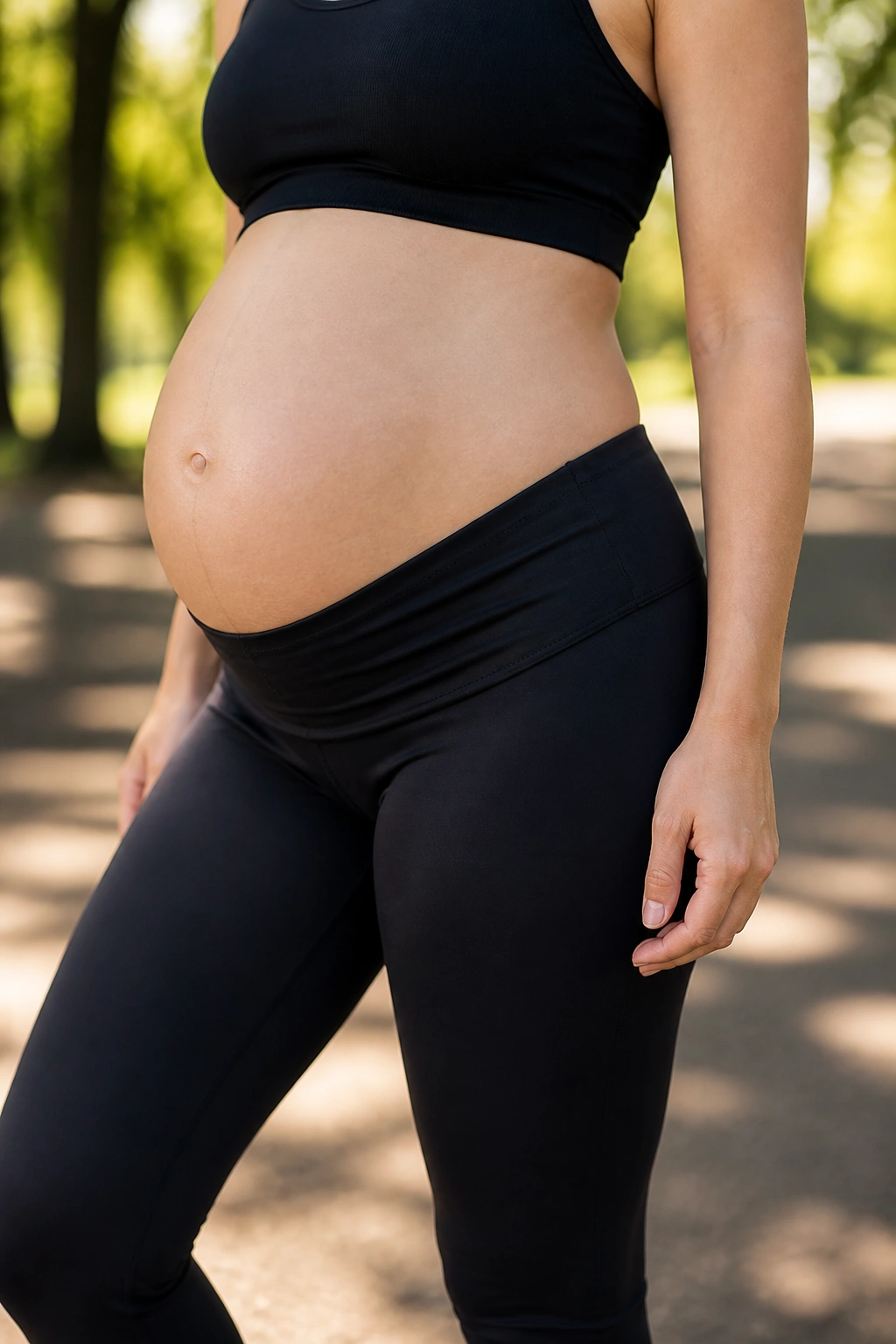
Under-the-bump leggings are the opposite approach, and sometimes that is exactly what you want. Instead of a full panel, they sit lower on the hips and leave your stomach free, which can feel better when you are hot, bloated, or simply tired of fabric around your middle.
They are the better choice for some people in later pregnancy, but they can also be the easier pick earlier on if a full belly panel feels like too much. The trick is the waistband shape. A flat, wide band usually stays put better than a skinny elastic edge, and a curved front can sit more naturally under the bump than a straight one.
Unlike over-the-bump styles, these do not give you the same smooth covered feeling all the way up the torso. That is not a flaw. It is just a different job. If you like a little air around your stomach and less fabric under your shirt, this version makes more sense.
They work well for spin bike sessions, short walks, and strength training where you are not constantly folding at the waist. If you are between sizes, the looser option often wins here because too-tight under-the-bump leggings can slide down when the belly starts to change shape.
3. Maternity Workout Bras That Keep You Comfortable
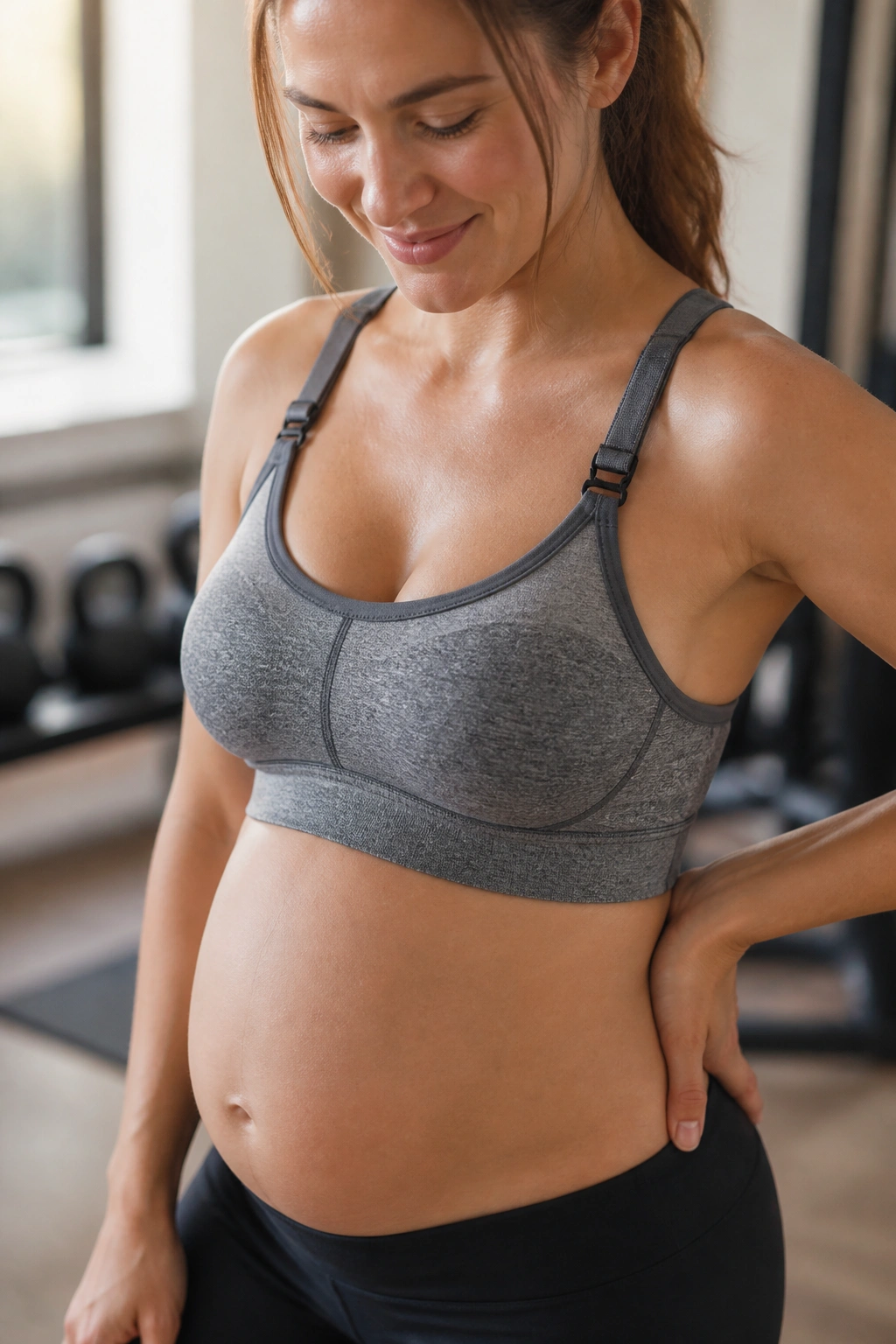
A good maternity sports bra is doing two jobs at once: holding you in and not making your ribs angry. That sounds simple until you try on a bra that feels decent for two minutes and then starts digging into the band or rubbing the underside of the bust.
Support matters more than most people expect, especially when breast size changes fast. A bra that worked for low-impact movement can stop feeling right when running, power walking, or doing anything with bounce. I like bras with wider bands, soft but firm cups, and straps that adjust without turning into a knot of hardware on your shoulder blades.
If you are more comfortable in compression, choose a bra that holds the chest close without flattening it. If you prefer separate cup structure, look for molded or lightly lined cups with a band that sits level across the back. The fit should feel secure when you take a deep breath. Not loose. Not trapped.
One-sentence test: you should be able to breathe fully without feeling the band climb.
And if you are buying one bra only, make it the one you’d actually wear for a brisk 30-minute walk. That is the honest test.
4. Nursing Sports Bras for Pregnancy and the Stretch of Postpartum
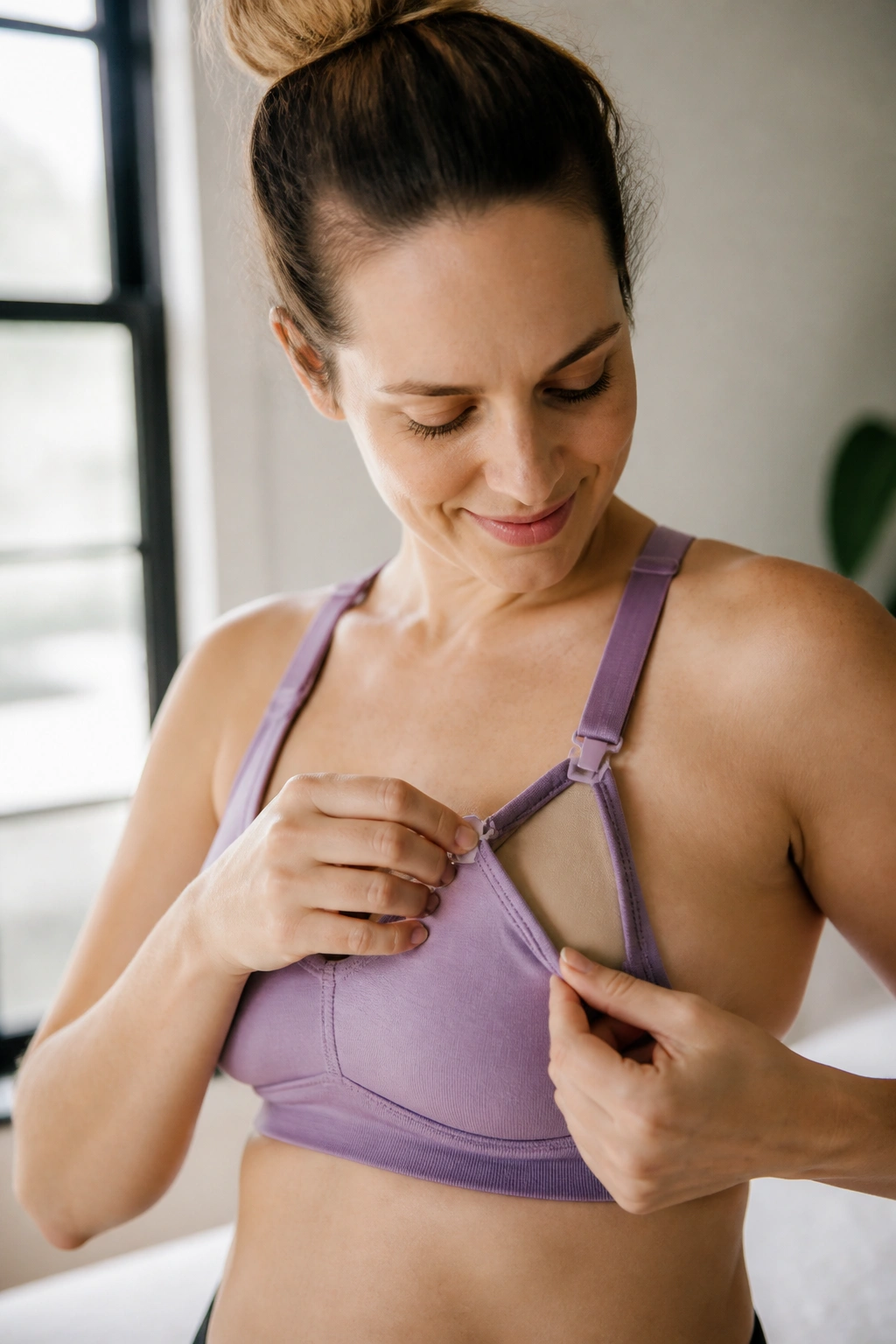
Why buy a nursing sports bra before you need one? Because the good ones solve a very specific problem: they give you support now and easy access later, without forcing you to buy a whole new drawer after delivery.
What Makes It Different
A regular racerback can feel great in the mirror and annoying in real life. Nursing sports bras usually use clip-down cups, pull-aside panels, or crossover fronts, and that makes them more practical when your body is changing fast. The best versions still feel like a real sports bra, not a flimsy sleep bra with hopeful intentions.
How to Pick One
Look for soft stretch at the band, adjustable straps, and cups that open with one hand. If you plan to wear it for walking or strength work, test whether the fabric bounces back after a stretch. A nursing bra that stays stretched out at the cups after one wear is not worth the drawer space.
I also prefer styles with a low-fuss front. Too many clips, too much lace, too much decorative nonsense. Keep it simple.
If you do not plan to nurse, you can skip this piece. But if you want one item that covers more stages, this is a smart buy because it reduces the “I need another bra” problem later.
5. Maternity Tank Tops With Built-In Bras That Cut Down on Layering
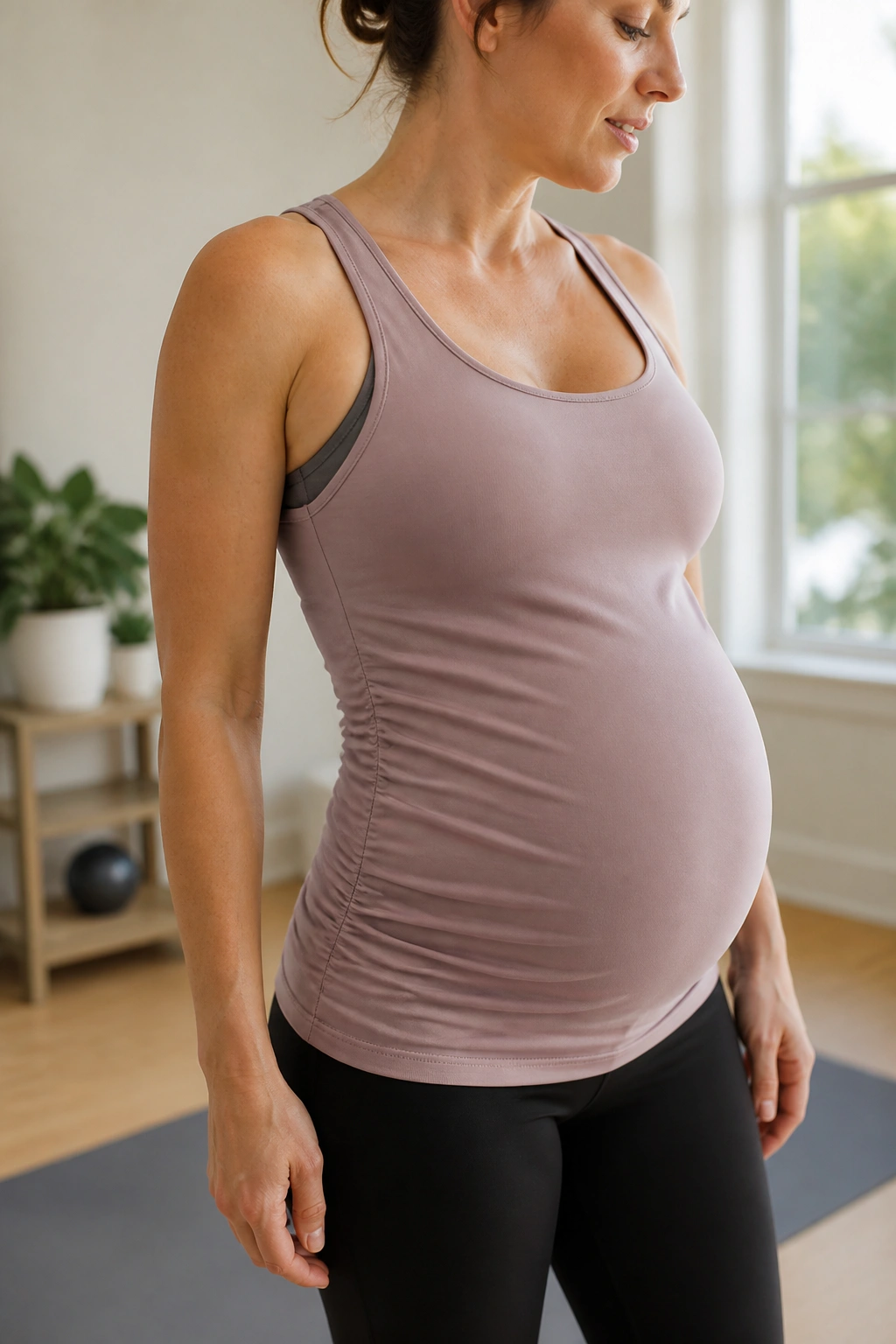
A tank with a built-in bra solves the layer problem fast. Some days, you want one piece that covers your torso, gives you a little support, and stops your shirt from clinging in the wrong places.
The best ones are not full support bras pretending to be tops. They are lighter than that, and that is fine. A strong built-in bra tank is great for yoga, barre, stretching, and low-to-medium impact sessions where you care more about comfort than bounce control. If the shelf bra is too shallow or the straps are too thin, though, it starts to feel decorative instead of useful.
What to Look For
- Side ruching that gives the belly room as it grows
- Longer torso length so the hem does not ride up
- A soft inner bra layer that sits flat against the chest
- Moisture-wicking fabric if you get warm quickly
I like these for home workouts because they feel easy. No extra layer. No bunching under the arm. Just one piece that does its job.
Pro tip: if the outer fabric clings to every line of the inner bra, try a slightly thicker knit. Thin fabric can look fine in the store and annoy you the first time you sweat.
6. Ruched Maternity Tee Shirts That Give You Room Without Looking Boxy
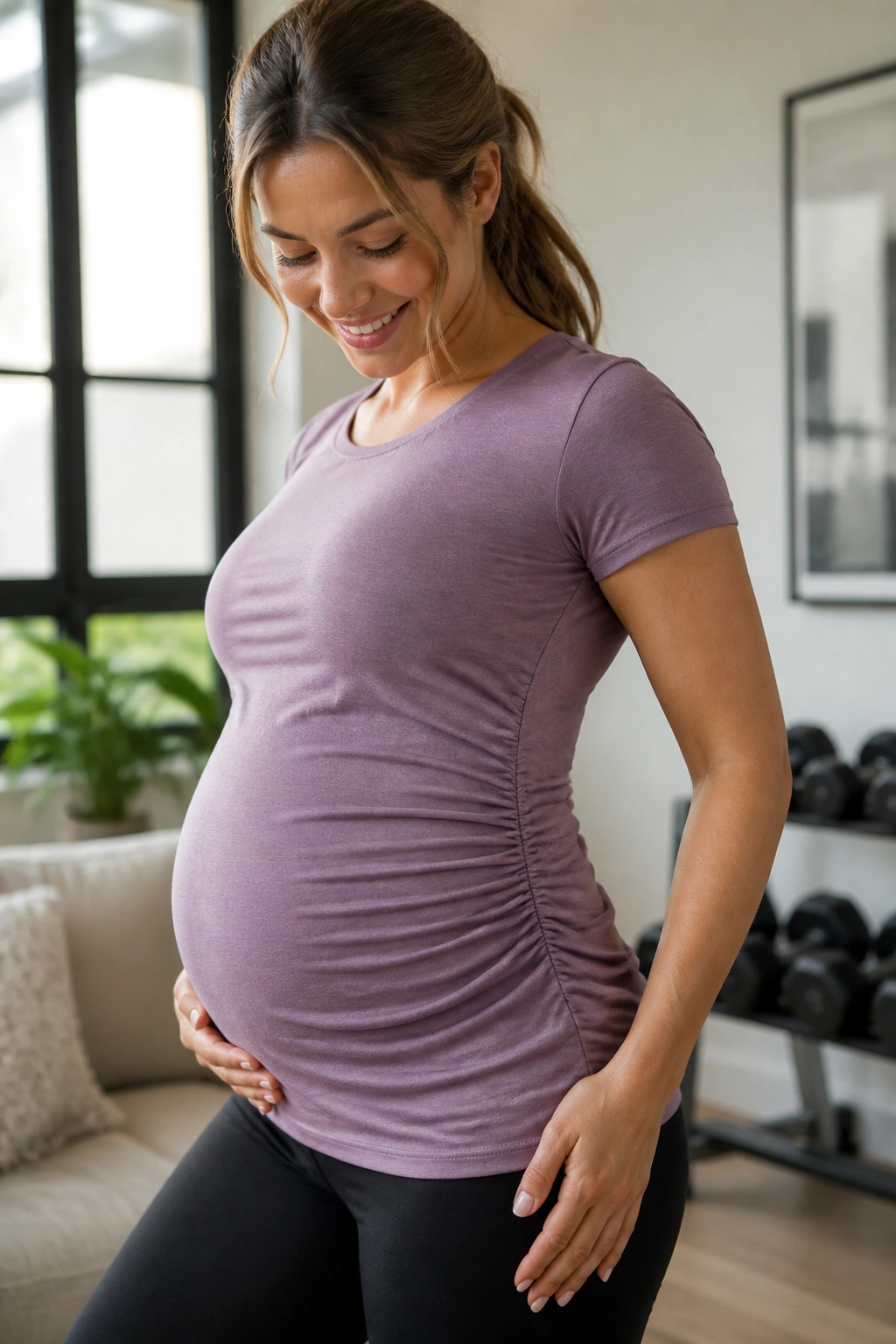
Some days, a tee is the answer. Not a fancy performance top with twelve seams and a mock neck. Just a soft shirt that skims the body, lets air move, and does not flash your stomach every time you reach overhead.
Ruched maternity tees earn their keep because the side gathering gives shape without trapping the fabric tight across the bump. That little bit of ruching is more useful than people think. It keeps the hem from jumping up when you stretch, and it helps the shirt keep its line instead of turning into a square box by the third trimester.
I like these for walking, light circuits, and days when you want to look normal enough to grab coffee after the gym without changing. Cotton-modal blends feel softer, while poly-spandex knits dry faster if you sweat more. Neither is perfect for every person. Still, both beat a stiff cotton tee that gets heavy and sticky the second your heart rate rises.
One-sentence truth: a shirt that stays down is a small luxury.
The cut matters too. Drop-shoulder seams can feel slouchy in a good way, but if the sleeves are too wide they get in the way during rows or overhead presses. Choose a shape that lets your arms move without swallowing your whole upper body.
7. Long-Sleeve Workout Tops for Cooler Rooms and Early Walks
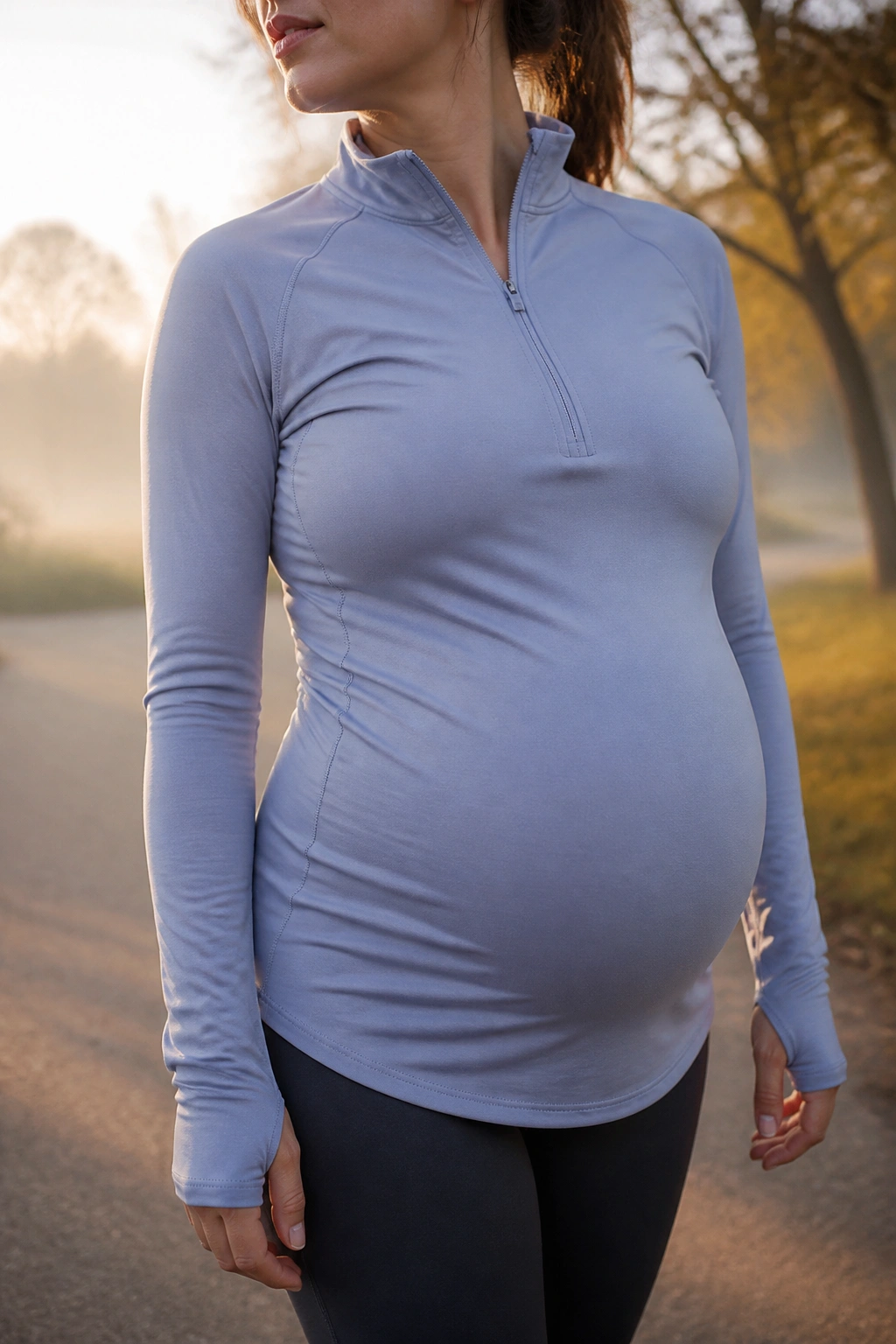
Cold mornings and drafty studios make a long-sleeve top earn its keep fast. If you live in a climate where a short sleeve is only comfortable for ten minutes, this piece moves to the top of the pile quickly.
The best maternity-friendly long-sleeve tops are light, stretchy, and not clingy at the elbows or forearms. Heavy fleece is usually a bad idea unless you are standing still. It traps heat and sweat, and then you end up peeling it off with one hand while balancing a water bottle with the other. Been there. Not worth it.
What Makes a Good One
- Thumbholes that actually sit where your hands are
- A half zip or quarter zip for quick temperature changes
- Lightweight knit fabric that does not feel stiff when you twist
- A longer back hem so coverage stays put during bends
A good long-sleeve top is also useful outdoors when you want a bit of sun coverage without adding another layer. That matters more than people realize on walks, because the wrong shirt turns a calm outing into a tug-and-sweat situation.
If you are choosing between a thicker and thinner version, pick the thinner one unless you know you run cold. A thin top under a jacket is more flexible. A thick top usually becomes too much halfway through the workout.
8. Maternity Bike Shorts That Stop Thigh Rub Before It Starts
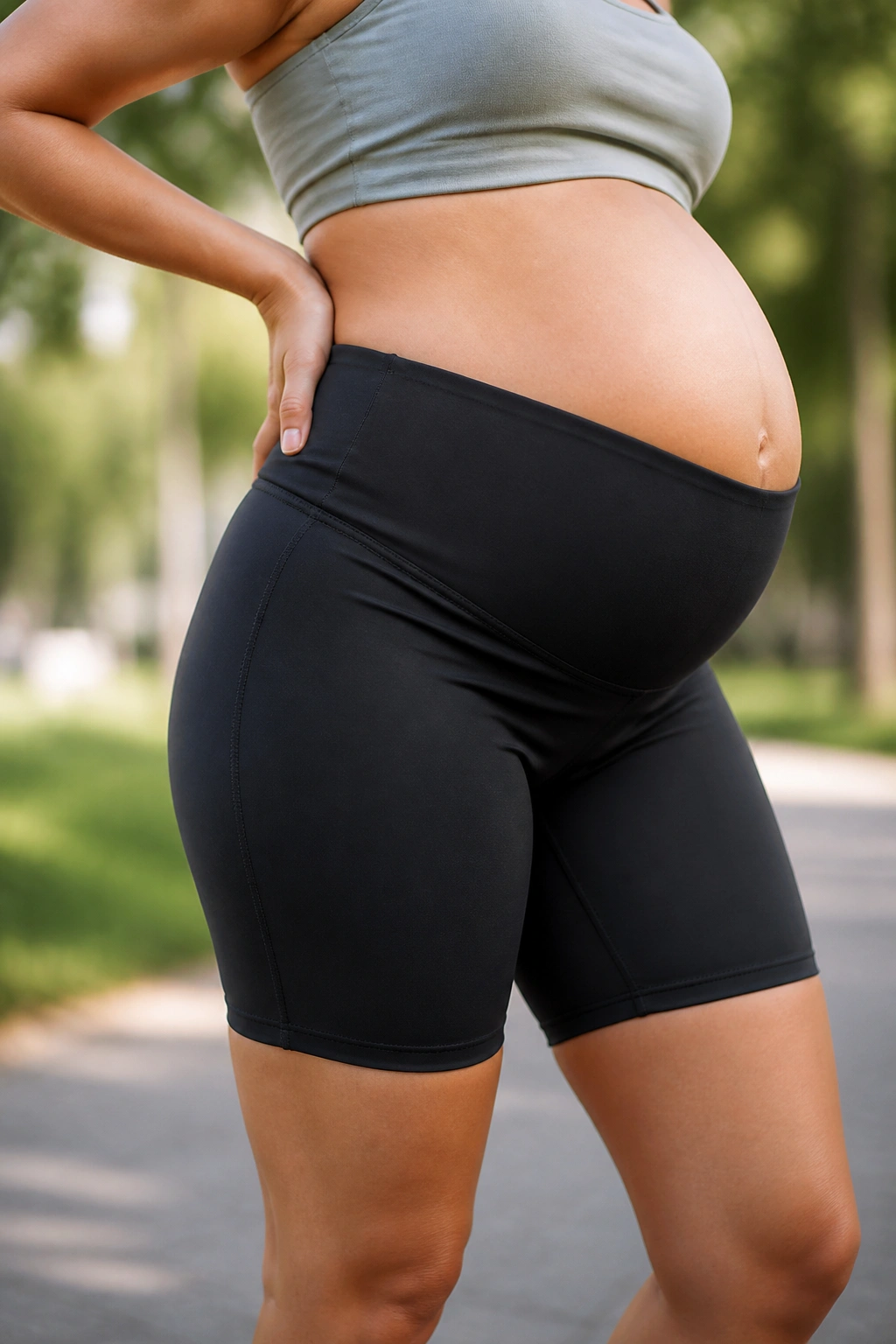
Bike shorts are not leggings with the legs chopped off. They are their own thing, and when they fit well, they solve two problems at once: thigh rub and heat.
The useful maternity pair usually has a belly panel or a soft waistband that does not dig in when you sit down. The inseam matters more than people expect. Too short, and the leg opening creeps up every time you move. Too long, and they can feel bunchy under a longer shirt. Somewhere around 5 to 8 inches works for a lot of people, but the right number depends on your height and where your thigh rub starts.
They are especially nice for walking, spin, indoor strength work, and any workout where you want less fabric around the knees. I also like them under oversized tees because they make bending, stretching, and lounging after the workout easier.
Unlike full leggings, bike shorts give your legs more air. That sounds small until you are halfway through a warm walk and every extra layer starts feeling like a bad idea.
If you are buying only one pair, choose a matte fabric with enough stretch to hug the thigh without riding up. Glossy, thin fabric looks smooth for about five seconds and then starts behaving badly.
9. Maternity Joggers for Warm-Ups, Errands, and Recovery Days
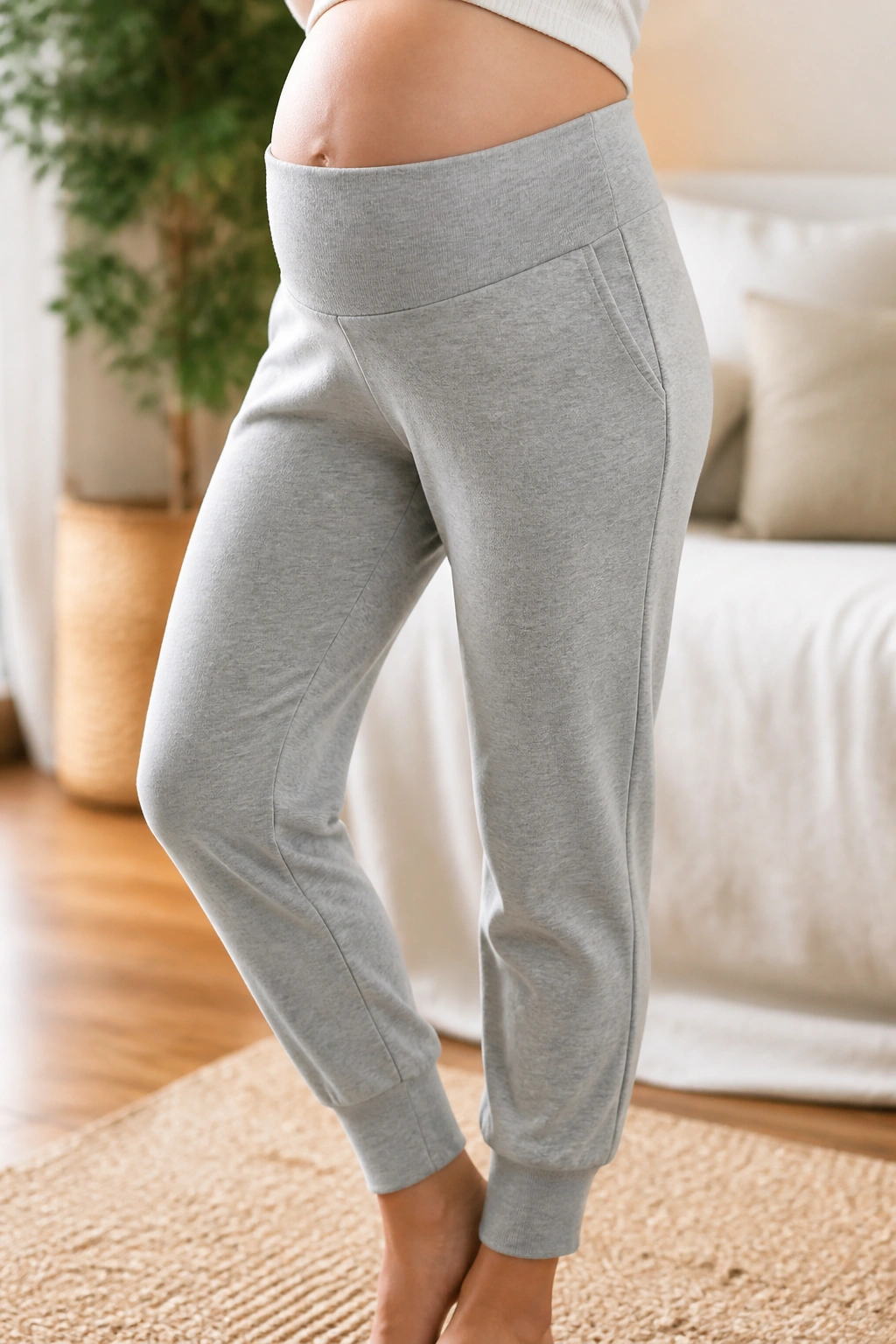
Maternity joggers may be the most worn item in the pile. They are the piece you reach for on rest days, travel days, and the half hour before a workout when you are trying to convince your body to cooperate.
The good ones have a wide waistband, a soft belly panel or drawcord that does not dig, and an ankle cuff that keeps the leg from flopping around. A tapered leg is usually easier to move in than a straight wide leg, especially if you are using them for walking or stretching. Heavy woven joggers feel too stiff. Soft French terry or brushed knit usually wins.
If you like to warm up in something cozy and then peel a layer off, joggers do that job better than leggings. They also work well for recovery because the fabric sits away from the skin a little more. That can matter when you are swollen or just feeling touchy around the middle.
A good pair should not bag at the knees after twenty minutes. If they do, they look lazy in the worst way.
I would rather own one excellent pair than three mediocre ones. You know the type: the ones that look fine in the mirror and sag at the seat by the time you get home. Skip those.
10. Running Shorts With a Maternity Panel for Heat and Pace Work
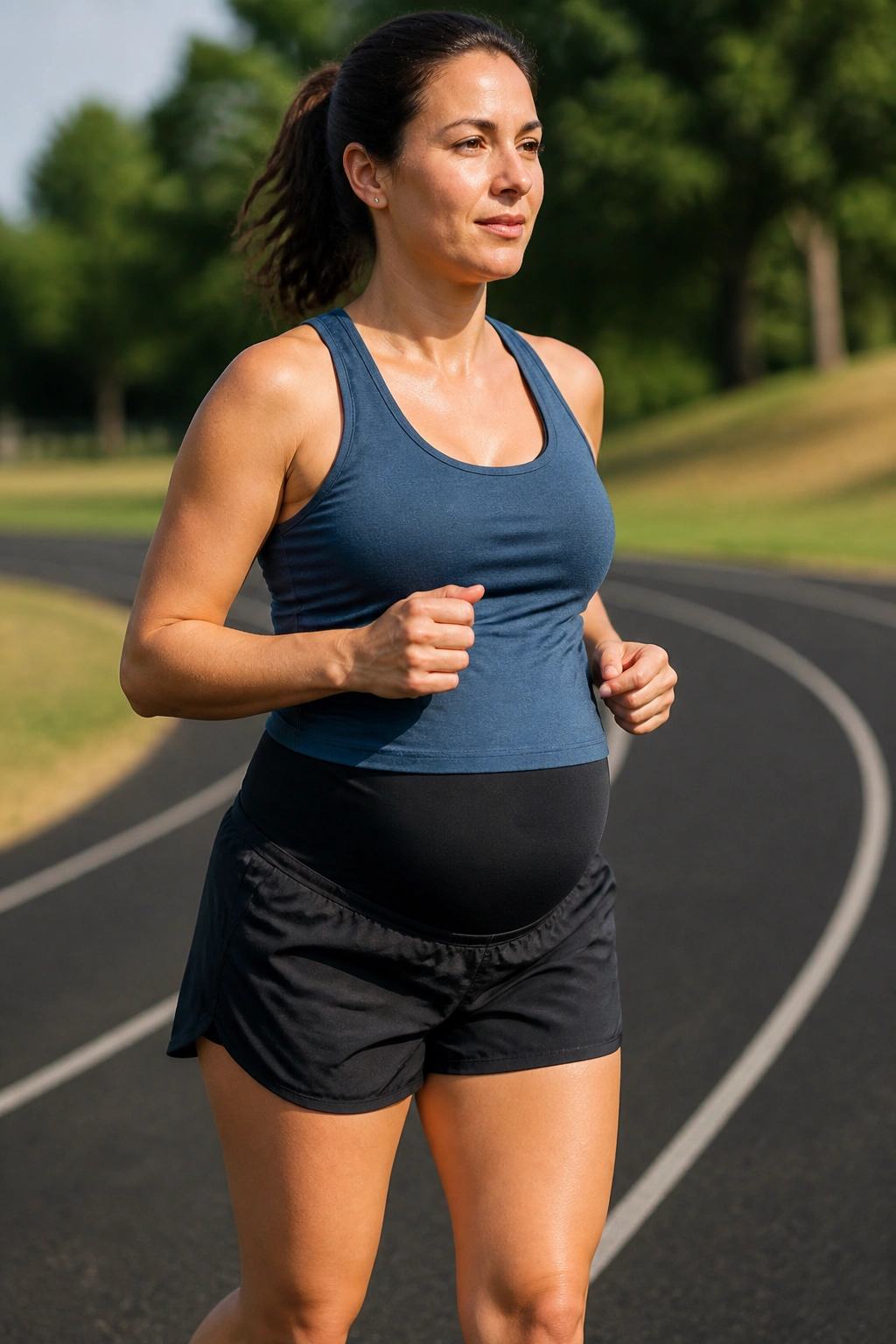
When do running shorts beat leggings? The answer is heat, swelling, and zero patience for extra fabric. If you are walking fast, jogging lightly, or doing treadmill intervals, a good pair of maternity running shorts can feel like a relief.
The Details That Matter
The waistband or panel should stay flat when you bend forward, not fold into a sausage shape at the top. A built-in brief can be useful, but only if the leg openings do not chafe. Some of the best pairs use a soft liner with a little stretch so the shorts move cleanly instead of pinching the inner thigh.
What to Watch For
- 3 to 5 inch inseams for easier movement
- Split hems if you want more leg room
- A soft inner brief that does not rub
- A back pocket or side pocket for keys or a small card
These are the shorts I’d keep for brisk walking, treadmill work, and warmer days when leggings feel like too much. They are not for everyone, and that is fine. If you prefer more coverage, bike shorts may make more sense.
Still, if the weather makes you want to quit before you start, shorts can be the fix. Sometimes the difference between a skipped workout and a finished one is two inches of fabric.
11. Seamless Support Camis That Work Under Almost Everything
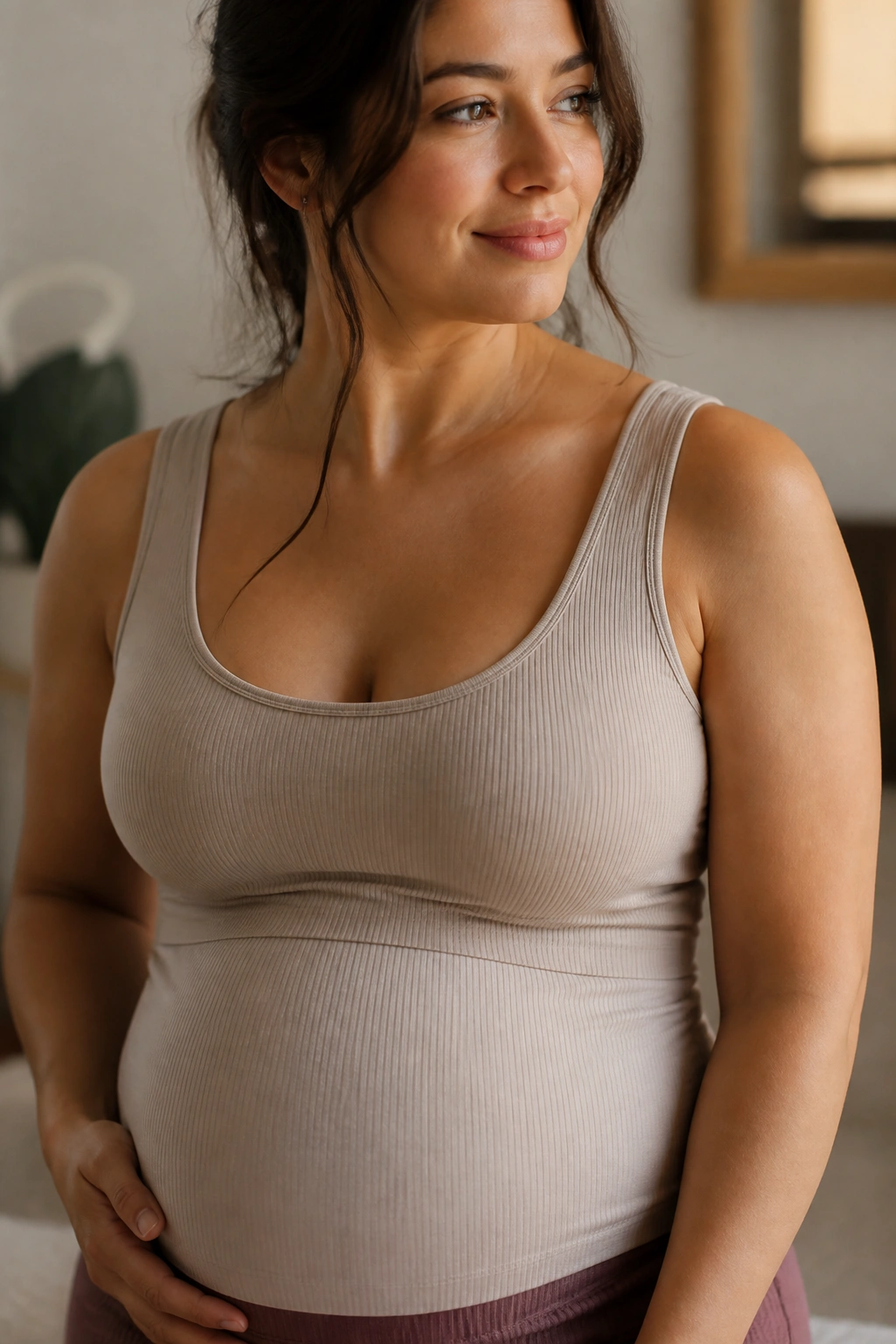
A seamless support cami is the piece that quietly saves a bad outfit. It sits close to the body, adds a little hold, and smooths out the space between a sports bra and a looser top.
Why It Earns a Spot
Because it fills the gap. A tee alone can feel floppy. A bra alone can feel too exposed. A cami gives you a middle layer that stays comfortable when your torso changes shape. The seamless knit matters here because flat construction usually means less rubbing at the ribs and under the arm.
What to Look For
- Ribbed or seamless knit with enough stretch for a growing belly
- A longer hem that does not creep up during stretches
- Built-in light support if you want fewer layers
- Wide straps so the top does not twist on your shoulders
I like these under zip hoodies and open jackets because they make the whole outfit feel more finished without adding bulk. They are also useful for strength workouts where you want to stay covered but not bundled up.
Best use: layering, low-impact training, everyday wear.
If you hate anything that hugs your middle too firmly, skip heavy compression and stay with a light seamless knit. It should feel close, not clingy.
12. Zip-Front Hoodies That Make Temperature Changes Easier
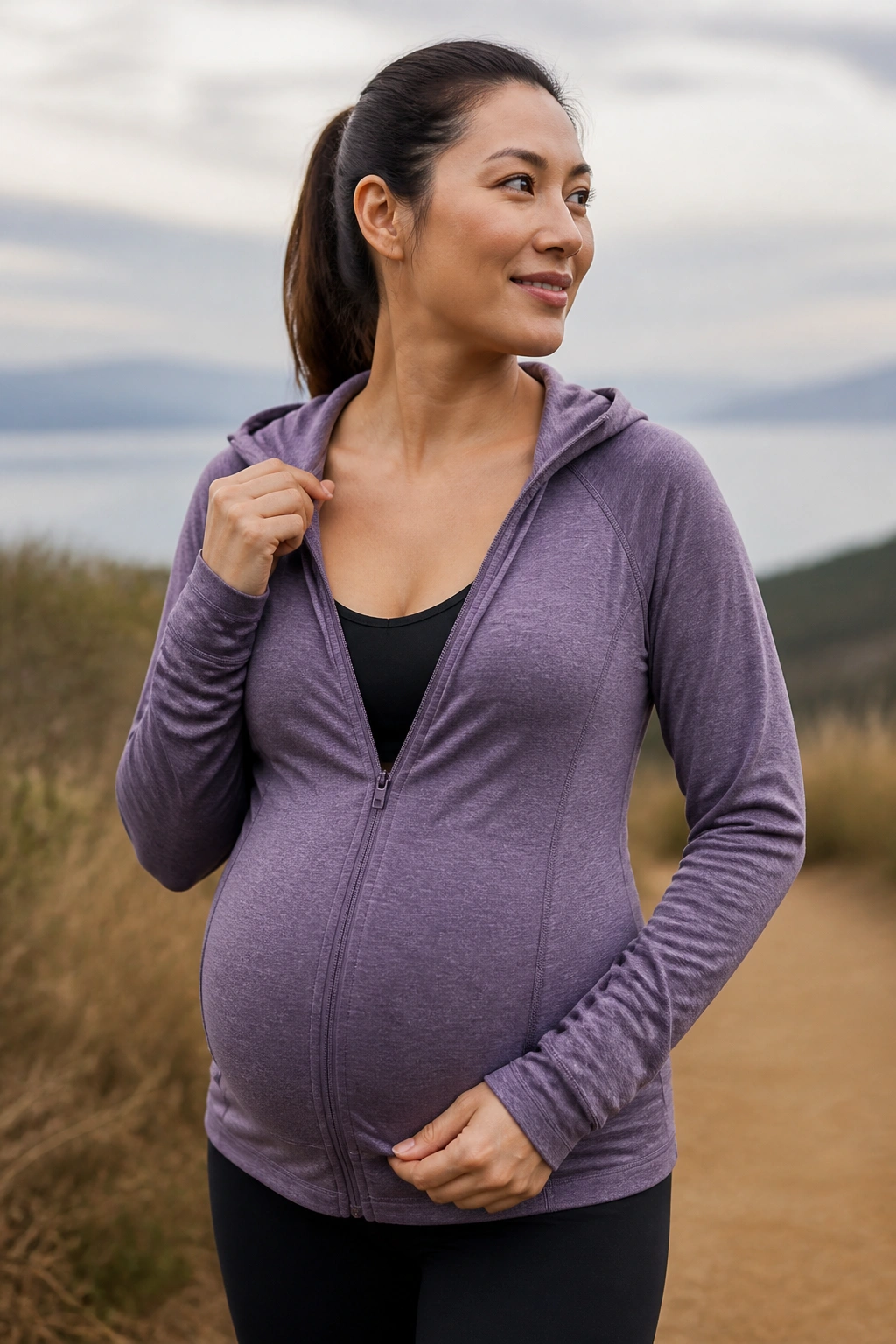
A zip-front hoodie solves the one problem pullover hoodies never do: you can open it when you heat up. That sounds basic, but in pregnancy, basic comfort is doing a lot of work.
A good one is soft, not bulky, and easy to move in through the shoulders. French terry is usually the sweet spot because it gives you a little structure without trapping heat. I would avoid thick fleece unless you are wearing it to and from the gym in colder weather and taking it off right away.
The zipper matters more than the style. If you get hot fast, a full zip lets you control airflow in seconds. If you want to wear it after a workout, it also makes it easier to adjust around a changing bust and belly without yanking fabric over your head.
I also like zip hoodies for the middle of the day when you are not sure what your body wants. Some moments call for warmth. Five minutes later, not so much.
A good cuff should stay put, the hood should not feel heavy, and the hem should not be so cropped that it rides up over your bump when you reach for a water bottle. Small details. Big annoyance if they are wrong.
13. Lightweight Workout Jackets for Outdoor Walks and Windy Days
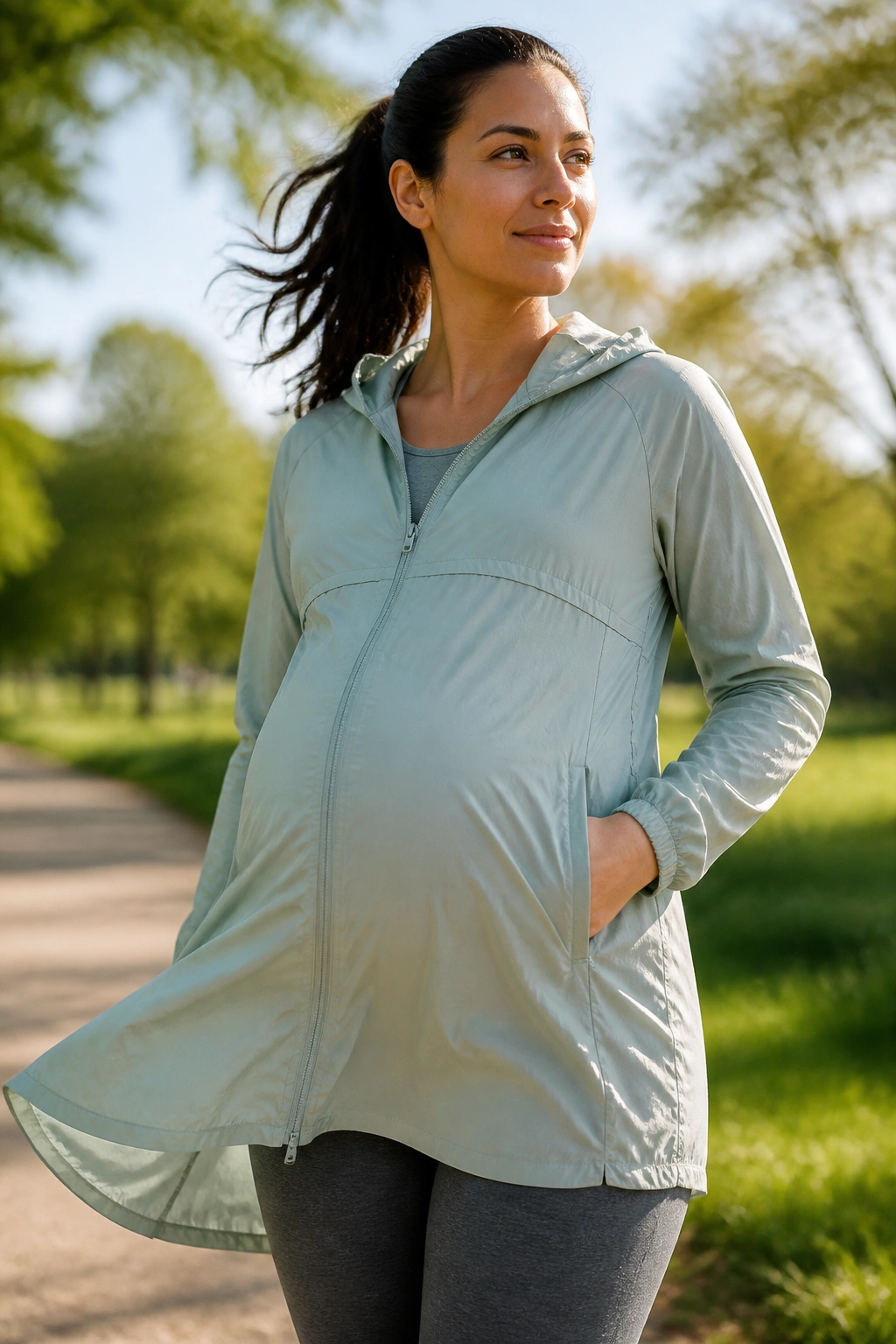
A lightweight workout jacket is the outer layer you forget about until you need it. Then it becomes the thing you keep by the door because the breeze is colder than expected and your first mile feels miserable without it.
The best ones are water-resistant, breathable, and cut long enough to cover the belly without flapping around. A back vent helps more than people think, especially on walks. So do pockets that actually fit a phone without bouncing against your hip.
Look For These Details
- High collar that folds down comfortably
- Reflective trim if you walk near roads
- Stretch panels under the arms or along the sides
- Packable fabric that folds into a bag without wrinkling into a brick
This is the piece I like for outdoor walking, stroller time, and parking-lot warm-ups. It is also handy when you want a little coverage after a sweaty session but do not want to commit to a heavy sweatshirt.
A jacket that catches on your arms when you swing them is annoying. A jacket that swishes loudly and sticks to a damp tee is even worse. Choose the light one. Every time.
14. Seamless Maternity Underwear That Stops Hidden Chafing
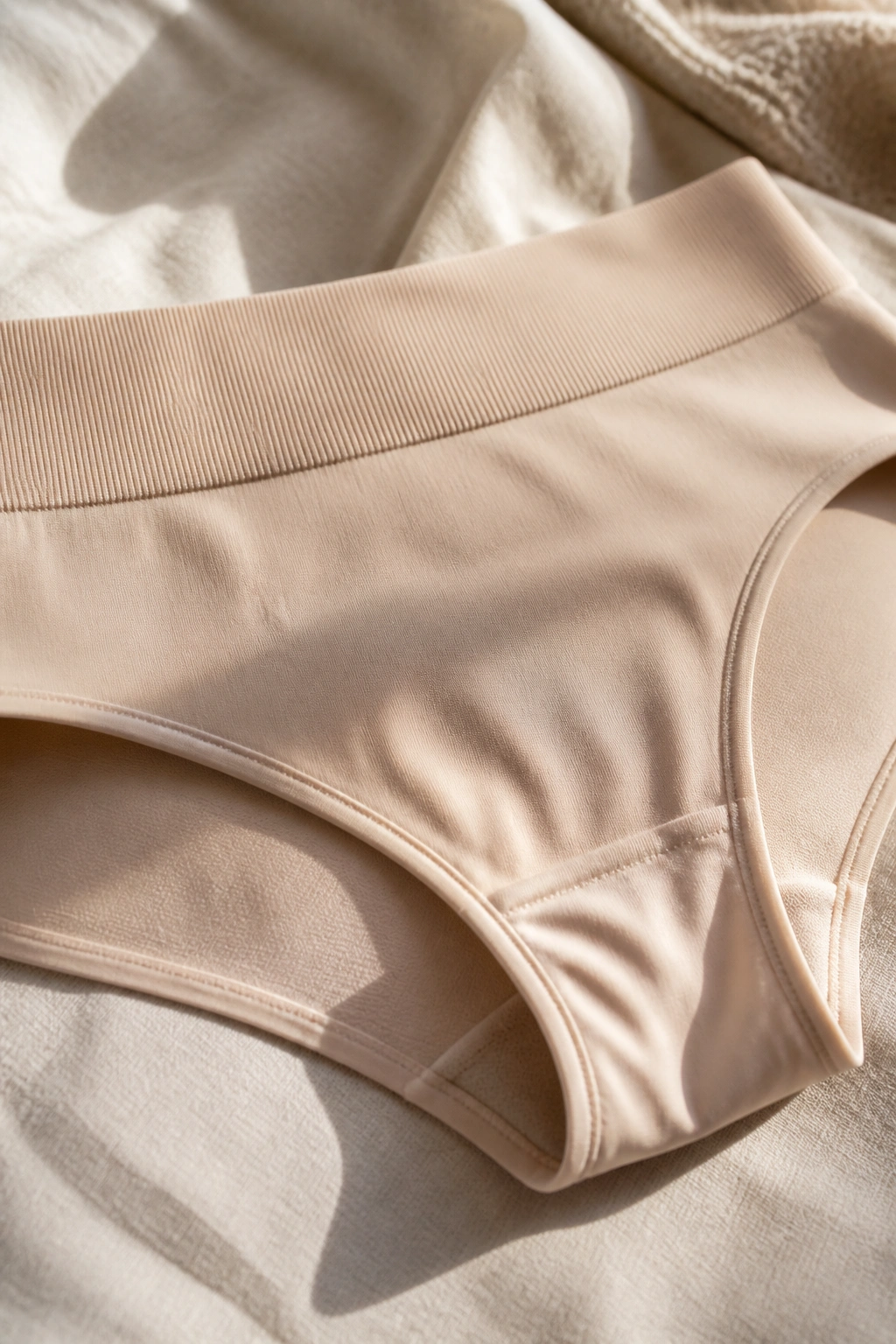
Poor underwear can ruin a good outfit faster than almost anything else. If the waistband folds, the leg opening cuts in, or the seams rub the wrong way, you will notice it the whole workout.
Seamless maternity underwear matters because it removes a lot of tiny distractions. The best pairs use soft stretch around the belly, a breathable gusset, and flat construction that does not create hard edges under leggings. Mid-rise tends to work well for many people because it stays below or around the bump without creating a deep pressure line.
I would skip lace if you are sensitive to friction. Pretty is not the point here. A smooth edge and a fabric that dries fast matter more when you are walking, lifting, or doing anything where sweat collects. Cotton gussets are useful, but the rest of the garment should still breathe.
One-sentence truth: the wrong underwear is a repeated mistake you feel all day.
If your leggings are already doing enough work, underwear should disappear into the background. That is the win.
15. Maternity Swimwear for Pool Walks and Aqua Workouts
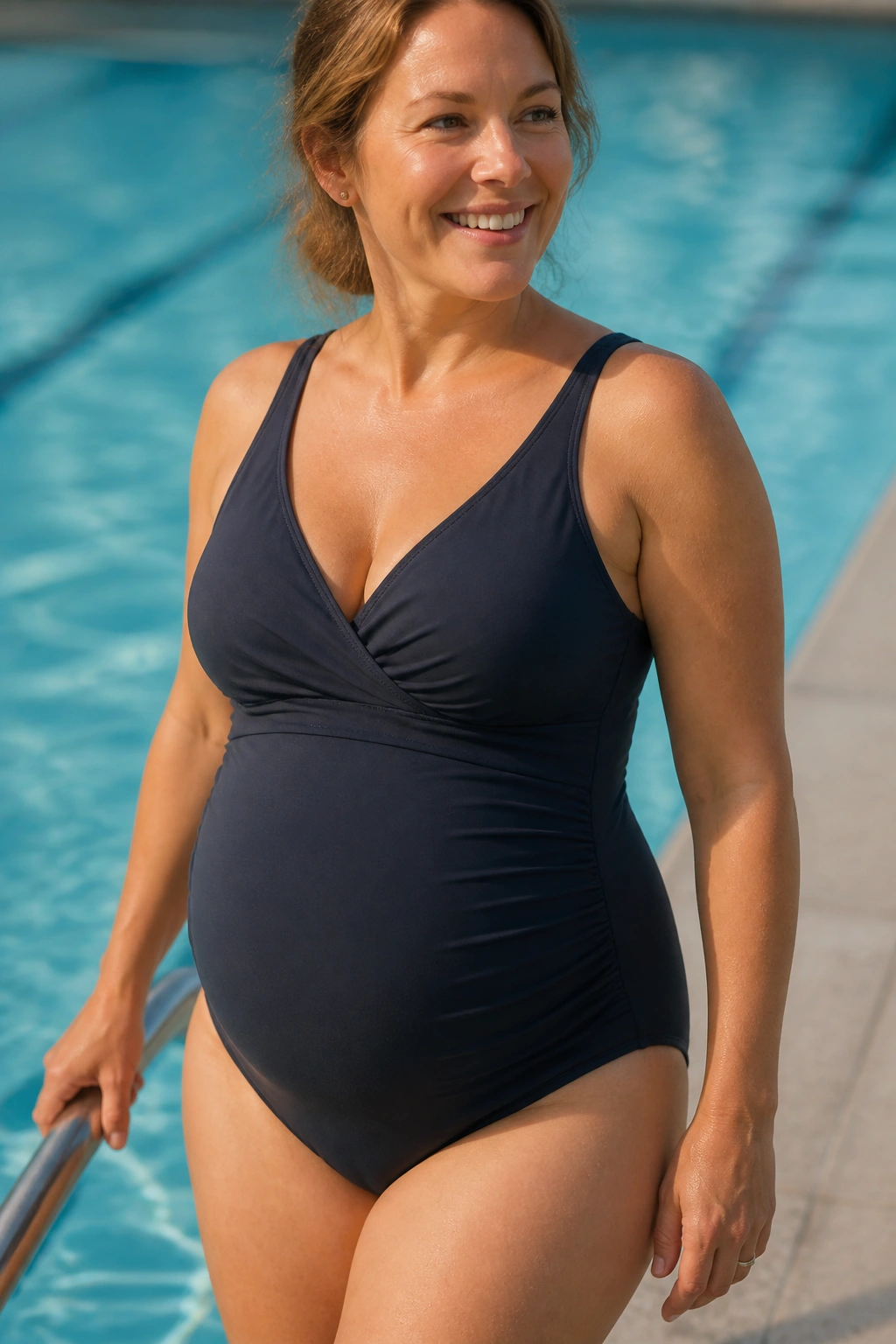
Do you really need swimwear if you do not consider yourself a swimmer? Maybe not for laps. But if your hips, back, or feet hate impact, pool walking and aqua workouts can be some of the easiest ways to move.
The right suit is the one that stays in place when you twist, reach, and get out of the water. A one-piece with a supportive bust shelf is the simplest answer for many people. A tankini with separate shorts can work too, especially if you like the freedom to adjust the top without dealing with the whole suit at once. Chlorine-resistant fabric is worth paying attention to if you use the pool often, because thin, flimsy fabric gets tired fast.
Look for adjustable straps, a lined bust, and leg openings that do not creep up when you kick. If you want more coverage, swim shorts can be a smart add-on. They help if you feel exposed in a regular suit, and they make walking in shallow water easier because you are not constantly tugging at the hem.
- Best for: aqua walking, gentle cardio, shoulder-friendly movement
- Look for: bust support, adjustable straps, secure leg openings, quick-dry fabric
- Avoid: thin straps that dig, see-through lining, and suits that sag when wet
The pool is not flashy, and that is part of the appeal. Sometimes the best maternity workout clothes are the ones that let you move with the least fuss, and a good swimsuit can do that better than a pile of dry land gear.
