



The sound of a kettlebell hitting the rubber floor is unmistakable. It is a dull, heavy thud that signifies you have just finished a set, your lungs are burning, and your heart is hammering against your ribs. Kettlebell cardio is not like jogging or cycling; it is an aggressive, full-body metabolic conditioning tool that forces your cardiovascular system to work in overdrive while simultaneously taxing your muscular endurance. You do not just “do” kettlebell cardio. You survive it. When you perform these movements with proper intent, you are not just burning calories—you are building functional strength and heart capacity in a way that static cardio simply cannot replicate.
Many people make the mistake of using a kettlebell as if it were a dumbbell. They lift it, press it, and hold it statically. To turn a kettlebell into a cardio weapon, you have to prioritize momentum, rhythm, and speed. You need to keep the heart rate elevated through continuous, high-volume movement. If you find yourself resting for long periods, you have missed the point. The workouts below are designed to spike your heart rate and keep it there. Pick a weight that challenges your grip and your posterior chain, but never so heavy that your form crumbles. Quality movement is the only way to sustain this intensity safely.
1. The Classic Swing EMOM
The Every-Minute-On-the-Minute (EMOM) format is the gold standard for kettlebell cardio. It forces discipline because the clock does not care if you are tired. For this workout, set a timer for 10 minutes. At the start of every minute, perform 15 kettlebell swings. Once you finish your reps, you rest for whatever time remains in that minute.
Why This Spikes Your Heart
The swing is a hinge movement, not a squat. It engages the hamstrings, glutes, and lower back, creating a massive metabolic demand. By compressing the rest interval, you never allow your heart rate to return to a resting state. It stays elevated throughout the entire 10-minute block.
- The Weight: Use a bell that is roughly 25-30% of your body weight.
- The Form: Snap the hips forward explosively. Do not use your arms to lift the bell.
- The Rest: The faster you finish the reps, the more rest you get. Use that time to breathe deeply through your nose.
If you finish 15 reps in 20 seconds, you have 40 seconds of recovery. If it takes you 40 seconds to finish, you only get 20. This self-regulating intensity is what makes the EMOM structure so brutally effective for conditioning.
2. The Snatch and Burpee Ladder
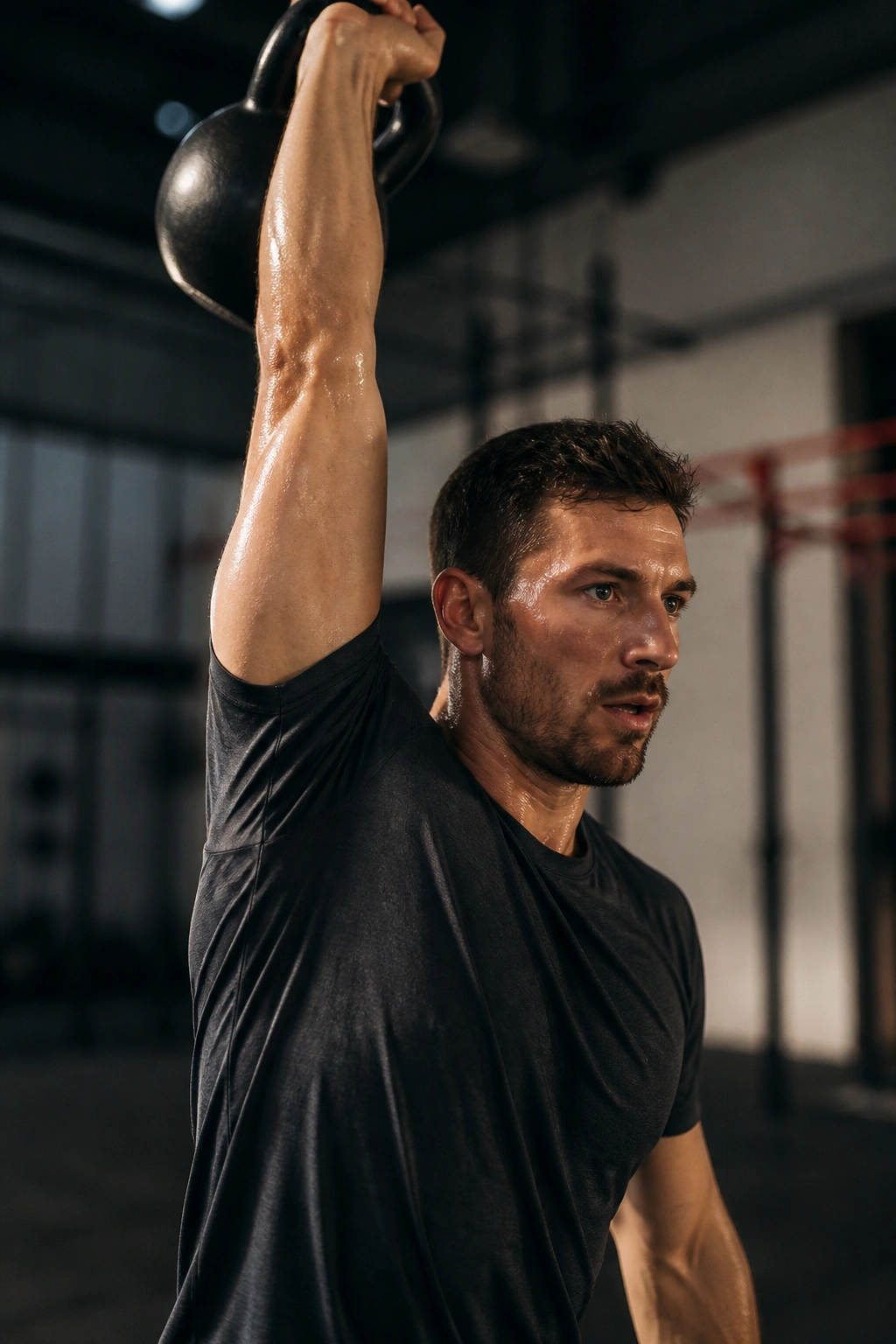
This workout combines a high-intensity ballistic movement with a full-body athletic movement. You will perform a descending ladder, starting at 10 reps of each move and working down to one. The intensity comes from the transition speed between the bell and the floor.
The Flow
Perform 10 kettlebell snatches per arm, then 10 burpees. Move immediately to 9 snatches per arm and 9 burpees. Continue this pattern all the way down to one rep per movement. There is zero designated rest time here. The only time you stop is the momentary pause between switching sides or hitting the floor for the burpee.
The snatch requires precision. You are accelerating the bell overhead in one fluid motion. Because you are working the overhead position, your heart has to pump blood against gravity, which spikes your heart rate significantly faster than ground-level movements. By the time you reach the round of five, your lungs will be gasping for air. Keep your core tight on the snatch to protect your lower back, especially as fatigue sets in during the lower rep rounds.
3. The Kettlebell Thruster Sprint

Thrusters are arguably the most taxing movement you can do with a kettlebell. They combine a front squat with an overhead press. This is full-body, high-power conditioning at its absolute peak. You are essentially taking a load from your knees and driving it all the way above your head.
How to Execute
Hold two kettlebells in the rack position—resting on your forearms, against your chest. Perform a deep front squat, and as you stand up, use the momentum of your hips to drive both bells overhead. That is one rep.
- Round Structure: Perform 5 sets of 45 seconds of work followed by 15 seconds of rest.
- The Pace: Do not go for maximum weight. Go for maximum speed.
- Safety Check: If the bells feel like they are crashing onto your forearms, your core is not engaged. Keep your belly button pulled toward your spine throughout the entire squat and press.
This movement will fry your quads and shoulders simultaneously. Your heart rate will climb into the anaerobic zone within the first 30 seconds. If you feel dizzy, drop the weight, but keep moving.
4. The Renegade Row and Clean Circuit
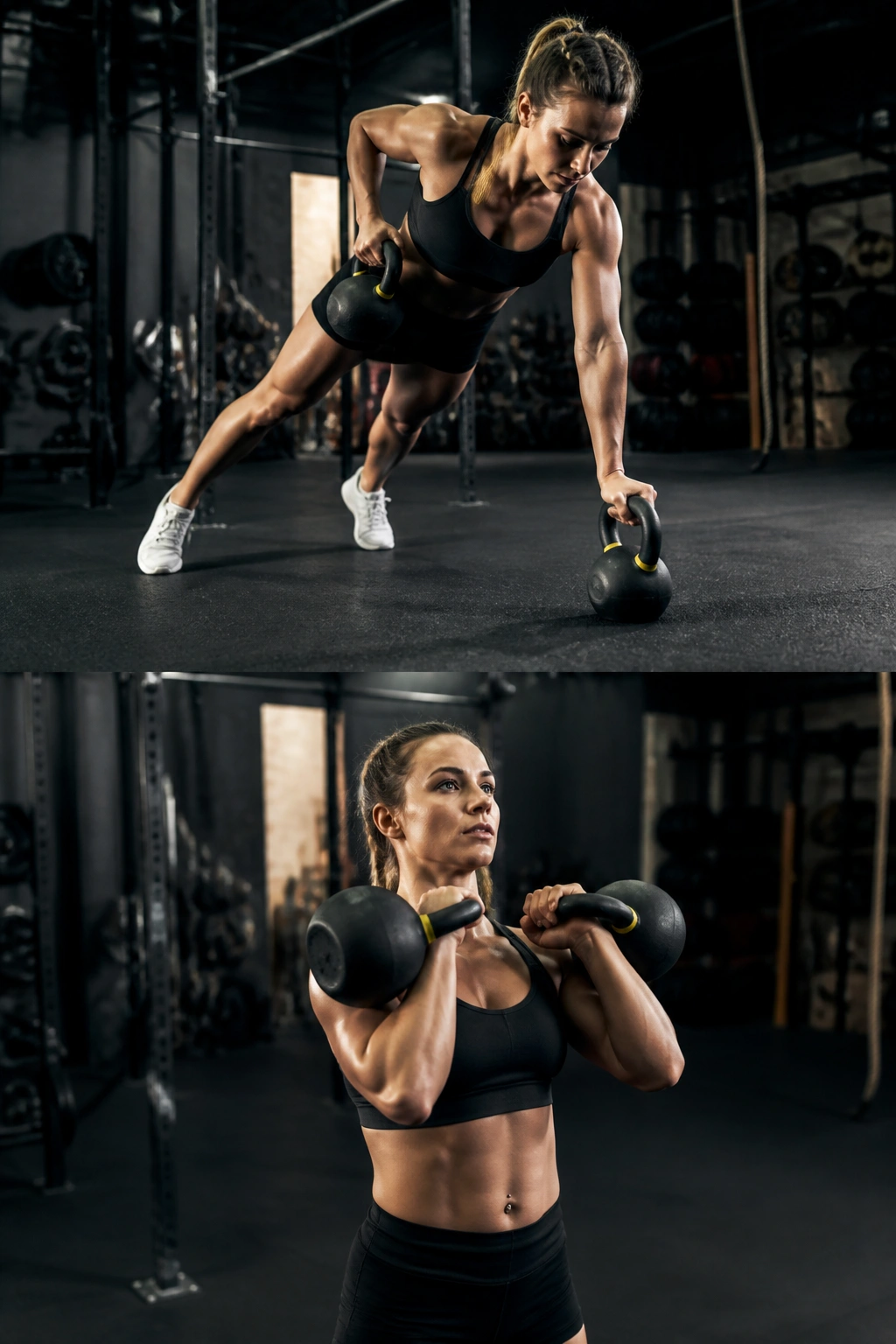
Most people think of cardio as running or jumping. They forget that upper-body density training, when performed at high volume, creates a massive cardiovascular response. The renegade row and clean circuit forces your heart to pump blood to your extremities constantly.
You need two bells of equal weight for this. Start in a high-plank position, hands on the handles of the bells. Perform a row with your right arm, then your left. Jump your feet in, clean the bells to your shoulders, and stand up. Drop back into the plank.
This combination of horizontal rowing, explosive cleaning, and plank stabilization hits every muscle group. Because you are constantly shifting from the floor to standing, your blood pressure has to rapidly adjust, which keeps the heart rate high. It is a grueling, 12-minute circuit. Perform as many rounds as possible, resting only when absolutely necessary to maintain form.
5. The Single-Arm Clean and Press AMRAP
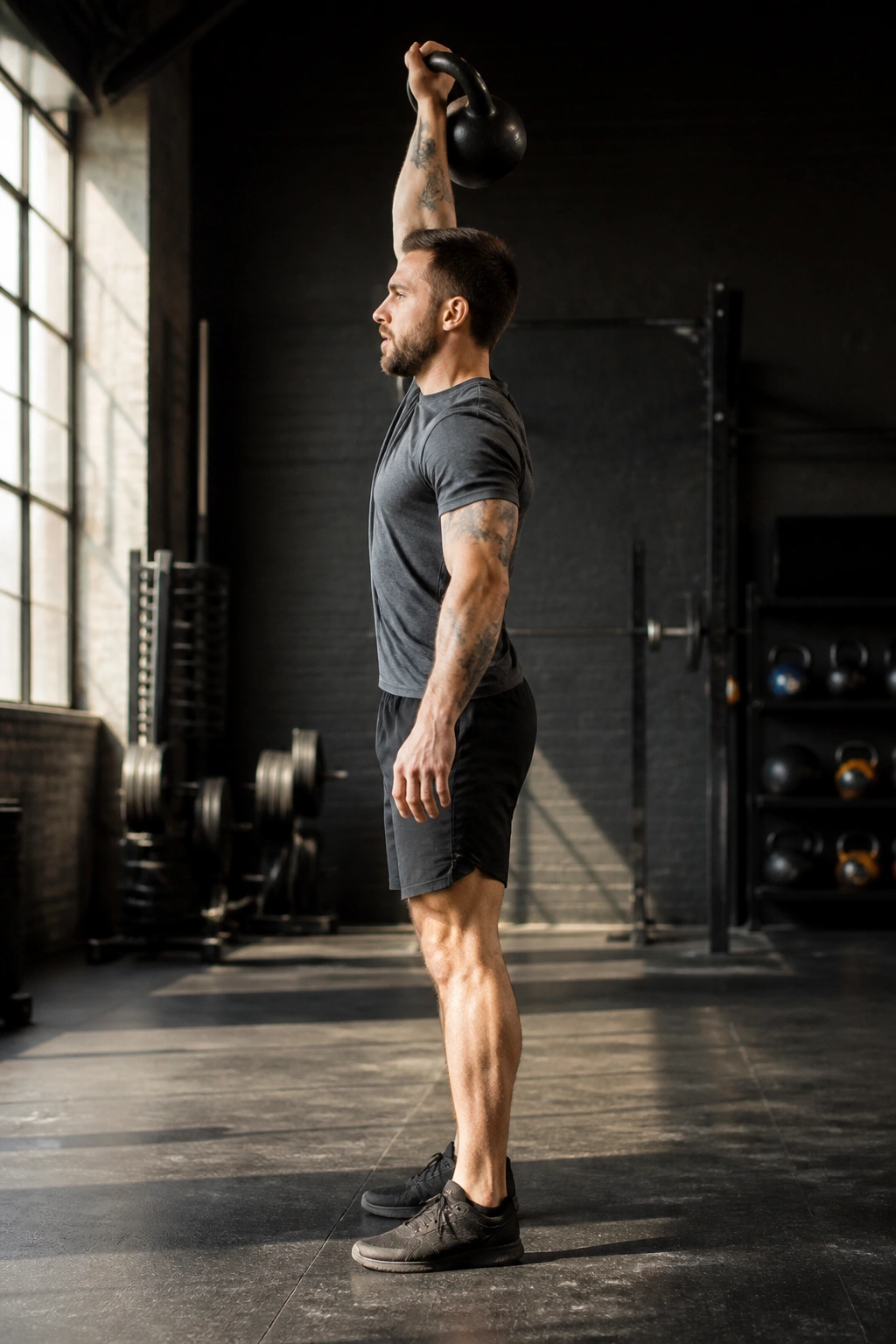
AMRAP stands for As Many Reps As Possible. In this 10-minute challenge, you will choose a single kettlebell and perform a clean-and-press complex. The key here is not to switch hands until you have completed a substantial block of reps.
The Sequence
Perform 10 cleans followed by 10 presses with your right arm. Immediately switch to the left arm and repeat. Keep this cycle going for the full 10 minutes.
The clean and press is a technical maneuver. The clean brings the heart rate up, and the overhead press keeps it there by involving the smaller muscles of the shoulder, which demand significant oxygen. If you drop the bell, take 5 seconds to shake it out, then get right back into it. This is about total volume. If you are a beginner, use a lighter bell. If you are experienced, use a weight that makes the 10th press feel like a struggle.
6. The Russian Twist and Sit-Up Finisher
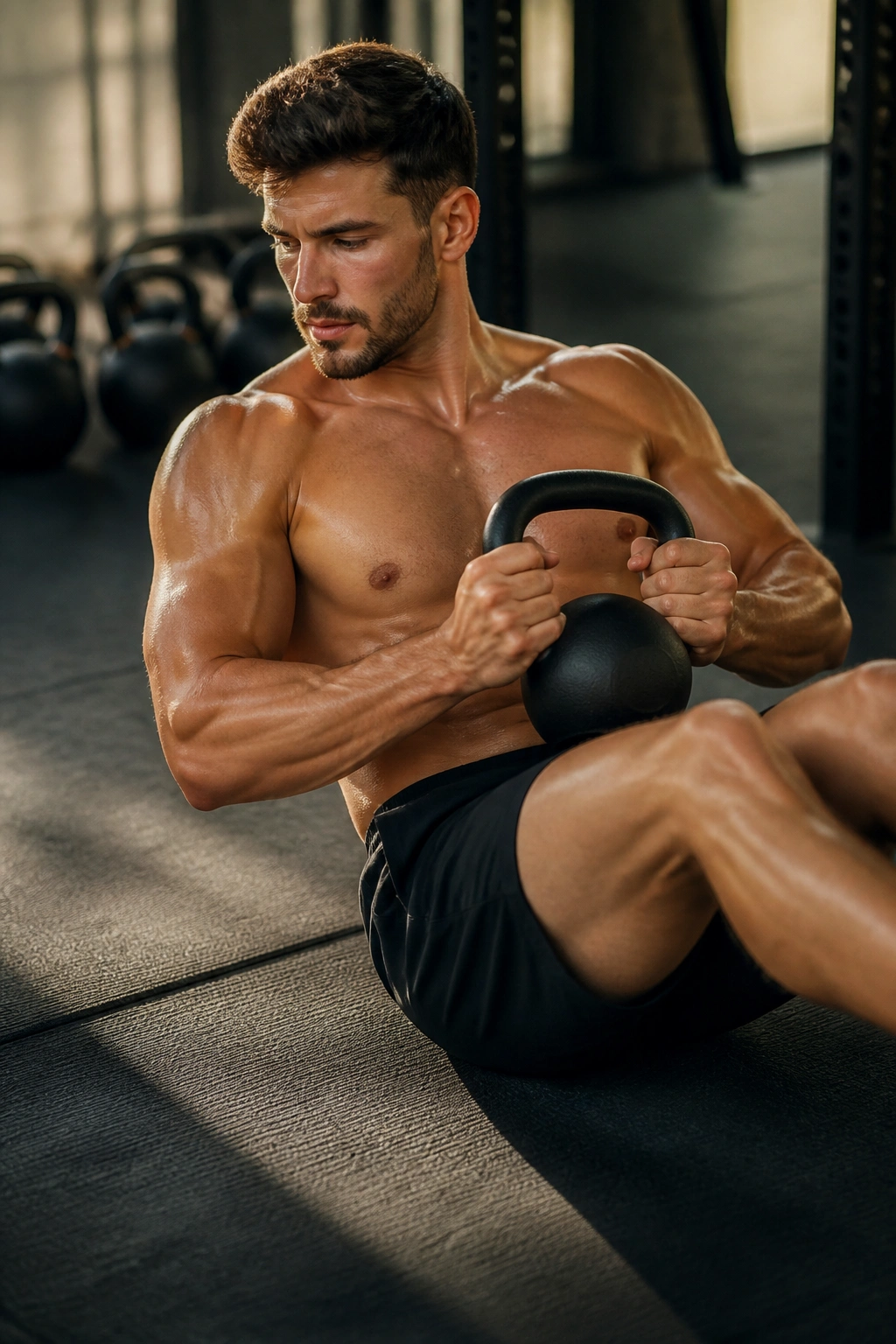
Core-focused cardio sounds counterintuitive, but if you do it with enough intensity, it will absolutely wreck you. This is an excellent finisher to append to the end of a longer workout. It forces the diaphragm to work under load, which is a unique challenge for your lungs.
Lie on your back, holding one kettlebell against your chest. Perform a sit-up. At the top of the sit-up, perform a Russian twist—touching the bell to the ground on the right, then the left. Lower back down. That is one rep. Do 20 reps.
The secret to keeping your heart rate up during this is the speed of the sit-up. Use your abs to explode up, don’t just roll. The rotational movement of the twist adds a layer of coordination that prevents you from going into autopilot. You have to focus, which keeps your mind engaged and your intensity sharp.
7. The Kettlebell Clean and Lunge Pyramid
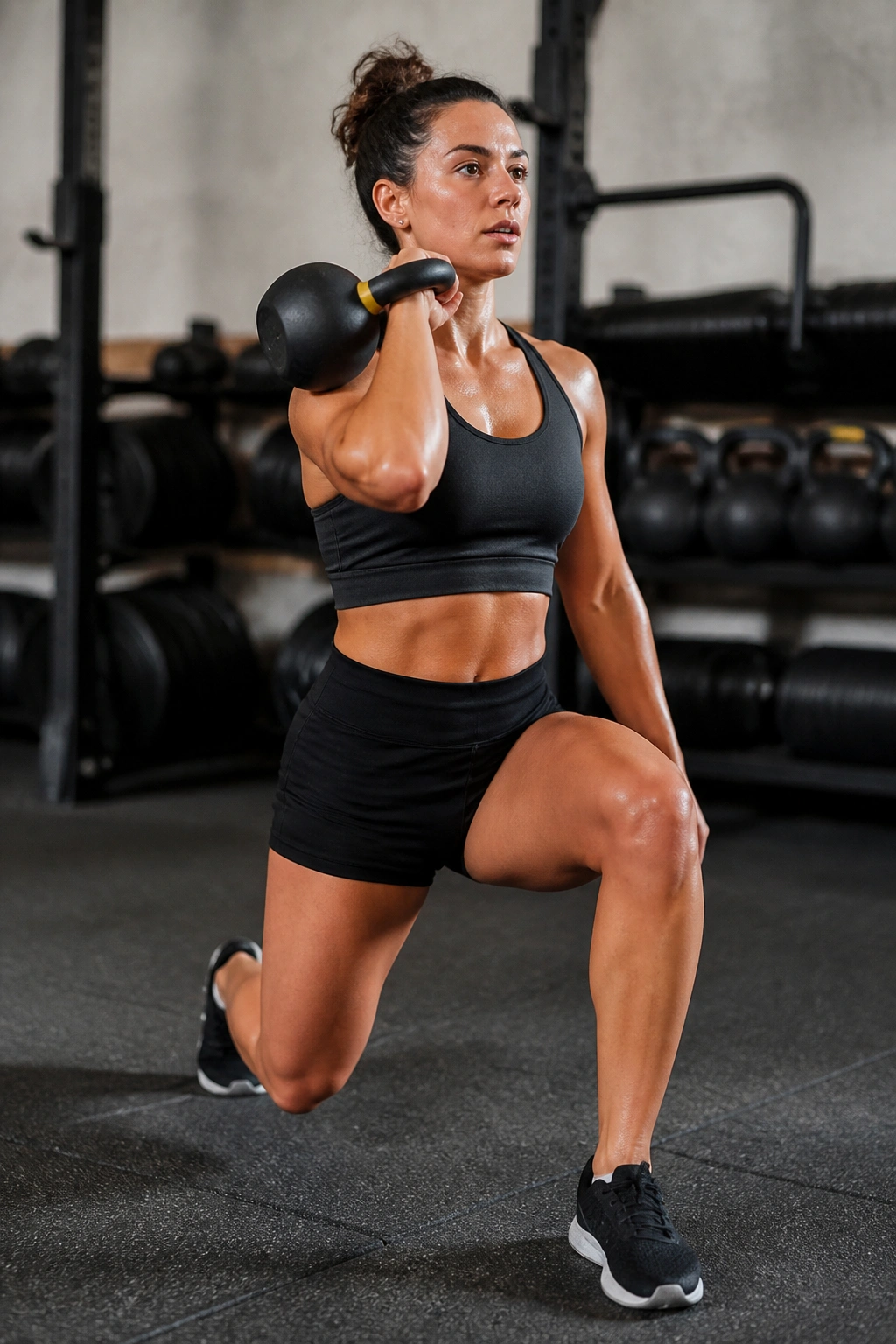
Lunge patterns are inherently metabolic because they require a large amount of energy to stabilize the body on one leg. When you add a kettlebell clean to the mix, you turn a leg workout into a full-body respiratory nightmare.
Build a pyramid of 2, 4, 6, 8, 10 reps and then back down to 2. You will perform a clean, then a forward lunge, then another clean, then a forward lunge on the other leg. This continuous movement—never putting the bell down between reps—is what keeps the heart rate spiked.
- The Lunge: Keep your chest upright. Do not lean forward.
- The Clean: Explode with the hips. The bell should not bang against your wrist.
- The Flow: Link the reps smoothly. One clean into one lunge, immediately into the next clean.
By the time you hit the round of 10, your legs will feel like lead. The key is to keep moving, even if your pace slows down. The aerobic demand of holding the weight while moving through a lunge pattern is higher than almost any other standard bodyweight lunge.
8. The Heavy Kettlebell Farmer’s Carry Intervals

Farmer’s carries are often seen as a grip exercise, but they are actually an incredible tool for sustained heart rate elevation. When you carry a heavy load, your body has to work overtime to stabilize your spine and keep you upright.
Take two heavy kettlebells. Walk for 60 seconds. Set them down, rest for 30 seconds. Repeat for 15 minutes. It sounds easy, but it is deceptive. Because you are using heavy weight, your grip will start to fail. When your grip fails, your heart rate actually climbs because your central nervous system has to work harder to maintain tension.
If you don’t have enough space to walk, perform a “marching in place” variation. Lift your knees high with every step. This engages the hip flexors and adds a dynamic element that keeps the intensity high. If you drop the weights before the 60 seconds are up, count the seconds you missed and make them up at the end of the 15-minute block.
9. The Kettlebell Swing and Push-Up Superset

Supersets are a classic bodybuilding technique, but when performed for time, they become a metabolic conditioning powerhouse. We are pairing a posterior chain movement (the swing) with an anterior chain movement (the push-up).
Perform 20 swings, then immediately drop for 10 push-ups. Do not rest. Go straight back into 20 swings. Do this for 5 rounds. This creates an “up-and-down” effect on your heart rate, as you move from standing to floor and back again.
- Why It Works: You are constantly moving blood from the legs to the chest and back. This forces the heart to adapt to rapid changes in blood flow distribution.
- Push-up Form: Keep your elbows tucked near your sides. Do not let your hips sag.
If 20 swings and 10 push-ups feel too easy, increase the reps to 30 and 15. The goal is to reach a state of breathless fatigue by the end of the third round.
10. The Bottoms-Up Clean and Press
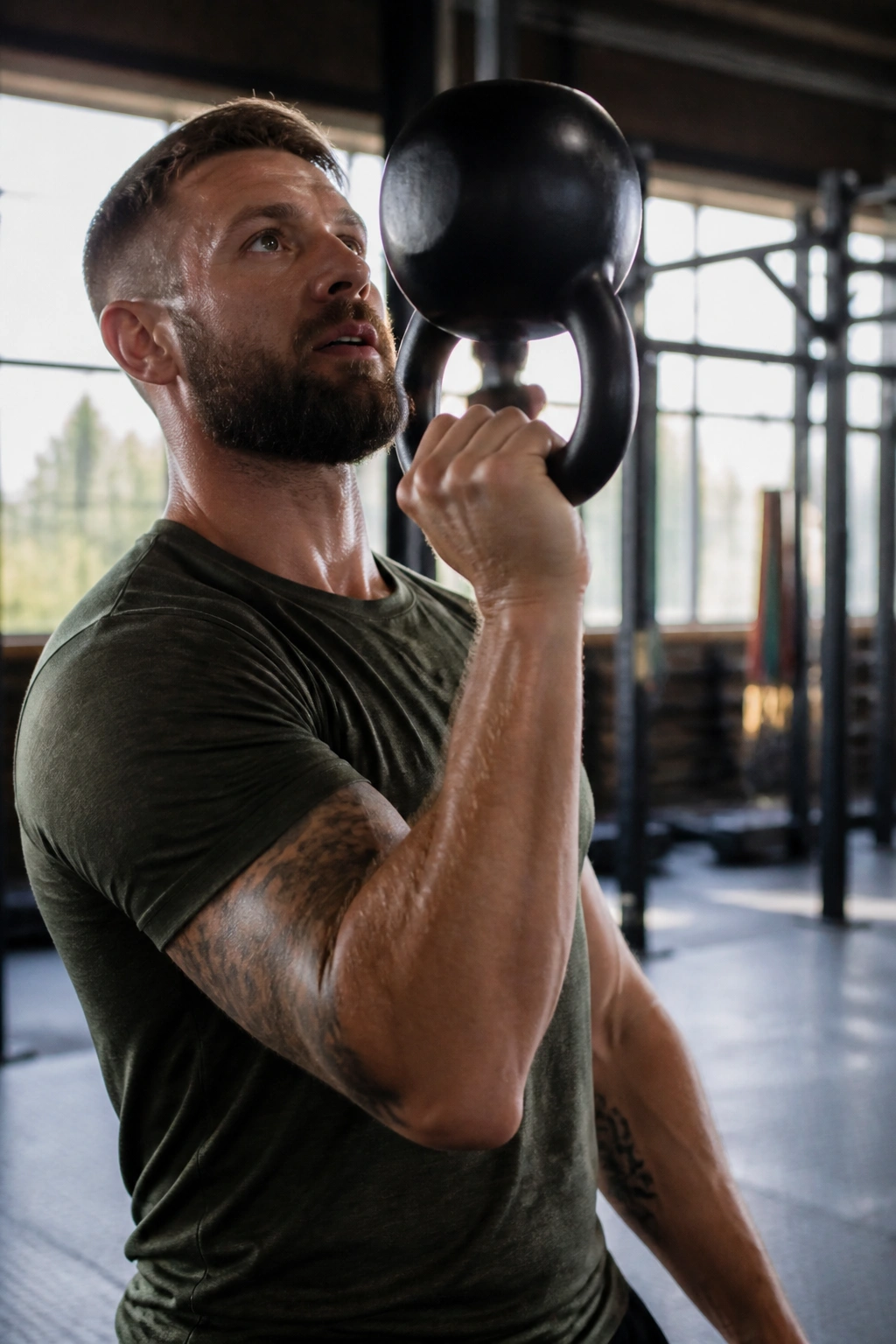
This is a stability-focused cardio workout. Holding a kettlebell “bottoms-up”—handle down, weight in the air—requires extreme focus and grip strength. It makes every single rep difficult, which means you cannot move fast, but the intensity remains high because of the neural demand.
Perform 5 bottoms-up cleans followed by 5 presses on each arm. Switch sides and repeat for 10 minutes straight. Because the bell is unstable, you have to slow down your breathing and focus on every movement.
Even though you are moving slowly, the stabilizing muscles in your shoulders, core, and forearms are firing at 100%. This is an “active recovery” style of cardio—it feels like a workout, but the intensity is centered on stability rather than explosive speed. It is a fantastic way to build heart endurance without the pounding impact of jumping movements.
11. The Kettlebell Figure-Eight and Lunge Flow
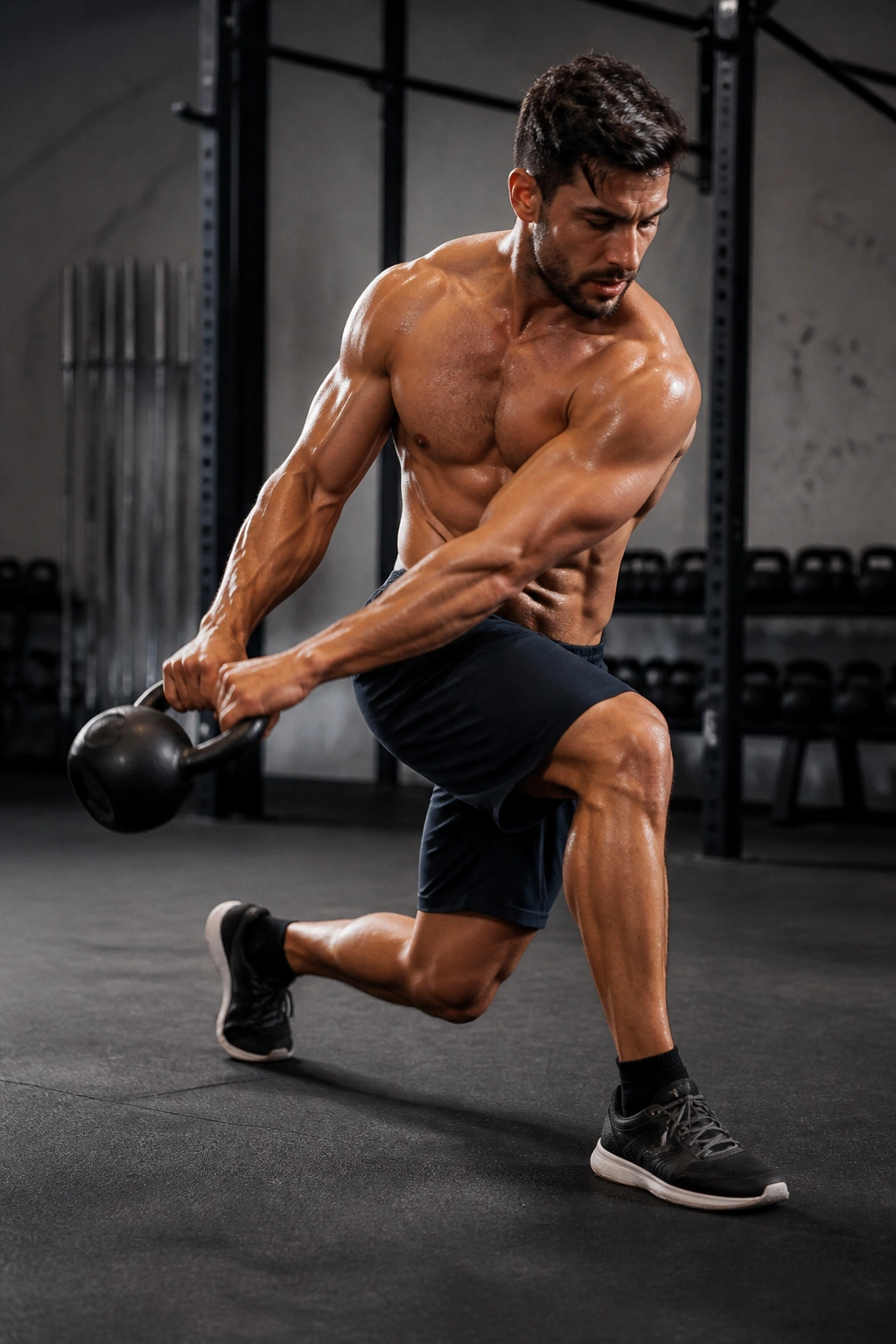
This is a coordination-heavy workout that will force you to think. Hold a kettlebell in one hand. Swing it between your legs, pass it to your other hand behind your legs, and bring it up to the front. That is a figure-eight. After every pass, perform a reverse lunge.
The Pattern
Pass (Figure-8), Lunge, Pass, Lunge. Keep the bell moving in a constant, fluid circle. The rhythm of the figure-eight is naturally fast, and adding the lunge keeps your heart rate pegged in the high zone.
This movement is great for developing “athletic cardio.” It teaches you to control an object while moving your body in space. It is much more demanding than standing still and swinging. Focus on the hip hinge during the pass; do not round your back to reach the bell. If you lose your balance, take a split second to reset, but keep the bell moving.
12. The Double Kettlebell Clean and Squat

This is the “heavy hitter” of the list. Using two kettlebells simultaneously doubles the load and doubles the demand on your heart. It is not something you do every day, but when you want to spike your heart rate in a short period, this is the go-to.
Perform 5 cleans, then 5 front squats. Repeat this sequence without putting the bells down for 5 minutes. If you have to put them down, rest for 30 seconds, then pick them back up and finish the 5 minutes.
This volume of work requires an immense amount of oxygen. Your quads, glutes, back, and shoulders are all under tension at the same time. The metabolic cost of this workout is massive. You will feel a significant “afterburn” effect for hours after you finish. This is not for the faint of heart; it is for when you really need to push your limits.
13. The Kettlebell High Pull and Jump Squat
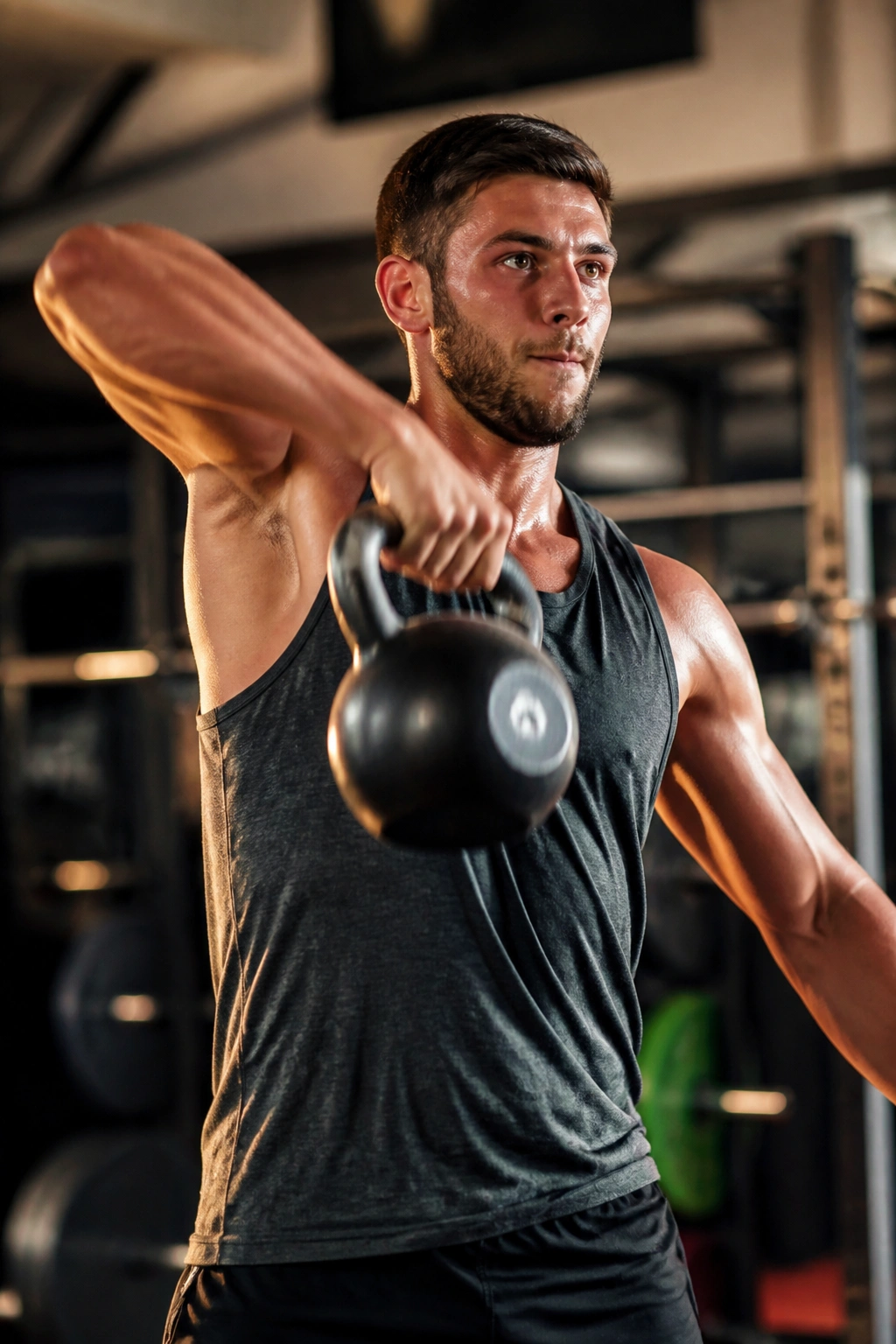
If you want to train for explosiveness, this is your circuit. The kettlebell high pull is a vertical pulling movement that engages the traps and deltoids, while the jump squat is the ultimate plyometric leg movement.
The Combo
Do 10 high pulls, then 10 jump squats. Rest for 30 seconds. Do 8 of each. Rest. 6 of each. Rest. 4 of each. Rest. 2 of each.
The high pull teaches you to generate power from the hips and “guide” the bell with your elbows high. The jump squat puts an immediate strain on your lungs. Jumping while your heart is already elevated from the pulls will force you to breathe deeply and efficiently. This is excellent for anyone who wants to improve their vertical power and cardiovascular threshold.
14. The 10-Minute Heavy Swing Tabata
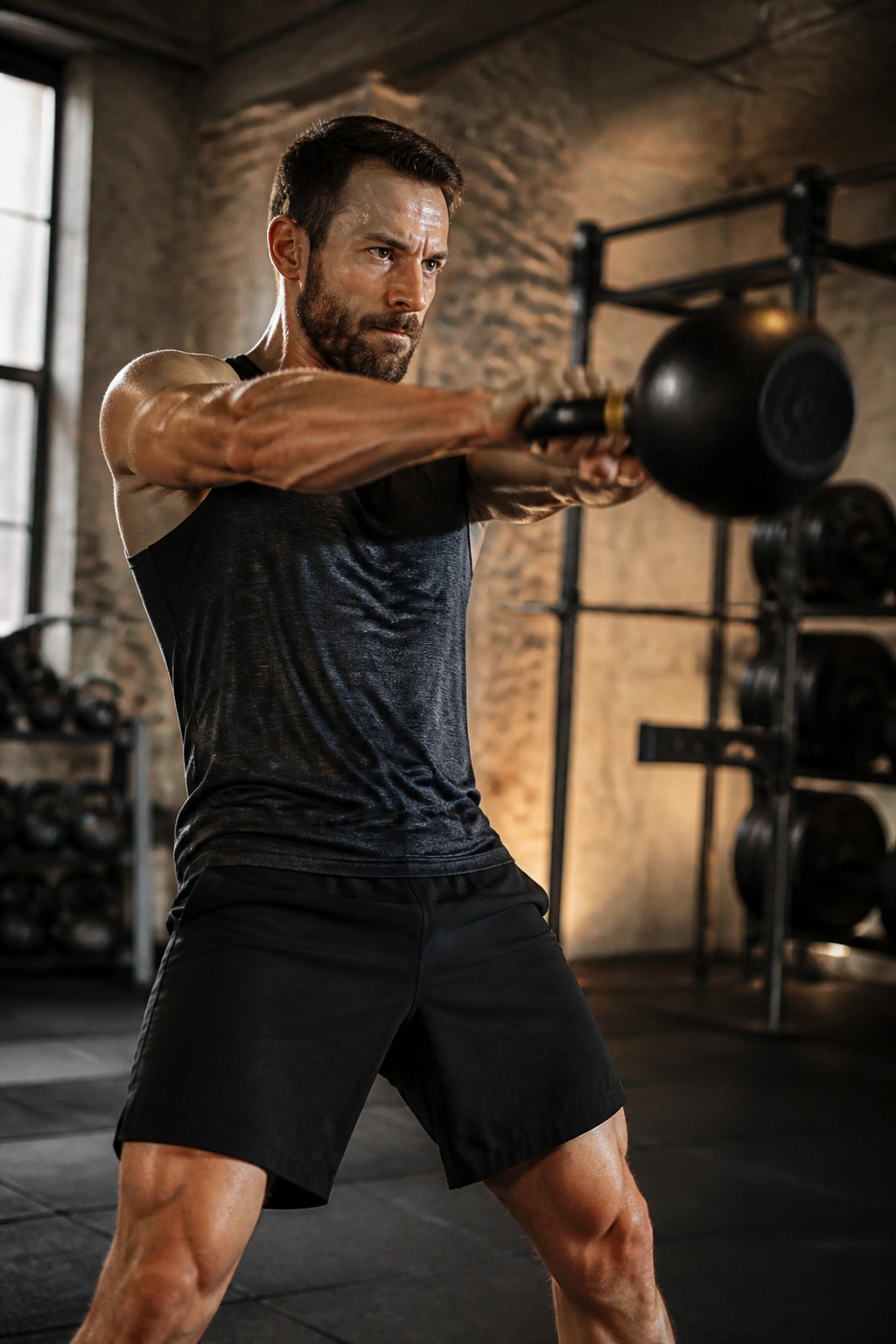
Tabata is a specific protocol: 20 seconds of maximum effort, followed by 10 seconds of rest. We are going to do this with heavy kettlebell swings for 10 minutes. This is a brutal 20-round protocol.
During the 20 seconds of work, you must swing as hard and as fast as possible. Do not pace yourself. 20 seconds is not long enough to pace. It is long enough to go all-out. During the 10 seconds of rest, stand tall, shake out your arms, and prepare for the next round.
- Warning: The cumulative fatigue is what makes this hard. By round 12, your grip will be screaming.
- Safety: The moment your form looks sloppy, switch to a lighter bell. Never sacrifice technique for the sake of the timer.
This is arguably the most efficient way to spike your heart rate in a short timeframe. It leaves nothing in the tank.
15. The Kettlebell Goblet Squat and Mountain Climber Mix
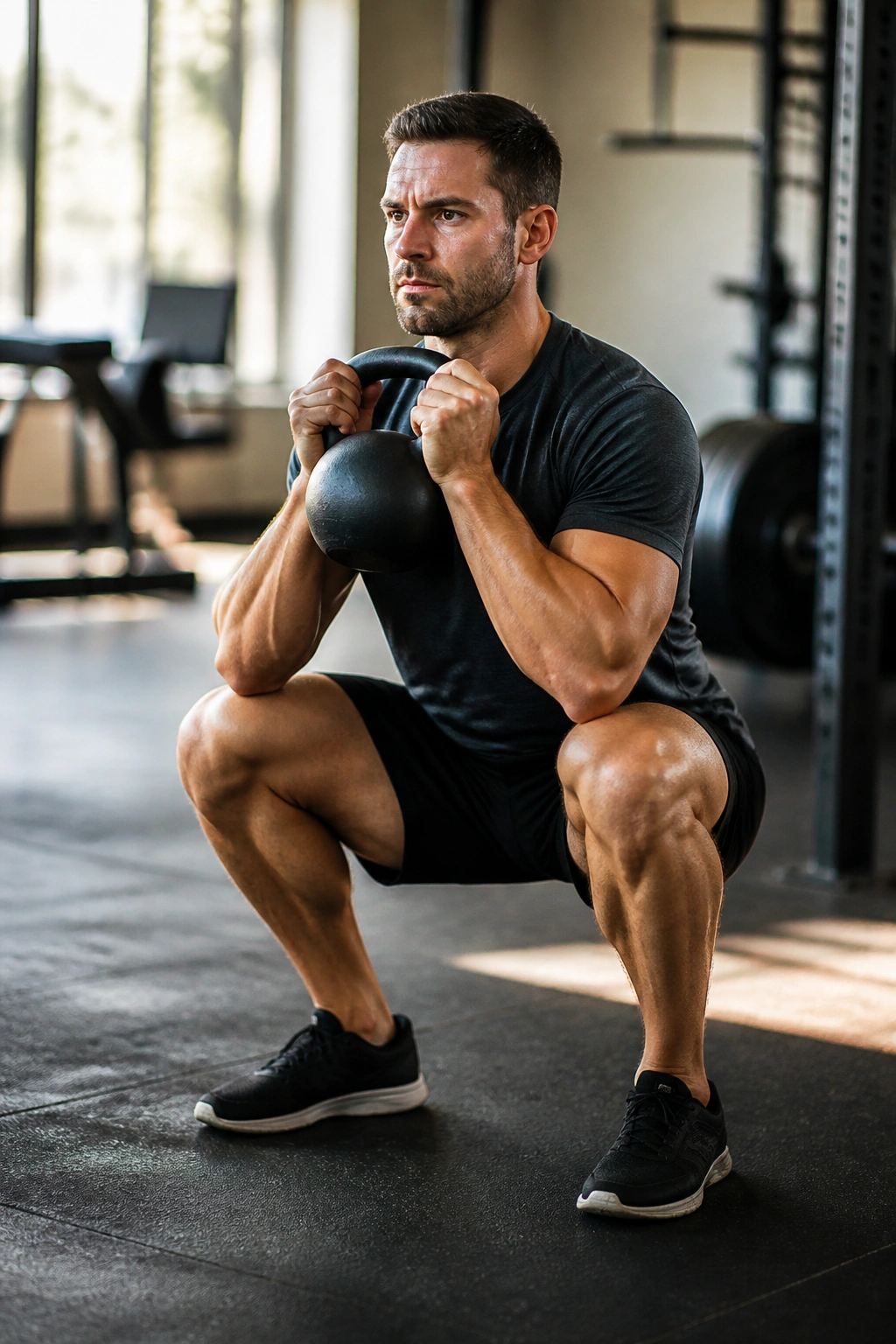
This is a hybrid between strength and bodyweight cardio. Hold the kettlebell at your chest in a goblet position. Perform 15 squats. Immediately set the bell down, drop into a push-up position, and perform 30 mountain climbers. Repeat for 5 rounds.
The goblet squat keeps your heart rate elevated, and the mountain climbers act as a high-speed flush for your legs. Because you are switching between a weighted, upright position and a bodyweight, horizontal position, your blood pressure will be fluctuating rapidly. This keeps your cardiovascular system highly active.
Make sure you get deep in the squat—hips below the knees. In the mountain climbers, drive your knees hard toward your elbows. Do not just move your legs; run in place while in the plank.
16. The Kettlebell Around-the-World and Halo Flow
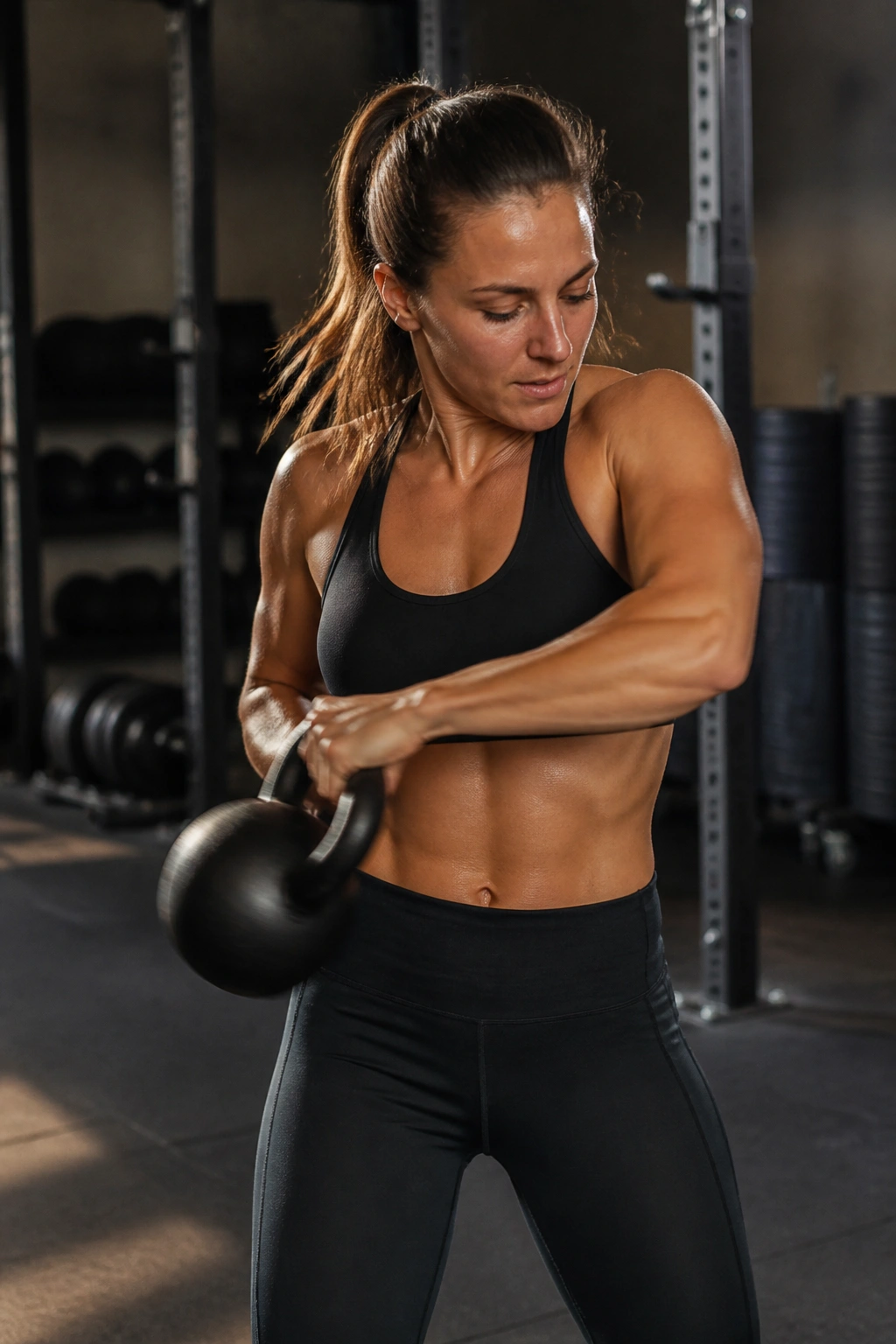
This is a dynamic warm-up that, when pushed for speed, turns into a solid cardio session. The “around-the-world” movement passes the bell around your waist. The “halo” passes it around your head.
Combine them: 10 around-the-worlds, then 10 halos. Keep the bell moving in one continuous, orbiting motion around your body. Do this for 10 minutes.
This works the core, shoulders, and obliques, while the constant circular motion requires you to stay engaged and moving. It is lower impact than swings or jumps, making it a great option if your joints are feeling beat up but you still want to get your heart rate up. The key is speed. Rotate the bell as fast as you can safely manage.
17. The Kettlebell Seesaw Press and Walk

Hold two kettlebells at your shoulders. Perform a press with the right, then as it comes down, press the left. While you are doing this, walk forward.
This is a “movement-based” cardio drill. By adding the walk to the overhead press, you are forcing your body to stabilize a moving load while in motion. It is incredibly challenging for the core and the heart. The rhythmic nature of the press—alternating left and right—keeps your breathing pattern consistent and sharp.
Try to cover as much ground as possible. If you are in a small room, march in place with high knees. The synchronization of the breath with the press is key. Inhale as you lower the bell, exhale as you drive it up.
18. The Kettlebell Windmill and Plank Circuit
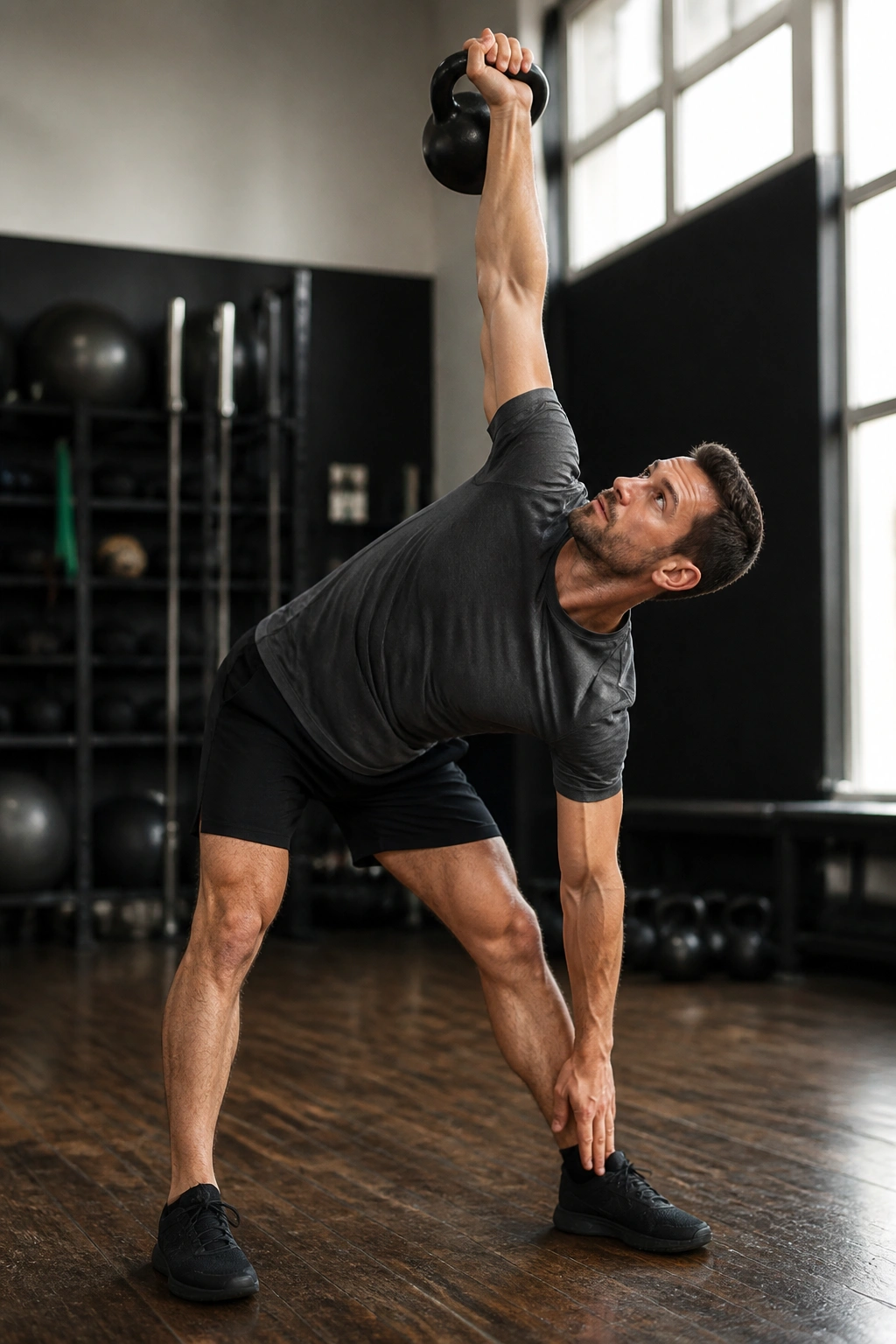
The windmill is a complex movement that targets the obliques, hamstrings, and shoulders. It is rarely thought of as a cardio move, but when you keep a consistent pace, it burns energy rapidly.
Perform 5 windmills on each side, then hold a 30-second plank. Do this for 10 rounds. The windmill forces your heart to work to stabilize your body in a complex, angular position. The plank serves as a “cardio-active” rest.
It teaches you to stay calm under tension. Because you have to move slowly to execute a safe windmill, your heart rate will be high from the physical demand of the pose rather than the speed of movement. It is a different type of cardio spike—a slow burn that leaves you drenched in sweat by the end.
Final Thoughts

You now have 18 distinct ways to turn a piece of iron into a cardiovascular machine. The common thread across every single one of these workouts is movement quality. You are not just trying to sweat; you are trying to move heavy weight with precision while your body screams for oxygen.
Do not feel like you have to master all of these at once. Pick two or three that appeal to you and rotate them into your weekly routine. Watch how your endurance shifts over time. When the kettlebell starts to feel like an extension of your own body rather than a foreign weight you are struggling to control, you will know you have reached a new level of conditioning. Remember, the heart is a muscle—treat it with the same respect and intensity you treat your legs or your chest. Keep the bell moving, keep your form clean, and the results will follow.
