



Your living room can be a rude little gym.
That’s the charm of it. No commute, no waiting for a machine, no music loud enough to annoy the neighbors if you keep your feet light. A stack of books, a hallway, a chair, a towel, a backpack stuffed with laundry — that’s enough to build a challenge that leaves your lungs burning and your legs a little wobbly.
The best fitness challenges worth trying at home do two things at once. They make exercise feel structured, and they expose the weak spots you usually hide from: shaky core control, tired grip, poor pacing, sloppy push-up form, the whole lot. That is useful. Boring workouts are easy to skip. A challenge has a score, a finish line, and a tiny bit of pride attached to it.
You do not need a full garage gym to train hard. You need a plan that fits the space you actually have, some honest effort, and a way to scale the work so you can repeat it without turning the floor into a drama scene. Some of these are sweaty. Some are sneaky. A few are low-impact and still sting.
1. The 20-Minute Bodyweight Circuit Challenge
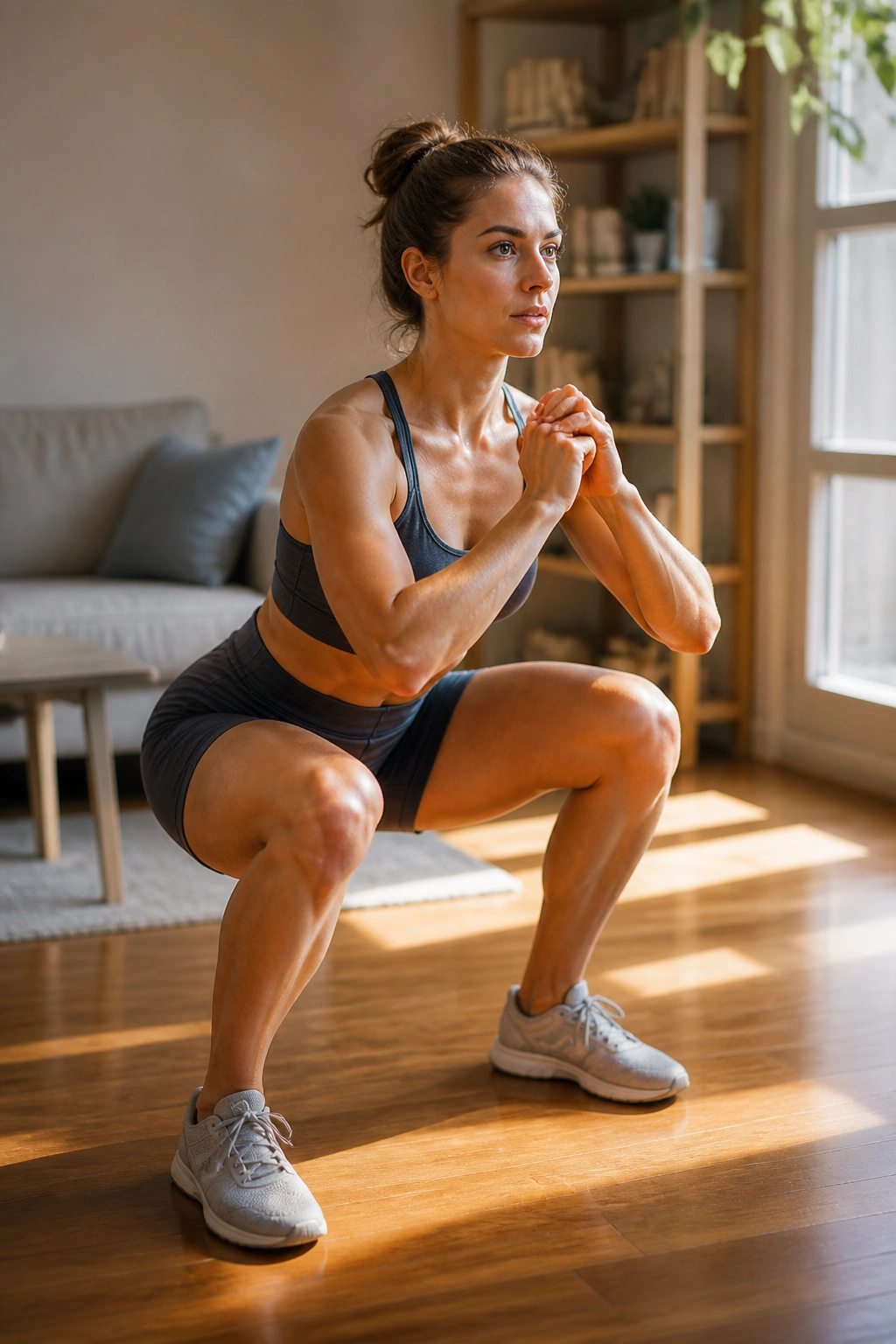
This is the cleanest place to start if you want a home workout that feels serious without getting fussy. Pick five moves, set a timer for 20 minutes, and work through rounds with short rests. Simple on paper. Nasty in practice.
How to Set It Up
A version I like uses 40 seconds of work and 20 seconds of rest. Choose squats, push-ups, reverse lunges, mountain climbers, and a plank hold. That gives you lower body, upper body, cardio, and core in one small package.
- Squats for steady leg work
- Push-ups for chest, shoulders, and triceps
- Reverse lunges to wake up balance
- Mountain climbers for heart rate
- Plank hold to finish with a stiff trunk
Keep your pace honest. If your reps turn into flailing by round two, slow down and clean up the form. Quality beats a frantic count every single time.
What I like about this challenge is that it tells the truth fast. If your push-ups collapse, you’ll know. If your lunges are wobbly, you’ll know. And if you can keep the same pace for four rounds, that’s useful too — not glamorous, but useful.
2. The 100 Push-Up Density Challenge
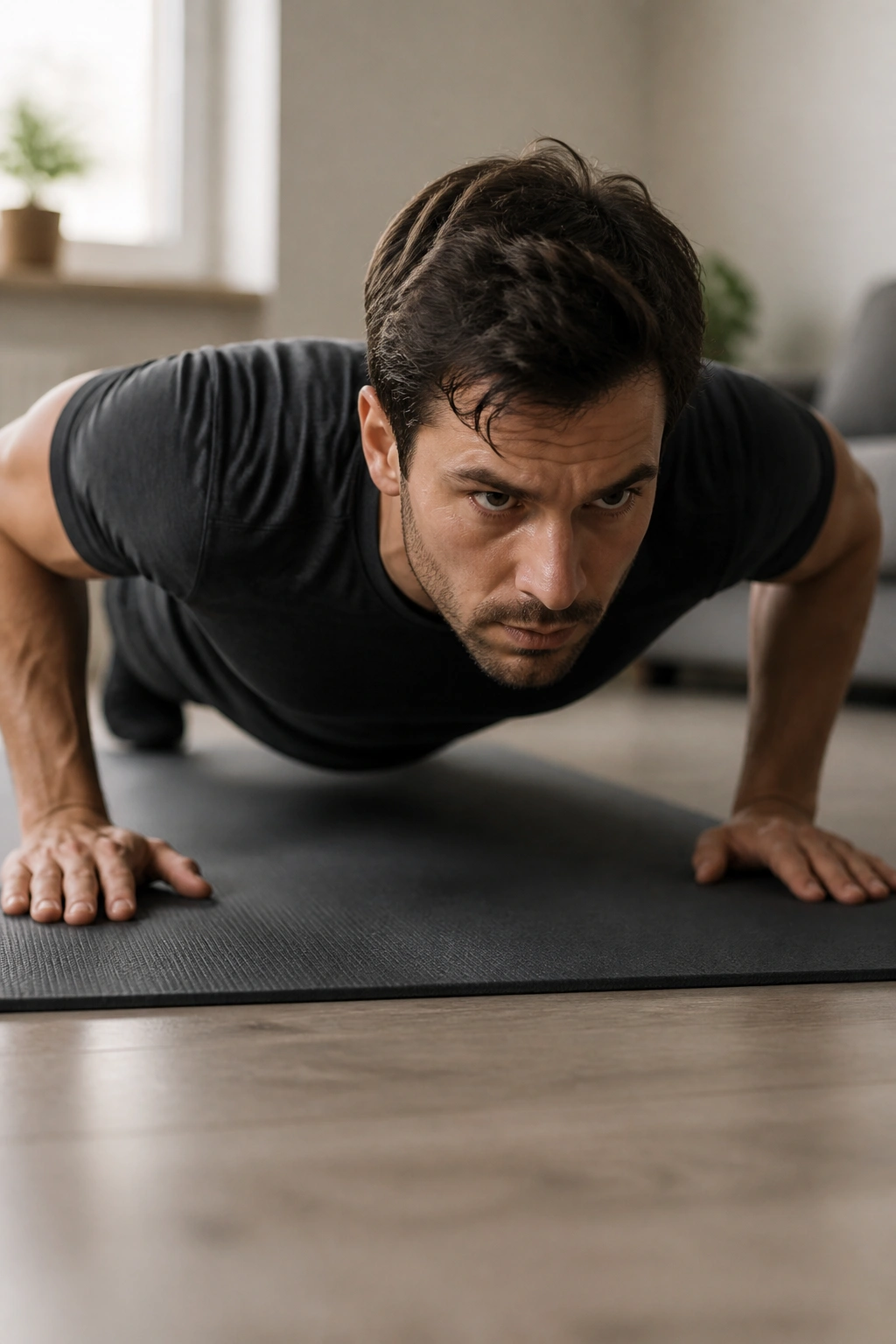
Push-ups look modest until you try to collect 100 of them without turning into a half-collapsed folding chair. That is where density comes in: get the work done in as few sets and as little time as possible.
Start with a cap. Ten minutes is fair. Some people finish 100 in five or six sets. Others need smaller clusters, and that’s fine. The challenge is not to sprint the first 30 reps and die on the floor with your face in a yoga mat. It is to keep your torso solid, your ribs down, and your elbows tracking at a sensible angle.
If regular push-ups are too much, raise your hands on a couch, a sturdy chair, or a countertop. Knee push-ups work too, though I prefer incline push-ups because they keep the pattern closer to the full version.
A good rule: stop each set one or two reps before your form breaks. That little bit of restraint makes the whole challenge more useful. And yes, it still burns.
3. The Plank Ladder Challenge
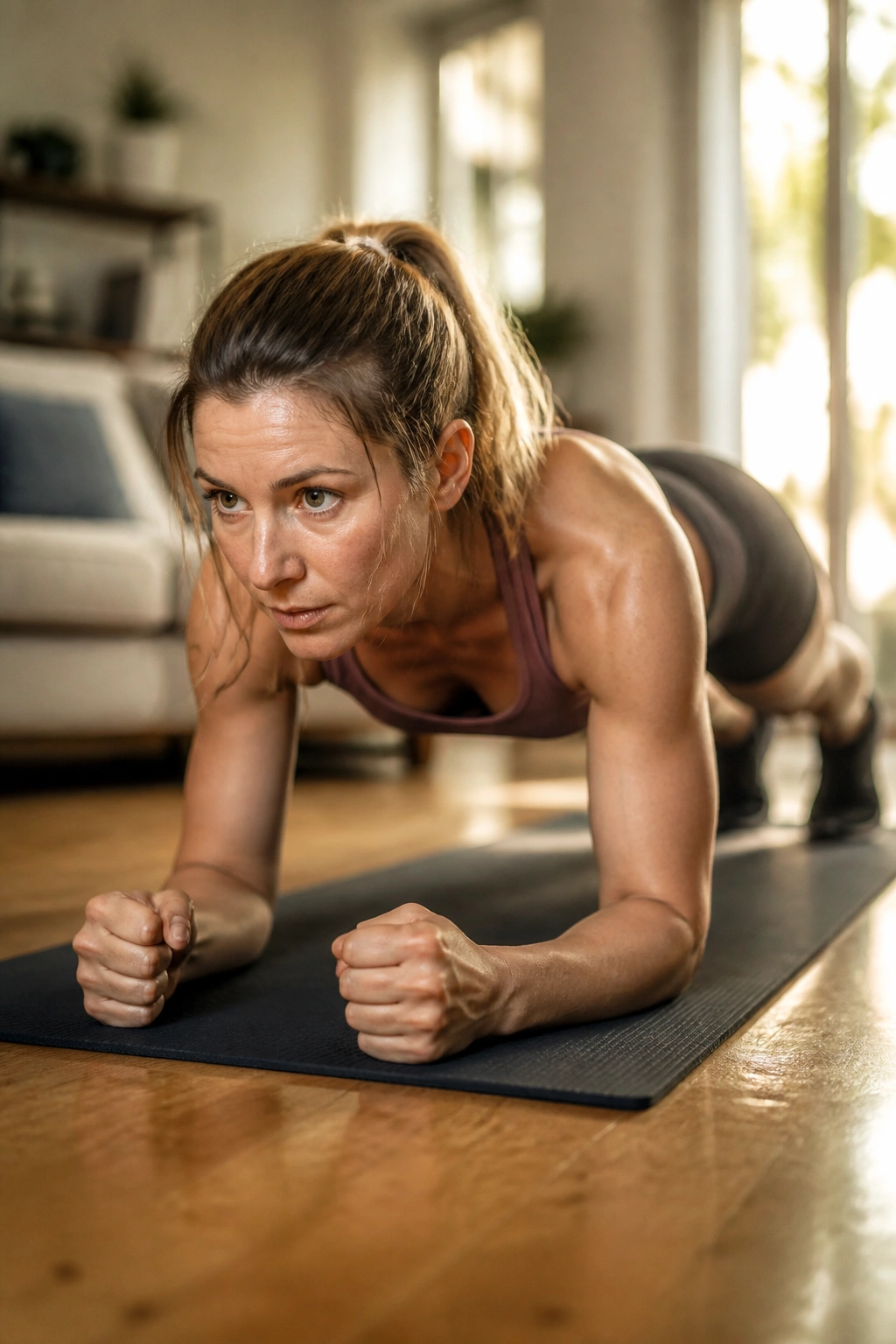
How long can your midsection stay honest? That’s the whole game here.
A plank ladder starts easy and gets mean in small steps: 20 seconds, then 30, then 40, then 50, then 60. Rest for 20 to 30 seconds between holds. By the time you reach the top rung, your shoulders will notice, your abs will notice, and your lower back should not be complaining if your position is solid.
How to Get More From It
The trick is not hanging on with a sagging spine. Think “long body,” not “survive at any cost.” Squeeze your glutes, press the floor away, and keep your neck in line with your back.
If that feels too easy, add shoulder taps during the shorter holds or switch to a forearm plank on the later rounds. If it feels too hard, cut the ladder to 15, 20, 25, 30, and 35 seconds. That still counts.
I like this challenge because it rewards control, not speed. And control tends to carry over into everything else — squats, presses, running form, even the way you stand around while waiting for water to boil.
4. The Stair Sprint Interval Challenge
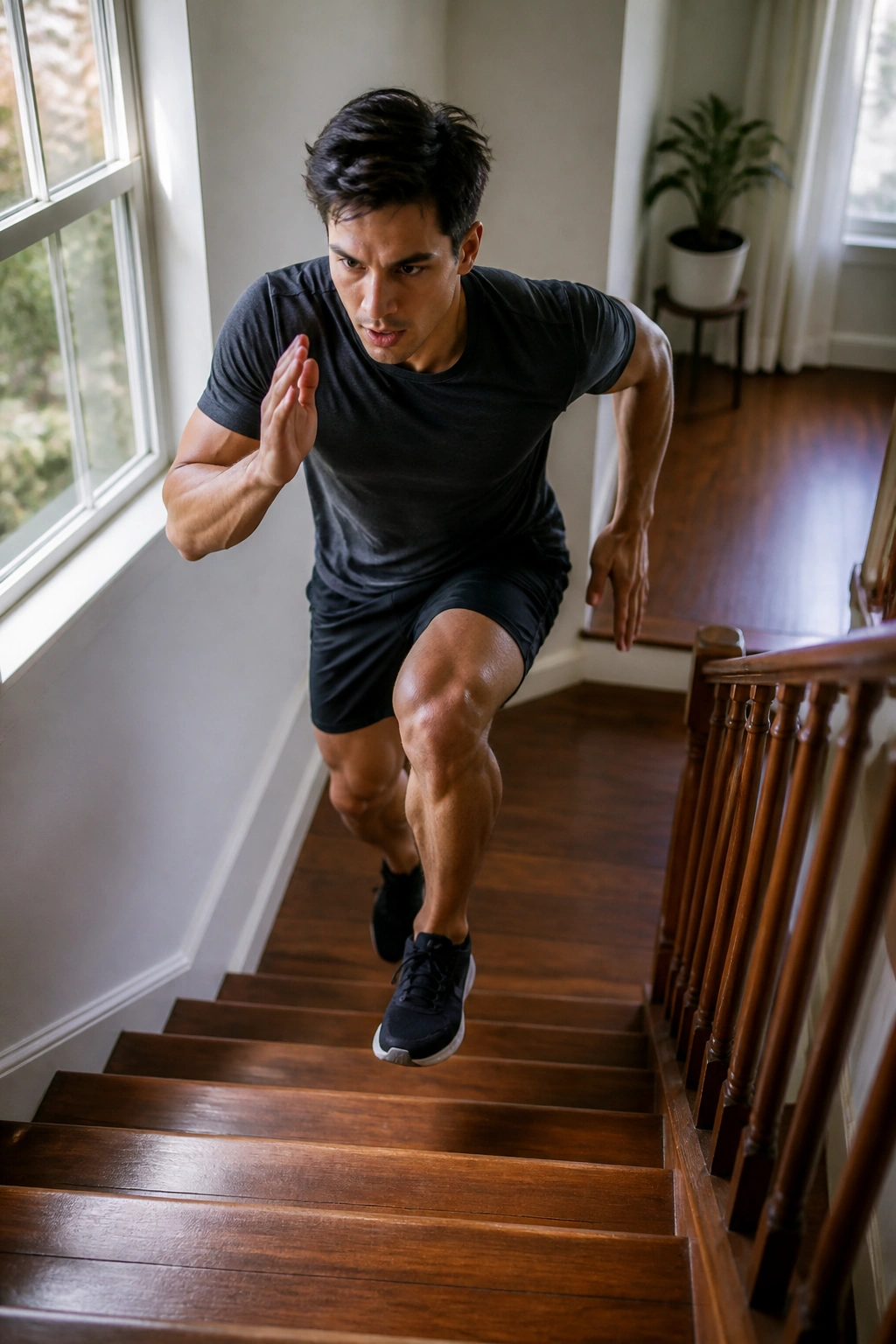
A staircase has a way of sounding innocent right up until the third round.
Use one flight or a safe set of stairs inside or just outside your home. Sprint up for 15 to 30 seconds, walk down slowly, and repeat for 8 to 12 rounds. That’s enough to make your calves wake up and your heart rate jump without needing a treadmill or a lot of space.
Safety on Stairs
- Wear shoes with grip.
- Keep one hand near the rail.
- Don’t rush the descent.
- Skip this one if the stairs are slick or cramped.
Your stride should stay short and quick. If you take huge leaps, your footing gets sloppy fast. Fast feet beat long steps. That’s the whole trick.
This challenge works because stairs force power and breathing at the same time. You can feel the effort in your thighs almost immediately, which is rude, but also efficient. Ten minutes later, you’ve done more cardio than a lot of people manage in a half-hearted hour.
5. The EMOM Bodyweight Challenge
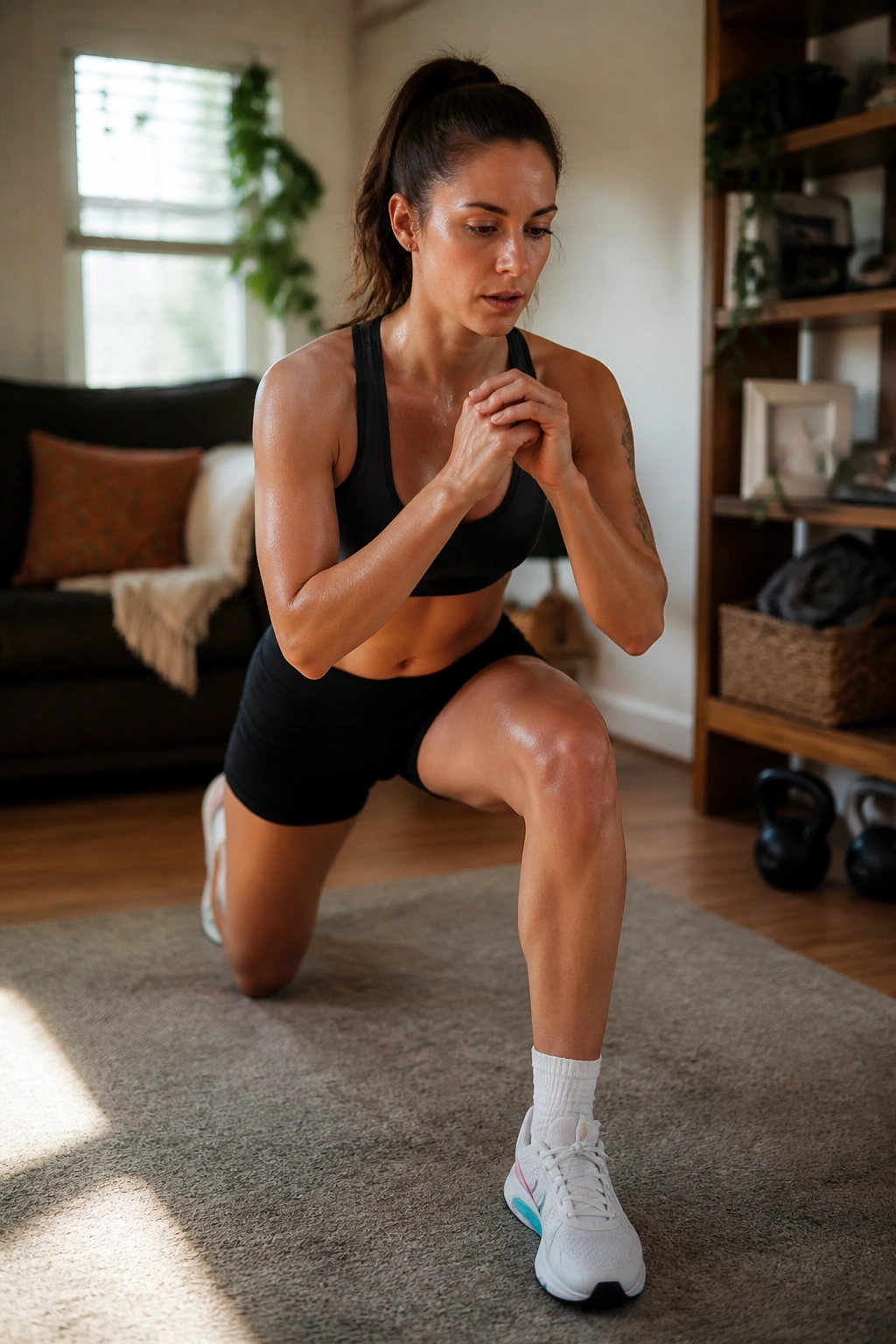
EMOM means “every minute on the minute,” and it’s one of the best ways to make a home workout feel organized. At the top of each minute, you complete a small block of work, then rest for whatever time is left.
Try 16 minutes total. Minute one: 12 squats. Minute two: 8 push-ups. Minute three: 16 alternating lunges. Minute four: 20 mountain climbers. Repeat that four times.
The beauty of EMOM is pacing. You cannot hide in it. If your set takes 55 seconds, the minute disappears and so does your recovery. If you finish in 20 seconds, you get a proper rest and can attack the next round cleanly.
I like this format more than random circuits because it gives you a score without turning into chaos. You know exactly what happened. That kind of clarity is useful when you’re trying to get stronger at home.
6. The Wall Sit and Squat Ladder Challenge
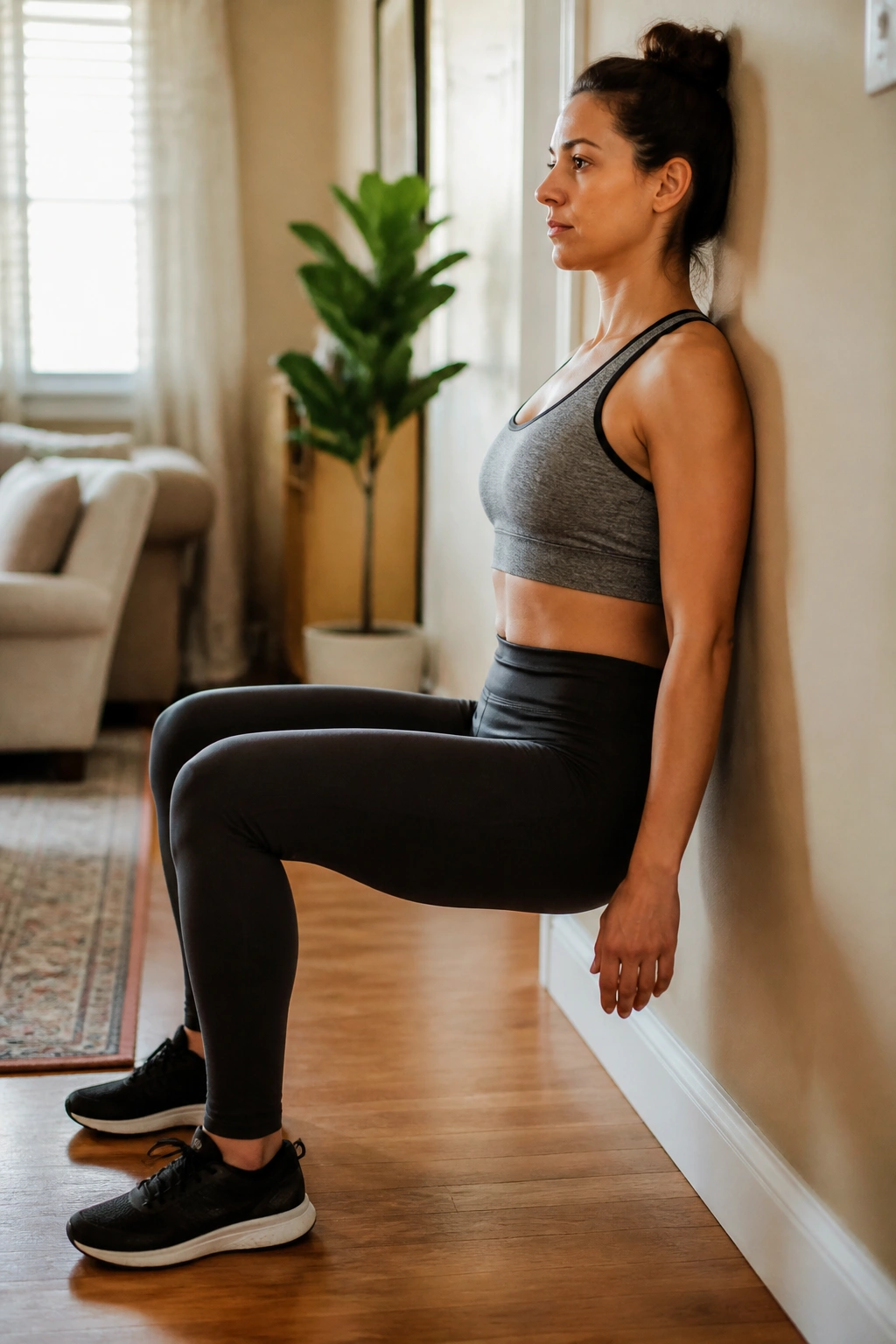
This one is for people who enjoy the kind of discomfort that builds out of nowhere.
Start with a 30-second wall sit, then do 10 air squats. Rest briefly. Next round: 40 seconds on the wall, then 15 squats. Keep climbing by 10 seconds on the wall and 5 squats each round until your legs start sending complaints up the chain.
Unlike a pure cardio challenge, this one hammers your quads and glutes while still making you breathe hard. The wall sit locks your legs in place. The squat ladder then asks you to move them like everything is fine. It isn’t fine. That’s why it works.
Don’t bounce in the wall sit. Keep your back flat, knees roughly over your ankles, and weight spread through your feet. If your knees hate deep angles, slide a little higher on the wall and shorten the hold.
This is a good one for people who want a leg day without equipment. It’s also brutally honest about endurance. Weak? The wall will tell you.
7. The Shadow Boxing Round Challenge

The room goes quiet, your shoulders loosen a touch, and then the first jab snaps out.
Shadow boxing is one of the most underrated home fitness challenges because it feels lighter than it is. Set a timer for 6 rounds of 3 minutes, with 1 minute of rest between rounds. Move around the room, throw jabs and crosses, add hooks, slip left, slip right, and keep your feet alive.
What to Focus On
- Keep your hands high.
- Turn the hips on punches.
- Stay on the balls of your feet.
- Breathe out on each strike.
- Don’t lean so far forward that your back tightens up.
You do not need to know boxing to make this useful. You just need rhythm. After a couple rounds, your shoulders warm up, your calves start working, and your breathing gets louder in a way that feels earned.
I love this challenge for days when jumping feels like too much. It gives you cardio, coordination, and a little aggression in the cleanest possible way. No heavy bag required.
8. The Dumbbell Complex Challenge
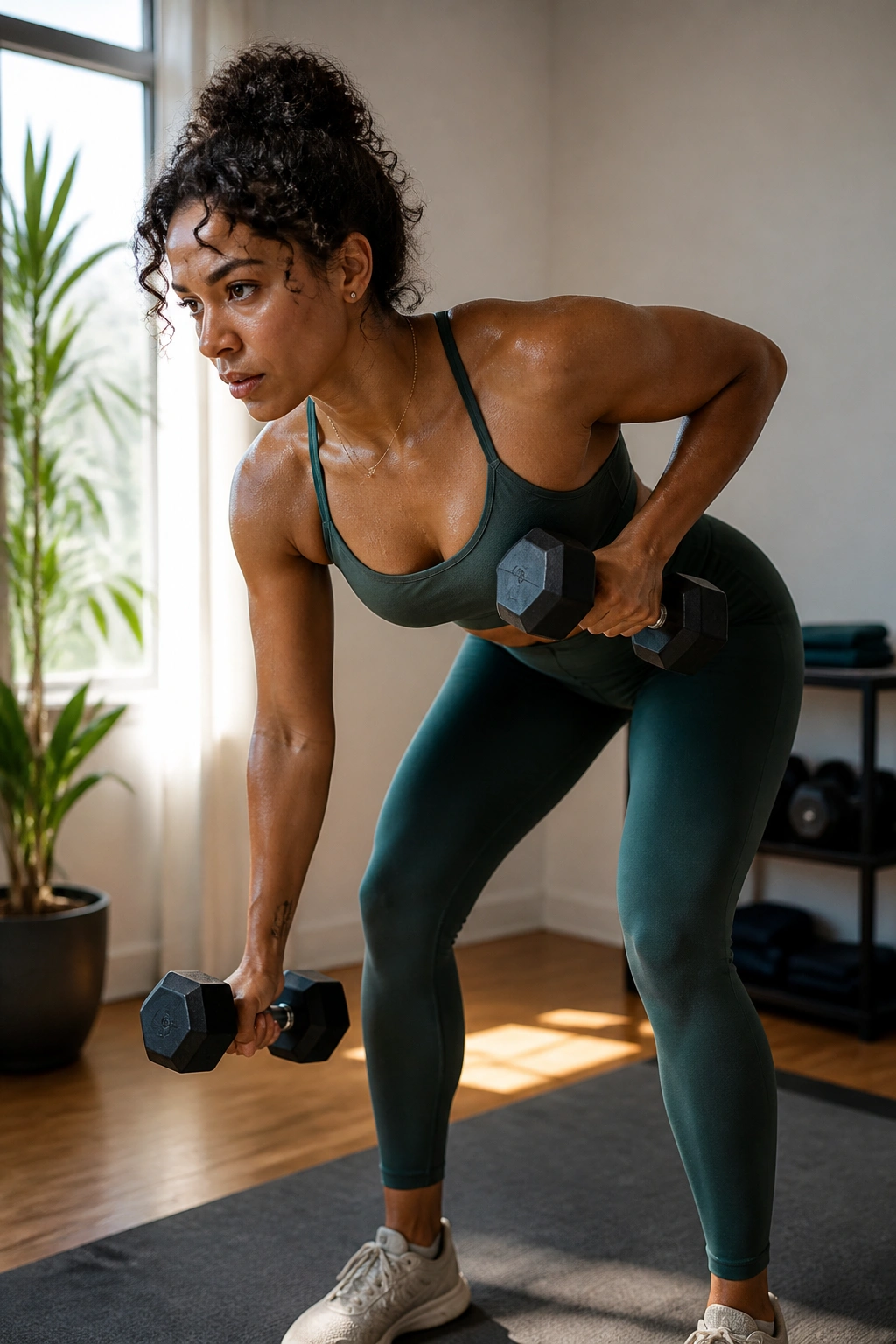
If you own one pair of dumbbells, you can create a very solid strength challenge without changing the weight. That’s the whole point of a complex: move from one exercise to the next without setting the bells down.
Pick the Weight First
Choose a load you can curl, press, and row with decent form for 6 to 8 reps. If that sounds too easy, you picked the wrong weight. A backpack loaded with books can work too, though dumbbells feel smoother in the hand.
Try this sequence:
- 6 Romanian deadlifts
- 6 bent-over rows
- 6 front squats
- 6 push presses
- 6 reverse lunges per leg
Rest 90 seconds and repeat for 4 rounds.
What gets people is the grip and the breathing. The load is not huge, but the continuous motion makes it feel bigger than it looks. Do not rush the transitions. That’s where form breaks and the shoulders start shrugging up toward your ears.
A complex is one of my favorite home challenges because it doesn’t waste time. It punishes sloppy technique and rewards calm, controlled work. Nice trade.
9. The Resistance Band Burnout Challenge
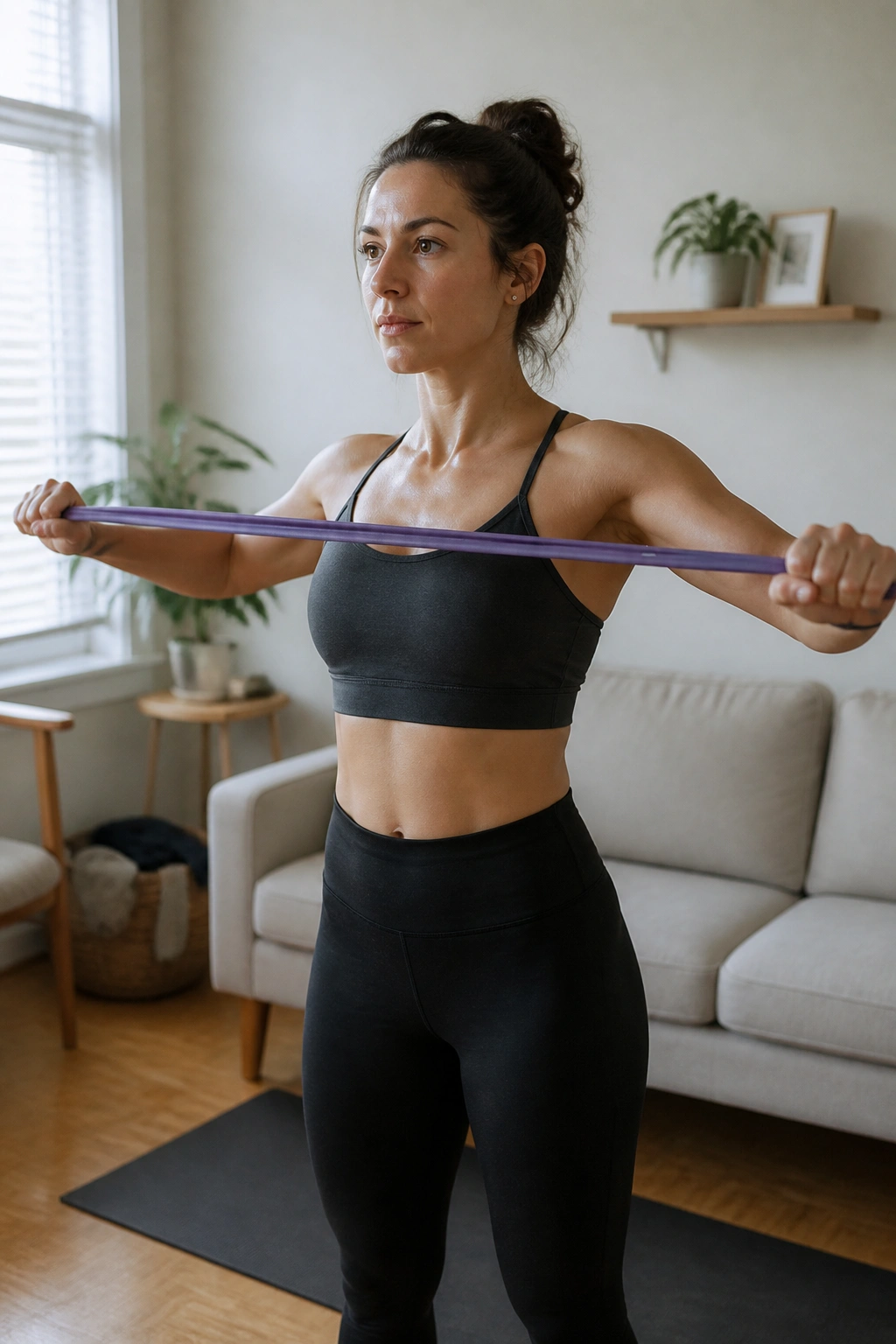
A resistance band can make a small room feel smaller, in the best way.
If you’ve got a loop band or a long tube band, build a 12- to 15-minute burnout with rows, pull-aparts, presses, monster walks, and glute bridges. The band gives you tension where dumbbells don’t, especially at the end of the movement when muscles usually get lazy.
Where the Band Goes
- Around the knees for glute bridges
- Across the back for presses
- Anchored in a door for rows
- Around the wrists for pull-aparts
- Around the ankles for monster walks
Keep the band tight enough to challenge you, not so tight that your joints take over. And check the anchor point. Seriously. A bad door setup is a silly way to end up annoyed.
This challenge is excellent for upper back work, glute activation, and shoulder control. It also pairs well with a bodyweight day because the resistance feels different. Not harder in every way. Just different enough to keep the work from going stale.
10. The Indoor Walking Step Goal Challenge
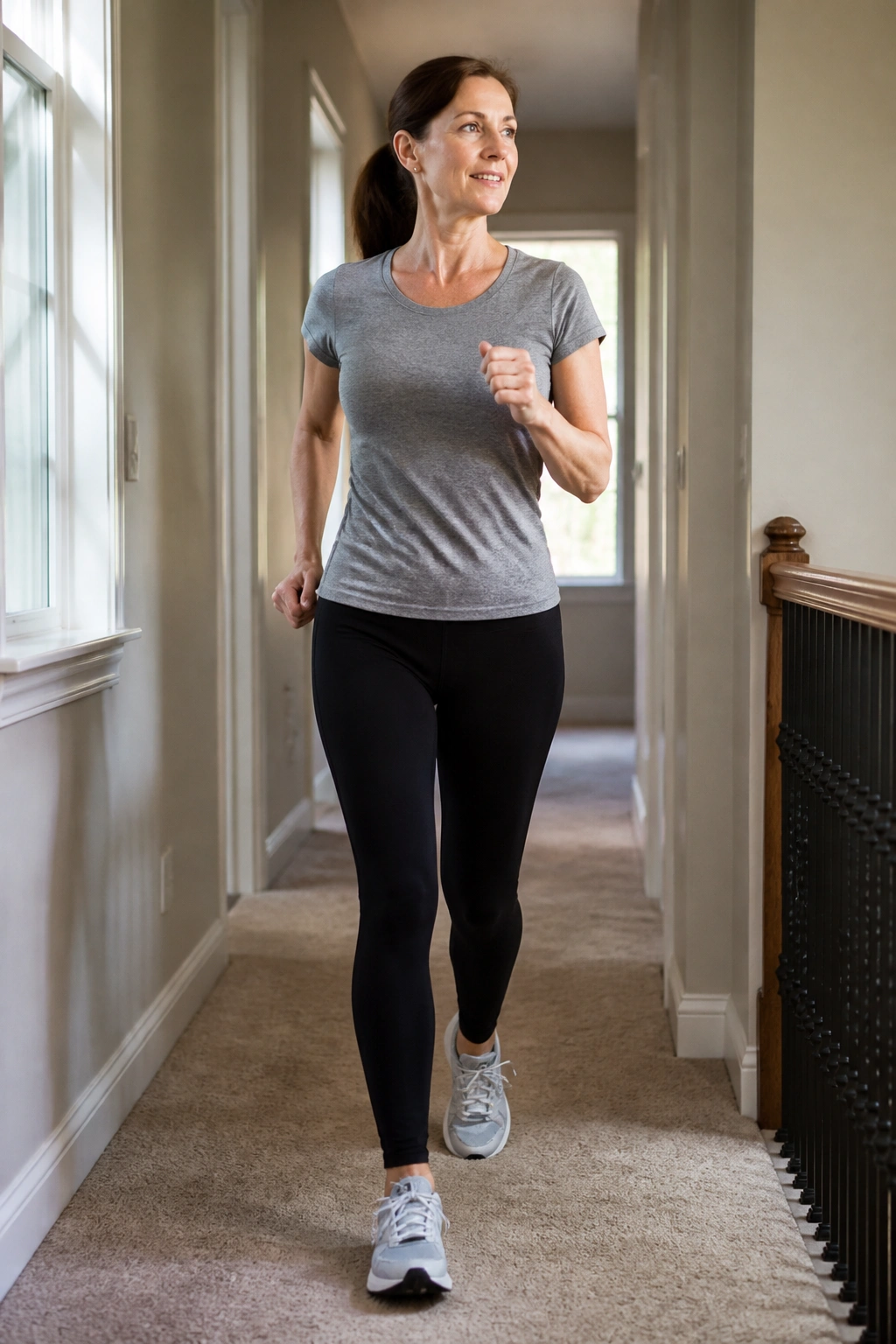
Not every challenge needs to look dramatic.
Sometimes the smartest home fitness move is to pick a step goal and hit it indoors, even if that means looping the hallway, pacing during calls, marching in place, or walking from one end of the kitchen to the other like you’re negotiating with yourself. A common target is 3,000 to 5,000 steps inside the house on a busy day, and that adds up faster than people expect.
Use a pedometer, watch, or phone if you want a number. If not, set a 20- or 30-minute timer and keep moving the whole time. The effort is gentle, but the consistency matters.
I like this challenge because it’s the one most people dismiss too quickly. Then they try it for real and notice their legs feel less stiff by dinner. A little movement breaks up the day better than another half hour sunk into the couch.
11. The Burpee Ladder Challenge
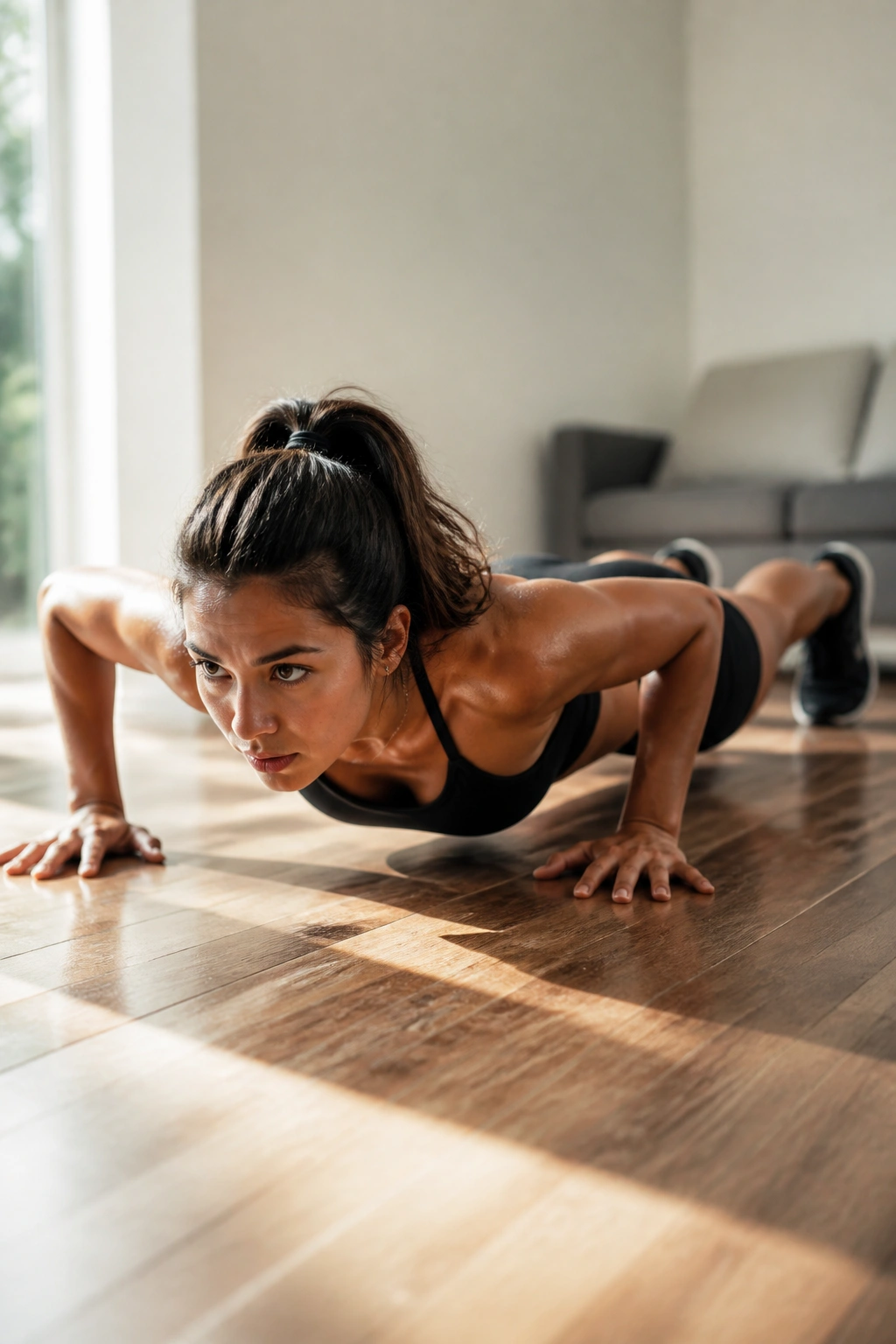
Burpees are rude. That’s why they work.
Start with 1 burpee, then 2, then 3, climbing to 10 if you’re feeling brave. Rest for 20 to 40 seconds between rounds, or keep the rest fixed and see how long it takes to finish the ladder. Either way, your lungs will be doing paperwork by the middle rounds.
Scale Before You Chase Speed
- Step back instead of jumping back.
- Skip the push-up if needed.
- Stand tall at the top before the next rep.
- Keep your hands under your shoulders.
The biggest mistake is turning burpees into chaos. Speed matters, but only after the movement is clean. If your hips sag like a hammock or your feet land all over the place, slow down and fix it.
I’m not sentimental about burpees. They are hard, direct, and a little annoying. That is exactly why they deserve a place on this list. If you want a short challenge that hits cardio and full-body strength at the same time, this one earns its keep.
12. The Daily Mobility Flow Challenge
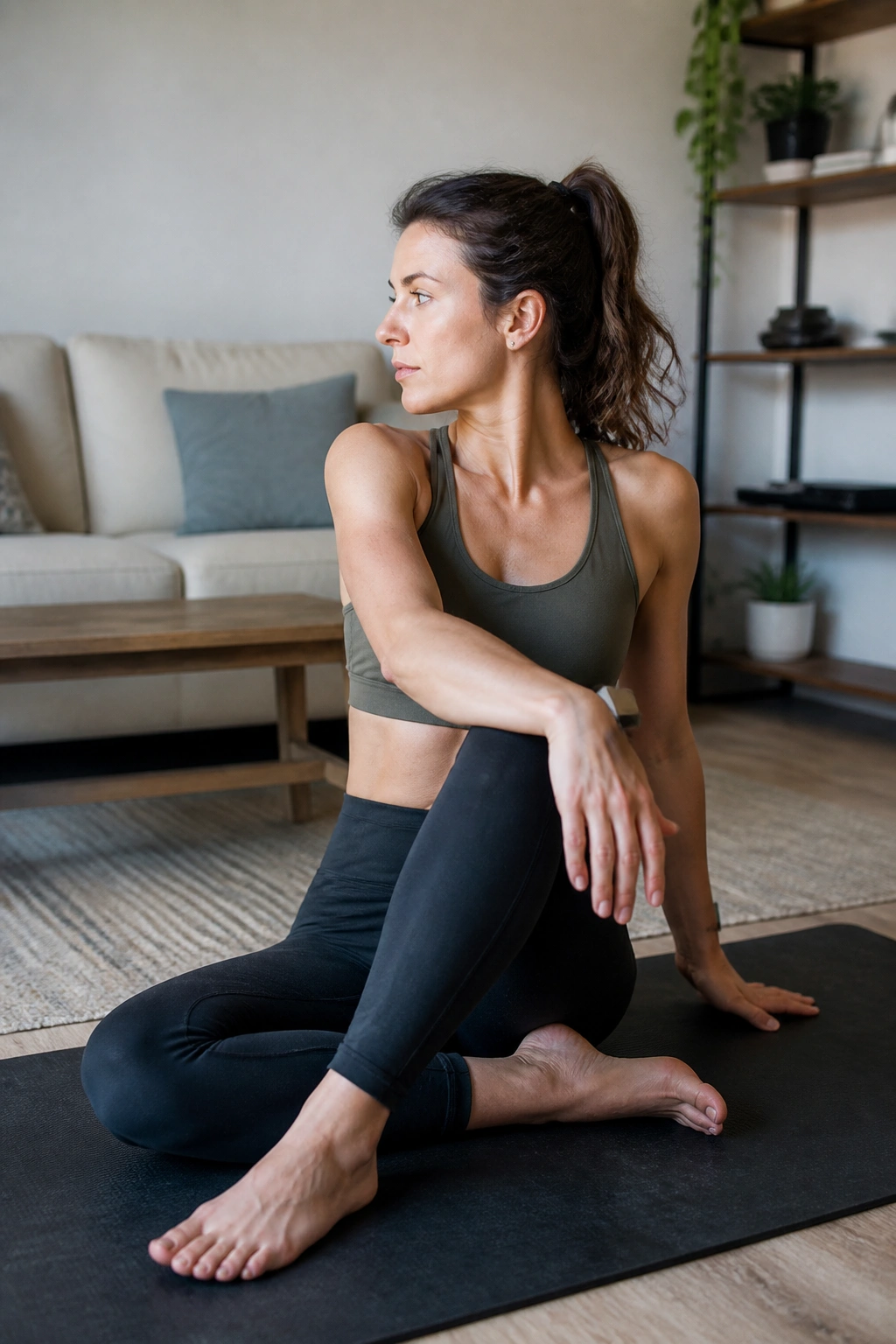
Boring is the point here, and that’s why it works. A daily mobility flow challenge asks you to show up for 10 minutes, move through the same small sequence, and keep the body from getting sticky.
Try cat-cow, hip flexor stretches, thoracic rotations, ankle rocks, and a deep squat hold. Keep the movements slow. Breathe through the nose if you can. The goal is not to “smash” anything. It is to remind joints and muscles that they are supposed to move in more than one direction.
This challenge gets more useful the longer you stick with it. Tight hips start loosening. Your back feels less cranky after sitting. Squats may even feel better because your ankles stop acting like they’re made of wood.
A lot of people skip mobility because it looks too easy. Then they try to reach the floor and discover otherwise. Ten quiet minutes can fix more than a flashy workout ever does.
13. The Single-Leg Balance Challenge
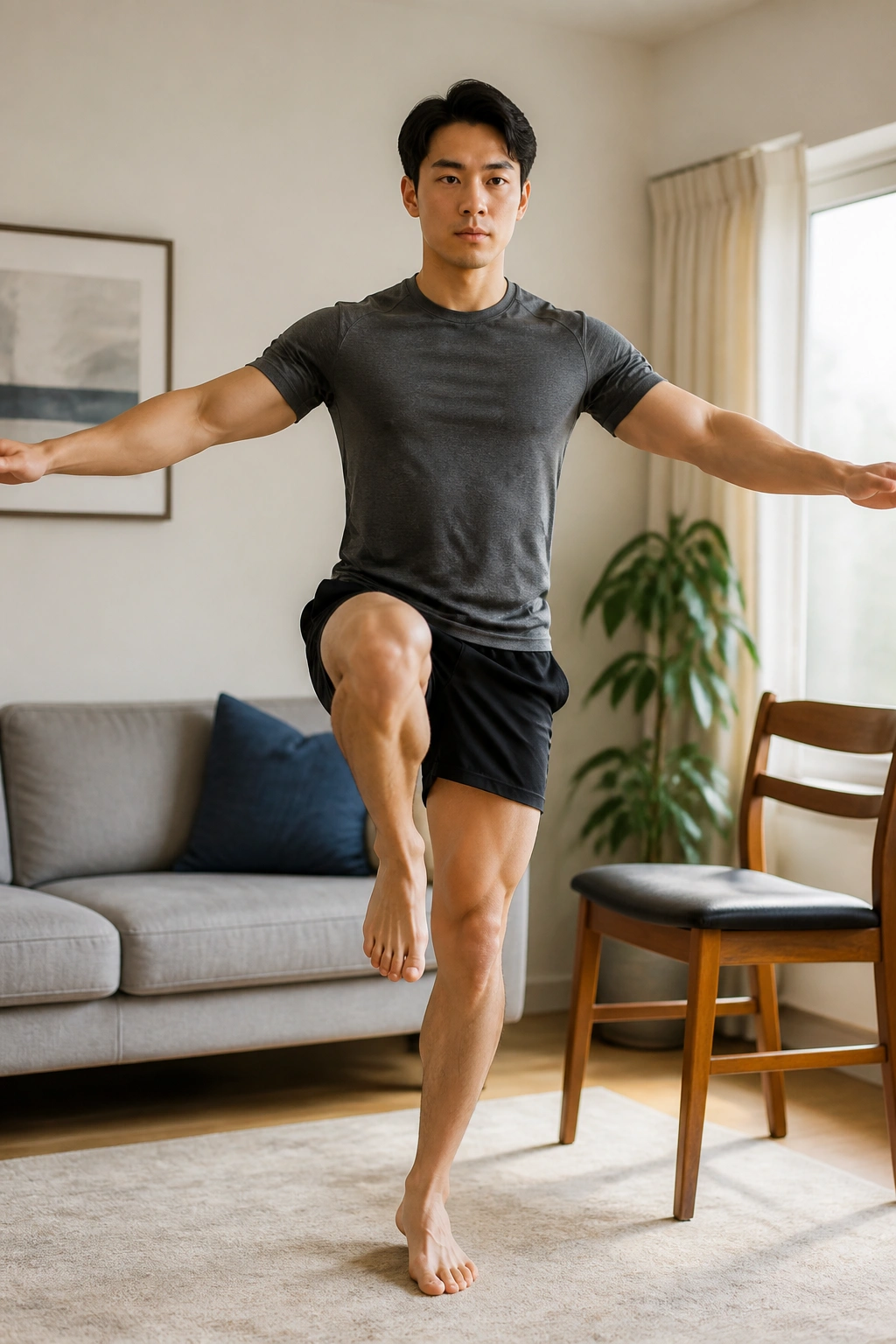
The first time you stand on one leg for a full minute, the floor starts to feel less stable than it should.
That’s normal. Most people are stronger on one side, and home challenges are perfect for spotting that without fancy gear. Start with 30 seconds per side, eyes open. Add calf raises, then single-leg Romanian deadlifts with bodyweight. If that feels solid, close one eye for a few seconds near the end.
A Simple Progression
- 30 seconds standing still
- 10 slow calf raises
- 6 bodyweight hinge reps
- 15 seconds eyes closed
- Switch sides and repeat
A chair or wall nearby is smart. Balance work should challenge you, not make you crash into the bookshelf. The real win is control around the ankle, knee, and hip — the joints that quietly decide whether your movement feels smooth or messy.
I like this challenge because it is humbling in a very honest way. You cannot fake balance for long. The wobble shows up fast.
14. The Tabata In-Place Cardio Challenge
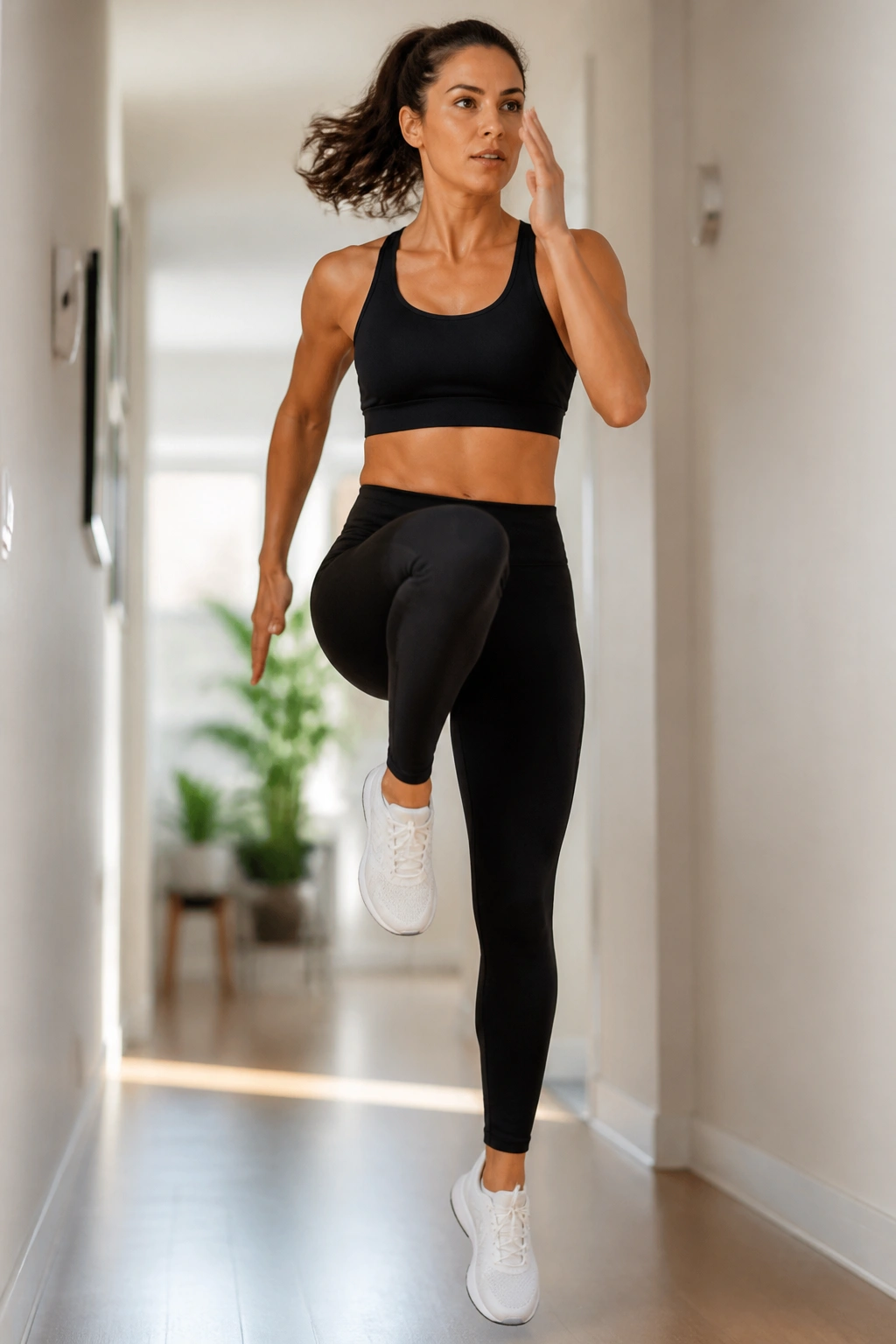
Tabata is short, sharp, and not nearly as friendly as it sounds. The classic format is 20 seconds of hard work, 10 seconds of rest, repeated for 8 rounds. Four minutes total. That’s all.
Pick one move or rotate between two or three. High knees, squat thrusts, skaters, and fast marching all work well indoors. The point is to hit a hard pace during the 20-second window without losing form so badly that the second half turns into panic.
Why It Feels So Different
A steady walk can go on forever. Tabata cannot. The brief rest barely feels like rest, which is why the challenge spikes your breathing so fast. It’s a tiny amount of time that feels much bigger in the moment.
Use a timer with loud intervals. Counting in your head gets messy by round five. And keep the landing soft if you’re jumping. Your downstairs neighbors, if you have them, did not sign up for this.
This is one of the sharpest home cardio tests on the list. Short. Mean. Efficient.
15. The Glute Bridge and Core Challenge
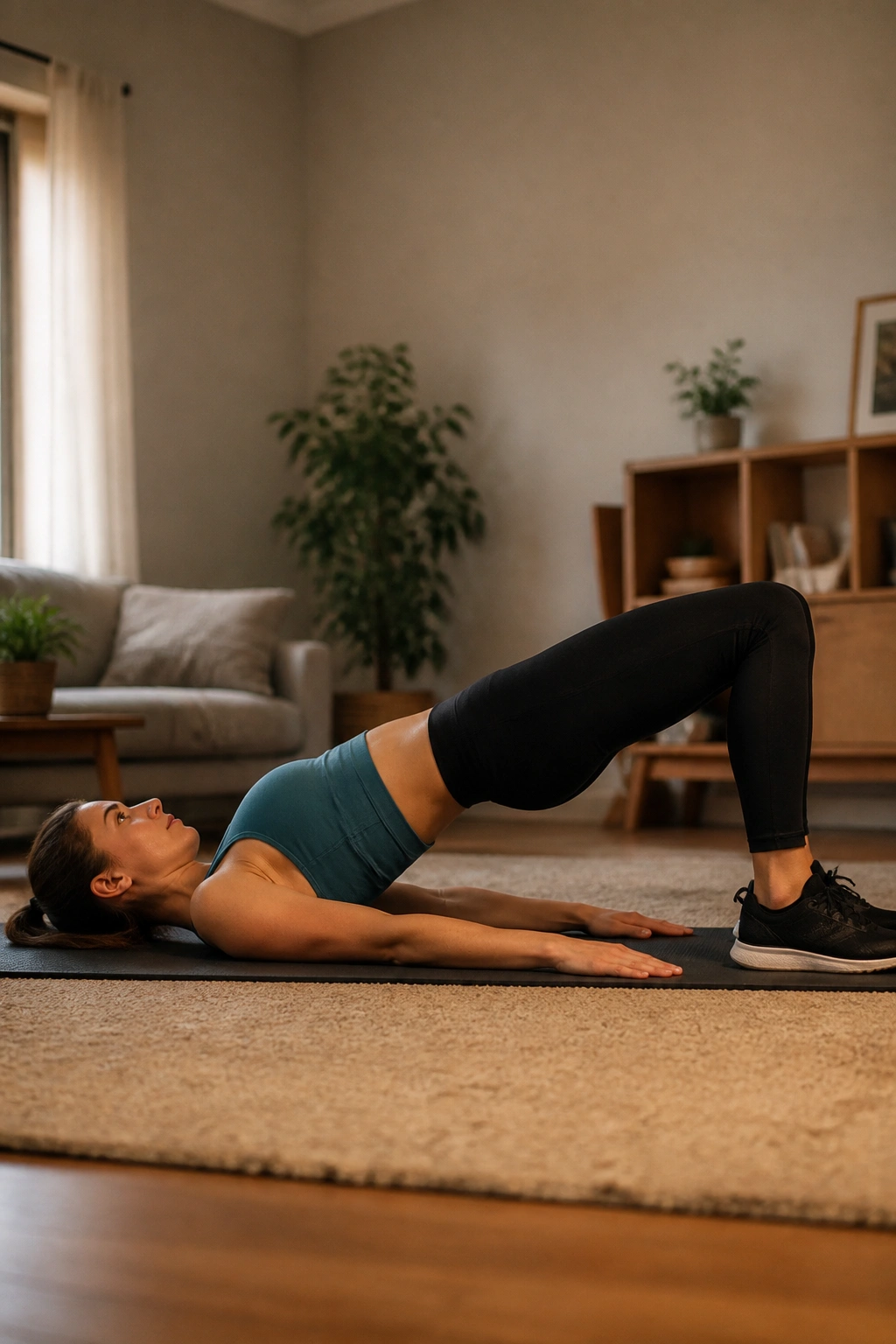
What happens when you train the back side of the body properly? Your hips stop feeling like dead weight halfway through the day.
A glute bridge and core challenge is simple to set up: 15 glute bridges, 10 dead bugs per side, and a 20-second hollow hold. Repeat for 4 to 5 rounds. That mix builds hip extension, trunk control, and a little patience.
The glute bridge should finish with the hips high and the ribs tucked, not with your lower back doing all the lifting. Dead bugs reward slow movement. The hollow hold gets honest fast — if your low back arches, shorten the hold and reset.
This is a good challenge for people who sit a lot or want a lower-impact training day that still works. It’s also a smart companion to running, cycling, or any program that forgets the glutes exist. That happens more often than it should.
16. The Household Carry Challenge
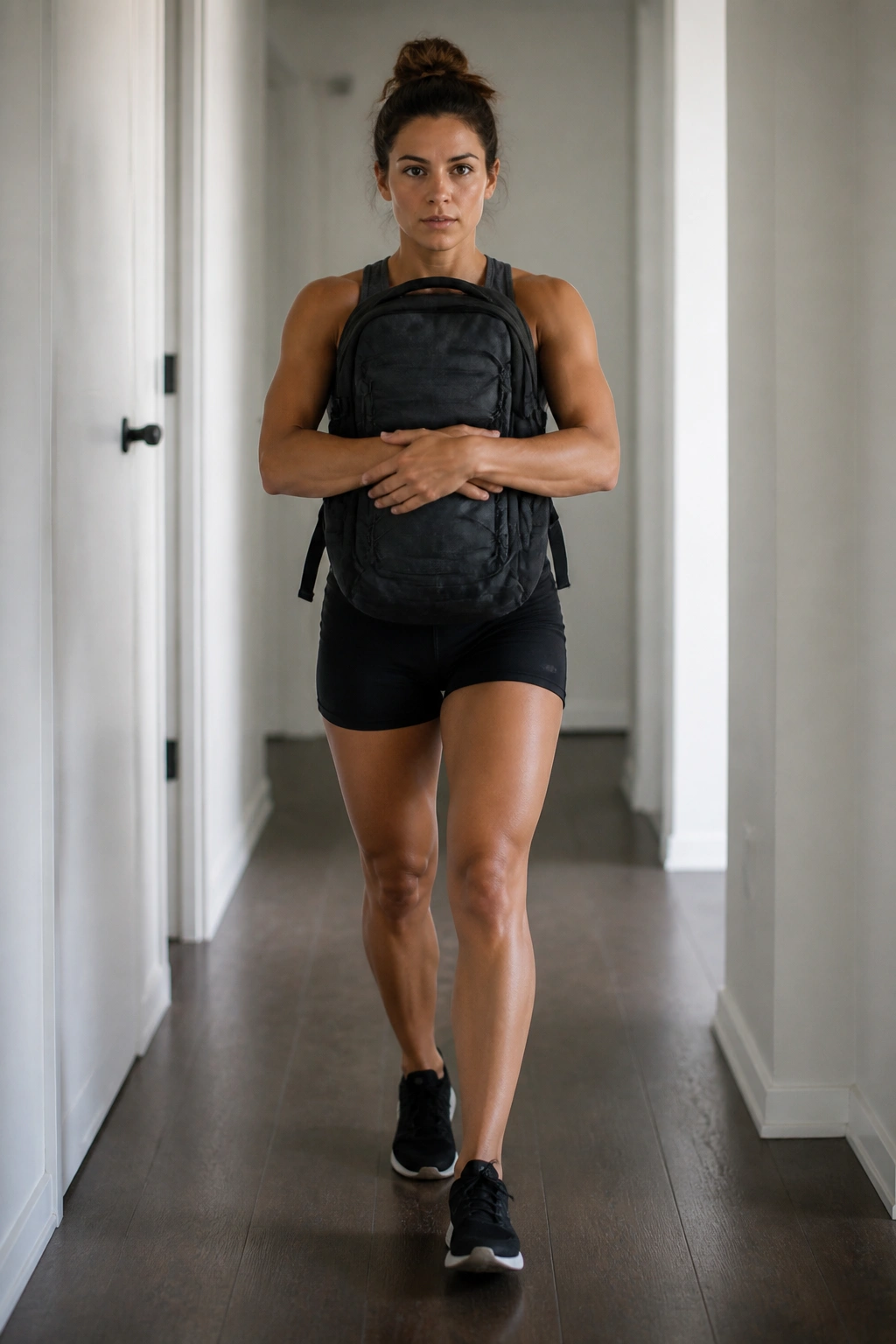
A loaded carry with household objects is more valuable than it sounds.
Grab two grocery bags, a pair of water jugs, a laundry basket, or a backpack held at your chest. Walk for 30 to 60 seconds, rest, then repeat for 6 to 10 rounds. You can carry at your sides, on one side only, or in front like a bear hug.
What to Carry
- Two heavy grocery bags
- One full laundry basket
- A backpack packed with books
- Two water jugs
- One object held on one side for a suitcase carry
Unlike many home exercises, this one trains grip, posture, and core at once. The body has to resist leaning, shrugging, and twisting. That makes it sneaky hard. It also feels oddly practical, which I enjoy.
Keep your ribs stacked over your hips and walk as if you’re carrying something expensive. Sloppy carries beat up the lower back. Clean carries build real-world strength without needing a bench, a rack, or much space.
17. The Yoga Hold Challenge
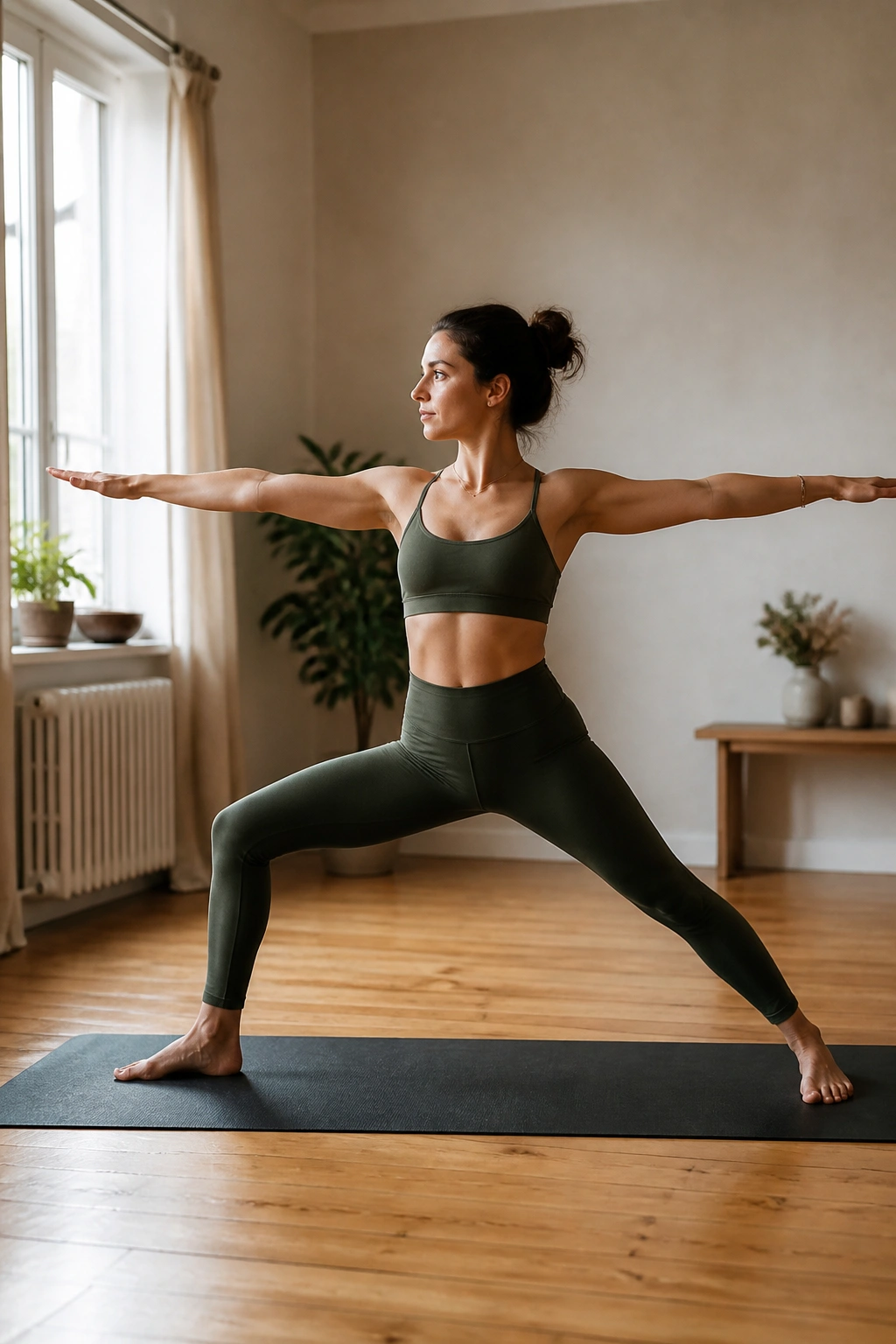
Stillness can be harder than motion. A yoga hold challenge proves that fast.
Pick 4 or 5 positions and hold each for 20 to 45 seconds: chair pose, warrior II, side plank, low lunge, and a folded-forward rest if you need it. The goal is to keep breathing while the legs burn and the shoulders argue back.
Holds are useful because they expose the places where strength leaks. One knee caves in. One shoulder drops. One foot forgets how to grip the floor. Good. That means you’ve found something to train.
If yoga feels too soft to count as a challenge, try a few honest holds after a leg workout and see if you still think that. Most people change their minds pretty fast.
A folded towel under the knee or heel can make some positions safer and cleaner. Small adjustment. Big difference.
18. The Backpack Row Challenge
If all you ever do is push, your upper back will eventually complain.
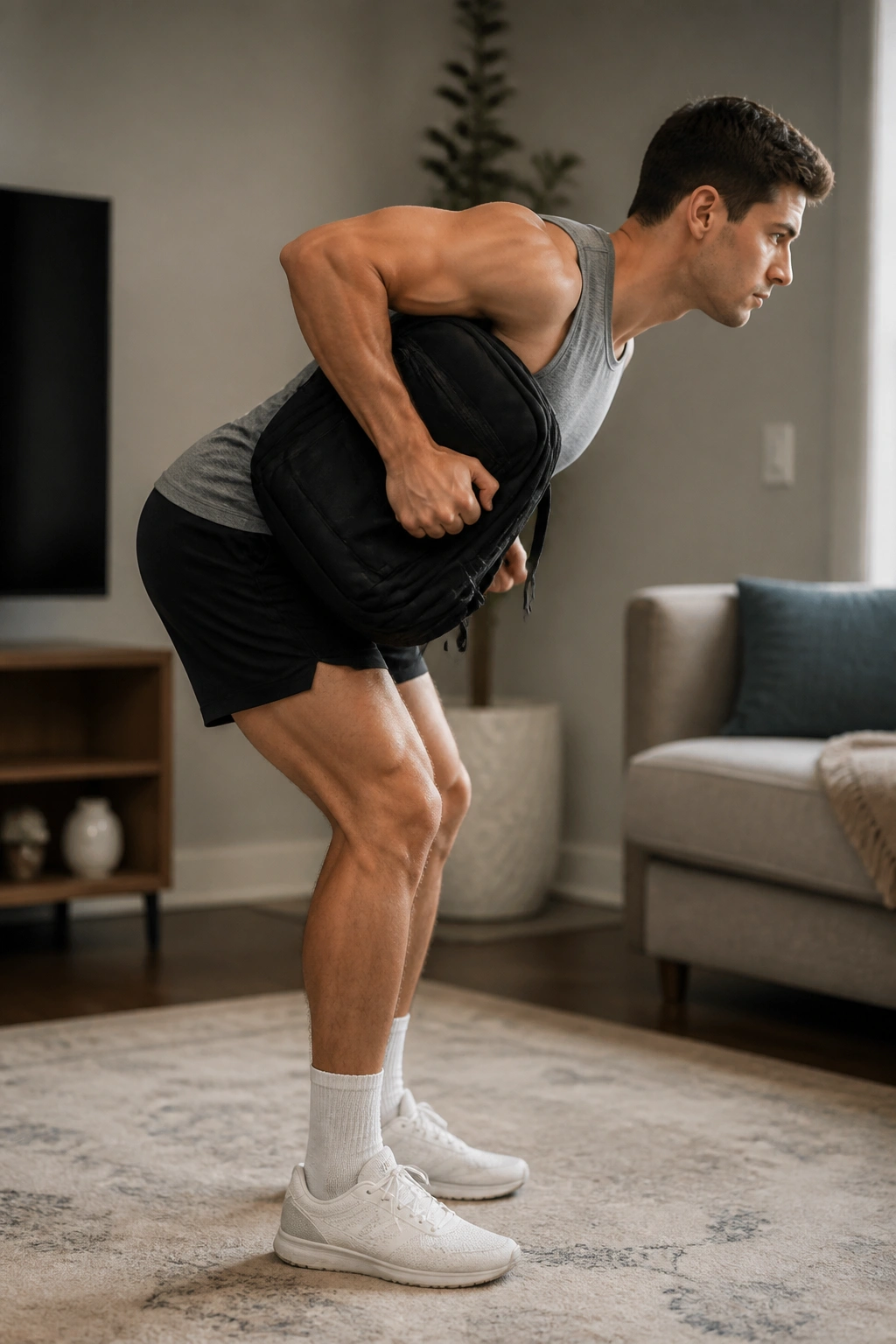
That’s why a backpack row challenge belongs at home. Load a backpack with books or canned food, hinge slightly at the hips, and row the bag toward your ribcage for 12 to 15 reps. Repeat for 4 sets. If you have a resistance band, you can alternate backpack rows with band rows or towel isometrics.
A Quick Warning
- Keep your spine long.
- Pull with the elbow, not the hand.
- Don’t yank the load.
- Brace your stomach before each set.
This challenge is especially useful because home workouts often skip pulling entirely. That leaves the shoulders rounded forward and the upper back underused. The row fixes that in a plain, practical way.
You do not need much weight for this to matter. A medium backpack packed well can feel plenty heavy by the third set. Funny how that works.
19. The Room-to-Room Mini-Decathlon Challenge
This one feels a little ridiculous at first. Then it gets serious.
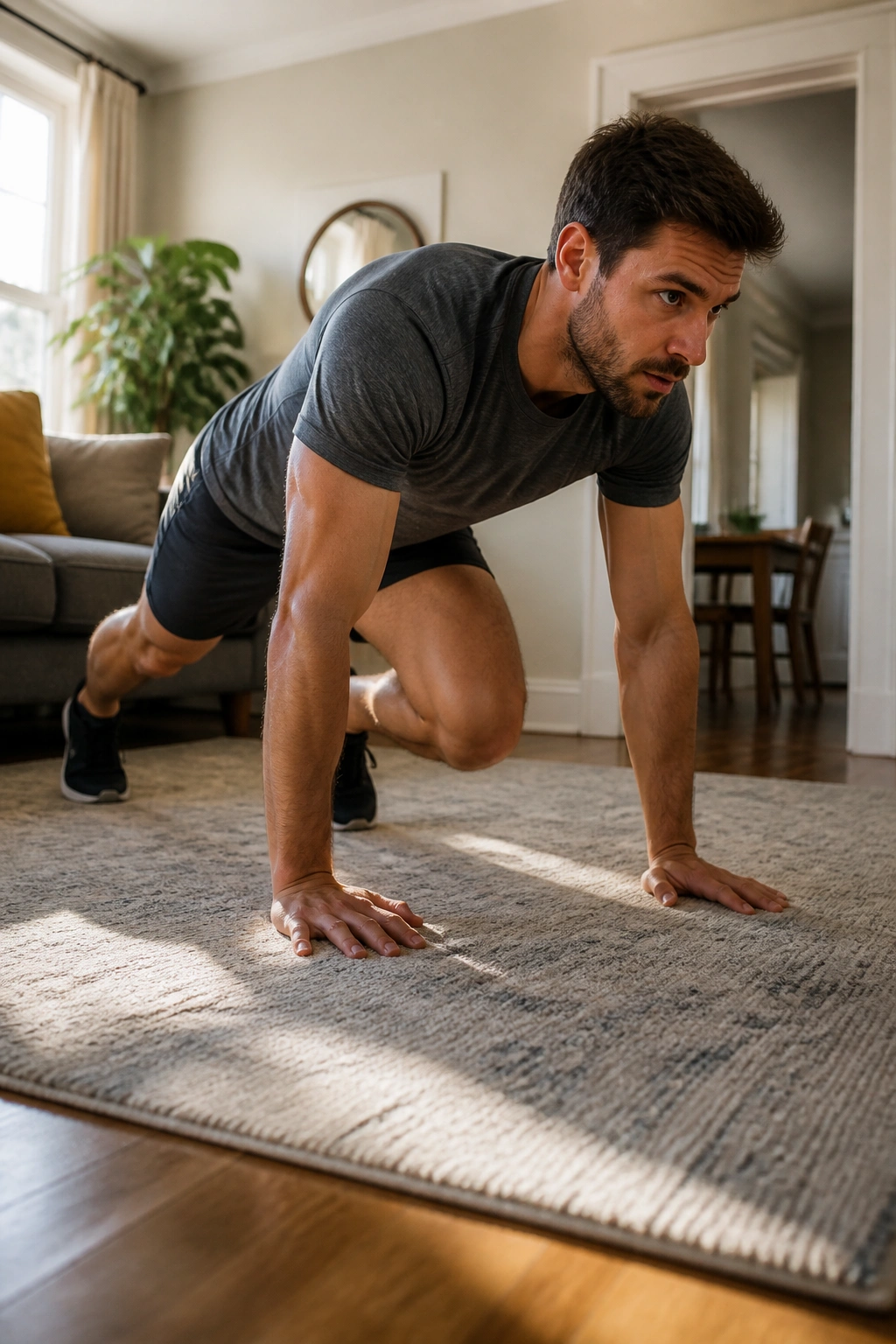
Set up 10 short stations around your home — maybe squats by the couch, push-ups by the wall, high knees in the hallway, plank near the rug, lunges by the kitchen, shadow boxing near the doorway, mountain climbers by the bed, a wall sit near the bathroom, carries in the hallway, and a final breathing reset by the window. Spend 1 minute at each station, then rest for 1 minute, and run through the whole thing twice.
The fun part is that it changes the room’s meaning. Your house stops being a place to sit and becomes a place to move. That sounds corny until you try it, and then it feels oddly energizing.
Keep score if you want: total reps, total rounds, or how steady your breathing stayed by station seven. A little scoreboard makes the challenge stick in your head. That is useful. Useful beats fancy every time.
20. The 14-Day Movement Streak Challenge
The hardest home challenge is often the simplest one: do something every day for two weeks. Ten minutes counts. Fifteen counts. Thirty counts if you’ve got it. The point is to keep the streak alive without pretending every session has to be a performance.
One day can be bodyweight circuits. Another can be a walk around the house. Another can be mobility, balance, or a few careful sets of rows and bridges. Variety helps, but the real win is showing up when your mood is flat and your excuses are loud.
A sticky note on the fridge works. So does a paper calendar with a box to mark each day. Missed streaks happen. Fine. Restart the next morning and keep the rule simple: no zero days.
By the end, you may not have bragging rights for the hardest workout on the list. You might have something better — a habit that no longer needs a big push to begin. That one tends to stay with people.
