



Functional workout circuits at home are the closest thing to a useful emergency plan for busy days. They ask for a timer, a bit of floor, and enough honesty to keep moving when the first round gets ugly. No fancy setup. No parade of equipment.
The best home circuits do not waste your time with random burnouts. They hit the movement patterns that matter: squatting, hinging, pushing, pulling, carrying, crawling, rotating, and balancing. That’s the stuff that shows up when you stand up from a low couch, haul groceries, climb stairs, or carry a sleeping kid from the car.
I like circuits that can change shape without falling apart. Add a backpack and they get harder. Slow the lowering phase and they get harder again. Use a chair, a wall, or a stair, and the same workout becomes kinder on the knees or easier on the shoulders. Simple. Flexible. Useful. The first circuit is the plainest one, which is usually where people should start.
1. Functional Workout Circuit at Home for Beginners
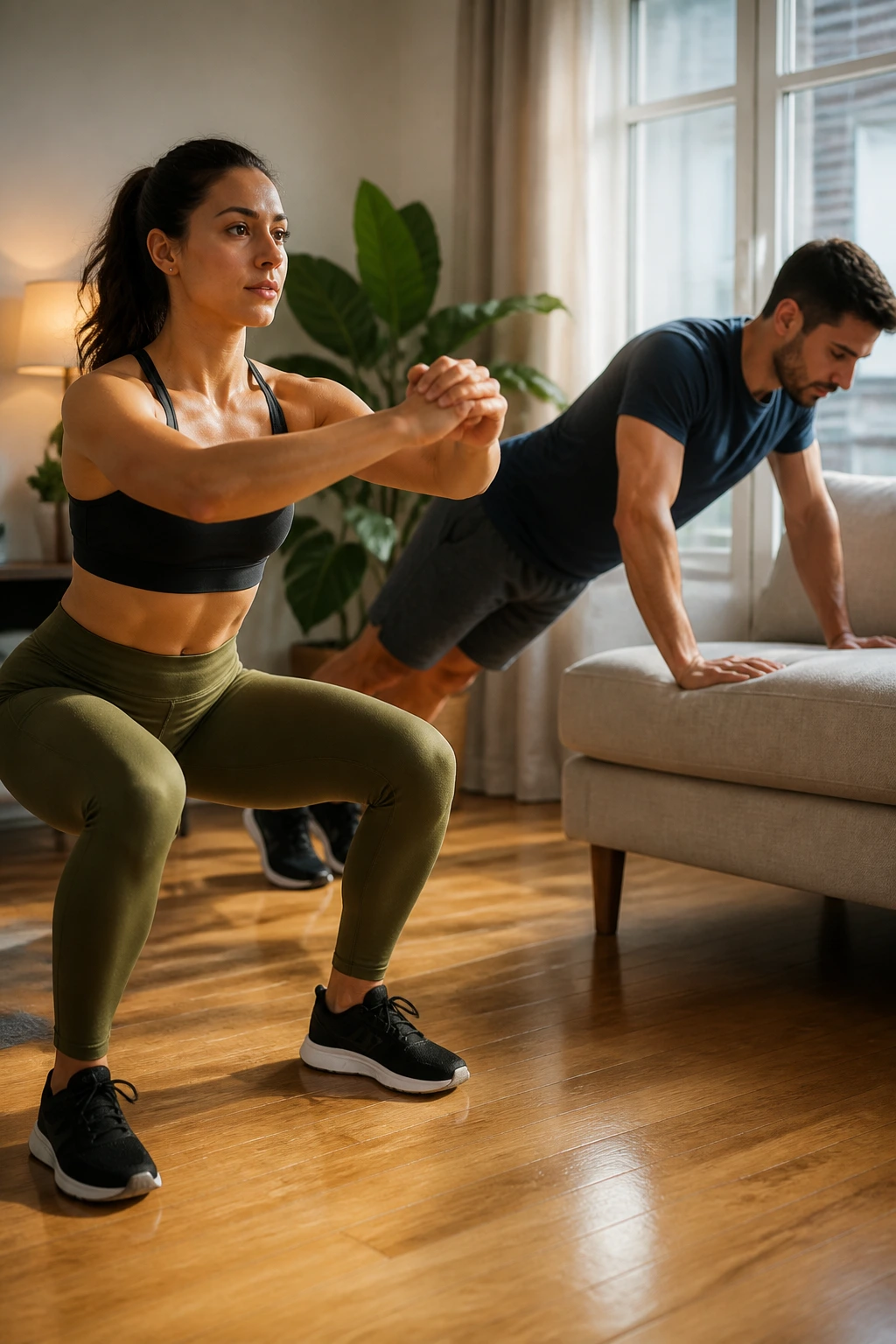
Start here if you want a circuit that feels clear on day one instead of noisy and confusing. It uses only body weight, and that matters more than people admit. If you can learn to move well without load, you have a base you can build on.
How to run it
- 30 seconds of air squats
- 30 seconds of incline push-ups with hands on a couch, bench, or sturdy table
- 30 seconds of reverse lunges, alternating legs
- 30 seconds of dead bugs with slow exhale on each rep
- Rest 45 seconds, then repeat for 3 rounds
Keep the first round smooth. Not fast. Smooth. Your knees should track over the middle toes on the squat and lunge, and your lower back should stay quiet during the dead bug. If your shoulders start creeping up toward your ears on the push-up, shorten the range and use a higher surface.
A clean rep beats a rushed rep. Every time.
One more thing: do not chase exhaustion on the first pass. A beginner circuit works because it teaches rhythm, not because it leaves you sprawled on the floor.
2. The Squat, Push, Hinge, and Carry Circuit
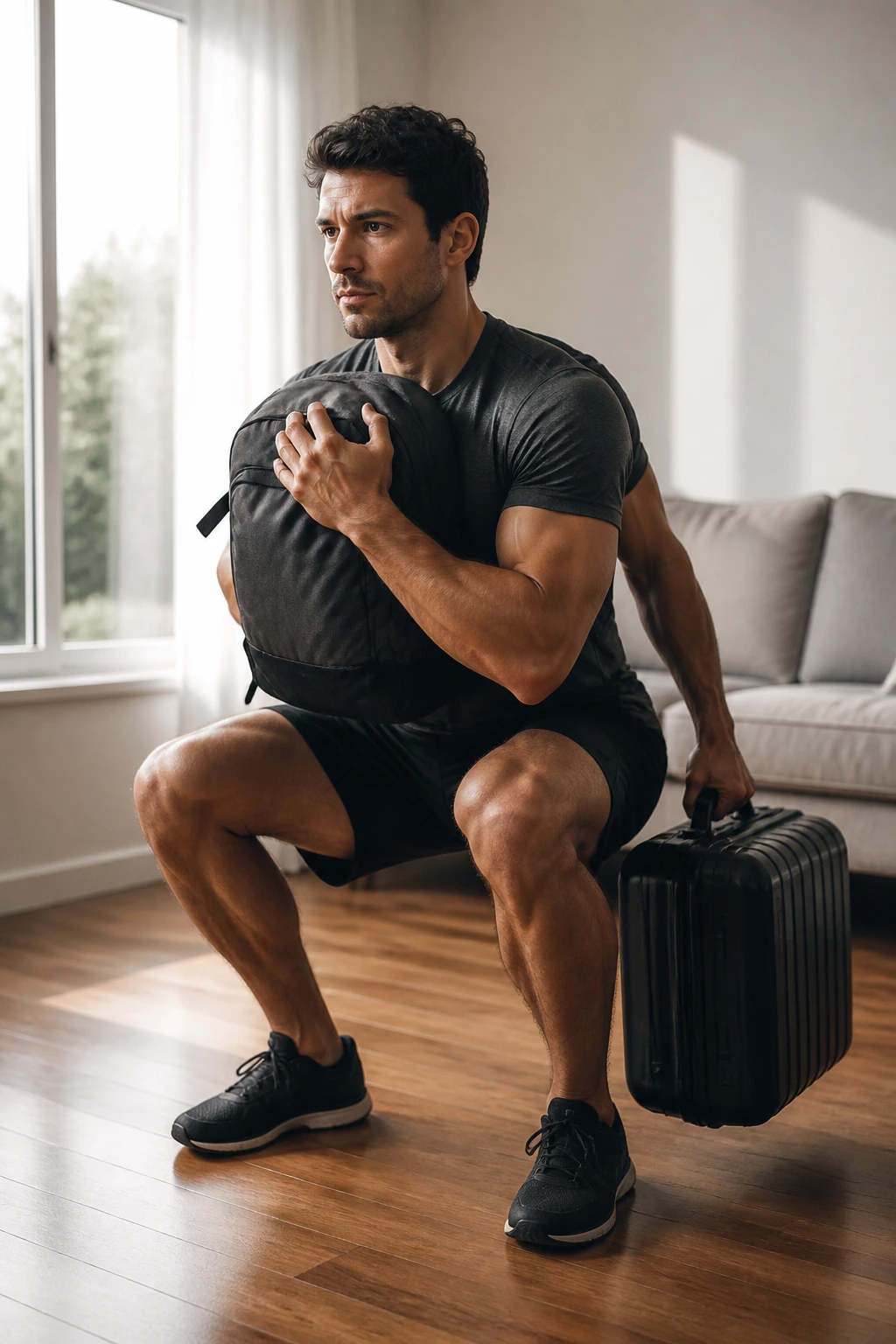
If you only keep one home circuit in your back pocket, make it this one. It covers the four patterns that show up everywhere in real life, and it does it without needing a complicated warm-up or an odd piece of gear.
Grab a backpack, one dumbbell, or a heavy grocery bag. Then move through a squat, a push, a hinge, and a carry. That’s the whole story. The effect is bigger than the number of exercises suggests, because each move asks for a different kind of work from your legs, chest, back, and trunk.
Try 8 goblet squats, 6 to 10 push-ups, 10 Romanian deadlifts with the backpack, and a 30-second suitcase carry on one side before switching. Rest 60 seconds and repeat for 4 rounds. The carry should feel awkward in a useful way; your torso wants to tilt, and you have to fight that tilt with your side body.
This is the circuit I use when a workout needs to feel like training, not just sweating. It is blunt. That’s why it works.
3. A Low-Impact Cardio Circuit That Still Feels Hard
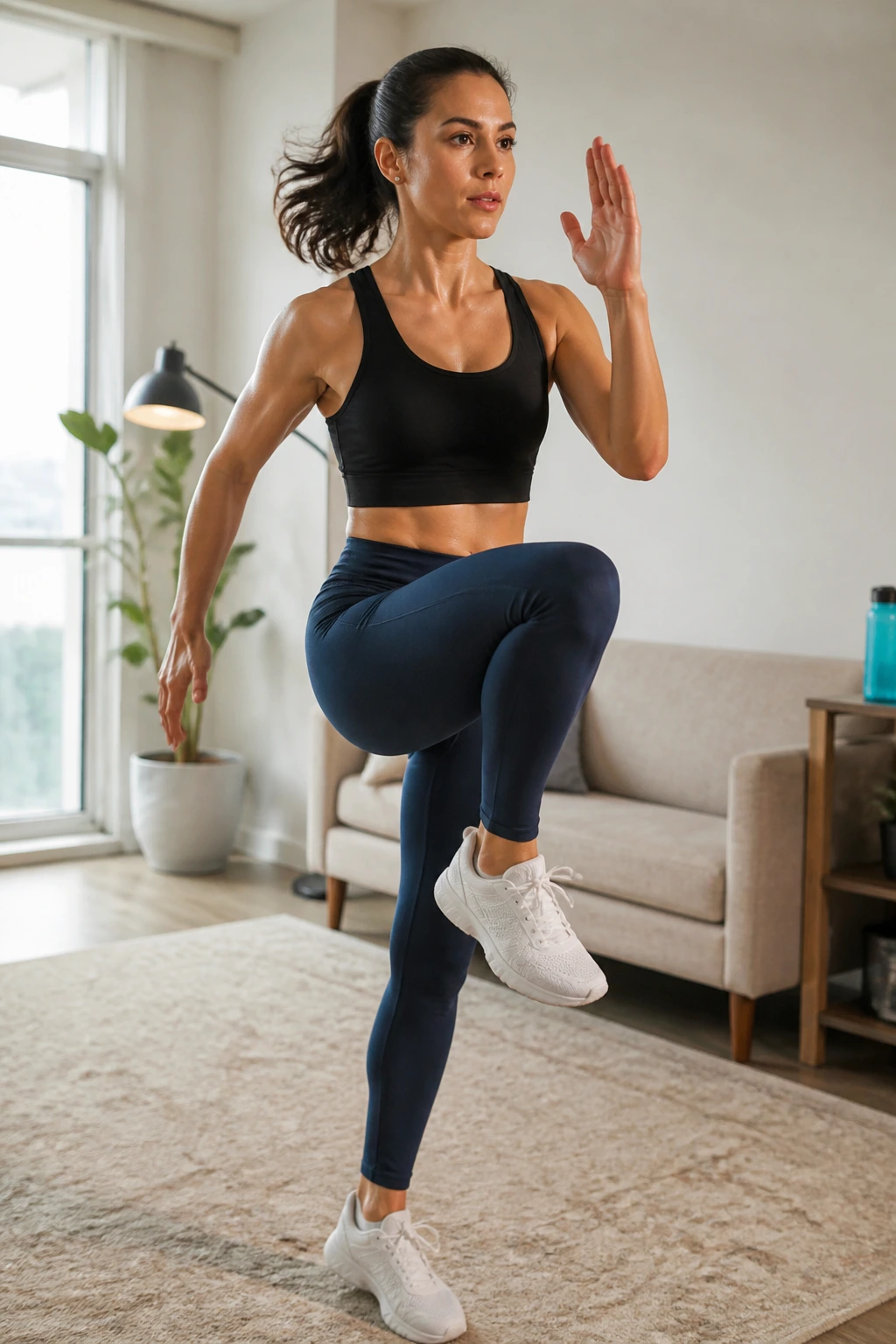
Need sweat without the floor thudding under every rep? Use this one. It gets the heart rate up, opens the hips, and keeps the impact down, which makes it a solid choice for apartments, early mornings, or cranky ankles.
How to use it
- 40 seconds of fast marching with big arm swings
- 40 seconds of step jacks
- 40 seconds of shadow boxing with light footwork
- 40 seconds of squat-to-reach
- 40 seconds of lateral step-touches with a slight knee bend
- Rest 20 seconds between moves, then repeat the full circuit 3 to 4 times
The trick is not to move lazily. A low-impact circuit can still be hard if the arms are active, the knees stay soft, and the pace never drops. Punch with a little snap. Reach overhead with control. Keep the feet light and the landings quiet.
What to watch for
- If your shoulders burn before your legs, you are punching too high and too tense.
- If your lower back feels cranky, stop leaning back on the overhead reach.
- If you can talk in long sentences, pick up the pace.
No jumping does not mean no effort. It just means the effort lands differently.
4. Core Work That Trains You Not to Twist
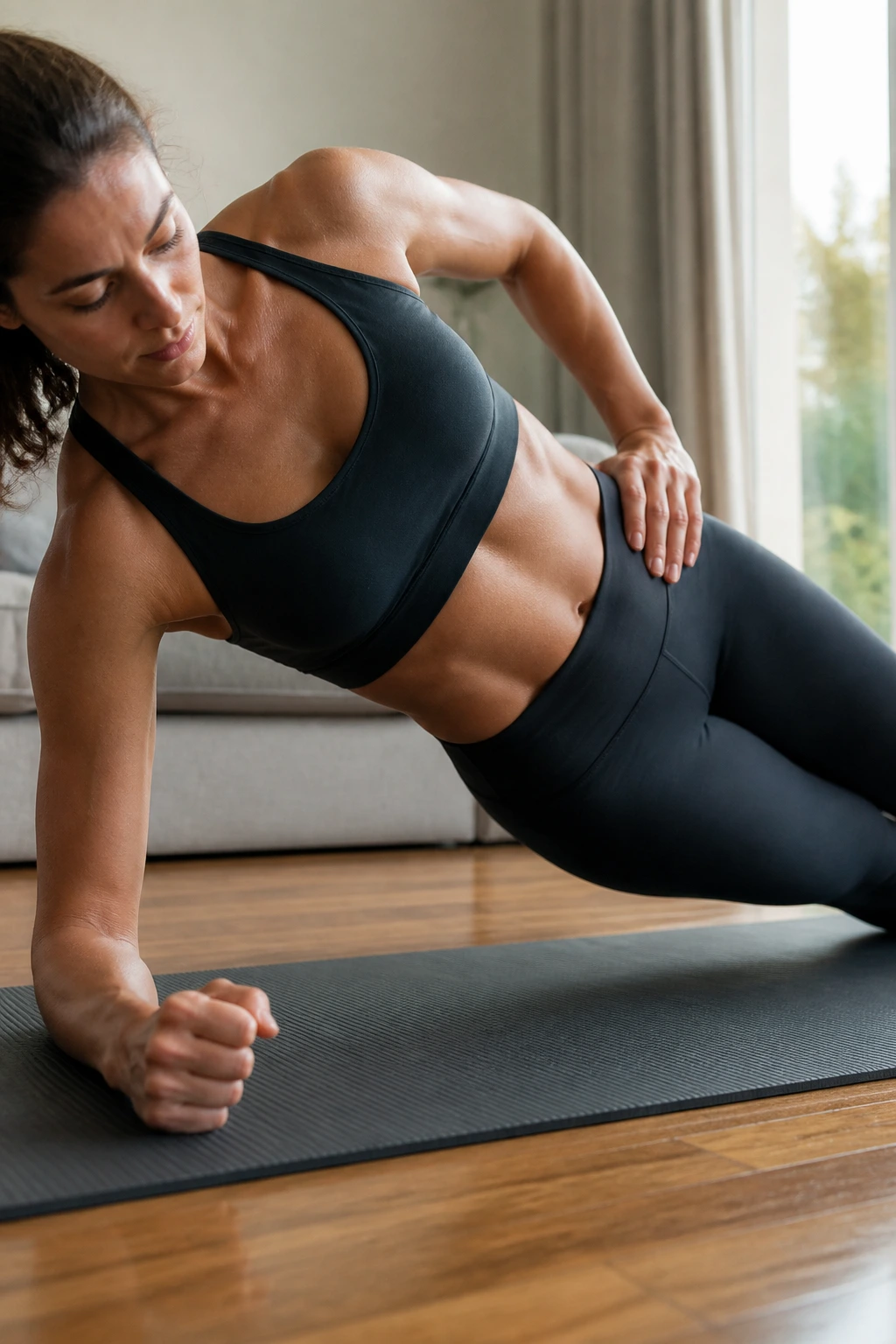
A lot of people think core training means endless crunches. It doesn’t. The useful stuff teaches your trunk to hold steady while your arms and legs move around it, which is a very different job.
Picture this: you’ve been hunched over a desk for hours, then you stand up and your back feels stiff and a little uncertain. That’s where anti-rotation work earns its keep. It makes your midsection brace, resist shifting, and hold shape under load. That is what happens when you carry a box, lift a child, or lug a bag on one side.
Use side planks, dead bugs, bird dogs, plank shoulder taps, and suitcase holds. A good version looks like this: 20 seconds per move, 3 rounds, with 20 to 30 seconds of rest between exercises. Keep the ribs down and the pelvis level.
The point is bracing, not burning. If your torso is wobbling all over the place, slow down and shorten the lever. A dead bug with a bent knee and a small reach is better than a flashy version that arches the back.
Useful cues
- Exhale as the arm or leg reaches away.
- Keep the floor quiet under the planted hand.
- Let the neck stay long, not jammed forward.
5. Glute Bridges and Hamstring Slides on the Floor
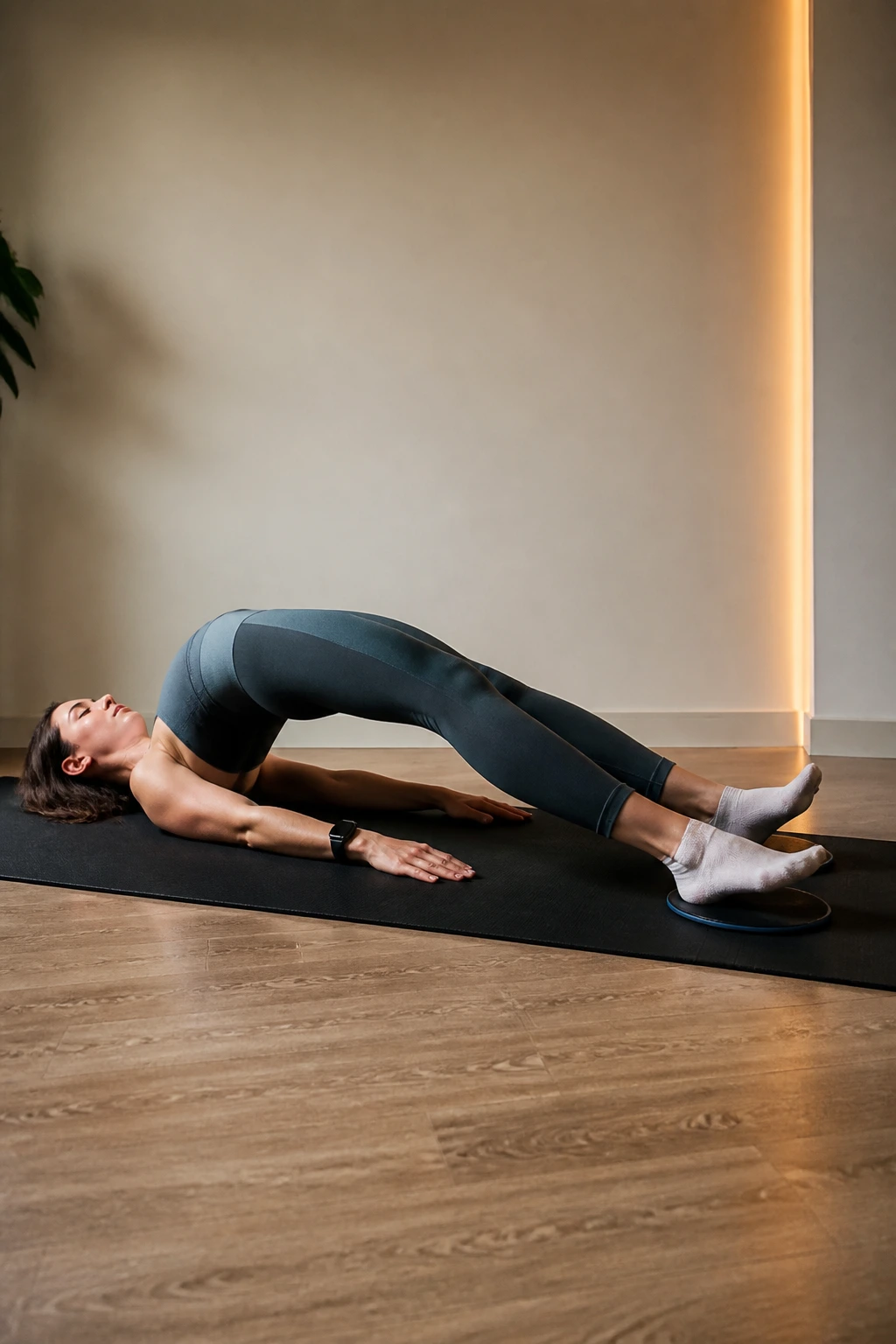
This is one of those circuits that looks plain and then quietly wrecks your posterior chain. The glutes light up first, then the hamstrings start pulling their weight, and by the end the back of your legs feels warm and tight in a good way.
Use a mat or a towel on a smooth floor. Start with glute bridges, then move to hamstring walkouts or sliders. Add single-leg bridges if you want more challenge. The glute bridge should finish with the hips high enough that your body makes a straight line from shoulders to knees, not a wobbling arch through the lower back.
A practical setup: 12 glute bridges, 8 hamstring walkouts, 8 single-leg bridges each side, then 30 seconds of frog pumps. Rest 45 seconds and repeat for 3 rounds. If the hamstring slides feel cramped, shorten the range and keep the hips lifted.
Your lower back should not steal the show.
The best cue I know is simple: push the floor away through the heels, then stop when the glutes finish the job. If the hamstrings cramp hard, pause for a breath, reset, and keep the reps smaller. That usually fixes the problem faster than forcing more range.
6. Band Rows, Presses, and Pull-Aparts for the Upper Back
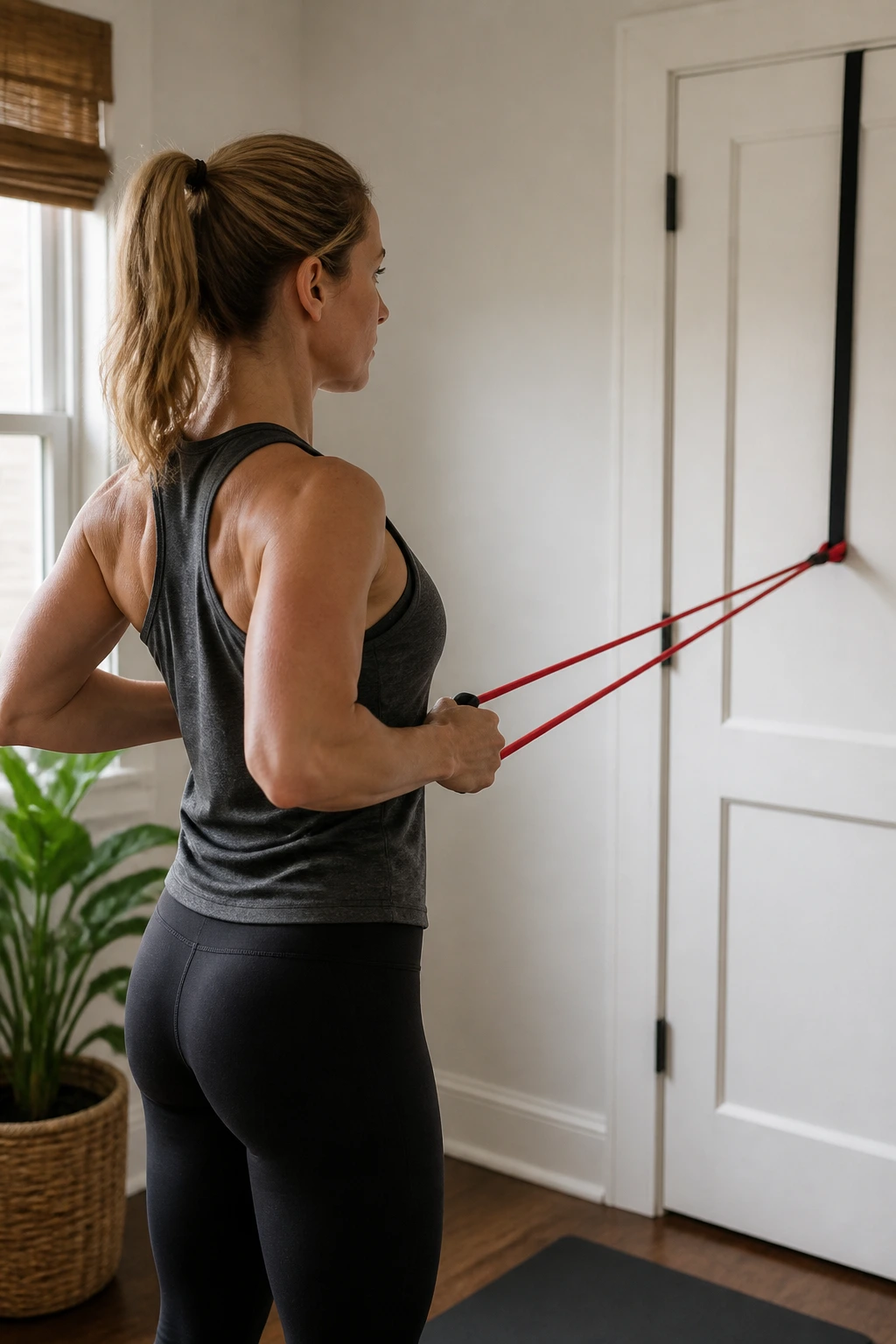
Unlike push-up-heavy plans, this circuit gives the back side of the upper body something real to do. That matters. A lot of home routines overwork the chest and front of the shoulders, then wonder why posture starts feeling glued forward.
A long resistance band, a door anchor, and 15 minutes are enough. Use rows, chest presses, face pulls, pull-aparts, and half-kneeling presses. The standing row should finish with the elbows close to the ribs and the shoulder blades sliding back, not pinched together like a forced pose.
Try 12 rows, 10 chest presses, 12 pull-aparts, 10 face pulls, and 8 half-kneeling presses each side. Go through the list 3 times. Keep the band tension honest. Too much slack and you are just waving your arms around.
This is best for people who sit a lot, press a lot, or feel the upper back go quiet during training. It is also a smart fix if push-ups feel fine but your shoulders never seem balanced afterward.
Buy the band that feels slightly too hard, then start lighter than you think. You can always step farther from the anchor. You cannot make a weak band stronger.
7. Functional Workout Circuit at Home for Tight Mornings
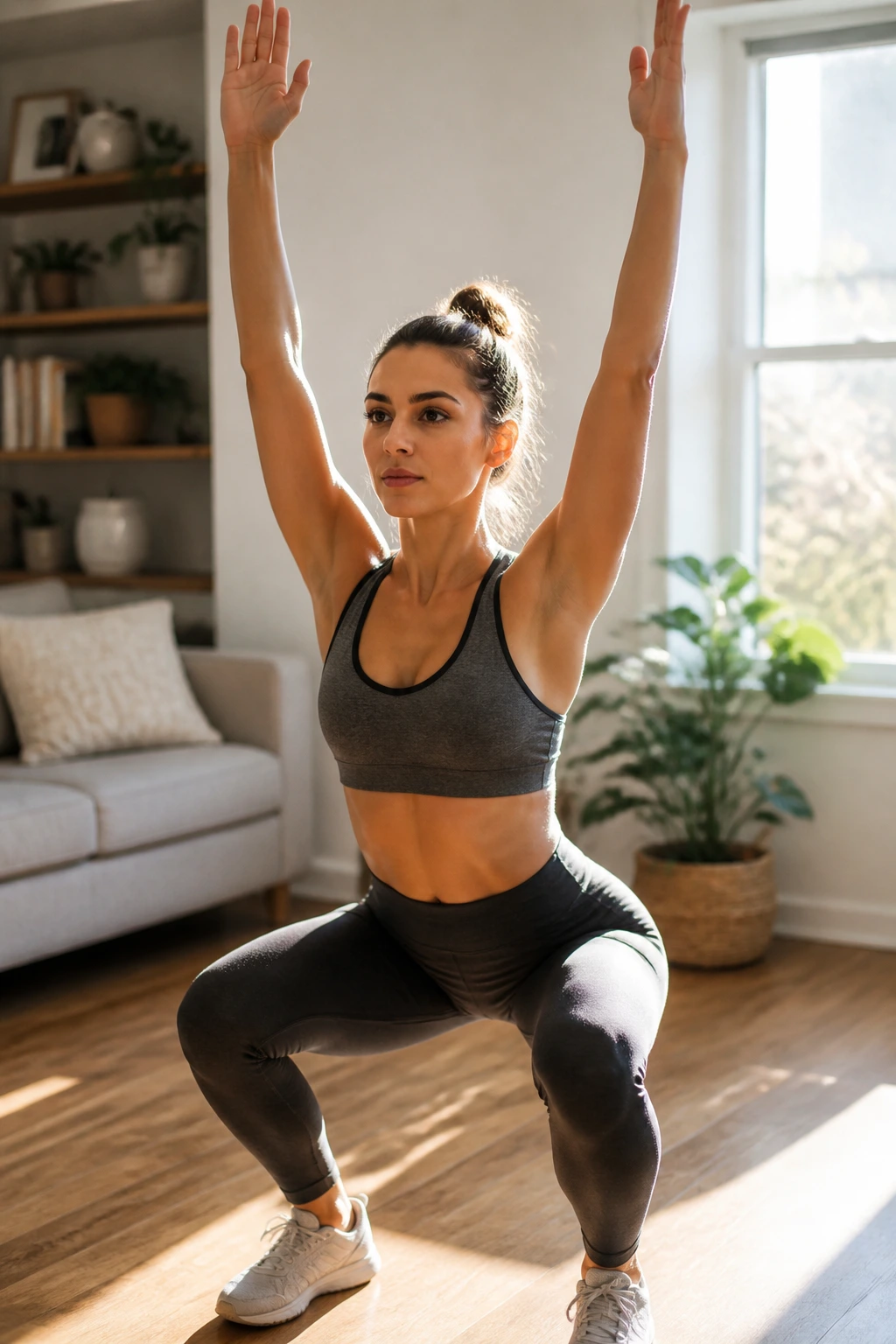
Tight mornings do not need a long warm-up. They need a sequence that wakes up the hips, ankles, and shoulders without turning the room into a wrestling match with your own stiffness.
The 12-minute version
- 45 seconds of squat to overhead reach
- 45 seconds of incline push-ups
- 45 seconds of hip hinges with hands on the hips
- 45 seconds of plank hold or knee plank
- Rest 15 seconds between stations
- Repeat the full four-move circuit 3 times
Keep the pace moderate on round one. If your ankles feel wooden, spend the first few squat reps with a smaller range. If your shoulders feel locked, do the push-ups higher on a counter instead of dropping to the floor.
The beauty here is that nothing has to be perfect for this to work. A little movement wakes the system up. A little sweat does the rest.
What makes it work
- The hinge reminds the hamstrings they exist.
- The push opens the chest and warms the shoulders.
- The plank teaches the middle of the body to stop overreacting.
A minute of marching in place before you start helps too. Not fancy. Just useful.
8. A Backpack Strength Circuit That Turns Books Into Load

A backpack loaded with books can do more than half the dumbbells on a shelf. That sounds cheeky, but it’s true. A packed bag gives you front loading, awkward grip, and a bit of asymmetry if you do not pack it evenly, which makes the workout feel honest fast.
Use towels inside the bag to keep the books from clanking around. Then take the backpack through front squats, bent-over rows, reverse lunges, deadlifts, and a farmer-style carry. A load somewhere between 10 and 25 pounds works well for many people, though the right weight depends on the bag and the movement.
Try 10 backpack squats, 10 rows, 8 reverse lunges each side, 10 deadlifts, and a 30-second carry. Repeat 4 rounds with 45 to 60 seconds of rest. If the rows pull your shoulders forward, hinge a little more and keep the chest proud.
This one is especially good when equipment is limited and you want a session that feels stronger than bodyweight alone. The backpack adds friction. That is the whole trick.
9. The EMOM Circuit That Keeps Beginners Honest
Need a circuit that keeps moving without letting you drift? Use an EMOM. Every minute on the minute means you finish the work, then rest for the leftover seconds before the next minute starts.
How to use it
- Minute 1: 8 squats
- Minute 2: 6 incline push-ups
- Minute 3: 10 glute bridges
- Minute 4: 20-second plank
- Minute 5: 30-second brisk march
- Repeat the five-minute block 4 times for a 20-minute session
The rule is simple: finish early and rest. If the set takes 45 seconds, lower the reps. If it takes 20 seconds, you probably can add a little more next round. The pace should feel steady, not frantic.
This works because the clock keeps you from wandering. You stop negotiating. You do the reps, breathe, and move on. There is a strange relief in that.
Good scaling choices
- Drop squats to 6 reps if your form gets sloppy.
- Use a higher surface for push-ups.
- Turn the plank into a dead bug if your lower back arches.
10. Step-Up Power on a Stair or Box
A single stair can do a lot of work. It trains the legs, the hips, and the balance system all at once, and it gives you a clean way to add power without needing a lot of floor space.
Imagine a sturdy step, one hand near a railing, and a pace that rises just enough to make your breathing louder. That is the feeling you want. The step-up should drive through the whole foot, not just the toes. The knee should track over the second toe, and the pelvis should stay level instead of dumping to one side.
Try 10 step-ups each leg, 8 lateral step-downs each side, 10 split squats each leg, 15 calf raises, and a 30-second stair march. Repeat for 3 rounds. Keep the box height sensible. Knee height is often too much for beginners. A lower step gives cleaner reps and better control.
Key details
- Use the railing lightly, not as a crutch.
- Step down under control; do not flop.
- Pick a step height that lets you stay tall.
This circuit is a good one when you want leg work that feels athletic instead of purely slow and grindy.
11. A Mobility Circuit That Helps You Move Better Tomorrow
Some sessions should leave you more open, not more wrecked. This is one of them. It works well after a hard day, after a long drive, or on a rest day when the body feels tight but not injured.
Use cat-cow, 90/90 hip switches, ankle rocks, thoracic rotations, and a squat pry. Two rounds is enough. Spend 30 to 45 seconds on each move, and breathe through the sticky spots instead of forcing them. If a joint feels pinchy, back off. Mobility work should feel like a conversation, not a fight.
The squat pry is especially useful. Sit into a deep squat, hold onto a door frame or table leg if needed, and shift gently side to side. The hips open a little, the ankles get some load, and the lower back usually stops complaining.
A lot of people skip this because it does not feel sweaty. Fair. But it pays off in better range and cleaner reps the next time you do a real circuit.
Do not chase the deepest stretch. Chase the smoothest one.
12. Split-Stance Strength for Legs That Do Not Stay Even
Symmetrical squats hide a lot. Split stance does not. One side always feels a little shakier, a little weaker, or a little less coordinated, and that is useful information rather than a problem.
This circuit is especially good for runners, cyclists, and anyone who feels one hip take over during lunges or stairs. Use split squats, kickstand Romanian deadlifts, half-kneeling presses, lateral lunges, and side planks. The asymmetry forces each leg and each side of the trunk to earn its place.
A strong starting point: 8 split squats each side, 8 kickstand RDLs each side, 8 half-kneeling presses each side, 6 lateral lunges each side, and a 20-second side plank each side. Do 3 rounds.
If balance is a mess, keep one hand on a wall or chair. That is not cheating. That is buying cleaner reps.
Why this one matters
- It exposes side-to-side differences fast.
- It improves control in single-leg positions.
- It carries over well to stairs, jogging, and carrying odd loads.
13. Functional Workout Circuit at Home With Dumbbells and a Timer
A pair of dumbbells turns a good circuit into a very honest one. You do not need a heavy set to make it work, either. A pair of 10- to 20-pound dumbbells is enough for many people if the pace is tight and the rest is short.
The 20-minute block
- 45 seconds of dumbbell front squats
- 45 seconds of one-arm bent-over rows, switch arms halfway
- 45 seconds of push press
- 45 seconds of reverse lunges, holding the dumbbells at the sides
- Rest 15 seconds, then repeat for 4 rounds
The front squat should keep the chest up and the elbows under the weights. The row should come from the back, not a big shrug. The push press lets you use a small leg drive to move the bells overhead, which makes it friendlier than a strict press when fatigue climbs.
A timer matters here because dumbbells can tempt you to drift between exercises. Don’t. Keep the window tight, keep the form clean, and let the weights stay honest.
A medium load with crisp reps beats a heavy load with sloppy ones. That has been true in every home gym I’ve ever trained in.
14. Shadow Boxing Paired With Strength Sets
A lot of people hate steady cardio because it feels flat. Shadow boxing changes that fast. The footwork wakes up the calves, the rotation gets the trunk involved, and the heart rate jumps without the workout turning into a jumping contest.
Use two minutes of shadow boxing, then a strength move like push-ups, squats, or plank variations. Repeat the pairing for 4 to 5 rounds. The boxing round should not be random flailing. Keep the hands near the face, turn the hips with the punch, and step lightly instead of hopping all over the room.
A clean version looks like this: 90 seconds of boxing, 10 push-ups, 20 squats, 20 seconds of mountain climbers, then rest 45 seconds. Repeat. If the shoulders start burning before the lungs do, loosen the fists and soften the punches a little.
This is a good one when you want your workout to feel alive. It also teaches rhythm, which more people need than they realize.
15. Single-Leg Balance Work That Exposes Hidden Weak Spots
Why does one side wobble more than the other? Usually because one side has been doing the heavy lifting for a while. Single-leg work makes that obvious immediately, and that is the point.
Use single-leg Romanian deadlifts, single-leg bridges, step-back lunges to a knee drive, single-leg calf raises, and side plank reach-throughs. Start with 6 to 8 reps per side and 3 rounds. Keep the movement slow enough that the standing foot can stay planted like a tripod: big toe, little toe, heel.
The best cue is to move the free leg like a counterweight. If the torso tips, reduce the range and touch a wall with one hand. The exercise should challenge balance, not become a standing save-the-fall drill.
How to know it’s working
- The standing foot feels steadier by round two.
- Your hips stop shifting side to side.
- The reps look cleaner than they did at the start.
This circuit is plain, and it can feel a little annoying. Good. Annoying is often where the useful work lives.
16. A No-Jump Circuit for Thin Floors and Loud Neighbors
If your floors are thin and your neighbors are unforgiving, you still have options. Plenty of them, actually. You can get a full-body workout without a single jump, stomp, or floor-shaking burpee.
Use squat to calf raise, alternating reverse lunges, bear hold shoulder taps, inchworm walkouts, and slow mountain climbers. Keep the feet quiet and the transitions smooth. Forty seconds on, 20 seconds off, for 3 or 4 rounds is enough to raise the heart rate and tax the legs.
The bear hold is the sneaky one. Knees hover a few inches above the floor, shoulders stay stacked over the wrists, and the belly has to keep the body from folding. If your hips drift up, slow the taps down. If your wrists hate the position, do the taps on fists or on an incline.
Key rules for quiet training
- Land softly on every step.
- Skip any move that slams into the floor.
- Keep your pace brisk, not noisy.
A quiet circuit can still leave you sweaty. That part never gets old.
17. Tempo Reps That Make Light Weights Feel Heavy
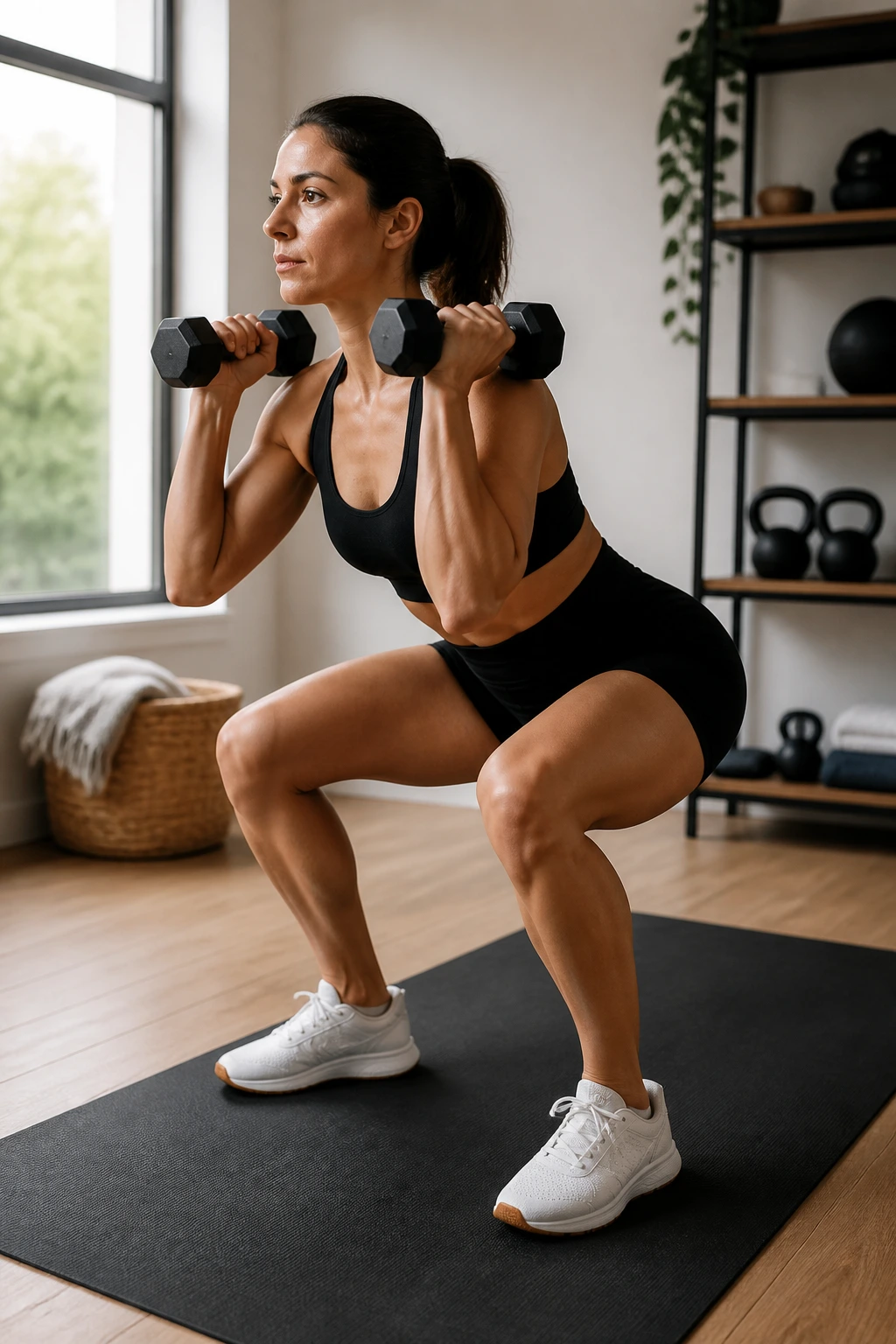
Slow reps humble people. They also build control fast. A three-second lowering phase changes a light dumbbell into a much more serious tool because the muscles stay under tension longer and the joints have to stay honest through the whole range.
Use tempo squats, tempo push-ups, tempo Romanian deadlifts, and tempo rows. The tempo can be 3 seconds down, a 1-second pause, and a normal drive up. Try 6 to 8 reps of each movement for 3 rounds. If the pace drops apart by round three, the load is too heavy or the rest is too short.
The lowering phase is where the work sits. That means no dropping into the bottom of the squat and no yanking the weight off the floor during the hinge. The body should look controlled from the first inch to the last.
One-sentence truth: tempo work makes average equipment feel expensive.
It is also kinder on people who want strength work without chasing max loads every session. Less chaos. More control.
18. Jump-Based Power for People Who Land Softly
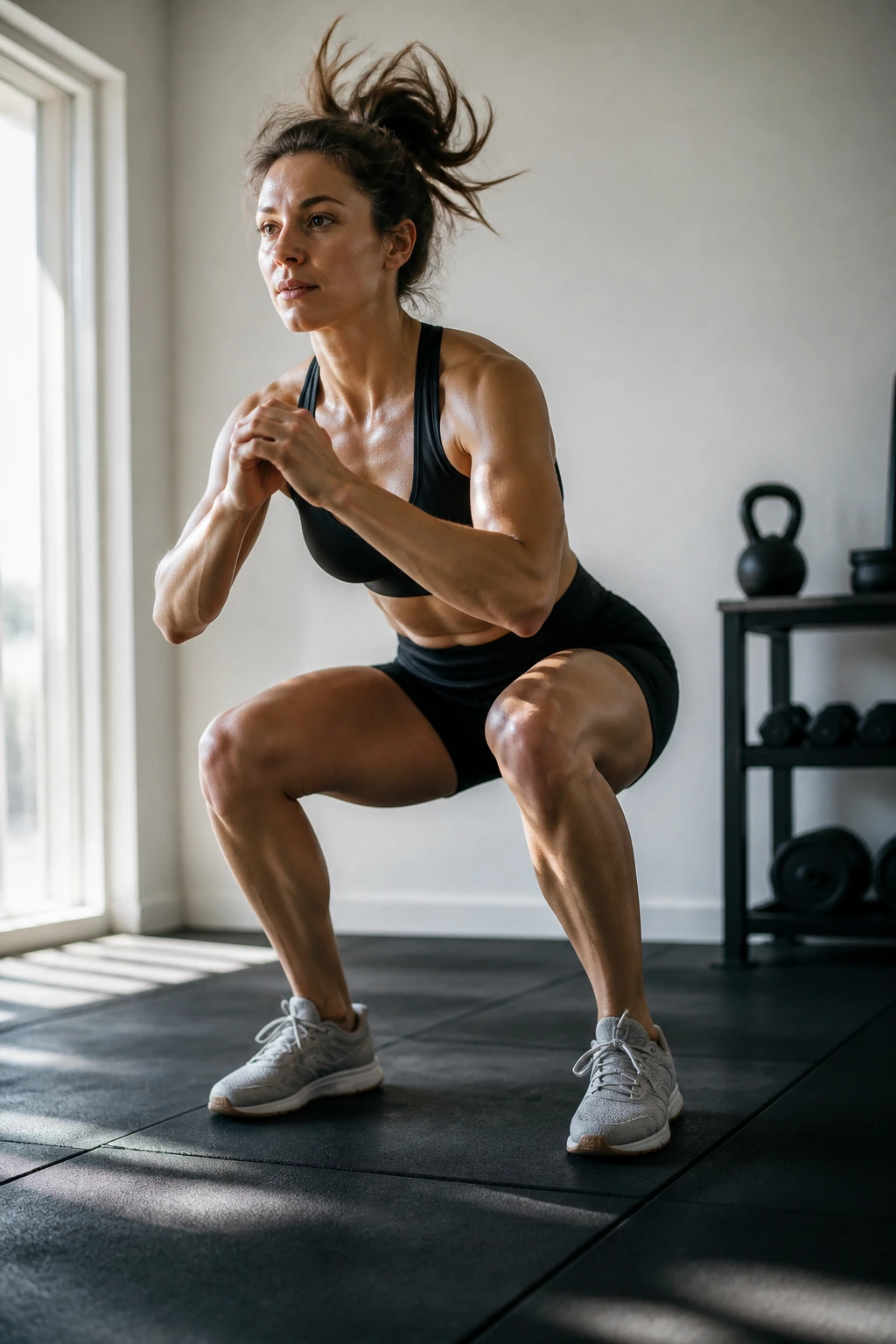
This is the opposite of the no-jump circuit, and it should be. Power work belongs to people who can land well, have enough space, and are ready for impact. If the ankles or knees hate jumping, skip this one and do the low-impact version instead.
Use squat jumps, skater hops, broad jumps with a clean stick landing, split jumps, and pogo hops. Keep the reps low and crisp. Three rounds of 5 reps per move is enough. The goal is not exhaustion. It’s sharp force and clean control.
Landing matters more than takeoff. Bend the knees, absorb through the hips, and settle quietly. A loud landing usually means the body is taking the impact somewhere it did not need to.
Good signs
- The jump looks snappy, not strained.
- You can stick the landing for a second.
- The body still feels springy on the next rep.
If the reps get sloppy, stop. Power is a quality issue, not a suffering contest.
19. Bear Crawls, Planks, and Shoulder Taps for Core Control

Planks get boring fast. Crawls are harder to fake. That’s why I like them together in a circuit that tests the shoulders, the core, and the way you move your weight from hand to hand.
How to run it
- 20 seconds of bear crawl forward and backward
- 20 seconds of plank shoulder taps
- 20 seconds of inchworm walkouts
- 20 seconds of plank drag with a light object
- 20 seconds of crab walk
- Rest 30 seconds, then repeat for 3 rounds
Keep the hips level on the shoulder taps. Keep the knees just off the floor in the bear crawl. Inchworms should roll through the spine one vertebra at a time, not collapse into a stiff fold. If the wrist extension bothers you, place the hands on dumbbells or raise the hands on a sturdy step.
This circuit is short, but it has teeth. Your shoulders will know they worked. So will your trunk.
If the hips are swinging, the set is too fast. Slow down and regain shape.
20. The Four-Move Full-Body Reset
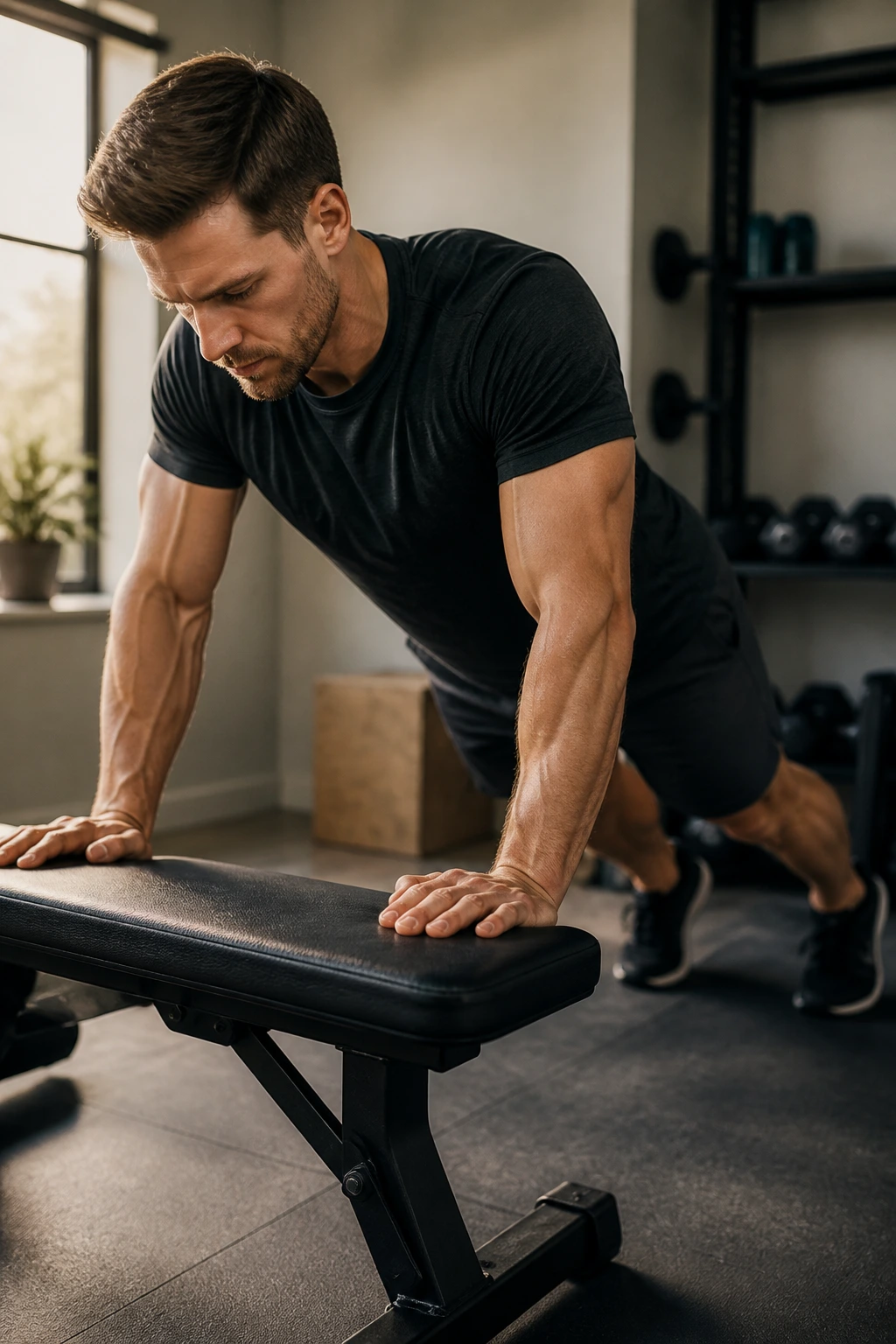
If motivation is low and the day is already crowded, this is the circuit I’d trust to get something done. It does not ask for perfect energy. It asks for attention for a few minutes, and that is enough.
Use reverse lunges, incline push-ups, hip hinges, and dead bugs. Four moves. That’s it. The lunge wakes up the legs, the push-up handles the upper body, the hinge loads the back side, and the dead bug brings the trunk back under control.
Try 8 reverse lunges each side, 8 incline push-ups, 12 hip hinges, and 8 dead bugs each side. Rest 45 seconds and repeat for 4 rounds. If you want more intensity, shorten the rest before you add more exercises. Extra chaos is usually not the answer.
This is the circuit to keep around for the messy days when you want something clean, quick, and repeatable. It also works well as a finisher after a longer session.
A clean reset beats a heroic plan you never finish.
Final Thoughts
The best home circuits are the ones you can repeat without needing a new mood every time. A chair, a timer, a backpack, and a floor patch are enough to cover a lot of ground if the exercises are chosen with a little care.
I’d keep three anchors in your week: one squat-and-push circuit, one hinge-and-carry circuit, and one low-impact conditioning day. That mix covers strength, stamina, and the boring but necessary work of moving well under fatigue.
Change the load before you chase novelty. Slow the lowering phase. Shorten the rest. Switch a flat push-up to an incline version or turn a jump circuit into a step circuit when your joints ask for it. That kind of adjustment keeps training useful for a long time.
