



A good full body workout split for women does not need to be fancy. If your week is a mix of work, family, errands, and a gym window that keeps shrinking, a smart split gives you structure without turning training into another job.
The biggest mistake I see is chasing a split that looks tidy on paper but falls apart the second life gets messy. Miss one chest day in a body-part routine and you wait forever to train it again. Miss one leg day and your whole week starts to feel lopsided. A full-body setup solves that problem fast.
What makes these plans useful is repetition. You keep practicing the same movement patterns — squat, hinge, push, pull, brace — often enough to get better at them, but not so often that every session feels like a beatdown. That matters whether your goal is muscle, strength, better conditioning, or simply having a plan you can stick with for months.
Some of the best splits look boring at first glance. Good. Boring is easier to repeat, and repetition is where progress usually hides. The 20 options below cover different schedules, equipment setups, and training styles, so you can match the split to your real life instead of forcing your life to match the split.
1. 3-Day Full Body Workout Split for Women Who Want the Simplest Win
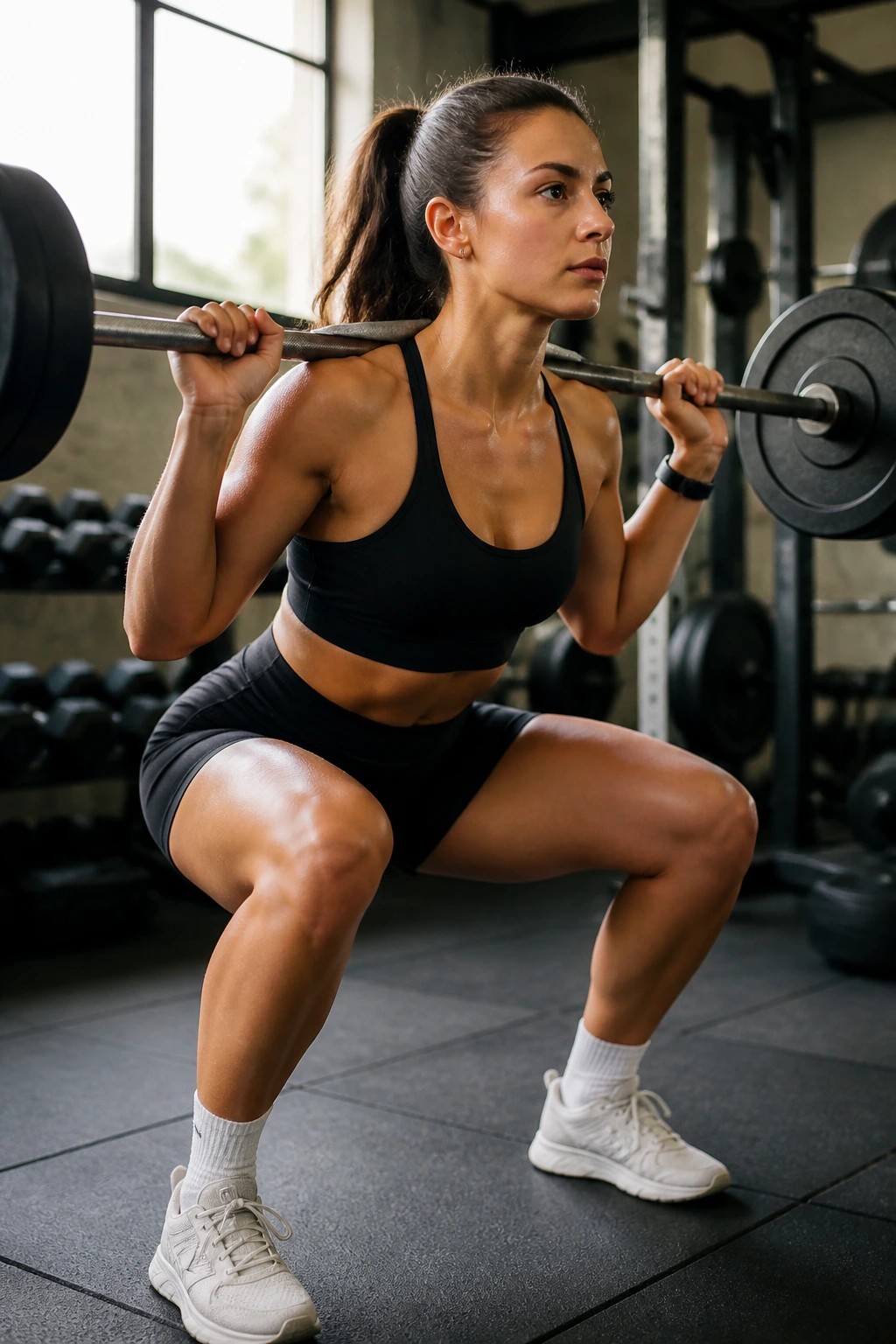
If you want one split that almost never feels complicated, this is the cleanest place to start. Three sessions a week gives you enough frequency to practice the lifts and enough recovery to show up with decent energy each time.
A classic setup looks like Monday, Wednesday, and Friday. Each session hits one lower-body move, one push, one pull, and one core drill, then maybe a carry or a short finisher if you still have gas left. That’s enough. You do not need nine exercises to make a full-body day count.
What each day should cover
- Day 1: Squat pattern, horizontal press, row, plank
- Day 2: Hinge pattern, overhead press, vertical pull, carry
- Day 3: Split squat or lunge, incline press, chest-supported row, dead bug
Keep most lifts in the 6 to 10 rep range with 2 to 4 sets. Rest long enough that your next set still looks clean, not rushed and ragged. If you leave the gym feeling like you could have done a little more, that’s usually a better sign than crawling out of the room.
Do not turn every session into a test. The point is to repeat good work, not to prove you are tired.
2. 2-Day Full Body Workout Split for Women With Packed Weeks
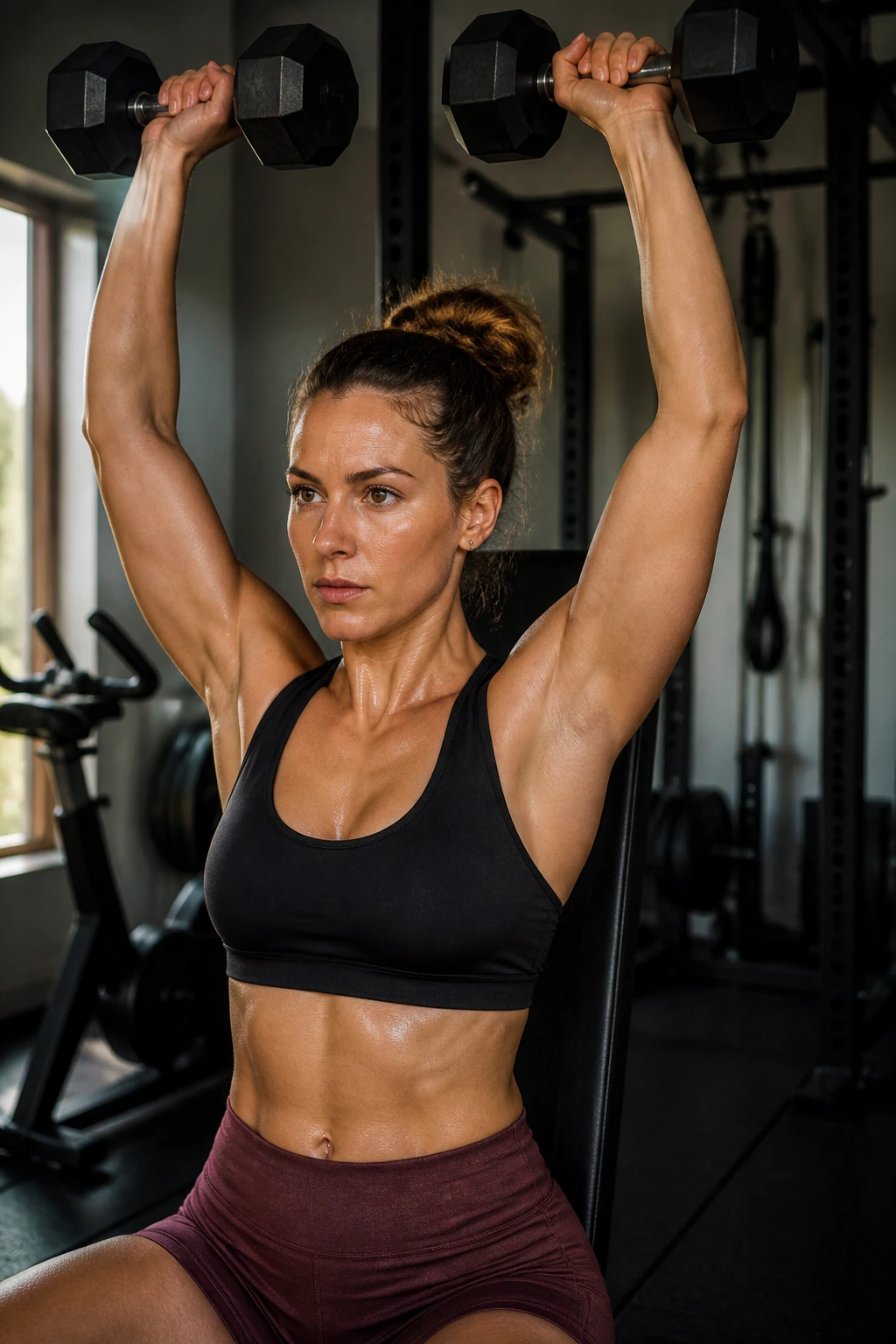
Two days can be enough if those two sessions are honest. I like this split for women who want the benefits of full-body training but know their calendar is messy and won’t magically get cleaner.
Day A can lean on squats, presses, and rows. Day B can lean on hinges, lunges, and pulldowns. You still train the whole body each day, but you spread the stress out so one missed session does not wreck the week. That alone makes it easier to stay sane.
The sets can be a little fuller here, too. Think 3 to 4 exercises for 3 to 5 sets each, with an extra accessory or two if time allows. Because the weekly frequency is lower, each workout carries more of the load, so I’d rather see four focused movements done well than a chaotic ten-exercise marathon.
This split works best when you stop trying to “catch up” inside the workout. That habit leads to junk volume. Keep the session crisp, get the big patterns done, and leave with enough energy to live your actual life afterward.
3. 4-Day Heavy-and-Light Full Body Workout Split for Women
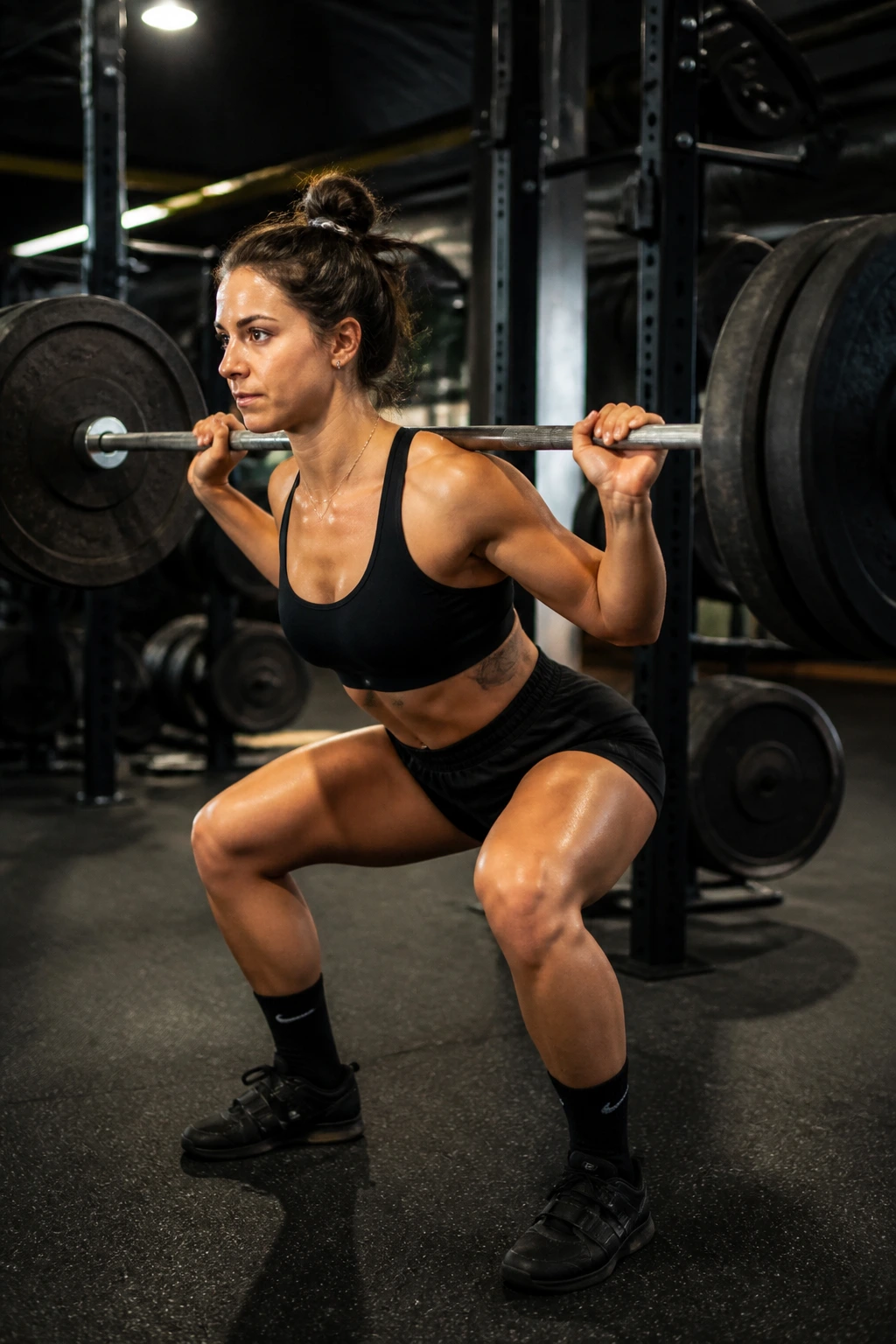
The neat thing about a heavy-and-light approach is that it gives you variety without abandoning full-body training. One day can feel powerful and focused. The next can feel a little faster, lighter, and less draining.
How the load changes
Heavy days usually mean lower reps, longer rests, and bigger compound lifts. Light days are where you use moderate loads, cleaner tempo, and maybe a small circuit feel. A lot of people train better this way because every session does not ask the same thing from the body.
A simple week might look like this:
- Day 1: Heavy squat, bench press, row
- Day 2: Light goblet squat, dumbbell press, cable pull, core
- Day 3: Heavy deadlift or Romanian deadlift, overhead press, lat pulldown
- Day 4: Light lunge, incline press, rear-delt work, carry
The point is not to turn light days into fluff. They still matter. They just use less load and more control, which can help you recover while keeping your training rhythm intact.
Best use: women who like strength work but do not want every session to feel heavy on the joints or the nervous system.
4. Dumbbell-Only Full Body Split for Small Spaces
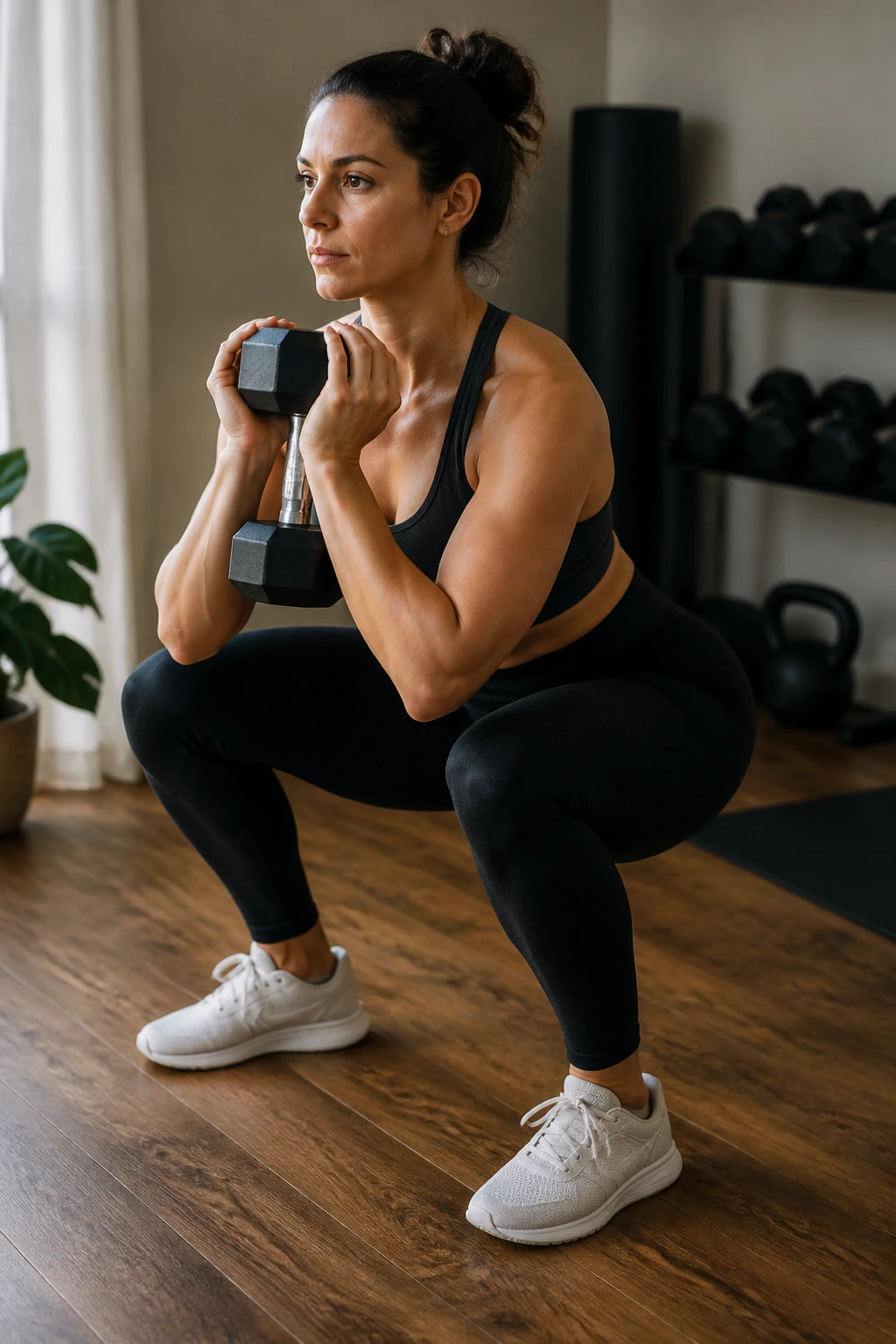
Dumbbells are the blunt instrument of good training. Not fancy. Very useful. If your home setup is a pair of adjustable dumbbells, you can still build a serious full-body plan without chasing more gear.
What makes this split so practical is the way dumbbells expose weak links. A goblet squat tells you quickly whether your core is awake. A one-arm row shows you whether one side is doing all the work. A split squat makes laziness obvious in a hurry.
A strong dumbbell session might include goblet squats, Romanian deadlifts, floor presses, one-arm rows, reverse lunges, and farmer carries. The order matters less than the basics: start with the hardest compound moves, then finish with the smaller stuff. Use 3 sets of 8 to 12 on most lifts, and chase cleaner reps before you chase heavier bells.
This split is also easy to progress. Add a rep. Slow the lowering phase. Pause for a second at the bottom. Move from bilateral work to single-leg work. That kind of progression lasts a long time, which is exactly what you want when you train with limited equipment.
5. Barbell Full Body Split for Women Who Like Clear Numbers
A barbell split is for the person who likes loading to feel obvious. More weight on the bar. Fewer guesses. Cleaner progression. That can be motivating, and I’m a fan of that kind of honesty.
Unlike dumbbells, a barbell makes it easy to track load from week to week, which is useful if your main goal is strength or muscle gain. You can anchor the week around a squat variation, a press, a hinge, and a row, then build around those. The session feels focused because the bar tells you exactly how hard the day is.
Main lifts worth anchoring around
- Back squat or front squat
- Bench press or incline barbell press
- Deadlift or Romanian deadlift
- Barbell row or pendlay row
- Overhead press
Most lifters do well with 3 to 5 working sets of 3 to 6 reps on the main lift, then a few accessory lifts in the 6 to 10 range. Rest longer than you think you need. Heavy barbell work gets sloppy fast when you rush it.
My blunt take: if you love barbells, lean in. If you hate them, don’t force the issue. Good training does not need to feel like a punishment.
6. Kettlebell Full Body Split for Women Who Want Training to Feel Fast
Kettlebells bring a different rhythm to full-body training. They reward sharp technique, good bracing, and moves that feel a little athletic. Swings, cleans, goblet squats, presses, and carries all fit neatly into one session.
A kettlebell split works especially well when you want strength and conditioning in the same workout without turning everything into a wind sprint. The bell keeps you honest. If your hips are loose or your core is lazy, you feel it immediately.
How to keep it crisp
- Use swings for hip power, not arm flinging
- Pair clean-and-press work with squats or rows
- Keep carries short and heavy, around 20 to 40 meters
- Finish with core work like dead bugs or suitcase holds
A lot of people try to do too much with kettlebells and end up gassed before the session gets useful. Better to keep the movement list tight and focus on clean, repeatable reps. One good kettlebell session beats three sloppy ones.
If you train at home, this split is a gift. One bell can cover a surprising amount of ground.
7. Home Bodyweight-and-Band Full Body Split
No gym. No problem. A bodyweight-and-band split can still train the whole body hard enough to matter, especially if you control tempo and do not rush through the easy-looking stuff.
A strong home session usually starts with a squat pattern, then moves to a push, a pull, a hinge, and core. Bands are the piece that make this feel more complete, because they give you a true pulling option when you do not have machines or heavy dumbbells. A loop band around a sturdy anchor can do more for your back work than people expect.
Push-ups, reverse lunges, glute bridges, band rows, band pull-aparts, and dead bugs are the bread and butter here. Add a backpack if you need more load. Slow the lowering phase to three seconds if the moves start feeling too easy. That tiny change makes a plain bodyweight session a lot less casual.
Good swaps when equipment is limited
- Split squat instead of goblet squat
- Backpack row instead of cable row
- Feet-elevated push-up instead of dumbbell press
- Hip hinge with a loaded backpack instead of RDL
This split is less glamorous than a loaded gym plan, but it is often more realistic. And realistic wins.
8. Full Body Hypertrophy Split with 8-to-12 Rep Work

Want muscle without living under a barbell? This is the split I’d hand you. Hypertrophy work lives in the middle ground: enough load to matter, enough volume to create a stimulus, not so much intensity that every rep feels like a dare.
The common rhythm is 3 sessions a week, each with 5 to 7 movements. Use mostly 8 to 12 reps, with 60 to 90 seconds of rest on the smaller lifts and a little more time on the big ones. The exercises can rotate, but the overall goal stays the same: give the muscle enough work to grow, then recover and repeat.
A good hypertrophy full-body session might start with a squat or leg press, then move to a chest press, a row, a hinge, a shoulder move, and a core finisher. The trick is to stop leaving half your effort on the floor. You want the last few reps to feel honest, but not ugly.
How to use it when size is the goal
- Work near failure on the last set of each lift
- Keep form stable when fatigue kicks in
- Track your loads and reps in a notebook
- Build volume slowly instead of adding everything at once
This split is boring in the best way. Repeated effort. Clear numbers. Visible progress.
9. Full Body Strength Split with Low Reps
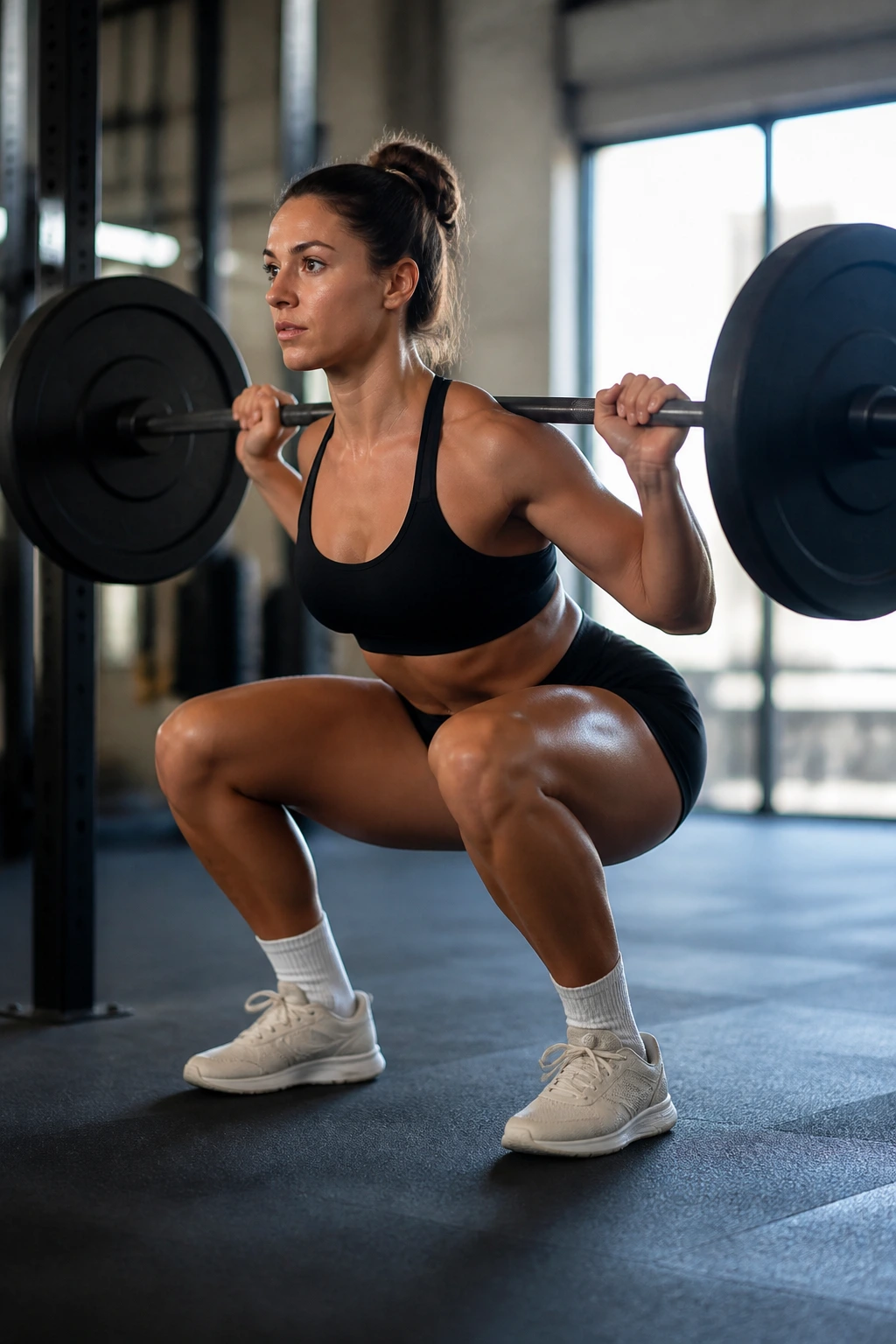
Heavier work does not have to mean a marathon. A strength split keeps the exercise list short and the loading serious, which is useful if you want to lift better rather than chase a sweat.
The shape is simple: one main lower-body lift, one main push, one main pull, then a couple of accessories. The reps stay low — 3 to 5 on the main lifts, maybe 5 to 8 on the extras — and the rest periods stay long enough that the next set feels sharp. No rushing. Strength work hates rushing.
A lot of women shy away from this style because it looks intimidating on paper. In practice, it can be easier to manage than high-volume work. Fewer movements. Fewer decisions. More focus on bar speed, bracing, and clean technique.
The biggest mistake here is treating every set like a max-out. Don’t. Leave a rep in the tank, maybe two. That keeps your technique from falling apart and makes the next session more productive. Strength is built on repeatable work, not one dramatic hero set.
If you enjoy measurable progress and clear numbers, this split feels good fast.
10. Full Body Circuit Split for Fat-Loss Support
A circuit split is the one people reach for when they want training to feel busier and heart-rate driven. That does not make it better for everyone, but it can be a smart option if you need a full-body session that moves.
The setup is usually 4 to 6 exercises done back-to-back, then repeated for 3 to 5 rounds. A lower-body push, a hinge, a push, a pull, and a core drill can cover the whole body without much dead time. The pace is the point. You keep the work dense.
What to keep heavy enough
- One lower-body move should still feel challenging
- One pull should be loaded enough to matter
- One push should not be reduced to air-push territory
- Core work should stay controlled, not sloppy
- Rest should be short, but not chaotic
The problem with a lot of circuits is that they drift toward cardio with tiny weights. That’s fine if all you want is movement, but it’s not enough if you still want shape, strength, or muscle retention. Keep at least one or two moves heavy enough that you need to brace and think.
This split is handy for people who get bored easily. It’s also useful when the session needs to be done quickly and you’d rather sweat hard than stare at a clock.
11. EMOM Full Body Split for Short Sessions
Why do EMOM workouts work so well when time is tight? Because the clock makes the whole thing brutally simple. Every minute on the minute, you do the assigned reps, then rest for whatever time is left.
That structure works beautifully for full-body training because you can rotate through squat, push, pull, hinge, and core without needing a sprawling routine. Twelve to twenty minutes is enough for a solid session if you choose the exercises well. You don’t need a huge menu.
A practical EMOM might look like this: minute 1 goblet squats, minute 2 push-ups or presses, minute 3 rows, minute 4 Romanian deadlifts, minute 5 plank or carries. Repeat the cycle. If the reps start eating the entire minute, the weight is too heavy or the reps are too high.
How to build one
- Keep each station to 5 to 8 reps
- Use a load you can move cleanly while breathing hard
- Stick to 10 to 20 minutes total
- Choose movements you already know well
EMOMs are great for discipline, but they’re not the place to learn messy technique. Keep the form clean and the plan tight.
12. Superset Full Body Split for Women Who Hate Wasted Time
Supersets are the practical person’s answer to long gym sessions. Pair one move with another, rest a bit, then do the pair again. You get more done in less time, and the workout feels focused instead of meandering.
Unlike a circuit, a good superset plan gives each pair a bit more breathing room. That’s useful when you want to keep the weights decent and the form strong. A squat paired with a row works because the lower body and upper back are not fighting each other for the same energy at the same instant.
A simple format looks like this: A1 squat, A2 row; B1 press, B2 hinge; C1 lunge, C2 core. You can keep the sets at 3 to 4 rounds and still get a very complete full-body day. It’s efficient without feeling sloppy.
The real win is mental. Supersets make the gym feel structured. No wandering. No long rests that turn into phone scrolling. Just work.
If your attention span is short or your schedule is tighter than you want, this split earns its keep fast.
13. Full Body Power Split with Jumps and Throws
Power work has a different feel. Quick. Sharp. A little loud if you’re using a medicine ball or dumbbells with intent. This split belongs to the lifter who wants to move fast, not just move heavy.
The main idea is simple: do explosive work early, while you’re fresh, then follow with strength and accessories. Broad jumps, medicine ball slams, jump squats, push press, kettlebell swings, and sled pushes fit here. The reps stay low because power dies when fatigue takes over.
The kind of moves that belong here
- Box jumps or broad jumps
- Medicine ball slams
- Push press
- Kettlebell swings
- Sled pushes or prowler drags
You should feel snappy, not fried. That’s the whole point. If your jump landings get loud and clunky, or your press turns into a grind, stop chasing output and lower the load.
Power splits are underrated for women who feel bored by slow training. They also teach coordination, timing, and a little athletic bounce. Not every program needs that, but a lot of people enjoy it more than they expect.
14. Glute-Biased Full Body Split for Women Who Want More Hip Work
A glute-biased split is still full body, but it gives extra room to hip extension work. Think hip thrusts, Romanian deadlifts, split squats, step-ups, and cable kickbacks. Not endless kickbacks, though. That gets old fast. The point is to build the session around the patterns that load the glutes from different angles.
The best versions of this split still include pressing and pulling. That balance matters. A workout that is all lower body and no upper body turns into a one-trick plan, and that is not what we’re after here.
A good week might include one heavier hinge day, one more squat-dominant day, and one mixed day with higher-rep glute accessories. Add rows and presses in every session so the upper body keeps moving, too. That keeps the plan honest.
My advice: start the session with the hardest glute lift, then layer the smaller work after it. If you bury the main lift under too many activation drills, the whole workout gets mushy. You want the glutes trained, not babied.
15. Upper-Back and Posture-Focused Full Body Split for Women Who Sit a Lot
If your shoulders feel like they live in the front of your body, a posture-focused split can feel like a breath of fresh air. It still trains the full body, but the upper back gets extra love through rows, rear-delt work, face pulls, and carries.
That does not mean you skip pressing. It means you bias the program toward pulling for a while. A 2:1 pull-to-push ratio can make sense if your back is undertrained or your chest work has been doing all the talking. The lower body still gets squat and hinge work, because the point is balance, not obsession.
Where this split shines
- Chest-supported rows
- Lat pulldowns
- Face pulls
- Rear-delt flyes
- Farmer carries
This split is useful for desk workers, new lifters, and anyone who wants their upper body to feel more open and organized. It also tends to feel good on the joints because a lot of the pulling work is easier to recover from than constant heavy pressing.
A small warning: posture is not fixed by one exercise. Still, if you train the back hard and often enough, you usually feel the difference in how you stand and move.
16. Low-Impact Full Body Split for Women Who Want Joint-Friendly Training
Can a full-body split be hard without jumps, burpees, or pounding circuits? Absolutely. Low impact is not the same thing as easy. It just means you keep the stress away from repetitive pounding.
This style is a good fit when knees, hips, or feet get cranky, or when you simply don’t enjoy high-impact work. Step-ups, split squats, sled drags, controlled presses, rows, glute bridges, and carries can all build a serious session without a single jump.
What to swap in and what to leave out
- Use step-ups instead of box jumps
- Use sled pushes instead of sprint intervals
- Use controlled tempo lunges instead of jump lunges
- Use bike intervals instead of running finishers
Tempo matters a lot here. A three-second lowering phase on a squat or split squat can make a moderate load feel much harder. That’s a nice trick when you want training stress without joint noise.
This split is especially good for rebuilding consistency after a break. It feels manageable, but it still asks the body to work.
17. Machine-Based Beginner Full Body Split for Women Learning the Ropes
Machines are not cheating. They are stable, easy to repeat, and excellent for learning how hard a set should feel. If you’re new to the gym, that matters more than looking impressive near the squat rack.
A machine-based split can still hit the whole body in a clean pattern: leg press or hack squat, chest press, seated row, hamstring curl, lat pulldown, and cable core work. You can get through the workout with less setup time and fewer balance demands, which keeps the focus on effort and movement quality.
That makes this split a smart entry point for beginners, or for anyone coming back after a long layoff. The path is obvious. Sit down. Set the pin. Do the reps. Rest. Repeat. Simple is helpful when confidence is still building.
Good machine choices
- Leg press for squat pattern
- Seated row for horizontal pull
- Chest press for horizontal push
- Hamstring curl for posterior chain
- Lat pulldown for vertical pull
Once the machine groove feels normal, you can always move a few exercises to dumbbells later. No rush.
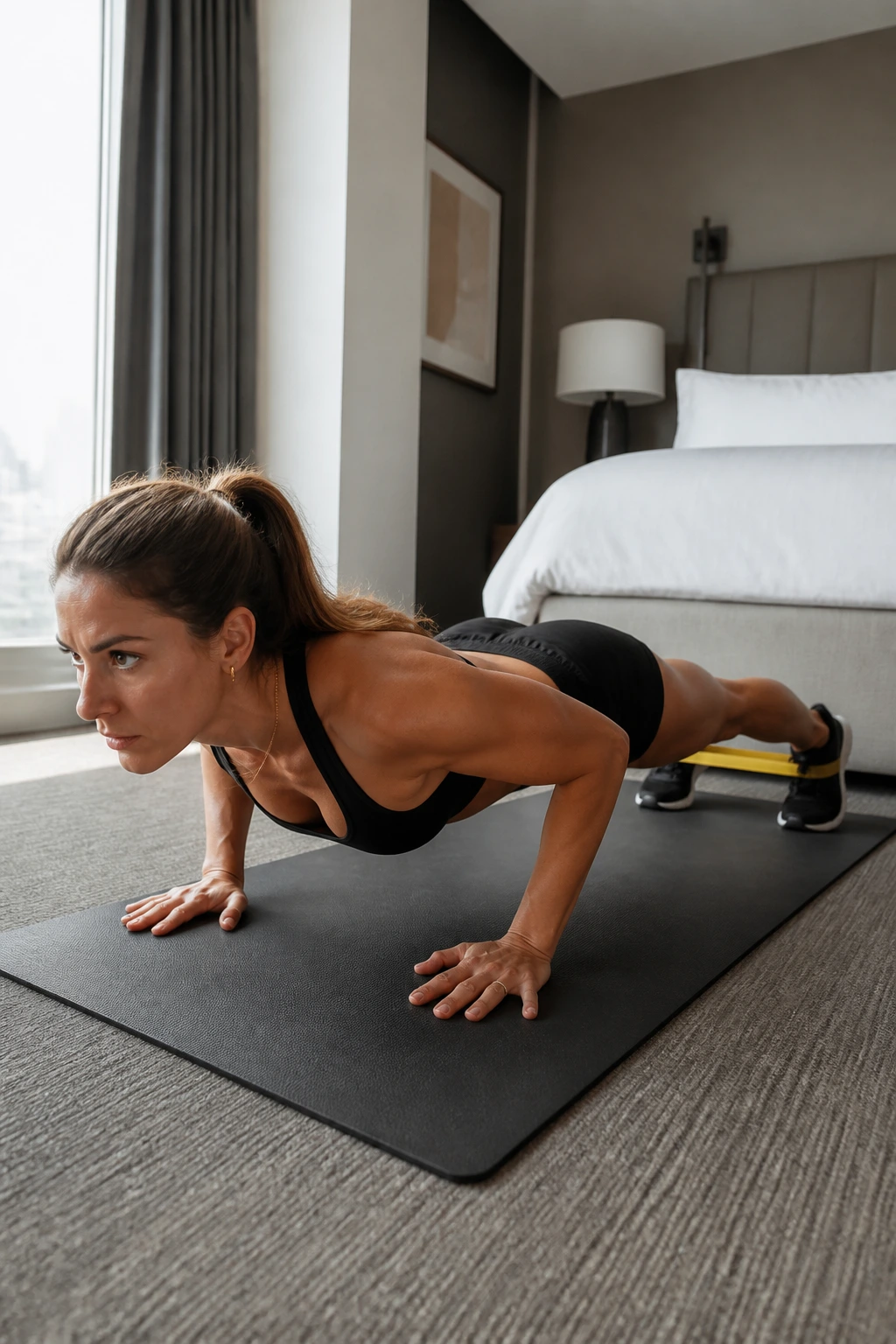
18. Travel Full Body Split for a Mat, a Band, and One Pair of Shoes
Travel workouts have a low ceiling on fancy gear, so the split has to lean on bodyweight, bands, and smart pacing. That’s fine. You can still hit the whole body hard enough to keep momentum.
A hotel-room full-body session usually includes push-ups, split squats, single-leg RDLs, band rows, band presses or overhead work, and core. If you have a backpack, load it with clothes. If you have a miniband, use it for glute work and lateral walks. Small tools, decent payoff.
The challenge here is not exercise selection. It’s staying honest with effort. Because the room is small, people tend to drift into casual reps. Don’t. Slow the lowering phase, pause at the bottom, and keep the set near technical failure. That’s where the stimulus lives.
A nice side effect: travel sessions are short enough to fit around weird schedules. Twenty to thirty minutes is plenty if the exercise choices are sensible. You leave feeling like you kept the habit alive, which matters more than people admit.
19. Recovery-Based Full Body Split for Busy or Sore Weeks
Not every week deserves the same workload. Some weeks you’re sleeping well, eating on time, and feeling strong. Other weeks you’re dragging. A recovery-based split gives you a way to stay in the game without forcing a big session when your body is already voting no.
The trick is to have three versions of the same workout: a full version, a trimmed version, and a minimum version. The full version might have five lifts. The trimmed version might have three. The minimum version might be a 15-minute circuit that keeps the pattern alive. That flexibility makes consistency easier to protect.
The three versions
- Full: squat, press, row, hinge, core
- Trimmed: squat, press, row
- Minimum: 2 rounds of squat pattern, push, pull, and carry
This is one of my favorite setups for women with unpredictable weeks because it removes the all-or-nothing trap. If you feel rough, you do less. If you feel good, you do the full thing. Either way, you trained.
That sounds small. It isn’t. Staying consistent through imperfect weeks is a serious skill.
20. The Flexible A/B Rotation That Keeps the Whole Thing Simple
This is the split I’d trust if I had to keep things useful for a long stretch without overthinking every Tuesday. You write two full-body workouts — A and B — then alternate them across the week.
Workout A might be squat, horizontal press, row, and core. Workout B might be hinge, vertical press, pulldown, and carry. If you train three days, the week looks like A/B/A, then B/A/B the next week. If you train four days, you just keep rotating. No drama. No weird calendar math.
The beauty here is that progress becomes easy to see. If your squat is up, your row is smoother, and your presses have a little more speed, you know the split is doing its job. You can also swap one exercise at a time without blowing up the whole plan, which is handy when joints get cranky or equipment is taken.
Best use: women who want a full-body structure that can survive real life. That’s the real test, honestly. Not whether the split looks fancy. Whether you can keep repeating it when the week gets noisy, the gym is crowded, and your motivation is doing that annoying half-in, half-out thing.
Pick the version that fits your schedule, keep the main lifts visible, and let the plan stay simple enough that you don’t dread opening the notebook. That’s usually where the good work starts.
