



A pair of dumbbells can do more work than a room full of machines if you program them with a little common sense. For full body dumbbell HIIT workouts at home, the sweet spot is simple: big compound lifts, short rests, clean form, and enough load to make you pay attention.
That’s the part people miss. HIIT is not a license to flail around as fast as possible. A well-built dumbbell circuit should make your legs burn, your grip tighten, and your breathing go loud, but your reps still need to look like reps. If the weights are so light you could wave them around like props, you’re doing cardio with decoration. If they’re so heavy that your back takes over, you’re just collecting bad habits.
Good home training has a certain honesty to it. You know exactly when the set starts to slip. You feel it in the third round when your shoulders want to shrug on every press and your lungs start arguing with your plan. That’s where a good dumbbell HIIT session earns its keep. It gives you a lot of stimulus in a small amount of floor space, and it does it without asking for a bench, a sled, or a rack that takes up half the garage.
Grab a pair of dumbbells, clear a patch of floor, and use the workout that matches the kind of effort you actually want to put in today.
1. The 40/20 Full-Body Dumbbell Circuit

Forty seconds looks friendly on paper. Then the timer starts, and the goblet squat gets serious.
This is the cleanest place to start if you want full body dumbbell HIIT workouts at home that feel balanced instead of random. You get enough time under tension to make each exercise count, but the 20-second breaks keep the heart rate from dropping too far. Use a moderate pair of dumbbells, not the heaviest ones in the room, because the fifth minute always feels different from the first.
The Five-Move Loop
- 40 seconds goblet squat
- 20 seconds rest
- 40 seconds bent-over row
- 20 seconds rest
- 40 seconds reverse lunge, alternating legs
- 20 seconds rest
- 40 seconds push press
- 20 seconds rest
- 40 seconds Romanian deadlift
- 60 seconds rest, then repeat for 3 to 5 rounds
The nice thing here is the rhythm. Squat, pull, lunge, press, hinge. No part of the body gets left out, and no movement pattern gets too much rest. If your form starts to wobble, cut the round count before you cut the range of motion. That is the better trade.
2. The EMOM Dumbbell HIIT Session
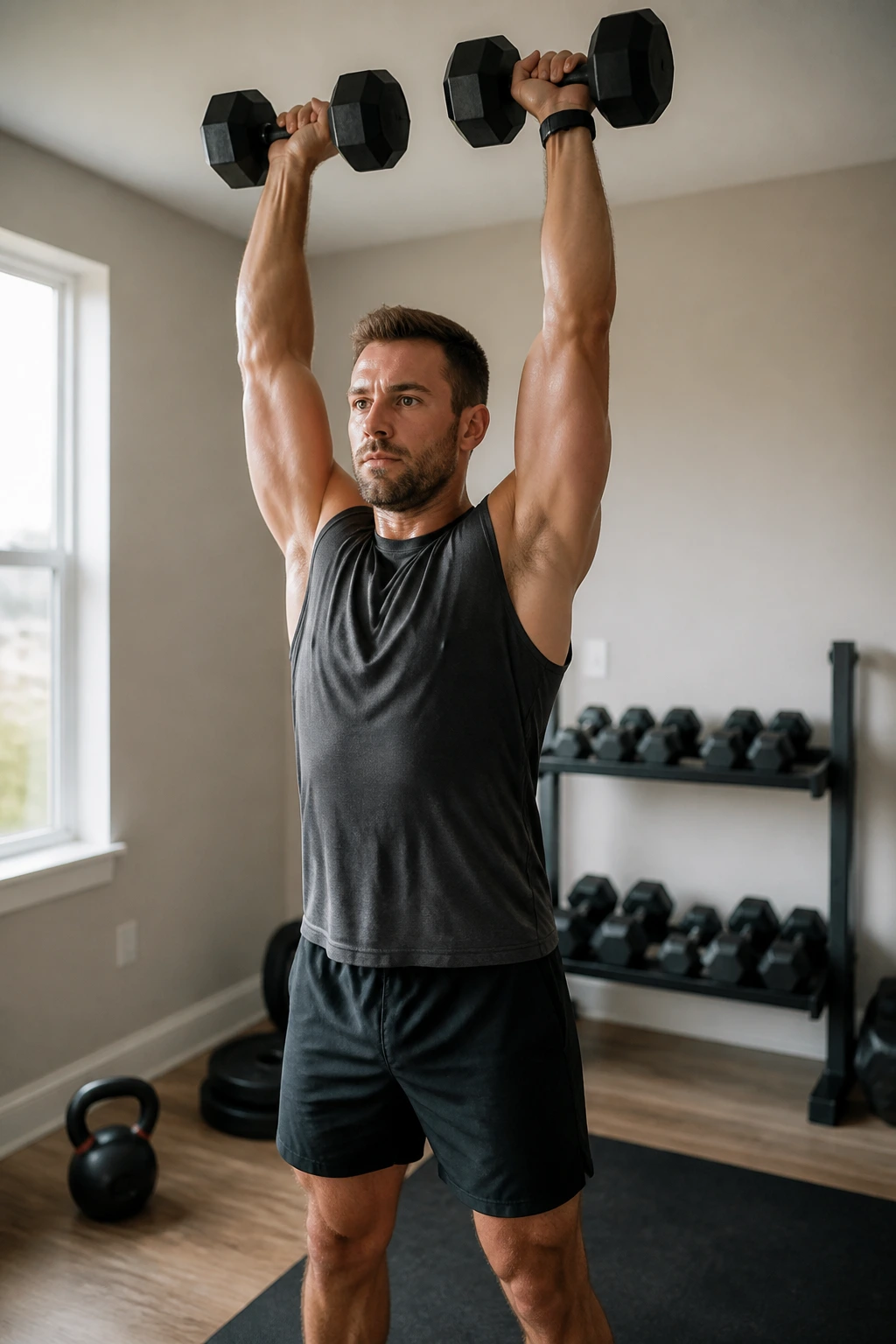
EMOM work is sneaky. It feels neat and tidy right up until minute three, when your breathing turns sharp and your legs stop being polite.
An EMOM—every minute on the minute—gives you structure without turning the workout into a free-for-all. You do the reps listed for that minute, then rest for whatever time is left. That little bit of forced recovery is a gift. It lets you use slightly heavier dumbbells than you would in a pure sprint circuit, which is why this style builds strength and conditioning at the same time.
Minute-by-Minute Breakdown
- Minute 1: 10 dumbbell thrusters
- Minute 2: 8 bent-over rows per side
- Minute 3: 10 alternating reverse lunges per side
- Minute 4: 8 floor presses
- Repeat the 4-minute block 3 or 4 times
Keep the reps crisp. The goal is to finish each minute with 15 to 25 seconds to breathe, not to stare at the clock and panic. If you need the whole minute to finish the work, the load is too heavy or the rep target is too high. That leftover rest is part of the workout.
3. The 12-Minute Full-Body AMRAP
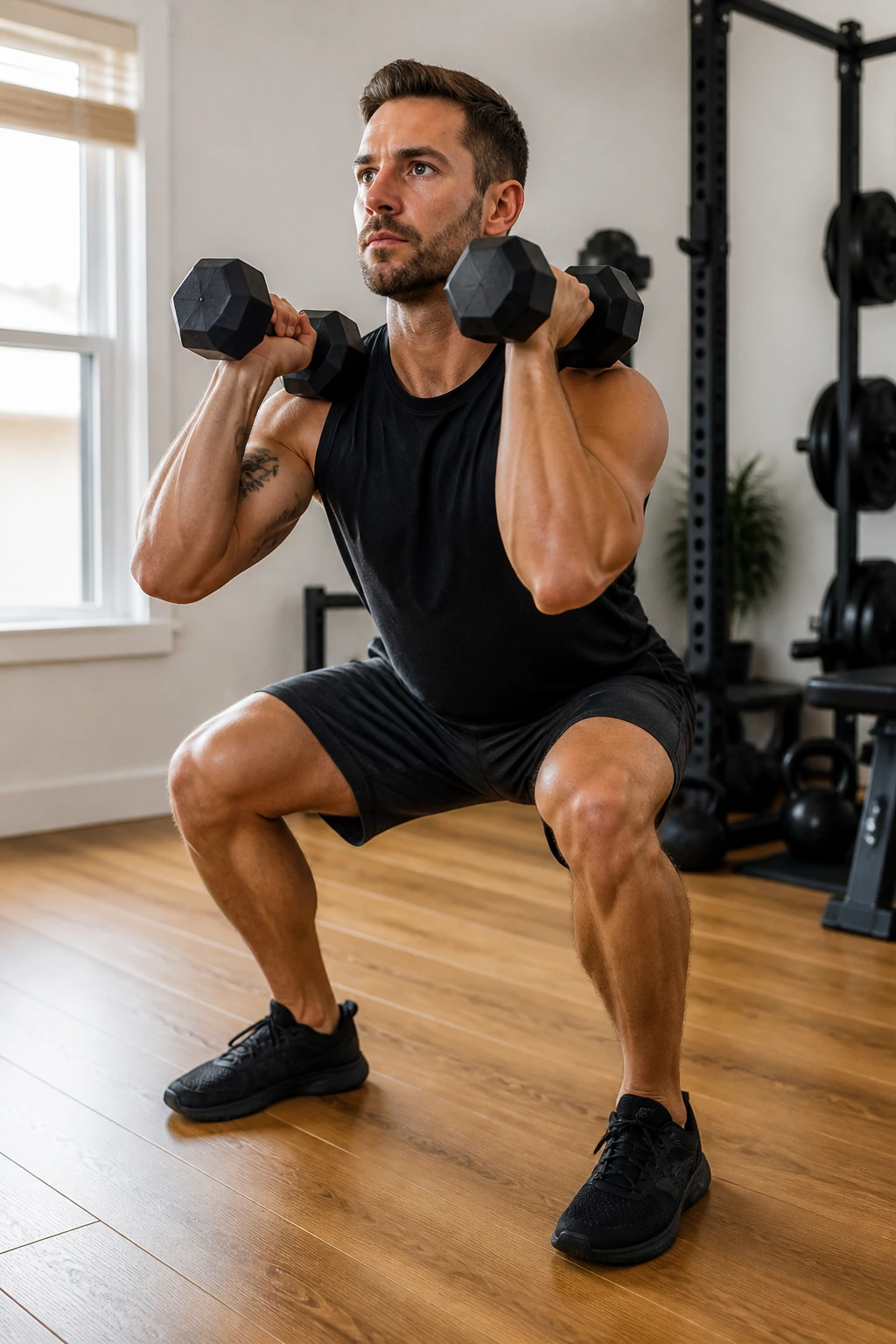
What happens when you stop waiting around between sets? You find out what your real pace is.
An AMRAP—as many rounds as possible—works well when you want a hard, honest sweat without overthinking the layout. This version is short, direct, and mean in the right way. Use a timer, keep the rep scheme simple, and move from one exercise to the next with just enough control to avoid sloppy shoulders and crooked knees.
How to Pace the Clock
- 8 dumbbell squats
- 8 one-arm rows per side
- 6 push presses
- 8 alternating step-back lunges
- 10 dumbbell deadlifts
Do as many quality rounds as you can in 12 minutes. Quality matters. If your squats turn into half-reps on minute 8, you’re not winning anything by forcing round 6. The point is to hold a steady output that you can repeat, not to sprint like the room is on fire.
This one rewards calm breathing more than brute speed. That surprises people the first time.
4. The 10-8-6 Dumbbell Ladder

If you hate starting fast and crashing hard, a descending ladder feels better than a flat-out sprint.
The ladder format lets you begin with a bit more volume when you’re fresh, then keep the same movements as the reps drop. That makes the workout feel more like a build than a blow-up. I like this style for home sessions because it gives you a clear finish line, which is a small thing until you’re staring at the fourth round and bargaining with yourself.
The Rep Pattern
- 10 dumbbell front squats
- 10 bent-over rows
- 10 alternating lunges
- 10 push presses
- Rest 30 to 45 seconds
- 8, 8, 8, 8
- Rest 30 to 45 seconds
- 6, 6, 6, 6
Use a load that feels moderate on round one and challenging on round three. If you have to swing the dumbbells to finish the presses, the weight is too ambitious for this format. The ladder should feel cleaner as the reps drop, not messier.
5. The Beginner 30/30 Starter Session
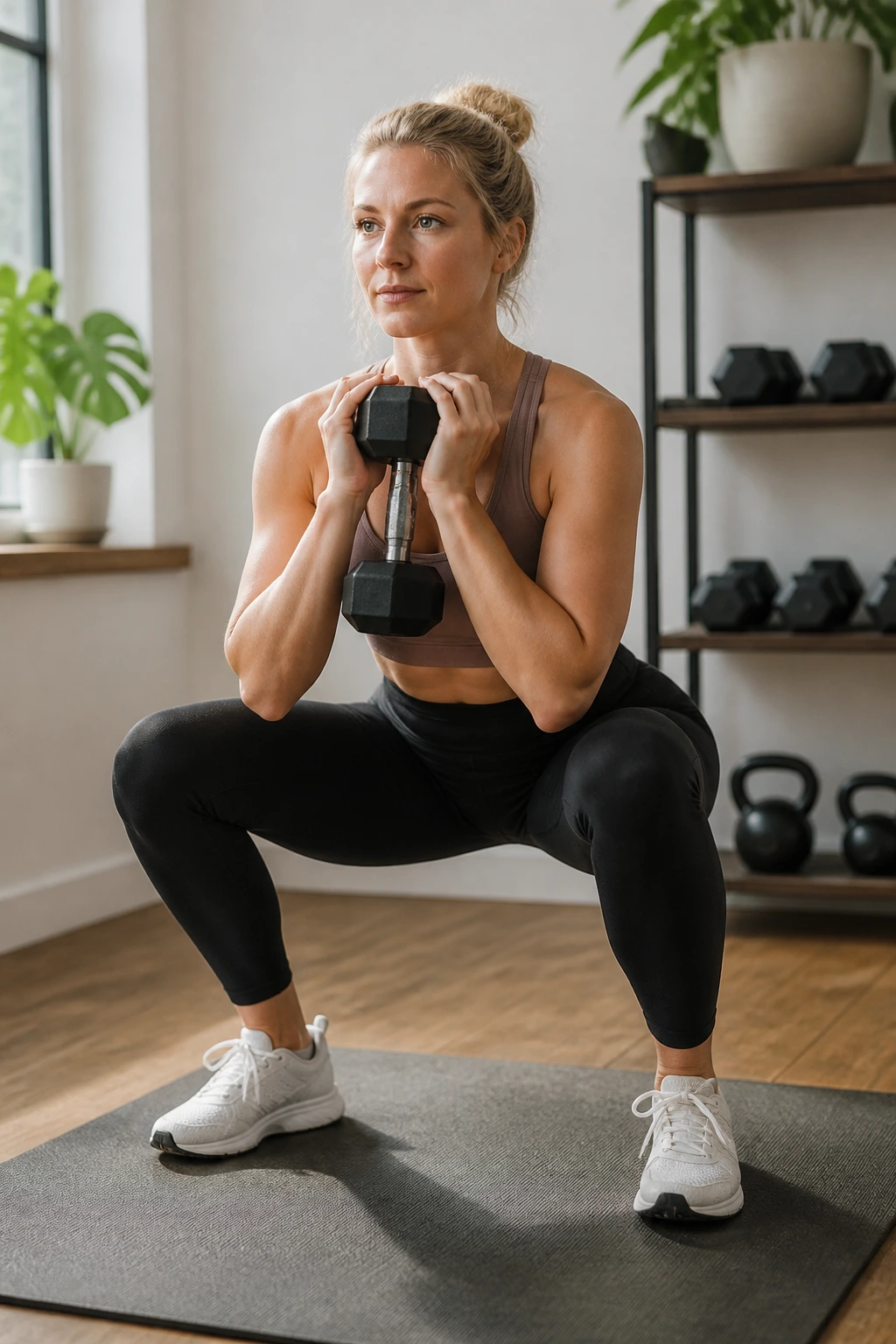
Thirty seconds sounds polite until your legs are on fire and you’re trying to remember how to breathe through your nose.
This is the version I’d hand to someone who wants a real dumbbell HIIT workout at home but doesn’t need a savage introduction. The 30 seconds on, 30 seconds off rhythm gives enough recovery to keep the form tidy. That matters. A beginner session should build confidence, not bury it under fatigue.
Choose lighter dumbbells than you think you need. Then pick the smaller end of that range. You can always go heavier next round, but you can’t get a clean rep back once your shoulder starts shrugging toward your ear. Keep the movements plain: squat, row, hinge, press, lunge. No tricks.
A nice starter block looks like this: goblet squat, one-arm row, Romanian deadlift, floor press, reverse lunge, and a suitcase carry if there’s time. Do 2 to 4 rounds. Leave one or two reps in the tank on every set. That is how beginners keep coming back.
6. The No-Jump Apartment HIIT Circuit
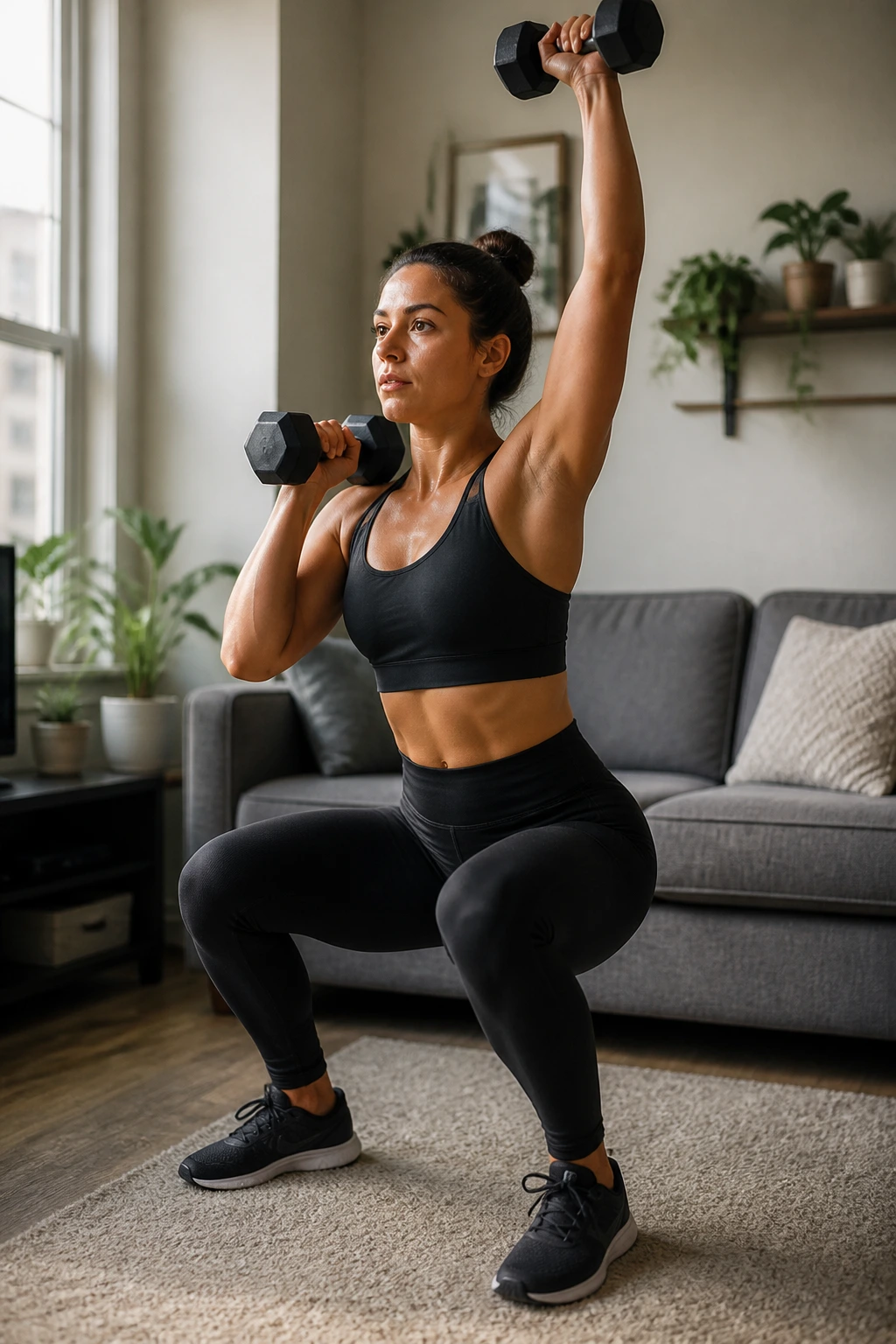
No jumping does not mean easy. It just means your floor and your neighbors stay happier.
This one is built for quiet feet, tight spaces, and days when you want the heart rate up without the sound of stomping. The trick is to keep the transitions quick and the stance changes deliberate. March instead of hop. Step instead of leap. Press with purpose. You’ll still get a serious sweat if you move continuously and keep the rest honest.
Why Low-Impact Still Hits Hard
- 45 seconds goblet squat to press
- 15 seconds rest
- 45 seconds bent-over row
- 15 seconds rest
- 45 seconds alternating reverse lunge
- 15 seconds rest
- 45 seconds deadlift
- 15 seconds rest
- 45 seconds suitcase march in place
This style is good when your joints want a break from impact but your brain still wants work. It also keeps the workout more repeatable, which matters more than people admit. A session you can do three times a week without dreading it tends to beat one heroic workout that leaves you sore for two days.
7. The One-Dumbbell Full-Body Routine

One dumbbell is enough. That sounds modest until your side abs start complaining.
A single-dumbbell session changes the feel of the workout in a good way. You get more anti-rotation work, more grip demand, and more control on every rep because your body has to fight the offset load. This is one of my favorite home setups when a pair feels like too much clutter or when you want to travel light across a tiny floor.
Best Weight Choice
- 6 single-arm clean and presses per side
- 8 front-rack split squats per side
- 10 one-arm rows per side
- 8 suitcase deadlifts per side
- 10 floor presses per side
- Rest 60 seconds, repeat 3 to 5 rounds
The whole thing works because the weight keeps pulling you sideways, and your core has to answer back. Keep the rib cage stacked over the hips. If you lean away from the dumbbell, the move stops being what it should be. A mirror helps here, but so does a blunt sense of honesty.
8. The Dumbbell Complex No-Set-Down Circuit

A dumbbell complex is what happens when you refuse to put the weights down and let the workout get away with it.
You do a chain of moves back-to-back with the same dumbbells, usually for a set number of reps, then rest after the whole sequence. It looks simple. It is not. The complex taxes grip, breathing, legs, and shoulders all at once, which makes it one of the most efficient home sessions on this whole list.
A solid sequence is deadlift, bent-over row, hang clean, front squat, push press. Do 5 reps of each without setting the bells down. Rest 90 seconds. Repeat 4 to 6 times. Keep the weight moderate, because the clean and press will expose lazy technique fast.
Do not race the transition. Smooth is better than frantic here. If the dumbbells bang off your thighs, you’re hurrying through the part that matters most. That is where the power is built.
9. The Heavy 20/40 Strength HIIT Session
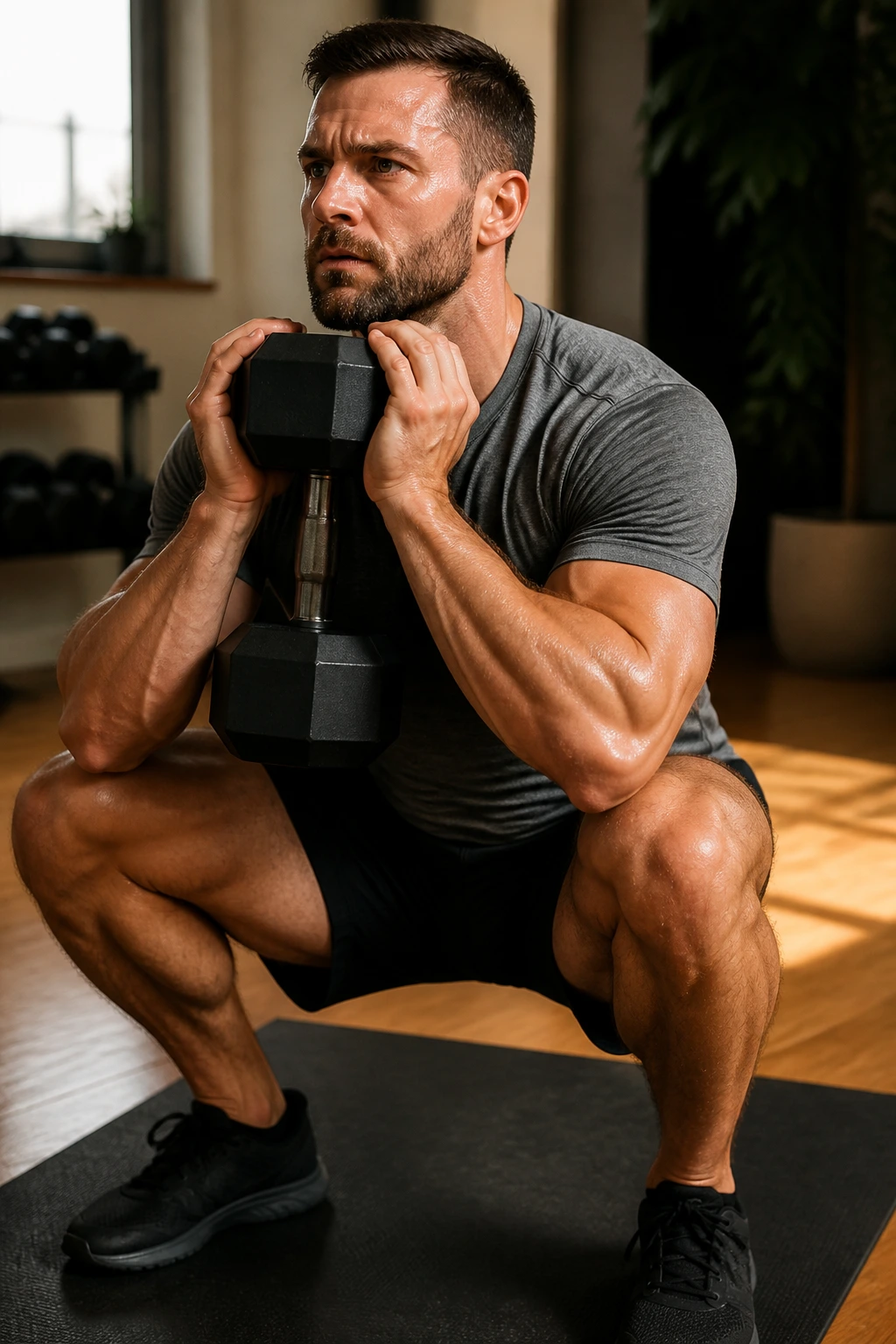
Heavy intervals are a different animal. You’re not chasing a burn the way you are in a classic cardio circuit; you’re trying to produce force under a short clock.
This style is useful if you have a pair of dumbbells that feels serious in your hands and you want the session to lean more strength-focused. Use 20 seconds of work and 40 seconds of rest so the reps stay sharp. The extra breathing room helps you keep the load honest instead of shrinking it into something too easy.
How to Keep It Easy
- 20 seconds goblet squat
- 40 seconds rest
- 20 seconds dumbbell floor press
- 40 seconds rest
- 20 seconds Romanian deadlift
- 40 seconds rest
- 20 seconds one-arm row
- 40 seconds rest
- Repeat for 4 to 5 rounds
This is not the place for ugly grinding reps. Stop each set when speed drops hard. The clean rep is the point. The second you start heaving the weight around, the session shifts from strength work into chaos, and chaos is expensive.
10. The Split-Stance Full-Body Burner
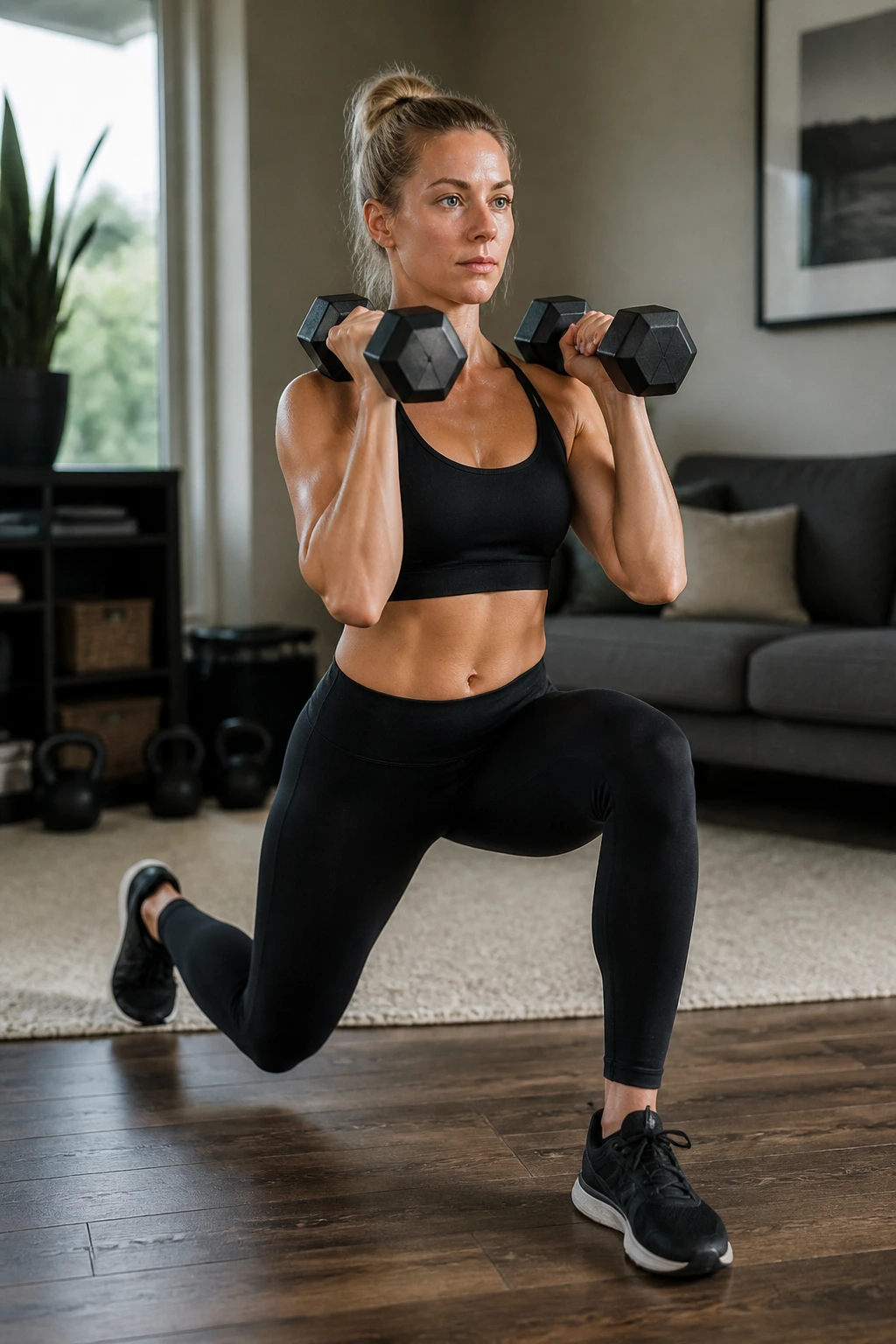
A split stance looks calm. It is a lie.
One foot forward, one foot back, dumbbells in hand, and suddenly the working leg has to do more than it expected. Split-stance training is a sneaky way to get full-body work without needing jump squats or machine settings. It also keeps a lot of people safer, because the setup is stable enough to hold form when fatigue starts creeping in.
The best version uses a front-rack split squat, a split-stance row, a staggered-stance press, and a hinge pattern like a kickstand deadlift. Run each move for 30 to 40 seconds, then rest for 20 seconds. Five rounds is plenty.
The detail that matters most is foot pressure. Keep the front heel planted and the back foot light, almost like you’re balancing on the ball of the foot rather than pushing off it. If both legs are doing the same amount of work, you’ve lost the point.
11. The Push-Pull Dumbbell HIIT Workout
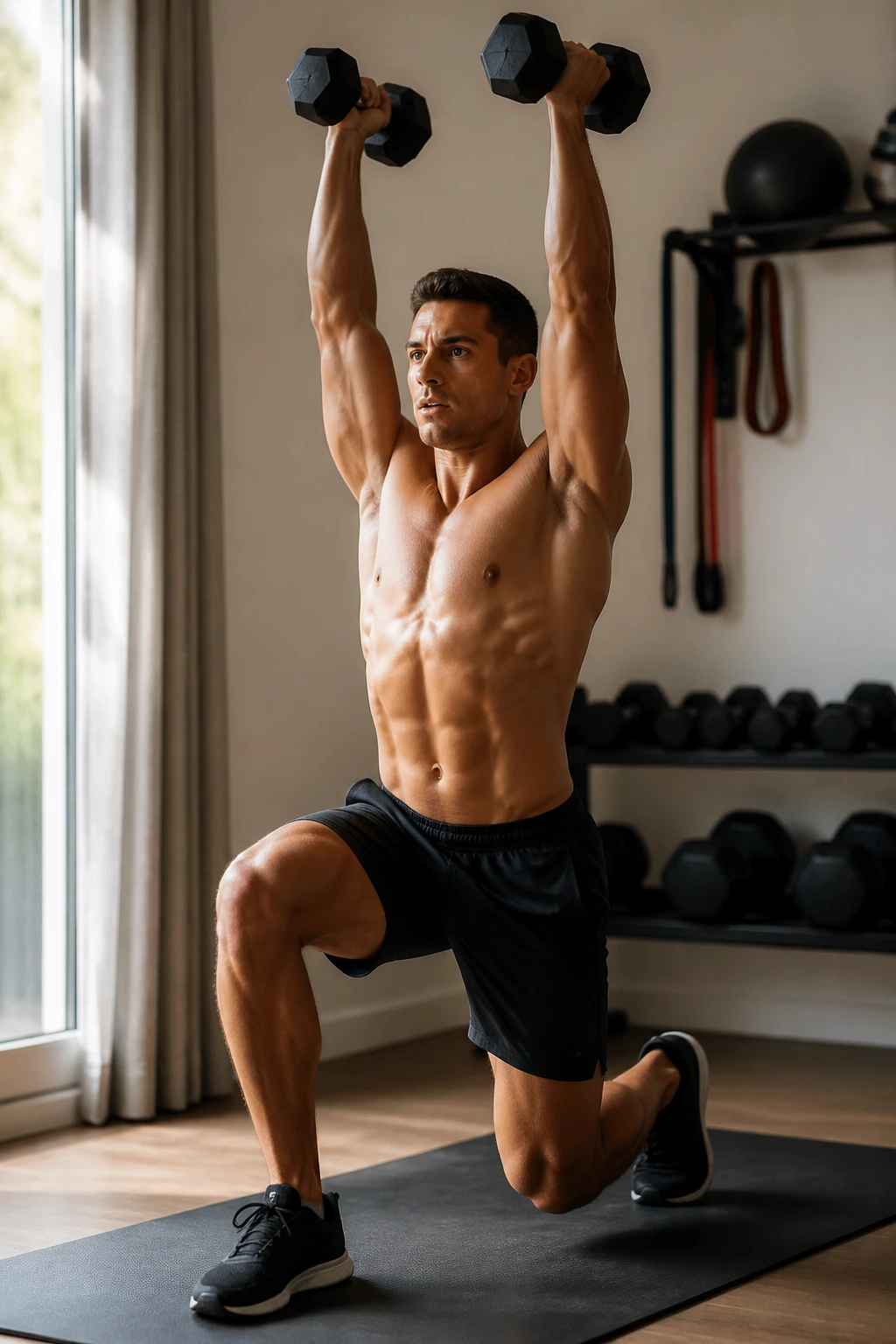
Upper-body days can still be full-body days if you stop pretending the legs don’t matter.
This session is built around push and pull patterns, but the lower body stays involved through stance work, squats, and hinges. That balance matters because a lot of dumbbell workouts lean too hard into pressing and leave the back and hips undertrained. Not here.
Use a sequence like this: floor press, bent-over row, push press, reverse lunge, and Romanian deadlift. Do 8 to 12 reps of each, rest 30 seconds, and repeat for 4 rounds. If you want it harder, move the rest down to 20 seconds and keep the reps fixed.
Where the Upper Body Fails First
The shoulders usually go before the chest does, especially if you rush the press. Keep your wrists stacked over your elbows and bring the dumbbells down under control. A row that starts clean and ends with the torso twisting is a row that got lazy. Better to cut one rep early than earn a crooked back.
12. The Lower-Body Dumbbell HIIT Session

Legs drive the whole workout here, and I mean that in the literal sense.
The lower body can generate a huge heart-rate spike without a single burpee in sight. Goblet squats, reverse lunges, sumo deadlifts, and squat-to-press combos all create that heavy breathing feeling people usually chase with jumping. The trick is to keep the rest short enough that the legs never fully cool off.
Form That Keeps the Legs Honest
- 12 goblet squats
- 10 reverse lunges per side
- 12 sumo deadlifts
- 8 squat-to-press reps
- 30 seconds rest
- Repeat for 4 rounds
A deep squat should feel like a strong descent, not a dive. On deadlifts, keep the dumbbells close to the thighs and let the hips move back first. If the lower back is doing more work than the hamstrings, reset the hinge. This session gets much better when the reps stay mechanical instead of theatrical.
13. The Posterior Chain Focus Workout
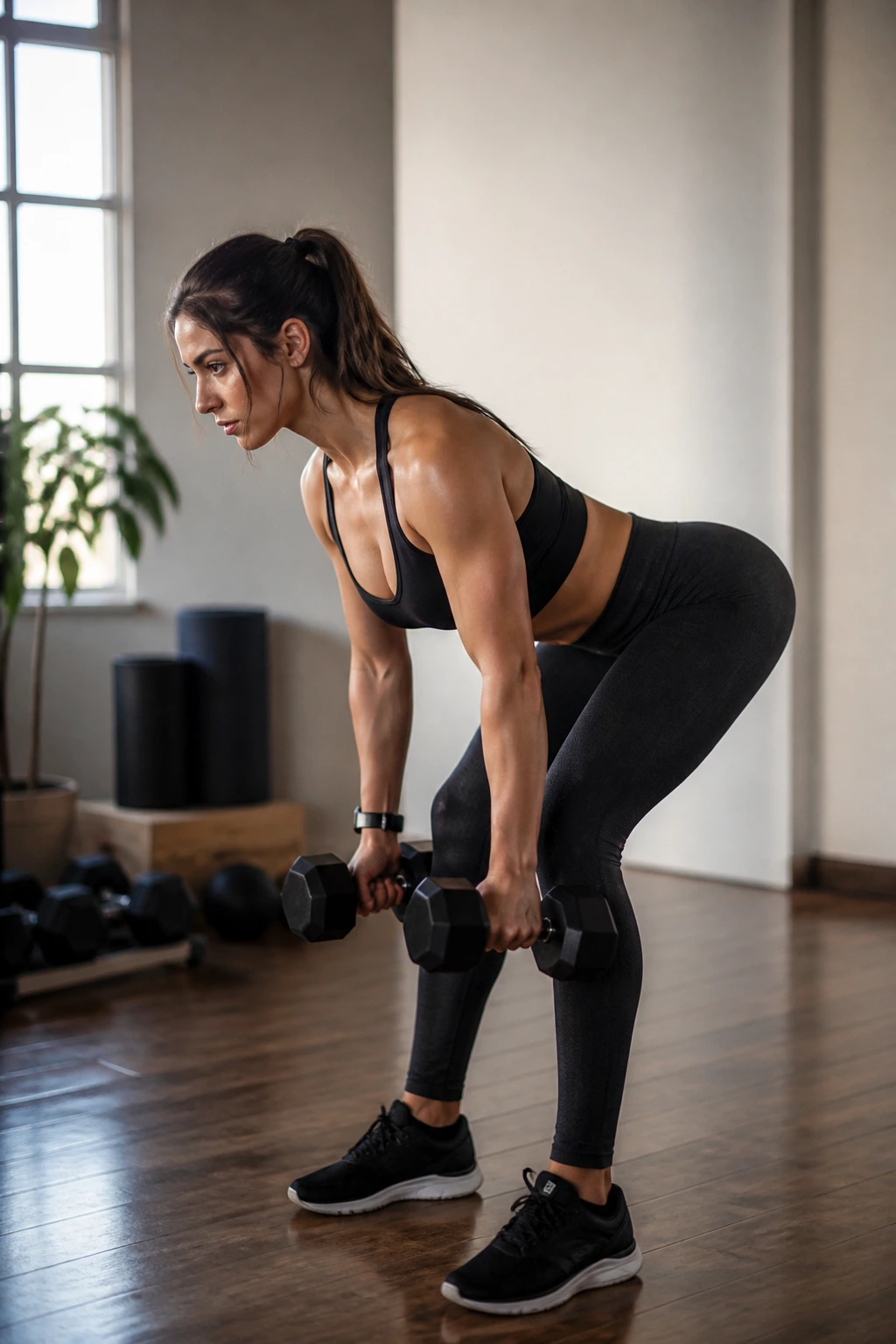
If your hips, glutes, and upper back are the parts you want to wake up, this is the session.
Posterior-chain work has a funny effect in HIIT. It doesn’t look flashy, but it leaves you sweating because the big hinge muscles can carry a lot of load and a lot of fatigue. I like this setup for people who sit a lot or who want a little more balance between all the pressing they do in other workouts.
Run Romanian deadlifts, dumbbell rows, glute bridges with the dumbbell on the hips, reverse flyes, and farmer marches. Keep the work at 35 to 45 seconds per move, rest 15 to 20 seconds, and do 3 to 4 rounds.
A small note: the reverse fly should stay light. Very light. It is not the exercise to impress anyone with. A slow, controlled fly with a tiny bend in the elbows tells you more about your upper back than a heavy one with a lot of shrugging ever will.
14. The Tempo-Reps HIIT Circuit
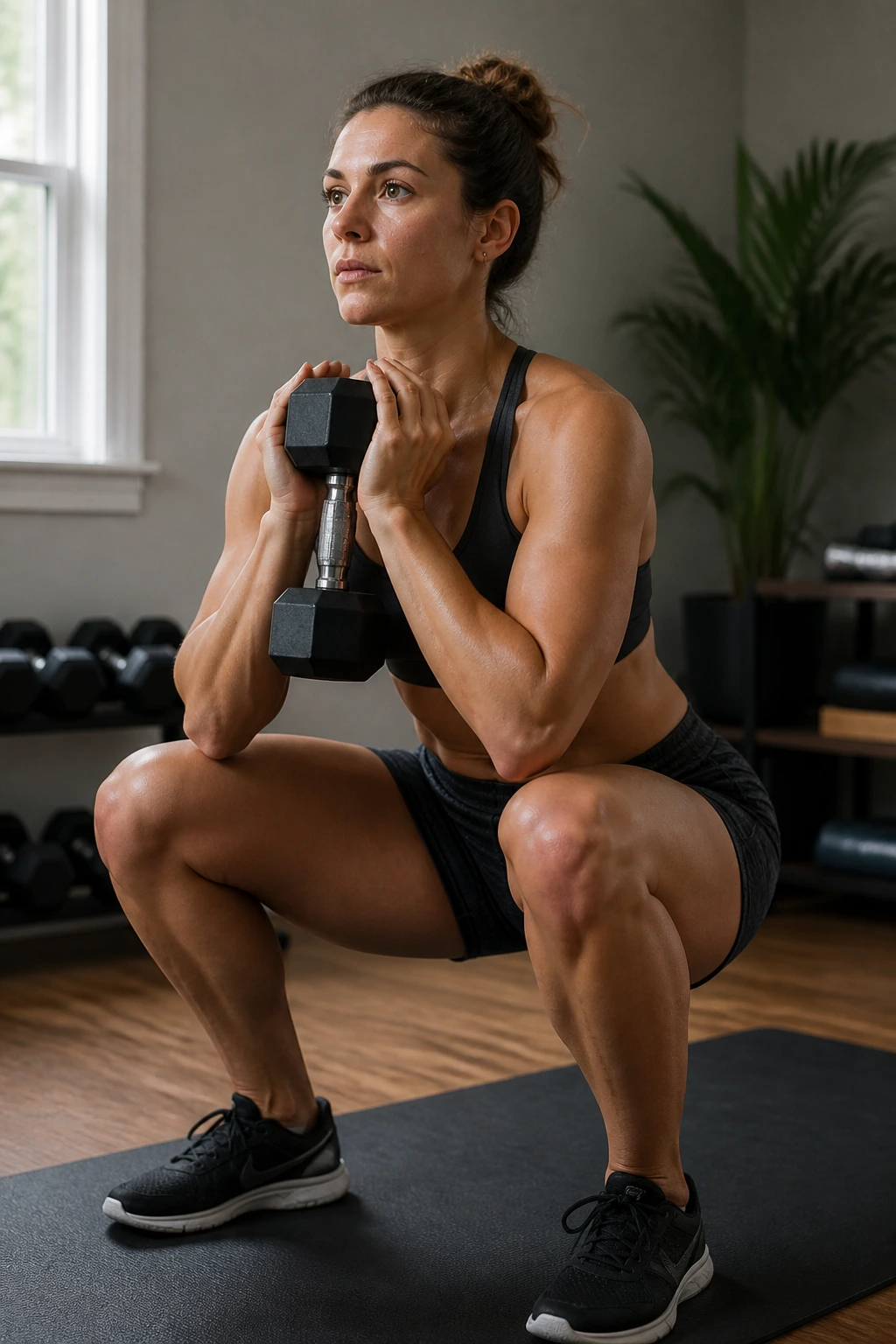
Why slow down when the goal is to work hard? Because tempo changes the whole feel of a rep.
A slow lowering phase creates more tension and more control, which is a useful trick when you want dumbbell HIIT to be brutal without turning it into a sloppy speed drill. Count three seconds on the way down, pause for one second at the bottom, then drive up fast. That’s enough to make a moderate dumbbell feel much heavier than it looks.
The Reps and Rest Pattern
- 30 seconds tempo goblet squat
- 30 seconds rest
- 30 seconds tempo row
- 30 seconds rest
- 30 seconds tempo floor press
- 30 seconds rest
- 30 seconds tempo reverse lunge
- 30 seconds rest
- Repeat for 4 rounds
This style is especially good when your joints want cleaner movement and your brain needs to pay attention. The pause at the bottom is small, but it stops the whole workout from becoming a bounce-fest. If you can’t control the lowering phase, the dumbbells are too heavy for tempo work.
15. The Core and Carry Dumbbell Workout
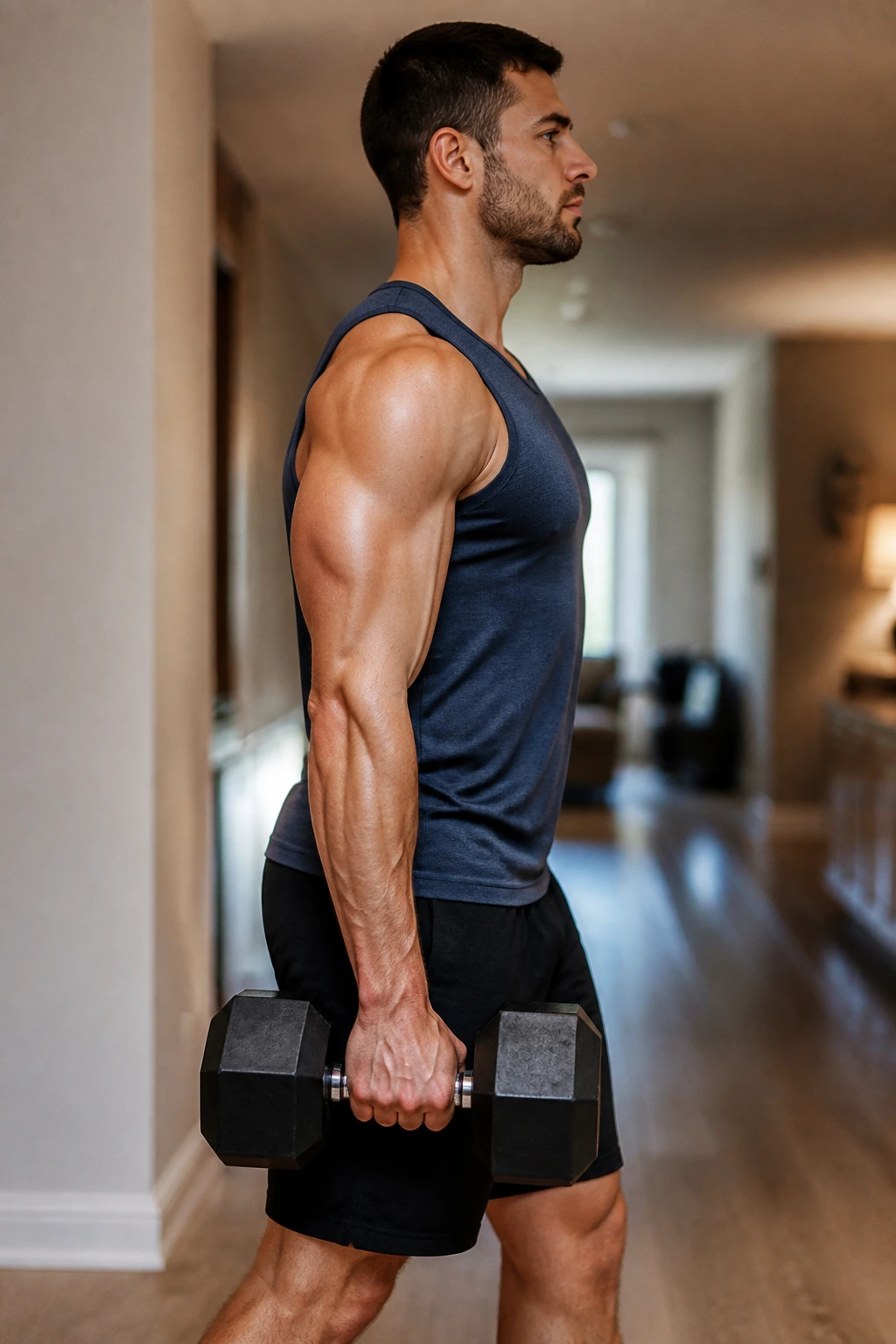
Carries are underrated because they look too plain to be useful. Then your obliques start talking.
A suitcase carry or farmer carry turns core training into a walking problem, which is closer to real life than a pile of crunches ever will be. Add some squats, rows, and presses around it, and you get a session that works the trunk without making the floor feel like a mat class. This one has a grounded, sturdy feel I like a lot.
Do a suitcase carry for 30 to 45 seconds per side, then move into a goblet squat, a one-arm row, a floor press, and a marching carry in place. Keep the rests short, around 20 seconds, and run 3 to 5 rounds. If your grip gives out before your legs do, that’s a useful sign, not a failure.
The best cue here is boring and perfect: stand tall. No leaning. No flaring ribs. The dumbbell should try to drag you sideways, and you should refuse.
16. The 4-Minute Tabata Dumbbell Finisher

Tabata looks tiny until you try to survive it with good form.
Twenty seconds on, ten seconds off, eight rounds. That is all it takes to turn a short dumbbell finisher into a serious conditioning punch. The catch is that Tabata works best when the movement is simple enough to repeat under fatigue. Thrusters, deadlifts, and bent-over rows all fit better than anything fussy.
The Tabata Trap to Avoid
- Round 1: dumbbell thruster
- Round 2: bent-over row
- Round 3: dumbbell thruster
- Round 4: bent-over row
- Repeat until you hit 8 rounds total
The temptation is to go full chaos on rep one. Bad idea. Save some breathing room for rounds 5 through 8, because those are the ones that tell the truth. If your shoulders are losing position by round 3, shorten the range or lower the load. Tabata should be short, sharp, and controlled, not a form collapse contest.
17. The 5-by-5 Full-Body Density Test

Five reps. Five exercises. Five rounds. That’s the whole deal, and it works.
This is one of the cleanest ways to test strength and conditioning at the same time because the rep scheme is easy to remember and the work climbs fast. Use a pair of dumbbells that feels moderate to heavy. The low rep count lets you move with power, but the repeat rounds keep the total workload honest.
A Clean Benchmark for Progress
- 5 goblet squats
- 5 bent-over rows
- 5 push presses
- 5 Romanian deadlifts
- 5 alternating reverse lunges per side
- Rest 45 to 60 seconds, then repeat for 5 rounds
The value here is not just sweat. It’s repeatability. If round 1 feels snappy and round 5 still looks the same, you’ve got a useful benchmark. If round 5 turns into a shruggy, half-speed mess, the load is a little too ambitious. You want power that lasts, not a dramatic start and a bad finish.
18. The Quiet-Floor Apartment Session
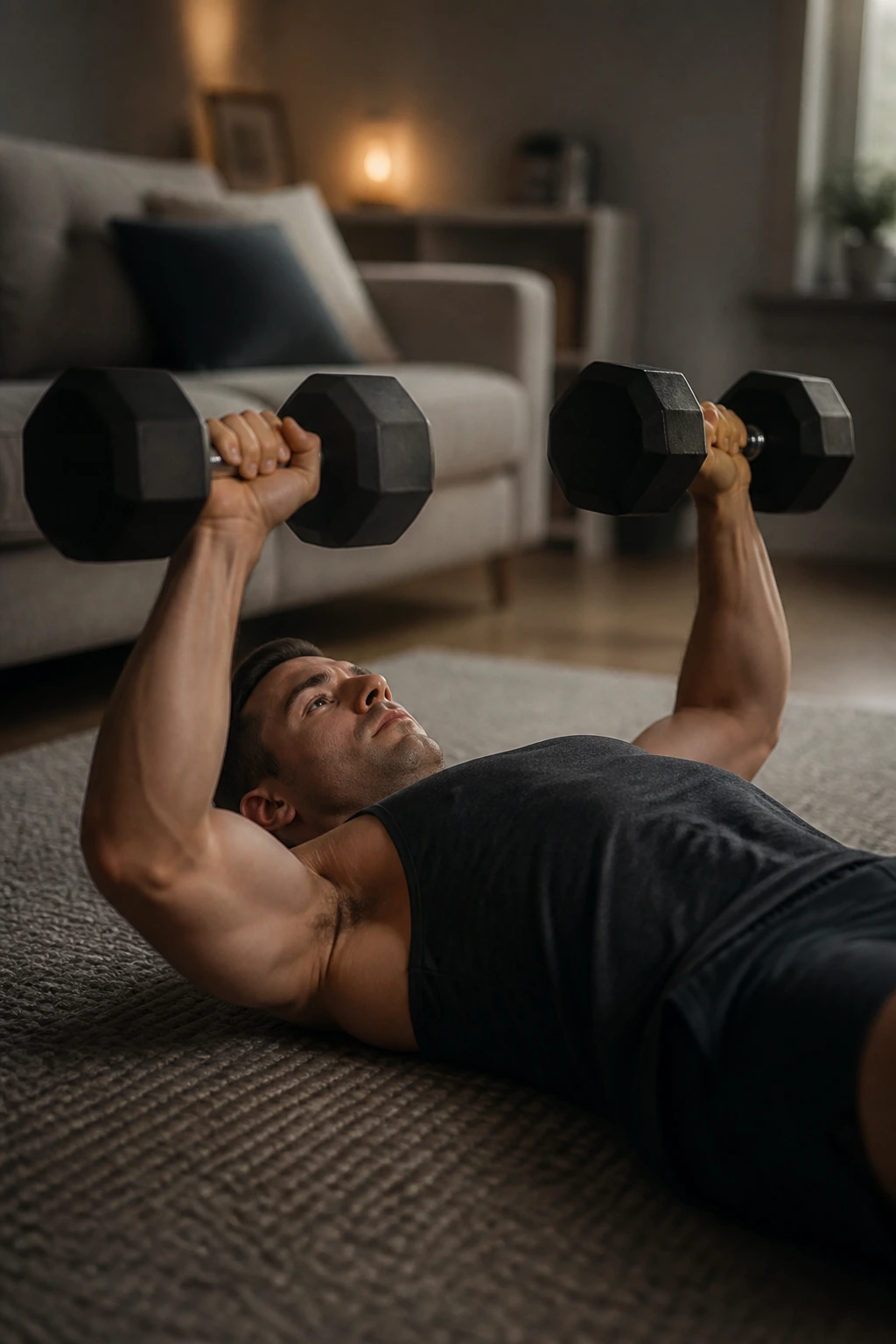
Some workouts are built around effort. This one is built around restraint.
Quiet-floor training keeps the feet planted, the transitions smooth, and the impact low, which is handy if you share walls or if your joints hate surprise landings. The exercise selection still matters. A controlled squat, a hinge, a press, and a carry can create plenty of heat without any impact at all.
Use slow reverse lunges, deadlifts, floor presses, bent-over rows, and overhead holds. Work for 40 seconds, rest for 20 seconds, and keep the dumbbells close to your body on every transition. That little detail cuts down the noise and helps your core stay tight.
This is also a good place to practice clean setups. Pick the dumbbells up and set them down like you mean it. No dropping. No clanging. Quiet doesn’t have to mean soft. It just means controlled.
19. The 15-Minute Mixed-Move AMRAP
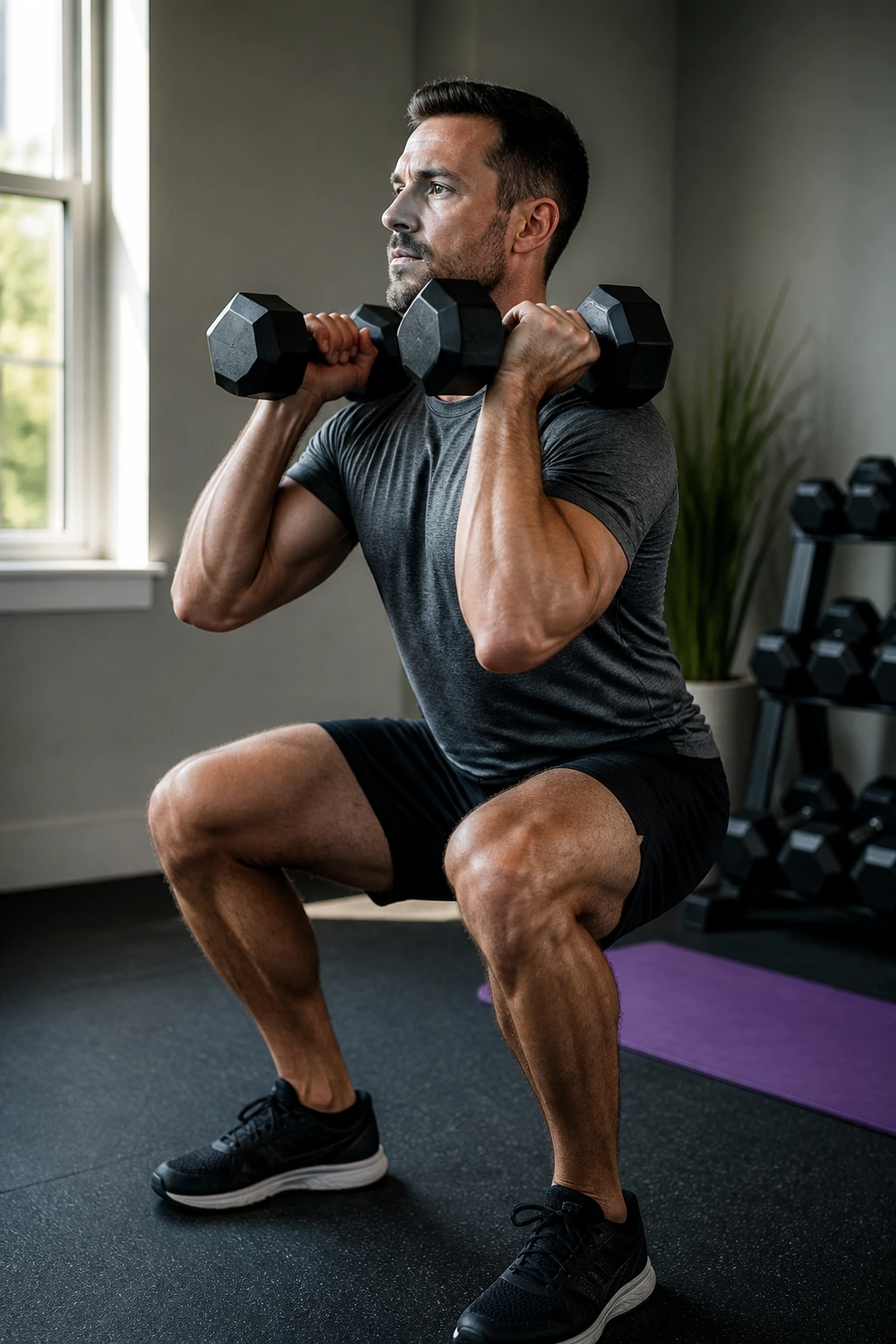
What’s the catch with a short AMRAP? The pace gets real fast, real early.
This version uses a mixed movement pattern so you don’t get stuck doing one motion until it goes stale. It’s a good full-body dumbbell HIIT workout at home when you want a benchmark session that can change with your conditioning level. Start with modest weights and keep the transitions crisp. That matters more than chasing a hero round count.
The Five-by-Five Rule
- 5 dumbbell clean and presses
- 5 front squats
- 5 rows per side
- 5 reverse lunges per side
- 5 floor presses
- Repeat for 15 minutes
If you want a cleaner benchmark, use the same dumbbells every time you repeat the session. That way the workout tells you something useful. The goal is not to crawl to the finish line; it’s to see whether you can keep the same pace and the same form from start to finish. If the presses get ugly, shave the reps before you shave the rest.
20. The Reset Circuit You Can Repeat All Week
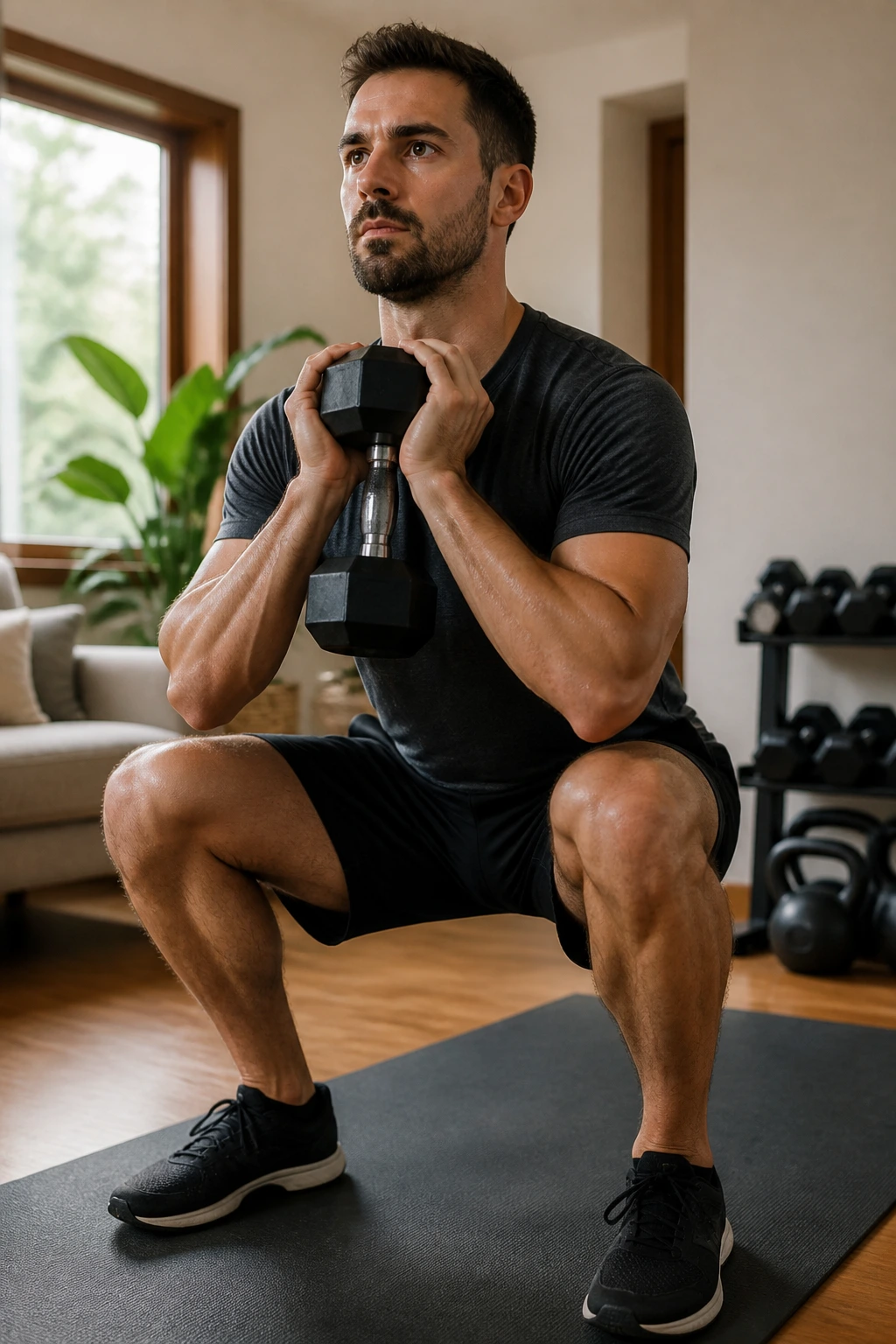
This is the session I’d hand to someone who wants one reliable dumbbell workout and does not want to think too hard before coffee.
A reset circuit works because it borrows the best parts of the other styles without feeling crowded. You get a squat, a press, a pull, a hinge, and a carry. That covers the big bases, and it does it in a way that leaves enough gas in the tank to train again a couple of days later. Use it when your schedule is messy and your energy is somewhere between decent and annoyed.
How to Use This Reset Circuit
- 45 seconds goblet squat
- 15 seconds rest
- 45 seconds push press
- 15 seconds rest
- 45 seconds bent-over row
- 15 seconds rest
- 45 seconds Romanian deadlift
- 15 seconds rest
- 45 seconds farmer march
- Rest 60 seconds, repeat for 3 to 4 rounds
That’s the whole thing. Nothing flashy. Nothing padded. It works because the movement choices are sound and the rest is short enough to keep the effort honest. If you want a simple weekly anchor, this is it. If you want a hard day, use heavier dumbbells. If you want a recovery-leaning day, slow the tempo and keep the march deliberate. The best dumbbell HIIT plan is the one you’ll actually repeat.
