



Student workouts do not need a gym membership, a spotless schedule, or a pile of money you do not have. They need a timer, a little space, and enough structure to stop you from wandering back to your chair.
That sounds almost too simple, but simplicity is the whole point. Between lectures, labs, shifts, late-night studying, and the occasional meal that comes from a vending machine, most students live in broken-up chunks of time. A workout that only works when you have 75 uninterrupted minutes is a workout that quietly fails a lot of people.
The better answer is a set of short, cheap, flexible sessions you can do in a dorm room, on a campus path, beside your bed, or in a stairwell. Some are sweaty. Some are quiet. Some are almost absurdly basic. All of them are useful if you actually repeat them. That is the part most people skip.
1. Ten-Minute Bodyweight Circuit for a Dorm Room
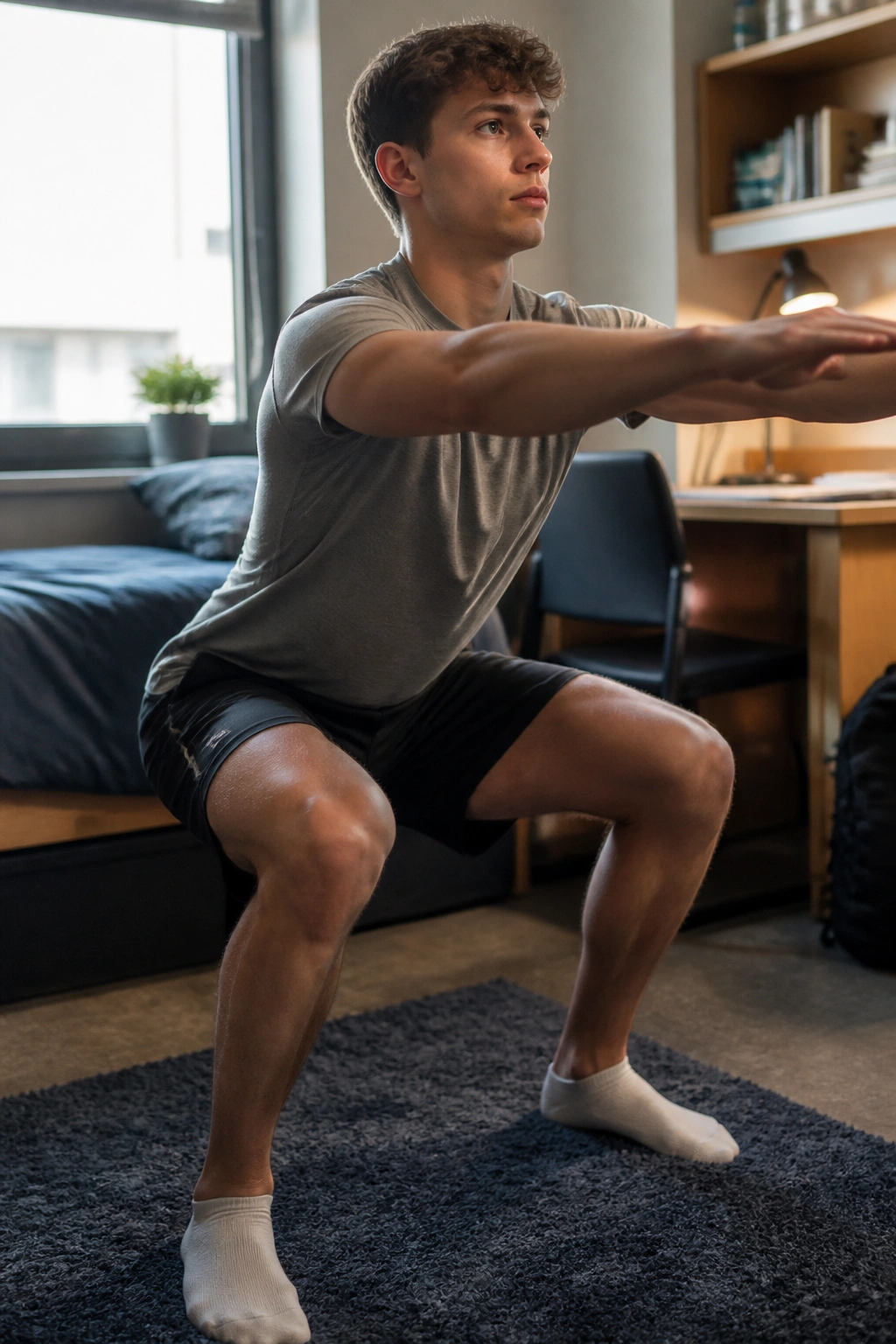
A tight room can still hold a solid workout. That’s the nice surprise here. You do not need fancy gear or a lot of floor space; you need a plan that keeps you moving for ten straight minutes without turning into a wandering stretch session.
Run this as 30 seconds on, 15 seconds off for two rounds. Pick five moves: squats, incline push-ups on a desk or sturdy bed frame, reverse lunges, dead bugs, and mountain climbers. Keep the pace brisk, but not sloppy. If your knees cave inward on squats or your lower back starts arching on dead bugs, slow down and clean it up.
Why it works in student life
The circuit format removes decision fatigue. You know what comes next, so you stop negotiating with yourself between every rep. That matters on days when your brain is already fried from classes and caffeine.
- Time: 10 to 12 minutes
- Space: About 6 by 6 feet
- Gear: None
- Best use: Right after waking, between study blocks, or before a shower
One small rule helps a lot: stop each set with one or two good reps left. Chasing ugly reps in a tiny room is how people turn a simple workout into a sore back and a bad mood.
2. Stairwell Sprints Between Classes
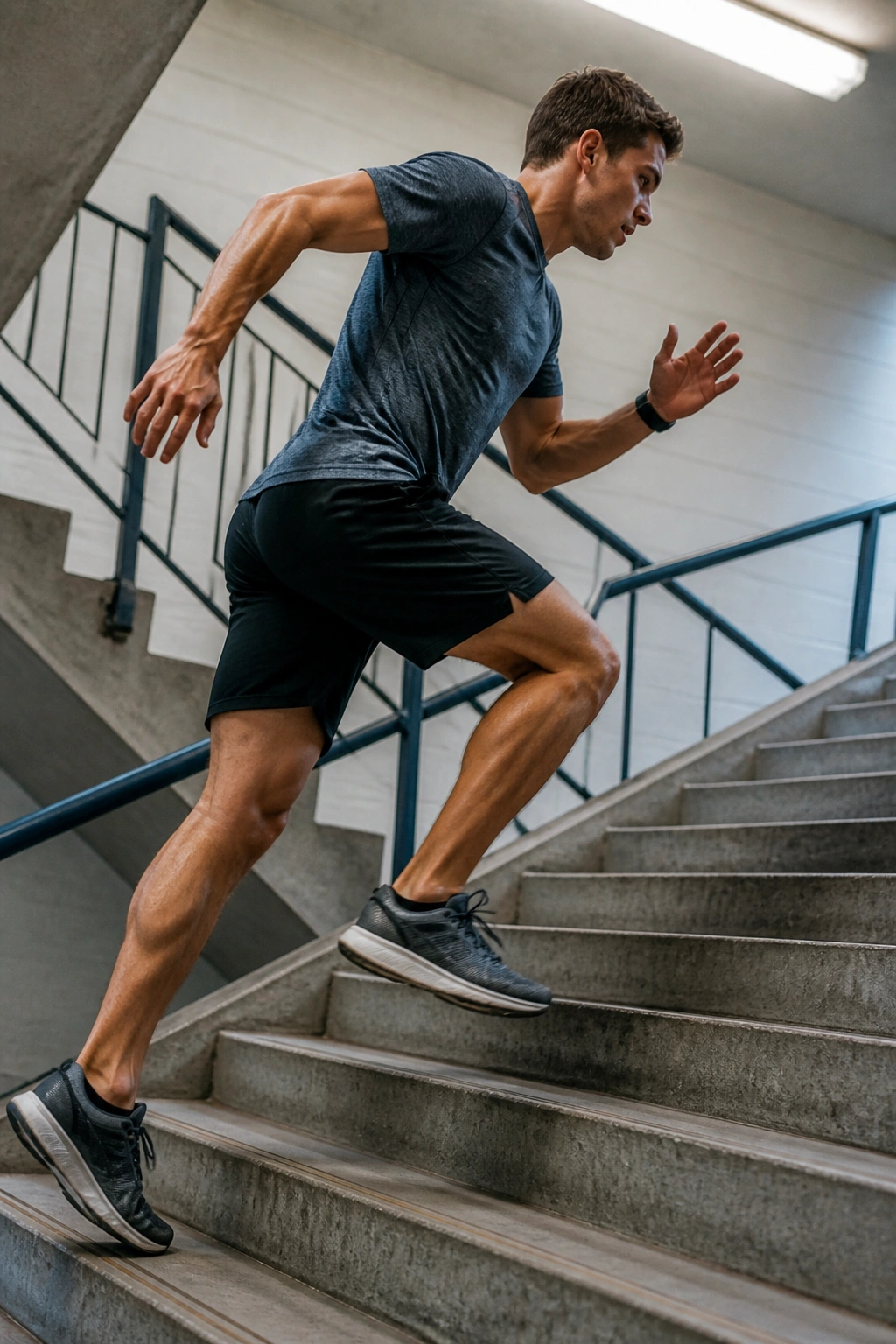
If you’ve got a dorm stairwell, a library staircase, or a set of campus steps that doesn’t feel cursed at the moment, use it. Stair work is brutally efficient. Short bursts up the stairs push your heart rate fast, and walking down gives you just enough recovery to go again.
Start with 6 to 10 climbs of 10 to 20 seconds each. Walk down at an easy pace, breathe, then go again. Tall buildings and long staircases are useful, but even a short flight works if you repeat it enough times. Keep your whole foot on the step, and do not sprint if the stairs are wet, crowded, or badly lit.
That part is boring. Also non-negotiable.
Stairs hit your calves, glutes, and lungs at the same time, which is why they feel harder than they look. The upside is that you can fit them into the dead space between classes. Ten minutes goes fast when you are climbing.
3. Backpack Strength When You Have Zero Gear
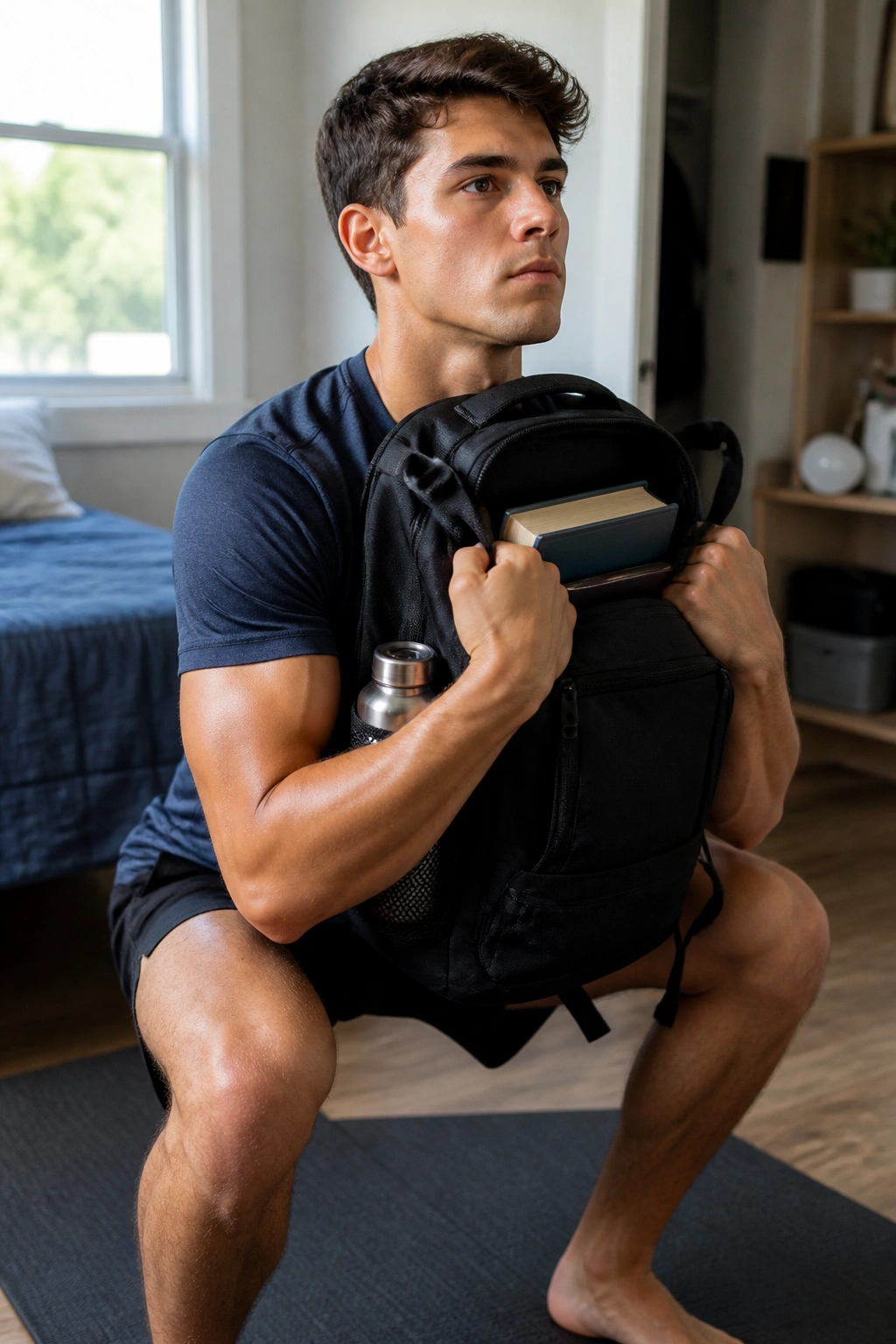
A backpack packed with books is a student’s cheapest piece of training equipment. It is not elegant. It is a little awkward, too. That awkwardness is actually useful because it forces you to control the weight instead of moving like a machine.
Load the bag with textbooks, a water bottle, or canned food until it feels challenging for 8 to 12 reps on squats and rows. Use it for goblet squats, bent-over rows, split squats, Romanian deadlifts, and overhead presses if the straps are stable enough. A bag with padded straps helps, but any sturdy backpack will do in a pinch.
How to load it without wrecking your back
Put the heaviest items close to your spine and zip the bag shut tightly so the weight does not shift around. Loose books make every rep messier. They also make the workout feel harder in a bad way.
- Add weight in small jumps: 2 to 5 pounds at a time
- Keep the bag high and tight: no sagging load
- Use a mat or towel: if you’re resting it on the floor between sets
Unlike dumbbells, a backpack can wobble, which is annoying until you learn to brace harder. Then it becomes a useful kind of challenge. For a student on a budget, that’s the sweet spot.
4. Brisk Walk Intervals for Brain Fog Days
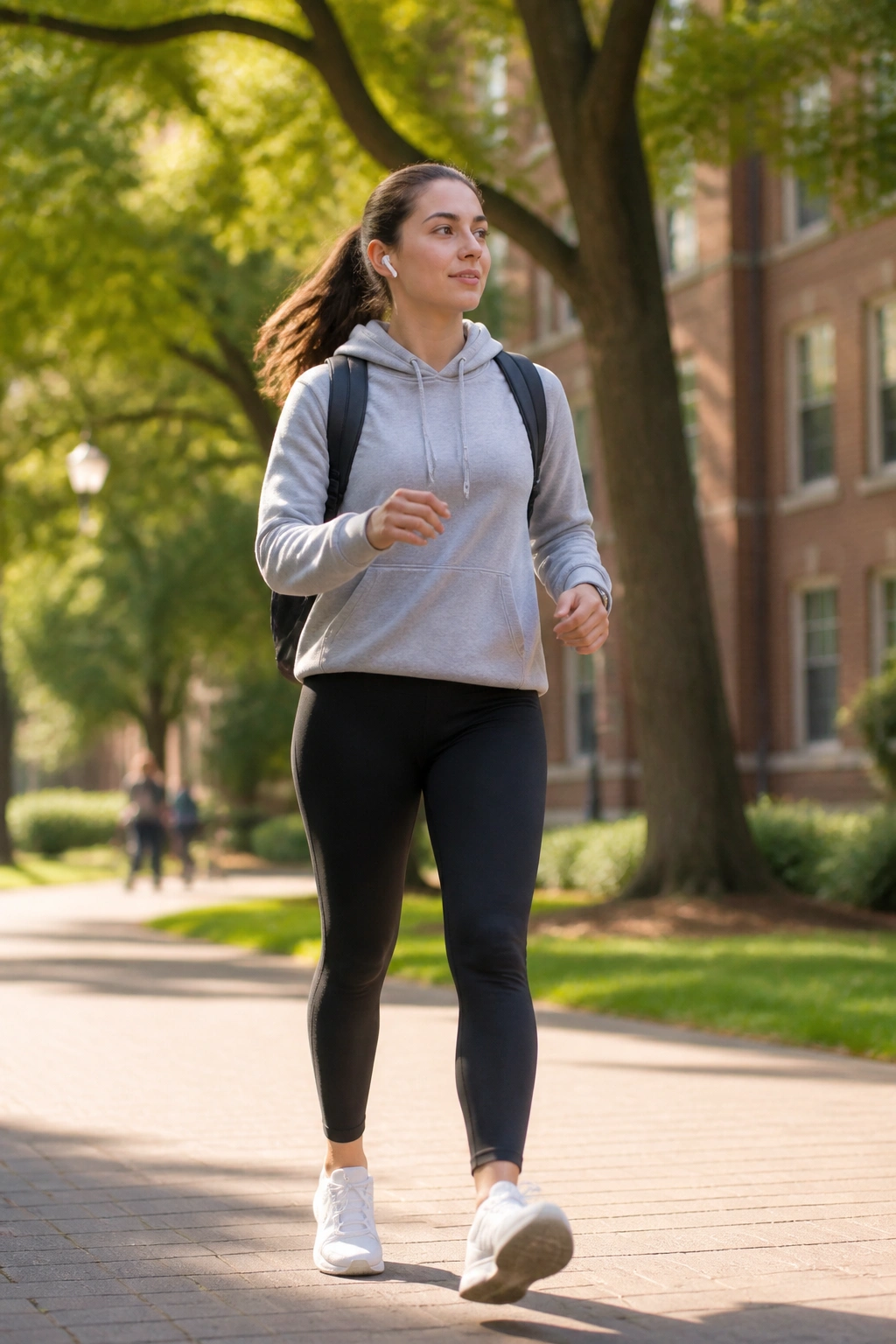
Can a walk count as a workout when you are short on time? Absolutely. In fact, some days it works better than the harder stuff because you can do it when your head is full and your legs are still willing.
Try 5 minutes of easy walking, then 6 rounds of 1 minute fast / 1 minute normal, then finish with 2 minutes easy. Keep the fast minutes brisk enough that talking in full sentences gets annoying. Swing your arms, keep your shoulders loose, and take shorter steps if your calves start cramping. This is not a race. It is a reset.
How to use it
Walk between classes with purpose. Walk the long way back from the dining hall. Walk during a phone call. The workout becomes almost invisible, which is exactly why students keep returning to it.
A walk interval session is especially good before a study block. You come back a little less stiff and a little less foggy, and that usually matters more than a sweaty finish line. If you want a tiny extra challenge, pick a route with one hill or a few flights of stairs.
5. Jump Rope Rounds That Fit Beside Your Bed
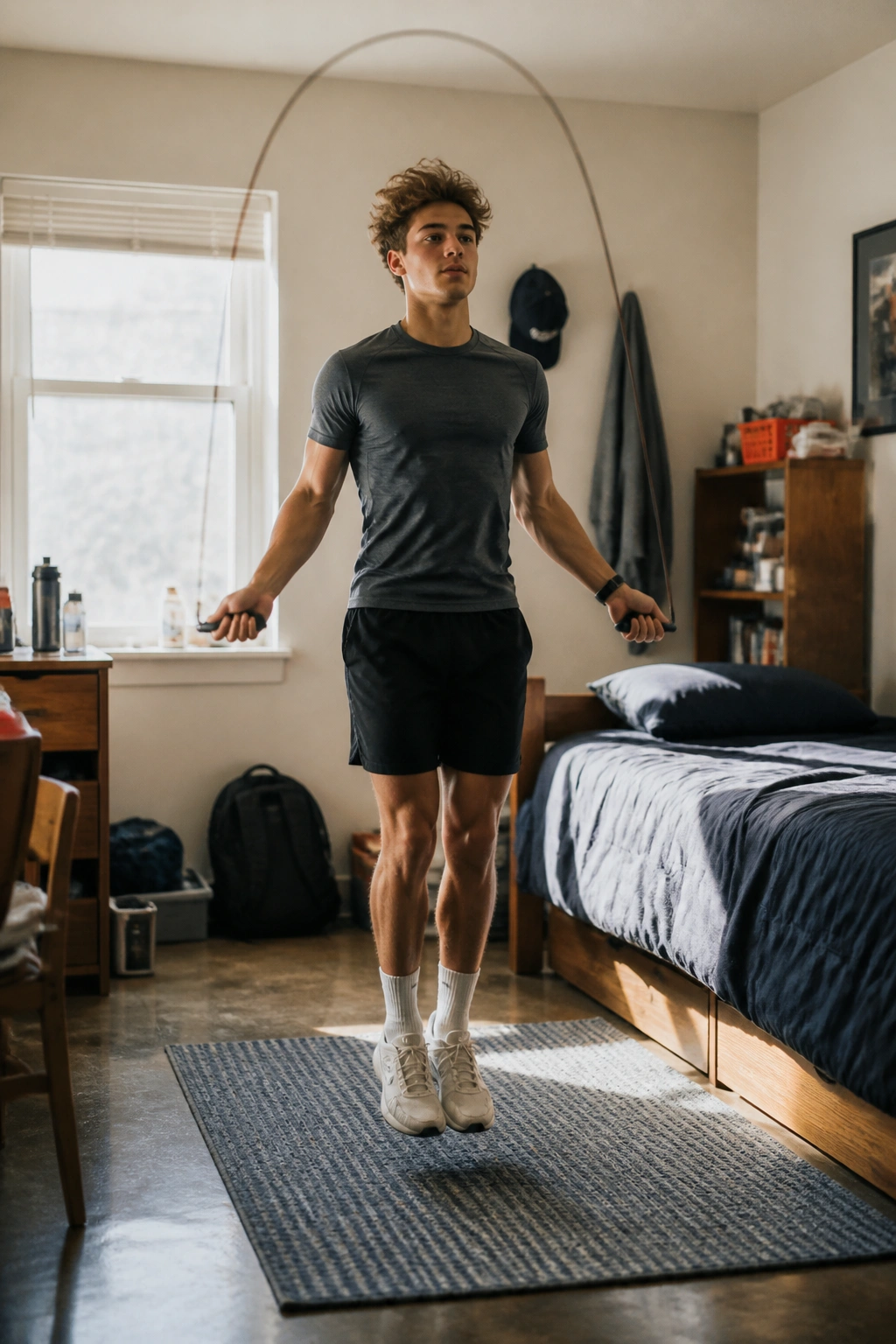
Jump rope has a cheap, old-school charm for a reason. A decent rope takes almost no space, costs far less than most fitness gear, and turns a narrow strip of floor into a cardio lane. If you live in a dorm and the downstairs neighbor has not filed a complaint yet, this one earns its keep fast.
Set a timer for 20 seconds on, 40 seconds off and repeat for 12 rounds. Use basic two-foot jumps first. Then switch to alternate-foot hops, side-to-side hops, or high-knee jumps if your calves are ready. If the rope feels too chaotic at first, shadow jump without the rope until your timing settles down.
A good rope session should feel bouncy, not reckless. Land softly on the balls of your feet. Keep your elbows near your sides. If your shins start barking, shorten the session and keep the jumps lower.
Jump rope is also sneaky good for coordination. That matters more than people think. A workout that makes you feel a little clumsy at first often teaches your body fast.
6. Resistance Band Full-Body Workouts on a Tight Budget
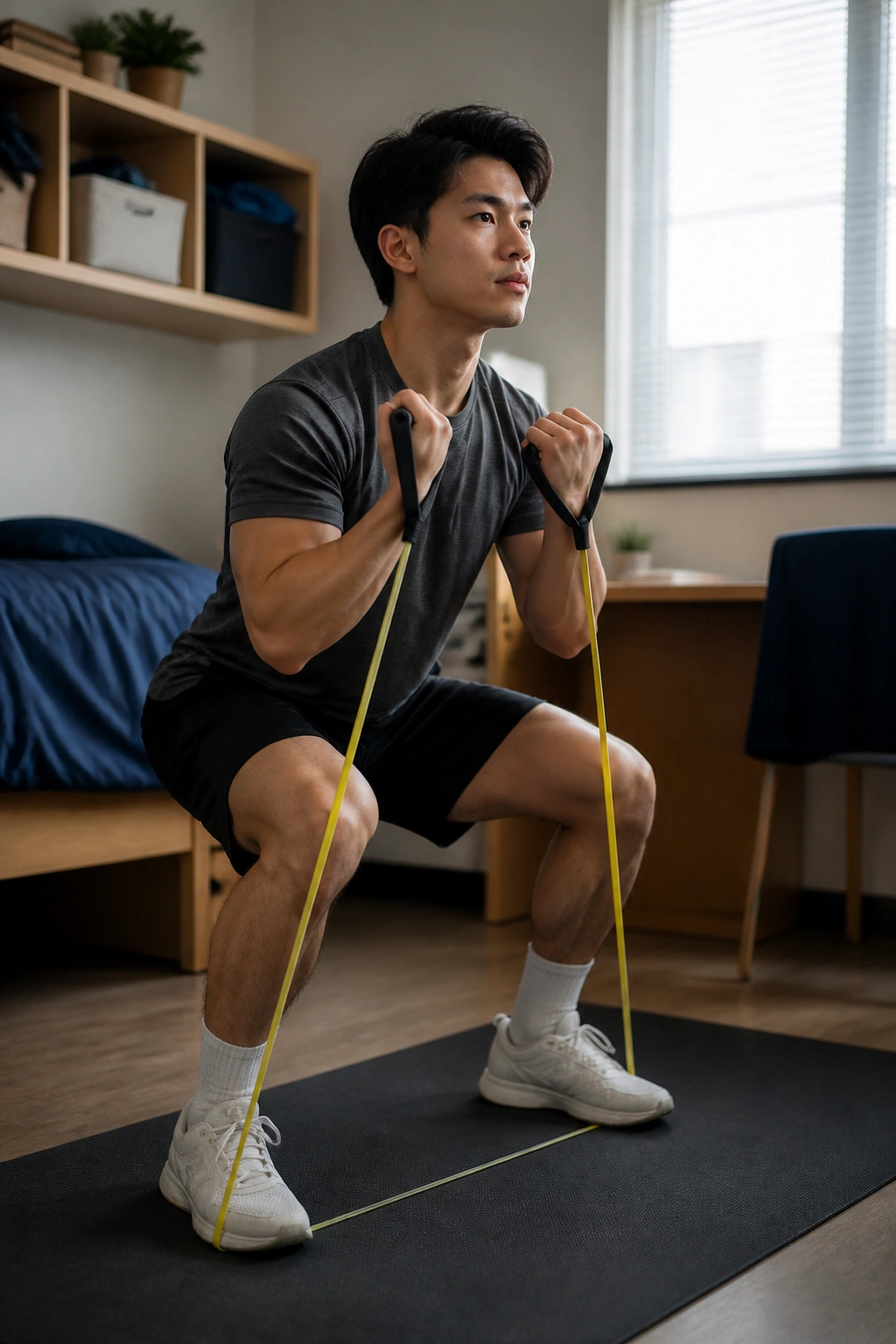
One cheap resistance band can do more than people expect. Not magic. Just useful. For students, a long loop band or a set of light-to-medium bands covers a lot of ground without eating floor space or draining your wallet.
Use the band for rows, banded squats, glute bridges, overhead presses, and Pallof presses. Aim for 3 rounds of 10 to 15 reps on each move. The band should feel tense by the middle of the rep range, but you should still control the end of every rep instead of snapping back like a slingshot.
What to buy if you only buy one thing
A medium loop band is the safest pick for most people. Too light and you outgrow it fast. Too heavy and you end up fighting the band instead of training cleanly.
- Loop band: best for squats, glute bridges, and lateral walks
- Long band with handles: better for rows and presses
- Mini band: useful, but not enough on its own
The nicest thing about bands is the silence. No clanking, no dropped weights, no angry knocks on the wall. Just tension, a burn in the right places, and a session you can finish before your roommate finishes a podcast.
7. EMOM Sets That Keep You Honest
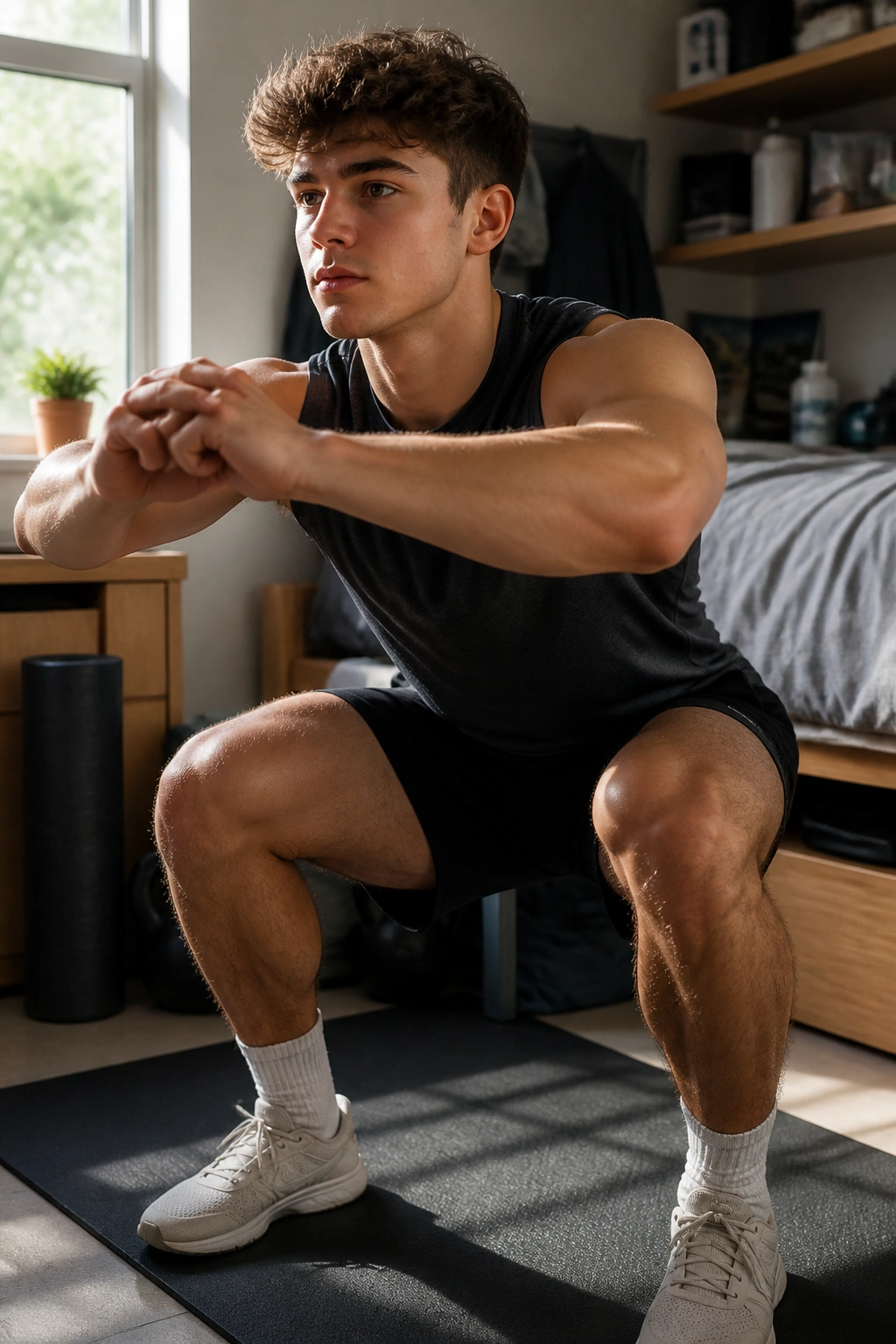
EMOM means every minute on the minute, and it is one of the best tools for people who drift when they work out alone. The clock tells you when to start. Your job is to finish the reps, rest with whatever time is left, and repeat.
A clean student version runs for 12 minutes. Minute 1: 10 squats. Minute 2: 8 push-ups. Minute 3: 12 glute bridges. Minute 4: 20-second plank. Repeat that pattern three times. If the work takes more than 45 seconds, the pace is too high. Reduce the reps before your form gets messy.
How to set the clock
Use a phone timer with a loud beep. Silence is a trap here. People think they’ll watch the minute pass, and then they end up staring at one rep too long.
The point of EMOM work is structure. You do not spend time wondering whether to do “just a few more.” You either hit the reps or you lower them next round. That blunt feedback is useful, especially when your energy is scattered and your schedule is ugly.
8. Hill Repeats and Incline Walks Outside Campus

Flat ground is fine. Hills are better when you want more work in less time. A hill repeat makes your heart and legs work harder with each step, and an incline walk gives you a gentler version when your energy is low but your head still wants movement.
Try 6 to 8 hill sprints of 20 to 30 seconds each. Walk back down and recover fully before the next one. If sprinting feels too sharp, turn the same hill into a fast power walk for 10 to 15 minutes instead. The incline will still light up your glutes and calves without the same pounding.
Unlike endless treadmill jogging, hill work has a clear finish. That matters when you are trying to squeeze training between classes. You know exactly when you’re done, and the hill itself does half the programming.
This is one of the best outdoor student workouts because it uses what campus already has. Bridges count. Parking ramps count. That long slope behind the science building counts too, even if it looks dull from the sidewalk.
9. Chair-and-Desk Leg Training in a Tiny Room
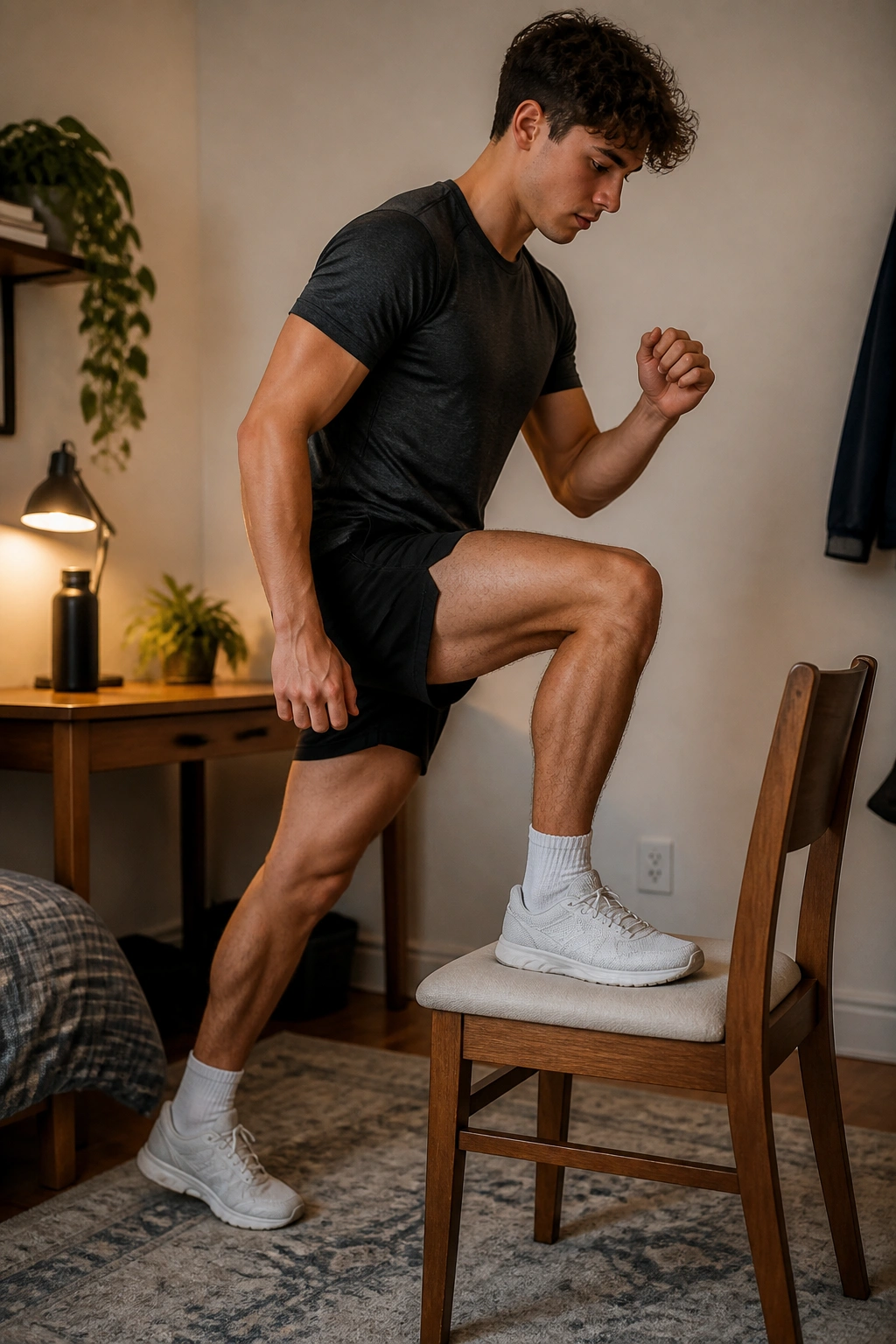
A sturdy chair can be a leg station if you treat it with a little respect. No rolling office chairs. No flimsy plastic stuff from a thrift store that wobbles when you sit down. If the chair is solid, it opens up a full lower-body session without leaving your room.
Use step-ups, split squats, sit-to-stands, wall sits, and single-leg Romanian deadlifts with a backpack. Two to four sets of 8 to 12 reps works well. For wall sits, start with 20 to 30 seconds and add time only when your legs stop shaking halfway through the set.
The nice part is how normal this feels. You are already near a chair. You are already standing up and sitting down all day. Turning those motions into a workout is less dramatic than people expect, and that makes it easier to repeat.
Do not rush the chair setup. If the chair slides even a little, the workout becomes awkward in a hurry. Put it against a wall or on a rug. A safe setup beats a fancy one.
10. Shadow Boxing Rounds for Cardio Without a Machine
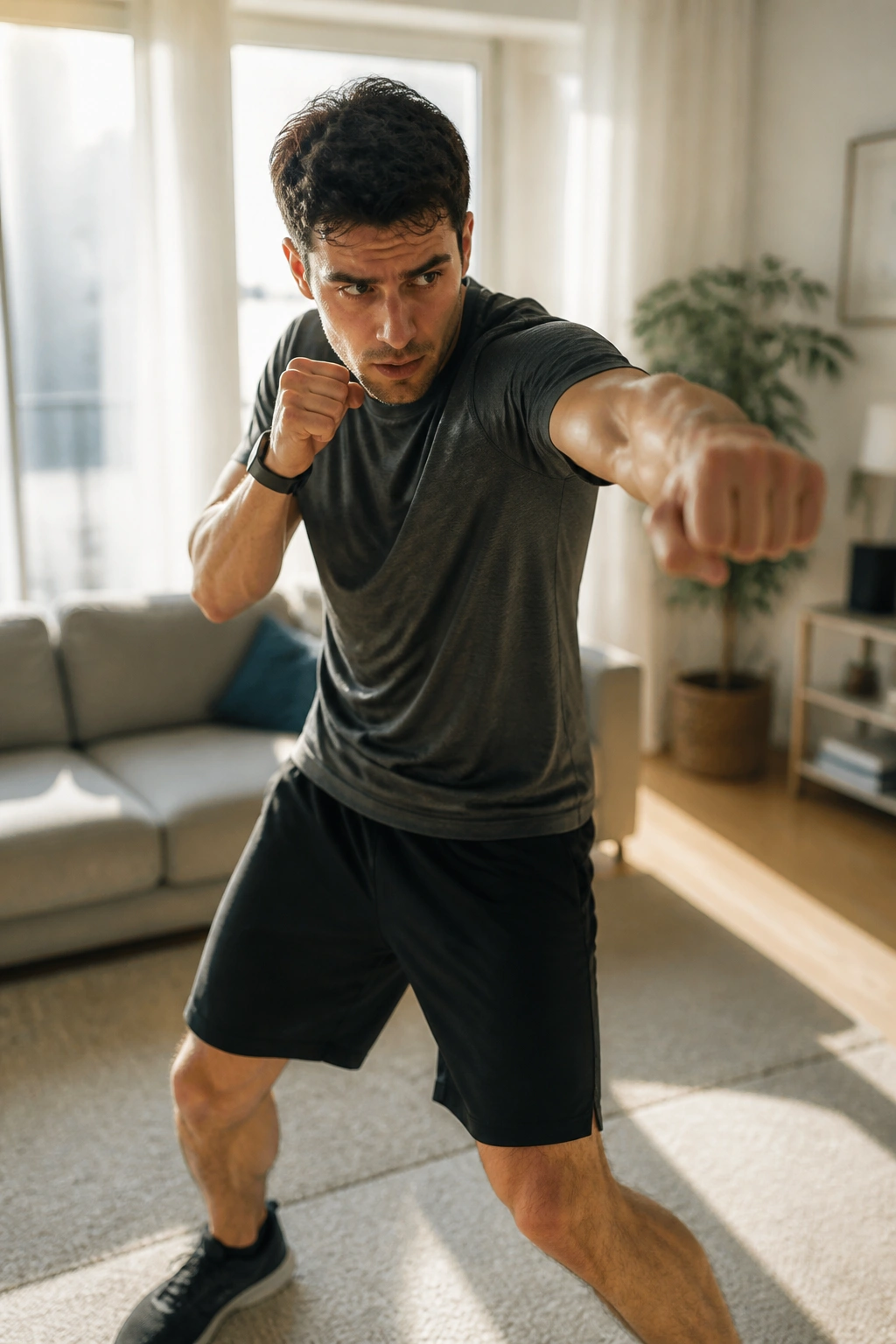
Shadow boxing is one of the best cheap workouts for students because it uses almost nothing and gives a lot back. Your hands move, your feet stay busy, your torso has to brace, and your brain has to stay awake enough to remember the pattern. That mix is hard to fake.
Do 3-minute rounds with 30 to 45 seconds of rest between them. Start with simple combinations: jab-cross, jab-cross-hook, then add slips, pivots, and quick footwork as you get comfortable. Keep your shoulders loose and your fists relaxed until the punch lands. Tension early in the punch wastes energy.
Round structure that actually helps
- Round 1: easy jabs and crosses
- Round 2: add hooks and slips
- Round 3: move around the room
- Round 4: faster hands, lighter feet
This workout is excellent when you want cardio but cannot deal with jumping around or noisy equipment. It also wakes you up fast. Seriously fast. The first good round can feel like somebody opened a window in your head.
11. Core and Posture Work After Hours at the Laptop
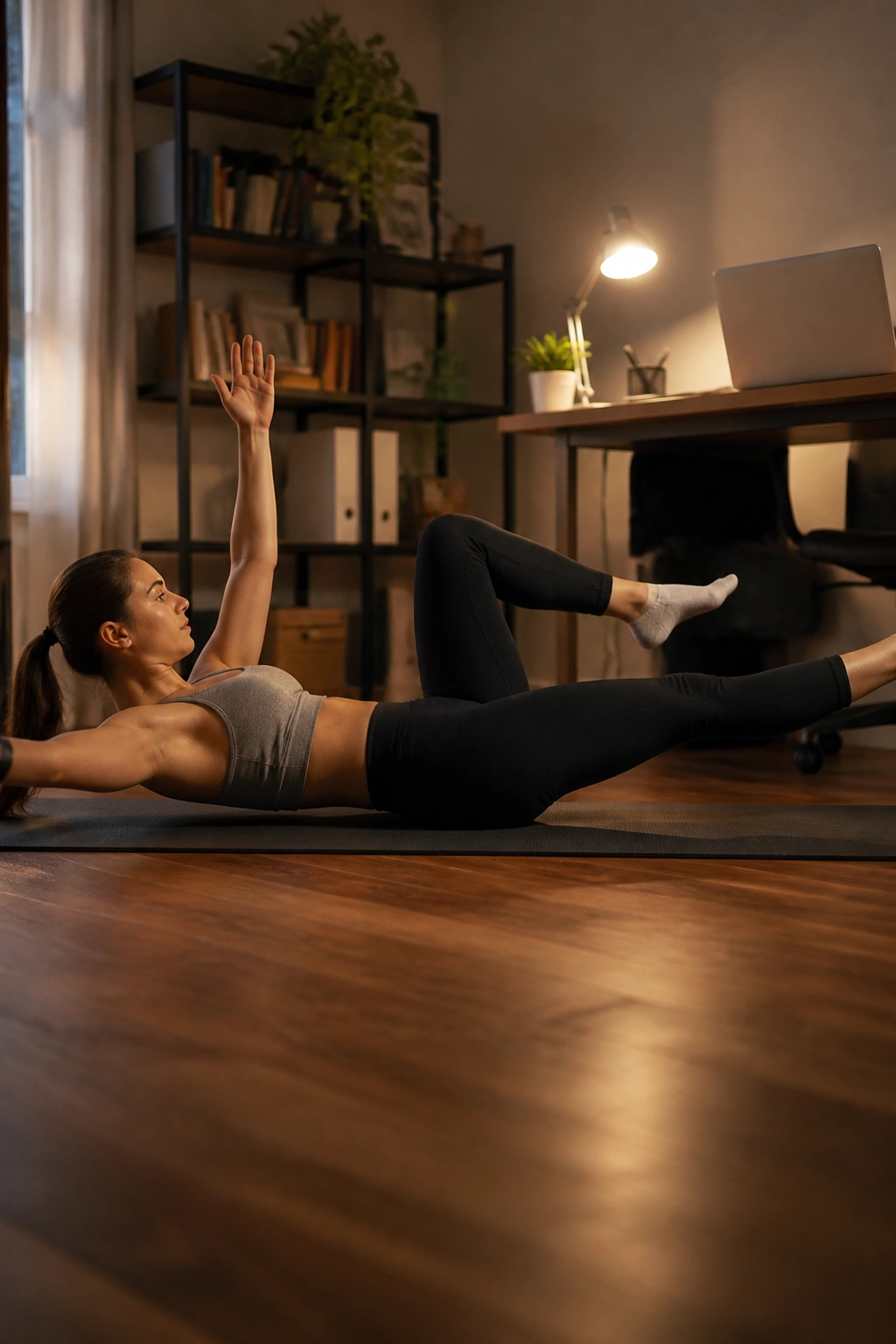
Long study sessions do a number on your back and hips. That slumped, folded-up position is not harmless just because it feels normal. A short core-and-posture session can pull you back into a better shape before the stiffness turns into a headache.
Use dead bugs, bird-dogs, side planks, band pull-aparts, and prone Y-T-W raises. Two rounds is enough for most people. Hold side planks for 20 to 30 seconds per side. Do dead bugs for 6 to 8 slow reps per side, and keep your lower back glued to the floor the whole time.
What the posture work is really doing
It is not about looking taller in the mirror. It is about giving your back and shoulders some opposing work after they spend hours folded over a laptop or textbook.
A good posture session should feel almost boring while you do it and strangely relieving afterward. That’s the point. You are not trying to crush yourself here. You are trying to stop the slow creep of stiffness that builds during long school days.
12. Push-Up Ladders That Build a Habit
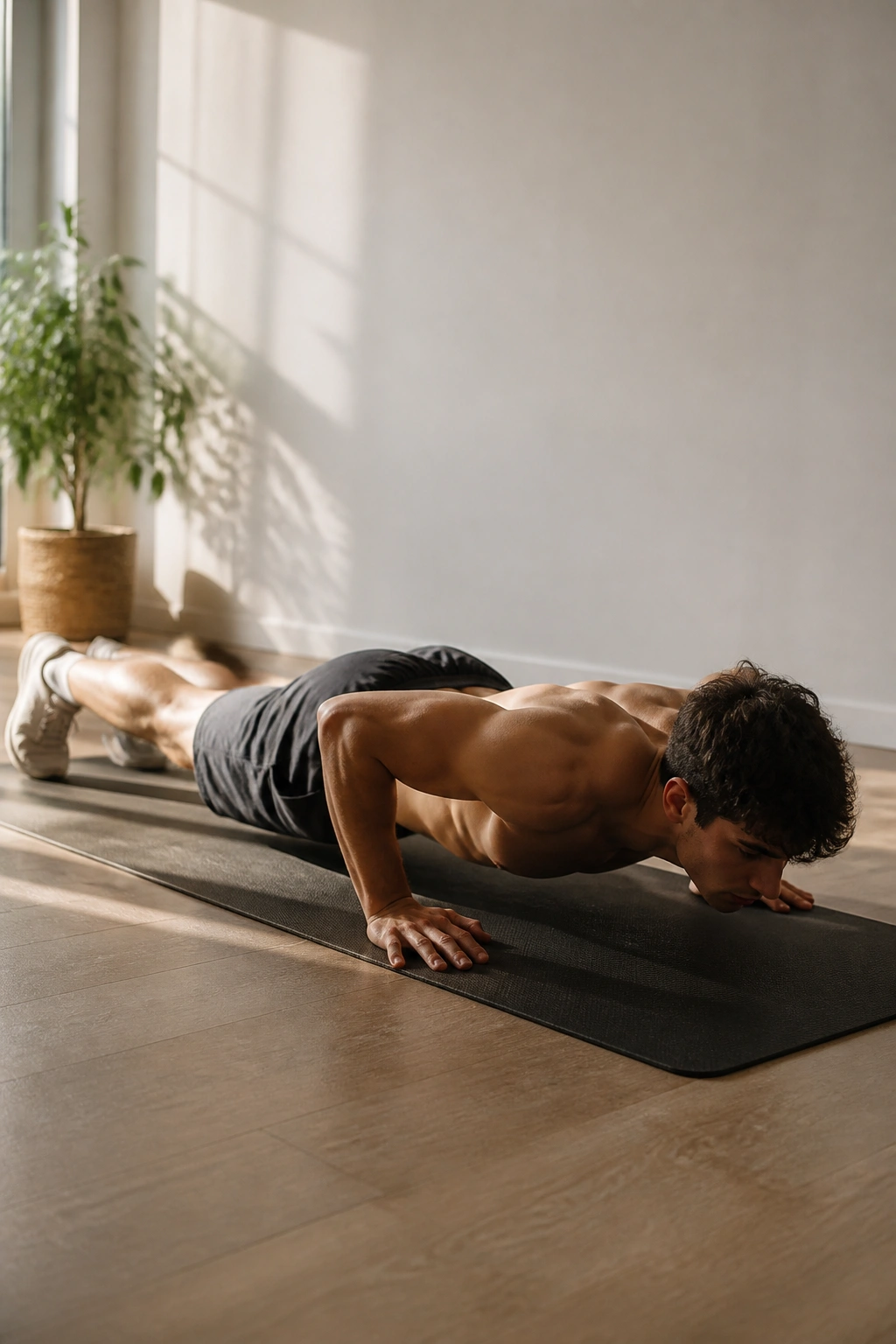
A push-up ladder is one of the cleanest workouts for students because it gives you a visible finish line. Start with 1 push-up, then 2, then 3, and keep climbing until you hit 5 or 10 depending on your level. Rest 20 to 40 seconds between rungs.
If full push-ups are rough, use hands on a desk, a bed frame, or a sturdy bench. Knee push-ups work too. The ladder still counts. The goal is clean reps, not proving something to the wall.
The reason ladders stick is simple: they feel manageable at the start and honest at the top. You know exactly what the next step is, which is helpful when motivation is thin and time is shorter than you wanted. A five-rung ladder can finish in under ten minutes and still leave your chest, shoulders, and triceps with something to say.
Use this on days when you need a quick win. Not every session has to be dramatic. Some just need to happen.
13. Glute Bridges, Frog Pumps, and Other Quiet Leg Burners
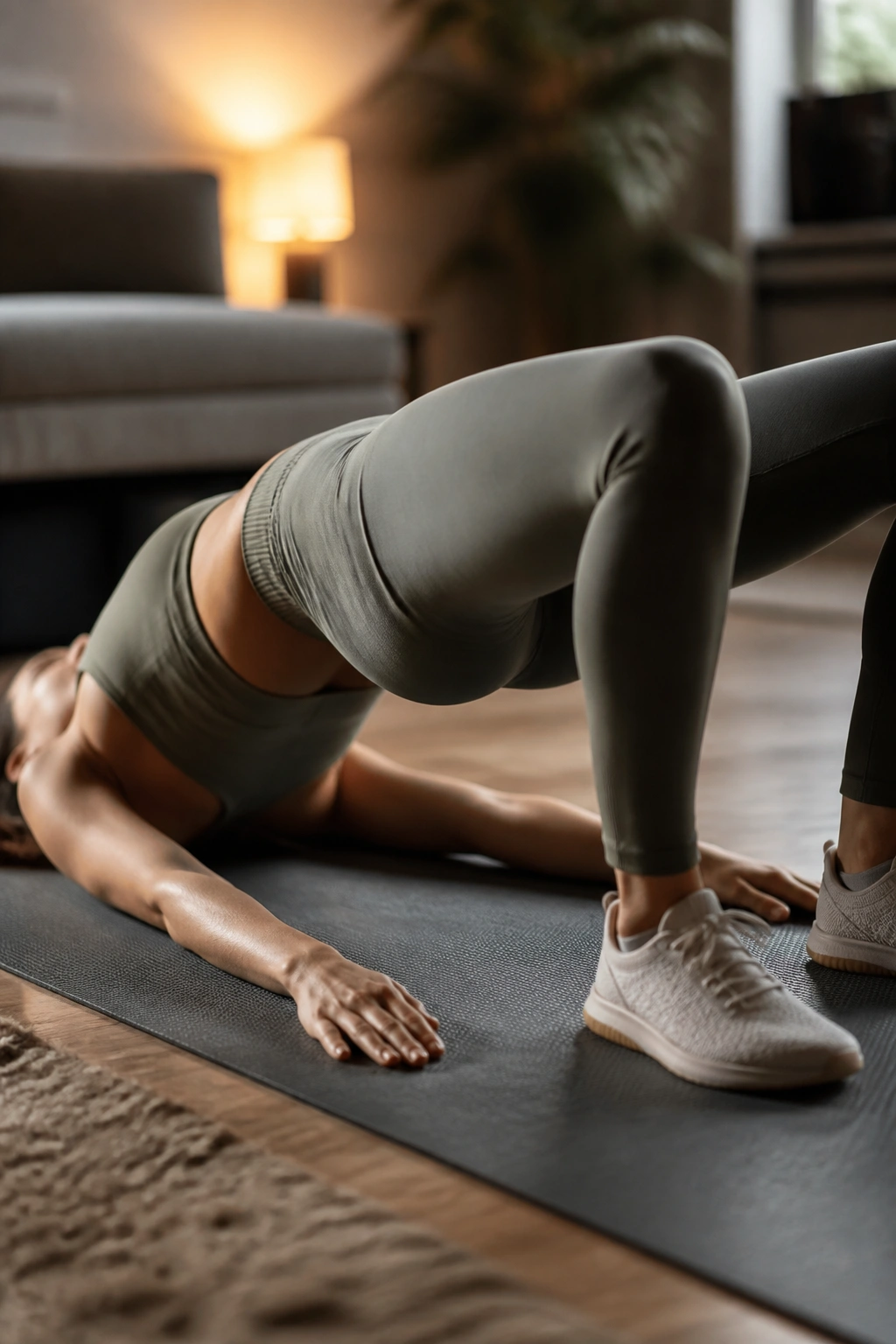
Quiet workouts matter in student housing. Nobody wants to hear a jump-heavy routine at midnight, and you probably do not want to explain it either. Floor-based leg work solves that problem without turning the session into a joke.
Pair glute bridges, frog pumps, lateral lunges, calf raises, and hamstring walkouts for 2 to 3 rounds. Use 12 to 20 reps on the bridge-style moves and 8 to 12 reps on lunges. Keep the motion controlled. Fast bridges tend to turn into sloppy back arches, and that is not the point.
The burn shows up in places that often get ignored during a student week: glutes, inner thighs, hamstrings, and calves. You may not get the same breathless feeling you get from sprints, but the lower-body fatigue is real.
This is a good workout when you need to stay home, stay quiet, and still feel like you trained. That combination is more valuable than it sounds.
14. Grocery Bag Carries That Cost Almost Nothing
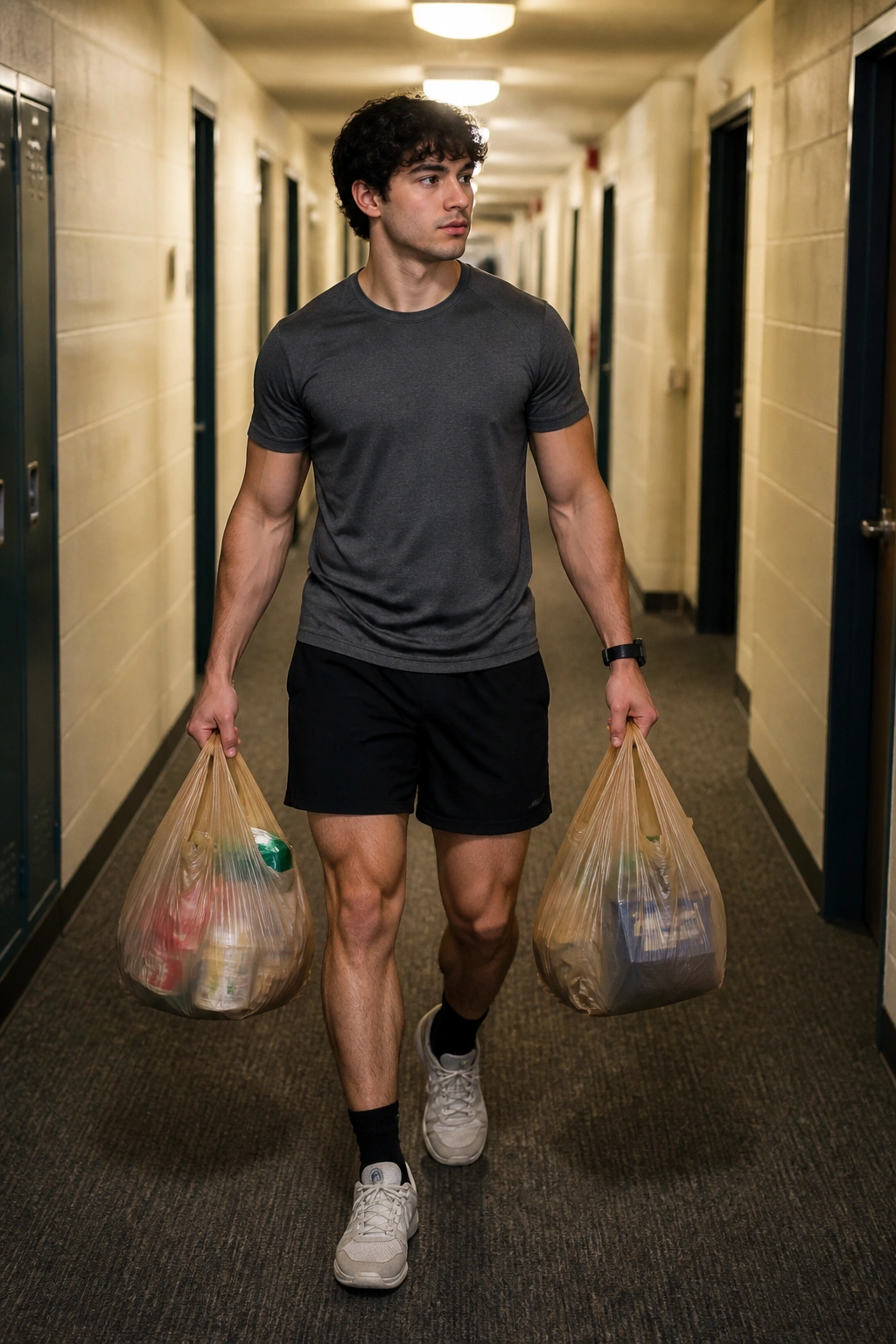
Loaded carries are underrated because they look ordinary. Pick up something heavy, walk with it, and do not let your posture collapse. That’s the whole thing. It sounds almost too plain to matter, then your grip starts complaining and your core has to catch up.
Use grocery bags, water jugs, backpacks, or campus laundry baskets for farmer carries and suitcase carries. Walk 20 to 40 meters if you have the space, or march in place for 30 to 45 seconds if you do not. Keep your ribs down, shoulders level, and steps controlled.
Why loaded carries work
They train grip, trunk strength, and posture all at once. Unlike a lot of gym work, they also feel useful in a real-world way. You are carrying bags, books, or laundry all the time anyway. This turns that mess into a training effect.
Best of all, carries are easy to scale. Use one jug in one hand for a suitcase carry if your core needs more challenge. Use two bags for a farmer carry if your grip is the weak point. The exercise tells you where you are weak without much drama.
15. Silent Low-Impact Circuits for Late-Night Study Weeks
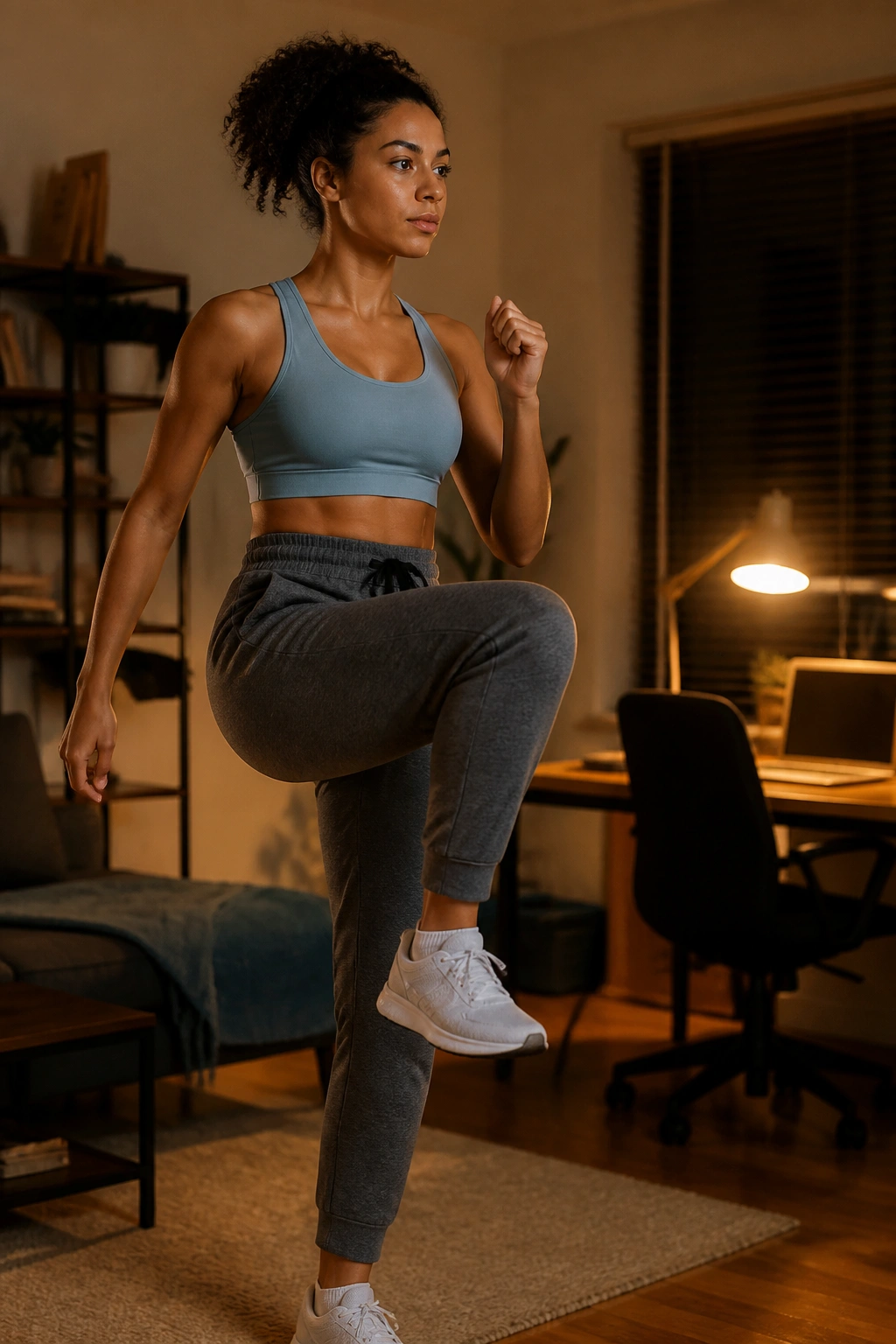
No room to jump? Fine. You can still sweat without shaking the floorboards. Low-impact circuits are the answer when the house is quiet, the walls are thin, or your knees need a break from harder work.
Build a 12-minute circuit with step jacks, slow squats, standing knee drives, incline mountain climbers on a desk, and shadow punches. Work 40 seconds, rest 20 seconds, then move to the next exercise. Keep the moves smooth and deliberate. The quiet comes from control, not from making the session easier.
A simple template
- Step jacks
- Slow bodyweight squats
- Standing knee drives
- Hands-elevated mountain climbers
- Shadow punches
A circuit like this is useful because it keeps the heart rate up without the pounding. It is a good choice if you are sore, sleep-deprived, or trying not to wake a roommate. Quiet does not mean weak. It means you are choosing the right tool for the space you have.
16. Mobility Flows That Undo a Day in the Library
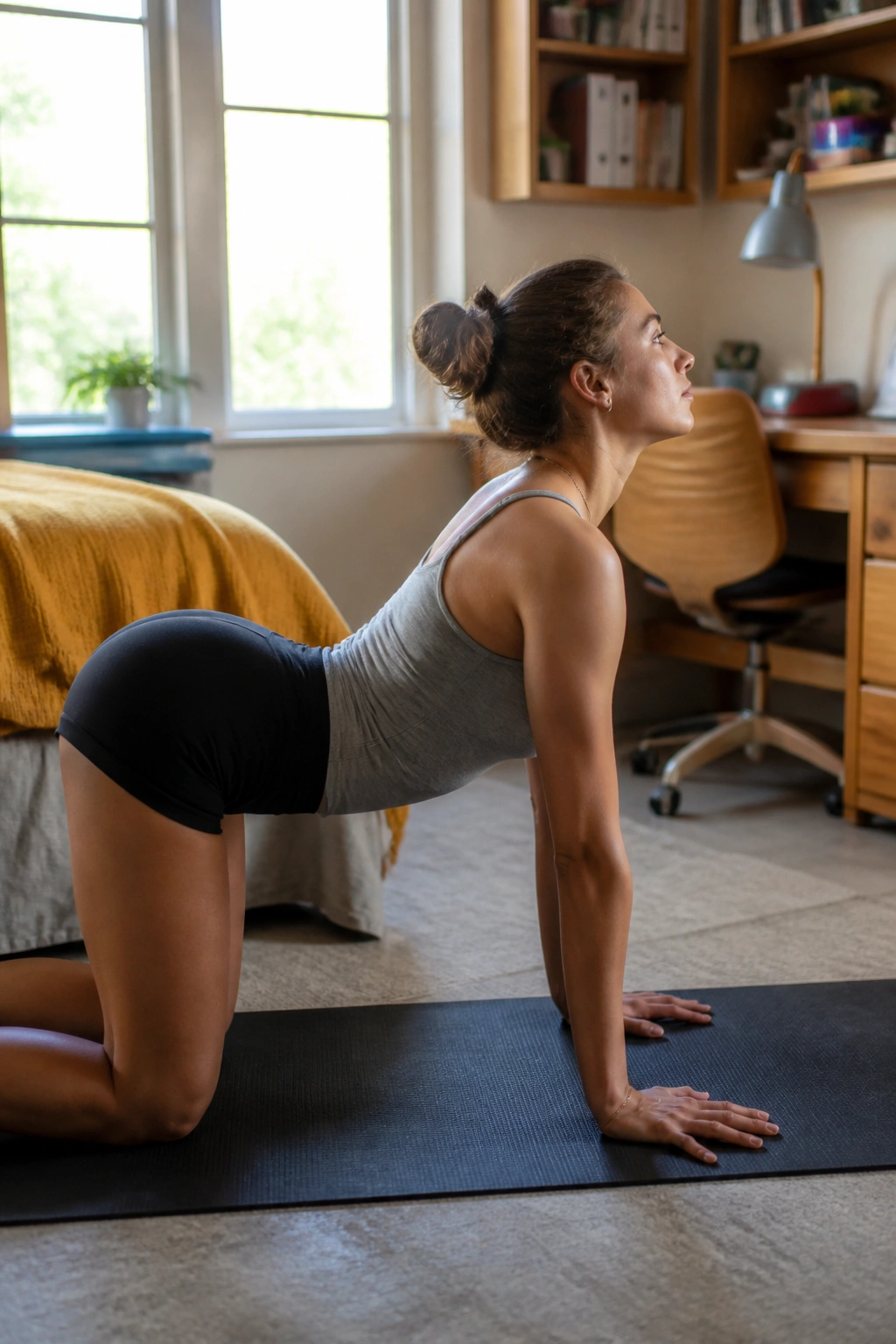
Some days the workout is less about effort and more about not rusting in place. A mobility flow is not flashy, and that is fine. If you sat through classes, hunched over a laptop, and carried a backpack all afternoon, your hips and upper back probably want a little attention.
Spend 5 to 8 minutes on cat-cow, thoracic rotations, hip flexor stretches, ankle rocks, child’s pose, and a few slow cobra lifts. Move through each one for 30 to 45 seconds. Breathe through your nose if you can, and stop pushing when the stretch turns sharp.
This kind of session helps the next workout feel better too. It is easier to squat, walk, or even sleep when your lower back is not acting like a rusted hinge. I like this one after heavy reading days, because it gives you a clean break between sitting and the rest of your evening.
Not every student workout has to leave you breathless. Some should leave you able to stand up without groaning.
17. Upper-Body Backpack Days When You Skip the Gym
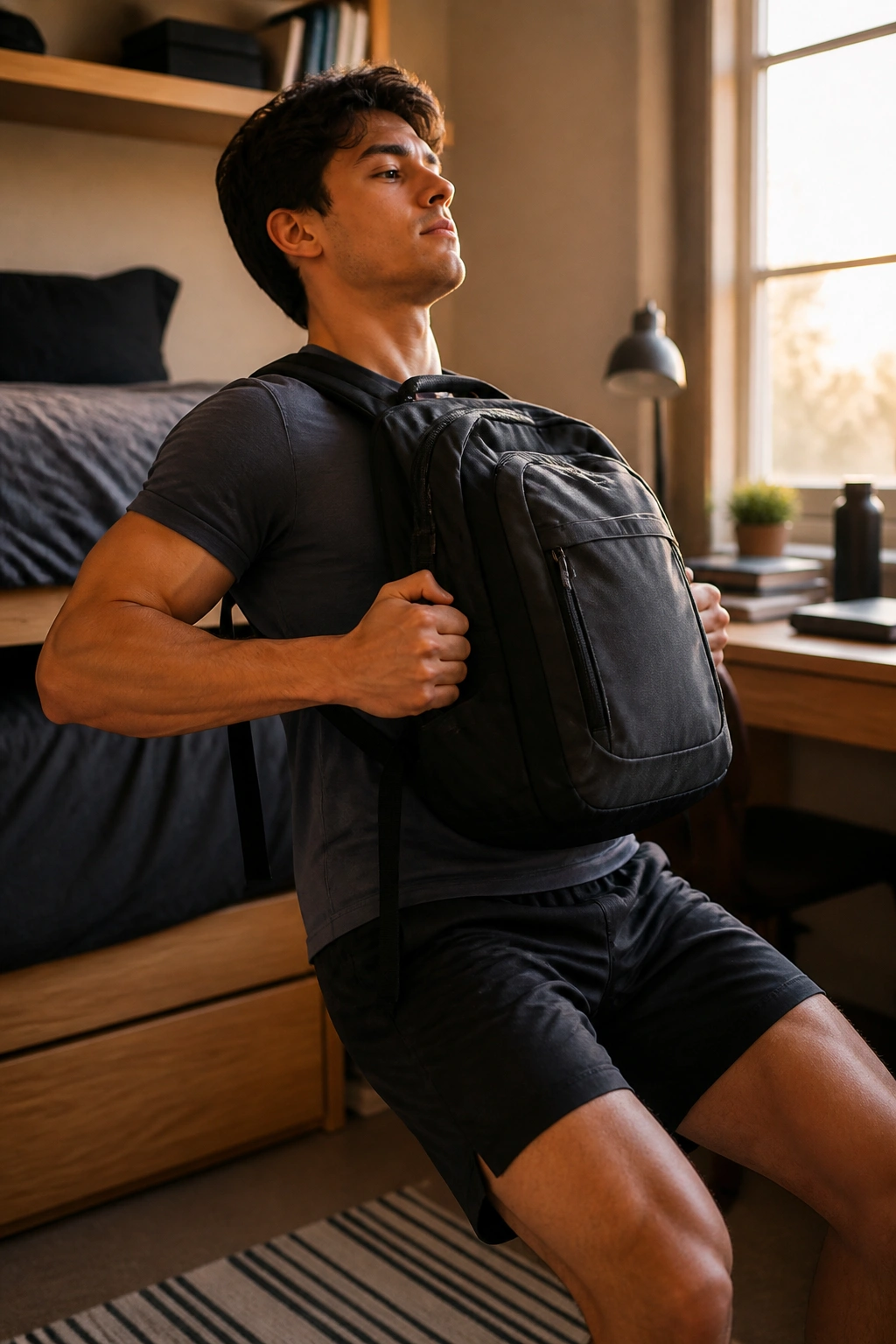
If you want one focused strength day without paying for a gym pass, make the backpack do some of the work. An upper-body session with a loaded bag is clunky in a good way. It forces you to slow down, control the lift, and pay attention to your shoulders instead of rushing through fluff.
Use backpack rows, floor presses, pike push-ups, bent-over reverse fly motions with water bottles, and plank shoulder taps. Aim for 3 sets of 8 to 12 reps on the strength moves and 20 to 30 taps on the planks. Keep the bag close to your body, especially on rows and presses, so the weight does not yank your shoulders forward.
What to pair together
- Pulling: backpack rows
- Pressing: floor press or push-up variations
- Shoulders: pike push-ups or bottle raises
- Core: plank shoulder taps
This is the workout that keeps your upper body from becoming an afterthought. Students sit a lot, carry backpacks a lot, and type a lot. That does not give the shoulders much kindness. A single focused session can help more than people expect.
18. One-Dumbbell Total-Body Complex for the Last Workout of the Week
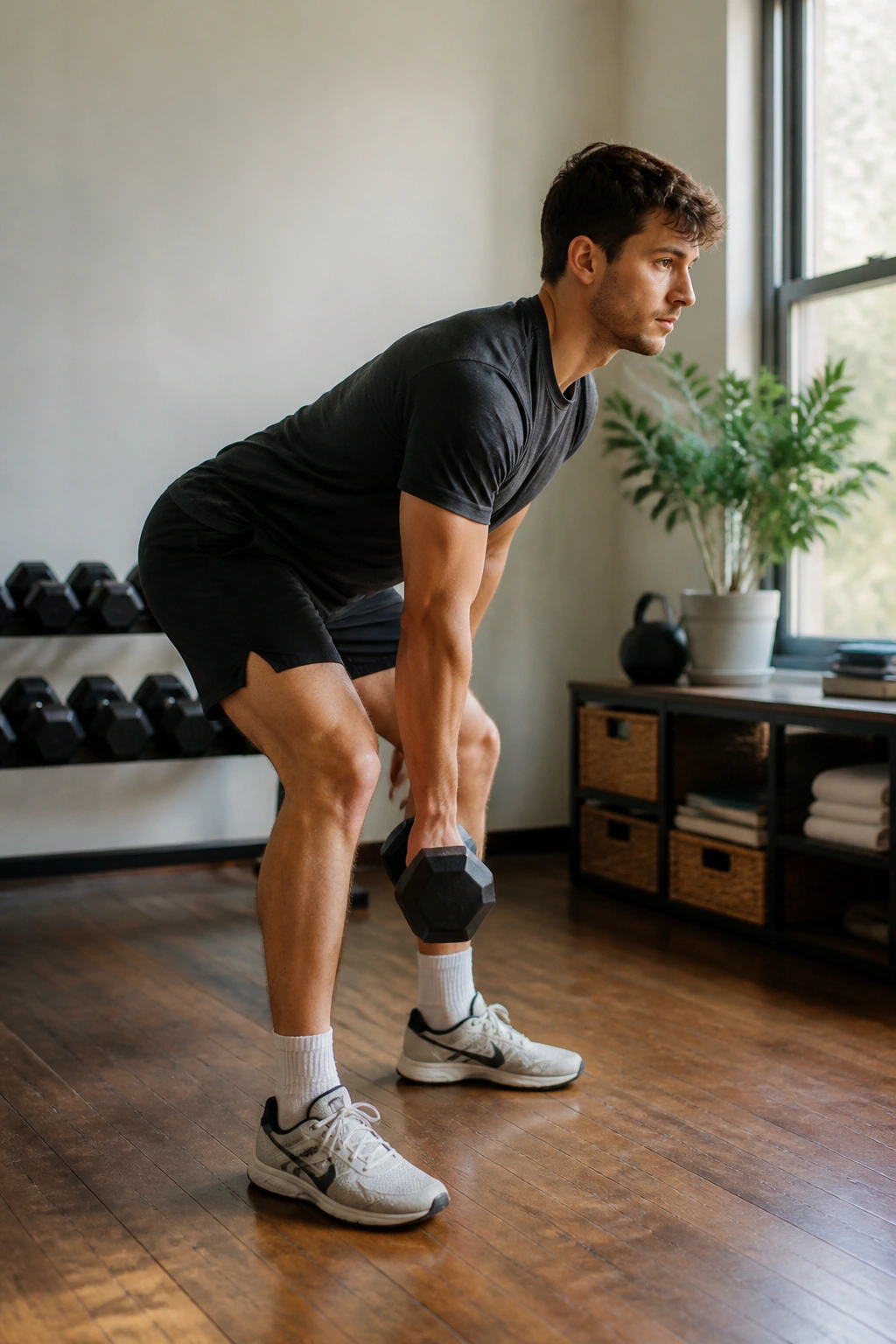
If you can get your hands on one dumbbell or kettlebell, you can build a complete session around it. Not an endless mash of random exercises. A real complex. The weight stays in your hands, the heart rate stays up, and the whole body has to keep up with the work.
Try 5 reps each of deadlifts, clean to front squat, push press, reverse lunge, and one-arm row. Do the sequence 3 to 5 times, resting 60 to 90 seconds between rounds. Use a weight that feels solid by the third round but still lets you keep clean form. If your grip dies before your legs do, the weight is probably too heavy for a first pass.
Why this one earns a place
Unlike a lot of gym routines, a complex does not waste time setting up separate stations. One weight, one small space, one timer. That fits student life better than polished plans that assume perfect conditions.
It also works well as a weekly anchor workout. Do it once, track the weight, and try to make the same load feel smoother next time. That kind of simple progress is easy to miss, but it adds up.
Final Thoughts
The best student workouts are rarely the fanciest ones. They are the ones you can repeat when your schedule is messy, your budget is thin, and your energy is split between six different things.
Pick two or three of these and keep them close. A short bodyweight circuit, one cardio option, and one strength workout can carry a whole month if you stay honest with them. That is enough to build momentum without turning fitness into another class.
Cheap helps. Short helps. Consistent helps more.
