



Fit moms workouts for the first year after birth do not have to be loud, punishing, or long. The best ones are usually the ones that feel almost too simple: a walk with a stroller, a slow breathing drill on the floor, a set of bridges while the baby kicks on a blanket beside you.
That first year asks a lot. Sleep gets chopped up. Joints can feel loose for months. The core feels different, sometimes for a while longer than anyone warns you about, and the pelvic floor may be happy one day and grumpy the next. Strong does not come from proving anything. Strong comes from rebuilding with patience, then adding load only when your body is ready for it.
A lot of postpartum workout advice misses that part. It jumps straight to “get your body back” nonsense, which is both rude and useless. A smarter approach is to move through phases: reconnect, stabilize, strengthen, then build intensity when symptoms stay quiet. That is how you make progress you can actually keep.
1. Deep Breathing and Pelvic Floor Reset
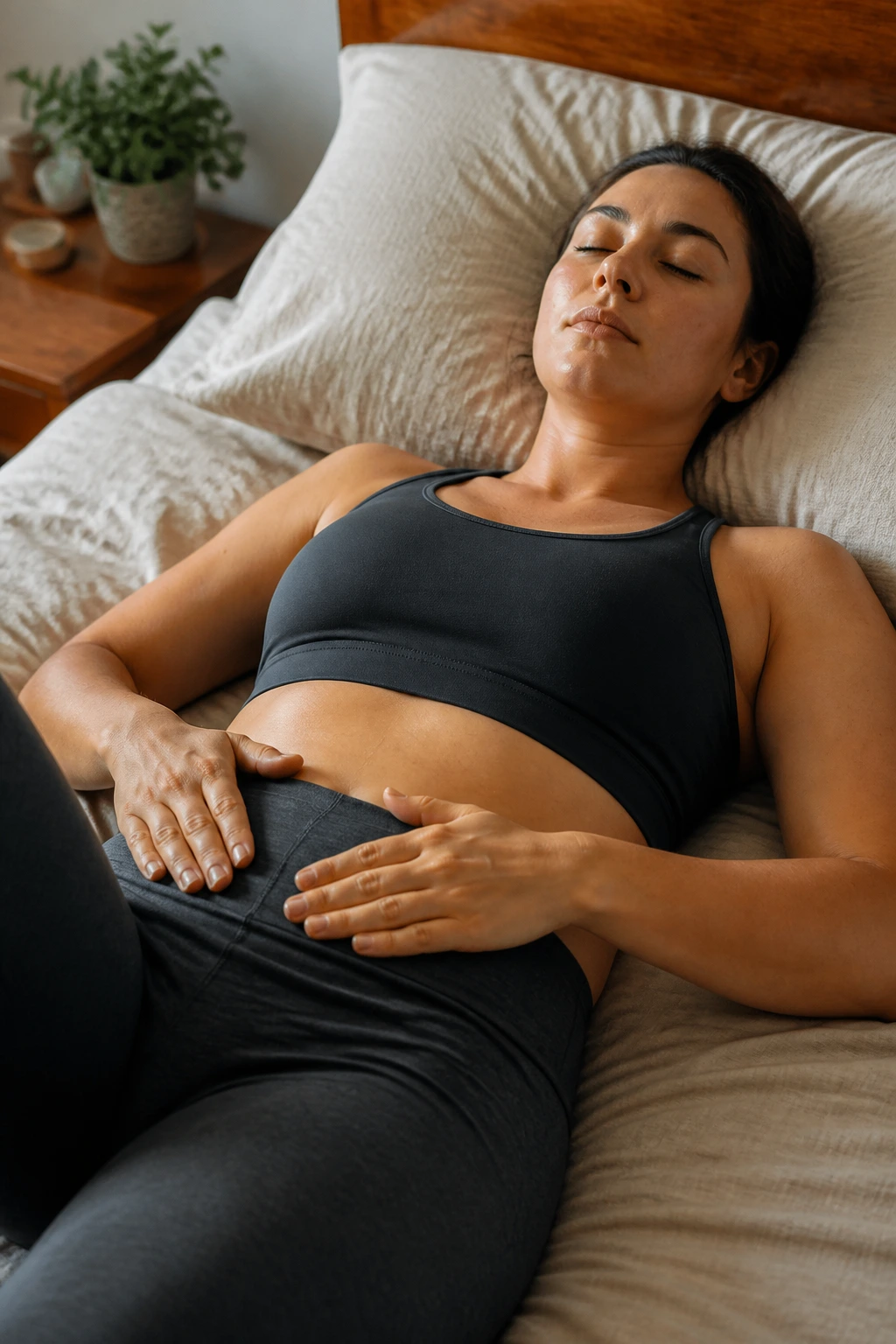
The smallest workout often does the most work. Five slow breaths done well can teach your ribs, diaphragm, and pelvic floor to start talking to each other again, which matters more than people think in the early postpartum months.
Lie on your back with knees bent or sit tall in a chair if the floor feels like too much. Inhale through your nose and let your lower ribs widen sideways. Exhale through your mouth like you’re fogging a mirror, then gently lift through the pelvic floor as if you’re stopping gas and urine at the same time. Soft, not clamped. That last part matters.
How it should feel
- Your belly should soften on the inhale.
- Your ribs should move, not just your chest.
- The exhale should feel longer than the inhale.
- No straining, no breath-holding, no pushing down.
Do 5 breaths for 3 rounds, with a minute between rounds if you want. If you feel pressure, heaviness, or a bulge at the midline, back off and shorten the exhale. This is not a test. It’s a reset.
2. Stroller Walk Intervals Around the Block
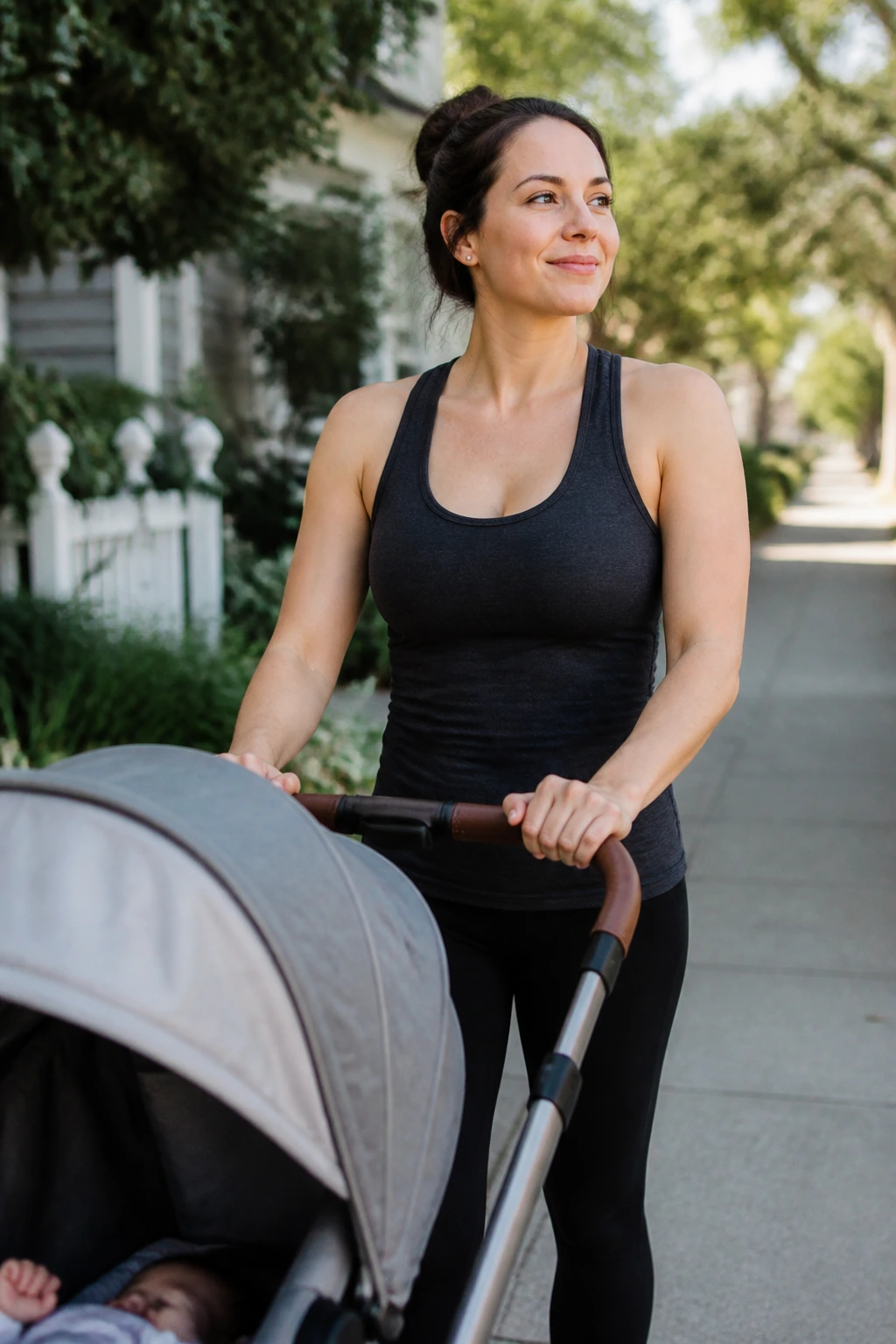
A stroller walk can be a real workout if you stop treating it like background noise. Twenty minutes of brisk walking with a few short faster pushes will raise your heart rate, loosen tight hips, and help your brain remember that exercise does not need a spare hour and a silent house.
Pick a loop you know well. Warm up for 5 minutes at an easy pace, then do 1 minute brisk / 2 minutes easy for 5 rounds. If you feel good, finish with 5 more minutes steady. Keep your shoulders low and your hands light on the stroller handle. White-knuckle gripping turns a nice walk into a neck headache.
A simple pattern that works
- 5 minutes easy pace
- 5 rounds of 1 minute brisk, 2 minutes easy
- 5 minutes steady pace
- Optional: one short hill if your body likes it
This is a sneaky good workout because it teaches pacing. And pacing is a skill postpartum mothers need all the time, not just in exercise. You are carrying a lot already. A walk that leaves you energized is a win.
3. Glute Bridge and Heel Slide Core Circuit
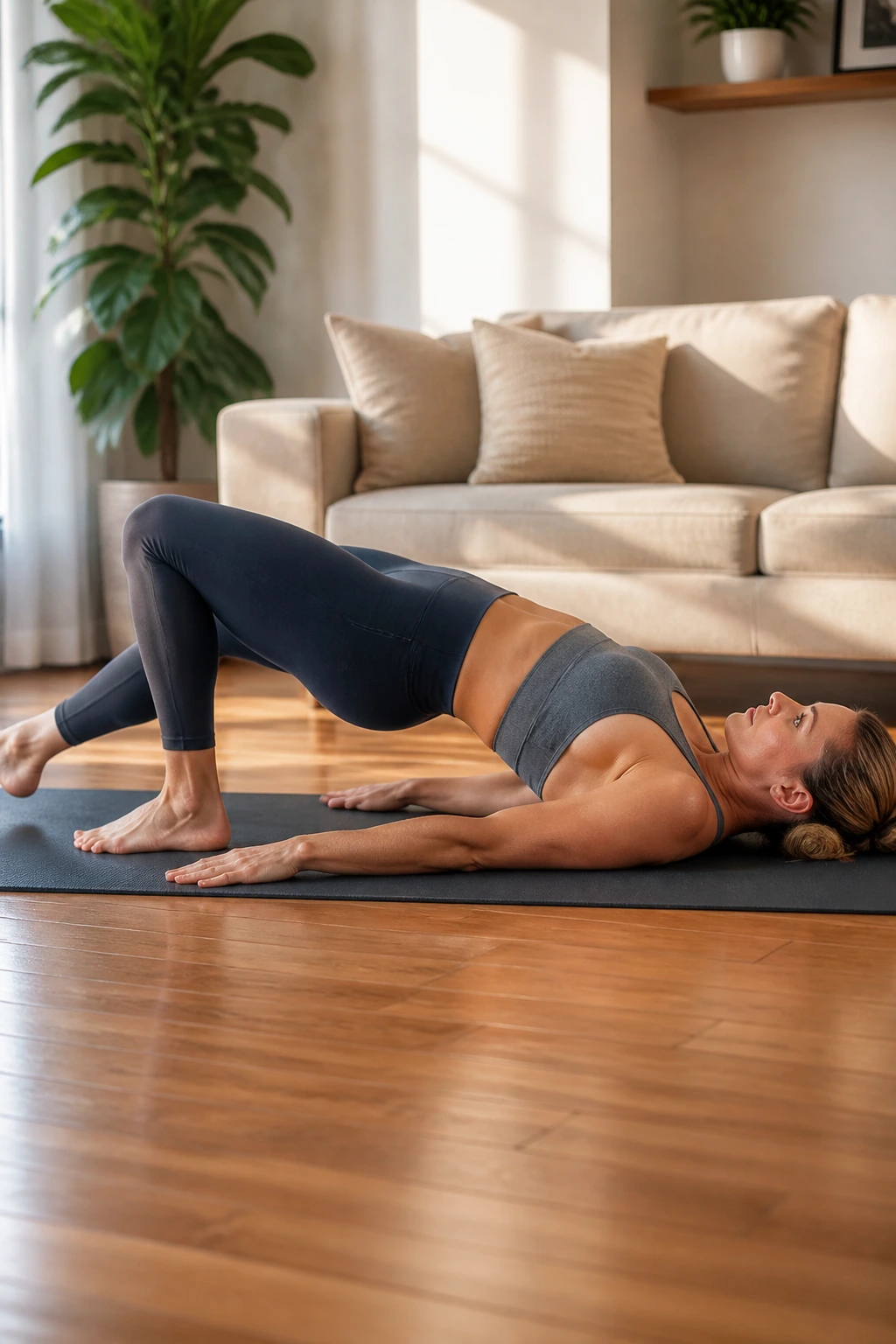
Crunches are not the hero here. Glute bridges and heel slides do a better job of waking up the deep core without smashing pressure downward, which is exactly what many bodies need after birth.
Start with glute bridges. Lie on your back, feet hip-width apart, and exhale as you lift your hips. The move should come from your glutes, not your lower back. Then add heel slides: keep one heel on the floor and slowly slide it away as you exhale, keeping the pelvis steady. If the belly domes, make the range smaller.
Why this combo works
A bridge teaches hip extension and glute strength. A heel slide asks the core to stay quiet and steady while the leg moves, which is a big deal when you’re carrying babies, car seats, and grocery bags. Small motion, big carryover.
Try 2 to 3 rounds of:
- 10 glute bridges
- 6 heel slides per side
- 20-second rest
Stop before fatigue turns messy. The goal is control, not burn. A clean rep with a calm belly beats a dozen shaky ones every time.
4. Sit-to-Stand Strength Reps From a Bench
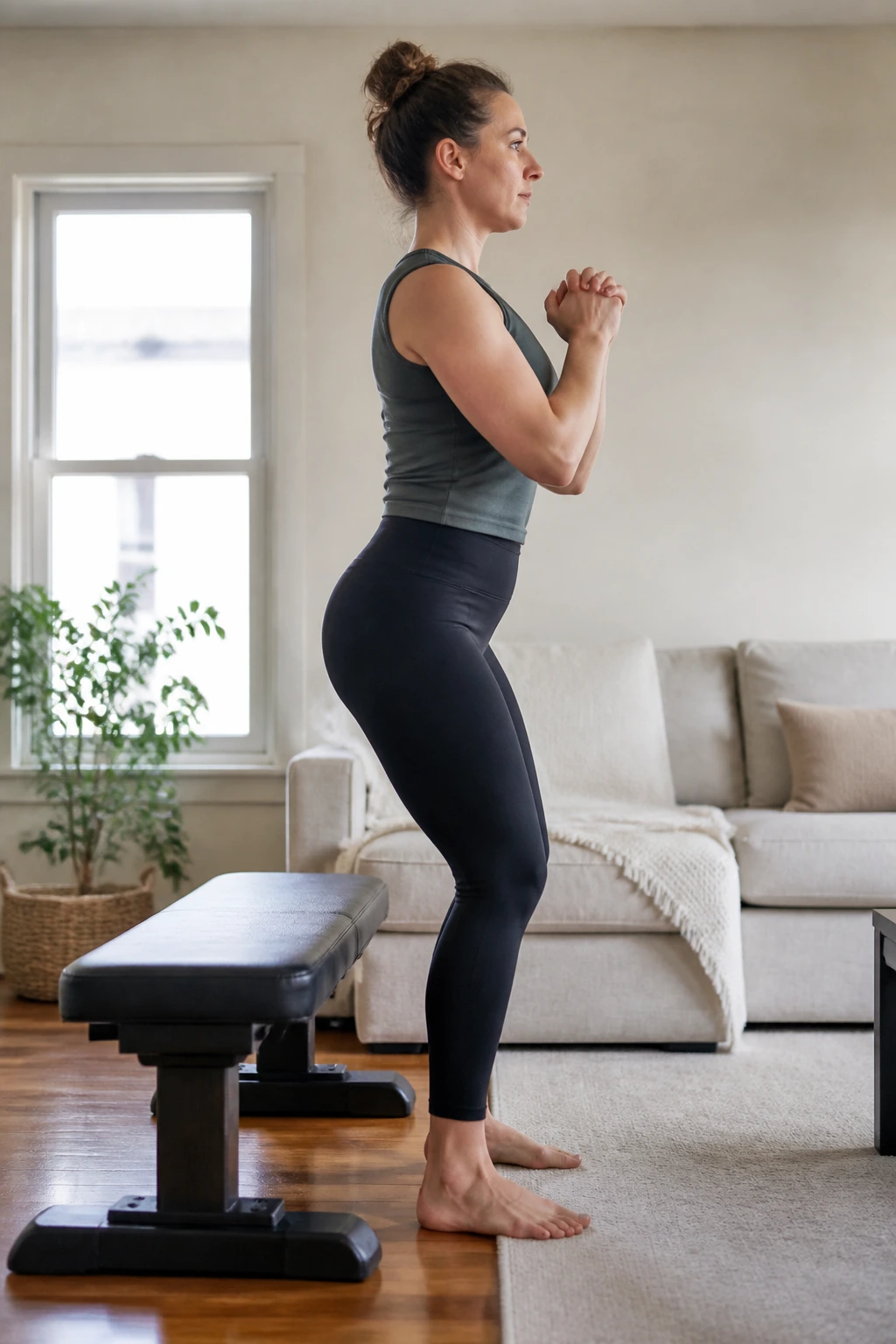
A chair is underrated. So is a couch cushion. Sit-to-stand reps rebuild the legs, glutes, and day-to-day strength you use constantly when you’re getting up from the floor with a baby in your arms.
Choose a seat height that lets you stand without rocking forward hard. Feet stay flat. Lean your chest slightly over your thighs, press through your heels, and stand without yanking with your arms. If you need a hand on a table for balance, use it. Pride is not the point here.
The beauty of this move is how ordinary it feels. You can do it while someone is napping nearby, and it trains the exact pattern you need for picking up toys, standing from the couch, and getting out of the car with less wobble.
Easy ways to build it up
- Week 1 style: 2 sets of 8 reps
- Week 2 style: 3 sets of 10 reps
- Harder version: hold a 5- to 10-pound dumbbell at your chest
- Slower version: lower for a 3-count each rep
If your knees cave inward or your belly pushes out hard, cut the reps and reset. Strong stands feel smooth. They do not feel like a scramble.
5. Incline Push-Up and Band Row Upper-Body Circuit
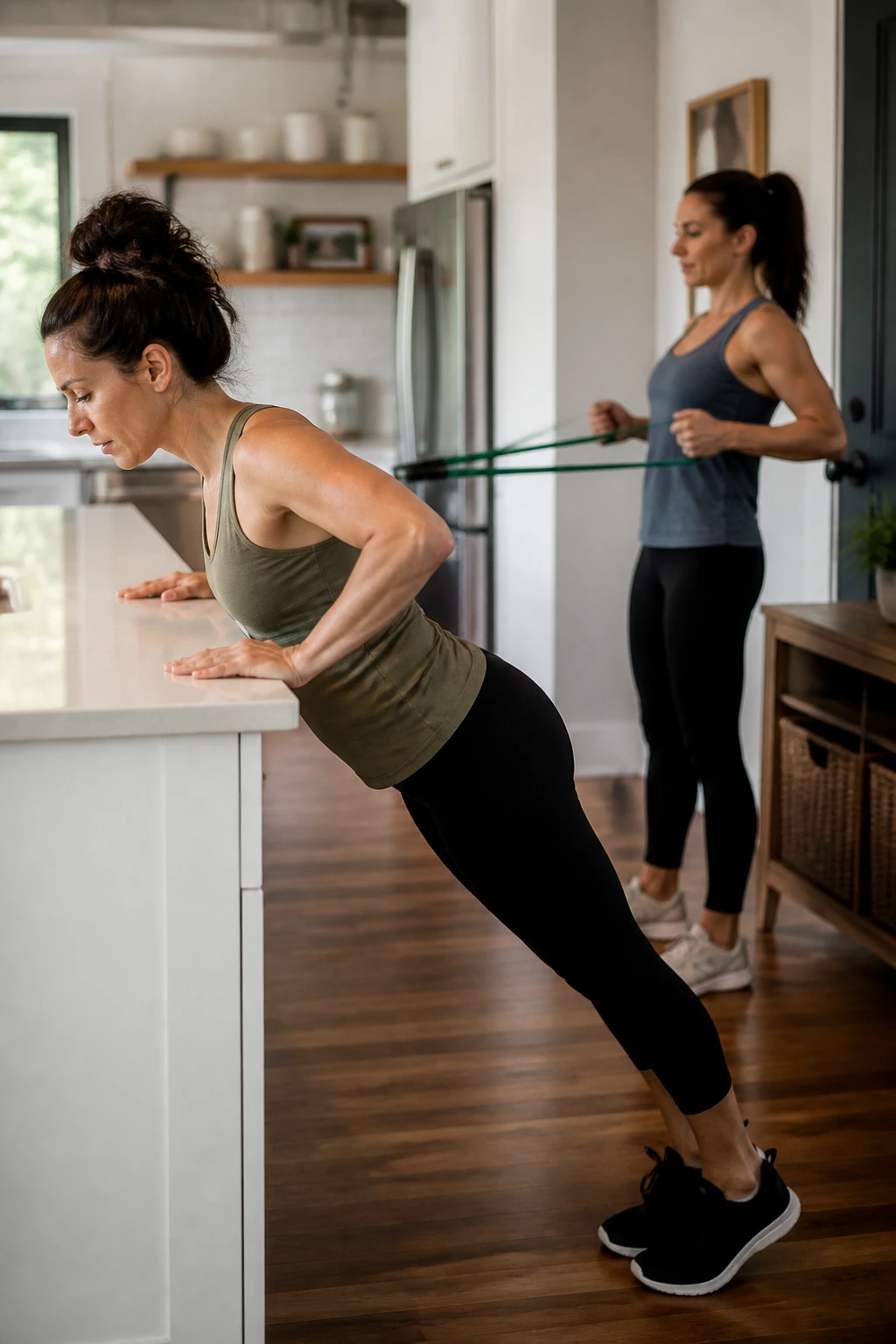
Baby-carry shoulders get cranky fast. A push-and-pull circuit keeps the upper body balanced, which is one of the easiest ways to avoid that hunched, tight-neck feeling that settles in after long feeding sessions.
Use a kitchen counter, sturdy table, or wall for incline push-ups. Hands stay under the shoulders, body in a straight line, ribs tucked gently. Then switch to band rows anchored around a post, door anchor, or your feet if you’re sitting on the floor. Squeeze the shoulder blades back and down as you pull.
Quick circuit
- 8 to 12 incline push-ups
- 10 to 15 band rows
- Rest 45 seconds
- Repeat for 2 to 4 rounds
The incline matters. A wall push-up is not “too easy” if your core is still recovering. It’s the right tool. If you rush to the floor too soon, your neck and low back often do the work your chest and arms should be doing. That gets old fast.
Keep the ribs stacked over the pelvis. That one cue saves a lot of sloppy reps.
6. Bodyweight Squat and Reverse Lunge Ladder
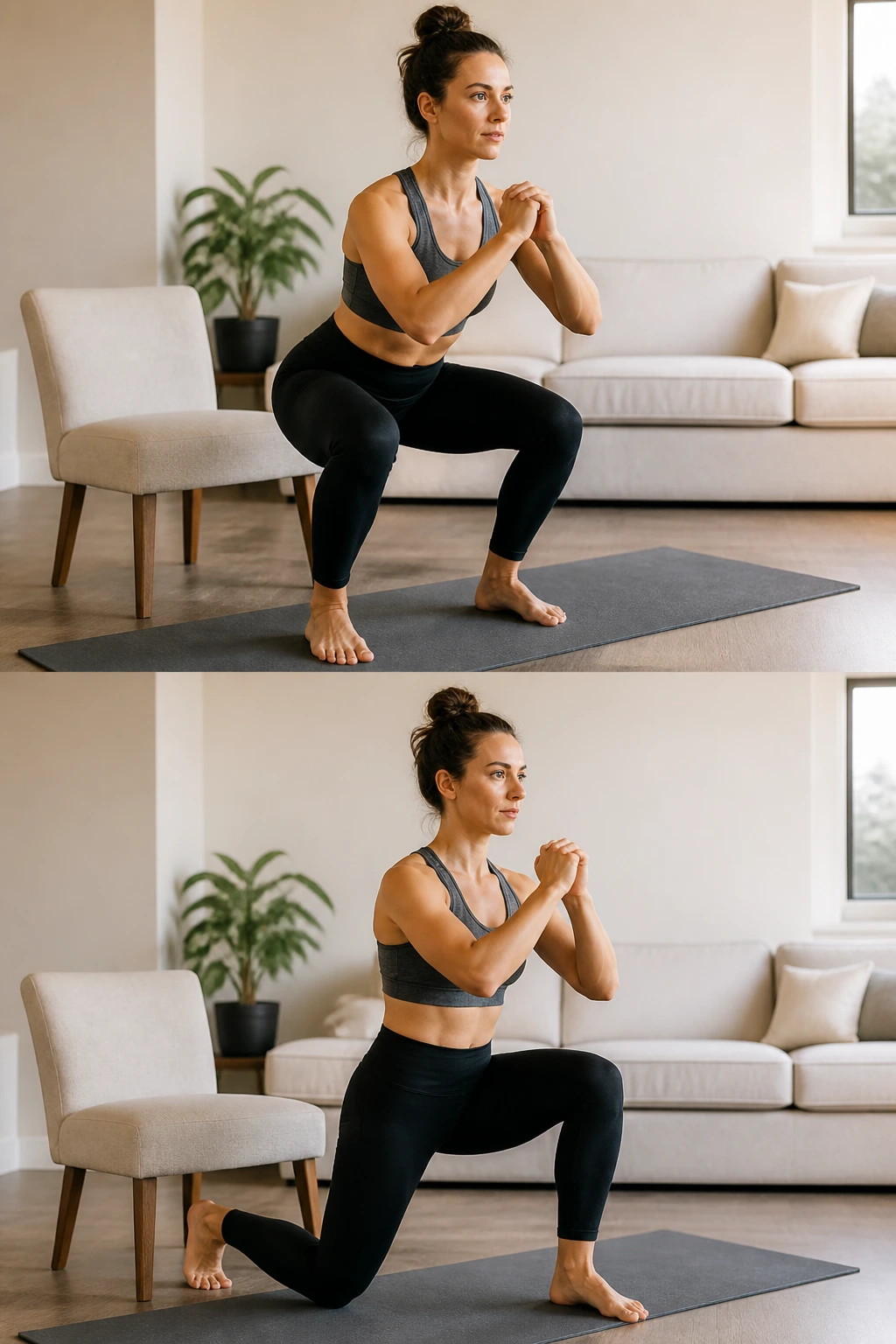
Leg work does not need a barbell to count. A squat-and-lunge ladder is a clean way to build strength without making your body feel pinned down by heavy equipment or high-impact jumping.
Start with bodyweight squats to a chair or bench if depth is still a little uncertain. Then add reverse lunges, which tend to be kinder than forward lunges because they ask for less sudden braking. Step back, drop the back knee toward the floor, and keep most of the pressure in the front heel.
Here’s a simple ladder: 10 squats, 8 reverse lunges per side, 6 squats, 6 reverse lunges per side, 4 squats. That sounds short, and it is. Short is fine. Quality reps matter more than marathon sessions when you are juggling recovery and real life.
Watch for heaviness in the pelvic floor or a sense that your belly is bearing down. If that shows up, shorten the range or swap in split-stance sit-to-stands for that day. Bodies send signals. Best to listen.
7. Resistance Band Total-Body Circuit
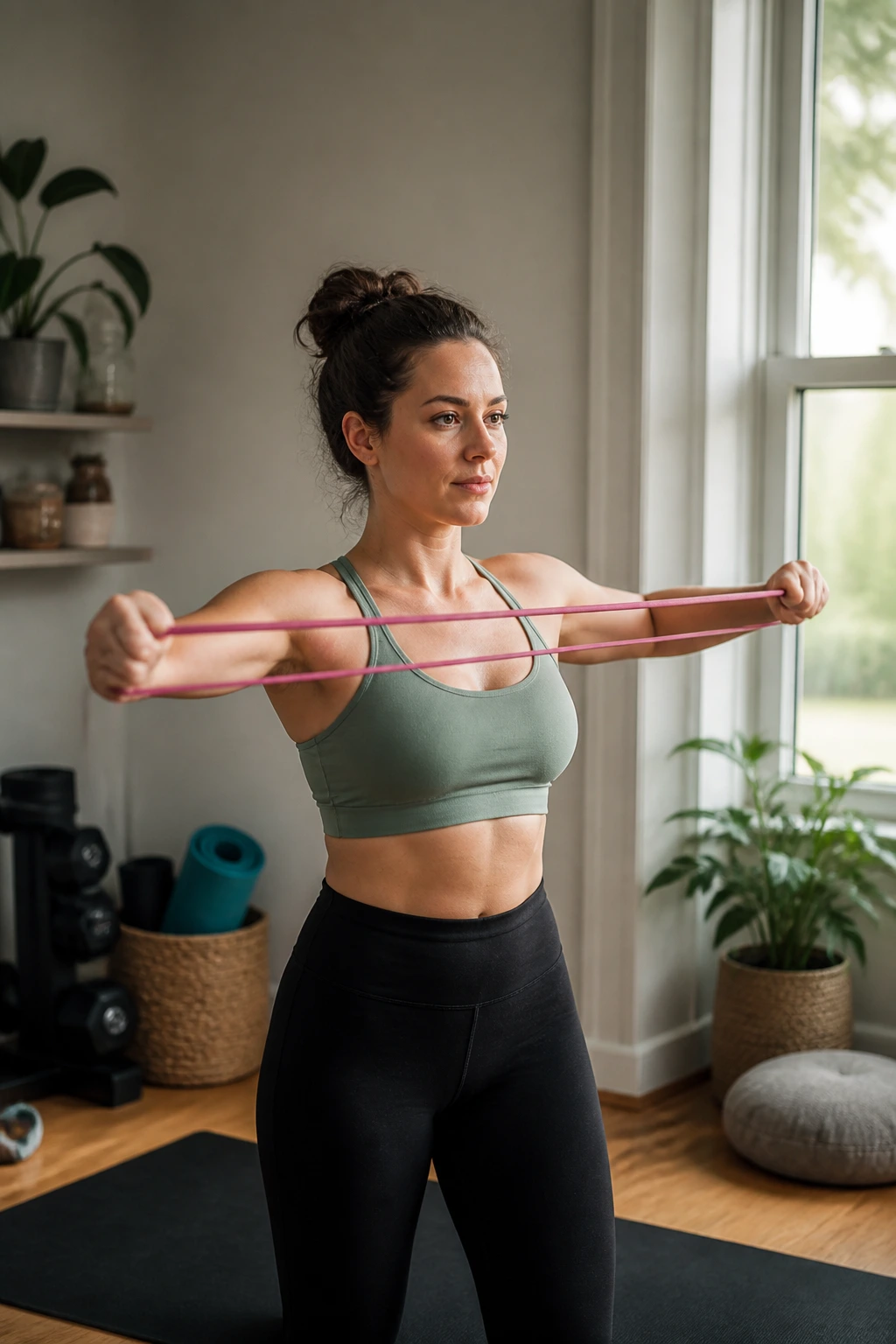
Bands are a gift for postpartum training. They take up almost no space, cost far less than a full rack of weights, and they let you train strength on days when the energy budget is tight.
A good total-body band workout hits the glutes, upper back, shoulders, and core without beating you up. Try band pull-aparts, lateral steps, deadlifts, and overhead presses only if your shoulders feel ready. The resistance should feel steady, not jerky.
A simple band circuit
- 12 band pull-aparts
- 10 band deadlifts
- 10 lateral steps each way
- 8 to 10 band presses
Do 2 to 3 rounds with 30 to 45 seconds of rest between moves. If overhead work feels sloppy, swap in band rows instead. There’s no prize for forcing a motion that your shoulders hate.
This kind of workout is useful because it trains posture and hip stability together. That combo shows up everywhere: carrying the baby on one side, loading the car seat, reaching into the crib, standing at the counter. Real life is asymmetrical. Your training should be too.
8. Dead Bug and Bird Dog Core Stability Workout
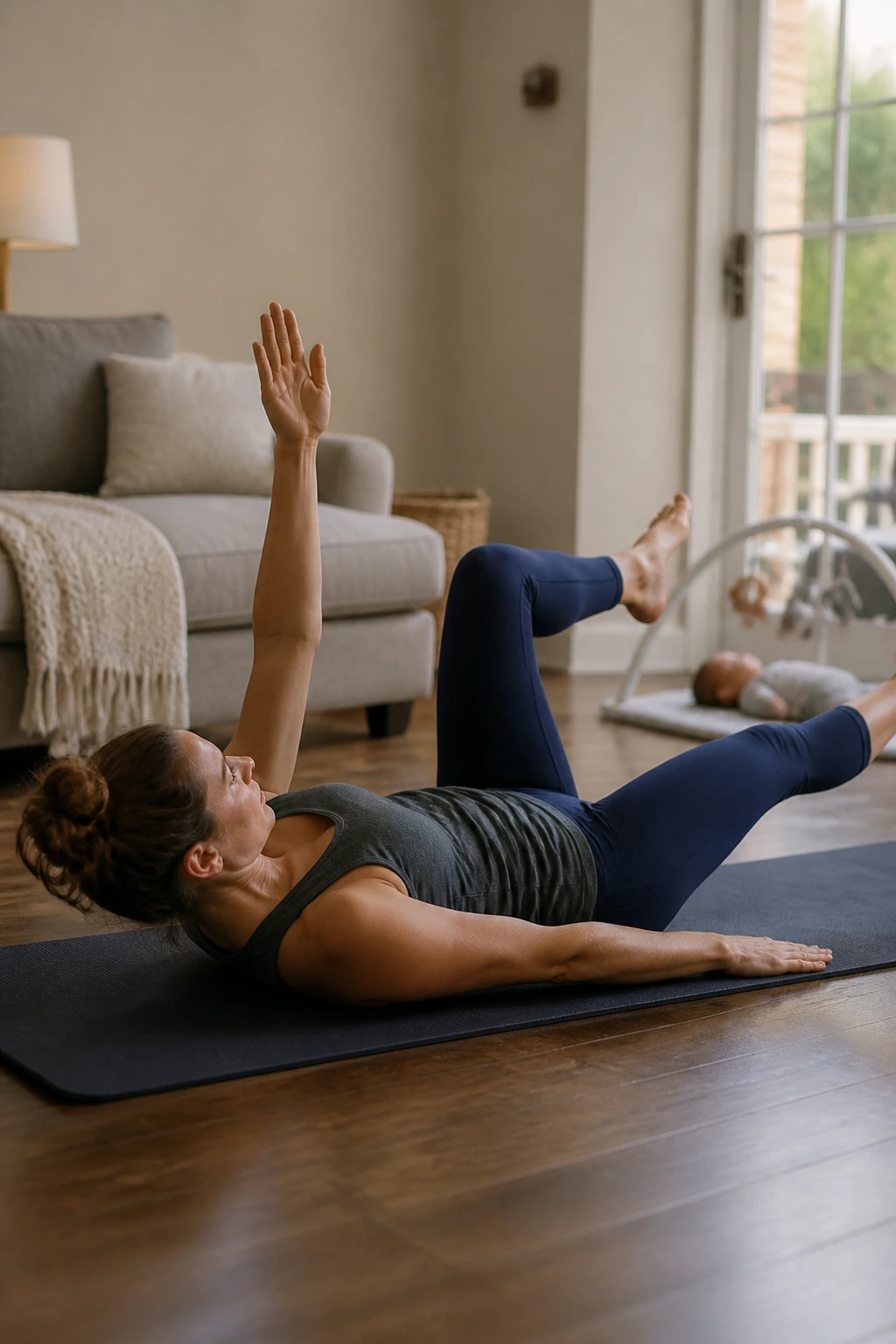
A strong core after birth is less about seeing abs and more about keeping pressure where it belongs. Dead bugs and bird dogs do that job well because they teach the trunk to resist movement while the limbs move around it.
Dead bugs look simple, which is probably why people rush them and miss the point. Lie on your back, arms up, hips and knees at 90 degrees. Exhale, then lower one heel toward the floor while the opposite arm reaches back. Keep the low back from arching. Bird dogs do the same job on hands and knees, only now you’re balancing against gravity in a different way.
What to watch for
- No doming down the midline
- No low-back arch
- No breath-holding
- Slow enough that you can control the return
Try 6 reps per side for each move, then rest. If the movement gets shaky, shorten the range before you add more reps. A tiny heel tap counts. So does a three-inch arm reach. The goal is control.
This is one of those workouts that pays off later. You may not feel wrecked after it. Good. That means it’s doing its job.
9. Low-Impact Cardio Dance Intervals
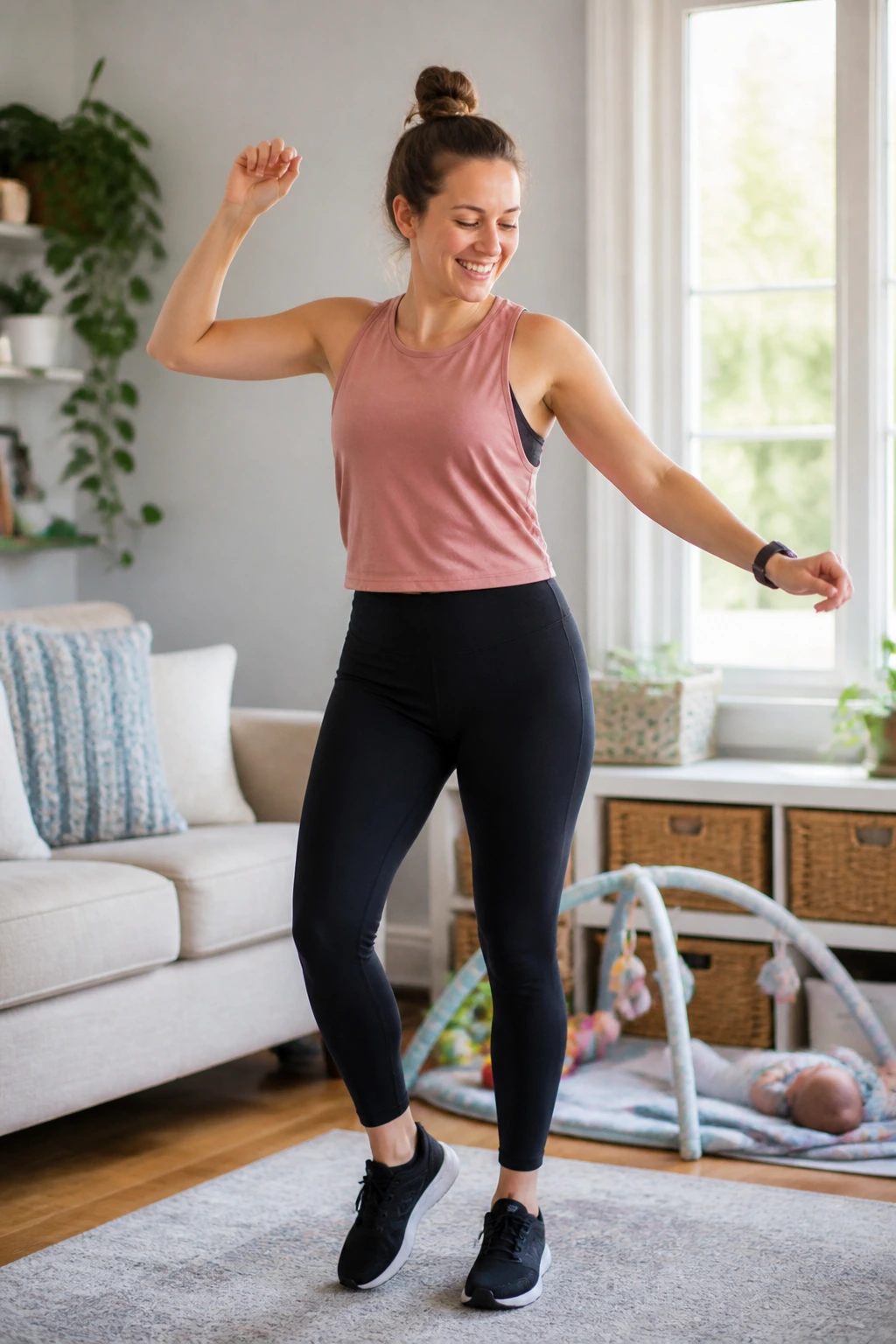
Sometimes you need sweat without impact. Low-impact dance intervals are great for the first year because they lift your mood, raise your heart rate, and keep the joints happy enough to do it again tomorrow.
Put on 2 or 3 songs and move in place. Step-touch side to side, march with purpose, add arm reaches, then keep one foot on the floor if jumping feels off. The trick is to make the movements bigger and faster, not bouncier. You can work hard without pounding your body.
A simple format: 30 seconds active, 30 seconds easy for 10 to 15 minutes. During the active intervals, move like you mean it. During the easy pieces, keep walking or marching so you don’t crash.
If you feel silly, good. That usually means you’re loosening up. If a move irritates your pelvic floor or leaks show up, strip out the hops and keep the feet grounded. A clean sweat session is better than a flashy one that leaves you sore in the wrong places.
10. Dumbbell Strength Circuit for Busy Nap Windows
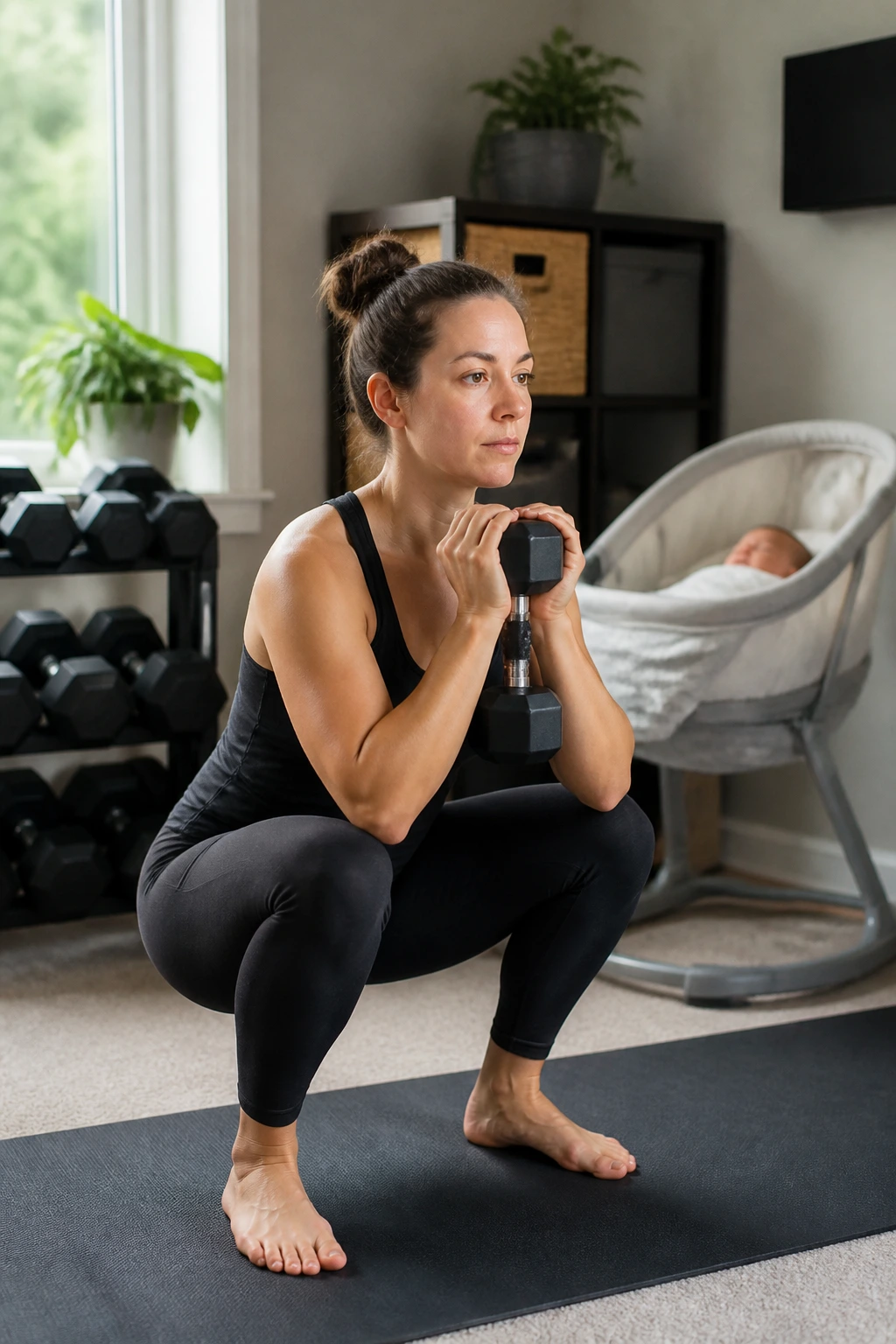
Dumbbells are where postpartum strength starts to feel like strength again. Two moderate weights and 20 minutes can rebuild muscle in a way bodyweight work sometimes can’t, especially once the early recovery stage has passed.
Pick four moves: goblet squats, one-arm rows, Romanian deadlifts, and floor presses. Use a weight that makes the last 2 reps honest but still clean. If you have to twist your body to finish the set, the weight is too heavy for that day.
One solid 20-minute circuit
- 10 goblet squats
- 10 one-arm rows per side
- 10 Romanian deadlifts
- 8 floor presses per side
- Rest 45 to 60 seconds
- Repeat for 3 rounds
The floor press is a nice choice because it keeps the range smaller and the shoulders more controlled. That matters when your upper body already spends half the day rounded around a baby.
No need to chase exhaustion. Leave one or two good reps in the tank. That makes it easier to come back tomorrow, and the day after that.
11. Step-Up and Split-Squat Lower-Body Session
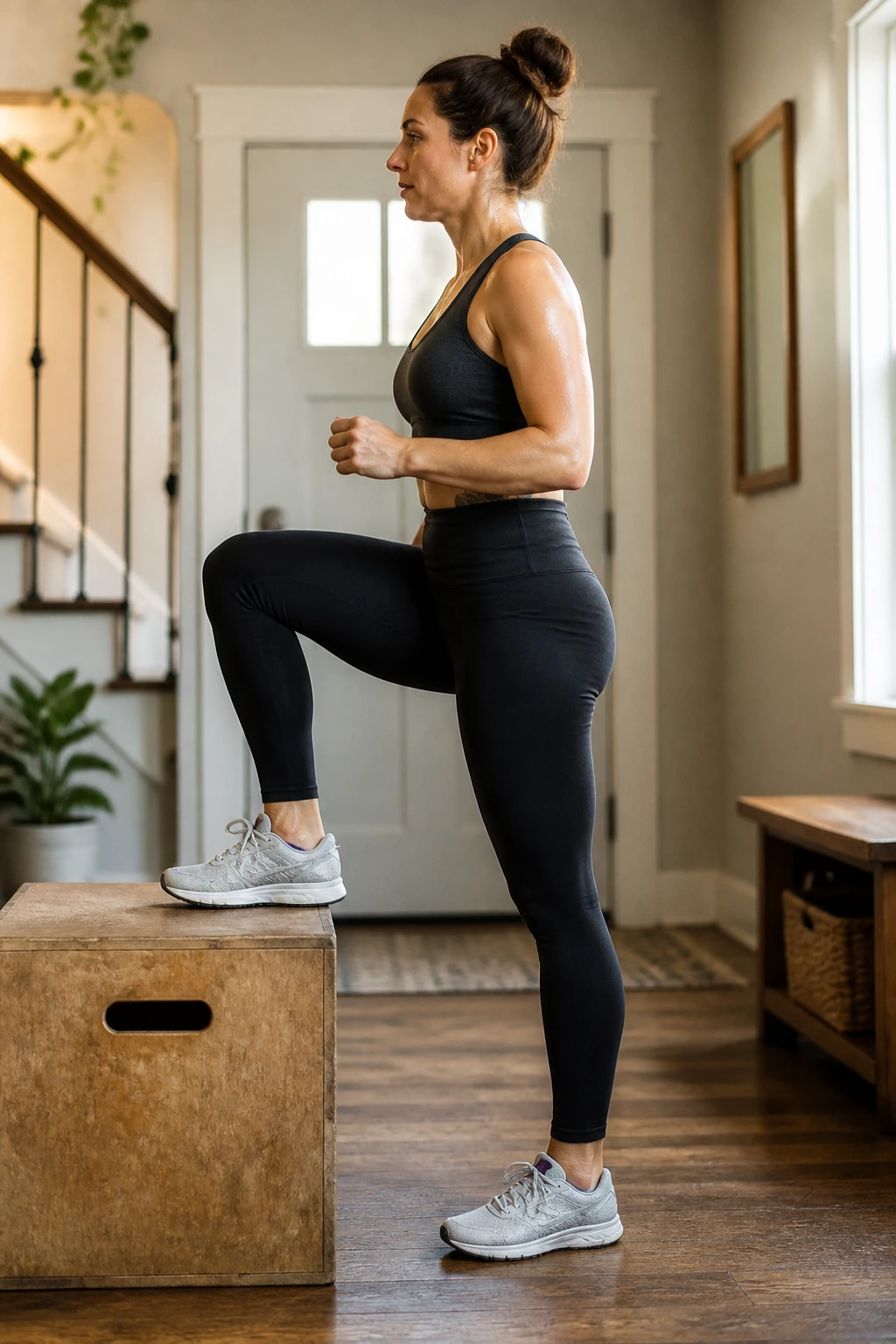
A low step can humble you in the best way. Step-ups and split squats build single-leg strength, which helps with stairs, carrying a child on one hip, and getting out of the car without using momentum as a crutch.
Use a step or sturdy box that sits around 6 to 12 inches high. Step up slowly, stand tall at the top, then lower with control. Split squats are even better for balance work: one foot forward, one back, torso upright, knees bending in a straight line. The back knee can hover or gently tap down.
Good cues for both moves
- Keep the front foot fully planted
- Push the floor away
- Avoid rocking side to side
- Move at a pace you can control
Two sets of 8 to 10 reps per side is plenty at first. If your balance feels wobbly, hold a wall or railing. That’s not cheating. That’s smart training.
This is also a good place to be honest with yourself. If stairs already feel hard with a diaper bag, the workout should stay modest and clean. Train the pattern first. Load comes later.
12. Farmer Carry and Suitcase Carry Walks
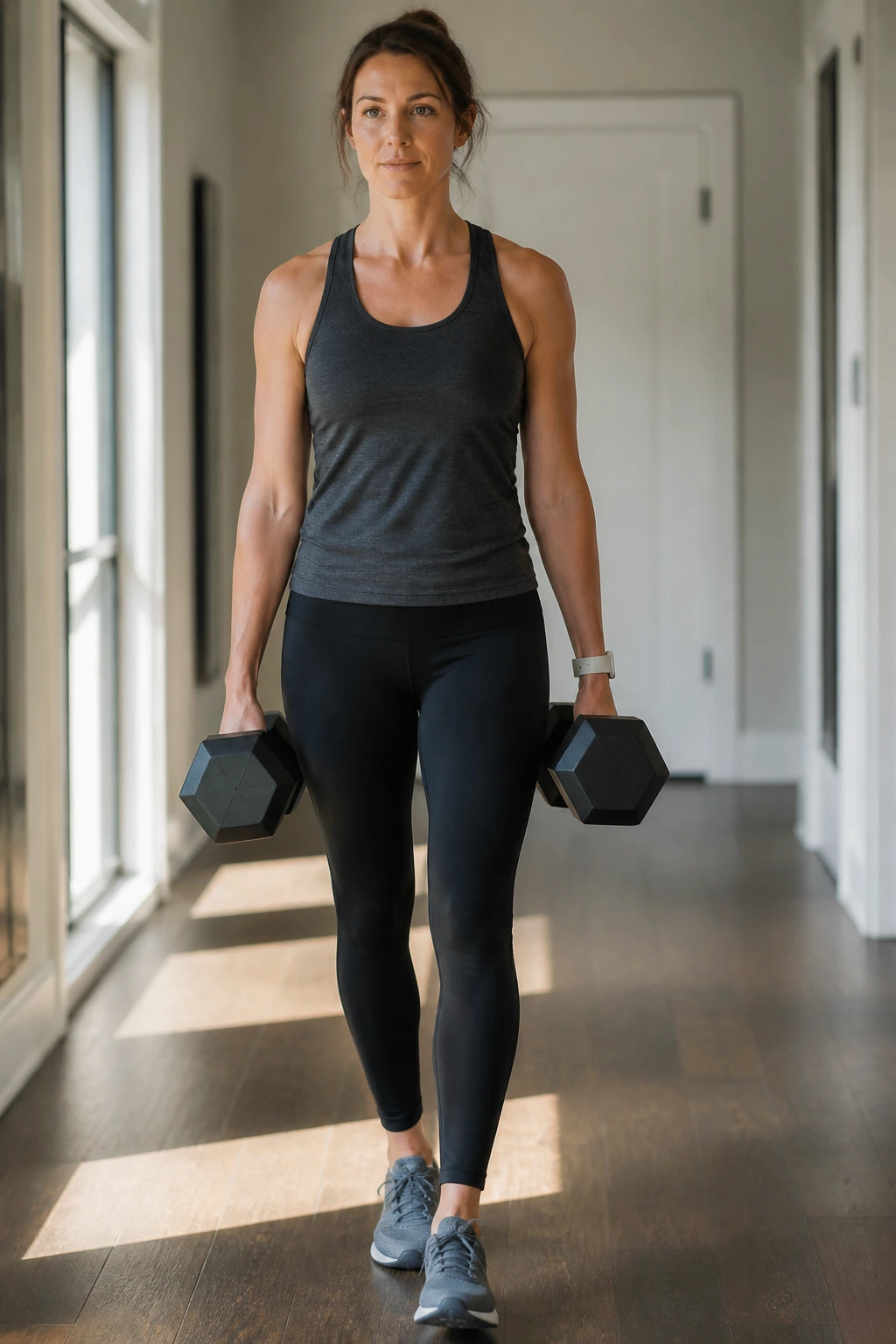
Carrying weight while walking looks boring. It is not. Loaded carries train grip, shoulders, ribs, hips, and core at the same time, which is why they feel so useful in real life.
A farmer carry uses two weights, one in each hand. A suitcase carry uses one weight on one side, which makes your body work harder to stay upright. Start with a pair of dumbbells you can hold for 20 to 30 seconds without leaning or shrugging. Walk slowly. That part is harder than it sounds.
If you lean to one side or your ribs flare, the load is too much. Drop it. Then try again with less weight and better posture. You want the walk to feel steady, almost calm, even though your muscles are working hard underneath.
This is one of my favorite postpartum strength moves because it sneaks in a ton of core work without crunching the belly or bouncing the joints. It also teaches you how to carry things without turning every trip across the room into chaos.
13. Mobility Flow for Tight Hips, Neck, and Upper Back
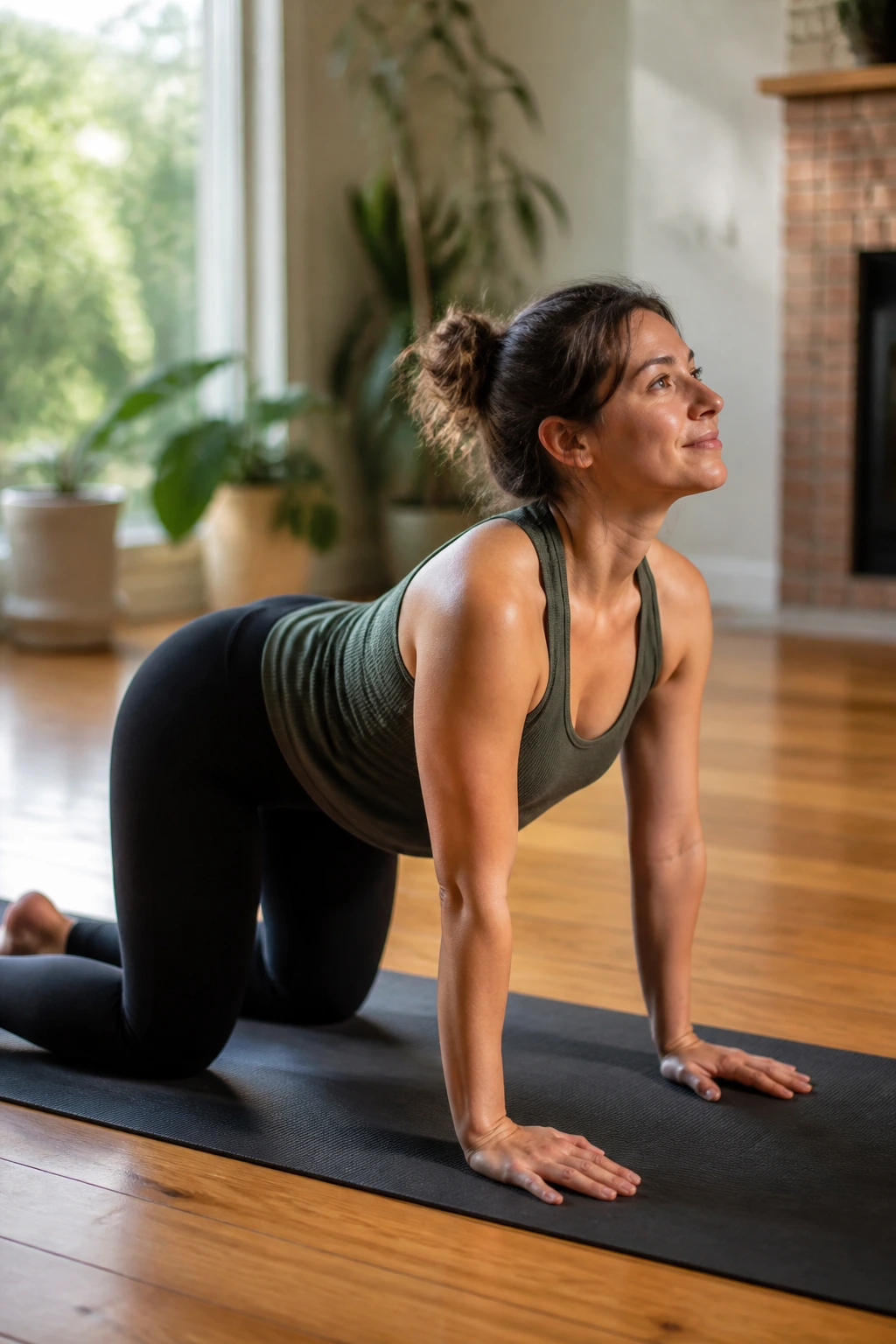
Some days, the body asks for movement that feels more like undoing knots than training. A mobility flow is the right answer when hips are stiff, the upper back feels glued, and the neck has been holding the whole house together.
Start with cat-cow for spine motion, then add thoracic rotations on hands and knees. Follow that with a kneeling hip flexor stretch, ankle rocks against a wall, and wall slides for the shoulders. None of this needs to be fancy. It needs to be done slowly enough that you can notice what’s tight and what’s weak.
A 10-minute flow
- 6 cat-cow reps
- 5 thoracic rotations per side
- 30 seconds hip flexor stretch per side
- 10 ankle rocks per side
- 8 wall slides
If one side feels tighter, stay there a little longer. No need to force symmetry in a single session. Babies make you asymmetrical all day. Your mobility work can acknowledge that instead of pretending otherwise.
This is the kind of workout that keeps the other workouts possible. And that matters more than people admit.
14. 20-Minute EMOM Full-Body Workout
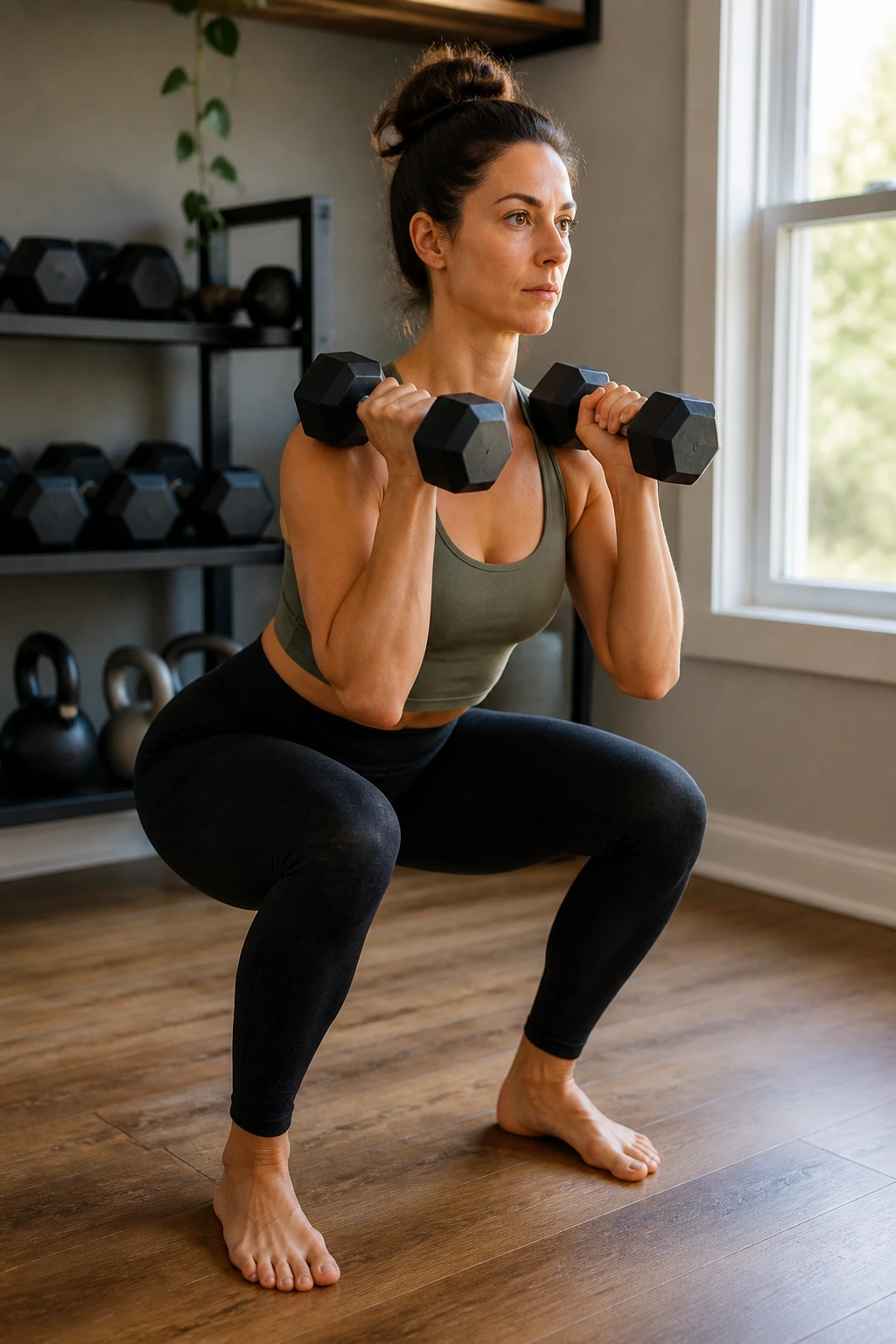
By the time a mother is ready for more intensity, a short EMOM can feel like a clean, satisfying push. EMOM means “every minute on the minute,” and it works well because it gives you structure without dragging on forever.
Choose four exercises. A simple setup might be squats, rows, push-ups on an incline, and deadlifts with dumbbells. Do one move each minute, then rest with whatever time remains in that minute. After four minutes, repeat the pattern for five rounds.
Sample 20-minute EMOM
- Minute 1: 10 squats
- Minute 2: 10 rows
- Minute 3: 8 incline push-ups
- Minute 4: 10 dumbbell deadlifts
Keep the reps low enough that you finish in 30 to 40 seconds. If the minute vanishes before you’re done, the set is too long. That’s the rule. The rest is the reward.
This format can feel spicy in a good way. But only if your core pressure stays managed and your breathing stays smooth. If you start bracing so hard that your belly domes or your pelvis feels heavy, scale it back and come back to it later.
15. Return-to-Running Prep Workout
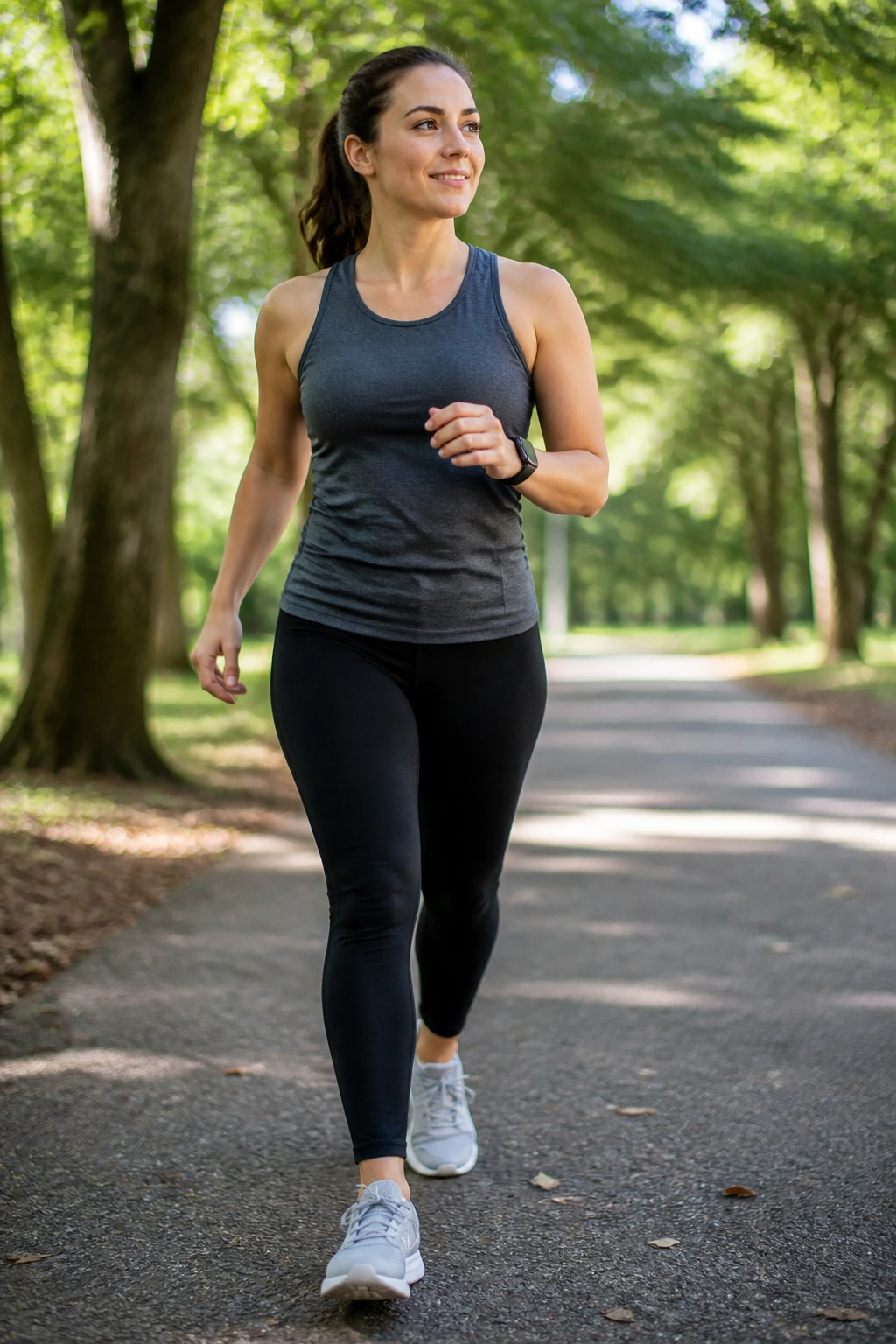
Running after birth should be earned, not rushed. Return-to-running prep is about checking whether the body can handle impact, not proving toughness on a road or treadmill.
Start with marching, calf raises, mini hops, and brisk walking. Each piece tells you something. Marching checks rhythm and single-leg balance. Calf raises test ankle strength. Tiny hops reveal whether the pelvic floor and core can absorb a bit of force without complaint. If any of that creates leaking, pressure, or pain, the run can wait.
A simple prep session
- 2 minutes brisk walk
- 20 calf raises
- 20 marching steps
- 10 tiny pogo hops, if tolerated
- 2 minutes brisk walk
- Repeat 2 to 3 times
Then try a run-walk pattern, like 30 seconds jog / 90 seconds walk for 10 to 15 minutes. Keep the jog embarrassingly easy. That’s the point. The lungs may want more. The tissues need time.
This is a place where patience pays off in a very literal way. A careful build tends to feel better in week three than a rushed one feels in week one. That is the whole game.
Final Thoughts
The best first-year postpartum workouts are the ones you can repeat without dreading them. Some days that means a 10-minute breathing reset. Some days it means a hard little dumbbell circuit while the baby naps in 37-minute chunks. Both count. Both matter.
A good rule: finish feeling better than when you started. That leaves room for recovery, which is the part most new mothers are short on. If a workout spikes pressure, leaks, or pain, step back and shorten the range, slow the pace, or swap the move entirely.
Keep a band near the stroller. Keep a pair of dumbbells where you can see them. Make the easy workout the default, not the backup plan. That’s how fit moms keep moving through the first year without turning exercise into another job.
