



A good chest workout does not start with the heaviest bar in the room. It starts with the right pressing angle, the right range of motion, and enough control that your shoulders don’t complain the next day. Chest workouts get messy when people chase numbers before they can actually feel the pecs working.
The funny part is that a huge chest is built from a lot of unglamorous reps. Wall push-ups. Slow dumbbell presses. Cables that feel almost too light until the last third of the movement. The chest is a big, stubborn muscle group, and it tends to respond best when you give it both load and clean movement instead of one or the other.
Beginners need moves that teach the pattern without beating them up. Experienced lifters need variations that keep the chest under tension from different angles. Somewhere in the middle sits the sweet spot: enough challenge to grow, enough control to stay safe, and enough variety that your pressing doesn’t turn into a tired copy of the same bench press every week.
Start with the first one. It looks easy. It isn’t.
1. Wall Push-Up
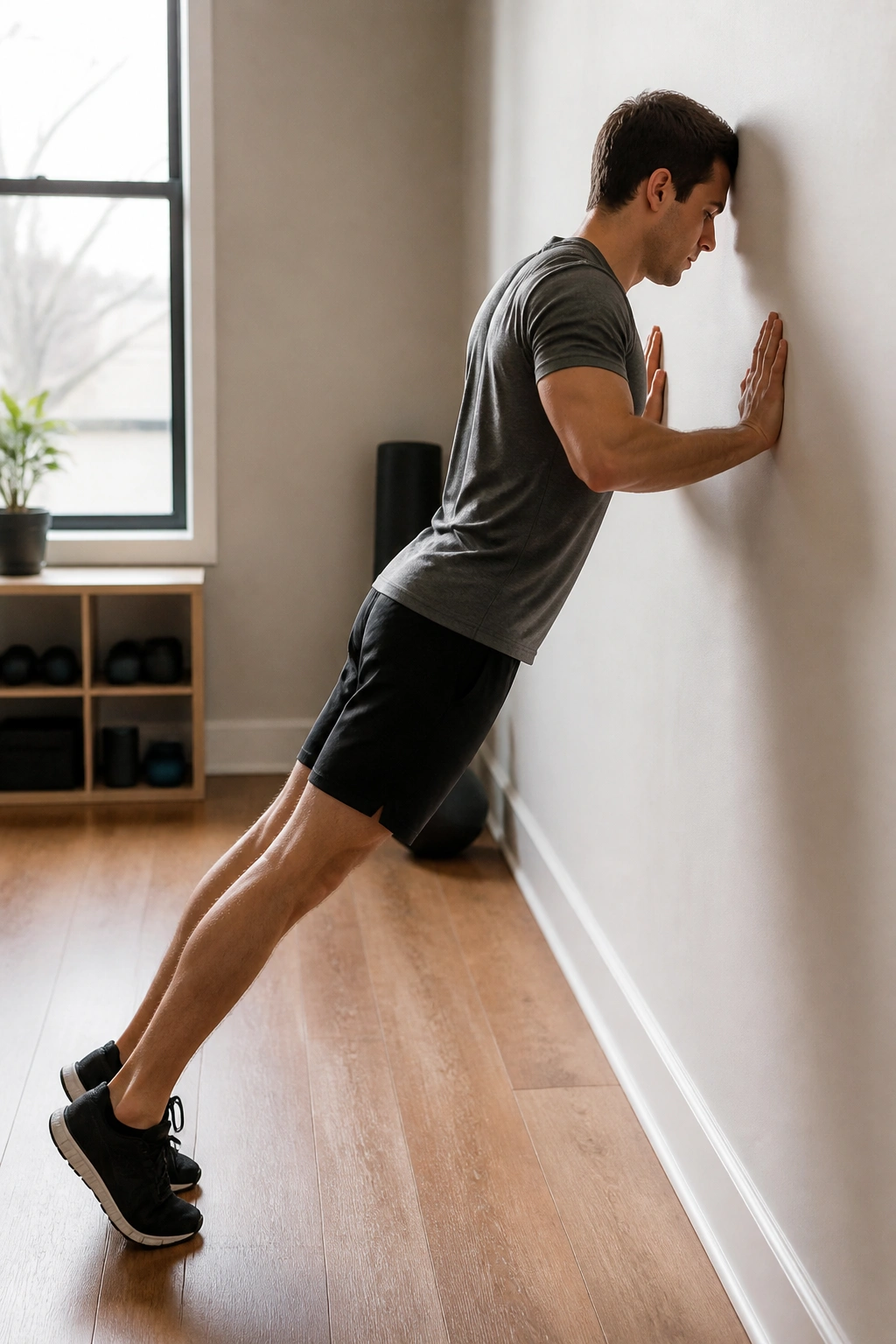
Start at the wall if the floor feels like a joke. That’s not me being cute; it’s a practical way to build chest strength without dumping all your bodyweight onto your shoulders and wrists at once.
A wall push-up teaches the same pressing path you’ll use in harder versions. Your hands press away from you, your chest lowers toward the surface, and your torso stays in one long line. The load is lighter, which means you can learn position first and effort second. That matters more than people want to admit.
How to Set It Up
- Place your hands on the wall at chest height, a little wider than shoulder width.
- Walk your feet back about 12 to 24 inches.
- Keep your body straight from head to heels.
- Lower until your nose or chest almost touches the wall.
- Press back until your elbows are fully extended but not jammed hard.
Tip: Move your feet farther back to make it harder. A few inches changes the load more than most people expect.
For beginners, older lifters, or anyone coming back after a layoff, this version can be the difference between building consistency and getting sore enough to quit. It’s also useful on days when you want a chest stimulus without turning your workout into a grind. Simple. Effective. No drama.
2. Incline Push-Up
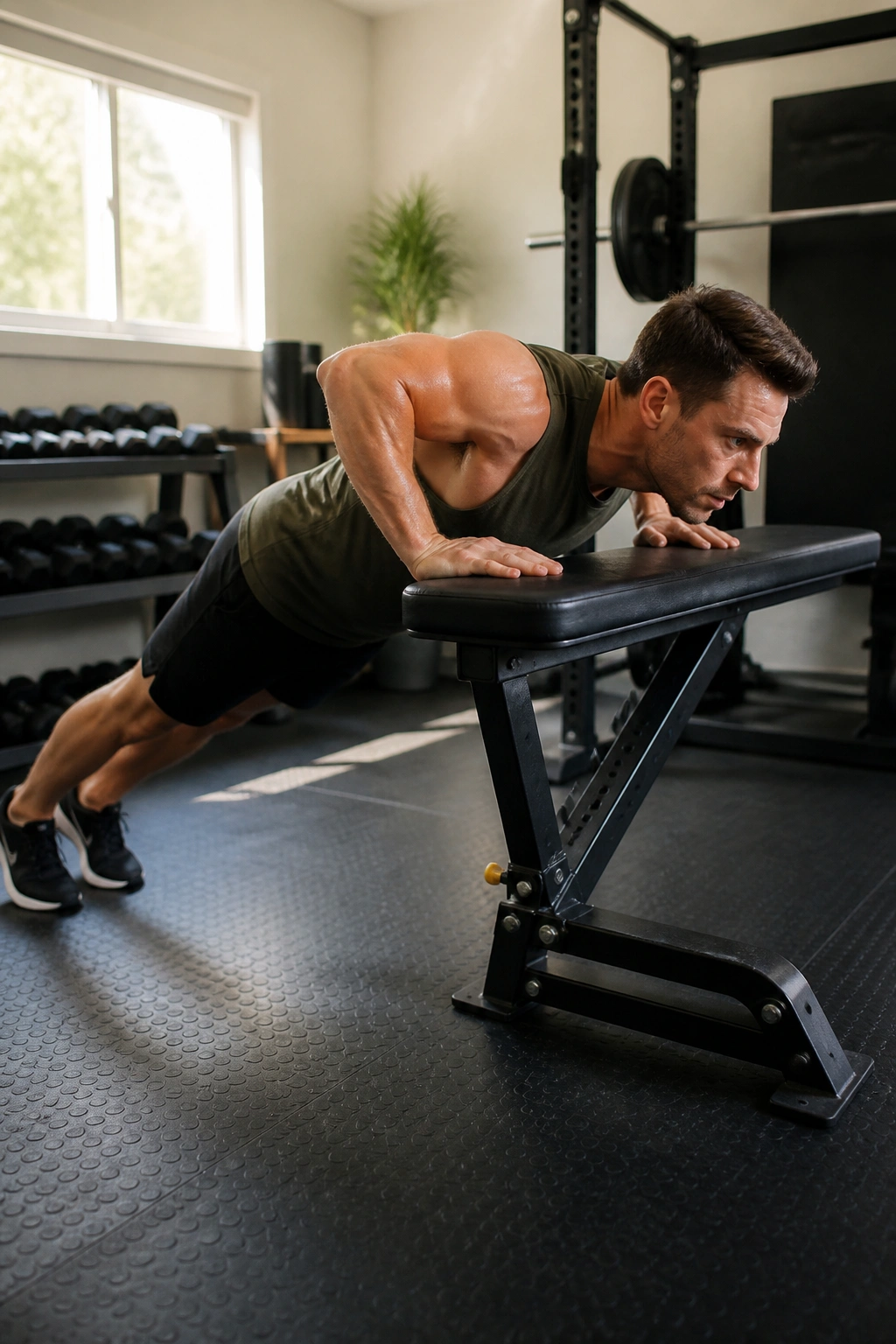
This is the version most people should own before they chase floor reps. Put your hands on a bench, sturdy box, or Smith machine bar and you get a push-up that still lights up the chest while trimming down the load.
The lower the surface, the harder it gets. A high bench makes the move friendly. A low box makes it ugly in a good way. That adjustable angle is the whole point. You can match the challenge to the person in front of you instead of forcing everyone into the same standard.
For chest training, incline push-ups are a sweet spot. They keep the body moving as one unit, they let you hit decent depth, and they usually feel better on the wrists than flat-floor work. If you’re trying to build up to standard push-ups, this is the bridge.
A clean set usually lands somewhere between 8 and 15 reps. Go lower if you slow the tempo down. Go higher if your form stays sharp and you’re still nowhere near failure. The chest should work, but the movement should still look tidy when you’re tired. Once the hips sag, the set is done.
3. Knee Push-Up
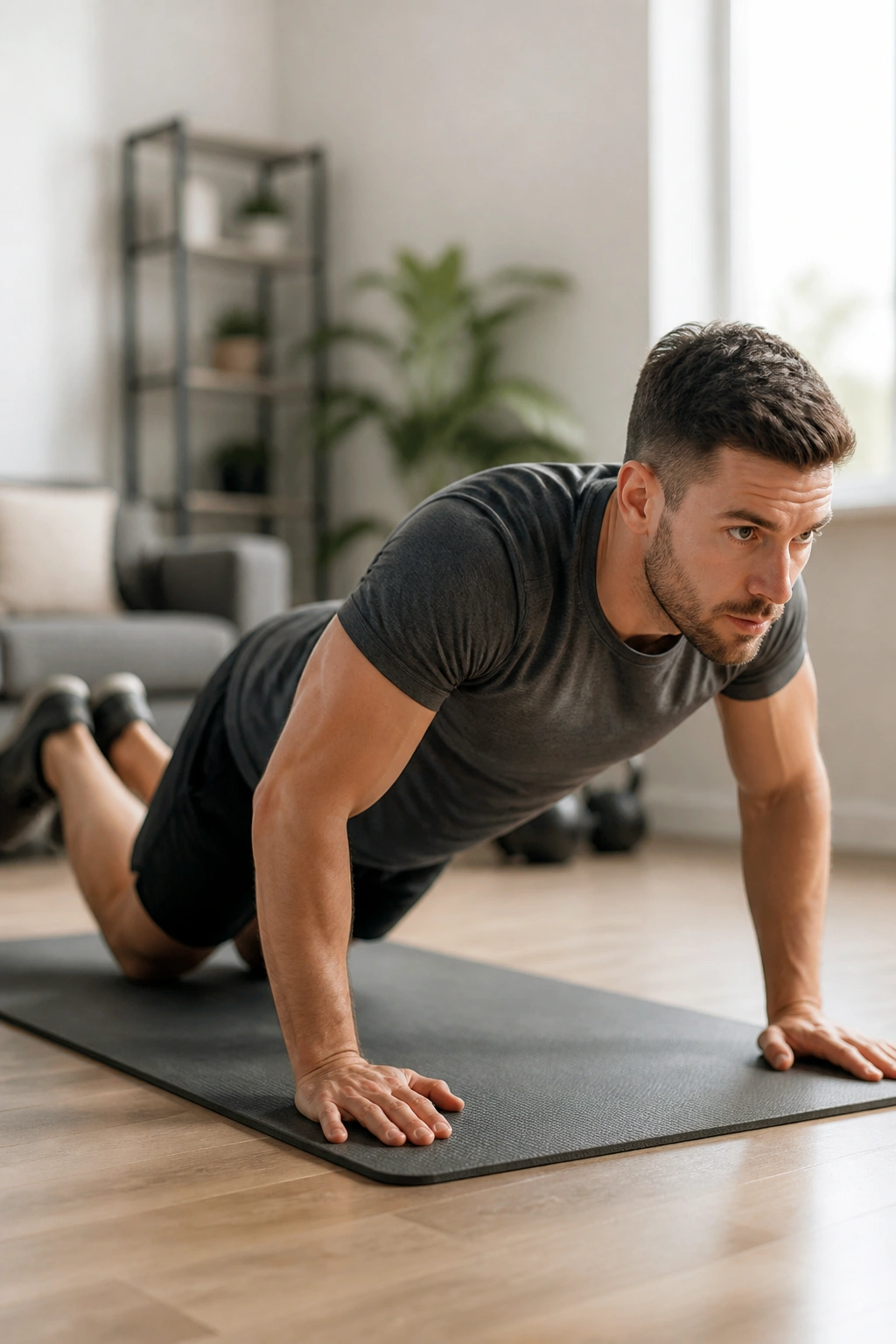
Why keep the knees down if the floor version exists? Because the goal isn’t to impress the mirror. The goal is to press with control, and this version lets you do that with less total load.
A knee push-up can be a stepping stone, but only if you do it well. Too many people bend at the waist and turn it into a sloppy dip through the shoulders. Keep a straight line from knees to head, squeeze the glutes, and lower like the whole torso is one piece. That changes everything.
What to Watch For
- Hands slightly wider than the shoulders
- Knees on a pad or mat
- Chest moving toward the floor, not the chin
- No hip hinge in the middle
- A smooth press back up, not a shrug
This version works well for very new lifters, anyone rebuilding pressing strength, or people who need more reps under tension before moving up. If you can own 10 to 20 honest knee push-ups with a steady rhythm, floor push-ups stop feeling so far away. That’s the value here. It earns the next step.
4. Standard Push-Up
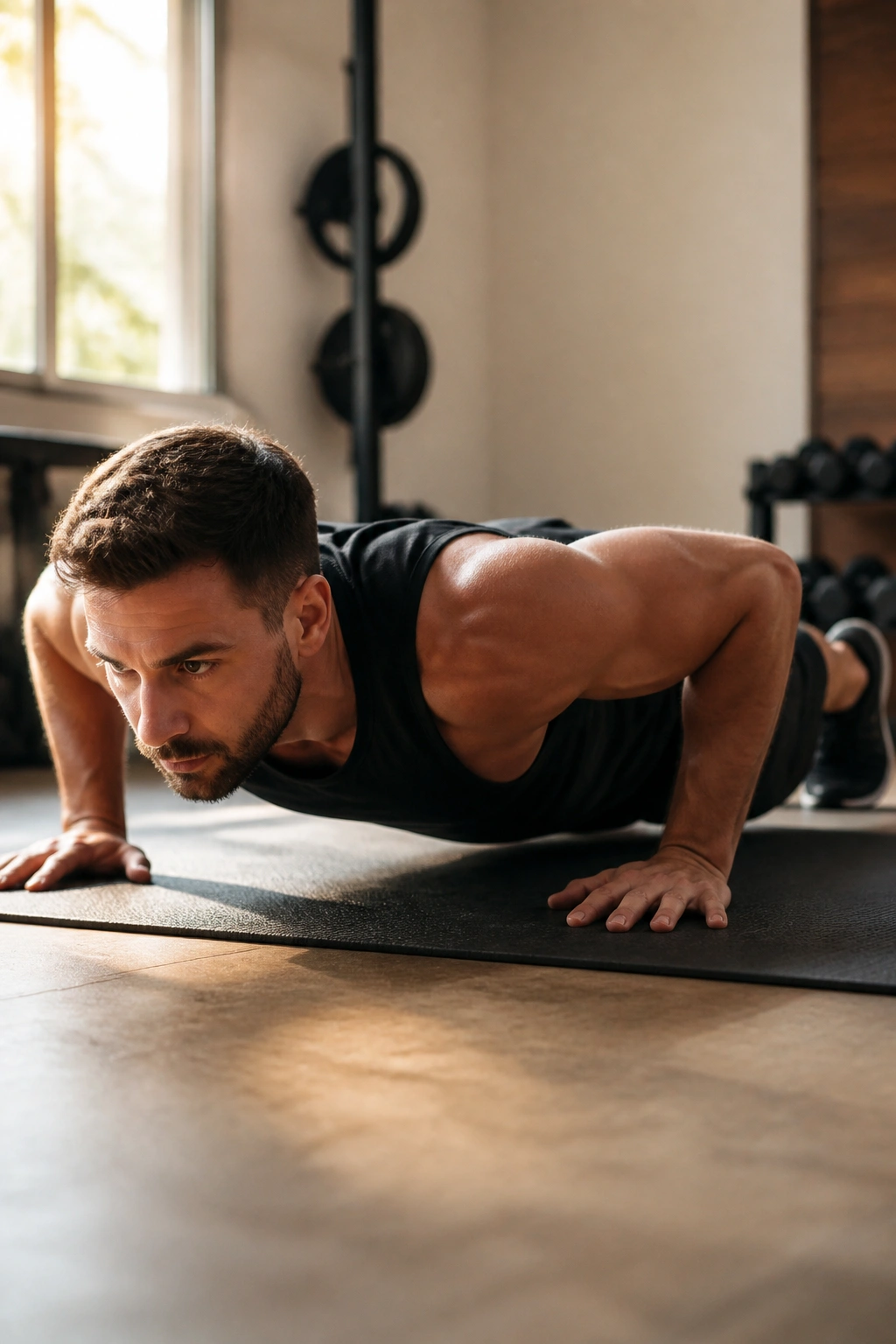
A clean push-up tells you a lot in one rep. Shoulder control, trunk tension, chest strength, and whether you’re cheating with half-reps or not. The floor is honest that way.
The best standard push-ups don’t look frantic. They look controlled, even when they’re hard. Your hands stay under or a touch wider than your shoulders, your ribs don’t flare open, and your chest gets close to the floor without collapsing at the neck. If your hips are the first thing to rise, the chest is no longer driving the movement.
Good Reps Look Like This
- Body stays straight from head to heels
- Elbows drift at a moderate angle, not flared wildly
- Chest lowers under control for 2 to 3 seconds
- Brief pause near the bottom, if you can hold it
- Strong exhale as you press away
A standard push-up is a useful chest workout because you can scale it in a dozen small ways. Narrow the hands. Widen them. Slow the lowering phase. Add a pause. Raise the feet later. The base pattern stays the same, which makes it a great checkpoint for progress.
If you want one bodyweight move that can stay in your plan for years, this is the one.
5. Feet-Elevated Push-Up
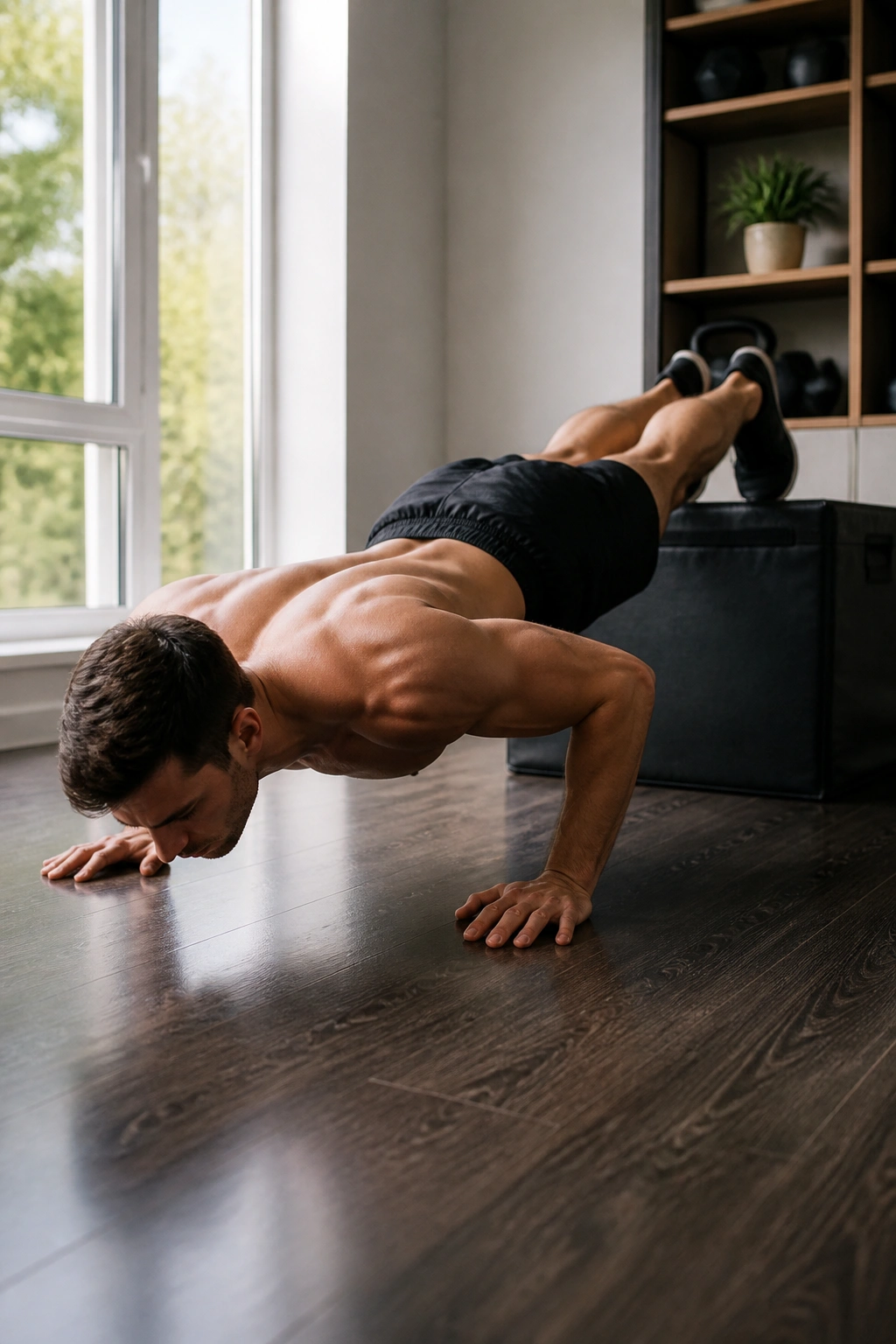
Raising the feet doesn’t just make the move harder. It shifts more of the work toward the upper chest and front of the shoulders, and it punishes sloppy core tension fast. That’s why it earns a place in a serious chest routine.
Set your feet on a box, bench, or step and keep your hands on the floor. The higher the feet, the steeper the press angle. A modest elevation is usually enough; you don’t need to build a mountain under your ankles to feel this. Too much height can turn the whole thing into a balance mess.
The mistake people make is chasing range they can’t support. They drop too deep, lose the rib cage, and end up pressing from a bent spine. Don’t do that. A slightly shorter rep with clean body position beats a deep rep that folds in half.
This version is best once regular push-ups feel steady and boring. It’s a nice way to add stress without needing weights, and it travels well. Hotel room. Home floor. Tiny gym. Same idea.
6. Dumbbell Floor Press
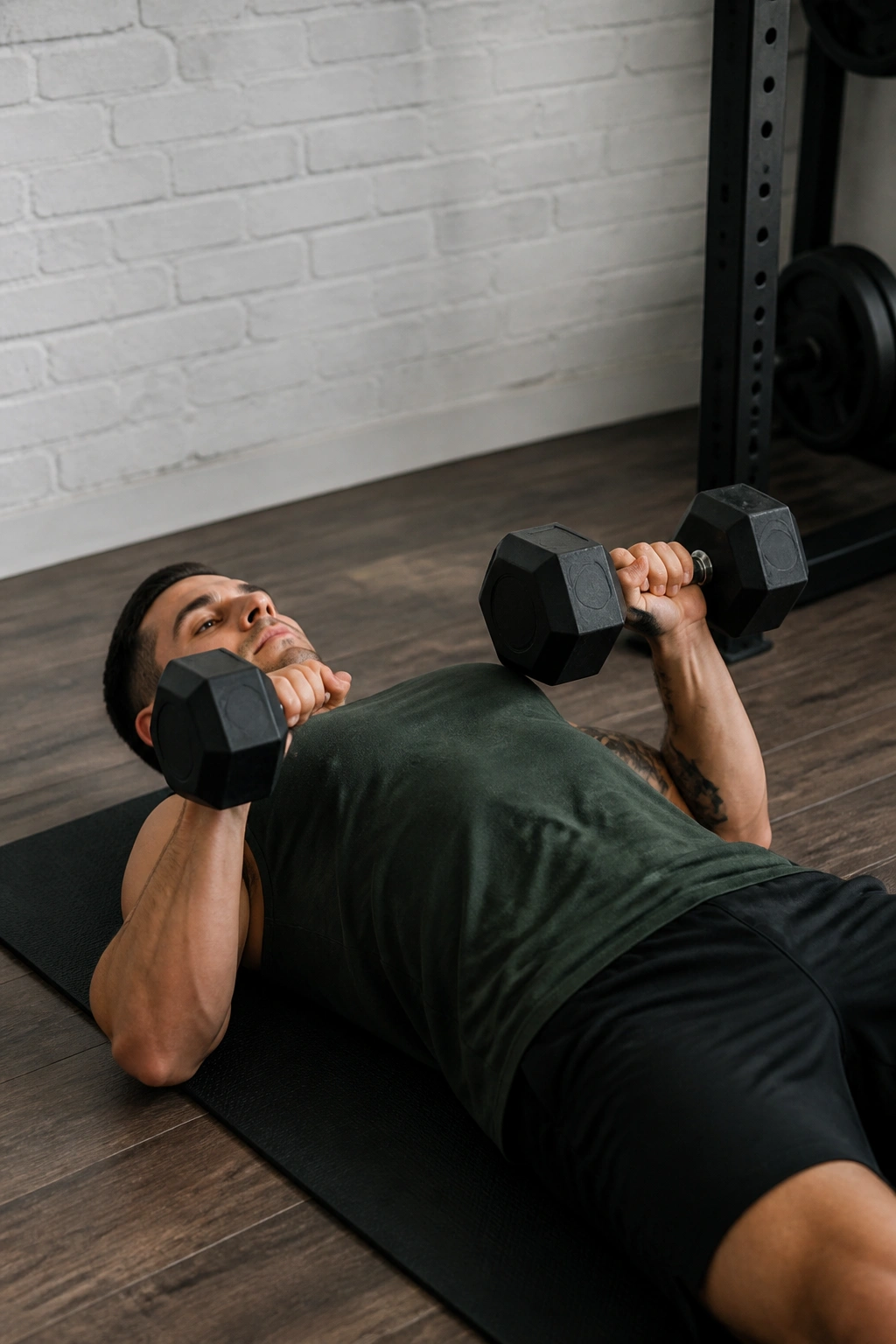
Can’t get to a bench? Good. The dumbbell floor press is still a solid chest builder, and it gives your shoulders a little more breathing room than a deep press on a flat bench.
Lying on the floor shortens the range of motion, which is useful in two ways. First, it limits the bottom stretch that sometimes irritates the front of the shoulder. Second, it forces a pause when your triceps touch down, which takes away a lot of bouncing and sloppy momentum. That pause is not glamorous. It works.
Use a neutral grip if your shoulders prefer it. Keep your elbows on a comfortable path, usually somewhere between tucked and medium width, and press until the dumbbells stack over the mid-chest. Heavy enough to matter. Controlled enough to repeat.
The floor press is a good fit for beginners learning the press path and for stronger lifters who want a chest day without a full bench setup. It also plays well as a secondary move after push-ups or barbell work. More people should use it. Plain and simple.
7. Flat Dumbbell Bench Press
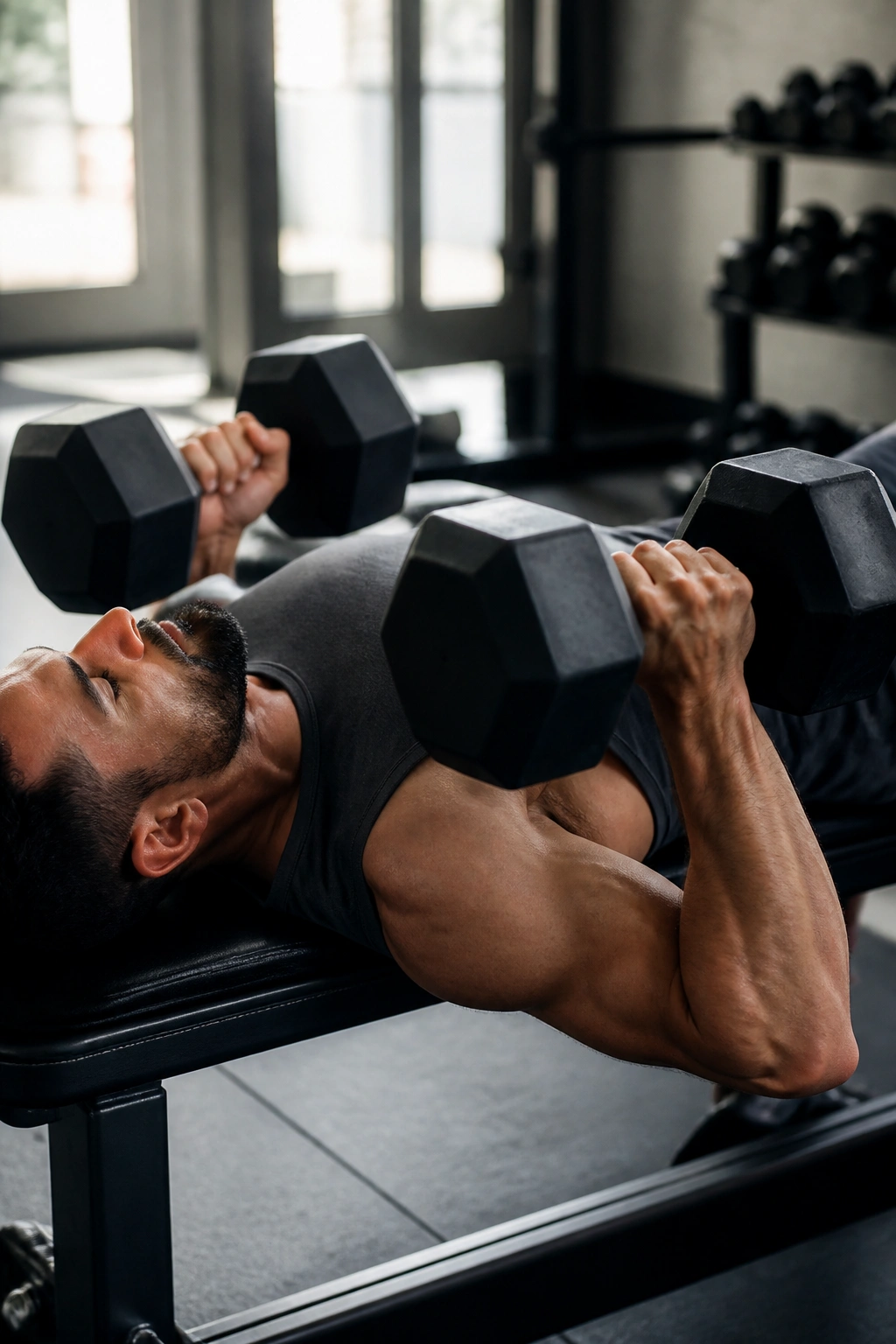
If each side has to do its own share, the dumbbell press exposes weak links fast. That’s the charm of it.
A flat dumbbell bench press gives you more freedom than a barbell. Your hands can find a natural path, your wrists can stay stacked more comfortably, and each arm has to earn its keep. That usually means more stabilization and a better feel for the pecs, especially if you resist the urge to slam the weights up and down like you’re late for something.
Setup That Actually Helps
- Plant your feet before unracking
- Keep your shoulder blades gently set
- Lower the dumbbells to chest level with control
- Stop just short of losing shoulder position
- Press up until the weights sit over the midline of the chest
The chest gets a strong load here, but so do the triceps and front delts. That is normal. The trick is to choose a weight that lets your chest stay involved through the whole set instead of letting the other muscles hijack the job.
For most people, this is one of the most useful chest workouts in the entire list. It’s direct, easy to measure, and easy to progress by small jumps. Not fancy. Just useful.
8. Incline Dumbbell Press
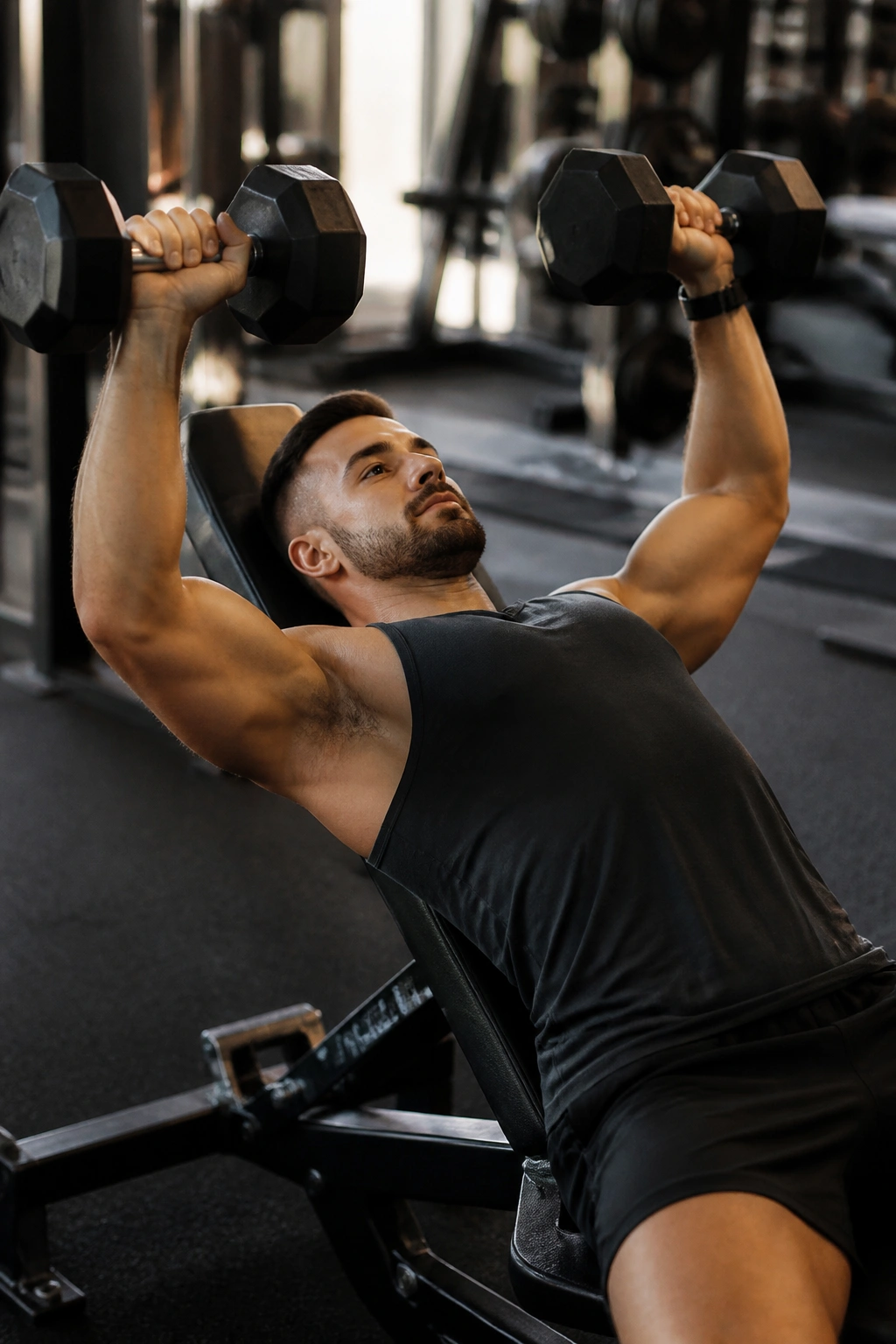
Set the bench too steep and the exercise turns into a shoulder press. Set it too flat and you lose the upper-chest bias. Somewhere around a low incline, usually about 20 to 35 degrees, is where this move earns its keep.
The upper chest tends to respond well when the arms press on a slightly upward path. Dumbbells help because each side can follow its own groove. That often feels better than a fixed bar path, and it usually lets you get a cleaner stretch at the bottom without the awkward wrist angle some lifters get from a bar.
The bench angle matters more than people think. A mild incline keeps the front delts from stealing the whole show. A steep one can make the set feel like a grind in the shoulders long before the chest runs out of work.
For programming, 6 to 12 reps is a sweet range. Use a load you can lower under control for at least 2 seconds. If the weights crash toward your face, they’re too heavy. That sounds obvious. It isn’t always obeyed.
9. Barbell Bench Press
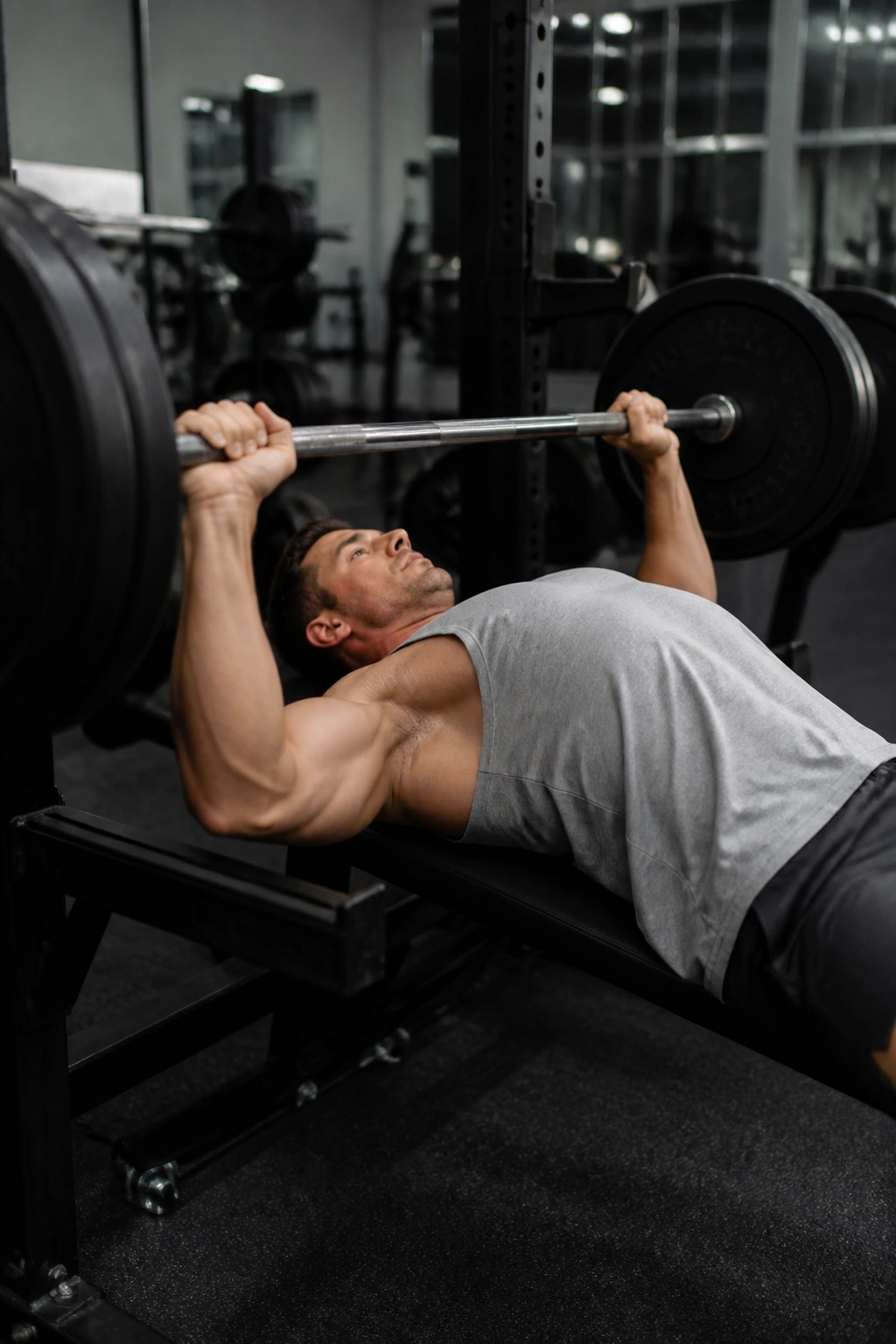
Why does the barbell still earn a slot? Because it lets you load the chest in a simple, measurable way and build real pressing strength over time.
The bar gives you stability that dumbbells can’t match, which means you can usually move more total weight. That matters for strength, but it also matters for confidence. A lifter who owns a strong barbell bench usually has a decent grasp of upper-body tension, foot drive, and bar path. The setup can be fussy, and yes, the setup matters. A sloppy bench press is usually a series of small mistakes wearing a heavy number.
Three Things That Change the Lift
- Touch the bar low on the chest or upper sternum, not high on the collarbone
- Keep the wrists stacked so the bar sits over the forearm
- Use leg drive without turning the hips into a bridge
A spotter helps, especially once the weight starts feeling honest. No hero lifting. The chest should still do work, but the barbell bench also teaches you how to keep the whole body tight under load.
If you only have room for one heavy press, this is usually it. Heavy, repeatable, and easy to track.
10. Machine Chest Press
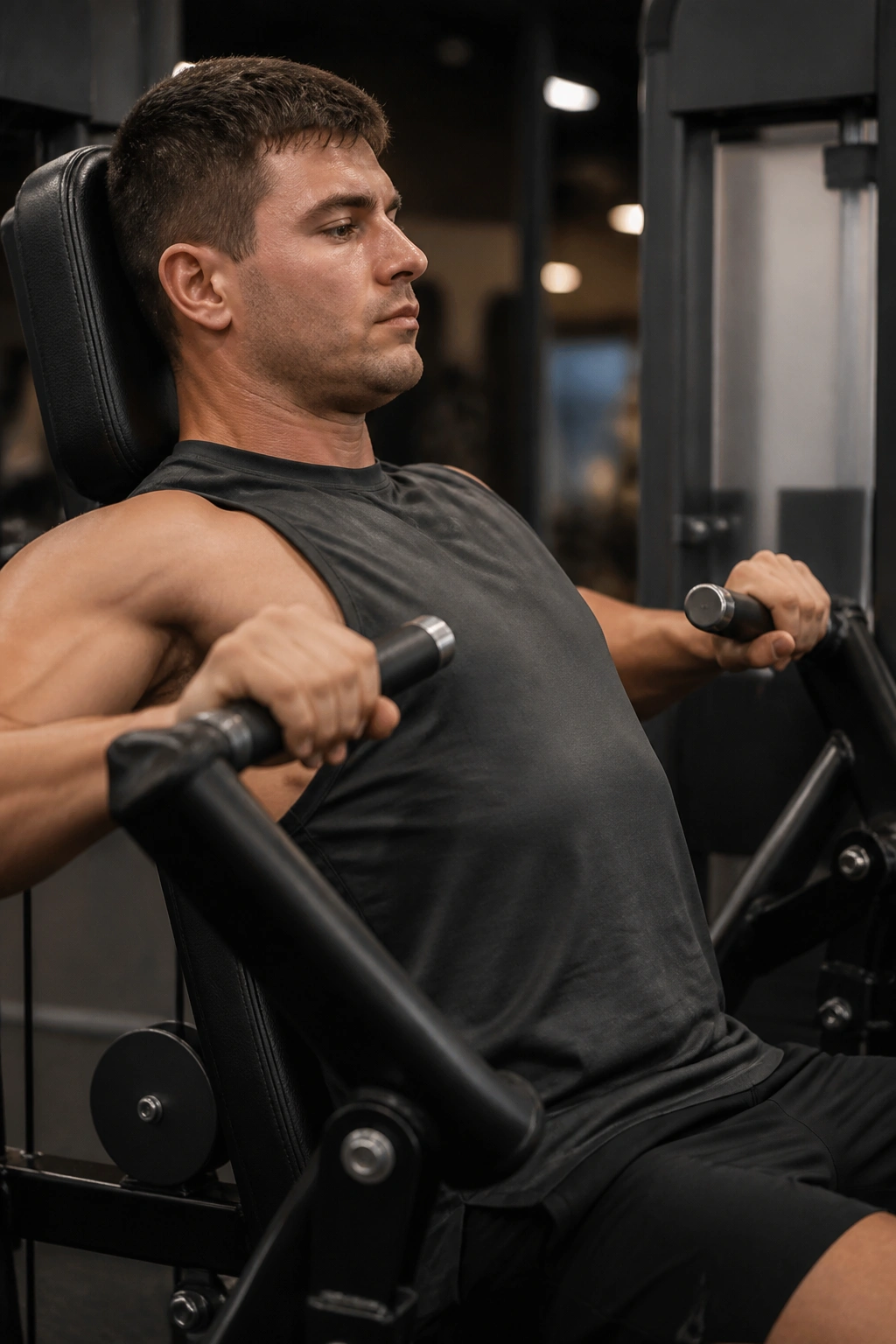
Machines are not the lazy option. They’re the stable option, and there’s a difference.
A chest press machine lets you push hard without spending energy just keeping the load balanced. That can be a gift on high-volume days or when your joints want a cleaner path than free weights provide. The seat height matters here. Set the handles roughly in line with mid-chest, not your throat and not your stomach, or the whole movement gets weird fast.
The machine path should feel smooth. No jerking. No slamming the stack. Lower the handles under control, pause for a split second if you can, then press until the elbows are nearly straight. If the machine has fixed handles that bother your shoulders, adjust the seat or move on to another model. Not every machine fits every body.
This is a good chest workout for beginners who want a straightforward press and for seasoned lifters who want a safer finishing movement after free-weight work. It also works well in crowded gyms, which is its own kind of value. You can keep moving even when the dumbbell rack looks like a traffic jam.
11. Cable Chest Fly
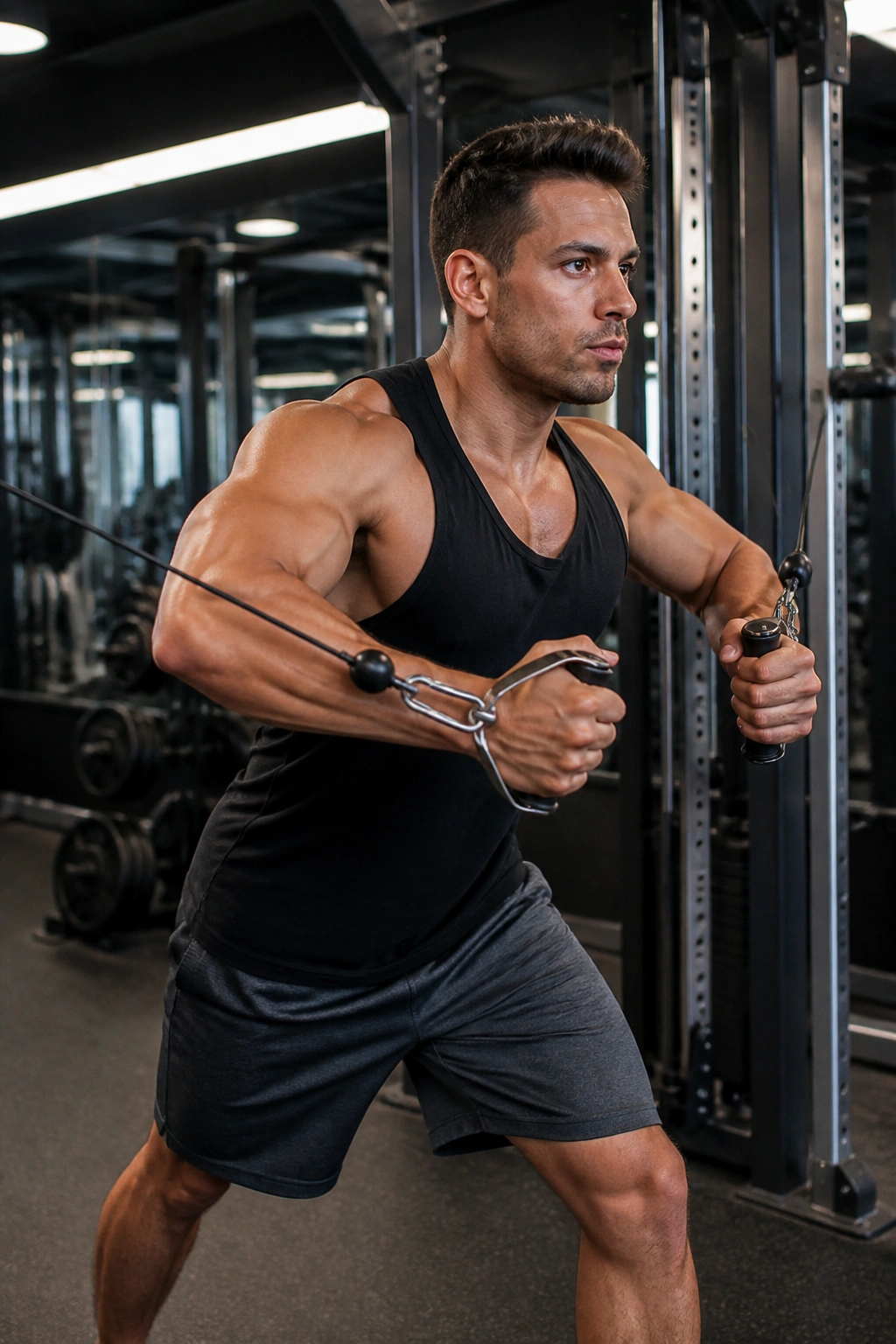
At the top, your pecs should feel like they’re trying to hug a barrel shut. That’s the feeling I want from a good cable fly.
Cables keep tension on the chest across a long arc, which is where they shine. Dumbbells lose load in part of the movement because gravity changes the pull. Cables stay annoying from start to finish. That constant pull makes them useful for chest size and for learning how to contract the pecs without turning the shoulders into the lead actor.
Three Angles Worth Trying
- Mid-height cables: Press the hands together in front of the sternum
- High-to-low: Aim down toward the lower ribs
- Low-to-high: Sweep up toward the upper chest and clavicle
Keep a small bend in the elbows and lock that bend in place. The movement comes from the shoulder joint, not from turning the elbows into little presses. Stop before the front of the shoulder feels pinched. A deep stretch is good; a sharp pinch is not.
Cables are excellent as a finisher after pressing or as a main move on a lighter chest day. High reps work well here, often 12 to 20, because the load is easier to control and the burn shows up fast. That’s the point.
12. Pec Deck Fly
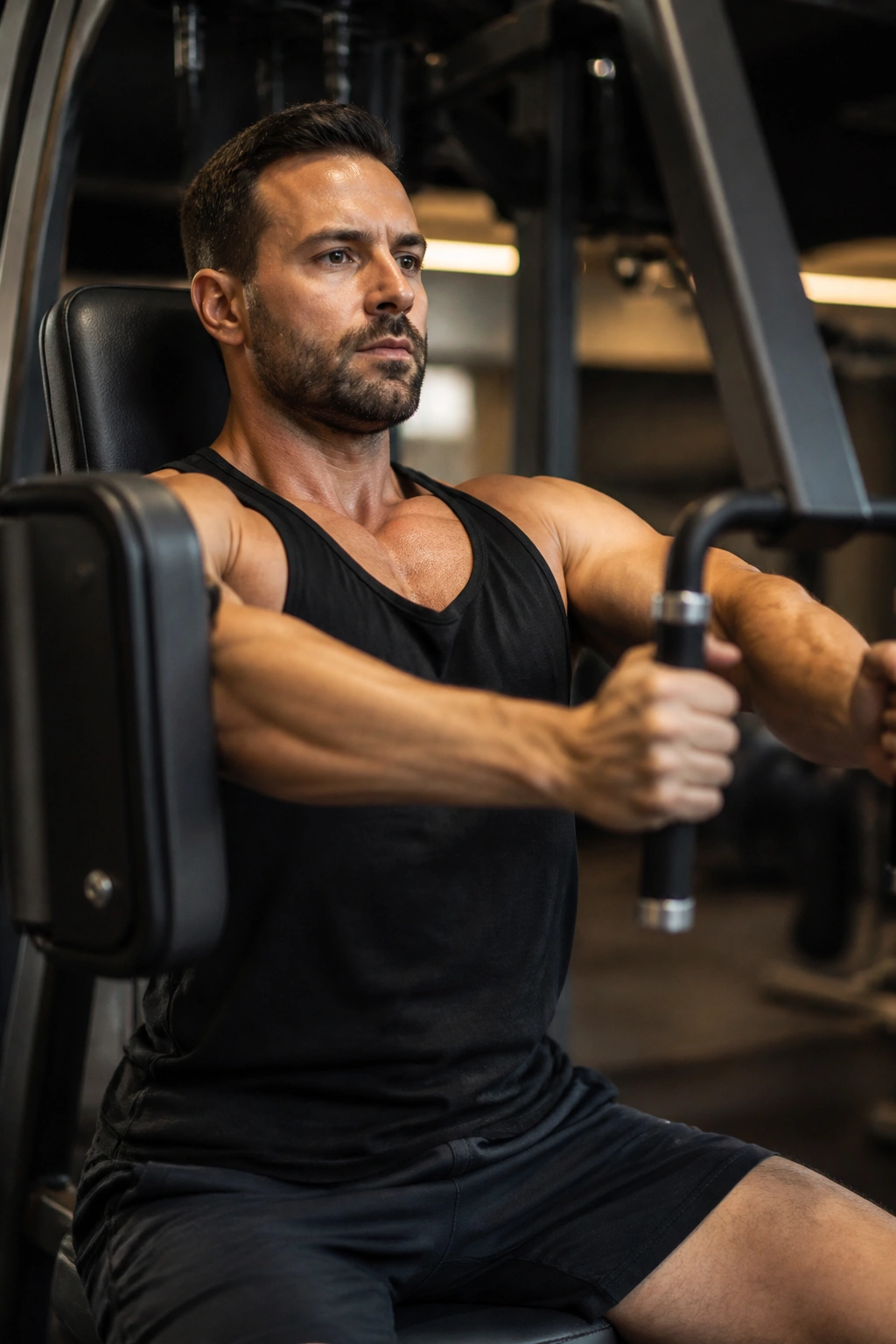
Unlike dumbbell flyes, the pec deck keeps the path honest. There’s less wobble, less guesswork, and less temptation to turn the move into a half-press.
That makes it a nice choice for people who want chest isolation without chasing a huge stretch under free weights. The seat should be set so your elbows line up with the middle of the chest. If the handles sit too high, the shoulders take over. Too low, and the movement feels cramped and weak.
Keep your shoulder blades set and let the pads or handles come back only as far as you can control. You’re not trying to win a stretch contest. You’re trying to put tension on the pecs and keep it there long enough for the set to matter.
This machine is especially useful after heavy pressing because it doesn’t ask for much balance or coordination. You can focus on the squeeze, the pace, and the burn. That makes it easier to push the muscle without turning the session into a form cleanup project.
13. Chest Dips
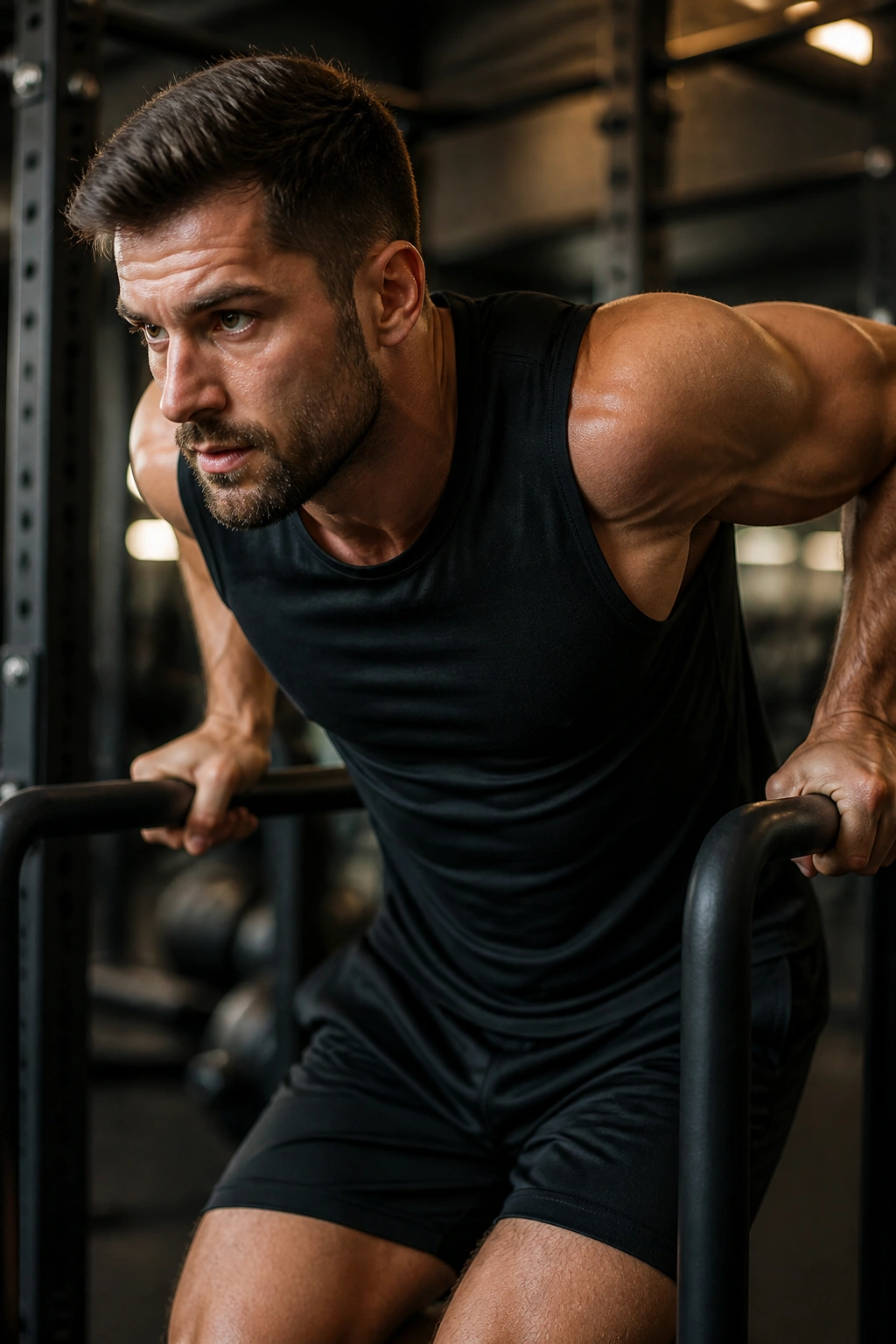
Chest dips are earned.
If you can do them well, they’re one of the harsher bodyweight chest workouts in the bunch. The key is the lean. A more upright torso shifts work toward the triceps, while a forward lean puts more of the load on the lower and outer chest. Don’t overdo the lean, though, or your shoulders will hate you for it.
What Makes Them Work
- Lean the torso slightly forward
- Keep the elbows angled out a little, not pinned hard to the sides
- Descend only as far as your shoulders tolerate
- Drive up with control, not a bounce
- Stop the set if the front of the shoulder gets cranky
Depth is the issue here. People love to brag about going deep, but deep is only useful if your shoulders stay happy and your ribs don’t flare into chaos. Upper arm parallel to the floor is often enough. More depth is not automatically better.
This move suits intermediate and advanced lifters, especially ones who already have decent pressing strength and shoulder control. If you’re still building that base, keep it in the future pile. There’s no medal for forcing a bad dip.
14. Squeeze Press
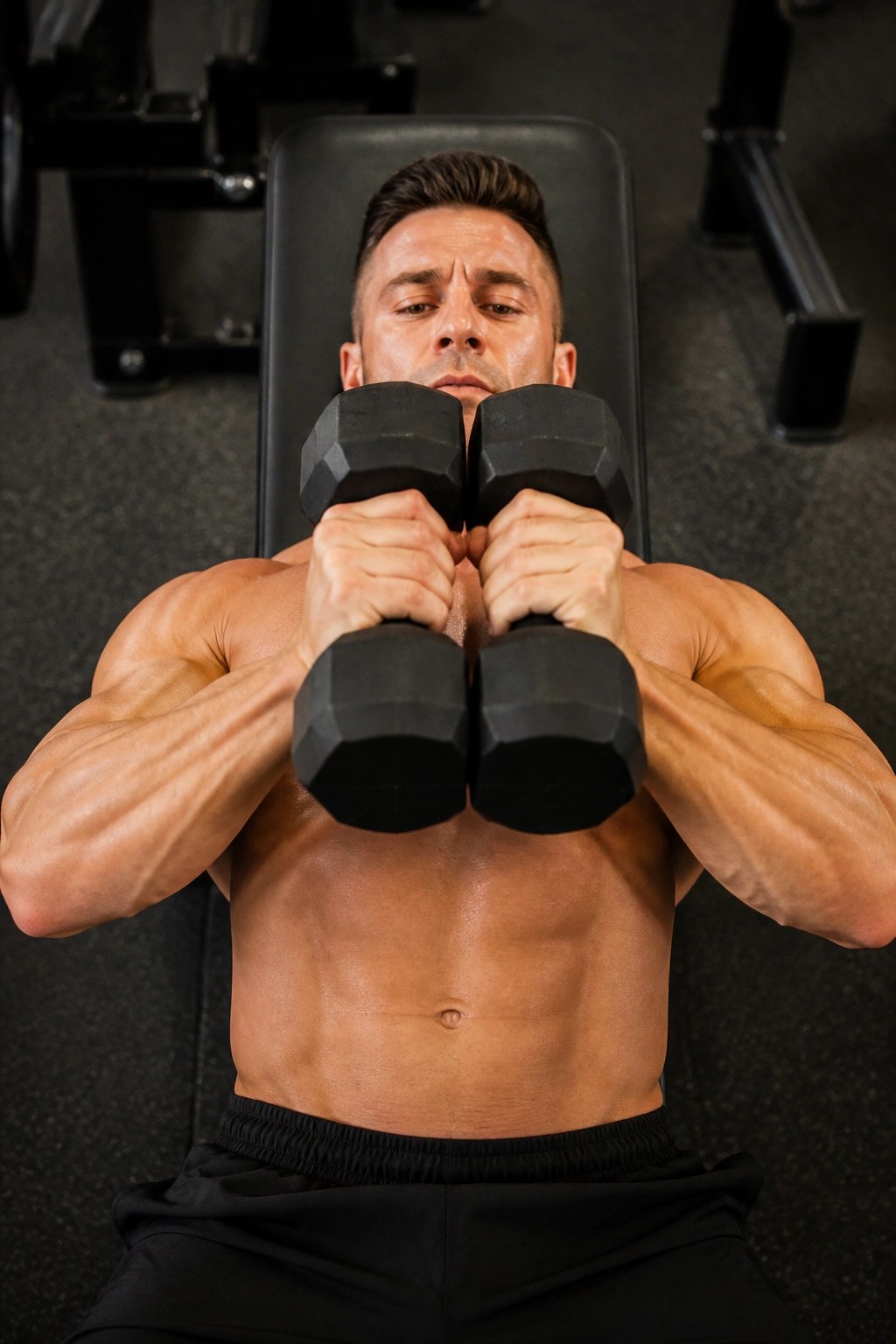
Put two dumbbells together and press them like they owe you money. That’s the simplest way I can describe the squeeze press.
The inward pressure changes the feeling of the movement. Instead of just pushing the weights up, you’re also trying to crush them together, which lights up the chest and keeps tension where you want it. Light to moderate dumbbells work best. Heavy weights usually get sloppy and turn the whole thing into a strange triceps press with extra wobble.
A flat bench is fine. An incline bench works too if you want more upper-chest emphasis. Start with the dumbbells touching near your sternum, keep that contact, and press in one smooth line. If the weights drift apart, you’ve lost half the point.
This is a strong finisher after bigger presses because it punishes the chest without needing much load. High reps, short rests, slow lowering. That combo burns. In a useful way, not a reckless one. Fifteen to 20 reps is common here, and the lighter weight usually feels harder than people expect.
15. Reverse-Grip Bench Press
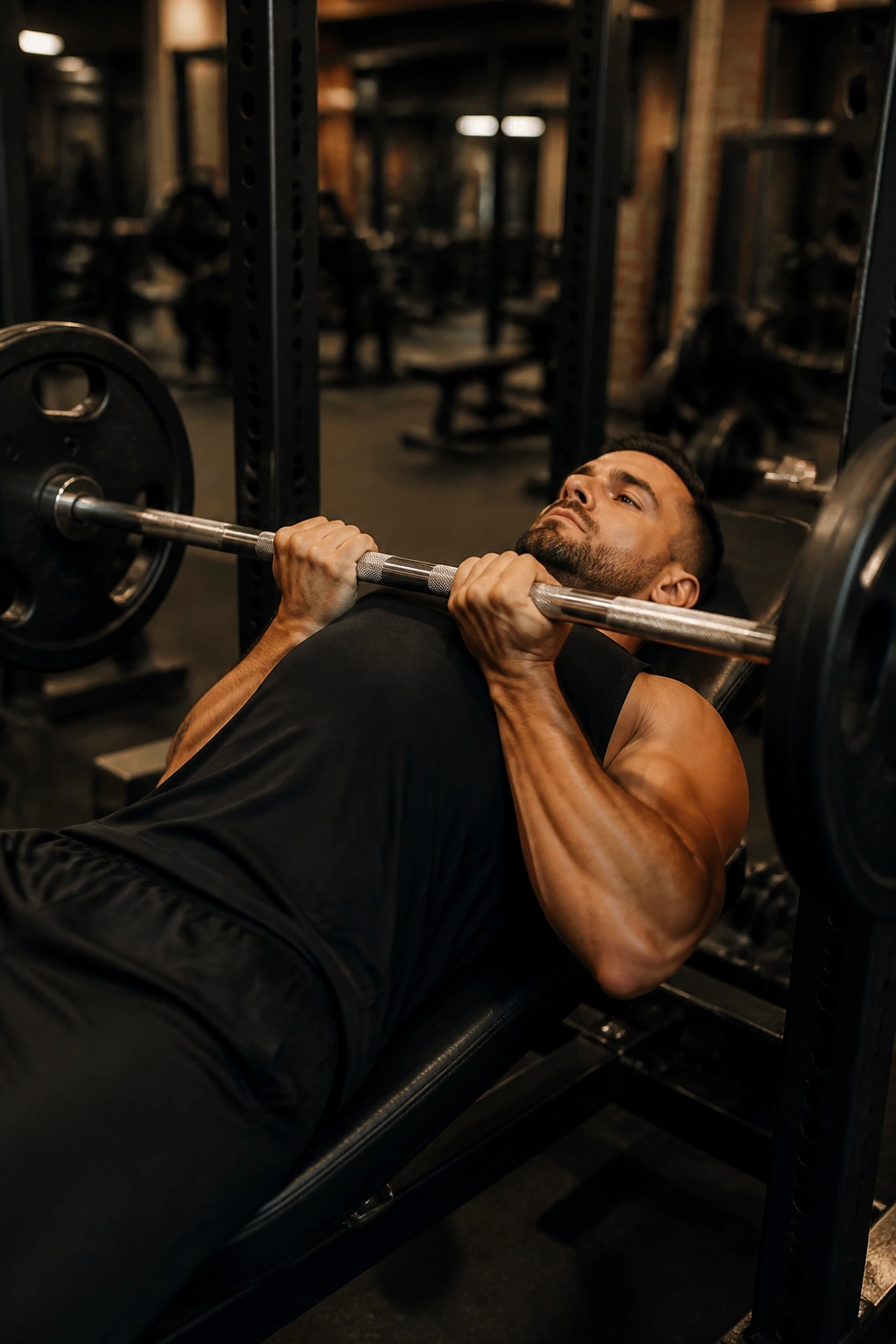
Reversing the grip feels awkward for a reason, and that’s useful.
This barbell variation changes the pressing line enough to put more emphasis on the upper chest for many lifters. The grip has to be secure, the load has to stay honest, and the wrists need to stay stacked. It is not a move for ego lifting. It rewards patience, a spotter, and a weight you can control on the way down.
The elbow path also changes. Most lifters keep the elbows a touch closer to the body here, which can feel friendlier on the shoulders when the setup is right. The bar usually touches a little lower on the chest than people expect. If the wrists fold back or the bar drifts, the set is over.
This is a good choice for experienced lifters who want a fresh pressing angle without leaving the barbell behind. It can feel strange for the first few sessions, and that’s fine. Strange is not the same as wrong. If the movement is smooth and the chest feels like it’s doing the work, you’re on the right track.
Final Thoughts
A useful chest plan does not need fifteen exercises in one session. It needs the right few moves, done with enough care that your chest actually gets the message. One heavy press, one bodyweight variation, and one fly-style movement will cover a lot of ground.
Beginners usually do best with push-up progressions and a dumbbell press. Intermediate lifters can lean on flat and incline pressing, then add cables or a pec deck to finish. Advanced lifters can mix in dips, reverse-grip bench, and squeeze presses without losing the simple stuff that still works.
Pick the versions you can repeat cleanly. That’s the part people skip, and it’s also the part that keeps chest training useful instead of noisy.
