



The best dumbbell bicep workouts do one thing well: they make the biceps do the work instead of the shoulders, the lower back, or a too-heavy pair of bells you can’t actually control. That sounds obvious. It isn’t.
If your curls turn into a little body English party by rep six, the problem usually isn’t that your arms are “weak.” It’s the way you’re moving. Elbow position, wrist angle, the path of the dumbbell, and how slowly you lower the weight all change what your biceps feel more than most people realize.
That matters because “stronger toned arms” is not just about looking good when you flex. The shape people notice in a T-shirt comes from a few things working together: enough muscle on the front of the upper arm, enough work for the brachialis underneath, and reps that stay clean enough to actually build something. The curl is honest. It tells on sloppy form fast.
So here’s the practical part: some of these dumbbell bicep exercises are straight-ahead strength builders, some are better for a deep squeeze, and some are the kind you use when the usual standing curl has stopped doing much for you. A few will feel almost too light at first. That’s normal. The burn catches up.
1. Standing Dumbbell Curl With a Supinated Grip
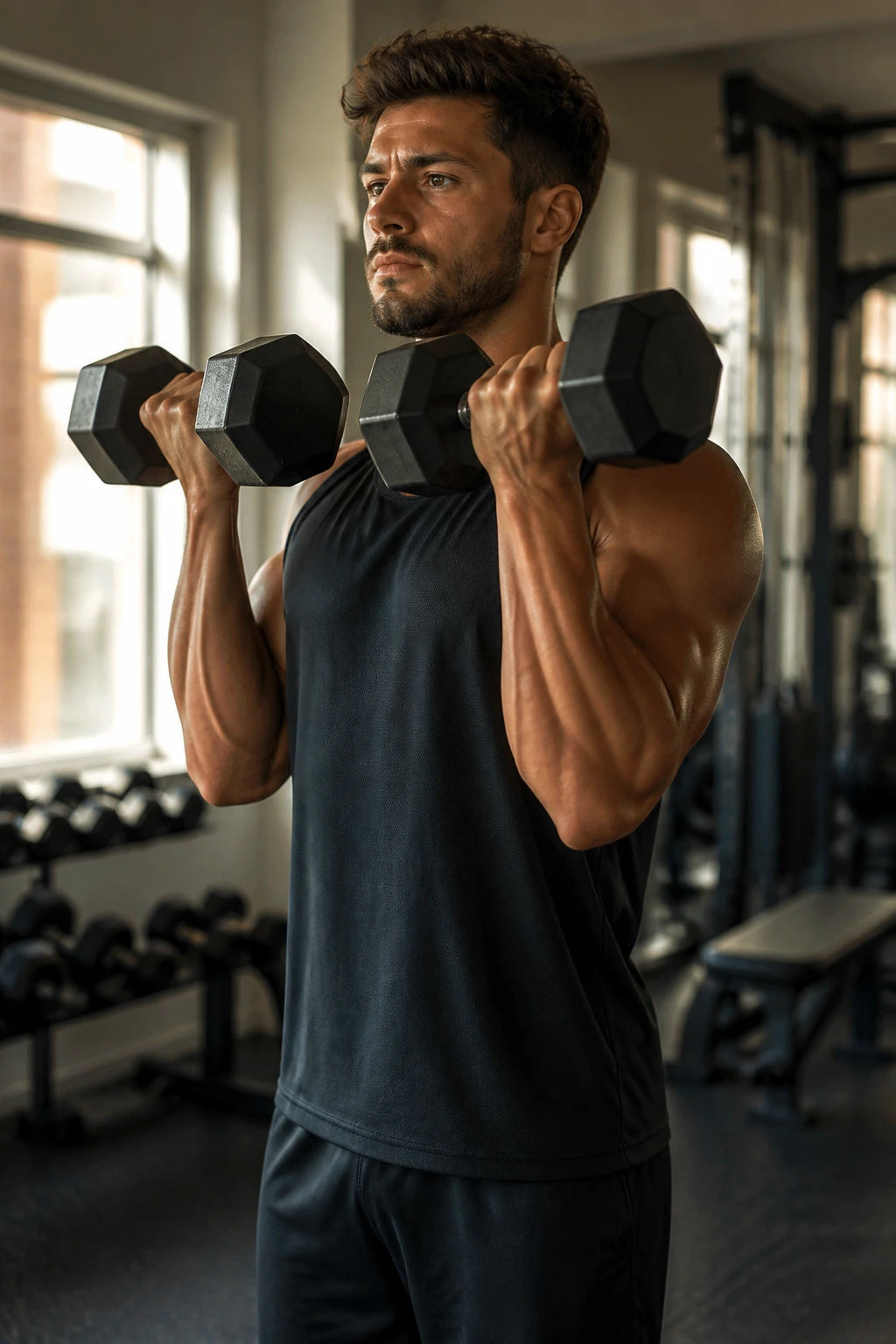
A clean standing curl is still the benchmark. If you can’t do this one without swinging, every other curl variation gets a little messier than it should.
Why It Still Earns a Spot
Stand tall with your feet about hip-width apart, dumbbells hanging at your sides, palms facing your thighs. Curl both weights up while you slowly turn the palms forward so they finish facing your shoulders. The key is simple: your upper arms should stay close to your ribs and your shoulders should stay quiet.
How to Program It
- Use 3 to 4 sets of 8 to 12 reps.
- Lower the dumbbells in 2 to 3 seconds.
- Stop about 1 rep before form breaks.
- Rest 60 to 90 seconds between sets.
- Pick a load that leaves the last two reps looking crisp, not lopsided.
Big tip: if the dumbbells drift forward in front of your chest, the front delts start stealing the rep. Keep the path close and the curl stays where it belongs.
2. Alternating Dumbbell Curl
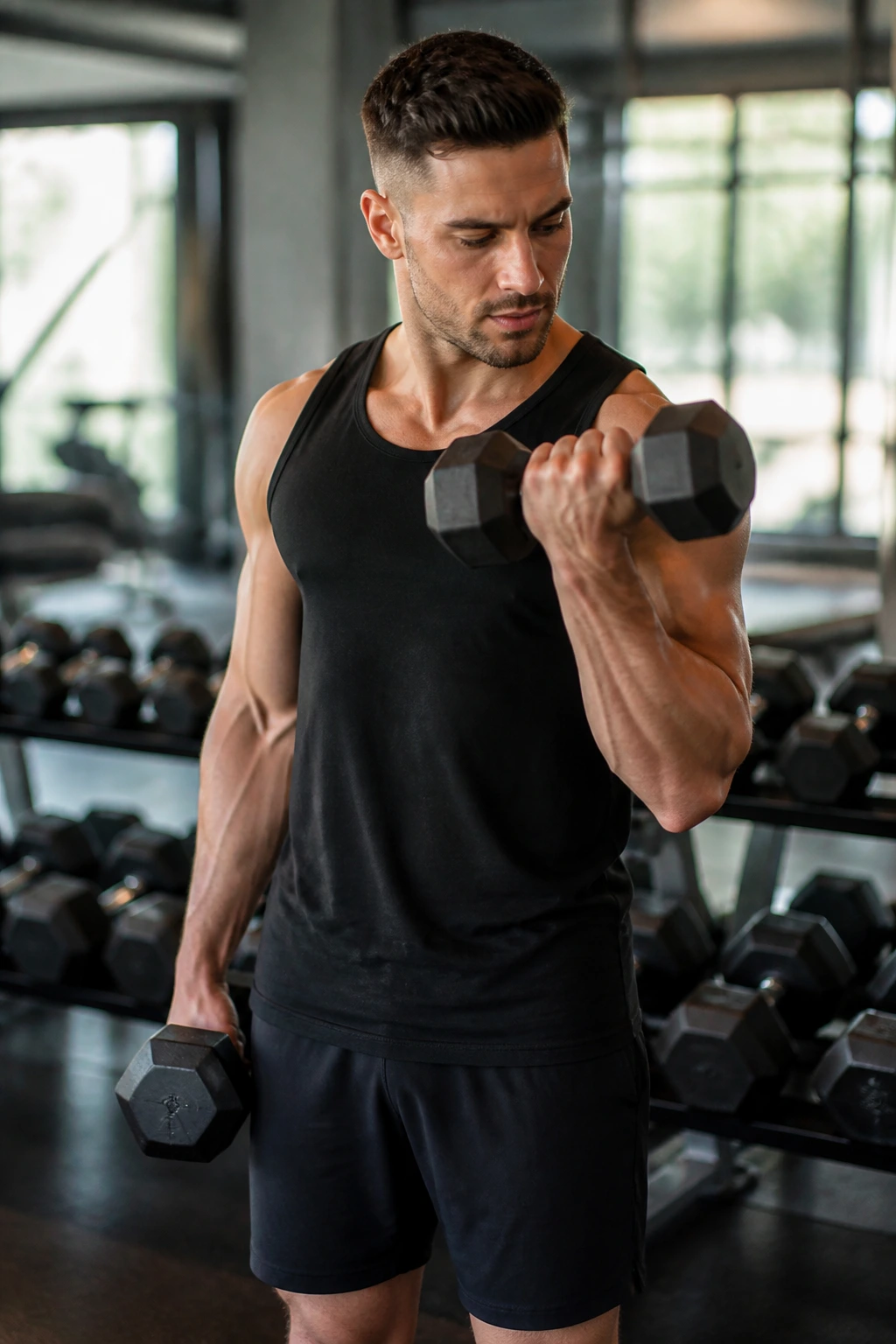
Why bother with alternating reps when you could lift both dumbbells at once? Because alternating curls hide less cheating. They make each arm do its own work, and the stronger side cannot rush the weaker side through the set.
One arm curls while the other stays parked at your side. That tiny pause matters more than people think. You get a cleaner squeeze at the top, a better look at side-to-side balance, and a little more time to notice whether one wrist is bending back or one elbow is drifting forward. If that sounds picky, it is. Arm training lives in the details.
This version is a nice choice when you want 8 to 10 reps per arm with enough control to keep the last rep honest. Seated or standing both work, but seated usually cuts down on torso sway. And if you tend to rush, alternating reps force you to slow down without turning the whole session into a lecture.
3. Hammer Curl
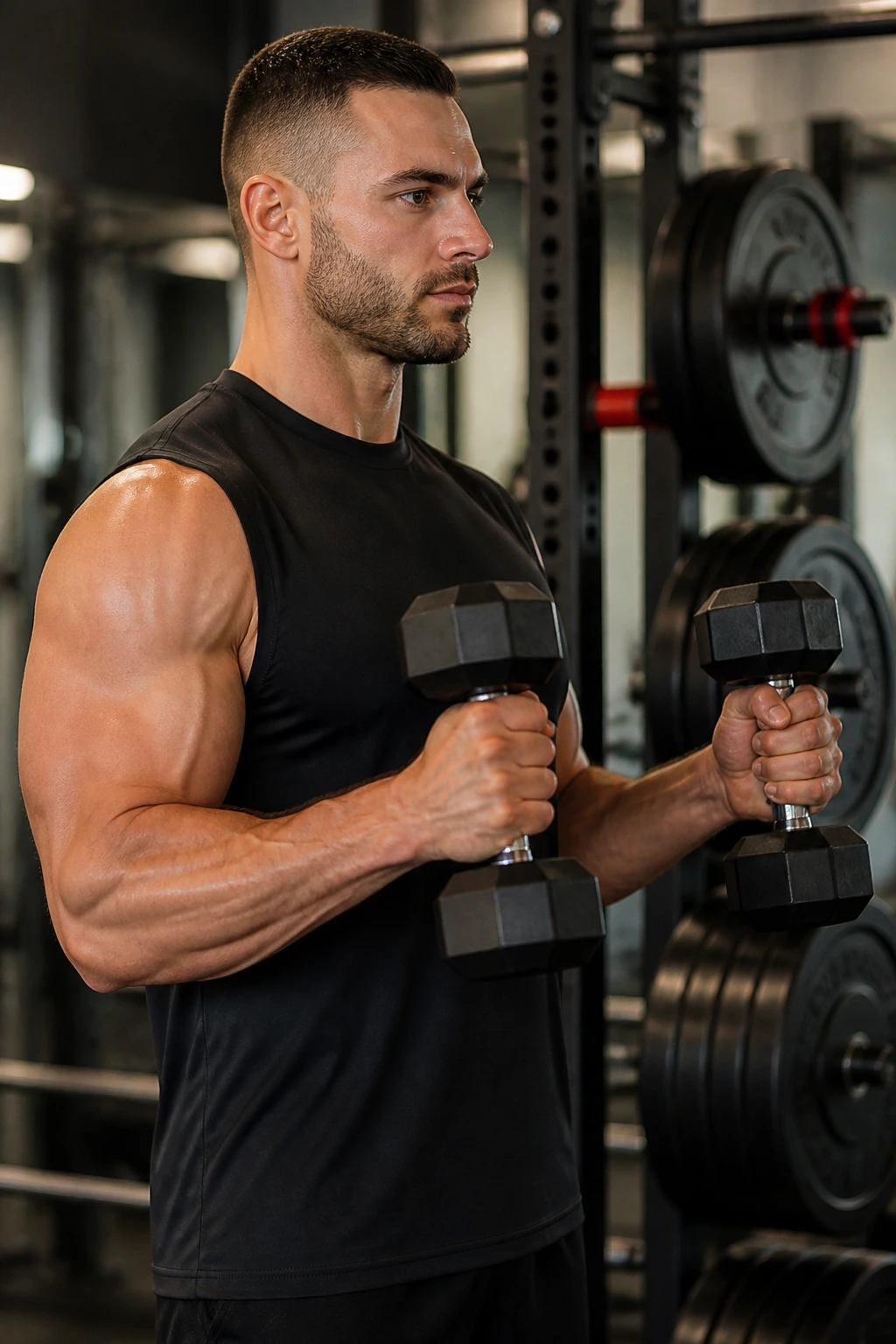
What do hammer curls do that regular curls don’t? They bring the brachialis and brachioradialis into the conversation, which helps the upper arm look thicker from the side and can spare cranky wrists a little drama.
Why the Neutral Grip Changes Everything
Hold the dumbbells with your thumbs pointing up, like you’re carrying two heavy mugs. Curl without twisting your palms up. The dumbbell should travel in a straight, controlled line, and your wrists should stay stacked over your forearms instead of bending backward.
How to Use It
- Try 3 to 4 sets of 10 to 15 reps.
- Keep the elbows tucked, not pinned stiffly against your ribs.
- Use a pace of 1 second up, 2 seconds down.
- If your forearms light up before your biceps do, that’s normal.
- Put it after rows or chin-ups when your grip is already warm.
Your forearms will notice this one fast. So will your elbows, if you go too heavy too soon. Start cleaner than you think you need to.
4. Cross-Body Hammer Curl
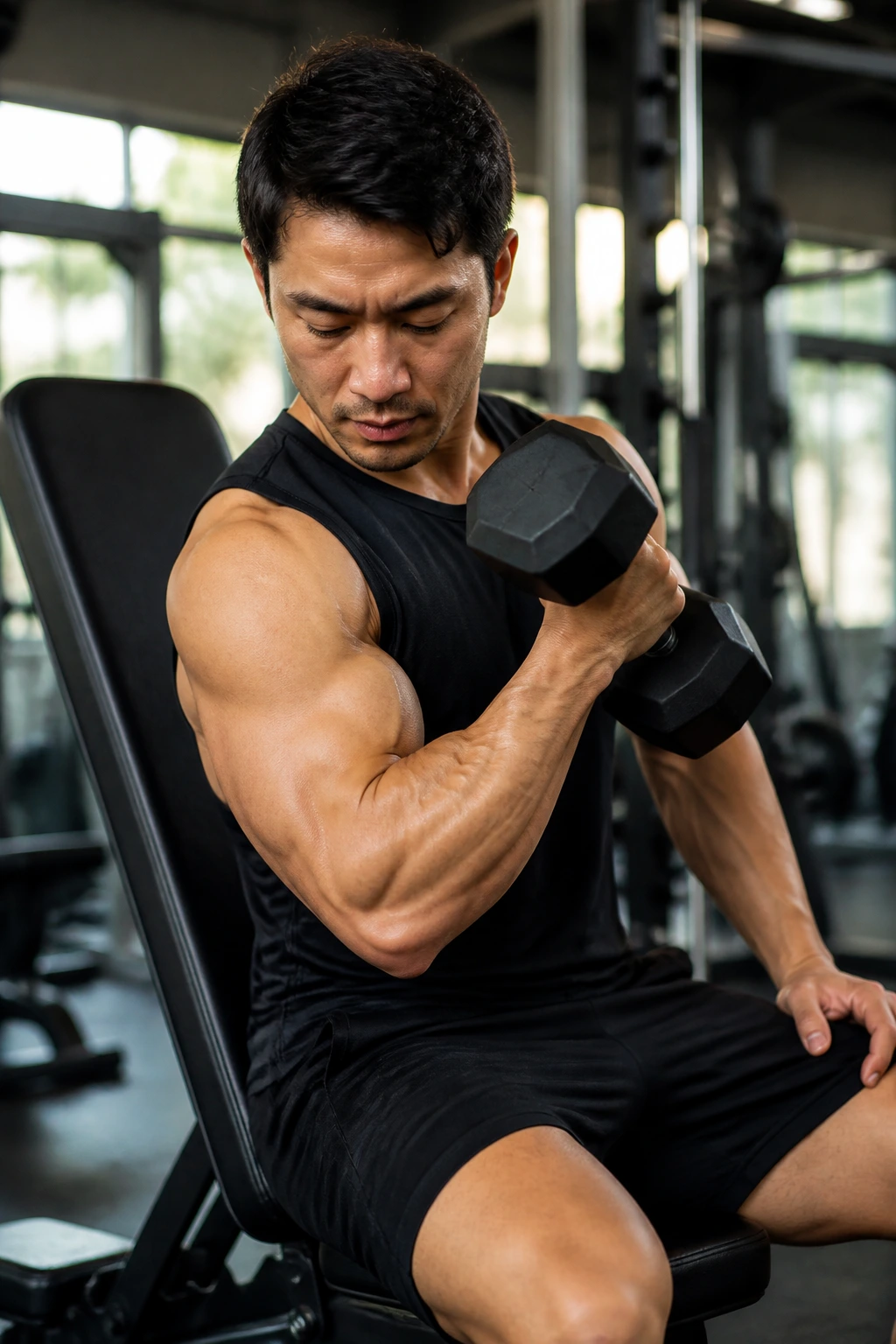
Cross-body hammer curls look like a small tweak. They aren’t. Curling the dumbbell toward the opposite shoulder changes the line of pull enough to shift more work into the upper arm and the outer forearm.
Stand tall and let one dumbbell travel diagonally across your body, ending near the opposite pec or shoulder. Keep the elbow from flaring out. If the shoulder starts helping, the rep turns sloppy fast. The best version feels like a strong, tight pull with no swing at all.
- Use 8 to 12 reps per side.
- Keep the torso still.
- Choose a weight that lets you pause for one second at the top.
- Don’t twist your hips to help the dumbbell cross.
- Great as a finisher after standard curls.
A lot of lifters like this one because it feels a little different without requiring fancy setup. That matters on days when the regular stuff feels stale. It’s not flashy. It just works.
5. Incline Dumbbell Curl
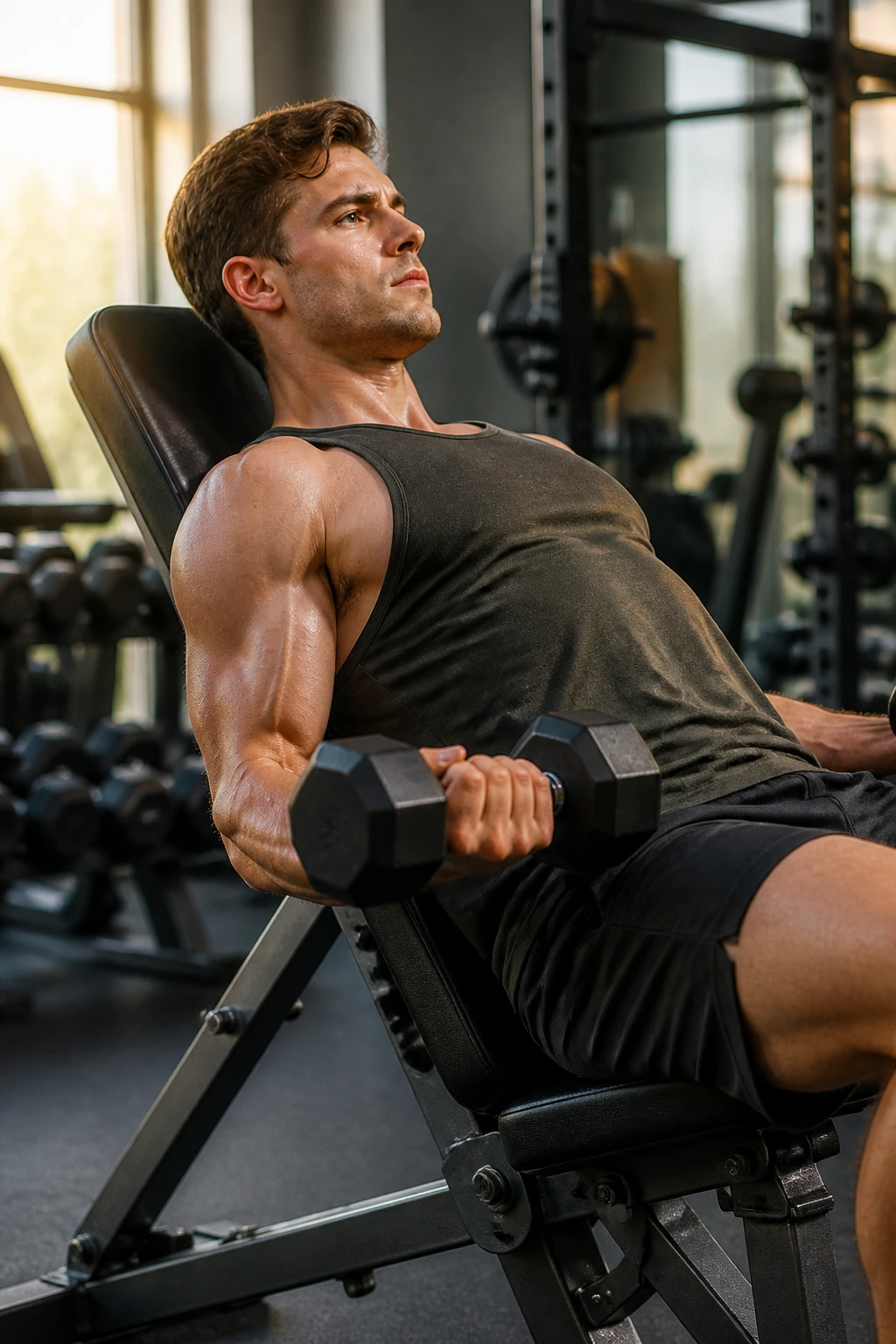
Set the bench back to about 45 to 60 degrees, let your arms hang behind your torso, and you’ll feel why incline curls have such a good reputation. The biceps start under stretch, which changes the whole rep. Even a modest weight feels honest here.
The long head of the biceps gets a lot of attention in this position because your upper arm is behind your body. That stretched start is why people sometimes call these “harder than they look.” They are. The first few reps may feel fine, then the bottom half starts asking questions you do not get to ignore.
Do not start too heavy. That’s the trap. People chase numbers, their shoulders roll forward, and the bench becomes a wobble machine. Keep your chest open, let the arm hang, curl without swinging, and lower with control. The best set has a smooth, almost stubborn rhythm to it. No yanking. No bouncing off the bottom. A 2 to 3 second lowering phase is plenty.
If your shoulders don’t love being stretched back, move the bench a touch more upright. That small angle change can save the whole movement.
6. Seated Concentration Curl
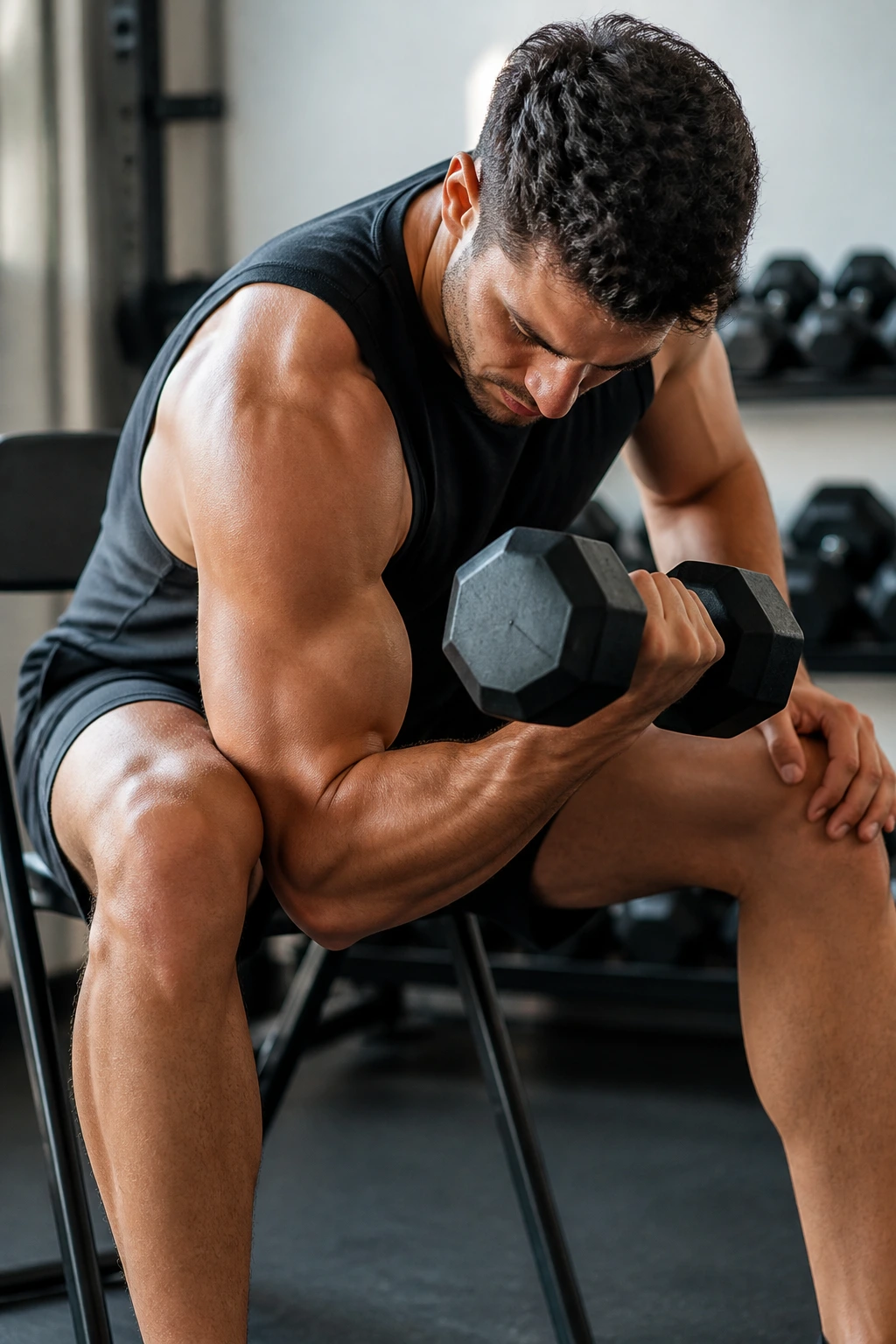
Concentration curls are the opposite of showy. One arm works at a time, the elbow braces against the inside of the thigh, and the whole point is to make the biceps do the talking without much help from anything else.
That makes this one a favorite when you want a real squeeze at the top. It also helps if you tend to cheat on standing curls, because there’s nowhere to hide. The dumbbell should travel in a tight arc, and the upper arm should stay still. If your torso leans back to finish the rep, the load is too heavy.
This is a solid choice for 10 to 15 reps, especially at the end of a workout when the bigger, more athletic-looking curls are already done. It pairs well with a slower lower and a short pause near the top. The sensation is a lot like turning the light off in the room and hearing one muscle do all the work.
If you want a beginner-friendly curl that teaches control fast, this is one of the better picks. Quiet. Precise. Slightly evil.
7. Preacher-Style Dumbbell Curl
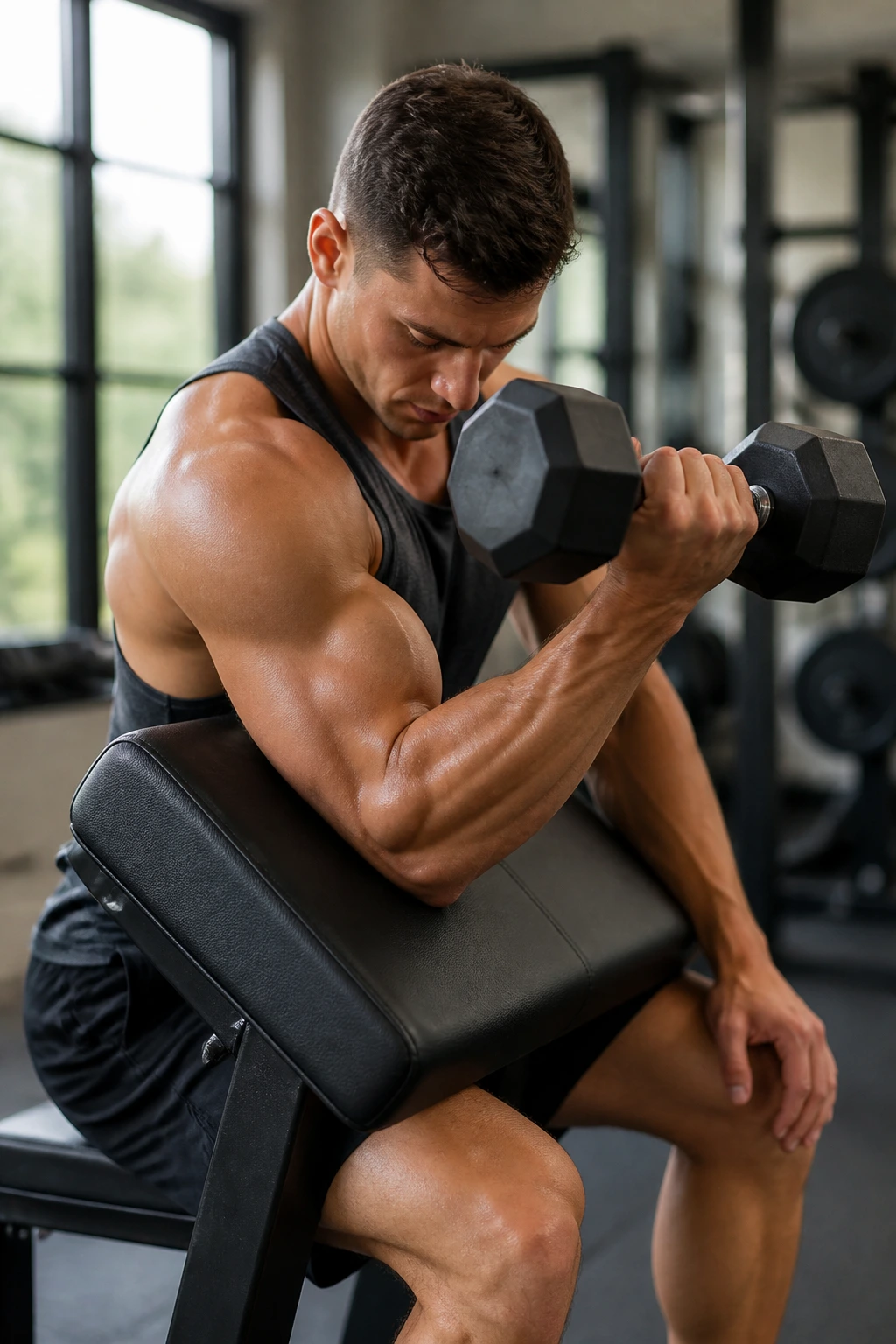
Preacher curls are unforgiving. That’s the appeal. Once your upper arm is braced against the pad, the biceps have to handle the load without much rescue from your shoulders or back.
What Makes the Setup Matter
Sit with your armpit near the top edge of the preacher bench and let the dumbbell lower under control. The pad should support most of the upper arm so the elbow stays fixed. If the bench is too tall or too short, the curl feels awkward and the bottom position gets weird fast.
A Clean Way to Use It
- Use 3 sets of 8 to 12 reps.
- Lower until the arm is almost straight, but do not slam into the bottom.
- Keep the wrist straight so the dumbbell sits over the forearm.
- Pause for half a second at the top.
- Stop short of any range that makes the elbow ache.
The bottom half of the rep is where this variation earns its keep. That stretched position can build strength, but it also punishes ego lifting. Use a little less weight than you think you need. Seriously.
8. Spider Curl
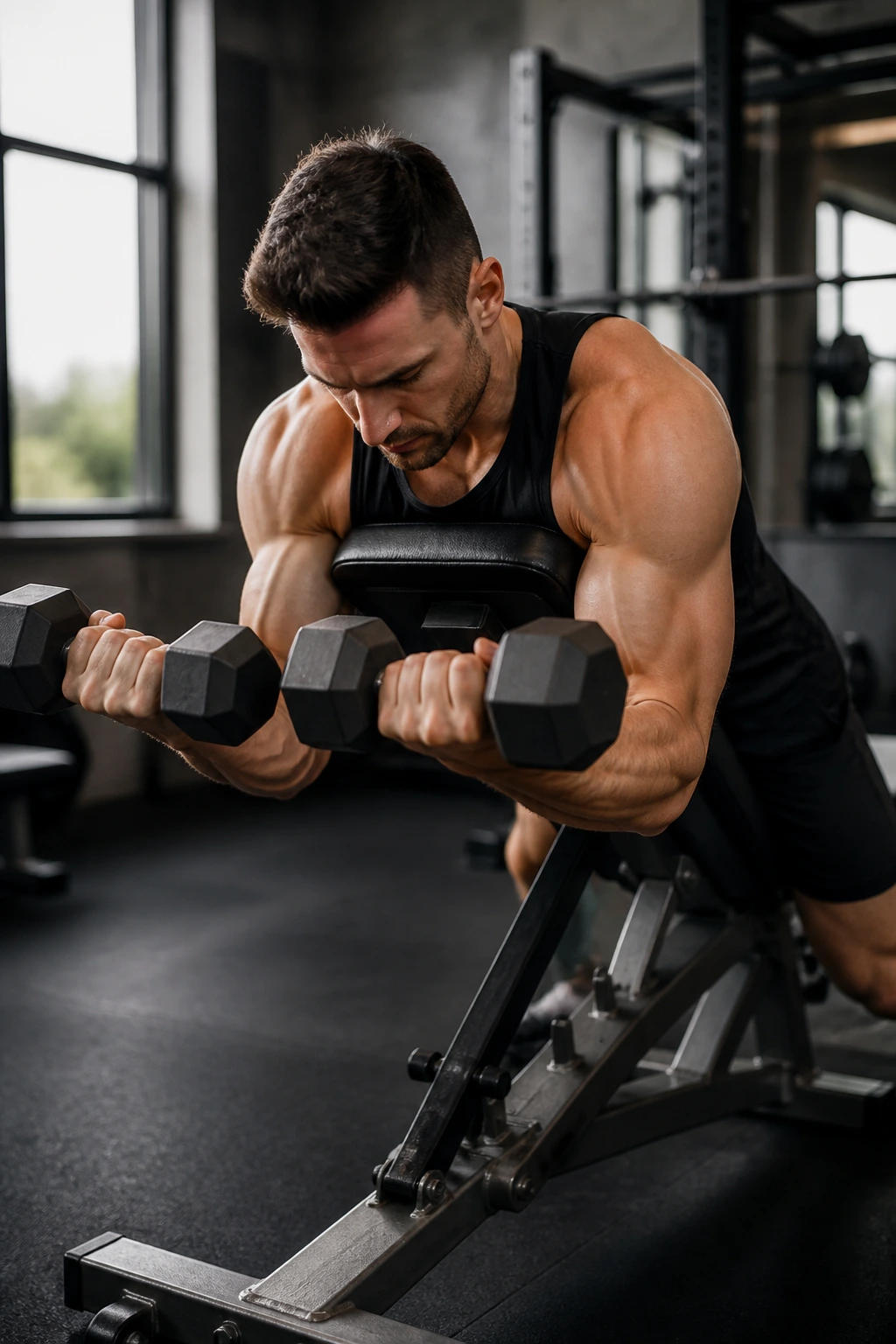
Chest on the bench. Arms hanging. No place to cheat.
That’s the beauty of spider curls. Lie face down on an incline bench, set the arms straight down, and curl the dumbbells toward the front of your shoulders. Because your chest is supported, the body cannot turn the movement into a little standing heave. The curl gets brutally direct, which is exactly why people either love it or hate it.
The top squeeze is the payoff here. Hold it for one full second and you’ll feel the biceps clamp down hard. Use a lighter load than you’d use for standing curls; the leverage is worse, and that’s the point. A set of 10 to 15 reps usually hits the sweet spot.
Spider curls are also useful when you want to clean up sloppy form. If a lifter keeps swinging during normal curls, this variation exposes the habit fast. No hips. No bounce. Just elbows flexing and biceps working. It’s a little ruthless. That’s why it belongs.
9. Zottman Curl
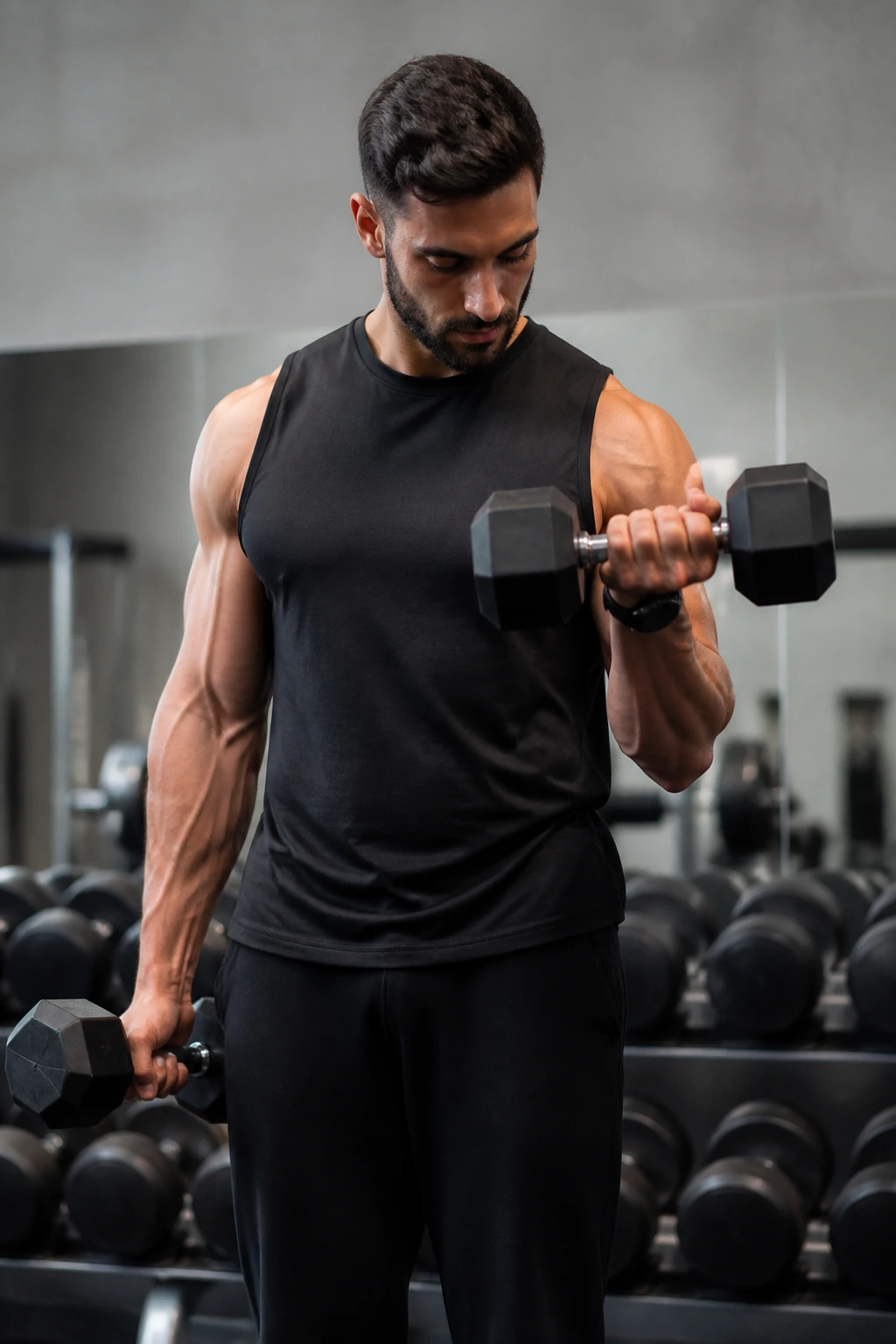
How do you turn one curl into a forearm drill? Start with a normal supinated curl, then rotate the dumbbells at the top and lower them with your palms facing down. That’s the Zottman curl, and it punches above its weight.
The upward phase hits the biceps like a standard curl. The lowering phase shifts more load onto the forearms and the brachialis. The rotation is the whole trick, so don’t rush it. Curl up cleanly, pause, turn the palms over, then lower under control. If you skip the rotation or fling the dumbbells down, the exercise loses half its point.
How to Get the Most From It
- Start with lighter dumbbells than you’d use for regular curls.
- Aim for 8 to 10 reps.
- Keep the elbows close to your sides.
- Lower for 3 seconds or a touch longer.
- Use it when you want a bicep move that also helps grip and forearm thickness.
The first time you do these properly, the lowering feels strangely humbling. That’s normal. Good sign, actually.
10. Drag Curl
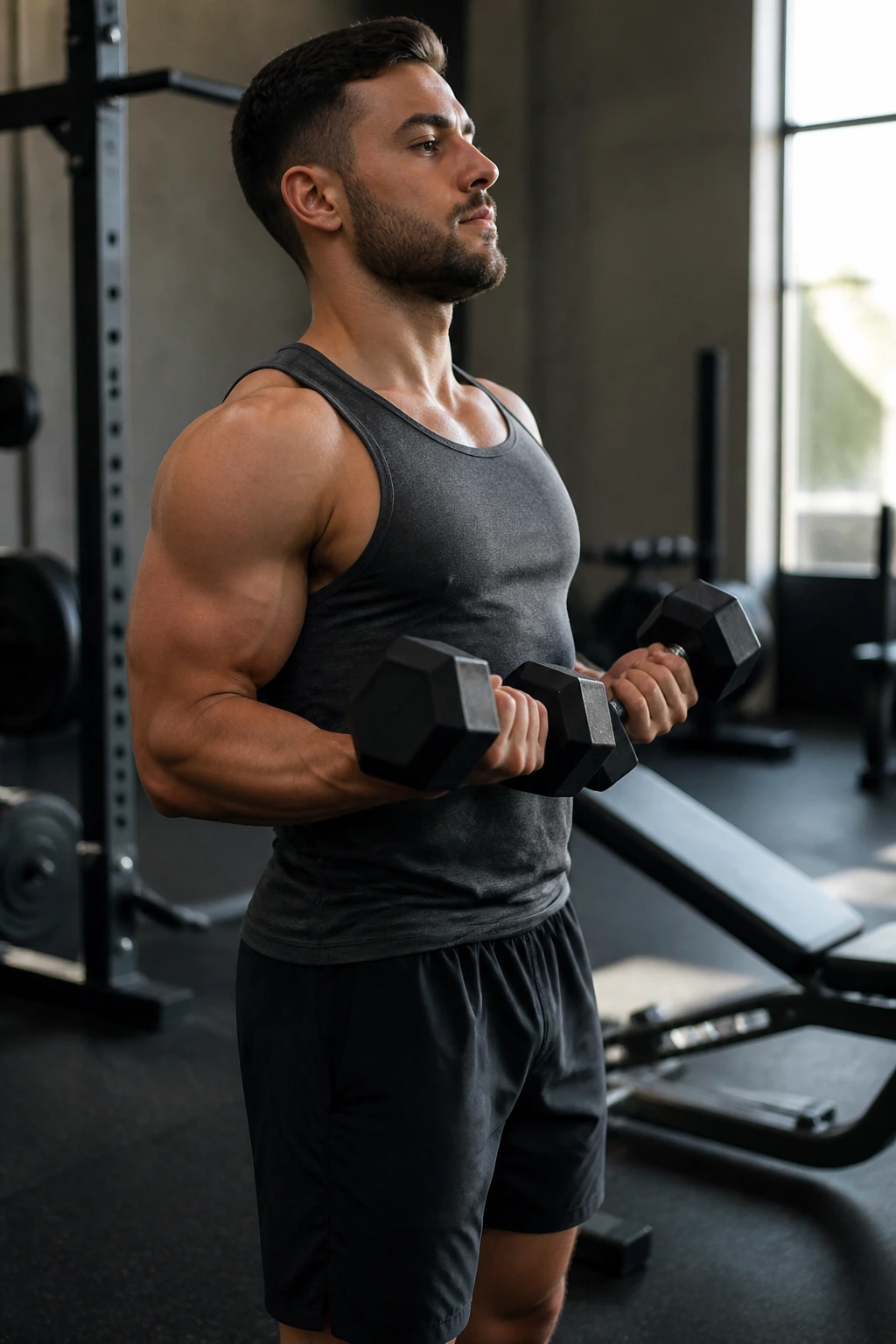
Stand tall, pin your ribs, and drag the dumbbells up your torso. That’s the cue, and it changes everything.
Unlike a standard curl, the elbows travel slightly back as the weights rise. The dumbbells skim close to your shirt instead of drifting away from it. That path reduces shoulder involvement and changes the angle of the curl in a way that keeps tension on the biceps through a different slice of the range.
- Keep the chest up.
- Let the elbows move back, not out.
- Use 6 to 10 reps with a controlled pace.
- Don’t let the weights bang into your body.
- Pick a load that feels smooth at the top, not snatchy.
This one is especially handy when regular curls have stopped feeling fresh. It gives you a new stimulus without needing extra gear. And yes, it looks a little awkward the first time. Most good arm exercises do. The good ones usually earn that awkward look.
11. 21s With Dumbbells
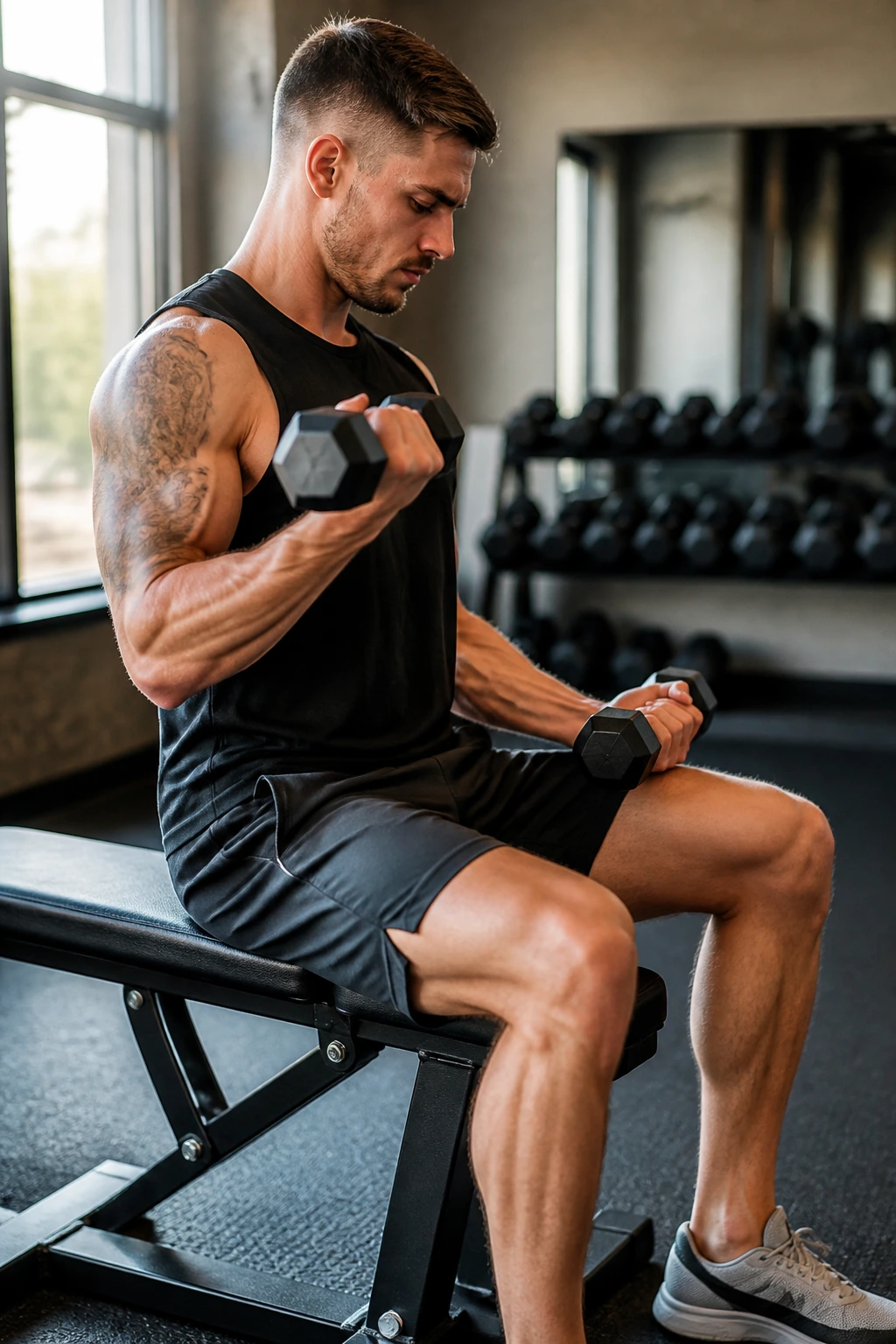
Seven reps. Then seven more. Then seven again. That’s the whole game, and it gets mean fast.
The first seven reps cover the bottom half of the curl, from full extension to about halfway up. The next seven work the top half, from halfway to the top. The last seven are full-range reps. By the time you hit the final set of seven, the biceps feel swollen and stubborn in a way that a regular set rarely creates. That pump is not a magic trick. It’s just time under tension arranged in a nasty little pattern.
Use much lighter dumbbells than you’d use for a normal set of 10. If you go heavy, the bottom half becomes a cheat-fest and the whole point gets lost. This is a finisher, not a strength test. Keep the motion clean, stay honest in each range, and take your time counting. The counting matters. It keeps the exercise from turning into another sloppy curl marathon.
Some people use 21s once a week. Some tuck them in when the rest of the workout feels too easy. Both are fine. Your arms will know.
12. Tempo Curl With a Slow Eccentric
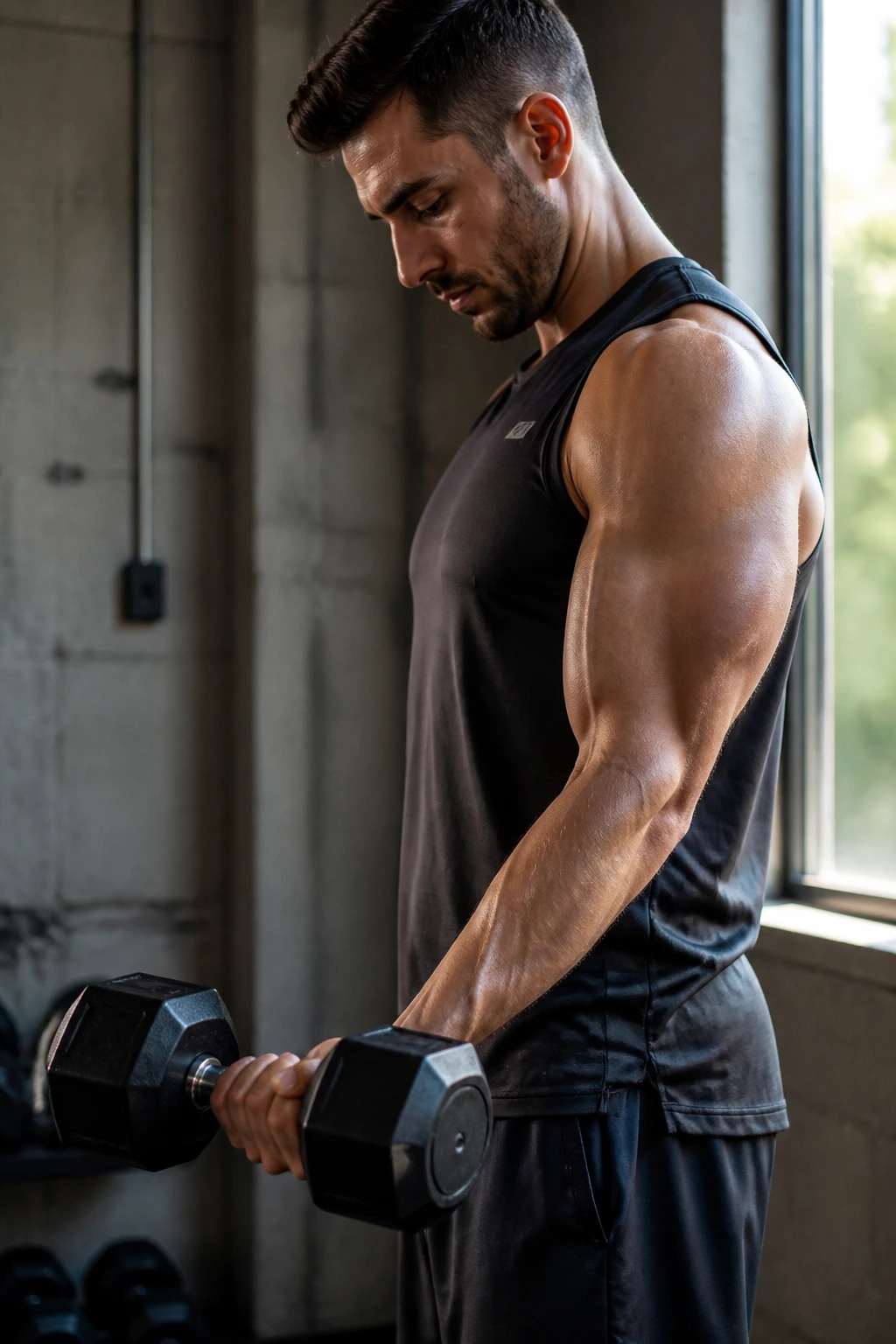
Heavier is not always better. Sometimes the smarter move is to make a medium weight feel heavy by slowing the way down.
A tempo curl with a slow eccentric means you curl the dumbbell up under control, pause briefly at the top, and then lower it for 3 to 5 seconds. That slow lowering phase gives the biceps a long stretch under load, which is a different kind of hard than just chasing more weight. It also exposes bad habits fast. If you jerk the weight up, the lowering gets messy. If you control the curl, the whole rep feels sharper.
This version is useful for people with limited equipment, too. If your dumbbells top out earlier than your strength does, tempo keeps the workout useful. Use 6 to 10 reps and treat every lowering phase like it matters, because it does. Count it out in your head if you need to. One up, four down. Simple enough. Hard enough.
The big win here is control. Better control usually means better muscle tension. And better tension is what your arms remember.
13. Bottom-Half Partial Curl
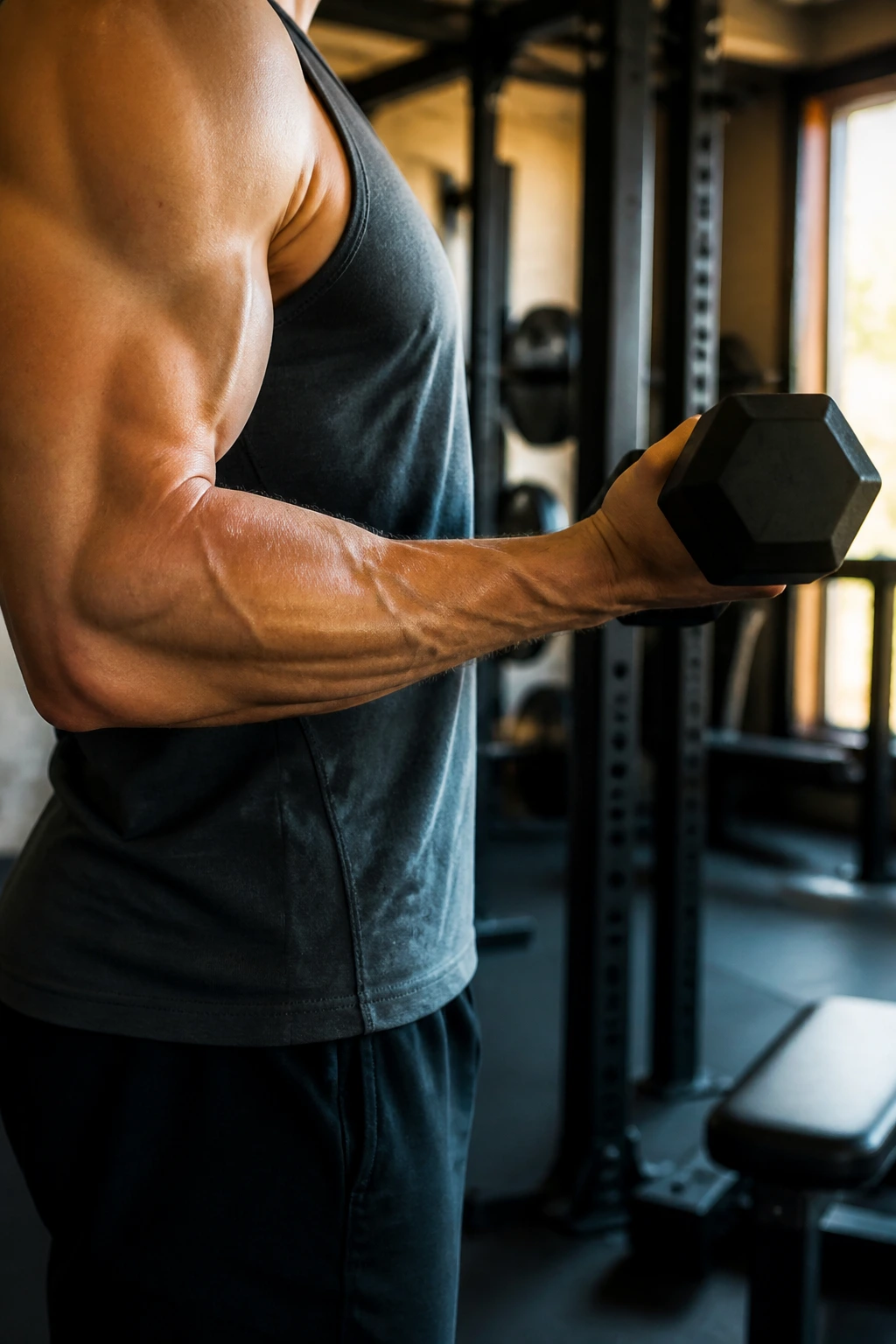
The bottom half of a curl is where a lot of people lose patience. It’s also where plenty of lifters need work.
Why the First Few Inches Count
Start with the dumbbells at full extension and curl only to about halfway up, then lower with control. That short range trains the part of the lift where momentum usually wants to sneak in. It also makes the first pull off the bottom feel stronger over time, which carries over to your full curls.
How to Use It Without Overdoing It
- Use 10 to 15 reps.
- Keep the elbows glued close to the torso.
- Move through the range from straight arm to mid-curl.
- Use a weight you can control without bouncing.
- Add it after full-range curls or keep it as a light standalone set.
A lot of lifters skip partials because they sound too easy. Then they try them with honest tension and change their mind fast. There is nothing casual about staying strict in the bottom half. It’s a small range, but it can get ugly in a hurry.
14. Isometric Curl Hold at 90 Degrees
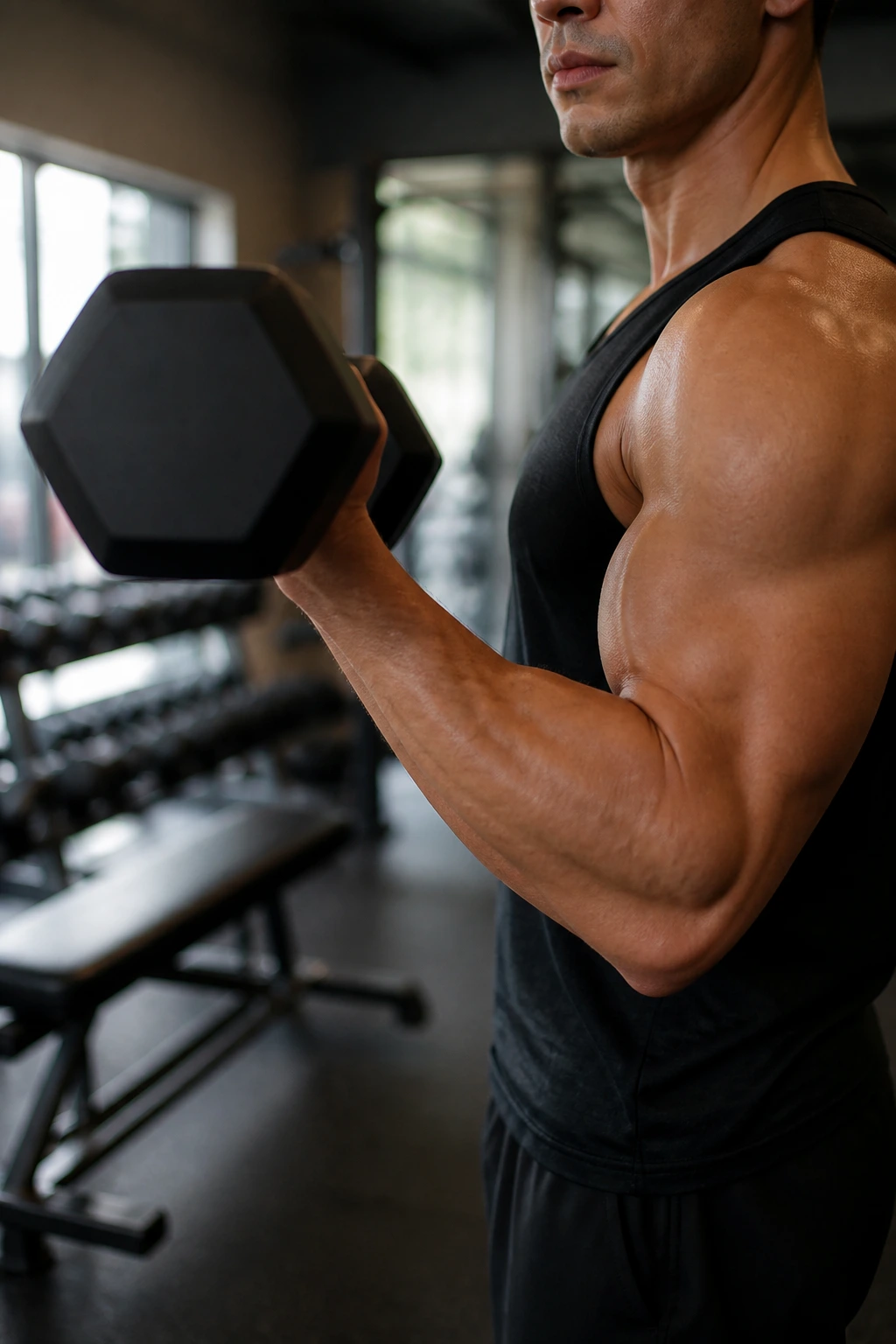
Hold one dumbbell halfway up and see how long your biceps stay polite. Not long.
Isometric holds are sneaky. You aren’t moving through reps, but the muscle is still working hard to keep the elbow angle fixed. Hold the dumbbell around the 90-degree bend for 20 to 40 seconds, or slot the hold in between regular reps for a nasty little pause. The forearm starts to tremble. The biceps feel packed. Your breathing gets louder than you expected.
This one is useful as a finisher, especially when you want to squeeze more out of light dumbbells. It’s also a decent way to test whether one arm is drifting behind the other. If the left side shakes at 18 seconds and the right side makes it to 30, that tells you something useful.
Keep the shoulder down and the wrist neutral. If the wrist bends back, the hold turns into a grip fight. That’s not the point. The point is a frozen curl position that makes the biceps do quiet, miserable work.
15. Reverse Curl With Dumbbells
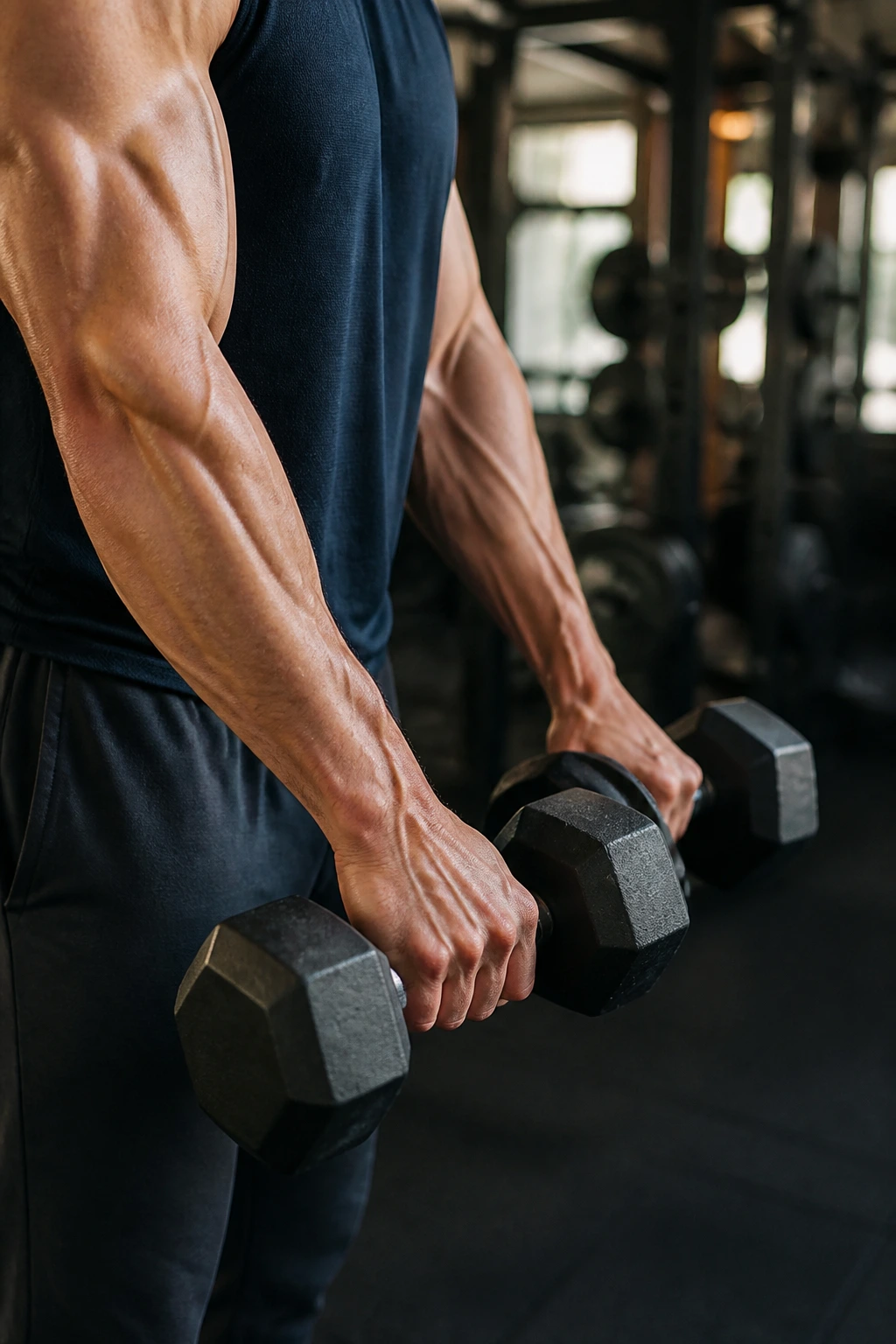
Can a palms-down curl build the front of the arm? Yes. Not by hitting the biceps in the same way as a standard curl, but by hammering the brachialis and forearms, which makes the upper arm look thicker from the side.
Hold the dumbbells with an overhand grip, palms facing the thighs, and curl without letting the wrists collapse. The wrists stay stacked, the elbows stay tucked, and the dumbbells rise in a smooth line. Because the grip is pronated, you’ll need less weight than you think. That’s fine. If the load is too heavy, the wrists and elbows complain before the target muscles do.
How to Get the Most From It
- Use 2 to 4 sets of 10 to 12 reps.
- Move slowly through the lowering phase.
- Keep your shoulders quiet.
- Start lighter than your normal curl weight.
- Stop if the wrist angle gets sloppy.
This is a smart finishing move when you want fuller-looking arms, not just a bigger peak when you flex. It also rounds out a dumbbell arm session well because it trains a part of the upper arm that standard curls barely touch.
Pick two or three of these dumbbell bicep workouts for one session, rotate the angles over the week, and keep the reps clean enough that the biceps—not the rest of you—have to finish the job.
