



The best weekly workout routines are the ones you can actually repeat on a tired Tuesday.
That sounds obvious, but people still miss it all the time. They chase a plan that looks impressive on paper, then wonder why their knees ache, their energy crashes, or the whole thing falls apart after two weeks. A better workout plan fits your schedule, your equipment, and your recovery. It also leaves room for real life, which is the part most shiny plans ignore.
A good week of training has a rhythm to it. Hard days feel hard. Easy days feel almost too easy. The volume rises enough to make progress, then backs off before your body starts dragging. If you’ve ever done too much, too soon, you already know the ugly version of that story. It usually starts with motivation and ends with missed sessions.
So here’s the useful part: 25 weekly workout routines, each built for a different kind of person, space, goal, or energy level. Pick the one that matches your week, not the one that flatters your imagination.
1. Three-Day Full-Body Routine for Busy Beginners
Three full-body sessions a week are enough to build a real base without making your schedule miserable. That’s why this is the routine I’d hand to someone who’s new, a little unsure, and tired of overthinking the whole thing.
How the week flows
- Monday: Squat, push, pull, core
- Wednesday: Hinge, push, pull, carry
- Friday: Squat pattern, upper body, abs, light cardio
Each session should run 35 to 45 minutes. Start with 2 sets per movement for the first 2 weeks, then move to 3 sets if recovery feels fine. Aim for 8 to 12 reps on most lifts, with the last 2 reps feeling challenging but not sloppy.
The beauty here is simplicity. You’re practicing the same big patterns three times a week, which helps your form tighten up fast. A goblet squat, incline push-up, dumbbell row, Romanian deadlift, and plank will carry a beginner a long way.
Do not turn these days into a marathon. Leave the gym while you still feel like you could do a little more. That restraint pays off later.
2. Four-Day Upper/Lower Split for Early Intermediates
Four days is where training starts to feel organized. The upper/lower split gives each muscle group enough work to grow, while still leaving recovery room between sessions.
Monday and Thursday hit the upper body. Tuesday and Friday focus on lower body. That spacing matters. Your legs get a break after squats and hinges, and your shoulders stop feeling like they live under a barbell.
The real advantage is volume control. You can keep the main lifts in the 5 to 8 rep range and use accessories in the 10 to 15 rep range without rushing. Bench press, row, overhead press, split squat, hamstring curl, calf raise. Clean stuff. Nothing fancy.
This routine works well if you’re past the “I just need to show up” stage and want visible progress. The sessions are long enough to matter, usually 50 to 70 minutes, but not so long that you start cutting corners halfway through.
And yes, one hard lower day can make stairs annoying. That’s part of the deal.
3. Five-Day Push/Pull/Legs Routine for Lifters Who Want More Volume
Push/pull/legs is popular for a reason: it’s easy to understand, and it gives you more room to work if you like spending time under the bar. The trick is not turning it into junk volume.
A solid week looks like this: push, pull, legs, upper accessories, lower accessories or arms/core. That fifth day is where people either get smart or get reckless. I’d keep it focused. Don’t cram in 20 random exercises because the gym is empty and you feel heroic.
What to keep in the week
- Push day: bench, incline press, lateral raise, triceps work
- Pull day: row, pulldown or pull-up, rear delt work, curls
- Leg day: squat, hinge, lunge, calf work
- Accessory day: weak points, arms, abs, light conditioning
Most of the heavy work belongs in the 4 to 8 rep range. Accessories live better at 10 to 15 reps. If you recover well, this is one of the easiest ways to keep progressing without feeling stuck in the same old full-body loop.
The catch is simple: sleep and food have to keep up. If they don’t, this plan gets noisy fast.
4. Two-Day Minimum Routine for Weeks That Go Sideways
Can two workouts a week do enough? Yes — if you stop expecting them to do everything.
This is the plan for people with chaotic weeks, long work shifts, or kids who treat the house like a racetrack. Each workout should be full-body, about 45 minutes, and built around the biggest movement patterns: squat, hinge, push, pull, carry.
The first session might be a squat, dumbbell bench, row, and plank. The second can swap in deadlifts, overhead press, split squats, and farmer carries. Keep the rest periods honest, around 60 to 90 seconds for moderate work and a little longer for heavier sets.
What makes this one worth keeping is how little friction it creates. Two committed sessions beat a halfhearted five-day plan that collapses every Wednesday. You can also layer on walking, stairs, or a short mobility block on off-days without making the week feel crowded.
It’s maintenance, yes. But maintenance is underrated.
5. Six-Day Advanced Strength Split for Lifters Who Recover Well
A six-day plan is not for everyone, and that’s fine. If you train hard, sleep enough, and actually eat like someone who lifts, this style can be excellent.
The structure can be old-school or modern. I like heavy push, heavy pull, heavy legs, lighter upper, lighter lower, arms and core. Main lifts stay in the 3 to 5 rep range. Assistance work slides into 6 to 10 reps. By the end of the week, you’ve touched everything without turning every session into a max-out contest.
The mistake people make here is chasing fatigue instead of quality. More sessions do not excuse bad form. In fact, the higher the frequency, the more each bad rep matters.
If you’re advanced enough to need six days, you probably already know what your weak spots are. Use that knowledge. Put extra time into the lift that stalls first, the muscle group that lags, or the movement that feels awkward under load. Don’t let the week become a pile of random effort.
Strong plans look boring from far away. Up close, they’re precise.
6. Home Bodyweight Routine for Zero-Equipment Training
A home routine can be brutally effective if you treat it like training and not a backup plan. No machines. No dumbbells. Still enough work to get stronger.
Start with push-ups, split squats, glute bridges, rows under a sturdy table or with a towel setup, and planks. If you’ve got a resistance band, even better. If not, slower tempo and one-legged work will make things hard fast.
A simple weekly pattern
- Day 1: Push and legs
- Day 2: Walk + mobility
- Day 3: Pull emphasis + core
- Day 4: Rest or light stretching
- Day 5: Full-body circuit
- Weekend: Easy movement, then repeat
The key is making the exercises harder as you improve. Elevate your feet on push-ups. Pause at the bottom of split squats. Slow the lowering phase to 3 seconds. That little bit of control changes everything.
This plan shines for beginners and for people who hate commuting to the gym. It’s also honest. If a movement is too easy, you’ll feel it fast.
7. Dumbbell-Only Routine for Small Spaces and Real Life
Dumbbells are the sweet spot for a lot of people. They’re simple, cheap compared with a full home gym, and flexible enough to cover strength, muscle, and conditioning without much fuss.
I’d run this as a four-day plan: two upper days, two lower days. Use goblet squats, Romanian deadlifts, floor press, one-arm rows, standing shoulder press, reverse lunges, curls, and triceps extensions. If you’ve only got a single pair of dumbbells, unilateral work saves the day. It also exposes side-to-side differences that barbells can hide.
The nice thing about dumbbells is the range of motion. A floor press keeps the shoulders happier for some people. A split squat forces the legs to work without needing a rack. You can train hard in a bedroom corner if you have to.
Keep most sets at 8 to 12 reps, with one or two heavier sets in the 6 to 8 range on the main lifts. That mix gives you enough load without making the plan feel stale.
Simple tool. Serious work.
8. Fat-Loss Routine That Still Protects Strength
If fat loss is the goal, endless cardio is usually the wrong answer. Better plans keep lifting in the week so you don’t lose the muscle you’re trying to show.
A smart version looks like this: three strength sessions, two cardio sessions, one long walk day, one real rest day. Strength work should cover the whole body. Cardio can be incline walking, rowing, cycling, or intervals, but I’d keep true HIIT to 1 or 2 sessions max. More than that and recovery starts to wobble.
What each week needs
- Strength: compound lifts, 3 sets of 6 to 10 reps
- Cardio: 25 to 40 minutes steady work
- Steps: daily walking, even if it’s broken into short chunks
- Food: a modest calorie deficit, not a crash diet
This plan works because it’s hard enough to burn energy without draining you. You still leave the gym feeling trained, not wrecked. That matters more than people admit.
One blunt note: if your workouts are crushing you, the diet is probably too aggressive.
9. Muscle-Gain Hypertrophy Routine for Adding Size

If you want muscle, you need enough weekly volume to force an adaptation. A lot of people underdo this, then wonder why nothing changes.
A hypertrophy plan often works best as a five-day split with 10 to 20 hard sets per muscle group per week. That range sounds boring. It isn’t. It’s where the work lives. Use compounds for the big load — squats, presses, rows, pulldowns — then stack accessories that isolate what you want to bring up.
Where the growth happens
- Main lifts: 6 to 10 reps
- Accessories: 10 to 15 reps
- Rest time: 60 to 120 seconds, depending on the exercise
- Effort: stop 1 or 2 reps short of failure on most sets
This routine depends on controlled reps. Don’t bounce, heave, or rush the lowering phase. A clean rep with a 2 to 3 second eccentric usually beats a sloppy rep with more weight.
The weekly split can be upper/lower or push/pull/legs. I care less about the label than the total work and the ability to recover from it. Eat enough, sleep enough, and keep your logbook honest.
Size does not come from vibes.
10. Low-Impact Routine for Achy Joints and Smart Recovery
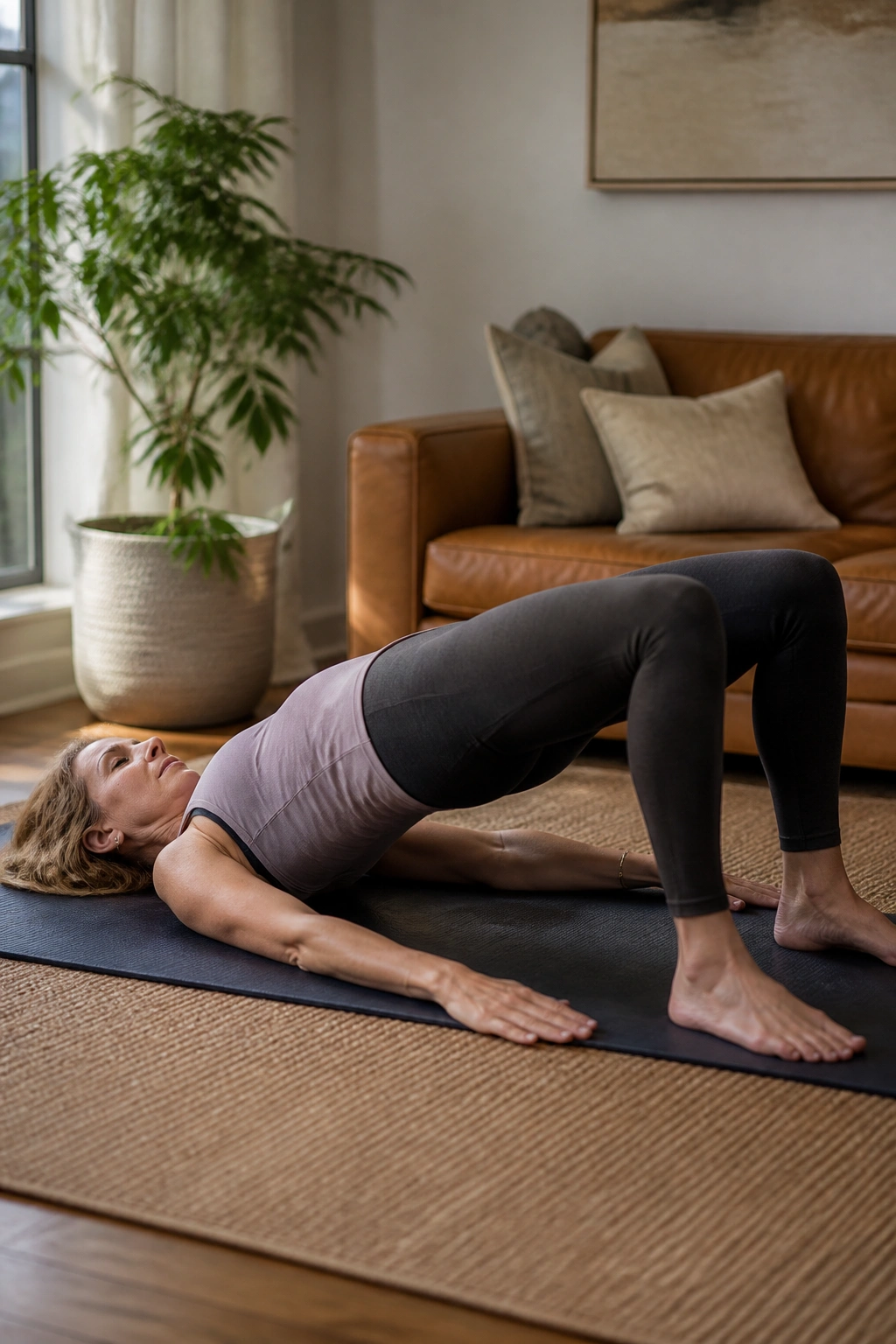
Not every good workout needs jumping, sprinting, or a dramatic finish. Some people do better when the plan lowers impact and keeps the joints happy.
This week can include three strength days and two low-impact conditioning days. Think cycling, rowing, elliptical, brisk incline walking, or swimming. In the strength sessions, use controlled tempos, supported split squats, glute bridges, chest-supported rows, and machine work if it helps you stay pain-free.
The point is to train around irritation without giving up progress. If jumping makes your knees grumble, skip it. If heavy barbell back squats annoy your back, use goblet squats or leg press for a while. That’s not weakness. That’s adaptation.
A lot of lifters would do better with one less ego exercise and one more smooth, repeatable movement. The body tends to reward that choice.
You should finish these sessions feeling better than when you started. Not exhausted. Better.
11. Run-and-Lift Hybrid Routine for People Who Want Both

Running and strength training can work together, but only if you stop pretending every day is a hard day. The week needs spacing.
A simple hybrid schedule is three runs and two lifts. Make one run easy and longer, one run faster or hill-based, and one run moderate. Place lower-body lifting away from the hardest run whenever possible. If Tuesday is intervals, Wednesday should not be a brutal squat day unless you enjoy dragging your legs through wet cement.
A workable week
- Monday: Easy run, 25 to 40 minutes
- Tuesday: Strength session, full-body or upper emphasis
- Wednesday: Speed work or hill repeats
- Thursday: Strength session, lower emphasis
- Friday: Rest or mobility
- Saturday: Longer easy run
- Sunday: Walk and recover
The lifting keeps you durable. The running keeps your engine moving. Both matter.
This routine is best for people who care more about being fit than being specialized. If you want a PR in both the mile and the squat, you’ll need patience. Still worth it.
12. Cycling-Focused Routine with Core and Legs

Cyclists often ride enough to get tired but not enough to build the muscles that keep the hips, knees, and back happy. A little strength work fixes that.
A good week usually means two or three rides, two strength sessions, and one mobility day. One ride can be steady and long, one can include cadence changes or hill work, and one can be a shorter recovery spin. On the strength side, focus on split squats, deadlifts, step-ups, calf raises, rows, and anti-rotation core work like Pallof presses.
You’re not trying to turn cycling into a bodybuilding contest. You’re giving the body enough support to hold position well when the miles stack up. That means glutes, hamstrings, and deep core muscles get real attention.
If you sit on the bike a lot, hip flexors get tight and your upper back rounds forward. Ten minutes of thoracic extension, hip flexor stretches, and glute activation can change how the ride feels.
The best cycling routine helps you pedal better, not just longer.
13. Calisthenics Skill Routine for Pull-Ups, Dips, and Handstands

Calisthenics is where patience matters. You can’t rush a pull-up or fake a clean handstand hold. Your body knows.
A weekly plan here usually works best with five sessions: push skill, pull skill, leg strength, handstand or core day, and one mixed conditioning day. Start with regressions you can own. Push-ups before ring dips. Assisted pull-ups before strict reps. Wall walks before freestanding balance work.
Use it like this
- Push work: push-ups, pike push-ups, dips
- Pull work: inverted rows, band-assisted pull-ups, negatives
- Legs: split squats, tempo squats, single-leg hinges
- Skill: wall handstand holds, hollow body holds, L-sits
Progress lives in cleaner shapes and longer holds, not just more reps. A 20-second hollow hold that doesn’t collapse is more useful than a sloppy 60-second one.
This routine is a good fit for people who like body control and hate clutter. It also teaches discipline in a way machines can’t quite match.
14. Return-From-Break Routine for Getting Back Without Wrecking Yourself
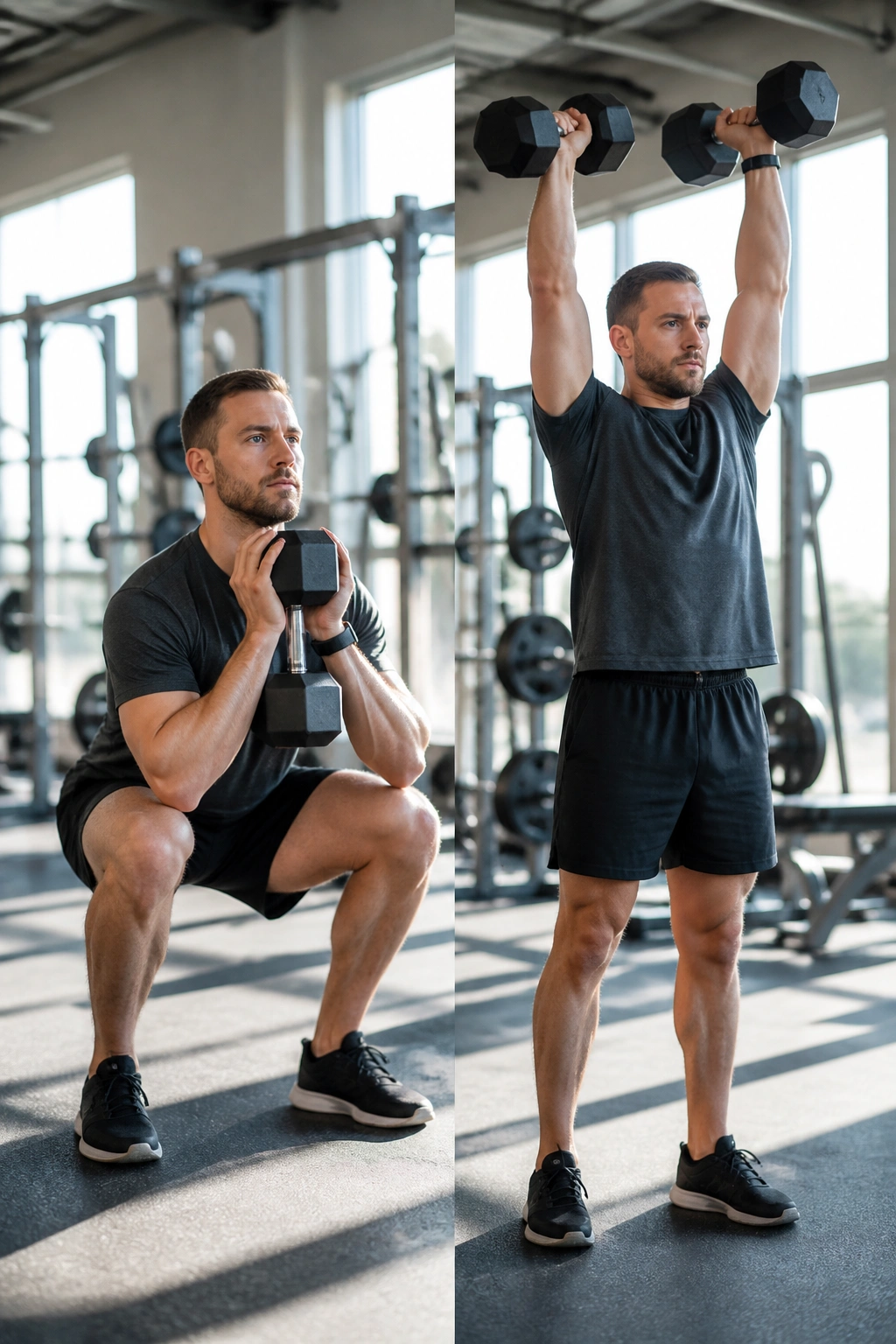
Coming back after time off is where a lot of people get foolish. They try to “make up” lost ground in one week and end up sore, discouraged, or both.
The smarter plan is simple: three full-body workouts, one walk day, one mobility day, two easy days. Keep the first two weeks embarrassingly manageable. That means lighter loads, fewer sets, and no hero finishers. You want to leave the gym with a bit of gas still in the tank.
A clean restart might be squat or leg press, dumbbell press, row, hinge, and plank. Two sets of each is enough to begin. Once your joints stop complaining and the soreness settles down, you can build the workload back up.
The goal here is rhythm, not punishment. If you’re gasping through every session, the ramp is too steep.
A good comeback feels almost too easy on day one. That’s fine. You’re rebuilding trust with the movements.
15. Circuit Training Routine for Fast, Busy Sessions

Circuit training gets a bad reputation because people use it as a way to avoid structure. Used well, though, it’s one of the most efficient ways to train.
A strong weekly version is four sessions built around circuits of 4 to 6 exercises. You can pair lower body, upper body, and core in one loop, rest 30 to 90 seconds between rounds, and keep the whole thing under 45 minutes. Kettlebells, dumbbells, sled pushes, push-ups, rows, step-ups, and swings all work.
Unlike a pure strength split, this style keeps your heart rate up while still asking your muscles to do real work. That makes it good for people who want conditioning and a decent sweat without spending an hour doing separate cardio.
The trap is rushing form. Circuits get sloppy when the rest is too short and the weight is too ambitious. Pick loads that let you move cleanly from the first round to the last.
Efficient does not have to mean chaotic.
16. Kettlebell Routine for Power, Grip, and Full-Body Work

Kettlebells reward people who like training that feels athletic. Swings, cleans, presses, snatches, and carries hit strength and conditioning at the same time.
I like this as a three- or four-day week. One day can center on swings and deadlifts, another on cleans and presses, another on goblet squats and rows. Finish with carries and core work. A hard swing set of 10 reps every 30 seconds for 5 minutes is a very different animal from a slow grinder of a goblet squat, and both have their place.
Why it works
- Swings: hip power and conditioning
- Cleans and presses: upper body strength with core tension
- Carries: grip, posture, and trunk stability
- Squats: legs without much setup
The kettlebell is unforgiving in a useful way. If your hinge is bad, you feel it. If your brace is weak, you feel that too.
This routine is a favorite of mine for people who want short, dense workouts that don’t feel fluffy. It’s honest work.
17. Senior-Friendly Routine for Strength, Balance, and Confidence

A well-built routine for older adults should protect balance, keep joints moving, and build enough strength to make daily life easier. That’s the whole game.
Three sessions a week is a strong start. Use sit-to-stands, step-ups, wall or incline push-ups, band rows, heel raises, and light dumbbell presses. Add balance drills like single-leg stands near a wall, tandem walks, and slow marching in place. Keep the pace steady. No rushing.
Do not chase fatigue for its own sake. Better to finish a session feeling stable and clear-headed than wiped out. A few controlled sets of 8 to 12 reps usually do the job nicely, especially when the movement quality is good.
Good signs to watch for
- You stand up from a chair with less effort
- Stairs feel easier
- Balance feels steadier when turning or stepping sideways
- Your posture doesn’t collapse late in the day
That kind of progress matters more than vanity metrics. It shows up in daily life, and it tends to last.
18. Athletic Performance Routine for Speed, Jumping, and Quick Feet

This is the plan for people who want to move like athletes, not just lift like them. Power, speed, and coordination matter here.
A week might include two strength days, one sprint or agility day, one jump day, and one light recovery session. Heavy squats and deadlifts have a place, but so do medicine ball throws, box jumps, sled work, and directional changes. Keep the reps low and the quality high. A jump set of 3 to 5 crisp reps is plenty.
The mistake is turning athletic training into cardio with extra noise. You want speed while you’re still fresh. If your movement gets slow, the session has gone too far.
This routine suits people playing field sports, court sports, or anything where first-step power matters. It also works for recreational athletes who just like training that feels sharp.
Fast bodies are built with restraint. Not fatigue worship.
19. Desk-Worker Routine for Tight Hips and Round Shoulders

Sitting all day does a number on hips, upper back, and neck. A good weekly routine should fight that without needing a full second job.
I’d use two strength days and three short mobility blocks spread through the week. Strength work should emphasize rows, rear delts, deadlifts or hinges, split squats, carries, and core bracing. Mobility can be as simple as 10 minutes of hip flexor stretches, thoracic rotations, couch stretch, and scapular work after work or between meetings.
A practical weekly setup
- Monday: Strength + posture work
- Tuesday: 10-minute mobility break
- Wednesday: Strength + walking
- Thursday: Mobility and easy cardio
- Friday: Strength
- Weekend: Long walk, hike, or light bike ride
The point is not to “fix” sitting with one heroic workout. It’s to interrupt the damage in small, repeatable ways.
A desk-body usually likes more pulling than pressing, more walking than it expects, and more hip extension than it gets from a chair.
20. Recovery-First Routine for People Who Train Often

Some people love moving every day. Fine. The trick is building a week that respects recovery instead of pretending recovery is for other people.
A recovery-first routine can be six days of movement with only two hard sessions. The rest should be moderate lifting, zone 2 cardio, long walks, mobility, or light machine work. The week feels active, but not punishing. That difference matters more than it sounds like it should.
You can pair a heavy lower day with an easy bike ride the next day, then follow that with an upper day and a walk. The body usually handles frequent movement well when the intensity is managed. That’s the part people skip.
Good rules for this style
- Keep one or two days genuinely light
- Use cardio you can hold a conversation during
- Stop strength sets before form slips
- Add one deload week when the body feels flat
I like this routine for people who get anxious when they miss days. It gives them a structure that still leaves oxygen in the room.
21. Incline Walking Routine for Low-Stress Conditioning

Incline walking is wildly underrated. It’s simple, quiet, and harder than people expect once the slope climbs.
A week can be built around four or five walking sessions and two strength sessions. On the treadmill, try 2.8 to 3.5 mph at 6 to 12 percent incline for 25 to 45 minutes. Outdoors, hills do the same job. The pace should let you breathe harder without turning the workout into a sprint.
I like this routine because it fits almost any level. Beginners can use it as cardio. Advanced trainees can use it for recovery and extra energy burn without hammering the joints. It’s also easy to stack after lifting if time is tight.
The downside? It can feel dull. That’s real. Put on a podcast, pick a route with a view, or treat it like a walking meeting. Whatever keeps you moving.
Steady work is not glamorous. It gets results anyway.
22. Metabolic Conditioning Routine for People Who Like Short, Hard Work

Metabolic conditioning is the brutally efficient cousin in the training family. Short rests, mixed movement, sweat, repeat.
A good week usually includes two conditioning days, two strength days, one mobility day, and two recovery days. The conditioning itself might be EMOMs, AMRAPs, sled pushes, rower intervals, burpees, kettlebell swings, or bike sprints. Keep the sessions to 15 to 25 minutes of work after warm-up. That’s enough.
Unlike steady cardio, this style pushes the heart rate up and asks you to recover quickly between efforts. It’s useful for people who like a challenge and don’t mind feeling cooked for a little while.
Use it carefully
- Start with 1 or 2 rounds, not 5
- Keep technique clean under fatigue
- Pair hard conditioning with lighter strength, not another brutal leg day
- Drink water before you think you need it
This is not the plan I’d hand to someone who already sleeps badly and lives on caffeine. For the right person, though, it’s sharp, fast, and effective.
23. Powerbuilding Routine for Strength and Size Together

Powerbuilding is what happens when you stop choosing between big lifts and bigger muscles. You do both.
A week often looks like upper heavy, lower heavy, upper volume, lower volume, plus one accessory or arm day. The first lift in each session gets the power treatment: 3 to 5 reps, longer rest, higher focus. After that, you move into hypertrophy work with 6 to 12 reps.
That top set matters. So do the back-off sets. If you deadlift a heavy set of 4, then follow with two or three lighter sets of 6 to 8, you get the strength signal and the muscle signal in the same week.
It works best for people who like numbers and don’t mind training with intent. Not every set needs to be a grind. Some should be smooth, almost snappy, with enough reserve to keep your joints happy.
Powerbuilding gets a little addictive. The lifts climb, the body fills out, and the sessions stay interesting.
24. Travel Routine for Hotel Rooms, Airports, and Strange Schedules

Travel can shred a normal routine, so the answer is a smaller one that still holds up. A hotel room is not ideal. It’s enough.
I’d keep this to three or four short sessions, each 20 to 30 minutes. Use bodyweight squats, push-ups, reverse lunges, glute bridges, plank variations, and if you packed a band, rows and pull-aparts. A suitcase can even work as a load for carries or split squats if you’re careful and the floor is stable.
The point is to preserve momentum. You’re not trying to set records in a room with bad lighting and carpet that smells like cleaning spray. You’re keeping the habit alive.
Easy travel rules
- Train early if the day is unpredictable
- Keep the first round easy while you wake up
- Use density, not ego
- Walk whenever the airport or hotel gives you the chance
This routine is boring in the best way. It keeps your body from feeling like it was thrown into a ditch by a calendar.
25. Flexible Family-Life Routine for Weeks That Never Look the Same

What if your week changes every time you blink? Then the routine has to bend.
A flexible plan works best with four anchors: two full-body strength sessions, one cardio day, and one mobility or recovery day. The rest of the week gets filled with walks, short sessions, or bonus work when time opens up. You can shuffle the days around without breaking the whole thing.
What to keep fixed
- Two strength anchors: squat or hinge, push, pull, core
- One conditioning anchor: walk, bike, row, or intervals
- One recovery anchor: mobility, stretching, or a long easy walk
This style is good for parents, shift workers, caregivers, and anyone who can’t promise the same schedule twice. It also helps people who hate rigid programs but still need structure. If Monday disappears, Tuesday can become the first lift day. No drama.
The real skill here is not perfect adherence. It’s learning which sessions matter most and protecting those first. Everything else is bonus work.
Final Thoughts

The best routine is the one that fits the life you actually live, not the one you wish you had on paper. A beginner doesn’t need a brutal split. An advanced lifter doesn’t need random workouts stitched together from whatever looked hard that day. The right match saves time and keeps momentum alive.
Pick one plan, run it for a few weeks, then adjust based on recovery, energy, and whether the workouts still feel useful. If a routine leaves you dreading every session, it’s probably too much, too soon, or built around the wrong kind of stress.
And if you’re stuck choosing between two good options, choose the one you’ll follow on an ordinary week. That’s where the real progress lives.
