



You do not need a gym to earn a sweaty shirt.
A hallway, a stairwell, a patch of sidewalk, a park bench, and a phone timer will do the job if you bring enough effort. The best free workouts you can try without a gym are not poor substitutes for “real” training; they are real training, stripped down to the parts that matter most.
That strip-down is the whole point. Without machines, mirrors, and a room full of people pretending not to watch each other, you get something cleaner: bodyweight, pace, control, and honesty. A brisk walk can turn into cardio. A few hard sets of squats can turn into leg day. Ten minutes of crawling, planking, or shadowboxing can leave you breathing the way a treadmill warm-up never will.
These 20 workouts cover the whole range—cardio, strength, mobility, recovery, and those odd in-between days when you want to move but not grind. Pick one, repeat it a few times, and make it harder by slowing the reps, shortening the rest, or adding another round. Simple. No membership card required.
1. Brisk Walking Intervals
Walking gets shrugged off because it looks easy. That’s lazy thinking. Walk hard enough, and it becomes a sharp little conditioning session that still feels human, not punishing.
A clean version is simple: 5 minutes of easy walking, then 1 minute fast / 1 minute easy for 8 to 10 rounds, then 5 minutes to cool down. The fast minute should feel brisk enough that talking is possible but annoying. If you can sing, speed up. If your shoulders are creeping toward your ears, back off a notch.
How to make it count
- Use a route with a few turns or a mild incline so you do not drift into autopilot.
- Keep your arms active and your stride smooth, not choppy.
- Pick a pace that lifts your breathing without bouncing you into a jog.
- End with a 3- to 5-minute slower walk so your calves do not feel like concrete later.
My favorite part: you can do this in regular clothes and still feel like you trained. That matters more than people admit.
2. Stair Climbs That Feel Like a Mini Hill Session
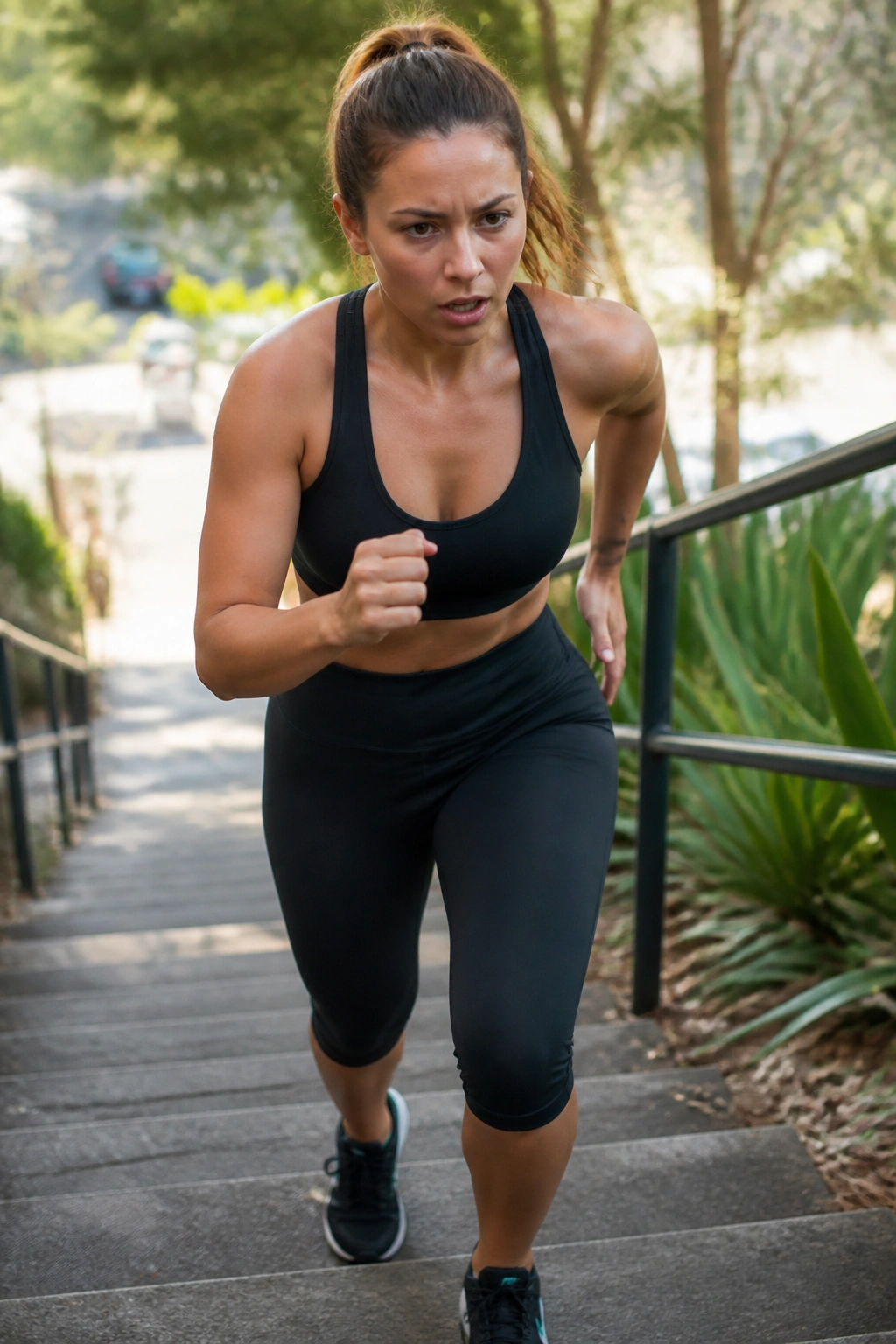
Stairs are rude in the best possible way. They ask for nothing fancy, then tax your lungs and legs faster than you expect.
Find a staircase with 1 to 3 flights, or a set of outdoor bleachers if you have access to them. Walk up at a steady pace for 30 to 60 seconds, walk down slowly, and repeat for 8 to 12 rounds. Keep your foot placement firm and use the railing only as a light guide, not a crutch. The descent matters too; it gives your heart a chance to settle and saves your knees from a sloppy crash.
Want more bite? Take two steps at a time on the climb. That changes the angle fast.
Your calves will notice. So will your breathing. That is the point. A stair workout does not need a million variations to be useful; it needs honest effort and a staircase that does not wobble.
3. Bodyweight Squat Ladders
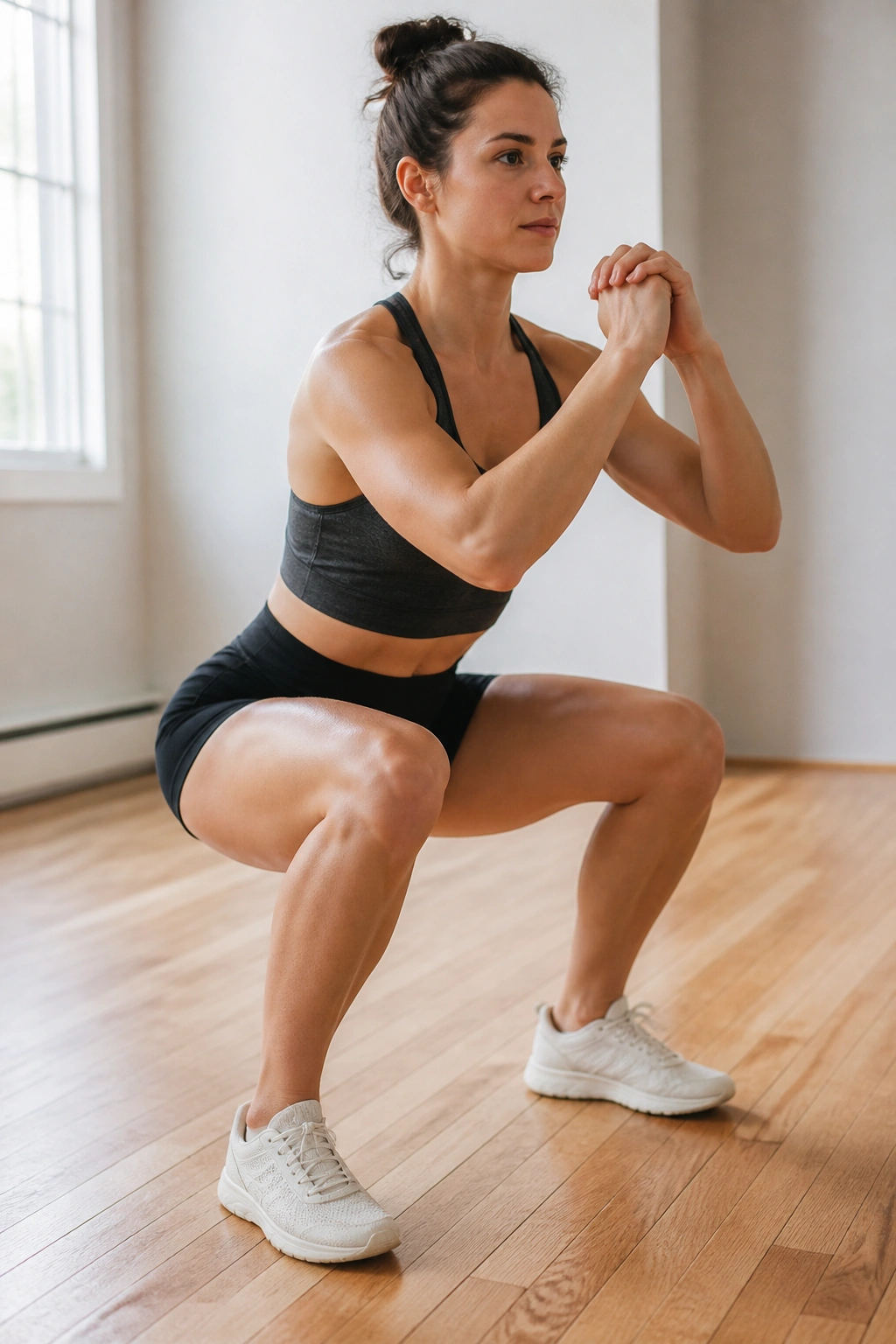
A squat ladder is one of those workouts that looks almost too plain to matter, and then your thighs start talking back halfway through the second round.
Start with 5 squats, rest 20 to 30 seconds, then 10 squats, then 15, then 20. If that feels too mild, go back down the ladder—20, 15, 10, 5—or keep the rest short and move from one set to the next without lounging around. Another clean option is a timer: do 12 squats every minute on the minute for 10 minutes.
Make the last set count
- Sit your hips back first, then bend your knees.
- Keep your heels down and your chest tall.
- Lower until your thighs are at least parallel to the floor, or as deep as your control allows.
- Pause for one second at the bottom if the workout feels too easy.
A squat ladder works because volume piles up fast. You do not need weight to feel that burn. You need consistency, a decent range of motion, and the nerve not to cut every rep short.
4. Push-Up Variations That Match Your Level
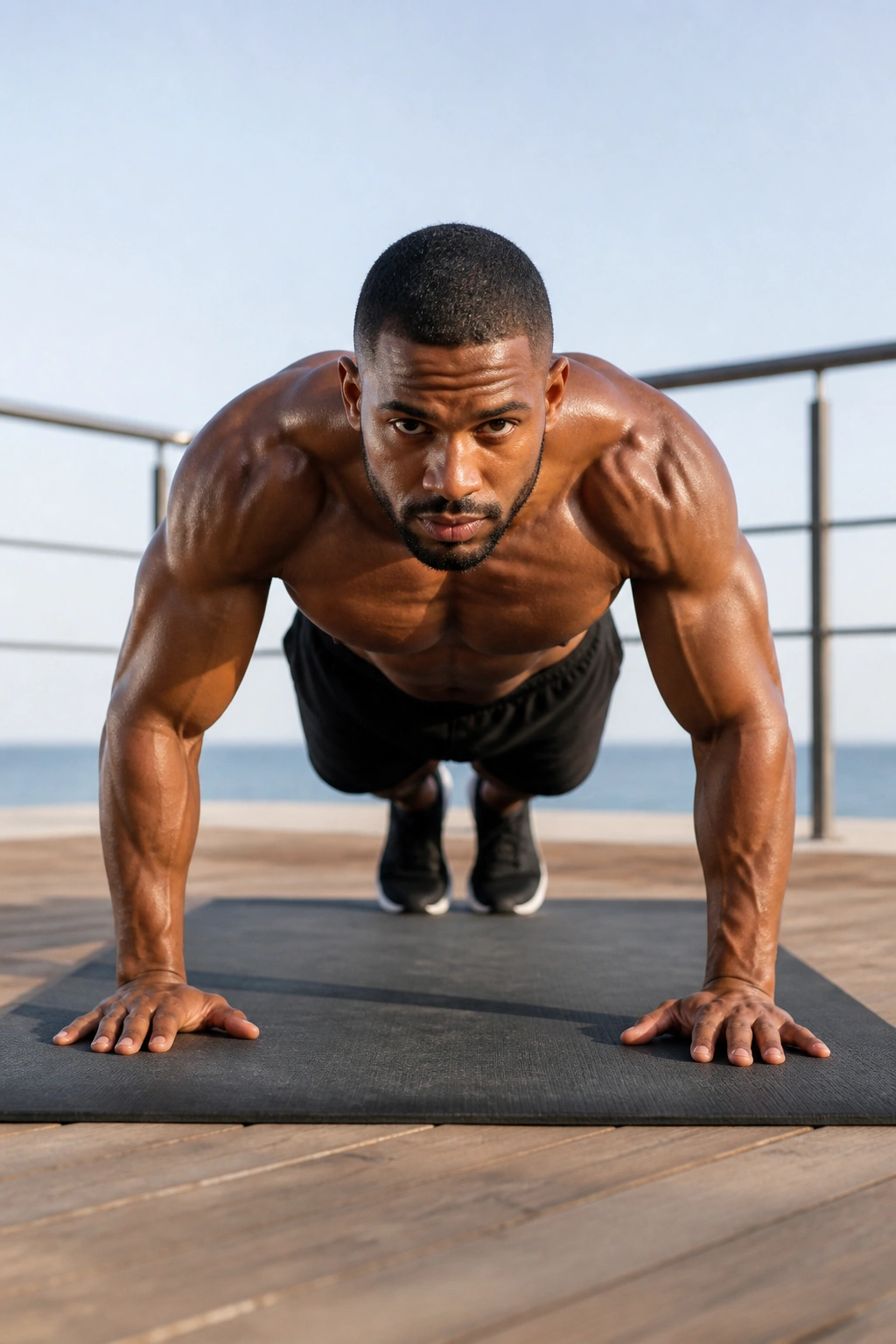
Push-ups are the old reliable of no-gym strength work. They punish bad form, reward patience, and make nearly everyone more honest about where they actually are.
Choose the version that lets you keep a straight line from head to heels—or head to knees if you’re building up. Incline push-ups against a bench, a wall, or a sturdy table are fine. Knee push-ups are fine too. Standard push-ups are the sweet spot for a lot of people, while slow negatives—lowering over 3 to 5 seconds—are a sneaky way to build strength even when full reps are still rough.
A good session is 3 to 5 sets of 5 to 12 reps, resting 45 to 90 seconds between sets. Stop a rep or two before your form gets sloppy. Flared elbows and sagging hips are where this turns into shoulder irritation.
Best rule: pick the hardest version you can do cleanly for at least 5 reps. That is your workout, not the version you wish you had already earned.
5. Reverse Lunges and Walking Lunges
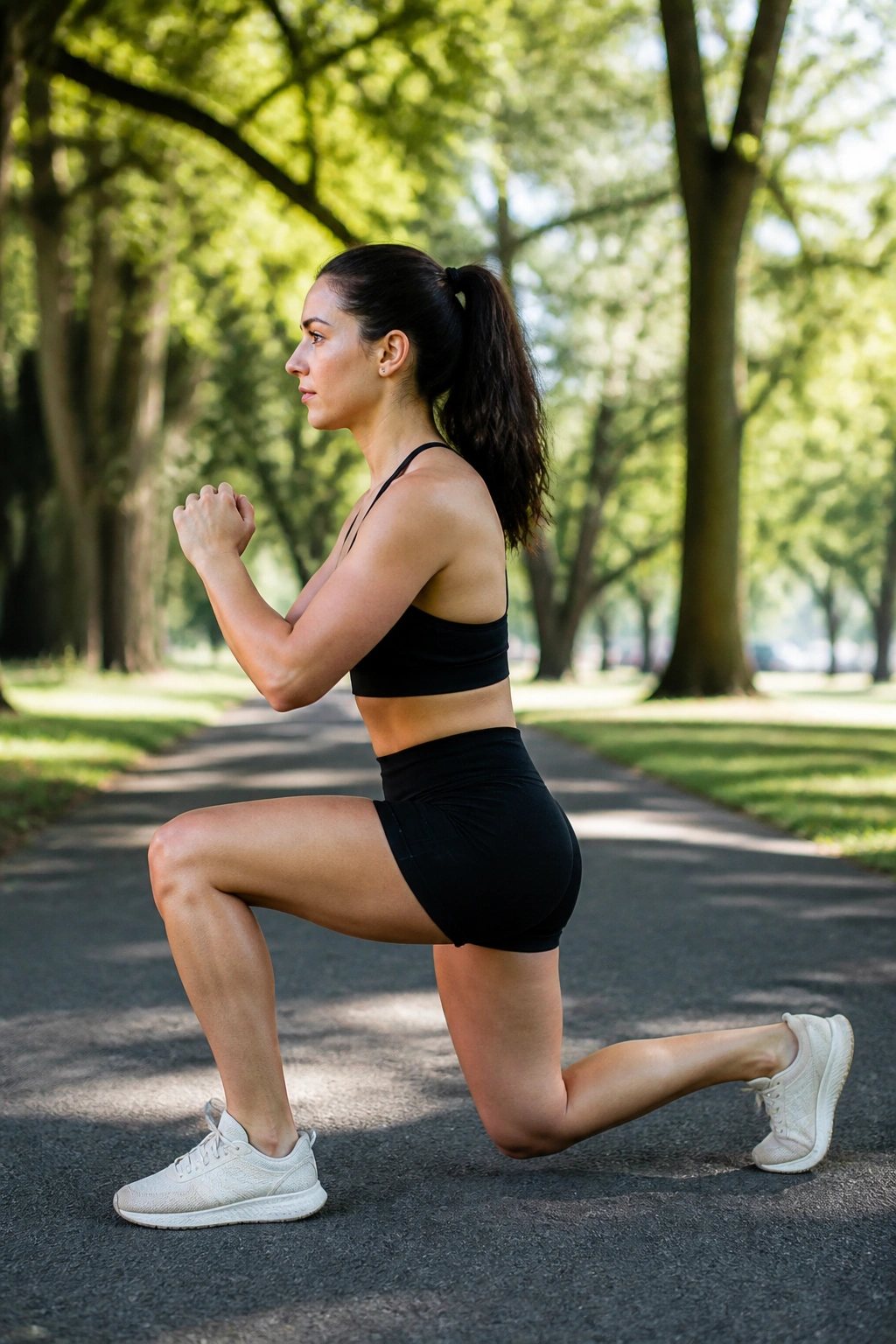
Lunges split the work between balance, control, and raw leg strength. They also expose every weak link in your hips and ankles, which is annoying and useful at the same time.
Reverse lunges are the friendlier place to start. Step back, drop the back knee toward the floor, then drive through the front heel to stand. Walking lunges add more momentum and a little more cardio because you keep moving forward. I like reverse lunges first, walking lunges later, when the legs are already awake.
Which one should you pick?
Reverse lunges are usually easier on the knees and simpler to keep tidy. Walking lunges feel more athletic and take more balance. Neither is “better”; they just hit the body a little differently.
Try 3 rounds of 8 to 12 reps per side. Keep your torso tall, do not let the front knee cave inward, and make the step long enough that your front heel stays grounded. Short steps turn lunges into knee-heavy chaos.
A small backpack with books adds resistance without costing a thing. Use it only if your form is already boringly solid.
6. Plank Work That Trains More Than Abs
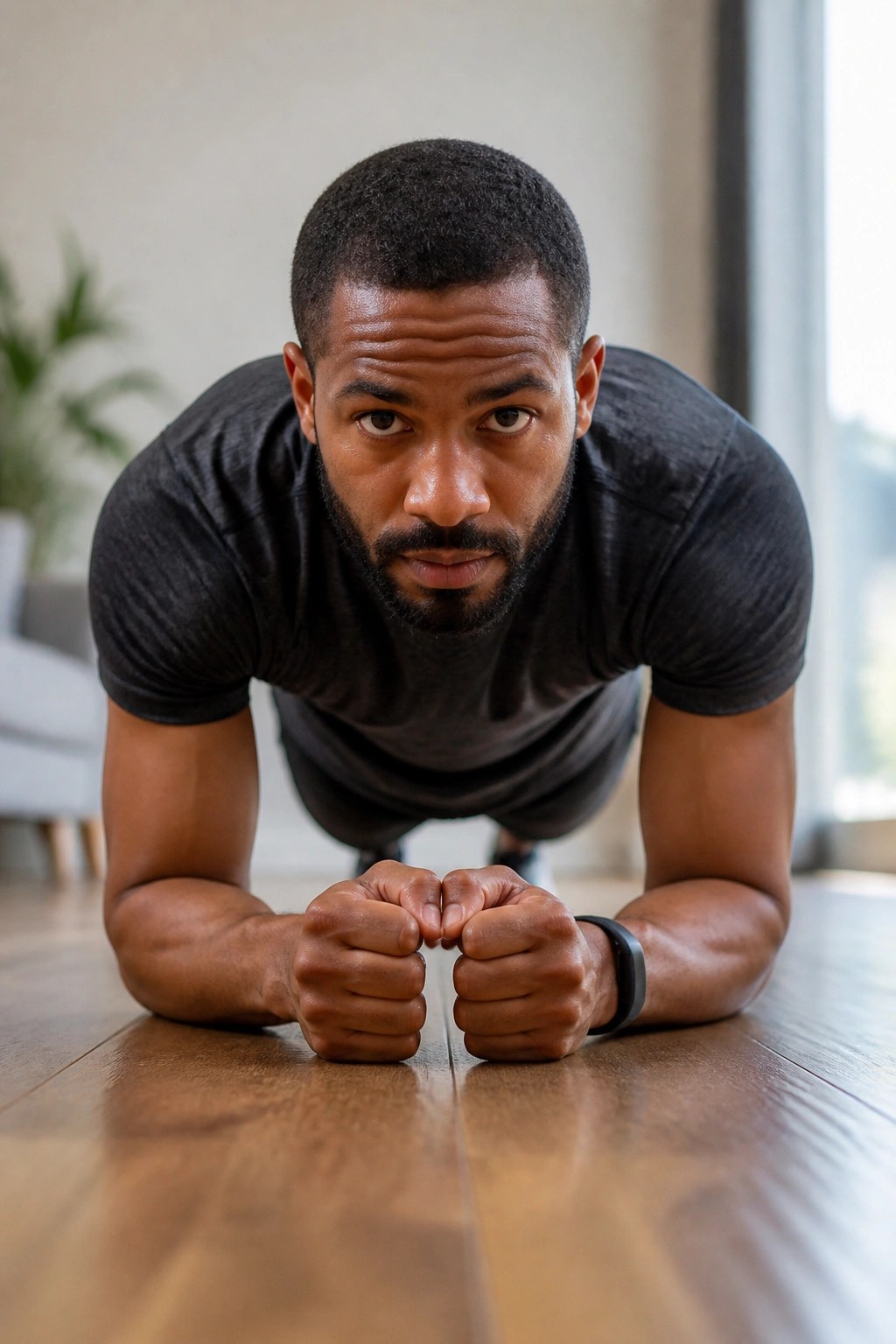
Planks are not glamorous. Good. Glamor is overrated when you want a stronger trunk, steadier shoulders, and a lower back that complains less after long walks or desk-heavy days.
The trick is not holding one plank forever. The trick is varying the angle and keeping the ribs down so your core actually has to work. Try 20 to 30 seconds of front plank, 20 seconds per side on a side plank, then 10 shoulder taps per side. Rest 30 seconds and repeat for 3 to 4 rounds.
A quick plank mix
- Front plank on forearms for anti-extension strength.
- Side plank for the obliques and hip stability.
- Shoulder taps for anti-rotation control.
- Mountain climber holds for a little extra heat without losing shape.
If your hips sag, shorten the hold. If your shoulders shake a bit, that is fine. If your lower back aches, stop and reset your position before pushing on.
7. Shadow Boxing Rounds
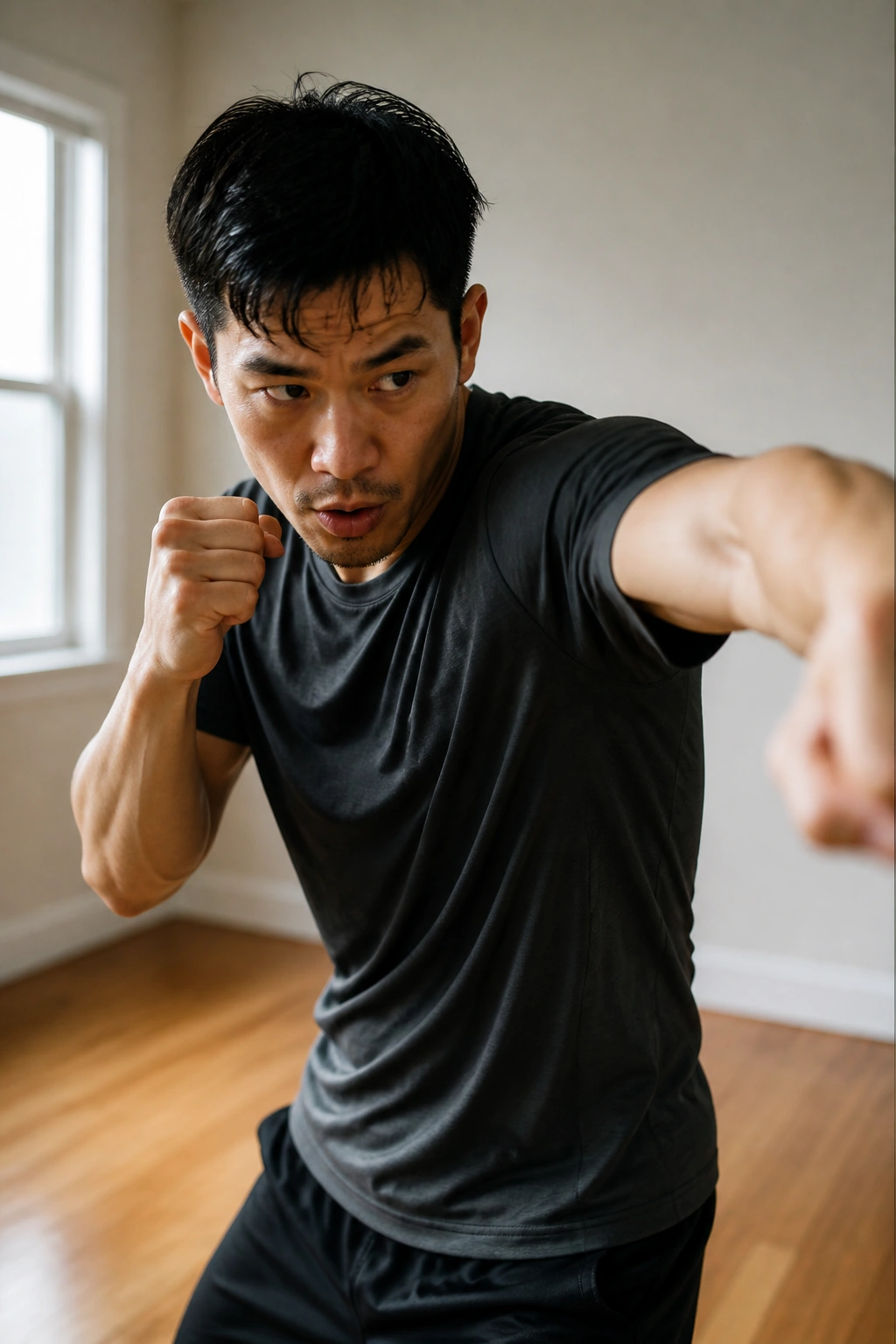
Shadowboxing is one of the best free workouts nobody brags about enough. It gives you cardio, coordination, footwork, rhythm, and a weirdly satisfying outlet for stress.
Use 2 to 4 minute rounds with 30 to 60 seconds of rest. Start with the basics: jab, cross, hook, guard up, step out, reset. Keep your fists light and your shoulders loose. The point is not to throw your hardest punch into empty air; the point is to stay moving with intent.
What to focus on
- Keep your chin tucked a little.
- Turn your hips with the punches.
- Move your feet after the combo, not before the hands are done.
- Stay on the balls of your feet, not flat and sticky.
A beginner can build a full 12-minute session out of nothing more than three rounds and a mirror. Seriously. That mirror catches sloppy posture fast, and shadowboxing gets better the moment you stop trying to look dramatic and start trying to look sharp.
8. Dance Cardio in Your Living Room
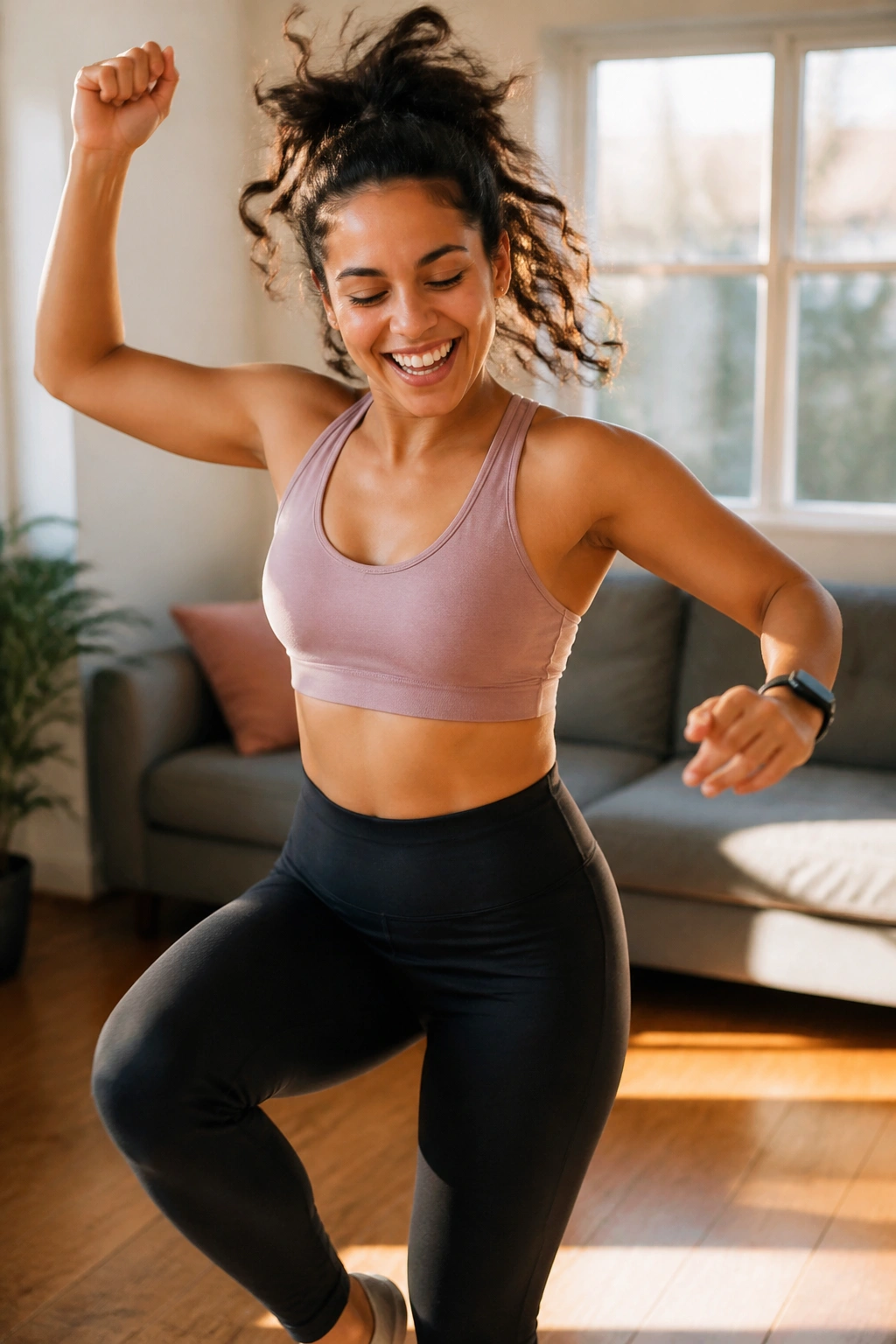
Need a workout that does not feel like punishment? Put on music and move for three or four songs in a row. That is the whole pitch, and it works.
Dance cardio can be as simple as marching in place, stepping side to side, adding knee lifts, or building little combinations that keep your heart rate up. One song can be low-impact. The next can be all hops and quick feet. The last can be a full send if your floor and neighbors allow it. A 15 to 25 minute block is enough to matter.
The key is continuity. Do not stop and scroll. Do not turn it into a halfhearted stretch break. Keep the body warm from song to song and use the beat to keep your pace honest.
It sounds light. It isn’t, once you keep moving.
Dance cardio is one of the few workouts that can improve your mood while your legs are also threatening mutiny. That combination is hard to beat.
9. Hill Sprints and Power Walks

A hill changes the whole conversation. Flat ground lets people fake effort for a while. A short incline strips away the acting.
Use a hill that takes 10 to 20 seconds to sprint up, then walk back down slowly and recover fully. Do 6 to 10 repeats if you are used to running, fewer if you are not. If sprinting feels too aggressive, turn it into a power walk with a strong arm swing and a hard push through the toes.
Hill work done right
- Keep the stride short and quick.
- Lean slightly from the ankles, not the waist.
- Stop the set if your form turns into a scramble.
- Save the all-out version for days when your legs are fresh.
The uphill part is the stress. The walk back down is the reset. That little pause is what lets you keep quality high instead of turning the session into a sloppy gas-fest.
You do not need a mountain. A regular slope works.
10. Yoga Flows That Open Tight Hips and Shoulders
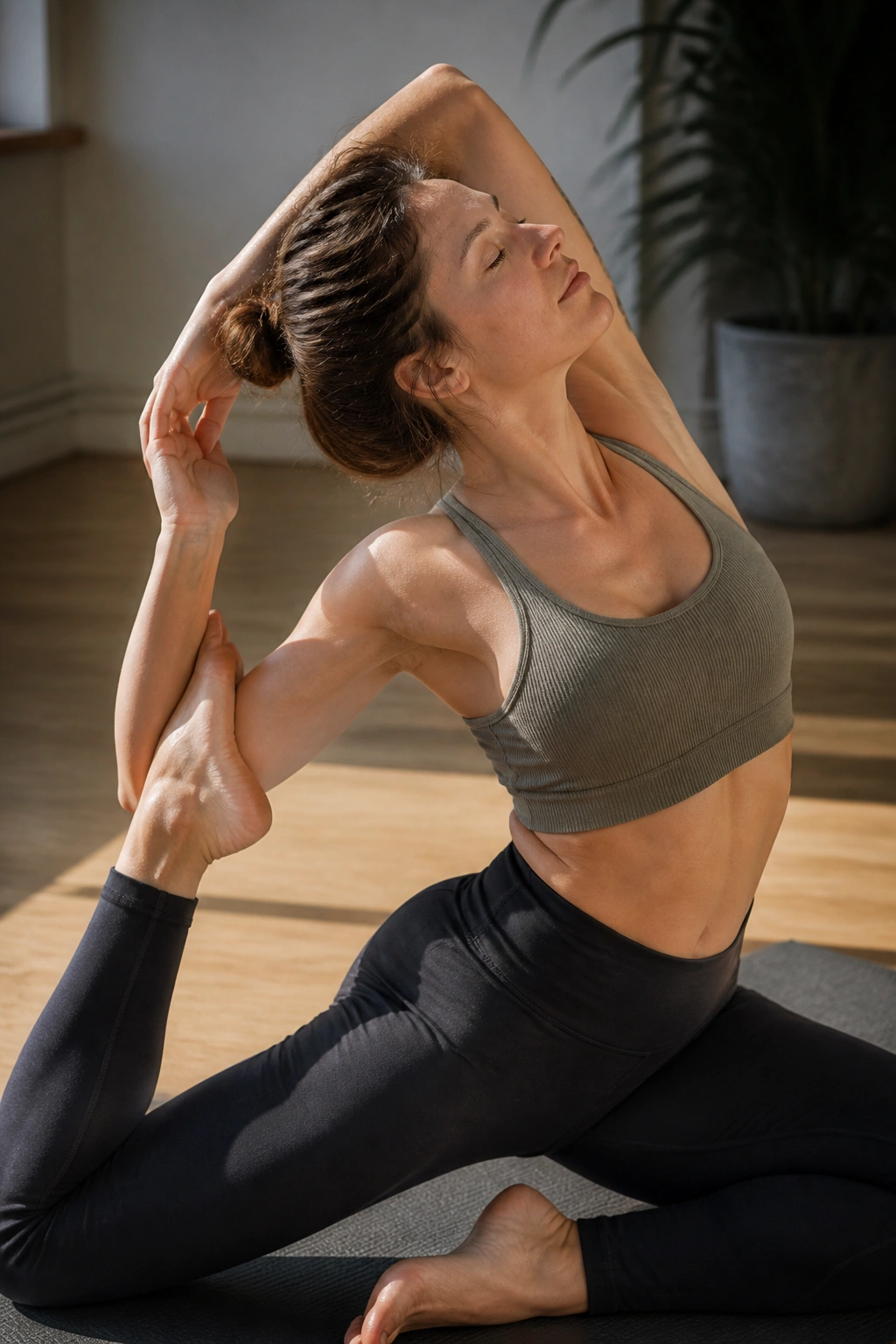
Yoga gets boxed into one lane by people who have never stuck with it long enough to feel the difference. A good flow can be sweaty, demanding, and brutally revealing in ways that look nothing like a spa brochure.
Pick a short sequence and repeat it for 10 to 20 minutes: cat-cow, down dog, low lunge, lunge twist, half split, pigeon or figure-four, then child’s pose. Breathe through the nose if you can, and move slowly enough that you are not flinging yourself from shape to shape. The stillness between poses matters almost as much as the pose itself.
A tight hip or shoulder does not always need force. Sometimes it needs time under mild tension and a little patience. That is not glamorous advice, but it beats yanking on your body until it resists harder.
Good yoga leaves you feeling open, not floppy. There is a difference.
11. Mobility Reset for Stiff Days
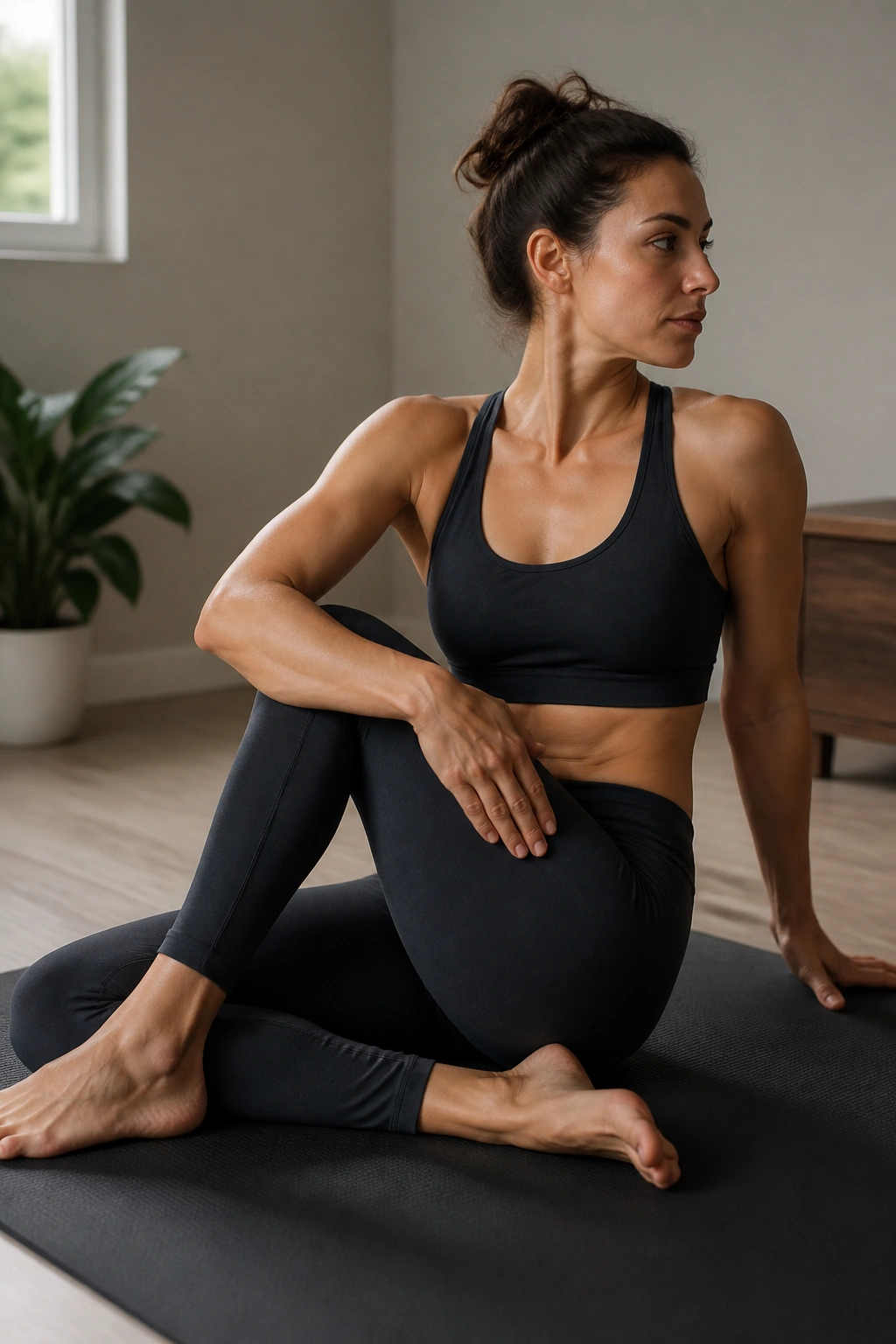
Some days are not for crushing yourself. They are for getting your joints to remember where they live.
A mobility reset is a short, low-pressure session built around circles, rotations, and controlled range of motion. Try 8 cat-cows, 10 hip circles per side, 6 thoracic rotations per side, 10 ankle rocks, and 8 shoulder CARs—controlled articular rotations, which is a fancy way of saying slow, deliberate circles through a joint’s full path.
A sequence that works
- Start at the spine with cat-cow.
- Move to hips and ankles so your lower body wakes up.
- Finish with shoulders and upper back.
- Keep the pace slow enough that you can notice the stiff spots.
This is not a sweat workout. That’s fine. A mobility day can make the next hard session feel cleaner, and it often does more for your body than another random set of tired burpees. If you sit a lot, this kind of work pays for itself.
12. Tabata Bodyweight Circuits
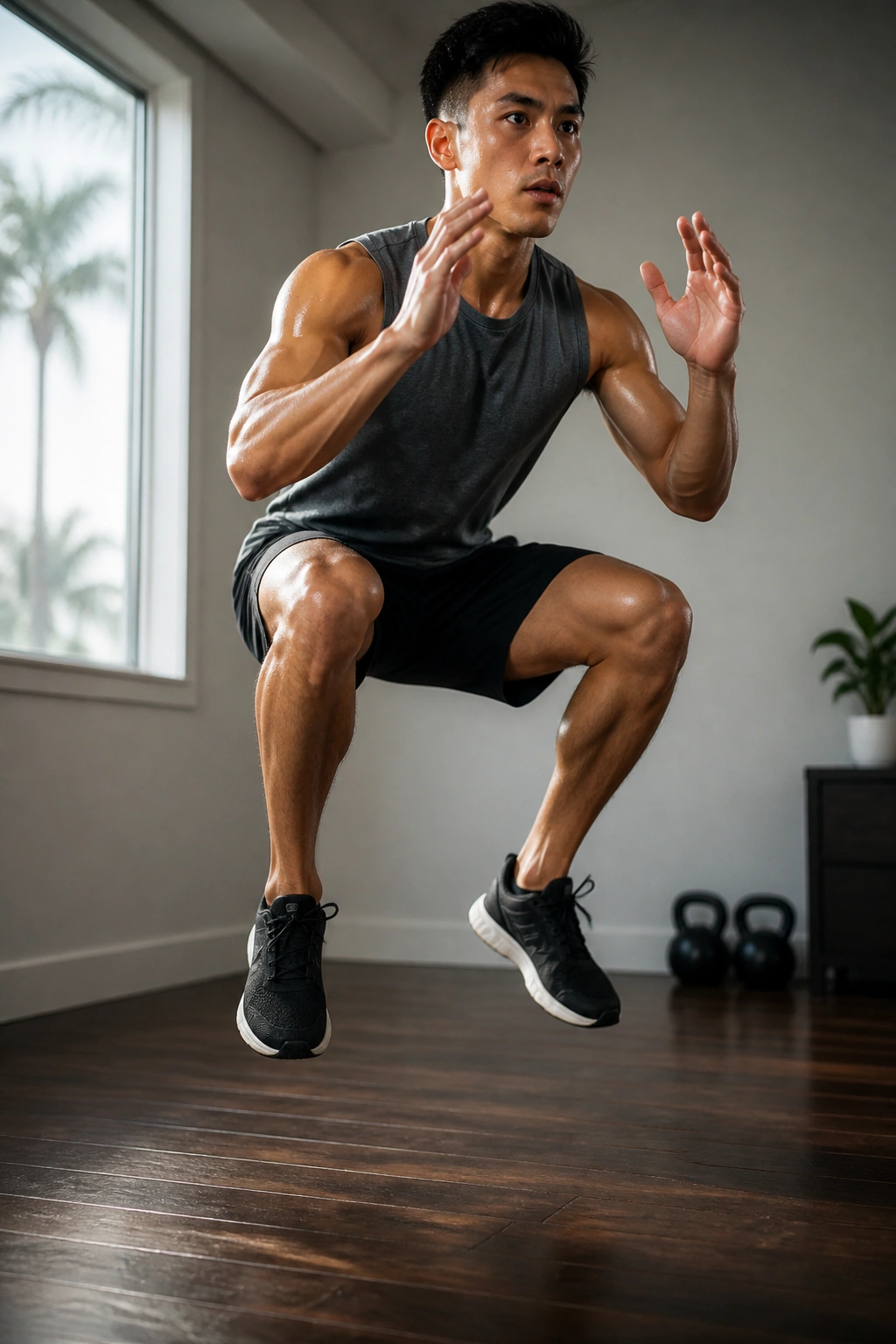
Tabata is tiny, mean, and efficient. Four minutes can feel longer than you expect, which is part of the appeal.
The classic format is 20 seconds hard, 10 seconds rest, repeated 8 times. Choose one movement and keep it honest—jump squats, mountain climbers, fast high knees, or low-impact step jacks. You can also pair two moves, then repeat them in alternating rounds. Two four-minute blocks is enough for a serious no-gym session.
Good pairings
- Jump squats + mountain climbers.
- High knees + plank shoulder taps.
- Step jacks + squat-to-reach.
- Burpee walkouts + fast feet.
The mistake people make is going out at full chaos pace on round one. Don’t. If you blow up halfway through, the workout falls apart. Use a speed you can hold until the last interval, then empty the tank at the end.
Tabata works because the rest is short enough to stay uncomfortable, but long enough to repeat quality efforts. That balance is hard to fake.
13. Glute Bridges and Hamstring Work
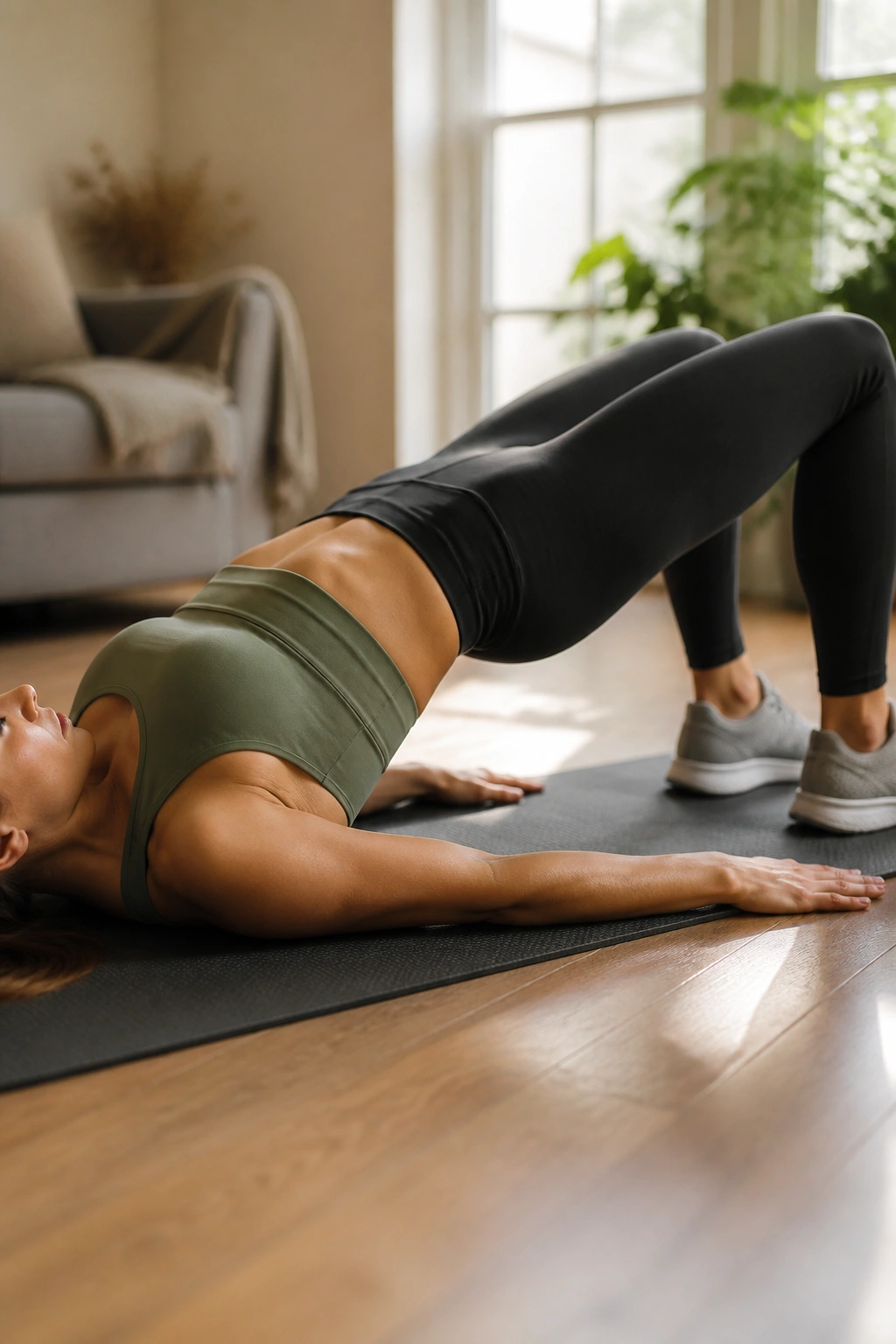
A floor workout can look gentle and still cook the back side of your body. Glute bridges are proof.
Lie on your back, knees bent, feet flat, and drive your hips up until your body makes a straight line from shoulders to knees. Hold for one second, squeeze the glutes, then lower under control. Do 3 sets of 15 to 20 reps. If that gets easy, switch to single-leg bridges or add hamstring walkouts, where you bridge up and slowly walk your heels away and back.
Your hamstrings will know what happened. So will your glutes, if you keep the lower back from doing all the work.
The clean version
- Press through the heels, not the toes.
- Keep the ribs down so you do not over-arch.
- Pause at the top for a hard squeeze.
- Move slowly enough to feel each rep, not race through it.
This is a strong option for days when jumping feels annoying but you still want legs and core to work together. It’s also a nice antidote to sitting.
14. Bear Crawls and Crab Walks
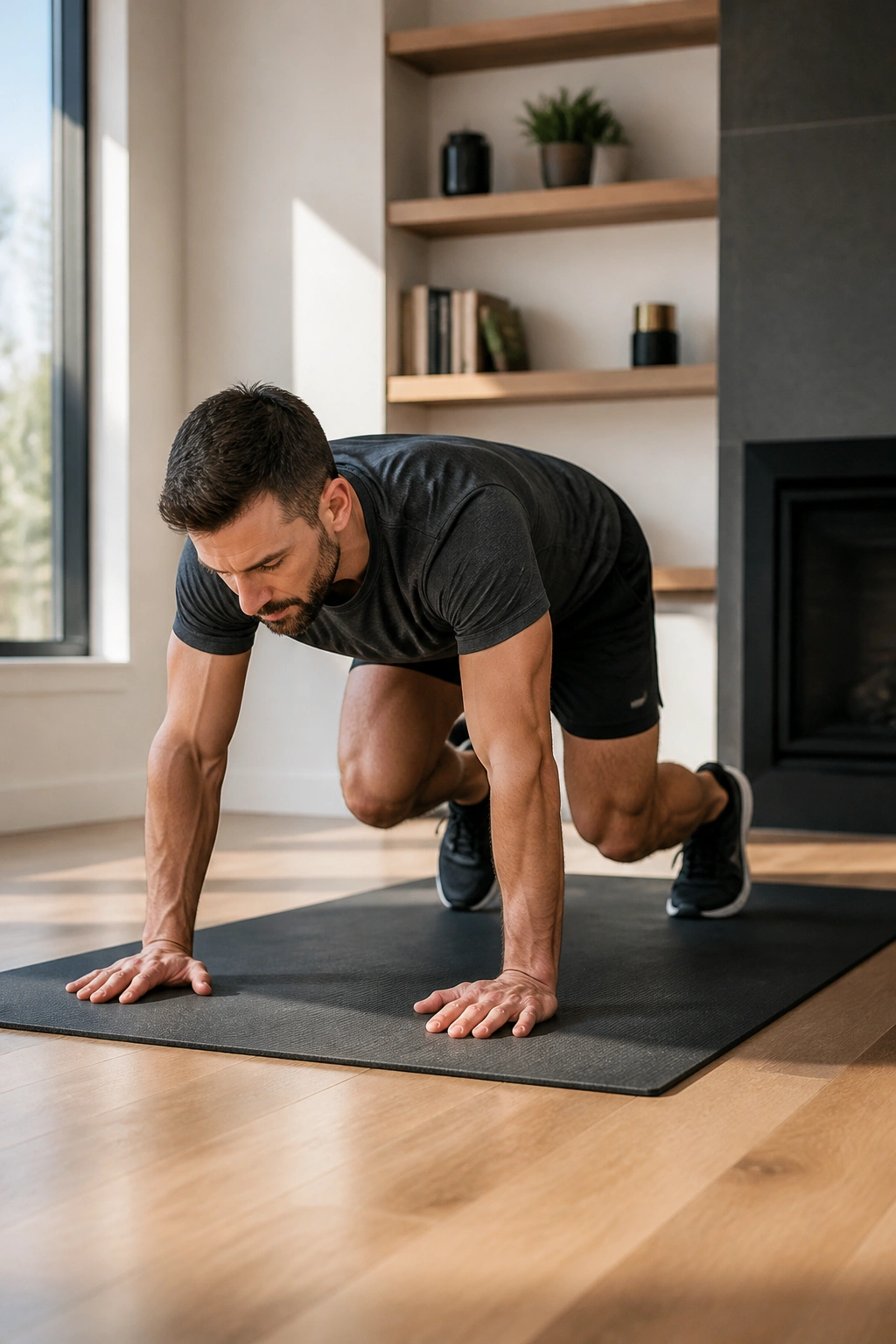
Bear crawls and crab walks are awkward in exactly the way useful drills often are. They make you think about shoulders, hips, core, and coordination all at once.
For bear crawls, hover on hands and feet with your knees just off the floor, then crawl forward for 10 to 20 steps and back again. For crab walks, sit in a reverse tabletop position and walk sideways or forward for 15 to 30 seconds. Keep the steps small. Big, sloppy steps wreck the shape.
Why these feel so strange
They ask for loaded shoulder stability while your core tries to stop your torso from wobbling all over the place. That combination is sneaky-hard, and it lights up muscles that regular standing work tends to ignore.
Try 4 rounds with 20 to 30 seconds of work and 30 seconds of rest. If your wrists get cranky, shorten the time or use a softer surface. If your hips sag, shorten the range and clean up the position first.
Weird workouts are underrated. This is one of them.
15. Step-Ups on a Sturdy Curb or Stair
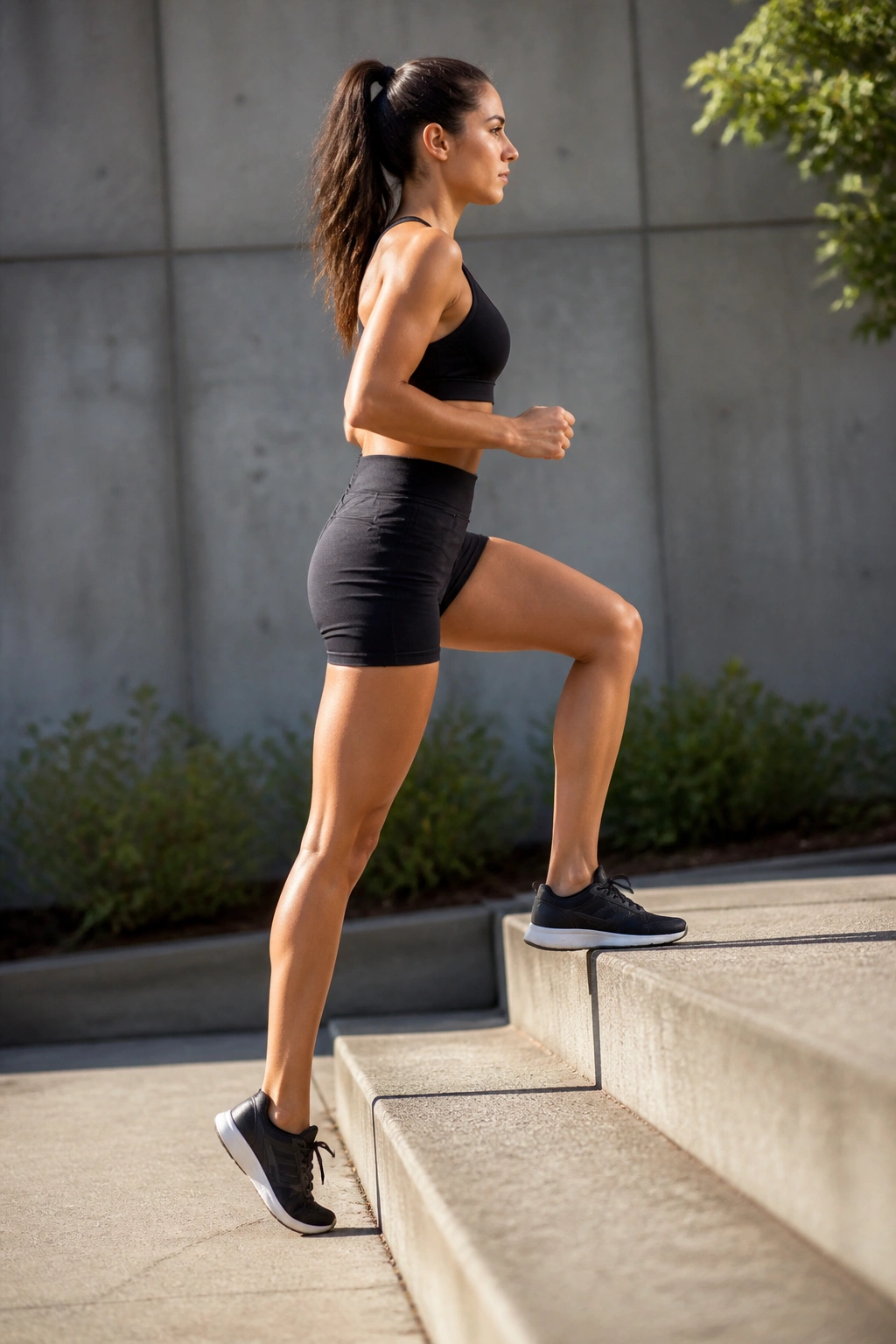
Step-ups are one of the best no-gym leg exercises because they feel practical. You’re lifting your body onto something, which sounds ordinary until your glutes start burning.
Use a sturdy stair, curb, or low bench that does not wobble. Step up with one leg, drive through the whole foot, then bring the other leg up under control. Step back down and repeat for 8 to 12 reps per side. Three rounds is plenty for most people. Add a knee drive at the top if you want more balance and a touch more hip work.
How to scale it
- Use a lower surface if your knees dislike deep angles.
- Hold a backpack at your sides for extra load.
- Slow the lowering phase to 3 seconds for more challenge.
- Keep your chest tall and avoid pushing off the back leg too much.
A step-up looks simple. The clean version is not easy. That is a good thing.
16. Running Intervals for People Who Hate Long Runs

Long runs are not everyone’s favorite thing. Fine. You do not need one to get the benefits of running.
Use a format like 1 minute run / 2 minutes walk for 8 to 10 rounds, or 30 seconds hard / 90 seconds easy if you want something sharper. Keep the first few rounds controlled, because the mistake most people make is turning the opening minute into a dramatic sprint. Pace matters. So does the recovery.
Running intervals work well on a path, a track, or a quiet street. The walk breaks let your form settle so the next run starts clean instead of desperate. That’s what makes the workout repeatable instead of one miserable hero lap.
A good interval session should leave you tired, not wrecked. There’s a difference, and it matters if you want to do it again next week.
17. Pilates-Style Core Work
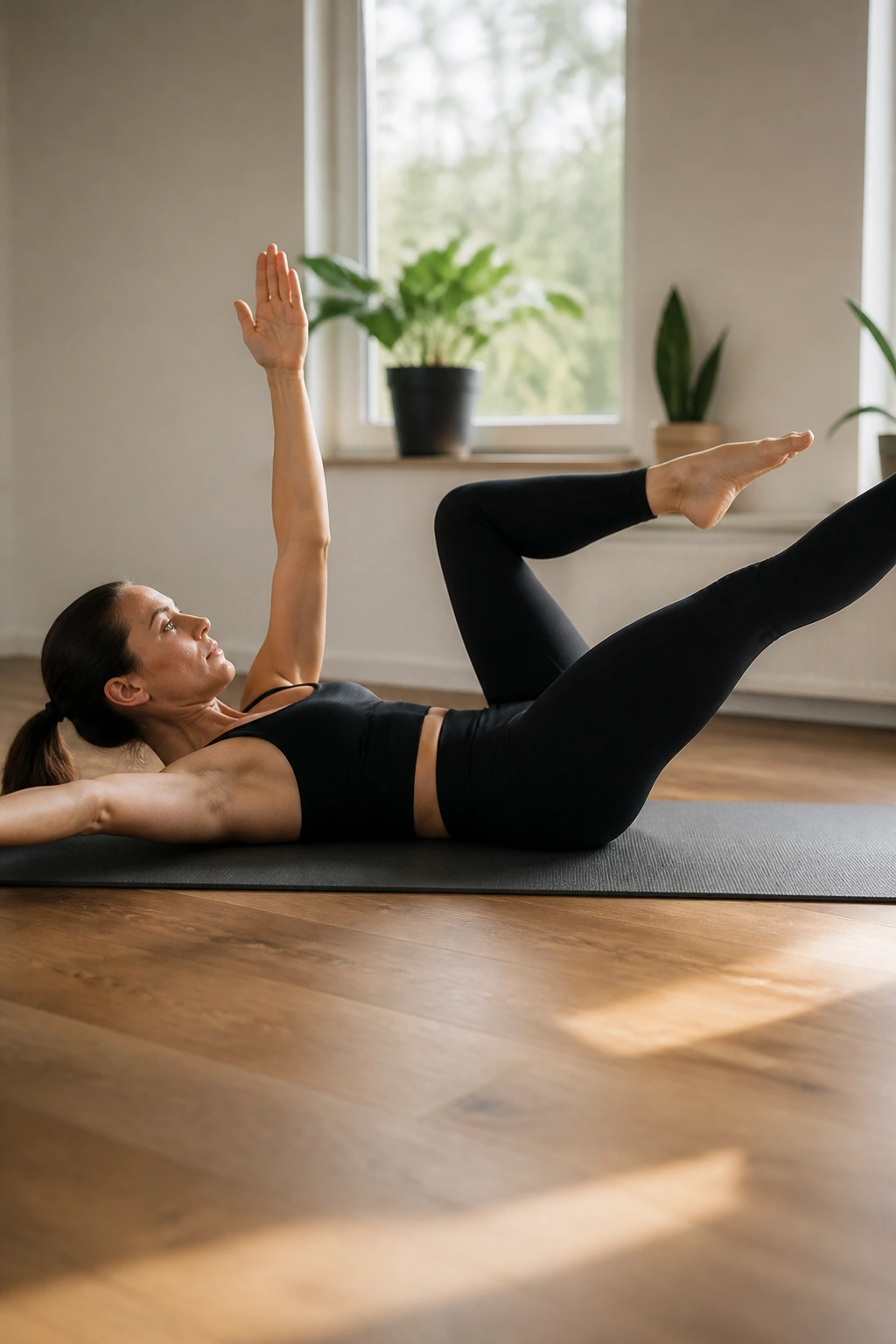
Crunches are not the whole story. Not even close.
Pilates-style core work focuses on control, alignment, and slow tension. Think dead bugs, toe taps, single-leg stretches, side-lying leg lifts, and hollow holds. A session might look like 3 rounds of 10 dead bugs per side, 12 toe taps per side, 20 seconds hollow hold, and 15 side-lying lifts per side. Move with care, not speed.
What makes it different
- The lower back stays quiet.
- The hips and ribs stay stacked.
- Small motions become hard fast.
- Breathing stays part of the work.
This style is excellent if you want a stronger midsection without hammering your neck or doing endless sit-ups. It also travels well. All you need is floor space and a little patience, which is a pretty good deal.
18. Wall Sits and Isometric Holds
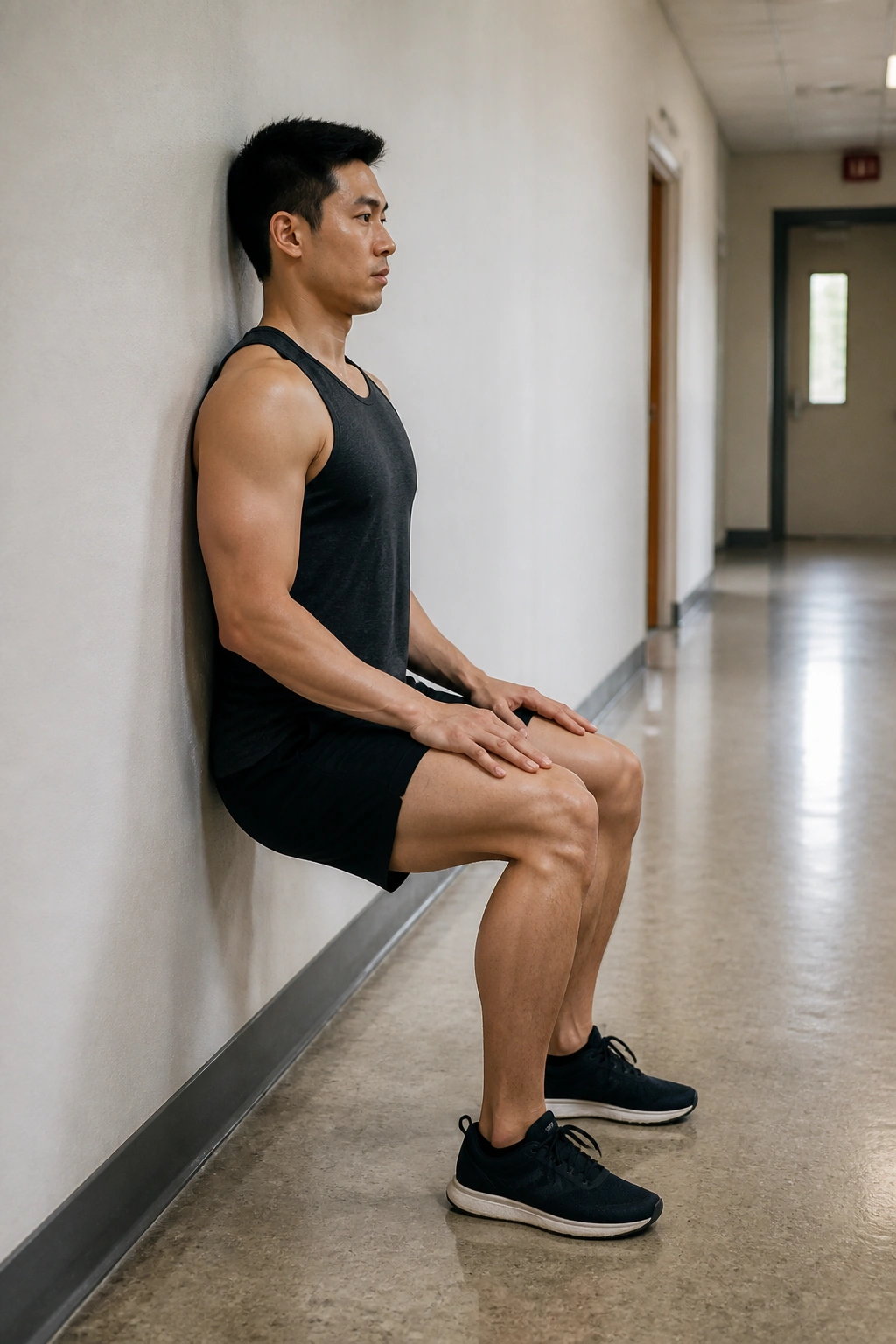
Stillness can be savage.
A wall sit is as plain as it gets: back against a wall, knees bent around 90 degrees, thighs parallel to the floor if you can manage it. Hold for 30 to 60 seconds, rest, and repeat for 3 to 5 rounds. Mix in other isometrics too—split squat holds, push-up bottom holds, or plank holds with one foot lifted for a few seconds at a time.
Why hold instead of move?
Isometric work teaches your muscles to stay engaged without the rebound of a full rep. That makes weak points obvious. It also builds a kind of mental grit that dynamic work sometimes skips over.
A wall sit should feel like a slow burn in the quads, not a stabbing pain in the knees. If the knee angle is too sharp, stand up a bit higher. If your feet slide forward, reset your stance and plant them better.
Short holds. Honest shape. Plenty of burn.
19. Park Bench Circuits
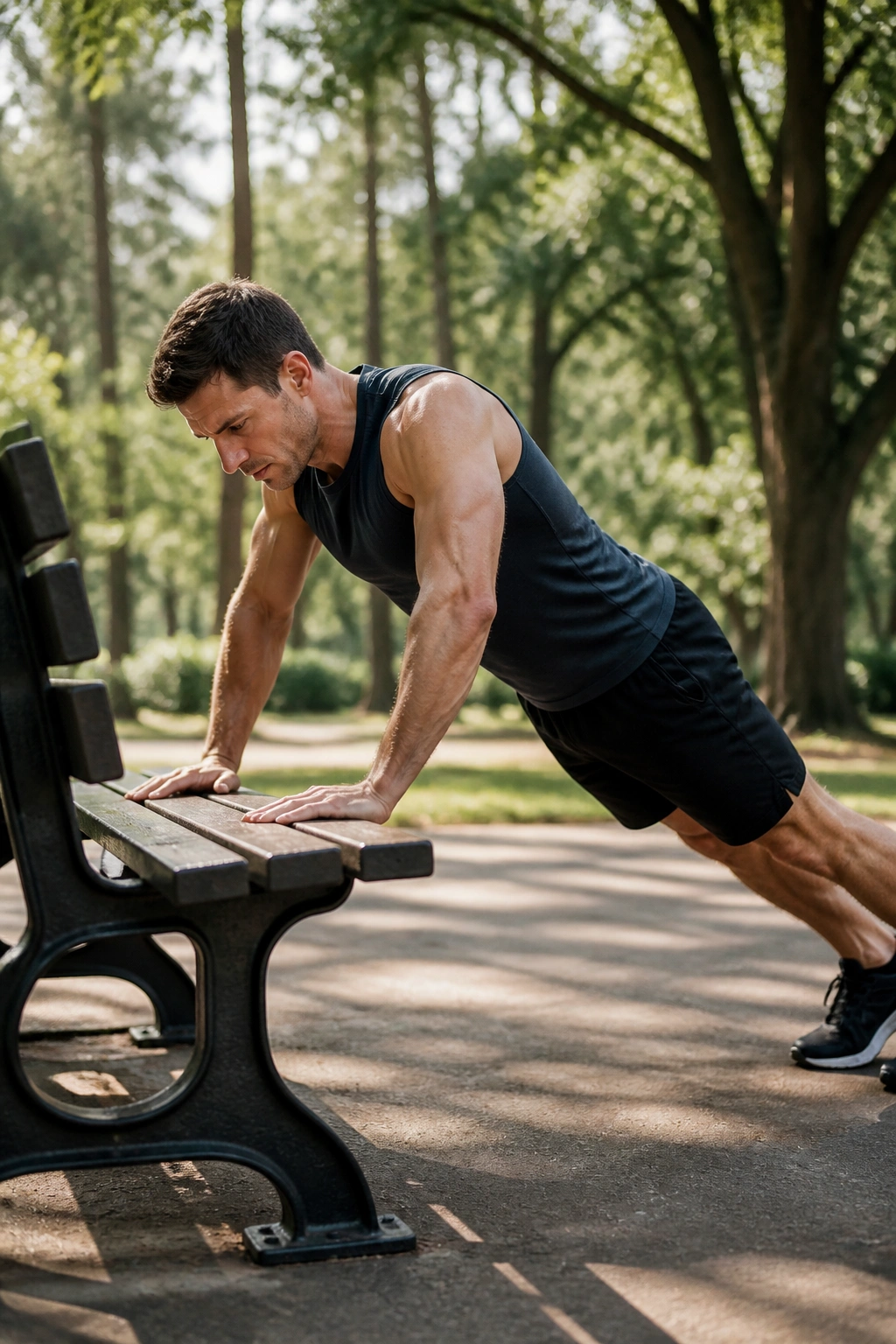
A park bench can do more than hold a coffee cup and a backpack. It can anchor a surprisingly solid full-body circuit.
Use a bench for incline push-ups, step-ups, split squats, and plank shoulder taps. Keep each move to 30 to 45 seconds, rest 15 to 30 seconds, then rotate through the circuit for 3 to 5 rounds. If the bench is high, start with step-ups and incline push-ups first. If it’s low and sturdy, the angles feel kinder.
Bench moves worth keeping
- Incline push-ups for easier pressing.
- Step-ups for legs and balance.
- Split squats for single-leg strength.
- Plank shoulder taps for core and shoulder control.
Skip bench dips if your shoulders complain. They are not worth forcing. People keep them around because they look classic, not because they suit everyone’s joints.
A park workout has a certain charm. It feels like you borrowed the city for half an hour.
20. A No-Equipment Full-Body AMRAP
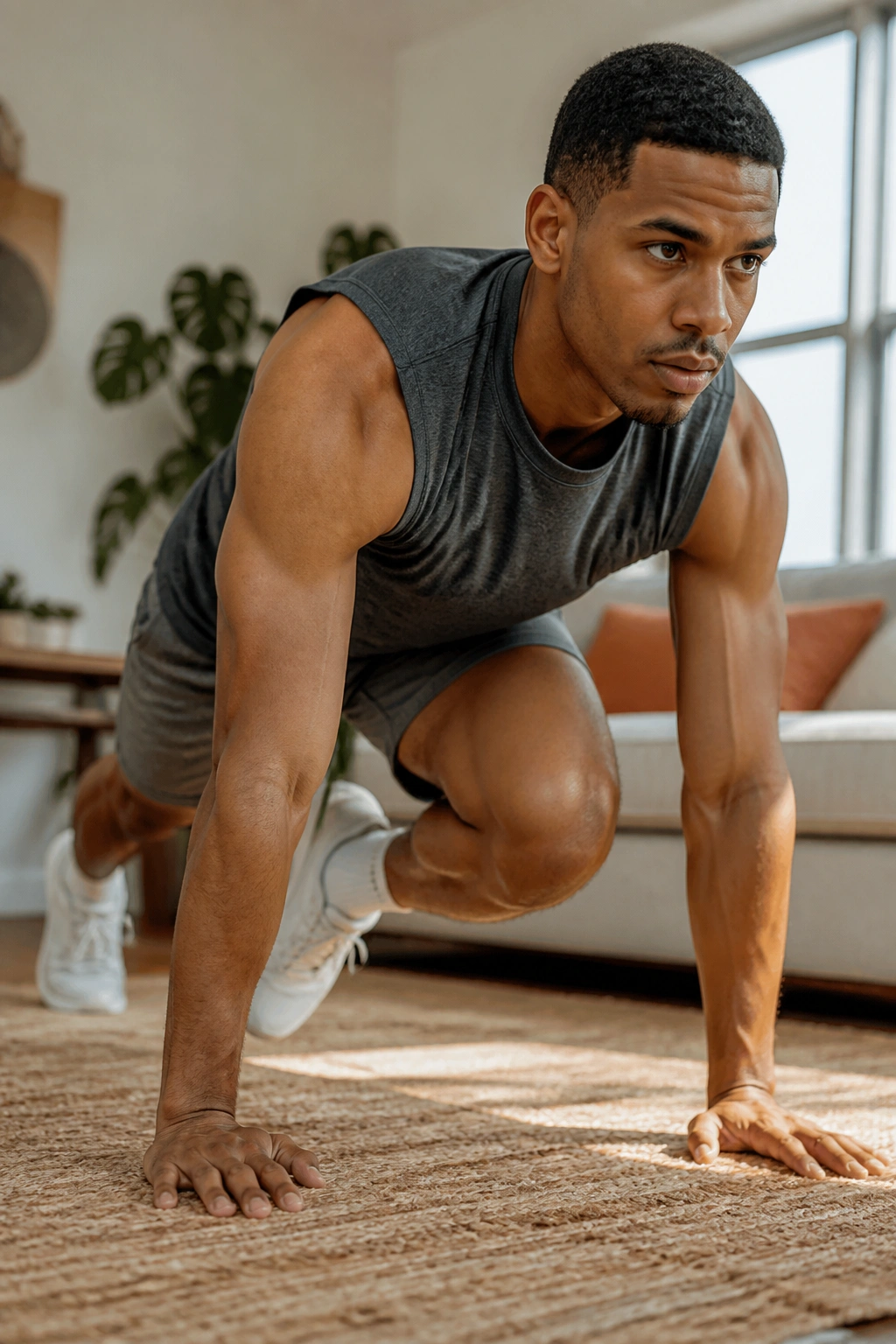
If you want one workout that covers a lot of ground, this is the one I’d hand over first.
AMRAP means as many rounds as possible in a set window. Pick 15 to 20 minutes and cycle through a simple mix: 10 squats, 8 push-ups, 10 reverse lunges per side, 20 mountain climbers, and 20 seconds of plank. Move steadily. Do not sprint the first round and spend the next four bargaining with your lungs.
Why this format works
- It blends strength and cardio without equipment.
- It keeps the pace honest because the clock is running.
- It gives you an easy place to scale up or down.
- It works in a living room, hotel room, driveway, or park.
If you want it easier, cut the reps in half. If you want it harder, add a backpack, lengthen the plank, or shorten the rest between rounds. The whole point is flexibility. One timer, a few basic moves, and enough effort to make the workout feel real.
Final Thoughts

A good no-gym workout is not a consolation prize. It’s training that respects time, space, and reality.
The best part is how adaptable these sessions are. A walk can be gentle one day and sharp the next. Squats can be slow and controlled or turned into a ladder. A stair session, a shadowboxing round, or a 20-minute AMRAP can all fit into the same week without making your life messy.
Start with the kind of workout you’ll actually repeat. That matters more than chasing the hardest option on the page.
