



If your bar speed falls apart by the third set, that is not a strength session. It’s a fatigue session wearing a barbell costume.
The best training day workouts for steady strength do one thing well: they let you practice hard lifts often enough to get stronger without turning every session into a rescue mission. You leave the gym worked, not wrecked. That difference matters more than most people admit.
The trick is boring in the best way. Repeatable sets. Honest load. Clean positions. Enough rest to keep the reps crisp, and just enough accessory work to shore up the weak links. A squat day, a press day, a pull day, even a carry day can all fit that idea if the details are right.
I like this style of training because it respects the days between sessions. Heavy is fine. Grinding is not. The workouts below are built to give you steady strength you can keep showing up for, which is where most people either get stronger or stall out for months. Start with the lift that gives you the clearest signal, then build from there.
1. The Squat-First Training Day for Steady Strength
If you only pick one lower-body lift to anchor a week, make it the squat. It gives you a clear strength signal, and it punishes sloppy bracing fast enough that you cannot fake a good session.
Why It Works
A squat-first day does more than hit the legs. It teaches your torso to stay tight under load, which is a huge part of steady strength that gets ignored when people chase flashy numbers. When the bar sits across your back, you get honest feedback from your ankles, hips, core, and upper back all at once.
I prefer a top set followed by controlled back-off sets. Something like 1 set of 5 at about RPE 7, then 3 sets of 5 at roughly 90% of that top set keeps the work challenging without dragging you into a grind. RPE 7 means you should have about two reps left if you had to keep going.
Sample Session
- Back squat: 1 x 5 top set, then 3 x 5 back-off sets
- Romanian deadlift: 3 x 6
- Walking lunge: 2 x 8 per leg
- Front plank: 3 x 30 to 45 seconds
A session like this usually lands in the sweet spot for a lifter who wants strength without needing a nap on the floor afterward. The accessory work matters, too, but keep it clean and plain. No circus. No junk volume.
Stop the set when your last rep starts looking like a good morning. That’s the line.
2. Bench Press and Row Pairing for a Heavy Upper-Body Day
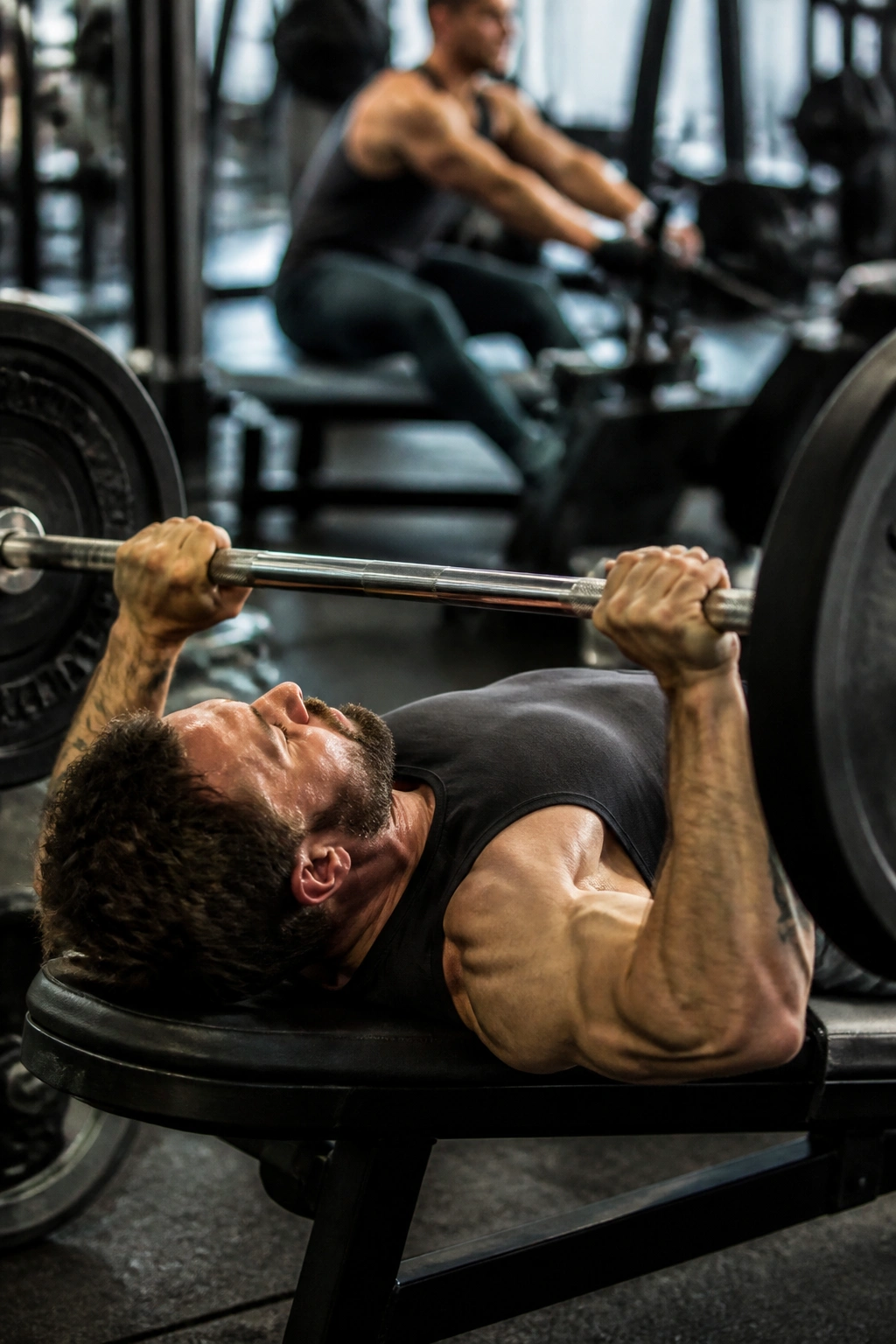
A bench press day gets better when you stop treating the back as an afterthought. Pressing and rowing on the same day keeps your shoulders happier, your bar path cleaner, and your upper back a lot less lazy.
The practical reason is simple. A strong bench needs a stable shelf, and that shelf is built with rows, rear delts, and upper-back tension. If all you do is press, the shoulders tend to drift forward and the chest takes over in ways that feel fine for a while, then start feeling cranky. Rows between pressing sets help keep the scapulae doing their job.
I like a setup where the row is either paired with the bench or placed right after it. A 4-by-4 bench press with a 4-by-6 chest-supported row works well, especially if you keep the rest periods around 2 to 3 minutes. You get enough recovery to stay strong, but not so much that the session turns into a lounge break.
Flat bench hates weak upper backs. That’s the whole story, really.
If you want a small tweak that pays off, use a slight pause on the chest for one second on the first rep of each set. It forces you to own the bottom position instead of bouncing your way through it. Then row with a hard squeeze at the top, elbows tucked a little, chest supported if your lower back gets tired fast. Simple work. It holds up.
3. Deadlift Back-Offs for Controlled Pulling

Why do so many deadlift days turn into a mess? Because people treat the lift like a test instead of a skill they need to repeat.
The deadlift rewards patience more than drama. You set the back, wedge the hips, break the floor, and finish without yanking the bar like you’re trying to rip a nail out of wood. That rhythm matters. For steady strength, the deadlift day works best when the heavy work stays tight and the extra volume stays modest.
How to Run It
A clean template looks like this:
- Deadlift: 1 top set of 3 to 5 reps at RPE 7 or 8
- Back-off deadlift: 2 to 4 sets of 3 reps at 85% to 90% of the top set
- Hip hinge accessory: 2 to 3 sets of 6 to 8 reps
- Core brace work: 2 to 3 rounds
If your lower back tends to get tired before your legs do, swap the barbell deadlift for a trap bar pull or a block pull for a block of training. That isn’t cheating. It’s a smart way to keep the hinge pattern in the program while letting recovery catch up.
Keep the reps clean. Once the bar starts drifting forward or the floor break turns into a shrug, the session is done. One more ugly set never fixes that.
4. Front Squats and Split Squats for Balanced Legs

The first time you put a bar in the front rack after a rough week of back squats, your torso learns a new lesson. Fast.
Front squats change the whole conversation because the bar sits farther forward, which forces a more upright position and usually makes the quads do more of the work. Split squats then catch the side-to-side stuff that a bilateral lift can hide. One leg is always telling the truth. This combo finds that truth in a hurry.
I like front squats for lifters who need stronger legs without more low-back fatigue. A 4-by-4 front squat followed by 3 sets of 8 split squats per leg builds work capacity without turning the session into a max-effort grind. If the rack position feels rough, use straps around the bar or switch to a high-handle trap bar squat pattern for a phase.
- Front squat: 4 x 4
- Bulgarian split squat: 3 x 8 each leg
- Leg curl or glute bridge: 2 x 10 to 12
- Standing calf raise: 2 x 12 to 15
The upright torso is the point. If you fold forward every rep, the load is too high or the rack position needs work.
This day is a sneaky good one for athletes, desk-bound lifters, and anyone whose knees feel better when the quads are doing more of the job.
5. Overhead Press and Pull-Up Volume Without the Grind

Shoulders like clean work.
A standing overhead press day is one of the best places to build steady upper-body strength because it exposes weak links fast. If your ribs flare, your lower back arches, or the bar drifts forward, the set falls apart almost immediately. That’s annoying, but useful. You get feedback before the load gets silly.
I prefer a strict press paired with a vertical pull. 4 sets of 4 or 5 on the press and 4 sets of 5 or 6 pull-ups gives enough work to grow strength without trashing your joints. If pull-ups are still rough, use lat pulldowns with a pause at the bottom and keep the chest tall. That still counts. It counts a lot.
The best version of this day does not chase shoulder burn. It chases position. The press should finish with the biceps by your ears and the glutes tight, not with a backbend that looks like a broken fishing rod. The pull should finish with the ribs down and the elbows moving cleanly, not with a half-rep and a shrug.
Do not turn this into a delt circus. One good press session beats three sloppy ones.
If you want a little more work, add face pulls or band pull-aparts for 2 sets of 15 to 20. That gives the shoulders a little balance without stealing energy from the main lifts. Simple session. Honest payoff.
6. Trap Bar Hinge Day for Lower-Back-Friendly Power

Unlike a straight-bar deadlift day, a trap bar session keeps the load closer to your center of mass. That small change makes a big difference when you want to pull hard without lighting up the lower back.
The trap bar is useful for lifters who want strength that carries over to real-life movement, field work, or just a body that feels less beat up at the end of the week. You still get a heavy hinge, but the mechanics are a little friendlier and the bar path is easier to manage. A lot of people pull more smoothly with it, too.
I like 4 or 5 sets of 3 reps here, with enough rest to keep each set sharp. Pair that with a simple single-leg move like a rear-foot elevated split squat or a step-up, then finish with carries or hamstring work. If you train in a gym with trap bar handles at two heights, use the high handles when your hips or back need a break. That’s the whole reason the tool exists.
This day is especially good for taller lifters and for anyone whose hinge pattern looks cleaner when the load sits a little higher. It is not a consolation prize. It’s a smart variation.
7. Tempo Lower-Body Day for Steady Strength

Three seconds on the way down changes the whole room.
Tempo work forces you to own the lift instead of bouncing through it. A slow eccentric on a squat or deadlift variation gives you more time under tension, better position control, and a much sharper sense of where your weak spots live. If you rush the rep, the whole point disappears.
Sample Tempo Scheme
- Back squat: 4 x 4 with a 3-second lower, 1-second pause, fast drive up
- Romanian deadlift: 3 x 6 with a 3-second lower
- Goblet squat: 2 x 10 with a 2-second pause at the bottom
- Side plank: 2 x 30 to 40 seconds per side
Tempo days work best with lighter loads than your regular strength day. That does not mean easy. It means controlled. If the bar bends more than it should or the descent gets sloppy, the weight is too high.
Use the rest periods to breathe and reset, not to turn the session into cardio. 90 to 150 seconds between sets is usually enough. Any less and the technique starts fraying. Any more and you may as well be doing a normal heavy day.
The real win here is cleaner positions on your main days afterward. You feel the bottom of the squat differently after a block of tempo work, and that usually shows up in the next heavy session.
8. Upper-Body Density Day With Short Rest

A shorter rest day can still build strength if the load stays honest.
Density work is a good fit for people who need a hard session without the full system shock of max-effort lifting. You set a block of time, keep the work dense, and move with purpose. The trick is to keep the rep quality high. Once your form falls apart, the clock stops helping.
I like this format for dumbbell presses, rows, and weighted push-ups. A 12-minute alternating block with 6 reps of incline dumbbell press and 6 reps of one-arm row on each round is enough to make the muscles pay attention. Use a weight that lets the last rep stay controlled, not twitchy. If the pace drops so far that your shoulders start shrugging, you’ve gone too heavy.
Short rest. Honest reps.
You can also use this format with machines if you’re training in a crowded gym or your joints are annoyed. A chest press machine and a seated row machine can still deliver a solid session if the load is hard enough and the form stays clean. I’m not precious about the tool. I care about the output.
This kind of workout is useful when you want to leave the gym energized instead of flattened. It’s still work. It just doesn’t have to feel like punishment.
9. Pause Rep Technique Day
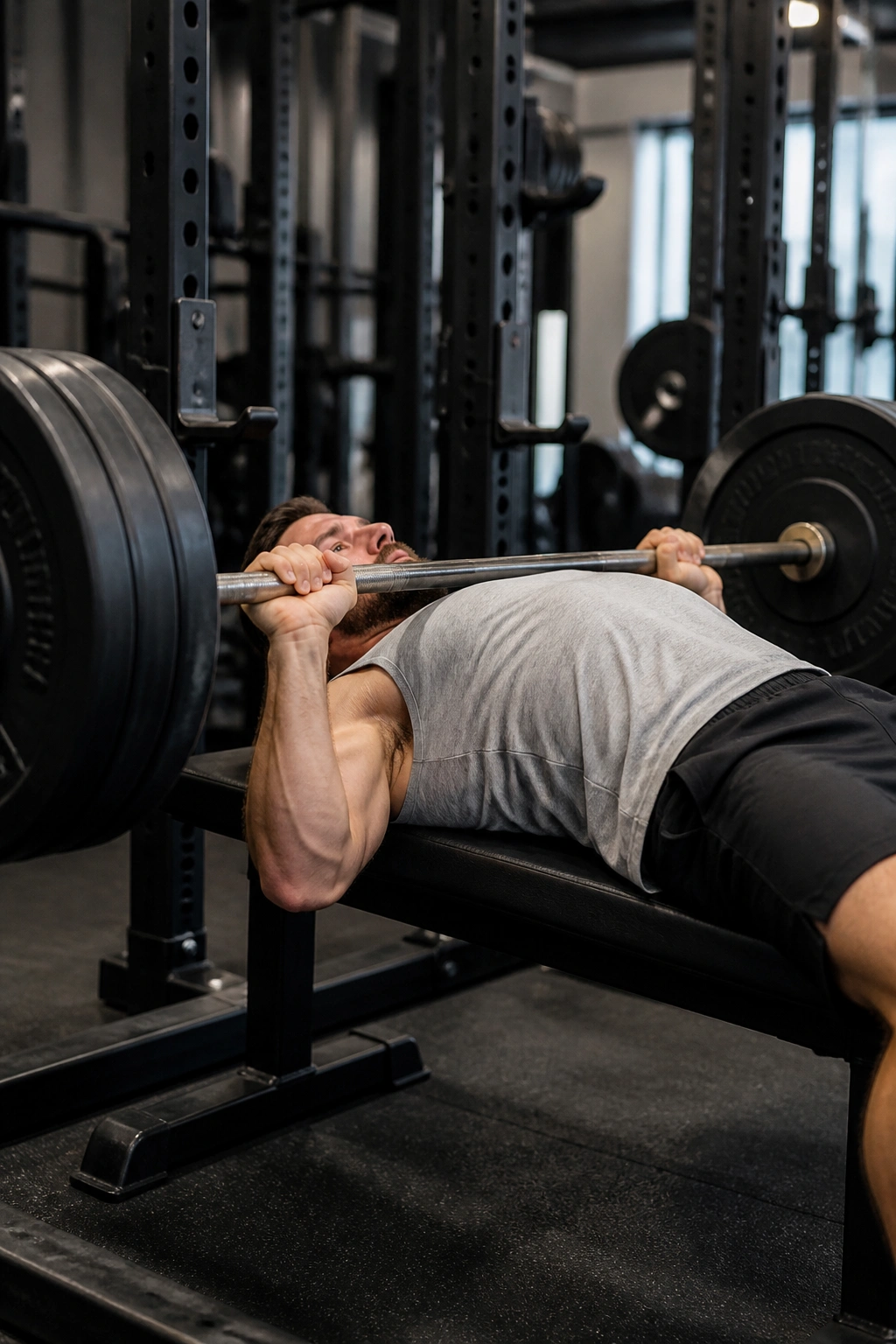
What happens when the weight stops at the hardest point? You learn position.
Pause reps are one of the simplest ways to build control under load. A one- or two-second pause in the squat, bench, or deadlift kills momentum and makes the weak part of the lift impossible to hide. That sounds harsh. It is. It also works.
Pause Points That Matter
- Bench press: pause 1 to 2 seconds one inch above the chest
- Back squat: pause 1 to 2 seconds just below parallel
- Deadlift: pause 1 second at mid-shin or just off the floor
- Split squat: pause at the bottom for 1 full breath
I like pause work when a lifter has decent strength but needs cleaner mechanics. The load should drop a little from normal training, and that’s fine. The goal is not to show off. The goal is to make the bottom position feel normal instead of sticky and weird.
If you relax during the pause, you’re teaching the wrong lesson. Stay tight. Keep the breath. Hold the position like it matters, because it does.
This session is one of the best fixes for lifters who are strong on the ascent but collapse off the chest or out of the hole. It also carries over well to regular lifting days, where the bar suddenly feels more stable than it used to.
10. Carry-and-Core Strength Session

Pick up two heavy dumbbells and walk 40 meters. Your grip knows first.
Loaded carries look almost too simple, which is part of why people skip them. They shouldn’t. Carries train bracing, posture, grip, and the ability to keep moving while the whole trunk is working hard. That makes them a serious strength tool, not a finisher you tack on when you feel guilty.
A solid carry day can be built from three patterns. Farmer carries build overall tension. Suitcase carries punish side-to-side collapse and wake up the obliques. Front-rack carries make the upper back and abs do more work while the breathing stays controlled. Use distance, not ego, as your guide. Thirty to fifty meters per carry is plenty for most people.
- Farmer carry: 4 rounds of 30 to 50 meters
- Suitcase carry: 3 rounds each side
- Front-rack carry: 3 rounds of 20 to 30 meters
- Dead bug or hollow hold: 2 to 3 sets
You do not need fancy equipment for this. Heavy dumbbells, kettlebells, or a trap bar can all work. If your gym has a sled, even better, but that’s a bonus, not a requirement.
These sessions feel small on paper and loud in practice. The grip, lungs, and trunk all leave with an opinion.
11. Barbell Complexes for Strength Endurance

A barbell complex looks simple on paper and sneaky in the lungs.
The idea is straightforward: one bar, one load, several movements in a row without setting it down. Done right, that creates a strong, dense session that builds body control and work capacity at the same time. Done badly, it turns into a sloppy cardio grind. The difference is the load. Keep it modest.
A clean complex might use Romanian deadlift, bent-over row, front squat, and push press for 4 to 6 reps each. You do the whole chain without dropping the bar, rest for 2 to 3 minutes, then repeat for 3 to 5 rounds. Pick a weight you could row for clean reps without hitching or bouncing. If the front squat makes the press impossible, the bar is too heavy.
The nice thing about complexes is the way they expose weak links. A shaky front rack, a soft hinge, a rushed press — all of it shows up quickly. That makes them useful for lifters who want strength that doesn’t disappear the moment they’re a little tired.
Keep the bar honest. If the last two movements look like survival, you went too heavy.
I like these on weeks when regular heavy lifting feels stale, but I still want a session with some bite.
12. Heavy Single Plus Back-Off Day
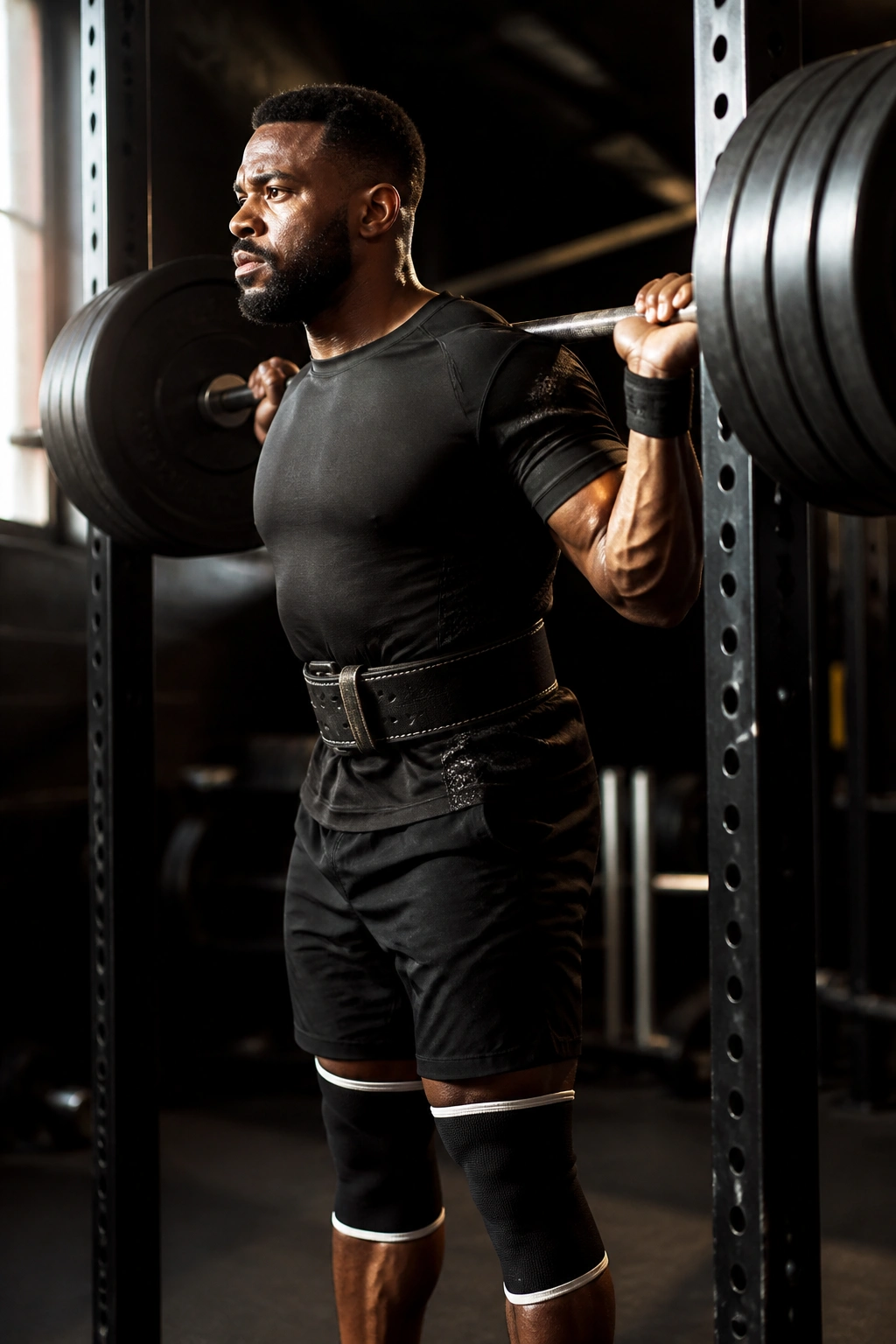
Unlike max-out testing, one clean single gives you a high-quality rep without turning the whole session into a circus.
This is one of my favorite ways to train steady strength because it scratches the itch for heavy work while keeping the volume controlled. You take a lift up to a single at about RPE 8 — crisp, fast enough, not a grinder — then build back-off work from there. The nervous system gets a wake-up call, but the session stays useful after that first heavy rep.
A strong template is 1 single, then 3 sets of 4 reps at roughly 80% of that single. If the single was slower than expected, trim the back-off sets a bit. If it flew, keep the plan. The important part is that the single should feel like a hard opener, not a desperate rescue.
This works best for intermediate lifters who already know their form well and can judge a rep without guessing. It is less useful for brand-new lifters who still need more practice in the middle of the range. For them, cleaner volume matters more than one heavy rep.
I like this day on squat, bench, or deadlift. It keeps the bar feeling heavy without making every session feel like a meet.
13. Dumbbell Symmetry Day for Better Control
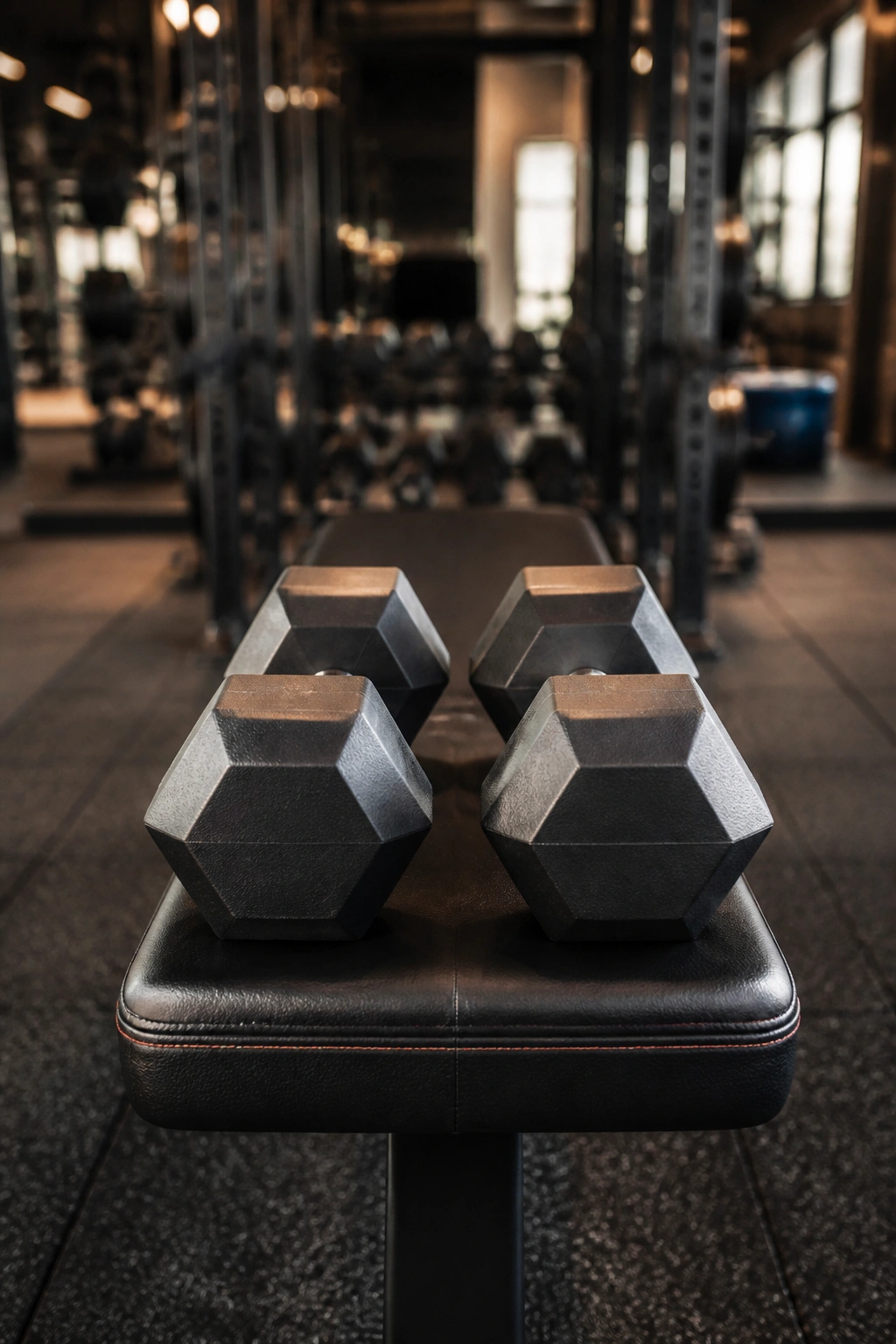
Dumbbells tell the truth faster than barbells.
A dumbbell session exposes side-to-side differences because each arm has to do its own job. If one shoulder dips or one elbow flares early, you feel it immediately. That is useful. Strength that looks even on a bar often hides small imbalances, and dumbbells make those imbalances much harder to ignore.
Why Dumbbells Expose Gaps
When each side moves separately, you can no longer lean on the stronger limb to cover the weaker one. That makes single-arm presses, one-arm rows, and split squats valuable for lifters who want more balanced force production. It also tends to be easier on cranky joints because the grip and shoulder angle can shift a little to fit your body.
Sample Session
- Single-arm dumbbell press: 4 x 6 each side
- One-arm dumbbell row: 4 x 8 each side
- Dumbbell split squat: 3 x 8 each leg
- Hammer curl or triceps extension: 2 x 10 to 12
Start with the weaker side and match the stronger side to it. Don’t let the better arm steal reps. That habit matters more than people think, and it takes almost no extra effort to fix.
This is a smart day when your barbell work feels stale or one shoulder keeps bossing the other around.
14. Full-Body EMOM Strength for Tight Sessions

EMOM strength works when the loads are serious and the rep count stays low. If your heart rate is doing all the work, you picked the wrong weight.
EMOM means every minute on the minute. You start a set, finish it fast, and use the remainder of the minute to recover. For steady strength, that can be a great fit if you keep the movement choices simple and the reps tight. Think 2 to 3 reps per minute, not a breathless scramble.
A good version might look like this: minute one, 3 front squats; minute two, 3 strict presses; minute three, 5 rows; minute four, rest or carry. Repeat the block 3 to 4 times. That gives you a session that feels compact but still hits the whole body hard enough to matter.
The danger here is obvious. People either use weights that are too light or choose movements that are too messy for the format. A sloppy EMOM is a waste of time. A clean one feels sharp and leaves you with energy instead of a wrecked nervous system.
I like this format when the clock is tight and I still want quality work across several movement patterns. It rewards discipline more than bravado.
15. The Deload Primer for Steady Strength

What do you do when your body wants work but not war?
You run a lighter day that keeps the movement patterns alive without piling on the stress. A deload primer is not a lazy session. It’s a smart one. The goal is to leave the gym feeling better than when you walked in, while still reminding your body how the main lifts are supposed to move.
What Stays In
- Squat, press, and pull patterns stay in the plan
- Loads sit around 60% to 70% of normal working weight
- Sets stay at 2 or 3 per lift
- Reps stay in the 4 to 6 range
- Accessories are light and clean
What Drops Out
- No grinders
- No max singles
- No extra junk volume
- No hero finishers
This kind of day helps when the joints feel stale, sleep has been short, or the last few sessions have been a little too loud. The movements should feel snappy and familiar, not draining. If you walk out thinking, “That was almost too easy,” that’s usually a good sign.
I like to place this between harder blocks of training or whenever bar speed starts fading for no obvious reason. It keeps the groove without chewing up recovery, which is exactly what steady strength needs.
Final Thoughts

Steady strength is built on repeatable work, not on the occasional monster session. The lifts that last are the ones you can come back to with decent technique and enough energy to do them again next week.
Pick a heavy pattern, add one support move that fixes a weak spot, then leave a little room in the tank. That approach sounds plain because it is plain. It also works.
If a workout starts needing more grit than skill, it’s drifting in the wrong direction. Trim the load, clean up the reps, and keep the habit intact. That’s how strong lifters stay strong.
