



A good home workout doesn’t need a machine room. A pair of dumbbells, a kettlebell, or one adjustable weight on a clear patch of floor can cover more ground than people expect, especially if you treat the reps like work instead of choreography.
Free weight exercises at home ask your body to control the path of the weight itself. That sounds small. It isn’t. A goblet squat teaches you to brace, breathe, and keep your torso from folding over. A one-arm row tells you, in a very honest way, whether one side is doing more work than the other.
Start lighter than your ego wants. A clean set of 8 controlled reps, with a slow lower and one or two reps left in the tank, usually beats a frantic set of 20 where your shoulders start helping your legs. If you only have one dumbbell, fine. A lot of these move beautifully as one-sided exercises.
The smartest home routine usually covers the big movement patterns: squat, hinge, press, pull, carry, and a little core work. That mix feels balanced because it is. It also makes the session easier to repeat, which matters more than any fancy setup you see online. The first move below is where most people should start.
1. Goblet Squat
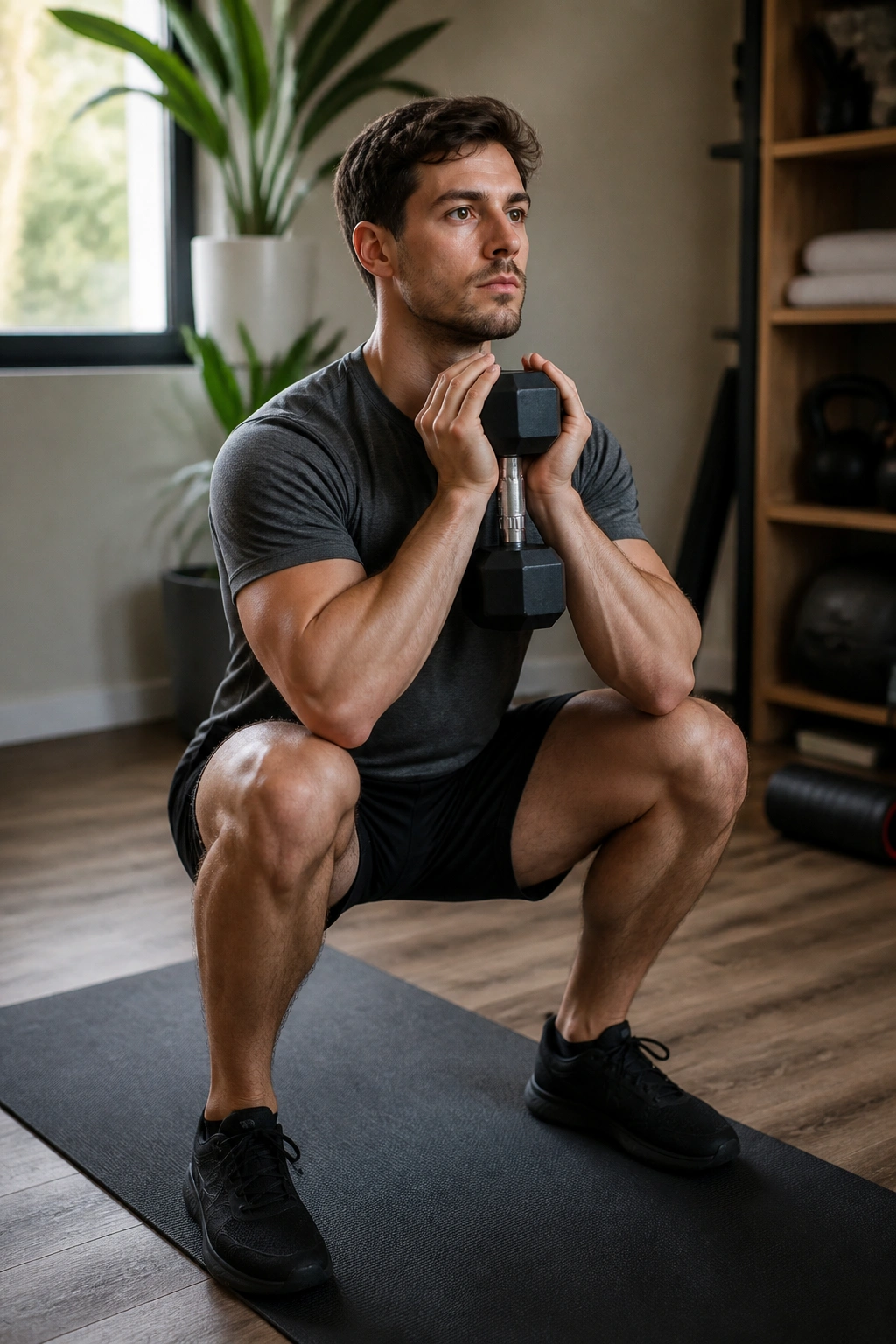
If you only learn one lower-body lift for a small home gym, make it the goblet squat. It’s simple to set up, easy to scale, and one of the fastest ways to learn what a real squat feels like when your torso stays upright and your feet stay planted.
The front-loaded weight pulls your chest into position, which helps you stay honest about depth and bracing. That’s a big deal. When the dumbbell sits at your chest, you can’t lean forward and hide the work in your lower back.
How to get the most from it
- Hold one dumbbell vertically against your sternum, with both hands cupping the top end.
- Stand with feet about shoulder-width apart, toes turned out slightly.
- Sit down between your hips, not forward onto your toes.
- Keep your elbows inside your knees as you reach the bottom.
- Drive through the whole foot on the way up, not just the toes.
Tip: If your heels keep popping up, shorten the depth a little and slow down the lower. That usually fixes more than people expect.
2. Dumbbell Romanian Deadlift
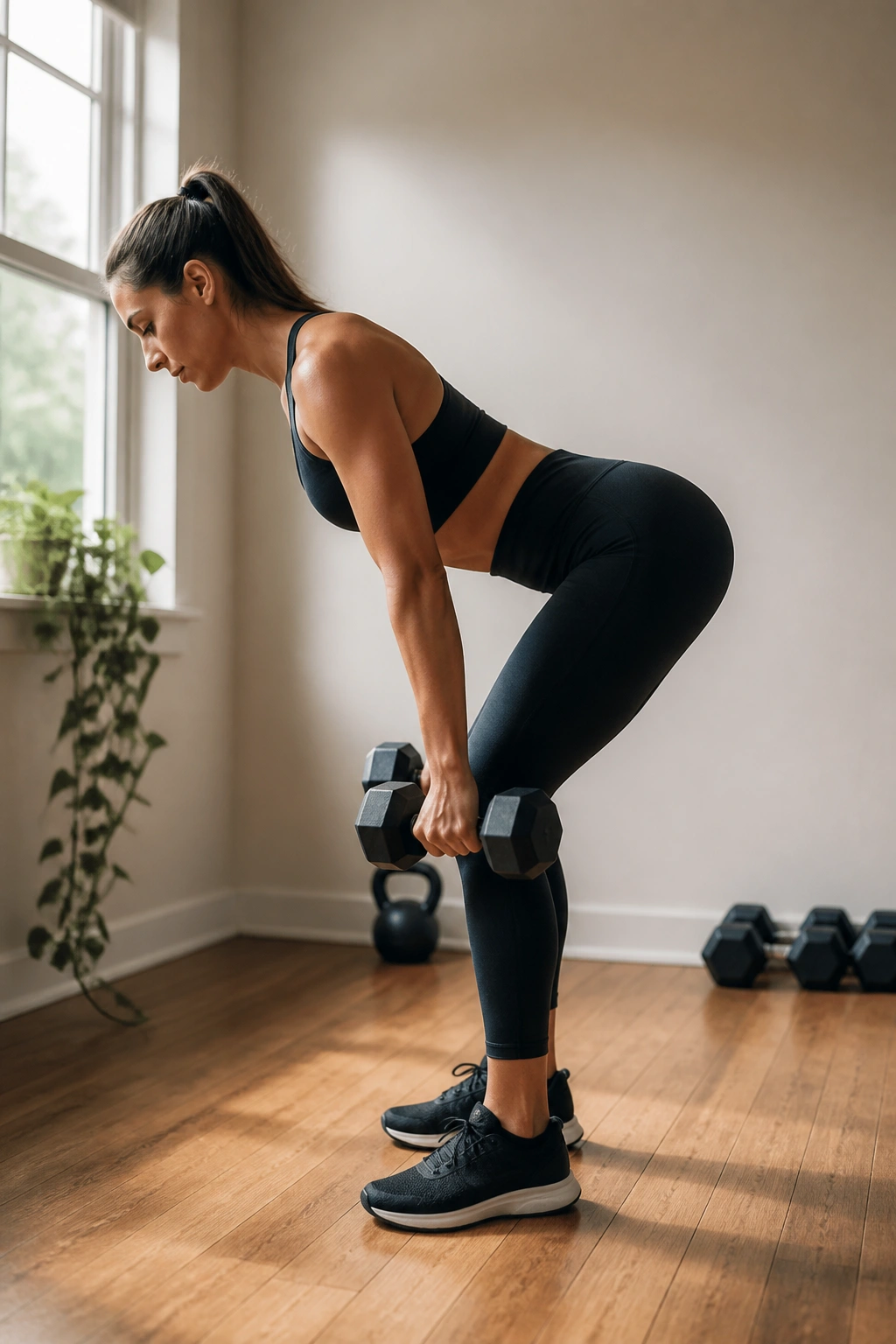
This is the hinge that teaches your hamstrings to pay attention. The dumbbell Romanian deadlift, or RDL, loads the back of the body without asking you to bounce, twist, or rush. That makes it one of the best free weight exercises at home when you want glutes and hamstrings to do their share.
The trick is simple and a little boring, which is exactly why it works. Push your hips back, keep a soft bend in the knees, and let the dumbbells travel close to your legs. You should feel a long stretch behind the thighs before you come back up.
Don’t turn it into a squat.
That’s the whole warning.
A lot of people stop the movement too high because they’re thinking about the weights, not the hips. Let the dumbbells slide down until your torso is about halfway between standing and parallel, or until your back starts wanting to round. Then stand by driving the hips forward, not by yanking with the shoulders.
3. Dumbbell Floor Press
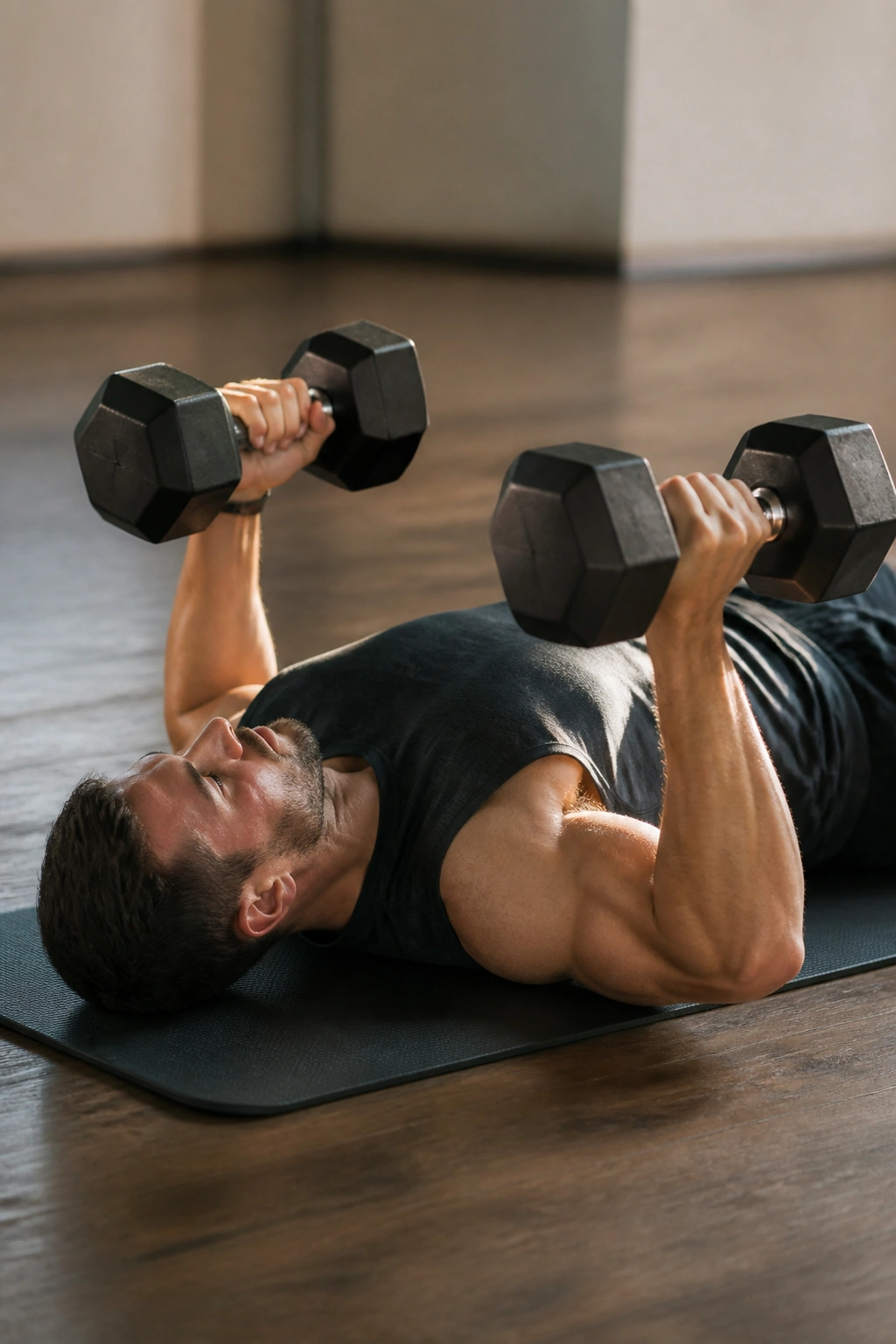
No bench? Good. The floor press is often friendlier on the shoulders than a deep dumbbell press, and it’s a neat way to train the chest, triceps, and front delts without needing fancy gear.
Because the floor stops the elbows, you get a built-in limit on range of motion. That can be a blessing if your shoulders get cranky when you lower too far. It also forces a cleaner press path, since there’s no room to bounce the dumbbells off your chest and pretend that counts.
What to watch for
- Stack your wrists over your elbows before you start.
- Lower under control until the triceps touch the floor.
- Pause for a beat.
- Press up without letting the dumbbells drift toward your face.
- Keep your shoulder blades settled on the floor instead of flaring around.
If you feel this move in your shoulders more than your chest, the weights are probably too wide or too heavy. A little adjustment fixes it fast.
4. One-Arm Dumbbell Row
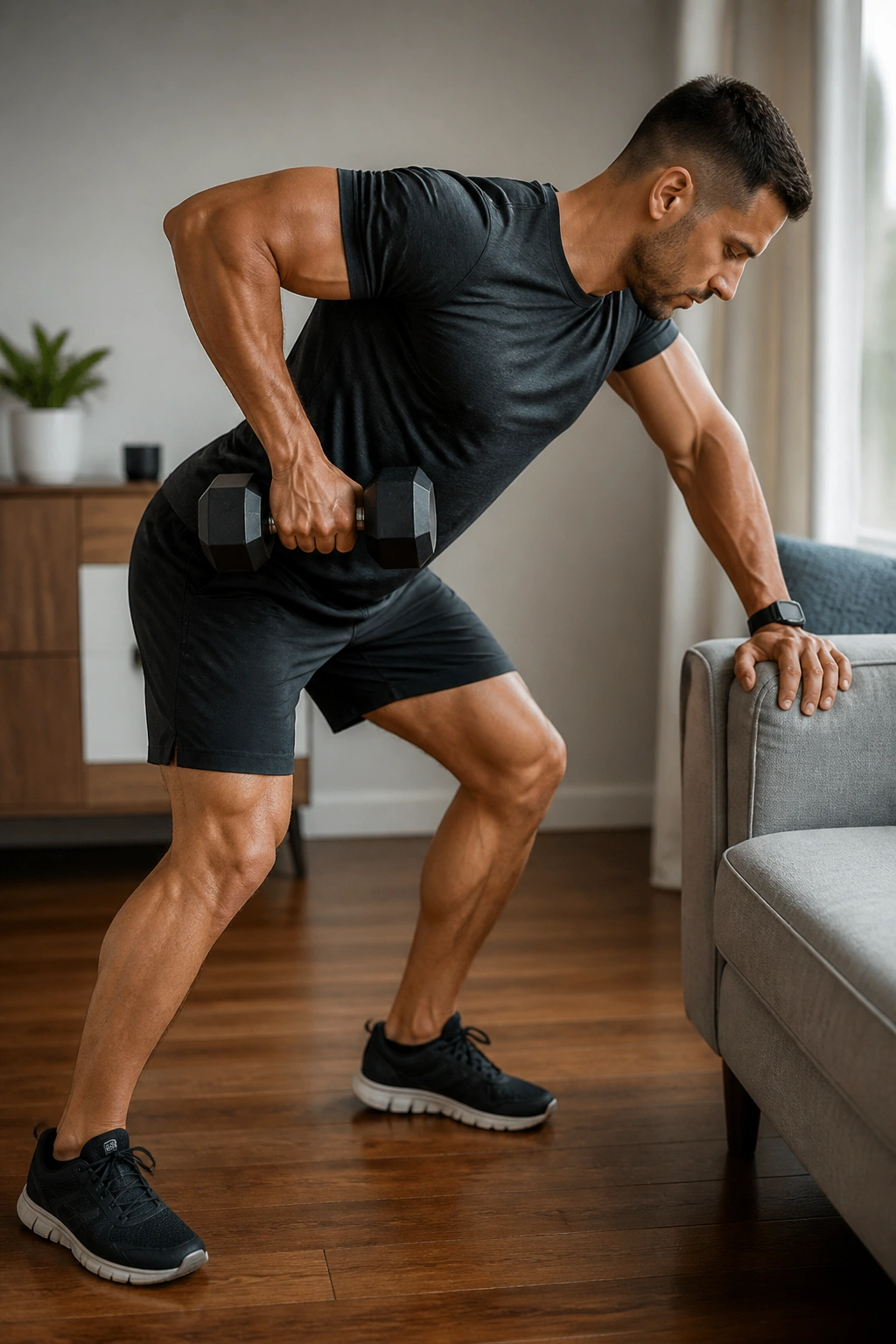
A couch arm, a sturdy chair, and one dumbbell are enough. That’s all you need for a row station, and honestly, the one-arm dumbbell row may be the most useful pulling exercise in a home setup because it’s easy to load and easy to feel.
Brace one hand on the support, hinge your torso forward, and pull the dumbbell toward your front pocket. Not your chest. Your front pocket. That cue usually keeps the elbow path where it should be and stops the shoulder from shrugging up toward your ear.
The back of the shoulder and the lat should do the work here, not the neck. If the trap starts taking over, slow the rep and think about pulling the elbow back and slightly in. A lot of people yank rows with a twist in the torso, which feels powerful for three seconds and useless after that.
A cleaner row beats a heavier ugly one every time.
5. Standing Dumbbell Overhead Press
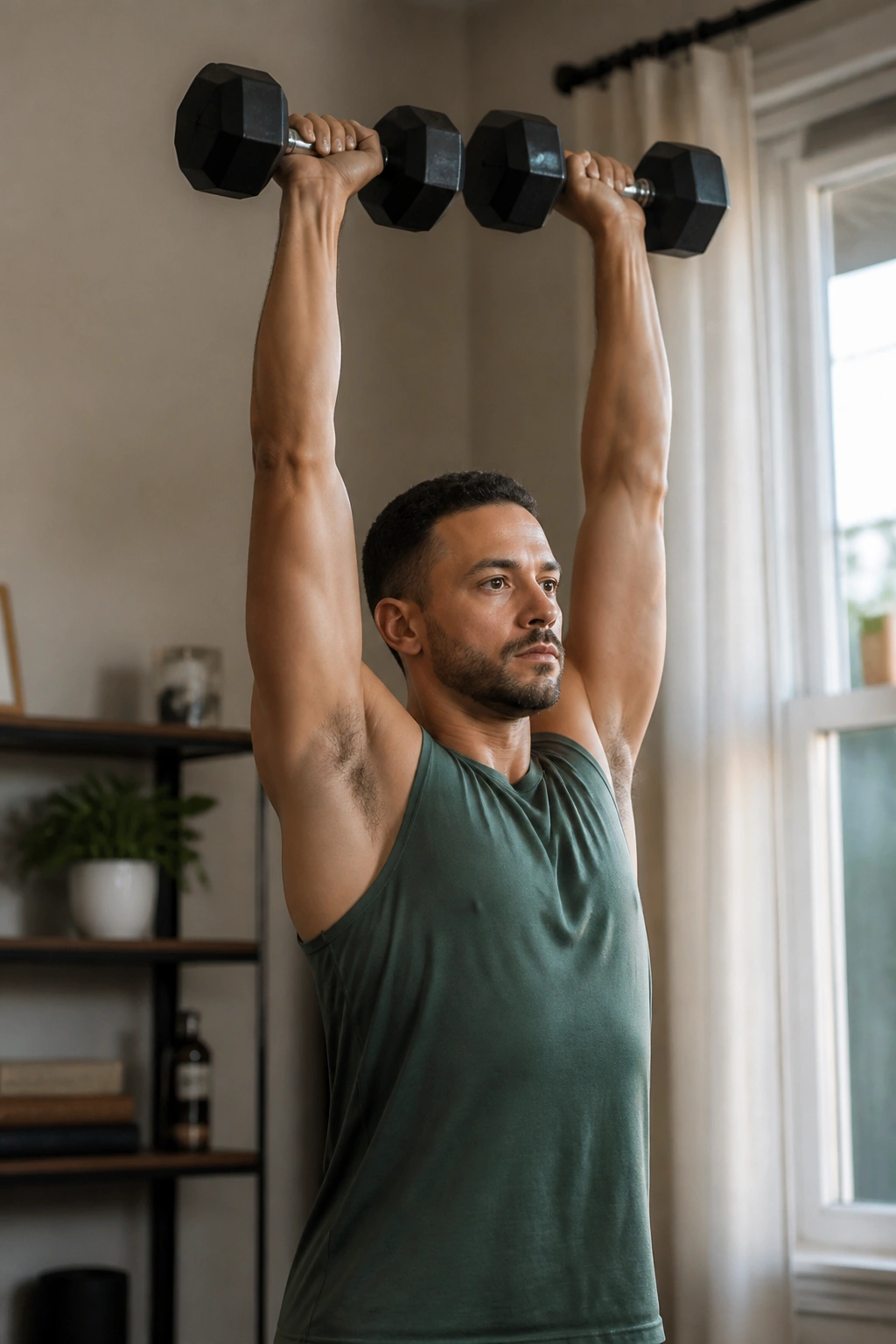
A strict press tells the truth fast. If your core is sloppy, your ribs flare. If your grip is weak, the dumbbells wobble. If your shoulders aren’t ready, the rep will feel like a small argument.
Stand tall, squeeze your glutes, and press the weights straight overhead while keeping your ribs stacked over your hips. That last part matters. If you lean back to finish the rep, your lower back starts doing a job it never asked for.
The dumbbells should travel close to your face on the way up, then finish over the middle of your body, not out in front of it. At the top, your biceps should be near your ears and your shoulders should feel like they’re holding the weight in place rather than chasing it.
No leaning back.
If you only have light weights, use a slower lowering phase and a brief pause at the bottom. That small change makes the press feel much harder without turning it into a sloppy grind.
6. Reverse Lunge
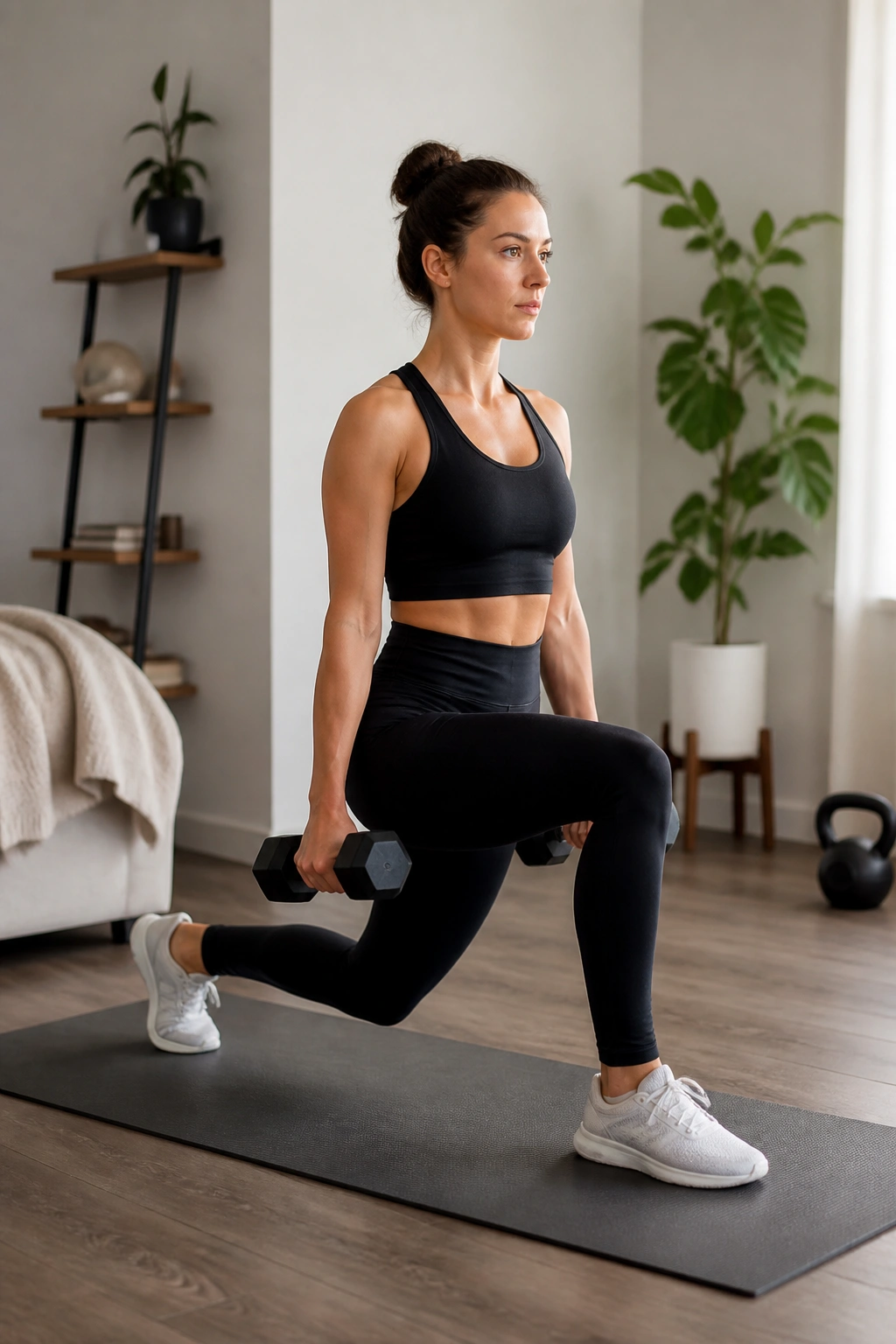
Reverse lunges usually feel cleaner than forward lunges. The backward step keeps your front shin a little more controlled, which makes the movement friendlier for a lot of people who hate the knee pressure of stepping forward under load.
Take a long step back, lower the back knee toward the floor, and keep most of your weight in the front leg. The front heel should stay down. If it lifts, you probably stepped back too far or your stance needs adjusting.
The best part is how obvious the feedback is. If the rep feels wobbly, you know it. If you’re leaning forward like you’re trying to reach the floor, you know that too. Reverse lunges make small mistakes loud.
Use dumbbells at your sides if you want a steadier feel, or hold one dumbbell goblet-style if you want your torso to stay more upright. Both work. The goblet version usually helps people who tend to tip forward.
7. Split Squat
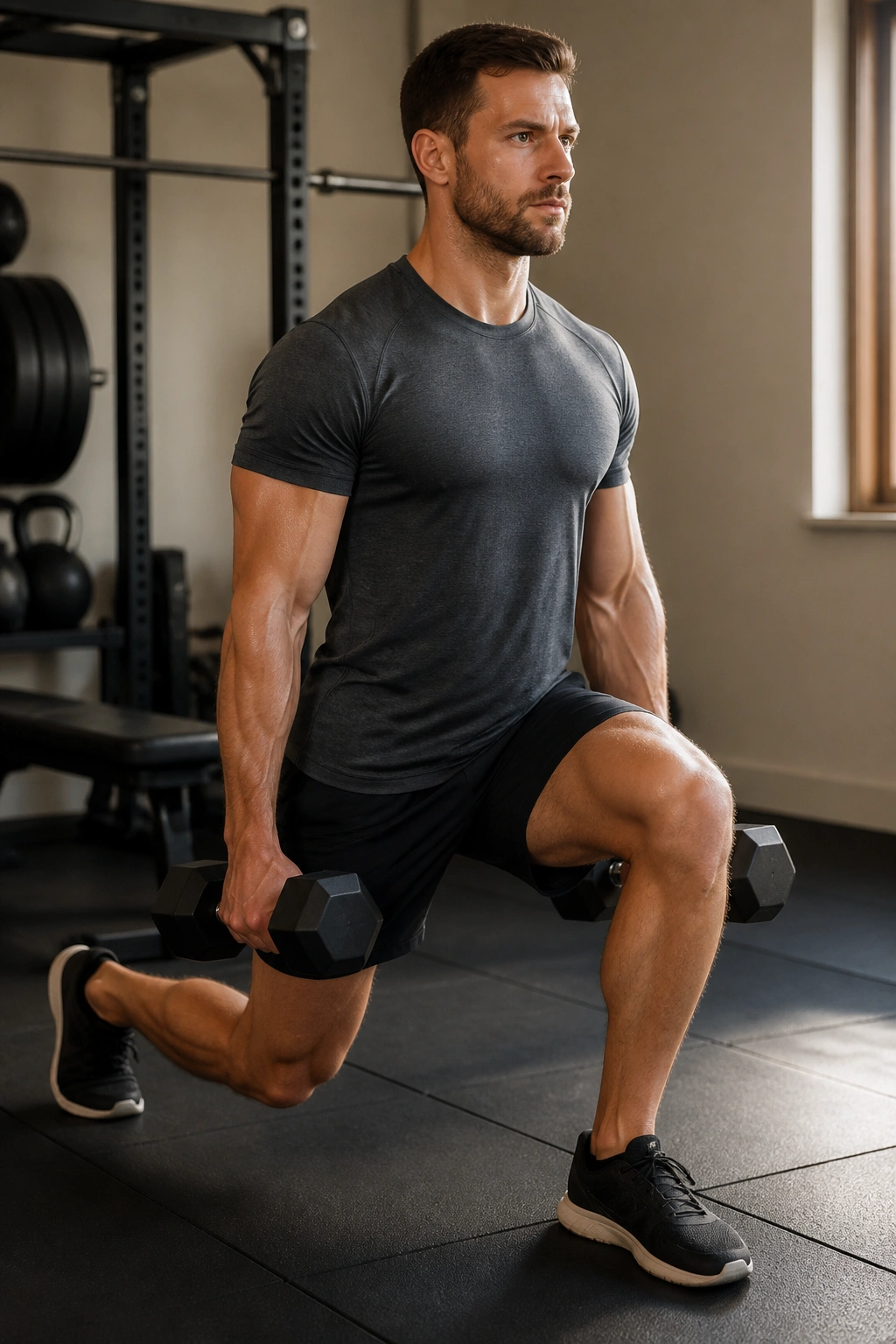
This looks plain on paper and rude in practice. The split squat keeps your feet planted in a staggered stance, which removes the step but keeps all the burn. It’s one of those home exercises that exposes weak glutes, wobbly ankles, and impatient minds all at once.
Set your stance first
Put one foot forward and one foot back, then lower straight down between them. The front heel stays glued to the floor, the torso stays tall, and the back knee drops toward the ground without you bouncing off the bottom. A pair of dumbbells at your sides works well here.
Make it harder without making it ugly
- Slow the lowering phase to 3 seconds.
- Pause for 1 second at the bottom.
- Use a front-foot elevated setup if you want more range.
- Hold the weights in a goblet position if your balance gets messy.
The split squat is one of the best leg builders you can do at home because it doesn’t need speed, and speed is usually where form falls apart.
8. Dumbbell Hip Thrust
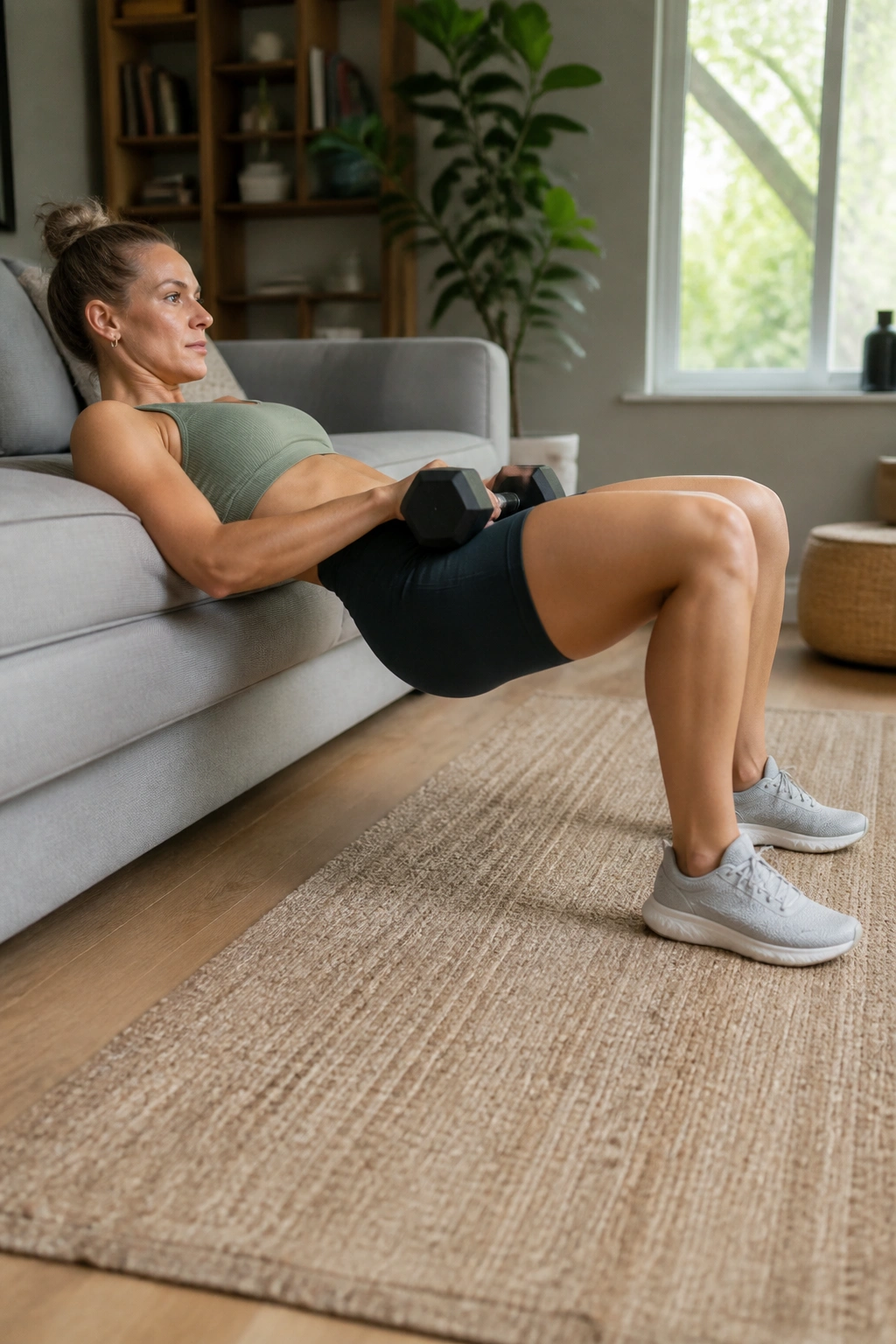
If you have a sofa that doesn’t slide, you have a hip-thrust station. That’s the honest truth. A dumbbell hip thrust hits the glutes hard without asking for much floor space, and it’s one of the few lower-body moves that lets you load the top position where the squeeze really happens.
Set your upper back against the edge of a sturdy couch, bench, or ottoman. Roll a dumbbell onto your lap, plant your feet, and drive your hips up until your torso is roughly parallel to the floor. At the top, your shins should be close to vertical and your glutes should feel like they’re taking the load.
Your lower back should not do the heavy lifting.
If you feel it there, tuck your pelvis a little and bring your ribs down.
A floor glute bridge is the simpler cousin if the setup feels awkward. Same idea. Less range. Still useful.
9. Single-Leg Deadlift
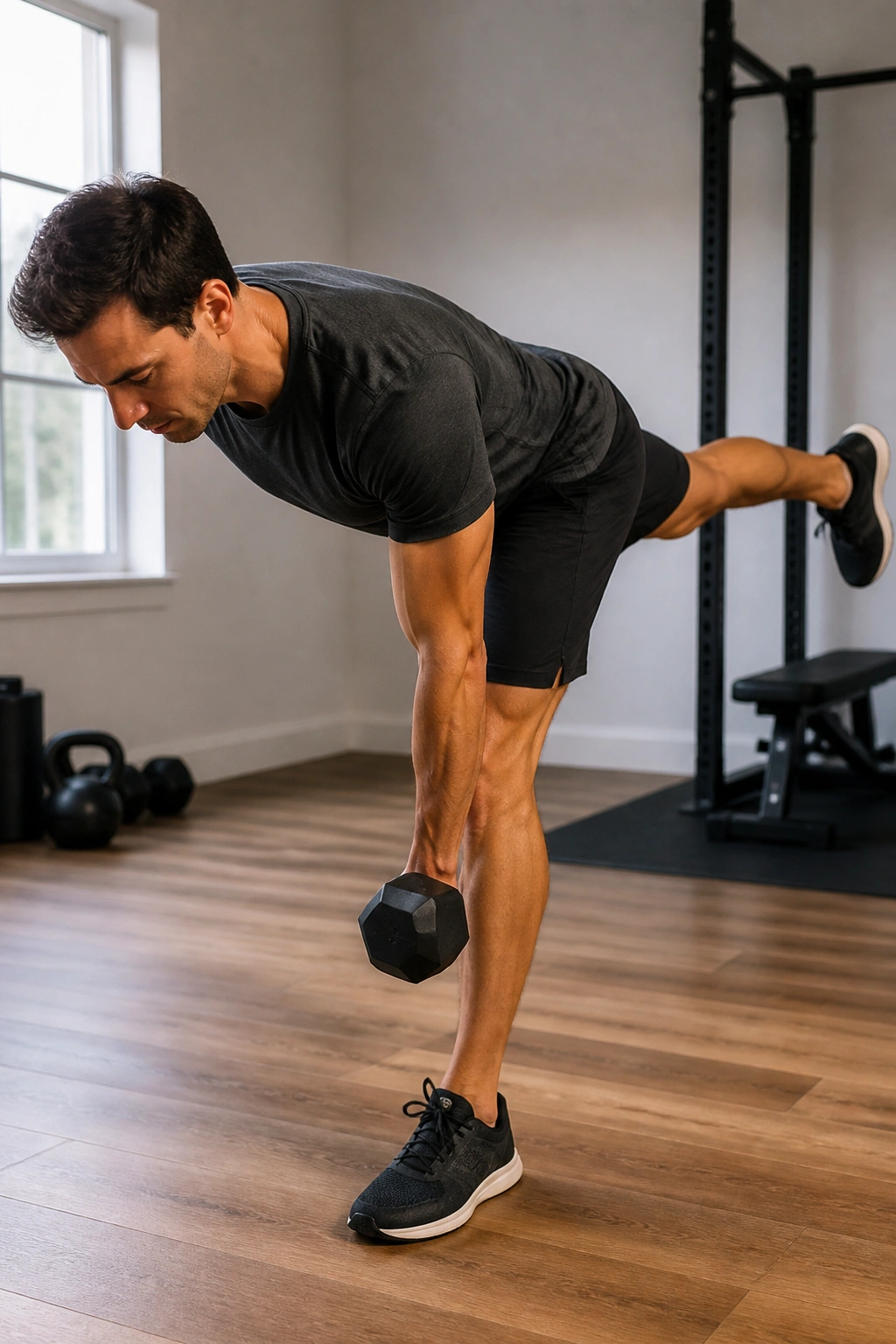
Why stand on one leg when two would be easier? Because the single-leg deadlift forces your hips to stay square, your hamstrings to work, and your balance to stop freelancing. It’s a sneaky good exercise for home training, especially if your ankles or hips get sleepy when you rely on two-legged lifts all the time.
Hold one dumbbell in the opposite hand of the working leg, then hinge at the hip while the free leg reaches back like a counterweight. The dumbbell should travel straight down, close to the standing leg. If your hips open up to the side, the rep has already gone sideways.
A fingertip on the wall is fair game. Seriously. A tiny bit of support lets you learn the pattern without wobbling around like a folding chair.
The rep should feel long and controlled, not dramatic. When you come back up, drive the floor away and squeeze the standing-side glute. If your back is what you notice first, shorten the range and slow the tempo.
10. Dumbbell Sumo Squat
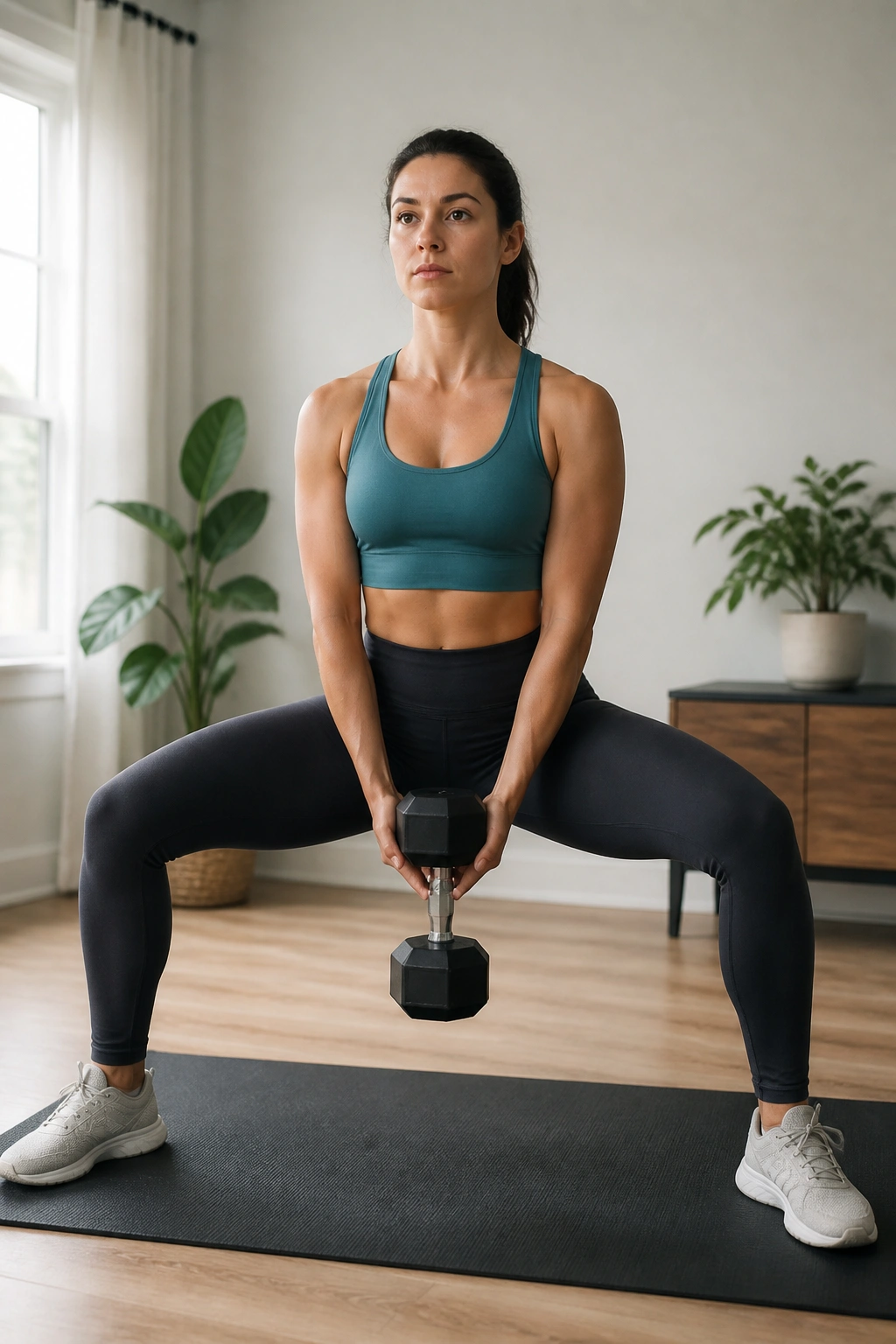
A wider stance can be a relief if narrow squats bug your hips. The dumbbell sumo squat opens the feet, turns the toes out, and lets you stay a little more upright while still loading the legs hard.
Hold one dumbbell between the legs or two dumbbells at your sides. Sink straight down, keeping the knees tracking over the toes and the chest proud. You should feel this in the inner thighs, glutes, and quads all at once, which is part of why people either love it or hate it the first time.
If the goblet squat feels cramped, this version often clicks faster. There’s room for the hips. There’s room for the torso. The movement feels less like a balance test and more like a strong sit-down-and-stand-up pattern.
Keep the dumbbell close to your body and avoid turning the descent into a forward fold. That’s the main thing. A good sumo squat should look grounded, not folded in half.
11. Step-Up
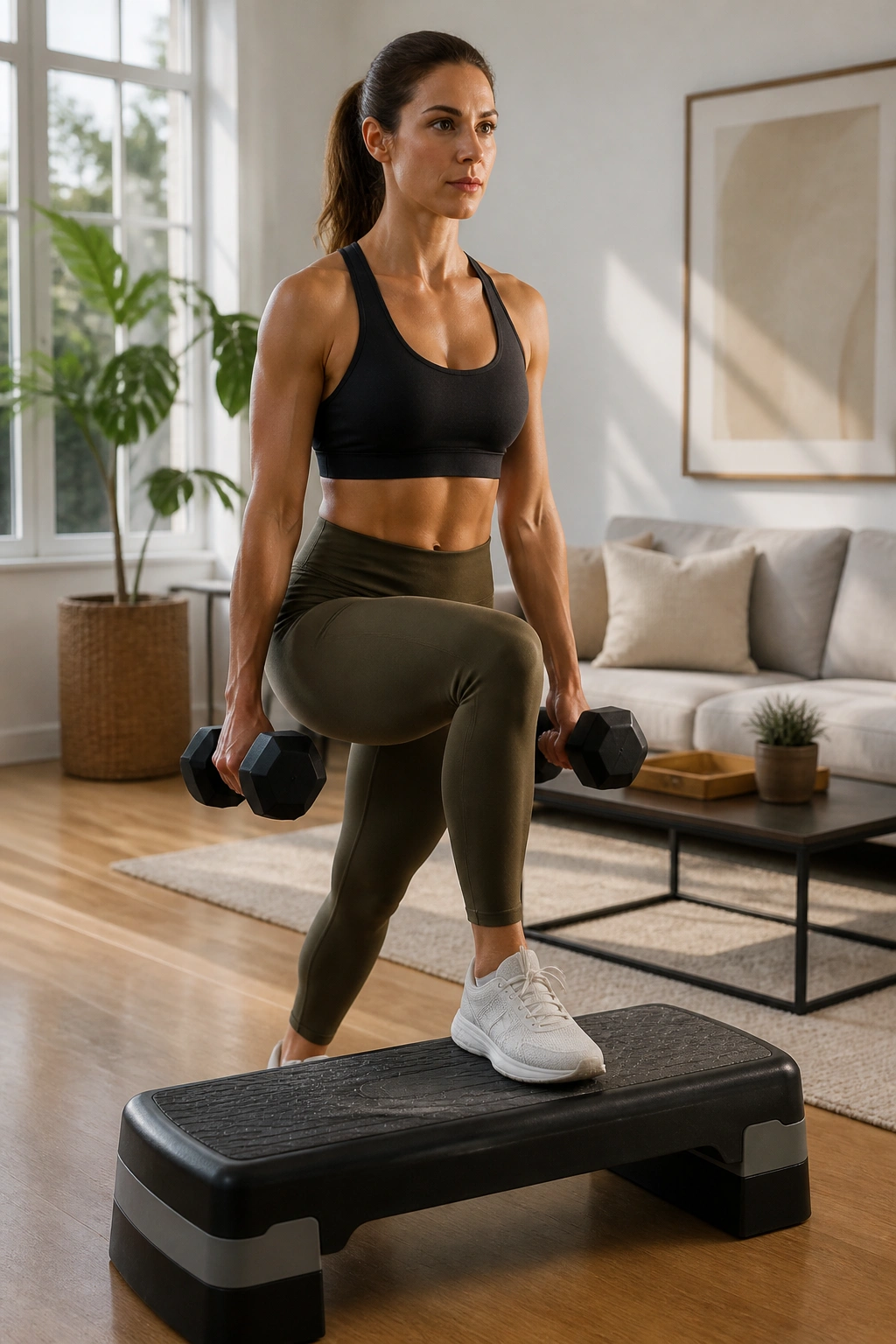
A sturdy step will tell you exactly how honest your leg strength is. Step-ups seem friendly until you realize one leg has to do the whole job while the other sits there and pretends not to care.
Choose a stable surface that doesn’t wobble. A low step, thick aerobic platform, or bottom stair is usually a better start than a high chair. Hold the dumbbells at your sides, plant one whole foot on the step, and drive through that leg to stand tall. Bring the trailing foot up under control, then step back down the same way.
Pick the right height
- Start with a box or step below knee height.
- Keep your front foot fully on the surface.
- Avoid pushing off the floor leg.
- Lower slowly so the working leg has to own the descent.
The step-up is one of those home moves that feels basic but leaves your quads and glutes very aware of what happened. It’s also excellent when you want leg work without the joint strain that comes from jumping.
12. Farmer’s Carry
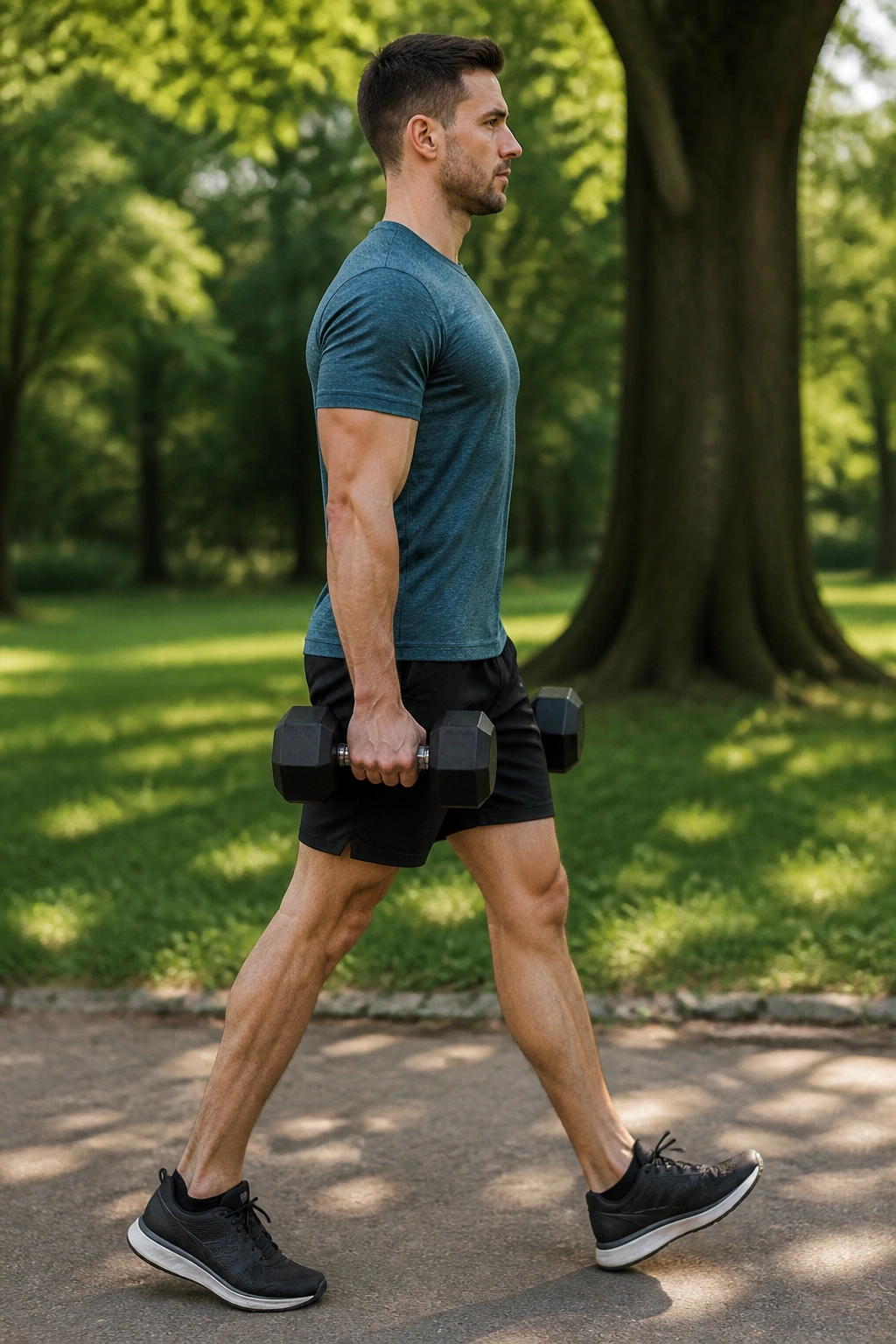
Compared with curls and presses, carries are the cheap trick that works. You pick up heavy dumbbells, stand tall, and walk. That’s it. And somehow that simple act hits grip, upper back, core, and posture all at once.
Hold a dumbbell in each hand and walk with short, steady steps. Your shoulders should stay down, your ribs should stay stacked, and your body should resist the urge to sway side to side. If you’ve got space, walk for 20 to 40 seconds. If you don’t, march in place with the same control.
What carries train
- Grip strength that actually transfers to daily life.
- A quieter, tighter core.
- Better posture under load.
- Shoulder stability without a lot of setup.
Farmers carries are one of my favorite home finishers because they feel plain and useful. No fuss. No nonsense. Just load and walk.
13. Suitcase Carry
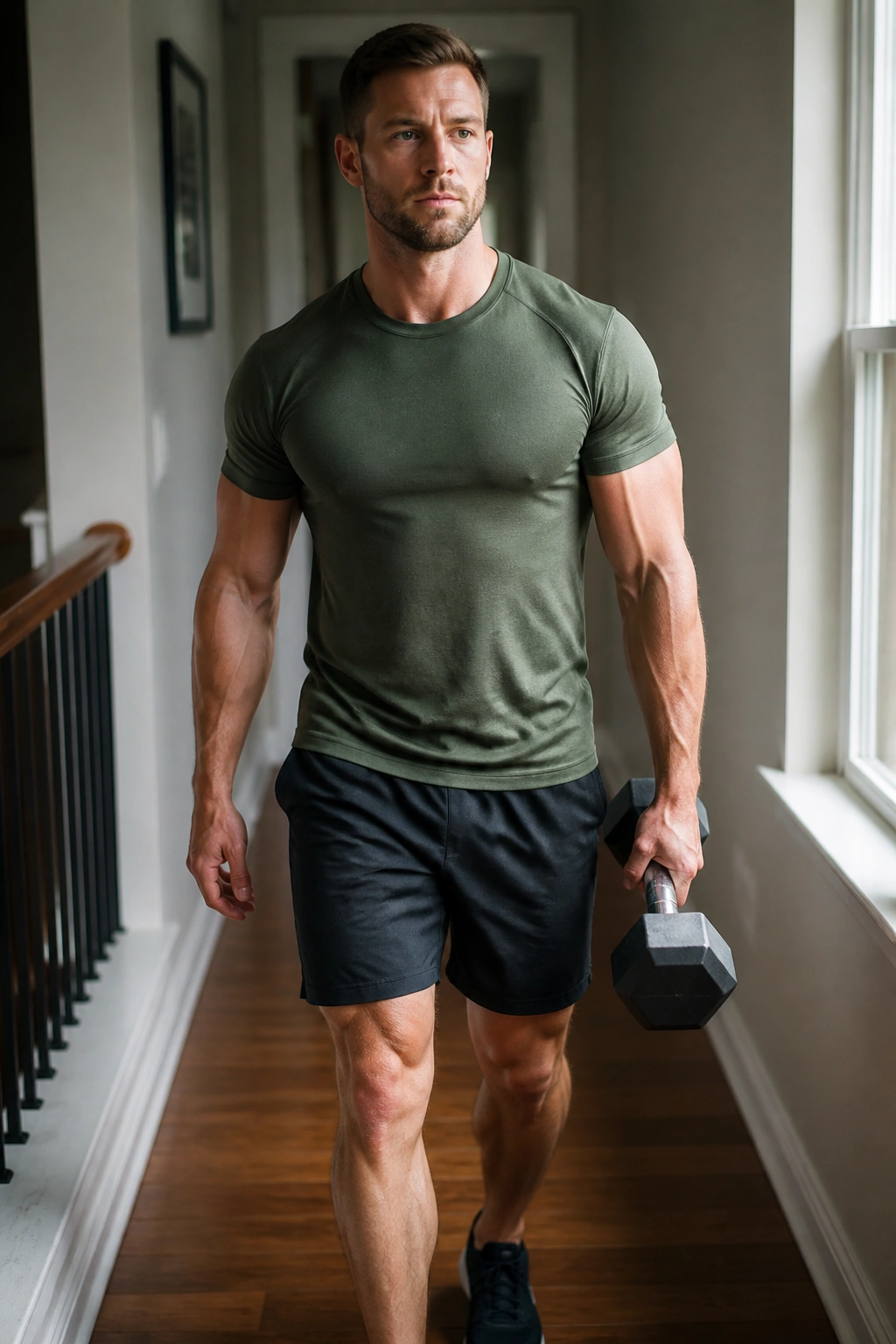
Hold one dumbbell on one side and your torso immediately wants to lean. That’s the whole lesson. The suitcase carry turns anti-leaning into the exercise, which is why it’s such a good complement to the two-hand farmer’s carry.
Load one side, stand up tall, and walk without letting the weight drag your shoulder down or pull your hips off line. You’ll feel the obliques, the side glute, and the grip all working to keep you upright. If you only own one heavier dumbbell, this move is gold.
Why the one-sided version matters
- It teaches your torso to resist rotation.
- It exposes side-to-side weakness fast.
- It gives the core a real job, not a fake one.
- It works well in short hallways or tight rooms.
Use a slow walk, not a rushed stomp. The goal is to look boring while your midsection does actual work.
14. Dumbbell Biceps Curl
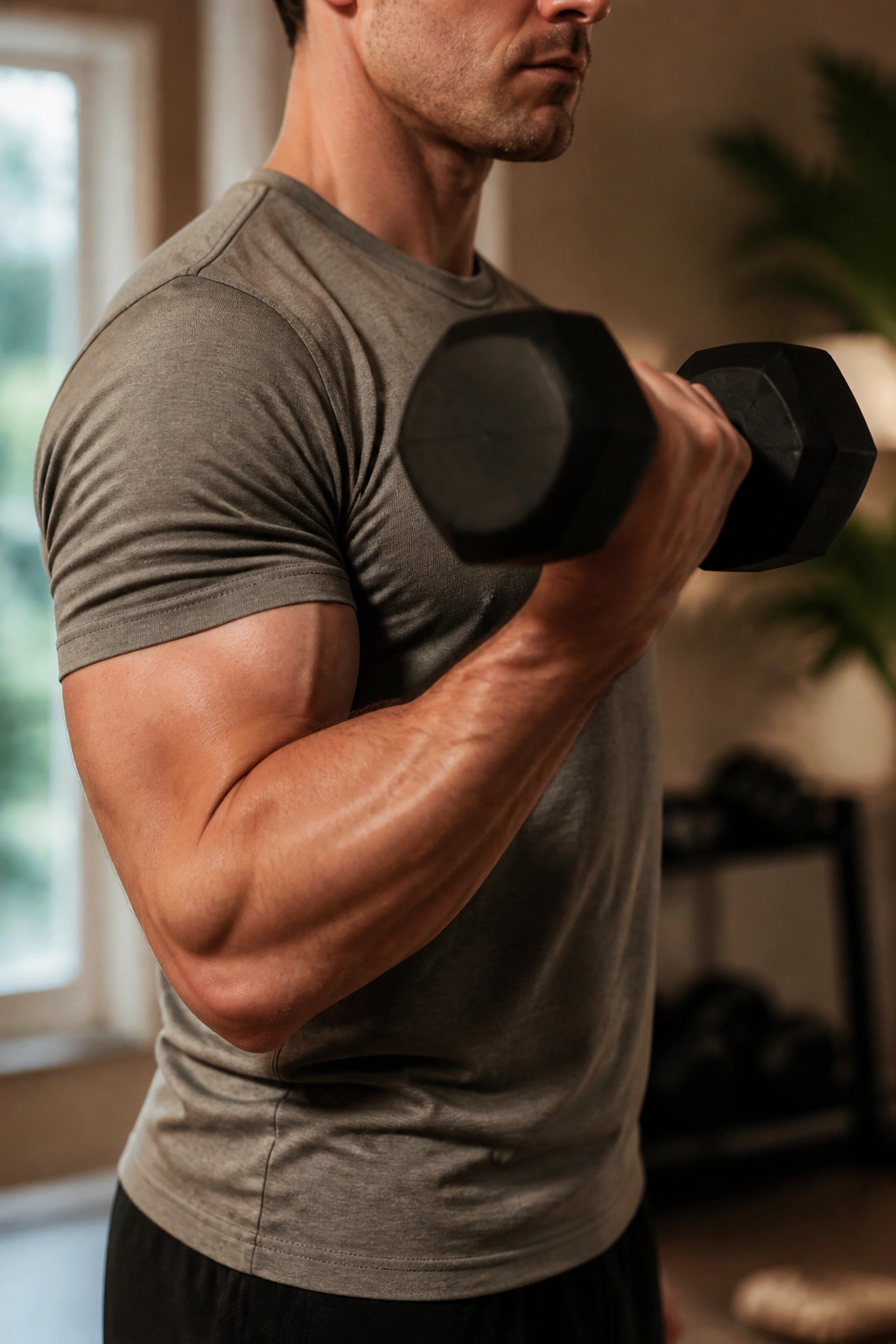
Curls look easy until the elbows start wandering. Then they turn into a shoulder swing with some bonus forearm fatigue. The dumbbell biceps curl is still worth doing, though, because it trains elbow flexion directly and gives your arms a simple, easy-to-track overload pattern.
Stand tall, palms forward, and keep the upper arms pinned close to your ribs. Curl the dumbbells up without letting your shoulders roll forward. Lower them all the way down until the elbows are nearly straight again. That full lower matters more than people think.
Clean curl form
- Keep the wrists stacked, not bent back.
- Stop the torso from rocking.
- Lower under control for 2 to 3 seconds.
- Let the elbows stay near the body instead of drifting forward.
A strict curl looks old-school because it is old-school. That’s not a complaint. It’s one of the few exercises where small details make a big difference fast.
15. Hammer Curl
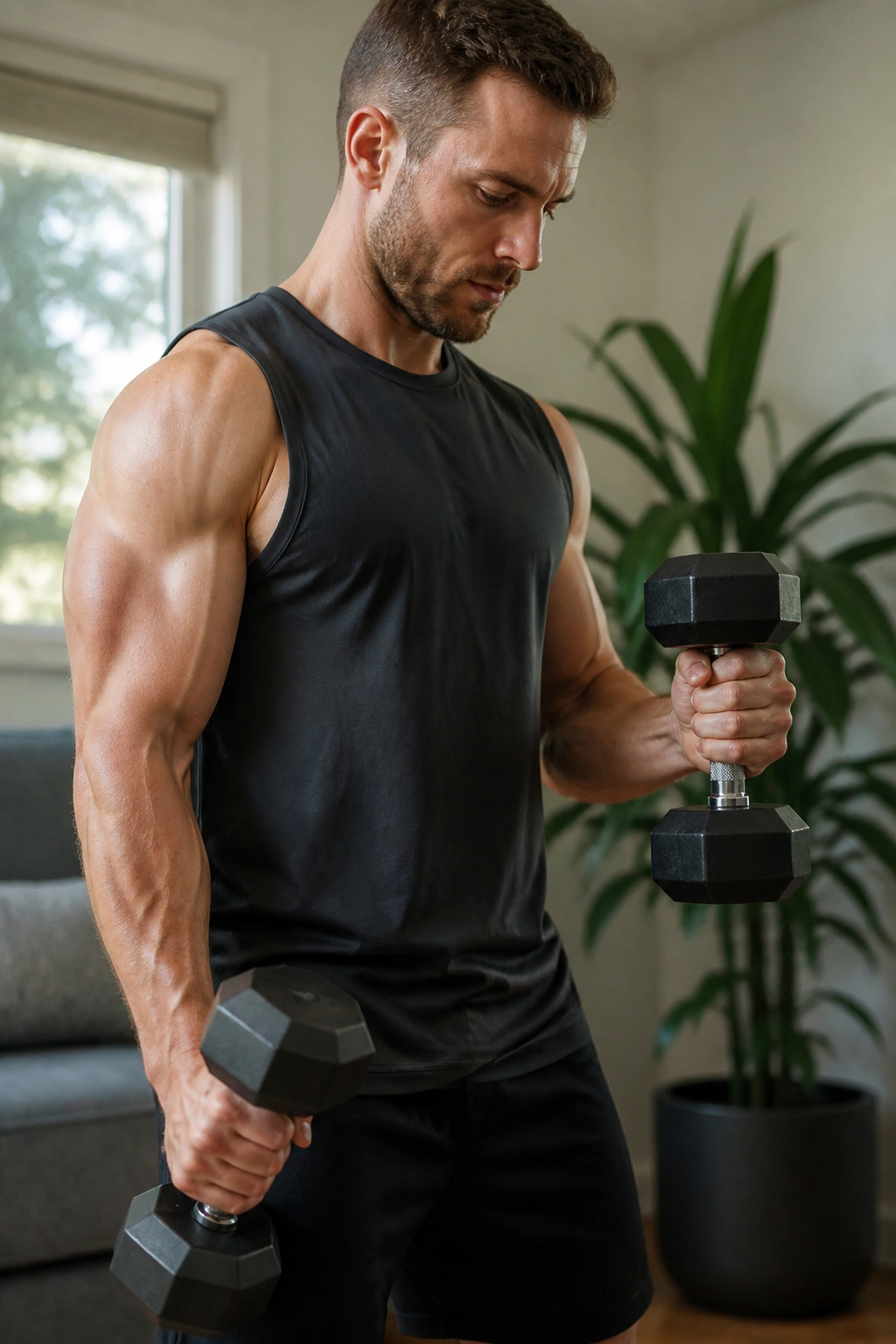
If straight curls make your elbows grumpy, hammer curls are the polite alternative. The neutral grip shifts some work toward the brachialis and forearms, and a lot of people find the motion easier on the wrists too.
Hold the dumbbells with your palms facing each other and curl them up without turning the hands over. The path stays close to the body, and the movement tends to feel smooth from top to bottom. You can alternate arms or lift both at once depending on what feels cleaner in your space.
Hammer curls also carry over well to real-life grabbing and carrying. That’s a small detail, but I like exercises that do more than one thing without making a spectacle of themselves.
If regular curls feel narrow or fiddly, this version often feels more natural on the first try.
16. Overhead Triceps Extension
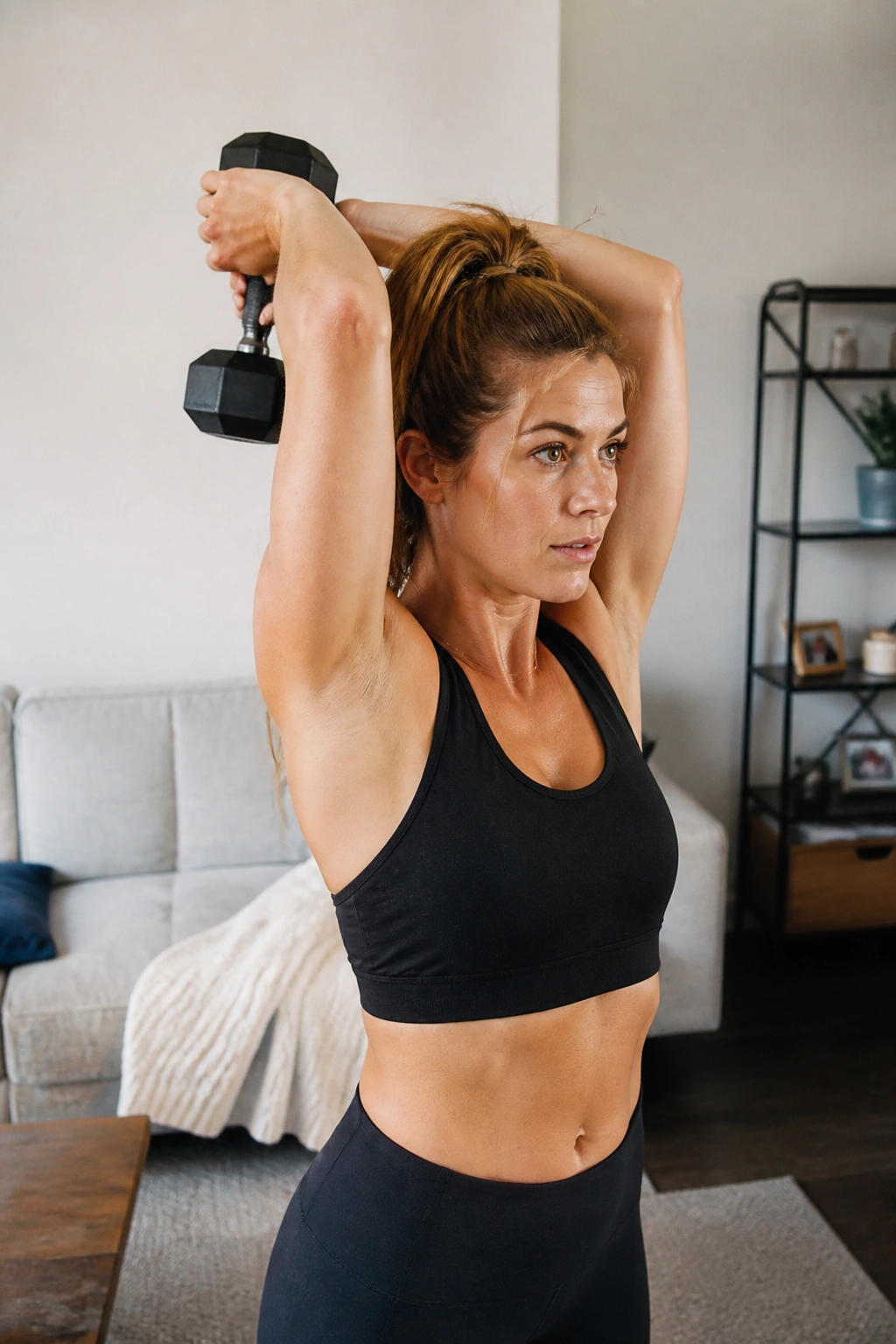
One dumbbell held with both hands is enough for a good triceps session. The overhead triceps extension stretches the long head of the triceps more than a lot of people realize, and that extra range is part of why it earns a spot in a home dumbbell routine.
Hold the weight over your head, then bend only at the elbows as you lower it behind the head. The upper arms should stay fairly steady. If they flare all over the place, the shoulders start stealing the rep and the elbows stop doing their job.
Two ways to hold the weight
- Use one dumbbell with both hands around the top end.
- Use one arm at a time if you want to focus on a weaker side.
- Sit down if your lower back wants to arch.
- Lower until you feel a firm stretch, then press back up without snapping the elbows.
This move is a lot better when you keep it smooth. Fast reps tend to turn into joint noise.
17. Lateral Raise
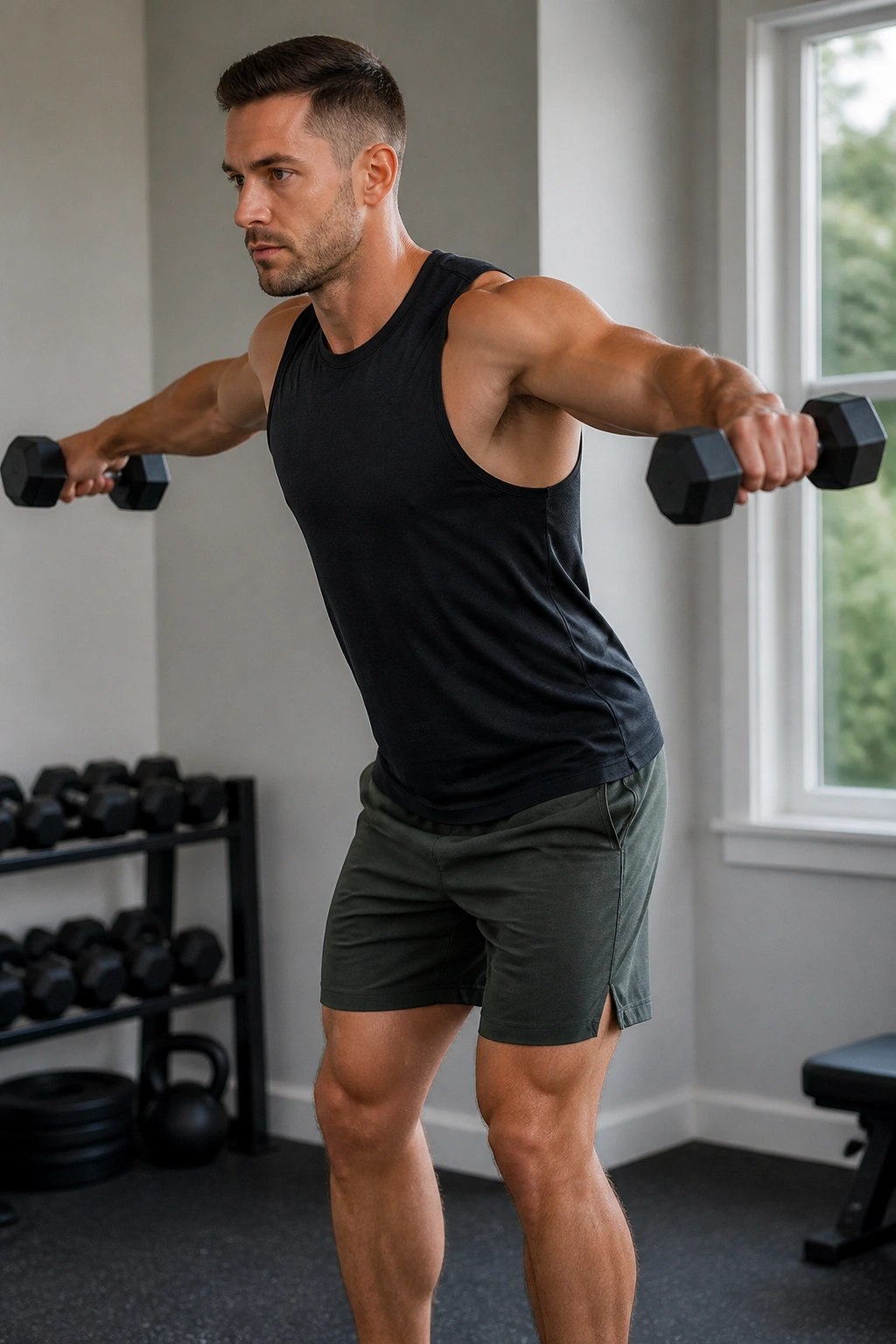
Why do such a small motion make shoulders burn so fast? Because the side delts don’t care about your ego, and they punish sloppy form the second you start swinging the dumbbells upward.
Hold light dumbbells at your sides and lift them out to shoulder height with a soft bend in the elbows. Stop there. Higher usually buys you more trap involvement and less side-delt work. A tiny forward lean can help the weights travel in a cleaner arc, especially if your shoulders are tight.
Ego weights ruin this move.
Most people do better with lighter dumbbells than they expect. You want a smooth lift, a brief pause near the top, and a controlled lower that doesn’t drop like a rock. If the reps look like jumping jacks, the load is too heavy.
18. Rear Delt Fly
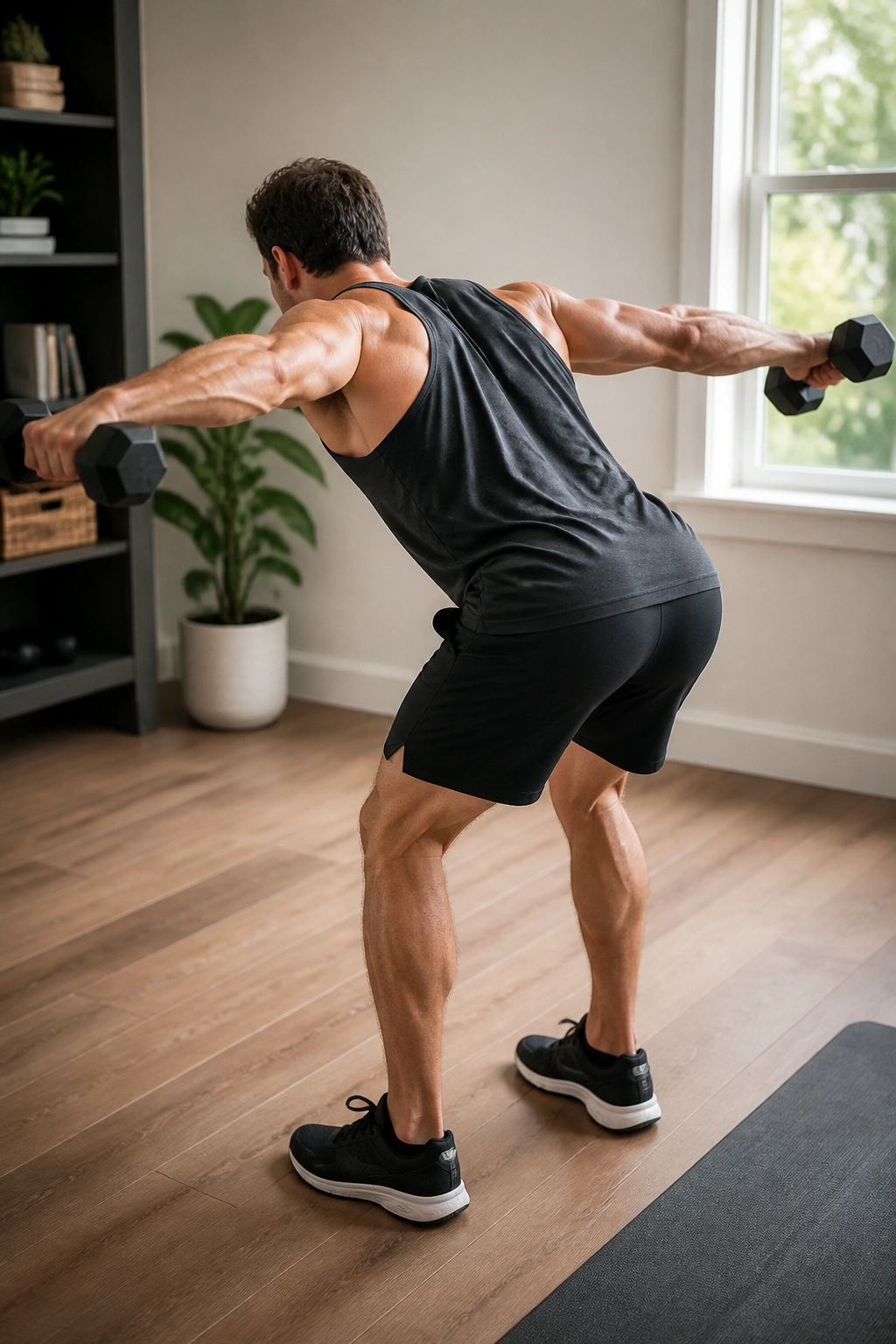
The backs of your shoulders light up on this one. Rear delt flys look quiet, but they matter a lot if you spend time pressing, typing, driving, or doing anything that rounds the upper body forward.
Hinge at the hips, keep a slight bend in the elbows, and open the arms out wide until they line up with the shoulders. Think about moving from the shoulder joint, not from the neck. If your traps grab the whole job, lighten the dumbbells and slow the pace.
There’s a clean little sensation at the top when the rear delts actually do their work. It feels like the back of the shoulder is waking up. That’s the feeling to chase.
A lot of home routines skip this pattern because it doesn’t look dramatic. Bad idea. It balances all the pressing and keeps the shoulders feeling better over time.
19. Renegade Row
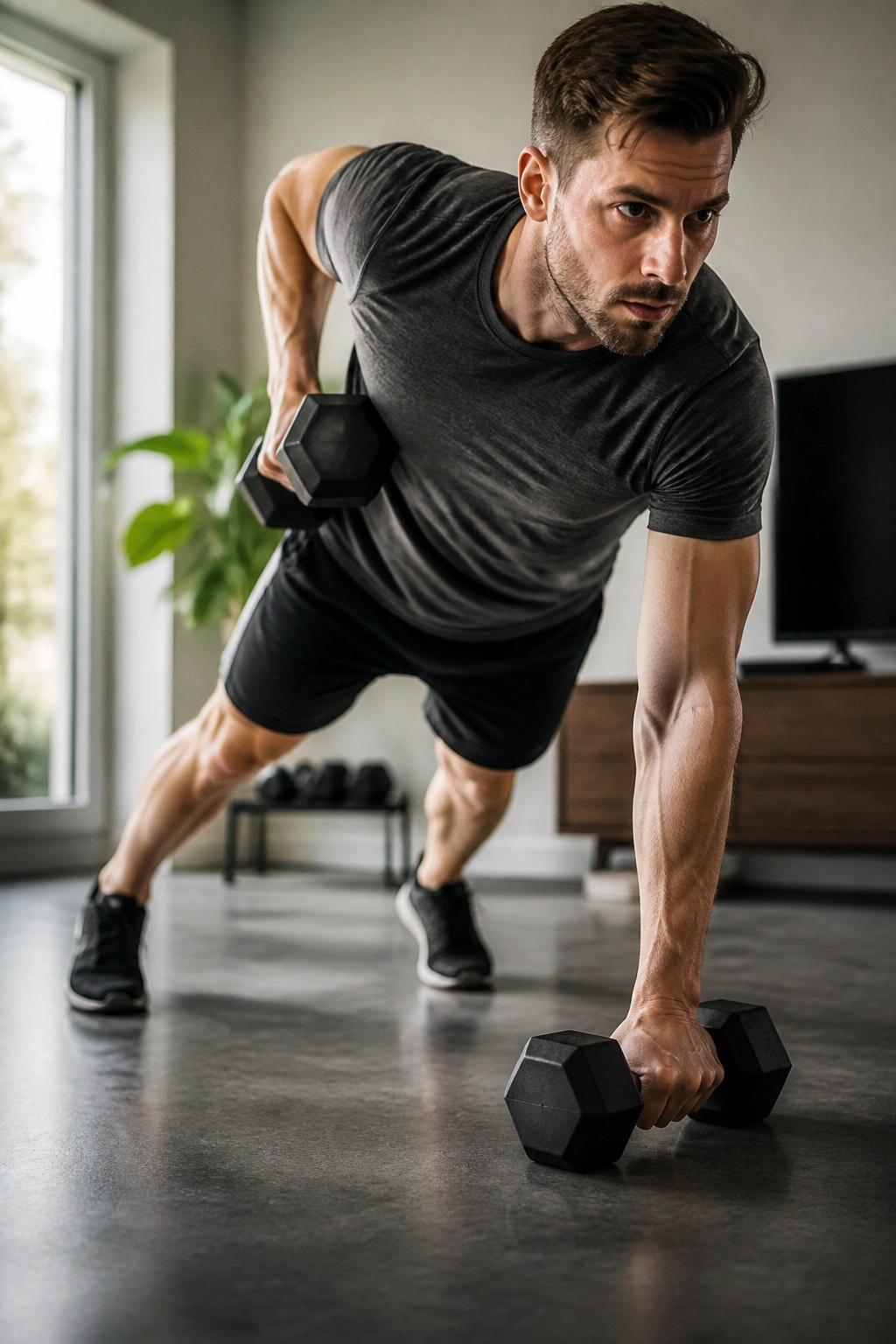
The renegade row looks tidy in a video and messy in real life. That’s part of its charm. It combines a plank with a row, so your core has to resist rocking while your back still does the pulling.
Start in a high plank with your hands on the dumbbells and your feet a little wider than hip-width for stability. Row one dumbbell toward your ribs, set it down with control, then switch sides. If your hips swing every time you pull, widen the feet more and lower the weight.
Easy version
- Keep your knees on the floor and row from a modified plank.
- Use lighter dumbbells than you think you need.
- Hold the top of the row for one second.
- Move slowly enough that the torso stays quiet.
This is a tough move to fake. Good. Not every home exercise should be easy to bluff through.
20. Dumbbell Thruster
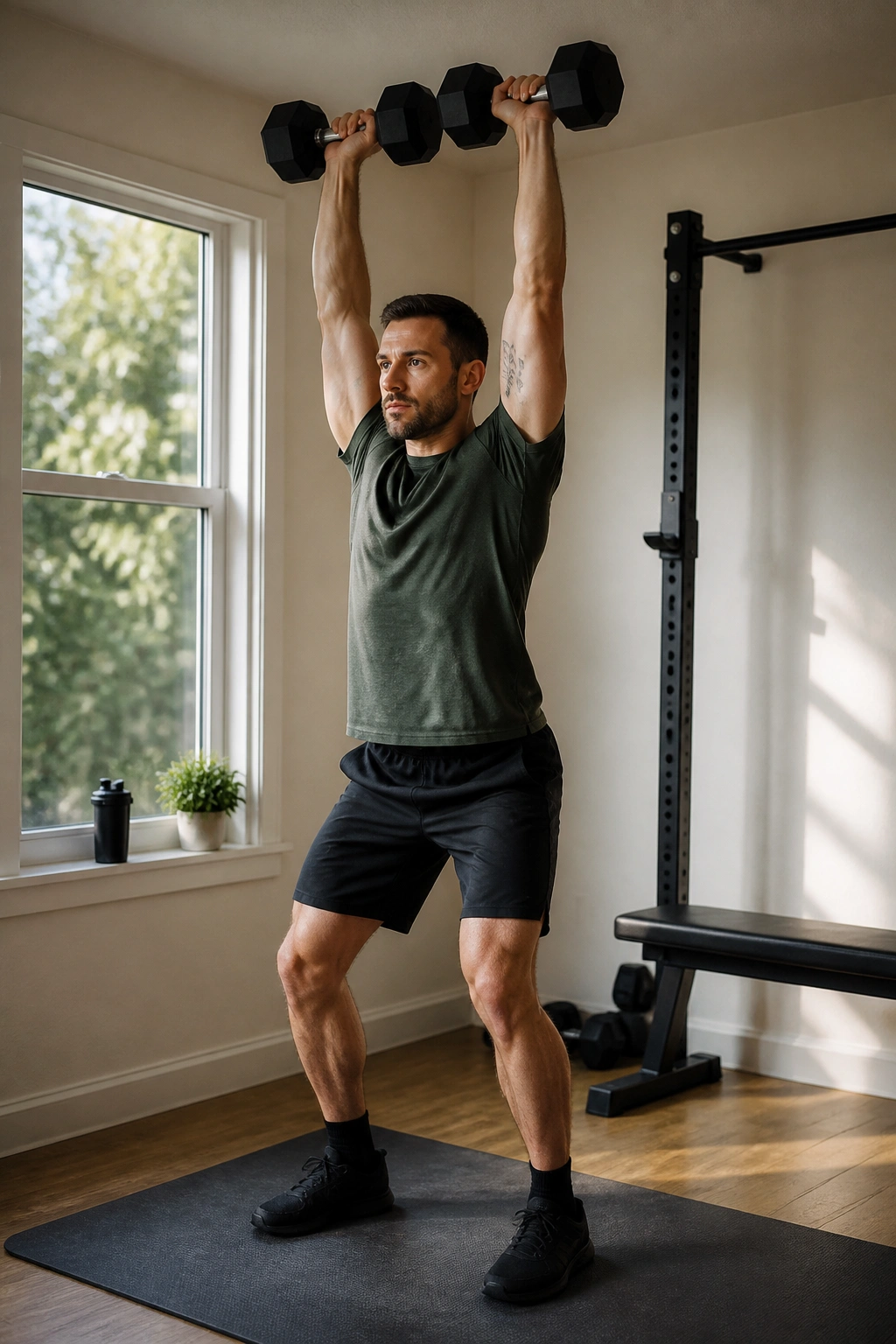
This is the move for days when you want legs, shoulders, and lungs to all complain at once. The dumbbell thruster blends a squat and an overhead press into one fluid rep, which makes it a strong choice when you want a full-body exercise that doesn’t need much floor space.
Hold the dumbbells at shoulder height, squat down with control, then stand up hard and press the weights overhead as you finish the drive. The timing matters. If the press starts too early, the rep gets sloppy. If you pause too long between the squat and the press, the whole thing turns clunky.
Use lighter dumbbells than you would for a strict press. That’s not a downgrade. It’s the point. Thrusters are meant to move, breathe, and stack a lot of work into a short window.
If you only have 12 minutes and want the session to feel complete, this is the kind of lift that earns its keep. It’s not subtle. That’s fine. Sometimes the best home workout is the one that leaves no doubt you actually trained.
