



Five day workout splits at home work better than most people expect when the plan is built around real movement patterns, not random exhaustion. If your dumbbells live beside the couch, your band keeps disappearing under a chair, and your workouts keep turning into “whatever feels hard today,” a split gives the week a spine.
The big advantage is balance. You can train hard enough to grow, but you do not have to turn one session into a 90-minute grind. That matters at home, where space is tight, rest is imperfect, and the line between training and chaos is sometimes just a laundry basket.
A good five-day setup also lets you spread stress across the week. Push work gets its own lane. Pull work gets its own lane. Legs stop being an afterthought. And if you only own a pair of adjustable dumbbells, a pull-up bar, or a backpack full of books, you can still build something solid.
The trick is matching the split to the gear you have, the joints you trust, and the kind of progress you actually want. Some people need more upper-body work. Some need glute volume. Some need quiet, apartment-friendly sessions that do not sound like a stampede. Start with the classic version, then pick the version that fits your life.
1. Push, Pull, Legs, Upper, Full at Home

This is the cleanest five day workout split at home for most people because it gives every major pattern a job. You are not guessing on Monday and regretting it by Thursday. The week has shape.
A simple weekly layout
- Day 1: Push — pushups, dumbbell press, overhead press, triceps work
- Day 2: Pull — rows, band pull-aparts, curls, rear delts
- Day 3: Legs — squats, split squats, RDLs, calf raises
- Day 4: Upper — a mix of push and pull with lighter loads
- Day 5: Full body — one lower lift, one press, one row, one carry
Keep the big lifts in the 6-10 rep range if you have enough load, then push accessories into 10-15 reps. That keeps the week from feeling like five different versions of the same workout.
I like this split for people with dumbbells and a bench or sturdy chair, but it works with bands and a mat too. The full-body day is the pressure release valve. If one muscle group feels beat up, it can ease off there and still leave the session useful. Good structure. No drama.
2. Upper/Lower/Push/Pull/Core Rotation

Why split the week this way? Because some home training plans overfeed the chest and arms while the rest of the body quietly falls behind. This version fixes that without making the schedule fussy.
Why it works
An upper/lower base gives you two solid strength days, then the push and pull days let you add more focused volume where you need it. The core day is not filler. If you use it well, it builds trunk strength with dead bugs, side planks, suitcase carries, and slow mountain climbers.
A week can look like this:
- Monday: Upper
- Tuesday: Lower
- Wednesday: Push
- Thursday: Pull
- Friday: Core + conditioning
That layout is especially useful if your sessions are only 35 to 45 minutes long. You can keep each workout to 4 exercises, 3 working sets each, and still finish with enough left in the tank to keep showing up. The rhythm feels better than body-part isolation for a lot of home lifters, because the stress changes from day to day instead of stacking in one spot.
Best use case
This is a smart pick if you like dumbbells, bands, or a small adjustable setup and want to avoid the stale feeling that comes from training the same angle too often. It also works well when recovery is decent but not endless.
3. Beginner Full-Body Ladder Split
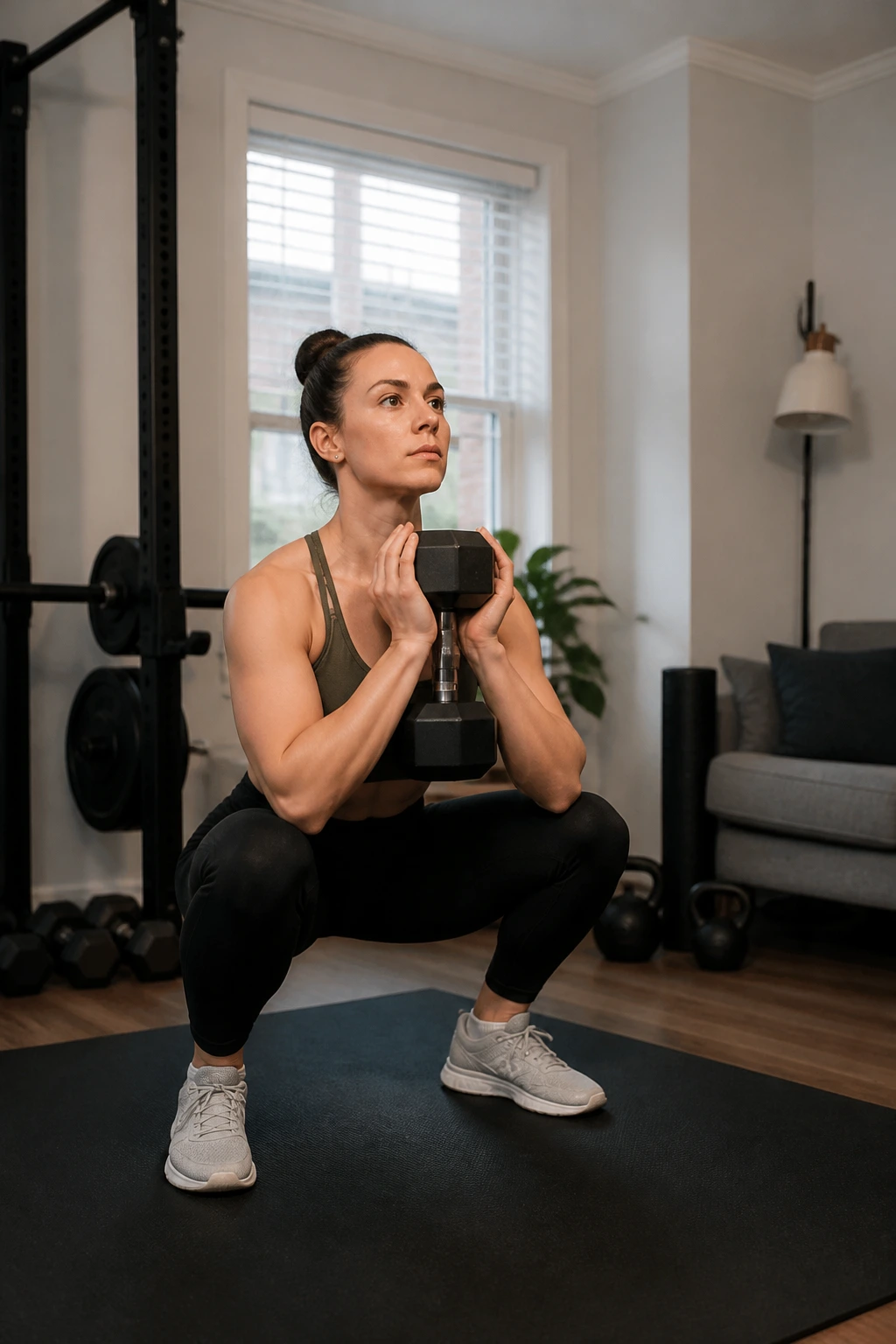
If you are still learning how to train at home without losing track of the plan halfway through the week, a full-body ladder split is hard to beat. Simple wins here.
Each day uses the same movement buckets — squat, hinge, push, pull, core — but the emphasis changes a little. One day is heavier. One day is slower. One day uses more reps. One day focuses on single-leg work. The repetition helps beginners learn form faster because the pattern shows up again and again.
A plain version looks like this:
- Day 1: 2-3 sets each of squats, pushups, rows, hinges, planks
- Day 2: Same moves, but slower lowering and fewer reps
- Day 3: Add split squats, glute bridges, and incline pushups
- Day 4: Use lighter work and cleaner form
- Day 5: Repeat the best versions from the week
That “ladder” feel matters. You are not chasing a new exercise every day. You are getting better at a few basics. And that is usually where home training works best. If you can keep your reps tidy and your rests honest, the split gives you strength, muscle, and confidence without making the week feel technical.
4. Dumbbell-First Hypertrophy Week

If you own two dumbbells, this is one of the easiest ways to build muscle at home. Dumbbells are awkward in the best possible way. They make both sides work, and they expose lazy reps fast.
What to prioritize
The sweet spot is 6-12 reps on compounds and 10-15 reps on smaller work. Think dumbbell floor press, one-arm row, goblet squat, Romanian deadlift, lateral raise, and split squat. Use slower lowering on the last set if the weight feels too light.
A week like this might run:
- Day 1: Chest and triceps
- Day 2: Back and biceps
- Day 3: Legs
- Day 4: Shoulders and arms
- Day 5: Full-body pump work
What makes it different
Dumbbells let you chase range of motion without needing fancy equipment. A split squat with a front-foot pause can be harder than a barbell squat if the load is modest and the tempo is controlled. Same goes for rows. A strict one-arm row with a hard squeeze at the top often beats sloppy momentum with heavier weight.
This split is a good fit if you want visible size gains and do not mind training with intent. It is not flashy. It works.
5. Bodyweight Strength and Skill Week
Unlike dumbbell plans, this split rewards leverage, tempo, and patience. Bodyweight training can feel easy for about five minutes. Then the exercise gets mean.
The week should be built around pushups, pull-ups or rows, split squats, pike pushups, dips if you have a safe setup, and core holds like hollow body positions. If you have no pull-up bar, use a sturdy table row, rings, or a band anchored low.
A practical version:
- Day 1: Push strength
- Day 2: Pull strength
- Day 3: Legs and core
- Day 4: Push skill work
- Day 5: Pull plus lower-body volume
The skill days matter. That is where you practice harder progressions — feet-elevated pushups, slow eccentrics, one-arm assisted rows, or split squat pauses. Keep the reps honest and stop before form gets sloppy. If your bodyweight work is too easy, you probably need a harder variation, not more reps for the sake of it.
This split is best for people who want to train at home without much gear and still care about strength, not just sweat.
6. Kettlebell Conditioning and Power Week
A kettlebell workout at home sounds simple until a few sets of swings make your grip feel like wet chalk. That is part of the charm.
The kettlebell split works best when you treat the bell as a tool for hinges, presses, squats, and carries. A week might open with swings and deadlifts, move into presses and cleans, then hit front squats, reverse lunges, and loaded carries. If you only have one bell, that is fine. Singles are enough.
A straightforward flow
- Day 1: Hinge power — swings, deadlifts, RDLs
- Day 2: Press and carry — clean and press, rack holds, suitcase carries
- Day 3: Squat and lunge — goblet squats, split squats, step-ups
- Day 4: Upper-body volume — presses, rows, halos
- Day 5: Conditioning circuit — swings, squats, carries, core
Use crisp sets, not marathon sets. Swings can live in the 10-20 rep range, while presses and squats often work better around 5-8 reps per side. The bell should feel explosive, not sloppy. If your lower back starts doing the work of your hips, the set is over.
7. Glute, Hamstring, and Leg Emphasis Week
If your legs disappear every time you train at home, the fix is not more random squats. It is a smarter lower-body week with enough hamstring and glute work to actually change shape.
This split gives the lower body two real days and a third smaller touch-up. Think Romanian deadlifts, hip thrusts off a couch or bench, Bulgarian split squats, step-ups, frog pumps, and hamstring sliders on a towel or furniture sliders. The upper-body work stays in the plan, but it does not steal the spotlight.
A useful setup looks like this:
- Day 1: Glutes and hamstrings
- Day 2: Upper-body maintenance
- Day 3: Quads and split squats
- Day 4: Upper body plus core
- Day 5: Glute pump and conditioning
The key is not to let every lower-body day turn into the same squat session. Use different knee angles, different hip angles, and a little unilateral work. A single-leg RDL done slowly can light up hamstrings in a way that a hundred jump squats never will. This split suits people who care about lower-body strength, athletic shape, or simply fitting into jeans better without doing endless cardio.
8. Back, Shoulders, and Posture Reset Week
Can a home split fix rounded shoulders? Not by magic. But if your week gives rows, rear delts, and upper-back work enough room, things usually start to move in the right direction.
This is the split I’d hand to anyone who sits too much and feels it in the neck first. The plan should bias pulling work at roughly 2 sets of pull for every 1 set of press. That does not mean you stop pressing. It means your back gets more love.
What to include
- Rows with dumbbells or bands
- Face pulls
- Rear-delt flyes
- Band pull-aparts
- Wall slides
- Y-T-W raises
- Light overhead pressing
- Thoracic mobility work
A week might run:
- Monday: Row focus
- Tuesday: Shoulder stability
- Wednesday: Chest and triceps, kept moderate
- Thursday: Upper back and rear delts
- Friday: Posture reset plus carries
A lot of people train chest harder than back because pressing feels familiar. That usually shows up later as cranky shoulders and a tired neck. This split does not let that happen so easily. It is boring in the best way. And yes, boring is useful when the body has been bent over a laptop for years.
9. Calisthenics Skill-Building Week
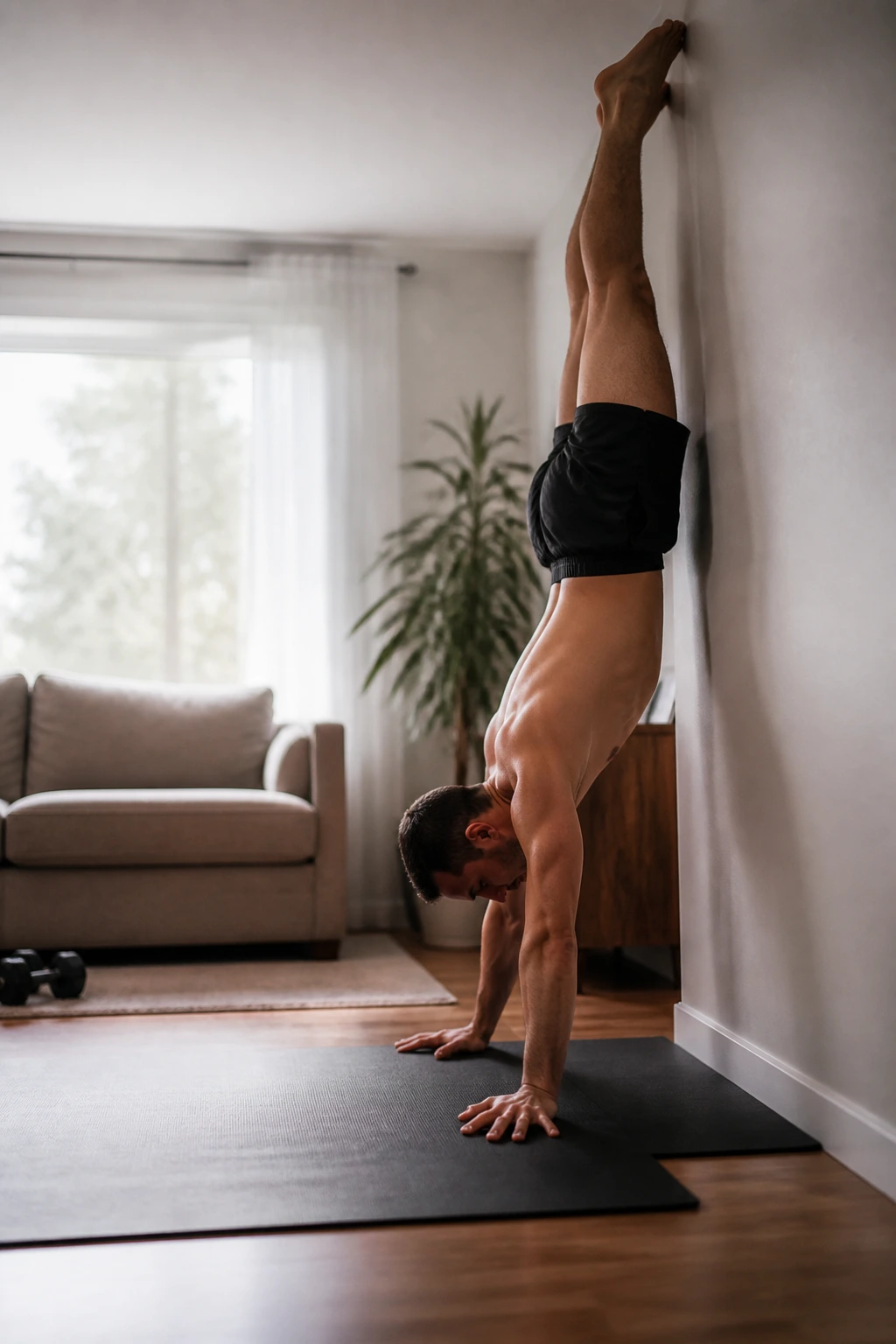
A skill-based home split needs one rule: practice the hard thing while you are fresh. Do not save handstand work or pull-up progressions for the end when your shoulders already feel cooked.
How to use it
Start each workout with 5 to 10 minutes of skill practice. Handstand wall holds, tuck holds, L-sit work, planche leans, or slow ring support holds all fit here. Then move into strength work with pushups, dips, rows, split squats, and core holds.
A week can look like this:
- Day 1: Handstand and push strength
- Day 2: Pull-up or row skill
- Day 3: Legs and core
- Day 4: Dips and pressing control
- Day 5: Full calisthenics practice
This split is for people who like the feeling of learning a movement, not just burning through reps. It works best when you can repeat the same drills long enough to improve the angle, the hold, or the range of motion. If you have a pull-up bar or rings, great. If not, rows, elevated pushups, and pike work still give you plenty to train.
The point is quality. Sloppy reps do not count for much here.
10. Quiet Apartment-Friendly Split
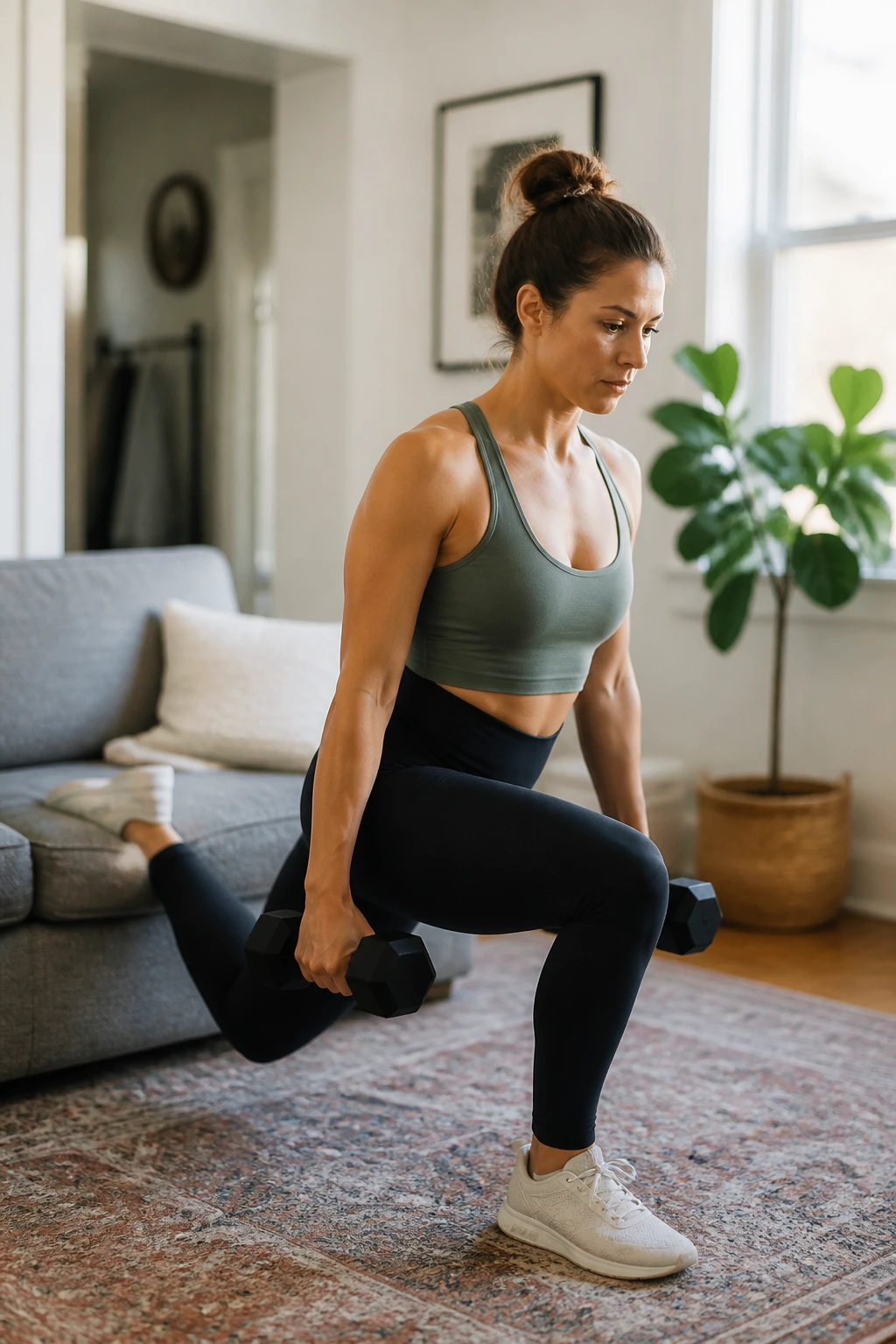
Unlike jump-heavy circuits, this split keeps both feet and furniture quiet. That sounds minor until you live upstairs and your floor starts to complain.
The easiest way to make a silent home workout plan is to slow everything down. Use split squats, glute bridges, pushups, rows, dead bugs, step-ups, and deliberate shadow boxing. Skip burpees, tuck jumps, and any move that makes the floor echo.
A week might run like this:
- Day 1: Upper body, slow tempo
- Day 2: Legs, no impact
- Day 3: Core and mobility
- Day 4: Upper body with bands
- Day 5: Full-body low-noise circuit
Keep the lowering phase at 3 seconds on most lifts. That alone raises the difficulty without adding noise. I also like unilateral work here because one leg or one arm can work hard without much movement. A split squat held at the bottom for a count of two is brutally effective and almost silent.
This split is best for apartments, early mornings, and anyone who hates the feeling of doing cardio for the sake of cardio. Quiet does not mean easy. Not even close.
11. Fat-Loss Conditioning Split at Home
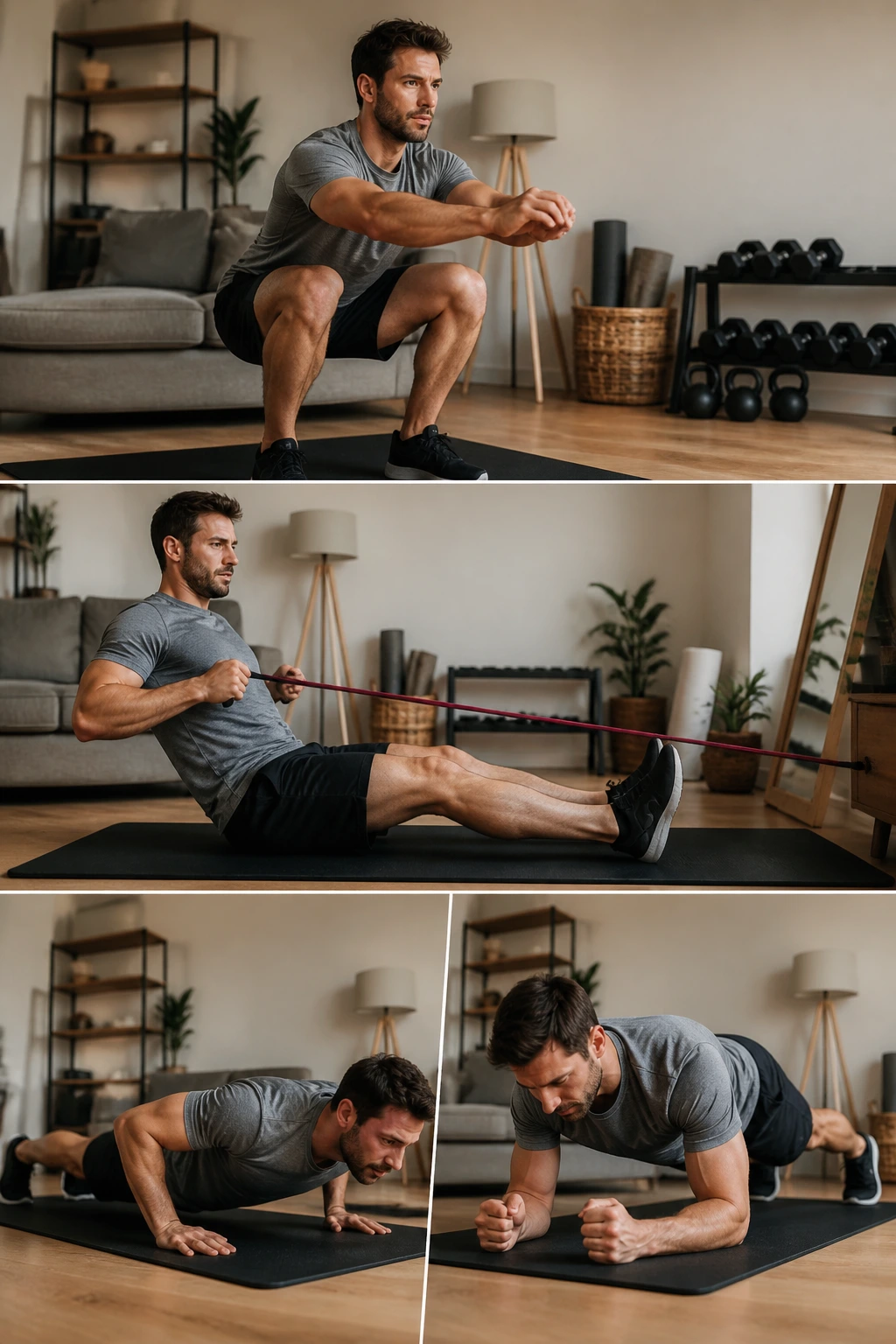
Five days a week is enough to burn a lot of energy without living on burpees. That is the part people miss. A fat-loss-friendly split should mix strength and conditioning so you keep muscle while creating a useful calorie burn.
A smart week has two strength-focused days, two circuit days, and one longer finish that ties it together. The strength days keep the movements crisp: squats, presses, rows, hinges. The circuit days raise heart rate without turning every session into a sloppy sweat contest.
Try this rhythm:
- Day 1: Strength circuit
- Day 2: Conditioning intervals
- Day 3: Lower-body strength
- Day 4: Upper-body circuit
- Day 5: Full-body finisher day
Keep rests short but not stupid short. 30 to 60 seconds between exercises is usually enough on circuit days. If your form starts to fall apart, the work quality is gone. Better to train hard and controlled than to chase a red face and call it fitness.
This split is useful for people who want to lean out, but it still needs food that matches the goal. The plan helps. The kitchen still matters.
12. Athletic Power and Agility Split
A hallway, a mat, and a timer can cover more athletic work than people think. You do not need a field to train like you move for a reason.
This split should live around single-leg strength, jumps, landings, lateral movement, and fast hips. Think split squats, jump squats with a soft landing, skater steps, high knees, broad-jump stick landings, and fast feet drills. If you have space for sled work, great; if not, step-ups and carries fill the gap.
Useful day pattern
- Day 1: Jump and land
- Day 2: Single-leg strength
- Day 3: Agility and lateral work
- Day 4: Upper-body power
- Day 5: Full-body conditioning
The best part is the landing practice. People love the leap and ignore the stop. Bad landing mechanics are where knees get annoyed. Soft knees, quiet feet, chest tall. That cue matters more than most people think.
This is the split for someone who wants to feel springier, quicker, and less stiff. It is not the friendliest option if your joints are already cranky, so start low and build slowly.
13. Backpack and Household-Object Split
A backpack full of books looks cheap. It also works.
This is the overlooked home workout split for people who do not want to buy much equipment. A loaded backpack can become a squat load, a row load, a carry load, and even a press load if you hold it smartly. Water jugs, detergent bottles, towels, and sturdy chairs all have a job too.
The trick is keeping the load from shifting. Pack heavy books low and close to your back. Use towels to wedge loose items so they do not slam around. If the zipper feels stressed, stop. A torn backpack is not a badge of honor.
A week could be built around:
- Backpack squats and split squats
- One-arm backpack rows
- Floor presses with a backpack
- Suitcase carries with a water jug
- Towel hamstring sliders
This split works because resistance is resistance. The body does not care whether the weight came from a gym rack or a grocery bag full of novels. It cares about tension, range, and consistency. If money is tight, this may be the most practical five-day split in the whole list.
14. Desk-Worker Posture and Core Split
If sitting ruins your shoulders and hips, a chest-and-arms-only split will not help much. You need a plan that opens the front of the body while teaching the trunk to stay steady.
This split leans on rows, rear-delt work, glute bridges, hip hinges, split squats, dead bugs, and bird dogs. Add a little thoracic mobility at the start or end of each session. Ten minutes is enough to matter.
What a week might include
- Day 1: Upper back and rear delts
- Day 2: Hips and glutes
- Day 3: Core and breathing drills
- Day 4: Push and pull balance
- Day 5: Full-body reset with mobility
I like this style for people who feel stiff before they even start exercising. It is not glamorous. Fine. It gets the job done by attacking the exact places desk work tends to tighten up.
The best detail here is ratio. Keep pulling volume higher than pressing volume, use pauses where you feel weak, and do not rush the mobility work. A smooth hip hinge or a clean bird dog tells you more than a hundred rushed crunches ever will.
15. Core, Carry, and Trunk Stability Week
What actually builds a strong core at home? More often than not, it is carries, planks, dead bugs, and anti-rotation work, not endless sit-ups.
This split is built to make your torso resist movement instead of just flexing hard. That means suitcase carries, front rack carries, side planks, Pallof presses with a band, dead bugs, and slow marching drills. The hips and shoulders still train, but the trunk gets the spotlight.
A week can be arranged like this:
- Day 1: Anti-extension
- Day 2: Anti-rotation
- Day 3: Carry day
- Day 4: Side-body work
- Day 5: Full trunk and lower-body blend
The nice thing about this setup is that it supports almost every other split on this list. Better trunk control makes squats steadier, presses cleaner, and rows less sloppy. A suitcase carry with one heavy dumbbell or water jug can tell you a lot about your real stability. If you lean, twist, or shrug, the load is exposing something useful.
This split is a smart choice if your lower back tends to complain or if you want training that carries over into daily life. Literally.
16. Heavy-Light-Volume Home Strength Split
Heavy days are not the whole story. At home, a better plan is often one hard day, one lighter technical day, and one volume day that builds muscle without beating you up.
A simple weekly pattern
- Day 1: Heavy lower body — 4-6 reps
- Day 2: Light upper body — 8-10 reps
- Day 3: Volume full body — 10-15 reps
- Day 4: Heavy upper body — 4-6 reps
- Day 5: Accessories and conditioning — 12-20 reps
That spread keeps your joints from getting trapped under the same stress every day. It also helps if your dumbbells top out before your strength does. Heavy can mean slower reps, pauses, single-leg work, or harder variations. You do not need a barbell to make a day feel serious.
The volume day matters more than people think. That is where you can pile up clean reps on rows, presses, goblet squats, and hip hinges. If the heavy days are the sharp end, the volume day is the part that quietly grows the base.
This split suits intermediate lifters who want more structure than a random home routine but less wear-and-tear than five straight hard sessions.
17. Mobility and Strength Blend Week
If your hips feel glued to the floor and your shoulders crack every time you reach overhead, a hard-only plan gets old fast. A split that mixes strength with mobility can keep training moving without making your body feel like it has been sanded down.
The way to do it is simple. Each workout starts with a short mobility block — ankles, hips, thoracic spine, shoulders — then moves into strength work. End with a few more minutes of the same. You are not trying to turn the workout into yoga. You are trying to make the training feel better.
A week might look like this:
- Day 1: Lower body + ankle and hip mobility
- Day 2: Upper body + shoulder mobility
- Day 3: Core + thoracic rotation
- Day 4: Full body + loaded stretching
- Day 5: Easy circuit + mobility reset
Loaded stretching can mean a goblet squat hold, a split squat hold, or a light overhead carry. Small stuff. Useful stuff. The point is that mobility is attached to a real pattern, not floating alone in a separate corner where it gets skipped.
This split is a good fit for older trainees, stiff trainees, and anyone who wants to keep training for a long time without feeling beat up after every week.
18. Family-Friendly 20-Minute Split
Short sessions can work better than long ones if the house is busy and attention is thin. A 20-minute split forces the point: pick the useful exercises, do them well, leave.
This is where EMOMs, mini-circuits, and small supersets shine. A weekday can be built around one push move, one pull move, one leg move, and one core move. No wasted wandering. No twenty-minute debate about what to do next.
A practical week:
- Day 1: Push + pull
- Day 2: Legs
- Day 3: Core and carries
- Day 4: Upper body
- Day 5: Full-body circuit
Keep each workout to 4 moves, 3 rounds, and about 45 seconds of work per move. That is enough to matter if the effort is honest. If you have kids, work calls, or a room that keeps changing into a playroom, this split is realistic in a way longer plans often are not.
I like this approach because it respects life instead of pretending training happens in a vacuum. It is compact, but not flimsy.
19. Advanced Muscle-Building Split Without a Gym
This split is for people who already know the basics and want to squeeze more growth out of home training without buying a full rack. It leans on unilateral work, pauses, slower eccentrics, and higher set counts.
The week can cover push, pull, legs, shoulders and arms, then a full-body pump day. You can use dumbbells, bands, a bench, rings, or a pull-up bar, but the real driver is effort control. A single-arm row with a pause at the top, a Bulgarian split squat with a slow descent, and a feet-elevated pushup can all be brutally productive.
What to favor
- 3-5 working sets on main lifts
- 8-15 reps on most movements
- 1-2 second pauses where the load gets hardest
- Supersets for smaller muscles
- A final pump set on the last exercise of the day
This is not the place for sloppy circuit fluff. The goal is targeted tension. If a movement gets easy, increase the range, slow the lowering phase, or use a harder single-leg version before you start adding random junk volume.
This split is the one to use when you miss the feeling of real progression but still want to stay at home.
20. Maintenance and Recovery Split
Not every five-day split has to leave you wrecked. Some weeks are for keeping strength, staying loose, and walking away from the session with energy still in the tank.
A maintenance split is a smart choice during busy periods, after harder training blocks, or anytime your sleep and stress are fighting the schedule. Keep the exercises basic, use 2-3 sets instead of chasing volume, and leave 1-2 reps in reserve on most work. You should finish feeling better than when you started.
A simple layout could be:
- Day 1: Easy full body
- Day 2: Mobility and core
- Day 3: Moderate upper body
- Day 4: Moderate lower body
- Day 5: Light conditioning and carries
This kind of week is underrated because it keeps the habit alive. People often think progress only counts when every workout is hard. That is not true. Sometimes the most useful thing is staying in the groove while giving your joints, nerves, and schedule a break.
If you want one rule to carry forward, make it this: choose the split you can repeat cleanly next week, not the one that sounds heroic on paper.
