



A shoulder workout can change the whole look of your upper body faster than most people expect. Broad delts make the waist look smaller, the chest sit higher, and even a plain T-shirt hang better.
Most lifters still miss the point. They press hard, call it a day, and wonder why the front of the shoulder grows while the side and rear heads lag behind. The result is a chest-dominant upper body that looks strong from the front and flat from the side.
The shoulder is not one simple muscle, either. It’s a joint that likes control, clean ranges, and enough variety to keep the front delts from stealing every rep. If you want your upper body to look and feel balanced, you need heavy pressing, lateral work, rear-delt work, and a few routines that spare the joints when they need a break.
Pick the style that matches your equipment and energy. Run it hard enough to learn something from it, then keep a logbook and let the numbers tell the truth.
1. Heavy Barbell Press and Lateral Raise Combo

This is the plain, old-school shoulder day that still works because it doesn’t waste time. You get one big press for strength, then you chase the side delts with controlled raises so the upper body looks wider from the front and the side.
Why It Works
Start with 5 sets of 3 to 5 reps on a standing barbell overhead press. Keep the rest around 2 minutes so the bar speed stays decent, and stop a rep before your lower back starts turning the lift into a standing incline press.
After that, move to 4 sets of 12 to 15 dumbbell lateral raises. Use a load that lets you pause for a split second at the top without shrugging your ears to your shoulders. Finish with 3 sets of 10 chest-supported rear-delt rows and 2 sets of 20 face pulls. The rear work matters. A lot.
- Barbell overhead press: 5 x 3-5
- Dumbbell lateral raise: 4 x 12-15
- Chest-supported rear-delt row: 3 x 10
- Face pull: 2 x 20
Tip: If your ribs flare on every rep, lower the load and stand tighter. The press should look strong, not sloppy.
2. Slow-Eccentric Seated Dumbbell Press

A seated dumbbell press changes the feel immediately. You can’t cheat the same way, and that is the whole point.
Slow reps are humbling.
Use a bench with a backrest and choose dumbbells that let you control a 3-second lowering phase. Press for 4 sets of 8 reps, pausing briefly near the top without banging the bells together. Then move to 3 sets of 12 to 15 strict lateral raises and 3 sets of 15 reverse flyes on an incline bench.
The slow lowering does two useful things. It keeps the shoulder joint honest, and it makes lighter weights feel plenty heavy by the sixth or seventh rep. That means you don’t need to load the movement like a powerlifter if your goal is rounder delts and cleaner upper-body balance.
Use this routine when you want shoulder size without the grind of a max-effort barbell day. It’s also a smart choice if standing pressing leaves your lower back tired before your shoulders are actually done.
3. Cable Lateral Raise and Face Pull Superset
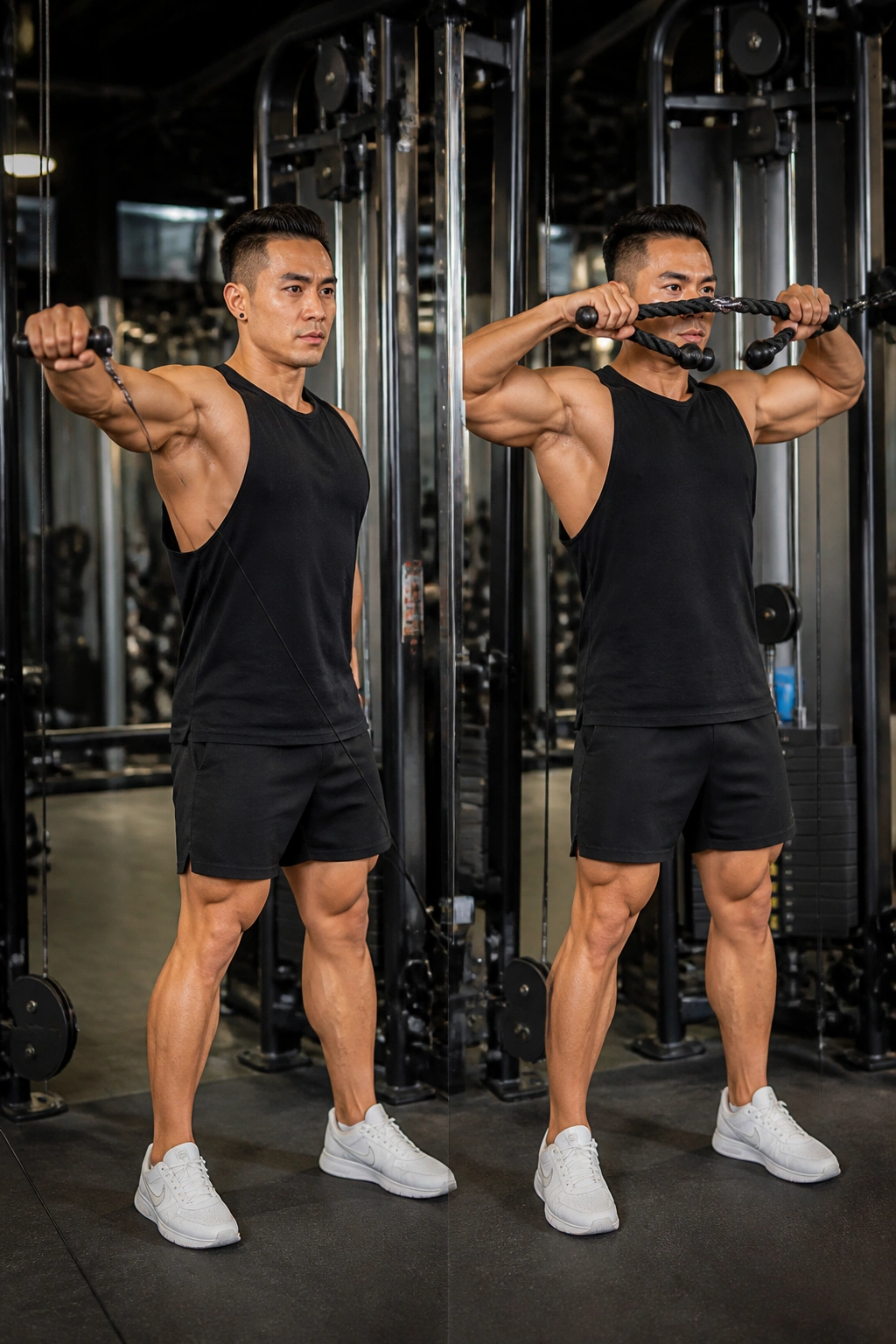
Want a shoulder routine that burns the side delts without beating up your elbows? Cables do that better than most free-weight setups.
How to Run It
Set the cable pulley low, step out far enough to keep tension at the bottom, and do single-arm lateral raises for 12 to 15 reps. Then walk straight into face pulls for 15 reps with a rope attachment. That’s one round. Do 4 rounds, resting only 30 to 45 seconds between rounds.
The nice thing here is tension. Dumbbells lose load near the bottom, but the cable keeps pulling the whole time, which is why the side delt gets that deep, chewy fatigue people are chasing. Add a final 12-rep rear-delt cable sweep if you want a little more upper-back involvement.
This is a good finisher after chest or back work, but it also stands alone when your shoulders feel flat and you don’t want to grind through heavy pressing. It’s clean, direct, and easy to scale.
4. Push Press and Upper-Back Support Day
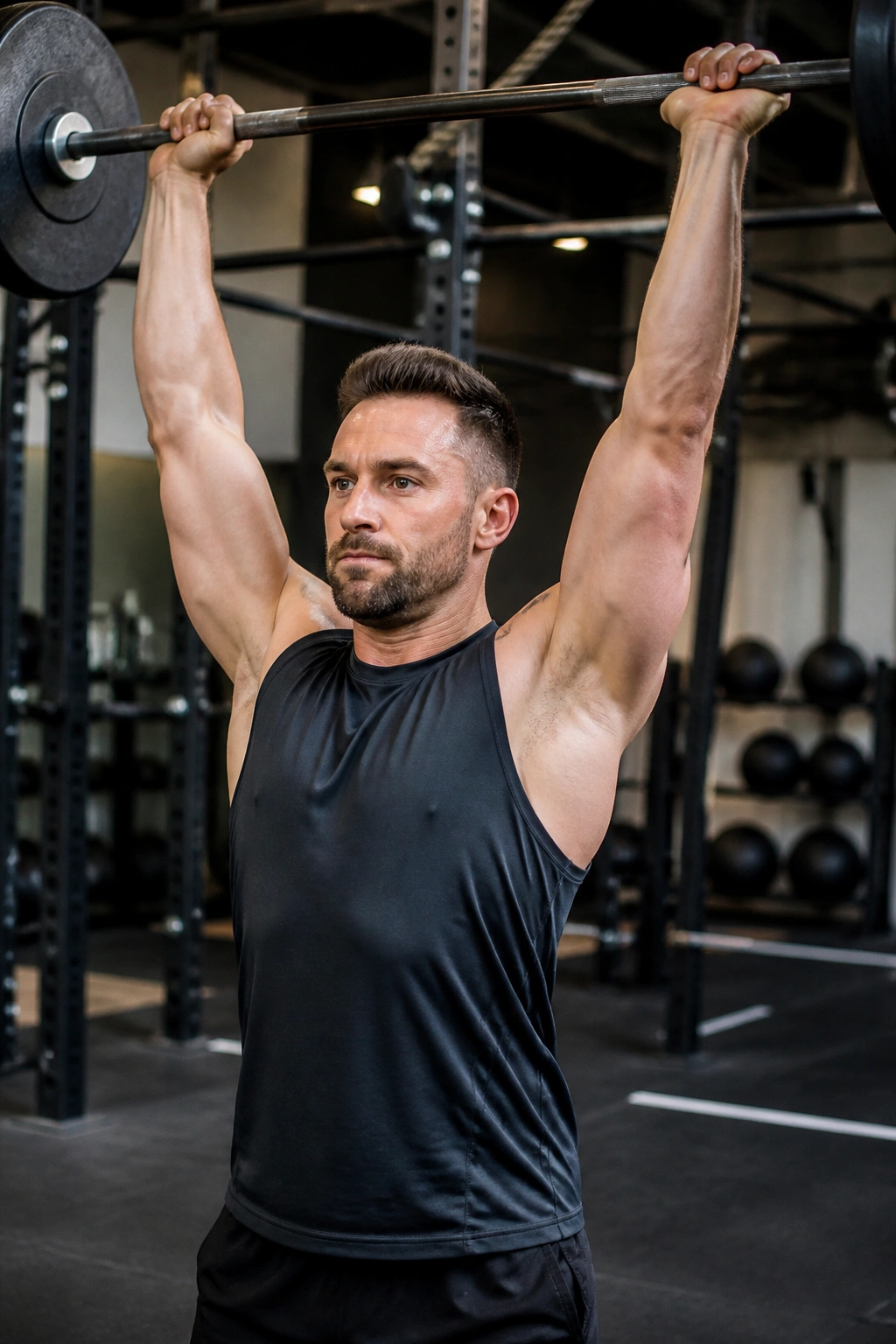
Push press days are not lazy press days. They’re power days.
The legs give the bar a clean shove, the shoulders finish the job, and the upper back has to stay tight enough to keep the whole thing from turning into a wobble. If you want a routine that hits the delts and carries over to the rest of your upper body, this one belongs near the top of the list.
Do 6 sets of 3 reps on the push press, using enough weight to feel fast but not sloppy. After that, pair it with 4 sets of 6 to 8 neutral-grip pull-ups or lat pulldowns, then 4 sets of 8 barbell rows, and finish with 3 carries of 30 seconds per side if you have dumbbells or kettlebells.
- Push press: 6 x 3
- Neutral-grip pull-up or pulldown: 4 x 6-8
- Barbell row: 4 x 8
- Farmer carry: 3 x 30 seconds
The catch is simple: every dip has to stay short and sharp. If you sink too deep, the movement turns into a leg day with a shrug.
5. Arnold Press Pyramid With Rear-Delt Finish

The Arnold press feels messy for the first two reps, then the groove shows up. That’s part of why people either love it or hate it.
Use moderate dumbbells and work up and down in a pyramid: 12 reps, 10 reps, 8 reps, 8 reps, then 10 reps again as a back-off set. Keep the motion smooth. Rotate the palms as you press, but don’t twist so much that the shoulder dumps forward at the bottom.
Slow reps are humbling.
After the pyramid, finish with 3 sets of 15 reverse flyes or rear-delt machine work. The Arnold press already gives the front delts a lot of attention, so the rear finish keeps the shoulder from getting pulled too far forward over time.
This routine is useful when you want range, pump, and a little old-school bodybuilder feel in the same session. It’s not the best pick if your wrists or front shoulders are cranky. Those joints usually complain first.
6. Band-and-Bench Home Shoulder Day
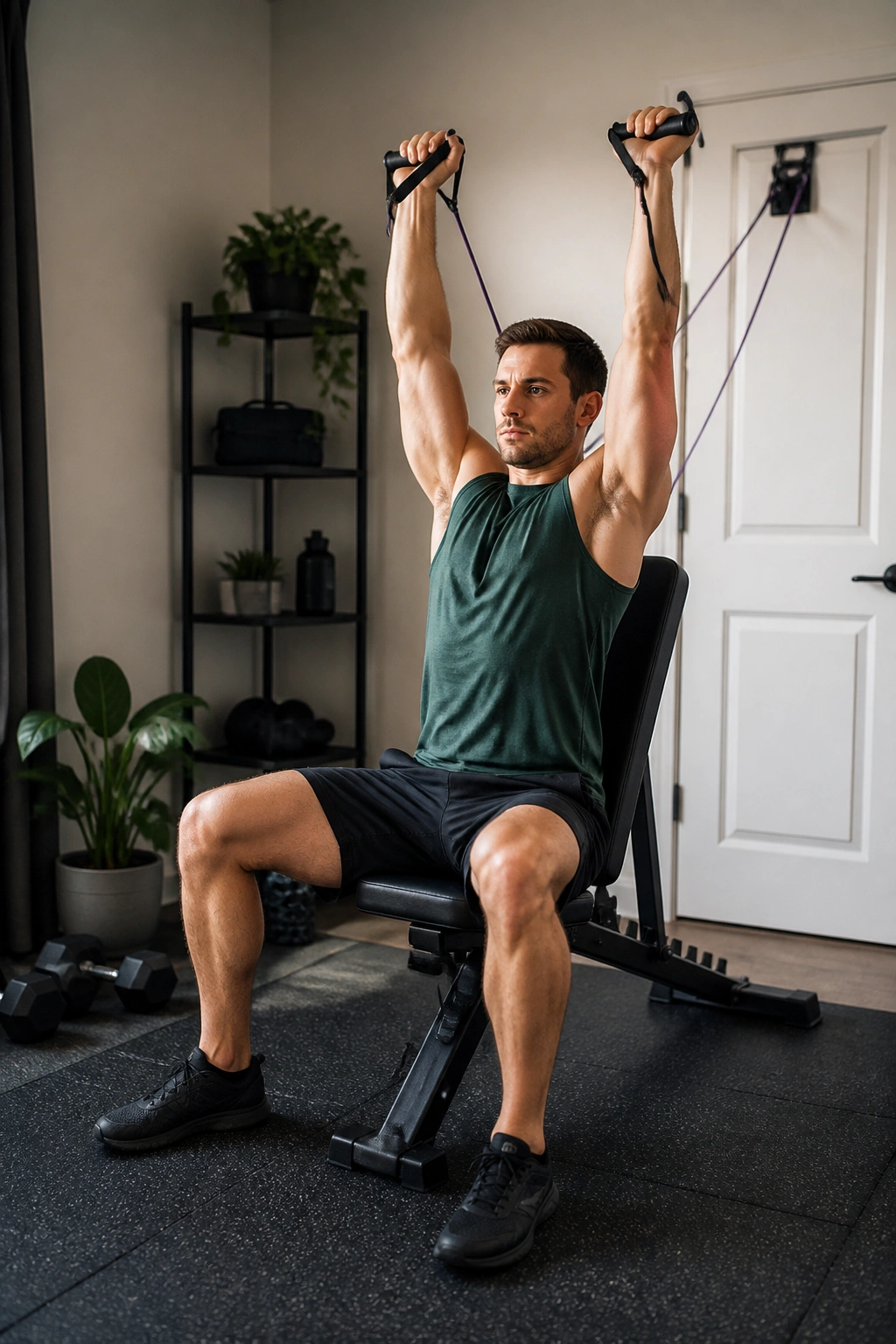
Compared with a rack full of machines, bands and a bench look humble. They still get the job done.
If you train at home, in a hotel room, or in a garage with half the gear you’d like, this routine covers the basics without much fuss. Start with band overhead presses for 4 sets of 15, then move to pike push-ups for 3 sets of 6 to 10. Add band lateral raises for 3 sets of 20 and band pull-aparts for 3 sets of 25. If you have a backpack loaded with books, finish with 3 sets of 12 backpack rows to keep the upper back in the mix.
Best for Travel Days
This is the routine you use when consistency matters more than bragging rights. The bands keep tension on the shoulder through the whole range, and the pike push-up gives you a bodyweight press that still feels like work.
The whole session can be finished in 20 to 25 minutes. That’s enough to keep momentum alive, which is usually the thing people lose first when their setup gets messy.
7. Machine Shoulder Press and Reverse Pec Deck
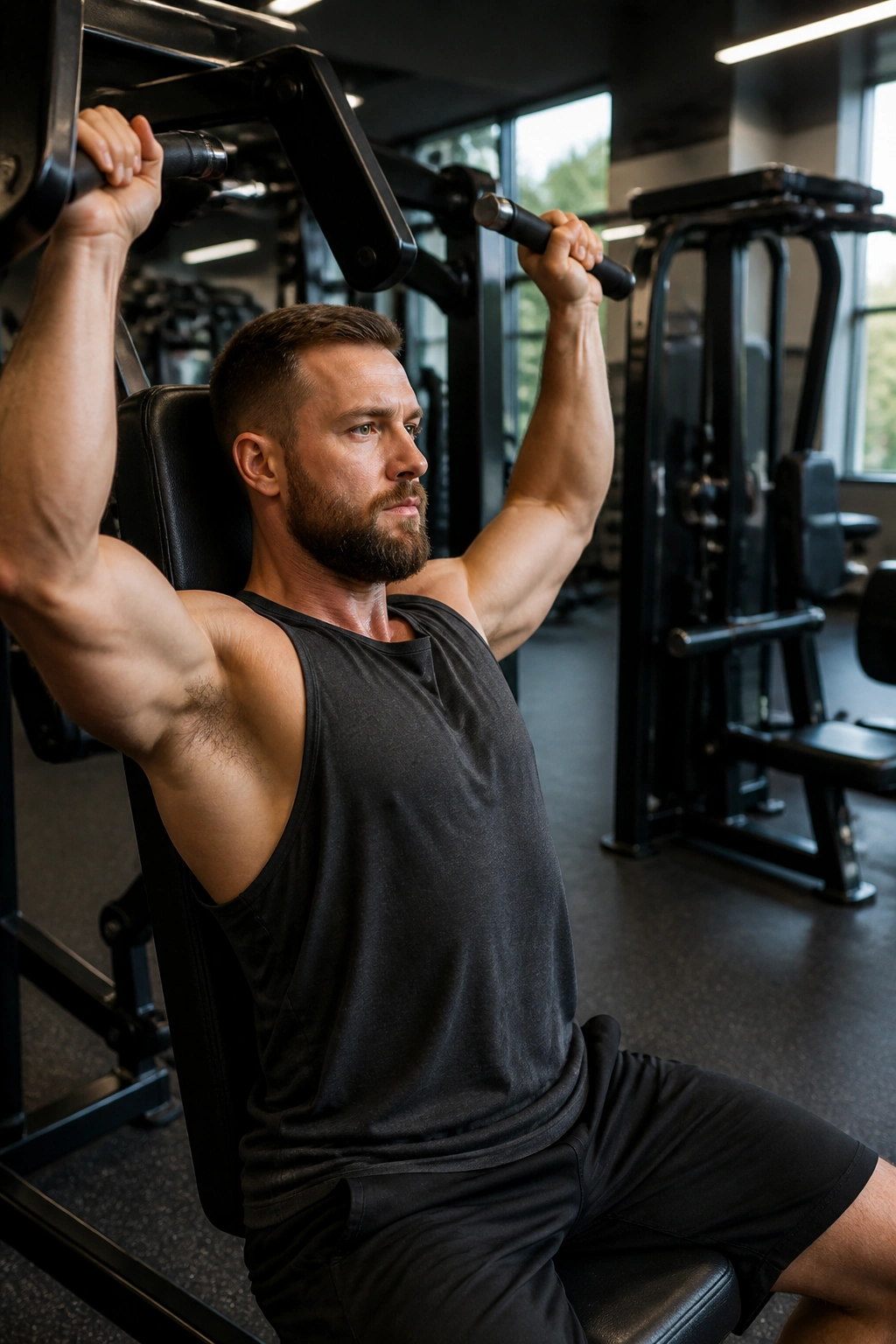
If your shoulders get cranky, machines are not a downgrade. They’re a tool.
A machine shoulder press gives you a fixed path, which means you can focus on driving the elbows up and staying tight through the torso. Use 4 sets of 10 reps with a smooth tempo, then move to the reverse pec deck for 4 sets of 15. After that, add cable Y-raises for 3 sets of 12 if you want a little more upper-trap and lower-scap work.
What to Feel
You should feel the front and side delts doing the work, not a pinch in the neck or a weird grind in the joint. If the seat is too low, the press can turn into an awkward path. Adjust it so the handles start around chin level and finish just shy of lockout.
This routine is especially useful after a long week of free-weight pressing. It lets you train hard without asking your stabilizers to babysit every rep.
8. One-Arm Landmine Press Flow

Half-kneeling landmine presses are the routine I hand to people who want shoulder work without a big ego tax.
The bar path is natural, the torso stays honest, and the shoulder gets to press in a groove that feels a lot friendlier than a straight vertical press. Start with 4 sets of 8 reps per side in the half-kneeling position, then switch to 3 sets of 10 standing reps per side. Pair that with 3 sets of 10 one-arm landmine rows and 3 suitcase carries of 30 seconds per side.
The landmine press hits the shoulder and the core at the same time, which is why it carries over so well to total upper-body strength. It also tends to be easier on cranky shoulders because the arc is slightly forward instead of perfectly vertical.
If you want a quick cue, keep the ribs down and let the pressing shoulder travel naturally. Don’t jam it straight up like a machine.
9. Upright Row and High-Pull Athletic Builder

Wide grip, short range, calm ego. That’s the rule.
The upright row gets a bad reputation because people yank too high and too narrow, then wonder why the shoulder complains. Used with control, a wider grip, and a stop around lower chest height, it can light up the side delts and upper traps in a way that makes the upper body look powerful fast.
Run 3 sets of 8 to 10 reps with an EZ bar or cable, then follow with 4 sets of 6 to 8 cable high pulls and 3 sets of 15 lateral raises. Keep the elbows just above the wrists and the bar path tight to the body. If the front of the shoulder pinches, stop. Full stop.
Not every shoulder likes them. That matters more than ego.
This routine suits lifters who want a more athletic, explosive feel without giving up the delt pump. It’s also a good reminder that not every effective shoulder move needs to look graceful.
10. 20-Minute Shoulder Density Circuit
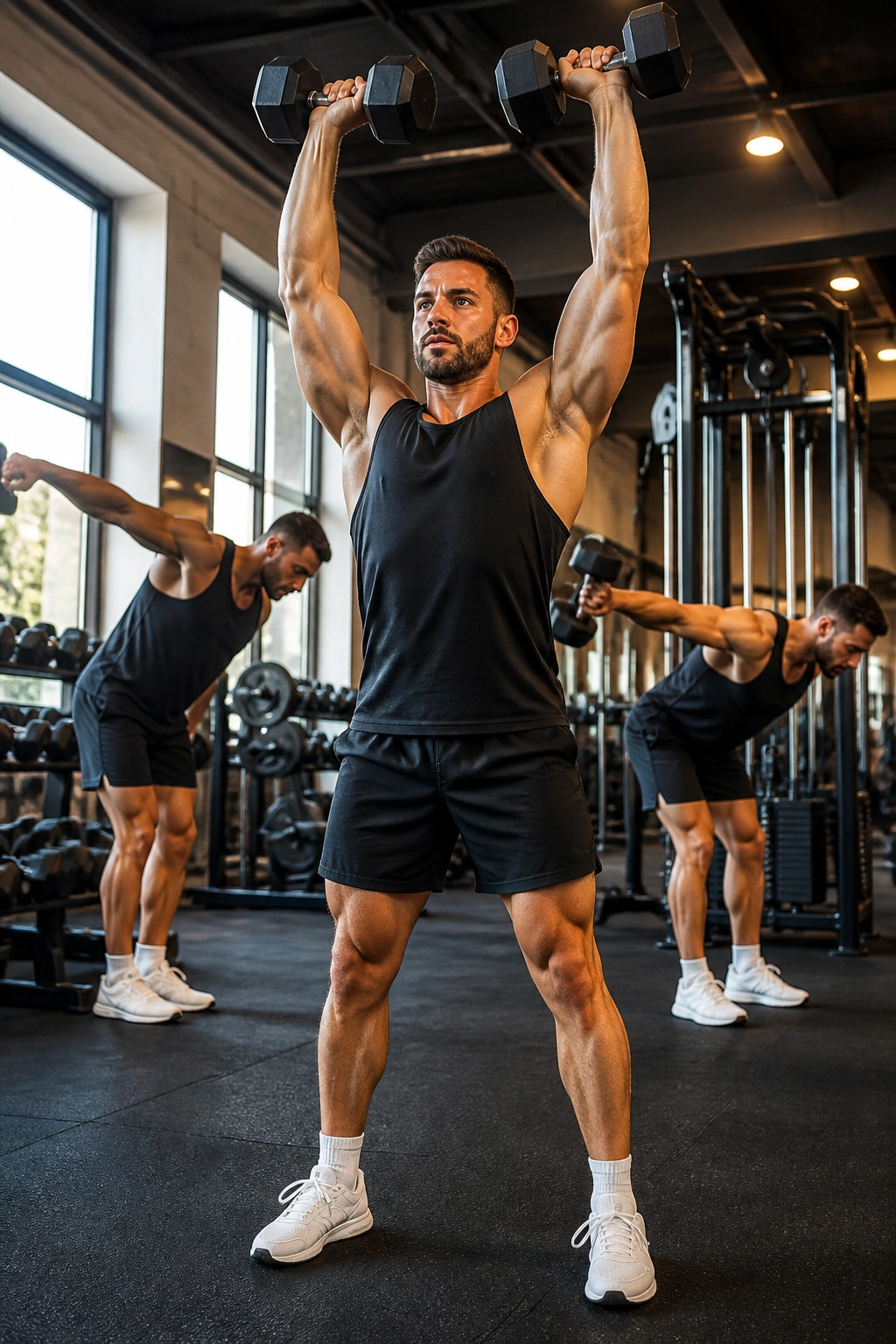
Set a timer for 20 minutes and work. That’s the whole trick.
Do 4 rounds of the following with about 45 seconds of work and 15 seconds to switch between moves: dumbbell push press, lean-away lateral raise, bent-over rear-delt fly, and push-up plus. Use moderate weight and keep the reps crisp. The goal is density, not heroics.
- Dumbbell push press: 45 seconds
- Lean-away lateral raise: 45 seconds
- Bent-over rear-delt fly: 45 seconds
- Push-up plus: 45 seconds
This is the session for busy days when you still want your upper body to feel trained. It gives you a little strength, a little pump, and enough shoulder volume to matter without dragging the workout out for an hour.
If your form gets ugly by round three, the weights are too heavy. Simple.
11. Shoulder and Chest Hybrid Upper-Body Day

Shoulders rarely grow well on isolation alone. They like to show up where pressing already exists.
That is why a chest-and-shoulder hybrid day works so well. Start with incline dumbbell press for 4 sets of 8, then move to standing overhead press for 3 sets of 6. Add cable flyes or feet-elevated push-ups for 3 sets of 12, then finish with lateral raises for 3 sets of 15.
Order Matters
If your shoulders are the weak link, put the overhead press first. If your chest is the bigger priority, lead with incline pressing and keep the shoulder work a little lighter. Either way, the side delts usually do better after the compound work has already warmed the whole shoulder girdle.
This routine is one of the easiest ways to build a more complete upper body because the chest, front delts, and triceps all pull together. The trick is not to let the pressing swallow the shoulder isolation work at the end.
12. Rear-Delt Bias Pulling Day

If your upper body looks flat from behind, the rear delts probably need their own session.
A lot of people only notice rear delts when a shirt gets tighter across the back. That’s late. Much better to train them directly with pulling patterns that keep the elbows out and the upper back awake. Use chest-supported rows for 4 sets of 10, with the elbows flared a bit wider than a standard lat row. Then do face pulls for 3 sets of 15, reverse pec deck for 3 sets of 15 to 20, and prone T-raises or external rotations for 2 sets of 12 to 15.
The reward is twofold. Your shoulders look fuller from the side and back, and your pressing usually feels cleaner because the scapulae are no longer being dragged forward all the time.
When to Use It
Use this on a pulling day, or run it as a short accessory block after back work. It’s boring in the best way. No drama, just steady work where most people need it.
13. Beginner Seated Press Routine

Beginner shoulder work should feel boring in a good way.
A seated machine press or seated dumbbell press gives you support, and that support matters when you’re still learning how to keep the rib cage quiet and the shoulder blades controlled. Start with 3 sets of 10 reps on the press, then add 2 sets of 15 lateral raises, 2 sets of 20 band pull-aparts, and 3 loaded carries of 30 seconds if you want some extra upper-body stability.
Form matters more than load here.
Keep the dumbbells moving in a smooth line, don’t bounce at the bottom, and stop the lateral raises before the traps take over. The goal is not to chase a giant pump or a scary number. It’s to teach the shoulders how to press without the rest of the body panicking.
This routine works well for newer lifters, but it also helps anyone returning from a layoff who wants to rebuild clean movement before piling on weight.
14. Athletic Power Routine With Medicine Ball Work

This one looks different from a bodybuilding day, and that’s the point.
Start with 5 sets of 5 medicine ball overhead slams to wake up the torso and shoulder line, then move into 5 sets of 3 push press reps with a crisp dip and drive. Add 3 sets of 8 split-stance landmine presses per side and finish with 3 bottoms-up kettlebell carries of 20 to 30 seconds if you’ve got the grip and the gear.
The shoulders in this routine aren’t just lifting; they’re stabilizing, transferring force, and staying locked in while the rest of the body moves. That kind of work tends to carry over nicely to sports, grappling, and any upper-body movement where power matters more than a slow burn.
Use longer rests here, around 90 seconds to 2 minutes, because speed matters more than exhaustion. Once the bar slows down, the session stops being about power.
15. Delts Pump Finisher After Push Day
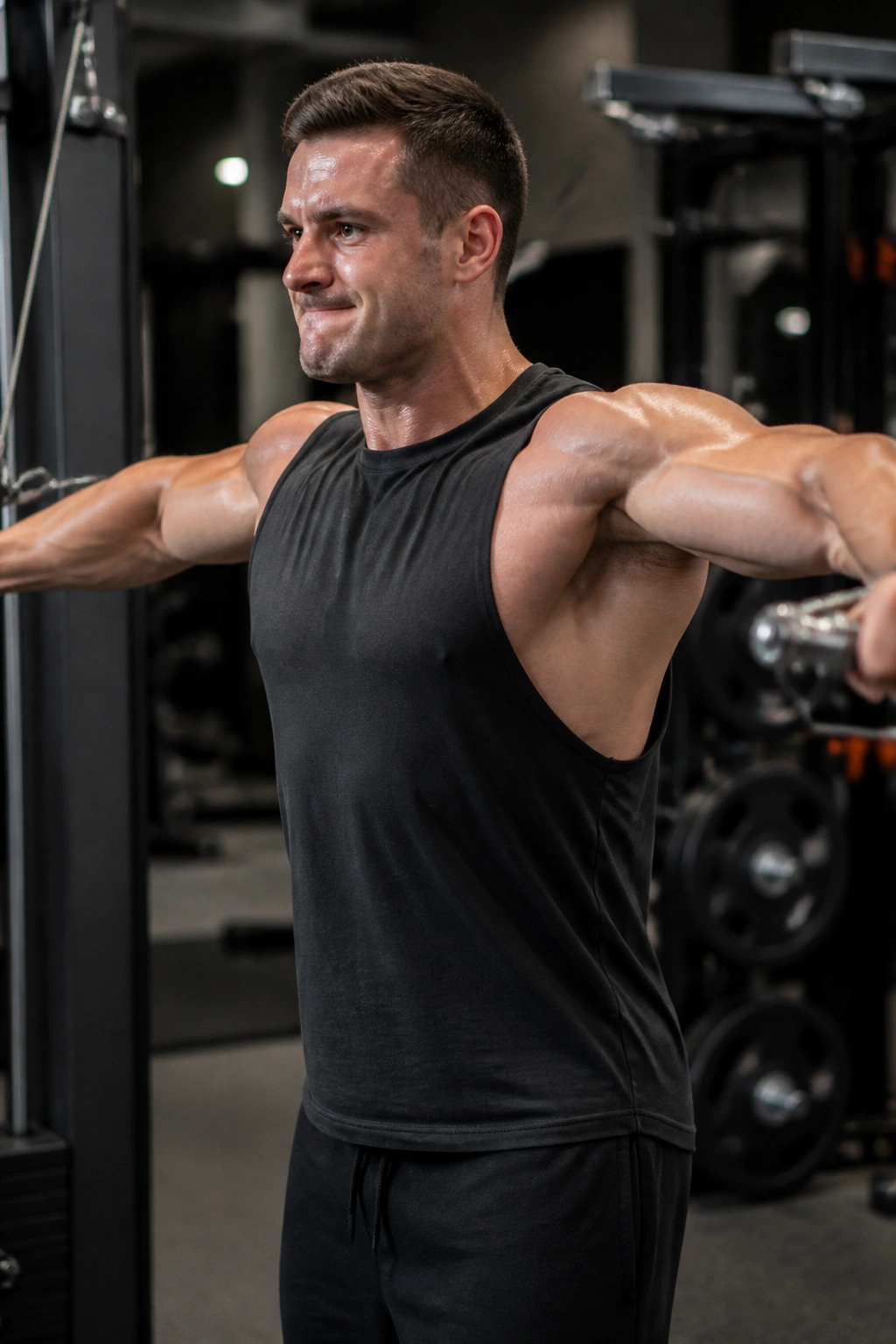
A pump finisher only works if the main pressing is already done.
That is the cleanest way to think about it. Once your chest and triceps have handled the heavy work, the delts can get a short, nasty burst of isolation without needing much load. Run 3 giant-set rounds of 12 cable lateral raises, 10 partial lateral raises, 15 reverse flyes, and 12 incline Y-raises, then rest 45 seconds before the next round.
That burn is the point.
Keep the weights lighter than your ego wants, especially on the partials. Those tiny reps near the top of the lateral raise can turn a decent set into a shoulder-blasting set fast, and that’s where the cap really starts to light up. If you try to turn this into a strength block, it stops working.
This is one of my favorite ways to finish a push day because it gives you visible shoulder fatigue without wrecking the rest of your week. Short. Mean. Useful.
16. Rotator Cuff and Scapular Stability Session

A lot of shoulder problems start way before the joint hurts.
The rotator cuff and the muscles that control the shoulder blade do a ton of quiet work every time you press, row, reach, or carry. Ignore them for too long and the big lifts start feeling sticky. A good stability session is not glamorous, but it keeps the rest of your upper-body training running smoother.
The 10-Minute Version
- Band external rotation: 2 x 15 per side
- Serratus wall slide: 2 x 12
- Prone Y-raise: 2 x 10
- Scapular push-up: 2 x 15
- Face pull: 2 x 20
Keep the loads light and the reps clean. You should feel the small muscles working, not the neck tensing up or the low back helping out. If that happens, slow down and shorten the range a bit.
This is not a vanity workout. It’s the kind of work that lets your bigger shoulder routines stay in the program without constantly flirting with irritation.
17. Advanced Giant Set for Stubborn Delts

If your delts are stubborn, volume and tension beat endless max-out attempts.
A giant set like this is not subtle. Start with 6 reps of a heavy barbell or dumbbell press, then move straight into 12 lateral raises, 12 leaning cable raises, and 15 rear-delt flyes. Rest 90 seconds, then repeat for 3 to 4 rounds. On the final round, add a short mechanical drop set by switching from full lateral raises to partials right away.
How to Survive It
- Keep the first press heavy but controlled.
- Use straps or lighter dumbbells if grip fails first.
- Stop one rep before your torso starts swinging.
- Save this for once a week, not every shoulder day.
The giant set works because the delts get hit from different angles before they can fully recover. That’s also why the session feels brutal halfway through. There’s no hiding in it. You either keep the form together or the routine eats you alive.
I like this one for experienced lifters who have already done the boring basics and want a clear reason to keep growing the side and rear heads.
18. Minimal-Equipment Shoulder Reset

No rack? No cables? Fine.
A loaded backpack, a band, and a little floor space are enough to keep your shoulders honest until real equipment shows up again. Start with 4 sets of 12 backpack overhead presses, then do 3 sets of 8 to 12 pike push-ups. Add 3 sets of 25 band pull-aparts, 2 sets of 15 band external rotations per side, and finish with 3 suitcase carries of 30 seconds per side if you can load a pair of water jugs or grocery bags.
The nice thing about this kind of session is that it reminds you how little you actually need. The shoulder responds to good positions, good ranges, and enough tension. Fancy gear helps, sure, but it is not the whole story.
If you can keep the reps clean here, you can keep the upper body moving almost anywhere. That is the real win.
