



The best workouts for toned body confidence are not the punishing sessions people brag about online. They’re the ones that make your shoulders sit a little higher, your core feel steadier on the stairs, and your clothes stop hanging on you in odd, fussy ways.
Tone is not magic. It’s muscle showing through, some body fat coming down enough to reveal shape, and posture that stops collapsing the second you get tired. That’s why the most useful routines do more than make you sweat.
Crunches alone won’t do it.
What works better is a mix of strength work, smart cardio, and a few shape-changing moves for the back side of the body — glutes, hamstrings, upper back, shoulders. Those areas do a lot of visual heavy lifting, and they also change how you carry yourself when nobody’s looking.
1. Dumbbell Full-Body Circuit for Toned Body Confidence
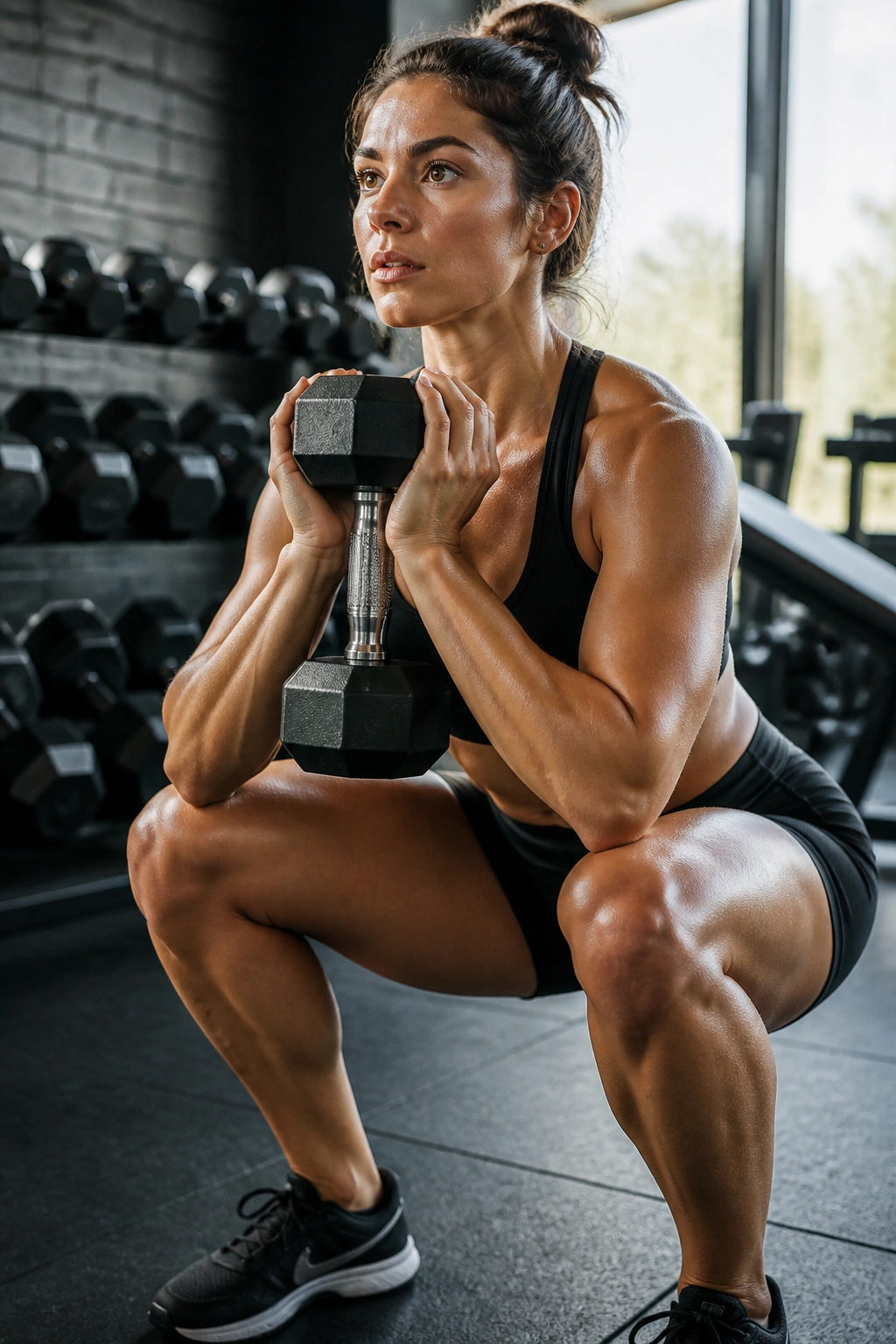
If I had to hand you one workout and say, “Start here,” this would be it. A dumbbell circuit hits the big muscles fast, and big muscles change the look of your body faster than tiny isolation work ever will.
Why It Works
A full-body circuit gives you strength, shape, and a little conditioning in one session. That matters, because toned body confidence usually comes from a body that feels capable, not a body that has been politely poked with light weights for 40 minutes.
Use a load that feels challenging on the last two reps of each set. You want your form clean, but not easy. If you can chat through the whole circuit without a single breath break, the weight is too light.
Sample Circuit
- 8 goblet squats
- 10 dumbbell Romanian deadlifts
- 8 dumbbell floor presses
- 10 one-arm rows per side
- 6 overhead presses per side
Do 3 rounds, resting 60 to 90 seconds between rounds. Most people finish in 25 to 35 minutes, which is one reason I like it so much. It fits real life.
Tip: Start with the squat and row if your time is short. Those two moves do a lot of the visible work, especially when you keep the reps controlled and the last few inches of each rep honest.
2. Incline Walking Intervals That Wake Up Your Glutes
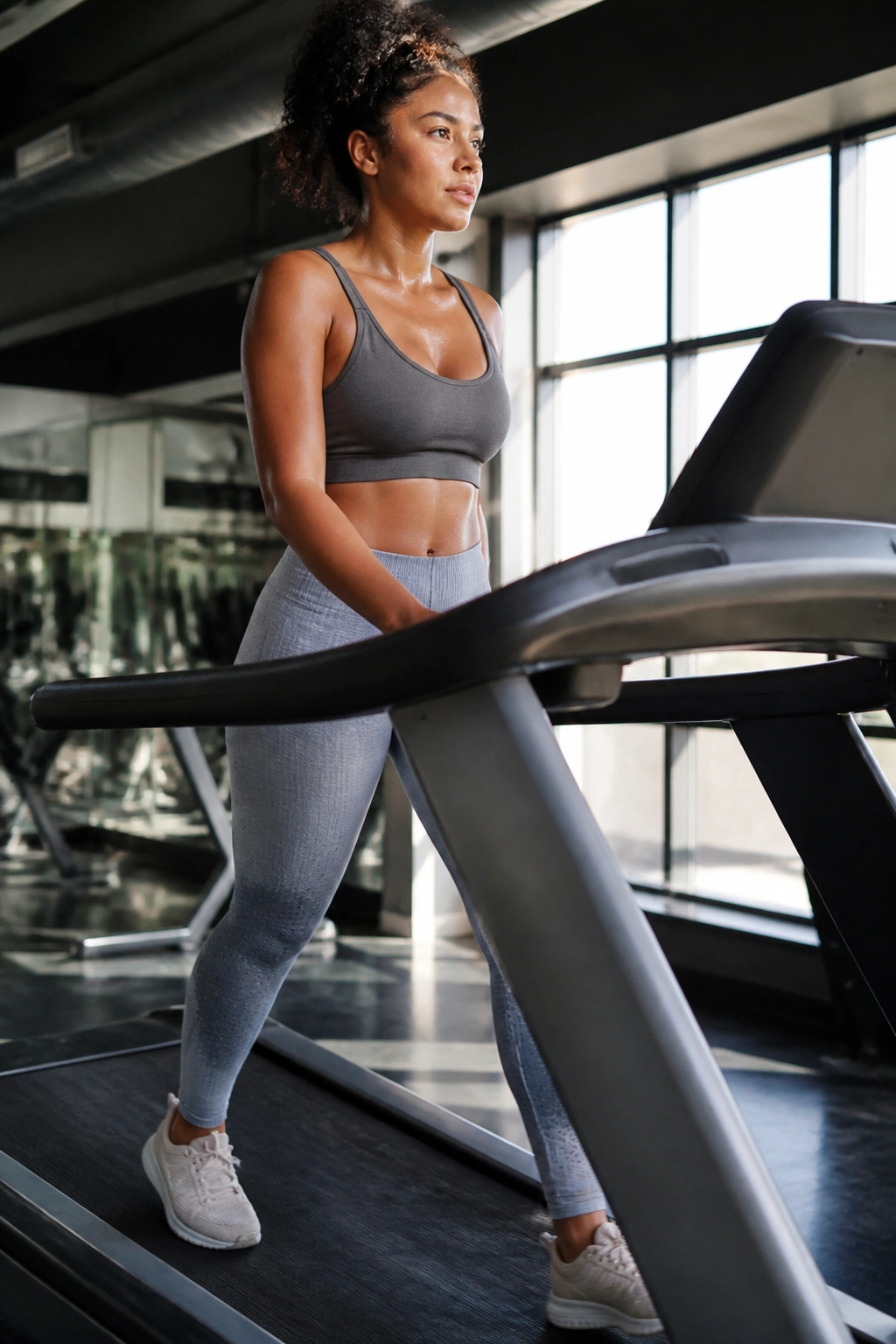
Want a workout that leans out your legs without beating up your knees? Incline walking is one of the cleanest answers I know.
The trick is to stop treating walking like it has to be casual. A treadmill set to 6 to 10 percent incline changes the whole feel of the session. Your glutes have to help more, your calves get involved, and your heart rate climbs without the sharp impact that comes with sprinting.
A simple format works well: 1 minute hard, 2 minutes easy, repeated for 20 to 30 minutes. Hard means you’re breathing harder and taking shorter, stronger steps. Easy means you recover enough to do the next push without folding over the rails.
Do not lean on the handrails the whole time. That turns the workout into a sad stroll with a slant. Keep your ribs stacked over your hips and let your legs do the work. If your lower back starts to pinch, the incline is probably too steep or your stride is too long.
3. Squat-and-Lunge Legs Day That Changes How You Stand
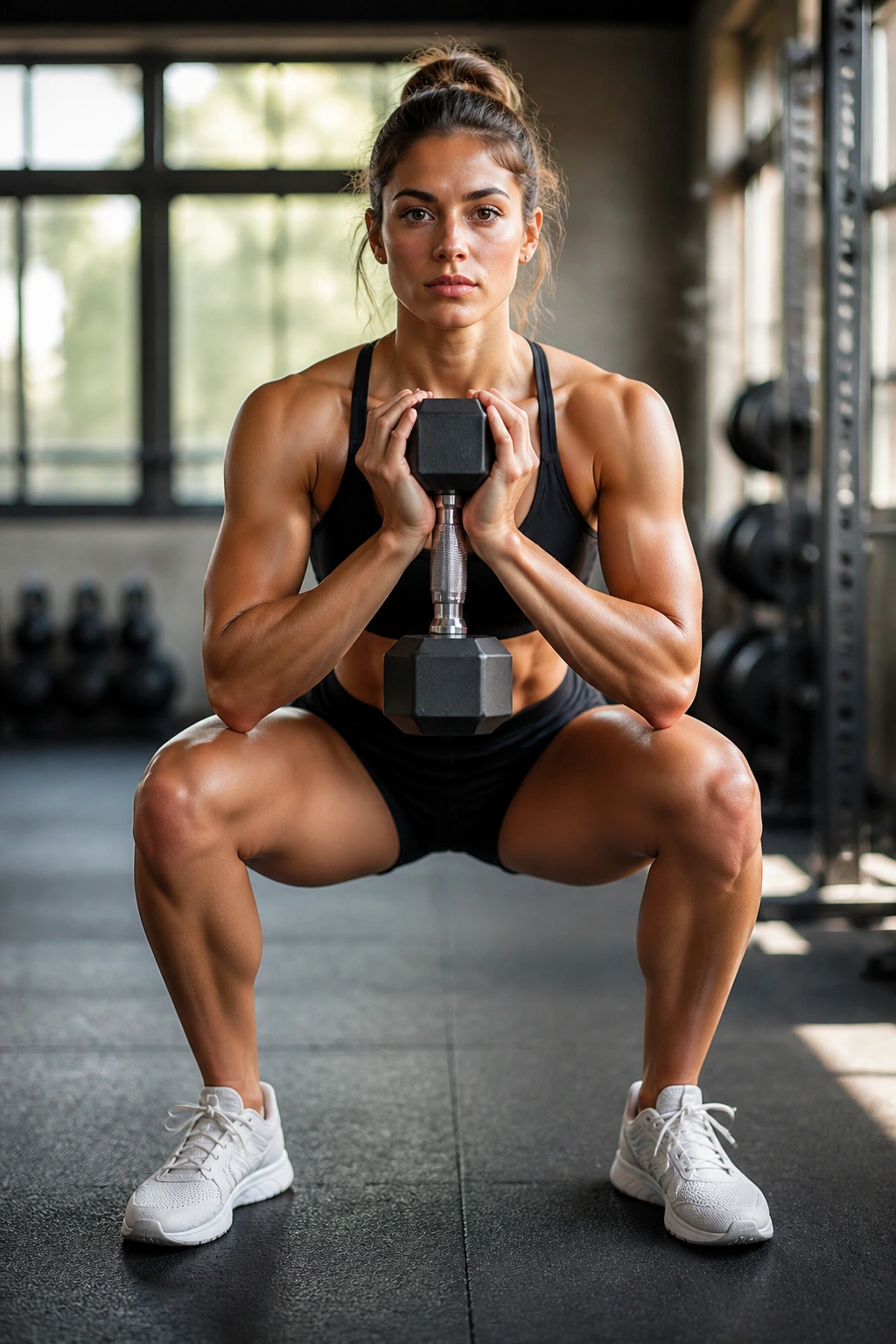
You know that feeling when your legs are tired, but in a good way, and suddenly your whole stance looks more grounded? That is the point of a strong lower-body day.
How to Set It Up
Build the workout around squats, reverse lunges, split squats, and step-ups. These are not glamorous moves. They are better than glamorous moves.
- Front squat or goblet squat: 4 sets of 6 to 8 reps
- Reverse lunge: 3 sets of 8 reps per leg
- Bulgarian split squat: 3 sets of 8 to 10 reps per leg
- Step-up: 2 to 3 sets of 10 reps per leg
- Wall sit: 1 to 2 holds of 30 to 45 seconds
Keep your torso tall, your front foot planted, and your knee tracking in line with your toes. Shallow reps cheat you out of the shape change. So does rushing through the set because lunges feel awkward at first.
What to Watch For
If one side is wobblier than the other, good. That tells you exactly where to pay attention next time. The goal is not perfect symmetry on day one. The goal is a stronger, more balanced way of moving by the end of the month.
4. Push-Pull Upper-Body Session for a Sharper Frame
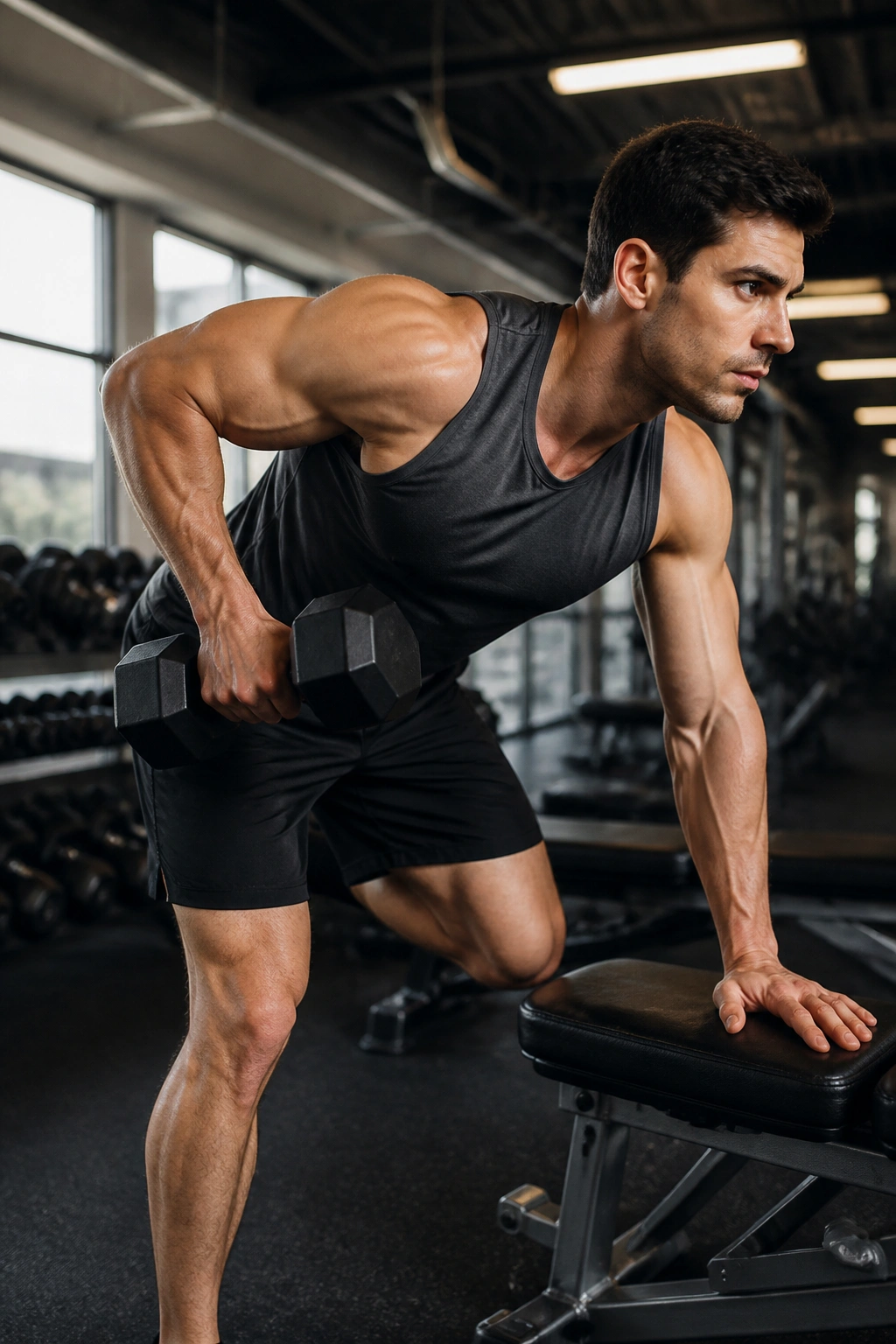
A firmer-looking upper body is not built by endless arm work. It comes from training your back, shoulders, chest, and arms together so your frame looks held together instead of floating apart.
Picture a shirt sitting better across your shoulders and upper back. That comes from rows, presses, and pulldowns more than from a hundred tiny triceps kickbacks. I love arm finishers too, but they’re the dessert. Not the meal.
Use two push exercises and two pull exercises in one session:
- Dumbbell bench press or push-ups: 3 sets of 8 to 12
- One-arm dumbbell row or cable row: 3 sets of 10 to 12
- Overhead press: 3 sets of 8 to 10
- Lat pulldown or assisted pull-up: 3 sets of 8 to 10
Rest 45 to 75 seconds between sets. The goal is clean reps with some effort left, not ugly heaving that turns your neck into a tense knot.
If your shoulders tend to round forward, pull work matters even more. Strong upper-back muscles help you stand open, and that changes your silhouette faster than people expect. Faster. Much faster.
5. Pilates Core Flow for a Longer, Taller Look
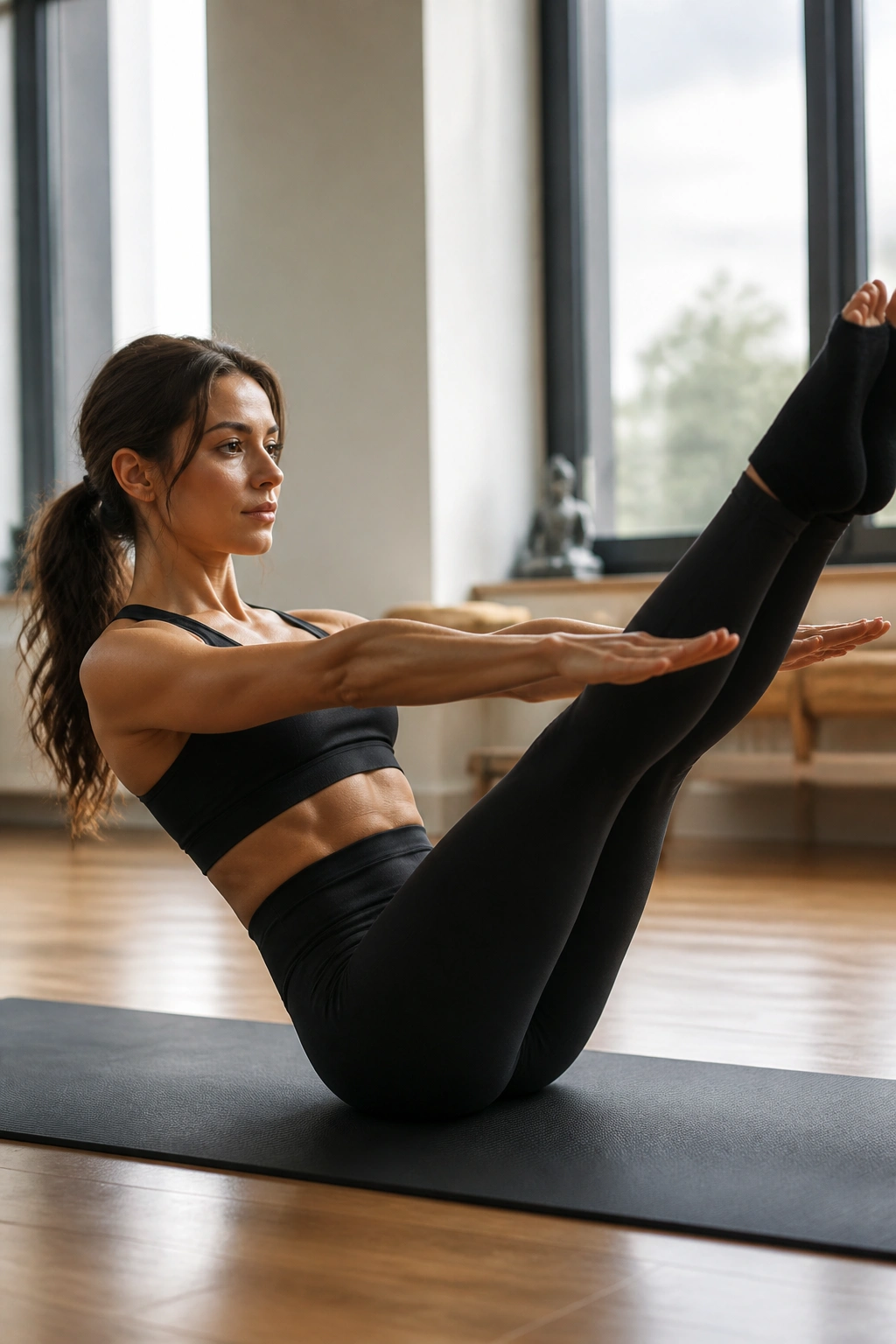
The first thing you notice in Pilates is the quiet. No slamming weights. No racing timer. Just controlled movement, breath, and the strange realization that your deep core muscles have been asleep on the job.
That’s the beauty of it. Pilates trains the muscles that hold you up: the lower abs, obliques, glutes, and the smaller support muscles that keep your ribs and pelvis in better alignment. When those muscles wake up, you often look taller before you look leaner.
A short flow can be enough. Think dead bugs, hundred holds, bird dogs, side planks, and slow leg lowers. Keep each move slow enough that you can feel where your ribs are and whether your lower back is arching.
If your neck takes over, your form has drifted. If your lower back starts to pinch, bend your knees or shorten the range. Pilates should feel precise, not dramatic. And honestly, the precision is what gives it power.
Do 15 to 20 minutes, three or four times a week. It’s one of the few workouts that improves how you hold yourself while also helping you feel less folded in half by the end of the day.
6. Kettlebell Swings and Hinge Sets That Light Up Your Back Side
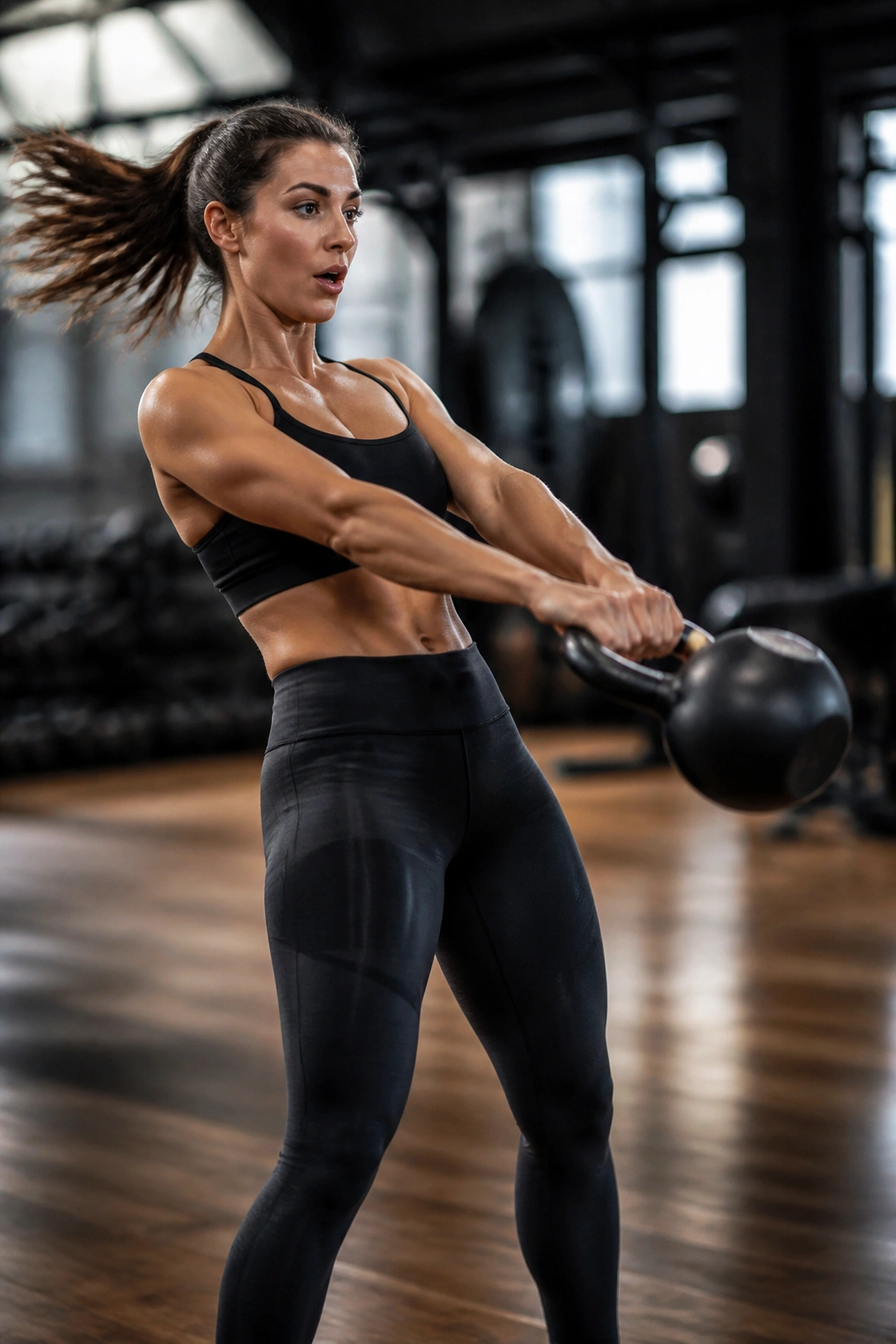
Fast. Explosive. Honest.
That’s what I like about kettlebell swings. They punish lazy movement in a good way, and they teach your hips to do real work instead of dumping everything into your lower back.
Unlike endless crunches, swings train the posterior chain — glutes, hamstrings, lower back, and upper back — while also raising your heart rate. That makes them a sneaky little bridge between strength and conditioning. You get shape work and cardio together.
How to Get the Groove Right
Start with 10 swings every minute on the minute for 10 minutes. If that feels too spicy, do 5 rounds of 15 swings with 45 to 60 seconds of rest. The kettlebell should float from hip power, not arm lift.
- Hinge back, don’t squat down
- Keep the bell close
- Snap the hips forward
- Let the arms stay loose
- Stop when your form turns sloppy
A common mistake is muscling the bell with the shoulders. That’s not the move. The hinge is the move. Once you feel it in your glutes and hamstrings, you’re doing it right.
7. Rowing Intervals That Work More Than Your Arms
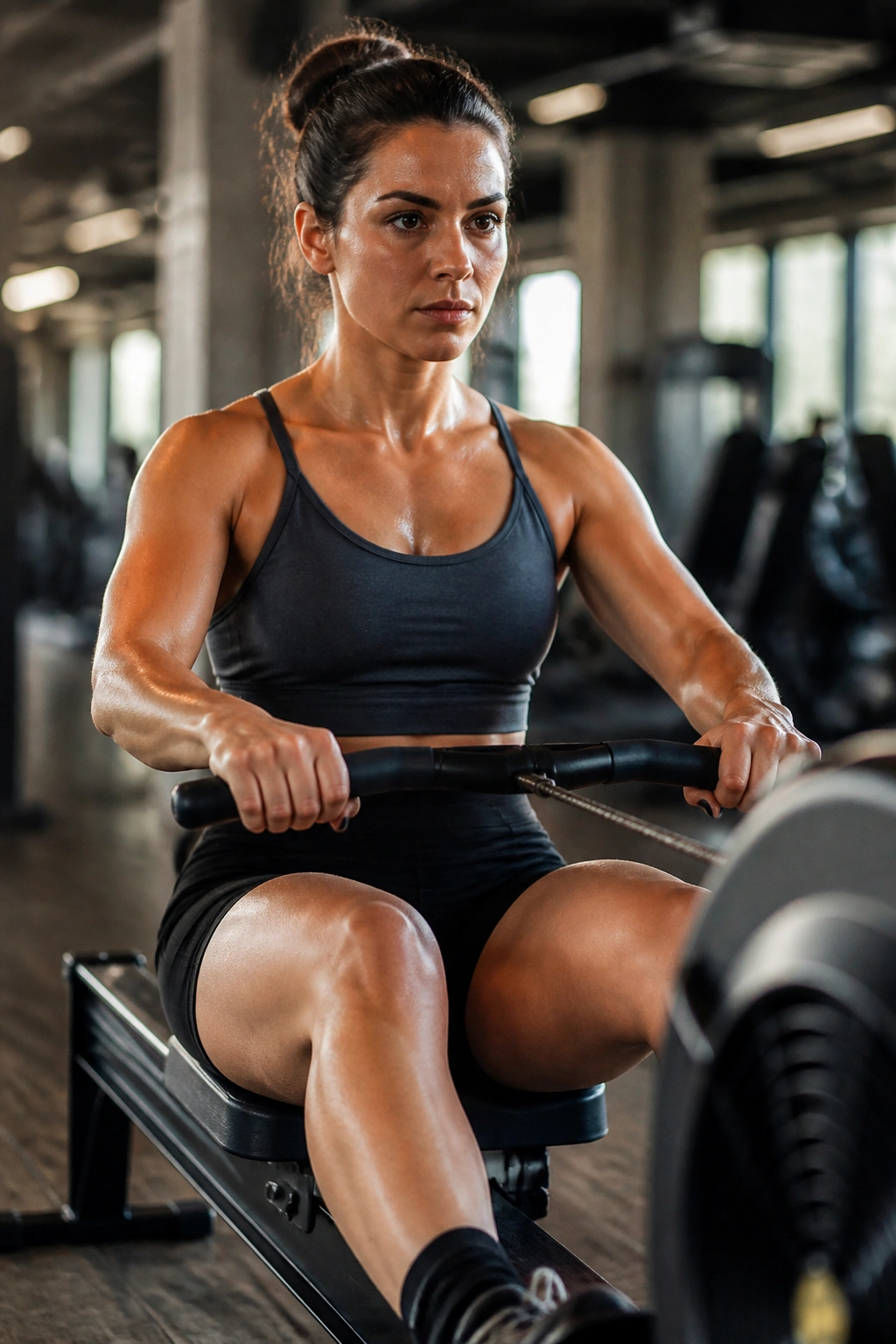
Eight rounds. Forty seconds each. Twelve minutes total. That’s enough to make you respect a rowing machine.
People love to say rowing is an upper-body workout, which is half true and therefore mildly annoying. Done well, rowing uses the legs first, then the hips, then the back and arms. The machine rewards coordination, not just effort.
Clean Stroke, Cleaner Shape
A good rowing interval session looks like this:
- Warm up: 3 minutes easy
- Row hard: 40 seconds
- Rest or paddle lightly: 20 seconds
- Repeat for 8 rounds
- Cool down: 2 to 3 minutes easy
Keep the damper setting around 4 to 6 unless you already know how to row. Cranking it higher does not make you fitter. It usually just makes the stroke clunky and the lower back cranky.
What I like here is the way rowing tightens your posture under fatigue. Your core has to stay on, your legs have to push, and your shoulders have to stay calm. That combination is gold for a toned look because it builds a body that moves with some snap instead of slouching through the day.
8. Barre-Style Glute Burn for Toned Body Confidence
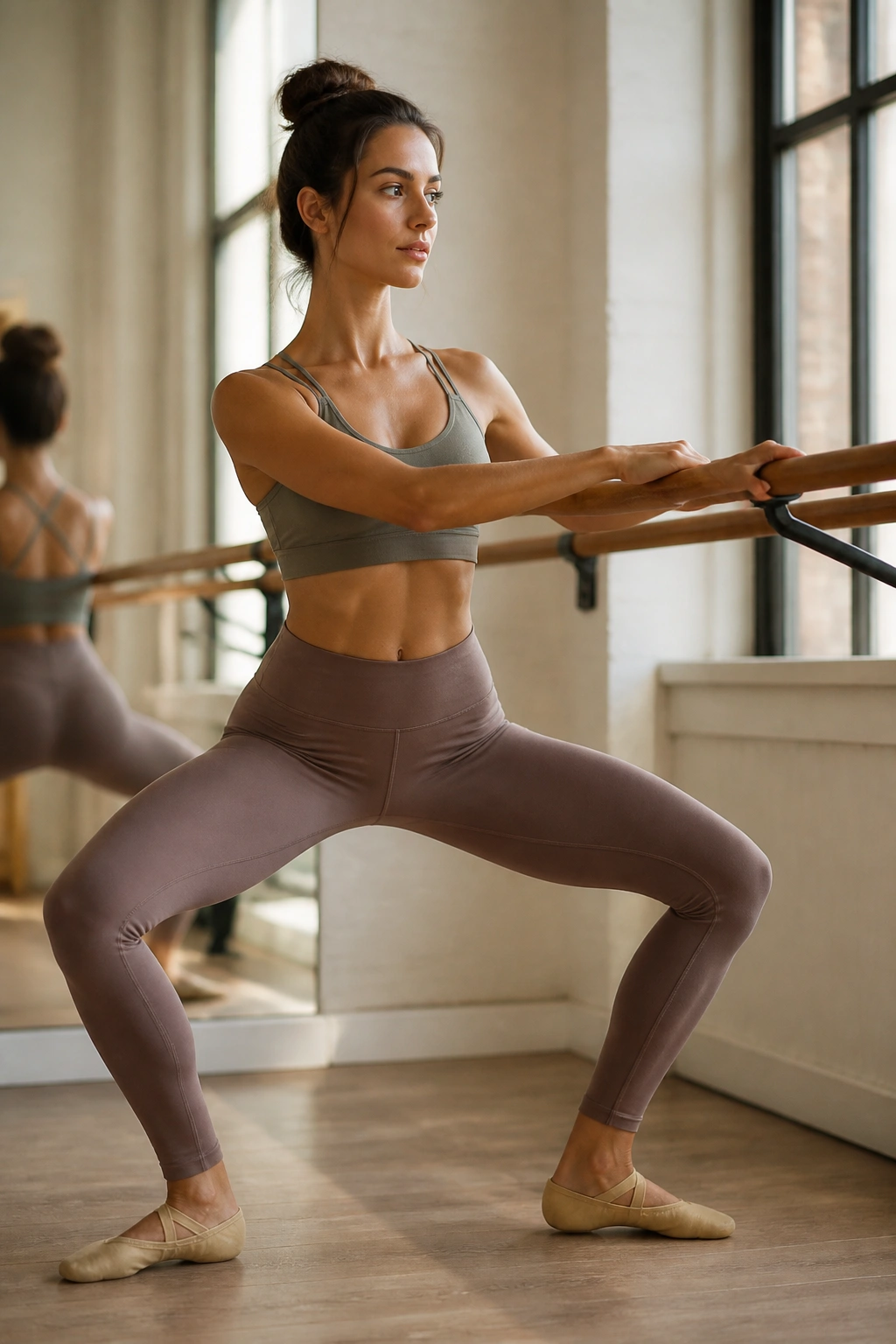
I like barre work when the goal is shape, not ego. You’re not trying to lift the heaviest thing in the room. You’re trying to make the side glutes, inner thighs, and lower abs do their jobs without cheating.
That means small ranges, holds, pulses, and a fair amount of humility. The burn sneaks up on you around the second set, which is exactly why people underestimate it.
A Simple 12-Minute Sequence
Use a chair or wall for balance, and run this once or twice:
- Plié squat hold: 30 seconds
- Plié pulses: 20 reps
- Standing glute kickbacks: 15 reps per side
- Side leg lifts: 15 reps per side
- Calf raises: 20 reps
- Second hold in a squat or turnout position: 30 seconds
Rest only long enough to reset your stance. That usually means 15 to 20 seconds. You want steady tension, not a full nap between exercises.
This style of work is useful because it targets areas that shape the lower body without pounding the joints. It also improves awareness. After a few sessions, you start to feel when your hips drift or your ribs flare, and that awareness carries into every other workout.
9. Boxing Rounds for Faster Feet and Firmer Shoulders

Boxing changes your shape faster than people expect.
A good round wakes up your shoulders, tightens your midsection, and teaches your feet to move with some intent. Shadowboxing in a living room can look a little silly from the outside. Then you do six rounds and wonder why your heart feels like it borrowed a different engine.
Use 2-minute rounds with 30 to 45 seconds of rest. That timing is long enough to build skill and short enough to keep the intensity honest. Throw jab-cross-hook combinations, slip side to side, and keep your chin tucked. If you have a bag, use it. If not, shadowboxing works fine.
The best part is the posture work. Boxing asks you to keep your ribs down, your shoulders loose, and your core braced while you move. That does a lot for the look of the upper body, especially the arms and waistline.
Do not punch from your neck. Do not stand flat-footed like you’re waiting for a bus. Light feet, clean hands, sharp exhale. That’s the rhythm.
10. Resistance Band Sculpt Session for Home Days
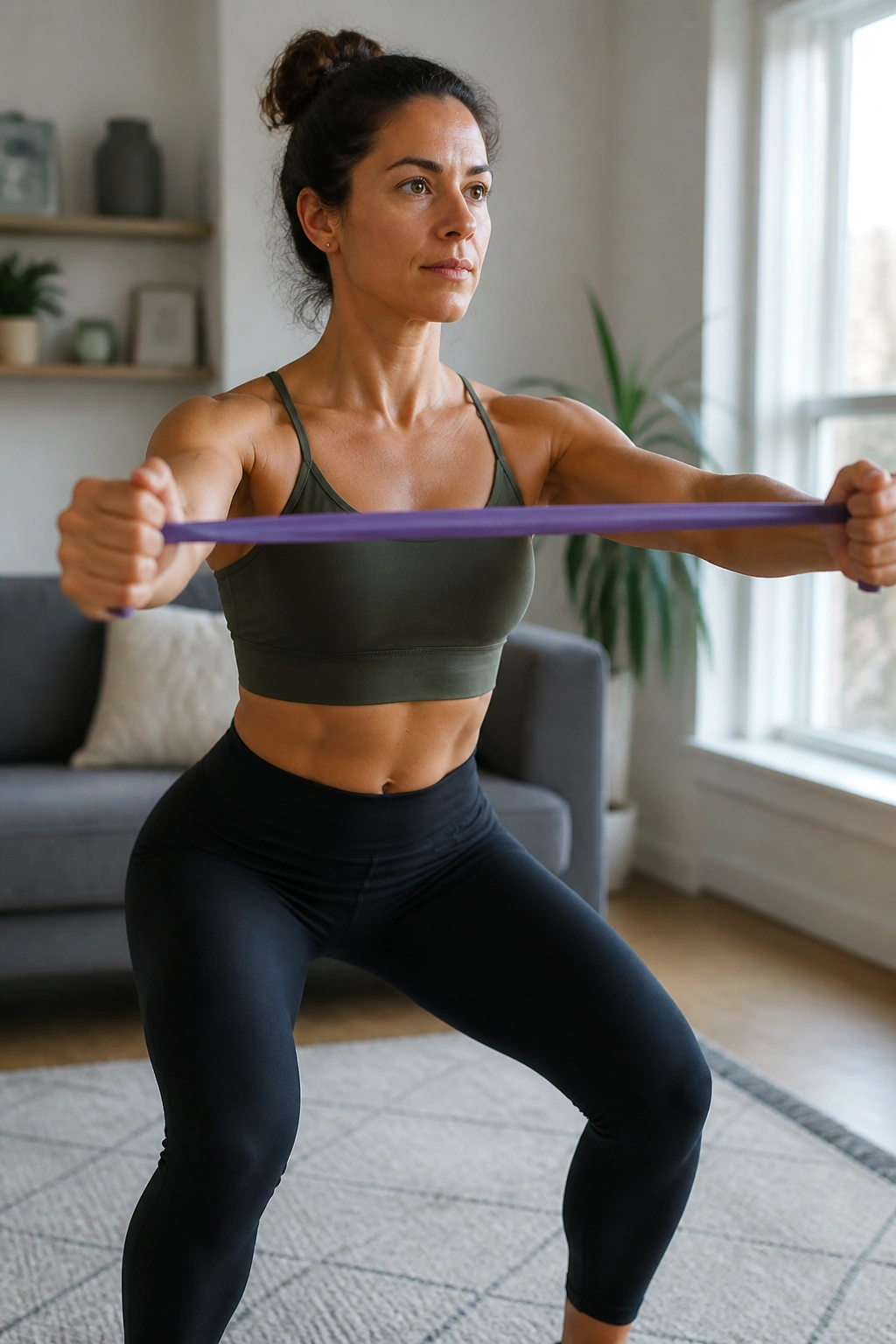
No gym? Fine. Bands can still do real work, especially when you want a session that feels tight and focused instead of random.
Bands are good at one thing most free weights do not do as well: they keep tension on the muscle through the whole rep. That means your glutes, shoulders, and back stay switched on instead of coasting through the easy part of the movement.
Build the Session
Pick one mini band and one long loop band, then run through:
- Banded squats: 3 sets of 15
- Lateral band walks: 3 sets of 12 steps each direction
- Pull-aparts: 3 sets of 15 to 20
- Glute bridges with band tension: 3 sets of 12 to 15
- Triceps pressdowns or kickbacks: 2 to 3 sets of 12 to 15
A light band is fine for warm-ups. A medium band usually does the real work. If your form starts changing just to beat the band, it’s too heavy. Simple.
This is one of my favorite travel workouts because it packs small, fits in a hotel room, and still gives your body enough resistance to feel the session the next day. That soreness around the hips and shoulders? Useful soreness.
11. Deadlift and Hip Thrust Strength Day
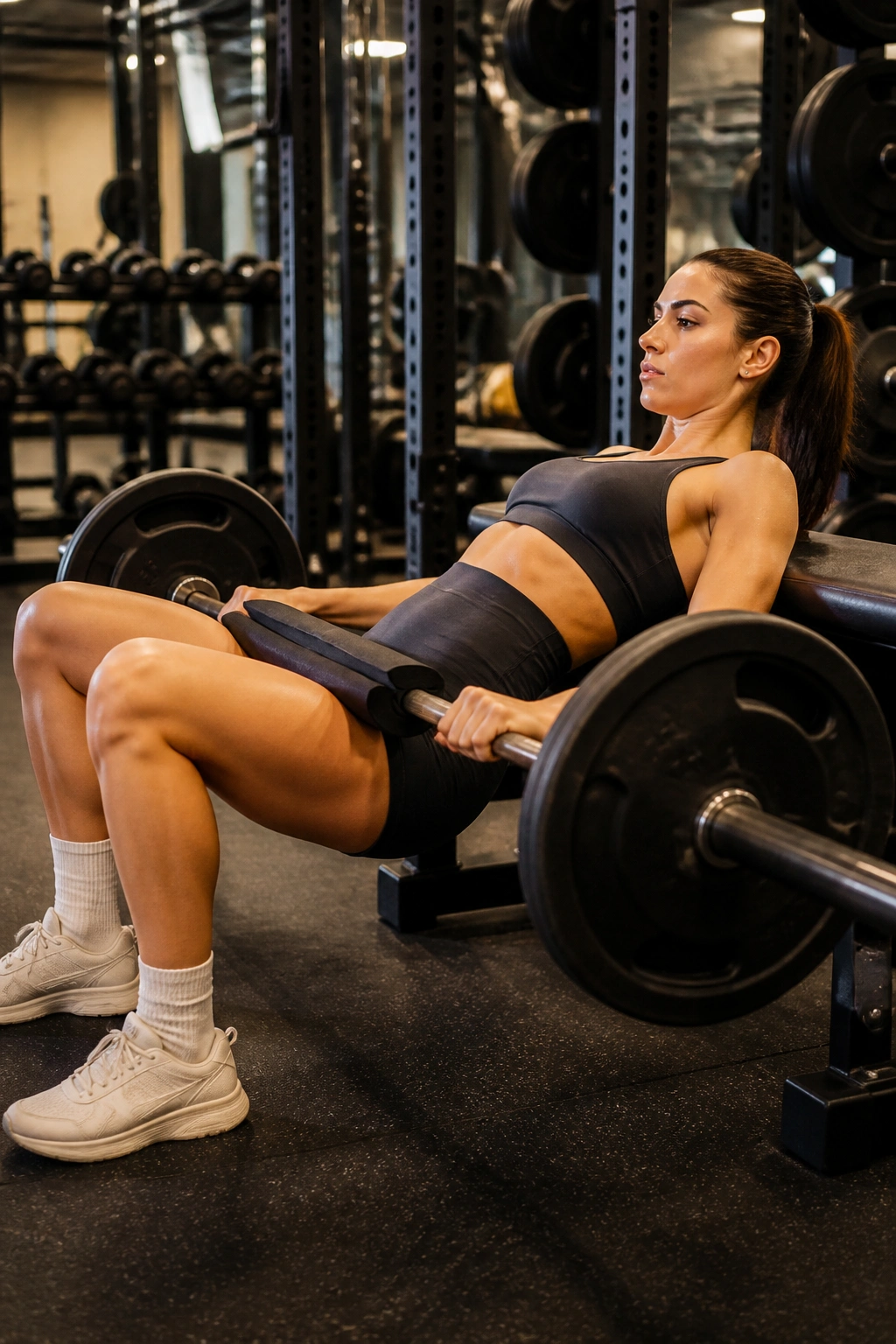
The back side of your body does a lot of the visual work. Strong glutes and hamstrings change how your jeans fit, how you walk, and how stable your lower back feels by the end of a long day.
Deadlifts and hip thrusts are the heavy hitters here. They’re not flashy, and that’s part of the appeal. They build the kind of strength you can feel when you pick something up off the floor without grimacing.
The Core Pairing
- Conventional or Romanian deadlift: 3 to 4 sets of 5 to 8 reps
- Barbell or dumbbell hip thrust: 4 sets of 8 to 10 reps
- Hamstring curl or single-leg RDL: 3 sets of 10 to 12 reps
- Glute bridge hold: 2 sets of 20 to 30 seconds
Rest 90 seconds to 2 minutes on the heavy lifts. That rest matters. If you rush deadlifts, your form goes soft and the back starts taking over. No thanks.
Keep your ribs stacked, brace before each rep, and stop a set when your lower back starts doing the talking. A clean deadlift is a beauty move in its own blunt way. It looks solid. It feels solid. It makes other workouts feel easier afterward.
12. Stair Climbing Intervals That Build Visible Leg Shape
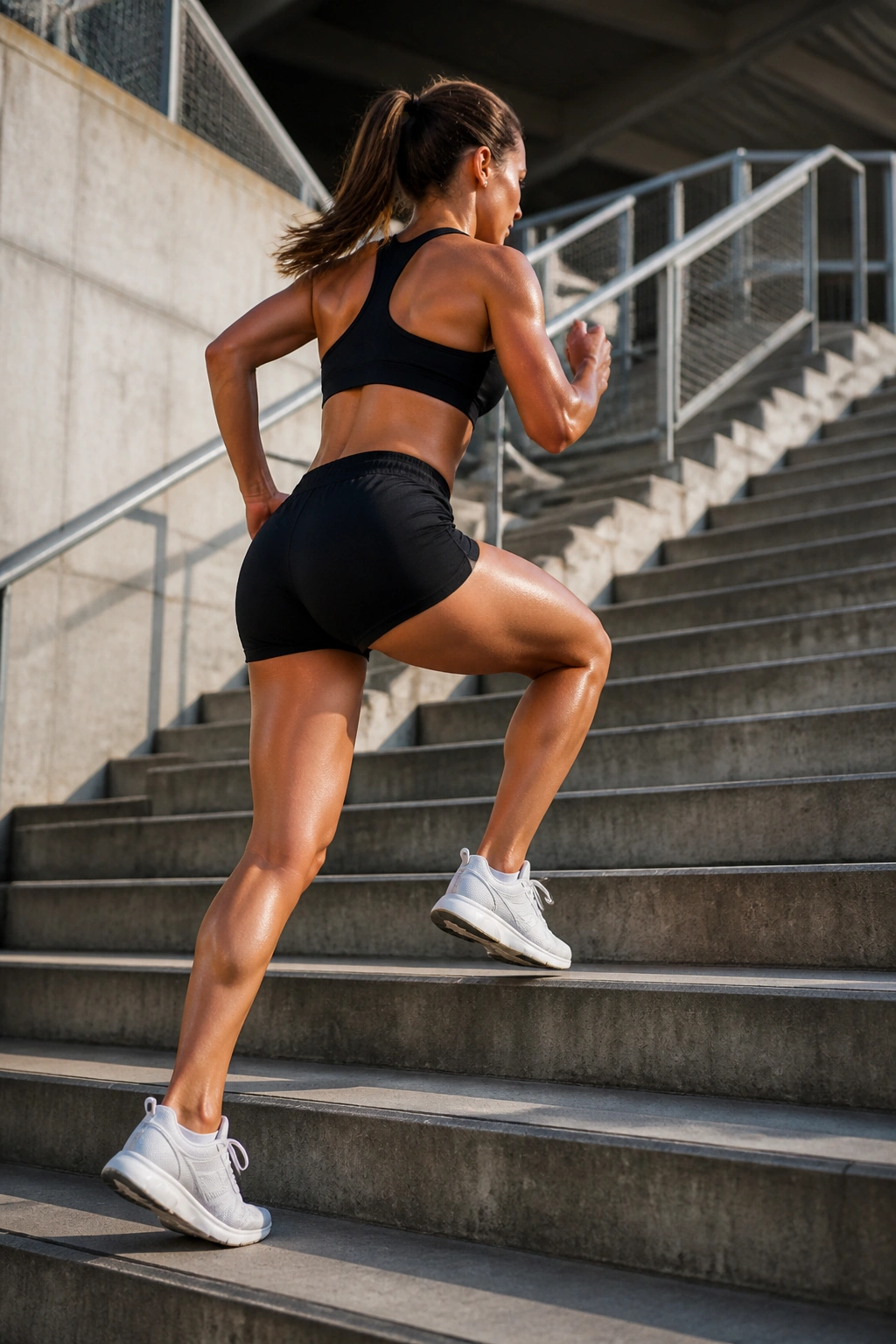
A stair session looks simple, and that is why people skip it.
Then they do it and remember that gravity is not a charming training partner. Stairs hit the quads, glutes, calves, and lungs at the same time, which makes them a compact way to train the lower body and burn some serious energy.
Try 30 seconds hard, 60 seconds easy for 10 to 15 rounds. Use a stair machine, a stadium stairway, or a safe set of stairs with enough length to turn around comfortably. Hard means strong, quick steps. Easy means you keep moving but can breathe through your nose again.
Do not lean your chest all the way forward. That makes the hips lazy and the lower back cranky. Stay tall, drive through the whole foot, and let the glutes finish the step instead of dumping everything into the knees.
This is a good workout for anyone who wants legs that look awake. There’s a firmness to stair training that shows up in the thighs and seat, especially when you repeat it consistently and don’t turn every session into a casual climb.
13. Bodyweight EMOM for Busy Weeks
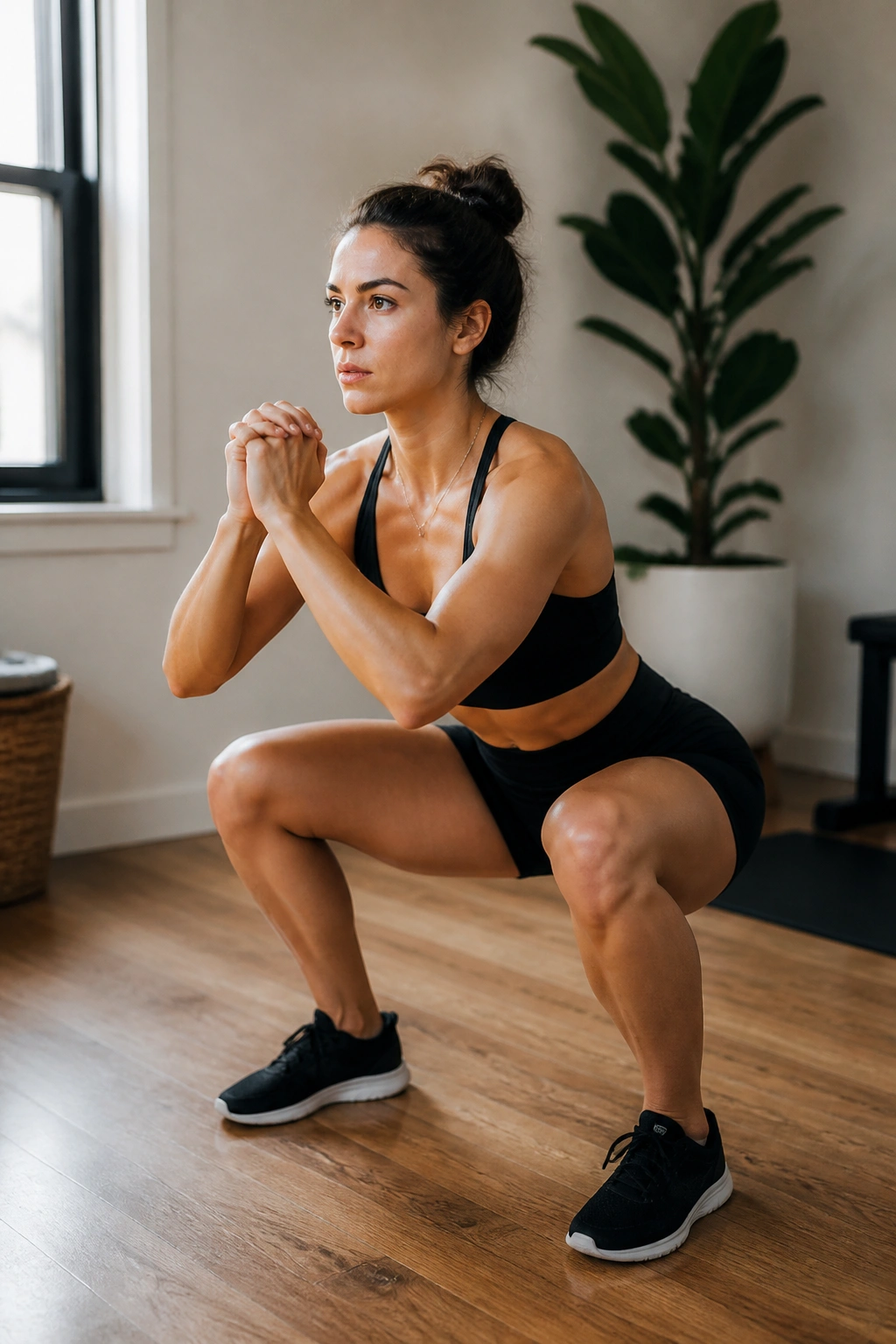
The timer beeps, and there is no arguing with it.
That’s what makes an EMOM so useful. Every minute on the minute, you start the next set. No wandering. No overthinking. Just work, recover, repeat. If your schedule is messy, this kind of structure keeps you from skipping the whole week because you couldn’t carve out a perfect hour.
A Clean 16-Minute Format
Repeat this four times:
- Minute 1: 15 squats
- Minute 2: 8 to 12 push-ups
- Minute 3: 40 mountain climbers
- Minute 4: 30-second plank
Finish whatever is left in the minute as rest. If you finish in 20 seconds, great. You earned a little breathing room. If you’re gasping at 55 seconds, the workout is working.
Scale the push-ups by using a bench or wall. Scale the squats by slowing the lowering phase to 3 seconds down. Tiny changes like that can turn bodyweight work from “easy warm-up” into “I need a minute.”
This session does a nice job of building shape without equipment, and it’s handy on days when you want the feeling of training without committing to a full gym setup.
14. Mobility Work That Helps Your Shape Show Better
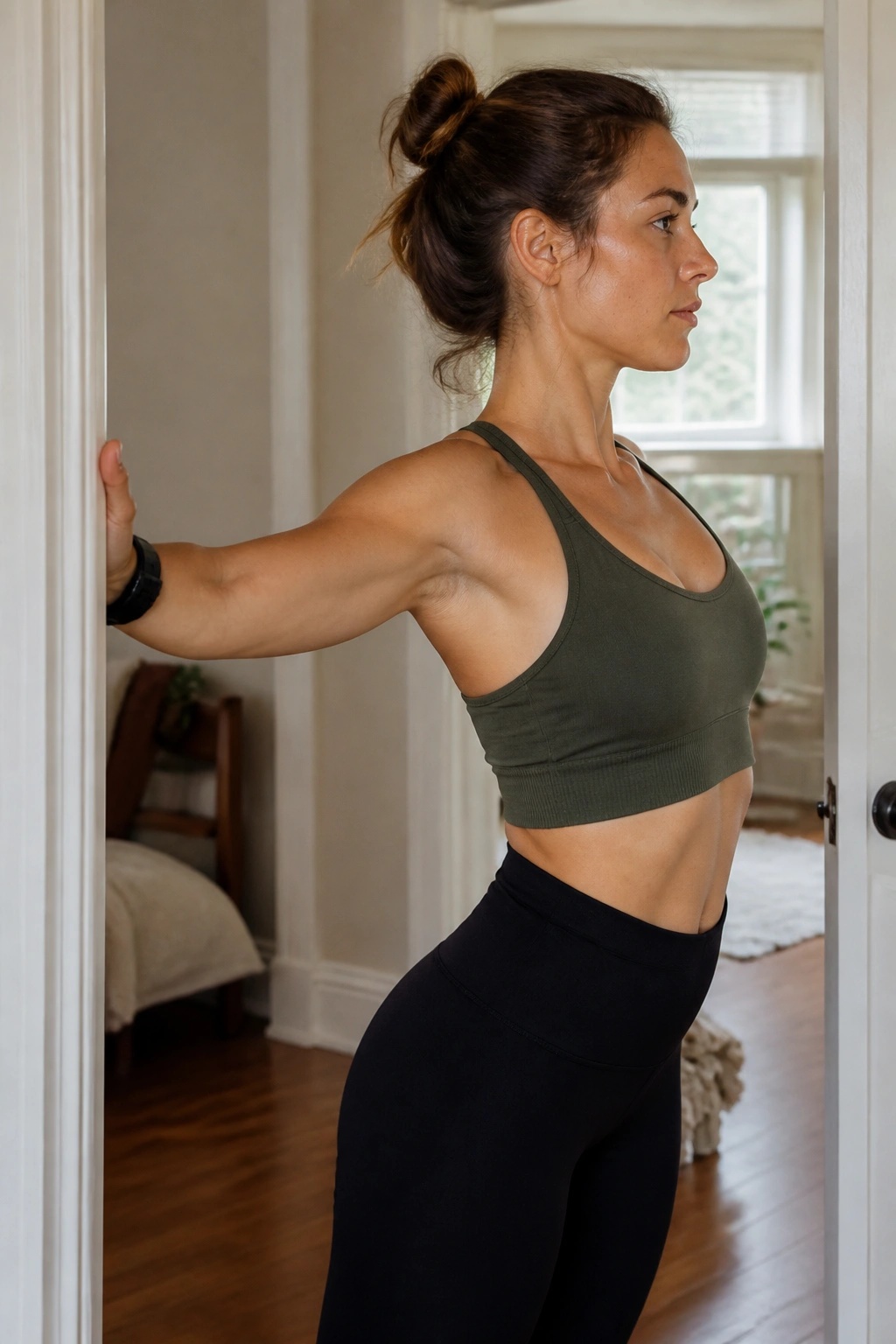
Recovery is part of the look.
Tight hips, stiff ankles, and rounded shoulders can make a fit body look tired. Mobility work helps the good stuff show better by letting you stand taller, squat deeper, and move without the weird little compensations that pile up when you sit too much.
A 15-Minute Reset
Spend a minute or so on each:
- Couch stretch: 45 seconds per side
- Thoracic rotations: 8 reps per side
- Deep squat hold: 45 to 60 seconds
- Doorway chest stretch: 45 seconds per side
- Hip flexor rocks: 10 reps per side
- Hamstring flossing: 8 to 10 reps per side
Keep the breathing slow and the range gentle. You are not trying to turn stretching into a wrestling match. If a position makes you clamp your jaw, back off a little.
I like mobility sessions on days after heavier lifting or after long walks. They help the body feel less compressed, and that matters more than people admit. A looser chest and better hip extension can change your silhouette in clothes in a way that no extra ab work will touch.
15. Carry-and-Walk Finisher for Toned Body Confidence
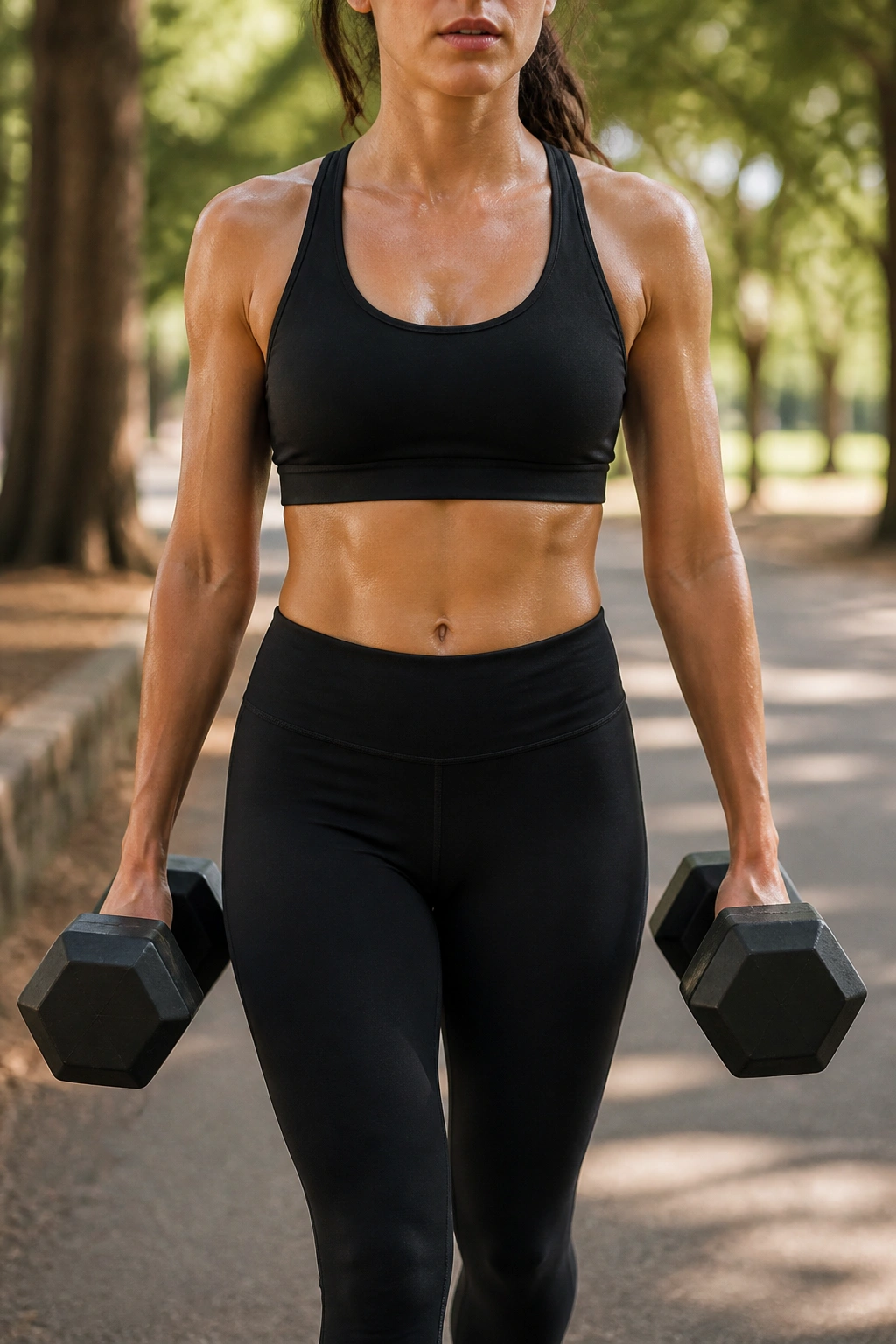
I never skip carries when I want a strong-looking frame.
Farmer carries, suitcase carries, and front rack carries hit the grip, core, upper back, and hips at the same time. They also teach you to stay upright while fatigue builds, which is a quietly underrated skill. A lot of people look strongest when they’re standing still. Carries make that strength visible while you move.
Three Versions to Rotate
- Farmer carry: 2 dumbbells or kettlebells, walk 30 to 40 meters
- Suitcase carry: 1 heavy weight, walk 20 to 30 meters per side
- Front rack carry: 2 kettlebells or dumbbells, walk 20 to 30 meters
Do 3 to 5 rounds, resting 45 to 60 seconds between efforts. Use a weight that makes your core work hard without twisting you into a lopsided mess. If your shoulder shrugs up toward your ear, lighten the load and reset.
Carries are the kind of finisher that leaves a mark in the best way. Your grip feels tighter. Your ribs feel more stacked. Your walk changes a little. Do them after strength work, twice a week, and they’ll quietly pull a lot of the rest of your training together.
