



If standard crunches feel too easy, the fix is not 100 sloppy reps. Crunches challenges are better because they make each rep harder to fake.
A clean crunch should feel like the ribcage is curling toward the pelvis while the neck stays quiet. If your hips are doing most of the work, or your lower back is popping off the floor, the set has already drifted off course. That’s the part most people skip, and it matters more than the number on the rep count.
No, crunches are not evil. Poor crunches are. Done with control, they can build endurance in the front of the trunk, sharpen your ability to brace, and make other floor work feel cleaner.
The 15 challenges below give you different ways to stress the same movement without turning it into random flailing. Start with the slow versions if your form is shaky; save the loaded and timed stuff for the days when you can keep the same shape from the first rep to the last.
1. The 4-1-4 Tempo Crunch Challenge
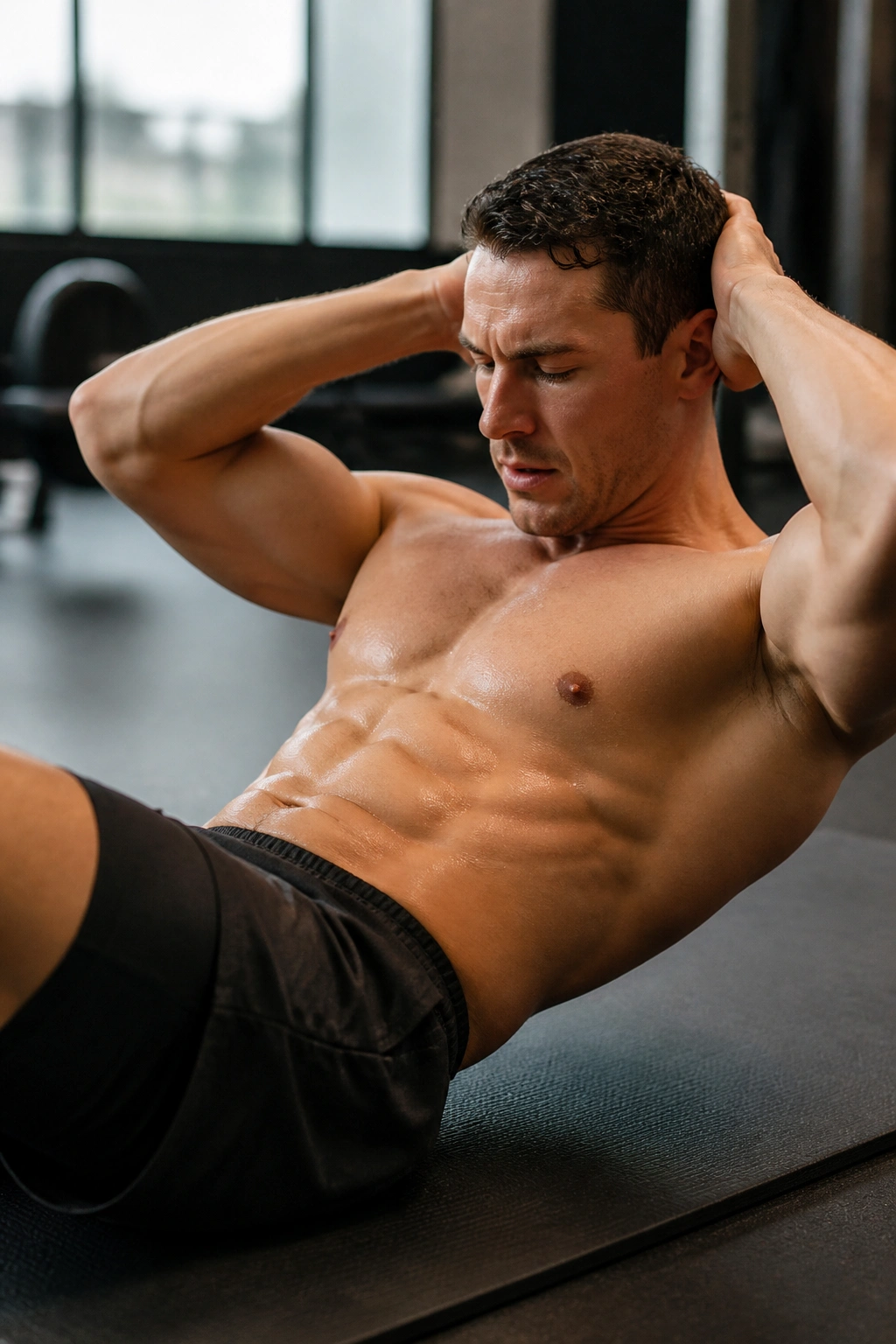
Speed is the cheat code your abs hate.
A 4-1-4 tempo means you take four counts to curl up, hold the top for one count, and lower for four counts. That sounds gentle until you try it for a full set. The slow lowering phase forces your abdominal wall to keep working instead of handing the job to momentum, and the little pause at the top makes you notice whether your ribs are flaring or staying stacked.
Why It Works
The point is not to make crunches prettier. The point is to make them honest. When the movement slows down, the front of your core has to control your spine through the whole arc, not just kick you upward for a split second.
- Use 6 to 10 reps per set with perfect form.
- Keep your chin softly tucked so your neck stays long.
- Exhale as you curl up; that helps the ribs come down.
- Stop the rep before your lower back arches.
Best tip: if the tempo feels too easy, lengthen the lowering phase first. Most people rush the way down and miss half the work.
2. The Top-Squeeze Pause Crunch Challenge

Why does one extra second at the top change everything? Because the top of the crunch is where a lot of people relax, and that tiny pause tells the truth.
This challenge is simple: crunch up, squeeze hard for one to three seconds, then lower under control. That pause turns a regular rep into a real contraction test. You are not trying to touch your elbows to your knees. You are trying to keep the front of the trunk short and tight without yanking on your head.
The feel matters here. The front of your abs should get hotter as the set goes on, while your neck stays boring. If your chin creeps forward or your elbows pull down hard, the pause stops being useful. It becomes a neck tug. Useless. Annoying too.
Use 3 sets of 8 to 12 reps and keep every hold crisp. Once the top squeeze gets mushy, stop the set. That little bit of restraint is what makes the challenge worth doing.
How to use it
- Lift until your shoulder blades leave the floor.
- Hold the top while you breathe out.
- Lower slowly for control, not speed.
- Rest 30 to 45 seconds between sets.
3. The Crunch Ladder Challenge
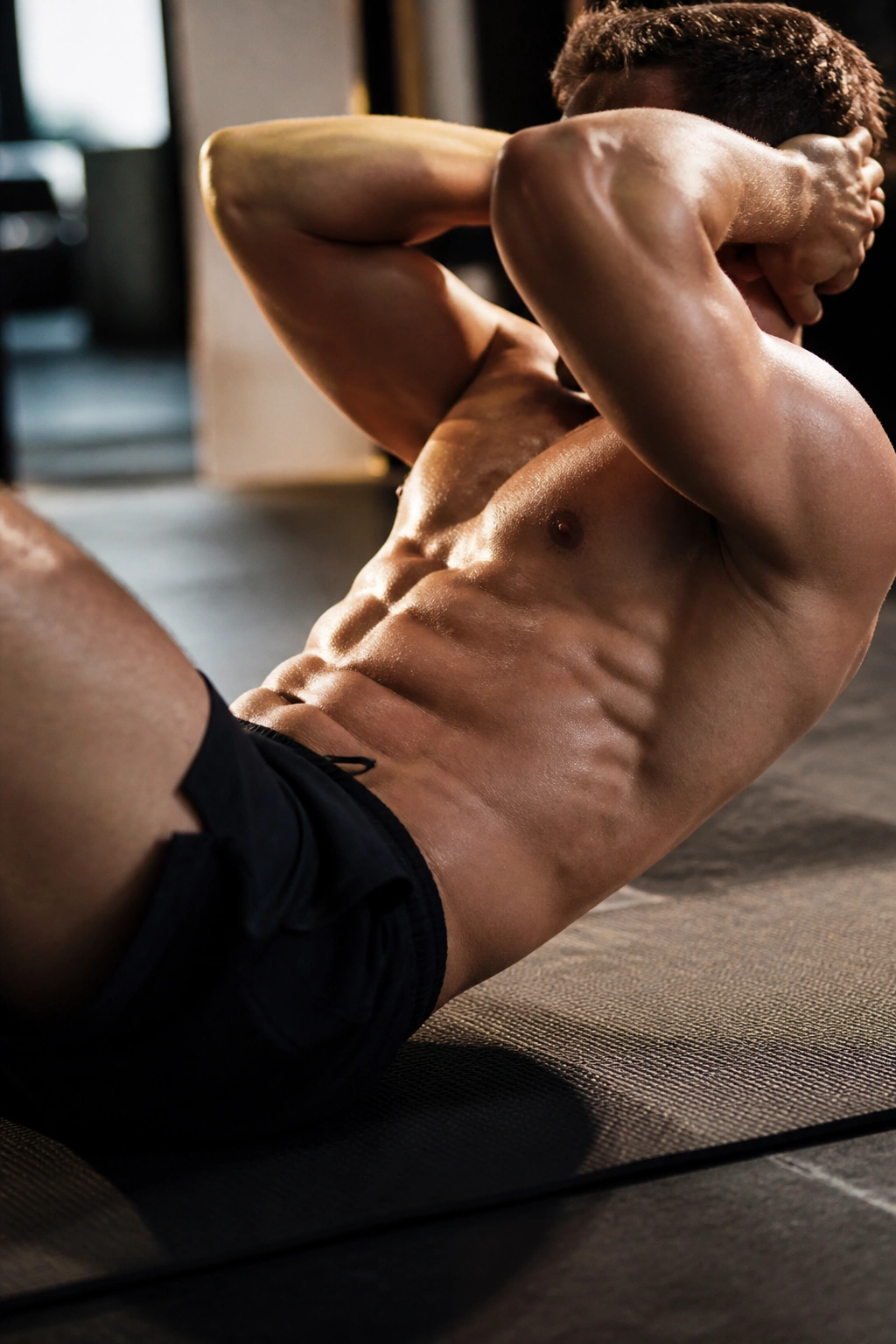
A ladder is perfect for the person who gets bored halfway through the second set.
Start small, climb up, then climb back down. A clean version looks like 5 reps, 10 reps, 15 reps, 10 reps, 5 reps, with 20 to 30 seconds of rest between rungs. The rising volume forces you to stay sharp when fatigue starts to creep in, and the descent keeps you honest when you think the hard part is over.
There’s a sneaky lesson here. The set that feels easiest is often the one where form gets sloppy fastest. By the time you hit 15 reps, you will know whether your range is real or whether you’ve been half-crunching your way through the earlier sets.
What Makes It Different
- The work builds in steps, so you don’t burn out too early.
- The return trip exposes fatigue in a very obvious way.
- Rest stays short, which keeps the trunk under pressure without turning the session into a long nap.
A ladder also helps you pace your breathing. That sounds minor until your midsection starts burning and you realize you’ve been holding your breath. Don’t. Breathe on purpose.
4. The Weighted Plate Crunch Challenge

Bodyweight crunches are fine until they stop asking enough from you.
Add a 2.5 to 10 kg plate, a dumbbell, or a single kettlebell held to the chest, and the same movement becomes a lot more serious. The extra load makes the upper part of the curl more demanding, which is where many people like to coast. You can’t coast as easily when gravity has more say.
This is the version I reach for when someone can already do 15 slow bodyweight reps without losing shape. If that’s not you yet, stay with the unweighted work. There’s no medal for adding load before your spine can stay steady.
A loaded crunch should still look small and controlled. You are not sitting all the way up. You are curling the ribcage toward the pelvis while keeping the lower back from turning into a trampoline. If the weight makes your neck tense, place it lower on the chest or go back to bodyweight for a while.
Best for: people who want more resistance without needing a machine.
Bad idea for: anyone who already feels the movement mostly in the neck or hip flexors.
5. The Reverse-Crunch Pair-Up Challenge
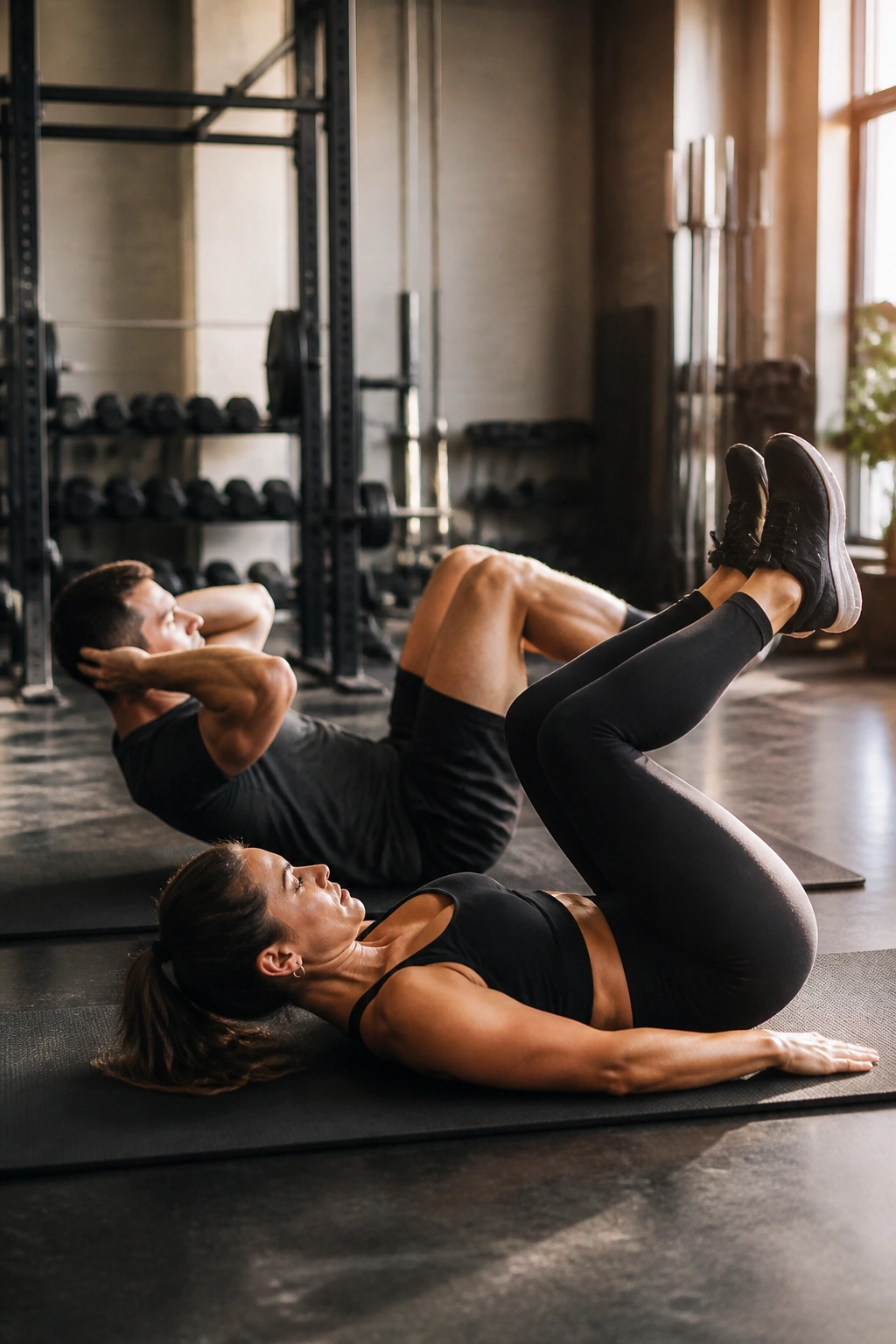
A crunch-only session can get one-sided fast. Pair it with a reverse crunch, and the whole front of the trunk has to stay more honest.
Here’s the simple idea: do 8 crunches, then 8 reverse crunches, and repeat for 3 to 4 rounds. The regular crunch works the upper portion of the trunk curl, while the reverse crunch asks you to control the pelvis and lift the hips with intention instead of swinging the legs around. That pairing is useful because it keeps people from cheating in the same direction over and over.
You’ll feel the difference quickly. The crunch asks for rib movement. The reverse crunch asks for pelvic control. Put those together and you get a more complete floor session, with less chance of the hip flexors stealing the whole workout.
Quick technique cues
- Keep the reverse crunch small.
- Lift the hips, not the knees.
- Lower slowly until the tailbone touches down.
- Keep your shoulders quiet on the floor.
It is not glamorous. It works anyway.
6. The Bicycle Countdown Challenge
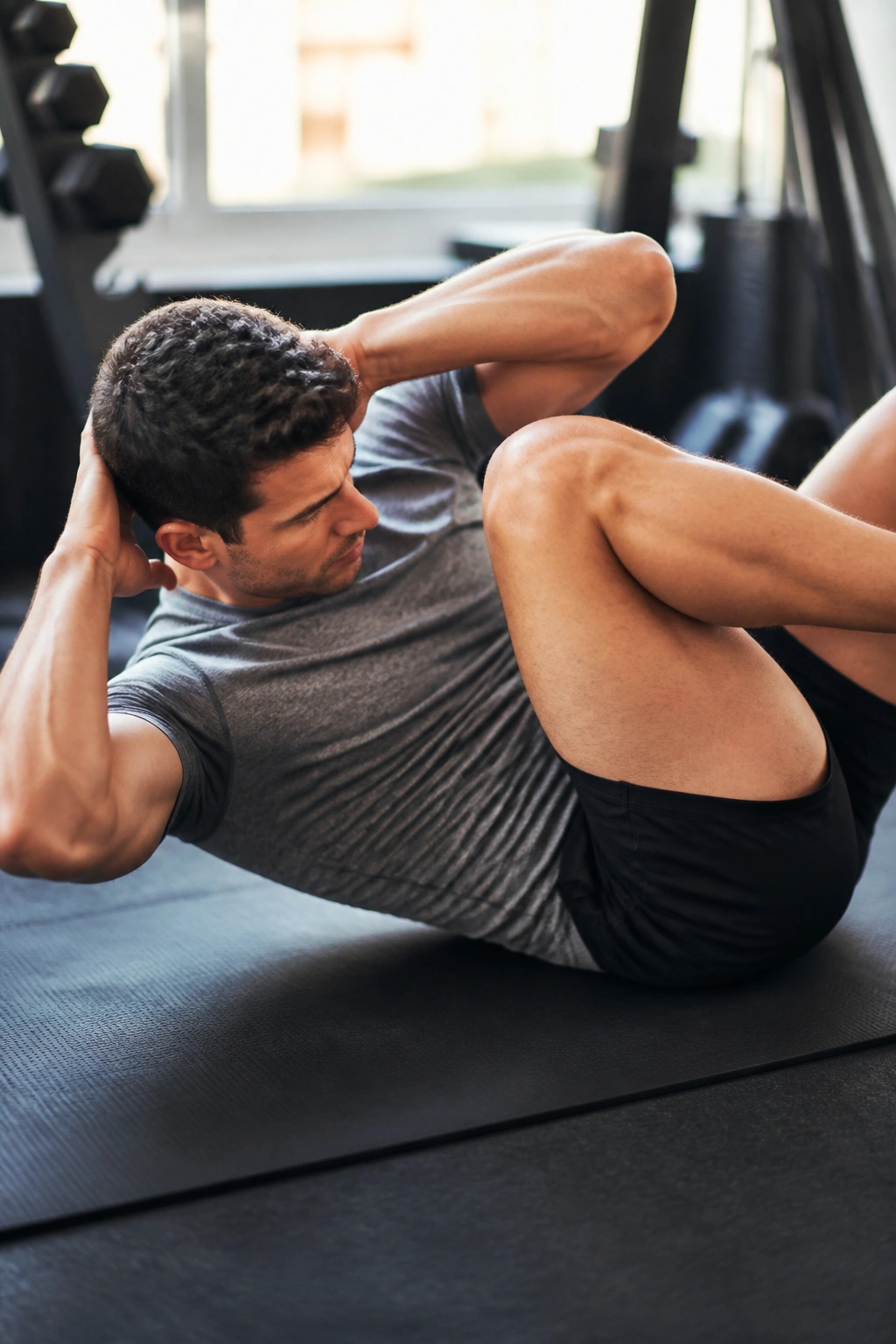
Why do bicycles light up the sides of the trunk so fast? Because rotation makes cheating obvious.
Instead of cruising through the same number of reps every set, try a countdown: 10 bicycles each side, then 8, then 6, then 4, then 2. Short rests keep the pace moving, but the rep drop gives you a chance to stay clean as fatigue piles up. The obliques start working harder than they do in a straight crunch, and the coordination demand climbs too.
How to Get the Most From It
Keep the elbows light. Seriously. Don’t yank your head forward and call it core work. The rotation should come from the ribcage and upper trunk, not from a desperate twist of the neck. If your lower back starts arching, shorten the range and slow the pace down.
A good bicycle set feels rhythmic at first and slightly messy near the end. That’s normal. What you do not want is a set that turns into flapping legs and a sore neck. Better to do fewer clean rotations than a big sloppy count that teaches nothing.
Use this one when you want a more athletic core challenge, not just straight flexion. It belongs in the rotation for a reason.
7. The Decline Bench Crunch Challenge

A couch edge, a decline bench, or a stable wedge changes the whole feel of a crunch.
The setup puts your upper body on a slight slope, which gives you a longer range of motion and makes the top of the movement feel heavier. That extra range can be useful, but it also punishes lazy form fast. If your feet are anchored and your lower back starts arching, you will know it within two reps.
This challenge is a good step up from floor crunches for someone who already owns the basics. You don’t need a huge decline. A small angle is enough. Too steep and the movement starts drifting into hip-flexor territory. Too shallow and it barely changes anything.
Setup That Actually Helps
- Fix your feet securely.
- Start with 8 to 12 reps.
- Keep the chin soft and the ribs down.
- Stop when the top of the rep gets jerky.
The decline angle can be a useful tool, but it is not a badge of honor. Small, controlled reps beat dramatic flailing every time.
And yes, that includes the gym-floor version where someone tries to throw themselves upward like they’re escaping the bench.
8. The Hollow-Body Crunch Challenge
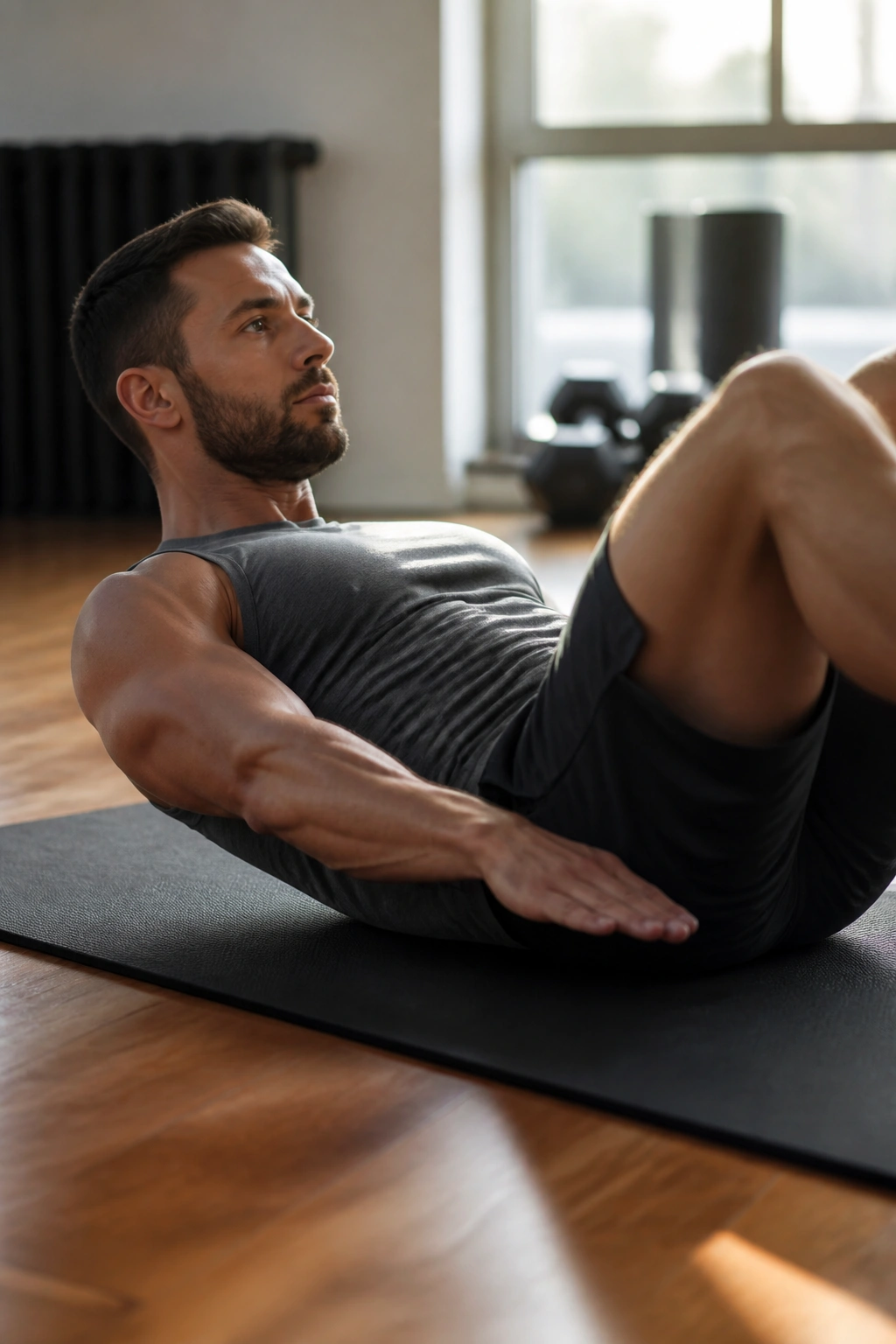
The smaller the motion, the nastier the set.
A hollow-body crunch keeps the lower back pressed down while the ribs curl toward the pelvis. That posterior pelvic tilt is the whole point. It strips away a lot of the slack that people use to fake a rep, which is why this challenge lights up the abs so fast and usually shuts down overconfidence just as fast.
I like this one because it is brutally honest. If you can’t keep the low back pinned, the movement tells you right away. If you can, the abdominal wall has to do the work without much help from momentum or a big swing through the spine.
You can scale it by bending the knees slightly or keeping the arms by your sides. That is not “cheating.” That is smart regression. A bent-knee hollow crunch still asks for control, and control is what you are after.
What to Watch For
- Keep the lower back heavy on the floor.
- Lift only a few inches.
- Exhale every time you come up.
- Stop before your hip flexors start shouting.
This challenge looks small on paper. It does not feel small in the middle of the set.
9. The Stability Ball Arc Crunch Challenge
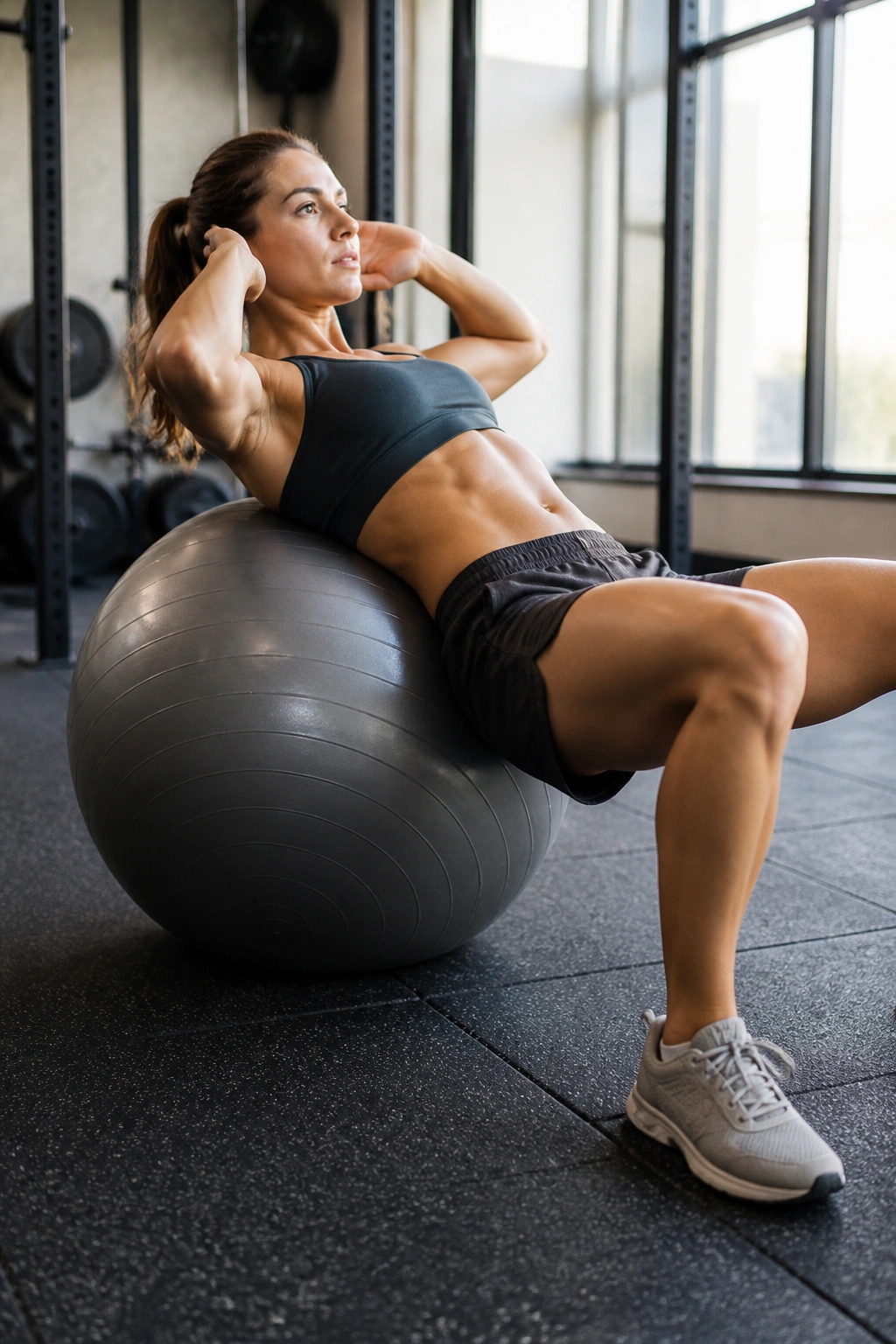
The ball should feel like a soft ledge under your mid-back, not a trampoline under your whole spine.
That’s the difference between a useful stability ball crunch and a weird rolling mess. When your upper back is draped over the ball, you get a longer stretch on the way back and a cleaner curl on the way up. That extra arc can be a nice change of pace from floor work, especially if your standard crunches have gone stale.
The key is restraint. Don’t lean so far back that you lose control of your ribs. Don’t sit so high on the ball that the movement turns tiny and pointless. Mid-back support, feet planted wide enough to stay stable, hands light at the sides of the head or crossed on the chest. That’s the sweet spot.
Quick Setup Cues
- Place the ball under the lower edge of the shoulder blades.
- Keep your feet flat and a little wider than hips.
- Curl up until the ribs close, then stop.
- Lower slowly until you feel a stretch, not a collapse.
This one works well when you want a longer range without loading the movement with plates or machines. It’s also kinder on the neck when you do it well, which is a nice bonus.
10. The Dead-Stop Floor Crunch Challenge
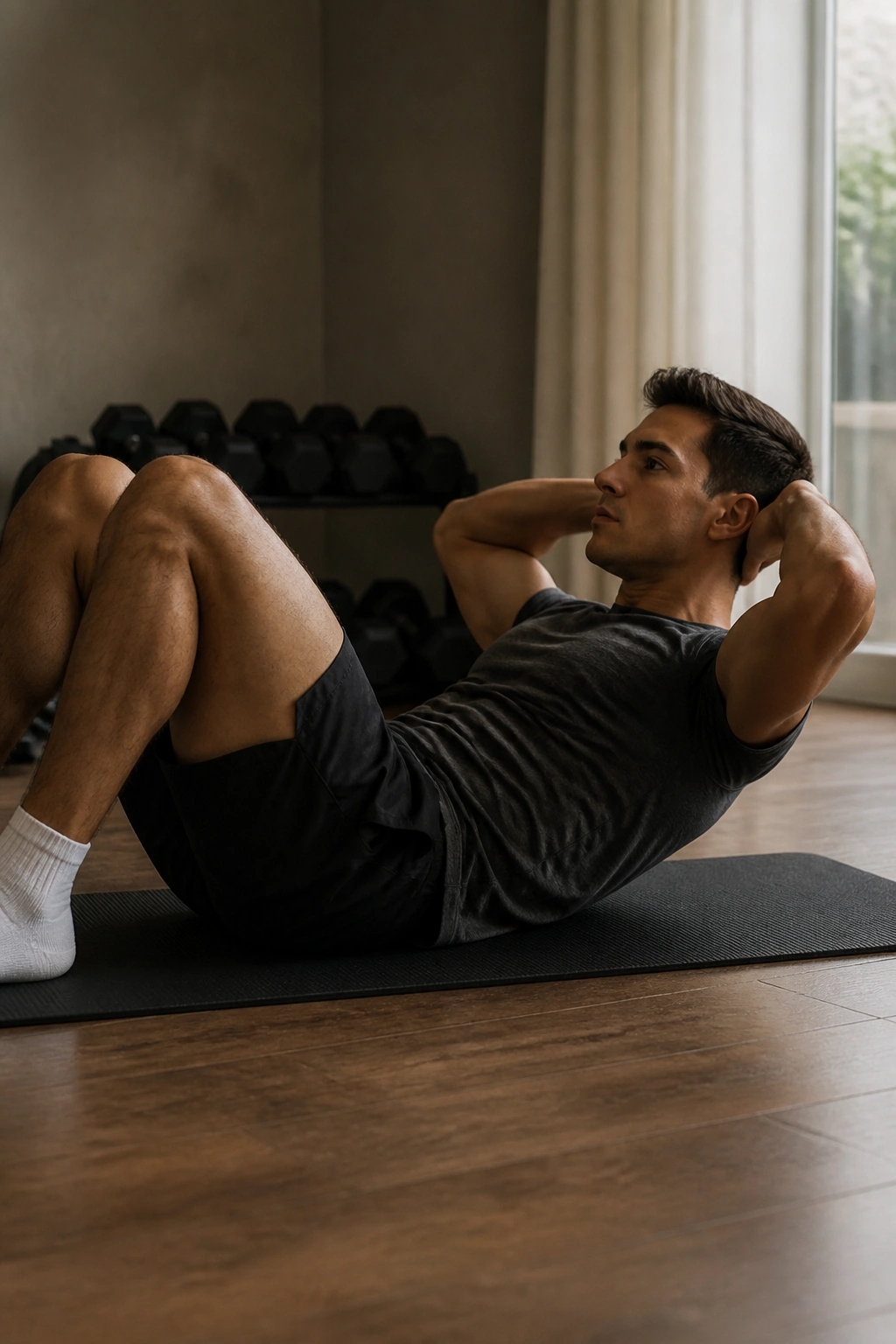
On the floor, every rep starts from silence.
That is what makes the dead-stop version so useful. You lower all the way down, pause for a beat, and then start the next rep from a dead still position. No rebound. No little bounce. No drifting through the bottom and pretending it counts. The floor becomes a reset button.
This challenge exposes cheating faster than almost anything else in the list. When momentum disappears, the abs have to restart the movement every single time. The first rep often feels manageable. The sixth or seventh one is where you learn whether you were actually controlling the descent or merely falling and catching yourself.
What Counts as a Clean Rep
- Lower until your shoulder blades fully return to the floor.
- Pause for one full second.
- Exhale as you begin each new curl.
- Keep the same range on every rep.
There is a nice, plain honesty to this variation. It doesn’t need fancy setup or much equipment. It just refuses to let you borrow momentum from the previous rep. That alone makes it a solid core builder.
11. The EMOM Crunch Block Challenge
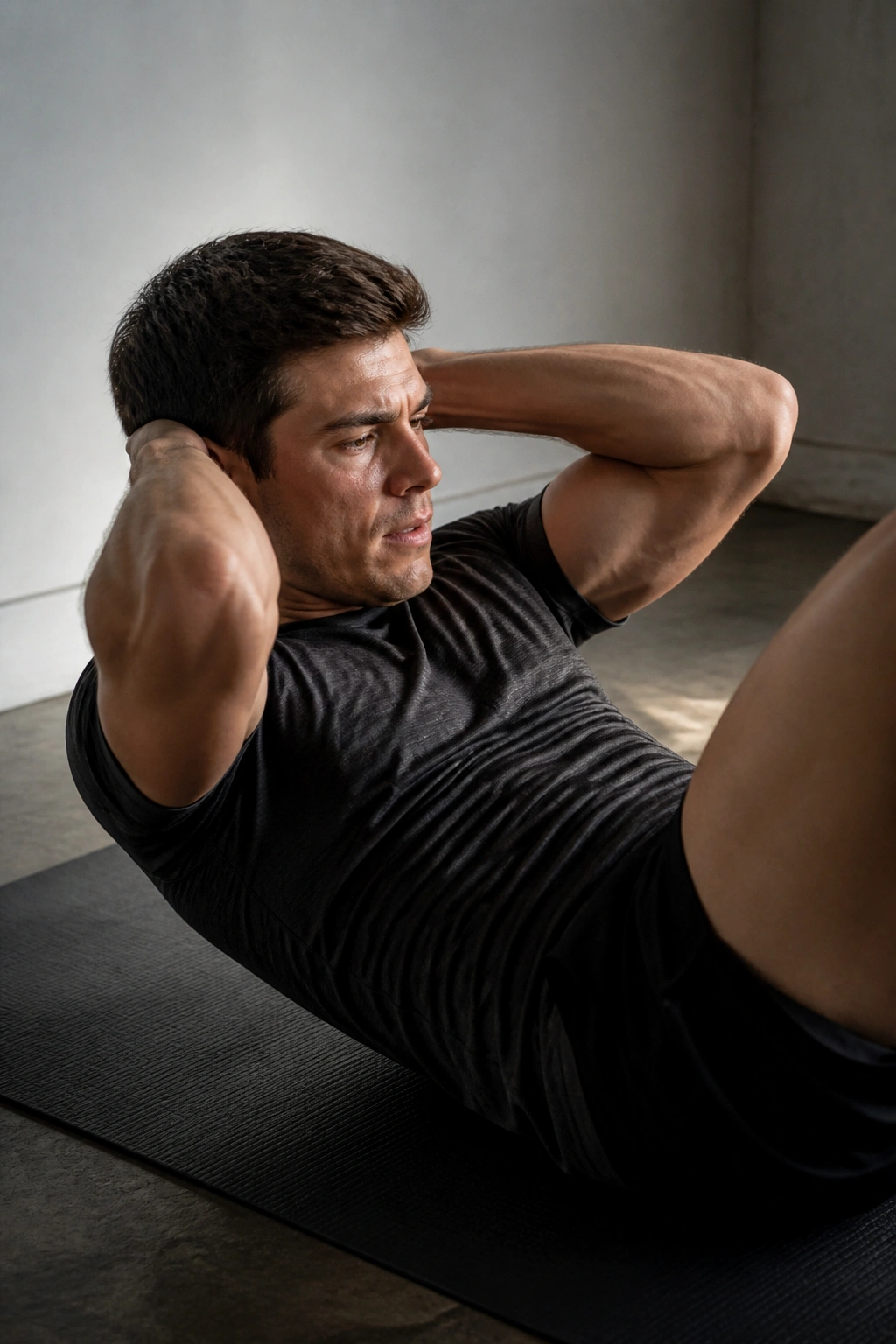
Unlike an open-ended set, an EMOM gives you a clock.
Every minute on the minute, you do a fixed number of crunches, then rest for whatever time is left in that minute. A practical start is 8 to 12 crunches for 8 to 10 minutes. If you finish in 20 seconds, you get 40 seconds to breathe. If you need 45 seconds to finish, your number is too high.
That built-in time cap changes the workout feel in a good way. It keeps the session tight, and it forces you to move with purpose instead of wandering through half-reps. You also learn very quickly whether your pace is realistic, because the next minute arrives whether you feel ready or not.
Why It Works
- The clock keeps rest honest.
- The fixed rep target prevents sloppy overcounting.
- Fatigue shows up early, which makes pacing easier to learn.
A lot of people like the EMOM format because it looks simple on paper and gets serious in practice. That’s fair. Just keep the reps clean. If the last two minutes turn ugly, lower the number and protect the form.
12. The Side-Crunch Oblique Ladder Challenge

One side always seems weaker. That is not your imagination.
Side crunches, or oblique crunches, are good at exposing that imbalance because they force the waist to shorten on one side while the other side stays quiet. A ladder works well here: 8 reps left, 8 reps right, then 10 each side, then 12 each side, with short rests in between. The rising count makes the weaker side tell on itself fast.
Keep the movement small. You are not trying to touch your elbow to your hip with wild force. You are trying to tighten the side waist and bring the ribcage closer to the pelvis on one side. If you twist through the neck or yank the shoulder forward, you miss the point.
Simple Rules That Matter
- Match the reps on both sides.
- Move slowly enough to feel the side wall working.
- Keep the hips quiet.
- Stop if the neck starts doing the job.
This challenge is useful for anyone who wants more control in rotational work, but it also has a plain aesthetic payoff: the side waist starts to feel tighter and more responsive in movement. That matters more than most people admit.
13. The McGill Curl-Up Hold Challenge
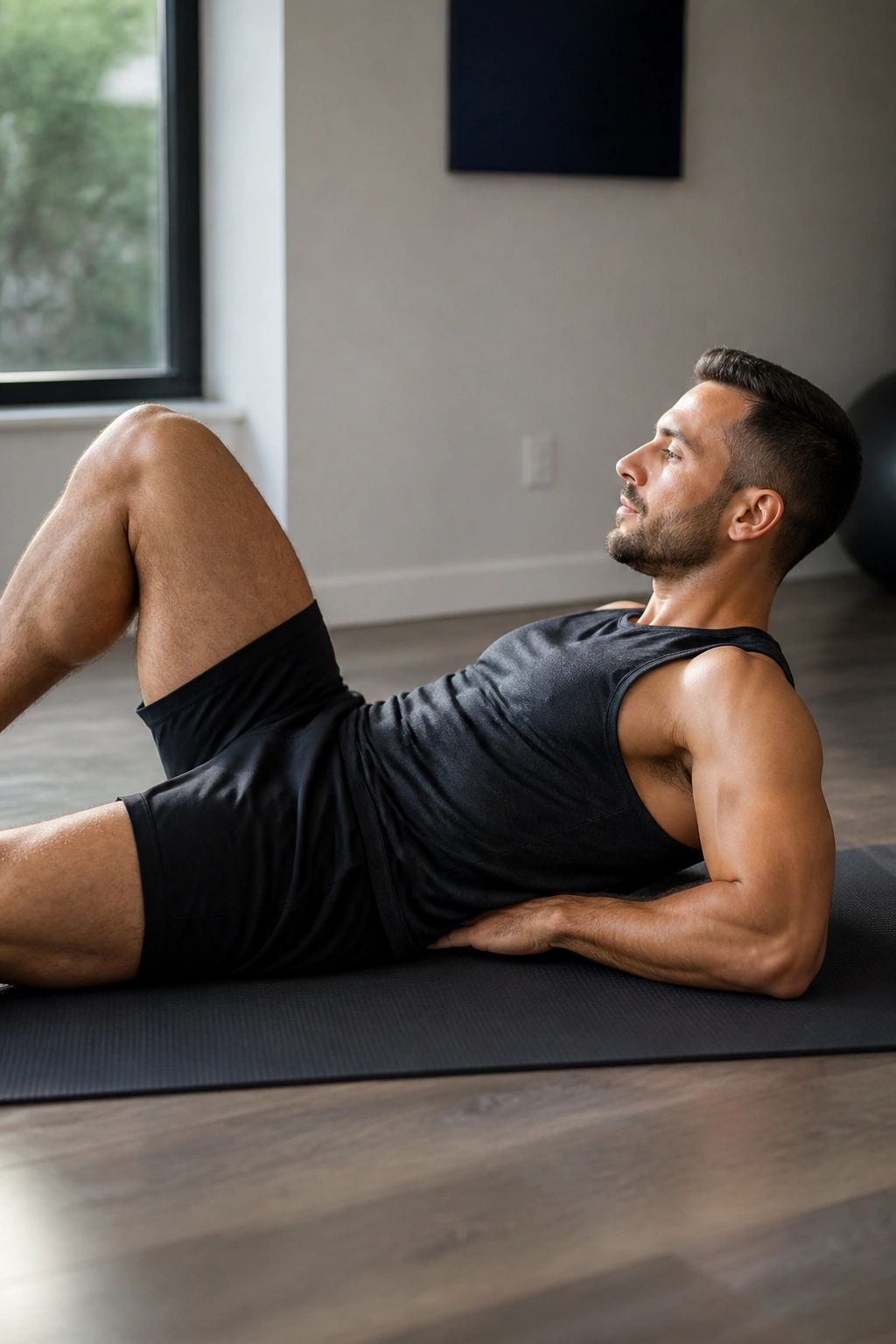
This is the quiet one, and I like it for that reason.
The McGill curl-up is not a flashy crunch. It looks almost too easy at first glance. One knee bent, the other leg straight, hands under the low back to preserve the natural curve, then a tiny lift of the head and shoulders followed by an isometric hold. You’re training stiffness and control, not speed. That makes it a useful choice when standard crunches bother the lower back or when you want core work that feels less aggressive.
A good target is 5 to 8 holds of 8 to 10 seconds on each side of the setup. The lift should stay small. If you’re trying to sit up high, you’ve wandered away from the drill. The best version feels calm and focused, like you’re bracing for a firm tap in the ribs.
Why It Belongs Here
The drill teaches you to maintain tension without moving a lot, which carries over nicely to heavier lifting and daily bracing. It also gives the neck a break from big flexion reps.
No drama. Just control.
14. The Mini-Range Burnout Crunch Challenge

Half reps are not half the work.
If anything, they get harder when you keep the range tiny and the tension high. This challenge uses a full set first, then finishes with 10 to 20 short pulses in the top third of the crunch. The shoulders barely move. The ribs stay tucked. The neck stays soft. You are squeezing out the last bit of work without turning the set into a bounce-fest.
I use this one as a finisher, not a main course. It’s useful after a clean set of floor crunches or after a ladder, when the abs already have some fatigue and the short range starts to burn fast. That burn is the point. The mistake is making the pulses so tiny that you lose all control and start jerking your head forward.
Keep It Honest
- Use the top third of the movement only.
- Keep the tempo slow even in the short range.
- Stop the second the motion turns jerky.
- Rest longer than you think you need.
It sounds easy until rep 12 or 13. Then it gets mean in a hurry.
15. The 30-Day Stronger-Core Ladder Challenge

A challenge is only useful if it has a path.
For a simple 30-day block, pick one or two crunch variations from this list and stick with them long enough to notice a change. Start with floor-based work if you’re new, and save the loaded or decline versions for later in the month. The goal is not to cram every style into one session. The goal is to build clean reps, then add a little more demand without losing shape.
A Simple Progression
- Days 1 to 7: 2 sets of 6 to 8 slow crunches.
- Days 8 to 14: 3 sets of 8 reps with a 1-second pause at the top.
- Days 15 to 21: Add one ladder day or one EMOM day.
- Days 22 to 30: Use your hardest clean version for 3 sets, then finish with a short mini-range set.
Keep at least one rest day between hard crunch sessions if your midsection is still sore. That soreness can be useful, but not if it changes your form. You want your abs to work harder over time, not your neck to get recruited as a backup plan.
Pick the version that keeps you honest. Stick with it long enough to feel the difference when you stand up, breathe deep, or brace before another exercise. That’s where core work starts to pay off in the real world — not in the mirror first, but in how cleanly your trunk holds together when you actually need it.
