



A 15-minute morning yoga flow can change the feel of a whole day before the first email lands. That sounds dramatic until you’ve tried standing up with a stiff neck, a sleepy lower back, and exactly six minutes before the rest of the house starts making noise.
The trick is not doing more. It’s doing the right kind of movement. A short, steady sequence wakes up the spine, loosens the hips, and gives your breathing a rhythm that coffee can’t quite match. And if you keep the shapes familiar, you’ll actually come back to them on rushed mornings instead of saving them for some imaginary quiet hour.
That’s where busy days get interesting. The best morning yoga flows are the ones you can start half-awake, in socks, with your mat half-unrolled and your brain still arguing for five more minutes. They should feel doable on a rough morning and satisfying on a good one. Same time window. Different purpose.
Here are 20 fifteen-minute morning yoga flows that fit real life: tight schedules, sleepy joints, apartment floors, travel stiffness, low-energy mornings, and the odd day when you want to move a little harder without turning the whole thing into a workout drama.
1. Neck-and-Spine Wake-Up Flow
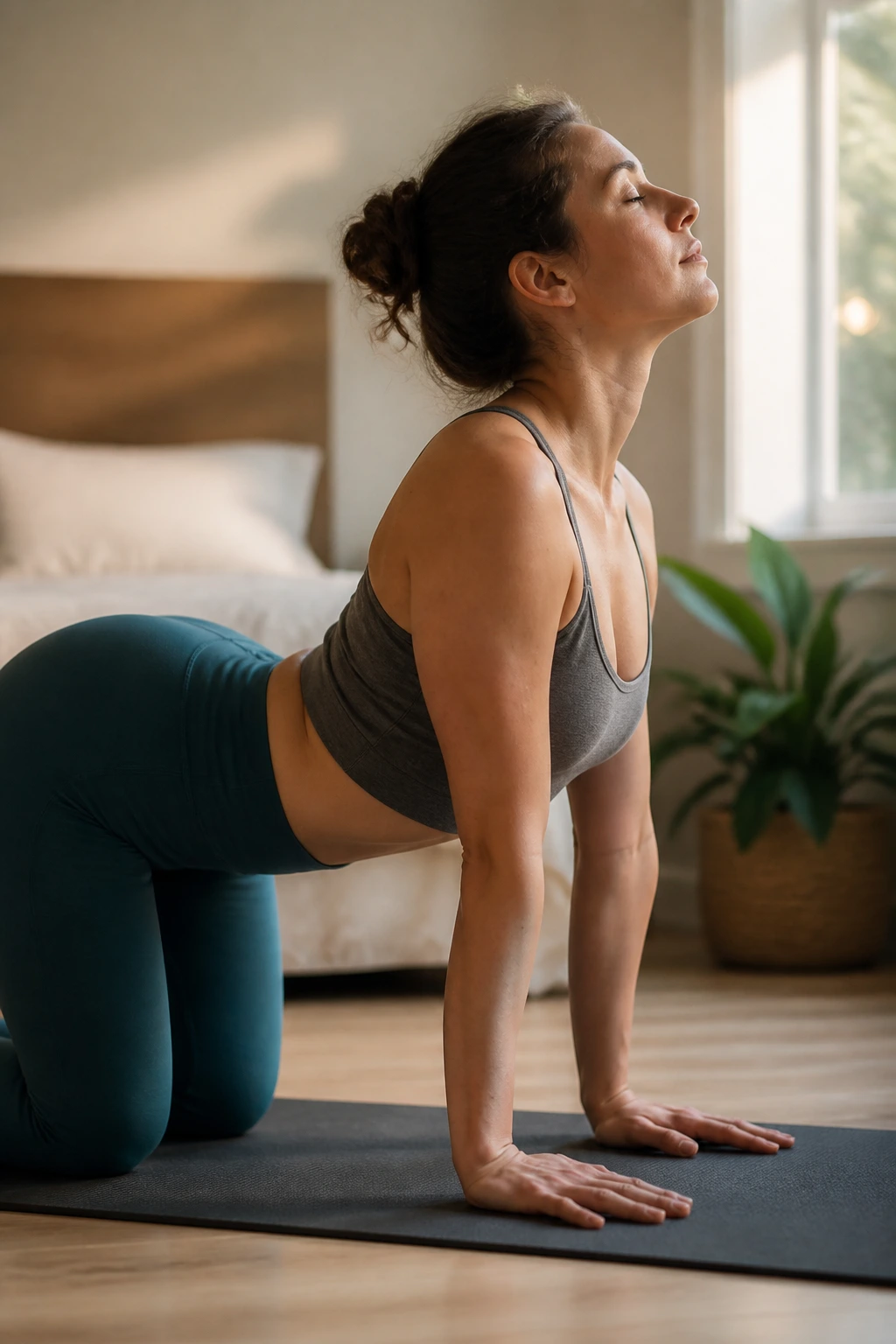
If your neck feels glued to your shoulders the second you open your eyes, start here. This is the kind of flow that works from the top down, and that matters when your body still feels compressed from sleep.
Begin with Cat-Cow for 1 minute, moving slowly enough that your tailbone, ribs, and head all have time to follow. Then take Thread-the-Needle for 45 seconds on each side, keeping your hips stacked over your knees instead of collapsing onto one shoulder. Finish with Standing Forward Fold, Half Lift, and a slow roll up for another 3 to 4 minutes, letting each vertebra stack one at a time.
Why the spine likes first-morning movement
The spine does not want a big shove first thing. It wants small, clean motions that remind the joints they are still allowed to move. Gentle flexion and extension in Cat-Cow, then a little rotation through the upper back, usually does more than a hard stretch ever will.
Quick cues
- Keep your jaw soft.
- Exhale as you fold.
- Bend your knees in forward folds if your low back feels cranky.
- Move your head last on the way up.
Best for: stiff necks, sleepy backs, and mornings that start at a desk.
One rule: let the first round be embarrassingly easy.
2. Morning Yoga Flow That Starts With Sun Salutations Lite
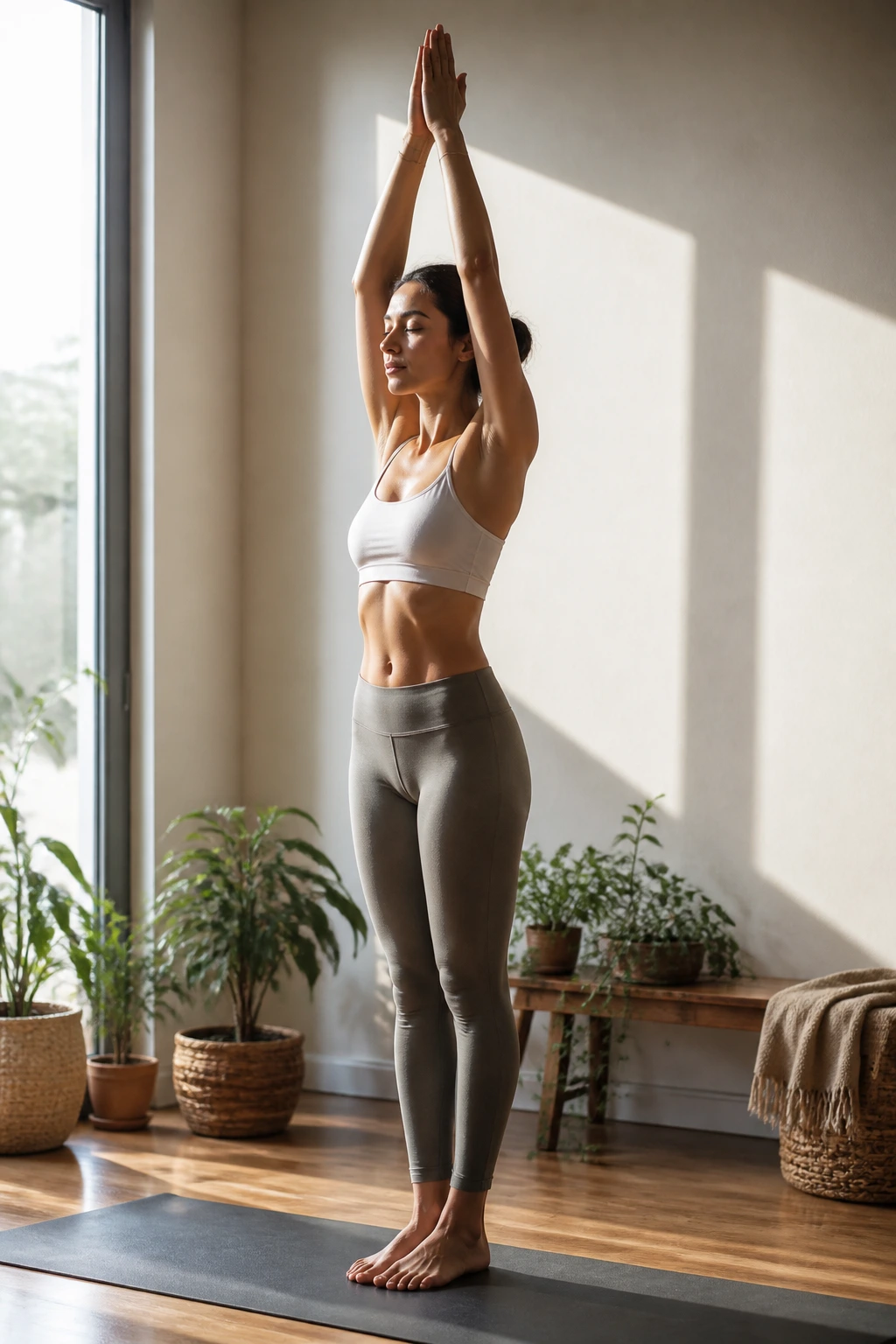
You do not need a full vinyasa class to feel awake. Three careful rounds of a stripped-down Sun Salutation can do the job without leaving you winded before breakfast.
Start in Mountain Pose, lift your arms on an inhale, fold on an exhale, and move to a Half Lift before stepping back to Downward Dog or, if you like, Low Plank with knees down. From there, lower to Cobra, press back to Down Dog, and step forward again. Keep the pace slow enough that every breath lands where it should.
What makes it worth repeating
The reason this flow works for busy mornings is the rhythm. You get spine movement, shoulder opening, hamstring length, and a little heat from the transition work. Nothing fancy. No extra choreography.
If your mornings feel scattered, this is one of the easiest ways to make your body catch up with your mind. It also scales well. One round on a rough day. Three rounds when you want a proper wake-up. No ceremony.
Keep your gaze soft and your transitions tidy. Sloppy stepping is where the ankles complain, and nobody needs that before noon.
3. Hip-Opening Reset for Tight Sitting Days
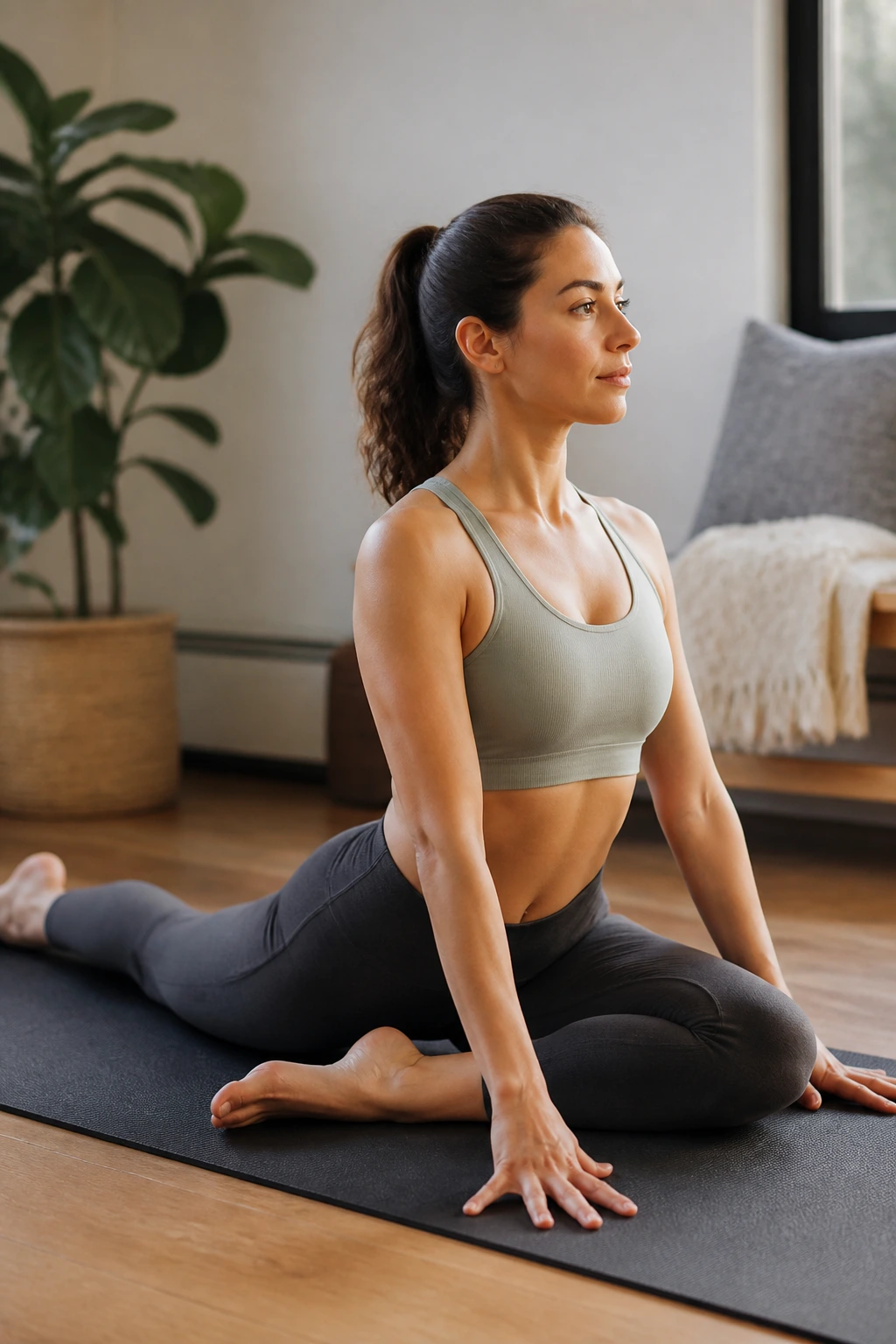
Why do hips feel so stubborn before the day even starts? Sitting, sleeping curled up, and marching through life in car seats and desk chairs will do that. A short hip-opening flow gives the pelvis a little room to move before it spends hours locked in place again.
Move from Low Lunge to Half Split, then into Lizard or a more upright lunge if your knees prefer it. After that, come to Figure-Four on your back or Reclined Pigeon for 1 minute per side. If you have extra time, finish with Goddess Pose and a few slow side-to-side shifts.
How to keep the hips honest
Do not chase depth first. Chase ease. A hip opener that makes you hold your breath is too much for early morning work, especially if your body is still cold. Instead, look for a stretch that feels roomy after three breaths, not dramatic after one.
Use a folded blanket under the back knee if the floor feels unforgiving. That tiny change often makes the whole sequence easier to stay with. And if one side feels far tighter than the other, spend an extra 30 seconds there without turning it into a contest.
A calm hip flow is less about forcing the joint open and more about reminding it that it has options.
4. Standing Balance Flow for a Sharper First Step
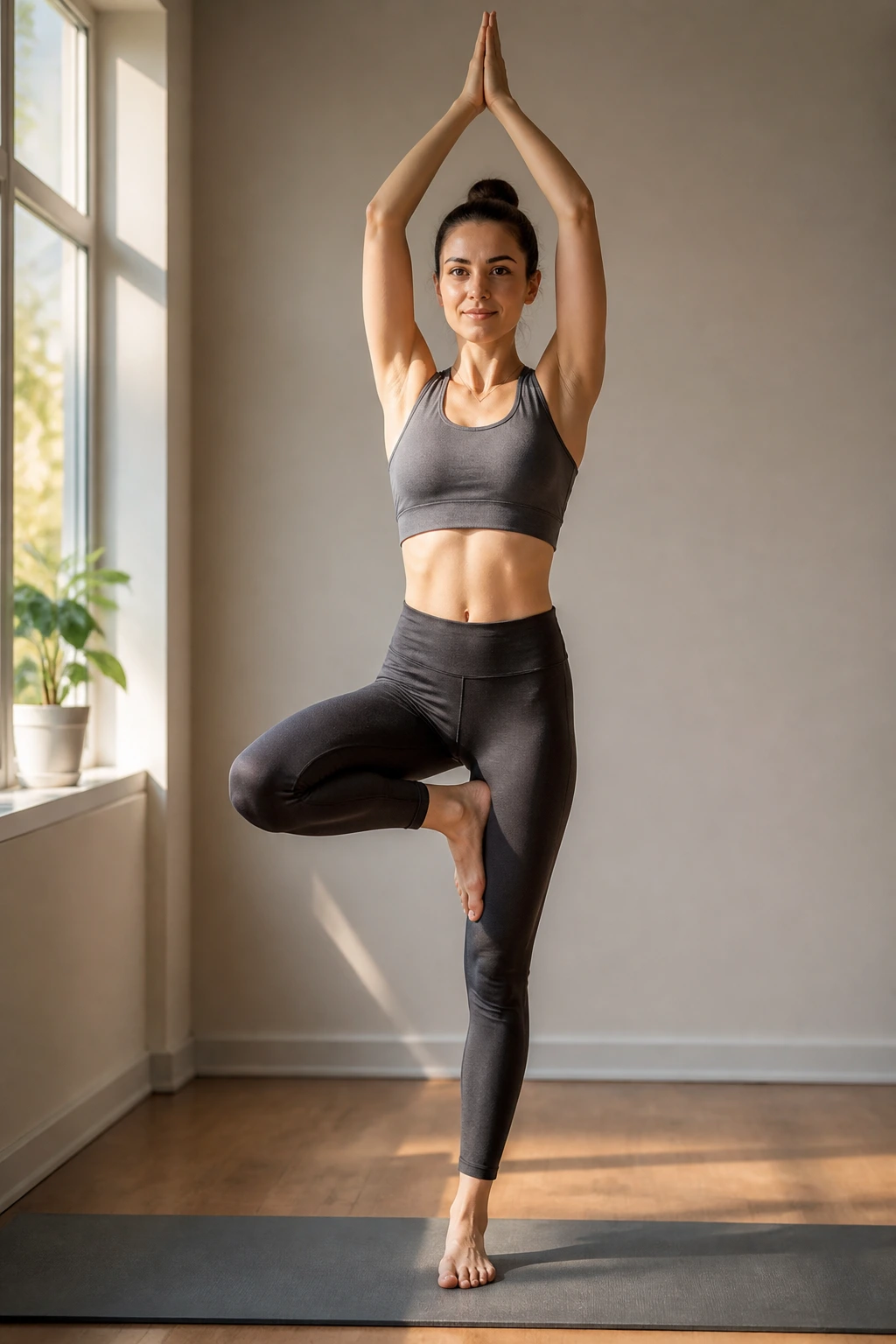
One foot at a time is enough. Standing balance poses wake up the feet, ankles, glutes, and deep stabilizers in a way that lazy stretching never quite manages.
Start with Tree Pose for 30 seconds on each side, then move into Eagle or Standing Figure-Four. From there, step into Warrior III with fingertips on a wall if needed, and finish with Half Moon or a simple standing side stretch. A few slow forward folds between rounds keep the legs from locking up.
Balance work is sneaky. It asks your mind to stop wandering for a minute. That alone can make the room feel quieter.
If your feet wobble, good. That is the point. Grip the floor with your toes, then relax them slightly so you are not clawing the mat. A wall is not cheating. It is smart. Especially on mornings when your coordination is still booting up.
Short version: one steady standing sequence can wake up your whole lower body without any jumping at all.
5. Core-and-Breath Flow That Clears the Fog
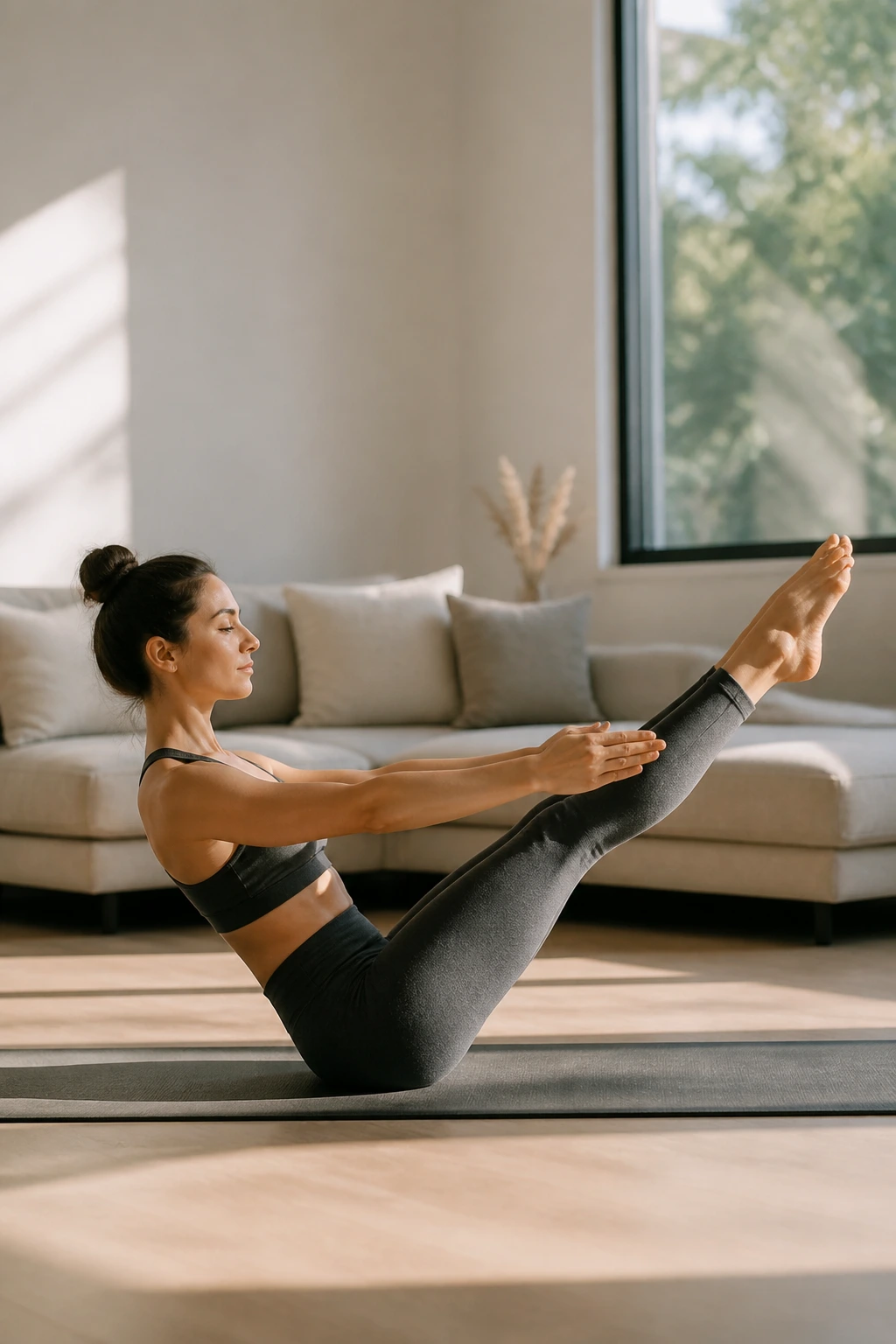
A little core work first thing changes how the rest of the day feels. Not crunches. Not boot-camp nonsense. Just enough front-body engagement to help you stand tall without pinching your back.
Try Tabletop Toe Taps for 1 minute, then shift to Plank for 20 to 30 seconds, Side Plank on the knee for each side, and Boat Pose for 3 short rounds of 15 to 20 seconds. Fold in Locust Pose to balance things out so the back body works too. Keep the exhale longer than the inhale. That part matters.
What to feel in the middle
Your stomach should work. Your neck should not. If your shoulders creep toward your ears, reset and shorten the hold. A five-second cleaner plank is better than a 30-second sag.
The breath is the anchor here. On busy mornings, it is easy to rush straight through the hard parts and miss the effect. Slow the exhale down a little, and the poses stop feeling like a scramble.
Use this flow when you want your body to feel switched on but not fried. It sits in a useful middle place.
6. Shoulder Reset for Desk Days
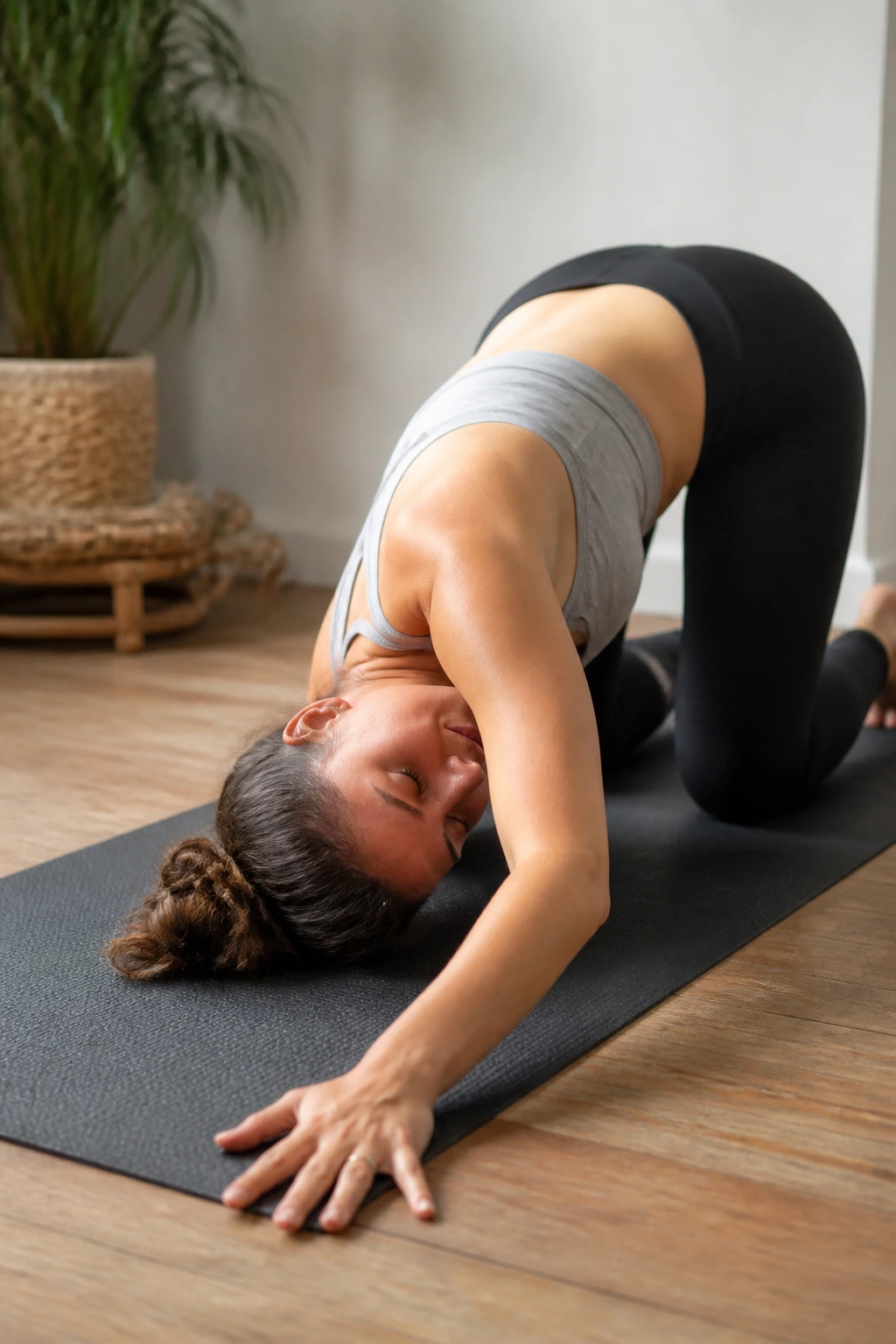
If your shoulders are living near your ears, this is the flow you wanted yesterday. Desk work, laptop hunching, steering wheels, and sleeping with one arm under a pillow all leave the upper back feeling boxed in.
Begin with Shoulder Rolls and Eagle Arms standing up. Move into Puppy Pose, then Thread-the-Needle on both sides, and finish with Cactus Arms on the floor or against a wall. Keep the movement slow enough that you can feel the front of the chest opening without forcing it.
A lot of people go too hard here and end up cranking on the shoulders. Don’t. The upper back opens better when the ribs stay quiet and the breath stays smooth.
The wall is your friend if the floor feels like too much. It gives you a cleaner line through the arms and often lets the chest relax faster. And if your wrists are tender, forearms down in Puppy Pose can save the whole thing.
One gentle shoulder reset can change the tone of a long workday. It won’t fix your desk, but it may keep the desk from winning.
7. Hamstring Release Flow Without the Morning Strain
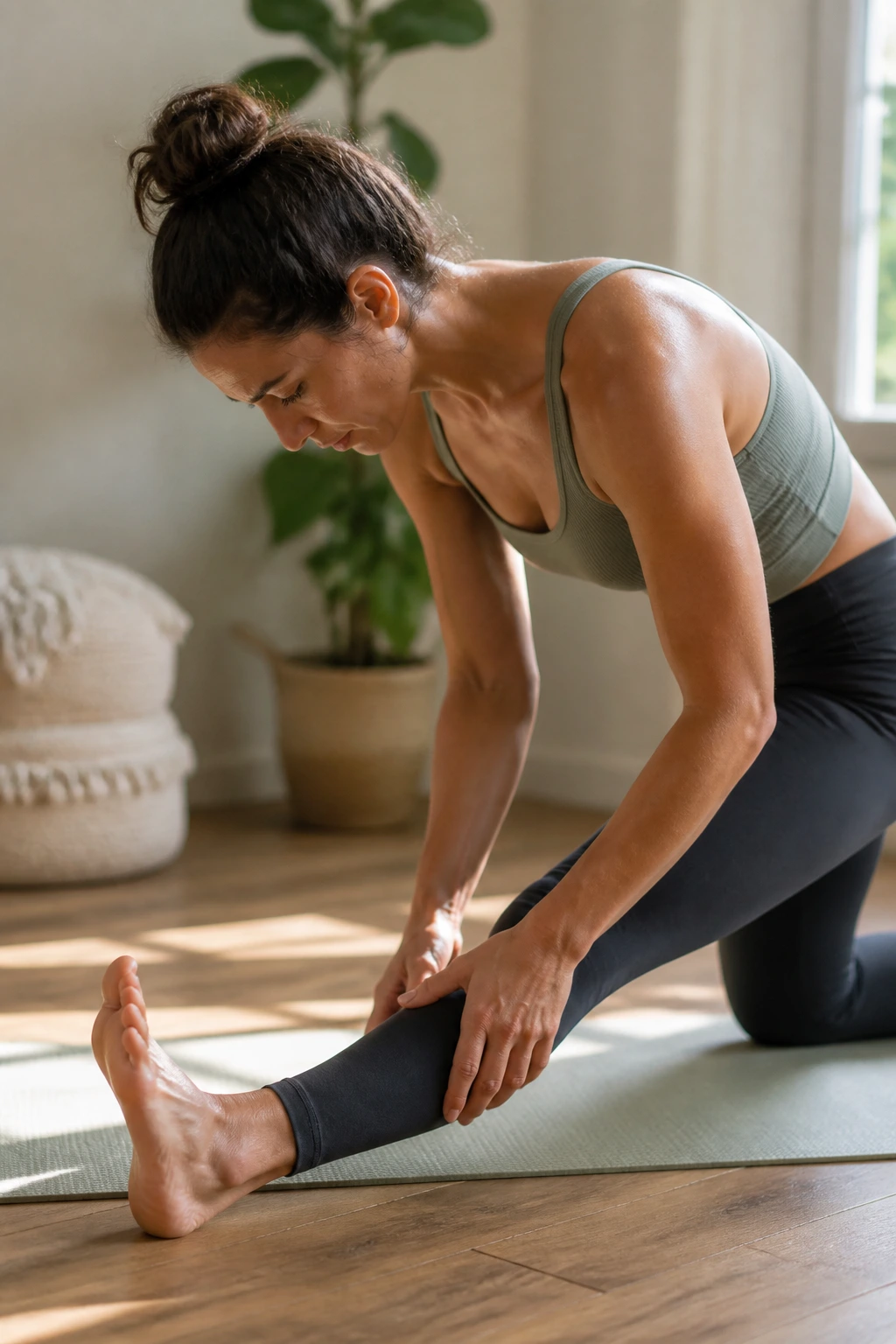
How much stretching is enough before sunrise? Less than people think. Hamstrings like patience, and mornings are no time to yank them into a negotiation.
Start with Half Sun Salutations and a soft Rag Doll Fold. Then move into Low Lunge, Half Split, and a Pyramid Pose with a slight bend in the front knee. If you want to finish on the floor, use a Seated Forward Fold only after the body has warmed a bit.
How to use it
- Keep the bend in your knee at first.
- Send your hips back before reaching forward.
- Stop at mild tension, not a hard pull.
- Breathe into the backs of the legs for 3 to 5 slow breaths.
A hamstring flow can go wrong fast if you treat it like a test. Morning tissue tends to be less forgiving, and the goal is not to win a toe-touch contest before coffee.
This sequence works best when you keep the pace measured. If the back of the legs opens up after two minutes, great. Stay there. If not, the half split is still doing its job.
8. Low-Impact Sweat Flow for Days That Need a Kick
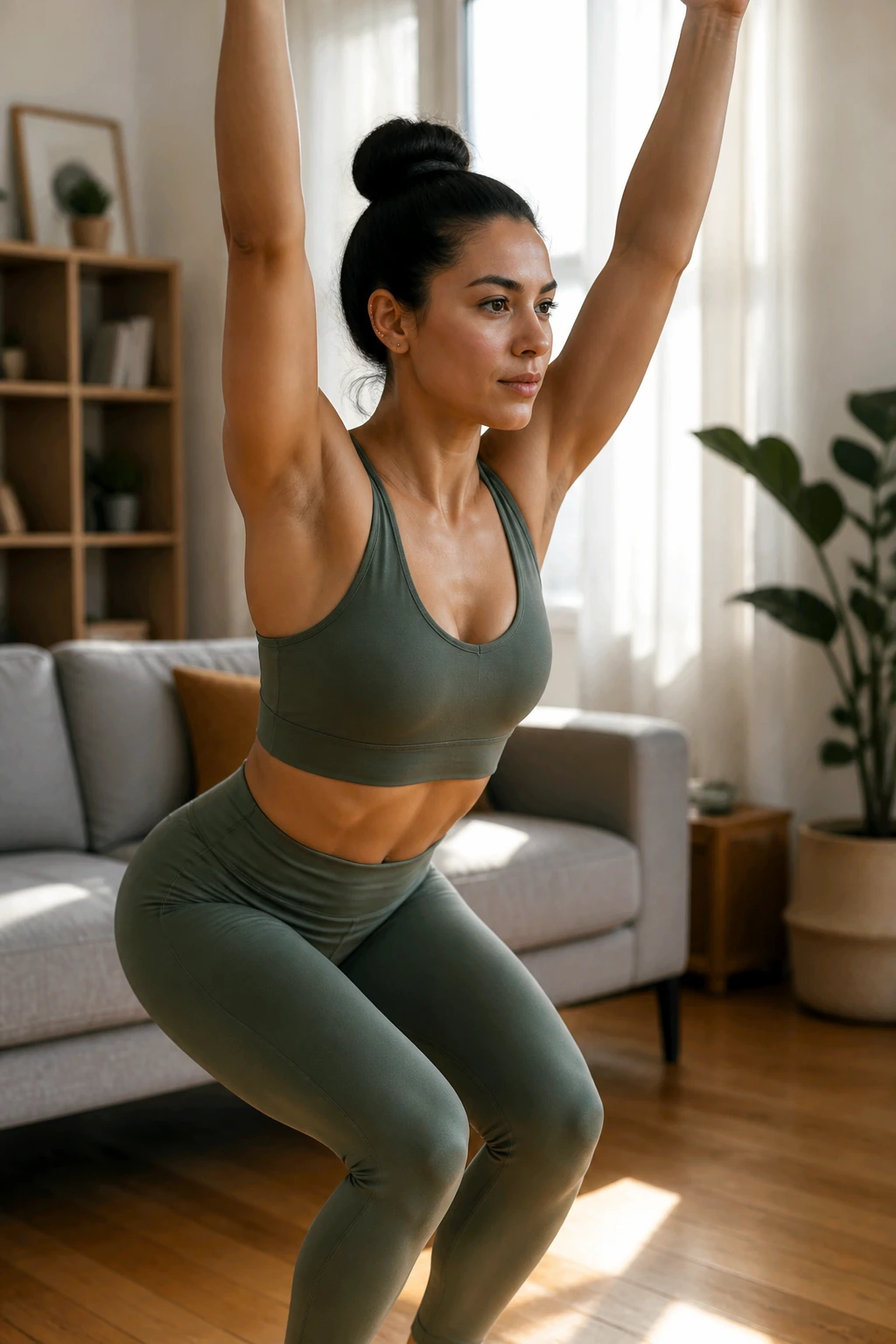
Need to wake up without pounding the floor? Use standing shapes that build heat by holding and moving, not by jumping around like a training montage.
Move from Chair Pose into Crescent Lunge, then to Warrior II, Side Angle, and back through a controlled High Lunge on the other side. Add a few Knee Drives from crescent if you want a little more work, but keep the feet quiet. That way the sequence stays apartment-friendly and joint-friendly.
How to keep it quiet
Keep your front knee tracking over the middle toes. Step back instead of hopping. And when you come up from Side Angle, think “push the floor away” instead of yanking your torso upright. The motion gets cleaner that way.
This is a good morning flow when you want warmth in your legs and a little alertness in your chest. It does not need to be brutal to be effective. A few solid holds with good breath can wake you up faster than a frantic set of transitions.
If your lungs are talking by the end, that is enough. You are not trying to leave the mat exhausted.
9. Restorative Start Flow for Sleepy, Rough Mornings
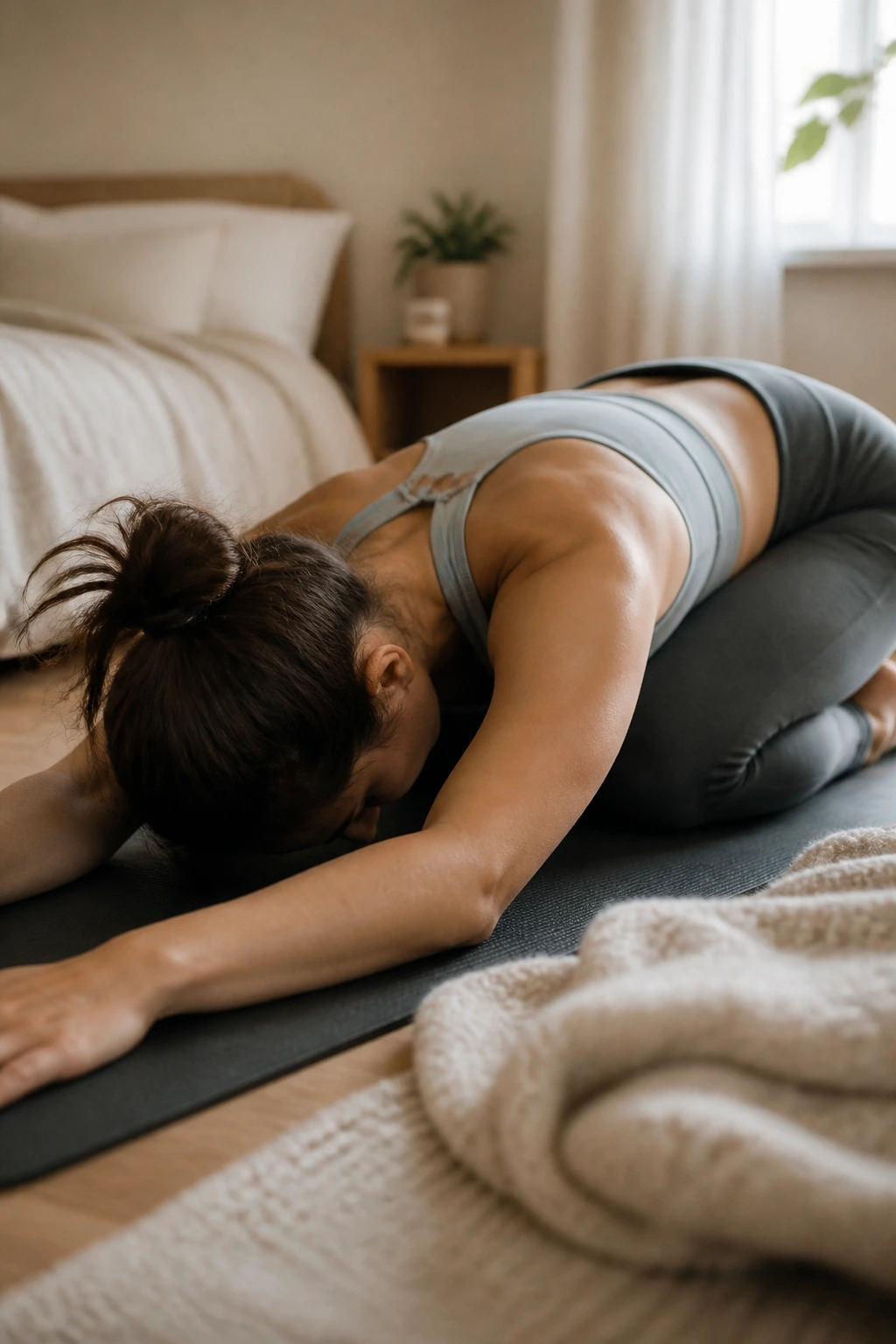
Some mornings ask for less. Not every day needs heat, effort, or standing work. If you slept badly, woke up sore, or just feel a little beaten down, the kinder move is the smarter one.
Start in Child’s Pose for a full minute, then come to Supported Bridge with a block or firm pillow under the sacrum. Move into Reclined Twist on both sides, then Happy Baby if the lower back likes it. Finish with Legs-Up-the-Wall or a long, still rest on your back.
The whole point here is to slow the system down while still giving the body a gentle shape to live in. That little bit of structure matters. It can feel better than doing nothing, especially when your head is already racing.
No heroics. None.
Use longer exhales and keep the room quiet if you can. This flow is excellent on mornings when you need to arrive in the day instead of being dragged into it.
10. Twists and Breath Flow for a Loose, Awake Torso
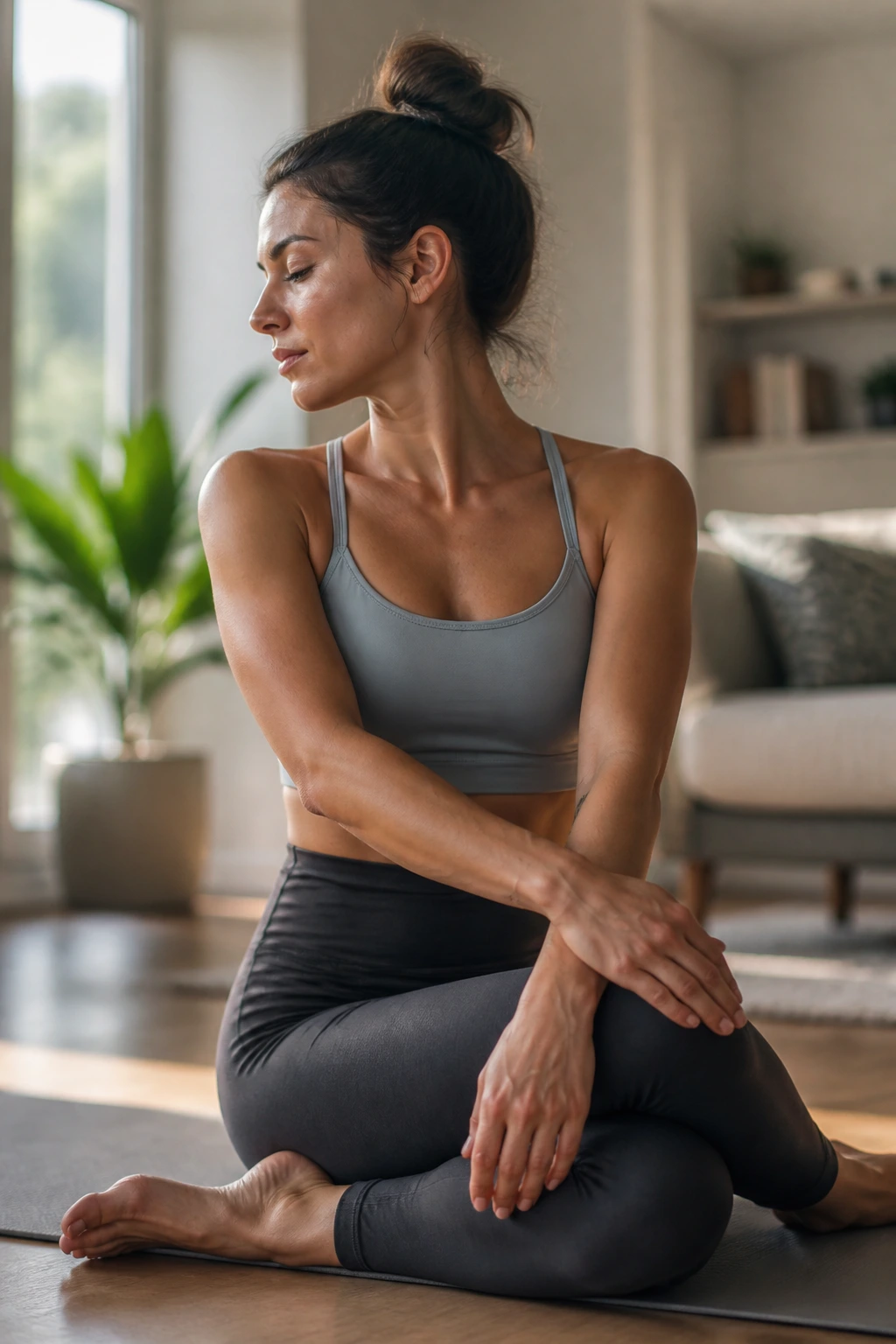
A twist first thing can feel like wringing out a towel. Done gently, that sensation is exactly why people like it. The trunk feels more organized afterward, and the breath tends to land a little deeper.
Start seated with a Gentle Spinal Twist on each side, then move to Low Lunge Twist, Chair Twist, and a final Supine Twist. Keep the twist small at first. The upper back usually needs more attention than the low back anyway, so let the rib cage lead.
What to watch for
The pelvis should stay fairly steady. If your knees are collapsing or your hips are shifting all over the place, the twist has gone too far for a morning session. Back off and keep it simpler.
Use the exhale to rotate a little more, then soften on the inhale. That rhythm can make the whole sequence feel calmer than it looks on paper. It is also a nice way to stop the brain from sprinting before the body has even finished waking.
This flow is a smart choice when you feel stiff through the middle and want something more mobile than a stretch-only routine.
11. Backbend Energizer That Stays Out of the Low Back
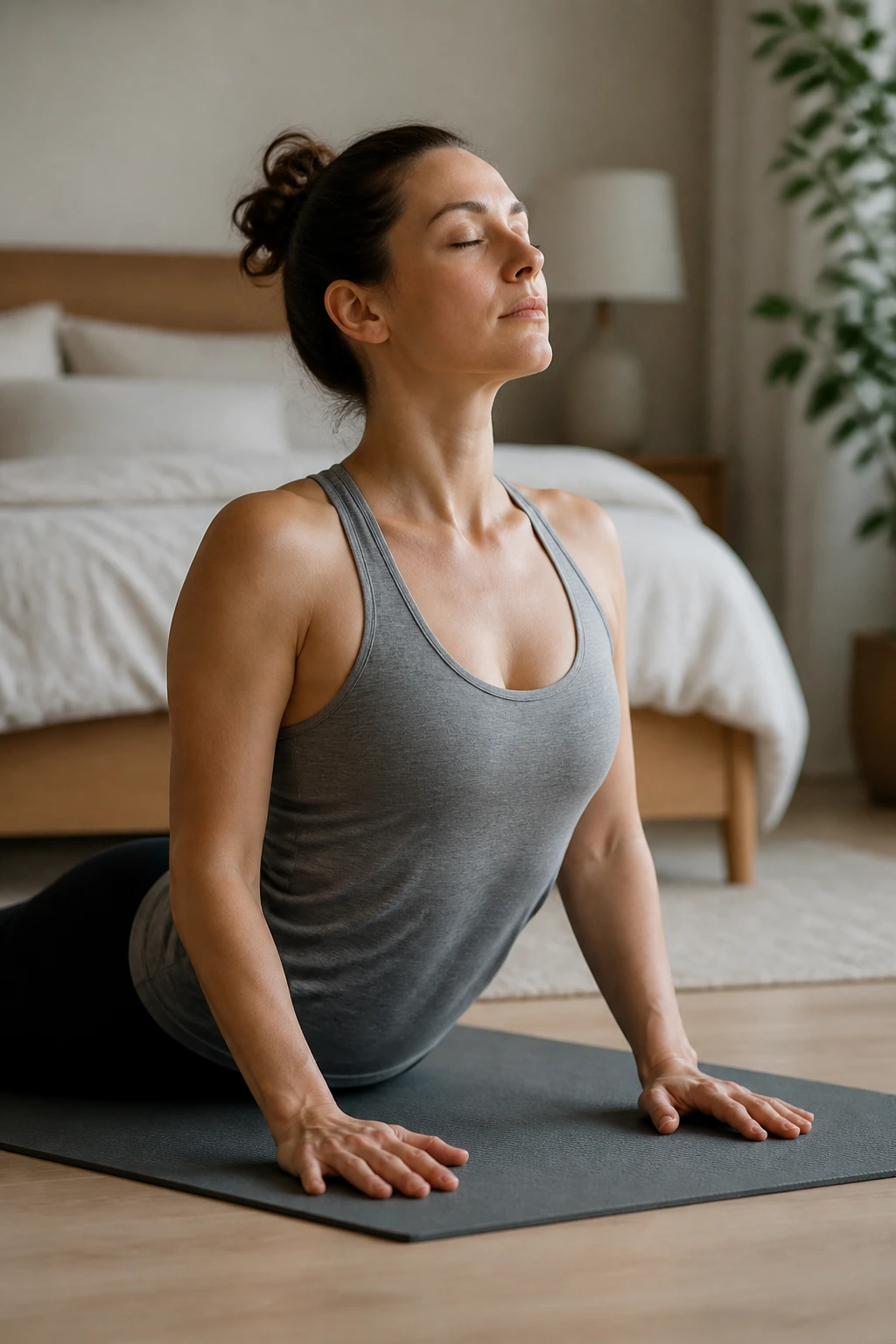
Backbends can wake you up fast, but sloppy ones make the low back complain. The trick is to spread the work around so the upper back, glutes, and legs all do their share.
Start with Sphinx Pose, then move into Cobra for a few short rounds. Add Locust Pose to bring the back body online, then finish with Bridge Pose and a standing Hands-on-Hips Chest Opener. Keep the ribs from flaring and think about length first, lift second.
Where the work belongs
The upper back should feel active. The glutes should help. The neck should stay long. If all of the bend lands in your lumbar spine, the shape is too deep for this time of day.
A lot of people rush through backbends because they want the dramatic shape. That usually backfires. A lower, cleaner Cobra often gives more wake-up than a wild, collapsed version.
Use this flow when you want energy without impact. It has a bright, upright feel that pairs well with mornings when your shoulders are rolled forward and your chest feels a little shut down.
12. Mobility for Stiff Mornings, From Ankles to Shoulders
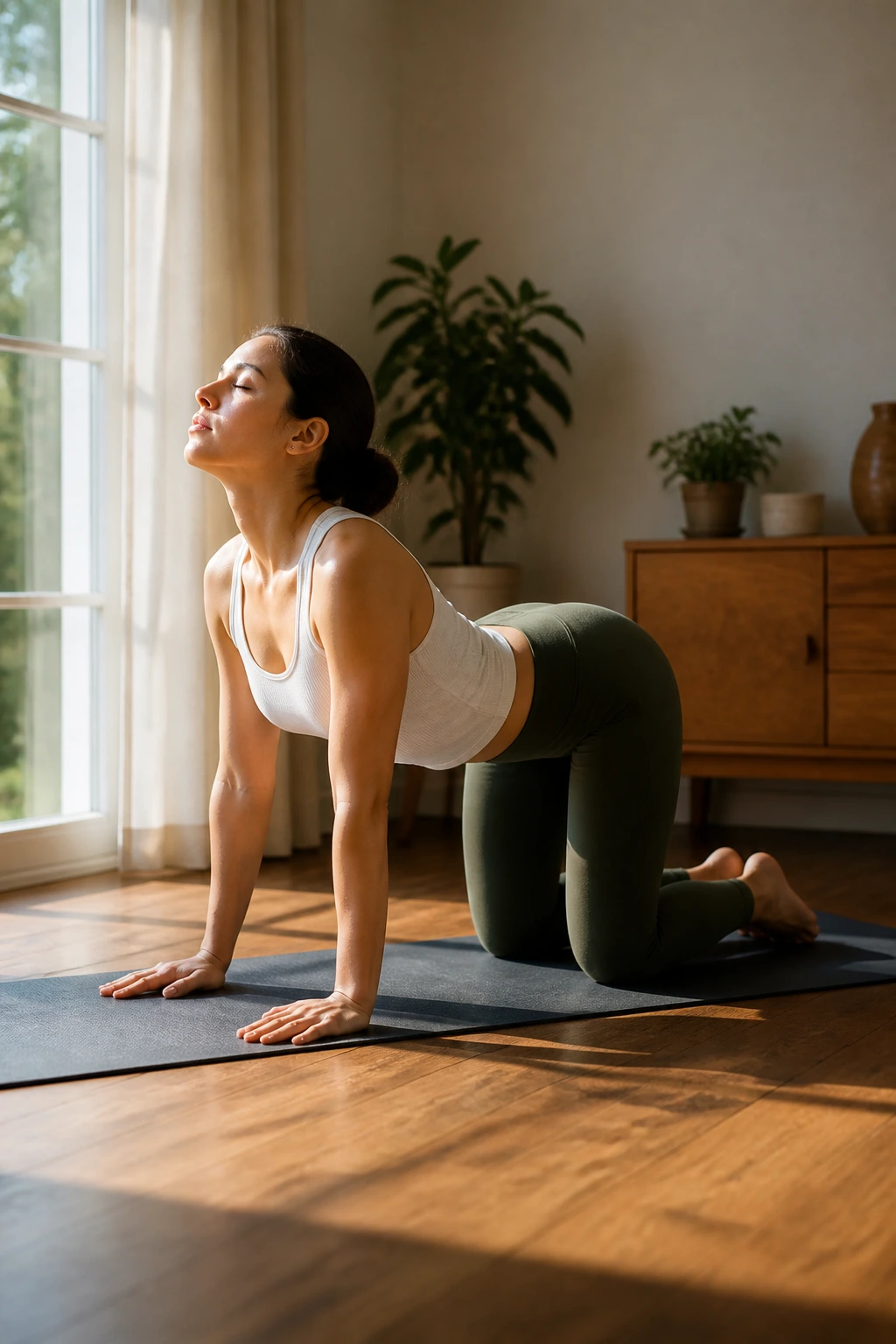
You know the morning: everything feels rusty. Not injured, not broken, just slow. This is the kind of flow that gives every major joint a quick hello before the day starts asking for details.
Spend 30 seconds on ankle circles, then move to Cat-Cow, Low Lunge, Half Split, Thread-the-Needle, and a brief Forward Fold. Keep the transitions soft and the range modest. The body usually opens after the first few minutes, and there is no prize for forcing it earlier.
A full-body mobility flow like this is useful because it does not get fixated on one area. The ankles affect the knees. The hips affect the back. The shoulders affect how you stand at your desk. It all links together whether you want it to or not.
If you want one flow that feels like a general tune-up, this is it. Nothing dramatic. Just enough motion to make the body less grumpy.
13. Beginner-Friendly Morning Yoga Flow With Plenty of Support
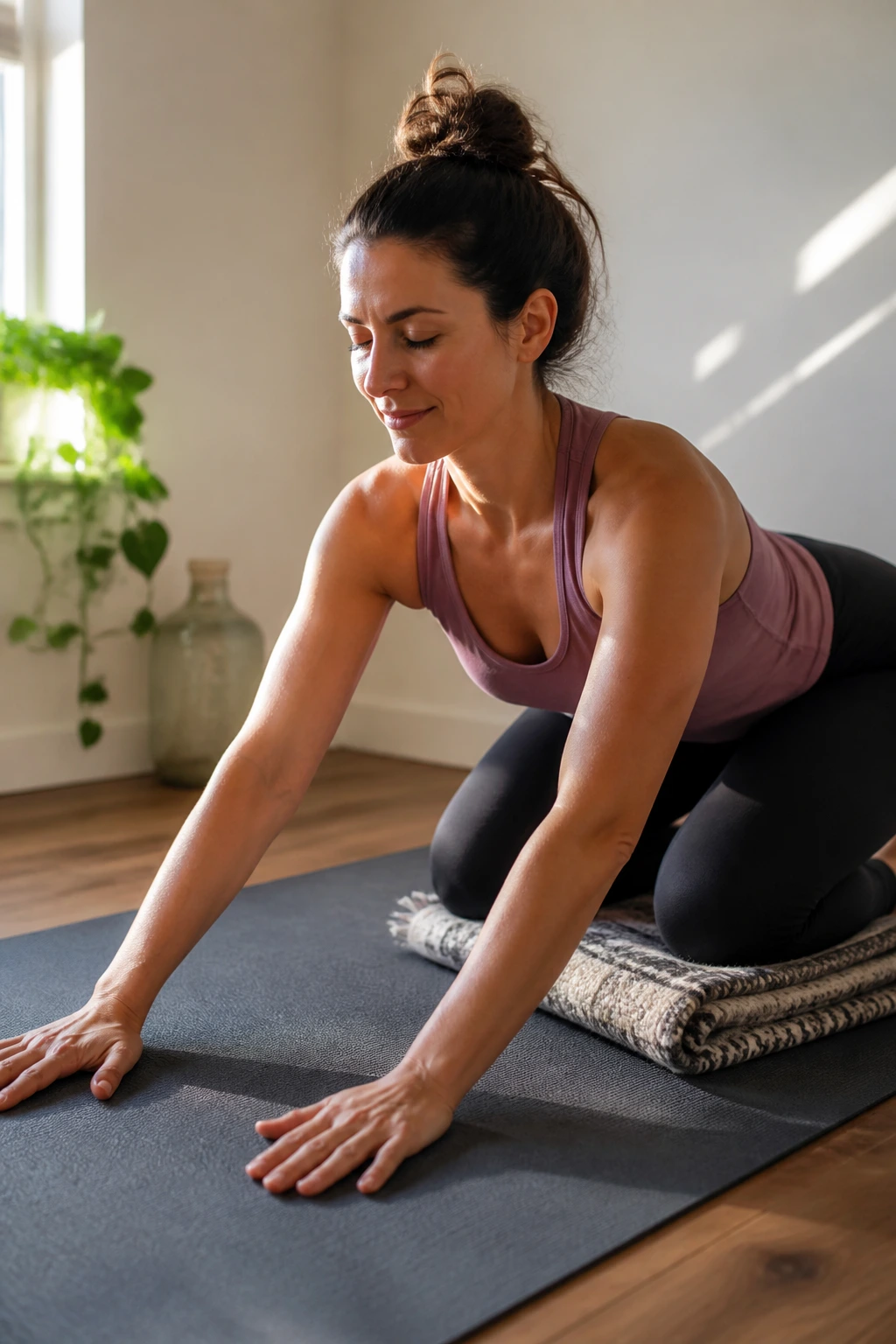
Unlike faster vinyasa classes, this one keeps both knees on the floor when needed. That makes it a better fit for mornings when your body feels new to movement, or when you want a clean, low-stress start.
Begin with Mountain Pose, then move to Chair Pose near a wall, Cat-Cow, Low Lunge with hands on blocks, Sphinx, and Supported Child’s Pose. Use a folded blanket under the knees if the floor feels harsh. That one small prop can change the whole experience.
The nice part about a beginner-friendly flow is that it teaches you how to move without rushing. You can stay with the breath, notice where you grip, and avoid the common trap of trying to make every pose look bigger than it needs to be.
This is the flow I’d hand to someone who says they “aren’t flexible.” Flexibility is not the gate here. A willingness to start is.
14. Mood-Lift Morning Yoga Flow for Foggy Days
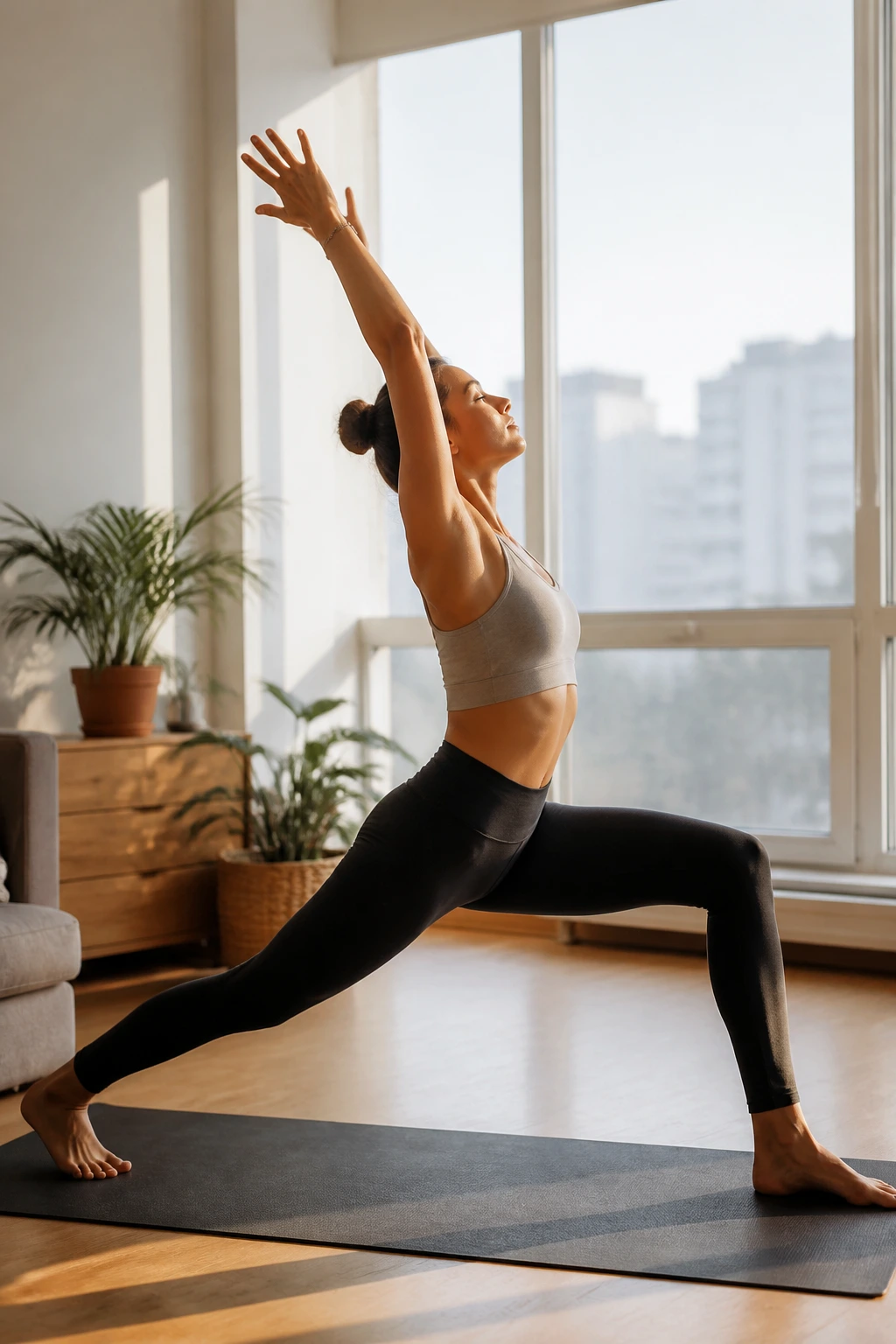
Can a short flow change your headspace? Yes, if the movement has enough rhythm to pull your attention out of the mental traffic.
Open with Side Stretch, then step into Crescent Lunge, Chair Twist, Eagle Arms, and a slow Forward Fold. Bring your gaze up and down on purpose, not randomly. That tiny change in visual direction can make the sequence feel more awake.
How to get the most from it
Choose a pace that keeps the breath steady. If you rush through the poses, the body may warm up, but the mind tends to stay scattered. A measured rhythm gives the flow its mood-shift.
A lot of people notice that their energy changes once the chest opens and the spine stops hunching forward. I see why. The body sends a different signal when you stand tall, breathe deeper, and stop folding over a phone before sunrise.
Use this one on mornings that feel flat, cloudy, or a little sour. It is not loud. It just moves the room in a better direction.
15. Silent Apartment Flow With No Jumping and No Thumps
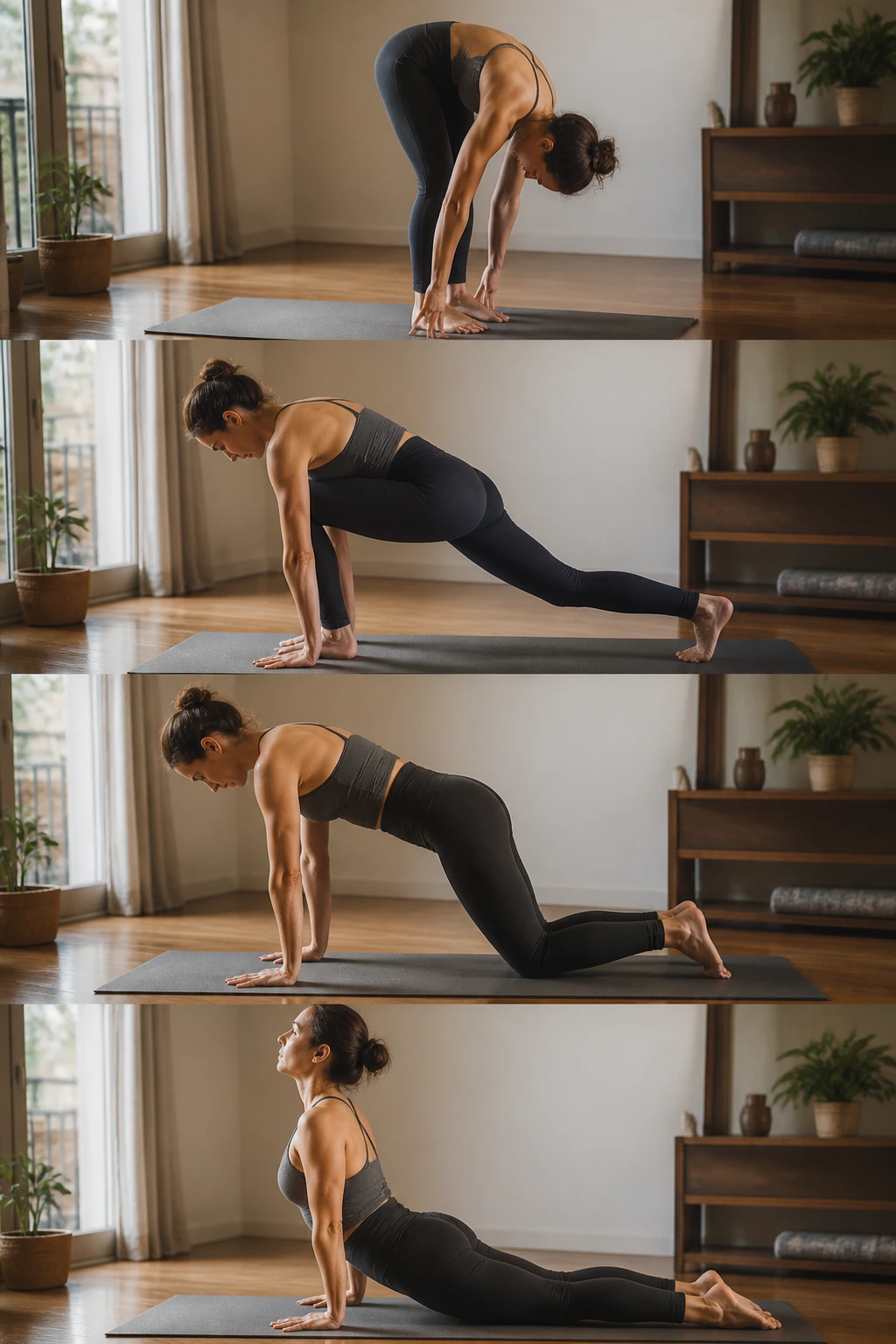
No jumping. No mat slaps. No noisy landings on the floor below you. If you share walls or just prefer a quieter start, this kind of yoga flow saves everyone a little peace.
Move from Standing Fold to a slow Step-Back Lunge, then lower through Plank to Knees and up to Cobra instead of hopping. Add Downward Dog Pedal, Half Split, and a careful return to standing. Keep every transition close to the floor and land each foot with intention.
The quiet part of this matters more than people think. When the room is still, the breath gets easier to hear. And once you can hear it, it gets easier to keep the flow steady instead of jerky.
This is also a good choice for early hours when you do not want to wake the house. Small, clean transitions feel better anyway. Loud yoga usually means rushed yoga.
16. Travel-Day Flow for Stiff Hips, Ankles, and Shoulders
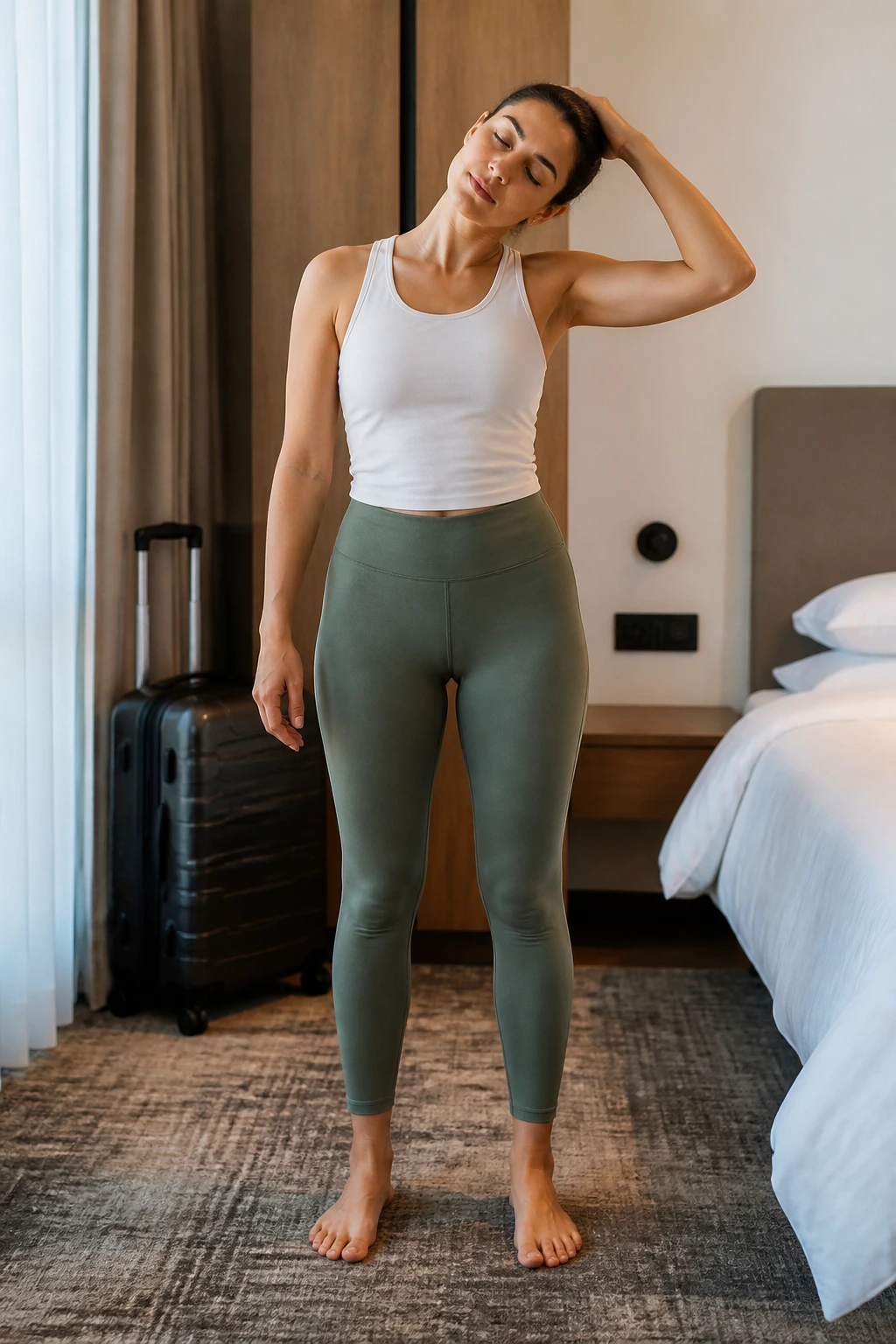
Travel stiffness feels odd because it shows up in odd places: ankles, hip creases, the base of the neck, and that deep little line between the shoulder blade and spine. Long sitting does that.
Start with Neck Rolls and Ankle Circles standing up, then move to Standing Forward Fold, Runner’s Lunge, Reclined Figure-Four, and a Squat Hold if your knees allow it. Keep the pauses short and the shape changes frequent enough that nothing gets bored.
Why it helps after long sitting
- Ankles get their range back.
- Hips stop feeling jammed.
- The back line of the body gets a mild lengthening.
- The squat restores a shape most travel days erase.
A travel-day flow should feel practical, not precious. It does not matter if the mat is on a hotel carpet or next to a suitcase. What matters is that the body remembers how to shift weight, bend the knees, and breathe without sitting still for one more minute.
17. Strong-Legs Morning Yoga Flow for a Firm Start
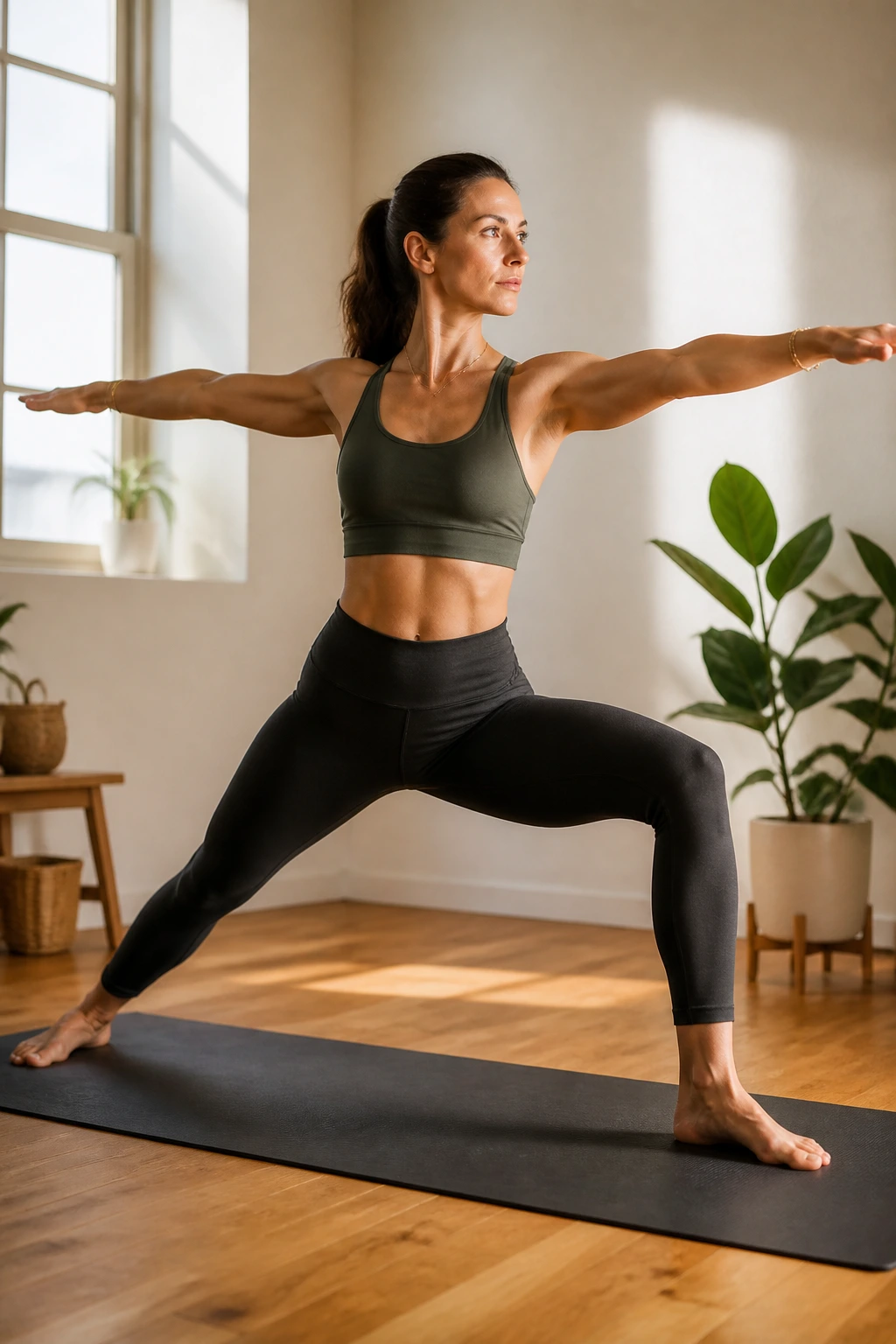
If your lower body needs a wake-up, standing poses do more than a few sleepy stretches ever will. They get the thighs, glutes, and feet working together instead of leaving the legs half-asleep.
Build the sequence around Chair Pose, Warrior I, Warrior II, Reverse Warrior, and Crescent Lunge. Add Goddess Pose for 30 to 45 seconds if you want the inner thighs to join the conversation. Keep the back heel grounded when possible and press evenly through the whole foot.
The best part of a strong-legs flow is the steadiness it leaves behind. Your posture changes a little. Your steps feel more grounded. You are not floating through the day; you are planted in it.
That said, do not force depth in the knees just to make the stance look bigger. A smaller Warrior with clean alignment is worth more than a dramatic lurch into the pose. Strong and sloppy are not the same thing.
18. Morning Yoga Flow to Warm Up for Strength Training
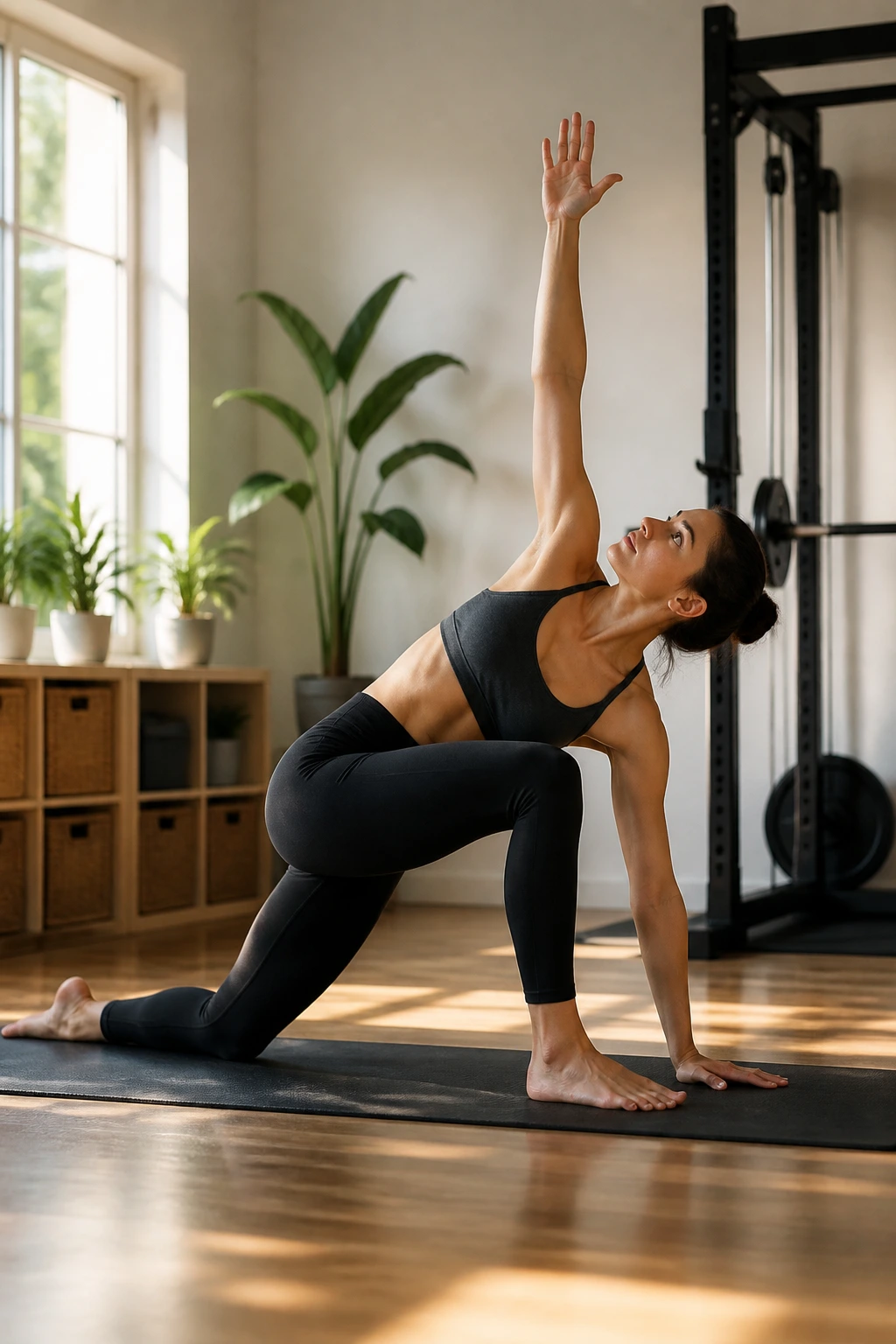
If a lift or run is waiting later, don’t spend your morning draining the tank. Use yoga to prepare the body, not flatten it. A warm-up flow should loosen the joints, wake the core, and leave enough gas in the tank for the later session.
Start with Downward Dog Pedal, World’s Greatest Stretch on both sides, Plank Shoulder Taps, Low Lunge with a Twist, and a few controlled Half Sun Salutations. Keep the holds short and the transitions smooth. The goal is readiness, not fatigue.
Best before a run or lift
Use this flow when you want your hips, ankles, and upper back to cooperate later. It helps the body feel less stiff without turning the morning into the workout itself.
A simple rule: if you are breathing hard by the end, you probably did too much. A light sweat is fine. Feeling wrecked is not. Save the effort for the actual training session and let yoga do the preparation work.
This is one of the most useful morning flows for people who like to train later in the day but still want to move first thing.
19. Gentle Recovery Flow for Sore or Short-Sleep Mornings
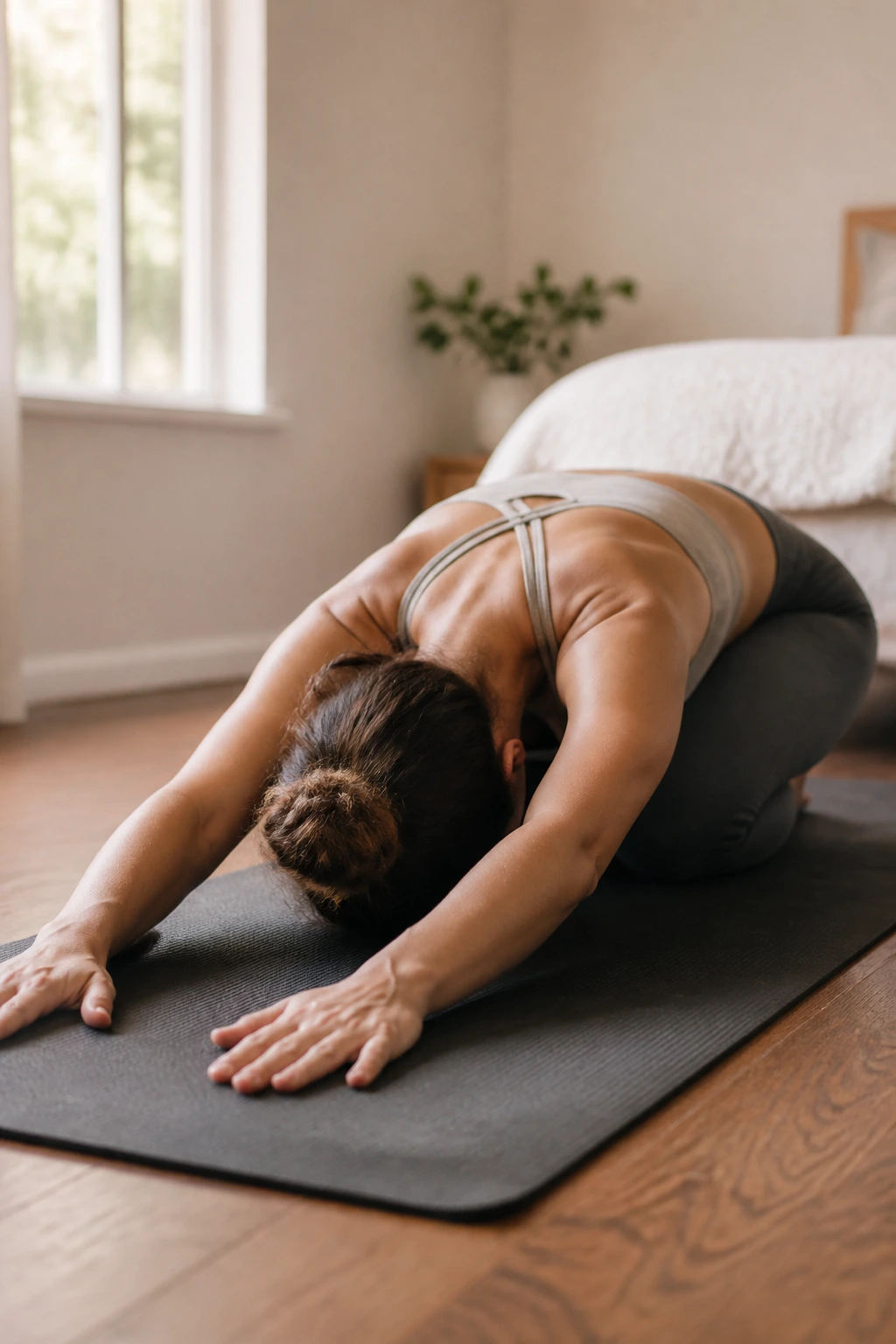
The goal isn’t to push. It is to make the body feel less boxed in than it did when you rolled out of bed.
Start with Child’s Pose, move to Cat-Cow, then Bridge Pose, Happy Baby, and a long Supine Twist. If your legs feel heavy, add Legs-Up-the-Wall for the final few minutes. Keep the sequence slow enough that you could speak in full sentences the whole time.
Gentle recovery work is a smart choice after a hard workout, a bad night of sleep, or a morning when everything feels a little sharp. The poses do not need to be deep. They need to be kind and consistent.
Sometimes that is enough. Not every useful routine needs to leave sweat on the mat or make a dramatic point. A softer start can save the rest of the day from feeling like a fight.
20. Full-Body Reset Flow for the Days That Refuse to Start
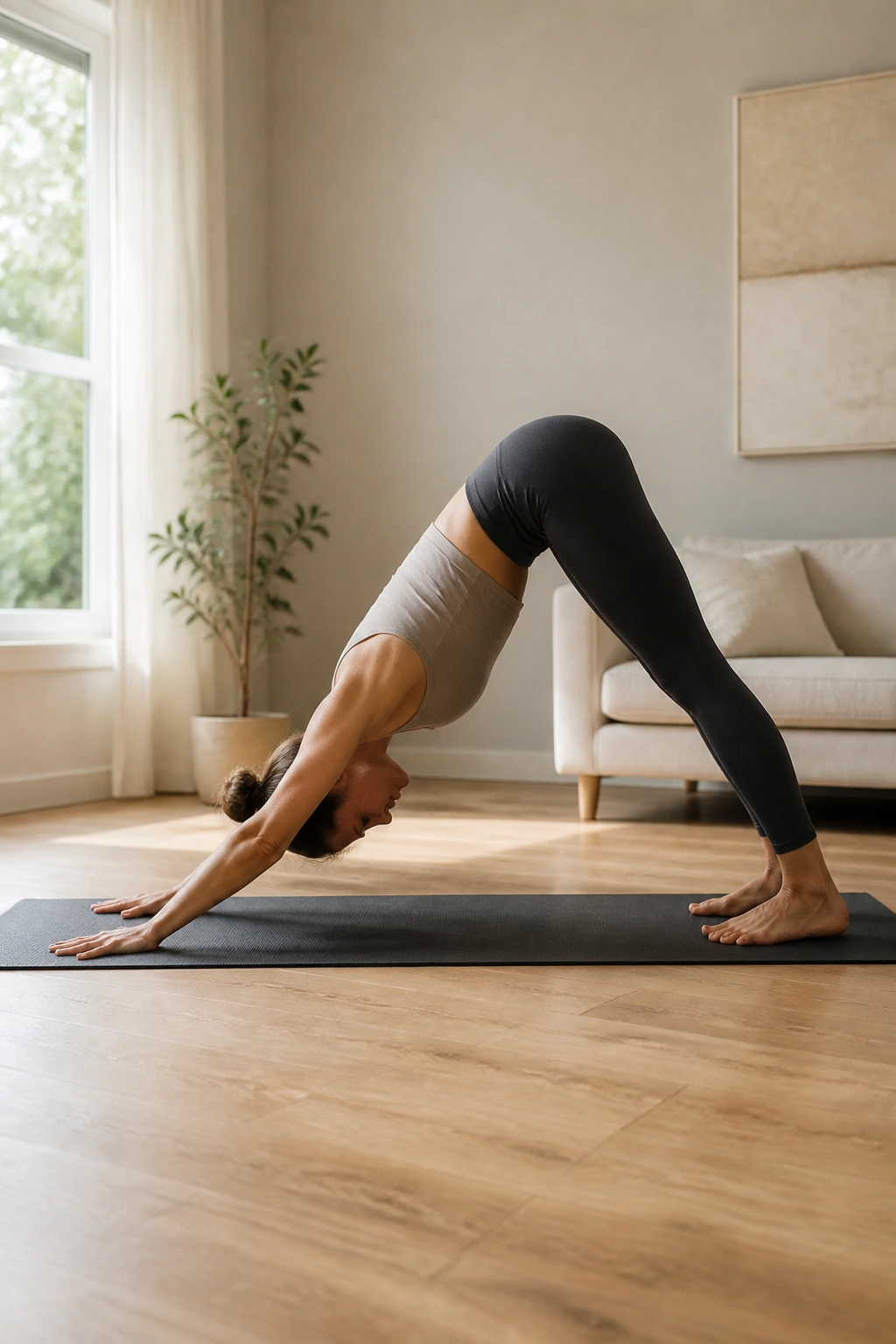
When nothing else fits, use a plain full-body reset. It borrows a little from the flows above without feeling scattered, and that makes it a good default when your brain is still half in bed.
Move through Cat-Cow, Low Lunge, Downward Dog, Cobra, Standing Forward Fold, and Tree Pose on each side. Keep the whole thing easy to follow. Three breaths here, three breaths there. No improvising unless your body asks for it.
The appeal of this flow is that it covers the basics without dragging on. Spine, hips, shoulders, balance. Enough. If you only have time for one thing, this is the kind of sequence that still feels like a complete start instead of a rushed compromise.
And if you keep one mat rolled out near the bed or in the corner of the room, this is the flow that makes the most sense on the mornings when discipline is thin and habits have to do the heavy lifting.
Pick the flow that matches the morning you actually woke up to, not the one you wish you had. That’s the whole trick. A mat on the floor beats a perfect plan in your head every single time.
Keep the first few moves small. Once the body starts answering, the rest gets easier.
